Reading view

There are new articles available, click to refresh the page.

Lawmakers say agencies aren’t reinstating enough laid-off employees under shutdown-ending deal

Democratic lawmakers say agencies aren’t reinstating as many federal employees as they should be, as part of a recent spending deal that ended the longest government shutdown.

Employees who received reduction in force (RIF) notices before the government shutdown, but were on track to be officially separated from their agencies during the shutdown, say layoff protections included in the Nov. 12 continuing resolution mean they should get their jobs back.

Agencies, however, have followed a narrower interpretation, and have only reinstated federal employees who received RIF notices between Oct 1 and Nov. 12. Agencies told a federal court last week that they rescinded shutdown-era RIF notices for more than 3,600 employees.

The continuing resolution Congress passed on Nov. 12 states that “any reduction in force proposed, noticed, initiated, executed, implemented, or otherwise taken by an Executive Agency between October 1, 2025, and the date of enactment, shall have no force or effect.”

Sen. Tim Kaine (D-Va.) is leading the push for more RIF rescissions, along with several of his Democratic colleagues.

Kaine was one of eight Democratic senators who broke ranks to pass the stopgap spending bill, only after Republicans agreed to include language that would protect federal employees from layoffs at least through Jan. 30, 2026. Kaine and his colleagues backed standalone legislation during the shutdown that would have also barred the Trump administration from moving ahead with its most recent wave of mass layoffs.

Kaine, along with Sens. Ed Markey (D-Mass.), Jack Reed (D-R.I.), and Patty Murray (D-Wash.), told Small Business Agency Administrator Kelly Loeffler that the agency is “unlawfully pursuing reductions in force,” and that dozens of recently laid-off employees the agency hasn’t reinstated “have a right to continue their employment.”

Federal News Network first reported last week that SBA told 77 recently laid-off employees this week that they could get their jobs back, but rescinded that offer a day later. An SBA spokesperson said in a statement that the agency “has determined that the most recent continuing resolution signed into law does not apply to any RIFs executed by the SBA.”

The senators said the continuing resolution — particularly Section 120 of the stopgap bill — placed a moratorium on RIFs involving federal employees, and that the “moratorium is broad, clear and unequivocal.”

“Consequently, SBA is without authority to maintain any RIFs that occurred during the lapse in appropriations or to initiate or otherwise carry out any new or previously noticed RIFs,” the senators wrote in a Nov. 20 letter.

The senators are directing SBA to reinstate the SBA employees and “return them to working status with full back pay.” The letter gives SBA until this Friday to comply with their request and provide an update to their offices.

House Small Business Committee Ranking Member Nydia Velázquez (D-N.Y.) also sent a letter to SBA, expressing “serious concern” over the agency’s back-and-forth announcements about RIF rescissions.

Velázquez told Loeffler that “there was no justification for the change,” and that “you have deliberately sought to harm federal employees, who have dedicated their careers to helping entrepreneurs launch and grow their small businesses.”

“The erratic, cruel, and callous manner in which you handled this matter is unacceptable,” she wrote. “The law is clear, and SBA must restore these employees to their positions with back pay, effective immediately.”

Recently laid-off employees at the General Services Administration are calling on the agency to rescind their RIF notices, citing language in the recently passed continuing resolution. The American Foreign Service Association is urging the State Department to reverse RIF notices that went out this summer and took effect during the shutdown.

Recently RIF-ed Justice Department employees are also seeking reinstatement.

A former DOJ employee said about 30 recently laid-off staff from the agency’s Community Relations Service, Office for Access to Justice and the Organized Crime Drug Enforcement Task Forces are also seeking reinstatement. These are all offices DOJ is seeking to eliminate or consolidate, as part of its agency reorganization plans.

The recently separated employee, who worked for the Community Relations Service, said it’s clear lawmakers meant to cover as many federal employees as possible in the layoff protections.

The Justice Department declined to comment.

The former DOJ employee said several individuals seeking reinstatement have appealed to the Merit Systems Protection Board. The former employee, however, said some have not pursued an MSPB appeal because of the cost and the long wait to receive a ruling from the board.

Others are hopeful that a federal lawsuit in Boston challenging the DOJ’s reorganization plans could eventually lead to reinstatement. The lawsuit is challenging the department’s plans to eliminate the Community Relations Service.

On Monday, members of the Congressional Equality Caucus wrote that, without CRS, DOJ would be too understaffed to handle a rise in reported hate crimes in the U.S.

“With these changes, CRS would be unable to perform its statutorily required functions with just one staff member. The dismantling of CRS is not only unlawful, it is also particularly concerning given the rise in community unrest, where CRS’s peacebuilding and mediation services would play a vital role.”

The post Lawmakers say agencies aren’t reinstating enough laid-off employees under shutdown-ending deal first appeared on Federal News Network.

© AP Photo/J. Scott Applewhite

Sen. Tim Kaine, D-Va., meets with reporters to discuss President Donald Trump's strategy on tariffs, at the Capitol in Washington, Tuesday, Oct. 28, 2025. (AP Photo/J. Scott Applewhite)

Laid-off GSA employees push for reinstatement, citing RIF protections in shutdown-ending deal

More federal employees who received layoff notices just before the government shutdown are looking to get their jobs back, on the grounds that Congress intended to reinstate them.

Recently laid-off employees at the General Services Administration are calling on the agency to rescind their reduction in force (RIF) notices, citing language in the recently passed continuing resolution that directed agencies to rescind the RIFs.

Attorneys at Gilbert Employment Law, in a letter sent to GSA’s leadership on Wednesday, said their clients, 35 GSA employees who were formally separated from the agency on Oct. 6, should be reinstated.

The GSA employees received their RIF notices on Sept. 24.

The continuing resolution gave agencies until Nov. 18 to notify eligible employees that their RIF notices were being rescinded.

According to the letter, GSA has not sent any RIF rescission notices to the 35 GSA employees, “and has instead taken the position that they will not be reinstated.”

“This is a violation of the statute,” the attorneys wrote.

Guidance from the Office of Personnel Management directed agencies to reinstate employees “affected by a RIF notice issued between October 1, 2025 and November 12, 2025.”

“The clear intent of the Act was to reverse all RIF actions — including separations — taken during the shutdown, not just the issuance of RIF notices,” the attorneys wrote.

Federal News Network has reached out to GSA for comment.

Soon after Congress passed a spending bill last week to end the government shutdown, agencies and unions took a closer look at language ordering agencies to put some layoff notices on hold until the end of January 2026.

The spending deal that Congress passed on Nov. 12 to end the government shutdown states that, “any reduction in force proposed, noticed, initiated, executed, implemented, or otherwise taken by an executive agency between October 1, 2025, and the date of enactment, shall have no force or effect.”

The Small Business Administration told dozens of recently laid-off employees this week that they could get their jobs back, but rescinded that offer a day later.

SBA sent RIF notices to 77 employees on Sept. 29, just before the government shutdown.

An SBA spokesperson told Federal News Network on Tuesday that the agency “has determined that the most recent continuing resolution signed into law does not apply to any RIFs executed by the SBA.”

“Therefore, the RIF in question, affecting 77 positions, remains,” the spokesperson said.

Federal News Network spoke with three SBA employees whose RIFs were briefly rescinded.

The employees said attorneys with the American Federation of Government Employees argued that SBA’s RIF notices were covered by the continuing resolution and should be rescinded, because the separation date for employees falls between Oct. 1 and Jan. 30.

One employee said they were told by their supervisor to still come into work on Wednesday, even though SBA’s most recent message told them the RIF notices were still in effect.

“There still seemed to be confusion,” the employee said.

Other unions are also making the case for reinstatement.

The American Foreign Service Association said last week that its interpretation of the spending deal passed by Congress would block the State Department from moving forward with layoff notices it sent to more than 1,300 employees this summer.

“The shutdown just ended for now, but there were a ton of RIFs that happened during the shutdown,” AFGE General Counsel Thomas Dargon told AFSA members in a virtual meeting Thursday. “AFGE filed a lawsuit over that, and we’ve just been hard at work trying to fight back where we can in the courts.”

The spending package passed by Congress states that between the date of enactment and Jan. 30, 2026, “no federal funds may be used to initiate, carry out, implement or otherwise notice a reduction in force to reduce the number of employees within any department, agency or office of the federal government.”

“We understand that Congress intended for this language to apply to as many federal employees as possible, including those who received layoff notices from the State Department on July 11,” AFSA wrote.

AFSA wrote in a follow-up post that it is awaiting details “on how the continuing resolution will be implemented and what it means for Foreign Service members affected by the July layoffs at State.”

The post Laid-off GSA employees push for reinstatement, citing RIF protections in shutdown-ending deal first appeared on Federal News Network.

© Saul Loeb/AFP via Getty Images

SBA told laid-off employees they could get their jobs back. It rescinded that offer a day later  

The Small Business Administration told dozens of recently laid-off employees this week that they could get their jobs back, but rescinded that offer a day later.

SBA sent reduction in force notices to 77 employees on Sept. 29, just before the government shutdown. On Monday, the agency’s top HR official told impacted staff that those RIF notices have been rescinded.

“This letter is to formally rescind the reduction in force (RIF) notice dated 9/29/25,” SBA’s Chief Human Capital Officer John Serpa told employees in a Nov. 18 notice obtained by Federal News Network. “You are being reinstated to your position of record with the Small Business Administration (SBA).”

The notice gave laid-off employees until Wednesday to return to the office, if they wished to have their jobs back. If not, employees were given the option to retire or resign.

But a day later, the same SBA official said the layoffs will remain in effect.

“Notwithstanding any prior communication from U.S. Small Business Administration, the Sept. 29, 2025 RIF notice and termination affecting your position will remain in effect,” Serpa wrote.

The RIF rescissions and their immediate recall stem from competing interpretations of verbiage in the shutdown-ending spending deal Congress passed last week, which also put the Trump administration’s latest round of governmentwide layoffs on hold for now.

An SBA spokesperson told Federal News Network on Tuesday evening that the agency “has determined that the most recent continuing resolution signed into law does not apply to any RIFs executed by the SBA.”

“Therefore, the RIF in question, affecting 77 positions, remains,” the spokesperson said.

The spending deal that Congress passed on Nov. 12 to end the government shutdown states that, “any reduction in force proposed, noticed, initiated, executed, implemented, or otherwise taken by an executive agency between October 1, 2025, and the date of enactment, shall have no force or effect.”

SBA’s layoffs were also not included in a federal judge’s preliminary injunction that blocked the Trump administration from proceeding with layoffs during the 43-day government shutdown.

U.S. District Court Judge Susan Illston, in an Oct. 28 court proceeding, told parties in the lawsuit that her preliminary injunction “does not apply to RIF notices issued before the shutdown,” including those sent to SBA employees.

“The record may reflect that many employees of the Small Business Administration have been contacting the court. But it appears that the RIFs that they’re subject to went out on September 29 or 30, prior to the government shutdown. They would not be covered by this preliminary injunction,” Illston said.

SBA unveiled plans in March to cut its workforce by 43%. The agency expected to cut about 2,700 positions from its 6,500-employee workforce, mostly through voluntary separation incentives, as well as terminating pandemic-era and other term-appointment positions. SBA said it would only seek a limited number of layoffs through a nonvoluntary RIF.

SBA Administrator Kelly Loeffler said at the time that workforce cuts were needed to reduce “mission creep” and employees no longer needed to support pandemic-era stimulus programs.

An SBA employee told Federal News Network that union attorneys argued that SBA’s layoffs should be protected by the continuing resolution passed by Congress, because their separation dates would fall between Oct. 1 and Jan. 30.

Other unions have also made that case. The American Foreign Service Association said last week that its interpretation of the spending deal passed by Congress would block the State Department from moving forward with layoff notices it sent to more than 1,300 employees this summer.

The spending package passed by Congress states that between the date of enactment and Jan. 30, 2026, “no federal funds may be used to initiate, carry out, implement or otherwise notice a reduction in force to reduce the number of employees within any department, agency or office of the federal government.”

“We understand that Congress intended for this language to apply to as many federal employees as possible, including those who received layoff notices from the State Department on July 11,” AFSA wrote. “Given that the department set the separation date for the July 11 layoffs as today, Nov. 10, those actions should not move forward. We have written to the department to urge them to halt these actions immediately.”

AFSA wrote in a follow-up post that it is awaiting details “on how the continuing resolution will be implemented and what it means for Foreign Service members affected by the July layoffs at State.”

The post SBA told laid-off employees they could get their jobs back. It rescinded that offer a day later   first appeared on Federal News Network.

© Federal News Network

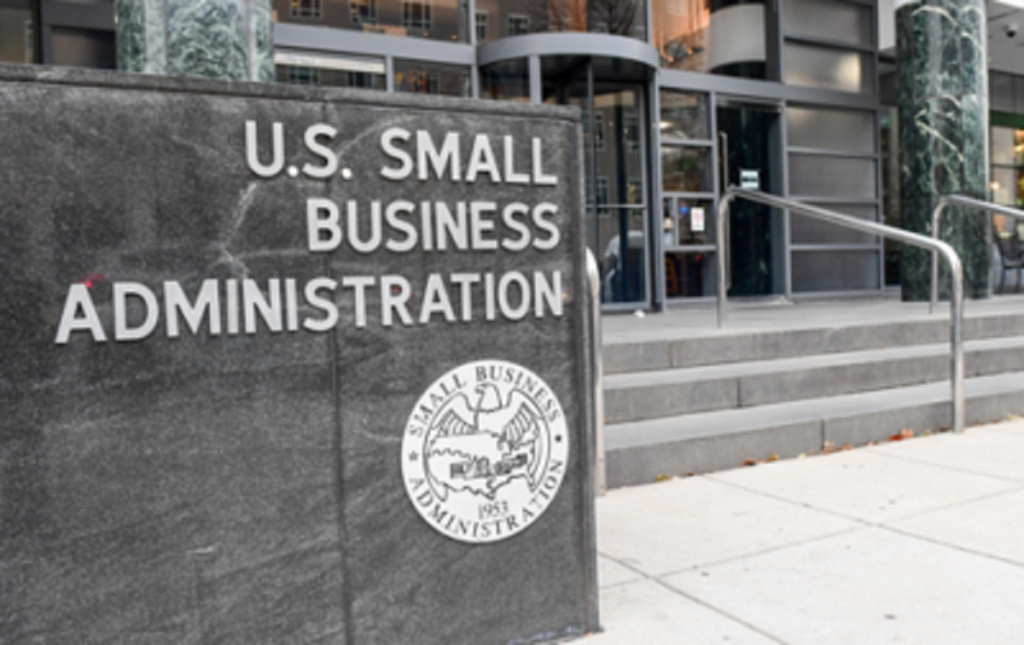
Small Business Administration building

Post-shutdown, here’s how soon federal employees can expect back pay

Following the longest shutdown in U.S. history, the federal workforce is now trying to get back to at least some sense of normalcy.

While federal employees who have been furloughed for the last 43 days return to work Thursday, the Office of Personnel Management is setting expectations for agencies as they begin to update pay, leave and benefits for those impacted by the lapse in appropriations.

In new guidance, OPM said it is “is committed to ensuring that retroactive pay is provided as soon as possible.” Compensation will be provided for both furloughed and excepted federal employees, as the spending agreement that was enacted Wednesday evening reaffirmed. A 2019 law previously called for retroactive compensation for all federal employees impacted by a shutdown.

A senior Trump administration official said the White House “has urged agencies to get employee paychecks out expeditiously and accurately to not leave anyone waiting longer than necessary.”

But the timing of employees receiving their back pay varies, depending on what payroll provider an agency uses, and the different pay schedules across the federal workforce.

Sending out retroactive payments to employees involves working across agency HR offices, federal payroll providers and shared service centers. Agency HR offices, for instance, have to submit timecards for federal employees, which are then processed by the government’s various payroll providers.

According to the senior administration official, employees from the General Services Administration and OPM will be among the first to receive their retroactive paychecks, with an expected deposit date set for Saturday.

Employees at the departments of Veterans Affairs, Energy, and Health and Human Services, as well as civilian employees from the Defense Department, will receive their deposits shortly after that — this Sunday.

On Monday, affected employees from the departments of Education, State, Interior and Transportation, as well as the Environmental Protection Agency, National Science Foundation, Nuclear Regulatory Commission, Social Security Administration and NASA, are all expected to receive their back pay.

Then on Wednesday, employees from the departments of Agriculture, Commerce, Treasury, Labor and Justice, along with the Department of Homeland Security, the Department of Housing and Urban Development and the Small Business Administration, are projected to get their paychecks. The timing of the retroactive payments for feds was first reported by Semafor.

The National Finance Center, a payroll provider housed under the Agriculture Department, confirmed that employees at agencies using NFC’s services should expect a payroll deposit by the middle of next week.

“In order to provide backpay for employees as quickly as possible, the National Finance Center will be expediting pay processing for pay period 22 and backpay for pay periods 19 (October 1-4), 20 (October 5-18), and 21 (October 19-November 1),” USDA wrote in an all-staff email Wednesday evening, obtained by Federal News Network.

Federal News Network has reached out to several other federal payroll providers requesting details on the timeline for processing retroactive payments.

The National Treasury Employees Union urged immediate back pay for all federal employees who have been going without compensation for the last six weeks.

“This is an emergency for federal employees across the country, and they should not have to wait another minute longer for the paychecks they lost during the longest government shutdown in history,” NTEU National President Doreen Greenwald said. “We call on all federal agencies to process the back pay immediately.”

In its new guidance, OPM also noted that to make payments as quickly as possible, payroll providers may need to “make some adjustments.” That could mean, for instance, that the initial retroactive payments employees receive might not reflect the exact calculations of their pay and leave hours.

“Payroll providers will work with agencies to make any necessary adjustments as soon as practicable,” OPM said.

Who receives back pay, and how much?

Furloughed employees will receive their “standard rate of pay” for the hours they would have worked if the government shutdown hadn’t occurred, OPM said in its guidance Wednesday evening.

But there are some exceptions to that. If a furloughed employee, for example, had been scheduled for overtime hours that would have occurred during the shutdown, OPM said they should be paid their premium rate for those hours.

Additionally, OPM said that allowances, differentials and other types of payments, like administratively uncontrollable overtime pay or law enforcement availability pay, should be paid as if the furloughed employee continued to work.

Although most employees impacted by the shutdown are ensured back pay, there are some smaller exceptions carved out where employees may not receive retroactive pay, OPM added.

If a furloughed employee was in a non-pay status before the shutdown began, for instance, then they are not entitled to receive back pay.

Excepted employees who were considered “absent without leave” (AWOL) — or in other words, took unapproved time off — will also not receive back pay for that time.

Guidance on leave, post-shutdown

Although excepted employees are not required to use paid leave for taking time off during the shutdown — and can instead enter a “furlough” period — there may still have been some instances where excepted employees took leave during the funding lapse, OPM wrote in its guidance.

In those cases, excepted employees who were approved to take paid leave during the shutdown will be charged for the hours from their leave bank, OPM said.

Agencies are also expected to begin adjusting leave accrual for furloughed employees. Now that the shutdown is over, furloughed employees should be placed in a “pay status” for the time they would have otherwise spent working during the funding lapse. That means accrual of annual and sick leave will be retroactively adjusted as if the employees were in a pay status, OPM said.

Excepted employees continued to accrue leave during the shutdown, which should be reflected in their leave banks, OPM said.

What happens to RIFs of federal employees?

On top of reaffirming back pay, the spending bill that was enacted Wednesday evening also rescinds the roughly 4,000 reductions in force that have occurred since Oct. 1. Federal employees will be temporarily protected from additional RIFs, at least until the end of January.

Agencies have five days to inform federal employees who received RIF notices in October that those actions are rescinded.

“Agencies should issue those notices and confirm to OPM the rescissions have been issued,” OPM’s guidance states.

At least 670,000 federal employees have been furloughed, and 730,000 employees have been working without pay during the shutdown. Agencies have been putting plans in the works to return all furloughed federal employees to their duties as of Thursday.

OPM also said agencies “may consider” providing flexibility for employees who might not be able to return to work immediately, such as by approving personal leave or adjusting individual work schedules.

The post Post-shutdown, here’s how soon federal employees can expect back pay first appeared on Federal News Network.

© AP Photo/Mark Schiefelbein

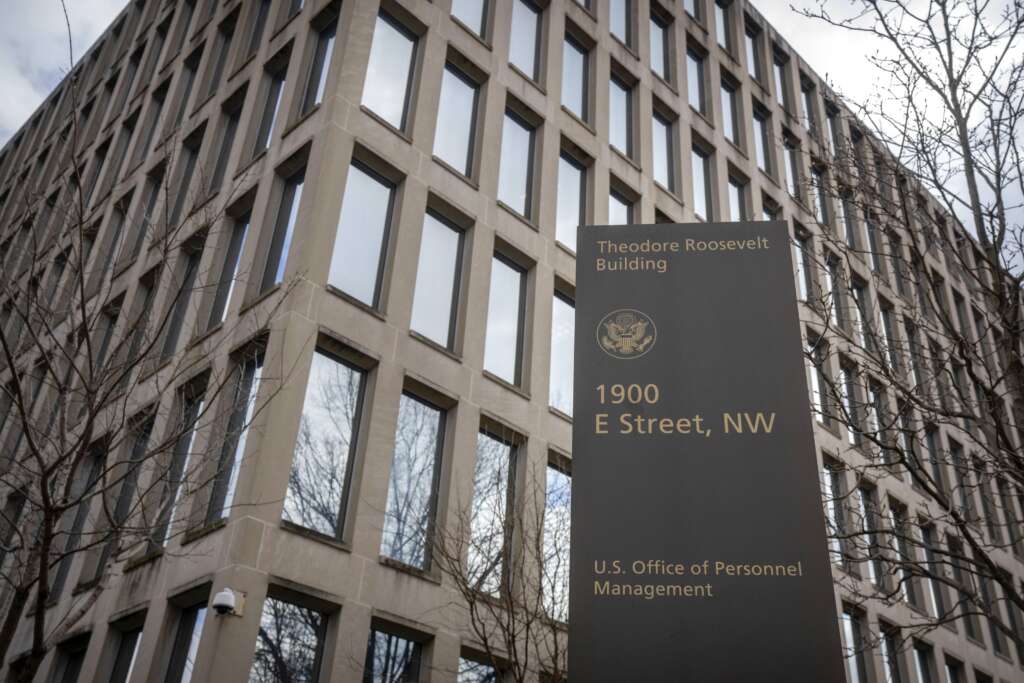
The Theodore Roosevelt Building, location of the U.S. Office of Personnel Management, on Tuesday, Feb. 13, 2024, in Washington. Former President Donald Trump has plans to radically reshape the federal government if he returns to the White House, from promising to deport millions of immigrants in the U.S. illegally to firing tens of thousands of government workers. (AP Photo/Mark Schiefelbein)
❌