Reading view

There are new articles available, click to refresh the page.

CoinDCX data reveals India’s rising appetite for diversified digital assets

  • CoinDCX users now hold an average of five tokens, up from two to three previously.
  • Women investors doubled year on year with broader diversification trends.
  • Millennials remain the dominant user base as the average age rises to 32.

Indian crypto investors are showing a stronger preference for diversified digital asset portfolios, marking an early shift toward more deliberate and long-term allocation behaviour.

CoinDCX’s annual report, released on Thursday, suggests that the country’s retail investor base is gradually moving away from the idea that crypto is synonymous with Bitcoin, signalling broader maturity in market participation in 2025.

This trend reflects a market becoming more confident, curious, and willing to explore varied opportunities across the expanding digital ecosystem.

The exchange found that the average user now holds around five tokens, compared with two to three in 2022.

This steady expansion of holdings indicates a growing awareness of portfolio construction and a willingness to explore different parts of the crypto market beyond the most established assets.

Layer-1 tokens lead activity

CoinDCX reported that layer-1 assets accounted for 43.3% of portfolio volumes.

Bitcoin, priced at $93,133, held a 26.5% share of allocations. Memecoins made up 11.8% of user portfolios, showing that speculative interest remains a part of broader diversification trends.

According to the exchange, Indian traders have become increasingly comfortable navigating different digital asset categories as adoption widens across the country.

The report noted that crypto is emerging as a natural extension of the financial products already familiar to many users.

Millennials dominate participation

The platform’s user base is ageing upward, with the average trader now 32 years old. Millennials continue to make up the majority of users, outpacing Gen Z in adoption, though younger traders remain active.

Gen Z users, aged 18 to 24, tend to favour emerging narratives such as layer-2 ecosystems, memecoins, and non-fungible tokens. Their behaviour reflects a greater appetite for thematic or speculative sectors.

CoinDCX also saw its number of women investors double year on year. These users are diversifying beyond Bitcoin and Ether, priced at $3,183, into tokens such as Solana at $143.04 and Sui at $1.67.

Founded in 2018 and backed by Coinbase, CoinDCX is one of India’s largest crypto exchanges with more than 20 million registered users. It remains a key gateway for retail access to digital assets.

India shows wide but shallow adoption

CoinDCX noted that India continues to lead in early indicators of digital asset awareness, including mobile-first trading behaviour and high engagement across educational content on the platform.

These signals reflect strong nationwide interest in crypto as a financial category.

However, the exchange found that deeper, research-driven participation remains limited. Many users enter the market through popular assets or trending narratives rather than sustained ecosystem involvement.

As a result, the platform characterised India’s adoption as “wide” but not yet “deep”.

CoinDCX said the country is still in the early stages of its digital asset journey, leaving significant room for education, innovation, and long-term growth as user sophistication develops.

The post CoinDCX data reveals India’s rising appetite for diversified digital assets appeared first on CoinJournal.

Tether Debate Heats Up As Former Bank Analyst Refutes Hayes’ Claims

Arthur Hayes, the BitMEX co-founder, warned late last month that Tether’s shift into Bitcoin and gold could leave the stablecoin exposed if those assets tumble.

According to Hayes, a roughly 30% drop in Tether’s BTC and gold holdings could erase the company’s equity and leave USDT vulnerable.

His comments touched off fresh debate about how much of the company’s true financial strength is visible to the market.

The Tether folks are in the early innings of running a massive interest rate trade. How I read this audit is they think the Fed will cut rates which crushes their interest income. In response, they are buying gold and $BTC that should in theory moon as the price of money falls.… pic.twitter.com/ZGhQRP4SVF

— Arthur Hayes (@CryptoHayes) November 29, 2025

Tether Is Far Stronger Than It Looks: Former Citi Analyst

A former Citi research lead, who goes by the name “Joseph”, pushed back on Hayes’s scenario. Based on reports, Joseph said public attestations only show the assets that directly back outstanding USDT and do not capture the full corporate balance sheet.

I spent 100’s of hours writing research on tether for @Citi. @CryptoHayes missed a few key points.

1) 𝐓𝐡𝐞𝐢𝐫 𝐝𝐢𝐬𝐜𝐥𝐨𝐬𝐞𝐝 𝐚𝐬𝐬𝐞𝐭𝐬 =/ 𝐚𝐥𝐥 𝐜𝐨𝐫𝐩𝐨𝐫𝐚𝐭𝐞 𝐚𝐬𝐬𝐞𝐭𝐬

When tether generates $ they have a separate equity balance sheet which they don’t… https://t.co/pHSRr245Up

— Joseph (@JosephA140) November 30, 2025

He told reporters he spent hundreds of hours reviewing filings and market data and estimates Tether’s total equity could be in the $50–$100 billion range — a cushion much larger than what critics point to when they focus on attested reserves.

Reported Buffers

According to Joseph’s calculations, Tether holds about $120 billion in US Treasuries that are earning roughly 4%, which he says could generate about $10 billion a year in net income.

He also cited other corporate assets that are not part of public reserve snapshots — equity stakes, mining operations, and additional Bitcoin holdings — all of which, he argues, strengthen Tether’s overall capital position.

Paolo Ardoino, Tether’s CEO, has publicly cited roughly $30 billion in “group equity” as part of the firm’s buffer against shocks.

re: Tether FUD

From latest attestation announcement (Q3 2025):

“Tether will continue to maintain a multi-billion-dollar excess reserve buffer and an overall proprietary Group equity approaching $30 billion.”

Tether had (at end of Q3 2025) ~7B in excess equity (on top of the…

— Paolo Ardoino 🤖 (@paoloardoino) November 30, 2025

Hayes’s Warning And The Transparency Question

Hayes’s point, however, rests on a simple math worry: volatile assets can move fast, and marked declines would reduce the value of reserves.

He framed Tether’s move into Bitcoin and gold as a macro hedge against expected rate cuts, but said that hedge could backfire under a sharp sell-off.

Reports have noted that because attestations focus on backing for USDT supply, they may not reveal how much of the company’s other assets would be available in a crisis — a gap that keeps some investors uneasy.

What The Debate Means For Markets

The clash highlights two facts. One: there are sizable numbers involved — $120 billion in Treasuries, a roughly $30 billion equity figure cited by management, and the $50–$100 billion range estimated by Joseph.

Two: the core issue is disclosure. If Tether’s broader holdings can be marshalled quickly in a stress event, the company may handle big swings. If not, volatility could create trouble for short-term liquidity even if long-term equity is large.

Featured image from Pexels, chart from TradingView

You Won’t Believe How Much Bitcoin Companies Now Hold, What % Of Supply Do They Control?

Bitocin treasury companies continue to accumulate a significant amount of BTC despite current market conditions and now control around 5% of the total BTC supply. These companies are led by Michael Saylor’s Strategy and Metaplanet, which have recently raised fresh capital to buy the dip. 

Bitcoin Treasury Companies Now Hold Over 1 Million In BTC

Bitcoin Treasuries data shows that the top 100 public Bitcoin treasury companies currently hold 1,058,929 BTC, while all public companies combined hold 1,061,697. Notably, Strategy is the largest public Bitcoin holder with 650,000 BTC. Michael Saylor’s company yesterday announced another 130 BTC purchase for $11.7 million. 

Meanwhile, the second-largest Bitcoin treasury company is BTC miner MARA holdings, which holds 53,250 BTC. Tether-backed Twenty One Capital, Metaplanet, and Bitcoin Standard Treasury Company complete the top 5, with 43,514, 30,823, and 30,021 BTC, respectively. Meanwhile, companies like Coinbase, Bullish, and Trump Media are among the top 10 largest BTC treasury companies. 

It is worth noting that these public companies account for only a part of the Bitcoin treasuries. Further data from Bitcoin Treasuries shows that there is currently 4 million BTC in treasuries as a whole, including the coins held by governments, private companies, exchanges, DeFi platforms, and ETFs.  

Bitcoin

BlackRock is currently the second-largest Bitcoin holder, only behind Satoshi Nakamoto. Strategy is third on the list, while Binance and the U.S. government complete the top 5, with BTC holdings of 628,868 and 323,588, respectively. The 4 million BTC held by these treasury companies as a group accounts for 19% of the total Bitcoin supply. 

Bitcoin treasury companies such as Strategy and Metaplanet have raised new capital amid the recent crash to buy more BTC. Saylor’s company recently raised $836 million from its STRE offering, which it used to buy 8,178 BTC. Meanwhile, Metaplanet raised $130 million to expand its BTC treasury. 

More Companies Set To Adopt Bitcoin

More Bitcoin treasury companies are set to emerge as $10 trillion asset manager, Vanguard, will start offering BTC ETFs from today. Notably, some companies gain BTC exposure through these ETFs rather than buying Bitcoin directly. On-chain analytics platform Arkham Intelligence revealed that the largest U.S. bank, JPMorgan, holds $300 million worth of BlackRock’s BTC ETF. 

Meanwhile, it is worth mentioning that Bitcoin treasuries such as Strategy are coming under immense pressure amid the current market downtrend. Strategy’s CEO, Phong Le, admitted that they might have to sell Bitcoin as a last resort to fund dividend payments if their mNAV drops below 1x and they can no longer raise capital. 

At the time of writing, the Bitcoin price is trading at around $87,000, up in the last 24 hours, according to data from CoinMarketCap.

Bitcoin

Shibarium Hack Fallout: Shiba Inu Team Criticized For Not Reporting Breach

According to reports, it has been three months since the Shibarium Bridge hack that drained more than $3 million from users, yet the case has not moved into formal law enforcement channels.

On-chain investigators traced a clear path of funds, and community members say the clues are strong enough to support an official probe. Still, exchanges are holding back unless a police case number is presented.

On-Chain Trail Revealed

Based on reports from on-chain sleuths, the attacker moved 260 Ether through Tornado Cash before routing 232.49 ETH to deposit addresses at KuCoin. The laundering path involved 111 wallets and 45 unique KuCoin deposits, according to a public breakdown by a community investigator known as Shima.

Shibarium Bridge hacker foolishly chose not to accept the K9 bounty – it’s finally time to share the investigation we’ve been working on…🔎 this is juicy 🤤

The hacker made one stupid mistake and it completely unravelled their Tornado Cash laundering. 💰🌪💵

That one mistake… pic.twitter.com/itxsXbbGSm

— Shima 島。 (@MRShimamoto) December 1, 2025

A small mistake — a single transfer of 0.0874 ETH — linked otherwise hidden wallets and allowed the investigator to map much of the operation. The tracing work was shared with the Shiba Inu ecosystem team so it could be used to press for recovery.

Why didn’t https://t.co/OoTvg1kraL call the police?

Why isn’t there a report to the appropriate authorities to get a case number?

Why have no law enforcement been involved in the https://t.co/OoTvg1kraL bridge hack? https://t.co/88Gdxi0rhh

— Pulse Digital 🟣 (@CryptoPulse9) December 1, 2025

Practical Roadblocks To Recovery

Tracing crypto through mixers remains difficult, even when the ledger gives clues. Exchanges often need subpoena power, legal requests or a case number to share account details.

That requirement can leave strong on-chain leads stuck if a project does not file a police report. Community investigators can point the way, but many of the next steps depend on formal legal action and cross-border cooperation.

Exchange Action Hinges On Case Number

After Shima handed the findings to the project team, members of the community and teams such as K9 Finance stepped in. One representative, using the handle DeFi Turtle, reached out to KuCoin to ask that the exchange freeze the suspected funds.

KuCoin replied that it would require a formal law enforcement case number before taking such action, based on the messages that have circulated in community channels. Without a police report, the exchange said it could not legally provide internal records or lock the linked accounts.

Sleuth Offers Evidence To Victims

Faced with slow institutional movement, Shima has offered the full dataset, the mapping work and the methodology to victims and to any law enforcement body willing to act. Victims in different countries may need to lodge complaints locally to create the case numbers that exchanges demand.

Calls For Formal Complaints

Shane Cook, founder of Pulse Digital Marketing, questioned why the Shiba Inu team had not filed an official complaint despite the on-chain evidence. Reports show the team previously confirmed the breach and said it had contacted security firms including PeckShield and Hexens.

Cook’s criticism centers on the idea that technical analysis alone may not be enough; a legal filing is often required to make exchanges cooperate. The community now wonders whether the project prioritized reopening the bridge and repayment planning over pursuing legal routes.

Featured image from Hacked.com, chart from TradingView

Would A 30% Bitcoin Price Crash Be Devastating For Tether’s USDT? Here’s The Truth

Tether, the issuer of USDT, has long been considered one of the most stable assets in the crypto market, but a recent report suggests that a crash in the Bitcoin price could jeopardize the stablecoin’s solvency. Arthur Hayes, co-founder and CIO of BitMEX, has revealed that a portion of USDT’s reserves is allocated to BTC, potentially exposing it to heightened market volatility. 

Bitcoin Price Crash To Threaten Tether USDT Stability 

In a recent report shared on X earlier this week, Hayes outlined market risks that could have a devastating impact on Tether’s USDT. The BitMEX founder explained that the stablecoin issuer has been executing a large-scale interest rate trade, likely betting on a Federal Reserve (FED) rate cut

He stated that the stablecoin issuer has accumulated significant positions in Bitcoin and gold to hedge against falling interest income. As a result, Hayes has warned that if Tether’s positions in both gold and Bitcoin were to decline by roughly 30%, it could wipe out its entire equity, theoretically putting USDT at risk of insolvency

Since stablecoins are typically backed by the US dollar, the crypto founder has stated that a severe drop in Tether’s reserve value could trigger panic amongst USDT holders and crypto exchanges. In such a scenario, they might demand immediate insight into the stablecoin issuer’s balance sheet to gauge solvency risk. Hayes has also suggested that the mainstream media could further amplify the concerns, creating widespread market alarm.  

Analyst Fires Back Against Hayes’ USDT Claims

Following Hayes’ statements on X, Tether’s USDT has come under scrutiny, with crypto analysts debating the resilience of its reserves. A former Citi Research lead, Joseph Ayoub, challenged Hayes’ claims, arguing that even if Bitcoin and gold prices were to crash 30%, a USDT insolvency remains highly unlikely. 

He highlighted that the BitMEX co-founder had missed three key points in his post. Ayoub noted that Tether’s publicly disclosed assets do not represent the entirety of its corporate holdings. According to him, when Tether issues USDT, it maintains a separate equity balance sheet that is not publicly reported. The reserve numbers that are eventually disclosed are intended to show how USDT is backed. At the same time, the company maintains a balance sheet for equity investments, mining operations, corporate reserves, possibly more Bitcoin, and the rest distributed as dividends to shareholders.

Ayoub also described Tether’s core operations as highly profitable and efficient. He stated that the company holds over $100 billion in interest-yielding treasuries, generating roughly $10 billion in liquid profit annually while operating a relatively small team. The former Citi research lead estimated that the stablecoin issuer’s equity is likely valued at between $50 billion and $100 billion, providing it with a substantial cushion against losses in its crypto and gold holdings

Finally, Ayoub disclosed that Tether operates like traditional banks, maintaining only 5-10% of deposits in liquid assets, while the remaining 85% are held in longer-term investments. He also noted that the stablecoin issuer is significantly better collateralized than banks, adding that with their ability to print money, bankruptcy is virtually impossible.

Bitcoin

BitMine Snaps Up $70 Million In Ether In Another Surprise Mega Buy

According to on-chain tracking, BitMine added 23,773 Ether over three days as the market softened. The buying included 7,080 ETH for close to $20 million on Monday and 16,693 ETH for roughly $50 million on Saturday. Based on reports, those two transactions together pushed the firm’s recent outlay to nearly $70 million.

BitMine Steps Up Accumulation

The purchases follow a larger wave of buying from last week, when Bitwise moved 96,800 ETH for roughly $273 million. Reports have disclosed that BitMine now holds about 3.7 million Ether at an average cost of $3,008 per coin.

That puts the treasury in the red at current prices, but management appears focused on long-term targets: the firm says it is about 60% of the way toward a plan to control 5% of Ether’s supply.

The scale of that aim is unusual. Few corporate treasuries aim for a single-asset share that large. Market watchers see the moves as a clear bet that Ether will be worth substantially more over time, even if the present valuation shows paper losses. The strategy is heavy accumulation during weakness, not trading around price swings.

It seems that Tom Lee(@fundstrat)’s #Bitmine just bought another 7,080 $ETH($19.8M) 2 hours ago.https://t.co/yZbTCFm9GT pic.twitter.com/JHb3WYDa0a

— Lookonchain (@lookonchain) December 2, 2025

Tom Lee’s Targets Shift Again

Meanwhile, Tom Lee, who chairs BitMine, has stepped back from earlier, bolder forecasts for Bitcoin. He previously expected Bitcoin to reach $250,000 by the end of 2025. In recent public comments he first softened that call and then said on CNBC that Bitcoin could reach a new all-time high by the end of January. Lee tied that outcome to a recovery in equities, which he said he expects.

Grayscale Research Counterpoints Cycle Fears

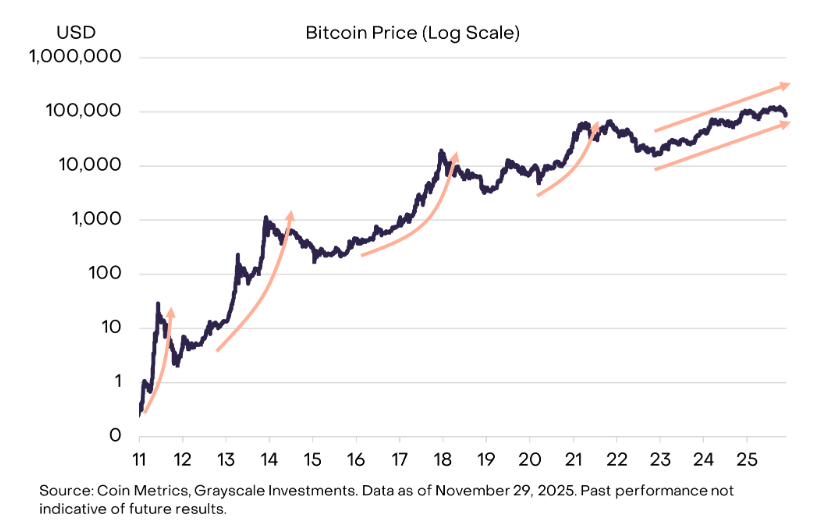
Grayscale Research released analysis pushing back against the idea that Bitcoin must follow the usual four-year halving cycle. The firm suggested BTC could make new highs in 2026 and urged investors to view large pullbacks as part of normal market swings.

Pricing data shows Bitcoin fell about 30% from its October peak through most of November, hitting roughly $84,000 briefly before edging back to about $86,909 as of early Tuesday, according to price feeds.

Why These Moves Matter Now

Large, coordinated buying by treasury firms can shift market psychology. When groups with deep pockets step in, some traders see it as a sign of conviction. At the same time, these entities can take months or years to reach break-even if prices stay below their average purchase levels. That dynamic makes markets more sensitive to both supply concentration and the pace of future buying.

BitMine’s on-chain activity will likely draw more attention if additional large transfers appear. Shifts in the firm’s average cost per ETH may also become a talking point, along with any new remarks from Tom Lee about his updated timeline. Analysts are already examining whether Grayscale’s stance on the halving cycle gains support from other major market participants.

Featured image from BIS Safety Software, chart from TradingView

Tether Makes Bold Reserve Pivot Toward Bitcoin And Gold As Treasury Holdings Decline

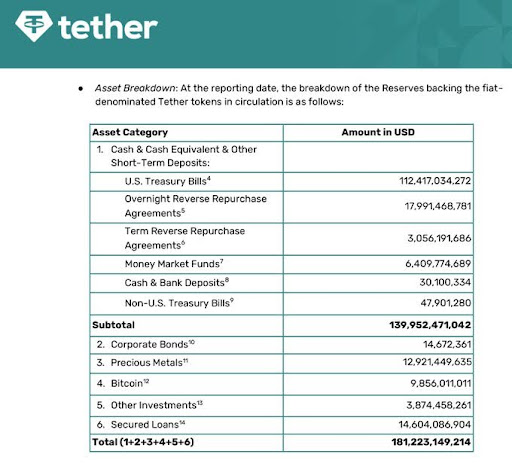
In a strategic move, Tether has shifted its reserve strategy, reducing its exposure to treasuries while increasing allocations to Bitcoin and gold. The USDT issuer has shown a notable reduction in government debt exposure, paired with an expanded position in hard assets known for durability and independence from traditional financial systems. 

Treasury Exposure Drops Amid Changing Macro And Regulatory Landscape

Stablecoin giant, Tether, has reduced its US Treasury holdings and increased its Gold and Bitcoin reserves. CryptosRus reported on X that Tether is quietly repositioning itself for what the company expects to be the Federal Reserve’s (FED) next round of rate cuts.

Related Reading: Rumble At The Core: How Tether Plans To Dominate The US Stablecoin Market

According to BitMex founder Arthur Hayes, Tether’s latest reserve update shows a clear shift away from the US treasuries and deeper into BTC and gold, a sign that the company is positioning for a changing macro environment. Furthermore, the Standard & Poor (S&P) Global noted that Tether is now leaning more heavily into assets with larger price swings in value, warning that this mix could expose USDT if markets turn volatile. Meanwhile, the current S&P Global rating on Tether remains weak.

Bitcoin

Thus, Tether CEO Paolo Ardoino has pushed back, saying that the company holds no toxic assets. He claims that its rapid growth reflects a broader shift towards new financial systems that operate outside the traditional banking world.

Why Attempts To Break Tether Are Difficult In Practice

Crypto analyst Ted Pillows has also offered insight into the Tether Fear Uncertainty and Doubt (FUD) as it is making its usual rounds again. The narrative is latching onto the company’s latest attestation, showing a notable shift into Gold and Bitcoin to offset declining interest income. Meanwhile, if these risk assets drop by 30%, Tether’s equity buffer could evaporate, creating an environment where Tether will be insolvent, and panic will kick in.

Related Reading: Tether Targets $500 Billion Valuation In New Equity Offering Amid US Expansion Plans

However, Ted is steadfast and believes that Tether has been through a decade of this same FUD, and USDT is still sitting at $1.00. They’re fully liquid, but they operate on a fractional-reserve model, much like traditional banks. As long as redemptions remain normal, everything will work smoothly. A problem will only arise if there’s an irrational panic, and then liquidity stress could hit quickly. 

According to Ted, the USDT isn’t fully backed by cash, but it’s backed by a diverse portfolio that includes the US treasuries, yield-generating assets, and some risk assets. This is all scaled to a massive $174 billion stablecoin. “If someone wants to kill USDT, it’s possible, but I highly doubt it,” Ted noted.

Bitcoin

BitMEX Founder Warns Tether’s Bitcoin Bet Could Trigger USDT Collapse

Tether’s latest Q3 2025 attestation reveals the stablecoin giant now holds approximately $22.8 billion in gold and Bitcoin, a diversification strategy that BitMEX founder Arthur Hayes warns could trigger USDT’s collapse.

CEO Paolo Ardoino announced the company maintains “a multi-billion-dollar excess reserve buffer and an overall proprietary Group equity approaching $30 billion,” but Hayes argues this diversification masks dangerous exposure to volatile assets.

Hayes contends Tether is positioning for Federal Reserve rate cuts that would crush their Treasury income.

The Tether folks are in the early innings of running a massive interest rate trade. How I read this audit is they think the Fed will cut rates which crushes their interest income. In response, they are buying gold and $BTC that should in theory moon as the price of money falls.… pic.twitter.com/ZGhQRP4SVF

— Arthur Hayes (@CryptoHayes) November 29, 2025

“The Tether folks are in the early innings of running a massive interest rate trade,” Hayes wrote, adding that “a roughly 30% decline in the gold + BTC position would wipe out their equity, and then USDT would be in theory insolvent.

Analyst Paul Barron noted that for every 25 basis point Fed decrease, USDT’s annual interest income drops approximately $318 million based on its $127 billion Treasury exposure.

Tether CEO Fires Back with Detailed Financial Disclosures

In a recent X Post, Ardoino swiftly countered Hayes’s insolvency claims with comprehensive data.

“Tether had (at end of Q3 2025) ~7B in excess equity (on top of the ~184.5B stablecoin reserves) + another ~23B in retained earnings as part of our Tether Group equity,” the CEO explained.

re: Tether FUD

From latest attestation announcement (Q3 2025):

"Tether will continue to maintain a multi-billion-dollar excess reserve buffer and an overall proprietary Group equity approaching $30 billion."

Tether had (at end of Q3 2025) ~7B in excess equity (on top of the…

— Paolo Ardoino 🤖 (@paoloardoino) November 30, 2025

Tether Group’s total assets reach approximately $215 billion against $184.5 billion in stablecoin liabilities, with gold and Bitcoin representing just 12.6% of reserves.

The CEO accused critics of deliberately misrepresenting Tether’s position.

“S&P made the same mistake of not considering the additional Group Equity nor the ~500M in monthly base profits generated by U.S Treasury yields alone,” Ardoino stated, suggesting “some influencers are either bad at math or have the incentive to push our competitors.

His defense comes after S&P Global downgraded USDT’s peg-stability rating from 4 to 5 on November 26, citing increased exposure to high-risk assets and persistent gaps in disclosure.

Industry Veterans Dismantle Tether’s Insolvency Claims

Joseph Ayoub, former head of digital asset research at Citi, noted that Tether’s disclosed assets don’t represent all corporate holdings.

“Their disclosed assets =/ all corporate assets,” he explained, noting Tether maintains a separate equity balance sheet comprising mining operations and corporate reserves that aren’t publicly reported.

I spent 100’s of hours writing research on tether for @Citi. @CryptoHayes missed a few key points.

1) 𝐓𝐡𝐞𝐢𝐫 𝐝𝐢𝐬𝐜𝐥𝐨𝐬𝐞𝐝 𝐚𝐬𝐬𝐞𝐭𝐬 =/ 𝐚𝐥𝐥 𝐜𝐨𝐫𝐩𝐨𝐫𝐚𝐭𝐞 𝐚𝐬𝐬𝐞𝐭𝐬

When tether generates $ they have a separate equity balance sheet which they don’t… https://t.co/pHSRr245Up

— Joseph (@JosephA140) November 30, 2025

With roughly $120 billion in interest-yielding Treasuries generating approximately 4% returns since 2023, Tether produces around $10 billion in liquid profit annually with just 150 employees.

Ayoub noted that banks operate on significantly lower fractional reserves of 5-15% in liquid assets compared to Tether’s overcollateralized structure.

His conclusion, “Tether isn’t going insolvent, quite the opposite; they own a money printing machine.

S&P Downgrade Sparks Fierce Industry Backlash

Ardoino responded defiantly to S&P’s rating action and recurrent criticism of Tether’s operational model.

“We wear your loathing with pride,” the CEO declared, positioning Tether as “the first overcapitalized company in the financial industry, with no toxic reserves” that proves “the traditional financial system is so broken that it’s becoming feared by the emperors with no clothes.”

He challenged banks to publish their reserve ratios, suggesting they likely consist of “3 olives and a half chewed gum.

Rumble CEO Chris Pavlovski added that “The S&P only attacks Tether, because Tether is challenging and beating the old financial guard at their own game.

The S&P only attacks Tether, because Tether is challenging and beating the old financial guard at their own game.

These old corporate entities cannot handle companies like Tether & Rumble taking their market share — their only recourse is to attack us because they’re losing. https://t.co/UUbaYpXAUq

— Chris Pavlovski 🏴‍☠️ (@chrispavlovski) November 26, 2025

The attacks surprised many, considering USDT maintained its peg through the 2018 crash, 2022 Terra/Luna collapse, and 2023 banking crisis.

Yet the downgrade carries serious implications.

With a “5” rating and MiCA regulations prohibiting USDT from EU exchanges, no major institutional fund can legally hold the stablecoin.

This could favor competitors like Circle’s USDC, PayPal’s PYUSD, or tokenized fiat alternatives, potentially shifting liquidity away from a company that generated more net profit than BlackRock last year and is tipped to surpass Saudi Aramco in profitability.

The post BitMEX Founder Warns Tether’s Bitcoin Bet Could Trigger USDT Collapse appeared first on Cryptonews.

Ethereum price forecast: Ether risks further downside as bears regain control

Key takeaways

  • ETH is down 5.5% and is now trading below $2,900.
  • The leading altcoins could record further losses amid renewed bearish momentum.

ETH/USD Daily chart

The cryptocurrency market is starting another month bearish after the poor performance recorded by Ether and other major coins in November. Ether recorded a temporary relief last week, hitting the $3k psychological level.

However, the recent gains have been wiped out, with Ether now trading around $2,800 after losing 5.5% of its value in the last 24 hours. The negative performance saw over $140 billion wiped out from the crypto market during that period, with the total market cap now below $3 trillion.

Furthermore, the bearish performance saw over $500 million worth of leveraged positions liquidated in the last 24 hours, with Binance, Bybit, and Hyperliquid accounting for 90% of the total liquidations.

Ether and other major cryptocurrencies could face further selling pressure in the near term. However, with the Fed’s FOMC meeting slated for next week, Ether and other leading cryptocurrencies could experience a temporary relief if the Federal Reserve cuts its benchmark interest rate for the third time this year. 

Ether could retest the $2,600 low.

The ETH/USD daily chart is bearish and efficient as Ether has underperformed in recent days. The coin has lost 5.5% of its value since Sunday and is now trading around the $2,840 region. 

If the ETH/USD daily candle closes below the November 21 low of $2,623, the bears could push the price lower over the next few hours or days, with the next major support around the June 22 low of $2,111.


The technical indicators remain bearish, with the RSI of 34 suggesting that sellers are in control. The MACD also risks a cross below the signal line, indicating Ethereum is still bearish.

However, if the bulls recover from the recent selloff, Ether could challenge the trend and push towards the $3k psychological level once again.

The post Ethereum price forecast: Ether risks further downside as bears regain control appeared first on CoinJournal.

320 Ether On The Move: Bhutan Ramps Up Its Staking Game

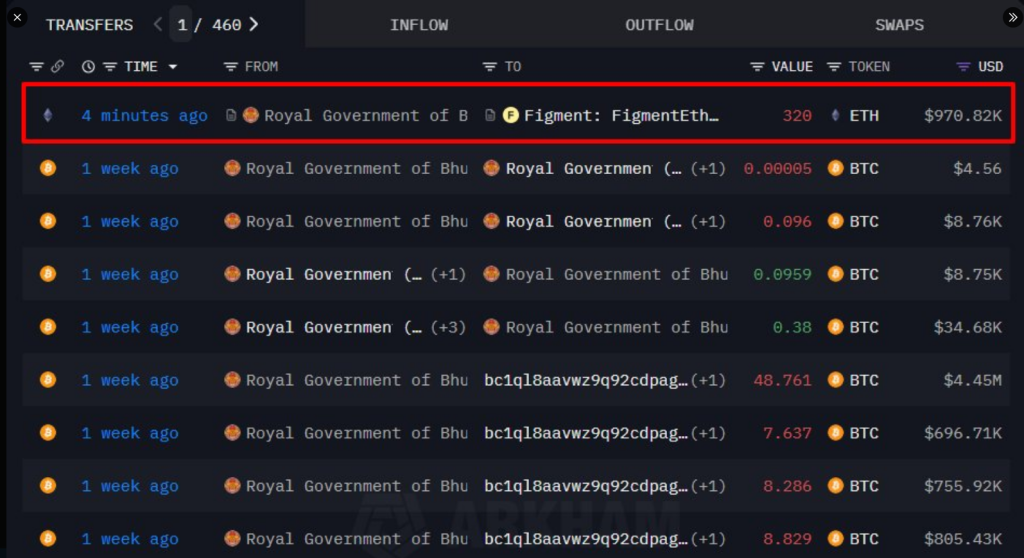
According to reports, the government of Bhutan moved 320 Ethereum (ETH) into staking on November 27, 2025. The transaction was routed through Figment.io, an institutional staking provider.

At the time of the move, the Ether was valued at about $970,000. The transfer is being watched in both crypto and policy circles because it links a sovereign treasury to active participation in a public blockchain.

Details Of The Staking Move

Onchain Lens say the 320 ETH created 10 new validators, matching the network rule that each validator requires 32 ETH. The payment and validator setup were recorded onchain and were visible to blockchain trackers shortly after the move.

This is Bhutan’s largest ETH action since May 2025, when the nation moved 570 ETH to a Binance wallet, based on earlier disclosures.

The Royal Government of Bhutan sent 320 $ETH, worth $920.8K, for staking into #ETH2.0 @Figment_io.https://t.co/q4dW3qJBT5 pic.twitter.com/qo0evHxthf

— Onchain Lens (@OnchainLens) November 27, 2025

Beyond Treasury Management

Observers note Bhutan is not only holding crypto as an asset. By staking ETH, the country is helping to secure the Ethereum network and earning rewards that come from validator participation.

Reports have disclosed the move also ties into national plans to shift parts of its digital identity project from Polygon to Ethereum. That plan would make the chain more than a place to park funds; it could become part of public infrastructure.

What It Means For Bhutan

Bhutan is already known to hold a sizeable amount of Bitcoin. Public data and media reporting put the country’s Bitcoin reserves at about 6,154 BTC, making Bitcoin the primary reserve asset.

Staking ETH, even at a smaller scale compared with those holdings, signals that Bhutan is experimenting with using crypto not just for investment but as a tool for state services and network involvement. The action was described by some analysts as an example of a small state testing new financial and technical models.

On Liquidity And Rewards

When ETH is staked it becomes illiquid for a period tied to network rules. That means the staked tokens cannot be used for immediate spending or trading. At the same time, validators earn rewards that may add modest income to a state treasury.

The trade-offs are clear: more participation in protocol security, less short-term flexibility in asset use. Several commentators asked whether sovereign staking will affect how other small nations treat crypto reserves.

Broader Crypto Context

On the world stage the amount is modest, but the move is symbolic. Sovereign actors rarely operate validators on major smart-contract chains. This step was noticed because it ties public services and reserve management to one blockchain.

Regulators, market watchers, and blockchain developers have been monitoring the transaction and related policy moves to see whether similar steps might follow elsewhere.

Featured image from Unsplash, chart from TradingView

Tether Pauses Bitcoin Purchases: World’s Largest Gold Buyer In Q3 With Over 120 Tons In Reserves

Tether, the issuer of the world’s most widely used stablecoin, USDT, has evolved over the years into one of the most profitable and resilient firms within the crypto space. 

Under the leadership of CEO Paolo Ardoino, Tether has broadened its focus beyond digital assets, becoming a significant player in the commodity market, particularly with substantial gold reserves.

Tether’s Gold Ambition

Recent reports from the Financial Times reveal that Tether has stirred the gold markets this year by becoming the largest holder of the precious metal outside of central banks. 

According to Bryce Elder’s analysis, the crypto firm’s stockpile is comparable to that of smaller central banks, such as those in Korea, Hungary, and Greece. Last quarter, the company’s gold acquisitions accounted for nearly 2% of total gold demand, equating to almost 12% of central bank purchases.

Sources indicate that Tether’s investments in gold reflect the belief among its insiders that the commodity serves as “a superior store of value” and a “better hedge against inflation” compared to digital currencies. 

Although Tether has significant holdings in Bitcoin, its investment in gold has surpassed its exposure to the leading cryptocurrency. Throughout the year, Tether purchased 26 tons of gold, bringing its total gold stockpile to over 116 tons. 

However, Tether’s ambitions in the gold sector extend beyond mere accumulation; the firm is actively pursuing deals related to gold royalty companies, which finance mining operations in exchange for a percentage of future revenues.

Plans To Dominate The Gold Royalty Space

In June, Tether Investments—responsible for managing the company’s profits—acquired a minority stake in Toronto-listed Elemental Altus for $105 million. An additional $100 million was invested in September amid Elemental’s merger with rival EMX, resulting in Tether holding a controlling stake in the company. 

Insiders suggest that the crypto giant has broader plans, aiming to consolidate small to mid-cap gold royalty firms to strengthen its position in the market. “Their goal is to keep consolidating the small to mid-cap gold royalty space,” said an insider familiar with Tether’s strategy. 

However, while some view this approach as savvy, others are skeptical, with one commodity industry executive labeling Tether as “the weirdest company I have ever dealt with.”

Gold royalties offer the company a unique advantage over traditional bullion; they provide fixed exposure to gold, insulating the stablecoin issuer from fluctuations in gold prices. Yet, amid these ventures, Tether has faced scrutiny regarding its financials. 

NewsBTC reported on Wednesday that S&P Global downgraded Tether’s assets to its lowest rating, “weak,” citing concerns over the firm’s rising exposure to high-risk reserve assets, which could undermine the collateral backing its stablecoin during a financial crisis.

According to a research note from S&P Global, this downgrade was part of a new assessment system introduced in 2023, which classifies stablecoins on a scale from 1 to 5 based on risk. 

The firm’s USDT stablecoin received a rating of “5 (weak),” reflecting a decline from its previous score of “4 (constrained).” Analysts expressed concerns regarding Tether’s limited transparency concerning the creditworthiness of its custodians and counterparties.

In response to the downgrade, the firm’s CEO, Paolo Ardoino, took to social media platform X (formerly Twitter) to address the concerns, stating, “We wear your loathing with pride.” 

He contended that traditional credit rating methodologies used by agencies like S&P stem from “outdated systems that have proven unreliable,” leading to renewed regulatory scrutiny of these legacy models.

Tether

Featured image from DALL-E, chart from TradingView.com 

Ethereum Founder Buterin Donates 256 ETH To Two Privacy Messaging Projects

Ethereum founder Vitalik Buterin has quietly redirected part of his growing on-chain privacy activity toward the encrypted-messaging space, donating a total of 256 ETH to SimpleX Chat and Session via the Railgun privacy protocol.

Onchain analytics firm Arkham first flagged the move, noting “VITALIK JUST SENT $2.9M $ETH TO RAILGUN. Vitalik holds over $700 MILLION of ETH, and just sent $2.9M into Railgun. What is he cooking?”

VITALIK JUST SENT $2.9M $ETH TO RAILGUN

Vitalik holds over $700 MILLION of ETH, and just sent $2.9M into Railgun.

What is he cooking? pic.twitter.com/2HvDFRDqi2

— Arkham (@arkham) November 26, 2025

Buterin Backs SimpleX And Session

Shortly after, Buterin confirmed the donations from his vitalik.eth account and framed them explicitly as a bet on the next frontier of privacy: permissionless and metadata-hardened messaging. “Encrypted messaging, like @signalapp, is critical for preserving our digital privacy,” he wrote. “Two important next steps for the space are (i) permissionless account creation and (ii) metadata privacy.” He then named Session and SimpleX as “two messaging apps pushing these directions forward.”

Buterin specified that he had “donated 128 ETH to each” project, providing their official websites for anyone wishing to “follow on,” and then pivoted from philanthropy to adoption: “But also, actually download and use them!”

The transactions to SimpleX and Session were executed via Railgun, a zero-knowledge privacy system on Ethereum that obscures the sender, recipient, token type and amount when interacting with smart contracts and DeFi protocols.

While Buterin has used Railgun and other privacy-preserving systems repeatedly over the past two years, he has often explained that such transfers typically represent “some donation to a charitable, non-profit, or other project,” rather than personal cash-outs.The latest pattern fits that narrative: funds routed into Railgun and then out to privacy-focused infrastructure and applications, this time in the messaging domain.

In his post, Buterin positions encrypted messengers as a crucial layer in the broader privacy stack alongside financial anonymity. He explicitly ties the importance of Signal-style end-to-end encryption to new requirements that go beyond content secrecy: “permissionless account creation” and “metadata privacy.” The first is about removing reliance on centralized, real-world identifiers such as phone numbers or email addresses in order to create an account. The second targets the far less visible but equally revealing exhaust of digital communication: who talks to whom, when, and from where.

Why The  Ethereum Founder Supports Both Projects

Both SimpleX and Session are trying to address those problems in ways that diverge sharply from the mainstream model of phone-number-based, cloud-synced messengers. SimpleX’s own documentation emphasizes “complete privacy of your identity, profile, contacts and metadata,” stressing that the platform “has no identifiers assigned to the users – not even random numbers.”

Instead, users establish connections via QR codes or links, and communication routing is designed so that the service itself cannot reconstruct the social graph. Session, originally forked from Signal but rebuilt around onion routing and decentralized service nodes, is pushing a similar line: no phone numbers, Tor-like network-level obfuscation, and attention to metadata minimization.

Buterin is clear that his endorsement is not a claim that these apps are already finished products. “Neither of the two are perfect pieces of software, they have a way to go to get to truly optimal user experience and security,” he cautioned. He then sketched the core engineering problems that still need to be solved if “strong metadata privacy” is to coexist with the kind of convenience users now expect from mainstream messengers.

“Strong metadata privacy requires decentralization, decentralization is hard, users expecting multi-device support makes everything harder,” he wrote. He also flagged Sybil and denial-of-service resistance as a still-open design space: developers must harden “both in the message routing network and on the user side (without forcing phone number dependence).”

The latest donations also underline how Buterin increasingly uses his personal holdings to nudge the ecosystem toward specific priorities: privacy-preserving DeFi, open-source infrastructure, and now, metadata-resistant communication tools. In this case, he explicitly calls for more developer attention: “These problems need more eyes on them. I wish all teams working on these important problems best of luck.”

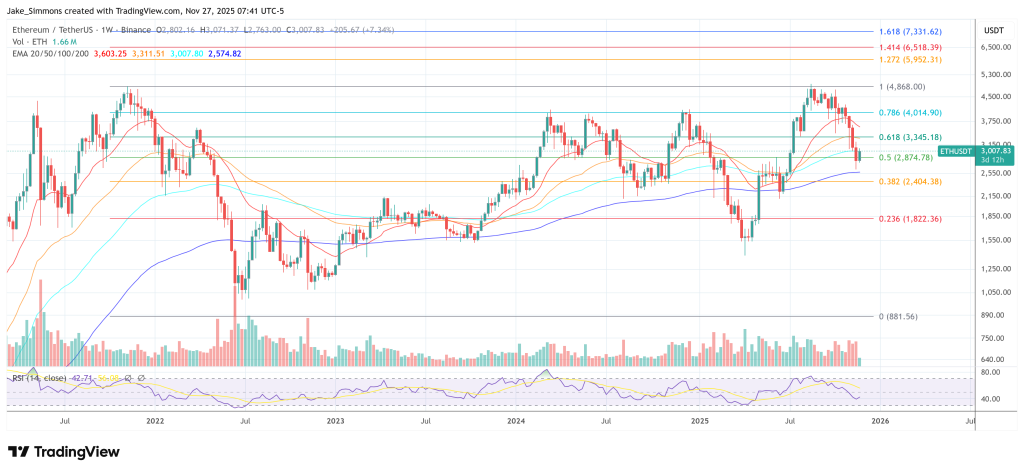
At press time, Ethereum (ETH) traded at $3,007.

Ethereum price

Crypto hoarders dump tokens as shares tumble

Crypto-hoarding companies are ditching their holdings in a bid to prop up their sinking share prices, as the craze for “digital asset treasury” businesses unravels in the face of a $1 trillion cryptocurrency rout.

Shares in Michael Saylor-led Strategy, the world’s biggest corporate bitcoin holder, have tumbled 50 percent over the past three months, dragging down scores of copycat companies.

About $77 billion has been wiped from the stock market value of these companies, which raise debt and equity to fund purchases of crypto, since their peak of $176 billion in July, according to industry data publication The Block.

Read full article

Comments

© Olemedia

Hong Kong crypto rules attract global banks as AMINA wins new approval

  • The licence covers 13 cryptocurrencies, including Bitcoin, Ether, USD,C and Tether.
  • AMINA reported a 233% increase in Hong Kong trading volumes in early 2025.
  • Hong Kong launched new stablecoin rules and approved a Solana ETF this year.

Hong Kong’s push to build a regulated digital asset market is drawing more interest from global financial institutions, and the latest example is Swiss crypto bank AMINA Bank AG securing approval to expand its services in the city.

The bank received a Type 1 licence uplift from the Securities and Futures Commission, which makes it the first international bank allowed to offer regulated crypto trading and custody to institutional clients in Hong Kong.

The move strengthens the city’s position as a regional digital asset hub and highlights rising demand for bank-grade crypto services among professional traders.

AMINA plans to use the approval to provide institutional users with a regulated route into cryptocurrencies at a time when clients are looking for stronger safeguards and clearer rules.

Hong Kong’s compliance standards have often limited the number of foreign institutions able to offer these services, which has left a gap in the market for firms with established banking frameworks.

AMINA’s entry aims to fill that gap while giving clients a regulated platform backed by traditional financial infrastructure.

AMINA expands in a fast growing market

The licence uplift allows AMINA’s Hong Kong subsidiary to offer trading and custody for 13 cryptocurrencies.

These include Bitcoin, Ether, USDC, Tether, and several leading decentralised finance tokens that are widely used across global exchanges.

The approval creates new opportunities for institutional clients looking for a single regulated venue with access to a curated list of major digital assets.

AMINA also reported a sharp rise in market activity.

The bank recorded a 233% increase in trading volume on Hong Kong crypto exchanges in the first half of 2025.

The increase points to stronger engagement from both institutional and retail segments, which are becoming more active as Hong Kong’s regulatory environment evolves.

The bank expects the new approval to support a wider product range.

It plans to expand into private fund management, structured crypto products, derivatives, and tokenised real-world assets.

These additions would place AMINA among the firms offering institutional clients diversified exposure across multiple types of digital assets.

Local players face new global competition

While AMINA is the first international bank to receive this specific licence upgrade, it enters a competitive market.

Hong Kong already hosts regulated local firms such as Tiger Brokers and HashKey, which serve institutional and retail clients under earlier permissions.

AMINA’s approval signals that the market is open to more foreign institutions, which could change competitive dynamics for both global and local providers.

Hong Kong officials have said on multiple occasions that attracting global firms is central to the city’s digital asset strategy.

AMINA’s arrival may encourage more banks and brokerages abroad to consider similar applications as they assess opportunities in Asia’s regulated crypto markets.

Policy changes shape Hong Kong’s crypto framework

AMINA’s approval arrives during a period of rapid policy development in the city.

Hong Kong introduced its new stablecoin rules in August, creating a formal licensing pathway for issuers.

Following this, major regional banks such as HSBC and ICBC indicated they were examining licence applications as part of their digital asset plans.

The city also approved its first Solana exchange-traded fund in late October.

The approval placed Hong Kong ahead of the US in allowing a regulated Solana ETF and added another product to its growing list of crypto-linked investment options.

Hong Kong tightened rules around self-custody of digital assets in August.

The change focused on improving cybersecurity protections and reducing risks tied to individual key management.

The decision was presented as a safety measure rather than a restriction on user access.

The combination of new rules and rising institutional interest has created an environment that is now attracting more global firms.

AMINA’s regulatory progress adds momentum to Hong Kong’s strategy of balancing strong compliance with market expansion.

The post Hong Kong crypto rules attract global banks as AMINA wins new approval appeared first on CoinJournal.

Ether eyes $3,500 if support levels hold; Check forecast

Key takeaways

  • ETH is down 1% in the last 24 hours and is now trading below $3,200.
  • The coin could rally above $3,500 if the daily candle closes above $3,100.

ETH approaches $3,200 as market takes a breather

The cryptocurrency market has been extremely bearish since the start of the month, with Bitcoin losing a key psychological level. Bitcoin dumped to a six-month low of $93k on Sunday, with altcoins also recording massive losses.

Ether, the second-largest cryptocurrency by market cap, is trading below $3,200 after retesting the $3k support level during the weekend. The coin has lost 11% of its value in the last seven days, signifying the third consecutive week of losses for the second-largest cryptocurrency by market cap.

Ether’s poor performance aligns with the broader crypto market, with liquidity tightening measures by the Federal Reserve affecting risk-based assets. However, analysts are confident that the crypto market will turn things around in the near term.

Derek Lim, research lead at Caladan, told The Block that,

In my opinion, the primary market driver remains liquidity. Liquidity is (and will be) temporarily tight as the U.S. government shutdown has kept the treasury general account elevated.

Ether’s performance over the next few days will likely depend on whether it continues to defend the $3k psychological and support level. 

Ethereum could recover if the $3k support level holds

The ETH/USD daily chart is bearish and efficient as Ether has underperformed over the last seven days. The coin faced rejection at the previous broken trendline around $3,592 last week and has lost 12% of its value since then. At press time, ETH is trading at $3,192 per coin. 

ETH/USD Daily Chart

If the support level at $3,017 holds, Ether could continue its recovery and rally towards the key resistance level at $3,592. Similar to Bitcoin, Ether’s RSI is rebounding from oversold territory, indicating a fading bearish momentum. 

On the flip side, if Ether’s daily candle closes below $3,017, it could record further bearish performance and decline toward the next key support at $2,749.

The post Ether eyes $3,500 if support levels hold; Check forecast appeared first on CoinJournal.

Ethereum price forecast: ETH could dip below $3k amid bearish PA

Key takeaways

  • ETH is down 10% and now trades around $3,100 per coin.
  • The bearish performance comes as the broader crypto market records a massive selloff.

ETH dips 10% amid wider market selloff

Ether, the second-largest cryptocurrency by market cap, has lost 10% of its value in the last 24 hours, sparking increased profit-taking and loss realization, as prices approached the cost basis of whales.

This latest development comes as Ethereum investors have intensified their selling activities over the past few days. Data obtained from Santiment revealed that investors have booked over $500 million in profits and $100 million in losses since Sunday. 

In addition to that, Ether’s price is approaching the average cost basis or realized price of whales with a balance of 10K-100K ETH, which is around $2,900. A dip below this cost basis will spark intense selling pressure as the whales look to cut losses.

Whales have been key in absorbing selling pressure since ETH’s price decline accelerated over the past month, as they have increased their collective balance by 890K ETH during the period. 

ETH could dip below $3k as selling pressure intensifies

The ETH/USD daily chart remains bearish and efficient as Ether has lost 10% of its value in the last 24 hours. The coin faced rejection at the previous broken trendline around $3,592 earlier this week and has dipped by 10% since then. At press time, ETH is trading at $3,140 per coin. 

If the selloff continues, ETH could lose the $3k support level and dip towards the $2,900 psychological level. Failure to close the daily candle above the $3,170 region could spark further selloff for Ether.

ETH/USD Daily chart

Similar to Bitcoin, Ethereum’s RSI and MACD indicate bearish momentum gaining traction, signaling a deeper correction ahead.

However, if Ether recovers and closes the daily candle above $3,170, it could rally towards the next resistance level at $3,592.

The post Ethereum price forecast: ETH could dip below $3k amid bearish PA appeared first on CoinJournal.

Ether eyes $3,900 as Whales accelerate buying pressure

Key takeaways

  • ETH is down 1.5% and is now trading above $3,500 per coin.
  • The positive performance comes as whales accelerate buying pressure.

Whales stack up Ethereum

Ether, the second-largest cryptocurrency by market cap, is trading above $3,500 after defending the $3,300 low on Wednesday. The coin is still down 1.5% in the last 24 hours, but could rally higher in the near term.

The positive performance comes as a key Ethereum whale has added over $1.38 billion worth of Ether coins to their wallet over the last ten days. According to Arkham Intelligence, the whale added another million in ETH to its holdings, while also borrowing $270 million from the decentralized lending platform Aave to potentially expand its ETH position.

The whale now holds 228.39K ETH in loaned positions worth about $818.6 million and 157.32K ETH in direct spot holdings worth $563.8 million. A few other onchain platforms also reveal similar bullish sentiment among Ethereum whales. 

Ether eyes $3,900 despite choppy market conditions

The ETH/USD 4-hour chart is bearish and efficient as Ether is down 1.5% in the last 24 hours. The cryptocurrency saw over $153 million in liquidations in the last 48 hours, led by $122.8 million in long liquidations.

The bearish performance comes after Ether faced a rejection at the 200-day Exponential Moving Average (EMA), just below the $3,660 resistance, on Wednesday. It dropped to the $3,470 support level but has now bounced back and is trading above $3,500 per coin. 

ETH/USD 4H Chart

If ETH sustains its recovery above $3,470, it could rally higher and hit the $3,900 mark. However, the resistance level at $3,660 will provide a challenge in the near term. On the flip side, failure to surpass the $3,660 resistance level could see ETH retest $3,470, with another support level just around $3,100.

The Relative Strength Index (RSI) stands at 51, showing a fading bearish trend. The MACD line is also below the neutral zone, but could crossover into the bullish region if the recovery continues.

The post Ether eyes $3,900 as Whales accelerate buying pressure appeared first on CoinJournal.

Tether Is Buying Bitcoin’s Revolution, How Devastating Will The Consequences Be?

Bitcoin Magazine

Tether Is Buying Bitcoin’s Revolution, How Devastating Will The Consequences Be?

At a Glance

  • The GENIUS Act in the U.S. gave private stablecoin issuers a legal framework while stalling a government issued CBDC.
  • Tether, issuer of USDT, earned record profits and became one of the largest private holders of U.S. Treasuries.
  • The company’s cooperation with regulators and law-enforcement shows how stablecoins function as compliance rails, not as alternatives to them.
  • Many Bitcoin advocates now align with Tether’s ecosystem, unintentionally helping extend the fiat system they claim to resist.

Bitcoin’s Quiet Compromise

When the GENIUS Act became law on 18 July 2025, the crypto industry celebrated it as the end of regulatory uncertainty. The Act requires licensed stablecoin issuers to hold liquid reserves such as cash and U.S. Treasuries, publish monthly disclosures, and submit to federal or state supervision. At the same time, Congress shelved a federal central bank digital currency.

Supporters saw this as a victory for innovation, but critics called it a quiet federalization of private money. The United States no longer needs to issue its own digital dollar. It has simply delegated that function to private issuers operating under oversight. For Bitcoiners, whose movement was built around sound, decentralised money, that shift should have triggered alarm bells.

Tether’s Private Empire

The biggest beneficiary of this new framework is Tether Limited, whose USDT token dominates global stablecoin supply. In its Q2 2025 attestation, Tether Limited reported a net profit of approximately $4.9 billion and total exposure to U.S. Treasuries exceeding $127 billion. Treasury bills and reverse repo holdings. Its balance sheet showed nearly $120 billion in Treasuries, making Tether one of the world’s largest private holders of U.S. government debt.

Custody of those assets rests with Cantor Fitzgerald, the Wall Street firm led by Howard Lutnick. Lutnick has publicly defended the soundness of Tether’s reserves, confirming Cantor’s role as custodian while emphasizing that it holds no equity stake in the company. 

The connection is now more delicate: Lutnick was later nominated for a senior White House economic position overseeing elements of trade and financial regulation. That appointment places a federal policymaker in proximity to one of the largest private holders of U.S. government debt and the key custodian for a company whose dollar backed token depends on the U.S. Treasuries for profit. The optics are uncomfortable. What began as a business relationship now blurs into a potential conflict of interest, embedding Tether in Wall Street’s plumbing and within the political apparatus that governs it.

In effect, Tether has become a private central bank: issuing dollar liabilities, earning seigniorage, and distributing liquidity through the crypto economy, all while piggy backing on U.S. sovereign debt. Its profit per employee rivals the most profitable institutions in finance.

Surveillance by Proxy

Stablecoins promise fast, borderless payments; however, their architecture depends on compliance. Since December 2023, Tether has maintained a proactive wallet-freezing policy for addresses sanctioned by the U.S. Office of Foreign Assets Control. The company says it has frozen billions in tokens linked to illicit activity and now works directly with the U.S. Secret Service and FBI

This is not inherently sinister, it’s what regulators demand, but it means enforcement now operates within the money itself. The control lever no longer sits solely with banks, it resides in the smart contract of the token issuer.

As Tether expands USDT onto Bitcoin adjacent networks such as Liquid and the RGB protocol, the same compliance logic will travel with it. The more Bitcoin infrastructure hosts these tokens, the more identity, KYC, and whitelisting mechanisms will appear around Bitcoin wallets and payment channels. The network that once prided itself on neutrality risks becoming a conduit for surveillance grade rails.

The Political Economy of the Digital Dollar

The GENIUS Act’s passage also realigned the politics of digital currency. Its sponsors framed it as an anti-CBDC measure, arguing that private stablecoins preserve choice and limit government power. However, the result is nearly identical to what a central bank digital currency would achieve: programmable, trackable dollars, only administered by corporations instead of the Fed. Some analysts have called this the birth of a “CBDC by proxy.”

The policy also meshes neatly with fiscal priorities. Every USDT minted represents demand for short dated Treasuries, effectively financing the same government that stablecoin advocates claim to bypass. Tether’s profits flow from the interest rate paid on those securities, an invisible subsidy from public debt to private issuers.

By situating stablecoins within the traditional bond market, the U.S. has created a dollar based feedback loop: bitcoin demand supports Treasury issuance, and Treasury yields support bitcoin profitability. In that loop, decentralization is incidental.

Co-opting the Bitcoin Narrative

Within the Bitcoin community, opposition to altcoins remains strong, but sponsorships, event partnerships, and integrations show how quickly principle bends toward funding. Bitcoin conferences increasingly feature Tether executives and supporters on stage, often framed as “bridges” to adoption. 

A familiar refrain has emerged among those bitcoiners who take money from Tether,  ‘if stablecoins are inevitable, it’s better they be run by Bitcoiners’. Another popular defence is that Tether provides a lifeline for people in countries locked out of the dollar system or suffering from hyperinflation and collapsing economies. This is an emotionally persuasive narrative.  These convenient mantras turn compromise into virtue, allowing Bitcoiners to take sponsorships and funding from the same system they once swore to oppose.

That logic may offer comfort to some, but erodes clarity. USDT on Bitcoin does not make Bitcoin more sovereign; it makes the dollar more omnipresent. When Bitcoin developers or advocates align with Tether for sponsorship or exposure, they lend moral legitimacy to a system that thrives on fiat’s dominance. The irony is that Bitcoin’s fiercest defenders are now helping entrench the very structure it was built to escape.

Follow the Money

Tether’s scale gives it power in markets and in messaging. With billions in annual profits and deep links to Wall Street custodians, it can sponsor conferences, fund research, and influence narratives across the digital asset world. Its executives appear frequently at policy forums to present stablecoins as allies of innovation and freedom. Each appearance helps normalise the idea that regulated, dollar denominated tokens represent progress for Bitcoin.

But the money tells a different story. Each stablecoin transaction that settles in USDT extends the dollar system’s reach and perpetuates the weaponization of money. Every layer of compliance embeds surveillance deeper into the blockchain economy. And every Bitcoiner who accepts that trade off helps build a network where decentralization endures mostly as branding.

Bitcoin doesn’t need a conspiracy against it; it only needs its followers to forget what made it different. The GENIUS Act, the rise of Tether, and the regulatory preference for private rails all point to a future where digital cash exists, but never without permission. The Trojan horse is not Tether, it’s the belief that working with it preserves freedom.

In the end, too many Bitcoiners remain exactly where Tether wants them, still tethered to the system they are trying to escape.

This is a guest post by Plain Memo. Opinions expressed are entirely their own and do not necessarily reflect those of BTC Inc or Bitcoin Magazine.

This post Tether Is Buying Bitcoin’s Revolution, How Devastating Will The Consequences Be? first appeared on Bitcoin Magazine and is written by Plain Memo.

❌