NASA is marking America’s 250th year with a bold new symbol of the nation’s relentless drive to explore.
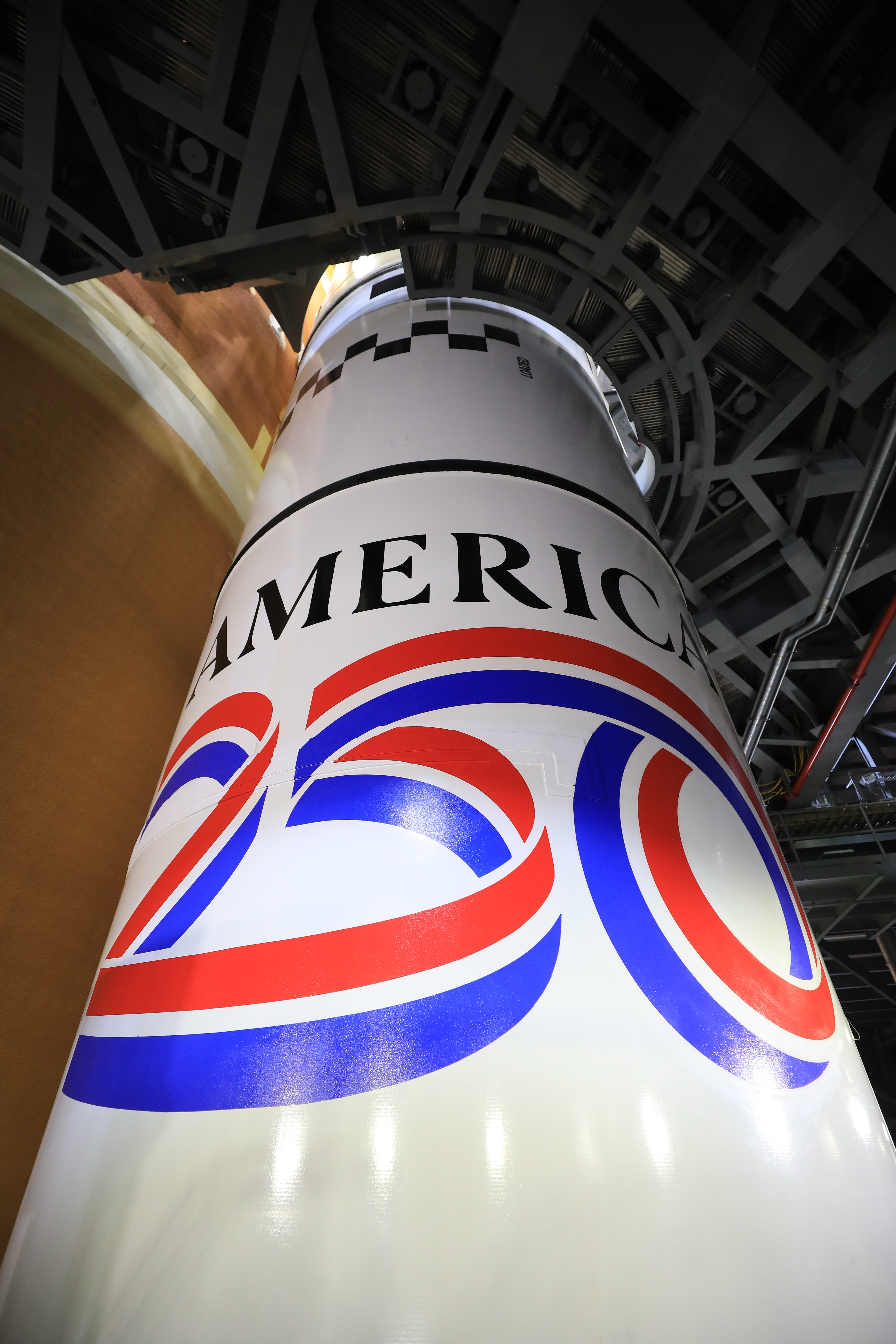
The America 250 emblem is now on the twin solid rocket boosters of the SLS (Space Launch System) rocket for Artemis II — the powerhouse that will launch a crew of four around the Moon next year. Unveiled Tuesday, the design echoes the America 250 Commission’s Spirit of Innovation theme, honoring a country that has never stopped pushing the horizon forward.
At NASA’s Kennedy Space Center in Florida, technicians spent recent weeks carefully applying the emblem on the rocket inside the Vehicle Assembly Building — the same place where rockets for Apollo once stood. Engineers are running final tests on SLS and the Orion spacecraft as preparations intensify for Artemis II.
The roughly 10-day Artemis II journey around the Moon will mark a defining moment in this new era of American exploration — paving the way for U.S. crews to land on the lunar surface and ultimately push onward to Mars.
America’s spirit of discovery is alive, and Artemis is carrying it to the Moon and beyond.
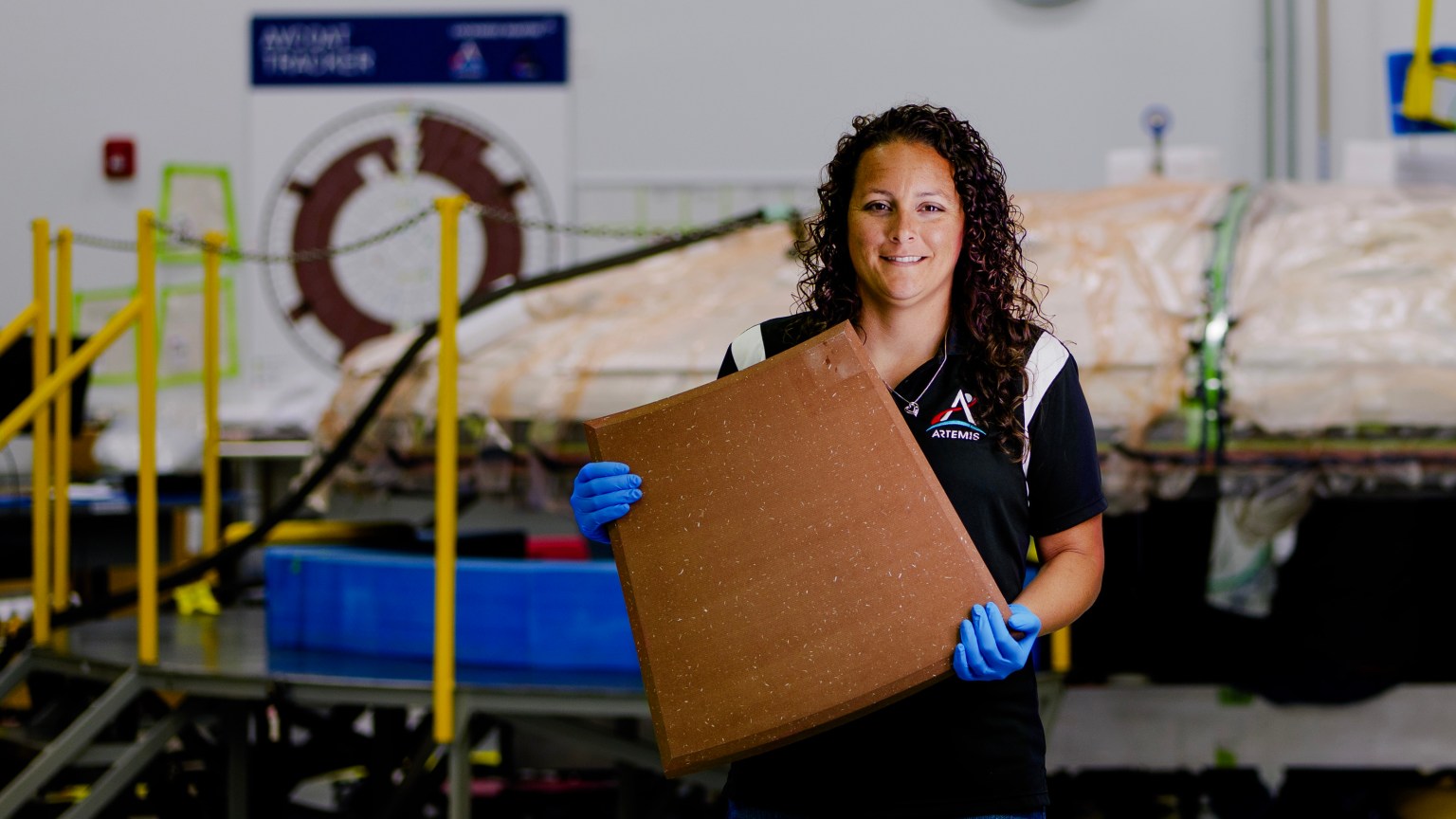
Diamond St. John, engineer on the Orion Program with Lockheed Martin, holds one of the heat shield tiles that will protect astronauts as they return to Earth after exploring the lunar surface on the Artemis III mission.
Credits: NASA/Rad Sinyak
Listen to this audio excerpt from Diamond St. John, engineer working on the Artemis III heat shield for the Orion Program at Lockheed Martin:
0:00 / 0:00
For four-generations, Diamond St. John’s family has been supporting human spaceflight at NASA’s Kennedy Space Center in Florida. Now, she’s continuing the family legacy that reaches back to Apollo —helping return humanity to the Moon with the agency’s Artemis campaign.
St. John is an engineer with Lockheed Martin supporting Orion, NASA’s spacecraft built to carry crew to the Moon and return them safely to Earth on Artemis missions. She specializes in the production of Orion’s heat shield at Lockheed’s Spacecraft, Test, Assembly and Resource Center, in Titusville, Florida. As one of the most important elements of the spacecraft, the heat shield is responsible for protecting the astronauts from the nearly 5,000 degrees Fahrenheit temperatures as they re-enter Earth’s atmosphere at the end of the mission.
From start to finish, St. John is responsible for establishing a production workflow for the Orion heat shield — the largest of its kind in the world — and ensures each step is executed in the correct order along the way.
Her team recognizes the criticality of their work and knows that their mission is to make sure astronauts come home safe. When it comes to quality of production, St. John embraces that mindset.
“We always want to make sure that we're doing things right. We have to slow down and make sure that our product is quality — because the slightest thing can be a make or break. We definitely want to make sure that our crew is safe.”
Diamond St. John
Engineer on the Orion Program with Lockheed Martin
St. John and her team are working on the Orion heat shield for the Artemis III mission that will land astronauts on the lunar surface. The team is in the process of bonding 186 tiles made of a material called Avcoat to the heat shield’s underlying structure. “Once we start bonding operations, we first sand the blocks, to make sure that we minimize any gaps between them. Then we get into bonding, and we fill the gaps, and we test. After that’s complete, we then paint and tape the heat shield.”
“Seeing a final product finished, it warms your heart. So, I’m looking forward to that finished heat shield and knowing that we put our heart and soul into it.”
Diamond St. John
Engineer on the Orion Program with Lockheed Martin
Though she is currently working on the heat shield for Artemis III, her journey with Orion began with the Artemis I spacecraft. St. John started on the clean room floor as a technician intern with subcontractor ASRC Federal. She then moved into a full-time role with the company for four years in quality inspection while earning her bachelor’s degree in engineering. After that, St. John joined Lockheed Martin as a manufacturing engineer.
“Everything has been Artemis from the beginning,” she said, in reflection of her career. “Knowing that my great grandparents worked on the Apollo missions — it’s cool to follow down that same path. I think they would be pretty proud.”
Diamond St. John, engineer on the Orion Program with Lockheed Martin, holds one of the heat shield tiles that will protect astronauts as they return to Earth after exploring the lunar surface on the Artemis III mission.

 Login
Login