Login
LoginX deactivates European Commission’s ad account after the company was fined €120M
X has seemingly penalized the European Commission's account after the commission fined the company over blue checkmarks and ad transparency.

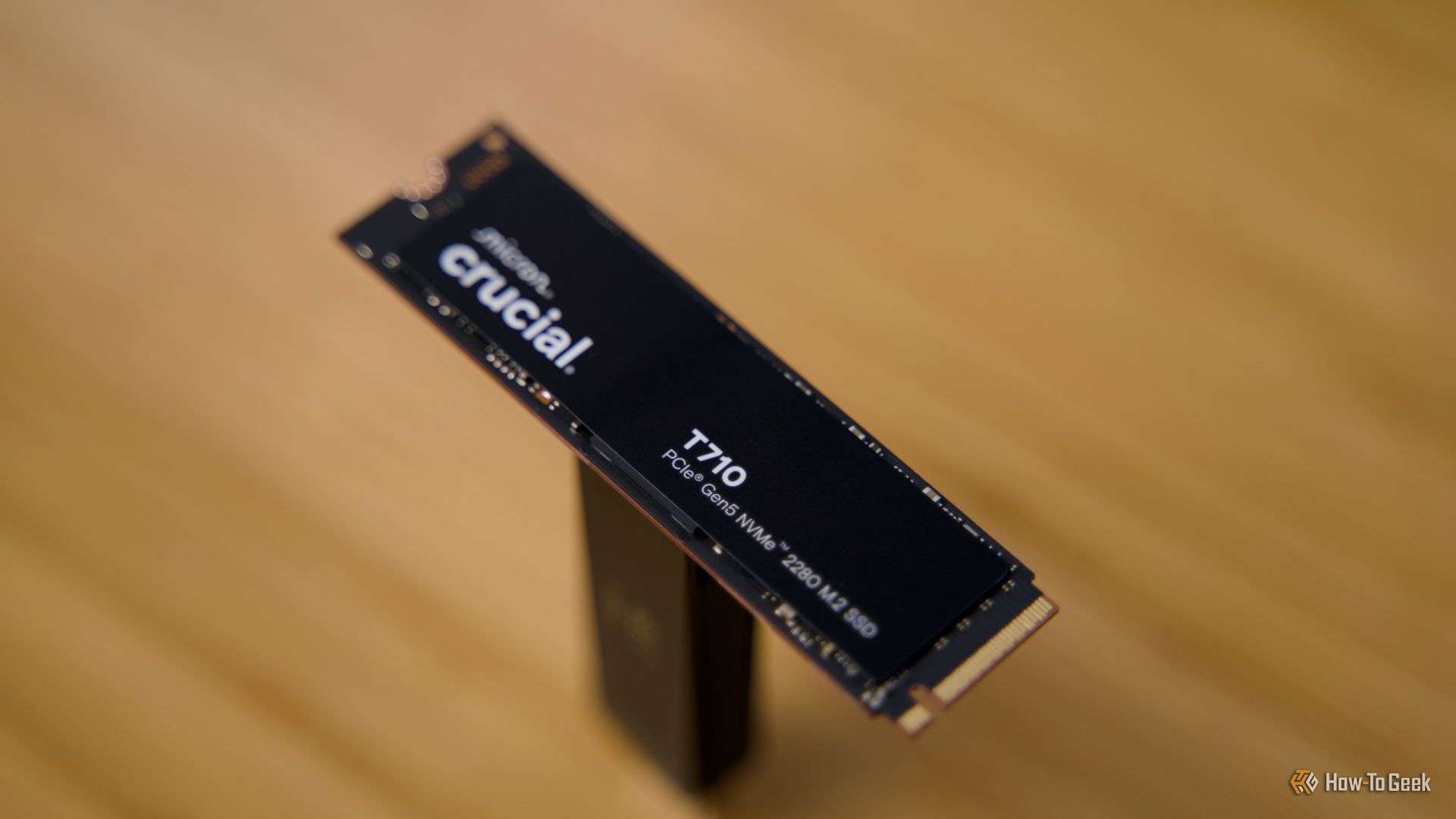
Hot take: 1TB SSDs are fine for some people, but not for most people. Not anymore.
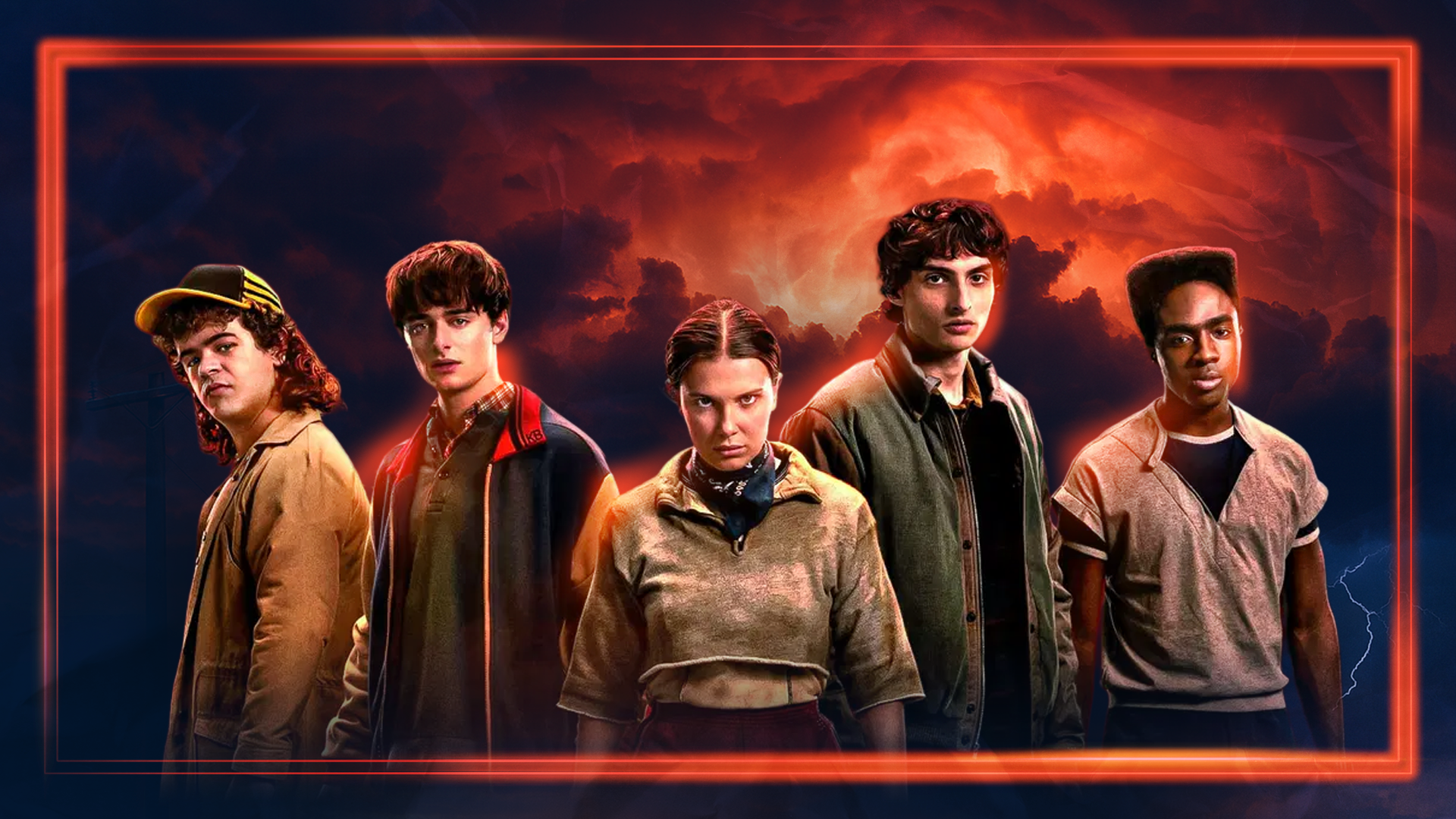
One of the most anticipated television events of the year has arrived—well, at least part one of it has—and with it comes the return of our favorite monster-fighting 80s teens. It’s been a long three-year wait, but Stranger Things season five has begun. The only bummer is that it’s dropping in three volumes. While we'd all love for the final season to drop at once, we must be patient.
Prominent market analyst Michael Van de Poppe has shared four market conditions that would confirm an altcoin market rally. Meanwhile, the cryptocurrency market continues to experience a widespread correction, weighing down the price growth of several assets.
Ethereum has shown more resilience in the last month than Bitcoin, which is largely interpreted as a bullish signal for altcoin enthusiasts. In the last week alone, the prominent altcoin reported a slight market gain of 0.86% compared to Bitcoin’s loss of 1.95%. When Ethereum outperforms Bitcoin, it encourages increased altcoin activity, as investor confidence spreads beyond the market leader into the broader crypto ecosystem.
However, a full altcoin market takeover only comes into effect after the following technical developments. Firstly, de Poppe explains that Bitcoin, as the market leader, must achieve a breakthrough above $92,000 resistance, potentially testing the $100,000 mark, to signal renewed market strength. Additionally, the analyst states the ETH/BTC ratio must stay above its 20-day moving average (MA), indicating Ethereum’s continued dominance and further encouraging altcoin accumulation. Together, these signals could set the technical bedrock for a significant altcoin rally.
Beyond crypto-specific indicators, de Poppe also touches on broader financial market plays that could initiate the next altcoin move. The analyst suggests that a 5-10% correction in gold prices, coupled with a peak in silver, could encourage capital to flow into riskier assets like cryptocurrencies including cryptocurrencies.
Meanwhile, a strong upward movement in the Nasdaq would indicate increased investor risk appetite, a development that often translates into heightened activity in the crypto markets. When combined with positive momentum in Bitcoin and Ethereum, these macro signals could create an environment ripe for a substantial altcoin rally. According to de Poppe, the fulfillment of these conditions indicates that altcoins could achieve market gains of 200%-300% in the present market cycle.
Market OverviewAt the time of writing, the total cryptocurrency market is valued at $3.04 trillion, following a significant 15.5% decline over the past month. Meanwhile, the altcoin market cap stands at $1.26 trillion, accounting for 41.44% of all circulating digital assets. In tandem, data from CoinMarketCap shows the altseason index at 20/100, as Bitcoin still maintains a dominant grip on overall market performance, with a 58.6% dominance.
In short, the conditions for a full-scale altcoin breakout have yet to materialize, but the key indicators highlighted above suggest that scenario may be approaching if momentum shifts decisively toward risk assets.

Покерный мир отметил новое яркое событие: 5 декабря состоялась премьера первого видео на официальном YouTube-канале Марио Мосбека. Профессиональный игрок и амбассадор CoinPoker познакомил зрителей с уникальным материалом, который ранее не попадал ни на одну медиаплатформу. В преддверии премьеры прошел специальный 24-часовой розыгрыш, в ходе которого каждый новый подписчик автоматически участвовал в распределении призов на сумму $5 000. Этот запуск стал заметным шагом вперед в развитии личного бренда Мосбека и предложил поклонникам покера новый источник эксклюзивного контента и аналитики.
Для первого ролика Мосбек подготовил материалы из турнира, который сам по себе вызывает огромный интерес — Triton Invitational Montenegro с бай-ином $200 000. Это одно из самых элитных событий мирового покера, где за столами собираются признанные мастера и известные VIP-игроки. На Дне 1 Марио оказался за столом с Филом Айви, Артуром Мартиросяном, Леоном Штурмом и Джонатаном Джаффе — соперниками, с которыми попадают в одну раздачу лишь лучшие.
Видео включило разбор ключевых моментов турнира, детальные объяснения решений и взгляд изнутри на те раздачи, которые аудитория в обычных условиях никогда бы не увидела. Мосбек не только показал ход игры, но и поделился личными впечатлениями и комментариями о динамике стола. В ролик также вошла его «кулерная» вылетная раздача, ставшая одним из самых эмоциональных моментов сюжета.
За сутки до премьеры CoinPoker и Мосбек организовали акцию, в рамках которой разыгрывали $5 000 среди зрителей, успевших подписаться на канал. Условия были максимально прозрачными: действия требовалось всего одно — нажать кнопку «Подписаться» за сутки до запуска.

В розыгрыше участвовали 200 билетов CoinMasters номиналом по $25, что давало победителям шанс попасть в турнир с гарантией $10 000. Все победители определялись посредством случайной выборки, а тикеты начислялись напрямую на их CoinPoker-аккаунты. Отсутствие скрытых условий и полного контроля случайности сделало акцию привлекательной как для новых пользователей, так и для постоянных поклонников платформы.
Хотя розыгрыш уже завершен, запуск канала ясно продемонстрировал, что это был лишь первый шаг. Канал Мосбека обещает стать регулярным источником аналитики с турниров высоких ставок, образовательных разборов и редких инсайтов, которые могут быть полезны игрокам любого уровня. Поскольку Марио многие годы является частью топовой профессиональной сцены, его контент представляет реальную практическую ценность.
Не менее важно и то, что CoinPoker последовательно внедряет новые активности и промо-кампании. Если ранние подписчики уже получили возможность выиграть билеты CoinMasters, то будущие подписчики также смогут претендовать на новые розыгрыши и бонусы. Чтобы не упускать таких возможностей, достаточно подписаться на канал заранее и следить за обновлениями — это всего один шаг, который легко может превратиться в выгодное участие в следующей акции.



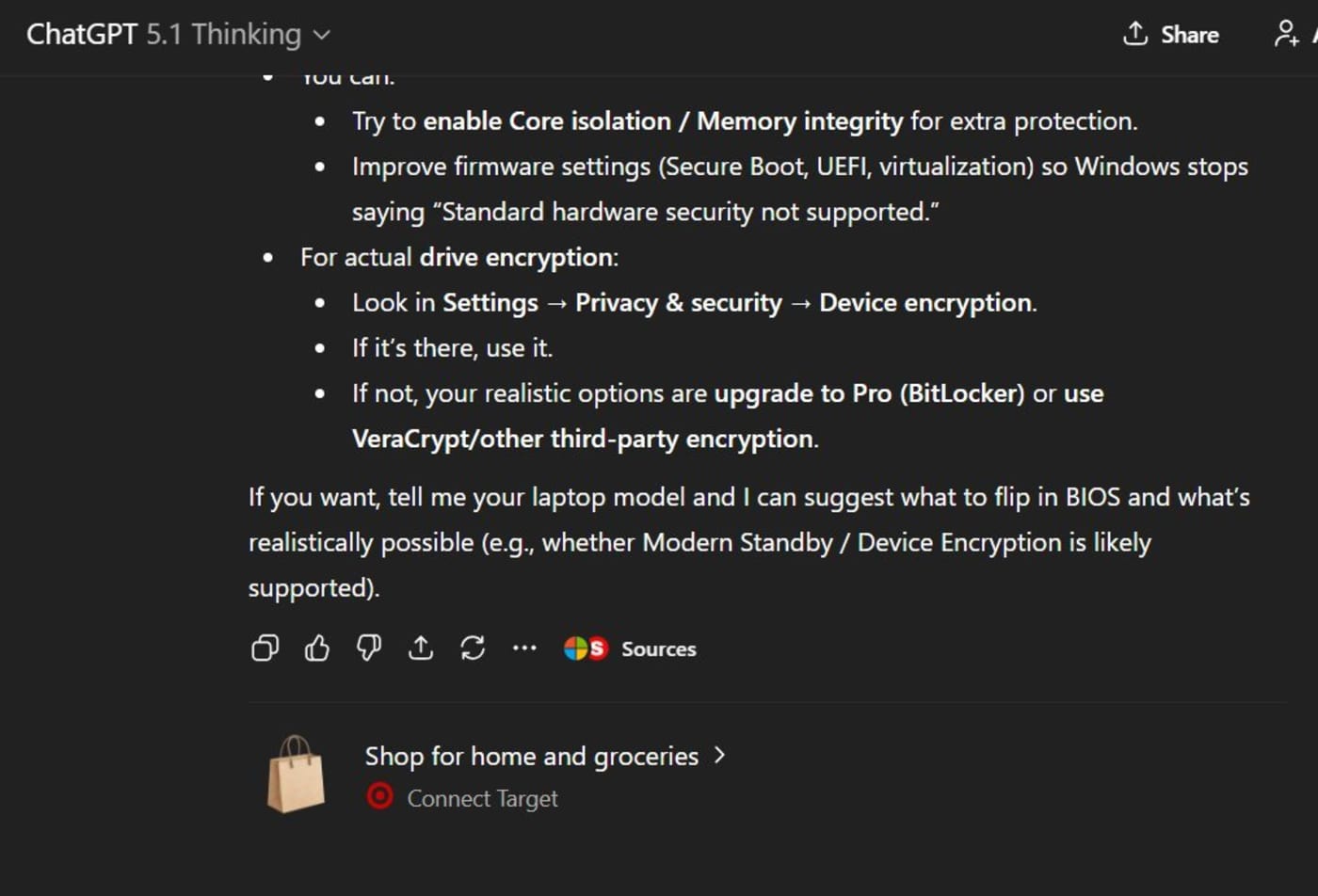
Those might not exactly be ads you're seeing on ChatGPT, at least according to OpenAI. Nick Turley, OpenAI's head of ChatGPT, clarified the confusion around potential ads appearing with the AI chatbot. In a post on X, Turley said "there are no live tests for ads" and that "any screenshots you've seen are either not real or not ads." The OpenAI exec's explanation comes after another post from former xAI employee Benjamin De Kraker on X that has gained traction, which featured a screenshot showing an option to shop at Target within a ChatGPT conversation.
OpenAI's Daniel McAuley responded to the post, arguing that it's not an ad but rather an example of app integration that the company announced in October. However, the company's chief research officer, Mark Chen, also replied on X that they "fell short" in this case, adding that "anything that feels like an ad needs to be handled with care."
"We’ve turned off this kind of suggestion while we improve the model’s precision," Chen wrote on X. "We’re also looking at better controls so you can dial this down or off if you don’t find it helpful."
There's still a lot of uncertainty about whether OpenAI will introduce ads to ChatGPT, but in November, someone discovered code in a beta version of the ChatGPT app on Android that made several mentions of ads. Even in Turley's post debunking the inclusion of live ads, the OpenAI exec added that "if we do pursue ads, we’ll take a thoughtful approach." Turley also posted that "people trust ChatGPT and anything we do will be designed to respect that."
This article originally appeared on Engadget at https://www.engadget.com/ai/openais-head-of-chatgpt-says-posts-appearing-to-show-in-app-ads-are-not-real-or-not-ads-190454584.html?src=rss©
© Benjamin De Kraker / X


Read more of this story at Slashdot.

THE LONG VIEW
Trump Is Taking 3 Steps Backward in the AI Race (Arati Prabhakar and Asad Ramzanali, Politico)
The administration needs to shift focus away from providing chips and datacenters to the world’s richest companies.

December 7 carries historical weight well beyond the tech world, but for those who covered Microsoft in the ’90s, the date has another resonance. Thirty years ago today, Bill Gates gathered more than 200 journalists and analysts at Seattle Center to declare that the company was going “all-in” on the internet.
As managing editor for Microsoft Magazine at the time, I was there, and I remember it well. Three decades later, I can’t help but see the parallels to Microsoft’s current AI push.
The moves that Microsoft kicked off that day to build internet connectivity into all its products would reverberate throughout the next decade, helping to lay the foundation for the dot-com boom years and arguably the eventual rise of cloud computing.
The release of Internet Explorer 2.0 as a free, bundled browser, the internet-enablement of Microsoft Office, the complete revamping of the still-new MSN online service, Microsoft’s licensing of Java from Sun Microsystems and a focus on how the internet might be used commercially were all pieces of the Microsoft plan unveiled that day.

“The internet is the primary driver of all new work we are doing throughout the product line,” Bill Gates told the assembled technology press in 1995. “We are hard core about the internet.”
Substitute the word “AI” for “internet” and you have a statement that current Microsoft CEO Satya Nadella could have made at any moment in the last couple of years.
“Fifty years after our founding, Microsoft is once again at the heart of a generational moment in technology as we find ourselves in the midst of the AI platform shift,” Nadella wrote in his 2025 annual letter to shareholders. “More than any transformation before it, this generation of AI is radically changing every layer of the tech stack, and we are changing with it.”
Whether you are using the Microsoft Azure cloud platform; running a Windows 11 PC, tablet, or laptop; spending time on LinkedIn; or using Microsoft 365, you will find AI baked in.
Comparing then and now, there are insights in both the similarities and the differences, and lessons from Microsoft’s mid-’90s missteps and successes that are still relevant today.
The challenge of navigating the shift to a new generation of technology in a large, fast-moving company is the biggest similarity between now and 30 years ago.

Microsoft was a lot smaller in 1995, but it was still the dominant force in the software industry of its day. When the company launched Windows 95 in August of 1995, it came with the first versions of both Internet Explorer and MSN. Within four months, it had to ship new, better versions of those products alongside a whole lot of other changes.
The push for speedy change grew out of something the company had been telling its senior leaders for several months prior to the launch of Windows 95: It had to move fast and do more if it was going to catch up in a race that it couldn’t afford to lose.
Gates’ famous “internet tidal wave” memo from May 26, 1995 (which later became an antitrust exhibit) spelled out both the threat and opportunity — calling the internet “the most important single development to come along since the IBM PC was introduced in 1981.”
Later in the memo, Gates acknowledged a significant problem: Microsoft would have to explain why publishers and internet users should use MSN instead of just setting up their own website — and he admitted that the company didn’t have a great answer.
Fast forward to March 2023, a few months after Microsoft partner OpenAI launched ChatGPT, when Satya Nadella made the scale of the AI era clear in a speech on the future of work.
“Today is the start of the next step in this journey, with powerful foundation models and capable copilots accessible via the most universal interface: natural language,” Nadella said. “This will radically transform how computers help us think, plan, and act.”
Of course, Microsoft CEOs have learned a lot over the last 30 years, including the importance of not pointing out the company’s shortcomings in memos that could end up being seen by the rest of the world. Nadella offered nothing like Gates’ MSN admission. But his comments about the size of the AI challenge and opportunity were a direct parallel to the urgency that Gates expressed about the internet 30 years ago.
In the world of PC operating systems and software, Microsoft in the 1990s was king — with few competitors that came even close to the kind of market share it enjoyed. It was arguably late in making a bet-the-company pivot to the internet, but doing so from a very strong position.
Thirty years later, amid the rise of artificial intelligence, Amazon, Google, Nvidia, OpenAI, and Anthropic are part of a more complex network of competitors and partners.
Back in 1995, the big competition was perceived as coming from Netscape and other fast-moving internet startups — and Microsoft was the behemoth battling the insurgents.
The New York Times’ headline about the 1995 event summed up the framing: “Microsoft Seeks Internet Market; Netscape Slides.” As The Seattle Times put it, “Microsoft plays hardball — Game plan for the Internet: Crush the competition.” Many others echoed the theme.

I saw that competitive dynamic first-hand at the press event, when by a stroke of luck I ended up sitting beside Bill Gates at lunch. I recall him being a little annoyed by questions about the Java licensing deal with Sun and the broader press interest in the Netscape/Microsoft narrative. He wanted to focus on the broader impact of the day’s announcements.
He stressed, for example, that the licensing by Microsoft of Sun’s Java programming language for use with Microsoft’s Internet Explorer browser was not really a big deal.
“Java you can recreate trivially,” Gates told me, brushing off the licensing deal as a routine business decision, not much different than many others Microsoft made over the years.
The scale is also drastically different. For example, my January 1996 cover story for Microsoft Magazine quoted Gates explaining how the “150 million users of Windows” would benefit from the internet integration it was undertaking across 20 new products and technologies.
In today’s terms, those numbers look tiny. In a blog post earlier this year, Microsoft executive vice president Yusuf Mehdi said Windows now powers more than 1.4 billion monthly active devices. That doesn’t include Microsoft’s massive cloud computing business, Microsoft 365, LinkedIn, Xbox, and its already-significant AI-attributable revenue from Copilot.
The investment gap is more dramatic, even adjusted for inflation. Microsoft poured more than $88 billion into capital expenditures last fiscal year, much of it on AI infrastructure. In 1995, the company’s $220 million deal with NBC to launch MSNBC sounded like a lot of money.
That MSNBC deal, however, highlights another important contrast between the present and the past. In 1995, no one really knew where the internet (and the web) was going to go. Fortunes were made and lost trying to predict which business models would work online.
Tim Bajarin, CEO of the consultancy Creative Strategies and a longtime industry analyst, says Microsoft is better positioned now than it was in 1995. The difference: we already have the underlying architecture for useful AI applications. That wasn’t true with the internet back then.
“We didn’t see the value proposition until we saw the role of applications built on a web-based architecture,” Bajarin said. “That is what is significantly different.”
Microsoft’s AI push, Bajarin said, will succeed only if it delivers genuine value — implementations that solve real problems and show clear return on investment.
Recent headlines suggest not everyone is convinced. ‘No one asked for this’: Microsoft’s Copilot AI push sparks social media backlash, declared Germany’s PC-WELT magazine. It’s the same question Gates couldn’t answer about MSN in 1995: Why should anyone use this?

Perhaps the biggest lesson on the competition front is that there is no guarantee of longevity or relevance in tech. Only one of the competitors listed in the December 1995 New York Times story is still around – IBM – and it is a vastly different company than it was then.
There is one more lesson, about the cost of success. Microsoft’s aggressive internet push worked — but it also triggered a Department of Justice investigation that lasted from 1998 to 2001. Competing hard is essential. Competing too hard has consequences.
But that’s a story for another decade.

 Lucas Shaw / Bloomberg:
Sources: Ted Sarandos met with President Trump in November, and both agreed WBD should go to the highest bidder; Sarandos argued that Netflix wasn't a monopoly — Netflix Inc. co-Chief Executive Officer Ted Sarandos ventured to the White House in mid-November for a meeting with President Donald Trump.
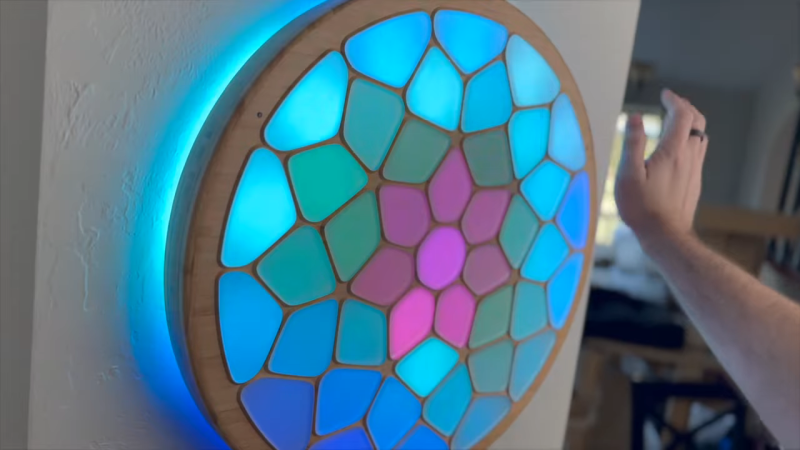
[Voria Labs] has created a whole bunch of artworks referred to as Lumanoi Interactive Light Sculptures. A new video explains the hardware behind these beautiful glowing pieces, as well as the magic that makes their interactivity work.
The basic architecture of the Lumanoi pieces starts with a custom main control board, based around the ESP-32-S3-WROOM-2. It’s got two I2C buses onboard, as well as an extension port with some GPIO breakouts. The controller also has lots of protection features and can shut down the whole sculpture if needed. The main control board works in turn with a series of daisy-chained “cell” boards attached via a 20-pin ribbon cable. The cable carries 24-volt power, a bunch of grounds, and LED and UART data that can be passed from cell to cell. The cells are responsible for spitting out data to addressable LEDs that light the sculpture, and also have their own microcontrollers and photodiodes, allowing them to do all kinds of neat tricks.
As for interactivity, simple sensors provide ways for the viewer to interact with the glowing artwork. Ambient light sensors connected via I2C can pick up the brightness of the room as well as respond to passing shadows, while touch controls give a more direct interface to those interacting with the art.
[Voria Labs] has provided a great primer on building hardcore LED sculptures in a smart, robust manner. We love a good art piece here, from the mechanical to the purely illuminatory. Video after the break.
We all know and rely on the glorious copy-paste shortcut. Seriously, imagine having to right-click to copy and then right-click to paste every single time you need to move a snippet of text. Frustrating, right? It completely breaks your rhythm!

The asset manager’s EPXC fund tokenizes a cash-secured put-writing strategy, signaling deeper integration between traditional market products and blockchain.


Meta is delaying the release of its anticipated mixed reality headset, codename "Phoenix," and will focus on next-gen devices and wearables over the next year.
In an internal memo, Reality Labs Vice President Maher Saba stated that the commands originated from CEO Mark Zuckerberg, who instructed Reality Labs teams to focus on "higher quality experiences" and other efforts to make the business more sustainable. Saba clarified to employees that the extended timeline was not due to the device receiving additional features, but rather to encourage teams to refine the details.
Other Meta VR leaders, including Reality Labs executives Gabriel Aul and Ryan Cairns, added that the decision would give them more "breathing room" to complete the product, as reported by Business Insider. "There's a lot coming in hot with tight bring-up schedules and big changes to our core UX, and we won't compromise on landing a fully polished and reliable experience," they wrote in another memo.
The glasses reportedly look similar to Apple's Vision Pro glasses, with a goggle-like shape and an external computing puck that makes the unit extremely lightweight. Insiders say it will run on the same Horizon OS as Meta’s Quest headsets.
Meta will instead aim for a 2026 release of a "limited edition" wearable device, called "Malibu 2," as well as a next-generation Meta Quest device. Aul and Cairns said the revamp will include a major capabilities upgrade focused on immersive gaming.
Just a day after receiving a roughly $140 million fine, X has terminated the ad account of the European Commission. Nikita Bier, X's head of product, accused the European Commission of using an exploit to artificially boost the reach of its post announcing the major fine.
In the post, Bier said that the commission "logged into [their] dormant ad account to take advantage of an exploit in our Ad Composer" and posted "a link that deceives users into thinking it’s a video and to artificially increase its reach." Bier explained in a separate post that the exploit has "never been abused like this" and "is now patched." However, X still revoked the European Commission's ability to buy and track ads on its platform.
While X decided to remove the European Commission's ad account, it still needs to submit specific measures and an action plan to address the concerns associated with the $140 million fine. The European Commission's spokesperson for Tech Sovereignty, Defence, Space and Research, Thomas Regnier, said that this is the first-ever fine under the Digital Services Act. The European legislative body claimed that X has a deceptive system when it comes to verified accounts, lacks transparency with its advertising repository and doesn't provide effective data for researchers. In response, X's owner, Elon Musk, replied to the European Commission's post, calling it "bullshit."
This article originally appeared on Engadget at https://www.engadget.com/social-media/x-shuts-down-the-european-commissions-ad-account-the-day-after-major-fine-173553267.html?src=rss©
© European Commission
Read more of this story at Slashdot.