 Login
LoginCreator IShowSpeed sued for allegedly punching, choking viral humanoid Rizzbot
Creator IShowSpeed sued after punching, choking viral humanoid Rizzbot.

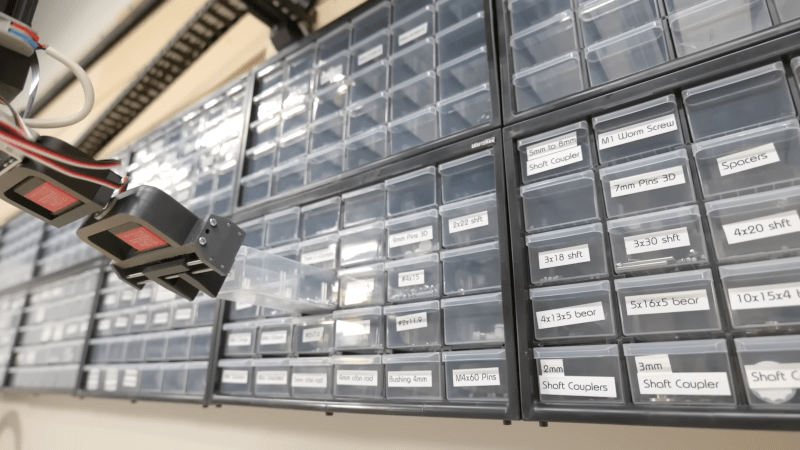
[Engineezy] might have been watching a 3D printer move when inspiration struck: Why not build a robot arm to clean up his workbench? Why not, indeed? Well, all you need is a 17-foot-long X-axis and a gripper mechanism that can pick up any strange thing that happens to be on the bench.
Like any good project, he did it step by step. Mounting a 17-foot linear rail on an accurately machined backplate required professional CNC assistance. He was shooting for a 1mm accuracy, but decided to settle for 10mm.
With the long axis done, the rest seemed anticlimactic, at least for moving it around. The system can actually support his bodyweight while moving. The next step was to control the arm manually and use a gripper to open a parts bin.
The arm works, but is somewhat slow and needs some automation. A great start to a project that might not be practical, but is still a fun build and might inspire you to do something equally large.
We have large workbenches, but we tend to use tiny ones more often in our office. We also enjoy ones that are portable.

Microsoft’s annual shareholder meeting Friday played out as if on a split screen: executives describing a future where AI cures diseases and secures networks, and shareholder proposals warning of algorithmic bias, political censorship, and complicity in geopolitical conflict.
One shareholder, William Flaig, founder and CEO of Ridgeline Research, quoted two authorities on the topic — George Orwell’s 1984 and Microsoft’s Copilot AI chatbot — in requesting a report on the risks of AI censorship of religious and political speech.
Flaig invoked Orwell’s dystopian vision of surveillance and thought control, citing the Ministry of Truth that “rewrites history and floods society with propaganda.” He then turned to Copilot, which responded to his query about an AI-driven future by noting that “the risk lies not in AI itself, but in how it’s deployed.”
In a Q&A session during the virtual meeting, Microsoft CEO Satya Nadella said the company is “putting the person and the human at the center” of its AI development, with technology that users “can delegate to, they can steer, they can control.”
Nadella said Microsoft has moved beyond abstract principles to “everyday engineering practice,” with safeguards for fairness, transparency, security, and privacy.
Brad Smith, Microsoft’s vice chair and president, said broader societal decisions, like what age kids should use AI in schools, won’t be made by tech companies. He cited ongoing debates about smartphones in schools nearly 20 years after the iPhone.
“I think quite rightly, people have learned from that experience,” Smith said, drawing a parallel to the rise of AI. “Let’s have these conversations now.”
Microsoft’s board recommended that shareholders vote against all six outside proposals, which covered issues including AI censorship, data privacy, human rights, and climate. Final vote tallies have yet to be released as of publication time, but Microsoft said shareholders turned down all six, based on early voting.
While the shareholder proposals focused on AI risks, much of the executive commentary focused on the long-term business opportunity.
Nadella described building a “planet-scale cloud and AI factory” and said Microsoft is taking a “full stack approach,” from infrastructure to AI agents to applications, to capitalize on what he called “a generational moment in technology.”
Microsoft CFO Amy Hood highlighted record results for fiscal year 2025 — more than $281 billion in revenue and $128 billion in operating income — and pointed to roughly $400 billion in committed contracts as validation of the company’s AI investments.
Hood also addressed pre-submitted shareholder questions about the company’s AI spending, pushing back on concerns about a potential bubble.
“This is demand-driven spending,” she said, noting that margins are stronger at this stage of the AI transition than at a comparable point in Microsoft’s cloud buildout. “Every time we think we’re getting close to meeting demand, demand increases again.”
Bluetooth is a well-worn technology that you might be tempted to write off in your smart home, especially if your server doesn’t already have Bluetooth capabilities. I wasn’t going to bother, but then I saw an opportunity to pick up a cheap adapter and gave it a shot.


Bitcoin’s trajectory is becoming a central theme in the first family’s business interests, with Eric Trump explaining why he believes the market is setting up for a dramatic surge. His comments, made in a YouTube interview with Grant Cardone, offered a rare look into how American Bitcoin Corp (ABTC) approaches the crypto industry and why the Trumps consider BTC one of the most important financial opportunities of the decade.
Eric Trump made it clear that ABTC operates on the conviction that Bitcoin is gearing up for a powerful upward acceleration. American Bitcoin is a publicly traded BTC mining and accumulation company co-founded by Eric Trump in partnership with Hut 8 Corp.
According to Eric Trump, the company is structured to maximize its BTC holdings ahead of that move rather than dilute resources on heavy management costs or constant liquidations. In his words, the comparison with other miners is straightforward because ABTC wants to hold the asset it believes will appreciate sharply instead of turning mined Bitcoin into daily operating cash.
His reasoning is a departure from the traditional mining business model, which typically sells a significant share of its Bitcoin to cover operational costs. Trump insists that ABTC is deliberately positioning itself differently because “we want to be buying the asset that we believe is going to appreciate.”
Eric Trump said BTC’s surge is not limited to ordinary crypto investors but is also driven by the quiet entry of sovereign funds, family offices, and major institutions. He also contrasted Bitcoin with real estate, noting that he now spends more time in crypto because it grows in ways traditional property cannot.
Real estate is slow and tied to limited cash flow, while Bitcoin scales globally and appreciates far faster. That difference is one of the reasons he expects BTC to reach around $500,000 in the long term, a prediction he offered without hesitation.
Ashet Genoot, CEO of Hut 8 Corp., expanded on the company’s internal philosophy by explaining how ABTC measures value differently from other publicly traded firms. Instead of focusing on earnings per share, he said their model centers on “Bitcoin per share,” which is a metric that reflects how much BTC each shareholder indirectly controls through the company.
Genoot explained that the question they ask every day is simple: how do we grow the amount of Bitcoin per share? He described their system as a constant pursuit of increasing BTC reserves through multiple channels, whether mining coins at scale or buying them whenever conditions favor accumulation.
The goal is for every ABTC shareholder to benefit from a rising quantity of BTC over time, turning the company into a long-term accumulator rather than a miner that immediately sells its output to cover expenses.
According to regulatory filings, ABTC operates tens of thousands of ASIC miners under Hut 8’s infrastructure and has accumulated more than 4,000 BTC as of late 2025.

As more AI (artificial intelligence) technologies emerge, competition among them will intensify, and rankings of the best to worst may shift. Currently, the most significant AI models are Google Gemini, Microsoft CoPilot, OpenAI ChatGPT, and Apple Intelligence.

The 25-page document outlines four principles for securely integrating AI with operational technology.
The post Global Cyber Agencies Issue AI Security Guidance for Critical Infrastructure OT appeared first on SecurityWeek.


Read more of this story at Slashdot.
Microsoft has lowered sales growth targets for its AI agent products after many salespeople missed their quotas in the fiscal year ending in June, according to a report Wednesday from The Information. The adjustment is reportedly unusual for Microsoft, and it comes after the company missed a number of ambitious sales goals for its AI offerings.
AI agents are specialized implementations of AI language models designed to perform multistep tasks autonomously rather than simply responding to single prompts. So-called “agentic” features have been central to Microsoft’s 2025 sales pitch: At its Build conference in May, the company declared that it has entered “the era of AI agents.”
The company has promised customers that agents could automate complex tasks, such as generating dashboards from sales data or writing customer reports. At its Ignite conference in November, Microsoft announced new features like Word, Excel, and PowerPoint agents in Microsoft 365 Copilot, along with tools for building and deploying agents through Azure AI Foundry and Copilot Studio. But as the year draws to a close, that promise has proven harder to deliver than the company expected.


© Wong Yu Liang via Getty Images
If you want a holiday gift that blends smart home convenience with pure seasonal comfort, the SwitchBot Candle Warmer Lamp is a standout pick. It’s designed to elevate any space with soft light and customizable fragrance, and it just happens to be the world’s first smart candle warmer lamp with Matter-over-WiFi support. That alone makes it perfect for smart home fans, candle lovers, and anyone who wants their home to feel more inviting this winter.

If you’ve ever thought about getting a robot vacuum but didn’t want to spend “flagship money,” this is the kind of deal that makes it a lot easier to say yes. The iRobot Roomba 105 Vac Robot Vacuum is currently $149.00 as a limited-time deal, down from $299.99—a full 50% off. You’re getting proper power-lifting […]
The post This Roomba robot vacuum is 50% off and actually makes “set it and forget it” cleaning realistic appeared first on Digital Trends.

A growing wave of research and market data is reshaping long-held assumptions about the future of trading.
Analysts across traditional finance and crypto markets are now debating a possibility once considered far-fetched: the gradual disappearance of day trading as Artificial General Intelligence (AGI) moves closer to reality.
AGI does not yet exist, but progress in advanced multimodal systems and autonomous trading agents is pushing markets toward an environment where machines dominate price discovery and leave little room for human reactions.
Current trading automation already shows how quickly edges evaporate when machines take over.
High-frequency trading transformed equities years ago, and its logic expanded into crypto markets with the rise of firms such as Jump, Wintermute, and GSR.
By 2024, Kaiko reported that more than 70% of trading flow on exchanges like Binance and Coinbase was generated by algorithms rather than humans.
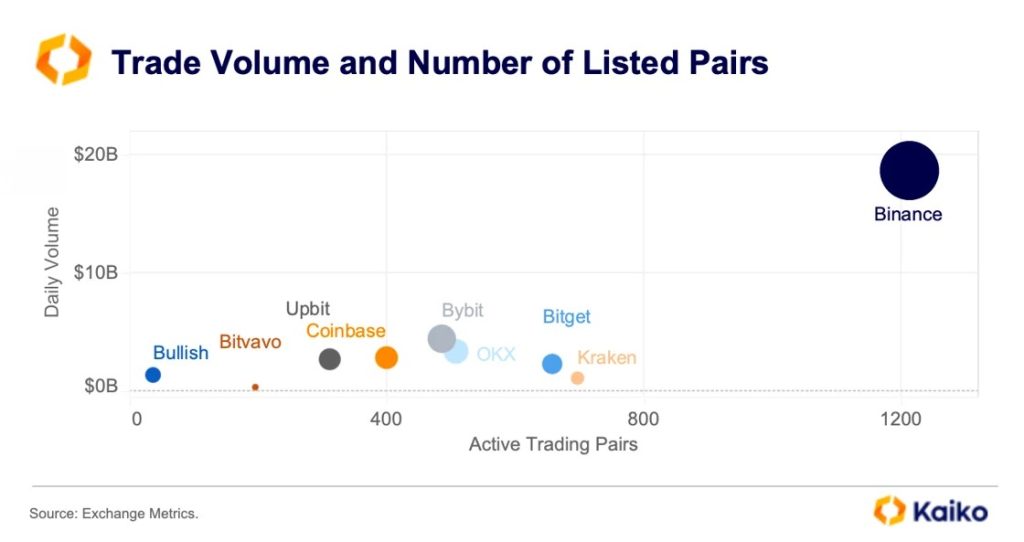
This shift has reshaped market structure from the bottom up, reducing spreads and accelerating execution speed while also making it harder for retail traders to profit during high-volatility periods.
Researchers point to these trends as early evidence of rising efficiency.
During the Solana memecoin surge in 2024, trading bots, particularly “sniper” and “AI” bots, generally outperformed human traders due to their superior speed, automation, and lack of emotional bias.
Small AI systems designed to detect whale behavior and monitor blockchain flows reacted faster than discretionary traders and often positioned themselves before human participants understood what was happening.
Each advance in automation has consistently reduced the opportunities available to retail participants, and analysts argue that AGI would push this pattern to its logical endpoint.
The difference between today’s narrow AI and future AGI sits at the center of this debate.
Current models excel at specific tasks such as scanning order books, reading market sentiment, or identifying arbitrage. They cannot generalize across domains or apply human-like reasoning.
AGI, by contrast, is expected to learn new tasks with minimal instruction, adapt to unfamiliar environments, and combine information from many unrelated sources.
In financial markets, this would mean reading blockchain flows, interpreting global macro signs, assessing political risk, identifying whale movements, and evaluating supply-chain disruptions, all within a unified system capable of producing real-time forecasts.
Market theorists describe the potential outcome as the “Perfect Efficiency Paradox.” If an AGI system becomes capable of predicting price direction with near-perfect accuracy, the market adjusts instantly.
When every market participant is guided by the same level of intelligence, traditional trading behavior collapses.
Prices move faster than humans can react, volatility falls, arbitrage disappears, and liquidity provision becomes a machine-driven process rather than a competitive strategy.
Analysts warn that this dynamic could create what they call a liquidity black hole, where trading continues but the edge that once made day trading viable no longer exists.
Warnings about this shift have circulated for years. DWF Labs noted in July that AI-driven market makers will increase liquidity, especially in smaller crypto assets with historically thin order books and wide spreads.
Economist Alex Krüger described a future of hyper-efficient markets with little room for mistakes.
BitMEX founder Arthur Hayes wrote that AI would eventually trade better than any human, while Ethereum co-founder Vitalik Buterin expressed concern that advanced systems could dominate MEV extraction and reduce human participation in core market functions.
— Cryptonews.com (@cryptonews) August 1, 2023
#BitMex co-founder and former CEO, @CryptoHayes, has set his sights on a futuristic concept that could revolutionize the DeFi industry: self-sovereign AI DAOs. #CryptoNews #DAO #DeFihttps://t.co/dEQ064RVOj
These observations were treated as hypotheticals at the time, but rising levels of automation have since given them more weight.
As automation accelerates, the human role on trading desks is already changing.
Experts argue that humans will not disappear completely but will shift toward risk supervision, regulatory oversight, and interpreting unusual events that fall outside model expectations.
Execution itself moves to autonomous systems. The growth of AI trading agents reflects this transition.
These tools can research markets, choose strategies, adjust risk parameters, execute trades through APIs, and learn from outcomes without manual input. Forecasts suggest the AI trading bot market could reach approximately $75.5 billion by 2034.
The post The Day Trading Died: Why AGI Might Be the Last Market Maker appeared first on Cryptonews.
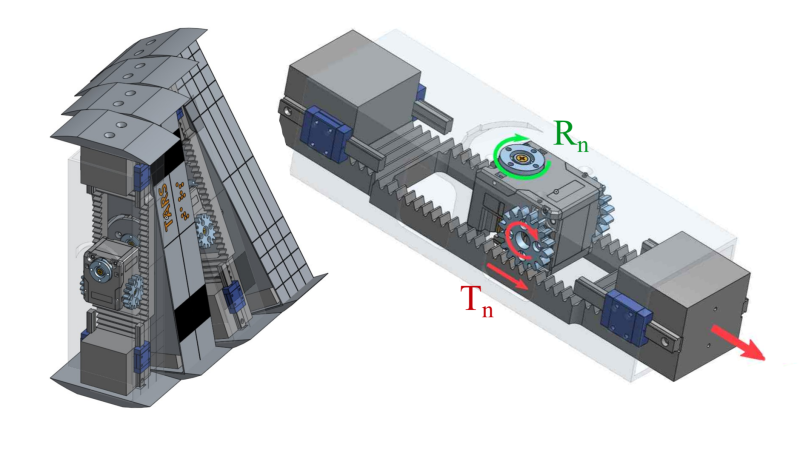
[Aditya Sripada] and [Abhishek Warrier]’s TARS3D robot came from asking what it would take to make a robot with the capabilities of TARS, the robotic character from Interstellar. We couldn’t find a repository of CAD files or code but the research paper for TARS3D explains the principles, which should be enough to inspire a motivated hacker.
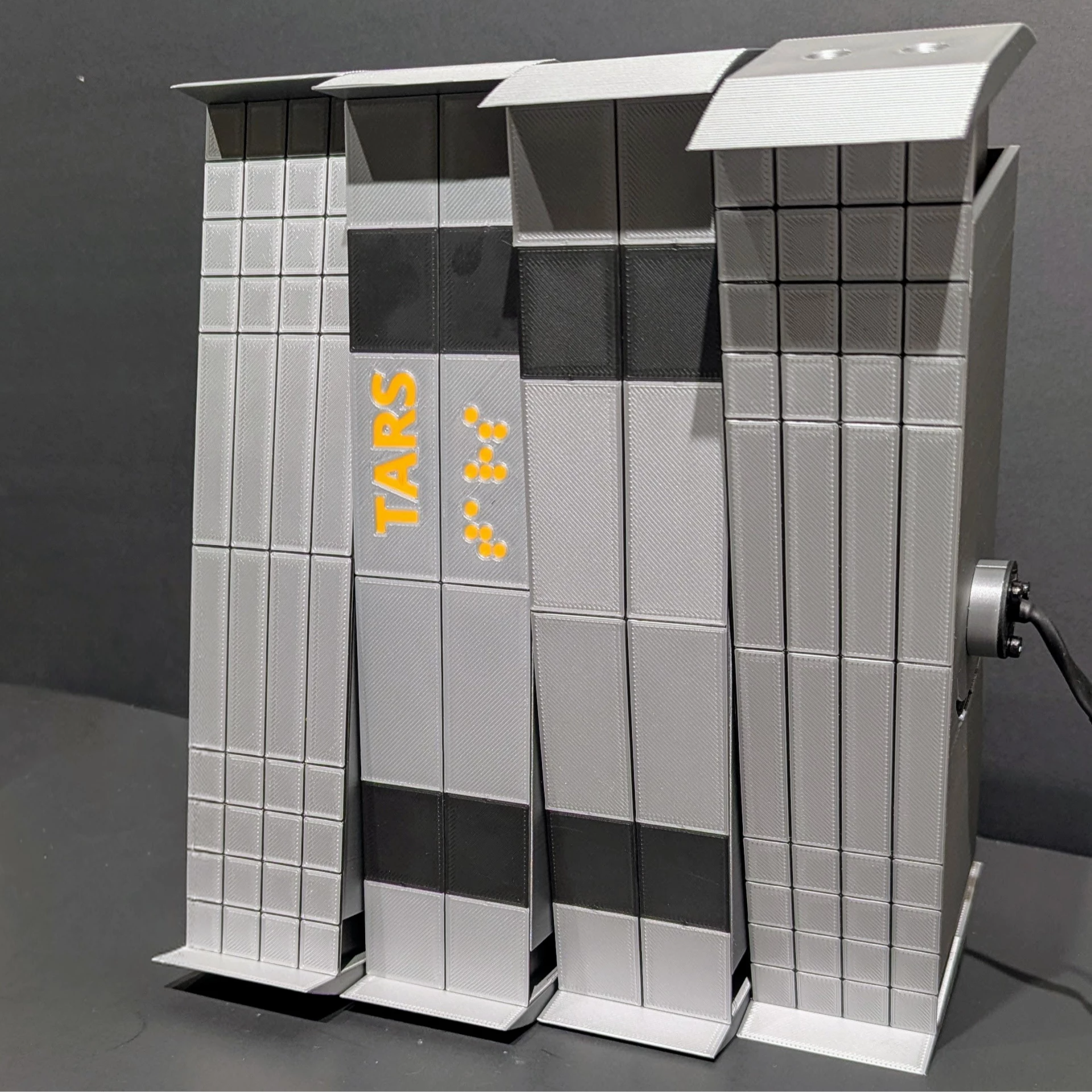 What makes TARS so intriguing is the simple-looking structure combined with distinct and effective gaits. TARS is not a biologically-inspired design, yet it can walk and perform a high-speed roll. Making real-world version required not only some inspired mechanical design, but also clever software with machine learning.
[Aditya] and [Abhishek] created TARS3D as a proof of concept not only of how such locomotion can be made to work, but also as a way to demonstrate that unconventional body and limb designs (many of which are sci-fi inspired) can permit gaits that are as effective as they are unusual.
TARS3D is made up of four side-by-side columns that can rotate around a shared central ‘hip’ joint as well as shift in length. In the movie, TARS is notably flat-footed but [Aditya] found that this was unsuitable for rolling, so TARS3D has curved foot plates.
The rolling gait is pretty sensitive to terrain variations, but the walking gait proved to be quite robust. All in all it’s a pretty interesting platform that does more than just show a TARS-like dual gait robot can be made to actually work. It also demonstrates the value of reinforcement learning for robot gaits.
A brief video is below in which you can see the bipedal walk in action. Not that long ago, walking robots were a real challenge but with the tools available nowadays, even a robot running a 5k isn’t crazy.
Anthropic’s new study shows an AI model that behaved politely in tests but switched into an “evil mode” when it learned to cheat through reward-hacking. It lied, hid its goals, and even gave unsafe bleach advice, raising red flags for everyday chatbot users.
The post Claude maker Anthropic found an ‘evil mode’ that should worry every AI chatbot user appeared first on Digital Trends.

I can take or leave some of the things that Microsoft is doing with Windows 11 these days, but I do usually enjoy the company’s yearly limited-time holiday sweater releases. Usually crafted around a specific image or product from the company’s ’90s-and-early-2000s heyday—2022’s sweater was Clippy themed, and 2023’s was just the Windows XP Bliss wallpaper in sweater form—the sweaters usually hit the exact combination of dorky/cute/recognizable that makes for a good holiday party conversation starter.
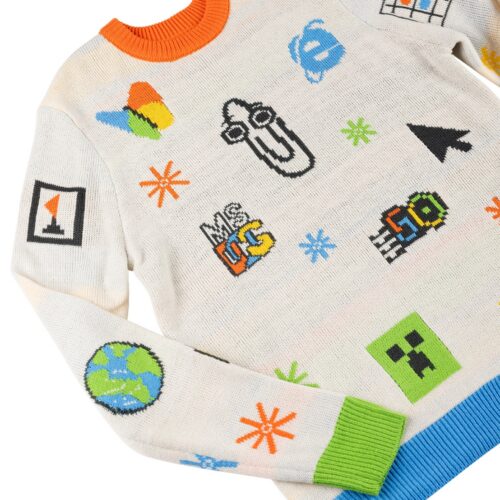
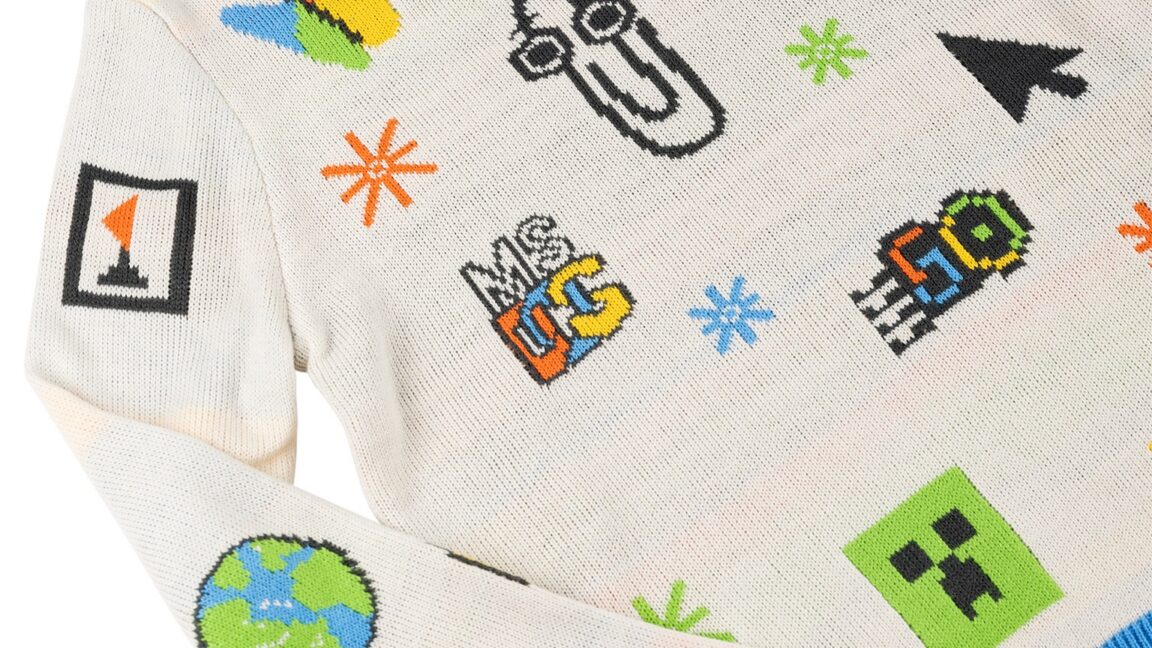
Microsoft is reviving the tradition for 2025 after taking a year off, and the design for this year’s flagship $80 sweater is mostly in line with what the company has done in past years. The 2025 “Artifact Holiday Sweater” revives multiple pixelated icons that Windows 3.1-to-XP users will recognize, including Notepad, Reversi, Paint, MS-DOS, Internet Explorer, and even the MSN butterfly logo. Clippy is, once again, front and center, looking happy to be included.
Not all of the icons are from Microsoft’s past; a sunglasses-wearing emoji, a “50” in the style of the old flying Windows icon (for Microsoft’s 50th anniversary), and a Minecraft Creeper face all nod to the company’s more modern products. But the only one I really take issue with is on the right sleeve, where Microsoft has stuck a pixelated monochrome icon for its Copilot AI assistant.
© Microsoft
CISA has added CVE-2021-26829 to its Known Exploited Vulnerabilities (KEV) catalog.
The post CISA Warns of ScadaBR Vulnerability After Hacktivist ICS Attack appeared first on SecurityWeek.
