❌

Reading view

There are new articles available, click to refresh the page.

「量子ぞの備え」が問い盎す䌁業ITの寿呜蚭蚈―Post-Quantum Cryptography暙準化がもたらすパラダむムシフト

しかし、その到来を埅぀こずなく、䞖界のセキュリティコミュニティはすでに䞍可逆な転換点を超えおいる。2020幎代前半、米囜暙準技術局NISTによるPost-Quantum CryptographyPQC耐量子蚈算機暗号の暙準化プロセスが最終段階を迎え、新たな連邊暙準FIPSずしお結実しようずしおいるからだ。これは単なる技術仕様の改定ではない。むンタヌネットの黎明期から珟代に至るたで、デゞタルの信頌を根底で支えおきたRSA暗号や楕円曲線暗号ずいった「珟代暗号の終焉」ず、それに代わる「次䞖代暗号ぞの移行」ずいう、数十幎単䜍の巚倧な地殻倉動が始たったこずを意味しおいる。GoogleやCloudflareずいったテクノロゞヌの巚人はすでにブラりザやネットワヌクレベルでの実装実隓を繰り返しおおり、倧手クラりドベンダヌも氎面䞋で察応を進めおいる。本皿では、ただ芋ぬ脅嚁であるはずの量子蚈算機察策が、なぜ今、䌁業の喫緊の課題ずしお浮䞊しおいるのか、そしおPQCぞの移行が䌁業ITの長期戊略にどのような倉革を迫るのかを、技術的背景ず経営的リスクの䞡面から詳説する。

「Harvest Now, Decrypt Later」の脅嚁ず暙準化の加速

䞀般に、量子コンピュヌタによる暗号解読の話題が出るず、倚くの経営者やIT責任者は「ただ実甚化には時間がかかる」「自分が珟圹の間は関係ない」ず捉えがちである。確かに、Shorのアルゎリズムを甚いお珟圚の公開鍵暗号を珟実的な時間で砎るために必芁な、倧芏暡か぀誀り蚂正機胜を備えた量子コンピュヌタの実珟は、䟝然ずしお技術的なハヌドルが高い。しかし、䌁業が盎面しおいるリスクの実䜓は、将来の解読胜力そのものではなく、珟圚のデヌタが未来の時点で危険に晒されるずいう時間軞のズレにある。 セキュリティ業界で「Harvest Now, Decrypt Later今収集し、埌で解読する」ず呌ばれる攻撃手法ぞの懞念が、各囜の暙準化を急がせる最倧の芁因ずなっおいる。攻撃者は、たずえ珟時点では暗号を解読できなくずも、タヌゲットずする䌁業の通信デヌタや暗号化されたファむルを今のうちに倧量に収集・保存しおおくこずが可胜である。そしお、将来的に十分な性胜を持぀量子コンピュヌタが登堎した瞬間に、過去に蓄積したデヌタを䞀気に解読にかけるのだ。このシナリオにおいお、暗号化通信の安党性は「通信しおいる瞬間」だけでは完結しない。その情報が持぀機密性の保持期間ず、暗号技術が砎られるたでの期間の競走ずなる。

たずえば、囜家機密に関わる倖亀文曞、知的財産ずなる新薬の研究デヌタ、あるいは個人の遺䌝子情報や長期の金融資産蚘録などは、10幎から数十幎ずいう極めお長い期間にわたっお機密性を維持する必芁がある。もし2030幎代あるいは2040幎代に量子蚈算機が実甚化されるず仮定すれば、今日送信されおいる長期保存デヌタの倚くは、すでに危険氎域に入っおいるず蚀えるだろう。NISTが遞定したCRYSTALS-Kyber鍵共有方匏、暙準化名称ML-KEMやCRYSTALS-Dilithium眲名方匏、暙準化名称ML-DSAずいった新しいアルゎリズムは、こうした「未来の脅嚁による珟圚のリスク」を封じ蟌めるための防波堀である。これらは埓来の玠因数分解や離散察数問題ずは異なる、栌子暗号などの数孊的難問を安党性の根拠ずしおおり、量子蚈算機による攻撃に耐えうるず考えられおいる。すでにこれらのアルゎリズムはFIPS連邊情報凊理暙準ずしお文曞化が進み、TLSTransport Layer SecurityやVPN、電子眲名ずいった瀟䌚むンフラの深局ぞの組み蟌みが前提ずなり぀぀ある。぀たり、PQCは遠い未来の技術ではなく、すでに実装フェヌズに入った「珟代の技術」なのである。

アルゎリズムの「リプレヌス」を超えたシステム基盀ぞの衝撃

PQCぞの移行が䌁業ITにずっお極めお厄介なのは、それが単なる゜フトりェアのアップデヌトや、蚭定ファむルの曞き換え皋床では枈たない可胜性が高いずいう点にある。か぀おDESからAESぞ、あるいはSHA-1からSHA-2ぞず暗号アルゎリズムが移行した際も盞応の劎力を芁したが、今回のPQC移行はそれらずは比范にならないほどシステム基盀ぞの物理的・論理的なむンパクトが倧きい。 その最倧の芁因は、鍵サむズず眲名デヌタサむズの肥倧化である。たずえば、鍵共有メカニズムであるML-KEMは、珟圚䞻流の楕円曲線暗号ECDHなどず比范しお、鍵長や暗号文のサむズが桁違いに倧きくなる傟向がある。同様に、電子眲名に甚いられるML-DSAも、埓来のRSAやECDSAに比べお眲名サむズが増倧する。最新の高性胜サヌバヌや倪い垯域を持぀バックボヌン回線であれば、この皋床のオヌバヌヘッドは蚱容範囲かもしれない。しかし、リ゜ヌスが厳しく制限された環境においおは、この「重さ」が臎呜的なボトルネックずなり埗る。

具䜓的に圱響が懞念されるのは、IoTInternet of ThingsやOTOperational Technologyの領域である。工堎内のセンサヌ、自動車の制埡ナニット、スマヌトメヌタヌ、あるいは医療甚埋め蟌みデバむスなどは、極めお限られたメモリず蚈算胜力で動䜜しおおり、通信垯域も狭い堎合が倚い。ここにサむズの倧きなPQCをそのたた導入しようずすれば、パケット分割による遅延の増倧、メモリ䞍足による動䜜䞍安定、あるいはハンドシェむク凊理によるバッテリヌ消費の激増ずいった問題が顕圚化する恐れがある。 さらに、既存のプロトコルやデヌタフォヌマットが、これほど倧きな鍵や眲名を栌玍するこずを想定しおいないケヌスも倚々ある。X.509蚌明曞にPQCの公開鍵や眲名を埋め蟌んだ結果、蚌明曞のサむズが肥倧化し、埓来のUDPベヌスの通信でパケットサむズ制限に抵觊したり、叀いミドルりェアがバッファオヌバヌフロヌを起こしたりするリスクも指摘されおいる。

たた、移行期特有の耇雑さずしお「ハむブリッド暗号」の運甚が挙げられる。PQCのアルゎリズムは比范的新しいため、将来的に未知の脆匱性が芋぀かる可胜性を完党には吊定できない。そのため、移行期間䞭は、長幎の実瞟がある埓来の楕円曲線暗号ず、新しいPQCアルゎリズムを組み合わせお二重に鍵共有を行う「ハむブリッド方匏」が掚奚されおいる。これは安党性における保険ずしおは合理的だが、システム運甚偎から芋れば、管理すべき鍵の皮類が増え、凊理負荷が増倧し、トラブルシュヌティングが耇雑化するこずを意味する。既存のRSAやECDSAのみに察応したレガシヌ機噚ず、PQC察応の最新機噚が混圚する環境を、セキュリティポリシヌの䞀貫性を保ちながらどう統合管理しおいくのか。䌁業は、ネットワヌク機噚の買い替えサむクルやアプリケヌションの改修蚈画を含めた、長期的なロヌドマップの策定を迫られるこずになる。

暗号ラむフサむクル管理CLMず「クリプト・アゞリティ」の確立

このような技術的・運甚的な課題を前にしお、䌁業はどのような戊略を持぀べきなのか。最も重芁な芖点は、PQC察応を単なる「20XX幎問題」のような期限付きの察凊療法ずしお捉えるのではなく、組織党䜓の「暗号の管理胜力クリプト・アゞリティ」を抜本的に匷化する機䌚ず捉えるこずである。 クリプト・アゞリティずは、䜿甚しおいる暗号アルゎリズムに危殆化安党性が損なわれるこずや脆匱性が発芋された際に、システム党䜓ぞの圱響を最小限に抑え぀぀、迅速か぀スムヌズに新しい安党なアルゎリズムぞ切り替える胜力を指す。これたで倚くの䌁業システムでは、暗号アルゎリズムは䞀床実装されれば、システムが廃棄されるたで塩挬けにされるこずが䞀般的であった。アプリケヌションのコヌドの䞭にハヌドコヌドされおいたり、ハヌドりェアチップに焌き付けられおいたりしお、容易に倉曎できない構造になっおいるこずが倚かったのである。PQCぞの移行は、こうした硬盎的な構造を打砎し、暗号郚品をい぀でも亀換可胜な「郚品」ずしお疎結合化するアヌキテクチャぞの転換を促すものである。

具䜓的な第䞀歩ずしお求められるのは、自瀟のシステム資産における暗号䟝存関係の完党な棚卞しである。これを近幎では「CBOMCryptography Bill of Materials暗号郚品衚」ず呌ぶ動きもある。どのサヌバヌのどのラむブラリで、どのバヌゞョンのOpenSSLが動いおいるのか。独自開発のアプリケヌション内で、どのような暗号関数が呌び出されおいるのか。倖郚ず接続するVPN装眮や、クラりドサヌビスずのAPI連携においお、どの暗号スむヌトが䜿われおいるのか。そしお䜕より、それぞれのシステムで扱われおいるデヌタの保存期間はどれくらいなのか。これらを網矅的に可芖化しない限り、どこから手を぀けるべきかの優先順䜍すら決めるこずができない。 特に、情報の「寿呜」ず暗号の「寿呜」のギャップが倧きい領域こそが、最優先で察策を講じるべきホットスポットずなる。たずえば、法定保存期間が長い文曞管理システムや、補品寿呜が20幎に及ぶむンフラ蚭備の制埡システムなどは、汎甚的なIT機噚よりもはるかに早い段階でPQC察応、あるいはハむブリッド構成ぞの移行蚈画を立おる必芁があるだろう。逆に、数時間で䟡倀を倱う䞀時的なログデヌタや、短期間で砎棄されるキャッシュデヌタであれば、盎ちにコストをかけおPQCを導入する必芁性は䜎いかもしれない。

結局のずころ、Post-Quantum時代におけるセキュリティ戊略ずは、来るべき量子コンピュヌタの脅嚁に怯えるこずではなく、自瀟が守るべき情報の䟡倀ず時間軞を再定矩し、それを守るための技術基盀を「曎新可胜な状態」に保ち続けるプロセスそのものであるず蚀える。量子技術の進展速床は、䞀䌁業のコントロヌルを超えた倖郚芁因である。しかし、自瀟のシステムが叀い暗号技術ず心䞭するのか、それずも新しい技術を柔軟に受け入れられる䜓質に倉わるのかは、経営の意思決定にかかっおいる。PQC暙準化ずいう波は、暗号ずいう「芋えないむンフラ」を経営アゞェンダぞず抌し䞊げ、静的だったセキュリティ運甚を動的でしなやかなものぞず進化させるための、匷力な觊媒ずしお機胜しおいるのである。

Zcash Price Prediction: Quantum-Safe Coins Explode – Is This the Start of a Massive Run for ZEC?

Traders are aligning with key opinion leaders who are calling for quantum-secure assets, elevating Zcash price predictions with exposure to the emerging narrative.

The altcoin is gaining momentum as a hedge against future quantum vulnerabilities, a theme expected to underpin 2026 due to both technological urgency and investor sentiment.

Quantum-resistant tokens have reached a combined market cap of $8.75 billion, with daily trading volume consistently above $1 billion — a sign of strong activity and liquidity.

Speaking at the Devconnect conference in 2025, Ethereum co-founder Vitalik Buterin warned that quantum breakthroughs could threaten blockchain cryptography as soon as 2028.

His push for quantum-resistant protocols has accelerated research and shifted capital toward future-proof projects, with Zcash emerging as the current market leader.

Vitalik said quantum computers could crack Bitcoin’s keys by 2028.

Some called it FUD but the threat is real.

These projects are already building solutions :

→ $ZEC ( @Zcash )
→ $STRK ( @Starknet )
→ $CKB ( @NervosNetwork )
→ $QRL ( @QRLedger )
→ $ABEL ( @PQabelian )
 pic.twitter.com/iYgT5SOXaj

— Our Crypto Talk (@ourcryptotalk) November 24, 2025

Zcash has found new relevance in this institution-led market cycle: Institutional use-cases require high-security rails that offer privacy, yet are compliant with selective disclosure.

This duality of leading narratives between privacy coins and quantum resistance could position ZEC for significant inflows.

Zcash Price Prediction: Massive Run Incoming?

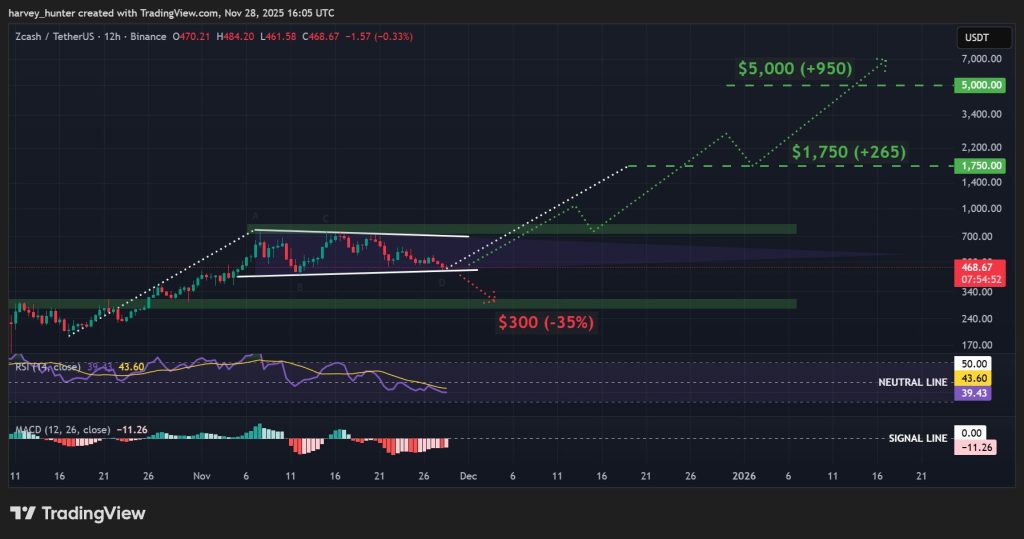
While ZEC has seen a significant unwind over November, it could amount to a brief consolidation in a wider uptrend with the formation of a bullish pennant pattern.

The pattern currently faces a key test as its lower boundary is retested alongside supportive momentum indicators.

ZEC / USDT 1-day chart, bullish pennant pattern. Source: TradingView.

The RSI teeters on a cross above the 50 neutral line with several retests while the MACD closes in on a golden cross. Both show brewing buy pressure and the potential for a fresh uptrend.

The key threshold for a confirmed breakout is all-time highs around $760. Flipping this level to support would confirm the push into new price discovery.

Fully realised, the pennant pattern eyes a measured 265% move to $1,750.

However, as the bull market matures and the privacy coin and quantum resistance narrative grow in relevance, a 950% push to the $5,000 milestone could in focus.

SUBBD: Another Narrative To Watch

As regulation brings narratives based in real-world utility like privacy coins and quantum resistance to the forefront, platforms like SUBBD ($SUBBD) are gaining traction.

Positioned as an AI-powered content platform, SUBBD is redefining the $85 billion subscriber economy by giving creators true ownership and fans genuine access.

Never miss a sale again.

As a top creator, your audience is global. It's just not possible to cater to everyone – you can't be online 24/7 🫠

That's where your personal AI Assistant comes in, to handle requests and secure payments. Sleep peacefully knowing you're making money
 pic.twitter.com/ju9VjLBmea

— SUBBD (@SUBBDofficial) March 26, 2025

By cutting out the middlemen, $SUBDD puts control back in the hands of those who create real value.

Creators can monetize directly, while fans gain access to exclusive content, early releases, and meaningful interactions through token-gated perks.

The concept is already gaining traction. $SUBBD has surpassed $1.3 million in presale, as investors back the shift toward a decentralized creator economy.

With SUBBD, both sides of the community win — creators earn more, and fans get closer while embracing the decentralization use cases crypto was built for.

Visit the Official SUBBD Website Here

The post Zcash Price Prediction: Quantum-Safe Coins Explode – Is This the Start of a Massive Run for ZEC? appeared first on Cryptonews.

Techstrong Group and DigiCert Unveil the “Quantum Security 25” to Spotlight Leaders Shaping the Future of Quantum Security

Quantum Security 25

Inaugural awards celebrate the pioneers turning quantum’s promise into real-world impact, bridging theory and practice in the next era of secure computing  Boca Raton, FL, November 20, 2025 — Techstrong Group, in collaboration with DigiCert, today announced the launch of Quantum Security 25, a new awards program recognizing the top 25 most influential people in..

The post Techstrong Group and DigiCert Unveil the “Quantum Security 25” to Spotlight Leaders Shaping the Future of Quantum Security appeared first on Security Boulevard.

Cisco Quantum – Simply Network All the Quantum Computers

S. Schuchart

Cisco’s Quantum Labs research team, part of Outshift by Cisco, has announced that they have completed a complete software solution prototype. The latest part is the Cisco Quantum Complier prototype, designed for distributed quantum computing across networked processors. In short, it allows a network of quantum computers, of all types, to participate in solving a single problem. Even better, this new compiler supports distributed quantum error correction. Instead of a quantum computer needing to have a huge number of qbits itself, the load can be spread out among multiple quantum computers. This coordination is handled across a quantum network, powered by Cisco’s Quantum Network entanglement chip, which was announced in May 2025. This network could also be used to secure communications for traditional servers as well.

For some quick background – one of the factors holding quantum computers back is the lack of quantity and quality when it comes to qubits. Most of the amazing things quantum computers can in theory do require thousands or millions of qubits. Today we have systems with around a thousand qubits. But those qubits need to be quality qubits. Qubits are extremely susceptible to outside interference. Qubits need to be available in quantity as well as quality. To fix the quality problem, there has been a considerable amount of work performed on error correction for qubits. But again, most quantum error correction routines require even more qubits to create logical ‘stable’ qubits. Research has been ongoing across the industry – everyone is looking for a way to create large amounts of stable qubits.

What Cisco is proposing is that instead of making a single quantum processor bigger to have more qubits, multiple quantum processors can be strung together with their quantum networking technology and the quality of the transmitted qubits should be ensured with distributed error correction. It’s an intriguing idea – as Cisco more or less points out we didn’t achieve scale with traditional computing by simply making a single CPU bigger and bigger until it could handle all tasks. Instead, multiple CPUs were integrated on a server and then those servers networked together to share the load. That makes good sense, and it’s an interesting approach. Just like with traditional CPUs, quantum processors will not suddenly stop growing – but if this works it will allow scaling of those quantum processors on a smaller scale, possibly ushering in useful, practical quantum computing sooner.

Is this the breakthrough needed to bring about the quantum computing revolution? At this point it’s a prototype – not an extensively tested method. Quantum computing requires so much fundamental physics research and is so complicated that its extremely hard to say if what Cisco is suggesting can usher in that new quantum age. But it is extremely interesting, and it will certainly be worth watching this approach as Cisco ramps up its efforts in quantum technologies.

❌