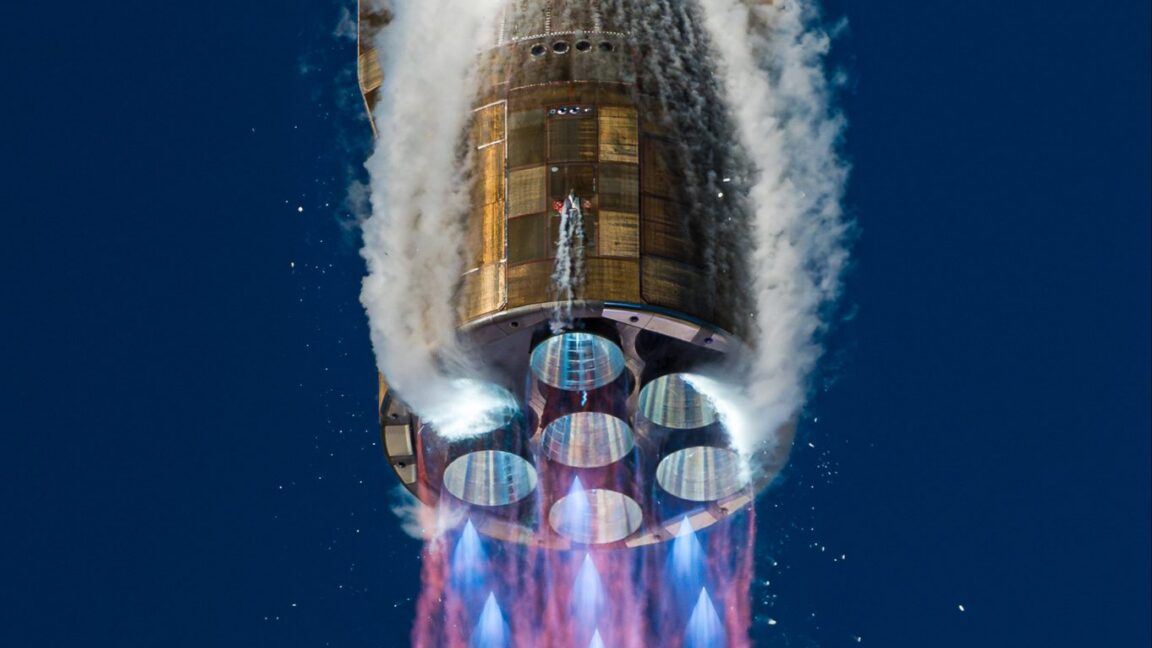
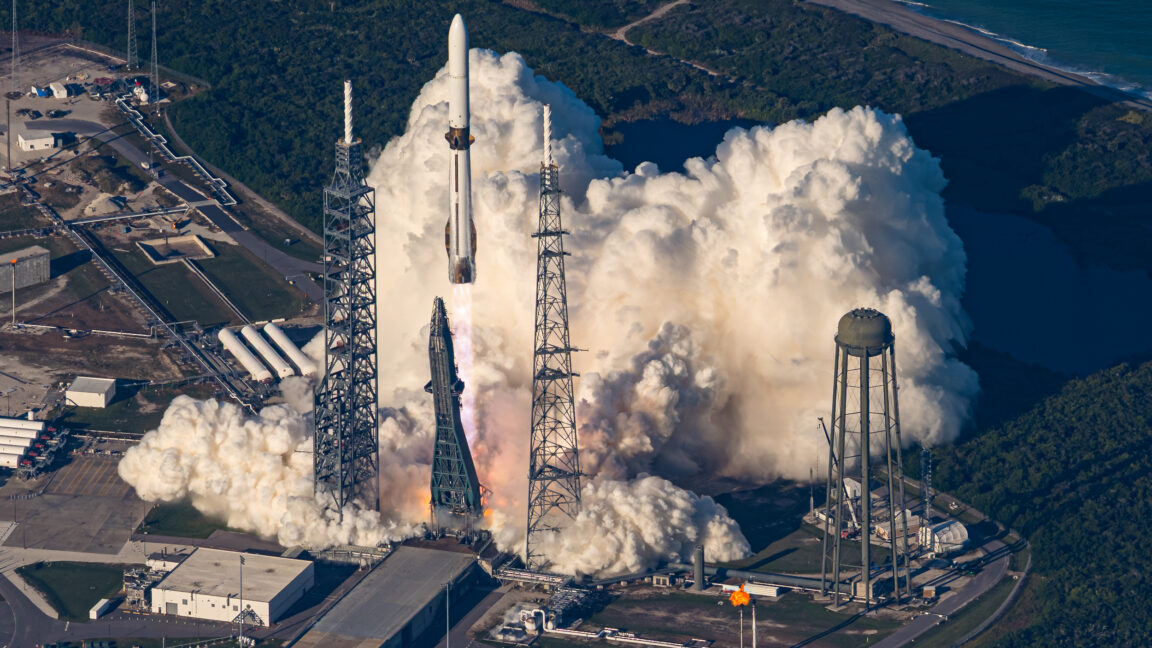
The commander of the military unit responsible for running the Cape Canaveral spaceport in Florida expects SpaceX to begin launching Starship rockets there next year.
Launch companies with facilities near SpaceX’s Starship pads are not pleased. SpaceX’s two chief rivals, Blue Origin and United Launch Alliance, complained last year that SpaceX’s proposal of launching as many as 120 Starships per year from Florida’s Space Coast could force them to routinely clear personnel from their launch pads for safety reasons.
This isn’t the first time Blue Origin and ULA have tried to throw up roadblocks in front of SpaceX. The companies sought to prevent NASA from leasing a disused launch pad to SpaceX in 2013, but they lost the fight.
Welcome to Edition 8.20 of the Rocket Report! For the second week in a row, Blue Origin dominated the headlines with news about its New Glenn rocket. After a stunning success November 13 with the launch and landing of the second New Glenn rocket, Jeff Bezos’ space company revealed a roadmap this week showing how engineers will supercharge the vehicle with more engines. Meanwhile, in South Texas, SpaceX took a step toward the first flight of the next-generation Starship rocket. There will be no Rocket Report next week due to the Thanksgiving holiday in the United States. We look forward to resuming delivery of all the news in space lift the first week of December.
As always, we welcome reader submissions. If you don’t want to miss an issue, please subscribe using the box below (the form will not appear on AMP-enabled versions of the site). Each report will include information on small-, medium-, and heavy-lift rockets, as well as a quick look ahead at the next three launches on the calendar.
Northrop’s Pegasus rocket wins a rare contract. A startup named Katalyst Space Technologies won a $30 million contract from NASA in August to build a robotic rescue mission for the agency’s Neil Gehrels Swift Observatory in low-Earth orbit. Swift, in space since 2004, is a unique instrument designed to study gamma-ray bursts, the most powerful explosions in the Universe. The spacecraft lacks a propulsion system and its orbit is subject to atmospheric drag, and NASA says it is “racing against the clock” to boost Swift’s orbit and extend its lifetime before it falls back to Earth. On Wednesday, Katalyst announced it selected Northrop Grumman’s air-launched Pegasus XL rocket to send the rescue craft into orbit next year.
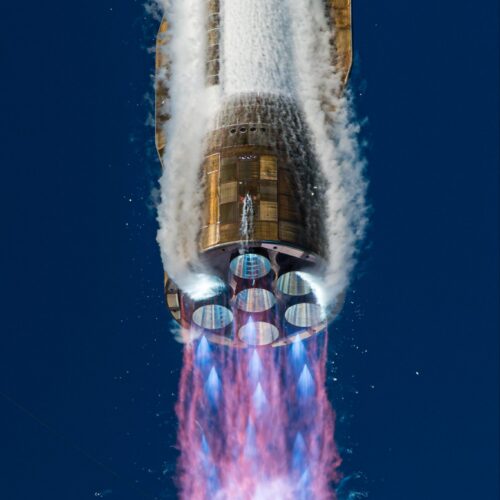
The new super-heavy-lift variant of Blue Origin’s most powerful rocket, known as New Glenn 9×4, will feature nine methane-fueled BE-4 engines on the first stage, up from seven; and four hydrogen-fueled BE-3U engines on the second stage, up from two. The 9×4 rocket will also have a bigger fairing, or nose-cone section, measuring 8.7 meters (28.5 feet) wide, as opposed to 7 meters (23 feet) for the fairing currently in use.
Kent, Wash.-based Blue Origin says it’s working to enhance the performance of the rocket engines on both the New Glenn 9×4 and the standard 7×2 model. Other upgrades will include a reusable fairing, a lower-cost tank design and a higher-performing thermal protection system.
The upgrades will be phased into upcoming New Glenn missions starting with the next launch, which is expected to occur early next year. “These enhancements will immediately benefit customers already manifested on New Glenn to fly to destinations including low Earth orbit, the moon and beyond,” the company said today in an online update.
An infographic compares the sizes of New Glenn 7×2 rocket (left) and the 9×4 variant (right) with the Apollo-era Saturn V rocket at center. (Blue Origin Illustration)
Blue Origin said the 9×4 model will be capable of carrying more than 70 metric tons to low Earth orbit (vs. 45 tons for the 7×2), more than 14 tons to geosynchronous orbit, and more than 20 tons on a trip from Earth to the moon. That would make New Glenn 9×4 more powerful than SpaceX’s Falcon Heavy rocket (64 tons to LEO), but less powerful than SpaceX’s Starship (100 to 150 tons to LEO).
The enhancements appear likely to up the ante in Blue Origin’s competition with SpaceX and United Launch Alliance. New Glenn has been launched only twice, as opposed to hundreds of launches for SpaceX’s Falcon 9 and scores of launches for ULA’s Atlas 5. But last week’s successful launch of twin probes to Mars and the first-ever recovery of an orbital-class New Glenn booster have raised Blue Origin’s profile in the launch industry.
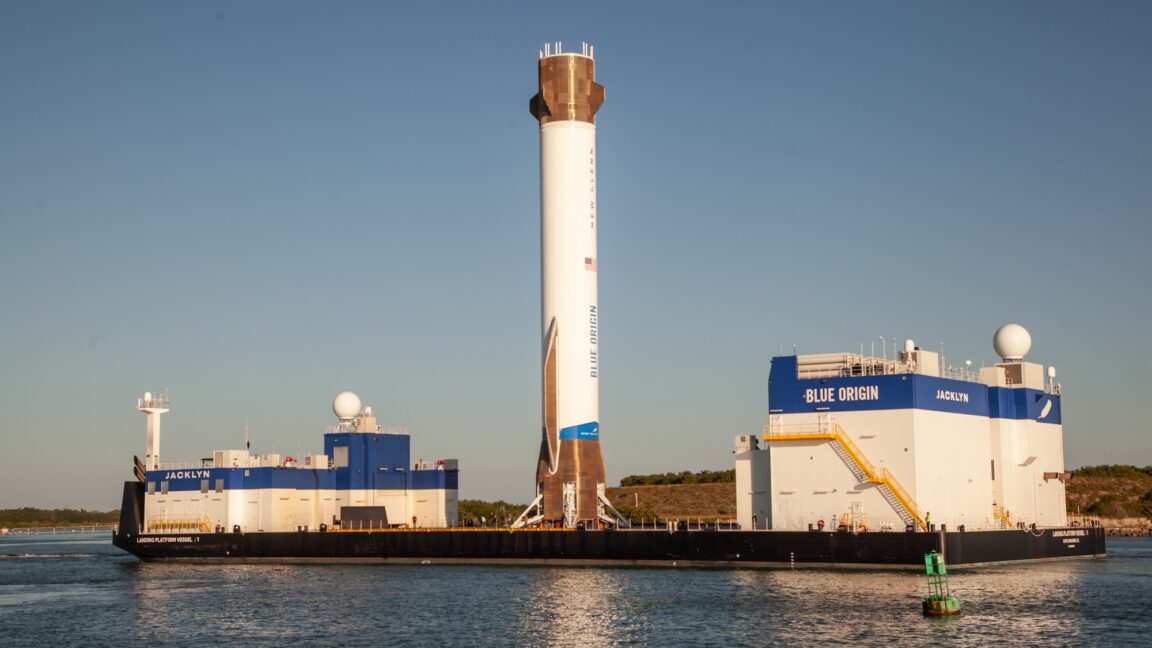
That booster, nicknamed “Never Tell Me the Odds,” flew itself back to a touchdown in the Atlantic Ocean atop Blue Origin’s recovery barge, which was named Jacklyn in honor of Jeff Bezos’ mother. This week the booster was brought back to port and transported to the company’s processing facility at Cape Canaveral in Florida, with Bezos looking on.
Yesterday, we welcomed Jacklyn and our fully reusable New Glenn first stage back to the Space Coast. Thank you, Team Blue. pic.twitter.com/WQyvFqn5Cd
One week after the successful second launch of its large New Glenn booster, Blue Origin revealed a roadmap on Thursday for upgrades to the rocket, including a new variant with more main engines and a super-heavy lift capability.
These upgrades to the rocket are “designed to increase payload performance and launch cadence, while enhancing reliability,” the company said in an update published on its website. The enhancements will be phased in over time, starting with the third launch of New Glenn, which is likely to occur during the first half of 2026.
A bigger beast
The most significant part of the update concerned an evolution of New Glenn that will transform the booster into a super-heavy lift launch vehicle. The first stage of this evolved vehicle will have nine BE-4 engines instead of seven, and the upper stage four BE-3U engines instead of two. In its update, Blue Origin refers to the new vehicle as 9×4 and the current variant as 7×2, a reference to the number of engines in each stage.
For decades—yes, literally decades—it has been easy to dismiss Blue Origin as a company brimming with potential but rarely producing much of consequence.
But last week the company took a tremendous stride forward, not just launching its second orbital rocket, but subsequently landing the booster on a barge named Jacklyn. It now seems clear that Blue Origin is in the midst of a transition from sleeping giant to force to be reckoned with.
To get a sense of where the company goes from here, Ars spoke with the company’s chief executive, Dave Limp, on the eve of last week’s launch. The first thing he emphasized is how much the company learned about New Glenn, and the process of rolling the vehicle out and standing it up for launch, from the vehicle’s first attempt in January.
The first multi-spacecraft science mission to launch to Mars is now on its way, and catching a ride on the twin probes are the first kiwis to fly to the red planet.
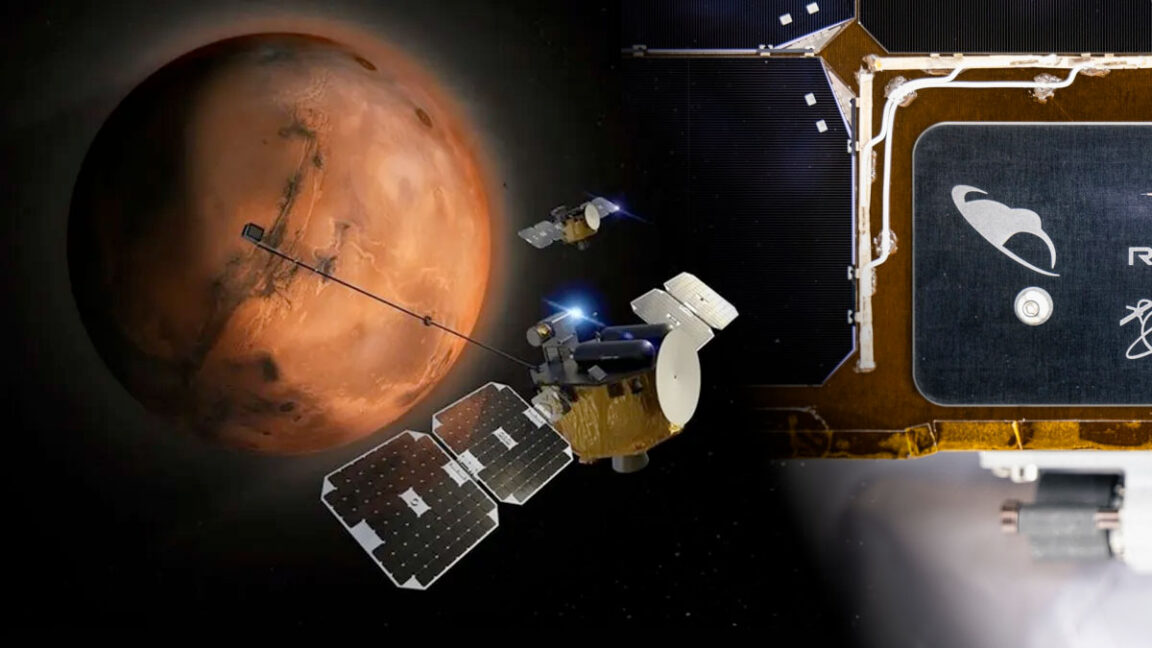
NASA’s ESCAPADE (Escape and Plasma Acceleration and Dynamics Explorers) mission lifted off on a 22-month trip to Mars on Thursday aboard a New Glenn rocket. Once there, the identical satellites will enter Martian orbit to study in real time how space weather affects the planet’s hybrid magnetosphere and how the interaction drove Mars to lose its once-dense atmosphere.
Led by the Space Sciences Laboratory at the University of California, Berkeley—the two spacecraft are named “Blue” and “Gold” after the school’s colors—the ESCAPADE probes are the first Mars-bound vehicles to be designed, built, and tested by Rocket Lab, the end-to-end space company headquartered in California but founded in New Zealand.
The rocket company founded a quarter-century ago by billionaire Jeff Bezos made history Thursday with the pinpoint landing of an 18-story-tall rocket on a floating platform in the Atlantic Ocean.
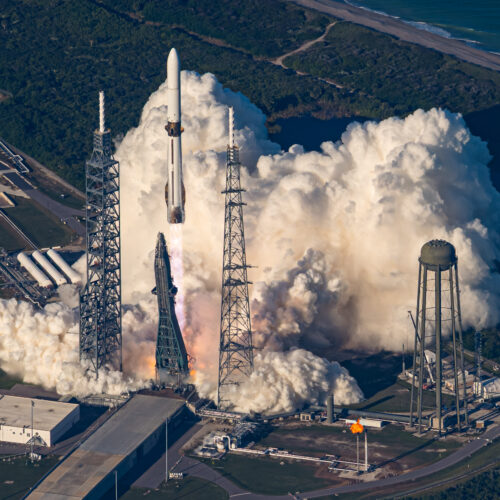
The on-target touchdown came nine minutes after the New Glenn rocket, built and operated by Bezos’ company Blue Origin, lifted off from Cape Canaveral Space Force Station, Florida, at 3:55 pm EST (20:55 UTC). The launch was delayed from Sunday, first due to poor weather at the launch site in Florida, then by a solar storm that sent hazardous radiation toward Earth earlier this week.
“We achieved full mission success today, and I am so proud of the team,” said Dave Limp, CEO of Blue Origin. “It turns out Never Tell Me The Odds (Blue Origin’s nickname for the first stage) had perfect odds—never before in history has a booster this large nailed the landing on the second try. This is just the beginning as we rapidly scale our flight cadence and continue delivering for our customers.”
The trouble-free launch of NASA’s Escapade probes, plus today’s first-ever recovery of a New Glenn booster, bolstered Blue Origin’s status as a worthy competitor for Elon Musk’s SpaceX, which has come to dominate the space industry. SpaceX is the only other company to bring back an orbital-class booster successfully.
Even Musk recognized the achievement: “Congratulations @JeffBezos and the @BlueOrigin team!” he wrote in a posting to X / Twitter, the social-media platform he owns.
New Glenn — which is named after John Glenn, the first American to go into orbit — rose from its launch pad at Cape Canaveral Space Force Station in Florida at 3:55 p.m. ET (12:55 p.m. PT). Today’s liftoff followed attempts earlier this week that had to be scratched, initially due to cloudy weather on Earth, and then due to a solar storm in space.
Even on the day of launch, the countdown had to be held and recycled a couple of times for unspecified reasons. But in the end, liftoff was gloriously nominal.
Minutes after New Glenn rose into the sky, the mission plan called for the rocket’s first-stage booster to fly itself back to a touchdown on a floating platform in the Atlantic that was named Jacklyn after Bezos’ late mother. Blue Origin’s first attempt to recover a New Glenn booster failed in January — but this time, the maneuver was successful.
That achievement was greeted by wild cheers from Blue Origin team members watching the webcast, including Jeff Bezos at Mission Control and a crowd at the company’s headquarters in Kent, Wash. The uncertainty about recovering the booster was reflected in the nickname it was given: “Never Tell Me the Odds.”
“Congratulations, Team Blue — you guys did it!” launch commentator Ariane Cornell, vice president of New Glenn strategy and business operations, said during the webcast. “What an incredible day for Blue Origin, for the space industry.”
Cornell’s co-host for the webcast, Tabitha Lipkin, was similarly enthused. “I think I hurt my hand on the table banging too much,” she said.
Meanwhile, New Glenn’s second stage pressed onward to orbit. A little more than half an hour after launch, the second stage deployed two robotic spacecraft for NASA’s Escapade mission to Mars. (The name for the $78.5 million mission is an acronym for “ESCApe and Plasma Acceleration and Dynamics Explorers.”)
The twin probes will follow a loitering, looping trajectory that includes an Earth flyby a year from now. That slingshot maneuver should provide an extra boost to put the spacecraft into Martian orbit in 2027. Once the probes have settled into synchronized orbits, they’ll fly in formation to map the Red Planet’s magnetic field, upper atmosphere and ionosphere in stereo. The science mission is due to last until 2029.
Scientists say Escapade should help NASA prepare for future crewed missions to Mars.
“Understanding how the ionosphere varies will be a really important part of understanding how to correct the distortions in radio signals that we will need to communicate with each other and to navigate on Mars,” principal investigator Robert Lillis, a space physicist at the University of California at Berkeley, said in a news release. Findings from Escapade could also help scientists work out ways to deal with the radiation risks associated with missions on Mars.
On the space science side of things, Escapade could shed light on the process by which Mars lost much of its atmosphere over the course of billions of years. “To understand how the solar wind drives different kinds of atmospheric escape is a key piece of the puzzle of the climate evolution of Mars,” Lillis said.
NASA put UC-Berkeley in charge of operating the probes, which have been named Blue and Gold in honor of Berkeley’s school colors. Rocket Lab USA built the spacecraft, and Blue Origin won the launch order in 2023, two years before New Glenn ever flew.
Escapade was originally scheduled for liftoff a year ago, but NASA postponed the start of the mission, citing the potential costs of a launch delay that “could be caused by a number of factors” — presumably including a scenario in which Blue Origin’s rocket wasn’t yet ready for liftoff. Additional delays arose as Blue Origin followed up on lessons learned from January’s first New Glenn launch.
In addition to launching the Escapade probes, New Glenn carried demonstration hardware for ViaSat’s HaloNet telemetry relay service. HaloNet was tested as part of a program aimed at switching space communication channels from NASA’s Tracking and Data Relay Satellite system, or TDRS, to commercial satellites.
In a post-launch news release, Blue Origin CEO Dave Limp said “we achieved full mission success today, and I am so proud of the team.”
“It turns out Never Tell Me The Odds had perfect odds — never before in history has a booster this large nailed the landing on the second try,” Limp said. “This is just the beginning as we rapidly scale our flight cadence and continue delivering for our customers.”
New Glenn is designed to send up to 45 metric tons of payload to low Earth orbit, and smaller payloads to destinations beyond Earth orbit. That makes the rocket more powerful than SpaceX’s workhorse Falcon 9 rocket (23 metric tons to LEO), but less powerful than the Falcon Heavy (64 metric tons) or Starship (100 to 150 metric tons). Starship is still in development; a modified version of that rocket is currently due to carry NASA astronauts on the lunar surface in the 2027-2028 time frame.
Jon Edwards, SpaceX’s vice president of Falcon launch vehicles, joined his boss in congratulating Blue Origin: “Recovering an orbital-class rocket is incredibly hard. Well done!” he wrote on X. “We as Americans should be very proud of what we are accomplishing in space.”
Acting NASA Administrator Sean Duffy added his congratulations. “This heliophysics mission will help reveal how Mars became a desert planet, and how solar eruptions affect the Martian surface,” Duffy said in a written statement. “Every launch of New Glenn provides data that will be essential when we launch MK-1 through Artemis. All of this information will be critical to protect future NASA explorers and invaluable as we evaluate how to deliver on President Trump’s vision of planting the Stars and Stripes on Mars.”
Sometime in the next few months, Blue Origin plans to use New Glenn to launch an uncrewed Blue Moon MK-1 lander to the moon’s south polar region. And thanks to today’s successful recovery at sea, there’s a chance that “Never Tell Me the Odds” could be reused as the first-stage booster for that launch.
Bezos and Limp both posted pictures and videos on social media with comments on the day’s achievements. Here are a few highlights:
Good overview of the landing. We nominally target a few hundred feet away from Jacklyn to avoid a severe impact if engines fail to start or start slowly. We’ll incrementally reduce that conservatism over time. We are all excited and grateful for yesterday. Amazing performance by… pic.twitter.com/DCEMsuSyPm
Until now, the aerospace outfit Blue Origin was little more than a plaything for Amazon billionaire Jeff Bezos. The company’s New Shepard rocket has launched a few space tourists, but its upcoming New Glenn vehicle will have a shot at something more important. NASA has awarded Blue Origin a contract to launch a Mars mission next year, marking the firm’s first interplanetary launch.
NASA has chosen Blue Origin to handle launch services for the Escape and Plasma Acceleration and Dynamics Explorers (ESCAPADE) mission, which is part of the agency’s Venture-Class Acquisition of Dedicated and Rideshare (VADR) program. Blue Origin is one of 13 companies to get contracts under the program, designed to tolerate higher risk to allow for more innovation and lower overall costs.
Blue Origin has been developing New Glenn since 2012, announcing the vehicle in 2016, but it has yet to fly. When complete, New Glenn will be 322 feet (92 meters) tall with a diameter of 23 feet (9 meters). That’s larger in both dimensions than the Falcon 9 (70 x 3.7 meters). Like New Shepard, this rocket is designed to have a reusable first stage to reduce launch costs. It’s powered by seven BE-4 engines, a more powerful version of the oxygen and methane-fueled BE-3 used on New Shepard.
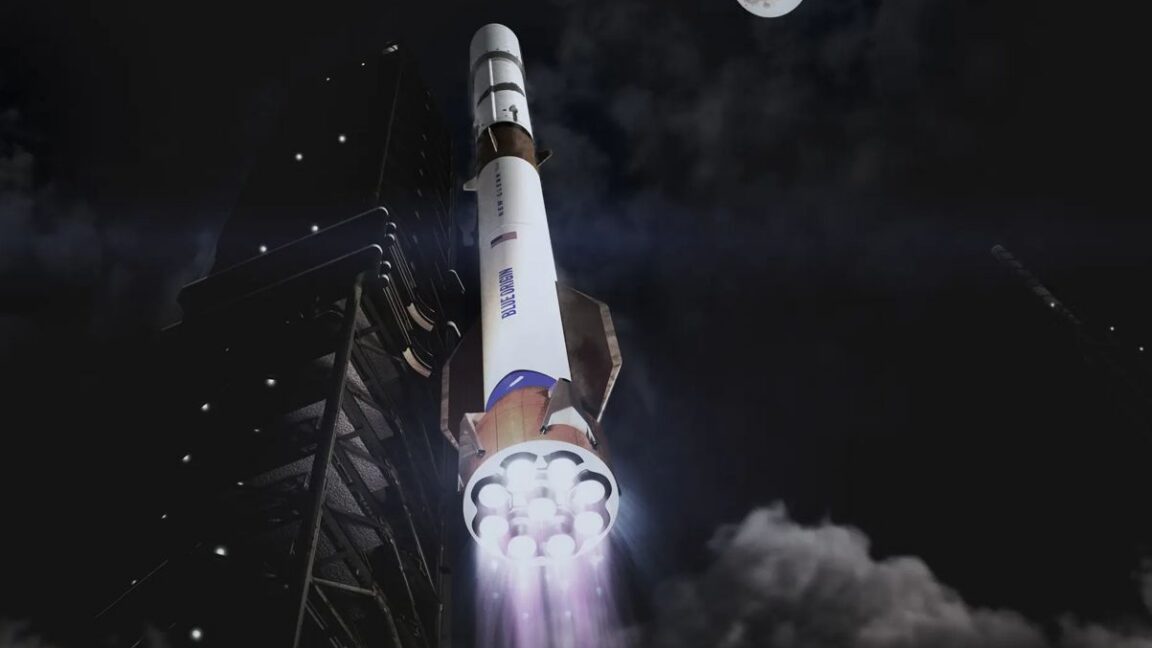
A render of what New Glenn may look like when finished.
The timeline is going to be tight — Blue Origin initially expected the first New Glenn launch to happen in 2020, but it has pushed it back several times. Currently, the rocket is slated to fly no earlier than Q4 of this year. NASA plans to launch the ESCAPADE about a year later, at the end of 2024. It’ll be up to Blue Origin to make sure its rocket is ready to go — projects in the VADR program call for less NASA oversight in order to save money.
Assuming Blue Origin comes through on its first interplanetary NASA contract, the ESCAPADE spacecraft will separate from the launch vehicle and spend 11 months coasting toward the red planet. Once there, the spacecraft will split into two identical orbiters, working together to analyze the planet’s magnetosphere. The mission will improve our understanding of how the solar wind interacts with Mars’ weak magnetic field. That’s important information to have if we ever intend to send humans to Mars, for either a quick jaunt or long-term colonization. Although, either one is probably a long way off.

 Login
Login