❌

Reading view

There are new articles available, click to refresh the page.

Revisiting Jill of the Jungle, the last game Tim Sweeney designed

Boy, was 1992 a different time for computer games. Epic MegaGames’ Jill of the Jungle illustrates that as well as any other title from the era. Designed and programmed by Epic Games CEO Tim Sweeney, the game was meant to prove that console-style games of the original Nintendo era could work just as well on PCs. (Later, the onus of proof would often be in the reverse direction.)

Also, it had a female protagonist, which Sweeney saw as a notable differentiator at the time. That’s pretty wild to think about in an era of Tomb Raiderβ€˜s Lara Croft, Horizon Forbidden Westβ€˜s Aloy,Β Life is Strangeβ€˜s Max Caulfield,Β Returnalβ€˜s Selene Vassos,Β Controlβ€˜s Jesse Faden,Β The Last of Usβ€˜ Ellie Williams, and a seemingly endless list of othersβ€”to say nothing of the fact that many players of all genders who played the games Mass Effect and Cyberpunk 2077 seem to agree that the female protagonist options in those are more compelling than their male alternatives.

As wacky as it is to remember that the idea of a female character was seen as exceptional at any point (and with the acknowledgement that this game was nonetheless not the first to do that), it’s still neat to see how forward-thinking Sweeney was in many respectsβ€”and not just in terms of cultural norms in gaming.

Read full article

Comments

Β© GOG

Vision Pro M5 review: It’s time for Apple to make some tough choices

With the recent releases of visionOS 26 and newly refreshed Vision Pro hardware, it’s an ideal time to check in on Apple’s Vision Pro headsetβ€”a device I was simultaneously amazed and disappointed by when it launched in early 2024.

I still like the Vision Pro, but I can tell it’s hanging on by a thread. Content is light, developer support is tepid, and while Apple has taken action to improve both, it’s not enough, and I’m concerned it might be too late.

When I got a Vision Pro, I used it a lot: I watched movies on planes and in hotel rooms, I walked around my house placing application windows and testing out weird new ways of working. I tried all the neat games and educational apps, and I watched all the immersive videos I could get ahold of. I even tried my hand at developing my own applications for it.

Read full article

Comments

Β© Samuel Axon

Anthropic introduces cheaper, more powerful, more efficient Opus 4.5 model

Anthropic today released Opus 4.5, its flagship frontier model, and it brings improvements in coding performance, as well as some user experience improvements that make it more generally competitive with OpenAI’s latest frontier models.

Perhaps the most prominent change for most users is that in the consumer app experiences (web, mobile, and desktop), Claude will be less prone to abruptly hard-stopping conversations because they have run too long. The improvement to memory within a single conversation applies not just to Opus 4.5, but to any current Claude models in the apps.

Users who experienced abrupt endings (despite having room left in their session and weekly usage budgets) were hitting a hard context window (200,000 tokens). Whereas some large language model implementations simply start trimming earlier messages from the context when a conversation runs past the maximum in the window, Claude simply ended the conversation rather than allow the user to experience an increasingly incoherent conversation where the model wouldΒ start forgetting things based on how old they are.

Read full article

Comments

Β© Anthropic

Return to the year 2000 with classic multiplayer DOS games in your browser

Over the past couple of weeks, friends and colleagues have made me aware of multiple ingeniously implemented, browser-based ways to play classic MS-DOS and Windows games with other people on basically any hardware.

The late 1990s and early 2000s were the peak of multiplayer gaming for me. It was the era of real-time strategy games and boomer shooters, and not only did I attend many LAN parties, but I also played online with friends.

That’s still possible today with several old-school games; there are Discord servers that arrange scheduled matches of Starsiege Tribes, for example. But oftentimes, it’s not exactly trivial to get those games running in modern Windows, and as in the old days, you might have some annoying network configuration work ahead of youβ€”to say nothing of the fact that many folks who were on Windows back in those days are now on macOS or Linux instead.

Read full article

Comments

Β© Chrono Divide

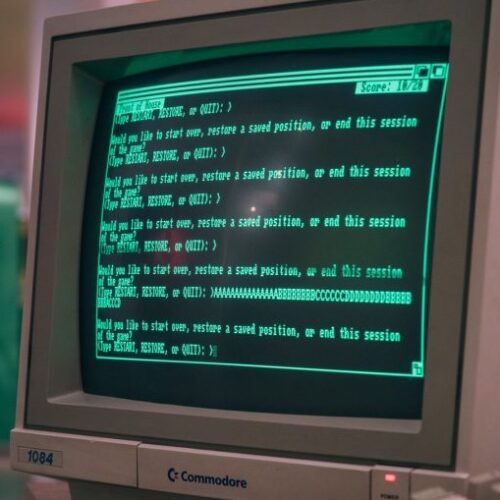
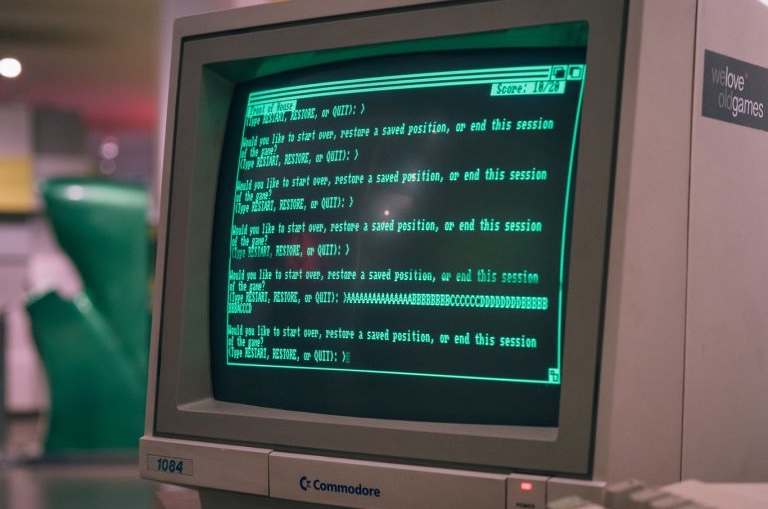
Microsoft makes Zork I, II, and III open source under MIT License

Zork, the classic text-based adventure game of incalculable influence, has been made available under the MIT License, along with the sequels Zork II and Zork III.

The move to take these Zork games open source comes as the result of the shared work of the Xbox and Activision teams along with Microsoft’s Open Source Programs Office (OSPO). Parent company Microsoft owns the intellectual property for the franchise.

Only the code itself has been made open source. Ancillary items like commercial packaging and marketing assets and materials remain proprietary, as do related trademarks and brands.

Read full article

Comments

Β© Marcin Wichary (CC by 2.0 Deed)

β€œWe’re in an LLM bubble,” Hugging Face CEO saysβ€”but not an AI one

There’s been a lot of talk of an AI bubble lately, especially regarding circular funding involving companies like OpenAI and Anthropicβ€”but Clem Delangue, CEO of machine-learning resources hub Hugging Face, has made the case that the bubble is specific to large language models, which is just one application of AI.

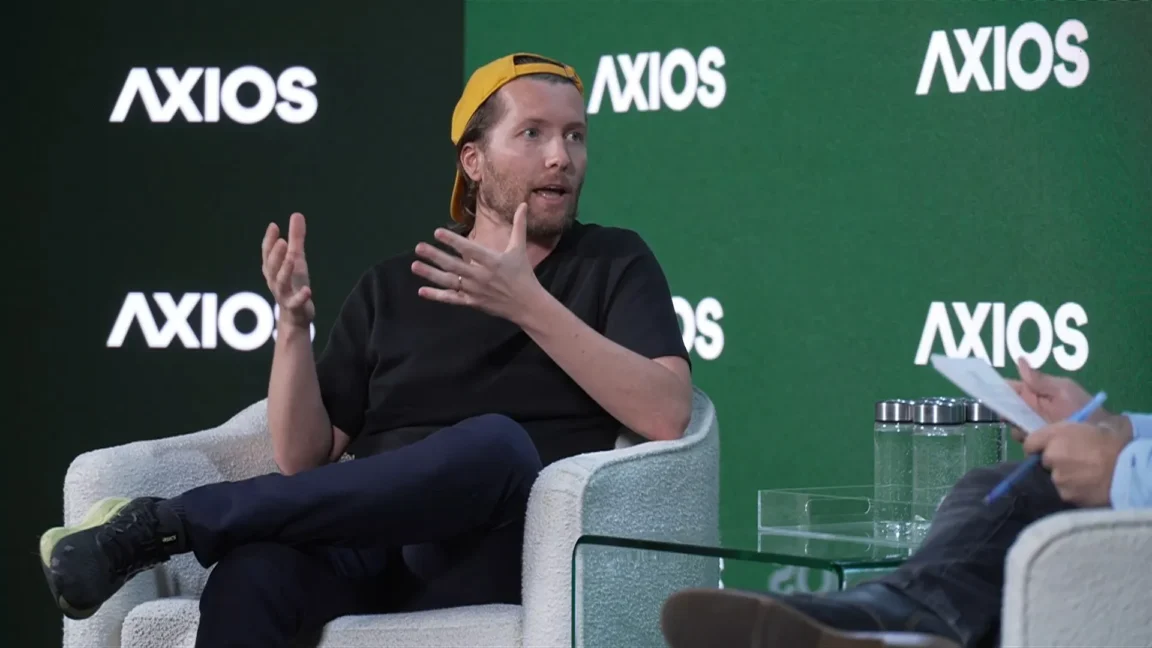
β€œI think we’re in an LLM bubble, and I think the LLM bubble might be bursting next year,” he said at an Axios event this week, as quoted in a TechCrunch article. β€œBut β€˜LLM’ is just a subset of AI when it comes to applying AI to biology, chemistry, image, audio, [and] video. I think we’re at the beginning of it, and we’ll see much more in the next few years.”

At Ars, we’ve written at length in recent days about the fears around AI investment. But to Delangue’s point, almost all of those discussions are about companies whose chief product is large language models, or the data centers meant to drive thoseβ€”specifically, those focused on general-purpose chatbots that are meant to be everything for everybody.

Read full article

Comments

Β© Axios

With a new company, Jeff Bezos will become a CEO again

Jeff Bezos is one of the world’s richest and most famous tech CEOs, but he hasn’t actually been a CEO of anything since 2021. That’s now changing as he takes on the role of co-CEO of a new AI company, according to a New York Times report citing three people familiar with the company.

Grandiosely named Project Prometheus (and not to be confused with the NASA project of the same name), the company will focus on using AI to pursue breakthroughs in research, engineering, manufacturing, and other fields that are dubbed part of β€œthe physical economy”—in contrast to the software applications that are likely the first thing most people in the general public think of when they hear β€œAI.”

Bezos’ co-CEO will be Vik Bajaj, a chemist and physicist who previously led life sciences work at Google X, an Alphabet-backed research group that worked on speculative projects that could lead to more product categories. (For example, it developed technologies that would later underpin Google’s Waymo service.) Bajaj also worked at Verily, another Alphabet-backed research group focused on life sciences, and Foresite Labs, an incubator for new AI companies.

Read full article

Comments

Β© Getty Images | Bloomberg

❌