Reading view

There are new articles available, click to refresh the page.

How to Grill Rib Wings Like a Pitmaster

Updated November 2025

Barbecue fans love a great mash-up — and rib wings are exactly that. Part baby back rib, part chicken wing in spirit, these trimmed rib bites deliver crispy bark and tender, smoky meat in a single bite. Perfect for tailgates or backyard feasts, they’re easy to cook hot and fast over live fire, with that irresistible “rib-by” chew that keeps everyone reaching for more.

Ribs Take Wing

First came Beer Can Chicken. Then the Bacon Explosion. Then Bacon Wrapped Onion Rings and Pork Shooters.

So the next way cool thing that will rock the barbecue blogosphere?

We’re putting our Bitcoins on Rib Wings.

Rib Wings are made by slicing a rack of ribs into individual ribs before cooking. The process resembles how chicken wings are divided into drumettes and flats.

Which brings us to the debate as to who in the barbecue world first created the rib wing. Forbes.com writer and Barbecue University alum Larry Olmsted credits Mike Hiller with the Rib Wing (Forbes, May 2021).

I’m a diehard mad scientist when it comes to barbecue. I love experimenting when I cook. I like to see how changing the rub, the sauce, or the grill produces new flavors and textures. For example, the ribs I cook low and slow in a Big Green Egg XL will taste and look different than the ribs I hang in my Pit Barrel Cooker. Check out my “Ultimate Rib” blog to read more about my ribs experiments.

Rib Wings are my latest experiment. A rack of ribs is typically sliced into individual ribs after cooking; why not cook them that way? And why did no one think of it earlier?

How to Grill Rib Wings

Here is how my Rib Wings came together. I started by slicing a rack of St Louis cut spareribs into individual ribs. I normally remove the membrane from a rack of ribs before cooking. Slicing the ribs before cooking eliminates that tedious step per Hiller. I liberally seasoned the ribs with one of my homemade spice rubs. (You could also use Steven’s Kansas City Smoke Rub.

I then placed the ribs on a wire rack to make it easier to move them on and off the grill. I left space between each rib so the smoke would circulate evenly. My plan was to cook the ribs low and slow, spray the ribs with an apple cider vinegar mixture while cooking, and then baste with barbecue sauce at the end as outlined by Hiller.

I set up a Big Green Egg XL for indirect grilling by inserting the diffuser plate and obtained a temperature of 250 degrees. I used apple chucks to create wood smoke. After smoking the ribs for one hour, I started spraying the ribs with a mixture of apple cider vinegar, Worcestershire, and hot sauce.

Rib Wings 1 hr in

I continued to spray the ribs every 30 minutes. To finish the ribs, I increased the temperature to 375 degrees for the last 20 minutes and basted the ribs with my homemade spicy peach barbecue sauce. Total cooking time was three and half hours. I knew the ribs were done when the meat was pulled back from the bones.

Here is what I learned by cooking ribs individually. The smaller ribs cooked faster than the meatier middle ribs. The ribs from the ends of the rack were fall of the bone tender, but I prefer my ribs to hold together when I take a bite. The meatier ribs held together beautifully. The ribs developed a dark mahogany color, almost to the point of looking burnt. I feel the dark color was a result of the Worcestershire sauce in the spray mixture. The dark color occurred before I added the spicy peach barbecue sauce, so it was not due to burning the sauce.

Rib Wings on butcher paper

The process of seasoning and smoking the ribs individually definitely boosts the flavor compared to the whole rack method. Every bite had a heightened level of sweetness, spiciness, and smokiness. The combination of the rub and smoke created a crisp texture that reminded me of the “bark” I love on brisket. One minor shortcoming of smoking individual ribs is the smaller end ribs were a hint less tender on the inside. The most noticeable advantage to the “Rib Wing” is that each bite of the rib has a blast of flavor that comes from exposing all sides of the rib to spice rub and smoke.

I think Rib Wings would make a great appetizer for a cookout. I wondered if I could cook enough to make a meal, so I ran a second test. The second test was going to be performed on my Pit Barrel Cooker, which is one of my favorite methods to cook multiple racks of ribs or wings for a large group. I can hang 6-8 racks of ribs or cook over seventy chicken wings on the hanging skewers in the barrel cooker. I sliced the ribs and seasoned them with Steven’s Kansas City rub. Apple wood chips were added to create wood smoke. The barrel cooks at a higher temperature so I anticipated a different texture and shorter cooking time.

I wanted to skewer the ribs and hang them like I do chicken wings. After a few attempts, I didn’t feel the ribs were secure on the hanging skewers and might fall off as the meat pulls back from the bones. Disappointed, I placed the individual ribs on the grate.

I started to spray the ribs with the same apple cider vinegar mixture after 30 minutes. The ribs started to pull back from the bones after an hour and a quarter. I then basted the ribs with Steven’s Chipotle Molasses barbecue sauce and cooked for an additional 15 minutes. Total cooking time was an hour and a half.

Rib Wings with sauce

Due to the higher temperature of the barrel cooker the rub and sauce caramelized and produced a sweet and smoky exterior. The aroma of wood smoke was present despite the shorter time exposed to the smoke. The time required to cook the larger ribs caused the smaller end ribs to become too crispy. The ribs developed the same dark color on the ribs as in the first test. The ribs had an appealing sweet with a little heat flavor due to the combination of Steven’s rub and sauce. The ribs held together with each bite. The only drawback? I was disappointed I could not hang the ribs. I thought it would be a cool way to cook enough rib wings for a larger group.

I enjoyed both experiments because they were so incredibly tasty. Seasoning all sides of the ribs and adding sauce elevated the flavor of the ribs. I hope this inspires you to run your own flavorful experiment.

So blogsphere—get ready for rib wings. You’ll never think about ribs—or wings—the same way!

Rib wings are one of those sleeper hits that turn a regular cookout into something memorable. Once you’ve tried them, you’ll wonder why more people don’t grill ribs this way. For more creative rib ideas and live-fire inspiration, check out Project Smoke, Project Fire, or browse the Ribs section on BarbecueBible.com.


Steve Nestor is the fire wrangler on Project Fire and at Barbecue University. More importantly, he’s an incredibly skilled physical therapist in the Boston area. If leaning over a hot grill or pulling heavy briskets from smoker leaves you with weak knees or a sore back, give him a call. At very least, sign up for his newsletter.

https://nestorphysicaltherapy.com/

Grilled Rib Wings: Frequently Asked Questions

What exactly are rib wings?
Rib wings are sections cut from the baby back rib rack near the loin. They’re smaller than full ribs, with just enough meat and fat to cook quickly and still stay juicy.
How do you grill rib wings?
Season with your favorite rub, then grill over medium-high heat (375–400°F) for about 20–25 minutes, turning often until the meat is browned and tender. Brush with sauce at the end if desired.
Should I use direct or indirect heat?
Start over direct heat to crisp the exterior, then finish over indirect heat until the internal temperature reaches about 190°F. This gives you a tender bite without burning the rub.
What rubs or sauces pair best?
Try Steven Raichlen’s Basic Barbecue Rub or Project Smoke All-Purpose Rub for seasoning. Finish with your favorite barbecue sauce or glaze for a sweet-smoky finish.
Can rib wings be smoked instead of grilled?
Absolutely. Smoke them at 250–275°F for 1.5 to 2 hours with fruitwood or hickory until tender and lightly charred. They’ll take on a deeper, more traditional barbecue flavor.

Related Posts

Check out our 1000+ Recipes section here on Barbecue Bible.Com

Also, sign up for our Up in Smoke newsletter so you don't miss any blogs and receive some special offers! PLUS get Raichlen's Burgers! PDF for free!

Follow Steven on Facebook, Instagram, YouTube, TikTok, Reddit, and Pinterest!

Check out our store powered by BBQGuys!

The post How to Grill Rib Wings Like a Pitmaster appeared first on Barbecuebible.com.

3-2-1 Ribs Revisited: Is It Time for New Math?

Most serious practitioners consider barbecue an art, the outcome of which depends on knowledge, skill, and intuition. Which is why I’m skeptical of formulaic approaches like the 3-2-1 method for cooking pork spare ribs. Last year, in what turned out to be one of my most visited blog posts to date, I wrote:

And if you serve ribs cooked by the 3-2-1 method, 95 percent of the people who taste them will react with delight and will declare you a genius. My guests sure did, and I did not deflect their praise. And yet … and yet … I felt a certain discomfort accepting my guests’ compliments. These were good ribs. Safe ribs. Ribs by rote. These were ribs almost anyone could love on account of their moistness and tenderness.

(If you are unfamiliar with it, the 3-2-1 approach calls for smoking the ribs for 3 hours, cooking for 2 hours tightly wrapped in foil, and unwrapping for the final hour for a total of 6 hours.)

This barbecue-by-the-numbers method is undeniably popular among backyard pit masters and on the competition circuit, where it is believed to have originated. So why do I keep revisiting it? I have never been totally satisfied with ribs barbecued according to the 3-2-1 formula. Sometimes, the chew skews from tender to mushy. The bark softens in the steam while the ribs are foiled. The rub disappears. The flavors seem dialed down, a bit washed out, almost like boiled ribs.

3-2-1 Barbecued Spare Ribs - Step 8

After experimenting, I identified the primary cause of the problems: The ribs were simply spending too much time in the steamy environment of the foil.

I’m now a proponent of the 3-1-1 method. (Not as catchy as 3-2-1, but oh well.) Below are the particulars. Note: If using baby back ribs, cut the smoking time down to 2 hours.

Step-by-Step Guide to the 3-1-1 Method Ribs

  • Start with the best spare ribs you can buy, preferably heritage breed and never frozen. Buy St. Louis-style ribs or trim them yourself. One rack feeds 2 to 3 people. Remove the papery membrane from the bone side of the ribs as it impedes the absorption of smoke and spices.

    St. Louis Ribs on the smoker - 3-1-1 Ribs

  • Apply your favorite rub (I’m partial to my Planet Barbecue Kansas City Smoke Rub) to both sides of the ribs an hour or so before you intend to cook. The salt in the rub draws some of the moisture from the surface of the meat, giving you better bark.

  • In the meantime, set up your smoker according to the manufacturer’s instructions and preheat to 250 degrees F. (Alternatively, set up your charcoal grill for indirect grilling and preheat to the same temperature.) If using wood chips to generate smoke, soak in water for at least 30 minutes, then drain. (I don’t bother soaking wood chunks.) Place a shallow pan of water in the cook chamber if not using a smoker with a built-in water pan. You could add moisture to the ribs by mopping, but repeated opening and closing of the lid compromises the temperature’s stability.

  • Once the temperature has stabilized in your smoker or grill, arrange the ribs on the grate, bone side down. If smoking several racks at once, use a rib rack. Immediately close the lid. Smoke for 3 hours, replenishing the fuel, water, and/or smoking wood as necessary.

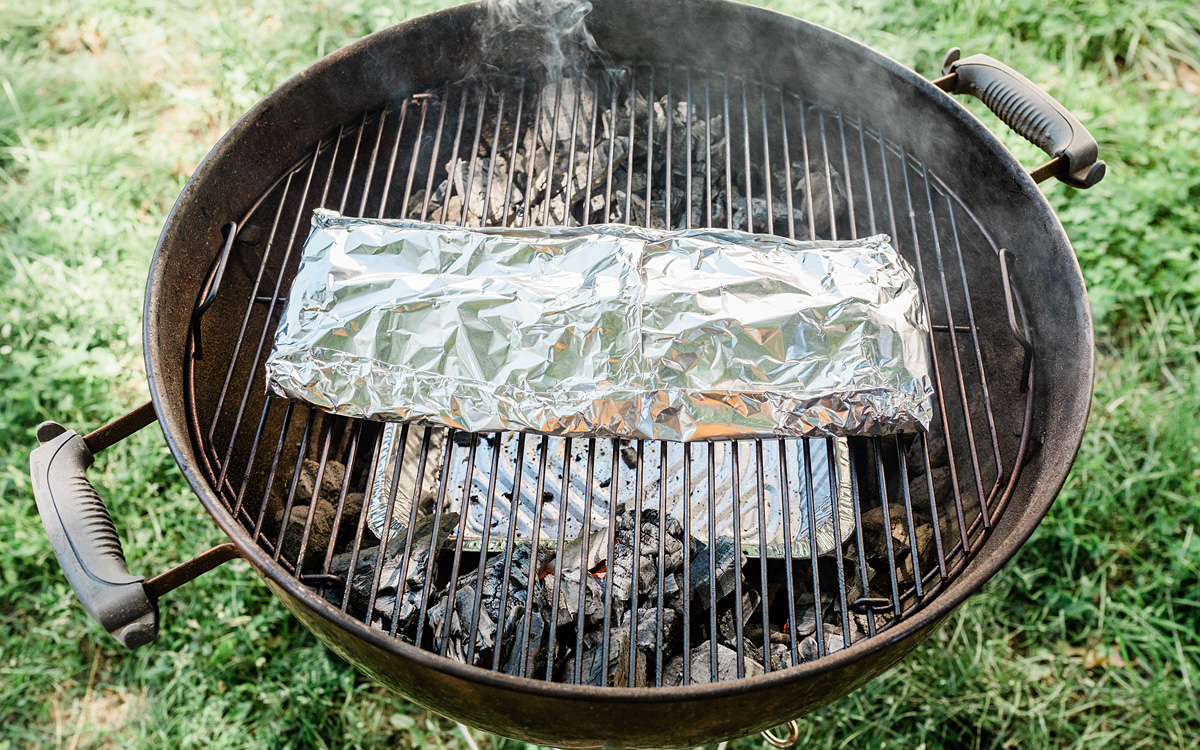
  • For each rack of ribs, tear off a rectangle of heavy-duty aluminum foil large enough to completely enclose the ribs. Quickly remove the ribs from the smoker or grill and replace the lid to avoid heat loss. Place each rack, meat side down, on a piece of aluminum foil and bring up the sides. If desired, pour 1/4 cup of apple cider, beer, ale, or other flavorful liquid on top of the bones and dot with thin slices of butter. Bring the edges of the foil together and fold to make a tight package. Return to the smoker or grill and cook for 1 hour. (You no longer need to add smoking chips or chunks to the fire.)

    3-1-1 Barbecued Spare Ribs

  • Remove the ribs from the smoker or grill. (Again, work quickly to maintain cooking temperatures.) Carefully open the foil package; wear heatproof food gloves to avoid steam burns. Insert a toothpick between the bones in the thickest part of the meat; it should penetrate fairly easily. Using tongs, lift the ribs from the foil. Discard the foil. Reserve the juices, if desired, and boil down to make a glaze. Don’t bother if you’re only doing 1 or 2 racks.

  • If desired, dust the ribs lightly with more rub. Return to the smoker or grill, meat side up, or to the grill rack. Cover and continue to cook for 1 hour. Again, insert a toothpick between the bones to test for doneness. If the toothpick doesn’t penetrate easily, continue to cook until it does, testing at 15-minute intervals. (Another test for doneness requires you to lift the rack of ribs up by one end. If it begins to bend and form a shreddy crack between the middle bones, the ribs are tender.) If you made a glaze, apply it now. I like to serve barbecue sauce on the side. But you can apply it the last 30 minutes of the cook or sizzle it in over a hotter grill for the last 5 minutes. Please note that sweeter sauces burn easily, so watch them carefully.

St. Louis Ribs at Barbecue University

Bottom line? The success of ribs, like brisket or pork shoulder, still depends on human intuition. Use the above formulas as guidelines, recognizing that a particular rack of ribs might need more or less time on the grill. Be flexible. If the ribs are done before your guests arrive, loosely wrap them in foil and stow in an insulated cooler until serving time. If the ribs need more time, have some interesting grilled appetizers at the ready.

Do you have a fail-safe method for barbecuing ribs? Please share it with us on social media!

Related Reads

Check out our 1000+ Recipes section here on Barbecue Bible.Com

Also, sign up for our Up in Smoke newsletter so you don't miss any blogs and receive some special offers! PLUS get Raichlen's Burgers! PDF for free!

Follow Steven on Facebook, Instagram, YouTube, TikTok, Reddit, and Pinterest!

Check out our store powered by BBQGuys!

The post 3-2-1 Ribs Revisited: Is It Time for New Math? appeared first on Barbecuebible.com.
Your Summer Cookout Just Got Better! Hotdog Burnt Ends and High Voltage Hamburgers

Summer cookouts are about two things: the people you hang out with and the food you eat. If you are like me, you probably want to impress your guests with the food when hosting a cookout. I’m often asked how many grills I use to cook all the food. Whether you are cooking with one or six grills, you can prepare a delicious spread for your friends and family.

Recipes for Your Summer Cookout

There are two classic items that are on the menu when attending a cookout: hamburgers and hotdogs. I think you can have lots of fun with how you dress them up. Feel free to keep it simple, but if you are looking for creative ways to prepare hamburgers and hotdogs, check out my previous blog posts—“Battle Of the Grilled Beef Burgers” and “Battle of the Grilled Hotdogs.

I realized it would be difficult to prepare hamburgers and hotdogs multiple ways like I did for a big crowd. So, pick one or two of your favorites from below and fire up the grill. Here is how I utilized what I had.

I decided to prepare two appetizers as well as grilling hamburgers and hotdogs. The appetizers were not necessary but gave me a reason to fire up the smoker.

Creative Recipes to Boost Your Summer BBQ

I made hotdog burnt ends and smoked meatballs. To prepare the hotdogs, I lightly coated them with yellow mustard and then seasoned them with my homemade barbecue rub. I smoked the hotdogs at 225 degrees for about an hour. The hot dogs were then sliced into one-inch pieces and topped with brown sugar, honey, butter, and barbecue sauce. I turned the temperature up to 350 and smoked the hotdogs for an additional 30 minutes.

Hot Dog Burnt Ends on the Grill

To make the meatballs, I used ground beef (2 pounds) and mixed in sautéed onions and mushrooms, egg, breadcrumbs, parsley, salt, and pepper. I cooked a tester patty to check the seasoning. I used an ice cream scoop to portion out the meatballs so they would all be the same size. The meatballs smoked with the hotdogs at 225 degrees for 30 minutes. I basted the meatballs with barbecue sauce, and they smoked at 350 degrees until they reached 160 degrees on an instant-read thermometer.

Smoked Meatballs

Now for the main event. I set up my Big Green Egg XL (BGE) for direct grilling. To create a safety zone, I left one of the half-moon diffuser plates in the BGE. I inserted the cast-iron grates into the Egg. I like how the cast-iron grates create a crusty exterior on hamburgers. I seasoned the hamburgers with kosher salt and black pepper. Once the cast-iron grates were hot, I placed the hamburgers and hot dogs on the grill. The hotdogs cooked quickly, about a minute a side. The hamburgers cooked 90 seconds, and then I gave them a quarter turn and cooked for another 90 seconds. I flipped the burgers and repeated the process. I topped the hamburgers with smoked Gouda cheese and then moved them to the safe zone while the cheese melted. I toasted the brioche buns, and it was time to put it altogether.

Hot Dogs and Hamburgers on the Grill for Summer Cookout Recipes

I went with a classic preparation for the hotdogs and served them with Dijon mustard, relish, and celery seeds. The hamburgers were prepared with my wife’s and my favorite toppings. For my wife’s hamburger, lettuce, sliced tomato, sliced avocado, and ranch dressing. My toppings included lettuce, tomato, bacon, pickles, and ketchup.

The Results

The hotdogs had a great beef flavor. There was a nice snap when I took a bite of the hotdog. The spice of the mustard and sweet relish paired well with the hotdog. The hamburgers were juicy on the inside due to the marbling. The seasoning and the high heat of the cast-iron grates created a crusty exterior. The charcoal fire added a smoky aroma. The lettuce, tomato, and pickle add a fresh flavor to the hamburger. The smoked Gouda cheese and bacon boost the smoky flavor of the burger.

The hotdog burnt ends were sweet, crusty, and the beef flavor came through. They will not be confused with true brisket burnt ends, but they were tasty and took less time to cook. The smoked meatballs were moist, and the onions and mushrooms complemented the flavor of the beef. The barbecue sauce created a flavor profile I’m not used to on a meatball, but was delicious.

Summer Cookout - Hamburgers, Hot Dog Burnt Ends, and Smoked Meatballs

Check out our 1000+ Recipes section here on Barbecue Bible.Com

Also, sign up for our Up in Smoke newsletter so you don't miss any blogs and receive some special offers! PLUS get Raichlen's Burgers! PDF for free!

Follow Steven on Facebook, Instagram, YouTube, TikTok, Reddit, and Pinterest!

Check out our store powered by BBQGuys!

The post Your Summer Cookout Just Got Better! Hotdog Burnt Ends and High Voltage Hamburgers appeared first on Barbecuebible.com.

Barbecue on the Griddle? A Revolutionary Technique for Smoking on a Flattop

The Surprising Technique of Smoking on the Griddle

Every once in a while, a cooking technique comes along that sounds so improbable, you’d never think to try it.

But that turns out to be so essential, you’ll wish you had thought of it earlier.

I speak of smoking on the griddle.  Aka barbecue on the griddle.   Aka an impossibility.  Only it’s not only possible.   It’s impossibly cool.

Why I’m Obsessed with Griddling Lately

If I seem obsessed by griddling lately, it’s because I just published a new book called Project Griddle.   No, I haven’t given up grilling—that will never happen.   But I have added several outdoor griddles to my grill collection at home and I use them to turn out some amazing food.

Why bother with outdoor griddles?   Well, there are certain foods you just can’t cook on a grill.   The short list includes pancakes, eggs, fried-rice, A5 wagyu steaks, and delicate fish.   More on those in a previous blog.   You can even use a griddle to cook steaks, chops, and kebabs.

But unlike a grill, the one thing a griddle can’t do is smoke.   As in smoking to make barbecue.   Or can it?   While writing Project Griddle, I came up with a revolutionary technique, for it turns out you CAN smoke on a griddle.   Not just one way, but two.

Smoke Griddling Method #1: Charcoal Grill with Cast Iron Griddle

Smoke Method #1

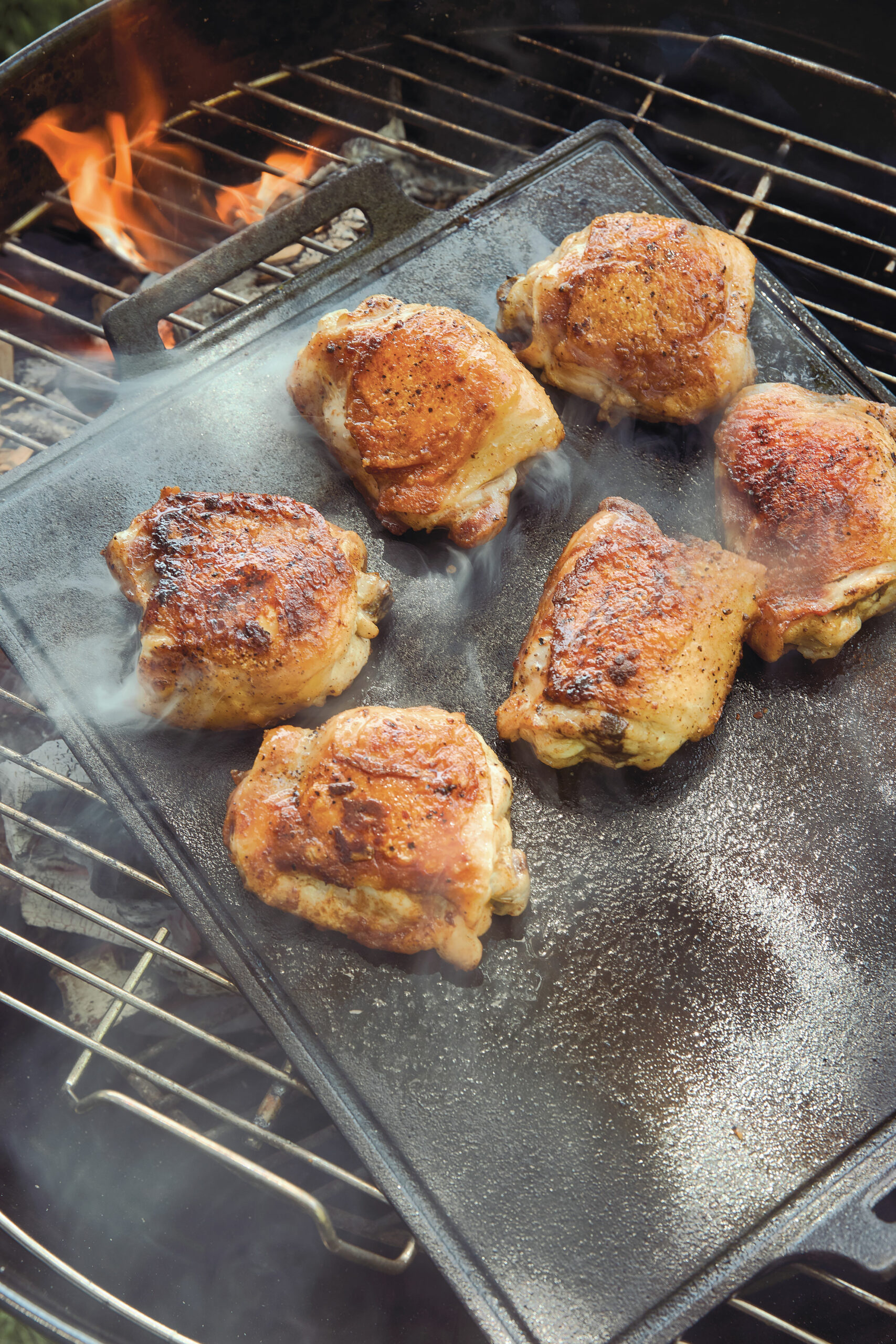
I developed this technique during my first ventures with griddling on a charcoal grill.   I spread the coals in an even layer.   I set my portable cast iron griddle on the grate and heated it.   To check when it was ready, I sprinkled a few drops of water on the griddle—when they evaporated in 2 to 3 seconds, the griddle was sufficiently hot.    

Next, I added handfuls of hardwood chips (or a couple wood chunks) on the charcoal at the edge of the grill.   When I saw smoke, I placed the food—shrimp in this case—on the griddle.   I kept the grill lid closed to hold in the smoke.   My smoke-griddled shrimp were amazing, and so were the pork tenderloins, chicken breasts, and salmon steaks I griddled subsequently. 

No one was more surprised than I was.

Smoke Griddling Method #2: Smoking Directly on the Griddle Surface

Smoke Method #2

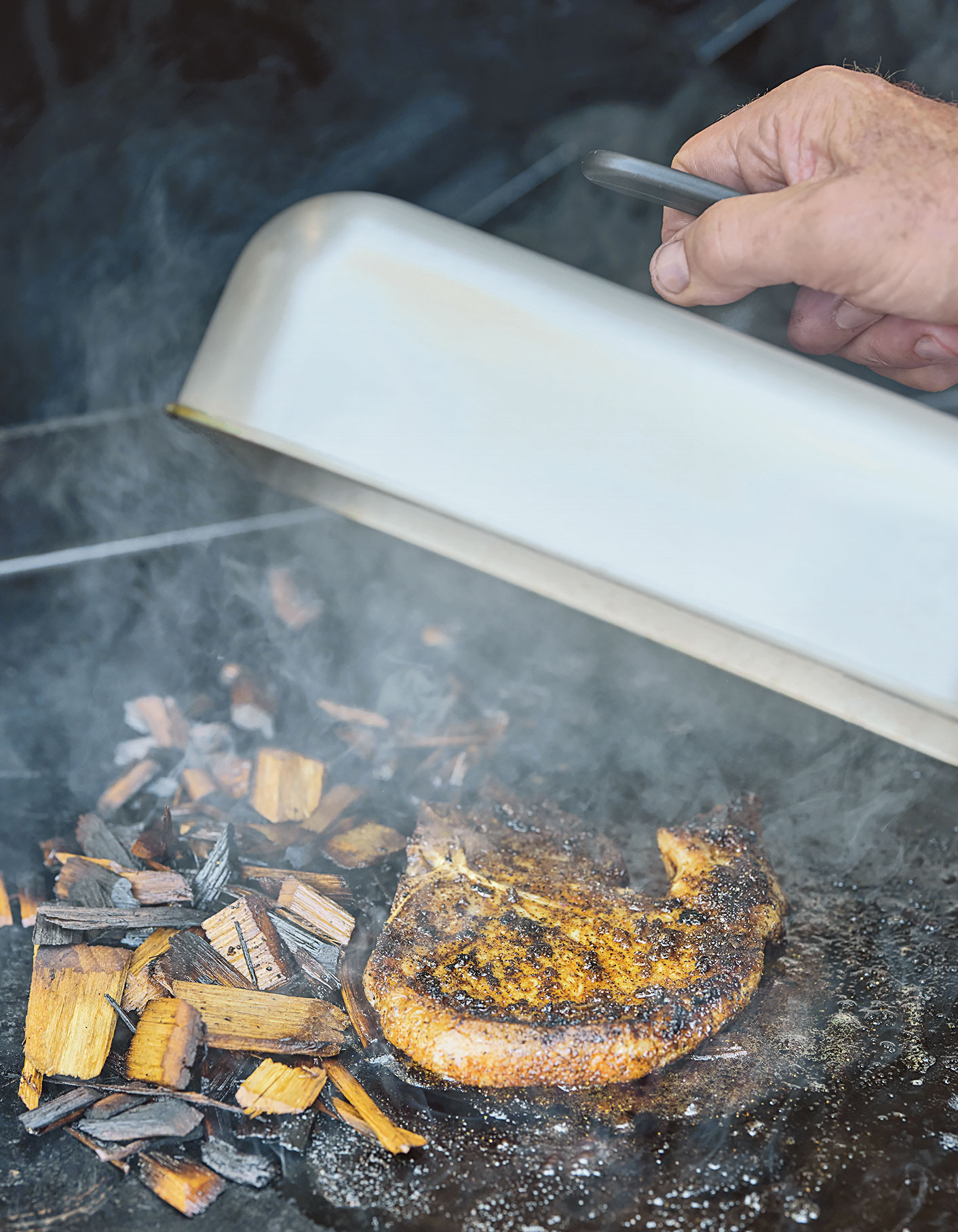
Even more surprising was Smoke griddling method #2.   In this method, you smoke right on the griddle itself.

I was trying to make a griddled version of barbecued chicken with Alabama white sauce.   I heated one zone of the griddle to high and one zone to medium.   I mounded a handful of hardwood chips (you can also use hardwood sawdust or pellets) directly on the griddle over the hot zone.   When the chips started to smoke, I slid the wood to the medium zone and place the chicken next to it.   Then I placed a griddle dome on top.   I griddled the chicken covered, while wood smoke swirled all around it.   And damn if it didn’t taste like barbecued chicken I’d smoke on the grill. 

So before you dismiss outdoor griddles as being inferior to grills or smokers, try smoking on your flattop.

Related Blogs

Check out our 1000+ Recipes section here on Barbecue Bible.Com

Also, sign up for our Up in Smoke newsletter so you don't miss any blogs and receive some special offers! PLUS get Raichlen's Burgers! PDF for free!

Follow Steven on Facebook, Instagram, YouTube, TikTok, Reddit, and Pinterest!

Check out our store powered by BBQGuys!

The post Barbecue on the Griddle? A Revolutionary Technique for Smoking on a Flattop appeared first on Barbecuebible.com.

❌