
 Login
LoginElli Furedy Brings Cyberpunk Games to Life
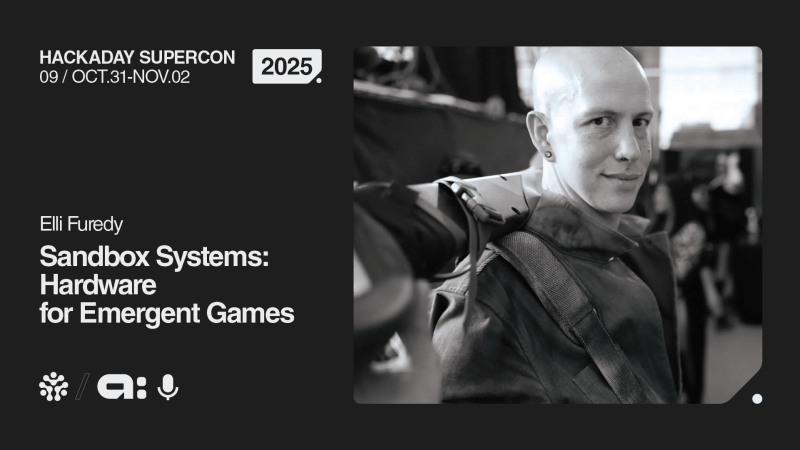
When you’re designing a bounty hunter game for a five-day cyberpunk live-action-role-play out in the middle of the Mojave desert, you’ve got to bring something extra cool. But [Elli]’s Hackaday Supercon talk isn’t just about the hardware; it’s as much about the design philosophy behind the game – how you bring something immersive and exciting to hundreds of players.
Sandbox Systems
The game itself is fairly simple: bounty hunters try to find the bounty, and when they do, they have a quick-draw to see who wins. Everyone is issued a color-coded Portable Data Node device, and when a hunter jacks into a bounty’s Node, a countdown begins, and the first to press the button after the display say “Go” wins.
But the simplicity of the game is by design, and [Elli] talks about the philosophy that she and her team followed to make it a success. If you’re designing a conference badge or an immersive game for a large group of people, take note.
The first principle is to focus on the people first before the tech. Here, that essentially means making the experience as simple as possible in order to leave room for the players to put their own spin on it – it’s a role-play event after all.
Next is providing opportunities over demands. In this game, for instance, if you’re playing the bounty hunter role, you have to deliver a “Declaration of Intent to Seize” when you encounter a bounty player, but what deciding on your personal catchphrase for this is left up to you.
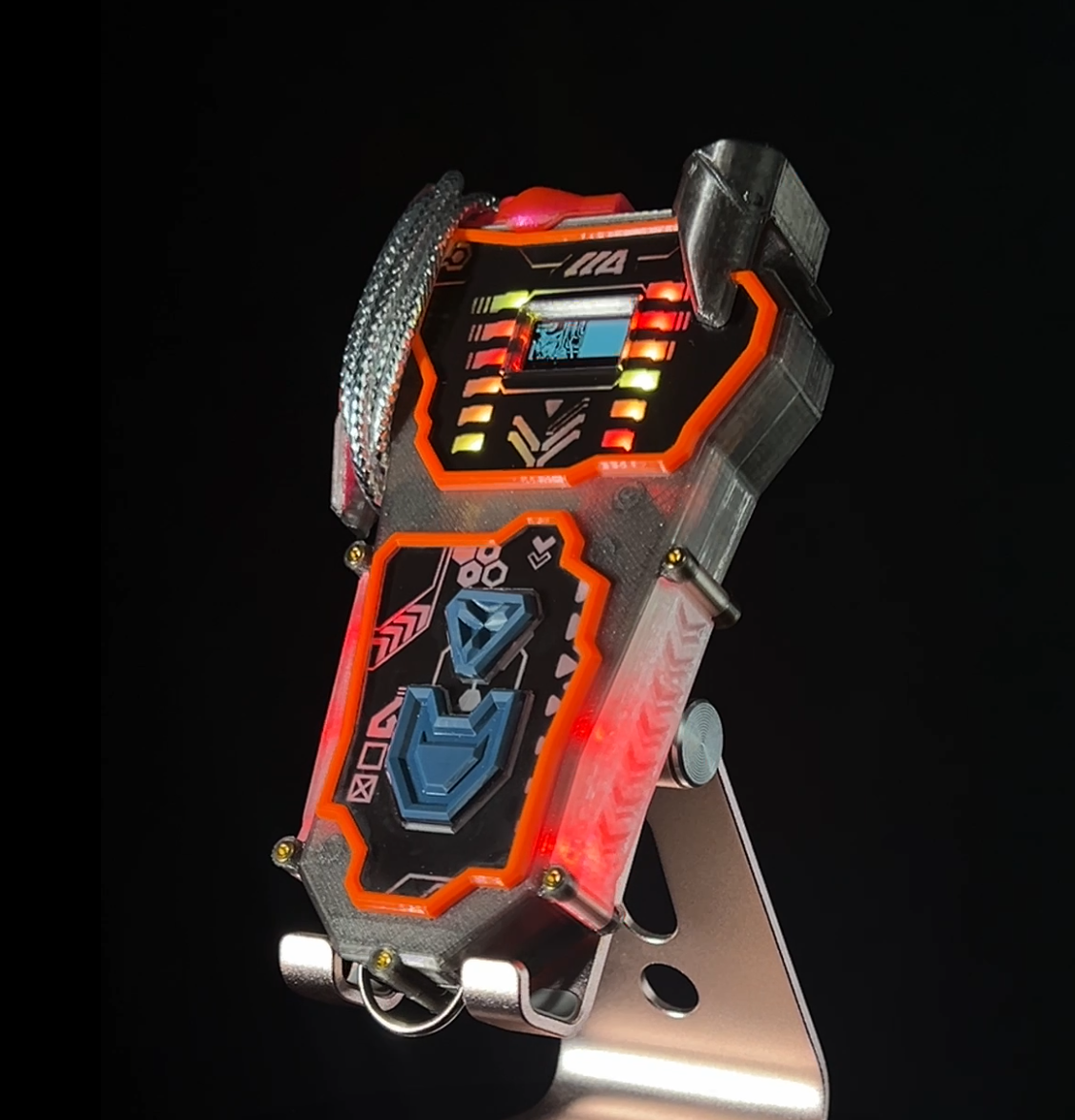 Embedding the rules of the game in the hardware is perhaps the most involved of the principles. The Data Nodes decide the winner and the loser, report it automatically over WiFi to a central scoreboard, and has anti-button-mashing provisions. These and many more examples of embedding the rules help make the game both fair and simple – nobody has to break the flow to look things up in a rule book or remember who gives what token to whom.
Selling the story of the game with the tech is also important. For instance, there is a part of the Node that [Elli] calls “the doodad” which is just pure LED and greebles. It doesn’t do anything, but it looks cool.
Finally, [Elli] mentions that her team puts an effort into making the game as accessible for everyone as possible. The onboarding video has cyberpunk-styled closed captioning, for instance. While originally designed for folks who don’t hear well, it ended up providing an aesthetic that everyone can enjoy – an example of the curb-cut effect at work.
The end result? 374 players played 3,838 matches over five days, but that’s just the stats. As [Elli] points out, the real point of the game is as an ice-breaker, to allow people room to explore whatever character they’re playing, and to connect people in real-space. It sounds like it was a complete success on all fronts.
The Sandbox
This is a talk on design principles, but it’s also a talk at Supercon, and [Elli] gets pulled into the hardware side of things many times throughout the talk. The Nodes have OLEDs and haptic motors for feedback, they use and ESP32 with WiFi for the score reporting, and there’s even discussion of the serial protocol that they speak to each other when they get connected up via an audio jack.
[Elli] gets some great questions about ways to expand the game, and you’re just going to have to watch the video to appreciate them all. Or join in: after all, it’s an open-source project and it’s intended to be a sandbox!
There seems to be a lot of room to play along, and [Elli]’s talk is definitely food for thought if you’re designing hardware with the end goal of creating and encouraging human interaction through building up an engaging story.
