Reading view

There are new articles available, click to refresh the page.

Benchmarking Chinese CPUs

By: Lewin Day

When it comes to PCs, Westerners are most most familiar with x86/x64 processors from Intel and AMD, with Apple Silicon taking up a significant market share, too. However, in China, a relatively new CPU architecture is on the rise. A fabless semiconductor company called Loongson has been producing chips with its LoongArch architecture since 2021. These chips remain rare outside China, but some in the West have been benchmarking them.

[Daniel Lemire] has recently blogged about the performance of the Loongson 3A6000, which debuted in late 2023. The chip was put through a range of simple benchmarking tests, involving float processing and string transcoding operations. [Daniel] compared it to the Intel Xeon Gold 6338 from 2021, noting the Intel chip pretty much performed better across the board. No surprise given its extra clock rate. Meanwhile, the gang over at [Chips and Cheese] ran even more exhaustive tests on the same chip last year. The Loongson was put through typical tasks like  compressing archives and encoding video. The outlet came to the conclusion that the chip was a little weaker than older CPUs like AMD’s Zen 2 line and Intel’s 10th generation Core chips. It’s also limited as a four-core chip compared to modern Intel and AMD lines that often start at 6 cores as a minimum.

If you find yourself interested in Loongson’s product, don’t get too excited. They’re not exactly easy to lay your hands on outside of China, and even the company’s own website is difficult to access from beyond those shores. You might try reaching out to Loongson-oriented online communities if you seek such hardware.

Different CPU architectures have perhaps never been more relevant, particularly as we see the x86 stalwarts doing battle with the rise of desktop and laptop ARM processors. If you’ve found something interesting regarding another obscure kind of CPU, don’t hesitate to let the tipsline know!

Allen Family Philanthropies giving nearly $7M to Seattle Center nonprofits to boost arts access

Audience members during a KEXP Concerts at the Mural at Seattle Center. (Amber Knecht Photo)

A group of Seattle nonprofits aiming to boost exposure to and participation in the arts among young people will receive nearly $7 million in funding from Allen Family Philanthropies.

The organizations — all leading projects on the Seattle Center campus — include independent radio station KEXP, the Museum of Pop Culture, Pacific Science Center and others.

Allen Family Philanthropies (formerly known as the Paul G. Allen Family Foundation) is a charitable entity started by the late Microsoft co-founder and his sister, Jody Allen, in 1988. The philanthropy invests in a number of areas, including arts and culture, science and technology, and research in all areas of bioscience.

The grants are aimed at projects intended to grow opportunities for diverse creators, increase access to arts programming and engagement, and reimagine spaces, according to a news release Wednesday.

Here are the eight nonprofits and their plans for how grants totaling $6,868,990 over three years will be used:

  • KEXP will support emerging artists and cultural workers and enhance audience diversity through extended programs for youth and their families, including the youth DJ programs, all-ages events, expanded youth outreach and programming engagement, and live music events and other activations in the KEXP Gathering Space and courtyard. ($879,700 in funding).
  • Museum of Pop Culture (MOPOP) will develop a residency program that will expand free youth access to interactive, culturally relevant learning experiences ($696,176 in funding).
  • National Film Festival for Talented Youth (NFFTY) will scale and grow festival programming into year-round, accessible opportunities for film education, mentorship, and professional development for aspiring youth filmmakers at Seattle Center ($480,882 in funding).
  • Pacific Northwest Ballet (PNB) will unify PNB’s emerging artist efforts into a singular choreographic dance program with more technical training and performance opportunities, increasing engagement for young artists aged 10-26, and expanding the Community Stages program ($1,250,000 in funding).
The Museum of Pop Culture in Seattle. (GeekWire File Photo / Kurt Schlosser)
  • Pacific Science Center (PacSci) will connect arts and culture with science, reimagining spaces with public artwork and cultural installations commissioned by Pacific Northwest Indigenous artists and culture bearers, through a new artist-in-residence program within the Maker & Innovation Lab ($997,632 in funding).
  • Seattle Repertory Theatre & Seattle Children’s Theatre will expand their theatrical partnership model with a multi-year initiative to co-produce one main stage show each season aimed at teens and their families ($1,320,000 in funding).
  • TeenTix will support a new Teen Connectors program in partnership with Seattle Center arts venues to increase access and engagement of teen audiences in arts and culture experiences ($250,000 in funding).
  • The Vera Project (Vera) will launch All Ages / All Access, a new slate of all-ages music and arts programming centered on concerts, gallery openings, and creative workforce development opportunities by and for young people. ($994,600 in funding).

Seattle Center draws more than 12 million visitors annually, and is the most visited arts and cultural destination in the Pacific Northwest.

“By investing in arts organizations that engage young people, we invest in the creators, audiences, and advocates who will contribute to and sustain a vibrant arts and culture sector in Seattle for years to come,” said Anh Nguyen, director of arts, youth and community for Allen Family Philanthropies. “These organizations excel at engaging young artists and young audiences — and know how to ignite curiosity. The grants will ensure youth arts and culture programming can continue to grow and evolve to meet community needs.”

Allen Family Philanthropies’ funding for Seattle Center organizations follows previous arts investments from the foundation, including $9 million to eight downtown arts organizations to support nearly 1,200 public events, and the Community Accelerator Grant Program administered by ArtsFund, which has awarded $30 million in funding to 930 arts and culture organizations across Washington state over the last three years.

Previously:

Exploring The Performance Gains Of Four-Pin MOSFETs

Photo of [DENKI OTAKU] with his test circuit and oscilloscope

Over on YouTube [DENKI OTAKU] runs us through how a 4-pin MOSFET works and what the extra Kelvin source pin does.

A typical MOSFET might come in a 3-pin TO-247 package, but there are 4-pin variants which include an extra pin for the Kelvin source, also known as source sense. These 4-pin packages are known as TO-247-4. The fourth pin provides an additional source for gate current return which can in turn lessen the effect of parasitic inductance on the gate-source when switching current, particularly at high speed.

In the video [DENKI OTAKU] uses his custom made testing board to investigate the performance characteristics of some 4-pin TO-247-4 MOSFETs versus their 3-pin TO-247 equivalents. Spoiler alert: the TO-247-4 MOSFETs have better performance characteristics. The video takes a close look at the results on the oscilloscope. The downside is that as the switching speed increases the ringing in the Vds waveform increases, too. If you’re switching to a 4-pin MOSFET from a 3-pin MOSFET in your design you will need to be aware of this Vds overshoot and make accommodations for it.

If you’d like to go deeper with MOSFET technology check out Introduction To MOSFET Switching Losses and MOSFETs — The Hidden Gate.

5 delicious eggless Black Forest Cake inspired desserts … best of summer!

Eggless Black Forest Inspired Desserts

The quintessential Black Forest Cake has got easy enough elements to play around with, and takes well to add ins like a dark chocolate ganache etc. And as always, the outcome is always spoon licking or bowl licking if not finger kicking good! Here are a few reimagined eggless black forest cake ideas to keep you busy through summer!

The post 5 delicious eggless Black Forest Cake inspired desserts … best of summer! appeared first on Passionate About Baking.

How to use Metrop nutrient charts

In recent years, the Dutch fertiliser company Metrop Hydroponics has found a place in many gardens thanks to the spectacular results that can be achieved with its products, whether cultivating indoors, outdoors or in greenhouses. The range is simple to use, as it does not have as many products as other brands, with highly concentrated fertilisers and additives suitable for all types of growing mediums, from soil or coco to hydroponic or recirculation systems such as DWC or NFT.

Thus, Metrop products are ultra-concentrated, undissolved in water and completely biodegradable, which is important for the environment. Of course, their fertilisers contain all the macro and micronutrients necessary for outstanding development, both in the growth and flowering phase. So, without further ado, let’s check their products out first and then we will look at their growing charts for the most common substrates in cannabis cultivation.

Logotipo de metrop

Metrop logo

Metrop’s fertiliser and supplement range

As we already mentioned, Metrop’s range of fertilisers and stimulators is really easy to use, as it has been formulated in such a way that growers don’t need a large number of products to achieve healthy, balanced nutrition and, above all, to get great results at harvest time. Let’s take a look at each of the products and their main function before studying their cultivation charts.

Metrop principal nutrients range

  • MR1 Growth: This fertiliser is formulated for the vegetative phase of plants from seeds or clones that are going to grow for a few weeks before flowering. Its NPK is 10-40-20, being very rich in phosphorus and potassium, and is used during the growth and pre-flowering of plants (the first 2-3 weeks of flowering photoperiod). Metrop MR1 is a fertilizer made from a high-quality plant extract, which is used every irrigation in nutrient-poor systems (hydroponics and coco) and every 2-3 irrigations in nutrient-rich soils.
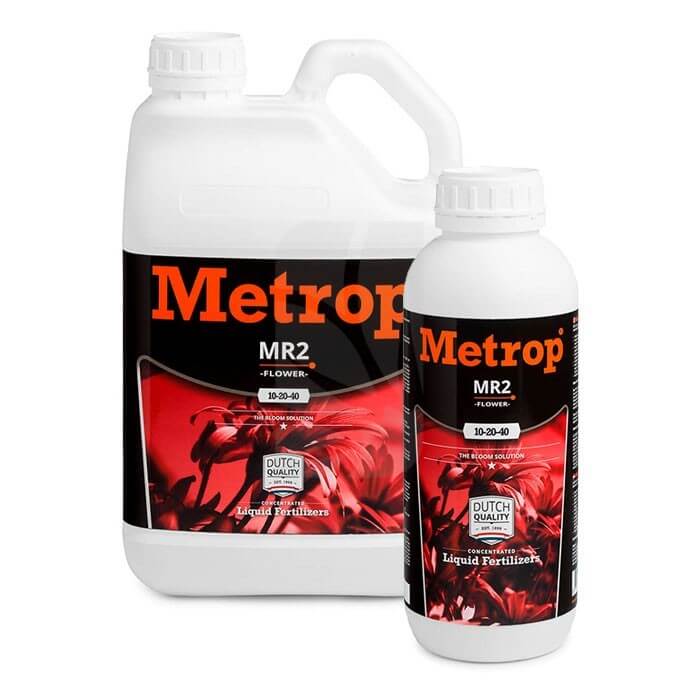
  • MR2 Flowering: In this case, we have the base fertiliser to use already in full bloom, after the stretching phase that plants undergo during the first 2-3 weeks of 12/12. With an NPK of 10-20-40, Metrop MR2 is very rich in phosphorus and especially potassium, two key elements to assure explosive flowering. It is also derived from plant extracts and is used at the same frequency as MR1, depending on the type of substrate and the nutrients contained in it.
  • Root+: This is a powerful root stimulator based on a cocktail of enzymes that promotes nutrient assimilation and better plant development. With Metrop Root+ you get more roots with a greater number of capillaries, which translates into more efficient uptake of nutrients and greater resistance to stress, pests and diseases. It is usually used in all irrigations during the first 3 weeks of growth.

[productes tipus=”fitxa” cerca=”metrop mr1″ nfitxes=”3″]

  • Calgreen: Calcium is one of the essential elements for plants, probably the fourth most important after nitrogen (N), phosphorus (P) and potassium (K). For this reason, Metrop Calgreen has been created, a mixture of nitrogen and calcium that provides everything the plant needs to strengthen its tissues, creating denser and heavier flowers. In addition, its use prevents the appearance of fungus and rot. The frequency of use is identical to that of the base fertilisers MR1 and MR2, although it is recommended to keep an eye on the dosage if you are using hard water (with a high initial EC).
Metrop MR2 is an efficient flowering fertiliser suitable for all types of substrate

Metrop MR2 is an efficient flowering fertiliser suitable for all types of substrate

  • MAM: Nutrition for mother plants, which can spend months in a vegetative state and undergo periodic pruning, is somewhat different from that of plants that will only grow for a few weeks and then flower. For this reason Metrop MAM has been created, a biomineral compound specifically formulated for the correct maintenance of mother plants. Its NPK is 20-20-8, ideal for plants that need a lot of nitrogen and phosphorus for the development of stems, leaves and roots.
  • AminoXtrem: Finally, this cocktail of amino acids and vitamins is the ideal complement to Metrop’s base fertilisers, providing an extra stimulus for plant growth and flowering. Metrop AminoXtrem is assimilated and acts very quickly, stimulating the production of enzymes and flowering hormones.

The Metrop range of additives and supplements

Enzymes: This biocatalyst, formulated with different enzymes, will keep our plants’ roots healthy and disease-free, boosting nutrient assimilation while helping to break down dead organic matter. In this way, Metrop Enzymes ensures proper nutrition while “cleaning” the substrate of dead roots and other residues, greatly improving both growth and flowering.

RhizoXtrem: In this case, we have a plant-based stimulator designed for maximum root growth thanks to the enzymes, vitamins, phytohormones and macro and micronutrients it contains. Thanks to Metrop RhizoXtrem, the development of root capillaries is maximised, and we all know the secret that a good harvest is born in the roots of the plant!

Metrop nutrient kits

Metrop also offers various varios fertiliser and additive kits to make things easier (and more economical) for its clients. Here they are:

  • Metrop Cutting Kit: Which consists of 3 specially formulated products to give a perfect start to seeds and cuttings: Metrop Substrate+, Metrop MR1 and Metrop RhizoXtrem.
  • Metrop Mother Kit: This kit is specially designed for the maintenance of mother plants, including MAM, Substrate+, Enzymes, Calgreen and MR1.
  • Metrop Starter Set 250ml: In this kit, we have everything you need for a grow from start to finish, in 250ml containers. The kit consists of MR1, MR2, Calgreen, Root+ and AminoXtrem.
  • Metrop Start Set 1L: Like the previous kit, this one has fertilisers and additives for an entire grow, although in this case they are supplied in 1 litre containers. Includes MR1, MR2, Calgreen, AminoXtrem, Root+ and Enzymes.

[productes tipus=”fitxa” ids=”7181,3594,14295″]

How to use Metrop nutrient charts

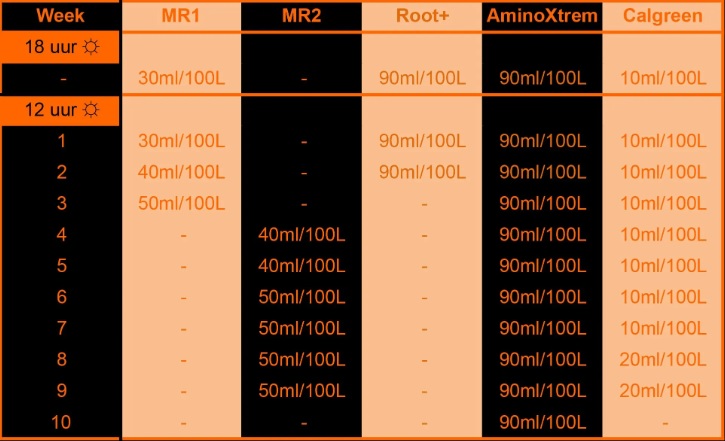
Now that we’ve seen the products that we are going to use over the next few months, let’s take a look at the quantities and frequency of application that Metrop recommends for each one of them, depending on the growing medium being used. Metrop offers 3 different charts: one for the main range of nutrients and valid for soil, coco and hydroponic systems without recirculation. The second is for additives, while the third chart is dedicated to systems such as DWC or NFT, where there is recirculation or reuse of the nutrient solution (the water with the nutrients returns to the tank after escaping through the drainage of the irrigation system, being reused). In addition, we will also see that their fertiliser for mother plants, MAM, has its own chart.

As usual, we have the weeks of vegetative growth (18 hours of light) and flowering (12 hours of light) on the left-hand side of the chart, while on the right-hand side, we find each of the products used with their corresponding dosage for each week. As you can see, Metrop has used a 10-week flowering period as a reference, with a final week of flushing in which only AminoXtrem and Enzymes are used. When growing varieties with shorter flowering periods, we only need to adapt the chart by removing weeks from the end of the chart, although always remembering that last final week of flushing.

*Important: Calgreen must be added to the deposit after mixing the rest of the products, never beforehand.

Metrop nutrient chart

Grow chart for Metrop products

Grow chart for Metrop products

As we can see, Metrop offers products and charts that are easy to use due to their easy dosage and small amounts of products. However, don’t be fooled, the results are great! The first thing we see is that during the growth phase we should use MR1, Root+, AminoXtrem and Calgreen. Once flowering has begun, we continue with this same nutrition during the pre-flowering phase (the first 2-3 weeks of the flowering photoperiod). At the end of this phase, we stop using Root+ and replace MR1 with MR2, the base fertiliser for this stage, a nutrient regime that we continue until the start of final root flushing (last week), where we water only with AminoXtrem. This chart is designed for soil, coco and hydroponic systems without recirculation.

Metrop DWC nutrient chart

Chart for DWC or recirculating hydroponic systems

Chart for DWC or recirculating hydroponic systems

The chart for DWC cultivation or recirculating hydroponic systems is practically identical to the previous one. We use the same products, although in this case, the dosages vary slightly. Once again, the last week of flushing is respected by watering only with AminoXtrem.

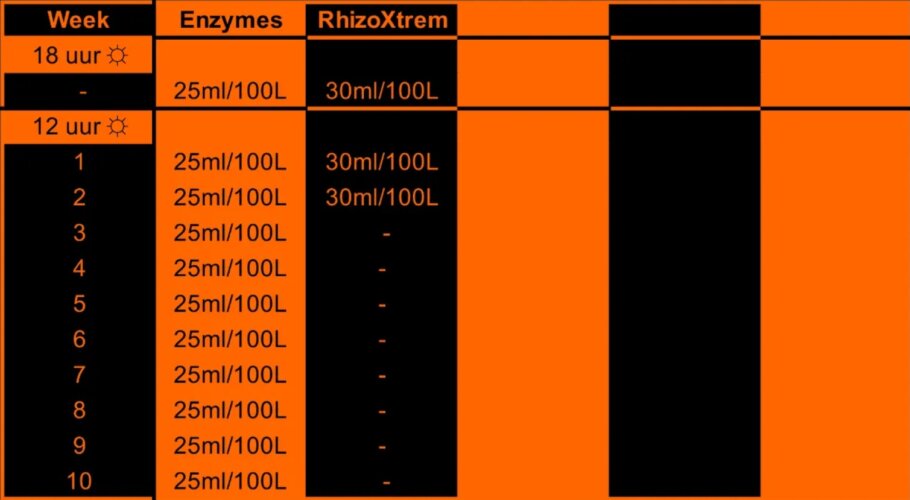
Metrop additive chart

Chart for the Metrop additives Enzymes & RhizoXtrem

Chart for the Metrop additives Enzymes & RhizoXtrem

Metrop nos presenta una tabla a parte con sus aditivos, Enzymes y RhizoXtrem. Como vemos, el primero deberá usarse durante todo el cultivo, desde la primera a la última semana de cultivo (incluyendo la semana de lavado final). En cambio, el uso de RhizoXtrem se limita a las fases de crecimiento y prefloración.

Metrop presents a separate table for its additives, Enzymes and RhizoXtrem. As we can see, the former should be used throughout the entire grow, from the first to the last week of cultivation (including the final week of flushing). On the other hand, the use of RhizoXtrem is limited to the growth and pre-flowering phases.

Metrop MAM chart

Chart for mother plant maintenance with Metrop products

Chart for mother plant maintenance with Metrop products

Finally, Metrop provides a chart for the maintenance of mother plants, including MAM, Root+, AminoXtrem and Calgreen. As we can see, the doses vary depending on whether we are dealing with normal plant growth or if we intend to take cuttings in a few days. The difference is the amount of MAM used, which we increase slightly a few days before taking the clones from the mother plant.

So that’s our summary of Metrop nutrition products and charts. As we have seen, it is a comprehensive range of nutrients and additives that are easy to use and provide amazing results that we’re sure many of you have already experienced for yourselves!

Happy growing!

The post How to use Metrop nutrient charts appeared first on Alchimia blog.

Eggless Cherry Chocolate Tart Cake … delicious cakes for summer!

Eggless Cherry Chocolate Tart Cake … delicious cakes for summer!

This Eggless Cherry Chocolate Tart Cake is a delicious and easy-to-make dessert perfect for hot summer days when cherries are abundant. The tart cake is one I make quite often, and this tart tin was one of my best buys. This versatile dessert can be soaked in Kirsch or cherry juice for added flavor. The raised flan tart tin ensures perfect results, inspiring creativity with various flavor combinations and customizations.

The post Eggless Cherry Chocolate Tart Cake … delicious cakes for summer! appeared first on Passionate About Baking.

Advanced Nutrients feed charts

By now, Advanced Nutrients is a fertilizer brand that needs no introduction. A benchmark in the cannabis market for more than two decades, thousands of growers across the planet have used some of its products at one time or another. And it is that the results obtained with the fertilizers and additives of this American company are beyond any doubt, both in terms of quantity and quality.

Today we present you the Advanced Nutrients feeding charts in all their formats, taking the four base fertilizers that they offer as a reference (Sensi, Connoisseur, Grow-Micro-Bloom, and Iguana) and in their two versions available in the case of the first two, for soil and for coco coir.

Advanced Nutrients began its journey as a brand of fertilizers and additives in 1999

Advanced Nutrients began its journey as a brand of fertilizers and additives in 1999

You may already be an Advanced Nutrients user, or perhaps you are curious to try one of their fertilizers or stimulators, which are many! Be that as it may, and to make things easier for you, we recommend you take a look at our post dedicated to the products of this brand before deciding on one of the fertilization ranges they offer and using the corresponding feeding schedule. So before starting with the tables, we leave you a link to the article about their products in case you feel like browsing a bit:

Advanced Nutrients: professional fertilisers, amazing results

Sensi Grow and Sensi Bloom Feed Charts (Soil)

Undoubtedly, the Sensi Grow and Bloom range is one of the best-known on the market. The fantastic results obtained with it are proof of its effectiveness, as is the testimony of hundreds of growers. These are 2 part fertilizers (A+B), so you will use Sensi Grow A and Sensi Grow B during growth, and Sensi Bloom A and Sensi Bloom B during flowering. As you will see, Advanced Nutrients offers two charts, one for the growth phase and the other for the flowering phase:

Growth phase, Sensi Grow A+B
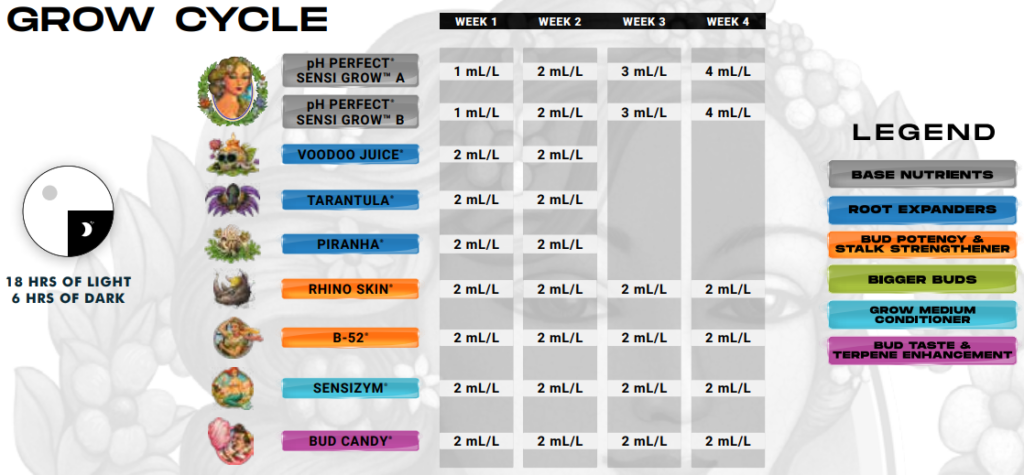
Feed chart for Sensi Grow A+B, growth stage, soil

Feed chart for Sensi Grow A+B, growth stage, soil

As you can see, AN recommends a photoperiod of 18/6 during the first weeks of the plants’ life, that is, during their vegetative cycle. Apart from the two base fertilizers (Sensi Grow A and Sensi Grow B), which increase their concentration as the plant develops and has greater needs, a series of additives are recommended to improve overall performance, from the production of roots to that of healthy and resistant stems and leaves. Root stimulators (in blue) such as Voodoo Juice, Tarantula, and Piranha are only used for the first two weeks, while the rest of the additives are used throughout this cycle. Undoubtedly, a first-class cocktail to prepare an explosive flowering.

Flowering phase, Sensi Bloom A+B
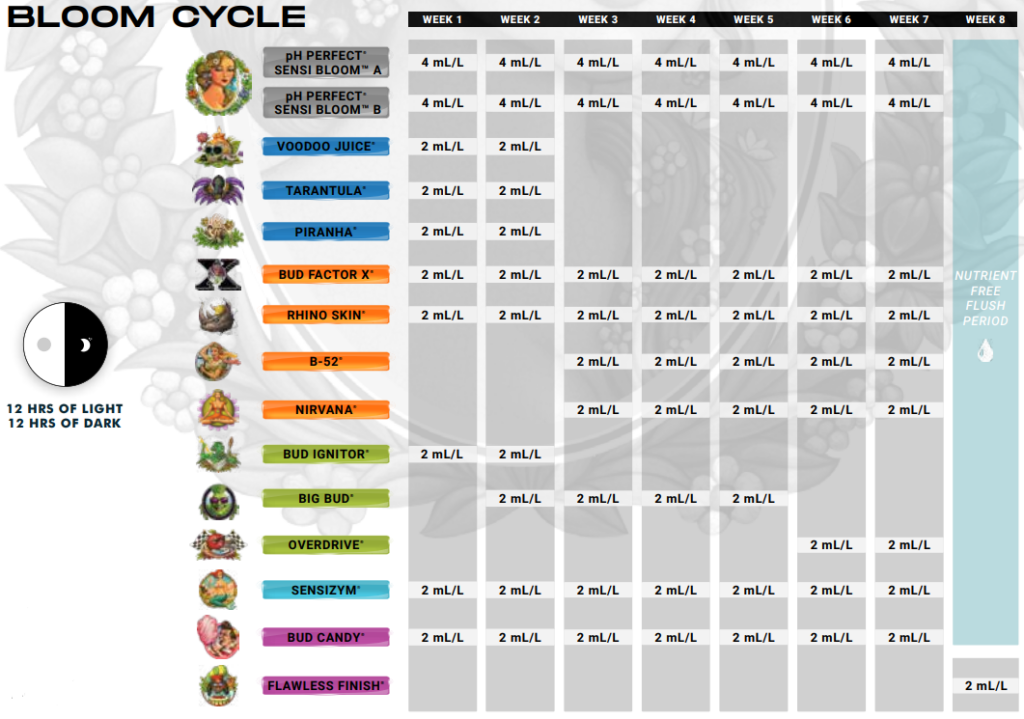
Feed chart for Sensi Bloom A+B, flowering stage, soil

Feed chart for Sensi Bloom A+B, flowering stage, soil

During this phase, normally carried out under a 12/12 photoperiod, the base fertilizers are changed to Sensi Bloom A+B, although in this case, the dose does not vary as flowering progresses. We will add everything necessary for the plants to offer 100% of their potential from boosters and additives; if you pay attention, you are going to use the same ones as during the growth phase plus some others like Overdrive or Bud Ignitor, specially formulated to increase the size, weight and organoleptic quality of the flowers. The crop ends with a last week without any type of fertilizer, simply with water and Flawless Finish.

Sensi Coco Grow and Sensi Coco Bloom Feed Charts (Coco)

Since you can also find the coco version of the Sensi Grow and Bloom base fertilizers, here you have the schedules provided by Advanced Nutrients. As you will see, they are practically identical to those grown in soil with the exception of the base fertilizers, Sensi Coco Grow A+B for growth and Sensi Coco Bloom A+B for flowering, and some product that is not necessary in coco:

Growth phase, Sensi Coco Grow A+B
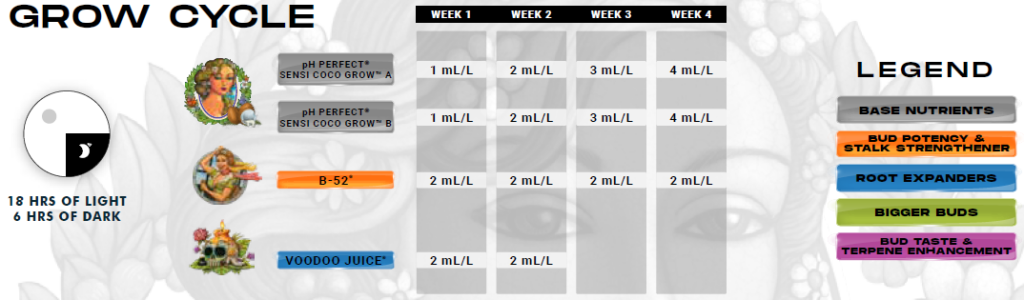
Feed chart for Sensi Coco Grow A+B, growth stage, coco coir

Feed chart for Sensi Coco Grow A+B, growth stage, coco coir

In the same way as with the diet in soil, as the plants grow the dose of base fertilizer is increased (in case you want to prolong this stage, simply continue with the nutrition of the fourth week). In this case, as additives, we are only going to need B-52 and Voodoo Juice, a true bomb of beneficial microorganisms.

Flowering phase, Sensi Coco Bloom A+B
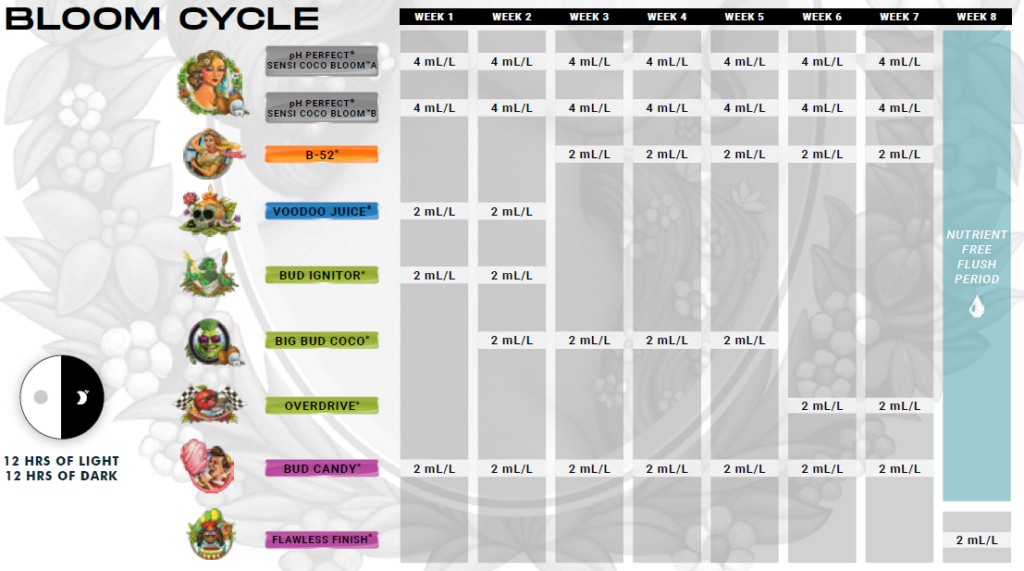
Feed chart for Sensi Coco Bloom A+B, flowering stage, coco coir

Feed chart for Sensi Coco Bloom A+B, flowering stage, coco coir

It is a chart practically identical to that of cultivation in soil, with the exception that, as we have commented, we do not need so many products. The base fertilizer dose remains constant, while additives are added as the phase for which they have been formulated is reached. Again, the crop is finished with a week of watering only water and Flawless Finish.

Connoisseur Grow and Connoisseur Bloom Feed Charts

To put it in some way, Connoisseur fertilizers would come to be the “high range” of base nutes from Advanced Nutrients. Like the previous ones and the ones we will see below, they are part of the Advanced Nutrients pH Perfect range of products, with which controlling the pH of the nutrient solution is really simple. These are also two-part grow and bloom fertilizers, so you will need to use Connoisseur Grow A + B during the vegetative phase and Connoisseur Bloom A + B during the fruiting stage.

Growth phase, Connoisseur Grow A+B
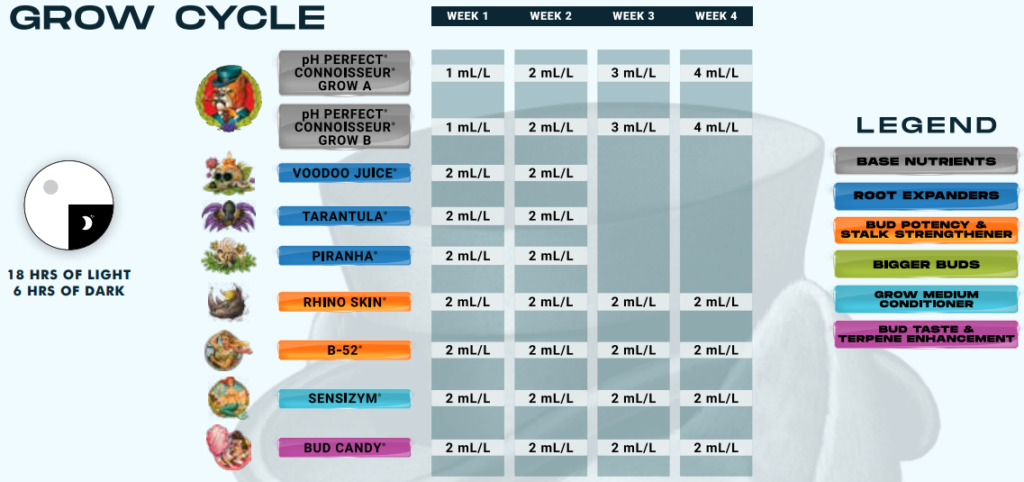
Nutrition table for Grow A+B, growth stage, for growing in soil

Feed chart for Connoisseur Grow A+B, growth stage, soil

We find a table almost identical to the one we have seen for Sensi Grow A+B. With the classic growth photoperiod, 18/6, the dose of base nutrients is increased in the same way as the phase progresses, combined with the use of root system stimulators and other additives aimed at achieving outstanding final quality like Bud Candy or Sensizym.

Flowering phase, Connoisseur Bloom A+B
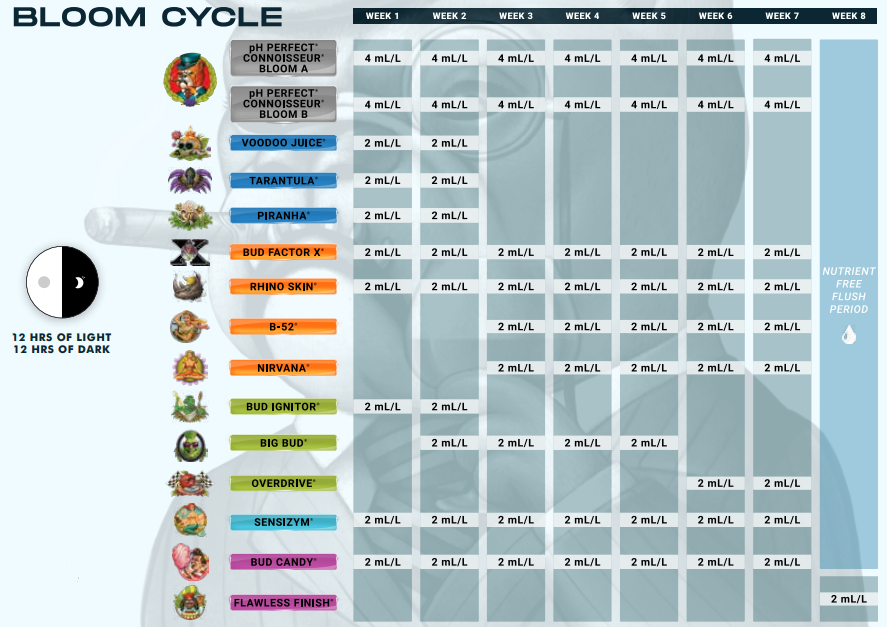
Feed chart for Connoisseur Bloom A+B, flowering stage, soil

Feed chart for Connoisseur Bloom A+B, flowering stage, soil

In the same way, the doses and products for the fruiting phase with the Connoisseur base fertilizers are the same that we have seen with the Sensi range. You cannot miss plant strengtheners such as Rhino Skin, very rich in silicon, or the effective Nirvana stimulator, formulated from algae and plant extracts and with a high content of humic and fulvic acids.

Humic and fulvic acids for cannabis plants

Connoisseur Coco Grow and Connoisseur Coco Bloom Feed Charts (Coco)

If you decide to grow with the Connoisseur range but you are going to do it in coco, you also have the version of these high-quality nutrients available for this substrate. In the same way as before, the tables are the same except for the type of base fertilizer, which in this case will be Connoisseur Coco Grow A+ B for growth and Connoisseur Coco Bloom A+B for flowering.

Growth phase, Connoisseur Coco Grow A+B
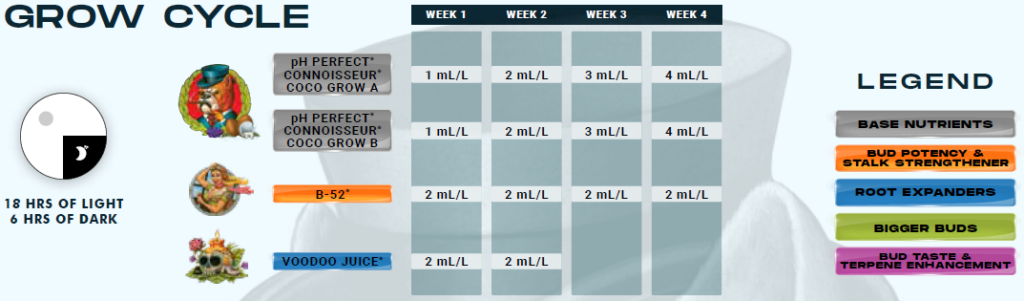
Feed chart for Connoisseur Coco Grow A+B, growth stage, coco coir

Feed chart for Connoisseur Coco Grow A+B, growth stage, coco coir

The same table that we have already seen but with the logical change of base nutrients. In the case of recently rooted clones or small seedlings, it is recommended to use the schedule for week 1. On the contrary, if what you want is to lengthen this growth phase a bit, perhaps one or two more weeks, all you have to do is to continue with the diet of week 4.

Flowering phase, Connoisseur Coco Bloom A+B
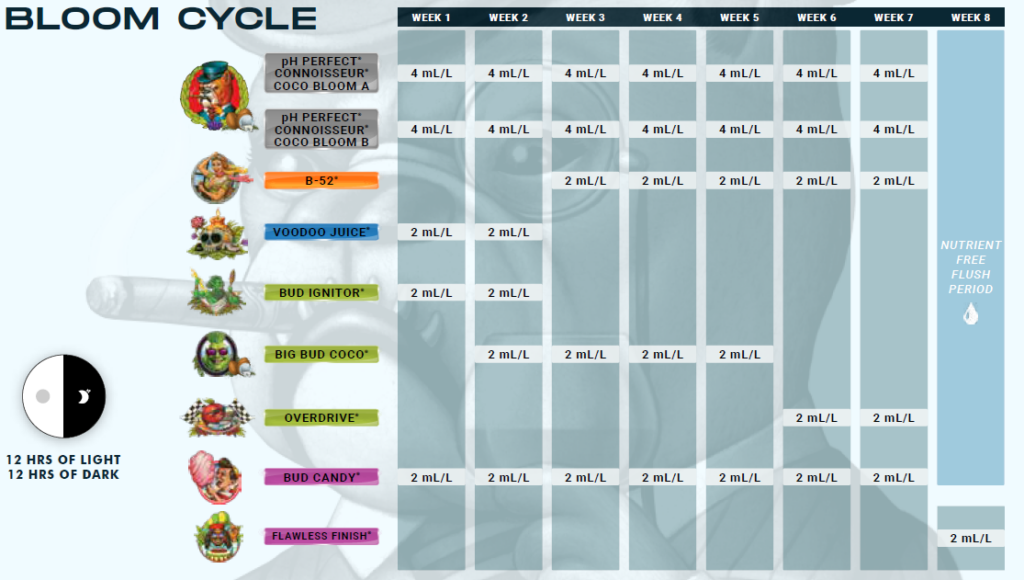
Feed chart for Connoisseur Coco Bloom A+B, Flowering Stage, coco coir

Feed chart for Connoisseur Coco Bloom A+B, Flowering Stage, coco coir

One aspect to take into account with the Advanced Nutrients flowering tables is the duration of this stage. If this is longer than the 8 weeks presented in the tables, it is recommended to continue with the diet corresponding to week 4 of flowering and until reaching the last week of cultivation prior to harvest, which will always be with water and Flawless Finish.

Grow, Micro and Bloom Feed Charts

Advanced Nutrients offers a third range of base fertilizers, in this case in 3 parts: pH Perfect Grow, pH Perfect Micro, and pH Perfect Bloom. However, as you will see, in this case all three are used together in both the growth and flowering stages, without specific formulations for each stage.

Growth phase, Grow, Micro and Bloom
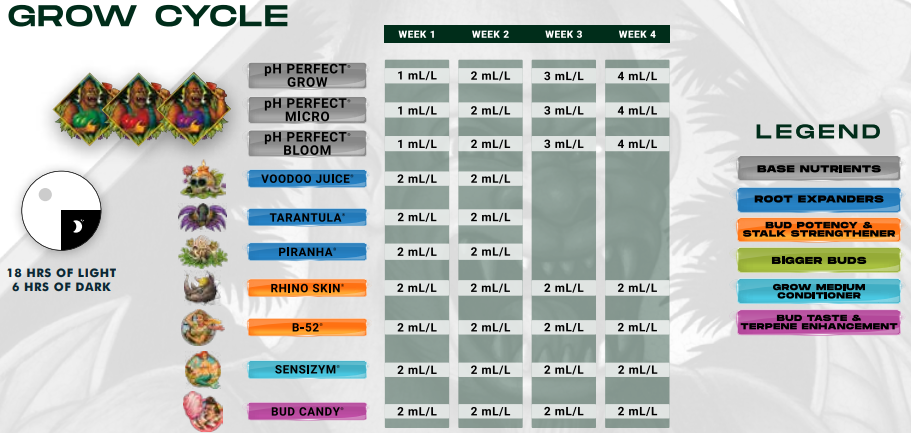
Feed Chart for pH Perfect Grow, Micro and Bloom, Growth Stage

Feed Chart for pH Perfect Grow, Micro and Bloom, Growth Stage

Advanced Nutrients proposes 2 recipes for this type of fertilizer during growth; the classic one, which only includes the 3 base nutrients, Voodoo Juice and B-52, and the “Master” recipe, which is the one we share in this article and is somewhat more complete. Remember that when preparing the nutrient mixture you must first add the water, then the fertilizers and additives, and finally adjust the pH once the mixture is well stirred.

Flowering phase, Grow, Micro and Bloom
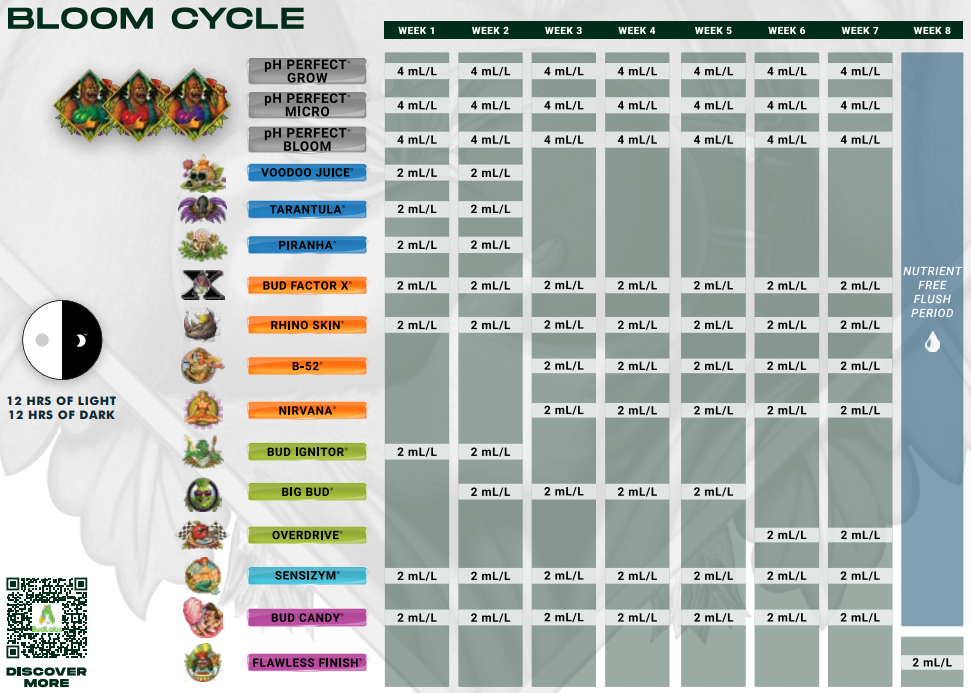
Feed chart for pH Perfect Grow, Micro and Bloom, Flowering Stage

Feed chart for pH Perfect Grow, Micro and Bloom, Flowering Stage

In the same way, in this case we also have a classic version of the recipe, and a “Master” one, which you can see here. If you are interested in following the classic diet, it consists of the three base fertilizers (Grow, Micro and Bloom), B-52, Voodoo Juice, Bud Ignitor, Big Bud, Overdrive, Bud Candy, and Flawless Finish.

OG Organics Feed Charts

How could it be otherwise, Advanced Nutrients also has an excellent range of 100% organic nutrients and additives, called OG Organics, which is led by the famous Iguana base fertilizer and supplemented with excellent additives.

Growth phase, OG Organics
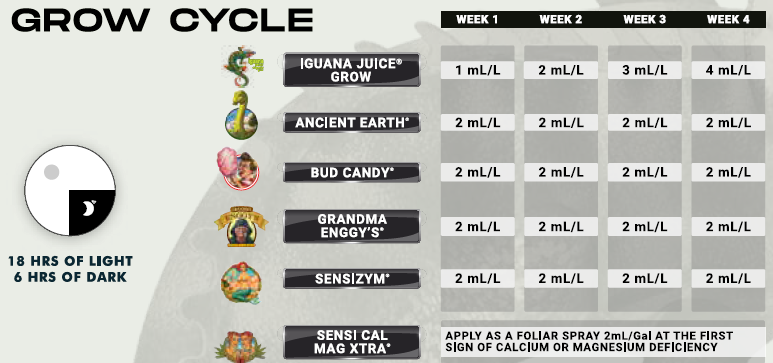
Feed chart for OG Organics, Growth Stage

Feed chart for OG Organics, Growth Stage

During the vegetative phase, it is recommended to use Iguana Juice Grow as a base fertilizer, whose dose will gradually increase as the plant gains plant mass. In addition, we will use the following additives in identical doses and during the length of the growth stage: Ancient Earth, Bud Candy, Grandma Enggy’s, and Sensizym. In case of observing calcium or magnesium deficiencies, it is recommended to use Sensi Cal Mag Xtra in foliar applications at a rate of 2ml per 3.8 liters of water.

Flowering phase, OG Organics
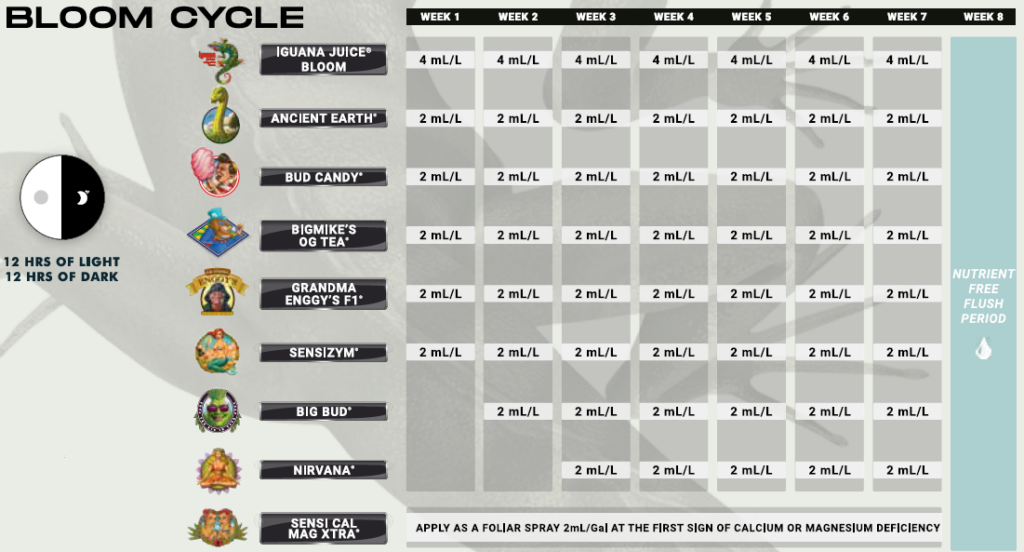
Feed chart for OG Organics, Flowering Stage

Feed chart for OG Organics, Flowering Stage

During this phase, you’ll need the same products that you used during growth, but with the addition of BigMike’s OG Tea, Big Bud, and Nirvana (and, of course, Iguana Juice Bloom). Again, you can make foliar applications of Sensi Cal Mag Xtra in case of calcium and/or magnesium deficiencies (we do not recommend doing it after week 4-5), and despite being with 100% organic products, a final week of watering only with water.

The post Advanced Nutrients feed charts appeared first on Alchimia blog.

Delicious NYE Eggless Dessert Recipes To Wrap Up 2022! #HNY

Delicious NYE Eggless Dessert Ideas

Delicious NYE Eggless Dessert Ideas

Delicious NYE Eggless Dessert Ideas. Can you even believe we've gone through another year? Adieu 2022, you went by in a heartbeat. I baked a ton through the year, went completely eggfree and did a load of no bake desserts too. Here are a handful you can try and recreate for NYE.

The post Delicious NYE Eggless Dessert Recipes To Wrap Up 2022! #HNY appeared first on Passionate About Baking.

❌