 Login
LoginAncient Bird Swallowed 800 Rocks and Choked to Death, Scientists Say

“When birds are sick, they start doing weird things.”




Edmontosaurus annectens, a large herbivore duck-billed dinosaur that lived toward the end of the Cretaceous period, was discovered back in 1908 in east-central Wyoming by C.H. Sternberg, a fossil collector. The skeleton, later housed at the American Museum of Natural History in New York and nicknamed the “AMNH mummy,” was covered by scaly skin imprinted in the surrounding sediment that gave us the first approximate idea of what the animal looked like.
More than a century later, a team of paleontologists led by Paul C. Sereno, a professor of organismal biology at the University of Chicago, got back to the same exact place where Sternberg dug up the first Edmontosaurus specimen. The researchers found two more Edmontosaurus mummies with all fleshy external anatomy imprinted in a sub-millimeter layer of clay. For the first time, we uncovered an accurate image of what Edmontosaurus really looked like, down to the tiniest details, like the size of its scales and the arrangement of spikes on its tail. And we were in for at least a few surprises.
Our view of Edmontosaurus changed over time, even before Sereno’s study. The initial drawing of Edmontosaurus was made in 1909 by Charles R. Knight, a famous paleoartist, who based his visualization on the first specimen found by Sternberg. “He was accurate in some ways, but he made a mistake in that he drew the crest extending throughout the entire length of the body,” Sereno says. The mummy Knight based his drawing on had no tail, so understandably, the artist used his imagination to fill in the gaps and made the Edmontosaurus look a little bit like a dragon.
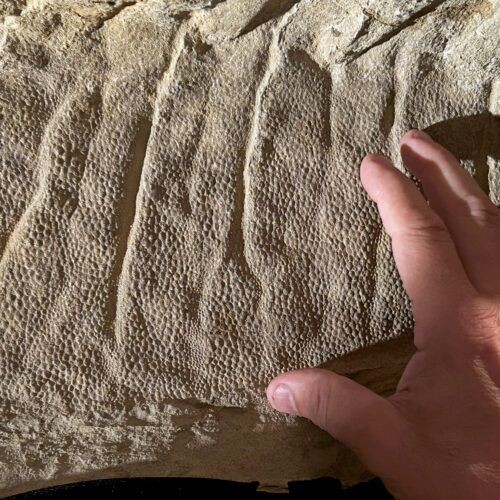
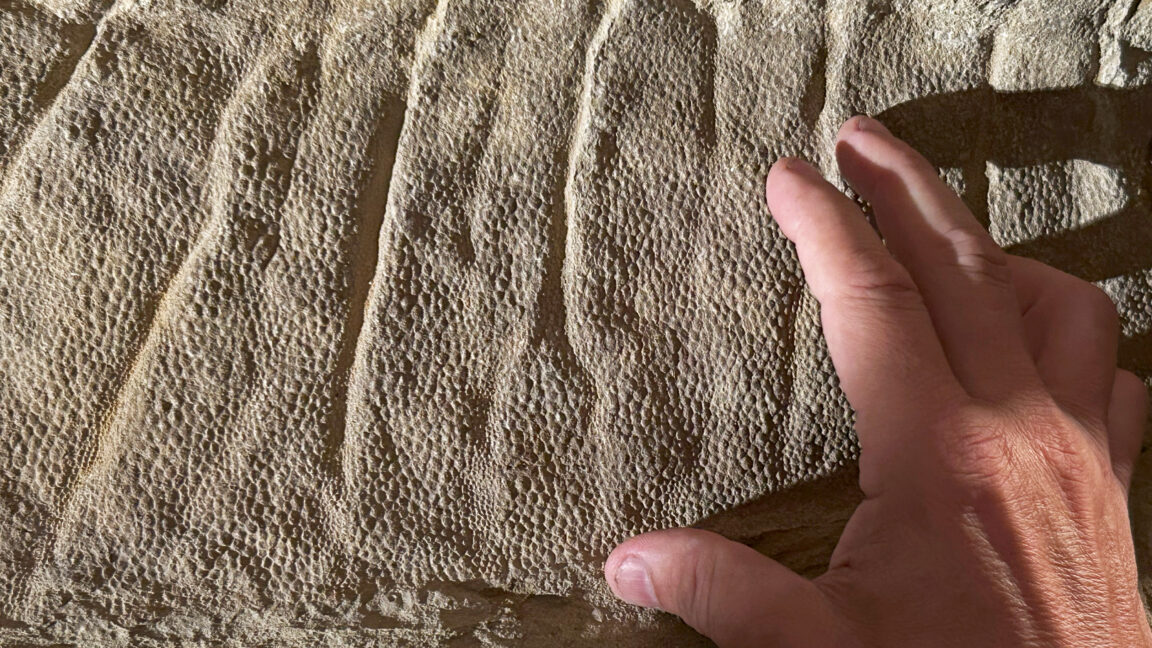
© Tyler Keillor/Fossil Lab
A young woolly mammoth now known as Yuka was frozen in the Siberian permafrost for about 40,000 years before it was discovered by local tusk hunters in 2010. The hunters soon handed it over to scientists, who were excited to see its exquisite level of preservation, with skin, muscle tissue, and even reddish hair intact. Later research showed that, while full cloning was impossible, Yuka’s DNA was in such good condition that some cell nuclei could even begin limited activity when placed inside mouse eggs.
Now, a team has successfully sequenced Yuka’s RNA—a feat many researchers once thought impossible. Researchers at Stockholm University carefully ground up bits of muscle and other tissue from Yuka and nine other woolly mammoths, then used special chemical treatments to pull out any remaining RNA fragments, which are normally thought to be much too fragile to survive even a few hours after an organism has died. Scientists go to great lengths to extract RNA even from fresh samples, and most previous attempts with very old specimens have either failed or been contaminated.
The team used RNA-handling methods adapted for ancient, fragmented molecules. Their scientific séance allowed them to explore information that had never been accessible before, including which genes were active when Yuka died. In the creature’s final panicked moments, its muscles were tensing and its cells were signaling distress—perhaps unsurprising since Yuka is thought to have died as a result of a cave lion attack.
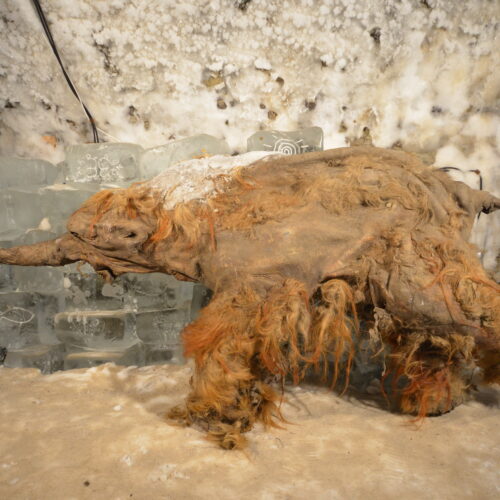
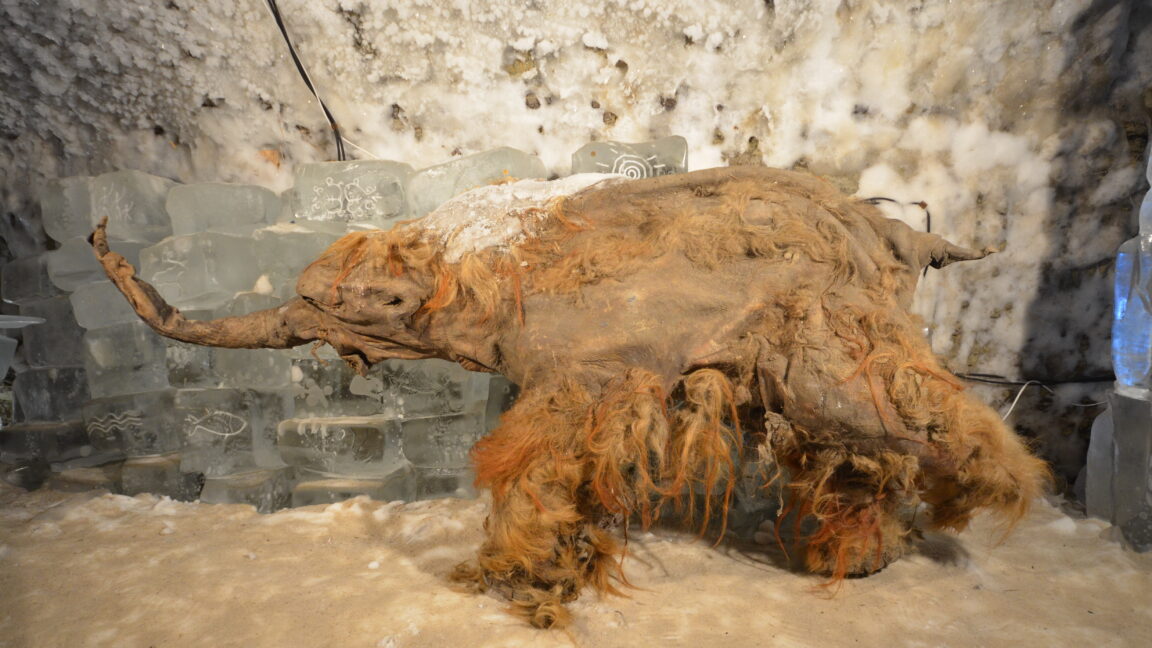
© Valeri Plotnikov

