
Reading view

There are new articles available, click to refresh the page.

POGO has new recommendations to improve the 2026 NDAA before it’s finalized

Interview transcript:

Terry Gerton: You’ve recently laid out a mix of reforms and warnings and priorities for the 2026 National Defense Authorization Act, which is still moving through Congress. What’s the overall message before we dig into the specifics that POGO wants to send about this year’s recommendations?

Greg Williams: Sure. I think we all welcome all of the extraordinary work that Congress has done this year to produce two different versions of NDAA bills that work very hard to overhaul military acquisition. Now that said, they place an enormous emphasis on deregulating military acquisition, with the Senate’s version repealing no fewer than 86 distinct statutes that govern military acquisition. Now, Congress has its own research arm to help inform for these decisions, and that’s the Government Accountability Office. Now the Government Accountability Office maintains a database of suggestions. And last I checked, there were 750 recommendations they had for how the Defense Department is run and exactly none of them recommend repealing any statutes having to do with military acquisition. Now I think the unavoidable question is if Congress doesn’t seem to be listening to the GAO, its own investigative body, well, who is it listening to? I think it’s only logical to wonder to what extent these changes are being pushed by the defense industry, perhaps at the expense of the interests of the taxpayer.

Terry Gerton: Are you seeing any specifics in the NDAA that relate back to those 750 GAO suggestions?

Greg Williams: Frustratingly few. Two that I’ll call out that I think are really important are passages in both the House and Senate versions that secure greater right to repair the military’s own equipment. Just imagine you’re far from home, you have a piece of equipment that you rely on, perhaps for your safety or in order to be able to complete your mission, and it breaks. Right now, there are rules, laws, contracts that often get in the way of military personnel fixing those things. This year’s NDAA, whether the Senate or the House versions prevail in this context, will dramatically increase the military’s right to repair its own equipment. And I think it’s really important that those passages survive conference. The other one that I think is particularly important in terms of acquisition law are some reforms to what’s called the Nunn-McCurdy Act, which stipulates that Congress needs to be informed if weapons development or procurement programs breach certain cost thresholds and requires that the Secretary of Defense or Secretary of War recertify those programs and provide updated timetables and budgets for their completion. So the passages that amend that provide Congress more say in the recertification of those programs and they make it easier to call out cost overages, especially in the case of large programs like naval shipbuilding, where if you look at the overall program, you may not have breached overall cost thresholds. But you’ve already built two or three ships and you can tell that they’re way over budget. What this passage allows you to do is to treat them as distinct subprograms and apply those thresholds to them individually.

Terry Gerton: Well, you’re right. There’s certainly a lot of coverage in the NDAA, both versions, around acquisition reform. One of the other pieces that POGO has really called out is the use of military force. First, you recommend that the authorizations for the use of military force from 1991 and 2002 tied to operations in Iraq be repealed. Why is it so important to take those off the books now?

Greg Williams: Well, those AUMFs have been used very pervasively to authorize all kinds of use of violence around the world that seem to have very little to do with the original intentions of those two AUMFs. And one of the ways Congress can clarify the use of its power to decide when and where we go to war is by not leaving things like that lying around to be potentially misinterpreted or reinterpreted by the executive branch.

Terry Gerton: I’m speaking with Greg Williams. He’s the director of the Center for Defense Information at the Project on Government Oversight. Greg, let’s follow up on this a little bit because there are conversations happening between the president and his team and Congress right now about operations in Venezuela. So how do those AUMFs relate to those kinds of current conversations?

Greg Williams: Well, I’m going to emphasize that there are operations against Venezuelan nationals and Venezuelan boats, and they’re being treated by the administration as being very distinct from potential operations that might take place in Venezuela. And in fact, the administration is arguing that they don’t need to comply with the War Powers Act in the context of the Venezuelan boats because we’re not deploying troops in harm’s way. As you may know, these boat strikes are believed to be largely conducted by unmanned aerial vehicles and so arguably, American troops are never in any danger as we execute these strikes. Now if we were to invade Venezuela or if we were to fly crewed aircraft over Venezuela or even close to Venezuela and engage in a shooting war with them, that would more clearly trigger the requirements of the War Powers Act, or at least that would not be subject to the exclusion that the Trump administration has called out in the context of those boats.

Terry Gerton: One of the other concerns that you raise about military deployments is border enforcement and the use of military forces in that function. What’s the concern there?

Greg Williams: Well, the overall concern is that what we’re seeing is a steady erosion of what we thought were bright lines, protecting both American citizens and others against being arbitrarily seized or killed. And whether we see those lines blurred outside our borders, as in the context of these boats or inside of our borders, it just makes us all a lot less safe. It’s much harder to count on not being swept up in some raid and potentially deported to a foreign country without any meaningful opportunity to defend our rights.

Terry Gerton: Well, military deployments and acquisition reform are really big topics. I want to pull you down to something a little more wonky and talk cost accounting standards because you’ve got a recommendation in here and there’s been a lot of conversation about moving DoD from cost accounting standards to GAAP, Generally Accepted Accounting Principles. Why was that important enough to raise in your memo?

Greg Williams: I think it represents a fundamental misunderstanding of how accounting in general works. And it undermines a very basic control that any customer organization wants to have over vendors that are submitting things like expense reports. So at a high level, I would describe the generally accepted accounting principles as a set of tools that are created by an industry consortium to protect shareholders in private organizations from misrepresentation of the value of the enterprise. Cost accounting standards are like the expense report guidelines that any consultant or anyone who’s ever worked as a customer for a big business has to comply with. And different customers have different standards. Some say you can’t have any alcohol at all with your dinner, some say you can have one drink. Some say if you’ve traveled less than 50 miles, you can’t submit any meal-related expenses. It represents an agreement between the customer and their vendor about what is and is not an acceptable expense. And it’s a very basic structure that any business person should recognize.

Terry Gerton: How does that relate to DoD’s ability to pass an audit?

Greg Williams: I don’t think it is particularly related. As long as you follow whatever rules are articulated for you, you can pass an audit. I think use of cost accounting standards is more about making sure that the government gets a fair deal from its vendors when those vendors submit cost reports for reimbursement.

Terry Gerton: So POGO’s list is pretty specific in terms of things that you would hope Congress would consider. If they were to take up your list, what kinds of impact would you expect to see in terms of military readiness and operations?

Greg Williams: Well, I think it’s really interesting that over the last several weeks we’ve paid a lot of attention to the USS Gerald Ford Carrier Strike Group. There are two readiness issues that bear on it directly that have received some attention, I think, should probably receive more attention. One is that it was called out as a specific example of how service people are affected by the inability to repair their own equipment. And the example that was used was, I think, more than half of the ovens used to prepare meals for sailors embarked on the Ford were out of commission and had to wait an extended period of time for the vendor to repair them. Now that’s one thing when you know you can’t have muffins with your breakfast. But if similar principles apply to systems that allow the aircraft carrier to launch and recover aircraft or move weapons to the flight deck and things like that, just imagine being 6,000 miles away from the contractor who might repair those things and having one of them break and having to wait or redeploy back to the continental United States to have those things fixed. It’s just, I think, a fundamentally unreasonable expectation and puts our troops needlessly in danger.

The post POGO has new recommendations to improve the 2026 NDAA before it’s finalized first appeared on Federal News Network.

© Federal News Network

Congress faces a packed December agenda and big decisions on healthcare subsidies

Interview transcript

Terry Gerton Last week Congress was in recess, but that didn’t mean it was a quiet news week. The White House floated a plan to address the health care subsidy problem that was part of the shutdown agreement. What are you hearing there and how’s it playing?

Mitchell Miller Well, when this trial balloon floated, it completely caught a lot of House Republicans, particularly, off guard. They were totally surprised by this and the fact that it was going to be a two-year extension. Now it would have potentially included some of the reforms that GOP lawmakers are looking for. They want limits on income that are now brought down a little bit more. They want some reforms that they say will take care of waste. But this definitely was quite an event here on the Hill, given the fact that the lawmakers are spread out all across the country in their districts, but they quickly made it clear that they did not like this proposal. And so while there was talk about it being rolled out last week, the White House quickly put the brakes on it and said, okay … Karoline Leavitt, the press secretary, is acknowledging there are some very intense discussions about what is going to happen with health care within the White House and within, among Republicans. But right now, everybody’s kind of scrambling. There are some bipartisan proposals that are coming out of the House. The Senate is trying to work with some things. What I think may happen in the coming weeks is, you’re going to have a vote in the Senate, maybe one or two, on these proposals. One of them is likely to just be a straight up extension of the ACA for a year to keep those insurance costs down. That will likely go down to defeat. And then Republicans, it’s still unclear exactly what they’re going to propose, but you can bet that there will be something brought to the floor by Senate Majority Leader John Thune. That I think will also be defeated because Democrats will filibuster it. And then I think what is really going to probably happen is, this is all gonna get pushed into January, and when people start seeing those eye popping insurance costs going up $100, $500, $1,000, $2,000 and more per month, that is going to put a lot of heat on lawmakers to try to come up with something.

Terry Gerton You make a good point that there aren’t that many working days in December before they get to having to deal with this in January. What else is on the congressional agenda for those few days?

Mitchell Miller Well, you know, that’s a big question because last week was just really a lost week. When the House came back after the shutdown, there was all this talk about they were gonna get right back to trying to get back to regular order and we were going to see a lot of action on appropriations bills. That really just did not happen. There were a few symbolic votes in the House, and so they’ve still got this set of nine appropriations bills that they have to deal with. And even though they keep talking a good game and saying that they’re going to address them, and there is some appropriations meetings going on back in behind the scenes, but that’s going to be the real big thing that they need to at least start getting some traction on, some type of a minibus, perhaps bringing together three, four, maybe five big legislative bills together. But right now that is still in a free form position, so we’ll have to see with the only those limited work days in December will will they actually get much done.

Terry Gerton It feels like we talk about the NDAA every time, but that was supposed to come up for a a vote in early December as well.

Mitchell Miller Right. And that looks like it’s being delayed as well. There’s as you know, many provisions in it that are getting a lot of discussion. Among them, of course, is one of them related to artificial intelligence, the AI provision in the NDAA. There’s so much agreement on the NDAA and we know that this always gets passed every year, but I think that’s the big sticking point right now is that, basically this push to put a hold on everything that would happen in the states with AI so that the federal government could try to get its arms around it. And there’s been a lot of pushback from state lawmakers as well as the house lawmakers that are involved with those people. So I think the NDAA is going to get pushed back a little bit more. Certainly they’re close — you have House and Senate negotiators just trying to bring all of this together. That’ll be a big one this month.

Terry Gerton I’m speaking with Mitchell Miller, he’s Capitol Hill correspondent for WTOP. Mitchell, one thing that’s got to be on lawmakers’ minds in December is the retirement of the comptroller general, the head of the government accountability office. Gene Dodaro’s term ends at the end of the month. What are you hearing in terms of the maneuvering and the nomination for his replacement?

Mitchell Miller Well, I think there’s actually a lot of nervousness right now about what is going to happen with him. He has been a steady hand on the rudder, as you know, for close to fifteen years now, and there’s really a lot of discussion about how they’re going to get a successor to him. And frankly, it’s not really clear what’s going to happen. You have this panel of lawmakers that are supposed to nominate the next person, but they’re also looking for some guidance from the White House because that will have a big role in the type of person that replaces him. And the fact that this is, you know, one of the most prominent unelected positions in the federal government, the fact that this person is really responsible for rooting out waste, which Republicans have said they want to do and that they tried to do with DOGE, how much of a leash is the new head of GAO going to have? Will the White House go along with Republicans? We’ve seen Republicans starting to assert their own voice a little bit more, saying that they want some independence here, or will the White House crush that and say, you know, President Trump says I want this person and we’re gonna put them in? So I think we’re going to see a lot of maneuvering here in the next few weeks because he will be gone, as you know, later in the month.

Terry Gerton Do you think it’s an opportunity for Congress to push back or take back some of its authority? GAO is their oversight body.

Mitchell Miller Right, exactly. I think there is because whether they’re Republican or Democrat, I think the institutionalists, at least, believe that this type of leadership is necessary. And there’s no question about it, whatever political stripe you’re from, this office does root out a substantial amount of waste. I mean, they talk about something along the lines of a $160 billion in the past year. And so also these lawmakers, let’s not forget, when they’re leading various committees or subcommittees, they rely on the GAO for investigations to try to find out what do we need to fix. Everybody’s talking about what needs to be done to make federal government better. Well, this is perfectly an example of where you find the areas where there are problems that the GAO identifies and then Congress can act and react and and create legislation.

Terry Gerton Mitchell, all of these things together, the healthcare proposal from the White House, the delay in the agenda, even this issue of replacing the the head of GAO, point to kind of a an a miasma in the air, if you will, that maybe the White House and the president are losing their grip on Republican policy. What is the feeling on the hill and what implications might this have going forward?

Mitchell Miller I think that this is a great point because there has really been no change among House and Senate Republicans from Trump 1.0 to 2.0 up to this point, however, you have definitely seen in just the past week the real first seismic changes happening within the GOP. And I think, you know, you look at Marjorie Taylor Green and you could say, oh, well, she’s only one of more than 430 lawmakers. But the fact that she decided to resign, that also caused a lot of House Republicans to say, you know what, we’re kind of fed up with being just treated like the little brother at the card table of the Thanksgiving dinner and patted on the head and we want to actually legislate, we wanna assert ourselves a little bit more. So I think you are going to see more of that, particularly on the House side. The House side, frankly, has been kind of quiet in part because they literally were not here for 43 days during the shutdown. But I think that is going to affect the policies of the White House and what they propose. Like as we just talked about, the health care proposal, like that would have been unthinkable a few months ago that Republicans would have rebelled that much. You do see it more so on the Senate side, a little bit more quietly, but I think that is going to have a pretty big impact on what we see moving forward legislatively in the coming year.

Terry Gerton And that’s going to lead right into the midterms in 2026, so much to watch.

Mitchell Miller Absolutely.

Terry Gerton Mitchell, thanks as always for joining me.

Mitchell Miller You bet

The post Congress faces a packed December agenda and big decisions on healthcare subsidies first appeared on Federal News Network.

© AP Photo/J. Scott Applewhite

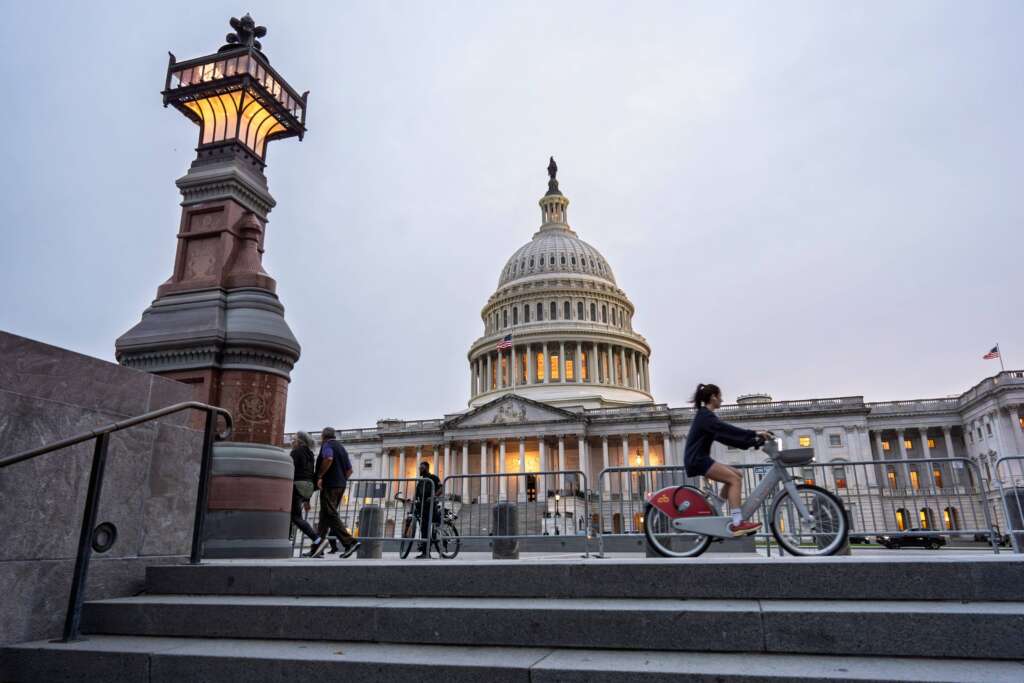
The Capitol is seen at dusk as Democrats and Republicans in Congress are angrily blaming each other and refusing to budge from their positions on funding the government, in Washington, Tuesday, Sept. 30, 2025. (AP Photo/J. Scott Applewhite)

The first step in a veteran’s disability claim can make or break the outcome

Interview transcript:


Elizabeth Curda The disability exam process is an important component in the decisions that VA has to make about a veteran’s claim for disability. So for example, if a veteran was injured during their service in Iraq and they have ongoing hearing problems, but they don’t have medical records to substantiate that, they might be asked to do a medical disability exam to establish that they have that condition and it’s connected to their service.

Terry Gerton How much does the VA spend on this, and do they do it all in house?

Elizabeth Curda It’s a very costly program. It used to be done within the VHA hospital systems, Veterans Health Administration, but in recent years they have shifted most of the work to contractors. And VA spends about $5 billion, that was the expenditure in 2024, and the contractors do over 90% of all the disability exams.

Terry Gerton So as GAO got into this report, what motivated you to start it and what did you find?

Elizabeth Curda Well, we had a request from the chairman of the House VA Committee’s subcommittee on disability and memorial affairs, Chairman Luttrell, to look at the quality of these exams. When you have a contractor performing a function for the government, your toolbox in terms of keeping that contractor accountable — you have to be able to assure you have oversight over the quality of the work that they’re doing, in addition to things like timeliness. And so they wanted to know, what is VA doing to oversee the quality of these exams? We took a comprehensive look at all aspects of their oversight, and we found that overall they had a lot of processes in place for oversight in areas such as preventing errors, detecting errors that occur, and correcting them after the fact. So a lot going on, but we did find some areas for improvement and made recommendations.

Terry Gerton I can imagine that the distribution of contracted providers for this service is nationwide, so that oversight is especially critical in helping to ensure that a veteran in Indiana has a similar experience and quality as a veteran in Texas or California. What were the sorts of challenges that you discovered?

Elizabeth Curda Well, we made five recommendations that cut across three broad areas. And those broad areas were, as we found, breakdowns in some of their procedures for identifying and correcting the most frequent or complex issues with exams. We found issues with financial incentive payments that they make to the contractors. We found errors that resulted in overpayments. And we also saw a gap in an important source of feedback, which is the examiners themselves. VA gets feedback from all different parties: the contracting companies, the veterans, but they didn’t have any way to get direct feedback from examiners who are doing the day-to-day work.

Terry Gerton The part of VA that administers this is the Veterans Benefit Administration, not the health administration portion of VA, is that correct?

Elizabeth Curda Yes.

Terry Gerton And so VBA not only manages these exams but also the full disability determination requirement. They must be stretched pretty thin.

Elizabeth Curda That is correct. We have been reporting for years that they are in our high-risk list for managing their workloads. And that is basically the influx of claims and being able to handle those on a timely basis. So yes, they have been historically stretched pretty thin.

Terry Gerton I’m speaking with Elizabeth Curda. She’s a director in the education workforce and income security team at GAO. So Elizabeth, then tell us more about the recommendations that you made particularly.

Elizabeth Curda We made recommendations over two years. Our initial report on this was last September in a hearing, and we had a recommendation for a process that VBA conducts in which they feed to the contractors on a quarterly basis the most frequent errors. The contractors are required on a quarterly basis to write a report to VA on what they’re going to do to correct those errors. Now we found that VA did not have complete and effective practices for how to review these reports. So the quality review people would get these reports back from the contractors, and then everyone would write a little summary based on sort of what they thought they should be doing. But there wasn’t any procedure for, what should they be looking for in these reports? And the two things that we found that were missing were nobody checks to see if the contractors go back and actually do these actions. So there’s no checking to see if the contractors are fixing things. And there’s no effort to determine if those actions were effective or not. Are they seeing the errors go down? What’s the outcome of all this work? So that was one area.

Terry Gerton It sounds like that might be an opportunity to deploy AI. If you’re getting all of these reports in, maybe an AI reviewer could help streamline those and tell you about trends and where to follow up.

Elizabeth Curda Well that is another topic because that is very complex. And VA is really, I mean, we’ve discussed some of their efforts with AI and it’s really kind of at its very beginnings. But yes, potentially.

Terry Gerton And so what was the second recommendation?

Elizabeth Curda The second area also had to do with oversight of exams and it has to do with what they call “special focus reviews.” And these are three areas where they’re very complex and they tend to have a high error rate. It’s traumatic brain injury, military sexual trauma, and Gulf War illness. So they had a procedure to do these every two years. And they had done one round of the reviews, but they were late — over a year late — doing another round of reviews. And so we recommended that they basically do the second round of reviews on schedule. We subsequently, in the course of our work, learned that their staff have been cut by about 50% of the folks who were doing this particular function. And so they said in response to us that they will be switching to a three-year cycle, which in our view was, it’s better than no years. But we think the two-year cycle would be ultimately better because then you identify things that are working or not working and can take corrective action sooner. They also have begun negotiations on their new contracts for these contractors, which are long term, you know, they were multi-years, and things that they’re finding from these special focus reviews could be built into those contracts. But only if they’re done in a timely manner.

Terry Gerton Did you get any feedback from the providers themselves about how this process was working?

Elizabeth Curda We checked in with the people who do the disability exams, we call them the examiners, and we randomly selected examiners to talk to. And what we found is universally they felt they wanted opportunities to provide feedback about the exam process directly to VBA. Currently the process is, because they work for a contractor, all that feedback would go through the contractor up to VBA. And VBA basically told us, “we get all that feedback, the contractor gives us feedback.” But what we heard from the examiners is, you know, they don’t always feel they’re being listened to, they don’t always have their problems addressed, and they also sometimes get conflicting information if they work for more than one contractor. Different contractors will tell them to do things differently, and they don’t think that both can be right. But they have a hard time resolving these things themselves.

Terry Gerton So better communication, more checking. What else was on the list?

Elizabeth Curda The last area had to do with these financial incentive payments. The way VBA incentivizes good performance is they have these three areas: quality, timeliness, and customer satisfaction. And they measure, for each of the contractors, how well they do in those dimensions. And they feed that into a formula that will produce a bonus payment to contractors that score particularly well and penalties for those that are not meeting basic thresholds. And what we found was the way they calculate these is on a spreadsheet with a lot of manual data entry, and they were doing manual calculations as well. And there wasn’t a procedure in place to double-check the numbers, the data entry. They were doing some checking, but it wasn’t formalized. And so when we reviewed the numbers, we found that VBA had caught some of its errors on its own, but we found some that they hadn’t caught. And it was about $2.3 million worth of errors — bonuses that went out to contractors that did not earn them. And that really just sends … it’s the wrong message. You’re getting paid and you didn’t actually earn it.

Terry Gerton Exactly. How has VBA responded to your findings and recommendations?

Elizabeth Curda VBA agreed, or they use the term agree in principle when they sort of agreed, with all the recommendations. They actually have reported that they’re taking action on all of them, and some I think are very close to being implemented, such as the one on financial incentives. They told us there was a hearing on this last week, and they said that they actually have gotten the money back from the contractor and they are putting in place these new procedures. We just haven’t seen that documentation yet. But you know, when we do we’ll evaluate whether we can close that one or not. But all of them are sort of in the works, you know, in various stages of completion.

Terry Gerton So will you be following up with VBA to check how they’re doing?

Elizabeth Curda Oh, certainly. And we always follow up on our recommendations at least annually, but sometimes more than that, just depending on when they have updates for us.

The post The first step in a veteran’s disability claim can make or break the outcome first appeared on Federal News Network.

© Air Force/Senior Airman Karla Parra

U.S. Airmen from the 332nd Air Expeditionary Wing honor the daily estimated number of veterans who take their own lives, symbolized by 22 pairs of boots in recognition of Suicide Prevention Month Sept. 8, 2021, from an undisclosed location somewhere in Southwest Asia. Suicide Prevention Awareness Month stresses the importance of mental health and encourages individuals to seek help if they need it. (U.S. Air Force photo by Senior Airman Karla Parra)

When the FAR gets a revolutionary overhaul and the government shuts down, who’s reading the fine print?

Interview transcript: 

Eric White Let’s start from the FAR overhaul perspective. They were able to get that out right before the shutdown occurred. I wanted to see what your initial thoughts were and what you’re hearing from industry folks who are going to have to comply with these new rules.

Emily Murphy So it’s really interesting, very last minute, obviously they got everything out, they wanted to meet that deadline. And I’ve got to commend the folks at OFPP, GSA, NASA, DoD, who all got that out and they worked really hard to get that out so that it would be out there before, frankly, many of them ended up getting furloughed. They got Part 15 out, Part 16 out, so they’ve got a lot of stuff out at the very last minute, and there’s a lot there to still digest. Part 16, which is type of contracts, was really interesting because it created BPAs against GWACs, which was something we haven’t seen before. Lots of sections came out with even just PDFs, and they’ve now been updated to include the actual downloadable, the actual text. But there was a lot there. One thing that contractors should be paying attention to right now is that even though these have all gone out, if you go to the Revolutionary Far Overhaul site, you’ll see that not all of them have been adopted at every agency. And so that’s something that you should be very, very aware of, depending on where they’re contracting. So, some of the deviations have only been adopted by two, three agencies. Others have more than 30 agencies that have adopted them. But when you consider how many agencies there are, that still isn’t a very large number, and so it becomes a question of, are the agencies considering these to be just adopted by, in absence of them taking any action, is it that they are still thinking through the deviations, they need to do some additional modifications to a deviation they would be doing, because these were model deviations, they were not agency-specific deviations. And then, this was the FAR Council putting these out with the intention of doing it as a deviation that agencies could adopt and start implementing right away as they started an official rule making process. And the expectation was that official rule making would start sometime mid-November. Now, I don’t know if that’s gotten slowed down by the shutdown or not. But it raises a lot of questions. You still can go on to the acquisition.gov website and give informal comments. And I would suggest anyone who’s thinking of doing so do that, but then start coming up with what they want their real comments, their official comments to be on those rules. What did the FAR Council get right? And then, where are there areas that need changes, that need some adjustments? And I trace it with both, because frequently, at least back in the days when I was actually working on the FAR Council stuff in the Bush administration, we would frequently get comments back from people only about what they disliked. They wouldn’t tell us what was good. And when you don’t tell agencies what is good, they may actually get rid of what it was that you liked in the FAR changes because they’re not hearing people step up and say, that was a good change, that’s going to make things better, please keep that. If all they hear from is people saying we don’t like anything, you never know what’s going to then survive that comment period. So it’s very important to comment, not just on what you think needs to be changed, but also on what needs to be retained.

Eric White I think any Amazon reviewer will cite the same experience if they have that. They only tell me what they don’t like. They titled it the Revolutionary FAR Overhaul. Is that, I want to get your opinion, is that an inappropriate title? Is this really revolutionary or is this a bit of labeling that we’ve seen from the Trump administration in the past?

Emily Murphy I’m not sure that they could be truly and utterly revolutionary in terms, because there were statutory constraints, but they did about everything they could within that statutory framework. They got rid of a third of the clauses that affect commercial contracting. They got rid of the reps and certs, lots of them, and it’s going to be much easier to register as a federal contractor going forward. The commercial type contracting, they broke it down into commercial type contracting for under simplified procedures versus non-commercial, so we’re dividing the world there. It’s the only place where we saw new regulations coming in. Part 15 got rid of the old discussions and replaced it with negotiations. There is a lot of change. Part 8, taking the schedules ordering procedures out of the FAR and putting them back into the GSA Acquisition Regulations, that’s pretty revolutionary. So there’s a lot in there that is very much worth noting and is going to change how agencies operate and how vendors have to comply. It should streamline things, it should speed things up. It really does push decision-making down to the lowest level possible. And it will be interesting to see, since the FAR Council noted on the website that things that require a statutory or regulatory statutory changes or changes to executive order would be addressed with the second round of this, with the official rule making. So whether there’s even more up their sleeve, if there’s going to be more that happens. But I think that they did a lot to make this fairly momentous and they did it really fast. You remember the last time they tried to rewrite Part 15, it took years. They did it this over the course of a summer while they did every other part of the FAR as well.

Eric White We’re speaking with Emily Murphy, former GSA administrator and senior fellow at George Mason University Baroni Center for Government Contracting. Let’s get to the vendors themselves. Shutdown is still ongoing, as of this recording. What are you hearing and seeing from those vendors that have long-term contracts that are coming to a close, or they’re going to need some help operating in this new FAR environment and they may not have the necessary guidance that they could use at a time like this?

Emily Murphy So the first thing I’d say to companies that are operating, have a contract that’s about to lapse, read your contract, make sure you know what’s in it. Most contracts have a provision in there — it’s usually in 52.217, sometimes dash eight, sometimes dash nine — on how to extend that work. Make sure you know which clause you have or what clauses you have, what options are there. I’m hearing some talks about taking a no-cost extension. And that’s a decision agencies and vendors are going to have to make. But the vendors should be aware of when they do that, they’re performing at risk. That there is a good chance that they may not ever have that option exercise. They may not have that ability to get reimbursed for that. They certainly won’t get reimbursed for a no-cost extension, but they may not have something happen once the government shutdown is over. So it’s got to be a business decision they’re making at that point in time. But ultimately, know what’s in your contract, know to the greatest extent possible who it is you’re dealing with at the agency, what set of rules they’re following at this point in time, and have options in a strategy you’re willing to propose to the government to make it easier for them, because whether we’re back from the shutdown by the time this airs or we’re still on a shutdown, you’ve got a very small workforce dealing with a lot of work. And the easier you can make it for them, the better it’s going to be.

Eric White We’ve seen these shutdowns now popping up every couple of years or so, usually right around this time of year. Do you see any adjustments coming down the pipeline by vendors of putting provisions into contracts or taking necessary precautions, maybe waiting until they are messing with the extensions or deadlines before they hear whether or not there is going to be one or not? Especially, like I said, around this time of year when shutdowns seem to occur.

Emily Murphy Well, the last major shutdown that happened happened December of 2018, and it went through January of 2019, so it was the 35-day shutdown, it was the longest shutdown we’ve ever had. So while in the past it was fairly, you thought right after the fiscal year there being a risk of shutdown, the fact that it was a long shutdown that didn’t start until just before Christmas, I remember because I was at GSA at the time and people had gone home for the holiday before the shutdown happened. That made it a tough time. There’s never a good time for a shutdown, so I shouldn’t say that, but that was a tough time for people to be shutdown on Christmas. I don’t know that they’re trying to time a shutdown. It’s sort of reading tea leaves or trying to do some fortune telling. I think that smart companies, though, are planning to know that government shutdowns do happen and they have a plan for their workforce when that’s going to happen, whether it’s mandatory training that they need their employees to be taking, to maintain certifications, to comply with a government requirement, whether its the upskilling of that workforce, whether it’s working on strategic planning documents or other things, they’ve thought about how they’re going to use their workforce if the workforce isn’t able to show up. We talk a lot about what’s going to happen to federal employees and will they be paid for the work for this time that they have been furloughed. The contractors don’t get paid, and good contractors try to do everything in their power to keep paying their employees, but they’re never going to be made whole for that. And there’s a limit to how long a small business and midsize business can continue to pay people to not work. And we need to be very aware that this hits the industrial base, not just the federal employee base, and that both sides of this are feeling a lot of tension right now and a lot stress.

Eric White Wanted to finish up here by getting your thoughts on the East Wing renovation happening at the White House. People were obviously going back and forth about the actual move itself, but people like you and I were probably thinking, huh, I wonder how that contract was structured. What are your thoughts, and who do you think was handling it? We’ve got really three choices, the Executive Office of the President, GSA, your former camp, or even the Park Service, as the White Houses i actually designated as a national park.

Emily Murphy It is, and what’s interesting is when I was the GSA administrator, we were looking at doing renovations in the West Wing and that very much would have been a GSA contract. It would have in the Public Building Service doing that work. The East Wing, though, probably it’s going to fall into either the National Park Service or the [Executive] Office of the President that would be doing that work. It’s not a GSA building once you hit the East Wing. It’s fascinating when you look at the White House complex. There is an agreement that tells you down to what brick along the sidewalk is managed by GSA versus by Interior versus whoever else and who’s got responsibility for what. East Wing would definitely be either the, what they call room one or would be a National Park Service.

Eric White And when a private donor enters the picture, I imagine that that can add some complications to the paperwork, as you shake in your head now for those of us not watching on video. What does that entail, and did you ever have any experience with a private donor paying for something that the government usually does?

Emily Murphy I never had that experience at GSA. When I was at SBA, SBA had a lot of gift authority and we did occasionally get sponsorships or things along those lines that would come into play. It will allow them to go a lot faster because they’ve got private funds. But my recollection is that when they did the renovation at the White House years ago under Jackie Kennedy, that that was also funded a lot through private donations. And so there is precedent for private donations going in and assisting with paying for these things. And it’ll be interesting to see when the contract details come out, and I’m sure they will, how it’s all been structured and how it’s proceeding. And you look forward to getting a chance to look through those documents someday.

The post When the FAR gets a revolutionary overhaul and the government shuts down, who’s reading the fine print? first appeared on Federal News Network.

© Amelia Brust/Federal News Network

2026 Open Season Exchange: OPM’s Shane Stevens on big-picture plans for FEHB, PSHB


Participants in both the Federal Employees Health Benefits and Postal Service Health Benefits programs may have more incentive than usual to take advantage of Open Season, as premium costs continue to surge in yet another year of double-digit percentage increases.

For 2026, FEHB premiums are rising by an average of 12.3% for enrollees, while those in PSHB will see their premium costs rise by an average of 11.3%. It comes after premiums increased by about 13.5% and 11.1% for FEHB and PSHB respectively in 2025.

Shane Stevens, associate director of healthcare and insurance at the Office of Personnel Management, acknowledged what he said was a “frustrating environment” for insurance enrollees who are facing continually rising premium costs.

“Health care costs have become somewhat unsustainable,” Stevens said during Federal News Network’s 2026 Open Season Exchange. “I’ve watched employees have to get second jobs to get insurance and cover it. I’ve watched where they’ve reduced the amount of coverage in order to afford it. In some cases, they’ve gone completely without insurance.”

Combating federal health insurance premium cost increases

To try to combat rising premiums costs, Stevens said OPM’s strategy will revolve around reducing “fraud, waste and abuse” in the government’s insurance programs.

“We have a fiduciary responsibility to the taxpayers, to our plan participants, the retirees, the current federal workers. Yet we have very little insight into what we’re actually spending this coming year,” he said. “We’re working very hard to try and get all of this information, all of this data, to be able to make good decisions, which will help us to detect fraud, waste, abuse and overpayments.”

OPM is also on a one-year deadline to implement recently added requirements from the One Big, Beautiful Bill Act. One provision of the reconciliation bill, called the FEHB Protection Act, requires OPM to create a system for verifying the eligibility of FEHB enrollees. The bill also directs OPM to include eligibility audits in any fraud risk assessments of the program.

The push in Congress came after the Government Accountability Office in 2022 found that OPM may be spending up to $1 billion annually on ineligible FEHB enrollees. Removing ineligible members, however, would reduce costs to the government but not necessarily lower premiums for beneficiaries directly.

“If we get the data and the information we need, I’m convinced that we could save approximately 7% to 8% per year,” Stevens estimated.

Addressing staff needs, other challenges within OPM

OPM’s insurance programs are facing other major challenges as well. The platform for the PSHB program in particular is at risk of an operational failure, according to OPM’s inspector general office. An OIG report over the summer found that staffing shortages at OPM this year, coupled with funding issues, may negatively impact enrollees’ experience or ability to change enrollments during Open Season.

On top of that, GAO recently reported that the staffing shortages at OPM are hindering the agency’s ability to address risks of fraud in the FEHB program.

When asked how OPM has responded to the watchdog’s concerns, “We do believe our staff can work effectively through everything,” Stevens said, adding, “In the short run, we’ve improved our systems and our processes to where we’re not concerned about delays or challenges.”

Stevens added that he plans to roll out more artificial intelligence tools for participants to use in the enrollment process for future years of Open Season.

Emulating the ‘Make America Healthy Again’ agenda

In addition to addressing fraud and saving costs, Stevens also described his goal of shifting the government’s insurance programs toward what he described as a “well care model,” as opposed to what he describes currently as a “sick care model.”

“We want to move more toward a holistic approach and something to where we’re not doing a pharmaceutical-first type of intervention, or where we have faith-based behavioral health care to where they can give true solutions,” he said.

“If we get healthier and we start making better health decisions, then we’re going to be able to reduce the costs, the premiums,” Stevens added.

It’s not yet entirely clear what OPM may change in the FEHB or PSHB programs based on the big-picture priorities Stevens outlined during the interview.

But for 2026, OPM already made one distinct change: Carriers were required to end coverage of all gender-affirming care, in line with an executive order from President Donald Trump earlier this year.

Enrollees who are mid-treatment for gender-affirming care can still continue receiving coverage, according to OPM’s new requirements, but the definition of “mid-treatment” is determined individually by each health carrier. Federal health plan experts have recommended that those impacted by OPM’s change check their carrier’s plan brochure for more details.

Going forward though, Stevens also expressed interest in reconsidering coverage of GLP-1 medications, a class of drugs that are prescribed to treat diabetes and obesity.

“We want to look at utilizing these as a tool for weight loss or for treatment of diabetes,” Stevens said. “However, we don’t want it to be viewed as the end-all be-all of, ‘this is going to save me.’”

Currently, OPM requires all carriers to cover at least one type of GLP-1 for enrollees, prescribed for weight loss. It’s a requirement that health care experts have said is a positive development and ahead of the curve compared with the private sector.

But Stevens said he wants to encourage physical exercise and nutrition over GLP-1s, through the government’s insurance programs. That type of change, he said, may also lead to some cost savings.

“I want to try and move away from that, move more to incentivizing providers to have good health outcomes for their patients versus prescribed medications,” he said.

Stevens’ approach for what he sees for the future of FEHB and PSHB mirrors goals of the Trump administration’s larger push toward the “Make America Healthy Again” agenda.

Stevens, for instance, discussed what he views as a “broken” health care system that focuses on prescriptions first — emulating a sentiment that Health and Human Services Secretary Robert F. Kennedy Jr. has expressed and that has influenced some of the Trump administration’s major health initiatives.

RFK’s MAHA report from May outlined contentious views on vaccines, the nation’s food supply, pesticides and prescription drugs. The HHS report, parts of which have received strong criticism, additionally includes increased scrutiny of childhood vaccines and “fear-based” views on farming chemicals, while also blaming ultra-processed foods for unhealthy Americans.

“We truly have a secretary of health that’s fighting for the real overall well-being of health. We have a president that truly cares about it, and then we have a lot of appointees that are trying to make a big difference,” Stevens said. “It’s a massive shift in the paradigm of how we look at health care — really looking at outcomes versus prescriptions and a lot of the things that have made us an unhealthy population.”

Encouraging Open Season action

In the immediate term, Stevens encouraged participants in FEHB and PSHB over the next several weeks to take advantage of Open Season. Participants have until the enrollment window closes on Dec. 10 to spend time looking at plan brochures and comparing various insurance options that are available to them.

The push to take action during Open Season comes as relatively few insurance enrollees end up selecting a different plan each year.

“Change is tough, change is scary, and a lot of times I think people would just rather stick with their current plan and do the same, regardless of how much it could cost them more,” Stevens said. “It will surprise a lot of people in seeing that if they were to shift over to a different type of plan that they could save a substantial amount of money.”

For measuring this year’s Open Season success, Stevens said he will be looking for any potential shifts in the statistic that just 5% of enrollees change their plans each year.

“We encourage everybody to take the time — I’m talking maybe an hour of your time — to jump in and look at the different tools that we’ve created and make sure that you’re picking the plan that’s best for you,” he said. “We’ll take all of that in and see what we can do to improve our systems and processes to make it even better next year.”

Discover more articles and videos now on our 2026 Open Season Exchange event page.

The post 2026 Open Season Exchange: OPM’s Shane Stevens on big-picture plans for FEHB, PSHB first appeared on Federal News Network.

© Federal News Network

2026 Open Season Exchange (5)
❌