
Reading view

There are new articles available, click to refresh the page.

The Two-Front Nuclear Challenge: Iran, North Korea, and a New Era of U.S. Deterrence
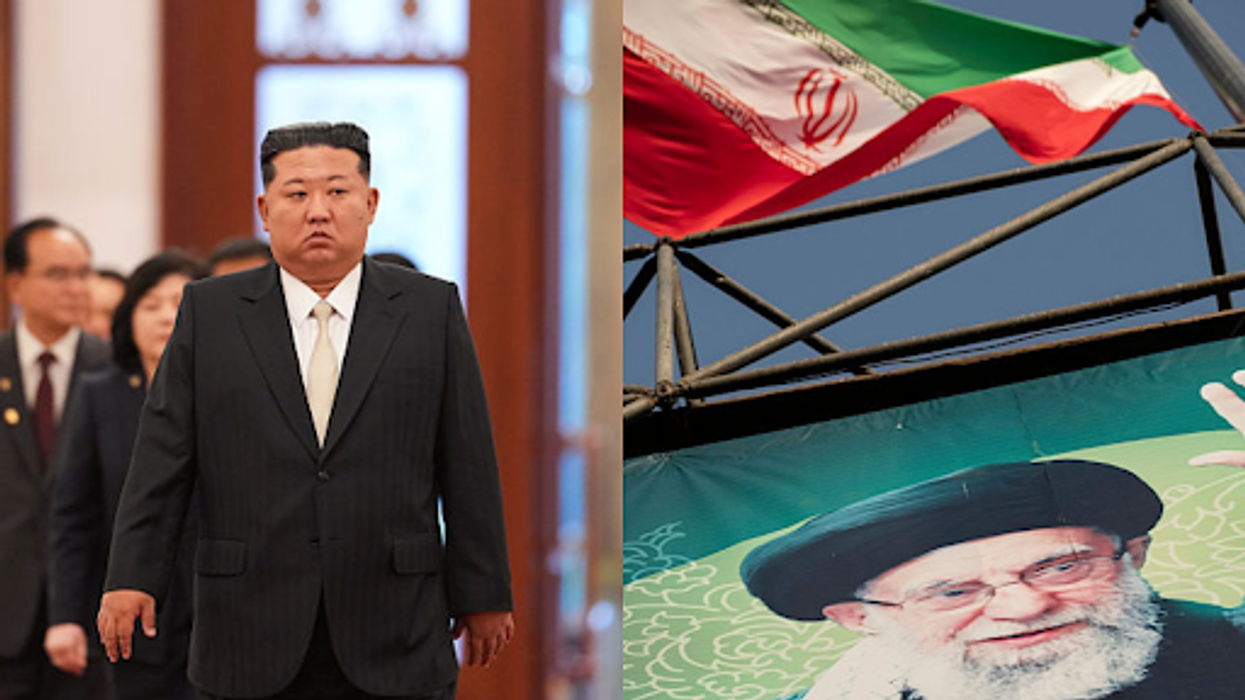


DEEP DIVE — While Washington is focused on Iran’s accelerating uranium-enrichment program and increasingly aggressive regional posture, an equally consequential shift is unfolding with seemingly less fanfare: North Korea’s rapid nuclear and missile advancements are quietly reshaping the global threat landscape.

For U.S. policymakers, the danger is no longer a pair of isolated challenges but a converging two-front nuclear problem—one that threatens to push America’s deterrence posture, crisis-management capacity, and alliance coordination closer to a breaking point. To understand how these two fronts could interact, experts emphasize that Iran and North Korea share a long-standing strategic alignment.

“The Iran–North alliance represents a four-decade-long partnership driven by shared hostility toward the United States, economic needs, and strategic isolation,” Danny Citrinowicz, a nonresident fellow with the Atlantic Council’s Middle East Programs and former head of the Iran Branch in the Research and Analysis Division (RAD) in Israeli defense intelligence, tells The Cipher Brief. “The Iranians need to rearm and prepare for another campaign, which requires additional and fresh thinking regarding the depth of the relationship between Tehran and Pyongyang.”

He also warns that this moment may become an inflection point.

“If Iran seeks to change its nuclear strategy, it could ask North Korea for nuclear bombs or highly enriched material or spare parts for the destroyed nuclear facilities, such as the conversion facility in Isfahan,” Citrinowicz continued. “The potential damage in the event of such an event is so severe that it is essential that the intelligence organizations of the United States, South Korea, and Israel identify signs of this.”

Pyongyang’s Nuclear Threat

Despite UN sanctions and diplomatic efforts, a recent Congressional Research Service (CRS) brief underscored that North Korea continues to surge forward with both nuclear-weapons and ballistic-missile development. For Kim Jong Un, analysts note, nuclear weapons are a guarantor of regime security, and he has no intention of abandoning them.

North Korea’s nuclear doctrine and capability sets are evolving in troubling ways. The 2025 CRS brief states that a September 2023 law expanded the conditions under which Pyongyang would employ nuclear weapons, lowering what had been a high threshold for use. The same report noted the regime “promised to boost nuclear weapons production exponentially and diversify nuclear strike options.”

On the delivery side, the brief outlines how North Korea is fielding solid-fueled road-mobile ICBMs, sea-based launch systems, and pursuing multiple warheads on a single missile — all elements that raise the question not just of deterrence but of crisis stability and escalation control. In short, Pyongyang appears to be reaching toward a survivable deterrent — or perhaps a warfighting capability — that can impose calculations on the U.S. and its allies in a far more challenging way than before.

“Kim’s investment in new nuclear-capable delivery systems reflects the strategic importance of the country’s nuclear arsenal,” Kelsey Davenport, Director for Nonproliferation Policy at the Arms Control Association, tells The Cipher Brief. “North Korea is better positioning itself to evade and overwhelm regional missile defenses and target the U.S. homeland.”

Treston Wheat, chief geopolitical officer at Insight Forward, reinforces that intelligence picture, stressing that open-source assessments now “frame North Korea as a maturing nuclear-warfighting state,” with doctrine “trending toward first-use options in extreme regime-threat scenarios.” He notes that U.S. intelligence already evaluates Pyongyang as having achieved miniaturization: “A 2017 DIA assessment judged DPRK miniaturization sufficient for SRBM-to-ICBM delivery.”

Taken together, those capabilities point to a shifting threat environment for Washington.

“North Korea has tested missiles with the range necessary to target the continental United States,” Davenport underscored. “U.S. military planners have to assume that North Korea can target the United States.”

Need a daily dose of reality on national and global security issues? Subscriber to The Cipher Brief’s Nightcap newsletter, delivering expert insights on today’s events – right to your inbox. Sign up for free today.

Iran’s Nuclear Surge

Meanwhile, Iran is not standing still. Tehran has begun openly emulating aspects of Pyongyang’s nuclear playbook, indicating that if Western strikes against Iranian nuclear infrastructure forced Tehran to go underground, it could adapt quickly. That duality matters: Iran can arguably deploy its program overtly, under inspection and diplomatic cover, but at some threshold, it may decide the only path to survival is accelerated weaponization. If that happens while North Korea is already pushing new strategic capabilities, the U.S. is confronted with two simultaneous flashpoints — one in the Middle East, the other in Northeast Asia.

Deterrence, by definition, demands clarity of purpose, credible capabilities, and correctly calibrated signals. When the U.S. must manage a nuclear-armed North Korea and a near-breakout Iran at the same time, the risk is that strategic bandwidth becomes overstretched.

“Despite the failure of that approach, Iran maintains that its nuclear doctrine is unchanged and it does not intend to pursue nuclear weapons,” Davenport noted. “(But) without a pragmatic diplomatic approach that addresses Iranian economic and security concerns, Tehran’s thinking about nuclear weapons could shift.”

That potential shift in Tehran’s calculus becomes even more concerning when paired with broader warnings about Western inattention.

“If Western focus on the Iran threat dwindles, there is a risk the regime could take a new, covert path to nuclear weapons using remaining or reconstituted assets or foreign help,” Andrea Stricker, Deputy Director of the Nonproliferation and Biodefense Program at the Foundation for Defense of Democracies, tells The Cipher Brief. “Such a lack of focus is similar to how North Korea became nuclear-armed.”

Tehran, experts caution, still retains deep technical capacity.

“Iran retained enough fissile stock and technical expertise to rebuild quickly, meaning the setback was tactical rather than strategic,” Wheat noted.

From Washington’s vantage point, the real danger is a dual crisis hitting at once — an Iranian enrichment surge or strike on its facilities in West Asia, paired with a North Korean missile volley or nuclear test in East Asia. That scenario forces the U.S. into parallel decision-cycles, stretching military, diplomatic, and intelligence resources, straining alliances, and creating openings that adversaries could exploit.

North Korea’s expanding warfighting delivery systems add another layer of risk: limited, precision escalation meant to test U.S. resolve. As the CRS notes, its ballistic-missile testing is designed to evade U.S. and regional defenses, putting American and allied forces at heightened risk. In effect, Pyongyang is developing not only a survivable deterrent but potential coercive leverage — just as Iran’s enrichment trajectory edges closer to a threshold that could trigger a U.S.-led military response.

“The possibility of Pyongyang providing nuclear assistance to Tehran is increasing,” Citrinowicz said. “The United States will need to focus its intelligence on this possibility, with the help of its allies who are monitoring developments.”

But that intelligence challenge intersects with another problem: mounting questions about U.S. credibility.

“President Trump has dealt a serious blow to U.S. credibility in both theaters,” Davenport asserted. “This risks adversaries attempting to exploit the credibility deficit to shift the security environment in their favor.”

U.S. Intelligence and Strategic Implications

Open-source intelligence paints a worrying picture: North Korea may have enough fissile material for perhaps up to 50 warheads, though the accuracy and reliability of delivery remain questions. It also signals Pyongyang’s development of submarine-launched ballistic missiles and multiple-warhead ICBMs. The regime has restored its nuclear test site and is now postured to conduct a seventh nuclear test at a time of its choosing.

The IAEA’s November 2025 report says it can no longer verify the status of Iran’s near–near-weapons-grade uranium stockpile after Tehran halted cooperation following the June 2025 Israeli and U.S. strikes on Natanz, Fordow, and Esfahan.

The last confirmed data, from September, showed Iran holding 440.9 kg of uranium enriched to 60 percent — a short step from weapons-grade and potentially enough for up to 10 bombs if fully processed. IAEA chief Rafael Grossi says most of this material is now entombed in damaged facilities. Moreover, satellite imagery activity around storage tunnels in Isfahan has raised serious red flags. The IAEA further cautions that oversight of this highly-enriched uranium site is “long overdue,” warning that the agency has lost “continuity of knowledge.”

Moreover, before the strikes, the IAEA assessed Iran could produce enough weapons-grade material for one bomb in about a week using part of its 60 percent stockpile at Fordow. Damage to centrifuges has likely slowed that timeline. Still, the larger question is political: whether Iran, under renewed UN sanctions and scrutiny, decides that staying within NPT safeguards costs more than openly moving toward a weapon, particularly if work resumes at undeclared or rebuilt sites.

“The U.S. and Israeli strikes have created a window of respite. What happens next depends greatly on Iran’s will to provoke new Israeli strikes,” Stricker said. “North Korea is a wild card and could provide nuclear fuel, facilities, and equipment to Iran.”

Are you Subscribed to The Cipher Brief’s Digital Channel on YouTube? There is no better place to get clear perspectives from deeply experienced national security experts.

Looking Ahead

For Washington, the takeaway is stark: systems designed to manage one nuclear threat at a time may crumble should two crises flare simultaneously. The U.S. would need tighter allied coordination, faster intelligence sharing, and stronger, more flexible military deployments to cope.

Yet above all, policymakers must anticipate the possibility of simultaneous escalation in different theatres.

In the coming months and years, key indicators will include North Korea’s choice to conduct a seventh nuclear test or field a credible submarine-launched nuclear force, and Iran’s enrichment trajectory or decision to strike a covert breakout path. The U.S. must also watch for signs of cross-coordination between Moscow and Pyongyang, or between Tehran and Pyongyang — though open links remain murky.

From a policy perspective, a dual-front scenario demands updated wargames, an inter-theatre force posture review, and close allied coordination across NATO, the Indo-Pacific, and Middle East partners. Washington must also guard against the “umbrella illusion” — the belief that the same deterrence logic will apply unchanged across two theatres facing two distinct adversaries with differing doctrine, capabilities, and thresholds.

Finally, media and public attention naturally tend to focus on Iran’s progress or North Korea’s missile launches — one at a time. However, deterring two simultaneous nuclear-adversary theatres demands strategic awareness that the world may not be sequentially configured. For the U.S., what happens in one theatre may shape adversary calculations in the other. The risk is that by the time Washington pivots from Iran, Pyongyang — or Tehran — may have forced a new reality.

In this two-front nuclear dilemma, the question is no longer whether to monitor Iran or North Korea, but how the U.S. will deter both at the same time — and whether its strategic framework is ready for that challenge.

Emerging forms of collaboration amplify that challenge.

“More concerning is that North Korea is positioning itself to benefit from Russian expertise and to further refine its missile systems using data collected from Russia’s use of North Korean systems against Ukraine,” Davenport added.

Read more expert-driven national security insights, perspective and analysis in The Cipher Brief because National Security is Everyone’s Business.

Labs Director “Absolutely Confident in the Stockpile”

11/15/25
NUCLEAR WEAPONS
Enable IntenseDebate Comments: 
Enable IntenseDebate Comments

The annual certification of the nuclear weapons stockpile is Sandia’s most important responsibility, according to Labs Director Laura McGill. Sandia’s stockpile teams work throughout the year, conducting tests and analyses to verify that the weapons are safe, secure, reliable and effective.

“Our modernization programs are still critically important and get a lot of attention, but the deployed stockpile serves as the foundation for the U.S. national defense strategy,” Laura said, shortly after signing the annual stockpile assessment letter in her office Sept. 22.

read more

Uncovering the Truth Behind Trump’s Call to Resume Nuclear Testing

OPINION — “Nearly 1,000 feet below the Nevada desert, [U.S.] scientists and engineers are conducting groundbreaking nuclear weapons research. Subcritical experiments, or ‘subcrits’ for short, play a crucial role in ensuring national security. Subcritical experiments are a key part of the [National Nuclear Security Administration (NNSA)] science-based Stockpile Stewardship Program, which is the way America ensures that our nuclear weapons are safe, secure, and reliable -- without conducting full-scale nuclear weapons tests.”

That was a quote from Don Haynes, Los Alamos National Laboratory (LANL) senior director at the Nevada National Security Sites, from an article published in LANL’s National Security Science magazine just 13 days ago on October 29, 2025.

The article goes on to explain, “Subcritical experiments allow researchers to evaluate the behavior of nuclear materials (usually plutonium) in combination with high explosives. This configuration mimics the fission stage of a modern nuclear weapon. However, subcrits remain below the threshold of reaching criticality. No critical mass is formed, and no self-sustaining nuclear chain reaction occurs -- there is no nuclear explosion.”

I’m going to quote more from the LANL article because it shows what subcritical testing the U.S. has been doing for years. For example, I wrote a Cipher Brief column in July 2021 that described subcrits this way: “Put simply, inside a steel container, a chemical high-explosive is detonated around a coin-like, small sample of plutonium [less than eight ounces] to simulate aspects of a nuclear explosion. No actual chain reaction or nuclear explosion occurs. But this contained detonation, with the assistance of computers, has helped scientists determine how plutonium behaves under the extreme pressures that do occur during detonation of a nuclear weapon.”

I further explained four years ago, “The main purpose, up to now, of subcritical experiments has been to identify and decrease uncertainties in the performance of currently deployed U.S. nuclear weapons, at a time when actual testing is not being done.”

I write this to deal with President Trump’s rather confused – and at times inaccurate -- series of recent statements about restarting U.S. nuclear testing. The President’s words have caused varied responses from his own officials – some of whom apparently did not want to appear correcting him. And the President’s words have gone so far as to encourage Russian President Vladimir Putin to convene a publicized Kremlin meeting last Wednesday where senior Russian national security officials discussed the possibility of Russia exploring the restart of their own full-scale underground nuclear testing.

To make it clear, the U.S. and Russia, by agreement, conducted their last underground nuclear tests in 1992. China did their last one in 1996. All three were signatories to the 1996 Comprehensive Nuclear Test Ban Treaty (CTBT), which prohibited “any nuclear weapon test explosion or any other nuclear explosion.” However, under the treaty, as the U.S. State Department explains on its website, the CTBT “does not prohibit subcritical experiments to help ensure the continued safety and reliability of nuclear weapons.”

The Cipher Brief brings expert-level context to national and global security stories. It’s never been more important to understand what’s happening in the world. Upgrade your access to exclusive content by becoming a subscriber.

Russia has conducted at least 25 subcritical experiments at its Novaya Zemlya test site, according to past statements by U.S. Department of Energy (DOE) and Russian authorities. As of May 2024, the U.S. had conducted some 34 subcrits at the Nevada test site, according to DOE.

In 2022, a spokesperson for DOE’s National Nuclear Security Administration (NNSA), which manages the nuclear program, told Kyodo News that in June and September 2021, the U.S. conducted two subcritical tests, the first under the Biden administration. Three rounds of subcritical nuclear tests were conducted under the first Trump administration, and four rounds under Obama, according to other sources.

Currently, LANL has subcritical experiments scheduled into the year 2032, according to the recent National Security Science magazine article.

Meanwhile, the U.S. is developing several new warheads including the W93, which is intended for deployment on U.S. sub-launched ballistic missiles by 2040, according to NNSA. The NNSA website said of the W93, “Key nuclear components will be based on currently deployed and/or previously tested nuclear designs…The W93 will not require additional nuclear testing.”

Against that background, let’s review what President Trump has been saying, along with some of the responses.

The testing issue began with Trump in Korea on the evening of October 29. He had a meeting scheduled for 11 a.m. the next morning with Chinese Leader Xi Jinping. At 9 p.m., Trump sent off a message on his Truth Social public website that said: “The United States has more Nuclear Weapons than any other country. This was accomplished, including a complete update and renovation of existing weapons, during my First Term in office. Because of the tremendous destructive power, I HATED to do it, but had no choice! Russia is second, and China is a distant third, but will be even within 5 years. Because of other countries’ testing programs, I have instructed the Department of War to start testing our Nuclear Weapons on an equal basis. That process will begin immediately.”

What triggered Trump’s message has not yet been explained. Three days earlier, Putin, dressed in a military uniform, had publicly announced with some fanfare that Russia had successfully tested a nuclear-powered missile over the Arctic Ocean after years of development.

It may have been just competitiveness, but Trump was not clear what he was talking about when he wrote “testing our nuclear weapons.” Was he talking about nuclear delivery systems, as Putin had just been? Or was he talking about testing nuclear warheads or bombs?

If it were the latter, Russia actually has more nuclear weapons than the U.S., primarily because the U.S. has retired most of its tactical nuclear weapons. But if Trump meant strategic nuclear delivery systems, he was correct.

Then there was the ambiguity of what kind of testing Trump was talking about? He mentions instructing the Pentagon to “start testing,” which implied nuclear delivery systems, such as missiles, which the military controls. DOE’s NNSA tests the nuclear portion of warheads and bombs.

The next day, October 30, hours after the Xi meeting, Trump was flying back to the U.S. from Korea aboard Air Force One, and held an impromptu press conference. After 10 minutes of questions about meeting Xi, Trump was asked why he wrote the Truth Social piece about nuclear testing, Trump initially replied, “Well, that had nothing to do with them,” meaning the Chinese.

Trump went on, “It had to do with others.” He paused and then continued, “They seem to all be nuclear testing. We have more nuclear weapons than anybody. We don't do testing. You know, we've halted it years, many years ago, but with others doing testing, I think it's appropriate that we do.”

Since Trump mentioned the U.S. had halted the testing “years ago,” he created the impression at that moment he must have been thinking of explosive underground nuclear testing. When asked a follow-up question on where or when such testing would take place, Trump waved it off saying, “It will be announced. You know, we have test sites. It'll be announced.”

Having given the idea that he had ordered the resumption of explosive underground nuclear tests, it was no surprise that the next day, Friday, October 31, when Trump sat down at Mar-a-Lago with Norah O’Donnell for the 60 Minutes CBS News television program to be aired two days later.

Here I am using the CBS transcript of the entire one-hour, thirteen-minute Trump/O’Donnell interview and not the shorter, edited version shown on Sunday night, October 31.

Are you Subscribed to The Cipher Brief’s Digital Channel on YouTube? There is no better place to get clear perspectives from deeply experienced national security experts.

Well into the interview, after covering Trump’s Asia trip and meeting with China’s Xi, O’Donnell referred to his October 29, Truth Social message where he mentioned new nuclear testing and asked Trump, “What did you mean?”

Trump initially gave this wide-ranging response: “Well, we have more nuclear weapons than any other country. Russia's second. China's a very distant third, but they'll be even in five years. You know, they're making them rapidly, and I think we should do something about denuclearization, which is going to be some-- and I did actually discuss that with both President Putin and President Xi. Denuclearization's a very big thing. We have enough nuclear weapons to blow up the world 150 times. Russia has a lot of nuclear weapons, and China will have a lot. They have some. They have quite a bit, but…”

At that point, O’Donnell interrupted and asked specifically, “So why do we need to test our nuclear weapons?”

This time Trump answered, “Well, because you have to see how they work. You know, you do have to-- and the reason I'm saying-- testing is because Russia announced that they were going be doing a test. If you notice, North Korea's testing constantly. Other countries are testing. We're the only country that doesn't test, and I don’t want to be the only country that doesn't test.”

As I have pointed out above, other than North Korea’s six underground nuclear tests beginning in 2006 and ending in September 2017, there have been none confirmed, other than Russia’s acknowledged subcritical nuclear tests. So it again is unclear what Trump was mentioning.

Trump actually went on saying, “We have tremendous nuclear power that was given to us largely because when I was President (and I hated to do it, but you have to do it)-- I rebuilt the military during my first term. My first term was a tremendous success. We had the greatest economy in the history of our country.”

Trump then tried to turn the conversation to the economy, but O’Donnell brought him back to the subject by asking, “Are you saying that after more than 30 years, the United States is going to start detonating nuclear weapons for testing?”

This time Trump insisted, “I'm saying that we're going to test nuclear weapons like other countries do, yes,” and went on saying “Russia's testing nuclear weapons...And China's testing them too. You just don't know about it.”

Trump claimed the U.S. is an open society, but “they [Russia, China] don't go and tell you about it. And, you know, as powerful as they are, this is a big world. You don't necessarily know where they're testing. They test way underground where people don't know exactly what's happening with the test. You feel a little bit of a vibration. They test and we don't test. We have to test.”

That same day of the Trump/O’Donnell interview, October 30, Vice Admiral Richard Correll, Trump’s nominee to be head of Strategic Command, was having his confirmation hearing before the Senate Armed Services Committee. Asked if he knew whether Russia, China or any other country were doing explosive testing of nuclear warheads, Correll answered, “No.”

Asked whether Trump could have been talking about nuclear delivery systems, Correll said, “I don't have insight into the President's intent. I agree that could be an interpretation.”

On November 2, Energy Secretary Chris Wright appeared on Fox News and was asked about the new nuclear tests mentioned by the President. Wright replied, “I think the tests we're talking about right now are system tests. These are not nuclear explosions. These are what we call non-critical explosions.”

Asked whether the tests involve the existing stockpile weapons or new systems, Wright said, “The testing that we'll be doing is on new systems, and again these will be non-nuclear explosions.”

Wright explained that thanks to the nation’s national laboratories “the U.S. actually has a great advantage with our science and our computation power. We can simulate incredibly accurately exactly what will happen in a nuclear explosion. And we can do that because in the 60s, 70s, and 80s, we did nuclear test explosions. We had them detailed and instrumented and we measured exactly what happened. Now we simulate what were the conditions that delivered that and as we change bomb designs, what will they deliver. We have a reasonable advantage today in nuclear weapons design over all of our adversaries.”

On November 3, CIA Director John Ratcliffe came to Trump’s defense on the Russia, China testing issue, writing a Tweet on X saying the President “is right.” To back it up, Ratcliffe cited a May 2019 quote from then-Defense Intelligence Agency Director Lt. Gen. Robert Ashley Jr. saying Russia “probably” was conducting low-yield tests although Ashley did not claim to have specific evidence. He stated that Russia had the "capability" to conduct very low-yield nuclear tests.

Ratcliffe also cited a 2020 Wall Street Journal article that said the U.S. believed China may have secretly conducted a low-yield nuclear test based on circumstantial evidence, such as increased excavation, activity in containment chambers, and a lack of transparency at the site.

That same day, Sen. Tom Cotton, chairman of the Senate Intelligence Committee, put out his own Tweet on X saying, “After consultations with Director Ratcliffe and his team, they have confirmed to me that the CIA assesses that both Russia and China have conducted super-critical nuclear weapons tests in excess of the U.S. zero-yield standard. These tests are not historic and are part of their nuclear modernization programs.”

Despite all this Trumpian back and forth, I strongly doubt the U.S. will return to explosive nuclear testing, but rather remain with subcritical experiments as currently planned.

The Cipher Brief is committed to publishing a range of perspectives on national security issues submitted by deeply experienced national security professionals.

Opinions expressed are those of the author and do not represent the views or opinions of The Cipher Brief.

Have a perspective to share based on your experience in the national security field? Send it to Editor@thecipherbrief.com for publication consideration.

Read more expert-driven national security insights, perspective and analysis in The Cipher Brief because National Security is everyone’s business.

Canadian-Based Company Fined by U.S. Commerce Department for Hiding U.S. Exports to Iran

11/10/25
EXPORT CONTROL
Enable IntenseDebate Comments: 
Enable IntenseDebate Comments

Key Takeaways

·  Canada-based biotechnology company Luminultra illegally exported from its Maryland-based production facility three Photonmaster luminometers and 25 aqueous test kits valuing $33,438 USD to Iran on October 21, 2022.

·  Under instructions from the Iranian buyer, and hopes of future sales to the Iranian market, Luminultra agreed to falsify export declarations and ship the items from the United States via the United Arab Emirates (UAE) to Iran.   

read more

Nuclear-Powered Missiles: An Aerospace Engineer Explains How They Work – and What Russia’s Claimed Test Means for Global Strategic Stability

11/3/25
NUCLEARPOWERED MISSILES
Enable IntenseDebate Comments: 
Enable IntenseDebate Comments

Russian President Vladimir Putin, dressed in a military uniform, announced on Oct. 26, 2025, that Russia had successfully tested a nuclear-powered missile. If true, such a weapon could provide Russia with a unique military capability that also has broader political implications.

read more

Studying War in the New Nuclear Age

10/31/25
NUCLEAR ESCALATION RISKS
Enable IntenseDebate Comments: 
Enable IntenseDebate Comments

Nuclear security can be a daunting topic: The consequences seem unimaginable, but the threat is real. Some scholars, though, thrive on the close study of the world’s most dangerous weapons. That includes Caitlin Talmadge PhD ’11, an MIT faculty member who is part of the Institute’s standout group of nuclear security specialists.

Talmadge, who joined the MIT faculty in 2023, has become a prominent scholar in security studies, conducting meticulous research about militaries’ on-the-ground capabilities and how they are influenced by political circumstances.

read more

Will Trump’s Nuclear Testing Order Prompt a Global Race?

10/31/25
NUCLEAR WEAPONS
Enable IntenseDebate Comments: 
Enable IntenseDebate Comments

President Donald Trump this week posted on social media that he had ordered the immediate resumption of nuclear weapons testing “because of other countries testing programs.” The announcement stirred concern among nuclear policy experts because of its potential disruption of what has been a more than three decades long moratorium of live testing of nuclear explosives. Trump’s move appears to be a response to Russia’s recently publicized test of a nuclear delivery system, but raises questions of whether the president wants to risk spurring a new global race to test nuclear warheads.

read more

LANL Waste Containers Successfully Depressurized

By: Staff
10/31/25
NUCLEAR WASTE
Enable IntenseDebate Comments: 
Enable IntenseDebate Comments

The National Nuclear Security Administration and Los Alamos National Laboratory successfully completed the depressurization of four flanged tritium waste containers and moved them to a waste staging location on site.

Offsite impacts were indistinguishable from background and pose no health or environmental consequences.

read more

Why Nuclear Negotiations with Russia Are Worth It

FINE PRINT / OPINION — “In order to prevent the emergence of a new strategic arms race and to preserve an acceptable degree of predictability and restraint, we consider it reasonable to maintain at this turbulent time the status quo established under New START. Accordingly, Russia is prepared to continue observing the treaty’s central quantitative restrictions for one year after February 5, 2026. Following that date, based on a careful assessment of the situation, we will make a definite decision on whether to uphold these voluntary self-limitations. We believe that this measure is only feasible if the United States acts in a similar spirit and refrains from steps that would undermine or disrupt the existing balance of deterrence.”

That was Russian President Vladimir Putin speaking to members of his Security Council in the Kremlin on September 22, 2025, in the Kremlin.

Later that day, when White House Press Secretary Karoline Leavitt was asked about Putin’s offer, she said, “The President is aware of this offer extended by President Putin, and I'll let him comment on it later. I think it sounds pretty good, but he wants to make some comments on that himself, and I will let him do that.”

One day later, 22 minutes into his long, rambling speech before the U.N. General Assembly, President Trump departed from his prepared remarks and said, “We want to have a cessation of the development of nuclear weapons. We know and I know and I get to view it all the time — Sir, would you like to see — and I look at weapons that are so powerful that we just can’t ever use them. If we ever use them, the world literally might come to an end. There would be no United Nations to be talking about. There would be no nothing.”

I want to believe that was President Trump beginning to respond, extemporaneously, to Putin’s offer, and serious talks will soon begin to extend the New START limits on U.S. and Russian deployed nuclear warheads and delivery systems.

Let me suggest a reason why Putin made the offer and more reasons why Trump should go along.

In calling for the New START extension, Putin made reference to “U.S. plans to expand strategic components of its missile defense system, including preparations for the deployment of interceptors in outer space.” That was a reference to Trump’s so-called Golden Dome, space-based, missile defense plans of which Putin said, “practical implementation of such destabilizing measures could nullify our efforts to maintain the status quo in the field of strategic offensive arms.”

It reminded me of 1984, when then-President Ronald Reagan started his own space-based missile defense program, the Strategic Defense Initiative (SDI), which also drew complaints from Moscow. However, three years later, Reagan and then Soviet Union President Mikhail Gorbachev signed the 1987 Intermediate-Range Nuclear Forces Treaty, which at that time did away with a whole class of nuclear weapons.

Eventually, when SDI proved unworkable, in 1991 then-President George H.W. Bush and Gorbachev agreed to the first Strategic Arms Reduction Treaty (START).

At the time, the was a belief that Gorbachev sought negotiations that led up to START because Russia could not afford to match the costs the U.S. was putting into space-based missile defense.

Back then, I believed that was the case and today I think that Putin, faced with continued fighting in Ukraine, cannot afford a space-based missile defense competition with the U.S. -- and neither can Trump, although the latter does not know it yet.

The Ukraine war costs are dominating Russia’s economy.

After raising personal income taxes sharply at the start of the year, Putin had pledged there would be no more big changes to the tax system until 2030. But the Russian Finance Ministry last week said it intends to raise the country’s value added tax (VAT) by two percent to 22 percent, to help meet the growing deficit. Russia’s VAT applies to the sale of goods and services within Russia, the import of goods, and the provision of electronic services by foreign companies, much like a U.S. excise tax.

The Russian budget deficit increased to 4.9 trillion rubles ($58 billion) in the January-July 2025 period, up from 1.1 trillion rubles ($13 billion) the year before. Russia has already revised its 2025 deficit projection upward from 1.7% to 2.6% of GDP. Russia’s oil and gas revenues fell 19% compared with the year earlier, in part due to lower global oil prices, but also thanks to lower world purchases, such as Moscow’s loss of most of its natural gas sales to Europe.

At home, inflation is around 8 percent as wholesale gasoline prices in Russia have surged in part because of Ukrainian drone attacks that have damaged oil refineries and shut down some major facilities. In August, the government introduced a temporary gasoline export ban and last week Deputy Prime Minister Alexander Novak said the plan is to extend that ban through the end of the year.

The Cipher Brief brings expert-level context to national and global security stories. It’s never been more important to understand what’s happening in the world. Upgrade your access to exclusive content by becoming a subscriber.

On Friday, Kremlin spokesman Dmitry Peskov said that Russia had not yet received signals from the American side via secure channels in response to President Putin’s proposal to extend New START. But, when asked about the timing of a Washington reply, Peskov said, “We’ll wait this week,” noting Trump’s busy schedule during the United Nations meetings. “Understandably, these have been difficult days for him [Trump],” Peskov added.

Trump’s most immediate problem this week is the looming shutdown of the government. But when he gets around to dealing with Putin’s offer to extend New START, he faces some new U.S. nuclear weapons cost problems that he needs to recognize, along with serious technical issues facing his Golden Dome program.

For example, on September 18, the Government Accountability Office (GAO) reported to Congress that the modernized, uranium processing facility in Oak Ridge, Tennessee that was originally to be operational in 2026 to ensure uranium for nuclear weapons and to fuel U.S. Navy ships will not be ready before 2034. Meanwhile, the original cost has ballooned from $6.5 billion in 2018 to $10.35 billion.

More concerning, the GAO said the National Nuclear Security Administration (NNSA), which runs the nuclear complex, said its contractor has said that it will cost about $463 million to safely continue uranium processing operations until 2035 for current needs in the 80-year-old Building 9212 at Oak Ridge.

At the same time, the U.S. is in the midst of modernizing its three major strategic nuclear delivery systems – B-52 long-range heavy bombers with the B-21; Ohio class strategic nuclear submarines with Columbia class submarines; and Minuteman III land-based intercontinental ballistic missiles (ICBMs) with the Sentinel system.

This ambitious program, which the Congressional Budget Office this year said may cost nearly $946 billion to operate and modernize over the next ten years, has shown some troubling problems. While the B-21 bombers seem to be on schedule, the Columbia submarines are running about one year behind schedule. Although the Navy claims the first one will go on patrol in 2030, the Navy is planning to extend the service lives of up to five Ohio-class SSBNs to hedge against potential delays in the deliveries of Columbia-class boats.

Problems with the Sentinel ICBM system are much more serious.

Need a daily dose of reality on national and global security issues? Subscriber to The Cipher Brief’s Nightcap newsletter, delivering expert insights on today’s events – right to your inbox. Sign up for free today.

The Defense Department (DoD) earlier this month estimated the Sentinel program, which involves replacing 450 Minuteman IIIs, currently based in silos in three different states, will cost more than $140 billion and be delayed by years.

Because of the Sentinel delay, the Air Force “must continue to operate and maintain the aging Minuteman III system over the next decade and beyond to meet strategic deterrent requirements until Sentinel is fully fielded,” according to a September 10, GAO report. Air Force Global Strike officials told the GAO that “operating two weapon systems simultaneously while executing a massive military movement to convert the old system to the new system,” would be “a very complex operation.”

Another issue: “As part of Sentinel restructuring, the Air Force is reassessing all aspects of its plan to field Sentinel, including the extent to which Sentinel will use the existing Minuteman III launch facilities. The Air Force has yet to finalize the design for Sentinel launch facilities,” the GAO said.

I have to add to the current strategic nuclear issues facing the Trump administration, serious doubts remain as to whether the President’s space-based Golden Dome missile defense will ever reach fruition.

I have in past columns quoted Todd Harrison, Senior Fellow at the American Enterprise Institute, as explaining the complications with the idea of space-based interceptors killing enemy ICBMs during their boost phase, which is a key element of Golden Dome. As Harrison has explained it, you have only two-to-three minutes to target and shoot during the enemy ICBM’s boost phase, and then because your orbiting interceptors need to be in range, there’s a requirement that at least 500 interceptors would be needed for each target.

During a September 16, interview at the Council on Foreign Relations, Harrison added a Golden Dome price when he said, “If you want to do boost-phase intercept from space, we're talking something if you really want to do the scale of protection they're talking about for a Russian or a Chinese or a Russian Chinese simultaneous launch, Worst case, you are talking something that's going to go into the trillions of dollars over the next twenty years or so.”

I lay out these details to show that Trump, as well as Putin, has a financial incentive to do the right thing and together renew the New START agreement.

The Cipher Brief is committed to publishing a range of perspectives on national security issues submitted by deeply experienced national security professionals.

Opinions expressed are those of the author and do not represent the views or opinions of The Cipher Brief.

Have a perspective to share based on your experience in the national security field? Send it to Editor@thecipherbrief.com for publication consideration.

Read more expert-driven national security insights, perspective and analysis in The Cipher Brief

Defiance Meets Desperation as Iran Faces Fresh UN Sanctions


EXPERT INTERVIEW – The United Nations has reimposed sweeping economic and military sanctions on Iran, ten years after lifting them under the 2015 nuclear deal.

Britain, France, and Germany triggered the “snapback” mechanism, accusing Tehran of nuclear escalation and blocking inspections. Iran had already halted oversight after U.S. and Israeli strikes in June damaged several nuclear sites and military facilities.

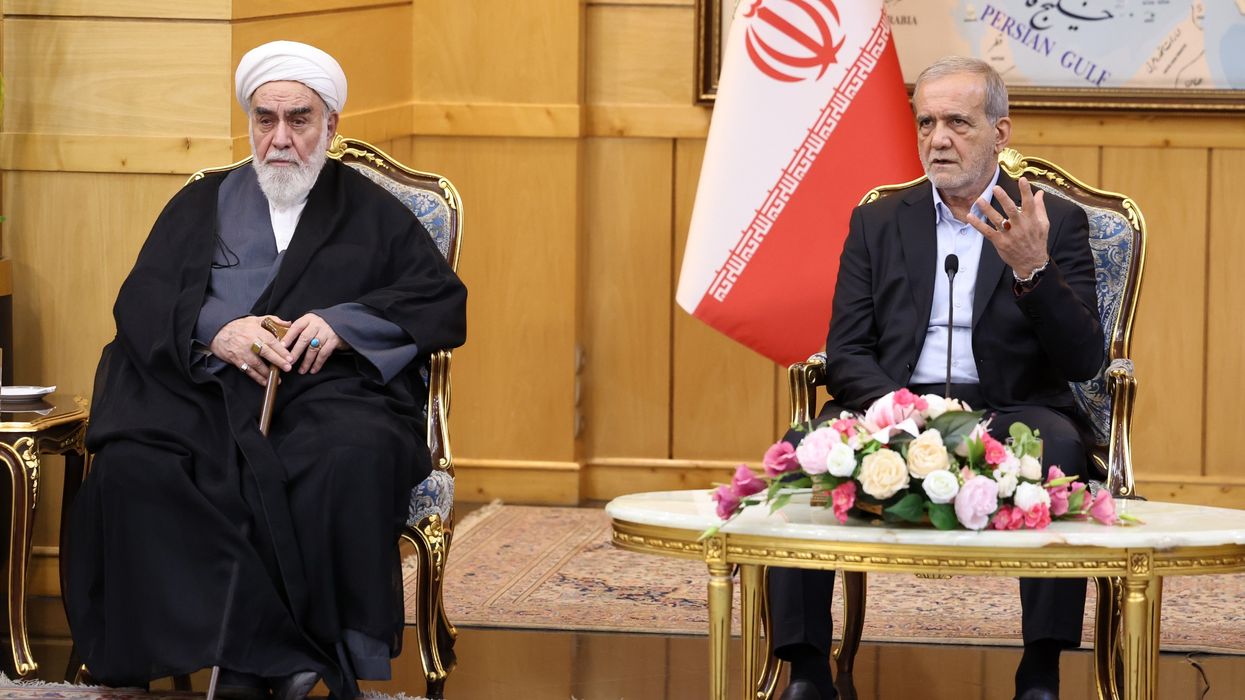
President Masoud Pezeshkian insists Iran has no intention of building nuclear weapons, calling the sanctions “unfair and illegal.” But the move marks another blow to the Joint Comprehensive Plan of Action (JCPOA), the deal meant to cap Iran’s enrichment and research while allowing civilian nuclear energy.

Iran accelerated banned nuclear activity after Trump pulled the U.S. out of the deal in 2018, repeatedly dismissing the accord as flawed.

The latest sanctions cut Iran off from global banks, reimpose arms and missile restrictions, and revive asset freezes and travel bans on key officials. Analysts say the measures hit Iran at a fragile moment with its economy shrinking, inflation surging, and the rial collapsing to record lows. Oil sales, foreign investment, shipping, and manufacturing are all expected to take a hit.

The Cipher Brief spoke with longtime Middle East and Energy Analyst Norm Roule, who formerly served as National Intelligence Manager for Iran at ODNI. Roule continues to travel regularly to the region for meetings with high-level officials throughout the Middle East.


Norman T. Roule

Norman Roule is a geopolitical and energy consultant who served for 34 years in the Central Intelligence Agency, managing numerous programs relating to Iran and the Middle East. He also served as the National Intelligence Manager for Iran (NIM-I)\n at ODNI, where he was responsible for all aspects of national intelligence policy related to Iran.

The Cipher Brief: Why are snapback sanctions different from other sanctions already imposed on Iran?

Roule: First, we should touch on what this means for the regime. The sanctions hit Iran at one of its most fragile moments since the late 1980s. The government remains unpopular to an unprecedented degree. Virtually every economic indicator in Iran is poor. Its national security architecture of militias, foreign proxies, Russia, China, and the Revolutionary Guard failed during the recent conflict with Israel and the U.S. The main driver of the regime is to maintain stability as it completes transitions to the post-revolutionary generation of leadership. Despite the absence of large-scale protests, destabilizing national unrest could occur at any time.

Over the past few months, Iran’s diplomats have used the prospect of a nuclear deal and the possibility of sanctions relief as a source of hope for the Iranian people. The return of UN sanctions strips Tehran of one of its few remaining political assets.

The primary difference between the latest sanctions and U.S. sanctions is that these measures are binding on all 193 member states of the United Nations. Iran will, of course, do everything it can to evade sanctions. Russia, China, North Korea, Venezuela, and other Iranian partners who already have a history of violating Iran sanctions are unlikely to enforce these sanctions with enthusiasm.

However, unlike U.S. sanctions, which they have argued could be ignored because they were imposed only by Washington, these sanctions are imposed by the United Nations. This will make it harder for these countries to involve other countries in their own violations. Likewise, it makes it much easier for the U.S. government to seek compliance worldwide due to the legal and reputational risks associated with countries and businesses that we might approach on this issue.

The Cipher Brief: Can you discuss the specific sanctions and your assessment of their likelihood of success?

Roule: First, and most damaging for Iran, these sanctions isolate Iranian banks from a large part of the global financial system and require that UN members prevent the use of their banking systems on sanctioned trade. Hence, Iran has lost the ability to manage its oil revenues through international banks. Instead, it will need to engage in oil bartering or use intermediaries, which is a slower and more expensive process. It will likely reduce its oil sales at a time when Saudi Arabia is trying to reclaim some of the market share lost to Iran in recent years.

Banks understand that Iran will seek to defy sanctions. They also know that there are expensive legal consequences if they fail to undertake due diligence operations to examine transactions and shipments, thereby demonstrating that they have fulfilled their sanctions obligations.

Next, there is the restoration of the conventional arms embargo: This bans traditional arms transfers to or from Iran. This should make it harder for Iran to acquire advanced weapons from Russia and China, but also to sell its weapons systems to Russia, Sudan, and other countries. I will admit that I am not sanguine on the last point.

Third, we have nuclear and missile restrictions: This includes a prohibition on uranium enrichment, reprocessing, heavy-water activities, and ballistic missile technology transfers or tests capable of delivering nuclear weapons (beyond 300 km range). Iran is likely to ignore most of these restrictions and will test the international community as it does so. But I think it will also try to do so in a way that avoids sparking a regime-destabilizing war with Israel or the U.S.

Snapback also restores restrictions on dual-use goods, materials, and technologies that could aid nuclear or missile programs. These sections require increased inspections of Iranian ships and aircraft to prevent the transfer of prohibited materials or goods. For governments and businesses, this requirement will be among the more intrusive and time-consuming, and thus expensive. At the same time, Tehran will game the system by introducing complicated, multi-country layers of shell companies to obtain critical materials. This is where international legal and intelligence partnerships will play an essential role in identifying and neutralizing these networks.

Next, snapback returns asset freezes and travel bans on designated Iranian individuals. This is a rather long list and includes Islamic Revolutionary Guard Corps officials, nuclear scientists, and officials related to their programs, as well as their assets worldwide. Travel bans should be successful. Asset bans are less so, primarily due to the small number of such assets located abroad. These restrictions, however, serve as a powerful reminder to businesses of the reputational impact of doing business with Iran.

What does all of this mean? Join The Cipher Brief Threat Conference - happening October 19-22 in Sea Island, GA. to engage with the world’s leading national security experts to help answer those questions. Apply for your seat at the table today.

The Cipher Brief: Let’s go deeper. Can you break this down by sector? Is there any part of Iran’s economy that will be hurt more than another? Oil seems most likely.

Roule: We should keep in mind that, following the negative impact of the initial sanctions announcement, the effect of sanctions should be understood as corrosive. Further impact is shaped by how seriously and loudly we enforce sanctions, as well as how vigorously and successfully Tehran develops countermeasures.

To begin, Iran started the year in challenging economic conditions. The IMF’s projection for Iran’s GDP was dismal, 0.5%, so negative growth in the coming months would be far from surprising. Indeed, one wonders how it will be avoided.

The snapback announcement caused the Iranian rial to plummet to a new record low of 1.12 million to the dollar. Tehran will have little choice but to inject precious hard currency into the market to sustain its failing currency. I also expect more enthusiasm for the effort to cut some of the zeros from the Iranian currency. Iran’s leaders likely worry that the coming months will see a further weakening of the rial and a spike in inflation, which currently hovers around 43%.

Foreign investment, such as it is, will also take a hit. In 2024, Iran claimed – and probably overstated – that it attracted around $5.5 billion in foreign investment. That minuscule figure will shrink even further.

Let’s talk about sectoral impacts.

Shipping costs for Iran are likely to increase substantially. A significant portion of Iran’s seaborne trade will face new cargo inspections, bans on dual-use goods shipments, insurance difficulties, and possibly even port servicing complications.

Manufacturing and mining will be impacted in terms of both imports and exports as they face new pressures on supply chains and financing. This impact will affect trade with Europe, but it will also dampen Iran’s efforts to establish trade with Africa and complicate its trade relations with Iraq.

Although Iran’s defense industry may not be participating in trade shows, one suspects that its existing trade in drones and light arms will continue. Its current clients – Russia, Sudan, and other African countries, and reportedly Venezuela and Bolivia – may choose to ignore sanctions given their lack of alternative suppliers and animosity with the West.

The impact of sanctions on Iranian oil sales to China will be the most significant, if difficult to assess, in the coming months. Beijing and Tehran have deliberately obscured the payment relationship, and the former has imposed tough terms on Iran. China will view this new phase as an opportunity to offload more goods, machinery, and technology onto the Iranian market, and possibly to negotiate a larger price discount for the oil it acquires.

The use of intermediaries, smaller banks that are outside the scope of international monitoring, and shell firms will also increase costs for Tehran. Last, it isn’t unreasonable to think that Chinese oil sales could contract. Beijing – likely seeing the writing on the wall on this issue – has been building its reserves, and the Saudis and Emirates can fill the missing production, although they won’t discount their oil to match Iran’s prices.

The Cipher Brief: What are Iran’s likely next moves? Is diplomacy dead? What do you say to those who believe military action is expected?

Roule: Iran’s playbook is unlikely to be a surprise. Tehran’s leaders used Western media to issue their side of the story, projecting a blend of confidence, defiance, and dismissal of the impact of sanctions. Once home, Iran’s leaders will show that they won’t stop their nuclear work.

It is likely that even within Iran, the program's future remains under debate, with several options being considered. Tehran’s efforts to maintain close relations with Moscow and Beijing make it likely that it will seek to involve these capitals in its programs. One could imagine Iran dangling IAEA access at some point to gain international acceptance. Three possible programs could emerge in the coming months.

The most likely option is that Iran will seek to rebuild a modernized version of the enrichment and even the conversion facilities destroyed in the Twelve-Day War. This process would be expensive, and, depending on the number and location of facilities, could take years to complete. This option would be consistent with Iranian policy rhetoric but would risk a military attack and an extension of sanctions. The problem with lengthy construction is that this also delays benefits to Iran’s economy.

Tehran could reduce the likelihood of an attack by allowing the IAEA access to the sites or involving Russia or China in the operation and construction of the sites. Such an option, if involving advanced centrifuges, would allow Iran to retain the capability to produce highly enriched uranium, including weaponization levels, in the future should it wish to do so.

A far less likely option is to select a foreign fuel source for domestic reactors to provide power. Since this would mean abandoning a domestic enrichment program, this option is thus improbable in the foreseeable future.

Least likely for now would be weaponization. Such a decision would require Iran’s leadership to believe it could undertake and execute such an activity without discovery by Israeli or Western intelligence and, if discovered, would not face devastating military action similar to the June 2025 war.

In any case, activity at the recently reported Mount Kolang Gaz La facility in Esfahan Province is sufficient to be observable to the West, and as we have recently seen, to draw the attention of Western media, thereby sending a message. I expect construction at the site won’t be very fast until Tehran sees how Israel and the U.S. respond to this announcement and until Iran comes to a conclusion as to what direction it wishes to go in its nuclear program.

Diplomacy on Iran’s nuclear program is far from over, with low-level conversations perhaps taking place in Vienna and European capitals. The international community will remain – and should remain- insistent that the International Atomic Energy Agency (IAEA) gain access to Iran’s nuclear enterprise as soon as possible. Such a return cannot be achieved without engagement and diplomacy. However, it will take time for the politics to cool and a new paradigm of proposals to emerge.

Washington, Europe, and the Gulf will entertain serious proposals from Iran that it will accept a nuclear program that allows the IAEA access it requires. More broadly, Washington is looking for a deal that means Iran won’t have the capacity to build nuclear weapons, or accept constraints on its missile program, and end the regional operations of the Quds Force.

Iran’s current leadership is unlikely to make such a decision until sanctions begin to erode the economy. The death of the Supreme Leader could pave the way for a new generation of leadership, which – while no less assertive and potentially even hostile – might be more willing to be more accommodating on these issues to ensure the survival of the Islamic Republic.

Extreme caution should be exercised when discussing the possibility of military hostilities. The U.S. certainly doesn’t seek to start a war in the region. Israel may conduct military operations in Iran over Quds Force actions. Still, it is hard to see why Israel would argue it needs to undertake a costly military operation simply because Tehran is denying the IAEA access to rubble at Natanz. However, the Twelve Day War has changed the rules. An Israeli or US military attack on Iran is no longer unthinkable. If Iran were to undertake weaponization activity or attempt to conceal weaponization-related equipment or material, some in Tehran probably won’t be surprised if another surgical attack takes place.

Moving to Tehran, it is hard to see what benefits military action brings to Tehran. Iran is operating under some harsh realities. The Twelve Day War made it clear that Israel’s intelligence capabilities within Iran are extraordinary, and there is no reason to believe the capabilities aren’t still in place. If so, any plan would likely be discovered and perhaps neutralized before it could take off. Further, Iran’s air defenses continue to be no match for Israel or U.S. air and missile systems.

Iran’s missiles and drones not only had no strategic impact on the course of the Israeli attack but were significantly reduced in number by Israeli attacks. Iran fought alone in June: neither Russia nor China showed the slightest interest or capability in helping Iran during the June war. A conflict that spread to the region risks costing Iran its détente with the GCC and potentially jeopardizing its support from China. Iran’s population remains disillusioned, and testing their willingness to endure a conflict would be quite the risk. Much depends on specific events and drivers, but current conditions don’t seem to lean towards a regional conflict.

Are you Subscribed to The Cipher Brief’s Digital Channel on YouTube? There is no better place to get clear perspectives from deeply experienced national security experts.

Read more expert-driven national security insights, perspective and analysis in The Cipher Brief because National Security is Everyone’s Business.
❌