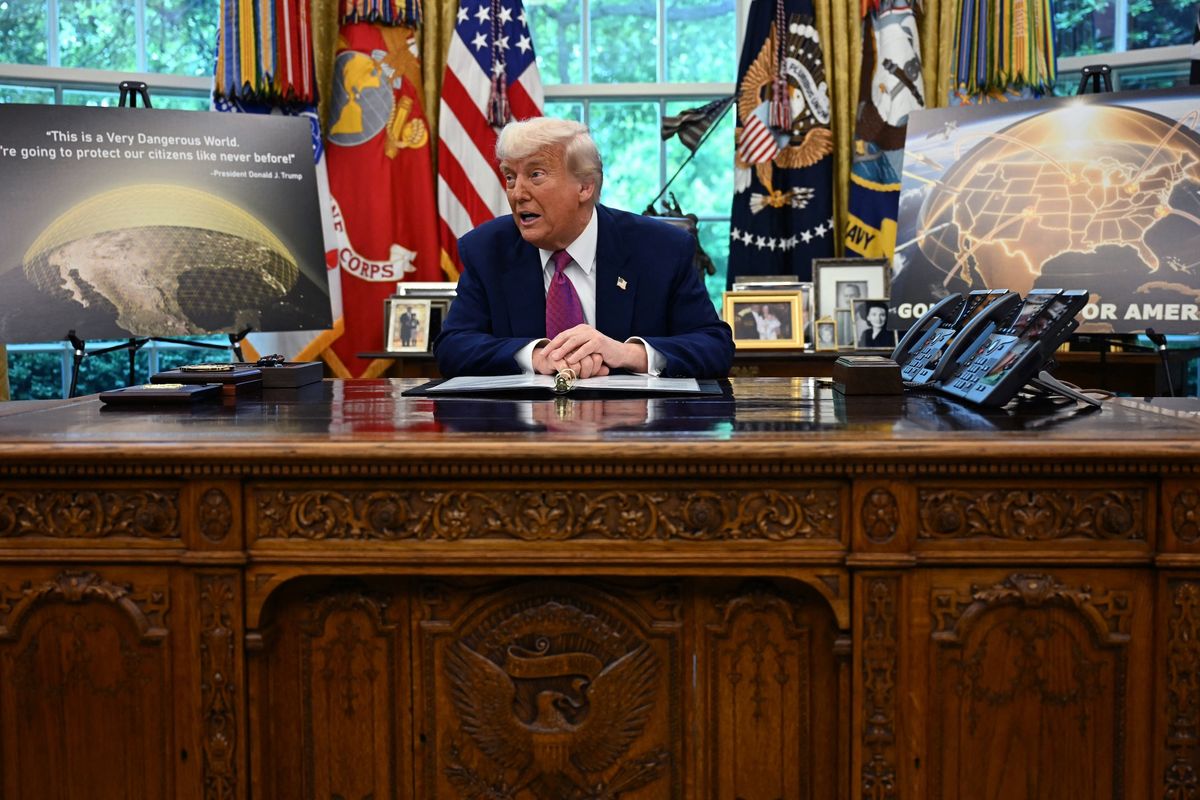
EXPERT OPINION / PERSPECTIVE -- Reports from Moscow suggest that U.S. representatives Jared Kushner and Steve Witkoff are “optimistic” about the prospect of results from their discussion with Kremlin officials this week. But after months of fruitless negotiations, if they are optimistic about achieving a negotiated solution to Russia’s invasion of Ukraine, they have little reason for it, given comments from Russian officials on the Moscow discussions.
If, as has been recently suggested to me, a central priority behind Kusher and Witkoff’s participation in negotiations (instead of relying on more experienced U.S. diplomats with a record of dealing with autocrats like Vladimir Putin) is to secure business deals in Russia following the conclusion of hostilities, then both the negotiations over Ukraine’s future and future business deals in Russia will prove to be fool’s errands, the former first and the latter over time. President Trump should know better and should have selected better representation for U.S. interests.
Kremlin spokesman Dmitriy Peskov described the meeting between Putin and the U.S. representatives as “very useful, constructive, and highly substantive.” At the same time, he said no compromise on a peace plan was reached. He went on to note that Russia wants peace, but only if its objectives are met and reiterated that Moscow insists on achieving the goals of its “special operation.”
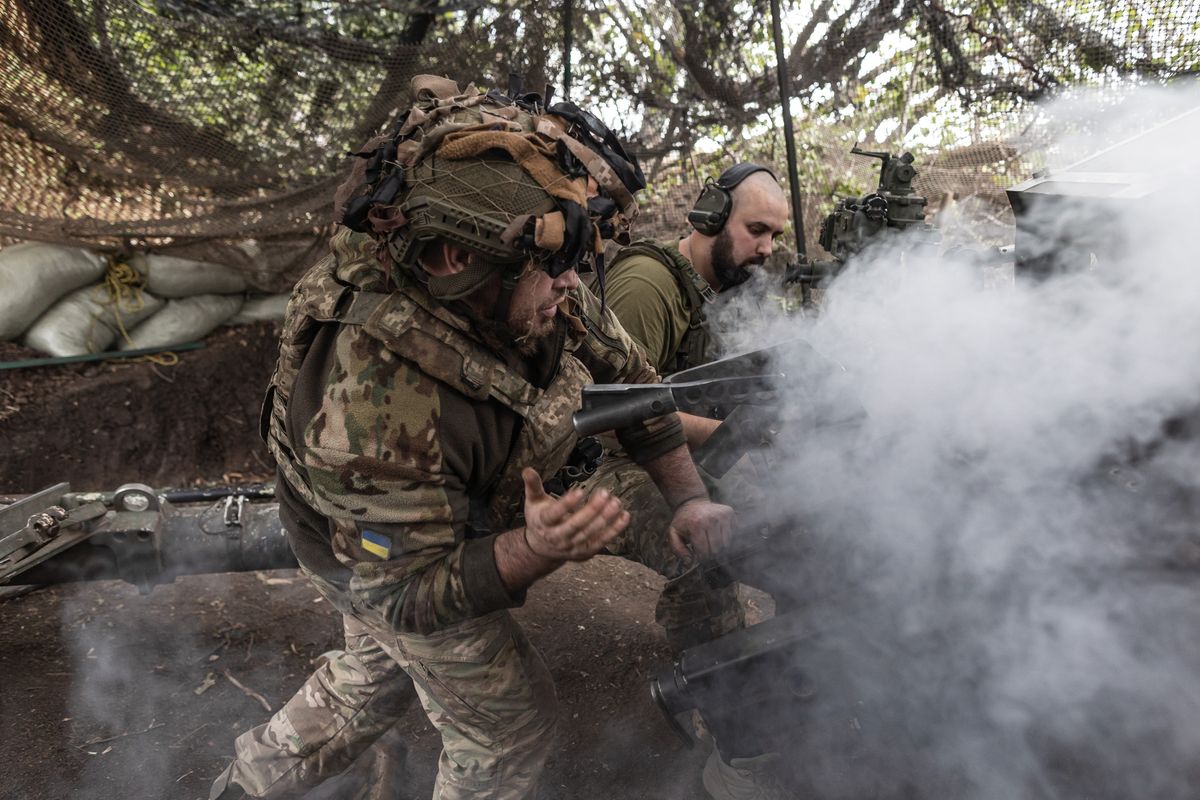
Peskov’s remarks are not surprising as they are completely consistent with the narrative that Putin has pushed before and during his ill-fated invasion of Ukraine. As if to emphasize the Kremlin’s rejection of the Kushner-Witkoff mission, Putin launched one of the largest drone and missile attacks on Ukraine, probably while the U.S. representatives were still in the air flying home.
Russia’s position in this “negotiation” is absolutely clear and has been for some time: The complete elimination of Ukraine as an independent nation; the breakup of the transatlantic alliance which has been the bedrock of European security since 1945; the creation and exacerbation of political division in the United States to weaken it as a strategic opponent and create the conditions for the establishment of a multi-polar world order with Moscow and Beijing leading the autocratic anti-democratic poles and a weakened U.S. and Europe, the other pole. Success in Ukraine is key to Putin and Chinese President Xi Jingping’s strategy.
As part of the red orchestra Putin is directing to set the stage for the achievement of his objectives, he is pushing two critical narratives. The first is that Russia can achieve through military conquest the subjugation of Ukraine - the narrative that Kyiv is losing and will inevitably lose the war. Secondly, he is pushing the argument in Washington and elsewhere that Europe is undermining the Trump Administration’s efforts to achieve a negotiated solution to the conflict (however feckless and unrealistic the 28 point peace plan was/is). Putin is also using a combination of “gray zone” clandestine kinetic and lethal operations across Europe to undermine public confidence in their security at home and undermine resolve to support Ukraine and resist Putin’s ambitions. The Russian leader has executed a number of these efforts in recent years with varying degrees of plausible deniability and certainly without any retribution or consequence paid.
Subscriber+Members are invited to join in an exclusive virtual conversation on Monday, December 8 at 2:30p ET on Russia’s Gray Zone Operations in Europe with former leaders from the Department of Defense, CIA, NATO and the British Foreign Office. Members receive links to register via email.
At Putin’s age and at this stage of his regime, he cannot back off his maximalist objectives in Ukraine, at least not until the pain from the war is felt by Russian elites and the Russian public to the point where his house of cards starts to tumble.
Ukraine’s ability to extract maximum casualties from Russia’s marginal territorial advances in Ukraine plus the cost being paid by Ukraine’s long-range strikes against energy infrastructure and military targets in the Russian Federation start to undermine support in those constituencies for Putin’s continued governance. The plan led by Kushner and Witkoff and endorsed by Trump works against undermining support in Russia for Putin’s aggression.
So, where does that leave Kushner and Witkoff with regard to a rumored undisclosed agenda of using the negotiations as cover for post-conflict business arrangements with Moscow? Dealing with business confidence in a kleptocracy is an oxymoron. If Kushner and Witkoff have never heard of Bill Browder, they should look him up.
Browder has consistently and accurately described the risks of doing business in Putin’s Russia. He again recently pointed out these risks in the specific context of warning Trump and his representatives of the risk they are taking on. Browder’s cogent observations and the wreckage of the hundreds of U.S. and western businesses that poured into Russia after the collapse of the Soviet Union show that you can put money in but getting it out is another matter entirely.
Who’s Reading this? More than 500K of the most influential national security experts in the world. Need full access to what the Experts are reading?
Trump and his representatives seem to think they will be the exception to the Russian kleptocratic paradigm. They will not be.
One can be sure Putin and Dmitriev will be whispering all the promises into the ears of their U.S. interlocutors. Kushner and Witkoff will dutifully carry these messages back to the White House and share their pipe dream fantasies of the untold riches of being on Putin’s good side.
The only thing Putin asks Kushner and Witkoff to relay is that Trump stop aiding and supporting the two remaining obstacles to a negotiated settlement, Zelensky and the European members of NATO. End military, intelligence, and economic aid to Ukraine, Putin certainly will have said, and Ukrainian resistance will collapse speedily, and the war will brought more rapidly to its inevitable conclusion. And the U.S. certainly should be able to put enough pressure on its NATO puppets to end their futile support for Ukraine and there will be peace in our time.
The President should engage some sound and experienced counsel to provide more realistic and experienced guidance on Russian realities. The first bit of that counsel would be to remove any illusion that Putin is a man who can be trusted. Putin’s public and private comments as well as his actions over the twenty plus years he has been running the Russian Federation leave no doubt as to where he stands with regard to the West in general and the U.S. in particular.
He believes democracy and capitalism are outmoded and morally exhausted political and economic philosophies doomed to collapse. As President of the country to which Putin refers as the “glavniy protivnik” or main enemy, President Trump should realize in Putin’s mind, HE is the main enemy.
Any promises of business deals that will follow the conclusion of the Ukraine conflict will inevitably be broken by Putin and his representatives. President Trump should understand Putin wants to steal his money the most. What greater victory for Putin than to have the U.S. hand him victory in Ukraine and in the process set up the biggest theft of money from a U.S. entity in history.
A second bit of counsel President Trump might seek to provide his representatives is that it is very difficult to keep secret deals secret when you are represented by someone as manifestly incompetent and compromised as Steve Witkoff. No additional evidence needs to be provided than the leaked transcript of the call with Kirill Dmitriev in which Witkoff provides advice on how to persuade President Trump to accept the Russian proposals for the end of the conflict in Ukraine.
In addition to the naiveté of having such a conversation in the first place, Witkoff should also be advised that undertaking such actions looks a lot like he is acting as an agent of influence for the Russian Federation.
Lastly, President Trump should be reminded of former British Prime Minister Winston Churchill’s famous remarks to Neville Chamberlain after Munich, “You were given the choice between dishonor and war. You chose dishonor and you will have war.” In the context of the current negotiations Churchill might have added that a fool and his money are soon parted.
All statements of fact, opinion, or analysis expressed are those of the author and do not reflect the official positions or views of the U.S. Government. Nothing in the contents should be construed as asserting or implying U.S. Government authentication of information or endorsement of the author's views.
The Cipher Brief is committed to publishing a range of perspectives on national security issues submitted by deeply experienced national security professionals.
Opinions expressed are those of the author and do not represent the views or opinions of The Cipher Brief.
Have a perspective to share based on your experience in the national security field? Send it to Editor@thecipherbrief.com for publication consideration.
Read more expert-driven national security insights, perspective and analysis in The Cipher Brief
EXPERT OPINION – The recently leaked 28-point peace plan to end the war in Ukraine is nothing short of an appeasement that satisfies the maximalist demands of the aggressor in the conflict, Russian President Vladimir Putin. This is nothing short of the side on the verge of victory (eg, the free world) conceding to the side on the verge of defeat (Putin, the leader of the anti-west coalition). Sadly, it comes at a time when the situation on the battlefield is more or less a draw, both sides are effectively attacking energy infrastructure, and Russia’s economy is moving toward recession.
According to Russian data, third Quarter GDP growth in Russia was 0.6%. The expectation is that Q4 data will show the beginning of a recession. Sberbank has just decided to let 20% of their workforce go. Russia has for the first time, begun to sell gold reserves, presumably to make up for lost revenue from the recently imposed sanctions on Rosneft and Lukoil. Russia’s wartime transition to a command economy is not sustainable with a declining workforce sapped by the loss of young men sacrificed in Ukraine and those who have voted with their feet by leaving Putin’s kleptocracy.
The key points of the 28-point plan amount to nothing less than surrender by Ukraine and make in vain the sacrifices made by their valiant soldiers and citizens in their three plus years of war of full-scale war since Russia’s deadly invasion.
The agreement will be remembered in history with the same ignominy of the Munich Agreement of 1938 and will have the same consequence of setting the stage for a larger war to come.
Perhaps most egregious in the terms of the draft agreement is the re-establishment of the Russian Orthodox Church in Ukraine and the establishment of Russian as the official language. This indignity on top of the kidnapping of hundreds - if not thousands - of Ukrainian children to Russia and the forced conscription into the Russian army of men from Russian occupied territory. Then, of course, there is the massacre of innocent citizens by Russian soldiers in places like Bucha, all of which will go unaccounted for under the draft agreement. No judgement at Nuremberg for Russian war criminals.
What national security news are you missing today? Get full access to your own national security daily brief by upgrading to Subscriber+Member status.
The plan U.S. officials have negotiated is nothing more than cultural genocide against the people of Ukraine. That the U.S. would be part of an agreement that almost certainly would result in the arrest, deportation and incarceration of a generation of brave Ukrainians who have bravely resisted Putin’s aggression is simply unthinkable.
Mr. Trump, every member of your national security team should be required to watch episode nine of the brilliant HBO series Band of Brothers. The episode’s title is “Why We Fight” and the reasons for standing up to autocracy and evil portrayed in that episode are perfectly applicable to the situation today with the free world standing strong against the aggression of a malevolent dictator.
The Trump Administration’s desire to end the violence in Ukraine is commendable, but not at the price of setting the stage for the next war by giving victory to the aggressor. The men who reportedly negotiated the key points of the agreement have no experience dealing with Russia or Russians of the KGB ilk. The promises of “peace” offered by the Russian side are a chimera at best. Putin and the gang of thieves in his government know perfectly well how to manipulate representatives of the character of Steve Witkoff, President Trump’s real estate specialist now in charge of negotiating with Russia over Ukraine. Perhaps those negotiators are working with the idea of “Commander’s intent” that the President believes an agreement can be reached and counted upon with a counter-party like Putin. This is a serious misjudgment with serious consequences.
Those who have studied Putin for decades, understand clearly that he wants nothing but the destruction of the United States, our system of government and the set of ideals for which we stand. This is core to his beliefs. Putin and his security services will do everything they can to undermine the United States. One should not be surprised if the Russian services do not use every opportunity in the context of the Epstein revelations to attack every angle of the political spectrum in the U.S. that they can, including President Trump.
President Trump is now facing the most significant foreign and national security moment of his presidency. It appears the representatives he has chosen to negotiate with the Russian side have left him in a position to be remembered forever in history as the Chamberlain of the 21st century. Mr. Trump would do well to recognize that history does not remember Neville Chamberlain for any achievements in his political career in economic or domestic policy in Great Britain. He is remembered solely for Munich and "peace in our time". Mr. Trump is setting himself up to be remembered by history similarly. Sadly, it could also be the legacy of the country that was once the pillar of strength of the free world.
The Cipher Brief is committed to publishing a range of perspectives on national security issues submitted by deeply experienced national security professionals.
Opinions expressed are those of the author and do not represent the views or opinions of The Cipher Brief.
Have a perspective to share based on your experience in the national security field? Send it to Editor@thecipherbrief.com for publication consideration.
Read more expert-driven national security insights, perspective and analysis inThe Cipher Brief
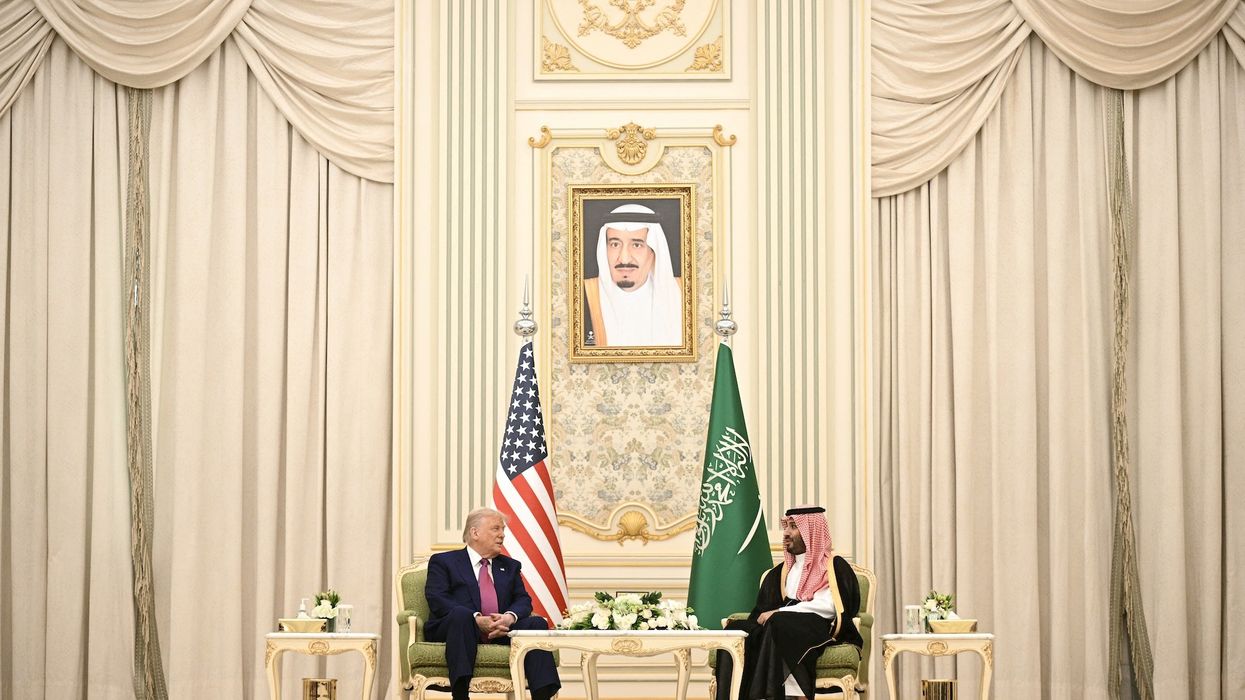
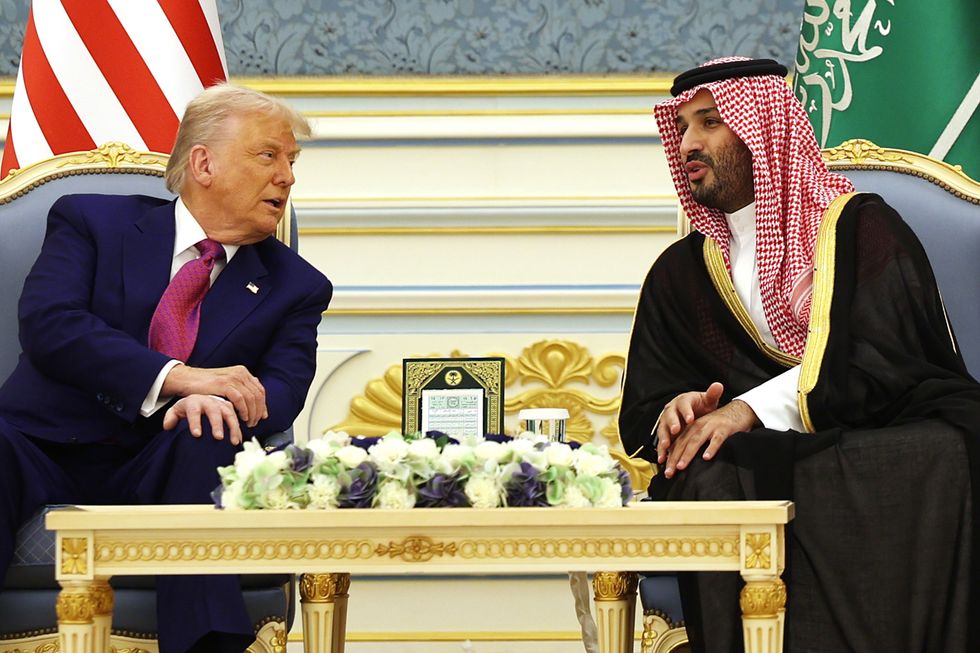
EXPERT INTERVIEW — President Trump is welcoming Saudi Crown Prince Mohammed bin Salman to the White House today with an announcement that he plans to approve the sale of F-35 fighter jets to the Kingdom, signaling a policy shift by the U.S. Administration.
The visit to Washington marks one of the most consequential moments in decades for the U.S.–Saudi relationship. Both governments see the meeting as a chance to cement the expansion of the U.S.-Saudi partnership from one focused on energy and security to include advanced technology, AI, critical minerals and defense cooperation.
The trip follows President Donald Trump’s high-profile visit to Saudi Arabia in May, when both countries announced a multibillion-dollar deal that could potentially give Riyadh access to advanced U.S. AI technology. While sources tell The Cipher Brief that many of the details of those deals remain in various stages of negotiation, the Crown Prince’s Washington visit aims to build off of that momentum.
More widely, the visit comes at the end of a year of rapid geopolitical and technological change for the Middle East. Through these shifts, Saudi Arabia and other Gulf leaders like the United Arab Emirates are positioning themselves as centers for AI infrastructure, diversified cheap energy, and global supply chains.
To help unpack the stakes and expectations behind the Crown Prince’s Washington visit, The Cipher Brief spoke with Norm Roule, who spent more than 34 years in the Intelligence Community and has been following regional developments for 43 years - including his time as a business consultant. Roule is in frequent contact with Gulf leaders on energy, security, finance and technology issues and travels frequently to the region. Cipher Brief CEO & Publisher Suzanne Kelly began by asking Roule to summarize the expectations going into this visit. Our conversation has been lightly edited for clarity and length.
THE INTERVIEW
Roule: The visit of Crown Prince Mohammed bin Salman to Washington will likely represent a transformational moment in Saudi-American relations that will stand out among the most important events in the 80-year relationship between the two countries. Each side will likely seek to use this visit to change the traditional relationship from one of oil and security to one that is more of a blend of advanced technology, mining, and energy, which includes nuclear, and defense.
Each side now sees the other as an indispensable partner and views this visit as a way of establishing an architecture that will ensure that periodic political difficulties don't destabilize a critical relationship that needs to last decades. The Saudis seek this more predictable relationship and assets that will allow them to accelerate their evolution toward becoming a global power center.
Washington seeks to revitalize and cement ties with a rising middle power that will certainly have considerably more influence in the Middle East and the Global South and will become an important link in the global energy and supply chain. Regional issues will be discussed during the visit, but I don't think it's likely we're going to see significant shifts outside of the ongoing trends.
Kelly: This visit, of course, does follow the visit by President Trump to Saudi Arabia in May of this year where some signficant deals were announced with regard to technology sharing and investment opportunities.
Roule: That is correct. In essence, what you're looking at is the other side of the coin from those visits. President Trump and a team of unprecedented stature of American cabinet members and highly consequential American business leaders traveled to the Kingdom and concluded a vast array of business deals over the months since that time. American diplomats and business leaders have met to finalize and further expand upon those deals. And now we're looking at a meeting that will, in essence, conclude those agreements or take them to the next stage of developing memorandums of understanding. These are very complicated agreements that in and of themselves will take months, if not years, to play out. But they are indeed transformational for the economies of each of the two partners.
This is exclusive Subscriber+Member content
Saudi Arabia and its neighbor, the United Arab Emirates are drawing on an unprecedented and historic combination of very focused policy decisions, massive domestic and global investment flows that they are developing with themselves and partners, and domestic social engineering that's been something that is unique in the world based upon AI and multiculturalism to redefine themselves from hitherto reliable energy suppliers into world-class members of the global supply chain - architects of the next generation of AI manufacturing and new nodes of political influence in a non-polar Middle East.
Each of these two countries is positioning themselves as models of rule of law, stable governance, and an oasis of multicultural life, open for business, open for boldness. And these two countries have a strategy that relies upon a tight weave of Liquified Natural Gas (LNG), chemicals, energy infrastructure, data centers, and finance. But each country also requires a deep, unprecedented and sustained access to the most advanced US AI technology.
So for this to happen, we're watching the Saudi Crown Prince come to Washington to build this new relationship with the United States. They know that this relationship brings tremendous benefits to the United States as well. It not only helps us build out our infrastructure, our employment at a time when we're having our own challenges, but in a way, it also sends a powerful message. They believe in us. They believe in the American future. They know that we will win, and often in ways that we sometimes don't express in ourselves.
Lastly, they're doing all of this in a way that means that they're not having to cut their commercial ties with China or offend Russia. In return for what they will give, they will receive technology that makes them global AI powers. And with the cheap energy that they are able to attach to that AI, they will be incredibly successful.
Kelly: Clearly, we're going through a dramatic shift in the Middle East right now. How important is this relationship to the United States?
Roule: It's critical. The Middle East remains vital to America's interest. The Middle East, as they say, it's in the middle. You look at any map and the Middle East is in the center of global trade, global transportation, multiple shipping routes move through the region, 80% of the data between Europe and Asia transit the region. You have global energy centered in the region. You have several of the world's major religions in the region. You have crossroads of multiple U.S. national interests.
At the same time, you're now looking at the development of an artificial intelligence infrastructure that is starting to blossom. And our ability to partner with that and to ensure that that technology does not threaten America's interests, and indeed sustains America's interest as that region partners with the Global South. It just protects our interest and expands our influence at a time when China would very much like to replace us.
Kelly: You talked about some of the ambitions of the Kingdom and the UAE, both in investment and AI. We've talked a lot in the past about their efforts and trying to lead when it comes to green energy. What do you think is driving their strategy?
Roule: Their strategy is driven by changes in the world that are just inevitable. If we were to go back one year and I were to tell you that knowledge is power, you would agree completely with me. But today, the adage is now, power is knowledge. The artificial intelligence system is inherently an energy system in and of itself. And artificial intelligence requires access to inexpensive, reliable 24-hour energy. And in the Middle East, Saudi Arabia and the Emirates and the other Gulf Cooperation Council states have access to tremendously inexpensive energy, and the prospect of additional inexpensive energy through their expansion of solar power and nuclear energy, which they're seeking. Those with access to such tremendous cheap energy and artificial intelligence have access to the benefits of artificial intelligence, which will bring them enormous economic advantage in the future.
Now, look at the other end of that stick. In Sub-Saharan Africa, at least 600 million Africans lack access to a reliable source of electricity. Imagine the social and economic disadvantage of those various societies. But let's go forward, just thinking about where the world is moving. By 2040, data center energy needs will rise fourfold. 1.5 billion people are estimated to move to cities. That means 2 billion new air conditioners will come online. And when you're in Saudi Arabia, a large portion of their oil needs, their oil production, is actually used for air conditioners in the summer. And you see their oil production move up in the summer for air conditioners. Global fleets of aircraft are expected to double from 25,000 to 50,000 aircraft by 2040. Jet fuel demand will be up by 30%. Six million kilometers of electrical transmission lines are needed by 2040. Imagine what that means in terms of copper.
So if you're looking at something like this, we're now looking at $4 trillion of investment needed annually for this energy architecture. We can't do this without partners with capital - like Saudi Arabia or the United Arab Emirates - and the many partners they bring together into their ecosystem.
So now let's look at energy. In recent years, you've had this great contest between the people who correctly talk about the need for us to battle climate change, and those who have talked about the need for more energy. Both issues must be dealt with. Well, now we realize oil demand is not going to drop. In fact, oil demand is expected to remain above 100 million barrels a day through 2040. This demand is going to be needed for materials and petrochemicals. LNG demand is expected to grow by 50%. Renewables will double. In essence, the world needs more energy, not replacement for these other energy sources.
Saudi Arabia and the Emirates and Qatar and Kuwait see themselves as becoming islands of cheap energy working with the United States. They see themselves at this moment in history - where, if they can capture a certain amount of extraordinary technology and a strategic relationship with the United States, and this ecosystem of multicultural partnership with the world - they can become a very different society. It's a fascinating dynamic. It's a very exciting time in history.
Kelly: Do you think falling oil prices are going to impact this strategy?
Roule: Well, we're watching that play out. So in essence, what we've seen is very prudent decision making. They have slowed some of the execution of major projects, but they have not stopped the projects themselves. They have extended timelines. They have delayed the rollout of certain large programs. If it has to do with their visions of Vision 2030 or Vision 2040, they have different visions in the Gulf, the projects remain on track. And it's because those projects are critical to where they need to go. If you look, for example, at the city of Neom that is often talked about, well, the port of Oxagon, which is critical to the infrastructure of trade in the Northwest Arabian Peninsula, that’s still functioning, it’s still out there. They're just going to slow the build out of that city because it's reasonable to say to slow the build out to the city. It's just not reasonable to think that you can slow the build out of trade and infrastructure in the Arabian Peninsula. That's going to happen on a different timeline.
Now, we've also seen reports that the Saudis have withdrawn some of their capital from not less productive, but maybe investments in the United States that aren't as relevant to the core vision of equities as in the past. That I think you may see a little more of, but I don't see a massive withdrawal of those investments unless we saw oil prices drop into say the low $50s or $40s. So what we're watching is prudent focus. We're watching attention to timelines. We're watching attention to anti-corruption. I'm impressed. I've not seen anybody waste money or do anything that is injudicious. And I've not seen anybody make allegations that such things have been noted by others.
Kelly: What will make this a successful visit to Washington, both on behalf of the Saudis and on behalf of the U.S.?
Roule: Architecture. And what you're looking for is something that lasts beyond one month, one deal. You're looking for something that binds us together over time. I think what you're going to hear will be announcements of MOUs. You will hear announcements of deals. And as important as it is to focus on the numbers associated with the deals, and there will certainly be focus on that and questions regarding that, it's really more important to focus on the industries, the sectors associated with those deals, and then the depth that each of those MOUs brings to the various societies.
For example, let's say that we see an aviation deal that might bring employment to the United States but will set up a manufacturing node in Saudi Arabia. If something like that were to happen, that would make Saudi Arabia part of a global supply chain. So 20 years from now, we would have a more reliable source of parts or an alternative source of parts. If mining is developed within the kingdom, well, it takes years to develop a mine, but we will have an alternative source of minerals, and Saudi Arabia is a rich source of multiple minerals that are important to the United States. Or if the Saudis invest in minerals in the U.S., it may take years for those to play out. So the architecture associated with those deals will mean employment but it's the depth and the timelines with those deals that will determine the depth of that relationship.
In terms of defense deals, I don't want to downplay that, but America has always stood with Saudi Arabia. People have often asked, 'If there's a single attack did we respond in as well or to the extent that we should have?' That's open to question. But there is no doubt in my mind, nor in the minds of regional leaders, that if there were a serious attack on Saudi Arabia by Iran or another country, we are absolutely going to be there. And do we need a defense deal to say that? I'll leave that to others, but not in my mind. But in any case, we will see some sort of defense architecture develop.
Should the Saudis have nuclear energy? Why not? Every other country does. They're looking for additional technology and there's no reason we can't provide that to them to assist them. But again, it's that architecture and the relationship over years that you seek, vice one delivery, one deal, and the announcements that go with it.
Kelly: Where do you see the region going in 2026? What will be the big headlines and the big drivers next year in the Middle East?
Roule: There's a lot of good news in the Middle East. The U.S. remains the dominant great power. Americans are not and likely will not be the target of a major military confrontation in the region. But the region itself continues to lack a strong cohesive narrative that pulls it together.
The biggest point in the region is that it remains a non-polar region. There's no reason to believe that this administration will cease its vigorous focus on the region. And we must applaud this administration for, in its first 11 months, having multiple emissaries and making visits and sending many cabinet ministers to the region. If you look at the recent conferences that have taken place in Manama, Qatar, Abu Dhabi and Riyadh, we've had cabinet level representation at all of those events to include during a government shutdown, which is no small thing, with representatives from multiple government departments. America is back and Russia and China are not.
Gaza is going to sputter along, and the U.S. commitment remains and CENTCOM is performing marvelously as a key force bringing things together. I think we're going to see that continuing. Neither side, Israel or the Palestinians, have a reason to return to war, but violence will continue. The largest or most significant political shifts in the region likely would come from a change in the Israeli government.
Iran is fragile. Iran nuclear talks are unlikely to begin until the administration sees evidence that the talks will not be a waste of time. Right now, the Iranians seek talks, but that doesn't mean they want to do anything other than have talks, because if they have talks, the rial will be strengthened and the Iranians don't have to bring anything up. The Quds Force will remain active. They will continue to deliver weapons to the Yemenis. But it's unlikely they're interested in looking for a conflict. We can't rule out a sudden collapse of Iran in case of an environmental disaster such as an earthquake, but the regime appears fragile at present.
Syria continues to make progress and I think we're going to see the progress continue in its current trend. Arab infrastructure investment continues to progress. I would watch for telecommunications and port investment work. And the reason that's important is that you're watching the Biden administration IMEC plan in essence or IMEC cooperation be realized as Gulf states put their lines up through Europe and through Syria.
Lebanon will likely remain a greater challenge. I think we're watching a lot of Saudi quiet diplomacy with Yemen and that will continue. GCC infrastructure will continue to develop. I would be surprised if we didn't see more Saudi work with Bahrain and Saudi work between the GCC and the West.
Oil will remain stable likely and soft in coming months. I think you're going to see a lot more natural gas come online. OPEC will continue to do everything it can to prevent oil from falling into the 50s while maintaining a relatively soft position so they can recapture market share from India and other places lost to Russia.
Read more expert-driven national security insights, perspective and analysis inThe Cipher Brief because National Security is Everyone’s Business.
EXPERT INTERVIEW — President Trump is welcoming Saudi Crown Prince Mohammed bin Salman to the White House today with an announcement that he plans to approve the sale of F-35 fighter jets to the Kingdom, signaling a policy shift by the U.S. Administration.
The visit to Washington marks one of the most consequential moments in decades for the U.S.–Saudi relationship. Both governments see the meeting as a chance to cement the expansion of the U.S.-Saudi partnership from one focused on energy and security to include advanced technology, AI, critical minerals and defense cooperation.
The trip follows President Donald Trump’s high-profile visit to Saudi Arabia in May, when both countries announced a multibillion-dollar deal that could potentially give Riyadh access to advanced U.S. AI technology. While sources tell The Cipher Brief that many of the details of those deals remain in various stages of negotiation, the Crown Prince’s Washington visit aims to build off of that momentum.
More widely, the visit comes at the end of a year of rapid geopolitical and technological change for the Middle East. Through these shifts, Saudi Arabia and other Gulf leaders like the United Arab Emirates are positioning themselves as centers for AI infrastructure, diversified cheap energy, and global supply chains.
To help unpack the stakes and expectations behind the Crown Prince’s Washington visit, The Cipher Brief spoke with Norm Roule, who spent more than 34 years in the Intelligence Community and has been following regional developments for 43 years - including his time as a business consultant. Roule is in frequent contact with Gulf leaders on energy, security, finance and technology issues and travels frequently to the region. Cipher Brief CEO & Publisher Suzanne Kelly began by asking Roule to summarize the expectations going into this visit. Our conversation has been lightly edited for clarity and length.
THE INTERVIEW
Roule: The visit of Crown Prince Mohammed bin Salman to Washington will likely represent a transformational moment in Saudi-American relations that will stand out among the most important events in the 80-year relationship between the two countries. Each side will likely seek to use this visit to change the traditional relationship from one of oil and security to one that is more of a blend of advanced technology, mining, and energy, which includes nuclear, and defense.
Each side now sees the other as an indispensable partner and views this visit as a way of establishing an architecture that will ensure that periodic political difficulties don't destabilize a critical relationship that needs to last decades. The Saudis seek this more predictable relationship and assets that will allow them to accelerate their evolution toward becoming a global power center.
Washington seeks to revitalize and cement ties with a rising middle power that will certainly have considerably more influence in the Middle East and the Global South and will become an important link in the global energy and supply chain. Regional issues will be discussed during the visit, but I don't think it's likely we're going to see significant shifts outside of the ongoing trends.
Kelly: This visit, of course, does follow the visit by President Trump to Saudi Arabia in May of this year where some signficant deals were announced with regard to technology sharing and investment opportunities.
Roule: That is correct. In essence, what you're looking at is the other side of the coin from those visits. President Trump and a team of unprecedented stature of American cabinet members and highly consequential American business leaders traveled to the Kingdom and concluded a vast array of business deals over the months since that time. American diplomats and business leaders have met to finalize and further expand upon those deals. And now we're looking at a meeting that will, in essence, conclude those agreements or take them to the next stage of developing memorandums of understanding. These are very complicated agreements that in and of themselves will take months, if not years, to play out. But they are indeed transformational for the economies of each of the two partners.
This is exclusive Subscriber+Member content
Saudi Arabia and its neighbor, the United Arab Emirates are drawing on an unprecedented and historic combination of very focused policy decisions, massive domestic and global investment flows that they are developing with themselves and partners, and domestic social engineering that's been something that is unique in the world based upon AI and multiculturalism to redefine themselves from hitherto reliable energy suppliers into world-class members of the global supply chain - architects of the next generation of AI manufacturing and new nodes of political influence in a non-polar Middle East.
Each of these two countries is positioning themselves as models of rule of law, stable governance, and an oasis of multicultural life, open for business, open for boldness. And these two countries have a strategy that relies upon a tight weave of Liquified Natural Gas (LNG), chemicals, energy infrastructure, data centers, and finance. But each country also requires a deep, unprecedented and sustained access to the most advanced US AI technology.
So for this to happen, we're watching the Saudi Crown Prince come to Washington to build this new relationship with the United States. They know that this relationship brings tremendous benefits to the United States as well. It not only helps us build out our infrastructure, our employment at a time when we're having our own challenges, but in a way, it also sends a powerful message. They believe in us. They believe in the American future. They know that we will win, and often in ways that we sometimes don't express in ourselves.
Lastly, they're doing all of this in a way that means that they're not having to cut their commercial ties with China or offend Russia. In return for what they will give, they will receive technology that makes them global AI powers. And with the cheap energy that they are able to attach to that AI, they will be incredibly successful.
Kelly: Clearly, we're going through a dramatic shift in the Middle East right now. How important is this relationship to the United States?
Roule: It's critical. The Middle East remains vital to America's interest. The Middle East, as they say, it's in the middle. You look at any map and the Middle East is in the center of global trade, global transportation, multiple shipping routes move through the region, 80% of the data between Europe and Asia transit the region. You have global energy centered in the region. You have several of the world's major religions in the region. You have crossroads of multiple U.S. national interests.
At the same time, you're now looking at the development of an artificial intelligence infrastructure that is starting to blossom. And our ability to partner with that and to ensure that that technology does not threaten America's interests, and indeed sustains America's interest as that region partners with the Global South. It just protects our interest and expands our influence at a time when China would very much like to replace us.
Kelly: You talked about some of the ambitions of the Kingdom and the UAE, both in investment and AI. We've talked a lot in the past about their efforts and trying to lead when it comes to green energy. What do you think is driving their strategy?
Roule: Their strategy is driven by changes in the world that are just inevitable. If we were to go back one year and I were to tell you that knowledge is power, you would agree completely with me. But today, the adage is now, power is knowledge. The artificial intelligence system is inherently an energy system in and of itself. And artificial intelligence requires access to inexpensive, reliable 24-hour energy. And in the Middle East, Saudi Arabia and the Emirates and the other Gulf Cooperation Council states have access to tremendously inexpensive energy, and the prospect of additional inexpensive energy through their expansion of solar power and nuclear energy, which they're seeking. Those with access to such tremendous cheap energy and artificial intelligence have access to the benefits of artificial intelligence, which will bring them enormous economic advantage in the future.
Now, look at the other end of that stick. In Sub-Saharan Africa, at least 600 million Africans lack access to a reliable source of electricity. Imagine the social and economic disadvantage of those various societies. But let's go forward, just thinking about where the world is moving. By 2040, data center energy needs will rise fourfold. 1.5 billion people are estimated to move to cities. That means 2 billion new air conditioners will come online. And when you're in Saudi Arabia, a large portion of their oil needs, their oil production, is actually used for air conditioners in the summer. And you see their oil production move up in the summer for air conditioners. Global fleets of aircraft are expected to double from 25,000 to 50,000 aircraft by 2040. Jet fuel demand will be up by 30%. Six million kilometers of electrical transmission lines are needed by 2040. Imagine what that means in terms of copper.
So if you're looking at something like this, we're now looking at $4 trillion of investment needed annually for this energy architecture. We can't do this without partners with capital - like Saudi Arabia or the United Arab Emirates - and the many partners they bring together into their ecosystem.
So now let's look at energy. In recent years, you've had this great contest between the people who correctly talk about the need for us to battle climate change, and those who have talked about the need for more energy. Both issues must be dealt with. Well, now we realize oil demand is not going to drop. In fact, oil demand is expected to remain above 100 million barrels a day through 2040. This demand is going to be needed for materials and petrochemicals. LNG demand is expected to grow by 50%. Renewables will double. In essence, the world needs more energy, not replacement for these other energy sources.
Saudi Arabia and the Emirates and Qatar and Kuwait see themselves as becoming islands of cheap energy working with the United States. They see themselves at this moment in history - where, if they can capture a certain amount of extraordinary technology and a strategic relationship with the United States, and this ecosystem of multicultural partnership with the world - they can become a very different society. It's a fascinating dynamic. It's a very exciting time in history.
Kelly: Do you think falling oil prices are going to impact this strategy?
Roule: Well, we're watching that play out. In essence, what we've seen is very prudent decision making. They have slowed some of the execution of major projects, but they have not stopped the projects themselves. They have extended timelines. They have delayed the rollout of certain large programs. If it has to do with their visions of Vision 2030 or Vision 2040, they have different visions in the Gulf, the projects remain on track. And it's because those projects are critical to where they need to go. If you look, for example, at the city of Neom that is often talked about, well, the port of Oxagon, which is critical to the infrastructure of trade in the Northwest Arabian Peninsula, that’s still functioning, it’s still out there. They're just going to slow the build out of that city because it's reasonable. It's just not reasonable to think that you can slow the build out of trade and infrastructure in the Arabian Peninsula. That's going to happen on a different timeline.
We've also seen reports that the Saudis have withdrawn some of their capital from not less productive, but maybe investments in the United States that aren't as relevant to the core vision of equities as in the past. That I think you may see a little more of, but I don't see a massive withdrawal of those investments unless we saw oil prices drop into say the low $50s or $40s. So what we're watching is prudent focus. We're watching attention to timelines. We're watching attention to anti-corruption. I'm impressed. I've not seen anybody waste money or do anything that is injudicious. And I've not seen anybody make allegations that such things have been noted by others.
Kelly: Norm, what do you think would make this a successful visit to Washington, both on behalf of the Saudis and on behalf of the U.S. this week?
Roule: Architecture. And what you're looking for is something that lasts beyond one month, one deal. You're looking for something that binds us together over time. I think what you're going to hear will be announcements of MOUs. You will hear announcements of deals. And as important as it is to focus on the numbers associated with the deals, and there will certainly be focus on that and questions regarding that, it's really more important to focus on the industries, the sectors associated with those deals, and then the depth that each of those MOUs brings to the various societies.
For example, let's say that we see an aviation deal that might bring employment to the United States but set up a manufacturing node in Saudi Arabia. Well, what that might do, and if something like that were to happen, that would make Saudi Arabia part of a global supply chain. So 20 years from now, we now have a more reliable source of parts or an alternative source of parts. If mining is developed within the kingdom, well, it takes years to develop a mine, but we will have an alternative source of minerals, and Saudi Arabia is a rich source of multiple minerals important to the United States. Or if the Saudis invest in minerals in the U.S., it may take years for those to play out. So the architecture associated with those deals will mean employment but it's the depth and the timelines with those deals that will tell me do we have a relationship? Do we have something that is going to last a long time
In terms of the defense deals, I don't want to downplay that, but America has always stood with Saudi Arabia. People have often said, if there's a single attack did we respond in as well or to the extent that we should have, that's open to question. But there is no doubt in my mind, nor in the doubt of regional leaders, that if there were a serious attack on Saudi Arabia by Iran or another country, we are absolutely going to be there. And do we need a defense deal to say that? I'll leave that to others, but not in my mind. But in any case, we will see some sort of defense architecture develop.
Should the Saudis have nuclear energy? Why not? Every other country does. They're looking for additional technology and there's no reason we can't provide that to them to assist them. But again, it's that architecture and the relationship over years that you seek, vice one delivery, one deal, and the announcements that go with it.
Kelly: Norm, 2025 has been a really incredible year in the Middle East. We've seen so many things happen that a few of us probably would have predicted, other than you, perhaps, at the beginning of this year. But I wonder if you have your crystal ball handy. If you can tell us where you see the region going in 2026, what will be the big headlines and the big drivers next year in the Middle East?
Roule: There's a lot of good news in the Middle East. The U.S. remains the dominant great power. Americans are not and likely will not be the target of a major military confrontation in the region. But the region itself continues to lack a strong cohesive narrative that pulls it together.
The biggest point in the region is it remains a non-polar region. But if I'm asked to go almost country by country and just throw out a handful, I would say first, there's no reason to believe this administration will cease its vigorous focus on the region. And we must applaud this administration for, in its first 11 months, having multiple emissaries and making visits and sending many cabinet ministers to the region. If you look at the recent conferences that have taken place in Manama, Qatar, Abu Dhabi and Riyadh, we've had cabinet level representation at all of those events to include during a government shutdown, which is no small thing, and representatives from multiple government departments. America is back and Russia and China are not.
Gaza is going to sputter along, and the U.S. commitment remains and CENTCOM is performing marvelously as a key force bringing things together. I think we're going to see that continuing. Neither side, Israel or the Palestinians, have a reason to return to war, but violence will continue. The largest or most significant political shifts in the region likely would come from a change in the Israeli government.
Iran is fragile. Iran nuclear talks are unlikely to begin until the administration sees evidence that the talks will not be a waste of time. Right now the Iranians seek talks, but that doesn't mean they want to do anything other than have talks, because if they have talks, the rial will be strengthened and the Iranians don't have to bring anything up. The Quds Force will remain active. They will continue to deliver weapons to the Yemenis. But it's unlikely they're interested in looking for a conflict. We can't rule out a sudden collapse of Iran in case of an environmental disaster such as an earthquake, but the regime appears fragile at present.
Syria continues to make progress and I think we're going to see the progress continue in its current trend. Arab infrastructure investment continues to progress. I would watch for telecommunications and port investment work. And the reason that's important is you're watching the Biden administration IMEC plan in essence or IMEC cooperation be realized as Gulf states, in essence, put their lines up through Europe, through Syria.
Lebanon will likely remain a greater challenge. I think we're watching a lot of Saudi quiet diplomacy with Yemen and that will continue. GCC infrastructure will continue to develop. I would be surprised if we didn't see more Saudi work with Bahrain and Saudi work between the GCC and the West.
Oil will remain stable likely and soft in coming months. I think you're going to see a lot more natural gas come online. OPEC will continue to do everything it can to prevent oil from falling into the 50s while maintaining a relatively soft position so they can recapture market share from India and other places lost to Russia.
Read more expert-driven national security insights, perspective and analysis inThe Cipher Brief because National Security is Everyone’s Business.
EXPERT INTERVIEW – The United Nations has reimposed sweeping economic and military sanctions on Iran, ten years after lifting them under the 2015 nuclear deal.
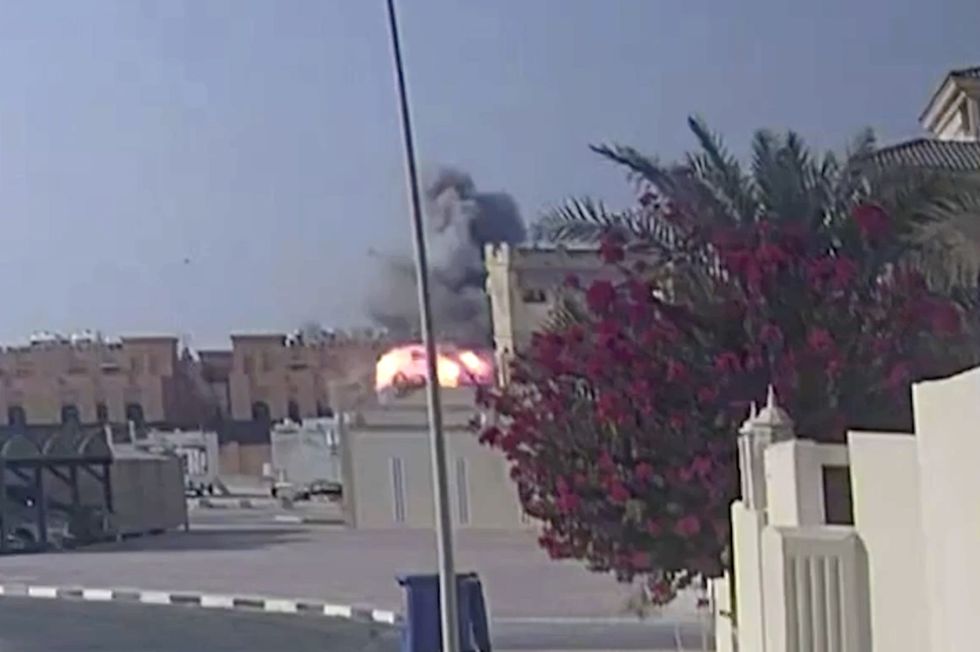
Britain, France, and Germany triggered the “snapback” mechanism, accusing Tehran of nuclear escalation and blocking inspections. Iran had already halted oversight after U.S. and Israeli strikes in June damaged several nuclear sites and military facilities.
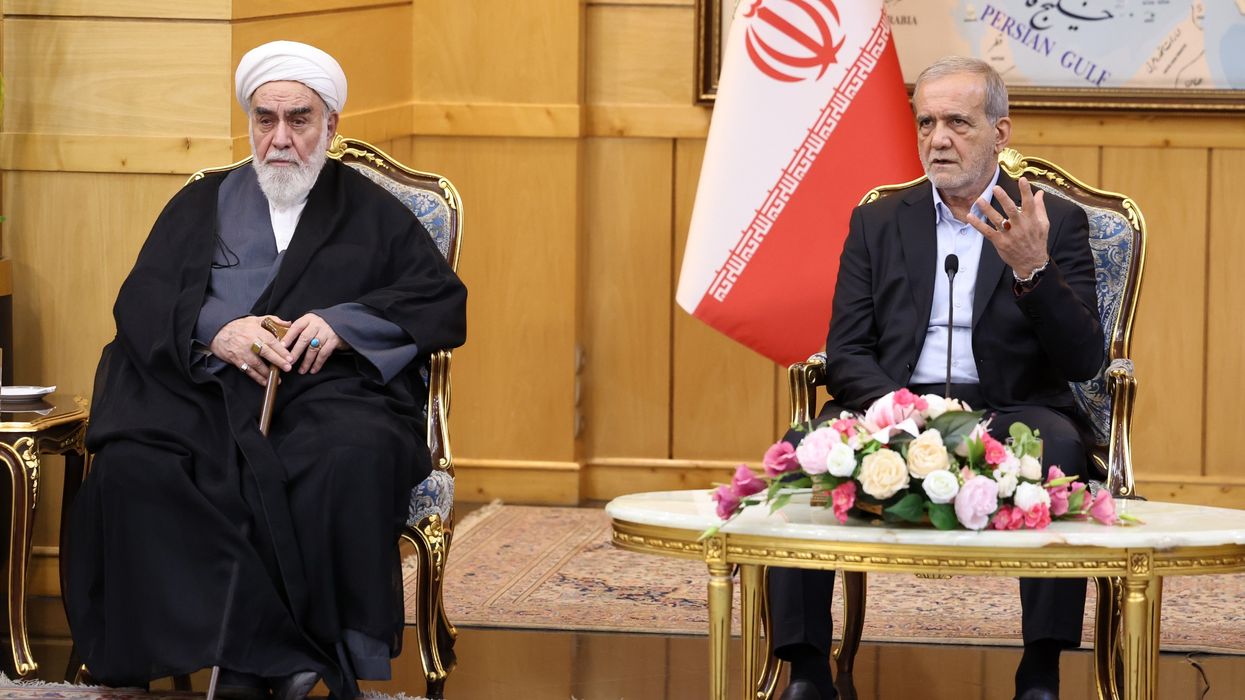
President Masoud Pezeshkian insists Iran has no intention of building nuclear weapons, calling the sanctions “unfair and illegal.” But the move marks another blow to the Joint Comprehensive Plan of Action (JCPOA), the deal meant to cap Iran’s enrichment and research while allowing civilian nuclear energy.
Iran accelerated banned nuclear activity after Trump pulled the U.S. out of the deal in 2018, repeatedly dismissing the accord as flawed.
The latest sanctions cut Iran off from global banks, reimpose arms and missile restrictions, and revive asset freezes and travel bans on key officials. Analysts say the measures hit Iran at a fragile moment with its economy shrinking, inflation surging, and the rial collapsing to record lows. Oil sales, foreign investment, shipping, and manufacturing are all expected to take a hit.
The Cipher Brief spoke with longtime Middle East and Energy Analyst Norm Roule, who formerly served as National Intelligence Manager for Iran at ODNI. Roule continues to travel regularly to the region for meetings with high-level officials throughout the Middle East.
Norman Roule is a geopolitical and energy consultant who served for 34 years in the Central Intelligence Agency, managing numerous programs relating to Iran and the Middle East. He also served as the National Intelligence Manager for Iran (NIM-I)\n at ODNI, where he was responsible for all aspects of national intelligence policy related to Iran.
The Cipher Brief: Why are snapback sanctions different from other sanctions already imposed on Iran?
Roule: First, we should touch on what this means for the regime. The sanctions hit Iran at one of its most fragile moments since the late 1980s. The government remains unpopular to an unprecedented degree. Virtually every economic indicator in Iran is poor. Its national security architecture of militias, foreign proxies, Russia, China, and the Revolutionary Guard failed during the recent conflict with Israel and the U.S. The main driver of the regime is to maintain stability as it completes transitions to the post-revolutionary generation of leadership. Despite the absence of large-scale protests, destabilizing national unrest could occur at any time.
Over the past few months, Iran’s diplomats have used the prospect of a nuclear deal and the possibility of sanctions relief as a source of hope for the Iranian people. The return of UN sanctions strips Tehran of one of its few remaining political assets.
The primary difference between the latest sanctions and U.S. sanctions is that these measures are binding on all 193 member states of the United Nations. Iran will, of course, do everything it can to evade sanctions. Russia, China, North Korea, Venezuela, and other Iranian partners who already have a history of violating Iran sanctions are unlikely to enforce these sanctions with enthusiasm.
However, unlike U.S. sanctions, which they have argued could be ignored because they were imposed only by Washington, these sanctions are imposed by the United Nations. This will make it harder for these countries to involve other countries in their own violations. Likewise, it makes it much easier for the U.S. government to seek compliance worldwide due to the legal and reputational risks associated with countries and businesses that we might approach on this issue.
The Cipher Brief: Can you discuss the specific sanctions and your assessment of their likelihood of success?
Roule: First, and most damaging for Iran, these sanctions isolate Iranian banks from a large part of the global financial system and require that UN members prevent the use of their banking systems on sanctioned trade. Hence, Iran has lost the ability to manage its oil revenues through international banks. Instead, it will need to engage in oil bartering or use intermediaries, which is a slower and more expensive process. It will likely reduce its oil sales at a time when Saudi Arabia is trying to reclaim some of the market share lost to Iran in recent years.
Banks understand that Iran will seek to defy sanctions. They also know that there are expensive legal consequences if they fail to undertake due diligence operations to examine transactions and shipments, thereby demonstrating that they have fulfilled their sanctions obligations.
Next, there is the restoration of the conventional arms embargo: This bans traditional arms transfers to or from Iran. This should make it harder for Iran to acquire advanced weapons from Russia and China, but also to sell its weapons systems to Russia, Sudan, and other countries. I will admit that I am not sanguine on the last point.
Third, we have nuclear and missile restrictions: This includes a prohibition on uranium enrichment, reprocessing, heavy-water activities, and ballistic missile technology transfers or tests capable of delivering nuclear weapons (beyond 300 km range). Iran is likely to ignore most of these restrictions and will test the international community as it does so. But I think it will also try to do so in a way that avoids sparking a regime-destabilizing war with Israel or the U.S.
Snapback also restores restrictions on dual-use goods, materials, and technologies that could aid nuclear or missile programs. These sections require increased inspections of Iranian ships and aircraft to prevent the transfer of prohibited materials or goods. For governments and businesses, this requirement will be among the more intrusive and time-consuming, and thus expensive. At the same time, Tehran will game the system by introducing complicated, multi-country layers of shell companies to obtain critical materials. This is where international legal and intelligence partnerships will play an essential role in identifying and neutralizing these networks.
Next, snapback returns asset freezes and travel bans on designated Iranian individuals. This is a rather long list and includes Islamic Revolutionary Guard Corps officials, nuclear scientists, and officials related to their programs, as well as their assets worldwide. Travel bans should be successful. Asset bans are less so, primarily due to the small number of such assets located abroad. These restrictions, however, serve as a powerful reminder to businesses of the reputational impact of doing business with Iran.
What does all of this mean? Join The Cipher Brief Threat Conference - happening October 19-22 in Sea Island, GA. to engage with the world’s leading national security experts to help answer those questions. Apply for your seat at the table today.
The Cipher Brief: Let’s go deeper. Can you break this down by sector? Is there any part of Iran’s economy that will be hurt more than another? Oil seems most likely.
Roule: We should keep in mind that, following the negative impact of the initial sanctions announcement, the effect of sanctions should be understood as corrosive. Further impact is shaped by how seriously and loudly we enforce sanctions, as well as how vigorously and successfully Tehran develops countermeasures.
To begin, Iran started the year in challenging economic conditions. The IMF’s projection for Iran’s GDP was dismal, 0.5%, so negative growth in the coming months would be far from surprising. Indeed, one wonders how it will be avoided.
The snapback announcement caused the Iranian rial to plummet to a new record low of 1.12 million to the dollar. Tehran will have little choice but to inject precious hard currency into the market to sustain its failing currency. I also expect more enthusiasm for the effort to cut some of the zeros from the Iranian currency. Iran’s leaders likely worry that the coming months will see a further weakening of the rial and a spike in inflation, which currently hovers around 43%.
Foreign investment, such as it is, will also take a hit. In 2024, Iran claimed – and probably overstated – that it attracted around $5.5 billion in foreign investment. That minuscule figure will shrink even further.
Let’s talk about sectoral impacts.
Shipping costs for Iran are likely to increase substantially. A significant portion of Iran’s seaborne trade will face new cargo inspections, bans on dual-use goods shipments, insurance difficulties, and possibly even port servicing complications.
Manufacturing and mining will be impacted in terms of both imports and exports as they face new pressures on supply chains and financing. This impact will affect trade with Europe, but it will also dampen Iran’s efforts to establish trade with Africa and complicate its trade relations with Iraq.
Although Iran’s defense industry may not be participating in trade shows, one suspects that its existing trade in drones and light arms will continue. Its current clients – Russia, Sudan, and other African countries, and reportedly Venezuela and Bolivia – may choose to ignore sanctions given their lack of alternative suppliers and animosity with the West.
The impact of sanctions on Iranian oil sales to China will be the most significant, if difficult to assess, in the coming months. Beijing and Tehran have deliberately obscured the payment relationship, and the former has imposed tough terms on Iran. China will view this new phase as an opportunity to offload more goods, machinery, and technology onto the Iranian market, and possibly to negotiate a larger price discount for the oil it acquires.
The use of intermediaries, smaller banks that are outside the scope of international monitoring, and shell firms will also increase costs for Tehran. Last, it isn’t unreasonable to think that Chinese oil sales could contract. Beijing – likely seeing the writing on the wall on this issue – has been building its reserves, and the Saudis and Emirates can fill the missing production, although they won’t discount their oil to match Iran’s prices.
The Cipher Brief: What are Iran’s likely next moves? Is diplomacy dead? What do you say to those who believe military action is expected?
Roule: Iran’s playbook is unlikely to be a surprise. Tehran’s leaders used Western media to issue their side of the story, projecting a blend of confidence, defiance, and dismissal of the impact of sanctions. Once home, Iran’s leaders will show that they won’t stop their nuclear work.
It is likely that even within Iran, the program's future remains under debate, with several options being considered. Tehran’s efforts to maintain close relations with Moscow and Beijing make it likely that it will seek to involve these capitals in its programs. One could imagine Iran dangling IAEA access at some point to gain international acceptance. Three possible programs could emerge in the coming months.
The most likely option is that Iran will seek to rebuild a modernized version of the enrichment and even the conversion facilities destroyed in the Twelve-Day War. This process would be expensive, and, depending on the number and location of facilities, could take years to complete. This option would be consistent with Iranian policy rhetoric but would risk a military attack and an extension of sanctions. The problem with lengthy construction is that this also delays benefits to Iran’s economy.
Tehran could reduce the likelihood of an attack by allowing the IAEA access to the sites or involving Russia or China in the operation and construction of the sites. Such an option, if involving advanced centrifuges, would allow Iran to retain the capability to produce highly enriched uranium, including weaponization levels, in the future should it wish to do so.
A far less likely option is to select a foreign fuel source for domestic reactors to provide power. Since this would mean abandoning a domestic enrichment program, this option is thus improbable in the foreseeable future.
Least likely for now would be weaponization. Such a decision would require Iran’s leadership to believe it could undertake and execute such an activity without discovery by Israeli or Western intelligence and, if discovered, would not face devastating military action similar to the June 2025 war.
In any case, activity at the recently reported Mount Kolang Gaz La facility in Esfahan Province is sufficient to be observable to the West, and as we have recently seen, to draw the attention of Western media, thereby sending a message. I expect construction at the site won’t be very fast until Tehran sees how Israel and the U.S. respond to this announcement and until Iran comes to a conclusion as to what direction it wishes to go in its nuclear program.
Diplomacy on Iran’s nuclear program is far from over, with low-level conversations perhaps taking place in Vienna and European capitals. The international community will remain – and should remain- insistent that the International Atomic Energy Agency (IAEA) gain access to Iran’s nuclear enterprise as soon as possible. Such a return cannot be achieved without engagement and diplomacy. However, it will take time for the politics to cool and a new paradigm of proposals to emerge.
Washington, Europe, and the Gulf will entertain serious proposals from Iran that it will accept a nuclear program that allows the IAEA access it requires. More broadly, Washington is looking for a deal that means Iran won’t have the capacity to build nuclear weapons, or accept constraints on its missile program, and end the regional operations of the Quds Force.
Iran’s current leadership is unlikely to make such a decision until sanctions begin to erode the economy. The death of the Supreme Leader could pave the way for a new generation of leadership, which – while no less assertive and potentially even hostile – might be more willing to be more accommodating on these issues to ensure the survival of the Islamic Republic.
Extreme caution should be exercised when discussing the possibility of military hostilities. The U.S. certainly doesn’t seek to start a war in the region. Israel may conduct military operations in Iran over Quds Force actions. Still, it is hard to see why Israel would argue it needs to undertake a costly military operation simply because Tehran is denying the IAEA access to rubble at Natanz. However, the Twelve Day War has changed the rules. An Israeli or US military attack on Iran is no longer unthinkable. If Iran were to undertake weaponization activity or attempt to conceal weaponization-related equipment or material, some in Tehran probably won’t be surprised if another surgical attack takes place.
Moving to Tehran, it is hard to see what benefits military action brings to Tehran. Iran is operating under some harsh realities. The Twelve Day War made it clear that Israel’s intelligence capabilities within Iran are extraordinary, and there is no reason to believe the capabilities aren’t still in place. If so, any plan would likely be discovered and perhaps neutralized before it could take off. Further, Iran’s air defenses continue to be no match for Israel or U.S. air and missile systems.
Iran’s missiles and drones not only had no strategic impact on the course of the Israeli attack but were significantly reduced in number by Israeli attacks. Iran fought alone in June: neither Russia nor China showed the slightest interest or capability in helping Iran during the June war. A conflict that spread to the region risks costing Iran its détente with the GCC and potentially jeopardizing its support from China. Iran’s population remains disillusioned, and testing their willingness to endure a conflict would be quite the risk. Much depends on specific events and drivers, but current conditions don’t seem to lean towards a regional conflict.
Are you Subscribed to The Cipher Brief’s Digital Channel on YouTube? There is no better place to get clear perspectives from deeply experienced national security experts.
Read more expert-driven national security insights, perspective and analysis in The Cipher Brief because National Security is Everyone’s Business.
“Dictators,” Churchill observed, “ride to and fro on tigers from which they dare not dismount.” “And,” he added, “the tigers are getting hungry.”
EXPERT PERSPECTIVE / OPINION -- Churchill penned those words when mankind was on the precipice of what would be the most devastating conflict in human history. The men who took it over the edge - Adolf Hitler, Benito Mussolini and a leadership in Japan that would increasingly take on the characteristics of a military dictatorship under men such as General Hideki Tojo - were driven by ambition; animus for their enemies, real, imagined and contrived; and a will to use any means at their disposal to ensure their countries assumed what they saw as their rightful places in the world.
The leaders of Nazi Germany, Fascist Italy and Imperial Japan took their countries into war because of conditions they had fomented. Cynically exploiting political radicalization, economic pressures, and societal fervor stoked by authoritarian leadership and militarist-nationalist ideology, they dismantled democratic institutions – thus removing the brakes on both repression and aggression - and promulgated pervasive propaganda that created a climate where war appeared both inevitable and justified.
Once at war, they desperately clung to their illusions of national greatness and delusions of personal grandeur as their countrymen were killed, their nations devastated and their militaries defeated. In the end; with Hitler’s suicide in a dank bunker; the bodies of Mussolini and his mistress hanging in a Milan square; and Tojo’s drop through a trapdoor with a hangman’s noose around his neck; the tigers feasted.
The nature of the relationship among the Axis powers of the Second World War is worth considering within the context of the recent meeting of the leaders of the ‘Axis of Autocracies’ in Beijing. The extension by Chinese Communist Party General Secretary Xi Jinping of invitations to the Shanghai Cooperation Organization (SCO) summit and a massive military parade celebrating the end of the Second World War to Russian President Vladimir Putin, North Korean leader Kim Jong Un and Iranian President Masoud Pezeshkian was in keeping with Xi’s intent to send a signal of unity in opposition to the so-called ‘rules-based’ international order dominated by the U.S. Further, the Chinese leader will have seen the presence of Indian Prime Minister Narendra Modi and Turkish President Recep Erdogan among some twenty invitees to the Beijing festivities – coming, as they did, amid trade tensions with Washington and with the 2027 deadline he has set for his military to be ready to act against Taiwan nearing - as evidence his message is finding broader resonance.
"Global governance,” Xi said, “has reached a new crossroads." The new order he envisions would, the Chinese leader said in comments clearly directed at the U.S., “take a clear stand against hegemonism and power politics, and practice true multilateralism."
What he did not say, and did not need to say, was that his country and party would be at the center of a realignment of global power that would bear little similarity to the current world order for which the Chinese leader has nothing but contempt.
As China has long demonstrated, it has no regard for adherence to norms of behavior that the failed U.S. policy of engagement was intended to promote. Indeed, its aggressive and expansionist policies vis-à-vis its neighbors; its disregarding of treaty obligations in the case of Hong Kong; its resort to influence operations to suborn foreign governments and international institutions; its exploitation of Belt and Road initiative projects that turn recipients into debtor nations; its use of espionage means to steal the intellectual property and national wealth from rival nations, their businesses and industries; and its brutal repression of political opponents and ethnic minorities demonstrate that Beijing neither recognizes nor accepts any international rules of conduct.
While North Korea and Iran play lesser, supporting roles in this Axis, the relationship with between Russia and China is central to Xi’s desire to put together a global system of strategic and economic ties that supersedes the post-war, U.S.-dominated world order.
Xi’s message clearly resonated with Putin. Addressing his Chinese counterpart as “dear friend,” the Russian President said that Moscow’s ties with Beijing are “at an unprecedentedly high level.” Citing Soviet assistance to China during the war, going on that: “We were always together then, we remain together now.” Putin’s avowals of what he would have termed ‘fraternal friendship’ in his earlier life notwithstanding, Russia likely sees its reliance on Beijing for support as being driven by the necessities of the Ukraine war and surely does not envision long-term dependence on China.
However, what Putin also surely understands - if Xi did not make the point explicitly clear to him in conversations between the two - is that the state of the Ukraine war is a significant factor in the timing and nature of Chinese planning for ‘reunification’ of Taiwan with the mainland insofar as it serves to distract and diffuse any Western – read U.S. – response to such an undertaking.
Consequently, there is every incentive for Beijing to ensure there is no resolution of that war prior to any move it makes against Taiwan. In such an instance, the U.S. would find itself having to contend with China backed by Russia should it choose to counter a move by Xi to seize the island. It is, of course, unclear what form Beijing-Moscow war-time cooperation would take. But ties between Nazi Germany and Imperial Japan might be instructive in this regard.
As is the case with relations between Moscow and Beijing today, the connection between the two most powerful Axis powers was rooted in a desire to undo the existing – then Anglo-American and now U.S. led - world order. Germany and Japan fought their war as ostensible allies. But it was a strangely distant union. They were bound together more by de facto strategic interdependence than by formal alliance. The two countries did sign a series of compacts. Chief among these were 1936 Anti-Comintern Pact (according to which both parties agreed to work against the Soviet-directed ‘Comintern’, or Communist International), and the Tripartite Pact of 1940, establishing an “Axis” alliance which also included Italy.
There were also several supporting economic and military cooperation agreements, the most significant of which was the "No Separate Peace” agreement of 11 December 1941. Signed following U.S. entry into the war, it formalized joint prosecution of the war against the U.S. and Britain by the Axis, pledging that the signatories would not seek a separate peace without mutual consent.
These arrangements were integral to the wartime calculations of Germany and Japan. But none of them formally bound either country to come to the aid of the other in event of war. Moreover, their ability and willingness to develop and implement a joint strategy for waging the war was hampered by geographical distance, divergent interests, and occasionally conflicting operational priorities.
There is, for instance, no evidence that the timing of Tokyo’s December 7, 1941 attack on Pearl Harbor was coordinated with Berlin. The attack’s timing was primarily dictated by Japan’s urgent need to break U.S.-led embargoes and secure critical resources, rather than a calculated move to exploit any German "distraction" of the Allies.
But Germany’s war in Europe did create opportunity for Japan in the Asia-Pacific by significantly weakening the Western colonial presence in the region, indirectly making a Japanese attack more viable and thus influencing Tokyo’s risk calculus.
With major Western powers preoccupied—Britain fully engaged in Europe and North Africa, and the U.S. focused on supporting Britain and preparing for possible conflict—Japanese leaders judged that the Western colonial powers in Asia (Britain, the Netherlands, and France) were vulnerable to rapid Japanese offensives. That assessment enhanced Japan’s confidence in the success of those operations but was not the determining factor in their timing.
Moreover, Hitler’s declaration of war on the U.S. after Pearl Harbor puzzled Allied leaders and historians since given America’s massive industrial potential; his own experience in the First World War when entry of America into the war tipped the balance against Germany; and the fact that Tokyo did not join the 1941 German invasion of the Soviet Union, a non-decision that allowed Stalin to shift reserves from Siberia to confront the German army threatening Moscow.
It appears the German dictator declared war on the U.S. - even though the declaration removed any remaining obstacles to full American involvement against him in Europe - primarily because he thought war with America inevitable, wanted to unleash his U-Boats on ships carrying Lend-Lease material to Britain, and sought to present the Axis as a united front. He also saw the U.S. as a decadent, racially mixed nation and underestimated its capacity to quickly gear up for war, believing Germany could defeat the Allies before significant American power could be brought to bear. His decision proved a crucial strategic blunder as it unified America’s population and industries behind a total war effort that was ultimately decisive.
The February 2022 promulgation of a “Partnership Without Limits” by Xi and Putin on the margins of the Winter Olympics not only signaled a warming of relations between their countries. It also implied at least tacit Chinese backing for the Russian invasion of Ukraine that occurred just a few days later.
As was the case with the Axis powers, that announcement was presaged by other agreements between Beijing and Moscow. The establishment of formal diplomatic ties after the dissolution of the Soviet Union in 1991 and the 2001 signing of a ‘Treaty of Good-Neighborliness and Friendly Cooperation’ set the stage for strategic, economic, and security collaboration between the two countries. Over the following years, they resolved border disputes, held joint military exercises, expanded energy trade, and cooperated within such international organizations as the SCO.
While ties between Russia and China on economic, diplomatic and military matters have deepened, the relationship – as was the case with the Axis - is marked more by a joint desire to challenge the U.S. than by deep mutual affinity. Despite declarations in the 2022 joint statement that the friendship between the two countries “has no limits” and that there are “no forbidden areas of cooperation,” Putin is no doubt well aware that Xi has other motives in supporting Russia.
Not least among them are using the Ukraine war to draw down Western military stockpiles and taking advantage of Moscow’s relative loss of influence in Central Asia. And Russia remains deeply wary of Chinese strategic intentions and intelligence activities. Notably, recently leaked Russian Federal Security Service (FSB) documents indicate Moscow’s growing concern over Chinese espionage targeting Russian military, scientific, and geopolitical assets. The FSB has labeled China as an "enemy" and initiated counterintelligence programs designed to counter aggressive Chinese recruitment of Russian scientists, officials, and businessmen—especially those with access to sensitive state institutions.
Like the (successful) intelligence operations mounted by Stalin’s Soviet Union against its erstwhile Western allies during World War Two, Chinese intelligence has intensified its attempts to gain insight into Russia’s military operations in Ukraine and its knowledge of Western combat systems.
The FSB has documented Chinese front organizations—including corporate and academic groups—seeking access to information on Russian technological advancements, as well as covert Chinese activities in the Arctic and Russia’s Far East. Moscow has responded by restricting the access of foreign researchers, monitoring users of Chinese platforms like WeChat, and increasing face-to-face warnings to vulnerable officials. These security concerns underscore the reality of the relationship: while Russia and China publicly coordinate on economic and military fronts, deep mutual suspicion and competing strategic ambitions complicate their alliance.
In spurring his country towards war, Hitler exploited economic instability, the national humiliation of the Versailles Treaty, fears of internal enemies in the form of Jews and communists, and a desire to restore German national power by re-building the military and expanding the country to develop a totalitarian, militarized, racially pure state under a supreme leader able to act decisively in his quest to dominate Europe.
The German dictator seized on an opportunity to play on what he rightly perceived as weakness on the part of his potential adversaries to fulfill his dark version of his country’s national destiny. Likewise, the leaders of Imperial Japan exerted enormous influence over the country’s domestic and foreign policy, seizing an opportunity to press for an expansionist war to address economic pressures and resource scarcity. Often acting independently of - and sometimes overruling - civilian authorities, the militarists used propaganda, suppression of political dissent and racialist exhortations to national destiny to justify expansionary war as the only viable path to Japanese strength and salvation, as well as their own power.
Similarly, both Xi and Putin are driven by imperatives; in their cases – assuming their revealing conversation about organ harvesting and eternal life was just aspirational – in the form of actuarial calendars. The former has committed to resolving the Taiwan issue during his time as Chinese Communist Party (CCP) General Secretary. And the latter undertook the Ukraine invasion as part of an effort to restore Russian power and influence world-wide, but particularly in the former Soviet “the near abroad,” while at the helm in the Kremlin. Both are building up their militaries – Putin out of immediate necessity and Xi to actualize expansionist aspirations - while stoking nationalism to at once garner support for those endeavors and to defray potential domestic threats to their rule.
Although Xi maintains a strong grip on power as China’s paramount leader, internal tensions are rising due to the absence of a succession mechanism, demographic decline and, most importantly, increased public discontent engendered by weak economic growth, prolonged real estate market weakness, record youth unemployment, deflationary pressures, and ballooning government debt.
He faces also elite dissatisfaction fueled by his reluctance to initiate necessary market reforms. Party insiders are said to be concerned over the sustainability of the state-led model and its impact on global competitiveness, as well as the political risk of widespread public dissatisfaction in an environment where social mobility appears impossible and wealth gaps are evident.
In response, the Chinese leader has used surveillance, purges, ideological education, and anti-Western messaging to silence dissent. This approach has made him over-reliant on what the Soviets called ‘the instruments of state repression.”
Even though overt dissent is suppressed, the risk of future instability is rising beneath the surface. Unrest could rapidly appear if economic or political crises dramatically worsen. To avoid the fate of those who ruled the Soviet Union, Xi’s approach over the coming years may be shaped by the need to adapt by opening the economy to some degree to vent off steam while trying. Confronted with such circumstances, he could well be tempted to further ramp up repression while whipping up nationalist fervor around the Taiwan issue. Although adopting such a course might obscure economic difficulties and bolster his authority, it could also increase the risk of reckless foreign policy steps.
The potential for, and the possible consequences of, a rash move by Xi are increasing. China is engaged in intensifying competition that is generating friction with the U.S., especially around Taiwan, the South China Sea and the race to dominate the emerging realm of AI. Regional tensions are likewise intensifying as China’s increasingly aggressive stance has prompted growing concern and coalition-building by Japan, India, Australia and the U.S.
Pushback to China’s exploitive Belt and Road Initiative in the form of growing recipient-country debt and local resentment are complicating Beijing's ambitions and increasing its frustration.
Finally, Beijing has been impacted by American economic decoupling and sanctions. Export restrictions, technological bans, and tariffs imposed by the U.S. are beginning to bite, challenging China’s drive to seize global leadership in AI, semiconductors, and green technology.
Putin, playing on nationalist sentiment over claimed repression of ethnic Russians in Ukraine and a desire to reassert Moscow’s dominion over that nation, plunged his country into a regional war that could – like the Japanese assault on China in the 1930’s – be a prelude to a larger conflict.
The Russian leader faces mounting internal pressures as the war he unleashed grinds into its fourth year. His invasion has devolved into a slogging match that has cost his country immense amounts of blood and treasure for relatively little recompense.
Although the Kremlin has retained control through coercion, propaganda, and material incentives, challenges are surfacing from multiple directions. The costs in blood and treasure of waging a seemingly endless war are straining the economy, rising inflation, and reducing living standards. Importantly, frustration within elite circles is rising due to the costs and duration of a war waged for insufficient territorial gains.
Moreover, Russia is struggling with the spiraling costs and military overstretch of its commitment in Ukraine, which has limited its ability to project power elsewhere. The collapse of the Assad regime in Syria and Armenia’s distancing from Russia after the Nagorno-Karabakh conflict have weakened Russia’s network of regional allies. Its position in Belarus and in other former Soviet states is increasingly precarious, with popular uprisings and anti-Russian sentiment rising. This, coupled with sustained Western sanctions and relative international isolation, has resulted in reduced Russian influence on the world stage.
The Kremlin continues to call its Ukraine invasion a "special military operation" rather than issuing a formal declaration of war due to fears of backlash. It has, to date, successfully isolated most of society from the war’s worst impact, suppressed dissent, and delayed difficult political choices. The Kremlin portrays all of this as the consequences of a U.S.-led proxy war targeting the Russian nation and its people. But internal pressures from war fatigue, economic strain, and elite tensions are quietly growing. And the longer the war persists without a decisive victory or settlement, the risk of cracks—in the form of elite disaffection and public unrest —will continue to rise.
Finally, like his Chinese counterpart, Putin could be tempted to engage in more external adventurism to divert attention away from the internal pressure building within his country.
Their mutual antipathy for the U.S. aside, another thing the two modern-day dictators have in common is that both are taking steps to prepare their militaries and people for possible large-scale conflict by intensifying military reforms, working to enhance readiness and developing more advanced weapons systems. Having already put his economy on a war footing, Putin is doing this both to enable operations in Ukraine and to prepare for a possible wider war.
Xi, for his part, has embarked on military modernization and shows of force such as the massive parade marking the 80th anniversary of the end of World War II to undergird his strategic messaging regarding his intent to “reunify” Taiwan with the mainland and to ready their militaries for active operations to that end if needed. Finally, China and Russia have engaged in a series of joint military exercises, including recent and upcoming naval drills in the Sea of Japan and Pacific emphasizing anti-submarine warfare, missile defense, and combined arms tactics to counter the U.S. and its allies.
Those exercises may signal something more than theater in terms of cooperation between the two militaries. But they have not shown that ties between the two countries have progressed to the point that they are prepared to implement a joint plan for waging war against the U.S.
Like their Axis forbearers, their strategic interests are likely too disparate to allow for anything more than strategic coordination in broad terms between them. This does not mean the U.S. and its allies would find it easy to confront both adversaries at once. Nazi Germany and Japan did not fight jointly, but Allied victory came at huge cost, nonetheless.
At this stage, the key question is whether, when and how Putin intends to end his assault on Ukraine. At present, the Kremlin is publicly evincing no willingness to end this war absent the achievement of at least his minimalist demands: no NATO membership for Ukraine and occupation of the four Russian-annexed regions of that country (in addition to Crimea).
If Ukraine does not cede control over those territories, it appears Putin intends to pursue a fight and negotiate strategy until his goals are achieved. However the war ends, the U.S. will then have to decide if it is prepared to try to engage Russia with an eye towards creating a rift between it and China.
With the latter on a course that appears to be inexorably leading to a confrontation with the U.S. over Taiwan, and Washington clearly preferring not to have to simultaneously deal with two adversaries on different fronts, the questions of whether, how and how soon the war in Ukraine can be ended, and what tack the Russian leader will take thereafter are of great significance to U.S. national security.
In the years since Churchill wrote about the dangers for and from dictators in riding a tiger, others have used the same analogy. Jefferson Starship even wrote a song about it. Science fiction writer Robert A. Heinlein cautioned all who would try it that “the first principle in riding a tiger is to hold on tight to its ears.” But it was John F. Kennedy who most succinctly addressed the perils past leaders courted by engaging in the practice. “Those who foolishly sought power by riding the back of the tiger,” he cautioned, “ended up inside.” One wonders how tight a grip the dictators in Beijing and Moscow have on the big cats they sit astride.
All statements of fact, opinion, or analysis expressed are those of the author and do not reflect the official positions or views of the U.S. Government. Nothing in the contents should be construed as asserting or implying U.S. Government authentication of information or endorsement of the author’s views.
The Cipher Brief is committed to publishing a range of perspectives on national security issues submitted by deeply experienced national security professionals.
Opinions expressed are those of the author and do not represent the views or opinions of The Cipher Brief.
Have a perspective to share based on your experience in the national security field? Send it to Editor@thecipherbrief.com for publication consideration.
Read more expert-driven national security insights, perspective and analysis in The Cipher Brief
Cipher Brief exclusive: Retired CW5 Joey Gagnard details how Ukrainian commanders are rewriting the rulebook on tech, tactics, and survival.
EXPERT Q&A —This week, after the Russian drone incursions into Poland, Ukrainian President Volodymyr Zelensky said Ukraine will train Polish representatives on the counter drone tactics that it has developed in the war.
Retired Chief Warrant Officer (CW5) Joey Gagnard, was on the ground in Ukraine this week and talks with Cipher Brief CEO and Publisher Suzanne Kelly about Ukraine’s ability to continue to innovate under fire. Our conversation has been lightly edited for length and clarity.
The Cipher Brief: You’ve been different parts of Ukraine this week and have spent some time along the front lines, talking with Ukrainian military leaders. What are they telling you about how this battle is progressing, how are things on the ground?
Gagnard: I'll tell you that the battle is progressing exactly in the way that it has previously. As the Ukrainians make advances in technology, the Russians are adapting. They're adapting their techniques and tactics for trying to impose costs against Ukrainians and vice versa. It still remains something of a rat race of technological development here in Ukraine. A lot of the commanders are super frustrated with the resource constraints that they have, but they're doing the best they can. And I can tell you that the main thing that many Ukrainians have told us is that their biggest benefit - their biggest strength - is that morale remains high, and based on our own observations during our travels, I'll tell you that that's exactly the case.
The Cipher Brief brings expert-level context to national and global security stories. It’s never been more important to understand what’s happening in the world. Upgrade your access to exclusive content by becoming a subscriber.
The Cipher Brief: The Cipher Brief was with you in Ukraine this past May, and there was a lot of focus on innovation and technology and getting information as quickly as possible from the battle space to the commanders and integrating that into the intelligence stream quickly. Have you seen anything during this visit that marks a significant change or a progression in that since May?
Gagnard: There are some significant advances that have been made here. Since we were here before, the Ukrainians have sped up the information flow from the front lines all the way back to the command centers where they're making decisions on use of some of their weapon systems.
Unfortunately, some of the constraints that they have logistically, some of the weapon systems that they're receiving - continue to run short. They're still very dependent on Western support for some of the weapons systems that they don't have, that they need in order to impose more costs against the Russians. But they're making tremendous advances in terms of how they use information and the speed at which information is going from the point of capture back to the command centers.
The commanders are very aware that the way they were trained to do business is not going to be sufficient, and they've made adaptations to align more with NATO standards that they've obviously become aware of through their relationships with the different people here in country. I'm super impressed with the adaptations that the Ukrainian commanders continue to make, breaking away from the training and the doctrine that they were steeped in whenever they were coming up as young officers and young soldiers. Those commanders that do have military experience, you can see that paying dividends for them.
The most effective units seem to be adopting some different tactics, looking critically at the battle spaces that they're operating in and at some of the technologies that they have at their disposal and they’re making maximum use of them. It's extraordinarily impressive to watch what they're doing with the resources they have.
The Cipher Brief Threat Conference is happening October 19-22 in Sea Island, GA. The world's leading minds on national security from both the public and private sectors will be there. Will you? Apply for a seat at the table today.
The Cipher Brief: We hear a lot about the challenges they're facing. What opportunities do you see for the military in the next several months?
Gagnard: The Ukrainians are doing a phenomenal amount with the limited technology that they have. For the Ukrainian theater, the technology that they've developed during this conflict is absolutely the best thing out there, the best thing anywhere in the world right now, for this theater.
A lot of American companies are making great technology that is focused on different priorities. I think there are some real opportunities to invest in some of the tactics and some of the things that the Ukrainians are doing to better understand that in the West, especially with some of the policies that are coming out of the Pentagon, we are trying to make our defense industry more agile and more nimble.
I think there's some real opportunities to foster those relationships with the Ukrainians and see how they're doing business, see how they've tied industry into their defense ecosystem. I think that's a major opportunity for us.
Similarly, some of the things that they've done with open source information presents real opportunities for our defense enterprise to take lessons from, frankly.
Aside from that, I'm still a huge advocate for having closer military integration, shoulder-to-shoulder with the Ukrainian Armed forces here in Ukraine. I think that that would make an outsized impact if we could somehow get combat soldiers involved with Ukrainian Armed Forces in any capacity. I think it would be welcomed and I think it would have an outsized impact on all of our strategic interests.
Are you Subscribed to The Cipher Brief’s Digital Channel on YouTube? There is no better place to get clear perspectives from deeply experienced national security experts.
Read more expert-driven national security insights, perspective and analysis in The Cipher Brief because National Security is Everyone’s Business.
EXPERT INTERVIEW – More Western leaders and national security experts are now saying thatRussia’s recent drone incursion into Polandwas not a mission gone wrong as Moscow suggested but was more likely an intended probe to determine how quickly the NATO alliance – created to safeguard security - might rally in the face of an expanded Russian attack.
In this expert weekend interview, The Cipher Brief spoke with General David Petraus (Ret.) who was on the ground in Kyiv this week, talking with senior leaders - not only about the seriousness of Russia’s incursion into NATO territory - but also about how technology continues to dramatically alter the battlespace in Ukraine and how Moscow is now using its troops on the ground.
THE CONTEXT
19 Russian drones entered Polish airspace on September 9 forcing the temporary closure of several airports.
Polish F-16s and Dutch F-35s downed some of the drones, with NATO aerial refueling and AWACs C2 support.
Russia said the drones were enroute to Ukraine and were not pursuing targets inside of Poland.
Poland invoked Article 4 of the NATO Treaty to trigger allied consultation on response. The North Atlantic Council met on September 10 to discuss the situation and denounced Russia. Europe broadly condemned the incursion.
NATO Secretary General Mark Rutte called the incursion “reckless and unacceptable” and warned that the alliance will “defend every inch of NATO territory.” Allied Commander Europe General Alexus Grynkewoch said the alliance will “learn lessons” and improve readiness in response.
EU foreign policy chief Kaja Kallas said “indications suggest [the incursion] was intentional, not accidental.” German Defense Minister Boris Pistorius said the drones “were quite obviously deliberately directed on this course.”
After President Donald Trump suggested the incursion may have been a mistake, Polish Prime Minister Donald Tusk said on Friday in a post on X that, “We would also wish that the drone attack on Poland was a mistake. But it wasn't. And we know it.”
NATO announced Eastern Sentry, a new mission to boost defenses on its eastern flank. The mission is modeled after Baltic Sentry, NATO’s maritime and aerial operation to monitor the Baltic Sea.
General David Petraeus served more than 37 years in the U.S. military with six consecutive commands, five of which were combat, including command of the Multi-National Force-Iraq during the Surge, U.S. Central Command, and Coalition and U.S. Forces in Afghanistan. He is a partner in the KKR global investment firm and chairs the firm’s global institute.
Our conversation has been lightly edited for length and clarity.
The Cipher Brief: Let’s talk about this week’s Russian drone incursion into Poland, whether you believe it was an accident on Moscow’s behalf or a calculated probe, how significant of an event was this?
General Petraeus: It was a very significant episode. Again, 19 drones entered Polish airspace.The bottom line is that this could not have been a mistake. These aren't on autopilot. They may have way points from which they're flying to and from, but there were pilots behind this significant incursion. Just recently, I saw a report that five of the drones were actually headed for a major base, which is one of the hubs from which a lot of the NATO equipment is transported into Ukraine. It's one of the big areas for trans-shipment.
The NATO response was impressive, in my view. Keep in mind, you had Dutch F-35s, Polish F-16s in the air very rapidly. They clearly must have seen this coming. They've rehearsed this in the past. There was an AWACS up there to help them also with the command and control and early warning, and aerial refueling tankers were flying so they could refuel as required. At least several of the drones were shot down. So, again, an impressive response.
And then as a result of that, Poland called for an Article Four gathering. Keep in mind, Article Five is a call to arms, Article Four is a call to meet. They did that at the North Atlantic Council, of course, in Brussels at NATO headquarters. And out of that, came a very comprehensive set of actions that NATO will take, which apparently includes the U.S. as some part of the air component, but it's going to beef up all of the different capabilities that would be needed, including anti-air and anti-ballistic missile defenses for those countries on the eastern front and a number of other capabilities as well. This is now Operation Eastern Sentry.
This wasn't a wake-up call because clearly, they were already awake to the threat, but it was a significant incursion that has generated a significant response. I think the tactical response was quite impressive. The operational response - not quite strategic - perhaps you could describe it as that by NATO, was very significant, as well and quick, too.
I'm hoping that there are even bigger strategic responses though, and that this might be the catalyst in Washington for Congress to work with the White House on the sanctions package that Senator Lindsey Graham and others have been working for a number of months, which would add substantial U.S. sanctions to those already imposed by the EU and European countries [on Russia].
And then on the European side, for this to galvanize support for what is now termed the von der Leyen plan or concept, which is of course Ursula von der Leyen, the President of the European Commission, who, by the way, gave a stirring State of the Union address written before the incursion, but delivered after it.
Her concept is to use those frozen hundreds of billions of dollars, of euros really, of frozen Russian reserves in European banks as collateral to give money to Ukraine now to help them. And as you know, the Ukrainians could build even more drones than the 3.5 million that they're going to build this year, if they had more money. And additional fundingwould be a huge help for them also in terms of their fiscal situation.
And then the frozen funds go back to Russia once Russia pays reparations to Ukraine for all the damage and destruction they have wrought in the country here. That's quite an artful approach because it avoids the actual seizure of these assets, which again, a number of European countries, I think rightly have concern about, that it might undermine the euro attractiveness for this kind of reserve.
I'd love to see those two actions on top of the very quick response and the very quick decisions by the North Atlantic Council to carry out the military actions announced. These would be very, very complimentery to the military actions and show Russia just how serious this was.
The Cipher Brief Threat Conference is happening October 19-22 in Sea Island, GA. The world's leading minds on national security from both the public and private sectors will be there. Will you? Apply for a seat at the table today.
I think in this case, Russia has vastly overplayed its hand, just as I think it has, frankly, in terms of the huge numbers of drones and missiles that have been launched into Ukraine in recent nights that we've seen in the Institute for the Study War statistics and so forth that show the highest ever numbers. In the sense that this shows very clearly if there were any remaining possibility of whether Vladimir Putin was willing to negotiate a ceasefire and agree to some kind of sustained and just peace, as President Trump sought to achieve, that clearly is not in the cards.
The Cipher Brief: General Oleksandr Syrskyi, commander in chief of the Armed Forces of Ukraine, said recently that the direct technological race is accelerating in the battlespace. The technology that is being put into battlefield drones, is being adapted very quickly by Russia. The Cipher Brief visited the Nemesis Regiment with you earlier this year – the separate battalion of the Unmanned Systems Forces that specializes in the use of bomber drones -what has changed on that front over the past few months?
General Petraeus: The Nemesis Regiment, now, having expanded from a battalion, is well known here in Ukraine because it (and all of the military units] is trying to compete for talent, and they have billboards that say, "Sign up for the Nemesis Regiment." They're now able to recruit directly. They now are able to do basic military training themselves as well.The workarounds that they have developed to get talent into uniform as rapidly as possible to make a difference, is really quite impressive. Only a country that is fighting for its very independence, it’s very survival, would be able to do all of this.
You'll recall that when I was last here and I talked to General Syrskyi and asked just roughly, "How many drones did you use yesterday of all types?" Because of course, they have air and ground and maritime drones (indeed, the maritime drones have been so effective that they have sunk one third of the Black Sea Fleet). His answer was, “Nearly 7,000.” And many of those flew multiple missions.
By the way, one of the briefings we had informed us that the entire remaining Black Sea Fleet is all completely in one Russian harbor as far as you can get away from Ukraine, in the eastern part of the Black Sea, with lots of defenses around it. So, the Ukrainians have basically forced it to bottle itself up just to survive, because the Ukrainians are still out there picking off occasional Russian patrol boats or carrying out other kinds of action at sea whenever they find Russian ships at sea.
The Ukrainians also have land drones of all types, remotely driven vehicles that do a lot of the back and forth from the rear to the front lines with logistics and taking casualties and so forth. And also, increasingly, remotely operated machine guns, grenade launchers, and other weapons systems, often on remotely driven vehicles.
And, of course, Ukraine has tons of all different types of aerial drones, including some now that very publicly are out there that reportedly can fly thousands of kilometers into the Russian Federation.
And long-range missiles are also now in production in Ukraine , and the numbers of these being produced are beginning to ramp up very substantially, in addition to the 3.5 million drones that will be produced this year.
I also met with the individuals that have developed the command, control, communications, intelligence and battle management intelligence - and knitting all of this together into a common operational picture/battle management system that is truly extraordinary. And the 7,000 drones doesn't quite capture all of this. They said, "In a 12-hour shift there are 40,000 flights." And again, all of this is being tracked. There are crews that are sending these out very quickly. Some come back, some does not. But just to give you a sense of the magnitude of the technology race. We learned last time that we were here, that to combat the Russian electronic warfare and jamming, as many as a quarter of the drones that go out from the Ukrainian side have tiny fiber optic cable that spools out behind them so that they can maintain the critical command and control links to fly these right into the enemy, regardless of the EW and jamming. A lot of these are first-person view suicide drones, as they're termed.
There are also other advances. The Russians, for example, now are putting jet engines on some of their Shahed drones. And because the way that you knock down drones encompasses all types of different systems - everything from a quite skillful use of heavy machine guns, laser designators, acoustic sensors, all kinds of radars, everything working together - but if they fly faster and higher, it's harder to counter. There are now also Ukrainian drones that run into the Russian drones, and again, hundreds of these are out there every night.
The skill involved in all of this is extraordinary, but the increased speed makes that much more difficult. So, what you have is a constant back and forth, where one side develops something new and innovative, the other side sees it, reverse engineers it, and adapts it. And while, of course, on the Russian side, it's much more top down than bottom up (as on the Ukrainian side), when they go top down, they can produce huge quantities very quickly. On the Ukrainian side, it's a lot more like a ‘let 1,000 flowers bloom’ initiative. There is tremendous innovation, but then you've got to figure out how to scale it. And Ukraine is doing that now, too.
Each side is very much going about this in a whole variety of different ways. The sensor component of this is particularly interesting, and then the fusion of all of the different reports. You might get a human intelligence report derived from a number of different methods. How do you then get that into the system, immediately alert those who have the means to actually deal with it, who then delivers this to those who can actually take action against it, kinetic action in many cases?
And what they're doing through their battle management system is shrinking the time from the so-called sensor to shooter, the ‘kill chain’, as Chris Brose wrote a book with that title. These are just breathtaking kinds of advances. And as you know – because you’ve been here with us - every four or five months or so, you see breathtaking new advances.
The very first time we spent time with Nemesis, and you and Brad were with us, it was a Battalion. Now it's the regiment, and it's going to be a brigade. And of course, it was founded by and still commanded by a former prime minister, the first one under President Zelensky - so everybody's in this fight. But the first time we were here, I think the drones they had were using had one antenna. Last time, I think there were three or four. Now, it's up to six. And of course, you also have the Starlink big board on top of it to communicate with what Elon Musk has put up in the constellation.
Need a daily dose of reality on national and global security issues? Subscriber to The Cipher Brief’s Nightcap newsletter, delivering expert insights on today’s events – right to your inbox. Sign up for free today.
So, Ukraine is where the most advanced innovation in the world can be found.
I also spent time with all of the defense security assistance folks in the U.S. embassy, which included more than just Americans, by the way. So, many allied countries were there as well. And while they are doing great work, we should also be doing much more, the U.S., NATO countries, and other allies and partners around the world that might be threatened by aggression, can learn huge lessons from here. But of course, the lessons aren’t really learned until they are institutionalized in some way in the military services in the form of doctrine, organizational changes, training, leader development courses, and the rest of that. And we're not doing that at all as assiduously and aggressively as we should be.
I know the US military service chiefs recognize the imperative of much more rapid innovation, but when you think that nearly 7,000 individual drones are used every day, many of which are on multiple missions, and you hear the scale of what it is they're doing, we're not remotely doing what we should be.
In terms of their organizations, the Ukrainians now have a drone platoon in every infantry company, a drone company in every infantry battalion, a drone battalion in every brigade. The new corps have their own drone units. And then there are the independent drone organizations like the Nemesis Regiment, which are active in all kinds of different ways and are apportioned according to the priorities on the battlefield, the most significant threats, the most lucrative targets and so forth.
And as you recall, drone units get points for the different targets that they strike. The strikes are all validated because you have drones watching drones. And those points can be redeemed for equipment and components that you need via an Amazon-like system that was established by Brave One (a Ukrainian government-funded organization that supports innovation) as an adjunct to the DELTA system, which is the overall software platform that is used by all of the elements of their Ministry of Defense and all their services. Noting that Ukraine don't just have an army, navy, air force and marine corps, they also now have an unmanned systems force, and the commander of that is incredibly aggressive and innovative.
The Cipher Brief: Given all of the focus on the technology, I think it's difficult for some people to understand what the front line still looks like today. Russia is still recruiting an incredible number of people with a very tight turnaround time between recruitment and when they're actually deploy. Can you just give us a picture of what that looks like today?
General Petraeus: Well, in fact, several of our other fellow travelers, as you know, Ralph Goff, Glenn Corn, and Joey Gagnard have been out to the front lines. They were down in the south. The commander down there said there are Russian soldiers who have gone from recruitment to deployment in considerably less than 20 days. In other words, recruits aren’t even getting 30 days of basic training before being integrated into a unit. No time to build cohesion and all the rest of that stuff. This is extraordinary, stunning, actually. Moscow is literally taking these individuals off the street, luring them in with huge enlistment bonuses, often from rural areas where the job opportunities are not all that great. And in many cases, the families actually celebrate that they're doing this because it leads to a massive financial windfall.
The recruits go in very quickly, are issued weapons, uniform, et cetera, and then shoved into the front lines and right into an offensive - keeping in mind that the offensives now are not combined arms as we have known them in the past. They're not tanks and armor personnel carriers supported by engineers, infantry, air defense, electronic warfare, artillery, and all the rest. They're infantrymen on foot, essentially running across a street or a field and trying to establish a foothold in the next block of buildings or treeline. It's literally proceeding at infantry pace, because the drones are so ubiquitous, the surveillance is so constant. At the minute that they're spotted, or if they get tanks moving, immediately the suicide drones will come out and take them out. So, you have almost blanket coverage except for really extreme weather when drones can't stay up or they can't see. The rest of the time, it's impossible for the kind of combined arms attacks that launched this invasion by Russia in the beginning. As you'll recall then, there were huge columns of tanks and other vehicles, and frankly, even into the second summer of the counteroffensive that was mounted by the Ukrainians. And now, you actually don't even have as clearly defined front lines as you had then with trench lines and almost World War I-like fortifications. Now you have outposts, and they'll actually allow the enemy to flow around them a bit because the drones will eventually police them up.
But this is hugely costly to the Russians. And for those Ukrainian units that are using the different command and control and intelligence and battle management systems, tools that are fusing the intelligence and enabling them to be even more effective with the drones than they otherwise would be, the exchange ratio is 10 to 1. And that's what it needs to be given how much the Russians outman and outgun the Ukrainian forces.
The Cipher Brief: What the sense of urgency now among European leaders you’ve talked to?
General Petraeus: I suspect that the events of the past number of months have probably been pretty sobering. There was some hope. President Trump made a valiant effort to try to bring this war to an end by engaging Putin, engaging the Europeans and President Zelensky. But it was for nought, it appears. And now on the NATO side, inn a lot of ways, there is renewed confidence because of the improvement in the relationship between President Trump and President Zelensky and the interation between President Trump and key European leaders.
European leaders are, of course, trying to come up with a security guarantee – which I think is quite elusive, frankly, as unless you put your forces in the front lines, you might as well just give all your stuff to the Ukrainians and arm them to the teeth. They're the security guarantee, I think, for Ukraine’s defense.
So, I think there's increasingly a more sober analysis of the prospects for some kind of ceasefire. Washington has actually gotten the Europeans – in a huge success for the White House, frankly - to increase their defense spending to 3.5% of GDP rather than the 2% that was the old standard. And even 5% when you take into account other investments in infrastructure to push the forces further out to the east and that kind of activity. And to see, again, the continued American commitment in eastern Poland and elsewhere, and the air commitment to what is going on in response to the Russian drone incursion, is very encouraging.
So, I think there's a degree of confidence that the Europeans are picking up their share of this load. The Germans, in particular, are doubling defense spending in the next 10 years or so, and that is between 700 billion and a trillion euros more than they would've spent otherwise. Other European countries are also stepping up impressively – and with swift diplomatic action, as well as much additional security assistance to Ukraine and in spending on national defense.
Washington has tried and done everything they could. President Trump engaged personally, repeatedly, and it should be clear to all now that Putin is just not really serious about negotiating an end to this war. He still has his maximalist objectives of replacing President Zelensky with a pro-Russian figure, essentially demilitarizing Ukraine to the extent that would be possible, and seeking additional land that they haven't even been able to seize. They haven't even yet gotten to the so-called fortified cities in the southeastern part of the country, in Donetsk Province in particular. And agreeing to any of those is not acceptable to Ukraine or to its leader. In fact, the Constitution of Ukraine does not allow a leader to give away territory or redraw borders.
The Cipher Brief: What else is top of mind for you as you’re on the ground there in Kyiv?
General Petraeus: I'm keen to hear from European and NATO leaders about how much this drone incursion has galvanized additional action. How much European Commission President Ursula von der Leyen's stirring European Union address has reinforced that new determination, and to get a sense of where that is headed. Because there's a seriousness of purpose right now that is even greater than it was just days ago. And to put a finger on the pulse of that, I think will be very important and could produce a number of insights. Needless to say, that is very heartening to the Ukrainians who are seeing the prospect of this substantial additional European commitment. They are also heartened by recognition that Washington has done everything it can to try to be the catalyst to bring about a ceasefire. That's not going to happen, it doesn't appear. And now, I think there's a seriousness of purpose in Washington, reinforced, I hope, by this incursion to get that sanctions package through Congress to the White House and into law.
Cipher Brief Writer and Editor Ethan Masucol contributed research for this report.
Are you Subscribed to The Cipher Brief’s Digital Channel on YouTube? There is no better place to get clear perspectives from deeply experienced national security experts.
Read more expert-driven national security insights, perspective and analysis in The Cipher Brief because National Security is Everyone’s Business.
DEEP DIVE - Russia’s drone barrage against Poland early Wednesday was an unprecedented incident in Moscow’s three-and-a-half-year war against Ukraine, bringing Europe to what Poland’s Prime Minister refers to as the country’s most dangerous moment in decades.
“It’s incomparably more dangerous than before,” Prime Minister Donald Tusk told members of Poland’s parliament. “This situation brings us the closest we have been to open conflict since World War II.”
Many of the 19 drones that crossed into Polish territory early Wednesday were shot down but the incursion was enough to prompt Warsaw to invoke NATO’s Article 4 – in a rare direct military engagement between NATO and Russia – the first since Russia’s 2022 full-scale invasion of Ukraine.
The Russian Defense Ministry said it was an accident, and that the drones were never intended to enter Poland. Polish, Ukrainian and other Western officials aren’t buying it, with NATO Secretary General Mark Rutte saying that the question of intent doesn’t matter; Russia should be held accountable.
“It is absolutely reckless,” Rutte said. And in a message intended for Russian President Vladimir Putin, he added, “stop violating allied airspace. And know that we stand ready, that we are vigilant and that we will defend every inch of NATO territory.”
The possibility that NATO’s support for Ukraine could lead to military conflict with Russia has been a concern since the early days of the 2022 invasion. When a single stray missile landed on Polish soil in November 2022, killing two farmers, Ukraine blamed Russia. NATO went on high alert and then-President Joe Biden was awakened in the middle of the night to be briefed. In that incident though, an investigation found that the missile was a Ukrainian air-defense missile that had misfired.
As the war dragged on, and Russia seemed unable or unwilling to act on its repeated threats to punish the West for providing aid to Ukraine, experts argued that fears of a conflagration were overblown, and that they had slowed western assistance at precisely the time when Ukraine needed it most.
Wednesday’s drone attack was a game changer. While Russian drones have strayed into Polish territory before – seven in total, in more than three years – experts say this is different. Nearly two dozen drones flew into Poland in a single event, traveling as far as a hundred miles into the country.
Poland, along with Lithuania and Ukraine, issued a joint statement condemning the incident as a “deliberate and coordinated attack.” In a video posted on Wednesday, Radoslaw Sikorski, Poland’s Deputy Prime Minister and Foreign Minister, said the drones “did not veer off course, but were deliberately targeted.” Former U.S. Ambassador to NATO Kurt Volker agrees.
“There can be no doubt that Russia deliberately sent these drones into Polish territory,” Volker told The Cipher Brief. “They may not have intended to attack anything – they were unarmed after all – but it was a deliberate incursion into NATO territory.”
Volker and others suggested that Moscow may have carried out the incursions in order to test NATO's resolve, collect intelligence, and issue a warning that unless Ukraine surrenders soon, Russia’s war will widen.
“The number of drones that crossed into Polish territory suggest the Russians were probing, trying to watch and see how NATO reacts,” Erin Dumbacher, a Senior Fellow at the Council on Foreign Relations, told The Cipher Brief.
Daniel Fried, a former U.S. Ambassador to Poland, told The Cipher Brief that Russia’s success in Ukraine “depends on intimidating NATO, which this attack may have intended.”
NATO Supreme Allied Commander for Europe Alexus Grynkewich said that the alliance did not yet know whether the act was intentional. But several experts echoed the point made by Rutte, the alliance’s Secretary General: intentional or accidental, the incursions constituted an act of aggression that should not go unpunished.
“I don’t think intent matters much going forward,” John McLaughlin, a former acting director of the Central Intelligence Agency, told The Cipher Brief. “At this point, the issue is what is NATO capable of agreeing on and what does Russia learn from that. It will be a test of whether the ‘coalition of the willing’ has substance and who is prepared to be in it.”
Fried concurs. “Intent matters, but Russia is responsible in any case and cannot be allowed to hide behind plausible deniability,” he said. “Russia can put out a credible explanation of the error, if it wants its denials to be taken seriously.”
The initial reactions to the Russian barrage have been a mix of condemnation and calls for a NATO response. The UN Security Council is to hold an emergency session in response to the incursion. And NATO says it is investigating whether the Russian drones were deliberately sent into Poland, while planning to bolster its air defense and detection systems.
“If it is proven that this was a deliberate Russian incursion, NATO leaders have to respond diplomatically and militarily in a way that deters Russia from a similar incursion,” Dumbacher and Liana Fix, a Council on Foreign Relations Fellow, wrote on Thursday, outlining a series of steps that NATO might consider.
NATO “could pursue responses with little escalatory potential, such as increasing air patrolling and strengthening air defense on the Eastern flank,” they wrote. “There is also the option of a more robust response, such as supporting a Ukrainian attack on Russian drone production sites. Diplomatically, a joint response can include the ratcheting up of sanctions on Moscow that are already being discussed in Washington and Brussels."
“The next steps should focus on reinforcing deterrence at the border,” Dumbacher told The Cipher Brief. “NATO militaries should work together to demonstrate that Russia will suffer losses if they try the same probing attack or, worse, try to come across the border with higher quantities next time.”
McLaughlin suggests a ramping up of NATO reinforcements to the alliance’s Eastern flank – “and to make clear that they will stay there for the indefinite future. Reinforce air defense across the front and in Ukraine.” He and Volker also suggested the establishment of a no-fly or air-defense zone over Ukraine backed by western resources — an idea that surfaced in the early days of the war but was deemed too likely to lead to a NATO-Russian aerial engagement.
Need a daily dose of reality on national and global security issues? Subscriber to The Cipher Brief’s Nightcap newsletter, delivering expert insights on today’s events – right to your inbox. Sign up for free today.
“NATO should declare an extended air defense zone – for example, shooting down any hostile objects that fly within 200 kilometers of NATO territory,” Volker said. “This would be a direct and proportionate military response to Russia's willingness to threaten NATO populations.”
It might also carry more risk than the Europeans are willing to assume – even now. But several experts stressed that it was time for NATO to act with less concern about the Russian response.
“Russia is the aggressor and has been engaged in sabotage against and inside Europe for over a year,” said Fried, who also argued for imposing an air-defense zone. “Letting concerns over escalation dominate us allows Putin to set the terms of his escalation without concern over our response.”
Putin believes “that he can outlast whatever resolve there is in the West,” McLaughlin said. “A flaccid western response would say to Putin: the road is clear, push on. Some movement of forces, some material commitment, is required.”
How the U.S. responds also matters. Four weeks ago, President Trump welcomed Putin to Alaska, saying after their meeting that while “we didn’t get there (to a deal), we have a very good chance of getting there.” He also said that Putin and Zelensky would meet soon in the pursuit of peace.
But since the Alaska summit, Putin’s forces have dramatically stepped up their attacks on Ukraine, and have also struck an American factory in western Ukraine, two European diplomatic compounds and a key Ukrainian government building in Kyiv.
Ukraine’s Foreign Minister, Andrii Sybiha, said after the drone incursions into Poland that the absence of any real penalties was having an effect. “Putin’s sense of impunity keeps growing,” Sybiha said in a message on X. “He was not properly punished for his previous crimes.”
Even Republican members of Congress are taking that view. “I think Russia is playing – they’re really playing us like a piano right now,” North Carolina Republican Senator Thom Thillis said this week.
After this week’s drone barrage, President Trump spoke with Poland’s President Karol Nawrocki and wrote on social media, “What’s with Russia violating Poland’s airspace with drones?” He closed his post with a cryptic three words: “Here we go!”
Trump has threatened Putin repeatedly in an “or else” fashion but to this point, Putin has reaped the benefits of American engagement without paying a price. No new sanctions, despite repeated threats to impose them, even as the Senate has prepared a bipartisan sanctions bill that would punish Moscow by imposing tariffs on countries importing Russian energy and applying secondary sanctions on firms seen as aiding Russia’s energy sector.
“I hear every week, it’s coming, it’s coming. I just think we ought to stop talking about it,” Sen. John Kennedy (R-La.) said after the Russian drones flew into Poland. Other Republican senators – including Senate Majority Whip John Barrasso (R-Wy) and Lindsey Graham (R-SC) – support the measure and are pushing President Trump to do the same.
Senate Majority Leader John Thune said Wednesday that the Poland incursion had boosted momentum in Congress to pass what he called the “bone-crushing” sanctions bill. He described Russia’s actions as “provocative,” and aimed at testing the U.S. and NATO. But he also said he would only bring the bill to the floor once he received a clear signal of support from the president.
“The U.S. needs to develop a realistic and informed understanding of how Russia operates,” McLaughlin said Thursday. “When Steve Witkoff returned from the Alaska meeting saying Russia had agreed to Article 5-like deployments to Ukraine by a European security force, it was obvious that could not have been a serious Russian commitment, or that Witkoff had misunderstood. And Putin must have come away thinking he could do just about anything without provoking the U.S. to serious action.”
McLaughlin added that “realism, consistency, careful negotiation, and backstopping the Europeans seem the minimal requirements to keep future historians from concluding that the administration ‘lost’ Ukraine.”
Last month Trump met with Nawrocki, the newly minted Polish president (whose candidacy Trump supported) and lavished praise on him and pledged to keep American troops in Poland – no matter what Putin said about it. Now Nawrocki and other Polish officials want help in terms of their own defense, and a robust message of deterrence to Putin.
“The U.S. should denounce Russia’s escalation of aggression, increase economic pressure on Russia, increase arms deliveries to Ukraine, and step up military support for NATO’s Eastern front members and for the Coalition of the Willing,” Fried said. “Including by backing their developing plans for a mission in Ukraine.”
Are you Subscribed to The Cipher Brief’s Digital Channel on YouTube? There is no better place to get clear perspectives from deeply experienced national security experts.
Read more expert-driven national security insights, perspective and analysis in The Cipher Brief because National Security is Everyone’s Business.
EXPERT INTERVIEW – The military operation dubbed ‘Summit of Fire’ by Israel Defense Forces targeting a Hamas delegation meeting in Doha, Qatar this week has complicated an already fragile ecosystem in The Middle East as experts assess the broader regional impact.
The operation carried out on Tuesday, reportedly killed five members of the delegation which had gathered to discuss a U.S.-backed ceasefire proposal to end Israel’s war against Hamas, but early reports indicate that the operation failed to kill senior Hamas leaders.
“What we're going to see is funerals roll out over the next few days, and that's going to be our indicator as to the Hamas members who survived and those who did not,” Norm Roule, former U.S. National Intelligence Manager for Iran told The Cipher Brief in an exclusive interview.
Regardless of the success of Israel’s operation, experts are already assessing the broader impact of the strike – the first of its kind against a member country of the Gulf Cooperation Council (GCC).
THE CONTEXT
Hamas, which launched a deadly terrorist attack against Israel on October 7, 2023, has maintained a political office in Doha since 2012.
The U.S. ceasefire proposal includes the release of all 48 remaining hostages in exchange for a ceasefire, a release of potentially 2,500-3,000 Palestinian prisoners, and the end of the Israeli operation in Gaza.
Since the strike in Doha, Hamas says it will not change its terms for a deal, including its demand for a total Israeli withdrawal from Gaza and rebuking calls to disarm.
After the strike, President Donald Trump posted on Truth Social that his administration was notified by the U.S. military that Israel would strike Hamas in Doha. He was critical of the unilateral attack on a key U.S. ally, saying it runs counter to peace efforts and “does not advance Israel or America’s goals.” But he described eliminating Hamas as a “worthy goal.” He said he assured the Qatari leadership that such an attack would not happen again and reiterated the need for a Gaza peace deal.
Israel ordered a full evacuation of Gaza City on Tuesday, signaling that it is moving forward with a new military offensive there.
As of last Thursday, Israel controlled 40% of Gaza City. The Israeli military says it occupies 75 percent of Gaza, while the UN says 87% is either deemed a militarized zone or is currently under evacuation orders.
THE INTERVIEW
The Cipher Brief spoke with Norm Roule, former National Intelligence Manager for Iran at ODNI - who travels regularly to the region for meetings with senior officials – about the most likely regional impact of Israel’s latest attack. Our conversation has been lightly edited for length and clarity.
Norman Roule is a geopolitical and energy consultant who served for 34 years in the Central Intelligence Agency, managing numerous programs relating to Iran and the Middle East. He also served as the National Intelligence Manager for Iran (NIM-I)\n at ODNI, where he was responsible for all aspects of national intelligence policy related to Iran.
The Cipher Brief:An Israeli attack inside of Qatar is a risky endeavor at this point in Israel’s war against Hamas. There has been a lot of conversation about whether the U.S. had a knowledge of this attack in advance and how the White House has responded since.
Roule: Well, the White House has stated that the Israeli government did provide advanced notice. That language is very important because although the president of the United States did give a final warning to Hamas - and the president's final warnings tend to indeed have some finality to them based upon previous examples - it is almost certain that the United States would not have participated in the planning of an operation against Qatar, virtually certain. And indeed the Israeli government would not have wanted the United States to be involved in something like this. But the Israeli government would've wanted to tell the United States, "Look, this is happening. So if your forces do see incoming aircraft, this is not an adversary's aircraft coming in. They should not see this as an attack on themselves."
The White House has stated that advanced notice was given, and I believe the reports state that the president instructed notification to the Qataris so that they themselves would have been able to understand that this is not, say, the Iranians conducting a strike. And also to understand that this strike had a very limited purpose. It was not part of a broader campaign, and that they themselves should not take any broader action to escalate the conflict.
The Cipher Brief Threat Conference is happening October 19-22 in Sea Island, GA. The world's leading minds on national security from both the public and private sectors will be there. Will you?Apply for a seat at the table today.
The Cipher Brief:What does this attack mean for the region? It creates a lot more complications in an already incredibly complicated war against Hamas.
Roule: I think it's important that we first consider some of the perspective about what this means in the region as a whole. Prior to the October 7th war, Israel's security doctrine was ‘we have a great intelligence service’. The superb military and allies will stand with us. But that didn't do much to stop the October 7th war.
Since that conflict, their doctrine has changed and we've seen in this latest attack, the latest chapter in that doctrine, which now is that ‘we have a superb intelligence organization and it will identify our adversaries who were out to kill us, and our military is going to get to them first-no matter where they are. And we will take out high value targets using precision military technology that is far beyond the capability of any of our adversaries. And this will be anywhere, wherever our adversaries may be’. This started out in Beirut and moved to Syria and then it turned to Iran with the killing of Hamas leaderIsmail Haniyeh in 2024. And we've seen it recently in Sana'a. And now we've seen within the GCC itself. This is a brand new Middle East in this regard.
For the Middle East, as they look at Israel and some have asked whether Israel is a disruptive actor, I think that's the wrong characterization. But it is a correct characterization to say that Israel will not tolerate the presence of aggressive lethal actors plotting the death of Israelis anywhere in the region any longer. And indeed, just two days ago, the same actors that Israel attacked in Doha were meeting the Iranian foreign minister, I think in the same location where the Israelis attacked.
Qatar has always been a very special location in this regard because Qatar was sort of like a Switzerland, if you can use that example. For several years, people could meet there; the Taliban, Hamas, and various U.S. administrations tolerated this. Indeed, the Israelis sent their own personnel to meet Hamas interlocutors there, and these Hamas interlocutors had blood on their hands. Clearly, that has now come to an end.
So now the Gulf Cooperation Council (GCC), which is no friend of Hamas and has had its own issues with Qatar, will deliberate this issue. They will want to see how the dust settles. They will have a common position. They do not want this to escalate. But at the same time, they're looking at a region that is increasingly sensitive to this new Israeli posture.
The Cipher Brief:Doha responded robustly, condemning the attack. How do you think the U.S. should be influencing events moving forward?
Roule: The Qataris condemned the attack, unsurprisingly. This is a violation of their sovereignty. They've described this as a cowardly attack. They will certainly withdraw from playing a role as an interlocutor with the Israelis, that's unsurprising. This also means that the Qataris will call upon the GCC to stand with them in this position. And that's likely to happen.
They will ask the United States to restrain Israel from conducting similar attacks in the future and the United States will certainly do so. The United States does not wish to have a challenge, a problem of this nature with the Qataris for a number of reasons, ranging from our military relationship, to our security relationship, to our investment relationships with the Qataris. There are a variety of different reasons.
But the Qataris are going to want to maintain their domestic security, and they're not going to want to raise this as a broader problem.
At the end of the day, there's a reality that the Qataris have to deal with, too. Their commercial relationship with Iran through the South Pars Gas Field, that's not going go away. So their gas relationship is going to stay, but their engagement with Hamas, it's probably not going to be the same in the future - if only because most of the Hamas leadership is gone and the talks aren't going to continue.
I think in many ways, that the Trump administration's approach to the Middle East has been quite consistent and quite clear. They seek to ensure that there is no conventional war in the Middle East that involves U.S. forces. And that includes a conventional war in the Middle East that is instigated by Israel, and they've stuck to that. They will, however, participate in military action if Iran moves towards nuclear weaponization or militaries or terrorist attacks against the United States. And wesaw that in June, but again, they ended that conflict rather crisply.
They will also pursue diplomatic activity robustly speaking with almost anyone – including Hamas - even if Israel is unhappy about it. They will speak with Iran, even if Israel's unhappy about it. But these have to be genuine talks. And if the Trump administration believes that their time is being wasted, as the president has repeatedly stated, then hell will be paid. And he's been quite clear on that. He will also provide military capacity to regional partners to conduct their own defense or regional offensive activities to achieve what they believe is necessary for their protection. And that could be regional actors conducting their own work against Iranian proxies, but also Israeli activities to conduct what it sees as its own work.
I think you might see the United States in essence, say to the region, ‘over to you to handle your own work, your own issues, because it's your problems to sort out increasingly’. As long as it doesn't create a disruptive conflict that ignites the region, as a whole.
The Cipher Brief:A solution to the Gaza conflict really does seem distant. We've talked now for a couple of years about what does the end state look like for Israel and it doesn't feel like we're any closer to an answer. What are the elements you’ll be looking for to indicate that a solution is on the horizon?
Roule: Well, here's another element where I've got to praise the Trump administration for a very consistent Middle Eastern policy. Again, whatever one's political views are, I can't think of another political administration in modern times that has devoted so much time and energy to the Middle East since its first moments in office. And we have seen even recently with the visit of former prime minister, Tony Blair and former special Middle East envoy, Jared Kushner to the White House, that even now, you see layers within layers within layers of activity and engagement and diplomatic engagement to try and come up with solutions that are outside of the limelight of what is a very contentious and very well-trodden diplomatic path. I do believe that we can see how this chaos will end. I don't know whether it will end in the near term or if we will ever get there, but you can see some elements of what the region is looking for.
So first, we will see some sort of humanitarian solution to provide the long-suffering Palestinians of Gaza with the food, education and medical care that they so desperately need to resolve what is rightfully a stain on our generation. And this is an enormous challenge because we now have some years of a population that have been denied these capacities, which has transformed the nature of this society. And I don't think we yet understand what this means as to who they will become.
What does it mean when you have teenagers who have not been to school for three or four years, who have not had education, internet, medical care, and have watched the world around them go in this direction? Who do they become in three to five years if they immigrate to other countries? Who are these people?
And I think we're going to see some solution involving the Gulf States and involving Gulf funding. And you're going to see Saudi Arabia and the Emirates in particular, provide education reform for the Palestinian authority or its successor. A reform of the engagement of the government, of the Palestinian entity with these people and its population so payments are made that don't support militancy and that human reform in terms of hiring is done that doesn't promote militancy.
And last, you're going to see some sort of capacity against corruption. Because that has, in essence, undermined the effectiveness of the Palestinian authority. You've got some problems here. You've got the issue of what do you do about the Palestinian authority, which was only supposed to be around for a few months and is led by someone who is terribly unpopular and doesn't seem to want to leave?
How is he handled in that political construct in the future? That issue will have to be resolved. You'll have some replacement entity created, perhaps involving the Palestinian authority or a successor. would think if I were creating this as an Arab-European construct with American leadership, you would want to have this supported by Israel, but not as an Israeli idea, but not blocked as an Israeli idea.
You're going to have to have something done to handle problem of settlers and the West Bank issue so that a viable political entity is at least a construct in people's heads. But in the short term, the idea of a Palestinian state is something that is very popular to talk about by people who, in essence, have the time to talk about it at coffee shops and in think tanks. But don't have to say, "Well, how do you do this on the ground in a Gaza or in a West Bank without, in essence, creating the same mess we have today?" That is years from happening.
So I think creating a state-like structure and then building towards a state at some point in the future where the adults on the ground are going to say, "We'll let the political actors or the people with time in their hands yak about a state, but we just want to get things working so that we can feed people and give them a life and then build toward that state." I think what I've just talked about in this messy way, those elements are all going to appear. But we're not there yet because the violence of Gaza remains a process. And the Israeli government is committed to a military solution. It doesn't seem to have an end game yet for what it sees in Gaza. Hamas appears to be moving hostages into Gaza City itself because it sees that as a way of putting more pressure on the Israeli government. So, we are still in this crucible of blood and violence for the near term, unhappily.
Are you Subscribed toThe Cipher Brief’s Digital Channel on YouTube? There is no better place to get clear perspectives from deeply experienced national security experts.
Read more expert-driven national security insights, perspective and analysis inThe Cipher Brief because National Security is Everyone’s Business.
OPINION / EXPERT PERSPECTIVE – When the U.S. launched a military attack against a speed boat traveling in international waters between Venezuela and Trinidad-Tobago, President Trump told reporters that the operation happened "over the last few minutes, (we) literally shot out a boat, a drug-carrying boat, a lot of drugs in that boat." While few may mourn the alleged 11 narco-traffickers who perished in the attack, all Americans should be concerned about how our military is being cut loose from its legal moorings by what appears to be the abandonment of the rule of law from the very top of our national chain of command.
What is equally – and perhaps even more troubling – is how an order to employ U.S. military power - arguably beyond the bounds of international and domestic law – made its way down a chain of command staffed with military commanders and legal advisors who are obligated to comply with these laws.
There is nothing surprising about a military operation generating significant legal and policy criticism. Critiquing such operations has, since September 11th, become a veritable cottage industry. What is however, surprising is the near-uniform consensus among former military legal experts that this operation violated both international and domestic law, a critique exemplified by retired JAGC Commander Mark Nevitt’s excellent commentary.
This was a lethal strike conducted outside the context of an ongoing armed conflict (distinguishing it from attacks like those directed against high-level al Qaeda or ISIS operatives) and without the justification derived from the exercise of self-defense in response to an imminent unlawful armed attack against the United States (or any other nation). And, as Nevitt notes, this attack deviated from decades of operational practice employed in response to such narco-trafficker activity (seize, detain, and prosecute).
Those supporting the administration will inevitably say that this legal handwringing misses the point; that these were ‘bad’ people who deserved the fate that befell them. But it is the failure to acknowledge the abandonment of the rule of law that really misses the point. More fundamentally, it is deeply concerning that military legal advisors at every level of the chain of command may have provided the proverbial green light for this attack, and perhaps even more concerning if they were cut out of the decision-making process (concerns exacerbated by Section 7 of the recently promulgated Executive Order 14215).
The Cipher Brief brings expert-level context to national and global security stories. It’s never been more important to understand what’s happening in the world. Upgrade your access to exclusive content by becoming a subscriber.
Military lawyers are integrated into the chain of command for the vital purpose of ensuring that the leverage of U.S. military power complies with international and domestic legal obligations. As commissioned officers, they bear a singular loyalty to the Constitution. And as members of the bar, they bear an ethical obligation to "exercise independent professional judgment and render candid advice" on behalf of their client – the institution – not any particular commander.
Some may interpret that these obligations mean obedience to the orders of the President is absolute. This is mistaken. While such orders carry a powerful presumption of legality, loyalty to the Constitution and the rule of law it represents trumps personal loyalty to the President or any individual within the chain of command.
When an order from any commander (even the President) is assessed as clearly unlawful, the military lawyer’s duty is clear: advise his or her commander to disobey, and if that advice is ignored, elevate the issue to the military or civilian lawyers at higher command levels.
Of course, when the order emanates from the President, there is no higher command, but there remains a continuing constitutional obligation that transcends the chain of command. While highly unusual and perhaps a chilling scenario, the lawyer – even one in uniform - has the legal, ethical, and constitutional obligation to advise commanders of the obligation to refuse to obey any order assessed as clearly violating domestic or binding international law, and the consequences of failing to do so.
Need a daily dose of reality on national and global security issues? Subscriber to The Cipher Brief’s Nightcap newsletter, delivering expert insights on today’s events – right to your inbox. Sign up for free today.
The lawyer’s ethical obligation is completely aligned with this constitutional loyalty. While it may seem that a command legal advisor’s client is the commander, it is not. Instead, it is the ‘command’, then the military service, and ultimately, the nation that the lawyer represents. A commander is presumed to represent those entities, but the command lawyer does not owe a duty of loyalty and zealousness to the commander per se, but only as such a representative.
When the commander commits to a course of action inconsistent with the interests of the organization and the nation, the lawyer’s duty is clear: prioritize the latter. In more concrete terms, this means that a command legal advisor must object to any command decision inconsistent with binding legal obligations.
This points to the most troubling aspect of this recent attack: what happened to what is supposed to be ‘principled counsel’ (a term coined by the former Army Judge Advocate General to define the essential function of the military lawyer) at every level of command? Were there legal objections? And if there were, what happened in response? Were dissenting opinions ignored? Marginalized? Or perhaps even sanctioned?
These are questions every American should be asking. Why? Because if ‘principled counsel’ is steamrolled in this new Department of War, what will constrain the future abuse of military power?
Whether bolstering border security, backing up ICE agents, patrolling city streets, augmenting immigration courts, and now interdicting drugs with lethal force, it is increasingly apparent that this President sees the military as his favorite hammer, and every problem starts to look like a nail. That alone is reason for concern. When that tool can be employed with little to no regard for the law, there is really no telling where this road will take us.
Are you Subscribed to The Cipher Brief’s Digital Channel on YouTube? There is no better place to get clear perspectives from deeply experienced national security experts.
Read more expert-driven national security insights, perspective and analysis in The Cipher Brief because National Security is Everyone’s Business.
CIPHER BRIEF REPORTING – The missile threat against the U.S. has quietly and significantly grown over the past four decades as U.S. adversaries have added more sophisticated missiles to their arsenals, investing in both the scope of their systems as well as their ability to reach the U.S. homeland, according to experts.
As one of his very first actions in office, President Trump issued an executive order to address it, calling it the Iron Dome for America. And while some experts believe the name itself is “unfortunate” because it creates unrealistic expectations of what the system can actually do, it also represents what many believe to be a “necessary and long overdue shift in thinking and policy to begin to better address” the vulnerability of the U.S. homeland.
The name itself, the Golden Dome, is meant to echo Israel’s battlefield-proven Iron Dome, the short-range rocket defense system that has proven incredibly effective at saving Israeli lives. Yet while Iron Dome protects a sliver of territory with ground-launched interceptors, Golden Dome is pitched as something far more audacious: a planetary shield in orbit, capable of destroying intercontinental ballistic missiles (ICBMs) from Russia or China, intercepting hypersonic glide vehicles, and blunting Iran’s growing arsenal.
The scale alone is staggering. Washington has signed off on $175 billion, most of which will flow to defense giants Lockheed Martin, RTX (formerly Raytheon), and L3Harris, to design the satellites, interceptors, and ground systems. Billions more are headed to the U.S. Space Force and the Missile Defense Agency (MDA), which will be tasked with weaving the pieces into a functioning shield. The effort is less like Iron Dome and more like the Apollo program—a bet that space-based interceptors can alter the nuclear balance of power.
Since July, when President Trump unveiled the plan and appointed U.S. Space Force Gen. Michael Guetlein to lead it, Golden Dome has begun to take shape. Early budget outlines, hints of which defense firms are poised to win contracts, and debates among scientists and strategists all point to the same conclusion: the United States is embarking on one of the most ambitious defense projects in modern history and as with ambitious endeavors, this one is not without risk.
What’s New: Price Tag, Commander, and a Sprint Schedule
At the May 20 White House launch, Trump vowed that Golden Dome would be operational before his term ends—a three-year sprint to bolt revolutionary technology onto legacy missile defenses. He also named states like Alaska, Florida, Georgia, and Indiana as benefitting from the program, indicating that the way it’s being implemented could be politically strategic as well.
These are not random mentions: Alaska hosts vital long-range radars, Florida provides launch ranges, Georgia is home to contractor and military facilities, and Indiana is a hub for advanced aerospace and defense manufacturing. In short, the rollout carries as much weight for domestic politics and jobs as it does for national defense.
The program itself relies on space-based interceptors (SBIs) and missile-tracking satellites linked to existing ground and sea defenses. An early sign of the complications associated with the program came from The Congressional Budget Office (CBO), which promptly warned that the actual cost could exceed $540 billion over the next two decades.
Over the summer, the outlines have grown sharper: $40 billion for the Space Force, including $24.4 billion specifically for Golden Dome. Nearly $9.2 billion is allocated for tracking satellites, $5.6 billion for orbiting interceptors, and approximately $1 billion for integration and testing. Congress added another $25 billion through the fast-track “One Big Beautiful Bill Act.” The shortcut could accelerate prototypes—but with less oversight, which is not an unfamiliar gamble for big-ticket defense programs.
How It Would Work
Despite its evocative name, the Golden Dome is not a physical shield arching over pockets of the United States. It is a layered missile-defense architecture stitched together by artificial intelligence and rooted in a mix of space and ground systems. Here’s how the architecture is designed to function:
Spot and track: Satellites equipped with infrared sensors detect missile launches the moment engines ignite and then track their trajectories.
Boost-phase intercept (BPI): New space-based interceptors (SBIs) would attempt to destroy missiles in the first minutes after launch, before they can release decoys or split into multiple warheads.
Midcourse and terminal defenses: If anything gets through, existing systems fire. The Navy’s Aegis system launches Standard Missile-3 (SM-3) and Standard Missile-6 (SM-6) interceptors from ships at sea, while the Army relies on Terminal High Altitude Area Defense (THAAD) batteries and Patriot missiles closer to the ground.
The brain: A central hub known as Command and Control, Battle Management and Communications (C2BMC) fuses satellite, radar, and electronic intelligence data, then assigns the best shooter to make a split-second kill decision.
In simpler terms, the system would begin by using satellites equipped with infrared sensors to detect launches and track missiles. Those satellites would feed data to interceptors in orbit, designed to strike in the “boost phase”— the brief moments right after a missile takes off, before it can release decoys or multiple warheads. If a missile makes it past that first layer, existing defenses would kick in: the Navy’s Aegis system with SM-3 and SM-6 interceptors, the Army’s THAAD batteries, and Patriots closer to the ground. A central command system would fuse data from satellites, radars, and electronic intelligence to make split-second engagement decisions.
"I think the real technical challenge will be building of the space-based interceptor,” said Space Force General Michael Guetlein shortly after being confirmed as head of the Golden Dome Program. “That technology exists, I believe. I believe we have proven every element of the physics [to the point] that we can make it work. What we have not proven is, first, can I do it economically, and then second, can I do it at scale? Can I build enough satellites to get after the threat? Can I expand the industrial base fast enough to build those satellites? Do I have enough raw materials, et cetera?"
Feasible but Costly
Experts agree that the most complex and most ambitious piece is the boost-phase intercept. Dr. Patrick Binning, a space-systems expert at Johns Hopkins, calls it the “holy grail” of missile defense. Taking out a missile right after launch gives the U.S. its best chance of success. But the hurdles are enormous: maintaining global satellite coverage, striking within seconds, and defending the system itself from cyberattacks, jamming, or anti-satellite weapons.
Binning calls the idea “quite feasible, but also likely quite costly.”
“Designing, developing, and deploying the space-based interceptors are the key technical risk,” he tells The Cipher Brief. In other words, the concept is sound, but building the hardware will be the real test.
Need a daily dose of reality on national and global security issues? Subscriber to The Cipher Brief’s Nightcap newsletter, delivering expert insights on today’s events – right to your inbox. Sign up for free today.
Peter Garretson, Senior Fellow in Defense Studies at the American Foreign Policy Council, argues that the technology is no longer science fiction.
“Completely feasible,” he tells The Cipher Brief, citing decades of progress: successful missile intercepts in space, proven battle-management systems like Aegis, miniaturized computing power, and advances in artificial intelligence. In his view, the building blocks for a space-heavy defense are finally in place.
The White House aims to have the Golden Dome operational within just three years. Binning, however, is blunt.
“Full operational capability in three years? Never going to happen,” he observes.
At best, he predicts, “the Golden Dome could conduct a sophisticated intercept test against an intercontinental ballistic missile test target using a newly orbiting space-based interceptor.”
Yet, turning a demonstration shot into a reliable shield will take far longer. But Garretson sees political risk in missing the target.
“Golden Dome must achieve both successful testing and initial deployments before the 2028 election,” he says. If that happens, “no political party will remove a missile shield from the U.S. public.”
But he warns that bureaucratic turf wars inside the Pentagon could be as dangerous as engineering setbacks.
Even if the politics align, the physics remain punishing. Building a shield in the sky is not just about winning budgets or inter-service battles—it’s about scale. Seeing everything—and firing first—requires massive constellations of satellites and interceptors. That scale creates two problems: launch bottlenecks and space debris.
Strategic Effects—And a Dual-Use Case
Golden Dome is meant to complicate the war plans of China and Russia while reducing leverage from Iran and North Korea. Garretson argues it could force adversaries to rethink their arsenals.
“It will cause their current force structure to be a wasting asset and cast doubt on their current investments,” he said. “They will be forced to massively overbuild to compensate and for their war plans to have similar confidence.” In time, he suggests, the pressure could open doors to new arms-control talks—just as President Reagan’s Strategic Defense Initiative (SDI) pushed the Soviet Union to the table.
Beyond deterrence and diplomacy, advocates see the Golden Dome serving another role: safeguarding the United States’ own presence in space. The conversation isn’t only about missile defense. Proponents argue that the Golden Dome could also guard the satellites that anchor U.S. power in space.
“The space-based interceptors will have a dual-use capability to also protect our critical space systems from anti-satellite interceptors being developed by our competitor nations,” Binning asserts.
In other words, Golden Dome might not only shield against nuclear attack—it could also defend the satellites that underpin U.S. communications, navigation, and intelligence.
Politics and Procurement
The administration has built political durability into the Golden Dome by spreading contracts across multiple states. Congress’s $25 billion “accelerator” allows the Pentagon to bypass some oversight in the name of speed. However, credibility will depend on rigorous testing—multiple simultaneous launches, decoys, and heavy jamming.
Garretson argues that management will matter as much as technology.
“Centralized leadership reporting directly to the President, with broad independence and exceptions from normal oversight,” will be needed, said Garretson. “Focus on sprints to incremental testing… Deploy in tranches and continuously upgrade… Focus on building and testing, not on studies and requirements documents.”
The core question isn’t whether Golden Dome can stop every missile. It is whether it can change how rivals think. A reliable boost-phase layer could force Beijing and Moscow to adjust their nuclear strategies. However, a fragile or easily compromised system could invite a preemptive attack.
For now, Washington hasn’t built a shield in space—it has placed a bet. The coming months will reveal whether defense contractors can turn promises into hardware, whether early tests prove the concept, and whether Congress will continue to write checks for a program on par with Apollo in terms of cost and ambition.
Are you Subscribed to The Cipher Brief’s Digital Channel on YouTube? There is no better place to get clear perspectives from deeply experienced national security experts.
Read more expert-driven national security insights, perspective and analysis in The Cipher Brief because National Security is Everyone’s Business.
CIPHER BRIEF REPORTING – The missile threat against the U.S. has quietly and significantly grown over the past four decades as U.S. adversaries have added more sophisticated missiles to their arsenals, investing in both the scope of their systems as well as their ability to reach the U.S. homeland, according to experts.
As one of his very first actions in office, President Trump issued an executive order to address it, calling it the Iron Dome for America. And while some experts believe the name itself is “unfortunate” because it creates unrealistic expectations of what the system can actually do, it also represents what many believe to be a “necessary and long overdue shift in thinking and policy to begin to better address” the vulnerability of the U.S. homeland.
The name itself, the Golden Dome, is meant to echo Israel’s battlefield-proven Iron Dome, the short-range rocket defense system that has proven incredibly effective at saving Israeli lives. Yet while Iron Dome protects a sliver of territory with ground-launched interceptors, Golden Dome is pitched as something far more audacious: a planetary shield in orbit, capable of destroying intercontinental ballistic missiles (ICBMs) from Russia or China, intercepting hypersonic glide vehicles, and blunting Iran’s growing arsenal.
The scale alone is staggering. Washington has signed off on $175 billion, most of which will flow to defense giants Lockheed Martin, RTX (formerly Raytheon), and L3Harris, to design the satellites, interceptors, and ground systems. Billions more are headed to the U.S. Space Force and the Missile Defense Agency (MDA), which will be tasked with weaving the pieces into a functioning shield. The effort is less like Iron Dome and more like the Apollo program—a bet that space-based interceptors can alter the nuclear balance of power.
Since July, when President Trump unveiled the plan and appointed U.S. Space Force Gen. Michael Guetlein to lead it, Golden Dome has begun to take shape. Early budget outlines, hints of which defense firms are poised to win contracts, and debates among scientists and strategists all point to the same conclusion: the United States is embarking on one of the most ambitious defense projects in modern history and as with ambitious endeavors, this one is not without risk.
What’s New: Price Tag, Commander, and a Sprint Schedule
At the May 20 White House launch, Trump vowed that Golden Dome would be operational before his term ends—a three-year sprint to bolt revolutionary technology onto legacy missile defenses. He also named states like Alaska, Florida, Georgia, and Indiana as benefitting from the program, indicating that the way it’s being implemented could be politically strategic as well.
These are not random mentions: Alaska hosts vital long-range radars, Florida provides launch ranges, Georgia is home to contractor and military facilities, and Indiana is a hub for advanced aerospace and defense manufacturing. In short, the rollout carries as much weight for domestic politics and jobs as it does for national defense.
The program itself relies on space-based interceptors (SBIs) and missile-tracking satellites linked to existing ground and sea defenses. An early sign of the complications associated with the program came from The Congressional Budget Office (CBO), which promptly warned that the actual cost could exceed $540 billion over the next two decades.
Over the summer, the outlines have grown sharper: $40 billion for the Space Force, including $24.4 billion specifically for Golden Dome. Nearly $9.2 billion is allocated for tracking satellites, $5.6 billion for orbiting interceptors, and approximately $1 billion for integration and testing. Congress added another $25 billion through the fast-track “One Big Beautiful Bill Act.” The shortcut could accelerate prototypes—but with less oversight, which is not an unfamiliar gamble for big-ticket defense programs.
How It Would Work
Despite its evocative name, the Golden Dome is not a physical shield arching over pockets of the United States. It is a layered missile-defense architecture stitched together by artificial intelligence and rooted in a mix of space and ground systems. Here’s how the architecture is designed to function:
Spot and track: Satellites equipped with infrared sensors detect missile launches the moment engines ignite and then track their trajectories.
Boost-phase intercept (BPI): New space-based interceptors (SBIs) would attempt to destroy missiles in the first minutes after launch, before they can release decoys or split into multiple warheads.
Midcourse and terminal defenses: If anything gets through, existing systems fire. The Navy’s Aegis system launches Standard Missile-3 (SM-3) and Standard Missile-6 (SM-6) interceptors from ships at sea, while the Army relies on Terminal High Altitude Area Defense (THAAD) batteries and Patriot missiles closer to the ground.
The brain: A central hub known as Command and Control, Battle Management and Communications (C2BMC) fuses satellite, radar, and electronic intelligence data, then assigns the best shooter to make a split-second kill decision.
In simpler terms, the system would begin by using satellites equipped with infrared sensors to detect launches and track missiles. Those satellites would feed data to interceptors in orbit, designed to strike in the “boost phase”— the brief moments right after a missile takes off, before it can release decoys or multiple warheads. If a missile makes it past that first layer, existing defenses would kick in: the Navy’s Aegis system with SM-3 and SM-6 interceptors, the Army’s THAAD batteries, and Patriots closer to the ground. A central command system would fuse data from satellites, radars, and electronic intelligence to make split-second engagement decisions.
"I think the real technical challenge will be building of the space-based interceptor,” said Space Force General Michael Guetlein shortly after being confirmed as head of the Golden Dome Program. “That technology exists, I believe. I believe we have proven every element of the physics [to the point] that we can make it work. What we have not proven is, first, can I do it economically, and then second, can I do it at scale? Can I build enough satellites to get after the threat? Can I expand the industrial base fast enough to build those satellites? Do I have enough raw materials, et cetera?"
Feasible but Costly
Experts agree that the most complex and most ambitious piece is the boost-phase intercept. Dr. Patrick Binning, a space-systems expert at Johns Hopkins, calls it the “holy grail” of missile defense. Taking out a missile right after launch gives the U.S. its best chance of success. But the hurdles are enormous: maintaining global satellite coverage, striking within seconds, and defending the system itself from cyberattacks, jamming, or anti-satellite weapons.
Binning calls the idea “quite feasible, but also likely quite costly.”
“Designing, developing, and deploying the space-based interceptors are the key technical risk,” he tells The Cipher Brief. In other words, the concept is sound, but building the hardware will be the real test.
Need a daily dose of reality on national and global security issues? Subscriber to The Cipher Brief’s Nightcap newsletter, delivering expert insights on today’s events – right to your inbox. Sign up for free today.
Peter Garretson, Senior Fellow in Defense Studies at the American Foreign Policy Council, argues that the technology is no longer science fiction.
“Completely feasible,” he tells The Cipher Brief, citing decades of progress: successful missile intercepts in space, proven battle-management systems like Aegis, miniaturized computing power, and advances in artificial intelligence. In his view, the building blocks for a space-heavy defense are finally in place.
The White House aims to have the Golden Dome operational within just three years. Binning, however, is blunt.
“Full operational capability in three years? Never going to happen,” he observes.
At best, he predicts, “the Golden Dome could conduct a sophisticated intercept test against an intercontinental ballistic missile test target using a newly orbiting space-based interceptor.”
Yet, turning a demonstration shot into a reliable shield will take far longer. But Garretson sees political risk in missing the target.
“Golden Dome must achieve both successful testing and initial deployments before the 2028 election,” he says. If that happens, “no political party will remove a missile shield from the U.S. public.”
But he warns that bureaucratic turf wars inside the Pentagon could be as dangerous as engineering setbacks.
Even if the politics align, the physics remain punishing. Building a shield in the sky is not just about winning budgets or inter-service battles—it’s about scale. Seeing everything—and firing first—requires massive constellations of satellites and interceptors. That scale creates two problems: launch bottlenecks and space debris.
Strategic Effects—And a Dual-Use Case
Golden Dome is meant to complicate the war plans of China and Russia while reducing leverage from Iran and North Korea. Garretson argues it could force adversaries to rethink their arsenals.
“It will cause their current force structure to be a wasting asset and cast doubt on their current investments,” he said. “They will be forced to massively overbuild to compensate and for their war plans to have similar confidence.” In time, he suggests, the pressure could open doors to new arms-control talks—just as President Reagan’s Strategic Defense Initiative (SDI) pushed the Soviet Union to the table.
Beyond deterrence and diplomacy, advocates see the Golden Dome serving another role: safeguarding the United States’ own presence in space. The conversation isn’t only about missile defense. Proponents argue that the Golden Dome could also guard the satellites that anchor U.S. power in space.
“The space-based interceptors will have a dual-use capability to also protect our critical space systems from anti-satellite interceptors being developed by our competitor nations,” Binning asserts.
In other words, Golden Dome might not only shield against nuclear attack—it could also defend the satellites that underpin U.S. communications, navigation, and intelligence.
Politics and Procurement
The administration has built political durability into the Golden Dome by spreading contracts across multiple states. Congress’s $25 billion “accelerator” allows the Pentagon to bypass some oversight in the name of speed. However, credibility will depend on rigorous testing—multiple simultaneous launches, decoys, and heavy jamming.
Garretson argues that management will matter as much as technology.
“Centralized leadership reporting directly to the President, with broad independence and exceptions from normal oversight,” will be needed, said Garretson. “Focus on sprints to incremental testing… Deploy in tranches and continuously upgrade… Focus on building and testing, not on studies and requirements documents.”
The core question isn’t whether Golden Dome can stop every missile. It is whether it can change how rivals think. A reliable boost-phase layer could force Beijing and Moscow to adjust their nuclear strategies. However, a fragile or easily compromised system could invite a preemptive attack.
For now, Washington hasn’t built a shield in space—it has placed a bet. The coming months will reveal whether defense contractors can turn promises into hardware, whether early tests prove the concept, and whether Congress will continue to write checks for a program on par with Apollo in terms of cost and ambition.
Are you Subscribed to The Cipher Brief’s Digital Channel on YouTube? There is no better place to get clear perspectives from deeply experienced national security experts.
Read more expert-driven national security insights, perspective and analysis in The Cipher Brief because National Security is Everyone’s Business.
OPINION -- “Since January 2024, Russian forces have seized approximately 5,000 square kilometers [1,931 square miles] of additional Ukrainian territory, less than one percent of the country. In certain areas, such as Kharkiv, Russia’s rate of advance is as little as 50 meters [55 yards] per day on average. These incremental gains have come at the cost of heavy losses. This quarter [April 1, 2025-to-June 30, 2025], Russian casualties in the Russia-Ukraine war likely surpassed one million, including approximately 250,000 killed and 750,000 wounded, missing, or captured. Russian fatalities during three years of war against Ukraine are 15 times greater than those experienced during the Soviet Union’s decade-long war in Afghanistan.”
That is an excerpt from the 120-page Special Inspector General for Operation Atlantic Resolve Quarterly Report to the United States Congress, required by a provision in the fiscal 2024 National Defense Authorization Act.
Released publicly August 12, 2025, the report [seventh in the series] summarized U.S. Government support to Ukraine and the broader response to Russia’s full-scale invasion, including support for the Ukrainian Armed Forces (UAF), support for NATO partners, and U.S. military, diplomatic, and humanitarian activity.
I found the report, done jointly by the acting-Inspectors General of the Defense Department (DoD), State Department (DoS) and Agency for International Development (AID) – which is now part of DoS, contained interesting facts and analyses about U.S., Ukrainian, Russian and NATO country activities that I had not read elsewhere.
For example, according to the report, “The conflict continued to be characterized by exchanges of artillery and UAS (unmanned aircraft systems) strikes. Since last quarter, Russia’s artillery fire rate increased from approximately 23,000 rounds per day to between 27,000 and 28,000 rounds per day. Russia increased its expenditure of one-way attack unmanned aerial vehicles (UAV) in one of its priority areas from 7,000 in April to 10,000 in May. The DIA (Defense Intelligence Agency) said that, extrapolating from this one area, it is possible that Russia is expending up to 72,000 tactical UAVs per month in roughly nine main operational areas.”
On the front lines, the report said, a “novel Russian tactic is using UAVs to deliver grenades filled with riot control agents, such as CS gas and Chloropicirin [a tear gas]…Russia deploys these UAVs to clear UAF (Ukraine Armed Forces) from entrenched fighting positions and into more open or vulnerable areas. While these chemical agents are not considered lethal, Russia uses them to shape the battlefield and cause UAF casualties.”
The Cipher Brief brings expert-level context to national and global security stories. It’s never been more important to understand what’s happening in the world. Upgrade your access to exclusive content by becoming a subscriber.
Another Russian tactic, according to the report, is “a consistent increase in Russia’s jamming of Global Navigation Satellite Systems along its borders, with a notable focus in the Baltic Sea region. This activity is likely part of a broader force protection measure as Russia fields more weapon systems. However, it is also likely that the intensification of jamming in the Baltic region is a response to the Baltic states supporting Ukraine. The navigation jamming had a significant negative effect on commercial air and maritime traffic in the region.”
The report also shared some interesting numbers that help paint a picture of just how much this war is costing Russia’s military. “Since January 2024, Russia has lost roughly 1,149 armored fighting vehicles, 3,098 infantry fighting vehicles, 300 self-propelled artillery vehicles, and 1,865 tanks, according to a think tank analysis. Russian losses of these platforms have been significantly higher than Ukraine’s, at ratios varying from 5:1 to 2:1.”
As of June, according to the report, “Ukraine had lost control of roughly 20 percent of its overall territory. Russian forces recaptured all but a small portion of Russia’s Kursk region [which Ukraine invaded in August 2024] and gained control of hundreds of square kilometers [100 square kilometers equals 38.6 square miles] across Ukraine’s Sumy, Donetsk, Zaporizhzhia, and Kherson regions since January, according to the DIA.”
The report described other Ukrainian challenges saying that this quarter, “the UAF had struggled with inadequate recruitment, desertions from the front line, refusals to fight, and undertrained personnel, resulting in most of its frontline brigades operating below combat strength…Despite those challenges, the Ukrainian government continued to reject calls to lower the conscription age from 25 to 18 due to the potential long-term demographic effects and public opposition. However, on July 29, Ukrainian President Volodymyr Zelensky signed a law increasing the maximum age for new recruits to 60.”
The reports states that “Ukraine sought to bolster its ranks by recruiting contract soldiers from abroad. In May, Ukraine opened a new recruitment center and launched a digital advertising campaign concentrated on recruitment in Latin America.” One result, the report said, “Veterans of Colombia’s drug war, trained in guerrilla tactics, represent a significant contingent of Ukraine’s volunteers. Ukraine has recruited approximately 27,000 soldiers per month, roughly 15,000 below Russia’s recruitment rate. By offering contracts of up to $3,000 per month, Ukraine aims to bolster this total by recruiting several thousand contract soldiers from abroad.”
The report also described the wide range of U.S. support provided to the area since the Russian invasion on February 24, 2022.
The Cipher Brief Threat Conference is happening October 19-22 in Sea Island, GA. The world's leading minds on national security from both the public and private sectors will be there. Will you? Apply for a seat at the table today.
For example, since that date, the report said, “Congress has appropriated or otherwise made available $187 billion for OAR and the broader Ukraine response,” out of which “$30 billion remained available for obligation” as of June 30, 2025.
Of the above mentioned $187 billion, some $134 billion was considered “security related,” and included, the report said, $45.78 billion appropriated to the DoD to replace U.S. weapons and materiel donated to Ukraine; and $33.5 billion for programs Congress created to help Ukraine buy U.S. weaponry and otherwise provide for its self-defense.
The largest amount, $47.43 billion, was for forward-deployment of U.S. military forces and prepositioned stocks in Eastern Europe to deter aggression against NATO allies. I should note here, the report said that during this past quarter, the DoD maintained approximately 81,600 U.S. military and 7,400 civilian personnel in the European Command area of operations. These include rotating from the U.S. to Europe, generally for nine months, two armor brigade combat teams and one infantry brigade combat team.
The report notes: “None of the appropriation bills enacted in the current fiscal year [which ends September 30, 2025]…have provisions appropriating or rescinding appropriated funds specifically for OAR,” which I remind readers are for the military response to the Ukraine war.
However, the report said that the U.S. pause in Ukraine military assistance from March 3 to March 11, ordered by Trump in the wake of his confrontational Oval Office meeting with Zelensky, “had significant residual effects on the delivery of security assistance, including Advanced Precision Kill Weapon System proximity fuzes and 155mm high-explosive ammunition. The temporary halt in processing new requests led to materiel being held in place while awaiting further U.S. policy determinations.”
With the Trump administration withdrawing from leadership of the Ukraine support activities, the report noted that NATO personnel assumed control over logistics and remote maintenance co-located in Jasionka, Poland. As host nation, Poland assumed the lead once done by the U.S.
The U.S. and its international partners continued to provide varied training to the UAF at Grafenwoehr Training Area in Germany, as well as other locations in Europe. This quarter, Grafenwoehr opened a new trench system designed to replicate battlefield conditions.
The report also said that “The UAF faces a shortage of doctors, nurses, paramedics, and specialists, especially in frontline areas, leading to overwhelmed facilities and reduced access to care. The remaining healthcare workers are experiencing significant trauma and burnout, further exacerbating staffing issues.” In addition, “the UAF does not always employ trained medical personnel according to their specialty, and dentists are often employed as infantry soldiers,” according to the report.
State’s Bureau of Political Military Affairs, Office of Weapons Removal and Abatement (PM/WRA) leads the U.S. Government’s demining efforts in Ukraine. During the quarter, the report said, “State PM/WRA supported implementers and Ukrainian government operators in clearing 11,200 acres of land in Ukraine, most of which was agricultural, and in destroying 4,556 landmines and items of unexploded ordnance. The implementers also provided explosive ordnance risk education to 8,042 people living in or near minefields.”
State PM/WRA “also provided 104 sets of personal protective equipment, 151 detectors, and 52 vehicles to Ukrainian government deminers, strengthening their ability to conduct demining operations without external assistance,” the report said.
The report also provided some details on the impact of the Trump administration ending USAID programs, disclosing that of the 163 Ukraine foreign assistance programs for which State officials provided information, 85 were terminated, 76 continued unchanged, and two were amended.
One that was continued, according to the report, related to $45 million of USAID funds contracted out to the Department of Energy and National Nuclear Security Agency for a series of programs. One $25 million program was: “Procure, deliver, and install small-scale generators at select cities near Ukraine’s nuclear power plants to ensure reliable power generation to local critical infrastructure,” according to the report.
After pauses, the funds were made available and following the completion of the foreign assistance review, the DoE and the NNSA resumed activities related to distributed power generation and passive protection, including completing the full obligation of $45 million.
However, according to the report, as of July 1, State assumed responsibility for administering most foreign assistance, which involved approximately $1 billion in active awards and more than $3 billion in terminated awards that still require formal closeout. USAID Ukraine reported that nearly 80 percent of the mission’s technical and contract personnel had departed by June 25 in order to comply with the July 1 deadline for their separation from service.
“USAID Ukraine reported that nine American former USAID staff were being hired by State to manage assistance programs in Ukraine,” the report said, adding, “State reported that it plans to hire some former USAID foreign service nationals to manage assistance programs in Ukraine, but this had not yet occurred as of the end of the quarter.” As of mid-June, State had not yet formally identified contracting and grants officers for many USAID programs.
The Inspectors General in this report list plans for the current quarter, and among them is a State Department IG proposed “Evaluation of Department of State Administration of Foreign Assistance Program from the U.S. Agency for International Development” which will “describe State's administration of U.S. Agency for International Development foreign assistance programs and associated awards transferred to State.”
I look forward to reading that report, if and when it is released.
Are you Subscribed to The Cipher Brief’s Digital Channel on YouTube? There is no better place to get clear perspectives from deeply experienced national security experts.
Read more expert-driven national security insights, perspective and analysis in The Cipher Brief because National Security is Everyone’s Business.
CIPHER BRIEF REPORTING – The military government ruling Myanmar designated a significant ethnic rebel group as a terrorist organization on Thursday, just months before December’s planned elections. It may seem like just another headline in a far away land but the move to quell the Karen National Union (KNU) is a sign of what’s at stake in Myanmar, and how what’s happening there is shaping regional dynamics.
The country’s long-simmering civil war exploded after the 2021 coup that saw the military overthrow of the elected government led by Aung Aan Suu Kyi, uniting pro-democracy forces and ethnic militias against the junta.
But Myanmar’s civil war is not just a humanitarian catastrophe—it’s a geopolitical fault line. The protracted conflict has displacedover 2.6 million people, fueled transnational arms and drug networks, and drawn in outside powers like China and Russia—yet it remains largely absent from international policy debates.
Analysts warn that continued neglect could destabilize Southeast Asia for years to come, potentially empowering malign actors across the region.
“The United States has long had an interest in peace, stability and development in Asia and preventing the rise of a regional hegemon. The ongoing conflict in Burma challenges all of these interests,” Derek Mitchell, Senior Adviser at the Center for Strategic and International Studies, tells The Cipher Brief. “War and instability in a country at the cross-roads of Asia have cost the country billions of dollars in lost investment, led to cratering of the domestic economy, and unleashed an explosion of drug, human and weapons trafficking, infectious disease, and a humanitarian crisis that has driven millions into neighboring countries as refugees at the expense of regional stability and development.”
A Country in Collapse
Following theFebruary 2021 coup, Myanmar’s military, known as the Tatmadaw, unleashed a violent crackdown on protestors. When bullets and fear emptied the streets, resistance went underground.
Today, that resistance has evolved into a full-fledged civil war encompassing a patchwork of People’s Defense Forces (PDFs), ethnic armed organizations (EAOs), and local militias.
Some of the most powerful EAOs, such as the Kachin Independence Army (KIA) in the north and the Karen National Liberation Army (KNLA) in the southeast, have aligned with the PDFs, forming temporary alliances against the common enemy. The junta, meanwhile, hasregained territory in places like Nawnghkio, but at a high cost — both in casualties and growing resistance.
Just weeks ago, the junta said it transferred power to a civilian-led interim government and allowed the state of emergency in place since the coup, to expire ahead of elections set for December and January. The status quo hasn’t changed though, with coup leader Min Aung Hlaing retaining power. Western governments and several analysts have therefore dismissed the elections as a sham, expected to be dominated by military proxies and just a move to further entrench the military’s power.
The Cipher Brief Threat Conference is happening October 19-22 in Sea Island, GA. The world's leading minds on national security from both the public and private sectors will be there. Will you?Apply for a seat at the table today.
“The conflict in Myanmar undermines ASEAN unity and dilutes U.S. influence in the region because ASEAN is a weaker partner as a result, and more beholden to authoritarian partners in light of the Myanmar junta’s realignment with Beijing,” Hunter Marston, an Indo-Pacific security analyst focused on U.S. alliances, strategy and Southeast Asian geopolitics, tells The Cipher Brief. “At the same time, the conflict has facilitated the proliferation of crime and illicit economies flourishing in Myanmar’s borderlands, which have targeted U.S. citizens as well as other countries around the globe, raking in billions of dollars each year.”
ASEAN, the Association of Southeast Asian Nations, is a key regional bloc that the U.S. relies on to counterbalance China’s growing influence and advance diplomatic, economic, and security cooperation in the Indo-Pacific. The Association, long hampered by internal divisions and non-interference norms, hasnot intervened in Myanmar. Recent efforts tore-engage with the junta have made little impact and only highlighted the bloc’s diminishing leverage. A fractured or weakened ASEAN, experts caution, not only hampers coordinated regional responses but also complicates Washington’s efforts to engage effectively on shared challenges, from maritime security to transnational crime.
However, this is no longer just an internal fight concerning Myanmar. As the war drags on, it has become a new front in the global struggle between democratic and authoritarian powers.
China, Russia, and the Battlefield of Influence
Myanmar’s geographic position, wedged between China, India, and the Bay of Bengal, makes it a critical node in Southeast Asia’s strategic architecture. It is also a country rich in rare earth minerals, oil, gas, and hydropower — assets that Beijing, in particular, is keen to control.
China, which has long courted the Burmese military, has navigated a delicate balance in the conflict. While officially calling for peace and dialogue, Beijing has supplied the junta with arms and political cover. Meanwhile, itsaccess to rare earth supply chains through northern Myanmar has become even more valuable amid global competition for strategic resources.
“The junta receives direct and indirect financial support from its sales of oil and gas to China and Thailand, limited trade with other ASEAN states such as Thailand, Singapore, Malaysia, and Indonesia, and direct cash transfers and assistance packages from China,” said Marston. “Its state-owned banks and companies also extract a great deal of revenue from natural resources across the country, as well as property taxes to a lesser extent in urban centers like Yangon and Mandalay.”
Russia, too, has deepened ties with the military regime. In recent years, Moscow has become aleading arms supplier and defense partner to the junta, eager to expand its influence in a region where Western alliances have weakened. Myanmar has reciprocated, with junta generals attending Moscow’s military parades and inviting Russian advisors into the country.
“This is no longer just a civil war — it’s an open door for authoritarian powers to gain a foothold in Southeast Asia,” one former U.S. official who worked on Myanmar policy tells The Cipher Brief.
Cross-Border Instability
The conflict’s repercussions are already spilling across Myanmar’s borders. In Thailand, shelling and firefights near the frontier have driven thousands of refugees into crowded border camps. In India’s northeast, cross-border insurgencies and weapons flows have revived longstanding security concerns. Bangladesh continues to shoulder the burden ofover a million Rohingya refugees, with little prospect of safe repatriation as the military escalates its violence in Rakhine State.
Illicit arms trafficking, drug production in the Golden Triangle, and human smuggling have surged in tandem with the fighting. Some insurgent groups fund their campaigns through methamphetamine production and jade mining, while the junta leverages state-owned enterprises and military conglomerates to bankroll its war machine.
Mitchell emphasized that this has “also led to theproliferation of ‘scam centers’ along Burma’s border that are bilking Americans and others out of billions of dollars.”
“The violence and absence of an effective international response have created an opening for China to insert itself even further into the internal affairs of the country, corner its rare earths and broader resource market, and attempt to create a client state through which it would have strategic access to the Indian Ocean,” he added.
Washington’s Take
So, what is the United States government doing to address the Myanmar crisis?
The second Trump administration has taken a markedly different approach to Myanmar compared to the Biden era.
“The first Trump administration was slow to condemn the Myanmar military’s violent clearance operations against the Rohingya, which the Biden administration later confirmed met the criteria for genocide and crimes against humanity,” Marston said.
While sanctions against the military junta remain in place, the Trump administration has largely refrained from commenting on the country’s internal dynamics. Broadly, it has sharply reduced U.S. funding for democracy promotion, human rights, and independent media. American-backedoutlets such as Voice of America and Radio Free Asia have been significantly affected—a move that Min Aung Hlaing publicly welcomed,expressing his “sincere appreciation” to President Trump.
In a notable diplomatic development in July 2025, President Trump sent a direct letter to Min Aung Hlaing regarding tariffs, which the junta interpreted as a form of public acknowledgment and a diplomatic victory, marking a departure from previous diplomatic isolation.
Furthermore, the Trump administration hasenacted new travel restrictions, including a complete suspension of entry for Myanmar nationals as immigrants and non-immigrants, potentially preventing persecuted persons from reaching American soil.
This blend of continued sanctions with reduced democracy aid and a more transactional, direct communication approach with the junta underscores the Trump administration’s “America First” foreign policy, leaving the future of U.S. influence in Myanmar uncertain amidst the ongoing crisis.
There are, however, other efforts to bring Myanmar back into the limelight.
Recent legislative efforts,such as the “No New Burma Funds Act” introduced in July by Rep. Nikema Williams (D-GA), aim to curb indirect financial flows to the regime. These include revenues from natural gas exports involving foreign companies, fees paid to military-controlled infrastructure, and leakage from humanitarian aid operations in junta-held areas.
Additionally, Burmese gems and timber often reach U.S. markets via third countries, and digital platforms may unwittingly monetize content linked to the junta — all contributing to the regime’s financial lifeline.
According to Marston, “western countries could theoretically apply secondary sanctions on any country conducting business with Myanmar’s energy companies or state-owned banks, which would squeeze Thailand and Singapore in particular, along with China, but they have been unwilling to expend the political capital necessary to do so.”
“Furthermore, Washington has refrained from imposing the most comprehensive sanctions on Myanmar’s economy for fear of hurting the entire population and setting the country’s economic recovery back even further after previous rounds of sanctions in the 2000s,” he continued.
In addition, there is the “BRAVE Burma Act,” a bipartisan U.S. House billintroduced on May 5, 2025, by Representatives Bill Huizenga (R-MI) and Betty McCollum (D-MN), among other co-sponsors from both parties. This legislation, which has advanced in the House, aims to increase pressure on Myanmar’s military junta by requiring stronger sanctions on entities like state-owned enterprises and those involved in the jet fuel sector, and by establishing a U.S. Special Envoy for Burma.
“Right now, the administration should appoint a special envoy. Personnel is policy, and without a champion in Washington, US Burma policy will remain adrift,” Marston asserted.
Mitchell concurred that the Trump Administration “should appoint a special envoy based in the region to build closer relations with the (opposition) National Unity Government, ethnic leaders and other legitimate representatives of the Burmese people, and coordinate with our regional allies and partners on a common approach to the conflict.”
“The administration should make it clear that it does not consider the junta legitimate and that its pretensions to rule are unacceptable,” he continued. “To that end, it should tighten sanctions to shut off its access to money, weapons, and international legitimacy. Overall, the administration should recognize that China is taking advantage of our neglect and respond consistently with where developments in the country are trending.”
The Strategic Cost of Indifference
Entire towns have been razed. Schools and hospitals have been bombed. More than 18 million people—nearly a third of Myanmar’s population—nowrely on humanitarian aid, according to the United Nations. The war has triggered one of the world’s largest internal displacements and turned Myanmar’s borderlands into a hotbed of organized crime, cyber scams, and weapons trafficking—networks that now reach far beyond Southeast Asia.
“The longer the U.S. stays disengaged, the more space there is for China and Russia to entrench themselves,” says Hunter Marston. “Without high-level diplomatic pressure or punitive measures, the junta will have no reason to pursue a negotiated solution, and the country’s collapse will continue to drag down the region.”
China has already endorsed Myanmar’s planned elections in December, despite ongoing civil war and widespread instability. In contrast, ASEAN has said electionsshould only follow a return to peace.
“Realistically, the only hope of pressuring the military to pursue peace talks is to win on the battlefield. Thus, it is essential to curb the military’s access to arms,” Marston stressed. “The only way to do that is by imposing secondary sanctions on Chinese weapons companies like NORINCO, which continue to provide munitions to the military. Doing so would put Beijing on notice that it no longer has carte blanche in Myanmar and would align with the goals of U.S. competition with China in checking China’s global military expansion.”
Mitchell also underscored that Washington’s only leverage for positive change lies in directly cutting off the junta’s financial streams. If Myanmar is allowed to fall fully into the grip of autocracy, crime syndicates, and foreign military powers, the consequences will not remain confined to its borders.
“Pressuring foreign banks (in Thailand and Singapore, for instance) into shutting off financial services to the junta, sanctioning Myanmar’s Central Bank, and imposing penalties on other banks inside and outside the country doing business with the junta can help shut off capital to the regime,” he said.
This is exclusive Subscriber+Member content.
Read more expert-driven national security insights, perspective and analysis inThe Cipher Brief because National Security is Everyone’s Business.
Are you Subscribed toThe Cipher Brief’s Digital Channel on YouTube? There is no better place to get clear perspectives from deeply experienced national security experts. Subscribe now.
EXCLUSIVE EXPERT INTERVIEW -- Saudi Crown Prince Mohammed bin Salman is expected to visit Washington this November according to sources cited by Bloomberg, as the two countries work to finalize details around the hundreds of millions of dollars in business deals that were signed during the U.S. president’s visit to Riyadh in May.
Though the White House hasn’t publicly confirmed the meeting, it would mark the Crown Prince’s first visit to the U.S. since the murder of Saudi journalist Jamal Khashoggi in 2018, and is expected to focus primarily on commitments to invest in artificial intelligence, defense and energy as well as regional stability concerns.
Beyond the business though, analysts say the meetings need to further deepen trust between Saudi Arabia and Washington at a time when alliances are having a significant impact in every region of the world.
“The time may well be coming when the U.S. and China will face off and we will need to ask our Gulf partners to stand with us in that tough moment,” former National Intelligence Manager for Iran at ODNI Norm Roule. “To do this, we need closer and more regular visits by the Saudi Crown Prince, as well as the Emirati President of the United Arab Emirates Mohammed bin Zayed.”
In a Cipher Brief exclusive expert interview, we asked Roule, who now works as an energy analyst and routinely travels to the Middle East for high-level talks with officials, about framing realistic expectations for a possible November visit.
Norman Roule is a geopolitical and energy consultant who served for 34 years in the Central Intelligence Agency, managing numerous programs relating to Iran and the Middle East. He also served as the National Intelligence Manager for Iran (NIM-I) at ODNI, where he was responsible for all aspects of national intelligence policy related to Iran.
The Cipher Brief:What do you expect will be the key issues on the table during this meeting in November at the White House, if it does indeed happen?
Roule: The purpose of the trip is to complete the multiple commercial, economic, defense, and energy agreements developed during the unprecedented meetings by President Trump, U.S. cabinet ministers, and several dozen senior U.S. business leaders in the Kingdom in May 2025. These deals are viewed as socially and economically transformational agreements by the Kingdom. For the U.S., these deals will bring decades of valuable commercial engagement, worth somewhere between USD 600 billion and USD 1.5 trillion in trade to the U.S. The Crown Prince will travel to the U.S. as Prime Minister and a guest of the White House which requires a different protocol than in 2018. The schedule will likely be more formal. I would expect his visit, therefore, to be focused on the White House, Congress, and the Department of Commerce.
The Cipher Brief: We saw a number of agreements signed during President Trump’s visit to Riyadh in May, as you mentioned. How would you expect those agreements to be furthered during this trip? In other words, what would success look like in November?
Roule: For the U.S., it will be easy to look to the financial size of each deal, the number of jobs each brings, and where, and so on. Indeed, that’s important and I expect policymakers will cite these achievements. But we should also think about this architecturally. What will these investments mean to the associated industries of each country in the long term? The real benefits lay in the answer to that question because here we see how the success will transform the societies of each country.
Beyond business, the trip needs to deepen the relationship to allow us to turn to each other on other issues in the future. Events – good or bad – are all sitting on the horizon. They are best managed with partners we trust who are seen as stabilizing actors. The best way to build trust is to increase the frequency of contact between our various leaders.
The existing process of semiannual strategic dialogues is useful, but more of this is needed to build the trust and confidence needed to respond to the challenges our countries now confront. The time may well be coming when the U.S. and China will face off and we will need to ask our Gulf partners to stand with us in that tough moment. To do this, we need closer and more regular visits by the Saudi Crown Prince, as well as the Emirati President of the United Arab Emirates Mohammed bin Zayed.
Over the last decade, Gulf leaders have become routine players on the world stage. For example, over the last three years, around fifty world leaders have visited Riyadh, including those of the U.S., China, Russia, and India. Riyadh has hosted summits of leaders from Africa, Central Asia, the Caribbean, the GCC, the Arab League, and Islamic countries. The Crown Prince himself has visited around ten countries in Europe, Asia, and the Middle East. And it was no coincidence that Ukrainian President Volodymyr Zelenskiy called the Saudi Crown Prince in the build-up to the meeting between Presidents Trump and Putin in Alaska.
The bottom line is that the issues we each confront, the investments we are making in each other, and the scale of our respective security commitments requires the sort of communication and relationship that can best be achieved by frequent personal interaction between Saudi leaders and our own public and private sector officials here in the U.S.
The Cipher Brief: Let’s go back to the May 2025 deals for a moment. How have follow-up discussions proceeded since those deals were announced? And beyond high-tech and energy, what other sectors of trade do you consider essential to the U.S. and Saudi Arabia?
Roule: We should look at this in two parts. First, Gulf and U.S. private sector partners have continued to meet. At least a half dozen major agreements have been concluded since May. In terms of the official management of the commercial and technical agreements, my understanding is that the Trump administration remains fully committed to doing whatever it can to fulfill the promises made by the President. In fairness, these deals are complicated, and the Department of Commerce has had quite a bit to do over the summer with tariff deals, but I expect the major issues will be sorted by November.
In terms of other sectors, it may not be the first thing that comes to mind, but we and the Saudis have significant shared interests in mining and critical minerals. Cooperation between Washington and Riyadh in the mining sector has grown significantly in recent years. It is a subject that touches national security, economic, energy, industrial development, China, Africa, private/public sector partnerships, state capital deployment, and other strategic issues that cut across government departments.
Mining license issuance has more than doubled in the Kingdom in the first half of this year alone as the Kingdom seeks local and foreign sources of lithium, copper, nickel, and other minerals needed to build renewable energy systems. This issue hasn’t been lost on the Trump administration, which signed an MOU on mining and mineral cooperation during the President’s visit for joint exploration, processing, and the integration of critical mineral supply chains essential for our manufacturing, defense technologies, and renewable energy sectors. The hope is that by aligning Saudi Arabia’s largely untapped mineral wealth with U.S. technology and training, the Kingdom will achieve its Vision 2030 goals while diversifying its supply chain by reducing China’s hold on critical minerals.
The Cipher Brief Threat Conference is happening October 19-22 in Sea Island, GA. The world's leading minds on national security from both the public and private sectors will be there. Can you afford to miss out? Apply for your seat at the table today.
I don’t expect many surprises from the meeting in November, but I do think we should expect the Trump administration to be forward leaning in terms of engagement. We may see an expansion in the sale of significant military technology. If the U.S. believes the region needs to play a greater role in this area, sooner or later, we will need to sell them a military deterrent against Iran. If we can sell advanced military technology to Israel to deter Iran, many will reasonably argue that there is no reason why we shouldn’t be selling the same technology to Riyadh and Abu Dhabi.
The Cipher Brief: On the foreign policy front, with the ongoing Israeli operation in Gaza, how might the current Saudi role in Palestinian, Syrian, and Lebanese issues play out during the November trip?
Roule: The world can change many times between now and November, but at present, the visit is not expected to have any connection to Israel or the Palestinian issue. In terms of Saudi foreign policy in that area, it has been robust. The Saudis have maintained their posture as the leading diplomatic actor in the region, a difficult challenge given the intensity of the Gaza humanitarian issue, the complexity of Syrian and Lebanese politics, and the many different viewpoints within the Arab League and Gulf Cooperation Council. But I think we can point to several examples of successful Saudi foreign policy that are consistent with long-standing U.S. foreign policy goals.”
First, on Palestine, the Saudis played a leading role in a recent Arab League statement calling on Hamas to disarm and transfer control of Gaza to the Palestinian Authority in a two-state solution with Israel that also calls for a freeze on Israeli settlement expansion. Riyadh recently signed several agreements with the Palestinian Authority in which it will assist with human resources development, education curriculum development, and the establishment of an electronic system by which Palestinians can access their payments from and administrative engagement with the Palestinian Authority. Seemingly mundane, this will allow reforms in areas that many have claimed have promoted the worst form of extremism and even terrorism within the Palestinian territories. The Kingdom has also committed $300 million to infrastructure assistance for Gaza and the West Bank.
On Syria and Lebanon, Riyadh has engaged both politically and economically with Beirut and Damascus for months and in close cooperation with Washington. It is no secret that the Saudis have sought to reduce Iran’s influence in these countries and see the revival of the Lebanese and Syrian economies and establishment of stable governments in these countries as the keys to doing so. Riyadh encouraged the Trump administration to lift sanctions on Syria and sent its investment minister, along with a number of business professionals to Damascus, accompanied by an offer of commitment of more than $6 billion in investment to spur Syrian employment. Riyadh and Doha also paid off Syria’s outstanding World Bank loans, enabling more funding to Damascus from that institution. This consistent attention to stability in the Levant has huge potential for the entire region and deserves our strongest support.
The Cipher Brief: We always close with a question on the Saudi economy and oil. Give us a quick run through on the status of the economy, its strengths, weaknesses, and near-term outlook.
Roule: Despite the downturn in oil prices and intense regional competition for foreign investment, the Kingdom’s economy is doing relatively well. The loss of revenue will delay some projects, but the Kingdom’s overall modernization strategy and the main projects seen as crucial to achieving that strategy remain unchanged. This unwavering focus and the level of planning behind each project – and some recent cost cutting – has been the secret of their overall success.
In terms of economic details, let me run through some numbers. Inflation is approximately 2.3 percent, unemployment about 2.8 percent, and women make up more than 36 percent of the workforce. Perhaps the best news in the recent IMF report was that youth and female unemployment have been cut in half over the past four years.
Non-oil is now more than half of the economy, in line with Saudi targets. Entertainment has been a particularly strong support. Liberalizing mortgages helped the local construction industry. And this month will see another E-sports world cup in the Kingdom. It remains ironic that the Kingdom has found success in a tourist event that is held during the hottest month of the year by recognizing that this event can only be held indoors. On sports, Riyadh continues to be keen on increasing its role in golf and tennis. I think we will hear more about this in the future as the associated leagues seem to be coming to terms with the Kingdom’s involvement. But Saudi economists won’t be able to take much for granted. Fortunately, Riyadh boasts some impressive economists and technical planners, so I don’t think this will be a significant problem.
Looking forward, oil will continue to account for a significant share of government revenue. This will gradually decline over time, but I suspect not as fast as Riyadh would like. Competition for foreign investment will continue to intensify in the region but such competition is good for everyone.
The challenge is that if revenue is maintained at a respectable level, spending won’t let up. Vision 2030 and Vision 2040 revenue demands probably seem insatiable to ministers. I don’t expect that to change. Deficits are likely to remain a new normal throughout this decade. And Riyadh will keep looking more to the private sector for local investment and liberalizing foreign ownership to encourage foreign investors. Careful borrowing is also expected to become the new normal.
In terms, of specific projects, ministers will work hard to expand local manufacturing in the automotive and semiconductor sectors to meet ambitious Vision 2030 goals. The Kingdom will also need to keep a close eye on giga projects to ensure they don’t drain capital and resources from the broader infrastructure development ecosystem.
All of this will be tough work. But my conversations with the Kingdom’s leaders tell me they are aware of these issues and believe they’re up to the task.
Are you Subscribed to The Cipher Brief’s Digital Channel on YouTube? There is no better place to get clear perspectives from deeply experienced national security experts.
Read more expert-driven national security insights, perspective and analysis in The Cipher Brief because National Security is Everyone’s Business.
OPINION / EXPERT PERSPECTIVE – As we reach a temporary ceasefire in diplomatic progress aimed at ending the war in Ukraine - a war that has cost the lives of more than a million people and has caused billions of dollars in damage – there is still a path we haven’t yet taken. One of maximum pressure. As of now, no agreement has been reached, no breakthrough achieved, no path forward identified, but the events of the past couple of weeks have made a few things crystal clear.
The first is that Russian President Vladimir Putin has no intention of ending the war he started on anything other than his own terms, which have not changed since the war began. Putin wants to occupy all of Ukraine and if that is not achievable through force alone, he will do his bet to turn the remainder of Ukraine into the 21st Century version of Vichy France.
Whatever contrary messaging Trump’s hopelessly overmatched envoy Steve Witkoff may have delivered, there can no longer be any doubt in the President’s mind of Putin’s intentions.
As Russia continues to bomb Ukrainian civilian targets throughout the period of negotiations including before and after the summit in Anchorage, Alaska, President Trump must now see clearly Putin’s love of brutality and his belief that he can win this war militarily.
It should also be clear to President Trump that his administration made a tactical and perhaps strategic blunder by granting Putin a meeting on U.S. soil with no concessions by the Russian side agreed to in advance. The U.S. move allowed Putin to end his diplomatic isolation, get a photo opportunity on U.S. soil for his constituents at home and seemingly disregard his history as an indicted war criminal.
In Putin’s mind, the summit was a meeting of equals and it was represented as such in the Russian press. This, despite Russia being a superpower only in that it possesses a vast arsenal of nuclear weapons. The U.S. is a superpower economically, militarily, and culturally. These are the reasons why Anchorage was a big win for Putin and an embarrassment for the U.S. But we can still fix this.
The Cipher Brief brings expert-level context to national and global security stories. It’s never been more important to understand what’s happening in the world. Upgrade your access to exclusive content by becoming a subscriber.
The White House meeting that followed the Trump-Putin talks, was an impressive display of allied solidarity that included Ukraine and senior European leaders. Ukrainian President Volodymyr Zelensky showed that he had learned some lessons from his previous visit to the Oval Office, this time, frequently and effusively praising President Trump and thanking him for the support the U.S. has provided since Russia’s full-scale invasion began.
Other NATO allies have clearly studied the playbook that Putin uses when manipulating Trump, managing to charm the U.S. president as they did during the NATO summit in the Netherlands earlier this summer. One hopes that President Zelensky and the other leaders effectively explained to President Trump the impossibility of Ukraine being able to accept Putin’s territorial demands, which aren’t only illegal under the Ukraine’s constitution but in Donetsk, they would mean abandoning carefully prepared defensive positions and the abandonment of over 200,000 Ukrainians to Russian occupation. For many, that would be a death sentence or rapid deportation to Russia’s gulags.
So far, the U.S. President has tried using flattery and accommodation bordering on appeasement to get Putin to end this war. It has not worked. He humiliated the Ukrainian President in the Oval Office to get him to do something he could not do—agree to what terms that to many, signify a surrender. The U.S. has cut off military and intelligence support to Ukraine. Still the Ukrainians fought on.
There is still time for the U.S. to act in a meaningful way.
The U.S. President has threatened Russia with “crushing” sanctions. But Putin played “rope-a-dope” and instead got a summit and postponement of sanctions for his efforts. President Trump has now set another deadline. The time for deadlines is over. It is time for action. The only path that has not been tried (but has only been threatened) is to put maximum pressure on Putin and the Russian Federation.
Who’s Reading this? More than 500K of the most influential national security experts in the world. Need full access to what the Experts are reading?
Here’s how we get there: first, the President should immediately authorize the advancement of pending legislation in the U.S. Congress on sanctions on Russia and purchasers of Russian hydrocarbon products.
Second, the President should use his authority to advance the sale or “lend lease” of military support for Ukraine.
Third, the U.S. should remove any restrictions on Ukrainian use of weapons systems already provided or already committed to help Ukraine defend itself. Let Ukraine take the war to the Russian Federation and make it visible to the people of Russia what is happening. If Putin doesn’t like it, let him end the war and withdraw from Ukrainian territory.
And fourth, the U.S. should restore maximum diplomatic isolation of Russia and publicly call out Russia as the aggressor in this conflict.
In this context, the success President Trump had ending the Armenia-Azerbaijan conflict should be leveraged to reduce Russian influence in the Republic of Georgia, long a bastion of pro-U.S. sentiment but recently put under a cloud of Russian interference.
Let the loss of influence in the Caucasus be added to the list of Putin’s strategic failures. Put it on the list right next to Finland and Sweden joining NATO.
Sanctions alone won’t influence Putin, but sanctions, renewed military and financial support for Ukraine, renewed diplomatic isolation, and strategic leverage on Russia’s periphery might.
The path ahead should be clear to the U.S. President, who must now know that he can’t trust Putin. The Russian president is the enemy of the U.S. in every fiber of his being and it’s time for him to pay the price of his folly.
Disclaimer: All statements of fact, opinion, or analysis expressed are those of the author and do not reflect the official positions or views of the U.S. Government. Nothing in the contents should be construed as asserting or implying U.S. Government authentication of information or endorsement of the author's views.
The Cipher Brief is committed to publishing a range of perspectives on national security issues submitted by deeply experienced national security professionals.
Opinions expressed are those of the author and do not represent the views or opinions of The Cipher Brief.
Have a perspective to share based on your experience in the national security field? Send it to Editor@thecipherbrief.com for publication consideration.
We'd love to let you see this week's Dead Drop - the very best national security gossip (so says us) - but you have to provide credentials to get access. Not a Subscriber+Member? Don't worry, we hear it's easy to fix that.
Read more expert-driven national security insights, perspective and analysis in The Cipher Brief
OPINION / EXPERT PERSPECTIVE – The Russian state media's triumphant coverage of Vladimir Putin's August 15 meeting with Donald Trump in Alaska tells a familiar story: the great leader Putin has once again outmaneuvered the West, broken his international isolation, and secured recognition as an equal on the world stage. The reality, however, tells a different story entirely.
While Putin's propagandists work overtime to spin the Alaska meeting as a diplomatic victory, the facts reveal a Russian president who traveled thousands of kilometers only to return home empty-handed, his war machine no closer to achieving its objectives in Ukraine than it was before the meeting.
Thanks to what appears to be U.S. planning documents accidentally left on a hotel printer as reported by National Public Radio, we have a clearer picture of what Putin may have hoped to achieve in Alaska, and what he spectacularly failed to secure. The original itinerary included an expanded working lunch with senior U.S. economic officials, including Treasury Secretary Scott Bessent and Commerce Secretary Steve Lutnik. Their presence would have signaled American willingness to discuss sanctions relief and expanded trade, the economic lifeline Putin desperately needs as his war economy strains under international pressure.
Instead, Putin found himself in abbreviated meetings with a U.S. president who refused to offer any meaningful concessions without concrete steps toward ending the war in Ukraine. No private tête-à-tête, no economic discussions, no promises of sanctions relief - just the same message the Kremlin has been hearing from the West for over three years now: end the war, then we can talk.
The contrast between Putin's return journey and Trump's is particularly telling. While Trump spent his flight consulting with European allies and announced that Ukrainian President Volodymyr Zelensky would visit the White House just days later, Putin's "diplomatic triumph" consisted of a factory visit in provincial Magadan, and a phone call with his Belarusian vassal Alexander Lukashenko. For a man who once commanded attention on the global stage, this is a remarkably diminished itinerary.
Need a daily dose of reality on national and global security issues? Subscriber to The Cipher Brief’s Nightcap newsletter, delivering expert insights on today’s events – right to your inbox. Sign up for free today.
The Kremlin's attempts to highlight increased U.S.-Russia trade since Trump's return to office only underscore Putin's weak position. These modest increases pale in comparison to the massive economic damage inflicted by three years of sanctions and international isolation.
Russia's economy remains fundamentally distorted by military spending, its demographic crisis deepened by mobilization and emigration, and its technological sector crippled by export restrictions.
What Putin received in Alaska was not recognition of Russian strength, but a final diplomatic opportunity that he appears to have squandered through his continued insistence on maximalist demands in Ukraine. Trump's willingness to meet, despite significant domestic political risks, represented exactly the kind of face-saving diplomatic opening that a more pragmatic Russian leader might have seized upon to begin extracting his country from an increasingly costly quagmire.
Who’s Reading this? More than 500K of the most influential national security experts in the world. Need full access to what the Experts are reading?
Instead, Putin's intransigence has left him more isolated than ever. His remaining international partners -China, India, Turkey, and the UAE - continue to engage with Moscow primarily for their own economic interests, not out of respect for Russian power or Putin's leadership. But even these relationships are increasingly transactional, with partners carefully avoiding actions that might trigger secondary sanctions.
The most damaging aspect of Putin's missed opportunity in Alaska is not what he failed to achieve internationally, but what his empty-handed return signals domestically.
Three years into a "special military operation" that was supposed to last days, the Russian president has little to show his population beyond mounting casualties, economic hardship, and diplomatic isolation. His inability to secure meaningful concessions from the United States, even from a president theoretically more sympathetic to Russian concerns, exposes the fundamental weakness of his position.
Are you Subscribed to The Cipher Brief’s Digital Channel on YouTube? There is no better place to get clear perspectives from deeply experienced national security experts.
Putin's war has not made Russia stronger or more respected; it has made the country a pariah state dependent on increasingly costly relationships with authoritarian regimes. His Alaska journey, rather than marking Russia's return to great power status, instead highlights how far the country has fallen from its post-Soviet aspirations to rejoin the community of civilized nations.
The tragedy is that Putin's stubbornness is prolonging a war that is devastating not just Ukraine, but Russia itself. Every day the conflict continues, more Russian families lose sons and fathers, the economy becomes more distorted by military spending, and the country's international isolation deepens. The diplomatic window that Trump opened in Alaska may not remain open indefinitely, and Putin's next opportunity for a face-saving exit may come at an even steeper price.
For ordinary Russians watching state television celebrations of their president's "diplomatic victory," the question should be simple: if Putin won so decisively in Alaska, why is the war still grinding on, why are sanctions still crushing the economy, and why is Russia more isolated than ever? The answer, unfortunately, is that there was no victory at all - only another missed opportunity for a leader increasingly disconnected from both international realities and his own people's interests.
Disclaimer: All statements of fact, opinion, or analysis expressed are those of the author and do not reflect the official positions or views of the U.S. Government. Nothing in the contents should be construed as asserting or implying U.S. Government authentication of information or endorsement of the author's views.
The Cipher Brief is committed to publishing a range of perspectives on national security issues submitted by deeply experienced national security professionals. Opinions expressed are those of the author and do not represent the views or opinions of The Cipher Brief.
Have a perspective to share based on your experience in the national security field? Send it to Editor@thecipherbrief.com for publication consideration.
Read more expert-driven national security insights, perspective and analysis in The Cipher Brief because National Security is Everyone’s Business.
OPINION / EXPERT PERSPECTIVE -- In December 1952, President-elect Dwight D. Eisenhower visited South Korea for a first-time presidential summit as the brutal war with North Korea raged. Now, President Donald Trump will soon welcome newly elected South Korean President Lee Jae Myung to Washington for another important summit between the two allies.
Mr. Eisenhower was determined to bring an end to the Korean War, that took the lives of tens of thousands of U.S. and South Korean military personnel and civilians. On July 27, 1953, the Korean Armistice Agreement was signed, halting the fighting, although the war continues till this day. The result was a 2.5-mile buffer zone, separating the two Koreas.
The decades that followed the Korean War were tense, with a belligerent North Korea continuing to threaten and provoke South Korea. Despite the provocations, South Korea was able to develop into a model liberal democracy that is now the thirteenth largest GDP in the world.
The Cipher Brief brings expert-level context to national and global security stories. It’s never been more important to understand what’s happening in the world. Upgrade your access to exclusive content by becoming a subscriber.
The summit of these two recently elected presidents is timely. During the past seven months, Mr. Trump has shown the world that he is a proactive peacemaker, determined to help resolve conflicts afflicting a growing number of countries. We saw this with Pakistan and India, with Armenia and Azerbaijan, with Thailand and Cambodia and with the Democratic Republic of Congo and Rwanda, and with Serbia and Kosovo and Egypt and Ethiopia. Mr. Trump’s efforts to bring an end to the war in Ukraine and in Gaza continue.
Indeed, this will be an opportune time for Mr. Lee to brief Mr. Trump on his vision for South Korea, both economically and geopolitically. And now that the tariff issue has been resolved with the U.S., the second largest trading partner with South Korea, there should be sufficient time to address the nuclear threat from North Korea.
The Lee Administration has reached out to North Korea, making clear that the new president wants a good relationship but the response from the North has been negative, with the powerful sister of Kim Jong Un, Kim Yo Jung, making clear that North Korea still views South Korea as the enemy, eschewing peaceful reunification of the two Koreas.
Mr. Trump has a special relationship with Kim Jong Un, after the 2018 and 2019 summits in Singapore and Hanoi – and a symbolic meeting in the DMZ so discussing the possibility of Mr. Trump reaching out to Mr. Kim will no doubt be discussed. This would also be a good time for Mr. Lee to explain what his administration will do, in addition to recently stopping broadcasts into North Korea and taking down loudspeakers along the border, to improve relations with North Korea.
North Korea’s new strategic relationship with Russia must be of considerable concern. Their mutual defense treaty with Russia and North Korean troops in Russia participating in Russia’s war of aggression in Ukraine is of concern, as is the ballistic missiles, artillery shells and other weaponry the North is providing to Moscow. In return, of course, Russia is providing North Korea with satellite, nuclear, missile and other assistance.
Indeed, Mr. Kim is building more nuclear weapons and the missiles to deliver them, with the intent to reach the U.S. Their road mobile, solid fuel Hwasong/19, an intercontinental missile, is capable of reaching the whole of the U.S. This is the North Korea we’re dealing with. It’s the North Korea that views South Korea as the enemy, previously threatening to use tactical nuclear weapons against the South.
Need a daily dose of reality on national and global security issues? Subscriber to The Cipher Brief’s Nightcap newsletter, delivering expert insights on today’s events – right to your inbox. Sign up for free today.
What should we be expecting from today’s North Korea? The reality is that North Korea’s new relationship with Russia could embolden Mr. Kim and incite him to do something provocative against South Korea, which we’ve seen in the past. And it could escalate quickly.
Given the threat from North Korea, the 28,500 U.S. troops stationed in South Korea are a trip wire and help to deter North Korea from taking militarily action against the South. North Korea previously acted recklessly, when they didn’t have nuclear weapons or a mutual defense treaty with Russia. It’s important to remember that U.S. extended nuclear deterrence commitments are a core element of our allied relationship with South Korea. This summit will permit the U.S. to double down on these nuclear umbrella commitments.
Currently, South Korea spends close to $1 billion to defray some of the cost for the stationing of the 28,500 U.S. troops in the South. That amount, no doubt, will also be discussed.
The list of issues up for discussion is long. But permitting the new Lee Government to articulate its approach to developments in the South and East China Seas and possible developments with Taiwan will ensure clarity on a myriad of issues affecting both our countries.
This column by Cipher Brief Expert Joseph Detrani was first published in The Washington Times.
Are you Subscribed to The Cipher Brief’s Digital Channel on YouTube? There is no better place to get clear perspectives from deeply experienced national security experts.
Read more expert-driven national security insights, perspective and analysis in The Cipher Brief because National Security is Everyone’s Business.
CIPHER BRIEF REPORTING – On June 23, the U.S. Army used roughly 30 Patriot missiles to defend against an Iranian attack on Al-Udeid, the largest U.S. military base in the Middle East. Iran’s attack was a retaliation for the American strikes – carried out just hours earlier – against Iran’s nuclear program. According to U.S. Chairman of the Joint Chiefs of Staff General Dan Caine, the engagement included the largest single-day usage of Patriot interceptors “in U.S. military history.” It also highlighted a major challenge for the Pentagon: keeping up with the demand for a hugely popular air defense system.
A week after the Iran strikes, the Trump administration announced a pause in deliveries of Patriots and other weapons to Ukraine, citing concerns that U.S. stocks were dwindling. Pentagon chief spokesman Sean Parnell said the pause was part of a broader review, intended to “create a framework to analyze what munitions we’re sending where, to help the president and secretary of defense make decisions.”
The Army’s FY 2026 budget request includes plans to quadruple its Patriot arsenal — from roughly 3,300 interceptors to nearly 13,800 — and it was made before June’s heavy use of Patriots. In the wake of the successful deployment of Patriots against Iran, Army Secretary Daniel Driscoll likened the Patriots to a “new tip of the spear.”
"You could never have enough PAC-3s," retired Army Lt. Gen. Daniel Karbler said at a Center for Strategic and International Studies event last month, referring to the latest model of the Patriot. "It seems like the [combatant commands] line up outside the factory doors when PAC-3s are being produced."
Other key U.S. air-defense systems have been stressed as well. The Army fired more than 150 Terminal High Altitude Area Defense (THAAD) anti-ballistic missile interceptors to defend Israel during its brief June war with Iran, according to The Wall Street Journal. That would amount to a quarter of all THAAD interceptors ordered or set to be ordered by the U.S. military to date.
While the Patriots are used primarily as missile defense for U.S. bases overseas – as in the June 23 launches, which protected the 10,000 Americans at the Al-Udeid base in Qatar – experts say the shortfall is also due to deliveries of Patriots to countries where there are no U.S. military bases.
“We've turned on the spigots [with the Patriots], particularly to help Ukraine defend itself against Russian aggression, but also Israel,” David Ochmanek, a senior defense researcher at RAND and former Deputy Assistant Secretary of Defense, told The Cipher Brief. “And our industrial base was not geared up for this level of demand. So, we've been drawing down on our worldwide stocks in order to help these partners and allies defend themselves.”
“It is very effective, it's one of the most tested systems out there, and it's had a very long track record,” Michael Bohnert, a RAND analyst and former U.S. Navy engineer, told The Cipher Brief. “And from the perspective of capacity, it is the most proliferated system of its type amongst all U.S. allies and partners.”
The Cipher Brief Threat Conference is happening October 19-22 in Sea Island, GA. The world's leading minds on national security from both the public and private sectors will be there. Will you? Apply for a seat at the table today.
A hot item
While the Patriot has become one the world’s most popular and widely recognized air defense systems, it’s also something of a paradox – a made-in-the-U.S. system that plays almost no role in defending American territory.
The Patriot made its debut during the first Gulf War in 1991, when Iraq rained Scud missiles against Israel and U.S. forces in the region, and Patriot missiles knocked most of the Scuds out of the sky. Ever since, the Patriot’s successes have put it high on the wish lists of military commanders the world over, and the U.S. has deployed, shared or sold Patriot batteries and missiles to Ukraine; to Germany, Poland and other NATO countries; to Japan and South Korea; and to Israel, Jordan, Saudi Arabia and other Gulf states.
“Patriots are spread out in Asia, Mideast and Europe – we keep them everywhere,” Rear Admiral (Ret.) Mark Montgomery, Senior Director at the Foundation for Defense of Democracies, told The Cipher Brief. “Right now, the Middle East is where they're shooting things down aimed at our airfields. I think we understand that you need to have Patriots in place in Asia for a crisis with China. And for now, you need them in place in Europe for Russia.”
The Guardian reported last month that Patriot supplies had dipped to a quarter of the military’s needs. According to the report, the alert prompted Deputy Defense Secretary Stephen Feinberg to halt a pending transfer of Patriot interceptors to Ukraine.
The Pentagon pushed back publicly against the report, but its response was limited to a defense of U.S. overall military readiness; there was no denial of the review, or of the 25 percent figure. Parnell, the Pentagon spokesman, said the U.S. military had what it needed to “defend our homeland,” and that “we're always assessing our munitions and where we're sending them.”
Concerns about a shortfall have spiked as the U.S. deployed more Patriot interceptors to support its spring campaign against the Houthis, and then to beef up defenses at U.S. bases in the Middle East during the recent Israeli and U.S. strikes against Iran.
Gen. James Mingus, Vice Chief of Staff of the Army, speaking at the recent CSIS event, called the Patriots "a very stressed force element."
Montgomery said that the 2022 Russian invasion of Ukraine should have been a wakeup call for Pentagon officials about the need for more Patriots.
“We did not take this seriously right after February 2022 like we should have, or even the next year, and even the year after that,” Montgomery said. “Now we are. Now the Army's like, ‘Hey, we have to build a significant stockpile of Patriots. We need to increase our production rates.’ Three years after Ukraine started, we're beginning to do that.”
Bohnert told The Cipher Brief that decisions on deploying the Patriots involve “risk tolerance” – as in, how much risk can Pentagon planners stomach in certain corners of the globe?
“The question of how many do you need relates to how you view the world,” he said. “So if you want to take risks, and take the perspective that I will put all of my Patriots into one theater of the world in a conflict, you'll get one answer. If I want to maintain a capability everywhere, you'll get a different answer. It's very perspective-based and you could ask three people and get five different answers.”
Ukraine’s moment of need
For Ukraine, the value of the Patriots is hard to overstate. The first U.S.-made Patriot systems arrived in Ukraine in April 2023, and since then, the U.S. has provided three batteries and an unspecified number of interceptors, which have been put to regular use against Russian drones and missiles. Experts say the Patriot is the only system that can defend against Russian high-speed and ballistic missiles.
Asked to give examples of weapons systems that NATO and Ukraine would struggle to replace if the U.S. halted military aid, two Cipher Brief experts with deep experience in Europe singled out the Patriot.
“The Patriot, that will be difficult to replace,” Lt. Gen. Ben Hodges, former Commander of U.S. Army Forces in Europe, told The Cipher Brief. “U.S. intelligence obviously has been important. But for me, the air and missile defense is the thing that comes to mind first.”
Doug Lute, a former U.S. Ambassador to NATO, said “high-end missile and air defense” would top the list of Ukraine’s needs, were American support to dry up. “Think of the Patriot missile system, which really doesn't have a European rival,” Lute said. “Systems like that, for which Europe has relied on the United States, would have to become increasingly European-owned and operated.”
The recent pause in U.S. shipments of Patriots came at a critical moment for Ukraine, as Russia was launching its heaviest aerial attacks of the war. Since then, the U.S. has turned to Europe, offering to backfill Patriot systems that Germany and a half dozen other NATO members would send to Ukraine. And the U.S. has ended its pause and offered to send additional Patriots, after President Trump determined – in his words – that Russian President Vladimir Putin “is not treating human beings right, he’s killing too many people, so we’re sending some defensive weapons.”
“They have to be able to defend themselves,” Trump said of the Ukrainians. “They’re getting hit very hard. We’re going to have to send more weapons. Defensive weapons, primarily, but they’re getting hit very, very hard.”
The China factor
As with many current Pentagon concerns, worry over the Patriot shortfall reflects anxiety over a potential conflict with China. U.S. involvement in a war over Taiwan – or any other conflict in the Pacific – would require defending U.S. forces against China’s arsenal of drones and missiles, at sites as spread apart as Japan, Korea, and the U.S. military base in Guam.
“We certainly do not have enough Patriot and other active missile defenses to comprehensively protect our land-based forces in a conflict with China,” Ochmanek said.
Newsweek and others reported that Patriots were moved earlier this year to the Middle East from Japan and South Korea, and that some of these were used to defend against last month’s strikes by Iran on the Al-Udeid Air Base. A China conflict would likely necessitate a flow of Patriot batteries and missiles back to Asia. The U.S. has some 55,000 troops stationed in Japan and another 28,500 in South Korea.
Ochmanek said that in any Chinese invasion of Taiwan, Beijing “would be very concerned to ensure that the United States was not able to bring to bear the full weight of its combat power to defend Taiwan,” and that could mean attacks against U.S. forces in Japan, Korea, Guam, and other parts of the Pacific.
“So, in anticipation of that kind of scenario,” Ochmanek said, “we have been deploying missile defenses to the Western Pacific and would deploy more in the weeks prior to a suspected invasion. They would be defending air bases, land force bases, ports that were used by military facilities, command and control sites that we believe would be attacked. Patriots would be a key component of that defense.”
Bohnert said the China war scenario represents another “risk tolerance” question for Pentagon planners. “If you believe there's going to be a conflict in the next couple of years with China,” he said, “you want a larger capacity right now.”
No easy fix
One thing is clear: restocking the Patriot arsenal won’t happen fast. The U.S. currently produces 600 Patriot missiles per year; Lockheed Martin has said it aims to raise annual output from about 600 to 650 missiles by 2027. For its part, NATO has announced plans to help European nations procure up to 1,000 missiles for their Patriot batteries. And Japan has a contract with Lockheed Martin to produce about 30 Patriot interceptors per year.
“I think even if we threw everything we had at it, we'll be lucky to produce more than 850 Patriots a year,” Montgomery said. “And that's with a lot of work. We are looking at joint ventures with Europeans to build them elsewhere. Japan has a joint venture with us to build some. But it's a very low level.”
Ultimately, Montgomery said that in the race to restock the Patriot arsenal, “the answer is it's going to be everywhere all at once.” As for those “risk tolerance” questions, he and others said that the priorities would likely shift to the Pacific.
“If I would have to predict long-term where we're going to concentrate, it would be in Asia,” he said. “And if we have knocked Iran back on their heels, we might pull back, eventually, the stuff in the Middle East. It's hard to do. Prioritizers would like to pick one theater and hang out in it, but that's not how the world works.”
Are you Subscribed to The Cipher Brief’s Digital Channel on YouTube? There is no better place to get clear perspectives from deeply experienced national security experts.
Read more expert-driven national security insights, perspective and analysis in The Cipher Brief because National Security is Everyone’s Business.

 Login
Login