Researchers from NASA’s Jet Propulsion Laboratory monitor a research drone in this September 2025 photo. This flight occurred in Dumont Dunes, an area of the Mojave Desert, as part of a larger test campaign to develop navigation software that would guide future rotorcraft on Mars. The work was among 25 projects funded by NASA’s Mars Exploration Program this past year to push the limits of future technologies.
Whether it’s new navigation software, slope-scaling robotic scouts, or long-distance gliders, the technology being developed by the Mars Exploration Program envisions a future where robots can explore all on their own — or even help astronauts do their work.
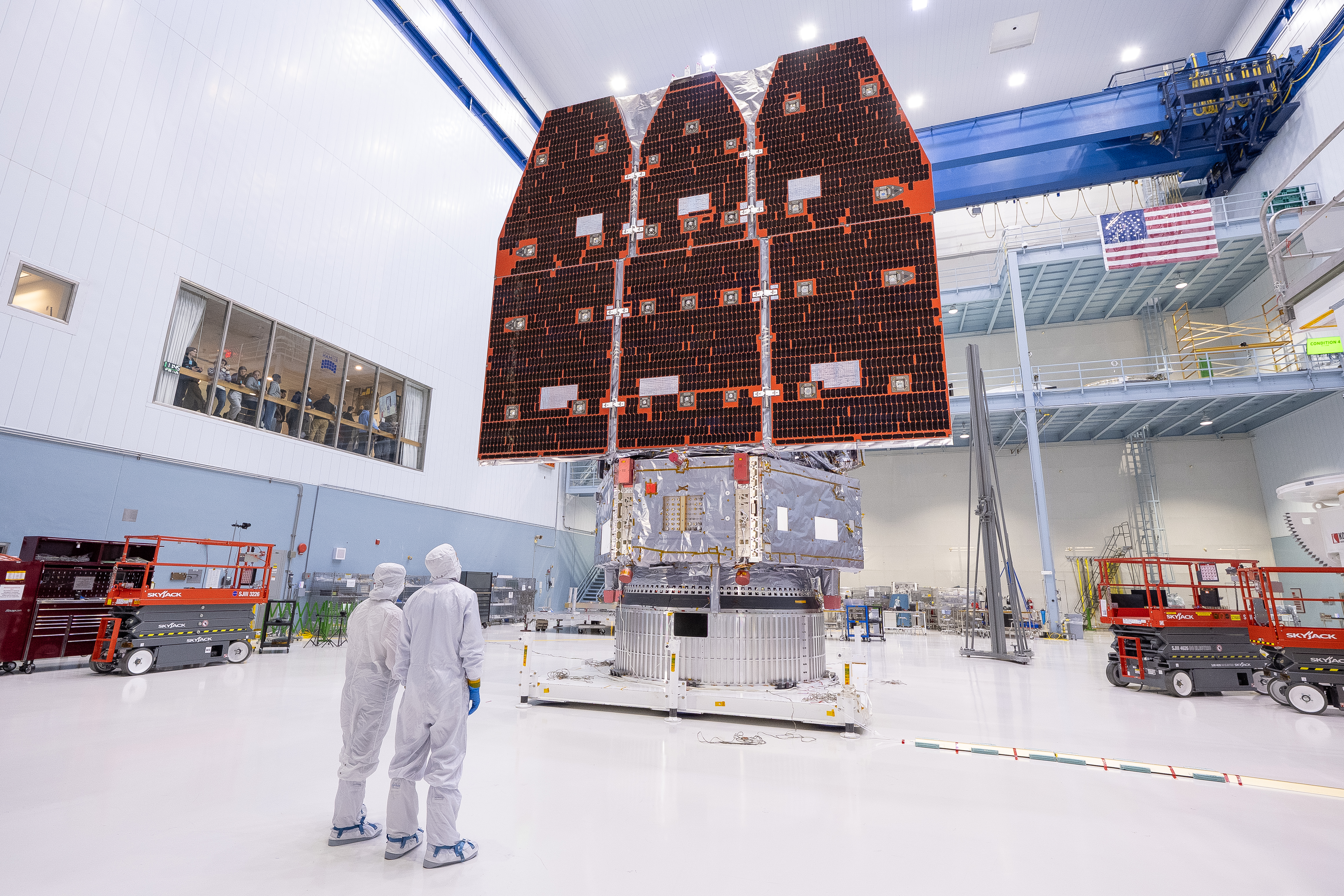
Over the course of several hours, technicians meticulously connected the inner and outer segments of NASA’s Nancy Grace Roman Space Telescope.
NASA/Jolearra Tshiteya
Two technicians look up at NASA’s Nancy Grace Roman Space Telescope after its inner and outer segments were connected at the agency’s Goddard Space Flight Center in Greenbelt, Maryland on Nov. 25, 2025. This marked the end of Roman’s construction. After final testing, the telescope will move to the launch site at NASA’s Kennedy Space Center in Florida for launch preparations in summer 2026. Roman — named after Dr. Nancy Grace Roman, NASA’s first chief astronomer — is slated to launch by May 2027, but the team is on track for launch as early as fall 2026.
ESA/Hubble & NASA, F. Belfiore, J. Lee and the PHANGS-HST Team
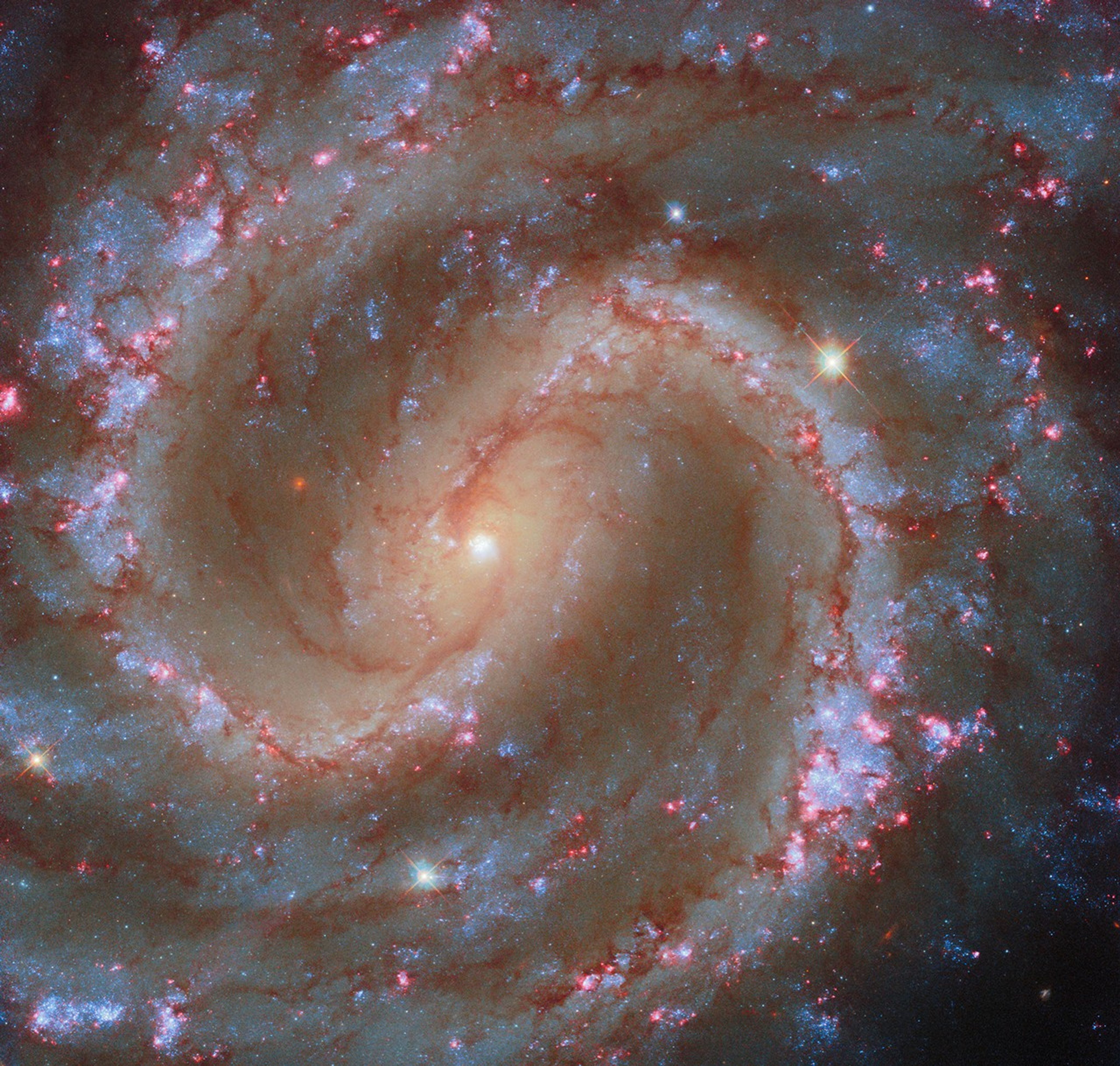
This NASA/ESA Hubble Space Telescope image features the spiral galaxy NGC 4535, which is situated about 50 million light-years away in the constellation Virgo (the Maiden). Through a small telescope, this galaxy appears extremely faint, giving it the nickname ‘Lost Galaxy’. With a mirror spanning nearly eight feet (2.4 meters) across and its location above Earth’s light-obscuring atmosphere, Hubble can easily observe dim galaxies like NGC 4535 and pick out features like its massive spiral arms and central bar of stars.
This image features NGC 4535’s young star clusters, which dot the galaxy’s spiral arms. Glowing-pink clouds surround many of these bright-blue star groupings. These clouds, called H II (‘H-two’) regions, are a sign that the galaxy is home to especially young, hot, and massive stars that blaze with high-energy radiation. Such massive stars shake up their surroundings by heating their birth clouds with powerful stellar winds, eventually exploding as supernovae.
The image incorporates data from an observing program designed to catalog roughly 50,000 H II regions in nearby star-forming galaxies like NGC 4535. Hubble released a previous image of NGC 4535 in 2021. Both the 2021 image and this new image incorporate observations from the PHANGS observing program, which seeks to understand the connections between young stars and cold gas. Today’s image adds a new dimension to our understanding of NGC 4535 by capturing the brilliant red glow of the nebulae that encircle massive stars in their first few million years of life.
Image credit: ESA/Hubble & NASA, F. Belfiore, J. Lee and the PHANGS-HST Team
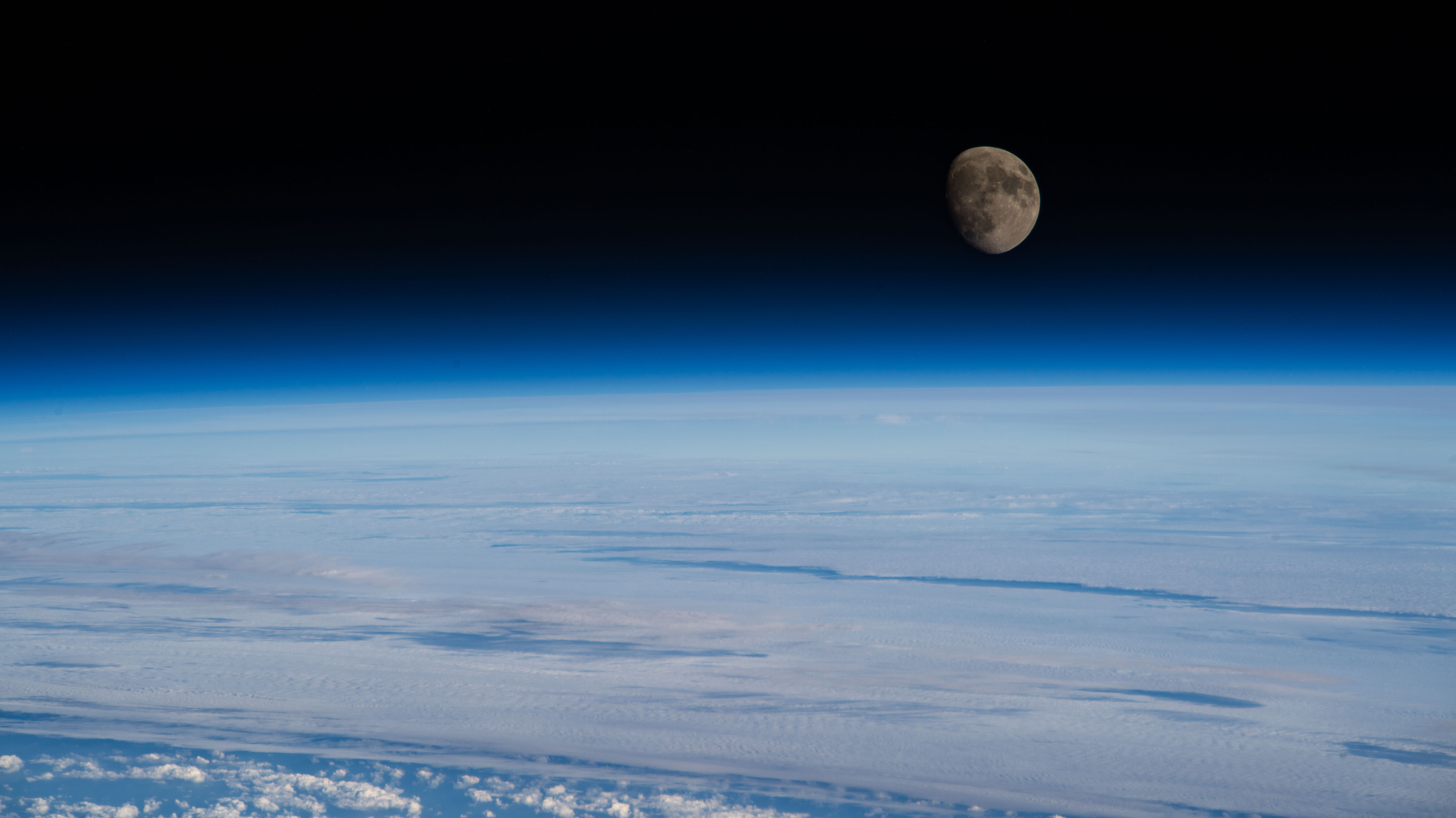
The waxing gibbous moon rises above Earth’s blue atmosphere in this photograph taken from the International Space Station on Oct. 3, 2025, as it orbited 263 miles above a cloudy Atlantic Ocean off the coast of Quebec, Canada.
In our entire solar system, the only object that shines with its own light is the Sun. That light always beams onto Earth and the Moon from the direction of the Sun, illuminating half of our planet in its orbit and reflecting off the surface of the Moon to create moonlight. Sometimes the entire face of the Moon glows brightly. Other times we see only a thin crescent of light. Sometimes the Moon seems to disappear. These shifts are called Moon phases. The waxing gibbous phase comes just before the full moon.
NASA, ESA, CSA, STScI, Adam Ginsburg (University of Florida), Nazar Budaiev (University of Florida), Taehwa Yoo (University of Florida); Image Processing: Alyssa Pagan (STScI)
The Mid-Infrared Instrument (MIRI) on NASA’s James Webb Space Telescope captured glowing cosmic dust heated by very young massive stars in unprecedented detail in this image of the Sagittarius B2 (Sgr B2) molecular cloud released on Sept. 24, 2025.
Sgr B2 is the most massive, and active star-forming region in our galaxy, located only a few hundred light years from our central supermassive black hole. While Sgr B2 has only 10% of the galactic center’s gas, it produces 50% of its stars. Astronomers want to figure out why it is so much more active than the rest of the galactic center.
MIRI has both a camera and a spectrograph that sees light in the mid-infrared region of the electromagnetic spectrum. MIRI’s view reveals colorful stars punctuated occasionally by bright clouds of gas and dust. Further research into these stars will reveal details of their masses and ages, which will help astronomers better understand the process of star formation in this dense, active galactic center region.
Image credit: Image: NASA, ESA, CSA, STScI, Adam Ginsburg (University of Florida), Nazar Budaiev (University of Florida), Taehwa Yoo (University of Florida); Image Processing: Alyssa Pagan (STScI)
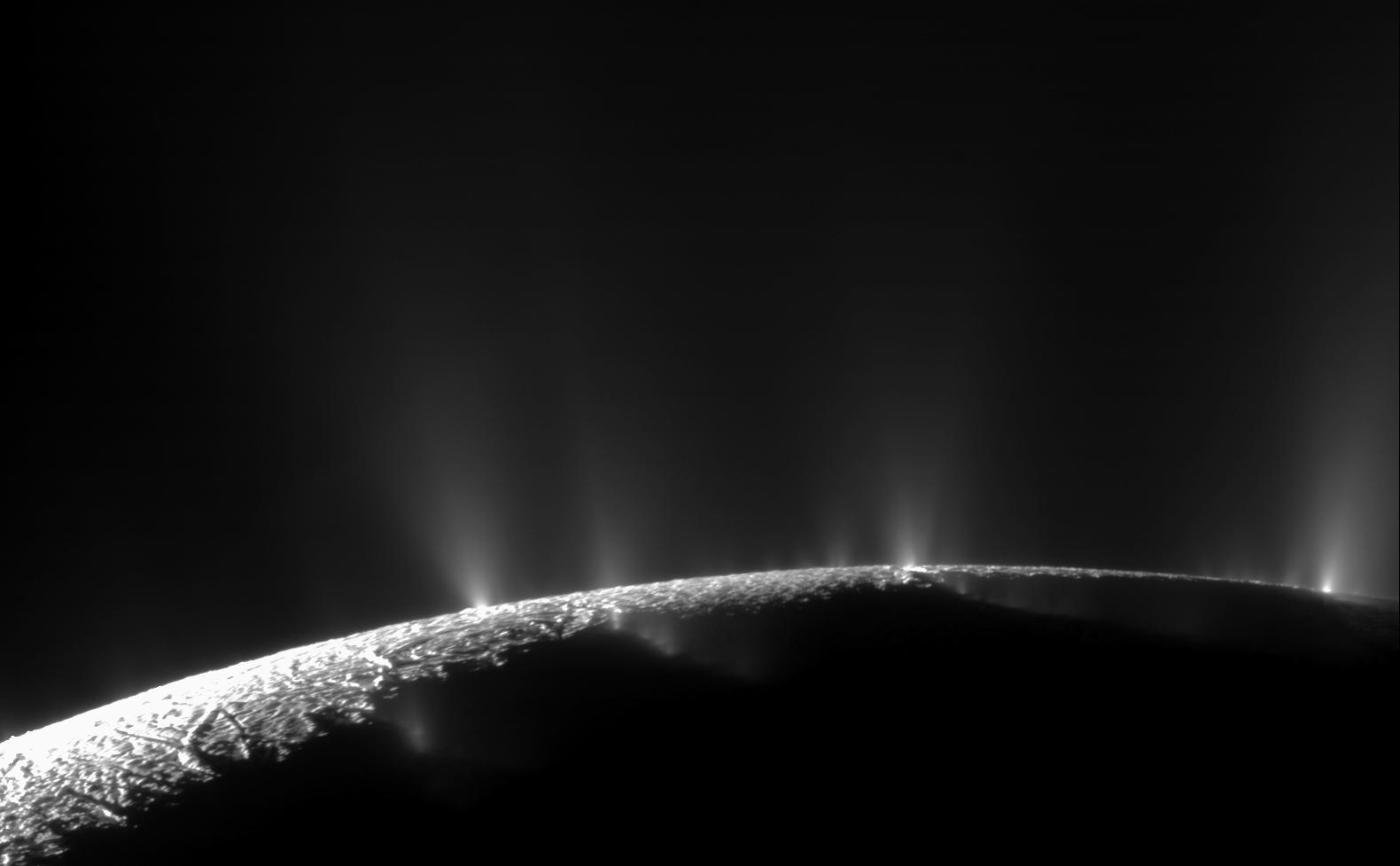
Dramatic plumes, both large and small, spray water ice out from many locations along the famed tiger stripes near the south pole of Saturn’s moon Enceladus in this image released on Feb. 23, 2010. A study published in October 2025 analyzed data from NASA’s Cassini mission and found evidence of previously undetected organic compounds in a plume of ice particles like the ones seen here. The ice particles were ejected from the ocean that lies under Enceladus’ frozen shell. Researchers spotted not only molecules they’ve found before but also new ones that lay a potential path to chemical or biochemical activity.
In this Oct. 20, 2025, photo, NASA’s Artemis II Orion spacecraft with its launch abort system is stacked atop the agency’s SLS (Space Launch System) rocket in the Vehicle Assembly Building at NASA’s Kennedy Space Center in Florida.
Orion will carry NASA astronauts Reid Wiseman, Victor Glover, Christina Koch, and CSA (Canadian Space Agency) astronaut Jeremy Hansen on a 10-day mission around the Moon and back in early 2026.
ESA/Webb, NASA & CSA, J. H. Kastner (Rochester Institute of Technology)
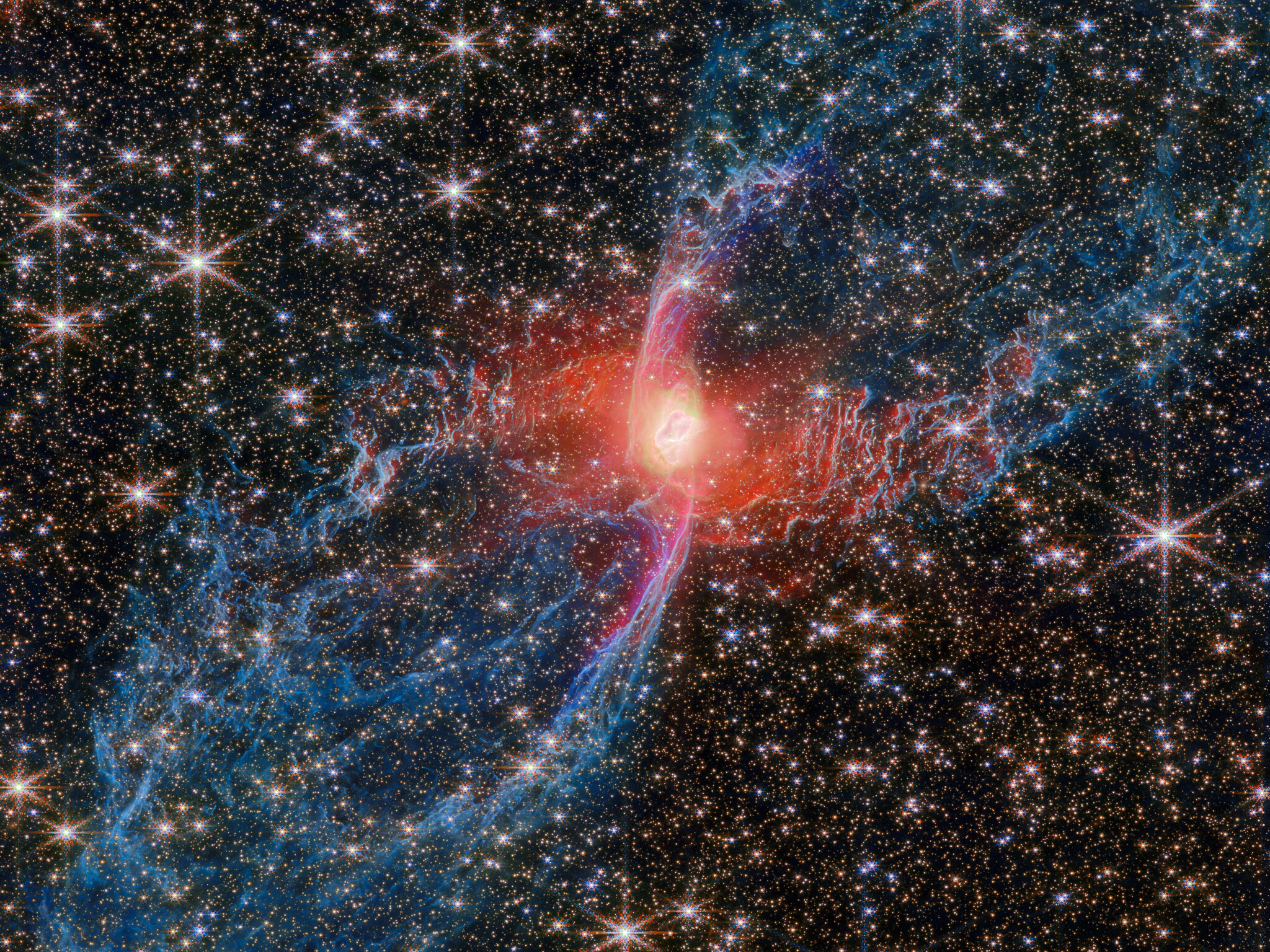
Using its Near-InfraRed Camera (NIRCam), NASA’s James Webb Space Telescope captured never-before-seen details of the Red Spider Nebula, a planetary nebula, in this image released on Oct. 26, 2025. NIRCam is Webb’s primary near-infrared imager, providing high-resolution imaging and spectroscopy for a wide variety of investigations.
Webb’s new view of the Red Spider Nebula reveals for the first time the full extent of the nebula’s outstretched lobes, which form the ‘legs’ of the spider. These lobes, shown in blue, are traced by light emitted from H2 molecules, which contain two hydrogen atoms bonded together. Stretching over the entirety of NIRCam’s field of view, these lobes are shown to be closed, bubble-like structures that each extend about 3 light-years. Outflowing gas from the center of the nebula has inflated these massive bubbles over thousands of years.
Image credit: ESA/Webb, NASA & CSA, J. H. Kastner (Rochester Institute of Technology)
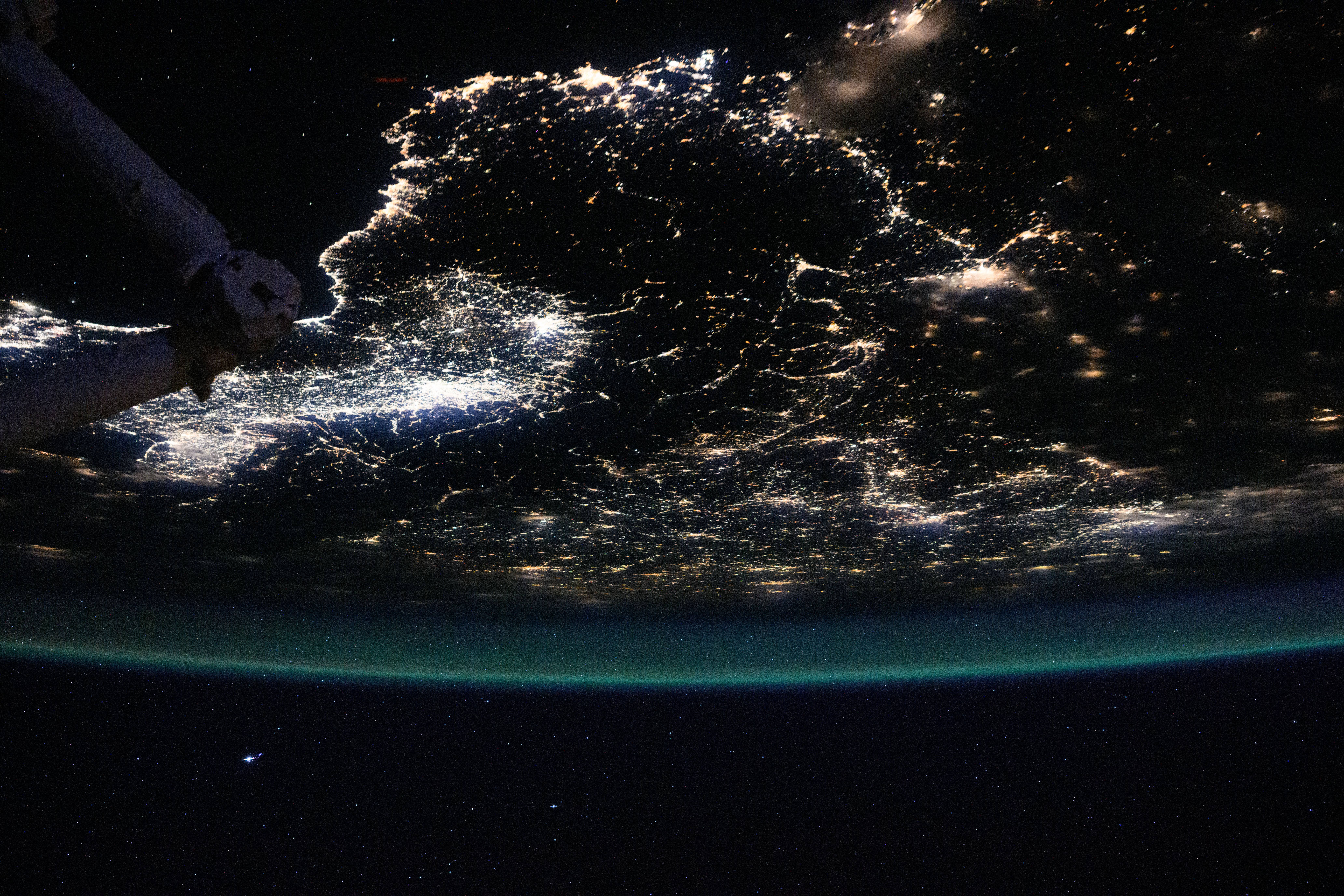
JAXA (Japan Aerospace Exploration Agency) astronaut Kimiya Yui captured this photo of southern Europe and the northwestern Mediterranean coast from the International Space Station as it orbited 261 miles above Earth on Aug. 30, 2025. At left, the Po Valley urban corridor in Italy shines with the metropolitan areas of Milan and Turin and their surrounding suburbs.
Crew members aboard the orbital lab have produced hundreds of thousands of images of the land, oceans, and atmosphere of Earth, and even of the Moon through Crew Earth Observations. Their photographs of Earth record how the planet changes over time due to human activity and natural events. This allows scientists to monitor disasters and direct response on the ground and study a number of phenomena, from the movement of glaciers to urban wildlife.
This NASA/ESA Hubble Space Telescope image features a galaxy, NGC 2775, that’s hard to categorize.
ESA/Hubble & NASA, F. Belfiore, J. Lee and the PHANGS-HST Team
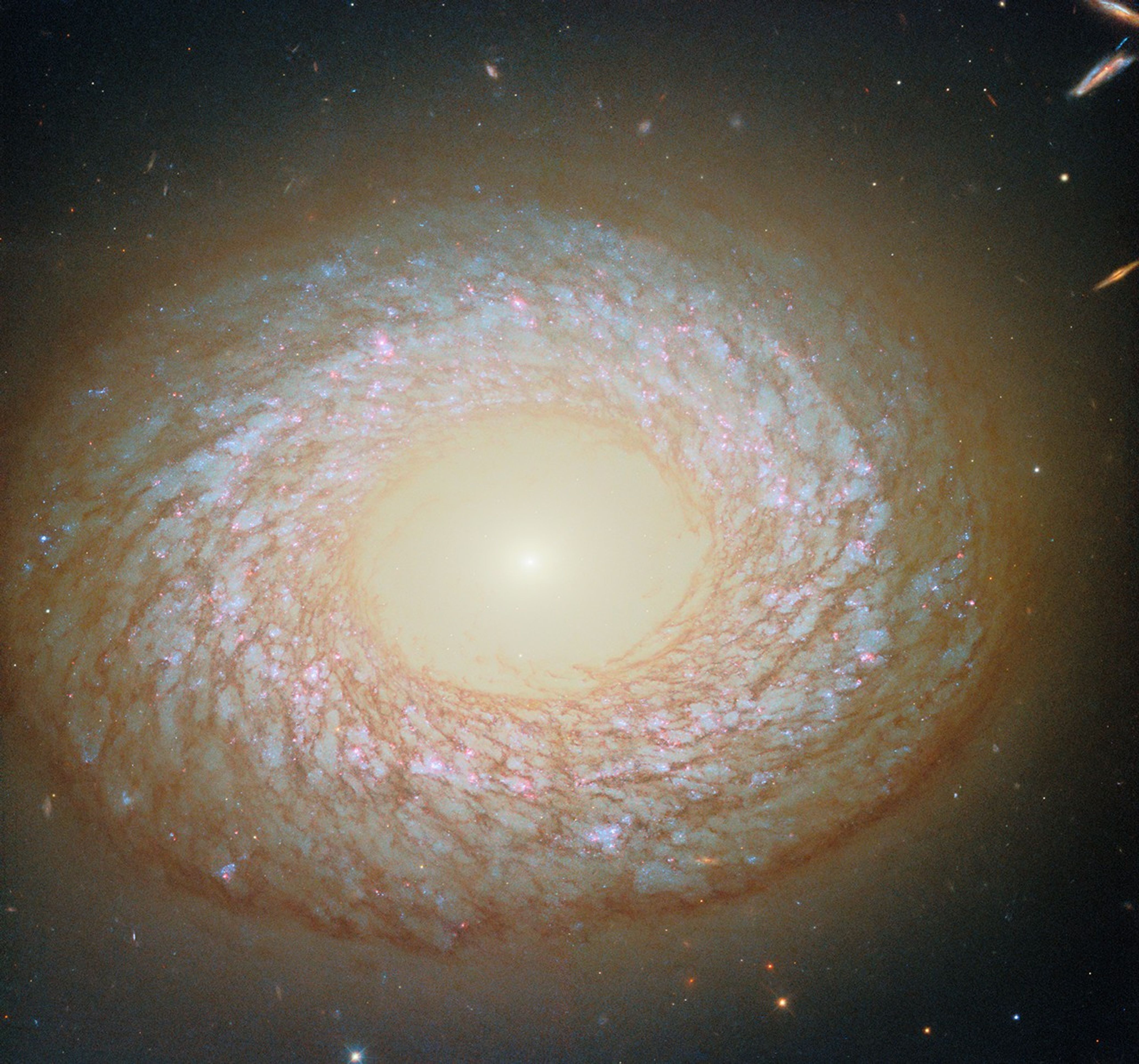
This NASA/ESA Hubble Space Telescope image features a galaxy that’s hard to categorize. The galaxy in question is NGC 2775, which lies 67 million light-years away in the constellation Cancer (the Crab). NGC 2775 sports a smooth, featureless center that is devoid of gas, resembling an elliptical galaxy. It also has a dusty ring with patchy star clusters, like a spiral galaxy. Which is it: spiral or elliptical — or neither?
Because we can only view NGC 2775 from one angle, it’s difficult to say for sure. Some researchers classify NGC 2775 as a spiral galaxy because of its feathery ring of stars and dust, while others classify it as a lenticular galaxy. Lenticular galaxies have features common to both spiral and elliptical galaxies.
Astronomers aren’t certain of exactly how lenticular galaxies come to be, and they might form in a variety of ways. Lenticular galaxies might be spiral galaxies that merged with other galaxies, or that have mostly run out of star-forming gas and lost their prominent spiral arms. They also might have started out more like elliptical galaxies, then collected gas into a disk around them.
Some evidence suggests that NGC 2775 merged with other galaxies in the past. Invisible in this Hubble image, NGC 2775 has a tail of hydrogen gas that stretches almost 100,000 light-years around the galaxy. This faint tail could be the remnant of one or more galaxies that wandered too close to NGC 2775 before being stretched apart and absorbed. If NGC 2775 merged with other galaxies in the past, it could explain the galaxy’s strange appearance today.
Most astronomers classify NGC 2775 as a flocculent spiral galaxy. Flocculent spirals have poorly defined, discontinuous arms that are often described as “feathery” or as “tufts” of stars that loosely form spiral arms.
Hubble previously released an image of NGC 2775 in 2020. This new version adds observations of a specific wavelength of red light emitted by clouds of hydrogen gas surrounding massive young stars, visible as bright, pinkish clumps in the image. This additional wavelength of light helps astronomers better define where new stars are forming in the galaxy.
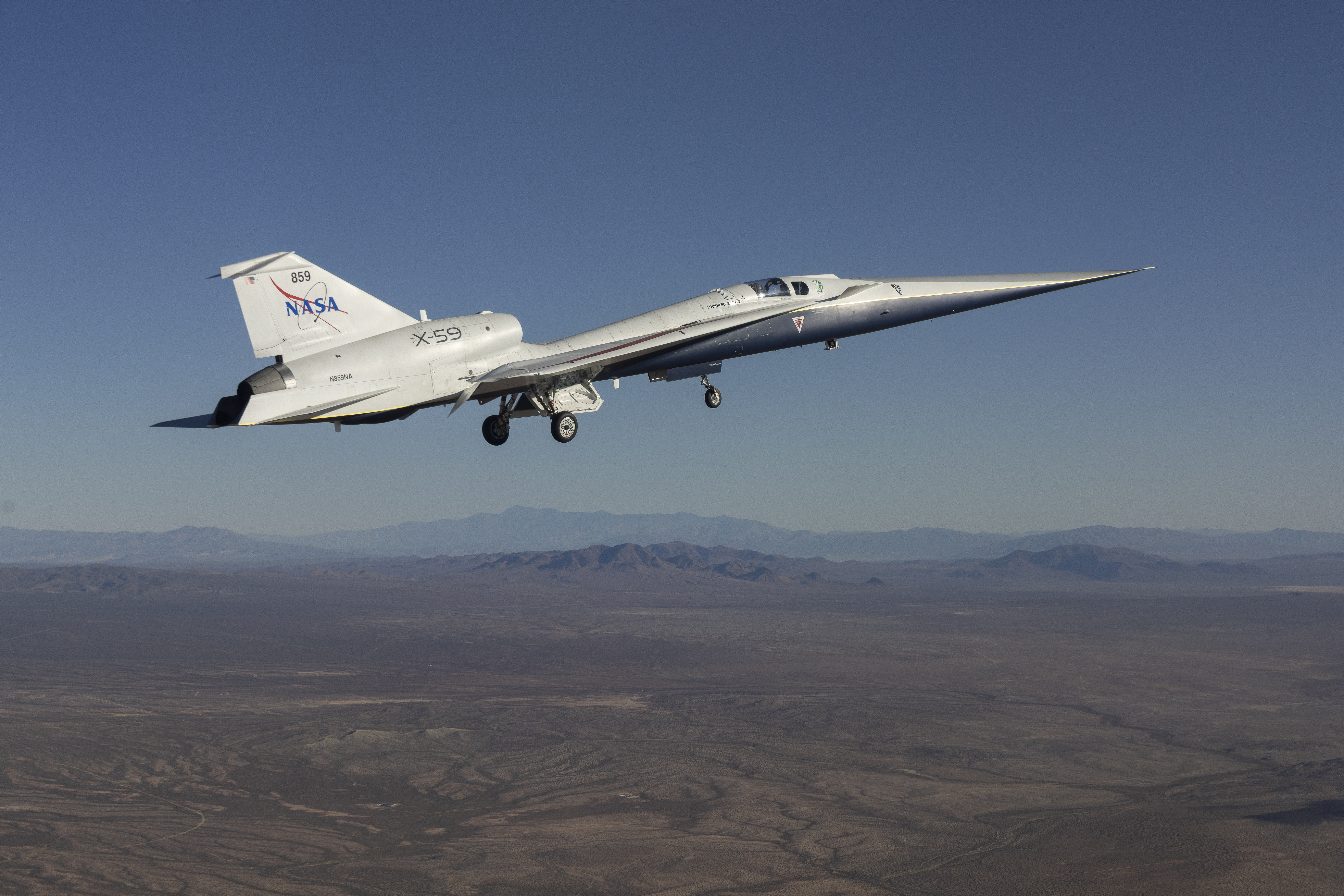
NASA’s X-59 quiet supersonic research aircraft took off for its historic first flight on Oct. 28, 2025, at 11:14 a.m. EDT from Lockheed Martin Skunk Works in Palmdale, California. The one-of-a-kind aircraft flew for 67 minutes before landing and taxiing to NASA’s Armstrong Flight Research Center in Edwards, California.
NASA test pilot Nils Larson flew the X-59 up to an altitude of about 12,000 feet and an approximate top speed of 230 mph, precisely as planned. The plane’s landing gear remained down during the entire flight, a common practice for experimental aircraft flying for the first time.
Now that the X-59’s first flight is in the books, the team is focused on preparing for a series of test flights where the aircraft will operate at higher altitudes and supersonic speeds. This test flight phase of NASA’s Quesst mission will ensure the X-59 meets performance and safety expectations.
Through the Quesst mission, NASA aims to usher in a new age of quiet supersonic flight, achieved through the unique design and technology of the X-59 in future supersonic transport aircraft.
Image credit: X-ray: NASA/CXC/SAO; Optical/IR: NASA/ESA/CSA/STScI (HST and JWST); Radio: NSF/NRAO/VLA; Image Processing: NASA/CXC/SAO/J. Schmidt and N. Wolk
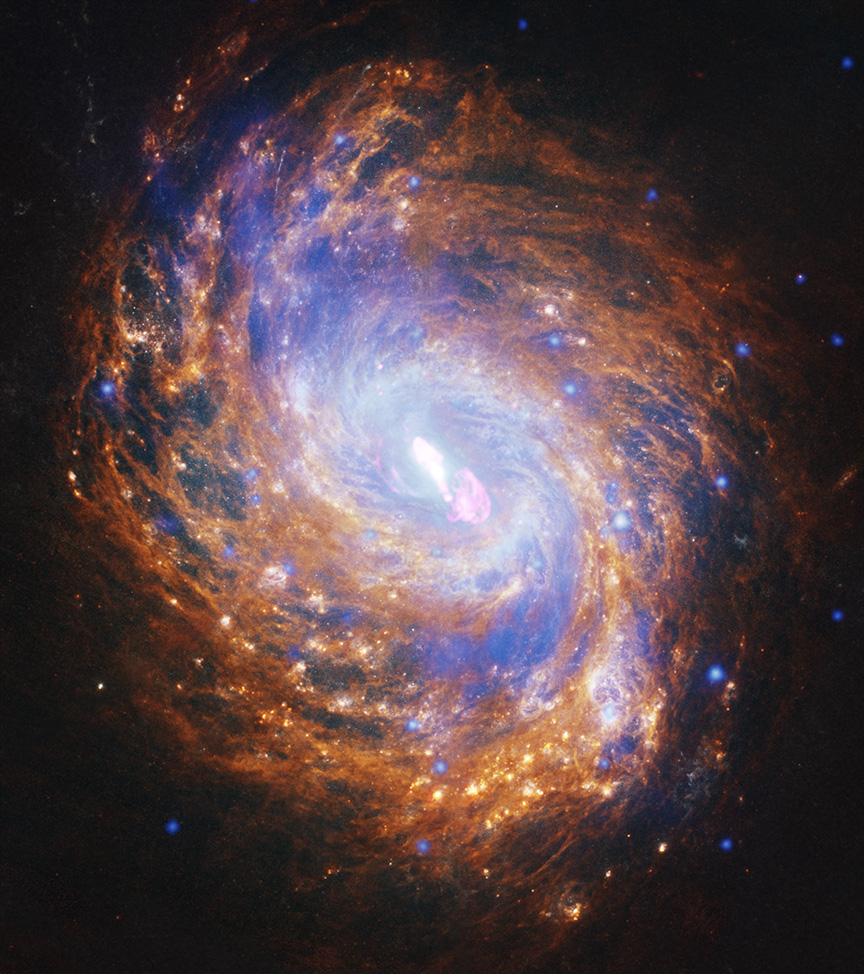
NGC 1068, a relatively nearby spiral galaxy, appears in this image released on July 23, 2025. The galaxy contains a black hole at its center that is twice as massive as the Milky Way’s. NASA’s Chandra X-ray Observatory data shows a million-mile-per-hour wind is being driven from NGC 1068’s black hole and lighting up the center of the galaxy in X-rays.
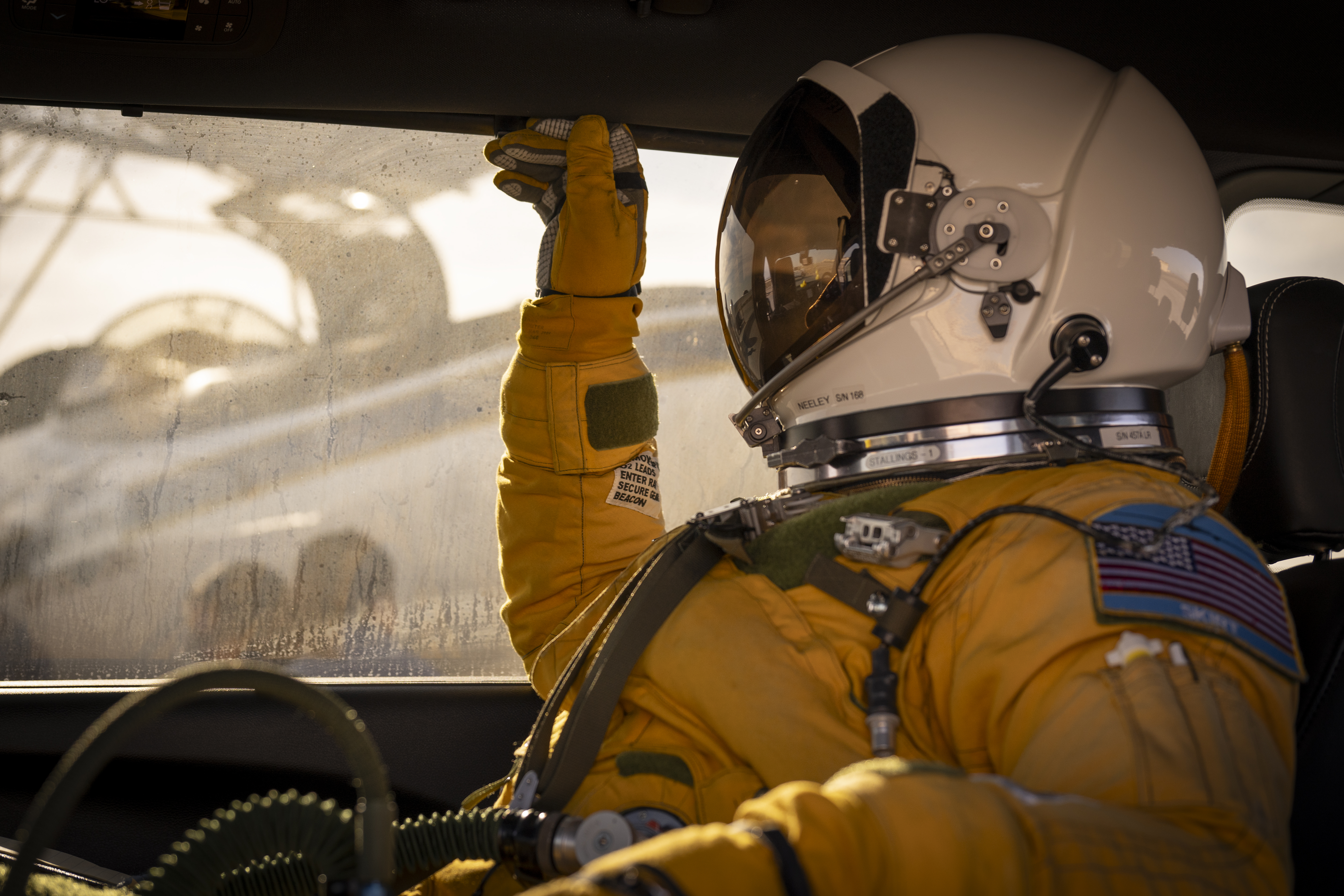
NASA ER-2 pilot Kirt Stallings waits inside the transport vehicle moments before boarding the airborne science aircraft at NASA’s Armstrong Flight Research Center in Edwards, California, on Thursday, Aug. 21, 2025. Outside the window, the aircraft is being readied for a high-altitude mission supporting the Geological Earth Mapping Experiment (GEMx), a multi-year NASA–U.S. Geological Survey campaign to map critical mineral resources across the Western United States. The GEMx team believes that undiscovered deposits of at least some of the 50 mineral commodities deemed essential to U.S. national security, to the tech industry, and to clean energy exist domestically, and modern mineral maps will support exploration by the private sector.
In 2025 alone, the ER-2 flew 36 science missions, collecting more than seven billion measurements over 200 flight hours, contributing to the largest airborne surface mineralogy dataset ever gathered in a single NASA campaign. For this mission, pilots flew at approximately 65,000 feet altitude, requiring them to wear specially designed pressure suits to safely operate in the thin atmosphere.
This image released on June 30, 2025, combines data from NASA’s James Webb Space Telescope and NASA’s Chandra X-ray Observatory to visualize dark matter. Researchers used Webb’s observations to carefully measure the mass of the galaxy clusters shown here as well as the collective light emitted by stars that are no longer bound to individual galaxies.
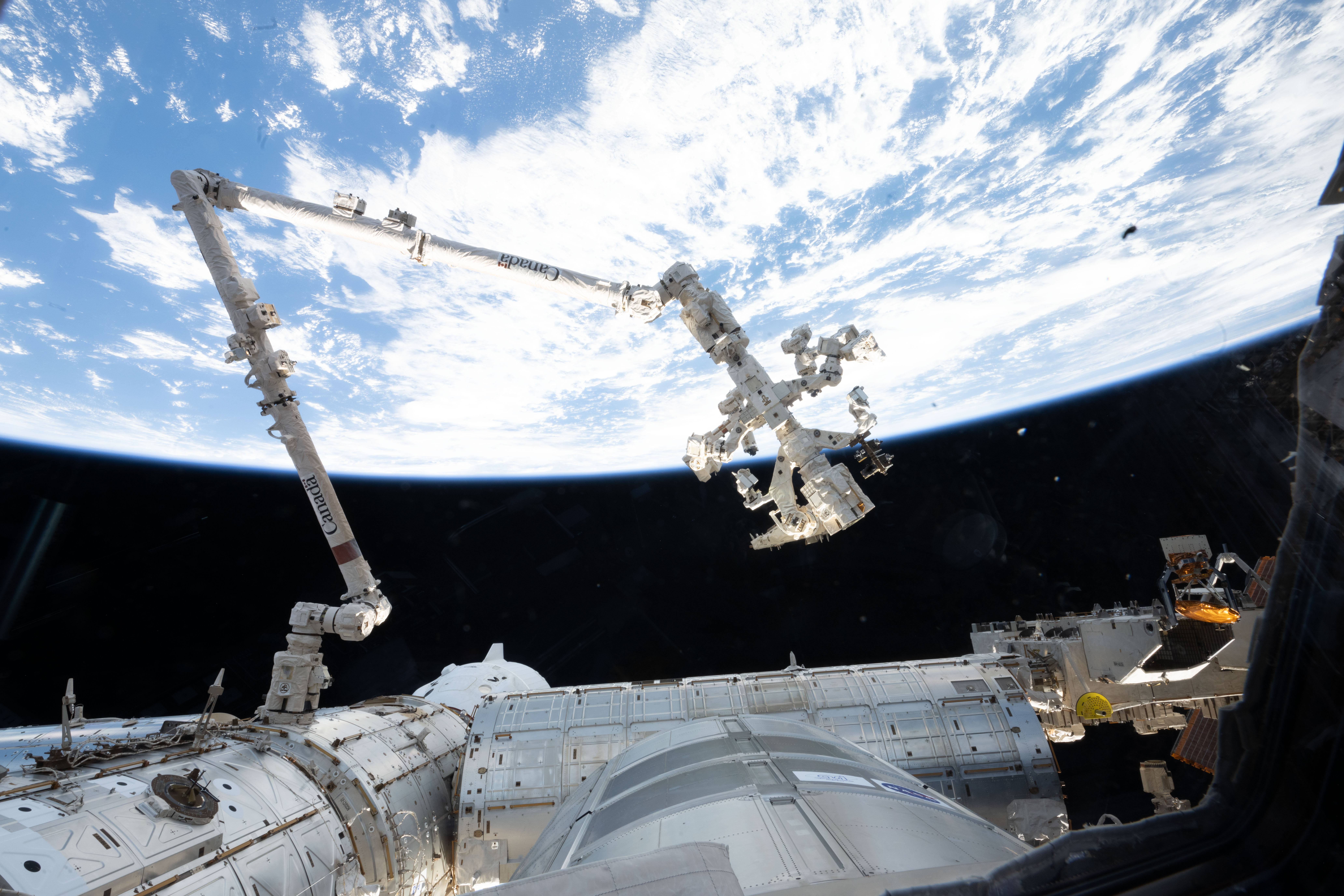
NASA astronaut Jonny Kim took this photo on July 23, 2025, as the International Space Station orbited 259 miles above a cloudy Pacific Ocean southwest of Mexico. Visible in the image is the 57.7-foot-long Canadarm2 robotic arm, which extends from a data grapple fixture on the International Space Station’s Harmony module. Attached to its latching end effector is Dextre, the station’s fine-tuned robotic hand designed for delicate external maintenance tasks. Station crew use Canadarm2 to perform maintenance tasks, capture visiting spacecraft, and move supplies, equipment, and even astronauts.
On Nov. 2, 2025, the space station reached 25 years of continuous human presence. The orbital lab remains a training and proving ground for deep space missions, enabling NASA to focus on Artemis missions to the Moon and Mars.
During its close flyby of Jupiter’s moon Io on December 30, 2023, NASA’s Juno spacecraft captured some of the most detailed imagery ever of Io’s volcanic surface. In this image, taken by the JunoCam instrument from about 930 miles (1,500 kilometers) above the moon, Io’s night side [left lobe] is illuminated by “Jupitershine,” which is sunlight reflected from the planet’s surface.
This image is the NASA Science Image of the Month for October 2025. Each month, NASA’s Science Mission Directorate chooses an image to feature, offering desktop wallpaper downloads, as well as links to related topics, activities, and games.
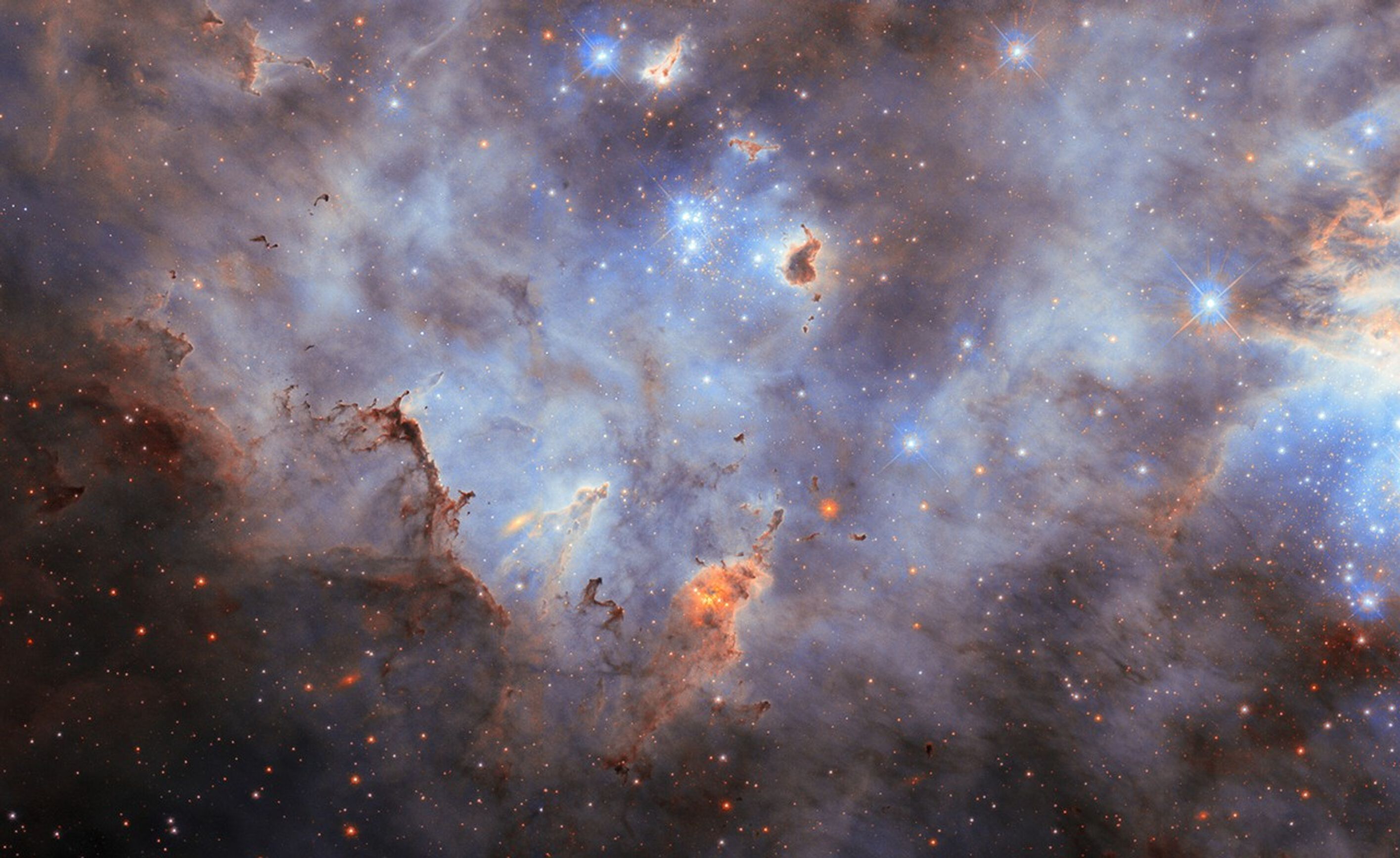
This NASA/ESA Hubble Space Telescope image released on Sept. 12, 2025, features a cloudy starscape from an impressive star cluster. This scene is in the Large Magellanic Cloud, a dwarf galaxy situated about 160,000 light-years away in the constellations Dorado and Mensa. With a mass equal to 10–20% of the mass of the Milky Way, the Large Magellanic Cloud is the largest of the dozens of small galaxies that orbit our galaxy.
The Large Magellanic Cloud is home to several massive stellar nurseries where gas clouds, like those strewn across this image, coalesce into new stars. Today’s image depicts a portion of the galaxy’s second-largest star-forming region, which is called N11. (The most massive and prolific star-forming region in the Large Magellanic Cloud, the Tarantula Nebula, is a frequent target for Hubble.) We see bright, young stars lighting up the gas clouds and sculpting clumps of dust with powerful ultraviolet radiation.
This image marries observations made roughly 20 years apart, a testament to Hubble’s longevity. The first set of observations, which were carried out in 2002–2003, capitalized on the exquisite sensitivity and resolution of the then-newly-installed Advanced Camera for Surveys. Astronomers turned Hubble toward the N11 star cluster to do something that had never been done before at the time: catalog all the stars in a young cluster with masses between 10% of the Sun’s mass and 100 times the Sun’s mass.
The second set of observations came from Hubble’s newest camera, the Wide Field Camera 3. These images focused on the dusty clouds that permeate the cluster, providing us with a new perspective on cosmic dust.
Golden sunglint highlights Lake Balkhash in this May 31, 2016, photo taken from the International Space Station. The large lake in Kazakhstan is one of the largest lakes in Asia and is the 15th largest lake in the world.
Since the space station became operational in November 2000, crew members have produced hundreds of thousands of images of the land, oceans, and atmosphere of Earth, and even of the Moon through Crew Earth Observations. Their photographs of Earth record how the planet changes over time due to human activity and natural events. This allows scientists to monitor disasters and direct response on the ground and study a number of phenomena, from the movement of glaciers to urban wildlife.
NASA’s IMAP (Interstellar Mapping and Acceleration Probe), the agency’s Carruthers Geocorona Observatory, and National Oceanic and Atmospheric Administration’s (NOAA) Space Weather Follow On–Lagrange 1 (SWFO-L1) spacecraft will each focus on different effects of the solar wind – the continuous stream of particles emitted by the Sun – and space weather – the changing conditions in space driven by the Sun – from their origins at the Sun to their farthest reaches billions of miles away at the edge of our solar system.
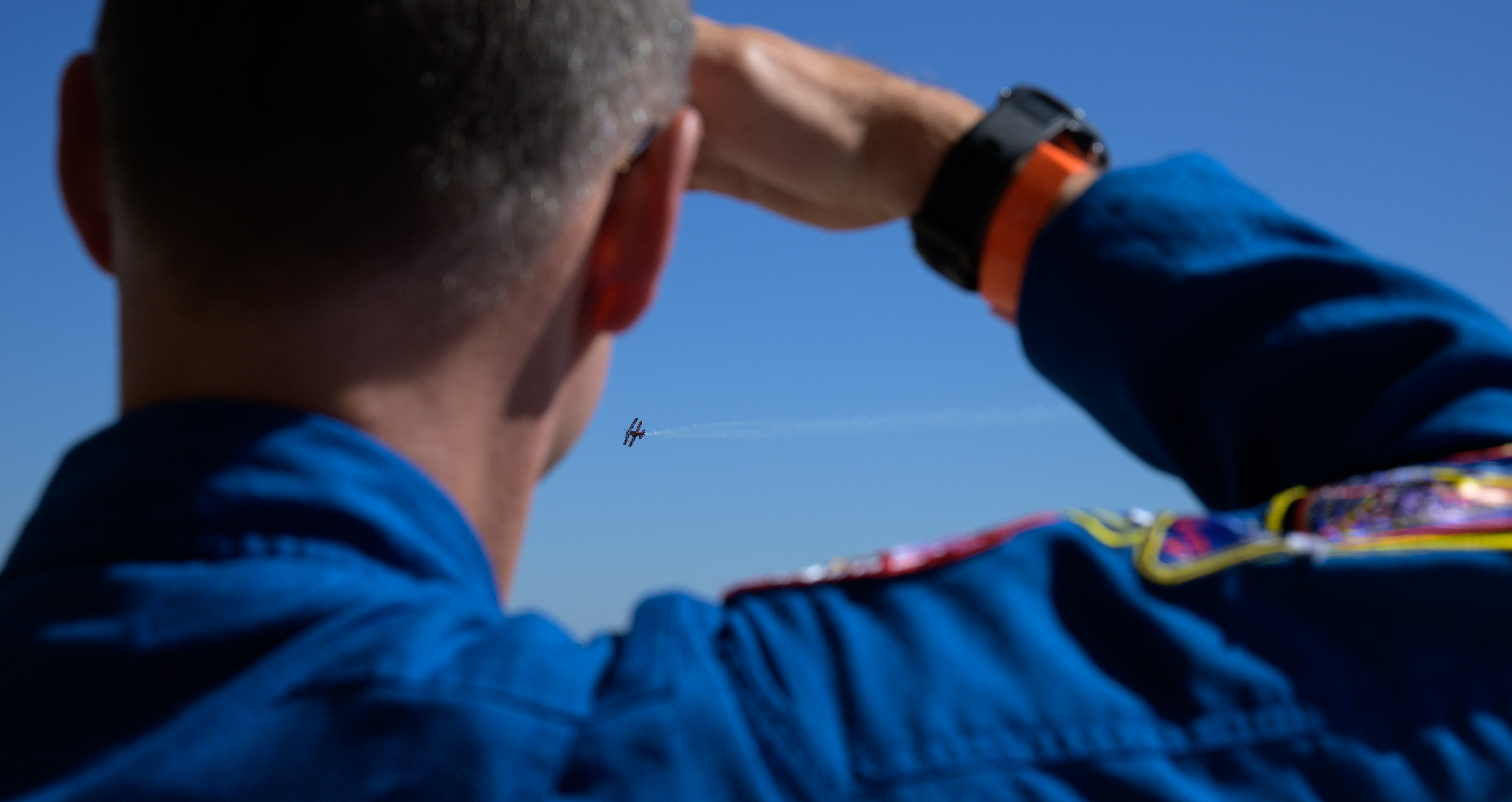
NASA astronaut Nick Hague watches as Robert Schmidle Pitts Aerobatics perform, Friday, Sept. 12, 2025, at Joint Base Andrews in Prince George’s County, Maryland. Hague spent 171 days aboard the International Space Station as part of Expedition 72.
While aboard the orbital laboratory, Hague and fellow NASA astronauts Suni Williams and Butch Wilmore completed more than 900 hours of research between more than 150 unique scientific experiments and technology demonstrations. Some of the research conducted included growing microalgae that could convert carbon dioxide into oxygen for the crew to breathe and testing an exercise device to keep crews healthy on long-duration missions.

 Login
Login