Login
LoginWindows 11 bugs, RIP Crucial, and more: Windows news roundup
TK TK Here are the biggest stories you might have missed.

TK TK Here are the biggest stories you might have missed.
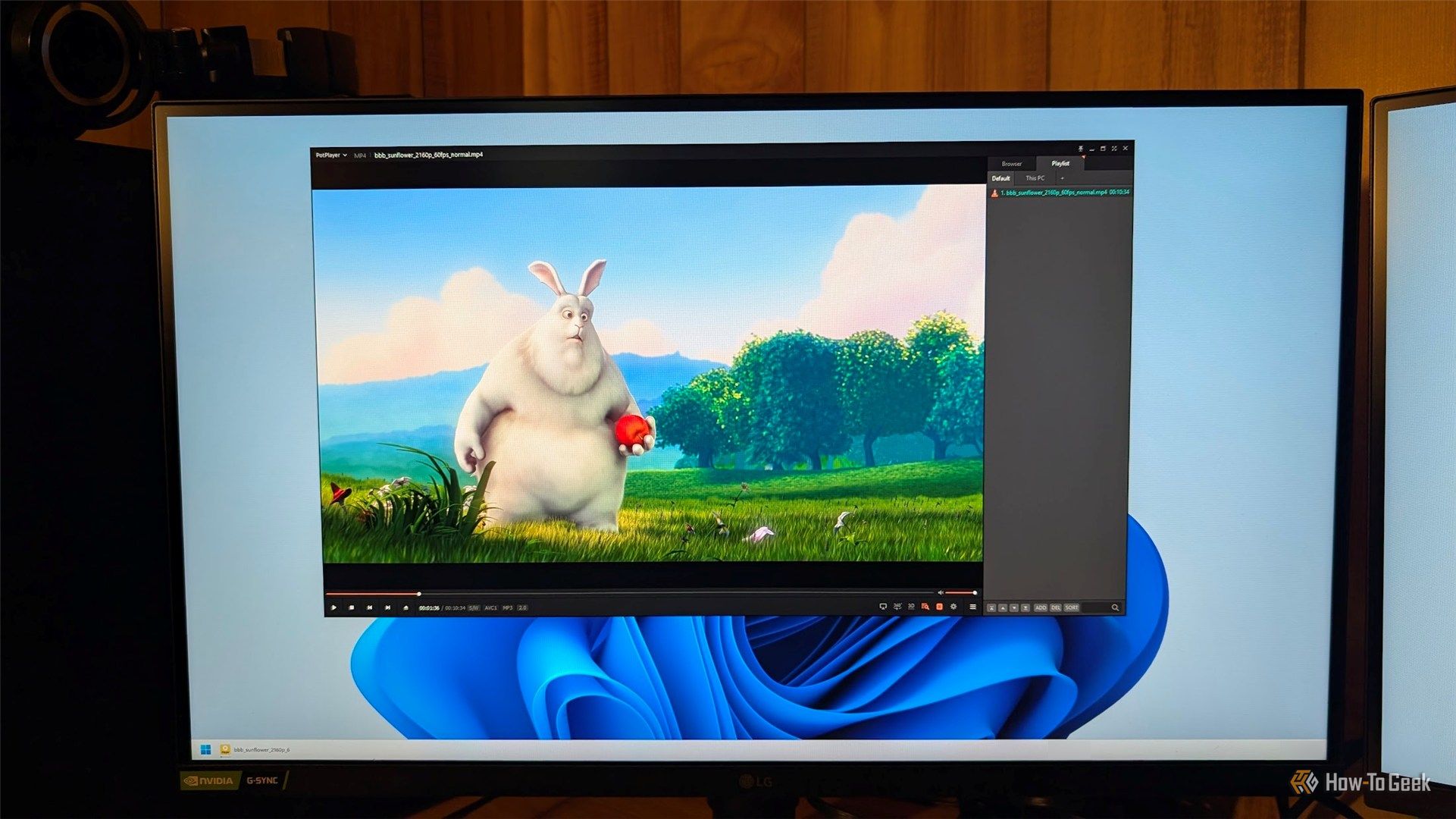
Windows comes with a few media player apps built in that are usually "good enough." However, I'm not really a fan of any of them for one reason or another. If you're looking for a media player that is different, more powerful, or just not Microsoft, here are 5 great alternatives for you.
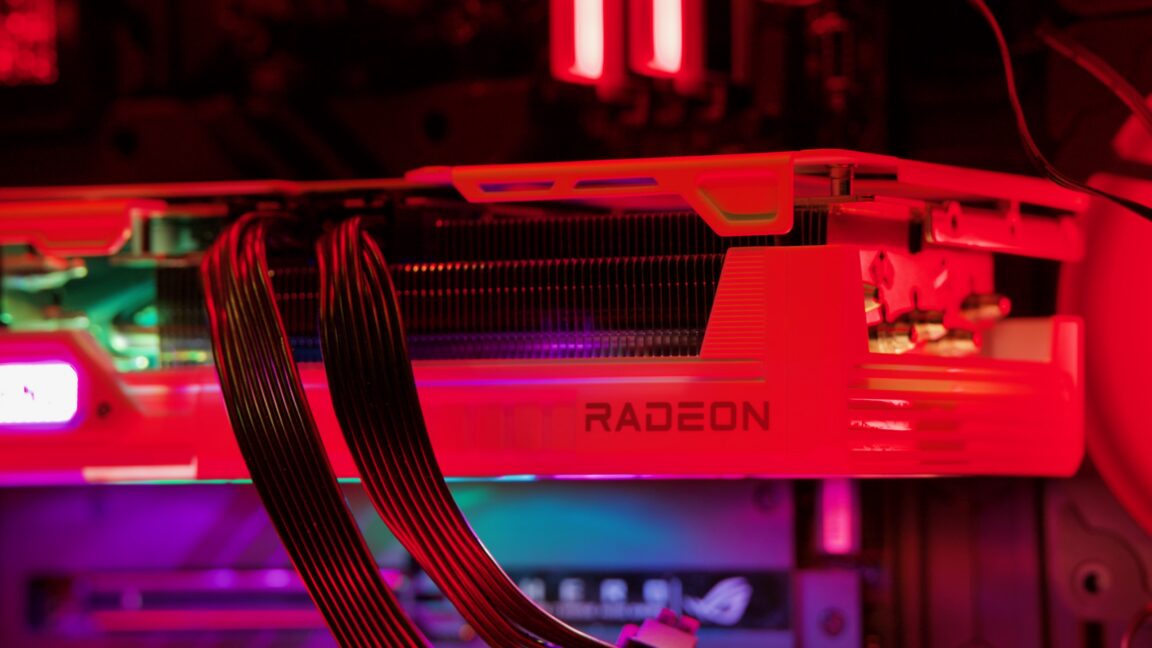
I wrote a couple of weeks ago about my personal homebrew Steam Machine, a self-built desktop under my TV featuring an AMD Ryzen 7 8700G processor and a Radeon 780M integrated GPU. I wouldn’t recommend making your own version of this build, especially with RAM prices as they currently are, but there are all kinds of inexpensive mini PCs on Amazon with the same GPU, and they’ll all be pretty good at playing the kinds of games that already run well on the less-powerful Steam Deck.
But this kind of hardware is an imperfect proxy for the Steam Machine that Valve plans to launch sometime next year—that box will include a dedicated GPU with 8GB of dedicated video memory, presenting both benefits and possible pitfalls compared to a system with an integrated GPU.
As a last pre-Steam Machine follow-up to our coverage so far, we’ve run tests on several games we test regularly in our GPU reviews to get a sense of how current versions of SteamOS stack up to Windows running on the same hardware. What we’ve found so far is basically the inverse of what we found when comparing handhelds: Windows usually has an edge on SteamOS’s performance, and sometimes that gap is quite large. And SteamOS also exacerbates problems with 8GB GPUs, hitting apparent RAM limits in more games and at lower resolutions compared to Windows.

© Andrew Cunningham
The MuddyWater threat group has escalated its cyber espionage operations by deploying UDPGangster, a sophisticated UDP-based backdoor designed to infiltrate Windows systems while systematically evading traditional network defenses. Recent intelligence gathered by FortiGuard Labs reveals coordinated campaigns targeting high-value victims across Turkey, Israel, and Azerbaijan, employing social engineering tactics paired with advanced anti-analysis techniques that […]
The post MuddyWater Hackers Use UDPGangster Backdoor to Bypass Network Defenses on Windows appeared first on GBHackers Security | #1 Globally Trusted Cyber Security News Platform.

The cybersecurity landscape continues to evolve as threat actors deploy increasingly sophisticated tools to compromise Windows-based infrastructure. CastleRAT, a Remote Access Trojan that emerged around March 2025, represents a significant addition to the malware arsenal that defenders must now contend with. This newly discovered threat demonstrates the convergence of multiple attack techniques, enabling attackers to […]
The post Hackers Using CastleRAT Malware to Attack Windows Systems and Gain Remote Access appeared first on GBHackers Security | #1 Globally Trusted Cyber Security News Platform.

The Cybersecurity and Infrastructure Security Agency (CISA) and the National Security Agency (NSA), joined by Canadian cyber authorities, have issued a joint alert warning of a sophisticated new malware campaign dubbed “BRICKSTORM.” According to the advisory released, state-sponsored hackers from the People’s Republic of China (PRC) are actively using this tool to infiltrate and hide […]
The post CISA, NSA Alert on BRICKSTORM Malware Targeting VMware ESXi and Windows Systems appeared first on GBHackers Security | #1 Globally Trusted Cyber Security News Platform.

Windows on ARM has always lacked serious graphics power, but that may finally be changing. A new Chinese-made discrete GPU has now been shown running on ARM-based Windows, hinting that proper PC gaming on ARM may no longer be a distant dream.
The post Your Windows on ARM laptop could someday play real PC games appeared first on Digital Trends.

When Valve announced its upcoming Steam Machine hardware last month, some eagle-eyed gamers may have been surprised to see that the official spec sheet lists support for HDMI 2.0 output, rather than the updated, higher-bandwidth HDMI 2.1 standard introduced in 2017. Now, Valve tells Ars that, while the hardware itself actually supports HDMI 2.1, the company is struggling to offer full support for that standard due to Linux drivers that are “still a work-in-progress on the software side.”
As we noted last year, the HDMI Forum (which manages the official specifications for HDMI standards) has officially blocked any open source implementation of HDMI 2.1. That means the open source AMD drivers used by SteamOS can’t fully implement certain features that are specific to the updated output standard.
“At this time an open source HDMI 2.1 implementation is not possible without running afoul of the HDMI Forum requirements,” AMD engineer Alex Deucher said at the time.


© Valve
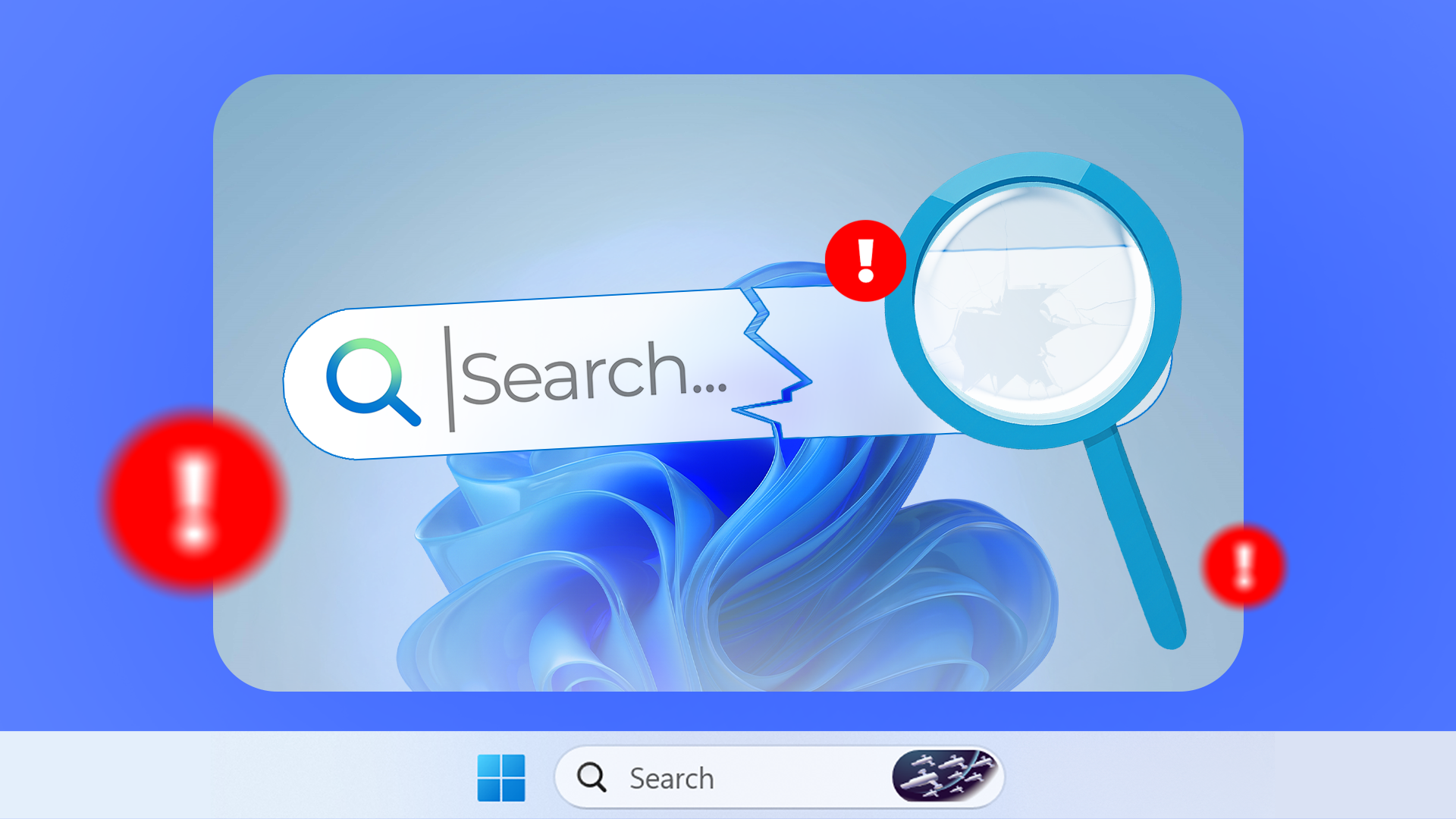
On macOS, you can instantly look up files and launch apps with Spotlight search. Even many popular Linux distros offer snappy search bars like Spotlight. But on Windows, there is no central interface to search for every file, setting, and app. File Explorer takes forever to load searches, the Start search doesn’t always give relevant suggestions, if at all. Most of the time, it just plugs into Bing web results or displays ads for Microsoft products. We can’t fix Windows search, but we can replace it with a better option.
Canonical just made a massive announcement for anyone using Linux on Windows, Ubuntu Pro is now available for the Windows Subsystem for Linux (WSL), and the best part is that it is still free for personal use. If you’re a developer or a power user who relies on WSL to get work done, this is a huge deal.

Microsoft is currently investigating a serious service issue preventing customers from downloading Microsoft 365 desktop applications directly from the service homepage. The company has tagged the problem as an "Incident," which means it’s a critical service issue with noticeable user impact.
The more programs set to auto-launch on startup, the longer your computer takes to boot. That's doubly true for machines with older hardware. Allow me to show you different ways to identify and disable startup apps and speed up your PC's boot time.
A critical security vulnerability has been discovered in K7 Ultimate Security antivirus software that allows attackers to gain the highest level of system access on Windows computers. The flaw, tracked as CVE-2024-36424, enables low-privileged users to escalate their permissions to SYSTEM level, giving them complete control over affected machines. How the Vulnerability Works K7 Ultimate Security […]
The post K7 Antivirus Flaw Lets Attackers Gain SYSTEM-Level Privileges appeared first on GBHackers Security | #1 Globally Trusted Cyber Security News Platform.

The flaw, tracked as CVE-2025-9491, allowed cybercriminals to hide malicious commands from users inspecting files through Windows' standard interface.
The post Microsoft Silently Fixes 8-Year Windows Security Flaw appeared first on TechRepublic.
The flaw, tracked as CVE-2025-9491, allowed cybercriminals to hide malicious commands from users inspecting files through Windows' standard interface.
The post Microsoft Silently Fixes 8-Year Windows Security Flaw appeared first on TechRepublic.
A newly discovered security flaw in Windows shortcut files is being actively used by hackers to target diplomatic organisations. The vulnerability allows attackers to conceal malicious commands within shortcut files (.lnk), making them invisible to users. The Discovery and Initial Rejection The issue was first highlighted in March 2025 by researchers at Trend Micro. They […]
The post Hackers Actively Exploit New Windows LNK 0-Day Vulnerability appeared first on GBHackers Security | #1 Globally Trusted Cyber Security News Platform.

Microsoft has quietly rolled out a partial mitigation for the high-severity Windows LNK vulnerability, CVE-2025-9491, which multiple state-sponsored groups and cybercrime gangs have been exploiting as a zero-day. This security flaw lets attackers hide malicious commands inside standard Windows shortcut files.
Microsoft has acknowledged a significant issue affecting Windows 11 versions 24H2 and 25H2. Where critical user interface components break following the installation of monthly cumulative updates released on or after July 2025. The problem impacts XAML-dependent modern applications, including core Windows components such as File Explorer, the Start menu, System Settings, Taskbar, and Windows Search. […]
The post Microsoft Confirms Windows 11 25H2 UI Features Broken also Along With 24H2 Following Update appeared first on GBHackers Security | #1 Globally Trusted Cyber Security News Platform.

Windows now displays in the properties tab of LNK files critical information that could reveal malicious code.
The post Microsoft Silently Mitigated Exploited LNK Vulnerability appeared first on SecurityWeek.

In the third quarter, attackers continued to exploit security flaws in WinRAR, while the total number of registered vulnerabilities grew again. In this report, we examine statistics on published vulnerabilities and exploits, the most common security issues impacting Windows and Linux, and the vulnerabilities being leveraged in APT attacks that lead to the launch of widespread C2 frameworks. The report utilizes anonymized Kaspersky Security Network data, which was consensually provided by our users, as well as information from open sources.
This section contains statistics on registered vulnerabilities. The data is taken from cve.org.
Let us consider the number of registered CVEs by month for the last five years up to and including the third quarter of 2025.
Total published vulnerabilities by month from 2021 through 2025 (download)
As can be seen from the chart, the monthly number of vulnerabilities published in the third quarter of 2025 remains above the figures recorded in previous years. The three-month total saw over 1000 more published vulnerabilities year over year. The end of the quarter sets a rising trend in the number of registered CVEs, and we anticipate this growth to continue into the fourth quarter. Still, the overall number of published vulnerabilities is likely to drop slightly relative to the September figure by year-end
A look at the monthly distribution of vulnerabilities rated as critical upon registration (CVSS > 8.9) suggests that this metric was marginally lower in the third quarter than the 2024 figure.
Total number of critical vulnerabilities published each month from 2021 to 2025 (download)
This section contains exploitation statistics for Q3 2025. The data draws on open sources and our telemetry.
In Q3 2025, as before, the most common exploits targeted vulnerable Microsoft Office products.
Most Windows exploits detected by Kaspersky solutions targeted the following vulnerabilities:
These vulnerabilities historically have been exploited by threat actors more frequently than others, as discussed in previous reports. In the third quarter, we also observed threat actors actively exploiting Directory Traversal vulnerabilities that arise during archive unpacking in WinRAR. While the originally published exploits for these vulnerabilities are not applicable in the wild, attackers have adapted them for their needs.
It should be pointed out that vulnerabilities discovered in 2025 are rapidly catching up in popularity to those found in 2023.
All the CVEs mentioned can be exploited to gain initial access to vulnerable systems. We recommend promptly installing updates for the relevant software.
Dynamics of the number of Windows users encountering exploits, Q1 2023 — Q3 2025. The number of users who encountered exploits in Q1 2023 is taken as 100% (download)
According to our telemetry, the number of Windows users who encountered exploits increased in the third quarter compared to the previous reporting period. However, this figure is lower than that of Q3 2024.
For Linux devices, exploits for the following OS kernel vulnerabilities were detected most frequently:
Dynamics of the number of Linux users encountering exploits, Q1 2023 — Q3 2025. The number of users who encountered exploits in Q1 2023 is taken as 100% (download)
A look at the number of users who encountered exploits suggests that it continues to grow, and in Q3 2025, it already exceeds the Q1 2023 figure by more than six times.
It is critically important to install security patches for the Linux operating system, as it is attracting more and more attention from threat actors each year – primarily due to the growing number of user devices running Linux.
In Q3 2025, exploits targeting operating system vulnerabilities continue to predominate over those targeting other software types that we track as part of our monitoring of public research, news, and PoCs. That said, the share of browser exploits significantly increased in the third quarter, matching the share of exploits in other software not part of the operating system.
Distribution of published exploits by platform, Q1 2025 (download)
Distribution of published exploits by platform, Q2 2025 (download)
Distribution of published exploits by platform, Q3 2025 (download)
It is noteworthy that no new public exploits for Microsoft Office products appeared in Q3 2025, just as none did in Q2. However, PoCs for vulnerabilities in Microsoft SharePoint were disclosed. Since these same vulnerabilities also affect OS components, we categorized them under operating system vulnerabilities.
We analyzed data on vulnerabilities that were exploited in APT attacks during Q3 2025. The following rankings draw on our telemetry, research, and open-source data.
TOP 10 vulnerabilities exploited in APT attacks, Q3 2025 (download)
APT attacks in Q3 2025 were dominated by zero-day vulnerabilities, which were uncovered during investigations of isolated incidents. A large wave of exploitation followed their public disclosure. Judging by the list of software containing these vulnerabilities, we are witnessing the emergence of a new go-to toolkit for gaining initial access into infrastructure and executing code both on edge devices and within operating systems. It bears mentioning that long-standing vulnerabilities, such as CVE-2017-11882, allow for the use of various data formats and exploit obfuscation to bypass detection. By contrast, most new vulnerabilities require a specific input data format, which facilitates exploit detection and enables more precise tracking of their use in protected infrastructures. Nevertheless, the risk of exploitation remains quite high, so we strongly recommend applying updates already released by vendors.
In this section, we will look at the most popular C2 frameworks used by threat actors and analyze the vulnerabilities whose exploits interacted with C2 agents in APT attacks.
The chart below shows the frequency of known C2 framework usage in attacks on users during the third quarter of 2025, according to open sources.
Top 10 C2 frameworks used by APT groups to compromise user systems in Q3 2025 (download)
Metasploit, whose share increased compared to Q2, tops the list of the most prevalent C2 frameworks from the past quarter. It is followed by Sliver and Mythic. The Empire framework also reappeared on the list after being inactive in the previous reporting period. What stands out is that Adaptix C2, although fairly new, was almost immediately embraced by attackers in real-world scenarios. Analyzed sources and samples of malicious C2 agents revealed that the following vulnerabilities were used to launch them and subsequently move within the victim’s network:
This section highlights the most noteworthy vulnerabilities that were publicly disclosed in Q3 2025 and have a publicly available description.
ToolShell refers to a set of vulnerabilities in Microsoft SharePoint that allow attackers to bypass authentication and gain full control over the server.
These vulnerabilities form one of threat actors’ combinations of choice, as they allow for compromising accessible SharePoint servers with just a few requests. Importantly, they were all patched back in July, which further underscores the importance of promptly installing critical patches. A detailed description of the ToolShell vulnerabilities can be found in our blog.
CVE-2025-8088 is very similar to CVE-2025-6218, which we discussed in our previous report. In both cases, attackers use relative paths to trick WinRAR into extracting archive contents into system directories. This version of the vulnerability differs only in that the attacker exploits Alternate Data Streams (ADS) and can use environment variables in the extraction path.
Details about this vulnerability were presented by researchers who claim it was used in real-world attacks in 2024.
At the core of the vulnerability lies the fact that an attacker can substitute the command used to launch the Service Discovery component of the VMware Aria tooling or the VMware Tools utility suite. This leads to the unprivileged attacker gaining unlimited privileges on the virtual machine. The vulnerability stems from an incorrect regular expression within the get-versions.sh script in the Service Discovery component, which is responsible for identifying the service version and runs every time a new command is passed.
The number of recorded vulnerabilities continued to rise in Q3 2025, with some being almost immediately weaponized by attackers. The trend is likely to continue in the future.
The most common exploits for Windows are primarily used for initial system access. Furthermore, it is at this stage that APT groups are actively exploiting new vulnerabilities. To hinder attackers’ access to infrastructure, organizations should regularly audit systems for vulnerabilities and apply patches in a timely manner. These measures can be simplified and automated with Kaspersky Systems Management. Kaspersky Symphony can provide comprehensive and flexible protection against cyberattacks of any complexity.