❌

Reading view

There are new articles available, click to refresh the page.

Retro Style VFO Has Single-Digit Parts Count
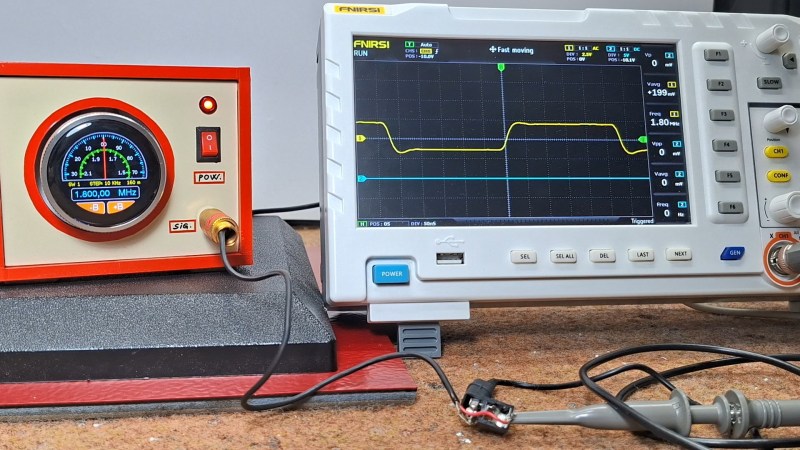
Not every project has to be complicated– reinventing the wheel has its place, but sometimes you find a module or two that does exactly what you want, and the project is more than halfway done. That the kind of project [mircemk]’s Simple Retro Style VFO is β€” it’s a variable frequency oscillator for HAM and other use, built with just a couple of modules.
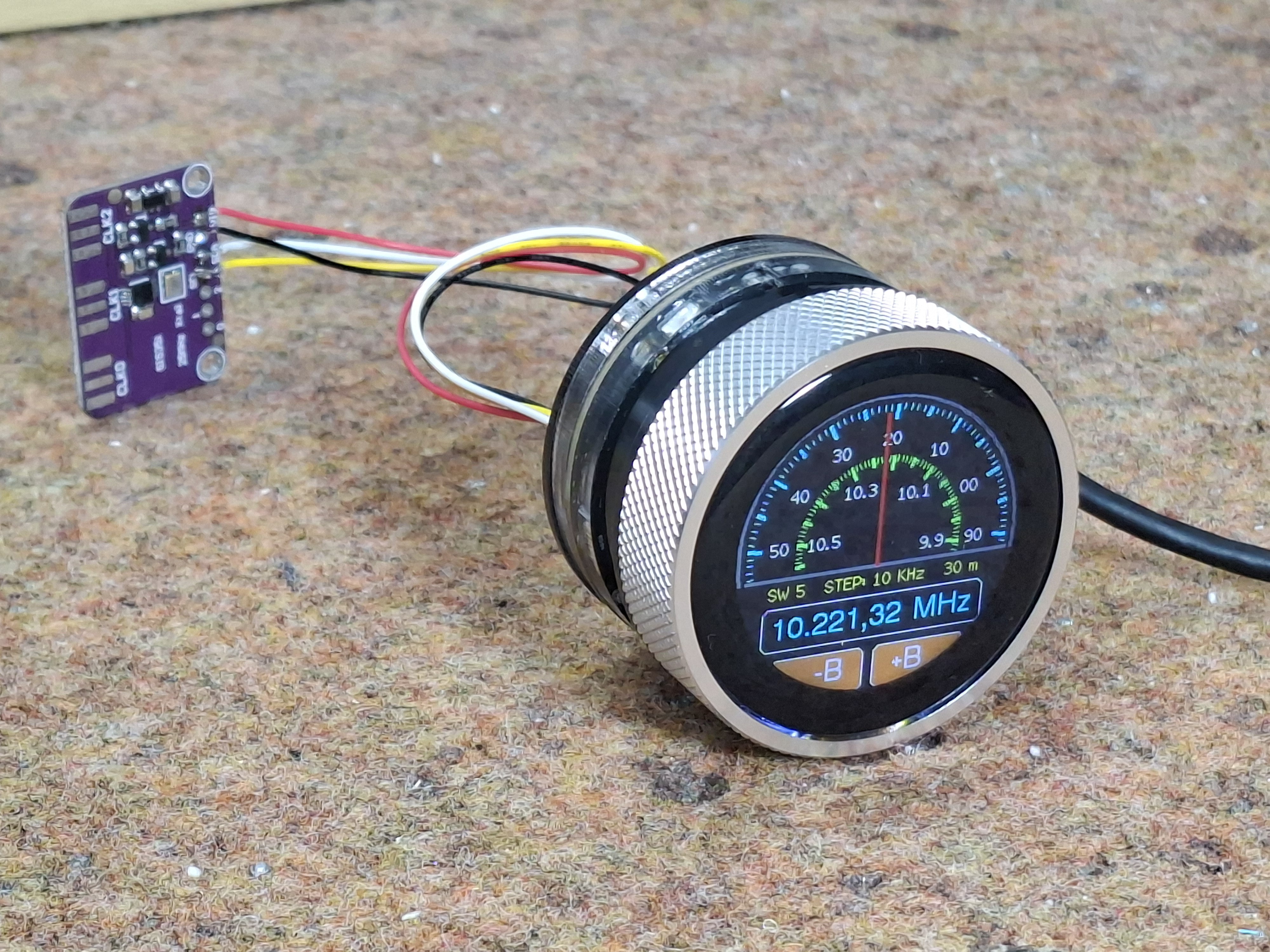
Strictly speaking, this is all you need for the project.

The modules in question are the SI5351 Clock Generator module, which is a handy bit of kit with its own crystal reference and PLL to generate frequencies up to 150 MHz, and the Elecrow CrowPanel 1.28inch-HMI ESP32 Rotary Display. The ESP32 in the CrowPanel controls the SI5351 module via I2C; control is via the rest of the CrowPanel module. This Rotary Display is a circular touchscreen surrounded by a rotary display, so [mircmk] has all the inputs he needs to control the VFO.

To round out the parts count, he adds an appropriate connector, plus a power switch, red LED and a lithium battery. One could include a battery charger module as well, but [mircmk] didn’t have one on hand. Even if he had, that still keeps the parts count well inside the single digits. If you like video, we’ve embedded his about the project below; if not the write up on Hackaday.io is upto [mircmk]’s typical standard.Β 

People have been using the SI5351 to make VFOs for years now, but the addition of the round display makes for a delightfully retro presentation.

Thanks to [mircmk] for the tip.
LoRa Repeater Lasts 5 Years on PVC Pipe and D Cells

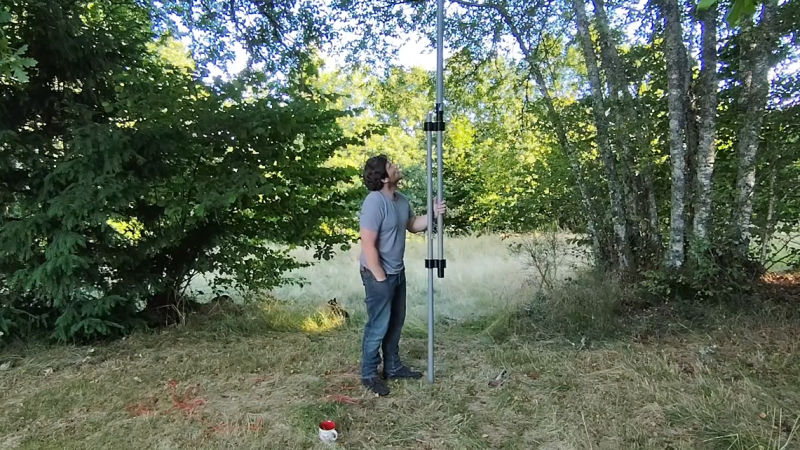
Sometimes it makes sense to go with plain old batteries and off-the-shelf PVC pipe. That’s the thinking behind [Bertrand Selva]’s clever LoRaTube project.

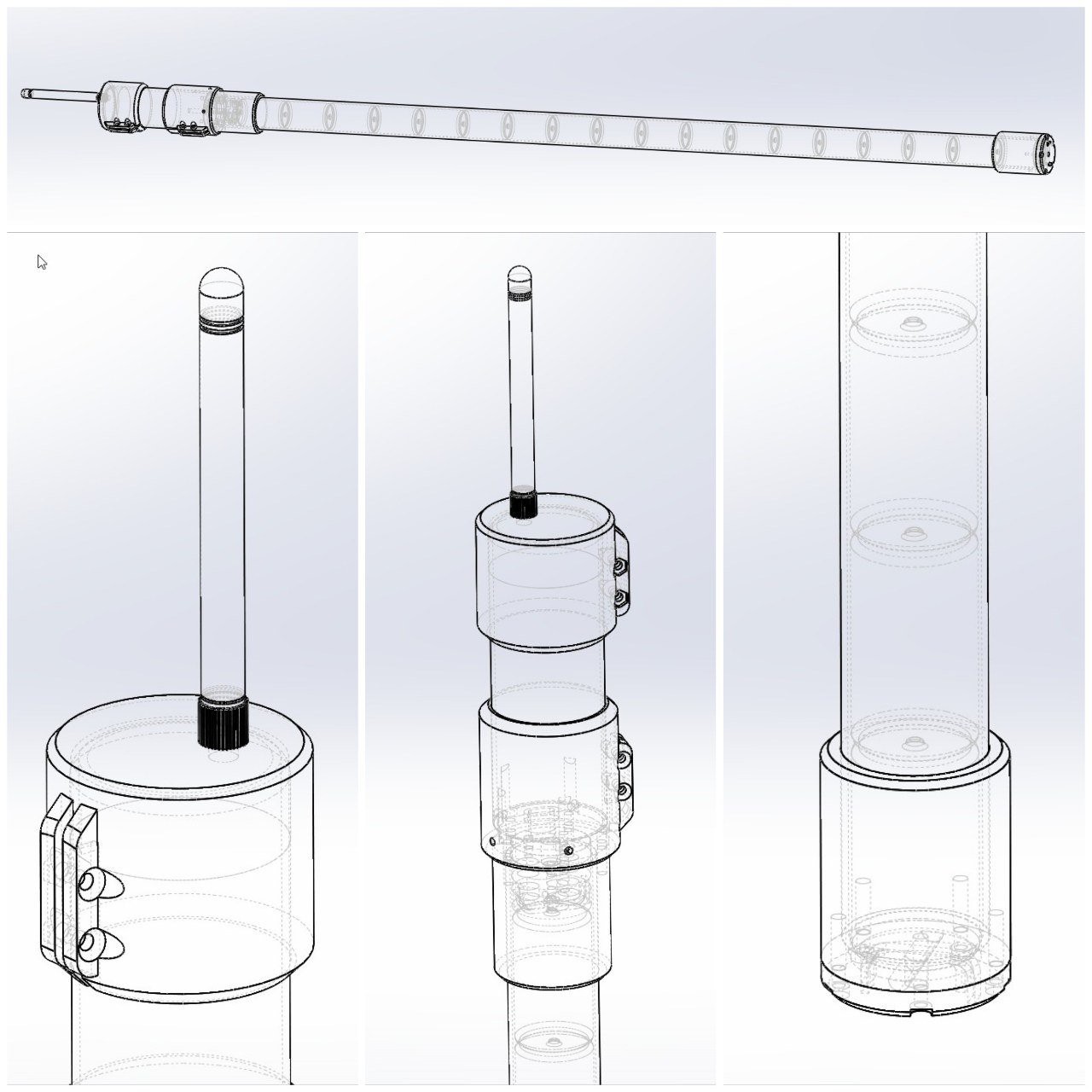
PVC pipe houses a self-contained LoRa repeater, complete with a big stack of D-size alkaline cells.

LoRa is a fantastic solution for long-range and low-power wireless communication (and popular, judging by the number of projects built around it) and LoRaTube provides an autonomous repeater, contained entirely in a length of PVC pipe. Out the top comes the antenna and inside is all the necessary hardware, along with a stack of good old D-sized alkaline cells feeding a supercap-buffered power supply of his own design. It’s weatherproof, inexpensive, self-contained, and thanks to extremely low standby current should last a good five years by [Bertrand]’s reckoning.

One can make a quick LoRa repeater in about an hour but while the core hardware can be inexpensive, supporting electronics and components (not to mention enclosure) for off-grid deployment can quickly add significant cost. Solar panels, charge controllers, and a rechargeable power supply also add potential points of failure. Sometimes it makes more sense to go cheap, simple, and rugged. Eighteen D-sized alkaline cells stacked in a PVC tube is as rugged as it is affordable, especially if one gets several years’ worth of operation out of it.

You can watch [Bertrand] raise a LoRaTube repeater and do a range test in the video (French), embedded below. Source code and CAD files are on the project page. Black outdoor helper cat not included.

All Handheld Antennas Are Not Born The Same

If you own a handheld transceiver of any type then the chances are it will come with a β€œrubber duck” style antenna. These flexible rubber-coated antennas are a compromise in performance, being significantly smaller than a wavelength at their frequency of operation. [OM40ET] has an interesting video in which he investigates thisΒ by tearing down a cheap rubber duck antenna and an even cheaper fake.

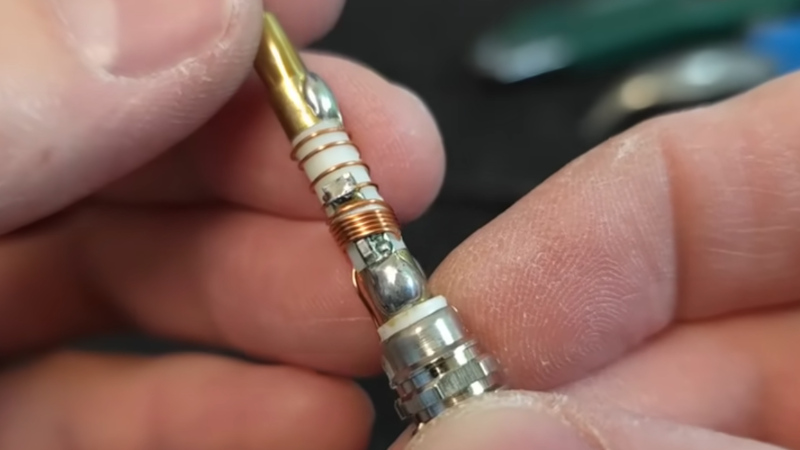
These antennas usually have a flexible upper section and a bulge at the bottom over the connector. The fake one has nothing in the bulge except the antenna wire and thus has a very high SWR, while the β€œreal” one has a loading coil. This coil is an interesting design, because it’s designed such that the antenna has two resonant points at the 2 metre and 70 centimetre amateur bands. On paper it’s a tapped coil fed at the tap through a capacitor for matching, but a more detailed appraisal will tell you that the two halves of the coil are designed to return those two resonances. It’s still a not-very-good antenna, but the fact that it works at all is something.

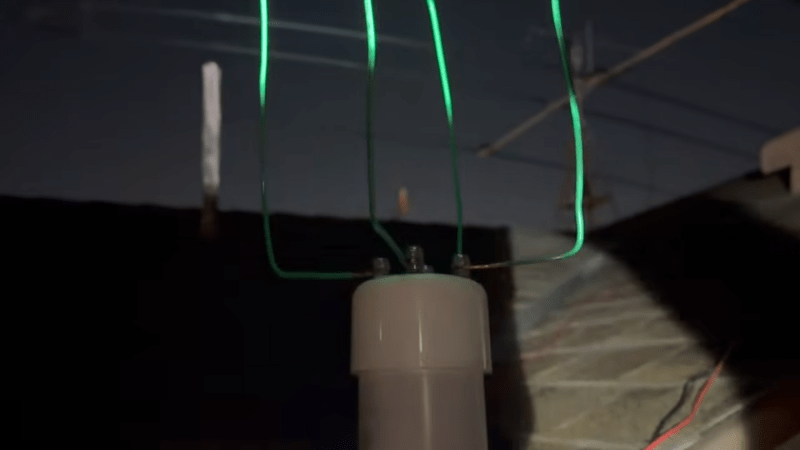
If you want something better at VHF and haven’t got much space, all is not lost. We recently featured a VHF magnetic loop.

Building a Low-Cost Satellite Tracker

Looking up at the sky just after sunset or just before sunrise will reveal a fairly staggering amount of satellites orbiting overhead, from tiny cubesats to the International Space Station. Of course these satellites are always around, and even though you’ll need specific conditions to view them with the naked eye, with the right radio antenna and only a few dollars in electronics you can see exactly which ones are flying by at any time.

[Josh] aka [Ham Radio Crash Course] is demonstrating this build on his channel and showing every step needed to get something like this working. The first part is finding the correct LoRa module, which will be the bulk of the cost of this project. Unlike those used for most Meshtastic nodes, this one needs to be built for the 433 MHz band. The software running on this module is from TinyGS, which we have featured here before, and which allows a quick and easy setup to listen in to these types of satellites. This build goes much further into detail on building the antenna, though, and also covers some other ancillary tasks like mounting it somewhere outdoors.

With all of that out of the way, though, the setup is able to track hundreds of satellites on very little hardware, as well as display information about each of them. We’d always favor a build that lets us gather data like this directly over using something like a satellite tracking app, although those do have their place. And of course, with slightly more compute and a more directed antenna there is all kinds of other data beaming down that we can listen in on as well, although that’s not always the intent.

Assistive Radio Tells You What You Can’t See

We think of radios as audio devices, but for people who are visually impaired, it can be difficult to tell which channel you are listening to at any given time. [Sncarter] has a family member with vision impairment and built a radio to help her. Unfortunately, it was difficult to replicate, so he decided to try again. The result is an FM radio that provides audible status notifications about power and frequency. Check it out in the video below.

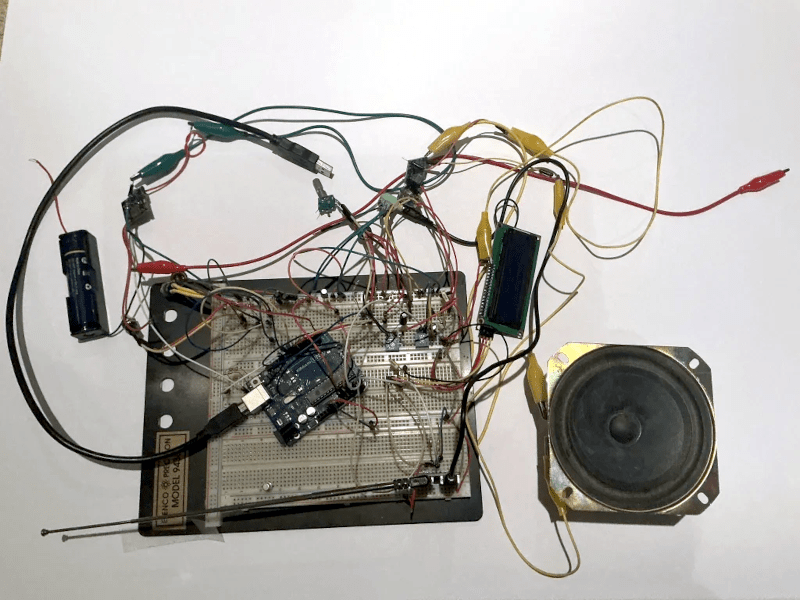
This isn’t just some hacked-up commercial radio, but a ground-up design that uses a TEA5767 with an ATMega328 for control. There is an LCD for when someone else might use the radio and an audio amplifier. He built the prototype on a breadboard, but moved the finished product to a PCB.

It isn’t just the electronics and the sound that are assistive. The case has raised bosses to help the user find things like the switch and rotary encoder. The Arduino can speak frequency announcements, although the quality of the voice is something he wants to tackle in the next revision.

These radios on a chip give you many design options. These same ideas can be useful for audiobook players, too.

Gilbert Cell Lacks Sullivan

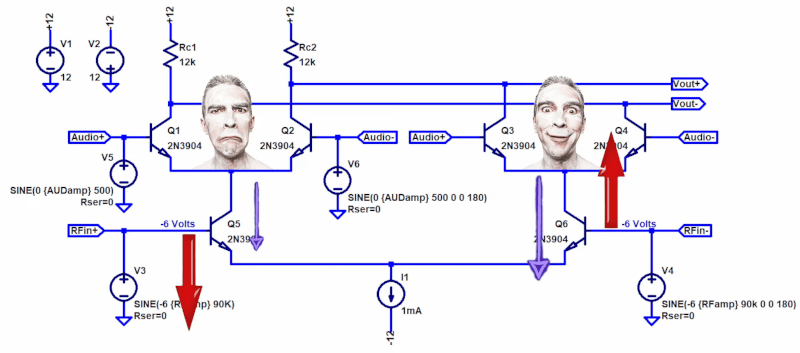
If you’ve ever used an NE602 or similar IC to build a radio, you might have noticed that the datasheet has a β€œgilbert cell” mixer. What is that? [Electronics for the Inquisitive Experimenter] explains them in a recent video. The gilbert cell is a multiplier, and multiplying two waveforms will work to mix them together.

At the heart of the gilbert cell is essentially three differential amplifiers that share a common current source. The video shows LTSpice simulations of the circuits as he explains them.

One reason these work well on ICs is that they require very closely-matched transistors. In real life, it is hard to get transistors that match exactly. But when they are all on the same slab of silicon, it is fairly straightforward.

What we really like is that after simulating and explaining the circuit, he explains why multipliers mix signals, then builds a real circuit on the bench using discrete transistors and matched transistor arrays. There is a bit of trigonometry in the explanation, but nothing too difficult.

Of course, the most common application of differential amplifiers is the op amp. The NE602 is out of production, sadly, but if you can find any, they make dandy receivers.

Cheap VHF Antenna? Can Do!

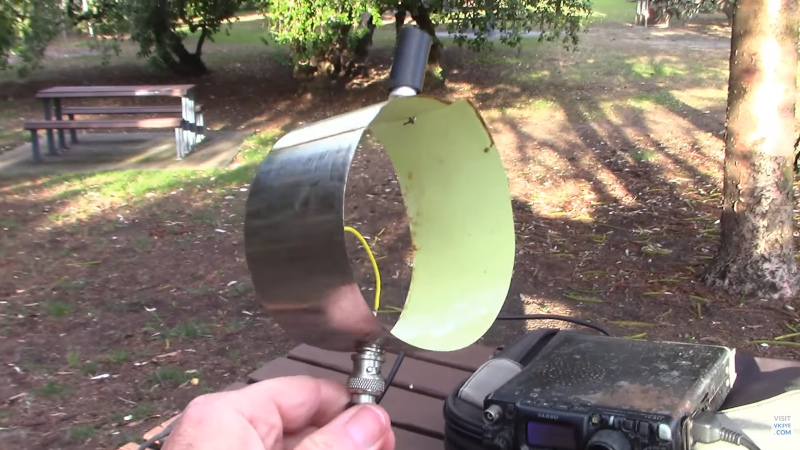
The magnetic loop antenna is a familiar sight in radio amateur circles as a means to pack a high performance HF antenna into a small space. It takes the form of a large single-turn coil made into a tuned circuit with a variable capacitor, and it provides the benefits of good directionality and narrow bandwidth at the cost of some scary RF voltages and the need for constant retuning. As [VK3YE] shows us though, magnetic loops are not limited to HF β€” he’s made a compact VHF magnetic loop using a tin can.

It’s a pretty simple design; a section from the can it cut out and made into a C shape, with a small variable capacitor at the gap. The feed comes in at the bottom, with the feed point about 20 % of the way round the loop for matching. The bandwidth is about 100 MHz starting from the bottom of the FM broadcast band, and he shows us it receiving broadcast, Airband, and 2 meter signals. It can be used for transmitting too and we see it on 2 meter WSPR, but we would have to wonder whether the voltages induced by higher power levels might be a little much for that small capacitor.

He’s at pains to point out that there are many better VHF antennas as this one has no gain to speak of, but we can see a place for it. It’s tiny, if you’re prepared to fiddle with the tuning its high Q gets rid of interference, and its strong side null means it can also reduce unwanted signals on the same frequency. We rather like it, and we hope you will too after watching the video below.

❌