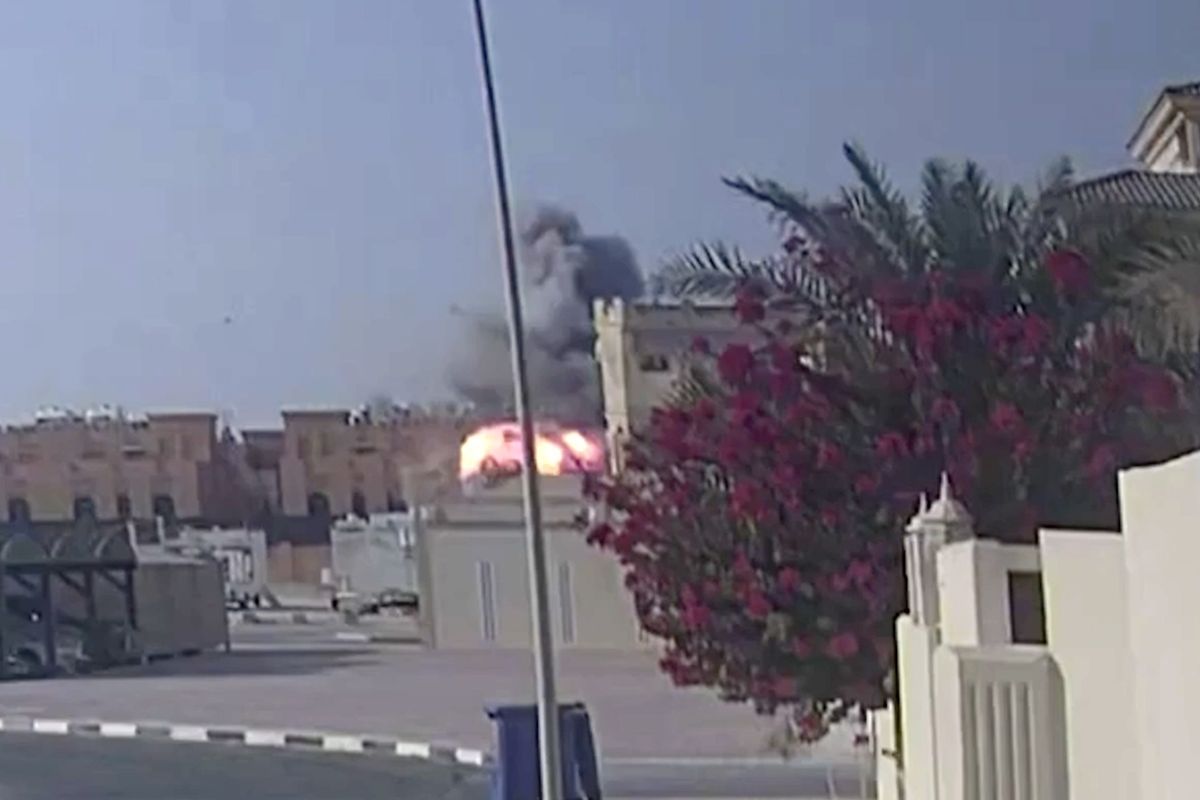
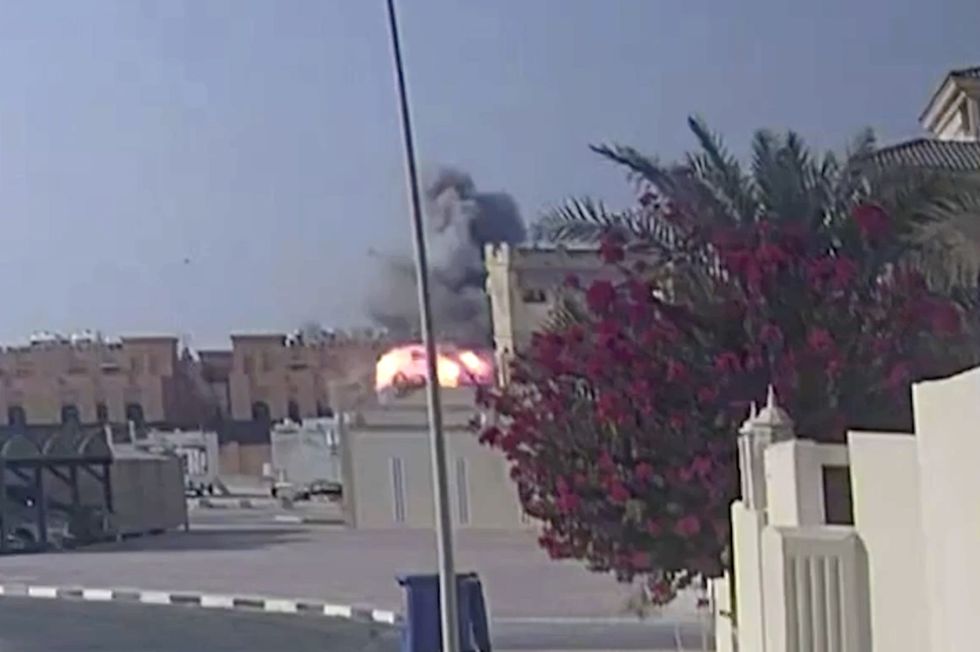
The U.S. military has activated its first one-way-attack drone squadron under a new task force based in the Middle East, U.S. Central Command (CENTCOM) announced on December 3. The move comes four months after Secretary of War Pete Hegseth ordered an accelerated push to field affordable unmanned systems capable of delivering decisive effects in contested […]
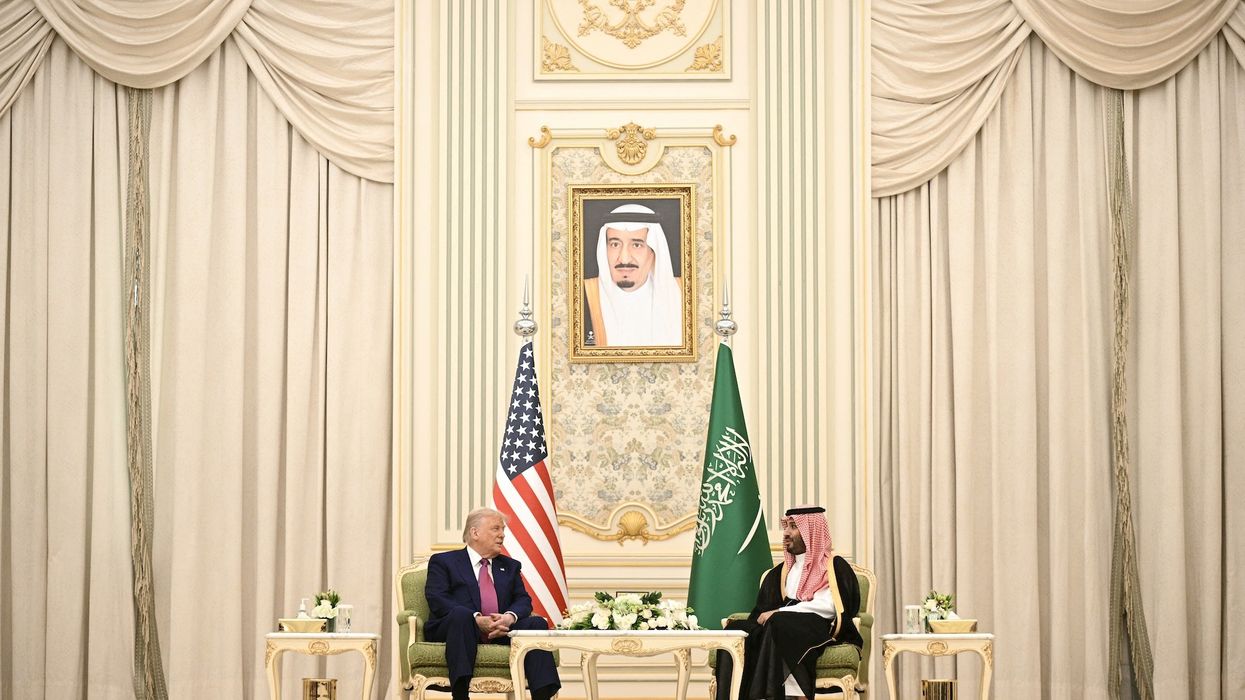
EXPERT INTERVIEW — President Trump is welcoming Saudi Crown Prince Mohammed bin Salman to the White House today with an announcement that he plans to approve the sale of F-35 fighter jets to the Kingdom, signaling a policy shift by the U.S. Administration.
The visit to Washington marks one of the most consequential moments in decades for the U.S.–Saudi relationship. Both governments see the meeting as a chance to cement the expansion of the U.S.-Saudi partnership from one focused on energy and security to include advanced technology, AI, critical minerals and defense cooperation.
The trip follows President Donald Trump’s high-profile visit to Saudi Arabia in May, when both countries announced a multibillion-dollar deal that could potentially give Riyadh access to advanced U.S. AI technology. While sources tell The Cipher Brief that many of the details of those deals remain in various stages of negotiation, the Crown Prince’s Washington visit aims to build off of that momentum.
More widely, the visit comes at the end of a year of rapid geopolitical and technological change for the Middle East. Through these shifts, Saudi Arabia and other Gulf leaders like the United Arab Emirates are positioning themselves as centers for AI infrastructure, diversified cheap energy, and global supply chains.
To help unpack the stakes and expectations behind the Crown Prince’s Washington visit, The Cipher Brief spoke with Norm Roule, who spent more than 34 years in the Intelligence Community and has been following regional developments for 43 years - including his time as a business consultant. Roule is in frequent contact with Gulf leaders on energy, security, finance and technology issues and travels frequently to the region. Cipher Brief CEO & Publisher Suzanne Kelly began by asking Roule to summarize the expectations going into this visit. Our conversation has been lightly edited for clarity and length.
THE INTERVIEW
Roule: The visit of Crown Prince Mohammed bin Salman to Washington will likely represent a transformational moment in Saudi-American relations that will stand out among the most important events in the 80-year relationship between the two countries. Each side will likely seek to use this visit to change the traditional relationship from one of oil and security to one that is more of a blend of advanced technology, mining, and energy, which includes nuclear, and defense.
Each side now sees the other as an indispensable partner and views this visit as a way of establishing an architecture that will ensure that periodic political difficulties don't destabilize a critical relationship that needs to last decades. The Saudis seek this more predictable relationship and assets that will allow them to accelerate their evolution toward becoming a global power center.
Washington seeks to revitalize and cement ties with a rising middle power that will certainly have considerably more influence in the Middle East and the Global South and will become an important link in the global energy and supply chain. Regional issues will be discussed during the visit, but I don't think it's likely we're going to see significant shifts outside of the ongoing trends.
Kelly: This visit, of course, does follow the visit by President Trump to Saudi Arabia in May of this year where some signficant deals were announced with regard to technology sharing and investment opportunities.
Roule: That is correct. In essence, what you're looking at is the other side of the coin from those visits. President Trump and a team of unprecedented stature of American cabinet members and highly consequential American business leaders traveled to the Kingdom and concluded a vast array of business deals over the months since that time. American diplomats and business leaders have met to finalize and further expand upon those deals. And now we're looking at a meeting that will, in essence, conclude those agreements or take them to the next stage of developing memorandums of understanding. These are very complicated agreements that in and of themselves will take months, if not years, to play out. But they are indeed transformational for the economies of each of the two partners.
This is exclusive Subscriber+Member content
Saudi Arabia and its neighbor, the United Arab Emirates are drawing on an unprecedented and historic combination of very focused policy decisions, massive domestic and global investment flows that they are developing with themselves and partners, and domestic social engineering that's been something that is unique in the world based upon AI and multiculturalism to redefine themselves from hitherto reliable energy suppliers into world-class members of the global supply chain - architects of the next generation of AI manufacturing and new nodes of political influence in a non-polar Middle East.
Each of these two countries is positioning themselves as models of rule of law, stable governance, and an oasis of multicultural life, open for business, open for boldness. And these two countries have a strategy that relies upon a tight weave of Liquified Natural Gas (LNG), chemicals, energy infrastructure, data centers, and finance. But each country also requires a deep, unprecedented and sustained access to the most advanced US AI technology.
So for this to happen, we're watching the Saudi Crown Prince come to Washington to build this new relationship with the United States. They know that this relationship brings tremendous benefits to the United States as well. It not only helps us build out our infrastructure, our employment at a time when we're having our own challenges, but in a way, it also sends a powerful message. They believe in us. They believe in the American future. They know that we will win, and often in ways that we sometimes don't express in ourselves.
Lastly, they're doing all of this in a way that means that they're not having to cut their commercial ties with China or offend Russia. In return for what they will give, they will receive technology that makes them global AI powers. And with the cheap energy that they are able to attach to that AI, they will be incredibly successful.
Kelly: Clearly, we're going through a dramatic shift in the Middle East right now. How important is this relationship to the United States?
Roule: It's critical. The Middle East remains vital to America's interest. The Middle East, as they say, it's in the middle. You look at any map and the Middle East is in the center of global trade, global transportation, multiple shipping routes move through the region, 80% of the data between Europe and Asia transit the region. You have global energy centered in the region. You have several of the world's major religions in the region. You have crossroads of multiple U.S. national interests.
At the same time, you're now looking at the development of an artificial intelligence infrastructure that is starting to blossom. And our ability to partner with that and to ensure that that technology does not threaten America's interests, and indeed sustains America's interest as that region partners with the Global South. It just protects our interest and expands our influence at a time when China would very much like to replace us.
Kelly: You talked about some of the ambitions of the Kingdom and the UAE, both in investment and AI. We've talked a lot in the past about their efforts and trying to lead when it comes to green energy. What do you think is driving their strategy?
Roule: Their strategy is driven by changes in the world that are just inevitable. If we were to go back one year and I were to tell you that knowledge is power, you would agree completely with me. But today, the adage is now, power is knowledge. The artificial intelligence system is inherently an energy system in and of itself. And artificial intelligence requires access to inexpensive, reliable 24-hour energy. And in the Middle East, Saudi Arabia and the Emirates and the other Gulf Cooperation Council states have access to tremendously inexpensive energy, and the prospect of additional inexpensive energy through their expansion of solar power and nuclear energy, which they're seeking. Those with access to such tremendous cheap energy and artificial intelligence have access to the benefits of artificial intelligence, which will bring them enormous economic advantage in the future.
Now, look at the other end of that stick. In Sub-Saharan Africa, at least 600 million Africans lack access to a reliable source of electricity. Imagine the social and economic disadvantage of those various societies. But let's go forward, just thinking about where the world is moving. By 2040, data center energy needs will rise fourfold. 1.5 billion people are estimated to move to cities. That means 2 billion new air conditioners will come online. And when you're in Saudi Arabia, a large portion of their oil needs, their oil production, is actually used for air conditioners in the summer. And you see their oil production move up in the summer for air conditioners. Global fleets of aircraft are expected to double from 25,000 to 50,000 aircraft by 2040. Jet fuel demand will be up by 30%. Six million kilometers of electrical transmission lines are needed by 2040. Imagine what that means in terms of copper.
So if you're looking at something like this, we're now looking at $4 trillion of investment needed annually for this energy architecture. We can't do this without partners with capital - like Saudi Arabia or the United Arab Emirates - and the many partners they bring together into their ecosystem.
So now let's look at energy. In recent years, you've had this great contest between the people who correctly talk about the need for us to battle climate change, and those who have talked about the need for more energy. Both issues must be dealt with. Well, now we realize oil demand is not going to drop. In fact, oil demand is expected to remain above 100 million barrels a day through 2040. This demand is going to be needed for materials and petrochemicals. LNG demand is expected to grow by 50%. Renewables will double. In essence, the world needs more energy, not replacement for these other energy sources.
Saudi Arabia and the Emirates and Qatar and Kuwait see themselves as becoming islands of cheap energy working with the United States. They see themselves at this moment in history - where, if they can capture a certain amount of extraordinary technology and a strategic relationship with the United States, and this ecosystem of multicultural partnership with the world - they can become a very different society. It's a fascinating dynamic. It's a very exciting time in history.
Kelly: Do you think falling oil prices are going to impact this strategy?
Roule: Well, we're watching that play out. So in essence, what we've seen is very prudent decision making. They have slowed some of the execution of major projects, but they have not stopped the projects themselves. They have extended timelines. They have delayed the rollout of certain large programs. If it has to do with their visions of Vision 2030 or Vision 2040, they have different visions in the Gulf, the projects remain on track. And it's because those projects are critical to where they need to go. If you look, for example, at the city of Neom that is often talked about, well, the port of Oxagon, which is critical to the infrastructure of trade in the Northwest Arabian Peninsula, that’s still functioning, it’s still out there. They're just going to slow the build out of that city because it's reasonable to say to slow the build out to the city. It's just not reasonable to think that you can slow the build out of trade and infrastructure in the Arabian Peninsula. That's going to happen on a different timeline.
Now, we've also seen reports that the Saudis have withdrawn some of their capital from not less productive, but maybe investments in the United States that aren't as relevant to the core vision of equities as in the past. That I think you may see a little more of, but I don't see a massive withdrawal of those investments unless we saw oil prices drop into say the low $50s or $40s. So what we're watching is prudent focus. We're watching attention to timelines. We're watching attention to anti-corruption. I'm impressed. I've not seen anybody waste money or do anything that is injudicious. And I've not seen anybody make allegations that such things have been noted by others.
Kelly: What will make this a successful visit to Washington, both on behalf of the Saudis and on behalf of the U.S.?
Roule: Architecture. And what you're looking for is something that lasts beyond one month, one deal. You're looking for something that binds us together over time. I think what you're going to hear will be announcements of MOUs. You will hear announcements of deals. And as important as it is to focus on the numbers associated with the deals, and there will certainly be focus on that and questions regarding that, it's really more important to focus on the industries, the sectors associated with those deals, and then the depth that each of those MOUs brings to the various societies.
For example, let's say that we see an aviation deal that might bring employment to the United States but will set up a manufacturing node in Saudi Arabia. If something like that were to happen, that would make Saudi Arabia part of a global supply chain. So 20 years from now, we would have a more reliable source of parts or an alternative source of parts. If mining is developed within the kingdom, well, it takes years to develop a mine, but we will have an alternative source of minerals, and Saudi Arabia is a rich source of multiple minerals that are important to the United States. Or if the Saudis invest in minerals in the U.S., it may take years for those to play out. So the architecture associated with those deals will mean employment but it's the depth and the timelines with those deals that will determine the depth of that relationship.
In terms of defense deals, I don't want to downplay that, but America has always stood with Saudi Arabia. People have often asked, 'If there's a single attack did we respond in as well or to the extent that we should have?' That's open to question. But there is no doubt in my mind, nor in the minds of regional leaders, that if there were a serious attack on Saudi Arabia by Iran or another country, we are absolutely going to be there. And do we need a defense deal to say that? I'll leave that to others, but not in my mind. But in any case, we will see some sort of defense architecture develop.
Should the Saudis have nuclear energy? Why not? Every other country does. They're looking for additional technology and there's no reason we can't provide that to them to assist them. But again, it's that architecture and the relationship over years that you seek, vice one delivery, one deal, and the announcements that go with it.
Kelly: Where do you see the region going in 2026? What will be the big headlines and the big drivers next year in the Middle East?
Roule: There's a lot of good news in the Middle East. The U.S. remains the dominant great power. Americans are not and likely will not be the target of a major military confrontation in the region. But the region itself continues to lack a strong cohesive narrative that pulls it together.
The biggest point in the region is that it remains a non-polar region. There's no reason to believe that this administration will cease its vigorous focus on the region. And we must applaud this administration for, in its first 11 months, having multiple emissaries and making visits and sending many cabinet ministers to the region. If you look at the recent conferences that have taken place in Manama, Qatar, Abu Dhabi and Riyadh, we've had cabinet level representation at all of those events to include during a government shutdown, which is no small thing, with representatives from multiple government departments. America is back and Russia and China are not.
Gaza is going to sputter along, and the U.S. commitment remains and CENTCOM is performing marvelously as a key force bringing things together. I think we're going to see that continuing. Neither side, Israel or the Palestinians, have a reason to return to war, but violence will continue. The largest or most significant political shifts in the region likely would come from a change in the Israeli government.
Iran is fragile. Iran nuclear talks are unlikely to begin until the administration sees evidence that the talks will not be a waste of time. Right now, the Iranians seek talks, but that doesn't mean they want to do anything other than have talks, because if they have talks, the rial will be strengthened and the Iranians don't have to bring anything up. The Quds Force will remain active. They will continue to deliver weapons to the Yemenis. But it's unlikely they're interested in looking for a conflict. We can't rule out a sudden collapse of Iran in case of an environmental disaster such as an earthquake, but the regime appears fragile at present.
Syria continues to make progress and I think we're going to see the progress continue in its current trend. Arab infrastructure investment continues to progress. I would watch for telecommunications and port investment work. And the reason that's important is that you're watching the Biden administration IMEC plan in essence or IMEC cooperation be realized as Gulf states put their lines up through Europe and through Syria.
Lebanon will likely remain a greater challenge. I think we're watching a lot of Saudi quiet diplomacy with Yemen and that will continue. GCC infrastructure will continue to develop. I would be surprised if we didn't see more Saudi work with Bahrain and Saudi work between the GCC and the West.
Oil will remain stable likely and soft in coming months. I think you're going to see a lot more natural gas come online. OPEC will continue to do everything it can to prevent oil from falling into the 50s while maintaining a relatively soft position so they can recapture market share from India and other places lost to Russia.
Read more expert-driven national security insights, perspective and analysis inThe Cipher Brief because National Security is Everyone’s Business.
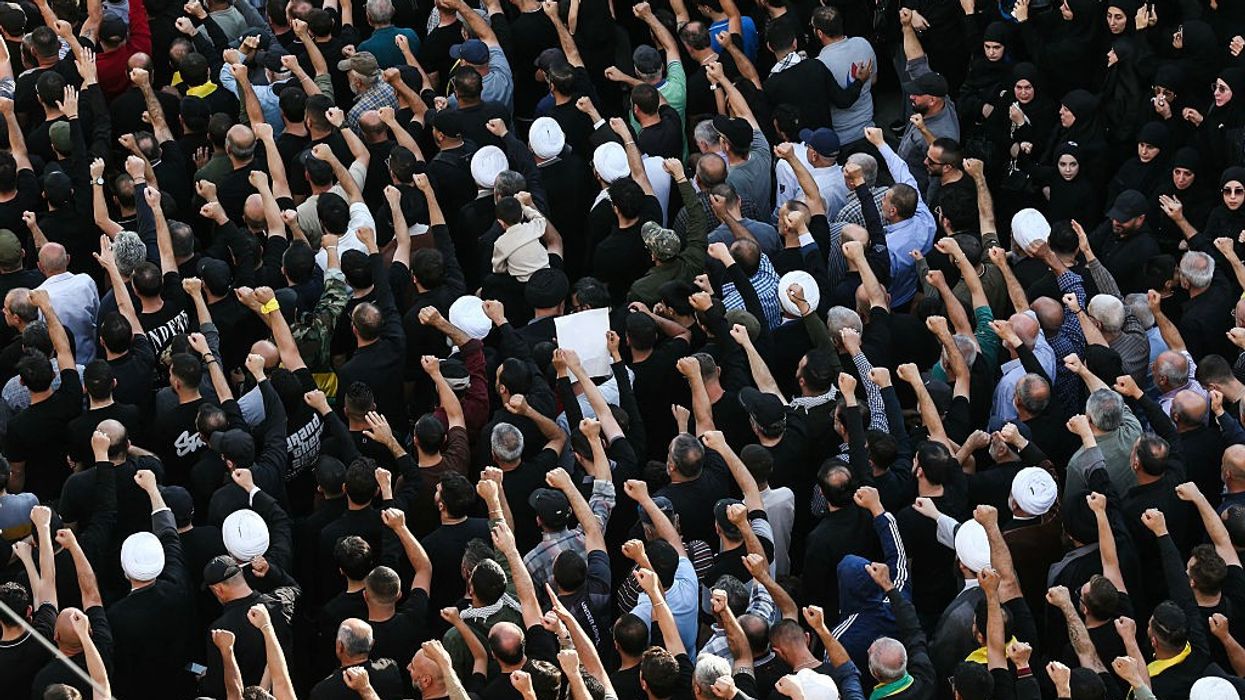
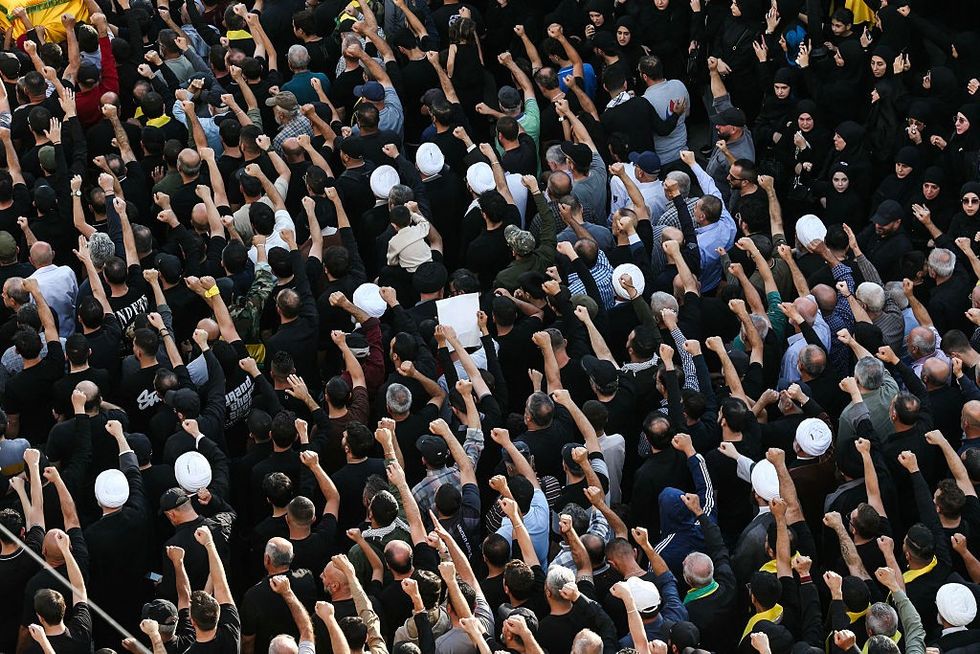
DEEP DIVE — Tucked deep into the cragged hills of southern Lebanon, Hezbollah, the once powerful Iranian-backed militia brought to its knees by a war with Israel, has spent the past year meticulously gouging its way back to relevancy.
For Western and Israeli security forces, the designated terrorist group’s covert but influential resurgence establishes a precarious problem: a persistent, low-level threat that could instantly trigger a wider conflict, critically testing the resilience of any ceasefires and the existing, fragile statehood.
Financial Lifelines and Sanctions
The November 5announcement from the U.S. Treasury’s Office of Foreign Assets Control (OFAC) targeted key elements of Hezbollah’s financial network. Two operatives — Ossama Jaber, a Hezbollah financier who personally collected tens of millions via Lebanese exchange houses from September 2024 to February 2025, and Ja’far Muhammad Qasir, a sanctioned terrorist collaborating with Syrian oil magnate Yasar Husayn Ibrahim — were blacklisted for laundering Iranian cash into Hezbollah’s war chest.
These funds, exploiting Lebanon’s cash-heavy, regulation-light economy,bankrolled everything from paramilitary salaries to the reconstruction of terror infrastructure battered by Israeli strikes. Under Secretary of the Treasury for Terrorism and Financial Intelligence, John Hurley, didn’t mince words: For Lebanon to emerge “free, prosperous, and secure,” Hezbollah must be “fully disarmed and cut off from Iran’s funding and control.”
Matthew Levitt, a senior fellow and director of the counterterrorism and intelligence program at The Washington Institute for Near East Policy, and a former counterterrorism intelligence analyst for the FBI, points out that despite sanctions, Iran’s financial backing is pivotal to Hezbollah’s survival and operational reach.
“We assume Iran still provides about the same amount of money, but Hezbollah is having a harder time getting it through on a timely basis. They can’t just ship it from Iran or Iraq anymore without inspections, so they rely more on diaspora networks in South America and Africa,” he tells The Cipher Brief. “All of this is against the backdrop of severe setbacks. Hezbollah intends to continue positioning itself to not only fight militarily but also assert an oversized, dominant position within Lebanon by virtue of force.”
A Battered Front, But Not Broken
The Israel-Hezbollah war, which ignited in 2023 alongside the war in Gaza,decimated the organization’s leadership, weapons arsenal, and fighting ranks, with more than 3,000 of its fighters killed. The decapitation strikes were surgical: On September 27 last year, an Israeli airstrike flattened Hezbollah’s Beirut headquarters, killing Secretary-General Hassan Nasrallah, the group’s iron-fisted architect of asymmetric warfare. In the ensuing ground incursion, Israeli forces dismantled border launch sites and command bunkers, leaving Hezbollah’s Radwan Force, theelite unit tasked with infiltrating Galilee, reeling.
Yet, as analysts caution, Hezbollah is battered but not broken. A number of its battle-hardened fighters, who cut their teeth supporting the Assad regime in Syria, are now integrating into civilian life, ready to rearm at any time. Furthermore, the group’s Shia base, which comprisesroughly31 percent of the Lebanese population, remains loyal to Hezbollah, upheld by its wide-reaching welfare networksamid a country grappling with a crumbling economy.
These moves indicate that Hezbollah’s military recovery is already well underway.
“Hezbollah is giving much more attention than before the war to its Badr Unit, positioned north of the Litani River, and strengthening it with Radwan forces,” Sarít Zehavi, senior researcher at the Alma Research and Educational Center, tells The Cipher Brief. “They are also shifting from smuggling to local manufacturing of drones and missiles. Even though some brigades are not yet redeployed to the border, they continue training and rebuilding capabilities.”
The Badr Unit, a keyelement of Hezbollah’s northern forces, has become the group’s tactical spearhead along the Litani River and near the Israeli border. Tasked with reconnaissance, border infiltration, and rapid response, the unit has been reinforced with Radwan-trained fighters and advanced drone capabilities. Badr is central to Hezbollah’s evolvingdoctrine of “strategic latency,” maintaining a persistent threat without provoking full-scale war, and acts as a bridge between conventional militia operations and the group’s clandestine drone and cyber activities.
Moreover, Lebanon’s political deadlockincreases the risk that Hezbollah will maintain its military dominance.
The Beirut government, assembled hastily earlier this year under President Joseph Aoun, is characterized as the least Hezbollah-affiliated in years, with a focus on reclaiming national independence from the dominant insurgents. There is, however, significant skepticism about how such a push is enforced. Hezbollah continues to rebuff key appointments, and its diminished but growing stockpile,estimated at 20,000 remaining rockets, hangs over Beirut’s ambitions.
This hybrid threat presents a national security nightmare for Washington: a non-state actor wielding state power, rendering diplomacy incredibly difficult.
Need a daily dose of reality on national and global security issues? Subscriber to The Cipher Brief’s Nightcap newsletter, delivering expert insights on today’s events – right to your inbox. Sign up for free today.
Iran’s Evolving Logistical Pipelines
Tehran’s shadow looms largest. The IRGC-Quds Force, Hezbollah’s ideological leader since 1982, has poured over $1 billion into the group this year alone, per Treasury disclosures — despite layered U.S. sanctions biting into Iran’s oil exports. However, a source familiar with the U.S. Office of Foreign Assets Control told The Cipher Brief on background that tracking Iran’s funds has become increasingly challenging in recent months.
“The Treasury and State Departments need more resources to track violations, and the government shutdown left many investigators sidelined,” the source observed. “Congress can help by requiring reports on Iranian weapons shipments and funding enforcement teams.”
The Iranian cash flows throughhawala networks and Beirut’s labyrinthineexchange houses, where operatives like Jaber convert petrodollars into untraceable Lebanese pounds. It’s a masterclass in sanctions evasion: Iran’s regime, squeezed by domestic protests and a rial in freefall, prioritizes its “Axis of Resistance” over breadlines at home.
“Assad’s downfall severely crimped Hezbollah’s pipeline from Tehran, but even so, Hezbollah and Iran remain adept at exploiting fragile states. Beirut and Damascus show some interest in interdiction. Still, both are weak governments, and they have other priorities,” Jonathan Ruhe, Director of Foreign Policy at the JINSA Gemunder Center for Defense & Strategy, tells The Cipher Brief. “Iran also exploits power vacuums in Sudan and Libya to resupply Hezbollah from the sea, using surreptitious maritime tactics like Iran’s sanctions-busting ‘shadow fleets.’”
Post-war Syria has forced Tehran to improvise. The once-feared land bridge — stretching from Iran through Iraq and Syria to Lebanon — has been battered by Israeli airstrikes and rebel attacks, yet parts of it still survive. To bolster its Middle East proxy, the Iranian regime hasupped its use of maritime routes. Iranian cargo ships dock at Syria’s Tartus port under civilian manifests, offloading drone kits and rocket fuel disguised as fertilizer. Trucks then traverse the unguarded border into Lebanon’sQalamoun Mountains, often chaperoned by IRGC advisors.
Domestically, however, Hezbollah is reducing reliance on imports. Clandestinefactories in Beirut’s Dahiyeh suburbs and Bekaa orchards churn outrefurbished Kornet anti-tank missiles and Ababil drones from scavenged parts. There is a reportednetwork of 50-plus workshops, some powered by smuggled Chinese microchips, slashing reliance on vulnerable sea lanes. Despite its own economic ailments, Tehran continues to give precedence to Hezbollah’s position as a frontline deterrent over short-term financial stability.
Rebuilding the Arsenal: From Ashes to Drones
Israeli assessments estimate Hezbollah hasreclaimed just 20 percent of its pre-war precision arsenal, but what emerges is nimbler and deadlier in specific domains.Drones top the list: low-cost Shahed-136 clones, assembled from Iranian blueprints and Syrian-sourced engines, can loiter over Galilee for hours, scouting IDF positions or delivering 50 kg (110pounds) warheads. Short-range Fajr-5 rockets, concealable in olive groves, are proliferating under civilian camouflage — mosques, schools, even UNIFIL outposts.
Smuggling remains vital. Iran’s military equipment, including advanced components for precision-guided missiles (PGMs), is first transported into Syria using an array of methods designed to evade international scrutiny. Non-descript convoys then travel from Syria’s Homs City to the border city of Al-Qusayr near Lebanon. The Syrian-Lebanese border in the Homs/Al-Qusayr area is porous, mountainous, and complex to police.Over the course of this year, Israel has conductedmore than 40 strikes intercepting shipments near the southern coast of the city of Tyre. Yet the cat-and-mouse game favors smugglers. Private companies, fronts for IRGC logistics, reportedly run nighttime operations mixing weapons with sacks of flour labeled as aid.
“Even before October 7, Hezbollah tried to make precision munitions with Iranian help,” Ruhe noted. “Tehran is now redoubling these efforts. For all Israel’s successes over the last two years, it struggled to wage a multifront war of attrition, and it struggled to defeat Hezbollah’s drones. Hezbollah and Iran want to exploit this exact weakness by being able to oversaturate Israeli defenses with mass drone swarms, similar to what Iran helps Russia do against Ukraine.”
Indeed, Hezbollah’s rebuilding of its ranks is quieter but no less strategic. After losing an estimated 5,000 to 7,000 fighters, the group now runs “resistance summer camps” in the Litani Valley,teaching teenagers bomb-making and cyber tactics under the guise of community service. Morale has waned, but ideology endures: recruits draw strength from chants of Nasrallah’s martyrdom.
Are you Subscribed to The Cipher Brief’s Digital Channel on YouTube? There is no better place to get clear perspectives from deeply experienced national security experts.
The Long Game: Shadows on the Northern Border
For Israel, the situation is a high-stakes strategic battle. Prime Minister Netanyahu’s cabinet has stepped up its drone strikes into Lebanon in recent weeks, and preemptive raids to enforce ceasefire arms restrictions are not off the table. Nonetheless, Hezbollah leaders in Novemberrejected talks, and in anofficial letter to the Lebanese government, insisted that “any attempt at political negotiations with Israel does not serve Lebanon’s national interest.” The statement both rallies supporters and signals Tehran’s firm stance. Iran’s approach is one of “strategic latency” — maintaining a constant, restrained threat to deter Israel without triggering all-out war.
The United States also has global interests at risk. Hezbollah’s networks extend into Latin America and Africa, where they help launder money through drug and diamond trades. Those funds could support operations that reach U.S. soil. Washington’s current strategy —including a $230 million-plus aid package to Lebanon tied to reforms — aims to cut off Hezbollah’s financial base.
This fragile financial and operational landscape underscores that, despite international efforts, Hezbollah’s on-the-ground capabilities remain resilient and difficult to fully contain. A spokesperson for the U.S. Department of State tells The Cipher Brief that while “the Government of Lebanon made a courageous and historic decision to restore state authority by ordering the disarming of Hezbollah and establishing the Lebanese Armed Forces and Internal Security Forces as the legitimate forces for Lebanon, the credibility of Lebanon’s government rests on its ability to transform words into action.”
“The region and world are watching carefully,” the spokesperson continued. “Disarming Hezbollah and other non-state actors, as well as ending Iran’s proxy activities, is crucial to ensuring peace in Lebanon and across the region. The United States of America commends the Government of Lebanon’s efforts to ensure Lebanon is sovereign, peaceful, prosperous, and safe for all Lebanese people.”
Zehavi also pointed to the gap between hopes for disarmament and reality.
“The Lebanese Army is not entering villages and into the private properties where Hezbollah is actually hiding its weapons down,” she explained. “If this continues this way, and it looks like this is where it is going, what we will see is a very unstable situation.”
Lebanon, however, may face the most direct consequences. Hezbollah functions as both a militia and a provider of social services. Several of its clinics are also used asbunkers, and Tehran-financed roads routinely lead to new depots and launch locations. As Zehavi highlights, Hezbollah isrebuilding on two fronts: strengthening its military infrastructure while expanding civilian programs to maintain local support.
The organization, experts say, is not right now preparing for a major offensive but focuses on smaller, ongoing operations — perhaps cyberattacks on Haifa’s ports, sniper fire along the border, and drone swarms testing Israel’s defenses. Iran’s proxy strategy remains intact despite sanctions and setbacks.
Yet, according to Ruhe, if the United States, Europe, and Arab partners enforce UN sanctions on Iran’s rearming of Hezbollah and back Beirut, a better-than-status-quo scenario is possible.
“(But) if Hezbollah and Iran believe Beirut is alone, and that Israel will be isolated for acting militarily, then it’s a matter of when — not if — Hezbollah recovers,” he continued. “And the more successfully it helps Hezbollah rebuild, the more likely Iran will test Israeli and U.S. resolve with its own rearmament.”
For Western policymakers, the objectives are clear: disrupt Hezbollah’s finances, bolster Lebanon’s government, and limit the group’s military power. Otherwise, the risk grows of a wider northern conflict that could draw in larger powers.
Read more expert-driven national security insights, perspective and analysis in The Cipher Brief because National Security is Everyone’s Business.
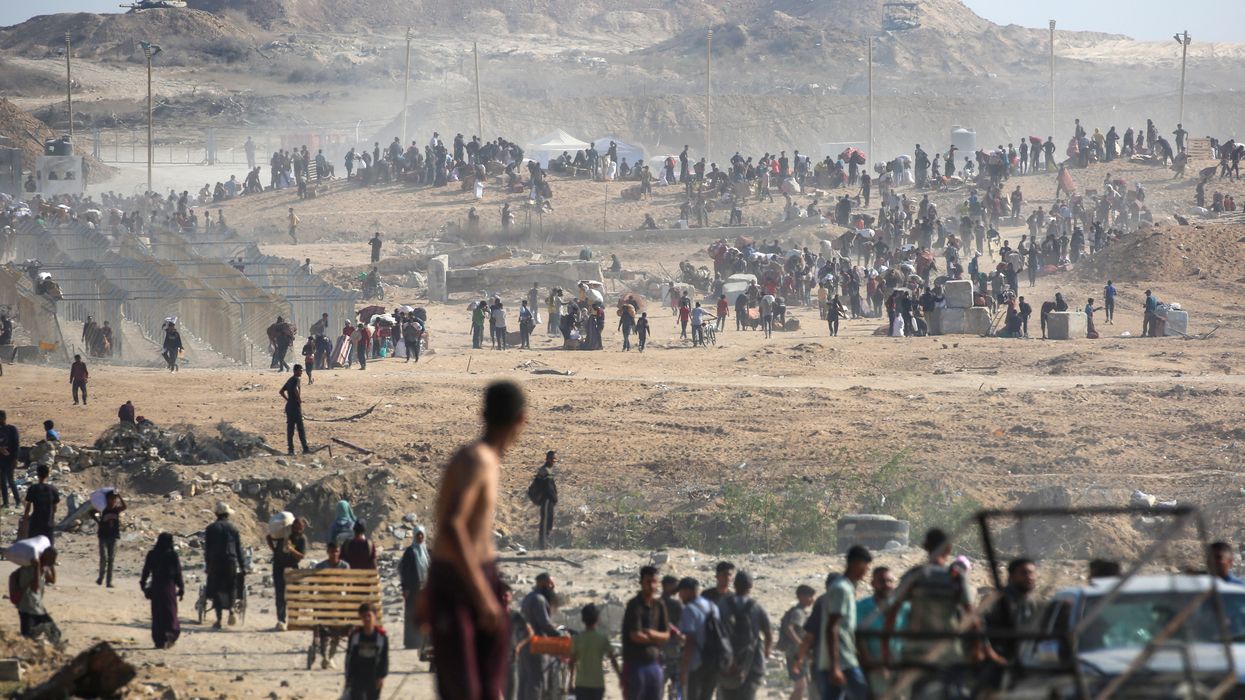
EXPERT PERSPECTIVE – The White House rolled out a20-point plan on Monday calling for a permanent truce in Israel's war against Hamas that calls for the release of hostages. President Trump is calling the plan the most significant effort yet to secure peace in the region.
Cipher Brief Expert General Jack Keane (Ret.), a trusted advisor to the president who declined multiple overtures to serve as U.S. Secretary of Defense during the first Trump administration, met recently in the region with Prime Minister Benjamin Netanyahu, President Isaac Herzog and Minister of Strategic Affairs Ron Dermer as well as senior IDF leaders to talk about what is needed for lasting peace and how to curb Iran's influence via proxies like Hamas.
After those meetings, we asked Gen. Keane for his assessment of the situation on the ground, whether he believes Israel is capable of sustaining wars on three separate fronts (Hamas in Gaza, Hezbollah in Lebanon and the Houthis in Yemen), and whether he believes Hamas will ever accept a deal that requires them to surrender power. Our conversation has been lightly edited for length.
General Jack Keane (Ret.), a four-star general, retired after 37 years of military service culminating in his appointment as acting Chief of Staff and Vice Chief of Staff of the US Army. General Keane is president of GSI Consulting and serves as chairman of the Institute for the Study of War. In 2020, Gen. Keane was presented with the Presidential Medal of Freedom by President Donald Trump.
Kelly:As you’ve just returned from the Middle East where you engaged in a number of high-level meetings with senior Israeli leaders, what is your raw assessment of events on the ground?
Gen. Keane: There's a major paradigm shift strategically taking place in the Middle East as a result of Israel’s - supported by the United States - domination of Iran and its proxies. And it's hard to overstate the significance of it. The reality is that it's a sea change that's going to be felt for decades, and there is such huge opportunity here - once and for all - to stabilize the Middle East. But it’s an opportunity that requires follow-up with the Iranians to keep the pressure on economically and diplomatically. Iran is so much more vulnerable now after the defeat that Israel has handed to them.
Israel also needs to stay focused on the proxies - obviously Hamas, and hopefully, we will see a deal here pretty soon. Either they surrender or Israel will force them to give up power and get the hostages back as well.
Israel also must continue to push back on the Houthis. While we were there, there were three attacks in the vicinity where we were staying, during a nine-day trip. The Houthis are launching individual missiles or drones, but not in volleys. These are more - in military terms - harassment attacks, but Israel is pushing back hard on Houthis by destroying their valuable infrastructure.
Hezbollah has been completely decapitated, and every time Hezbollah tries to move into Southern Lebanon, Israel conducts airstrikes as they just absolutely refuse to let them rebuild in that area. Israel has conducted over a thousand airstrikes to make sure they don’t reconstitute in the South without much media coverage. When I met with Prime Minister Benjamin Netanyahu, I told him that I think there are two major lessons learned here for Israel. One is that you can never, ever again, permit Iran's proxies to build up capability on your border. And that is obviously significantly for Hamas, as well as Hezbollah.
And the second is that you've got to work yourself into a position where you're much more independent of the United States. I said, "You can't afford, going forward, to go through these political swings that we have now in national security and foreign policy in America where one Administration fully supports with everything you need and another Administration holds back what you need.
During the Cold War, the U.S. had a fairly consistent policy whether the Democrats or Republicans were in charge. For sure, some of the methods were changed from one administration to the next, but the objectives were pretty much the same: contain the Soviet Union.
Recently, we’ve gone through major swings. The previous administration - much more so than the American people realize - pulled the plug on a lot of the vital ammunition and weapons that Israel needed, and then they micromanaged how they conduct a war and this was being led by civilians out of the White House who had absolutely no competence in doing something like that, and Israel can't afford to go through another swing like that.
So, my advice is to get as close to being completely independent of the United States for weapons and ammunition but not independent of the United States in terms of geopolitical support or moral support, to be sure.
But the opportunities today are pretty significant and they're already taking place.
There is now work toward normalization of relations with Lebanon and Lebanon is talking about disarming Hezbollah. Who would've thought that something like that could have taken place just a couple of years ago?
Bashar al-Assad is gone in Syria and in Israel, Ron Dermer, the Minister of Strategic Affairs in Israel, who I spoke to at length, is working very hard to develop a security agreement with Syria and the new regime. They have their eyes wide open. They know that Ahmed Al-Sharaa is former al-Qaeda and that organization is still supporting him, but he's trying to consolidate all the different factions in Syria. And Israel doesn’t want any of those factions coming south and interfering with their security.
The Israel Defense Forces (IDF) took me into Syria to show me their defensive positions that they've established there. That makes some sense. I doubt if they will give any of that up in this security agreement, but the fact that there are serious negotiations going on is pretty significant.
In Gaza, hopefully we will get a deal here pretty soon, and that will certainly enable a lot of other things to happen once the fighting stops. But the Abraham Accords, despite the attack on the Qataris, despite the prolonged and protracted war in Gaza, the feedback that I got from Israeli leadership is that the Arabs are still interested in normalizing the relationship. They know that it's going to add to peace and stability in the region. It’s not necessarily easy, but it's something that has huge strategic potential for the future.
I think Turkey is a real challenge. President Recip Tayyip Erdogan had great influence on Al-Sharaa seizing power. I think he wants to control Syrian leadership and he's anti-Israel, he's pro-Hamas, he's Muslim Brotherhood, and he has been a thorn in the side of Democratic and Republican administrations for years, despite the fact that he's a member of NATO. I think when we're dealing with Erdogan, even though he's been there longer than we would like to see, we have to look beyond him and look at the strategic place that Turkey holds in the Middle East and in Europe. They're the second-largest military in Europe, after Russia. The largest military member of NATO in Europe, obviously the United States is more powerful than them. So, they have huge capability, and while Erdogan frustrates us quite a bit, I think we need to figure out a way to work with him in our interest and Israel's interest despite his anti-Israel attitude.
And as much as that may be an opportunity, it's probably more of a challenge. President Trump is cutting the deal with him in the memorandum of understanding to build small modular nuclear reactors and the large nuclear reactors in the future. Turkey has one that was built by Russia and the fact that we're trying to pull him away from Russia, that's a good thing and could create some balance. If we just shut him down and don't want to deal with him because we don't like his attitude on a number of things, he'll just turn to Russia and China and that doesn't make any sense, strategically.
My overall take on this, is that if we continue to stay engaged and really finish Iran’s ability to be a destabilizer in the region, then the potential for stability and growth in the region - in the way that everybody's been hoping for, is really on the horizon.
The Cipher Brief Threat Conference is happening October 19-22 in Sea Island, GA. The world's leading minds on national security from both the public and private sectors will be there. Will you? Apply for a seat at the table today.
Kelly:Prime Minister Netanyahu was just in New York at the United Nations saying that Israel must finish the job in Gaza. You mentioned an agreement on the table. Do you have anything that makes you think Hamas would agree to it?
Gen. Keane: I don't know. I have great skepticism. We have been here so many times, where the United States, Israel and the Qataris have said, "We're really close to a deal." And then at the last minute, Hamas finds some reason to reject it. Hamas' real issue is that they want to stay in control of Gaza. Israel does not want that to happen, the United States does not want that to happen, and usually they foreclose on not making the deal because they don't want to give up control. Hopefully this time they're willing to, and that control would turn over to some representation of the Palestinians and Arab authorities and would allow for some kind of a stabilization force. Prime Minister Netanyahu has said time and time again, "I don't want to occupy Gaza. That's not in Israel's interest.”
Kelly: Yeah. Let's switch for just a moment to Russia. There’s been a change in the relationship between President Trump and Russian President Vladimir Putin over the last several months. President Trump has shown his growing frustration with Putin's lack of interest in actually ending the war in Ukraine. Where do you see the path forward there?
Gen. Keane: Just as you say, it's been eight months, and the president has admitted that he thought this was going to be easier than how it has turned out because he had such a positive relationship with Putin. But Putin's strategic objectives are very clear. He wants to take control of Ukraine, put in place a stooge government and expand into Eastern Europe, and he's dead set on that. Nothing to date has convinced him to change those objectives. In other words, he believes continuing the war is in his national interest so that Moscow can achieve those objectives, and nothing we have done has dissuaded him from that. So, what the president has done, I think, is to be patient with him, despite the fact that Putin delays, obfuscates, tries to confuse, et cetera. The Alaska Summit was a pivotal moment. There is no doubt that Putin made an overture to President Trump that he was willing to meet with President Zelensky following the summit, not immediately, but in a short period of time and that he was also willing to have a three-party meeting to include President Trump. The very next day, Putin’s spokesperson said that there are no plans for a meeting between President Zelenskyy and President Putin, and if there were going to be plans, there would have to be some conditions established and negotiated before there would ever be a meeting such as that.
I think based on that, the president realized that Putin continues to lie consistently and especially during the last couple of months of the negotiations. And even post Alaska Summit, Putin has done what? He has militarily escalated the war, not a little bit, but quite significantly and his attacks are largely focused against the Ukrainian people with hundreds and hundreds of drones and ballistic missiles a night, raining down on them and hitting their energy infrastructure. He knows winter is coming and he wants the lights to be out and the heat to be off and for them to suffer.
And as of right now, there is somewhere in the neighborhood of 11,000 to 15,000 kidnapped Ukrainian children who are still in Russia's hands. We know this from multiple international sources and that, in of itself, is a war crime and really horrific. So, when you put all of that together; the delay tactics, the lies that he's been telling the President, and the military escalation, even as the president is trying to bring him to the negotiating table, he can’t be trusted.
Russia is weak economically, weak militarily, and they can be stopped. Not only can they be stopped, but they can be overtaken by the Ukrainian military. That is not a new thought process for the president. What's new now is that he is talking about it publicly. I can tell you for a fact that he's known for some time how weak Russia is economically and how weak they are militarily. Moscow is conducting a massive narrative that they're succeeding on offensive operations. “They're overwhelming the Ukrainians. It's just a matter of time. This is a war of attrition. The West, the United States and the Europeans, I can outlast them. They will eventually give in and we will win.” That has been his narrative. And now the president, I think, has made the decision to give up on Putin, and he's obviously talking to the public more about his perception of Putin, his perception of Russia, and the status that they have. That's step one. He hasn't changed any policy, but he's changed the narrative.
What remains to be seen is step two, and is the president going to continue what he said he would do, which is increase military and economic pressure on Russia? Military pressure could stop Russia cold from taking any more territory. And by the way, in the last two years, they've only increased the territory under their control by only 1% out of the 20% they control. And the president could also permit Ukraine to attack deep into Russia with increased long-range weapons and remove any restrictions on the use of those weapons. That would be significant military pressure.
We've been talking about economic pressure for weeks. Europeans must stop buying oil and gas from Russia. It’s shameful that they're still doing it, and very hypocritical. As the president says, "You are fueling Putin's war at the same time that you're supporting Ukraine. It makes no sense."
And then the United States needs to do the same in terms of sanctions and tariffs. That would be a part of a step two that makes the most sense. The sooner we get about that, the better. The president has said that in the past, and I believe that is what should be done. It's his decision, certainly, and we'll see what's going to happen next.
Kelly:As you mentioned, winter is coming, and Vladimir Putin knows how to take advantage of that time. How have you seen Russia expand military actions over the past few weeks?
Gen. Keane: We saw within the last week, Russia’s military activities escalating into violating Poland's airspace with war-like instruments. In this case, 19 drones penetrated Polish airspace and there was a smaller incursion in Romania and fighter jets violating Estonia's airspace as well. NATO must come to the conclusion that this activity is an Article 5 violation, and they have every right to shoot at those aircraft if they do it again. If they don't do that, if they wring their hands and continue to talk about it and push back rhetorically on Russia, what they'll see next is not a handful of drones but hundreds of drones and eventually a thousand drones that would absolutely overwhelm all of their air defense systems. These are acts of war, and they should be responded in kind. That doesn't mean that Poland's going to declare war on Russia, but I am suggesting they have every right to shoot at somebody who violates their airspace with warplanes. And that will get Putin's attention. Otherwise, if we don't do it and we just continue to use rhetoric, Putin will expand to other countries and increase the scale of the attack to weaken NATO and force the Europeans to focus more on their defense and less on Ukraine’s.
Putin is not reckless. He's a killer. He's a thug. He's ruthless, but he's not reckless. He's actually quite deliberate and methodical. We've been watching him for 25 years. Those of us who know him can almost call his plays because he's so predictable. Push back on him with strength and he will shut it down.
Updated to reflect White House release of the 20-point plan on Monday.
Are you Subscribed to The Cipher Brief’s Digital Channel on YouTube? There is no better place to get clear perspectives from deeply experienced national security experts.
Read more expert-driven national security insights, perspective and analysis in The Cipher Brief because National Security is Everyone’s Business.
EXPERT INTERVIEW – The United Nations has reimposed sweeping economic and military sanctions on Iran, ten years after lifting them under the 2015 nuclear deal.
Britain, France, and Germany triggered the “snapback” mechanism, accusing Tehran of nuclear escalation and blocking inspections. Iran had already halted oversight after U.S. and Israeli strikes in June damaged several nuclear sites and military facilities.
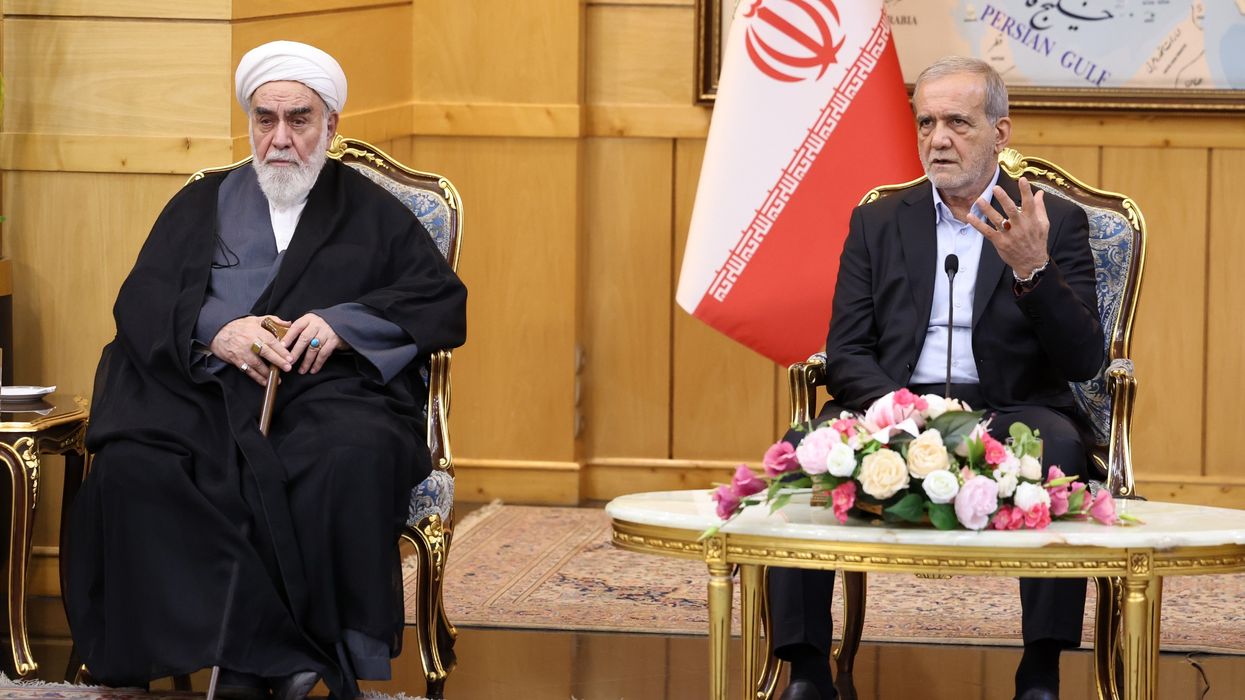
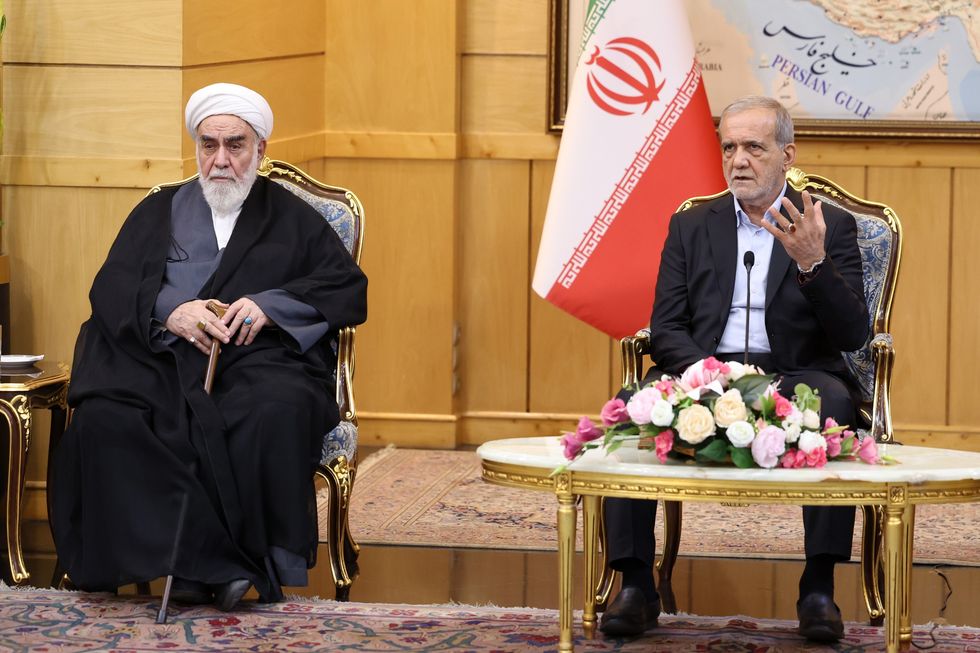
President Masoud Pezeshkian insists Iran has no intention of building nuclear weapons, calling the sanctions “unfair and illegal.” But the move marks another blow to the Joint Comprehensive Plan of Action (JCPOA), the deal meant to cap Iran’s enrichment and research while allowing civilian nuclear energy.
Iran accelerated banned nuclear activity after Trump pulled the U.S. out of the deal in 2018, repeatedly dismissing the accord as flawed.
The latest sanctions cut Iran off from global banks, reimpose arms and missile restrictions, and revive asset freezes and travel bans on key officials. Analysts say the measures hit Iran at a fragile moment with its economy shrinking, inflation surging, and the rial collapsing to record lows. Oil sales, foreign investment, shipping, and manufacturing are all expected to take a hit.
The Cipher Brief spoke with longtime Middle East and Energy Analyst Norm Roule, who formerly served as National Intelligence Manager for Iran at ODNI. Roule continues to travel regularly to the region for meetings with high-level officials throughout the Middle East.
Norman Roule is a geopolitical and energy consultant who served for 34 years in the Central Intelligence Agency, managing numerous programs relating to Iran and the Middle East. He also served as the National Intelligence Manager for Iran (NIM-I)\n at ODNI, where he was responsible for all aspects of national intelligence policy related to Iran.
The Cipher Brief: Why are snapback sanctions different from other sanctions already imposed on Iran?
Roule: First, we should touch on what this means for the regime. The sanctions hit Iran at one of its most fragile moments since the late 1980s. The government remains unpopular to an unprecedented degree. Virtually every economic indicator in Iran is poor. Its national security architecture of militias, foreign proxies, Russia, China, and the Revolutionary Guard failed during the recent conflict with Israel and the U.S. The main driver of the regime is to maintain stability as it completes transitions to the post-revolutionary generation of leadership. Despite the absence of large-scale protests, destabilizing national unrest could occur at any time.
Over the past few months, Iran’s diplomats have used the prospect of a nuclear deal and the possibility of sanctions relief as a source of hope for the Iranian people. The return of UN sanctions strips Tehran of one of its few remaining political assets.
The primary difference between the latest sanctions and U.S. sanctions is that these measures are binding on all 193 member states of the United Nations. Iran will, of course, do everything it can to evade sanctions. Russia, China, North Korea, Venezuela, and other Iranian partners who already have a history of violating Iran sanctions are unlikely to enforce these sanctions with enthusiasm.
However, unlike U.S. sanctions, which they have argued could be ignored because they were imposed only by Washington, these sanctions are imposed by the United Nations. This will make it harder for these countries to involve other countries in their own violations. Likewise, it makes it much easier for the U.S. government to seek compliance worldwide due to the legal and reputational risks associated with countries and businesses that we might approach on this issue.
The Cipher Brief: Can you discuss the specific sanctions and your assessment of their likelihood of success?
Roule: First, and most damaging for Iran, these sanctions isolate Iranian banks from a large part of the global financial system and require that UN members prevent the use of their banking systems on sanctioned trade. Hence, Iran has lost the ability to manage its oil revenues through international banks. Instead, it will need to engage in oil bartering or use intermediaries, which is a slower and more expensive process. It will likely reduce its oil sales at a time when Saudi Arabia is trying to reclaim some of the market share lost to Iran in recent years.
Banks understand that Iran will seek to defy sanctions. They also know that there are expensive legal consequences if they fail to undertake due diligence operations to examine transactions and shipments, thereby demonstrating that they have fulfilled their sanctions obligations.
Next, there is the restoration of the conventional arms embargo: This bans traditional arms transfers to or from Iran. This should make it harder for Iran to acquire advanced weapons from Russia and China, but also to sell its weapons systems to Russia, Sudan, and other countries. I will admit that I am not sanguine on the last point.
Third, we have nuclear and missile restrictions: This includes a prohibition on uranium enrichment, reprocessing, heavy-water activities, and ballistic missile technology transfers or tests capable of delivering nuclear weapons (beyond 300 km range). Iran is likely to ignore most of these restrictions and will test the international community as it does so. But I think it will also try to do so in a way that avoids sparking a regime-destabilizing war with Israel or the U.S.
Snapback also restores restrictions on dual-use goods, materials, and technologies that could aid nuclear or missile programs. These sections require increased inspections of Iranian ships and aircraft to prevent the transfer of prohibited materials or goods. For governments and businesses, this requirement will be among the more intrusive and time-consuming, and thus expensive. At the same time, Tehran will game the system by introducing complicated, multi-country layers of shell companies to obtain critical materials. This is where international legal and intelligence partnerships will play an essential role in identifying and neutralizing these networks.
Next, snapback returns asset freezes and travel bans on designated Iranian individuals. This is a rather long list and includes Islamic Revolutionary Guard Corps officials, nuclear scientists, and officials related to their programs, as well as their assets worldwide. Travel bans should be successful. Asset bans are less so, primarily due to the small number of such assets located abroad. These restrictions, however, serve as a powerful reminder to businesses of the reputational impact of doing business with Iran.
What does all of this mean? Join The Cipher Brief Threat Conference - happening October 19-22 in Sea Island, GA. to engage with the world’s leading national security experts to help answer those questions. Apply for your seat at the table today.
The Cipher Brief: Let’s go deeper. Can you break this down by sector? Is there any part of Iran’s economy that will be hurt more than another? Oil seems most likely.
Roule: We should keep in mind that, following the negative impact of the initial sanctions announcement, the effect of sanctions should be understood as corrosive. Further impact is shaped by how seriously and loudly we enforce sanctions, as well as how vigorously and successfully Tehran develops countermeasures.
To begin, Iran started the year in challenging economic conditions. The IMF’s projection for Iran’s GDP was dismal, 0.5%, so negative growth in the coming months would be far from surprising. Indeed, one wonders how it will be avoided.
The snapback announcement caused the Iranian rial to plummet to a new record low of 1.12 million to the dollar. Tehran will have little choice but to inject precious hard currency into the market to sustain its failing currency. I also expect more enthusiasm for the effort to cut some of the zeros from the Iranian currency. Iran’s leaders likely worry that the coming months will see a further weakening of the rial and a spike in inflation, which currently hovers around 43%.
Foreign investment, such as it is, will also take a hit. In 2024, Iran claimed – and probably overstated – that it attracted around $5.5 billion in foreign investment. That minuscule figure will shrink even further.
Let’s talk about sectoral impacts.
Shipping costs for Iran are likely to increase substantially. A significant portion of Iran’s seaborne trade will face new cargo inspections, bans on dual-use goods shipments, insurance difficulties, and possibly even port servicing complications.
Manufacturing and mining will be impacted in terms of both imports and exports as they face new pressures on supply chains and financing. This impact will affect trade with Europe, but it will also dampen Iran’s efforts to establish trade with Africa and complicate its trade relations with Iraq.
Although Iran’s defense industry may not be participating in trade shows, one suspects that its existing trade in drones and light arms will continue. Its current clients – Russia, Sudan, and other African countries, and reportedly Venezuela and Bolivia – may choose to ignore sanctions given their lack of alternative suppliers and animosity with the West.
The impact of sanctions on Iranian oil sales to China will be the most significant, if difficult to assess, in the coming months. Beijing and Tehran have deliberately obscured the payment relationship, and the former has imposed tough terms on Iran. China will view this new phase as an opportunity to offload more goods, machinery, and technology onto the Iranian market, and possibly to negotiate a larger price discount for the oil it acquires.
The use of intermediaries, smaller banks that are outside the scope of international monitoring, and shell firms will also increase costs for Tehran. Last, it isn’t unreasonable to think that Chinese oil sales could contract. Beijing – likely seeing the writing on the wall on this issue – has been building its reserves, and the Saudis and Emirates can fill the missing production, although they won’t discount their oil to match Iran’s prices.
The Cipher Brief: What are Iran’s likely next moves? Is diplomacy dead? What do you say to those who believe military action is expected?
Roule: Iran’s playbook is unlikely to be a surprise. Tehran’s leaders used Western media to issue their side of the story, projecting a blend of confidence, defiance, and dismissal of the impact of sanctions. Once home, Iran’s leaders will show that they won’t stop their nuclear work.
It is likely that even within Iran, the program's future remains under debate, with several options being considered. Tehran’s efforts to maintain close relations with Moscow and Beijing make it likely that it will seek to involve these capitals in its programs. One could imagine Iran dangling IAEA access at some point to gain international acceptance. Three possible programs could emerge in the coming months.
The most likely option is that Iran will seek to rebuild a modernized version of the enrichment and even the conversion facilities destroyed in the Twelve-Day War. This process would be expensive, and, depending on the number and location of facilities, could take years to complete. This option would be consistent with Iranian policy rhetoric but would risk a military attack and an extension of sanctions. The problem with lengthy construction is that this also delays benefits to Iran’s economy.
Tehran could reduce the likelihood of an attack by allowing the IAEA access to the sites or involving Russia or China in the operation and construction of the sites. Such an option, if involving advanced centrifuges, would allow Iran to retain the capability to produce highly enriched uranium, including weaponization levels, in the future should it wish to do so.
A far less likely option is to select a foreign fuel source for domestic reactors to provide power. Since this would mean abandoning a domestic enrichment program, this option is thus improbable in the foreseeable future.
Least likely for now would be weaponization. Such a decision would require Iran’s leadership to believe it could undertake and execute such an activity without discovery by Israeli or Western intelligence and, if discovered, would not face devastating military action similar to the June 2025 war.
In any case, activity at the recently reported Mount Kolang Gaz La facility in Esfahan Province is sufficient to be observable to the West, and as we have recently seen, to draw the attention of Western media, thereby sending a message. I expect construction at the site won’t be very fast until Tehran sees how Israel and the U.S. respond to this announcement and until Iran comes to a conclusion as to what direction it wishes to go in its nuclear program.
Diplomacy on Iran’s nuclear program is far from over, with low-level conversations perhaps taking place in Vienna and European capitals. The international community will remain – and should remain- insistent that the International Atomic Energy Agency (IAEA) gain access to Iran’s nuclear enterprise as soon as possible. Such a return cannot be achieved without engagement and diplomacy. However, it will take time for the politics to cool and a new paradigm of proposals to emerge.
Washington, Europe, and the Gulf will entertain serious proposals from Iran that it will accept a nuclear program that allows the IAEA access it requires. More broadly, Washington is looking for a deal that means Iran won’t have the capacity to build nuclear weapons, or accept constraints on its missile program, and end the regional operations of the Quds Force.
Iran’s current leadership is unlikely to make such a decision until sanctions begin to erode the economy. The death of the Supreme Leader could pave the way for a new generation of leadership, which – while no less assertive and potentially even hostile – might be more willing to be more accommodating on these issues to ensure the survival of the Islamic Republic.
Extreme caution should be exercised when discussing the possibility of military hostilities. The U.S. certainly doesn’t seek to start a war in the region. Israel may conduct military operations in Iran over Quds Force actions. Still, it is hard to see why Israel would argue it needs to undertake a costly military operation simply because Tehran is denying the IAEA access to rubble at Natanz. However, the Twelve Day War has changed the rules. An Israeli or US military attack on Iran is no longer unthinkable. If Iran were to undertake weaponization activity or attempt to conceal weaponization-related equipment or material, some in Tehran probably won’t be surprised if another surgical attack takes place.
Moving to Tehran, it is hard to see what benefits military action brings to Tehran. Iran is operating under some harsh realities. The Twelve Day War made it clear that Israel’s intelligence capabilities within Iran are extraordinary, and there is no reason to believe the capabilities aren’t still in place. If so, any plan would likely be discovered and perhaps neutralized before it could take off. Further, Iran’s air defenses continue to be no match for Israel or U.S. air and missile systems.
Iran’s missiles and drones not only had no strategic impact on the course of the Israeli attack but were significantly reduced in number by Israeli attacks. Iran fought alone in June: neither Russia nor China showed the slightest interest or capability in helping Iran during the June war. A conflict that spread to the region risks costing Iran its détente with the GCC and potentially jeopardizing its support from China. Iran’s population remains disillusioned, and testing their willingness to endure a conflict would be quite the risk. Much depends on specific events and drivers, but current conditions don’t seem to lean towards a regional conflict.
Are you Subscribed to The Cipher Brief’s Digital Channel on YouTube? There is no better place to get clear perspectives from deeply experienced national security experts.
Read more expert-driven national security insights, perspective and analysis in The Cipher Brief because National Security is Everyone’s Business.
OPINION — Israel’s Operation Rising Lion will go down as among the most impressive military campaigns in history. Military academies, military planners, and the Intelligence Community will study it for decades. More urgent, however, is that policymakers understand the importance of U.S. support in enabling Israel to advance our shared interests.
In less than a fortnight, Israel brought to its knees a major regional adversary, geographically nearly 75 times its size and 1,000 miles away. As we learned on a recent trip to Israel with the Jewish Institute for National Security of America, Israel—with crucial U.S. support—crippled Iran’s nuclear and missile capabilities, dismantled its air defenses, and decapitated its command and control. At the Pentagon’s request, Israeli pilots cleared the way for U.S. B-2 bombers.
Since first exposing Iran’s nuclear weapons program in 1994, Israel knew that it might need to take military action. Yet, June’s attack was only seven months in the making. At the end of 2024, a narrower plan based on precision strikes against a few nuclear facilities was shelved and a far broader campaign was developed from scratch—targeting not only the entirety of Iran’s nuclear supply chain, but its ballistic missiles, top generals, and leading nuclear scientists as well.
What made that sweeping operation feasible was an extraordinary string of Israeli successes since the brutal Hamas attack on October 7, 2023. Israel defeated Hamas, decimated Hezbollah, defended itself against hundreds of Iranian-launched ballistic missiles and thousands of drones, eliminated Syrian anti-air batteries, and knocked out Iran’s advanced Russian S-300 air defenses, opening an unimpeded corridor to Iran.
Suddenly, Iran was more exposed than at any point in the last forty years. The regime responded by accelerating both its nuclear weapons research and missile production. Israel now had both the opportunity and urgent need to act quickly and comprehensively against myriad Iranian targets.
Rapidly expanding its war plan required Israel to gather intelligence on hundreds of additional targets, develop new capabilities and operational concepts, and ready large numbers of personnel for new and unfamiliar missions. It wasn’t until earlier this year, for example, that Israel decided to use its full fleet of combat aircraft - including older F-16s - against Iran. And it was just days before the June 13 “go” date that the operation’s final pieces were put in place.
The extraordinary agility and ingenuity of Israel’s planning was exceeded only by the excellence of its military execution. The campaign started with a surprise attack that combined exquisite intelligence with perfectly synchronized operations—including stand-off weapons, forward-deployed drones, and clandestine ground teams—to eliminate Iran’s top military command and leading scientists in the war’s first minutes.
Drawing on the full-range of its advanced capabilities - including indigenously developed air launched munitions and complex cyber operations - Israel systematically neutralized Iran’s air defenses, establishing total air superiority from the Iraqi border to Tehran in just forty-eight hours. For the rest of the war, Israeli jets owned the skies over their greatest enemy’s capital. Operating without challenge, Israeli UAVs blanketed Iranian missile sites, providing persistent intelligence and hunting missile launchers before they could fire.
Need a daily dose of reality on national and global security issues? Subscriber to The Cipher Brief’s Nightcap newsletter, delivering expert insights on today’s events – right to your inbox. Sign up for free today.
Essential to Israel’s success were its two squadrons of F-35 fifth-generation fighters. Every strike package had several of them in the lead. F-15 pilots told us they felt less safe without an F-35 nearby. The aircraft’s next generation avionics allowed pilots to detect and defeat Iranian defenses that intelligence had not previously identified—even when they obscured their position by keeping sensors turned off until Israeli jets were near.
Israel’s achievements are extraordinary. For the first time, a U.S. ally has taken the lead, utilizing American weapons, in achieving a decades-long, bipartisan U.S. national security objective - preventing a nuclear Iran - and has dealt a serious blow to our most dangerous enemy in a part of the world that has long been deemed vital to U.S. interests, and, in doing so, has almost single-handedly transformed the Middle East’s balance of power in favor of the West.
This success was enabled not by the United States joining the fight, vital though that was, but by the decades-long U.S. investment in Israel’s ability to defend itself - through weapons sales, joint training and intelligence sharing. Not to mention Israel’s fierce determination to fight back.
The lessons for policymakers from Operation Rising Lion are clear: Israel is a U.S. national security asset and we need more allies equally determined and capable.
The Iran war is not yet over; if left unchecked, Iran may well reconstitute its nuclear program, ballistic missiles, or terrorist network. Russia remains an aggressor and China the pacing threat. The United States should find and support regional partners, like Israel. Provide them with the weapons, intelligence, advanced technology, and political support needed to address these threats.
That’s real burden sharing—a local partner prepared to carry the lion’s share of the responsibility, not to mention the fighting and dying, to counter shared threats.
General Charles Wald, USAF (ret.), served as the deputy commander of U.S. European Command. Lieutenant General Robert P. Ashley, USA (ret.), was the 21st Director of the Defense Intelligence Agency. Vice Admiral Mark Fox, USN (ret.), served as Deputy Commander of U.S. Central Command. All three are members of the Jewish Institute for National Security of America’s (JINSA) Iran War Assessment.
The Cipher Brief is committed to publishing a range of perspectives on national security issues submitted by deeply experienced national security professionals.
Opinions expressed are those of the author and do not represent the views or opinions of The Cipher Brief.
Have a perspective to share based on your experience in the national security field? Send it to Editor@thecipherbrief.com for publication consideration.
Read more expert-driven national security insights, perspective and analysis in The Cipher Brief
EXPERT INTERVIEW – The military operation dubbed ‘Summit of Fire’ by Israel Defense Forces targeting a Hamas delegation meeting in Doha, Qatar this week has complicated an already fragile ecosystem in The Middle East as experts assess the broader regional impact.
The operation carried out on Tuesday, reportedly killed five members of the delegation which had gathered to discuss a U.S.-backed ceasefire proposal to end Israel’s war against Hamas, but early reports indicate that the operation failed to kill senior Hamas leaders.
“What we're going to see is funerals roll out over the next few days, and that's going to be our indicator as to the Hamas members who survived and those who did not,” Norm Roule, former U.S. National Intelligence Manager for Iran told The Cipher Brief in an exclusive interview.
Regardless of the success of Israel’s operation, experts are already assessing the broader impact of the strike – the first of its kind against a member country of the Gulf Cooperation Council (GCC).
THE CONTEXT
Hamas, which launched a deadly terrorist attack against Israel on October 7, 2023, has maintained a political office in Doha since 2012.
The U.S. ceasefire proposal includes the release of all 48 remaining hostages in exchange for a ceasefire, a release of potentially 2,500-3,000 Palestinian prisoners, and the end of the Israeli operation in Gaza.
Since the strike in Doha, Hamas says it will not change its terms for a deal, including its demand for a total Israeli withdrawal from Gaza and rebuking calls to disarm.
After the strike, President Donald Trump posted on Truth Social that his administration was notified by the U.S. military that Israel would strike Hamas in Doha. He was critical of the unilateral attack on a key U.S. ally, saying it runs counter to peace efforts and “does not advance Israel or America’s goals.” But he described eliminating Hamas as a “worthy goal.” He said he assured the Qatari leadership that such an attack would not happen again and reiterated the need for a Gaza peace deal.
Israel ordered a full evacuation of Gaza City on Tuesday, signaling that it is moving forward with a new military offensive there.
As of last Thursday, Israel controlled 40% of Gaza City. The Israeli military says it occupies 75 percent of Gaza, while the UN says 87% is either deemed a militarized zone or is currently under evacuation orders.
THE INTERVIEW
The Cipher Brief spoke with Norm Roule, former National Intelligence Manager for Iran at ODNI - who travels regularly to the region for meetings with senior officials – about the most likely regional impact of Israel’s latest attack. Our conversation has been lightly edited for length and clarity.
Norman Roule is a geopolitical and energy consultant who served for 34 years in the Central Intelligence Agency, managing numerous programs relating to Iran and the Middle East. He also served as the National Intelligence Manager for Iran (NIM-I)\n at ODNI, where he was responsible for all aspects of national intelligence policy related to Iran.
The Cipher Brief:An Israeli attack inside of Qatar is a risky endeavor at this point in Israel’s war against Hamas. There has been a lot of conversation about whether the U.S. had a knowledge of this attack in advance and how the White House has responded since.
Roule: Well, the White House has stated that the Israeli government did provide advanced notice. That language is very important because although the president of the United States did give a final warning to Hamas - and the president's final warnings tend to indeed have some finality to them based upon previous examples - it is almost certain that the United States would not have participated in the planning of an operation against Qatar, virtually certain. And indeed the Israeli government would not have wanted the United States to be involved in something like this. But the Israeli government would've wanted to tell the United States, "Look, this is happening. So if your forces do see incoming aircraft, this is not an adversary's aircraft coming in. They should not see this as an attack on themselves."
The White House has stated that advanced notice was given, and I believe the reports state that the president instructed notification to the Qataris so that they themselves would have been able to understand that this is not, say, the Iranians conducting a strike. And also to understand that this strike had a very limited purpose. It was not part of a broader campaign, and that they themselves should not take any broader action to escalate the conflict.
The Cipher Brief Threat Conference is happening October 19-22 in Sea Island, GA. The world's leading minds on national security from both the public and private sectors will be there. Will you?Apply for a seat at the table today.
The Cipher Brief:What does this attack mean for the region? It creates a lot more complications in an already incredibly complicated war against Hamas.
Roule: I think it's important that we first consider some of the perspective about what this means in the region as a whole. Prior to the October 7th war, Israel's security doctrine was ‘we have a great intelligence service’. The superb military and allies will stand with us. But that didn't do much to stop the October 7th war.
Since that conflict, their doctrine has changed and we've seen in this latest attack, the latest chapter in that doctrine, which now is that ‘we have a superb intelligence organization and it will identify our adversaries who were out to kill us, and our military is going to get to them first-no matter where they are. And we will take out high value targets using precision military technology that is far beyond the capability of any of our adversaries. And this will be anywhere, wherever our adversaries may be’. This started out in Beirut and moved to Syria and then it turned to Iran with the killing of Hamas leaderIsmail Haniyeh in 2024. And we've seen it recently in Sana'a. And now we've seen within the GCC itself. This is a brand new Middle East in this regard.
For the Middle East, as they look at Israel and some have asked whether Israel is a disruptive actor, I think that's the wrong characterization. But it is a correct characterization to say that Israel will not tolerate the presence of aggressive lethal actors plotting the death of Israelis anywhere in the region any longer. And indeed, just two days ago, the same actors that Israel attacked in Doha were meeting the Iranian foreign minister, I think in the same location where the Israelis attacked.
Qatar has always been a very special location in this regard because Qatar was sort of like a Switzerland, if you can use that example. For several years, people could meet there; the Taliban, Hamas, and various U.S. administrations tolerated this. Indeed, the Israelis sent their own personnel to meet Hamas interlocutors there, and these Hamas interlocutors had blood on their hands. Clearly, that has now come to an end.
So now the Gulf Cooperation Council (GCC), which is no friend of Hamas and has had its own issues with Qatar, will deliberate this issue. They will want to see how the dust settles. They will have a common position. They do not want this to escalate. But at the same time, they're looking at a region that is increasingly sensitive to this new Israeli posture.
The Cipher Brief:Doha responded robustly, condemning the attack. How do you think the U.S. should be influencing events moving forward?
Roule: The Qataris condemned the attack, unsurprisingly. This is a violation of their sovereignty. They've described this as a cowardly attack. They will certainly withdraw from playing a role as an interlocutor with the Israelis, that's unsurprising. This also means that the Qataris will call upon the GCC to stand with them in this position. And that's likely to happen.
They will ask the United States to restrain Israel from conducting similar attacks in the future and the United States will certainly do so. The United States does not wish to have a challenge, a problem of this nature with the Qataris for a number of reasons, ranging from our military relationship, to our security relationship, to our investment relationships with the Qataris. There are a variety of different reasons.
But the Qataris are going to want to maintain their domestic security, and they're not going to want to raise this as a broader problem.
At the end of the day, there's a reality that the Qataris have to deal with, too. Their commercial relationship with Iran through the South Pars Gas Field, that's not going go away. So their gas relationship is going to stay, but their engagement with Hamas, it's probably not going to be the same in the future - if only because most of the Hamas leadership is gone and the talks aren't going to continue.
I think in many ways, that the Trump administration's approach to the Middle East has been quite consistent and quite clear. They seek to ensure that there is no conventional war in the Middle East that involves U.S. forces. And that includes a conventional war in the Middle East that is instigated by Israel, and they've stuck to that. They will, however, participate in military action if Iran moves towards nuclear weaponization or militaries or terrorist attacks against the United States. And wesaw that in June, but again, they ended that conflict rather crisply.
They will also pursue diplomatic activity robustly speaking with almost anyone – including Hamas - even if Israel is unhappy about it. They will speak with Iran, even if Israel's unhappy about it. But these have to be genuine talks. And if the Trump administration believes that their time is being wasted, as the president has repeatedly stated, then hell will be paid. And he's been quite clear on that. He will also provide military capacity to regional partners to conduct their own defense or regional offensive activities to achieve what they believe is necessary for their protection. And that could be regional actors conducting their own work against Iranian proxies, but also Israeli activities to conduct what it sees as its own work.
I think you might see the United States in essence, say to the region, ‘over to you to handle your own work, your own issues, because it's your problems to sort out increasingly’. As long as it doesn't create a disruptive conflict that ignites the region, as a whole.
The Cipher Brief:A solution to the Gaza conflict really does seem distant. We've talked now for a couple of years about what does the end state look like for Israel and it doesn't feel like we're any closer to an answer. What are the elements you’ll be looking for to indicate that a solution is on the horizon?
Roule: Well, here's another element where I've got to praise the Trump administration for a very consistent Middle Eastern policy. Again, whatever one's political views are, I can't think of another political administration in modern times that has devoted so much time and energy to the Middle East since its first moments in office. And we have seen even recently with the visit of former prime minister, Tony Blair and former special Middle East envoy, Jared Kushner to the White House, that even now, you see layers within layers within layers of activity and engagement and diplomatic engagement to try and come up with solutions that are outside of the limelight of what is a very contentious and very well-trodden diplomatic path. I do believe that we can see how this chaos will end. I don't know whether it will end in the near term or if we will ever get there, but you can see some elements of what the region is looking for.
So first, we will see some sort of humanitarian solution to provide the long-suffering Palestinians of Gaza with the food, education and medical care that they so desperately need to resolve what is rightfully a stain on our generation. And this is an enormous challenge because we now have some years of a population that have been denied these capacities, which has transformed the nature of this society. And I don't think we yet understand what this means as to who they will become.
What does it mean when you have teenagers who have not been to school for three or four years, who have not had education, internet, medical care, and have watched the world around them go in this direction? Who do they become in three to five years if they immigrate to other countries? Who are these people?
And I think we're going to see some solution involving the Gulf States and involving Gulf funding. And you're going to see Saudi Arabia and the Emirates in particular, provide education reform for the Palestinian authority or its successor. A reform of the engagement of the government, of the Palestinian entity with these people and its population so payments are made that don't support militancy and that human reform in terms of hiring is done that doesn't promote militancy.
And last, you're going to see some sort of capacity against corruption. Because that has, in essence, undermined the effectiveness of the Palestinian authority. You've got some problems here. You've got the issue of what do you do about the Palestinian authority, which was only supposed to be around for a few months and is led by someone who is terribly unpopular and doesn't seem to want to leave?
How is he handled in that political construct in the future? That issue will have to be resolved. You'll have some replacement entity created, perhaps involving the Palestinian authority or a successor. would think if I were creating this as an Arab-European construct with American leadership, you would want to have this supported by Israel, but not as an Israeli idea, but not blocked as an Israeli idea.
You're going to have to have something done to handle problem of settlers and the West Bank issue so that a viable political entity is at least a construct in people's heads. But in the short term, the idea of a Palestinian state is something that is very popular to talk about by people who, in essence, have the time to talk about it at coffee shops and in think tanks. But don't have to say, "Well, how do you do this on the ground in a Gaza or in a West Bank without, in essence, creating the same mess we have today?" That is years from happening.
So I think creating a state-like structure and then building towards a state at some point in the future where the adults on the ground are going to say, "We'll let the political actors or the people with time in their hands yak about a state, but we just want to get things working so that we can feed people and give them a life and then build toward that state." I think what I've just talked about in this messy way, those elements are all going to appear. But we're not there yet because the violence of Gaza remains a process. And the Israeli government is committed to a military solution. It doesn't seem to have an end game yet for what it sees in Gaza. Hamas appears to be moving hostages into Gaza City itself because it sees that as a way of putting more pressure on the Israeli government. So, we are still in this crucible of blood and violence for the near term, unhappily.
Are you Subscribed toThe Cipher Brief’s Digital Channel on YouTube? There is no better place to get clear perspectives from deeply experienced national security experts.
Read more expert-driven national security insights, perspective and analysis inThe Cipher Brief because National Security is Everyone’s Business.
EXPERT Q&A — Russia’s massive drone attack overnight on six Ukrainian regions, which hit energy and gas transport infrastructure and cut off power to over 100,000 people, is the latest sign that Moscow is nowhere near peace. Coupled with the Kremlin’s rejection of meaningful security guarantees for Ukraine, it’s clear that President Vladimir Putin is still pursuing his maximalist war goals. That doesn’t surprise General (Ret.) Philip Breedlove, former NATO Supreme Allied Commander, who said the U.S. has been “completely deterred” by Putin for the last 11 years, across four presidents, which has built a "sanctuary" for Russia and allowed it to escalate in Ukraine unchecked.
Cipher Brief COO and Executive Editor of the Open Source Report, Brad Christian spoke with Gen. Breedlove about how that dynamic and is shaping the war and peace negotiations, as well as other global security challenges — from the threat posed by Iranian drones to the true relationship between members of the Axis of Authoritarians. Our conversation has been lightly edited for length and clarity.
The Cipher Brief: Let's start in the Middle East. Broadly speaking, how are you thinking about all of the changes and all of the action that is happening in the region and what it might be pointing to?
General Breedlove: I'm in the Middle East now and have been here for almost seven days. I'm in my second capital and we're working through some of the issues that are left over after the 12-day war such as how the Middle East is continuing to react to that and what we expect out of Iran following the pretty good beating they took. And then, what does that mean for our good friends and partners in the Middle East?
This is a time where I think many of the leaders of these nations are still reeling from what happened. I was talking with some very senior leaders today and I pointed out that in the first three and a half days of this 12-day war, Iran shot nearly 1,500 drones and missiles in the fight. And I asked them, "Is your country ready to defend against 1,500 rockets and missiles?" And of course, there's really only one nation in the Middle East that's set up for that and that's Israel, who was of course attacked. And so, others here in this region are trying to think this through.
And while these other countries are good, maybe even great partners of the U.S., we haven't fought together before. For example, how would they connect to the Navy ships and the US Air Force airplanes that have done so much in the Middle East in these recent challenges? And frankly, there's a lot of scratching of heads going on because those type’s of challenges can’t be solved overnight and nobody, including Israel, is ready to face that kind of onslaught without help from the United States.
So, there's a lot of concern and a lot of angst about how countries get ready for this? You've heard that the Axis of Evil countries, Iran and others, Russia, are starting to build these Shahed drones by the hundreds and thousands and starting new factories in South America. These adversarial nations are unable to use what we would call normal, Western style air power so they are substituting it with these drone attacks and it's a tough problem for many countries to defend against.
And then, frankly, while the nations I'm dealing with are not necessarily concerned about Israel attacking them, they are taken aback that Israel can launch aircraft, fly 1,000 miles and establish air superiority over a nation in two days. And so, there's a lot of people rethinking where they are and how it all works here based on the actions of the recent Israel-Iran conflict.
I think the good news is that the threat of Iran is somewhat diminished. Iran is going to spend some time rebuilding its defenses because especially its air defense network was pretty much decimated.
It's a busy time in the Middle East. It's a time where we need to find peace. It's a time where we don't need another distraction, as we're facing multiple theaters of conflict right now.
The Cipher Brief: On the topic of peace and some normalcy, what is the mood there? What’s happening in Gaza is both incredibly complicated and terribly upsetting to much of the world. Is there going to be a return to some regional normalcy in the relatively near future?
General Breedlove: I don't think I see or hear that right now. There's a lot of concern that the political situation, that the leadership of Israel is in with their own people and the desire for getting the hostages back either dead or alive is very much alive. And even inside of Israel, there are now protests against what's going on in Gaza. So, I can't imagine a more concerning and more confused situation and there is angst of how this is all going to work out. I must say that there is concern about how the people of Gaza have been treated. But I will tell you this, Brad, as I move around these capitals in this region, the recognized threat is Iran.
Prefer to watch The Cipher Brief interview with former NATO Supreme Allied Commander General (Ret.) Philip M. Breedlove? Check it out by subscribing to The Cipher Brief's YouTube channel.
The Cipher Brief: I want to shift gears a little bit here to the other topic that is dominating the national security space and that's Russia’s war with Ukraine. You've said consistently from the beginning of Russia’s full scale invasion that, "Mr. Putin has us deterred and we have not established deterrence over either Russia or Vladimir Putin." I'd just like to get your take on where we are with the negotiations. So many people seem to be scratching their heads at some of the things that we’re seeing play out in the public facing side of the negotiations. How are you thinking about it?
General Breedlove: Well, bottom line upfront, nothing has changed. We remain deterred. In the press you hear people talking about this war being three and a half years long. This war is over 11 years long. It started in the spring of '14 when I was still serving as the Supreme Allied Commander of Europe, and it hasn't stopped. It was hot for a few years and then it went warm. Russians were killing Ukrainians and Ukrainians were killing Russians on the line of contact. And then, after some six years or so of that warm war on the line of contact, Russia re-invaded, and I call this the third phase of the 11-year-long war.
This war has covered four presidents, Obama, Trump twice and Biden once, and all four of them have been nearly and completely deterred from the very beginning. We, as we always do in the military, offered options for how to address this conflict in Ukraine back in 2014. And the answer was, "We're not going to take any action because the war will escalate if we take action." Well, we gave them options from very small movements to larger more bellicose movements, they chose none of them and here we are. What we do know is we did not take action for fear of escalation. We were deterred and we didn't take action and Russia escalated anyway. And so our lack of action ended up in the escalation of the problem by the Russians. And that has repeated itself through four administrations for the past 11 years. We are still deterred. We have taken precious little action to stop the fight in Ukraine and we still find ourselves saying, "We're not going to do that because we've got to give peace a chance and we don't want to escalate the problem." And that formula is not working now and has not worked for 11 years.
We have virtually enabled the Russian war on Ukraine by our lack of action in a more severe way. Many of us from military backgrounds say that we have built sanctuary for Russia. From that sanctuary, we allow them to attack Ukraine. If you can think of a map, up in the northwest corner of the map is Belarus all the way to the east around through Russia all the way to the south, into the Black Sea and west across the Black Sea. We have allowed Russia to attack Ukraine from nearly 300 degrees on the map, and we still cannot determine that we should allow Ukraine to fire back deeply into Russia with our kit.
Mr. Elbridge Colby, Undersecretary of Defense for Policy, at times seems to be out of sync with President Trump because the President recently said, "You can't win a war that way." And Mr. Colby, once again, announced in the last day or so that, "We're not going to let them do long-range fires with American kit." This is an absurd policy, and it's guaranteed to be a loser and we've got to get past being so completely deterred by Russia's threats. Their program of reflexive control is working excellent on our leadership and we've got to break free of it.
The Cipher Brief: The US and Europe could inflict significant pressure on Russia through the expanded use of sanctions, yet President Trump has not yet approved the use of the sanctions that could really bite. Would increasing sanctions really cause that much of a risk of escalation on the part of Russia?
General Breedlove: Folks who follow Putin and Russia will say something to the following effect, I actually say it all the time- Sanctions have never changed Putin's actions on the battlefield. Sanctions have hurt Russia. Sanctions have hurt the Russian people. Sanctions have hurt the Russian economy. All those things are true, but they have never changed Russian actions on the battlefield. And so, we either need to double and triple the really crushing sanctions and take all of the frozen Russian money and use it to help Ukraine. We've got to physically stop the Russian shadow fleet from moving oil around the world. There's a whole host of things we could do that would truly bring Russia to their knees and we haven't done it.
It's hard to understand. We're all hoping that the President will regain his gumption, like he did going into the conversation in Alaska with Mr. Putin. You remember it was very, very clear, he said it multiple times, "If we don't get a ceasefire, there is no second meeting." Well, we didn't get a ceasefire and now we're negotiating a second meeting. And there was also the 50-day that turned into 10 days that turned into 12 days. Well, those 12 days are gone. We don't have a ceasefire, and we haven't announced new sanctions. So, there are many tools that we haven't taken that we need to take. Mr. Putin is not going to stop. Mr. Putin will have to be stopped.
Are you Subscribed to The Cipher Brief’s Digital Channel on YouTube? There is no better place to get clear perspectives from deeply experienced national security experts.
The Cipher Brief: What are NATO and Ukraine's next best moves, given everything that's in play right now?
General Breedlove: It's a confusing issue about what America is going to do or not do in any possible peace-enforcement capacity. The best move right now, not under a NATO hat, because clearly, Mr. Putin believes he's in charge and he said there will be no NATO involvement, but if NATO or European Union nations were to volunteer for a coalition of the willing presence in Ukraine, then that's what, I think, needs to happen. We need the big nations- the UK, the French, the Germans, to step up but they're waiting and watching for American leadership. Is America going to be that backbone and offer what the president talked about in his post-talk news conference and so forth? We need for all of that to happen. We need for America to make a decision to supply air power, command and control, intelligence, surveillance, reconnaissance, et cetera, those non-boots on the ground capabilities. And then, we need the European nations who've already intimated they may be willing to provide boots on the ground to get in there and get a stoppage of the fighting.
Mr. Putin’s entire objective however is to keep kicking the can to the right, run right up to the red line, wave a bright shiny object, get another red line, run right up to the red line, wave another shiny object, get another deadline. He is very good and has had great success at moving our red lines to the right.
The Cipher Brief: I want to ask if you could give us your best and worst-case scenario about how the axis relationship between China- Russia- Iran- North Korea could evolve over the next six months and what that might mean for America and our allies?
General Breedlove: I recently heard someone use a new construct that I had never heard, but it's beginning to make even more sense. This particular author labeled Russia as a proxy of China fighting against America. We've heard several times people describe Russia as the little brother, and China's going to use Russia, as opposed to Russia using China in this conflict. There does appear to be a definite relationship there where China is positioning Russia to do as much damage as they can to the United States' interests in the region. And so I think that we're going to see continued cooperation amongst these nations. They're doing this, every one of them, to benefit their nation. Russia's getting what they need from China by way of parts for the Shahed drones and other things.
Russia, of course, now is using three tranches of North Koreans to fight and to man their factories. And now, we hear they're even looking for women in South America who might want to come over and man factories. Russia is in trouble. I'd like to finish the conversation with the fact that I see Russia as losing the war against Ukraine now, not winning it.
But back to the cooperation. There's a lot of mutual benefit there for these countries. Iran has got to rebuild its air defenses; they were decimated by Israel. Russia desperately needs manpower. They can't staff their factories, and they still haven't totally retaken all the land that was taken by Ukraine and they're having to use North Koreans to help them do that. China needs them all because they want American power diminished, tied up, canceled, in any way they can, and they see Russia as a useful tool to do that. So, they all have their needs and desires and I think the mutual affray will only increase over time.
Read more expert-driven national security insights, perspective and analysis in The Cipher Brief because National Security is Everyone’s Business.

 Login
Login The U.S. military has activated its first one-way-attack drone squadron under a new task force based in the Middle East, U.S. Central Command (CENTCOM) announced on December 3. The move comes four months after Secretary of War Pete Hegseth ordered an accelerated push to field affordable unmanned systems capable of delivering decisive effects in contested […]