❌

Reading view

There are new articles available, click to refresh the page.

October’s Night Sky Notes: Let’s Go, LIGO!
4 Min Read

October’s Night Sky Notes: Let’s Go, LIGO!

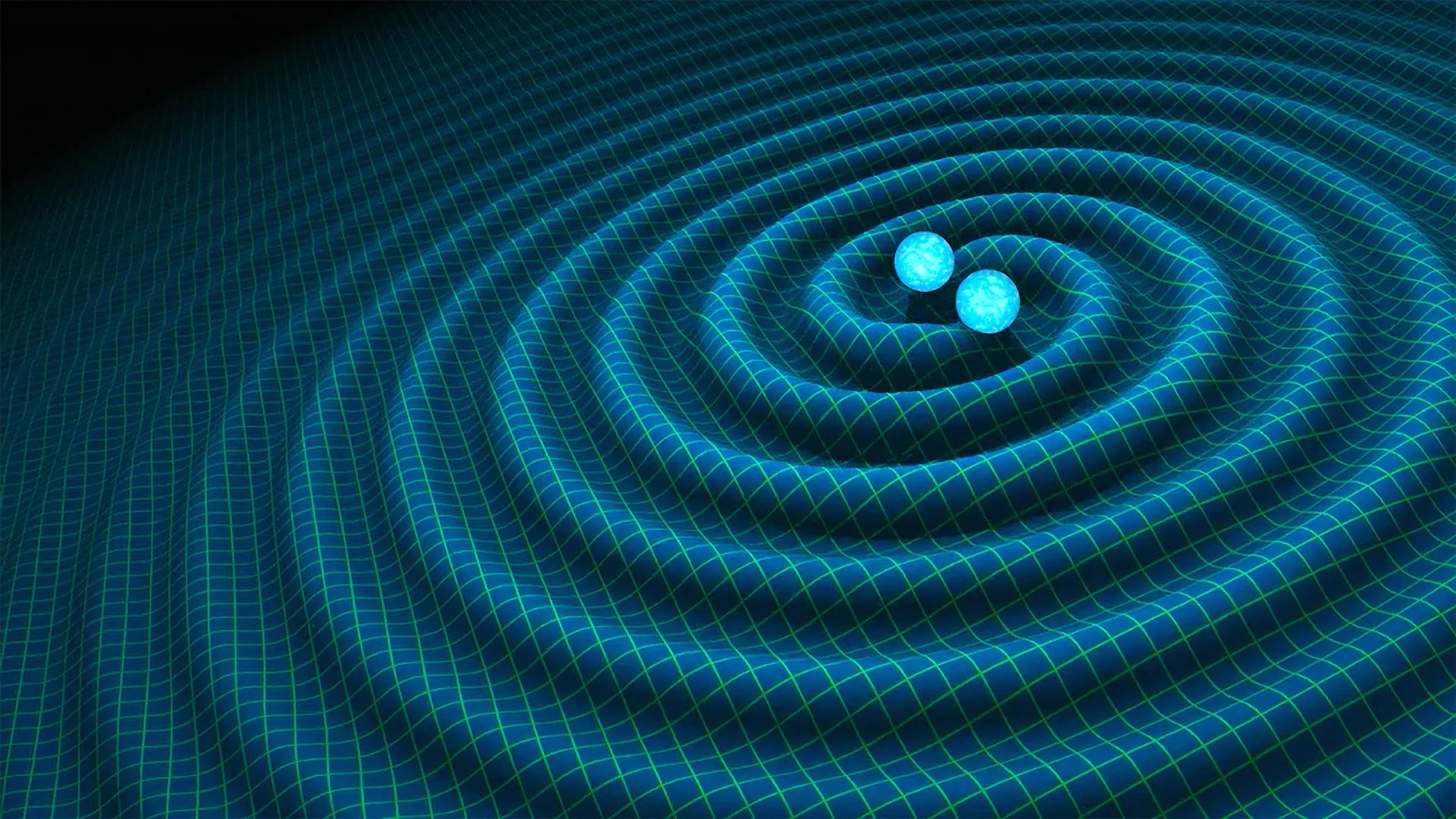
An artist's impression of gravitational waves generated by binary neutron stars. Near the upper right there are two aqua spheres and radiating out in a circular funnel pattern is an aqua blue wave with a faint grid pattern underneath it all.
An artist’s impression of gravitational waves generated by binary neutron stars.
Credits:
R. Hurt/Caltech-JPL

by Kat Troche of the Astronomical Society of the Pacific

September 2025 marks ten years since the first direct detection of gravitational waves as predicted by Albert Einstein’s 1916 theory of General Relativity. These invisible ripples in space were first directly detected by the Laser Interferometer Gravitational-Wave Observatory (LIGO). Traveling at the speed of light (~186,000 miles per second), these waves stretch and squeeze the fabric of space itself, changing the distance between objects as they pass.

Waves In Space

Gravitational waves are created when massive objects accelerate in space, especially in violent events. LIGO detected the first gravitational waves when two black holes, orbiting one another, finally merged, creating ripples in space-time. But these waves are not exclusive to black holes. If a star were to go supernova, it could produce the same effect. Neutron stars can also create these waves for various reasons. While these waves are invisible to the human eye, this animation from NASA’s Science Visualization Studio shows the merger of two black holes and the waves they create in the process.
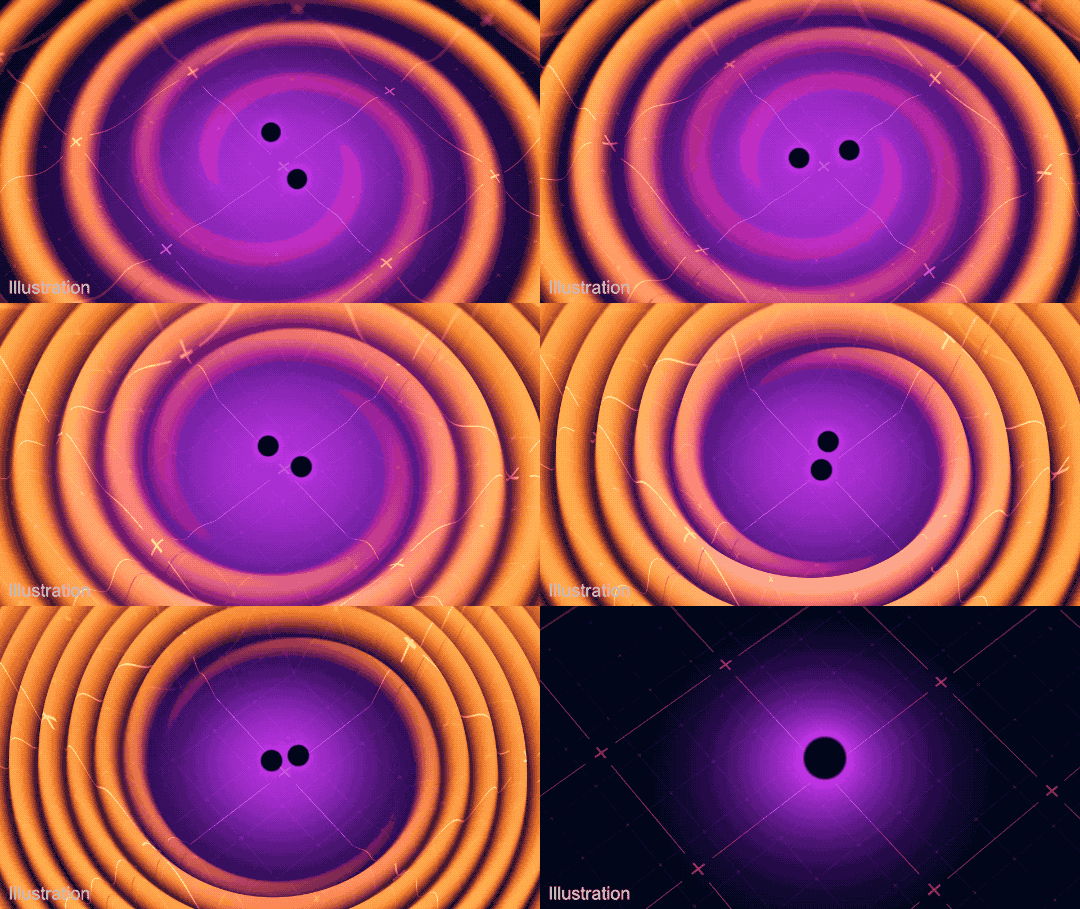
Two black dots circle each other at the center of this animation. Gravitational waves are represented stylistically by spirals that begin as purple, trialing right behind each black hole and then swirling around as they expand off the edge of the screen. The black holes get closer and closer, while the spirals get denser and more frequent until the two black holes merge. As soon as they merge, the new spirals stop, while the existing ones expand away from the single black dot at the center. In the end there is just a single black hole on a black background with a grid, representing space-time.
Two black holes orbit each other, generating space-time ripples called gravitational waves in this animation. As the black holes get closer, the waves increase in until they merge completely.
NASA’s Goddard Space Flight Center Conceptual Image Lab

How It Works

A gravitational wave observatory, like LIGO, is built with two tunnels, each approximately 2.5 miles long, arranged in an β€œL” shape. At the end of each tunnel, a highly polished 40 kg mirror (about 16 inches across) is mounted; this will reflect the laser beam that is sent from the observatory. A laser beam is sent from the observatory room and split into two, with equal parts traveling down each tunnel, bouncing off the mirrors at the end. When the beams return, they are recombined. If the arm lengths are perfectly equal, the light waves cancel out in just the right way, producing darkness at the detector. But if a gravitational wave passes, it slightly stretches one arm while squeezing the other, so the returning beams no longer cancel perfectly, creating a flicker of light that reveals the wave’s presence.
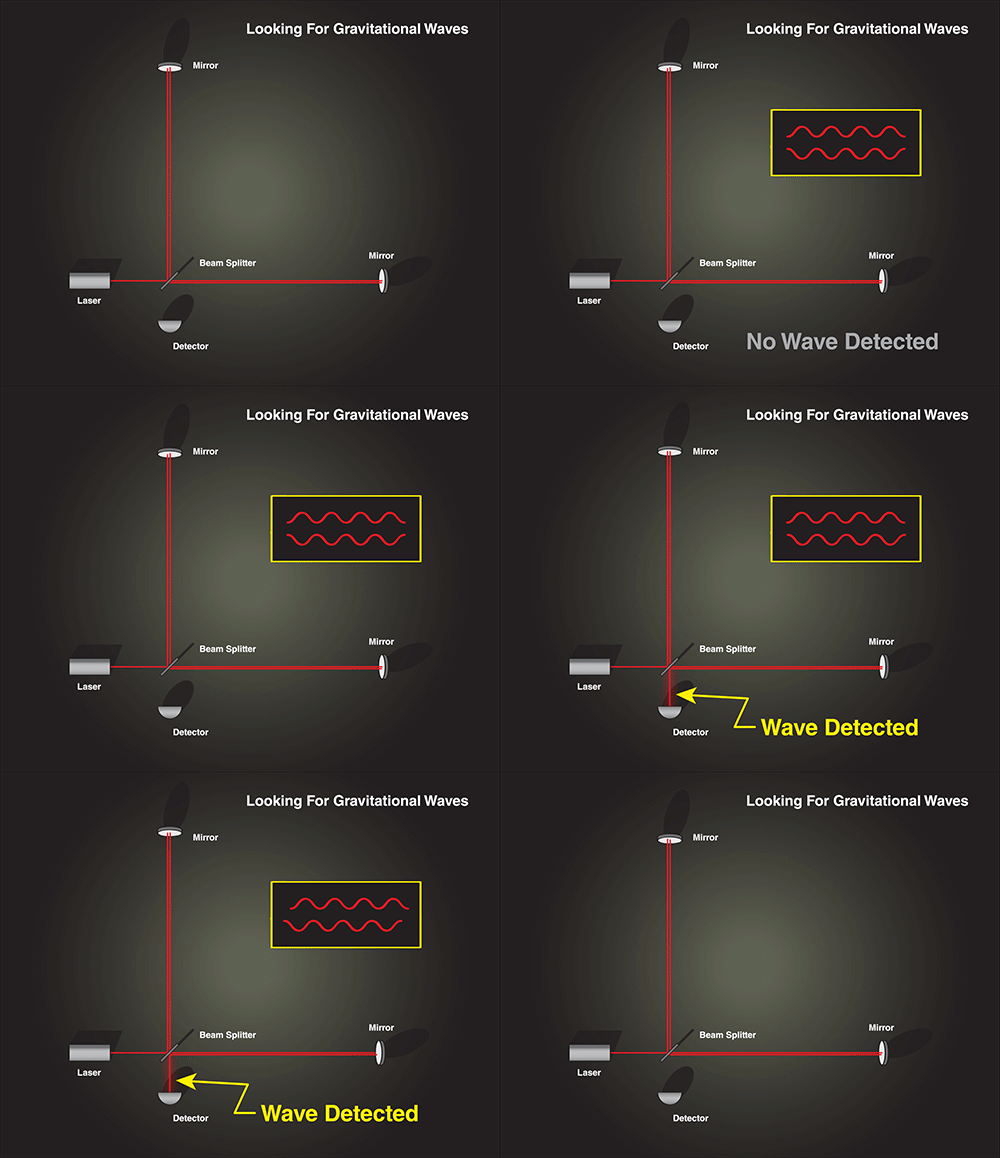
Animation of gravitational waves being detected.
When a gravitational wave passes by Earth, it squeezes and stretches space. LIGO can detect this squeezing and stretching. Each LIGO observatory has two β€œarms” that are each more than 2 miles (4 kilometers) long. A passing gravitational wave causes the length of the arms to change slightly. The observatory uses lasers, mirrors, and extremely sensitive instruments to detect these tiny changes.
NASA

The actual detection happens at the point of recombination, when even a minuscule stretching of one arm and squeezing of the other changes how long it takes the laser beams to return. This difference produces a measurable shift in the interference pattern. To be certain that the signal is real and not local noise, both LIGO observatories β€” one in Washington State (LIGO Hanford) and the other in Louisiana (LIGO Livingston) β€” must record the same pattern within milliseconds. When they do, it’s confirmation of a gravitational wave rippling through Earth. We don’t feel these waves as they pass through our planet, but we now have a method of detecting them!

Get Involved

With the help of two additional gravitational-wave observatories, VIRGO and KAGRA, there have been 300 black hole mergers detected in the past decade; some of which are confirmed, while others await further study.

While the average person may not have a laser interferometer lying around in the backyard, you can help with two projects geared toward detecting gravitational waves and the black holes that contribute to them:

  • Black Hole Hunters: Using data from the TESS satellite, you would study graphs of how the brightness of stars changes over time, looking for an effect called gravitational microlensing. This lensing effect can indicate that a massive object has passed in front of a star, such as a black hole.
  • Gravity Spy: You can help LIGO scientists with their gravitational wave research by looking for glitches that may mimic gravitational waves. By sorting out the mimics, we can train algorithms on how to detect the real thing.

You can also use gelatin, magnetic marbles, and a small mirror for a more hands-on demonstration on how gravitational waves move through space-time with JPL’s Dropping In With Gravitational Waves activity!
From City Lights to Moonlight: NASA Training Shows How Urban Parks Can Connect Communities with Space Science

4 min read

From City Lights to Moonlight: NASA Training Shows How Urban Parks Can Connect Communities with Space Science

When you think about national park and public land astronomy programs, you might picture remote locations far from city lights. But a recent NASA Earth to Sky training, funded by NASA’s Science Activation Program, challenges that assumption, demonstrating how urban parks, wildlife refuges, museums, and green spaces can be incredible venues for connecting communities with space science. Programs facilitated in urban spaces can reach people where they already live, work, and recreate. This creates opportunities for ongoing engagement as urban astronomy program participants can discover that the skies above their neighborhoods hold the same wonders as remote locations.

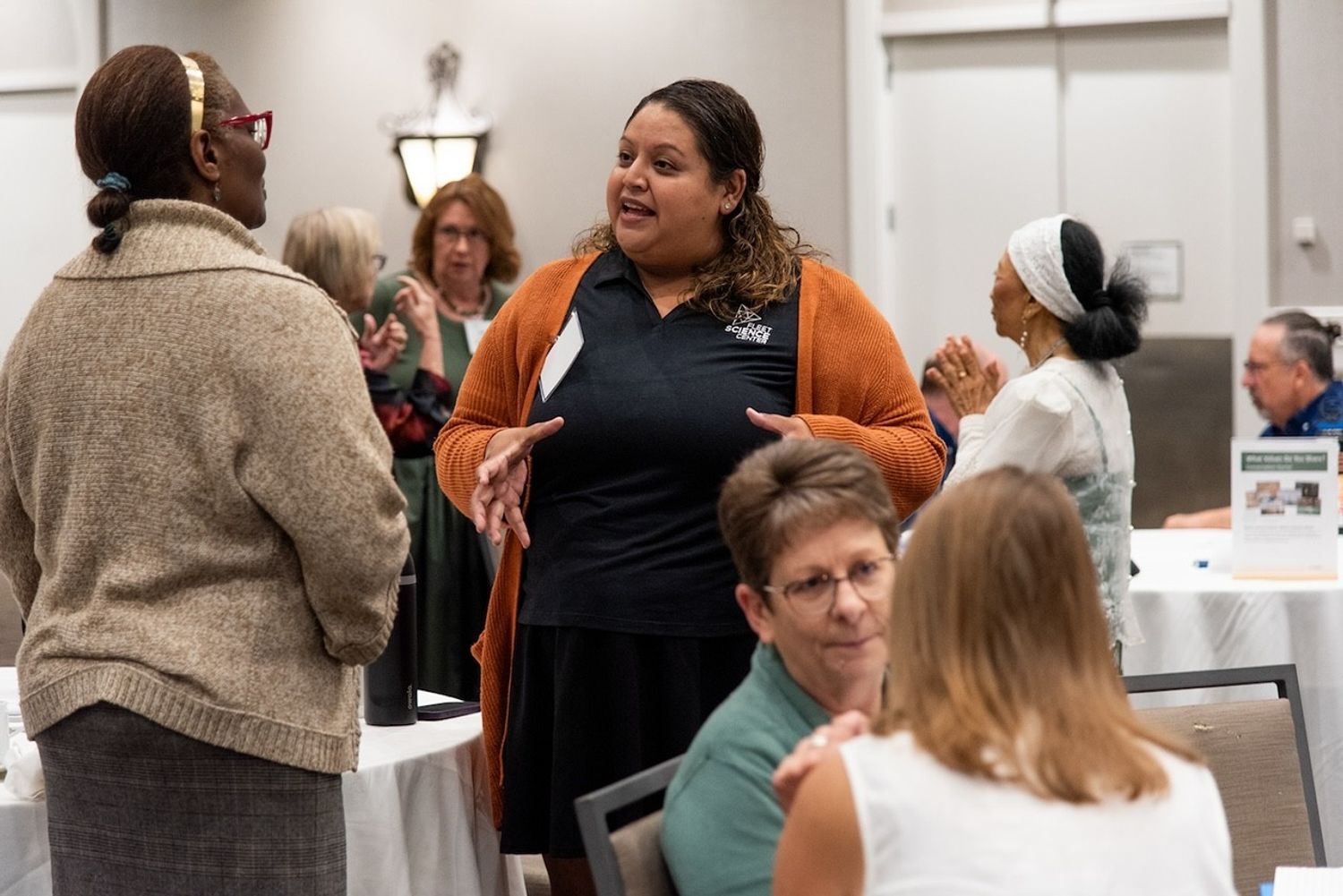
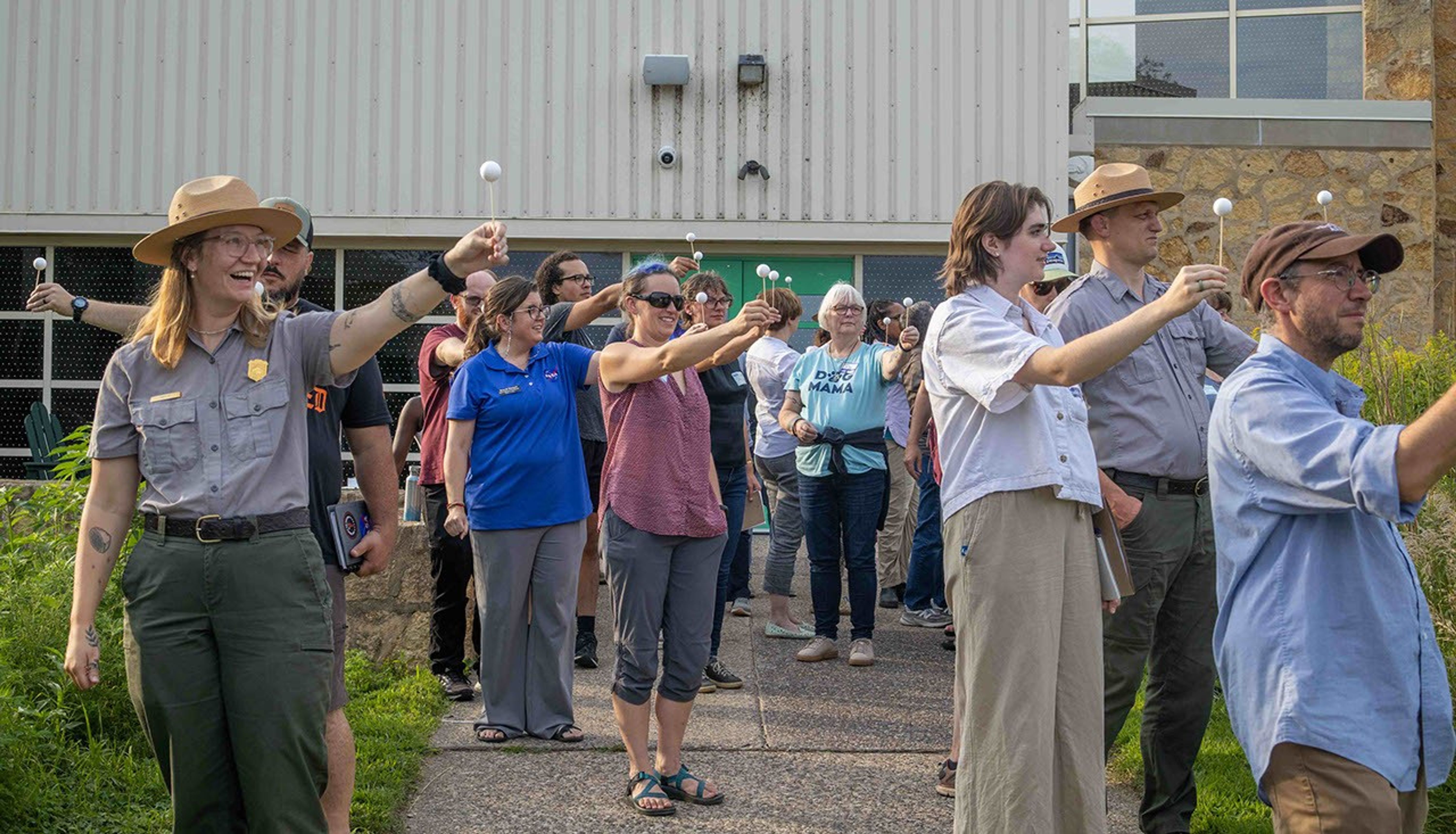
During the first week of August in 2025, NASA Earth to Sky collaborated with the National Park Service and U.S. Fish and Wildlife Service to deliver an innovative astronomy training program called β€œRivers of Stars and Stories: Interpreting the Northern Night Sky” at Minnesota Valley National Wildlife Refuge in Minneapolis-St. Paul. This three-day course brought together 28 park ranger interpreters, environmental educators, and outdoor communicators from across the Twin Cities area. Presentations and discussions centered around engaging urban audiences with the wonders of space science by leveraging the benefits of metropolitan spaces and the unique opportunities that city skies provide.

Throughout this immersive training, participants explored everything from lunar observations and aurora science to NASA’s Artemis Program and astrobiology. The training empowered participants by affirming that everyone is an effective stargazer and night sky storyteller, transforming beginners into confident astronomy communicators. One participant captured their experience by noting they went from β€œnot knowing much of anything to having a much better grasp on basic concepts and most importantly, where to find more resources!” In addition to sharing resources, this training also launched a community of practice where communicators can continue to collaborate. Participants engaged in discussions on how to respectfully incorporate the local indigenous perspectives into astronomy programming and honor the traditional stewards of the land while avoiding appropriation or misrepresentation of indigenous science.

The course also created a lasting community connection to NASA through presentations by NASA experts and demonstrations of NASA activity toolkits. As one participant noted in the evaluation, β€œThis is just the start of a long learning journey, but I know now where to look and how to find answers.” Toolkits and resources shared included GLOBE (Global Learning & Observation to Benefit the Environment) Observer’s NUBE (cloud) game, Our Dynamic Sun by the NASA Heliophysics Education Activation Team (HEAT) and the Night Sky Network, the Aurorasaurus Citizen Science project, and the local Solar System Ambassador Network.

Participants’ sense of belonging to the Earth to Sky community increased dramatically. These outcomes support NASA’s strategic goal of building sustained public engagement with Earth and space science. The overwhelmingly positive feedback, with 100% of participants expressing interest in taking more courses like this, demonstrates the tremendous value it is for Earth to Sky to collaborate with the National Park Service and US Fish and Wildlife Service, as all agencies’ public communication goals are addressed.

This kind of collaborative work is crucial because it builds a network of science communicators who can reach thousands of visitors across Minneapolis-St. Paul’s parks, nature centers, and outdoor spaces. By training local informal educators to confidently share NASA’s discoveries and missions, the program expands access to space science for urban audiences throughout the Twin Cities region.

The Earth to Sky team will continue fostering these valuable partnerships with the National Park Service and U.S. Fish and Wildlife Service, as well as other state and local agencies and nonprofit organizations. Learn more about Earth to Sky’s work with park interpreters and nonformal educators to share NASA space science by visiting: https://science.nasa.gov/sciact-team/earth-to-sky/

Learn more about how Science Activation connects NASA science experts, real content, and experiences with community leaders to do science in ways that activate minds and promote deeper understanding of our world and beyond: https://science.nasa.gov/learn/about-science-activation/.

A group of people stand outside holding white Styrofoam balls on a stick with arms outstretched to model moon phases.
Participants of the β€œRivers of Stars and Stories: Interpreting the Northern Night Sky” training model moon phases outside of the Minnesota Valley National Wildlife Refuge Education Center.
NASA Earth to Sky

Share

Details

Last Updated
Sep 26, 2025
Editor
NASA Science Editorial Team
❌