Reading view

There are new articles available, click to refresh the page.

PLANETS Units Have Landed – Free NASA-Funded Out-of-School Time Resources

4 min read

PLANETS Units Have Landed – Free NASA-Funded Out-of-School Time Resources
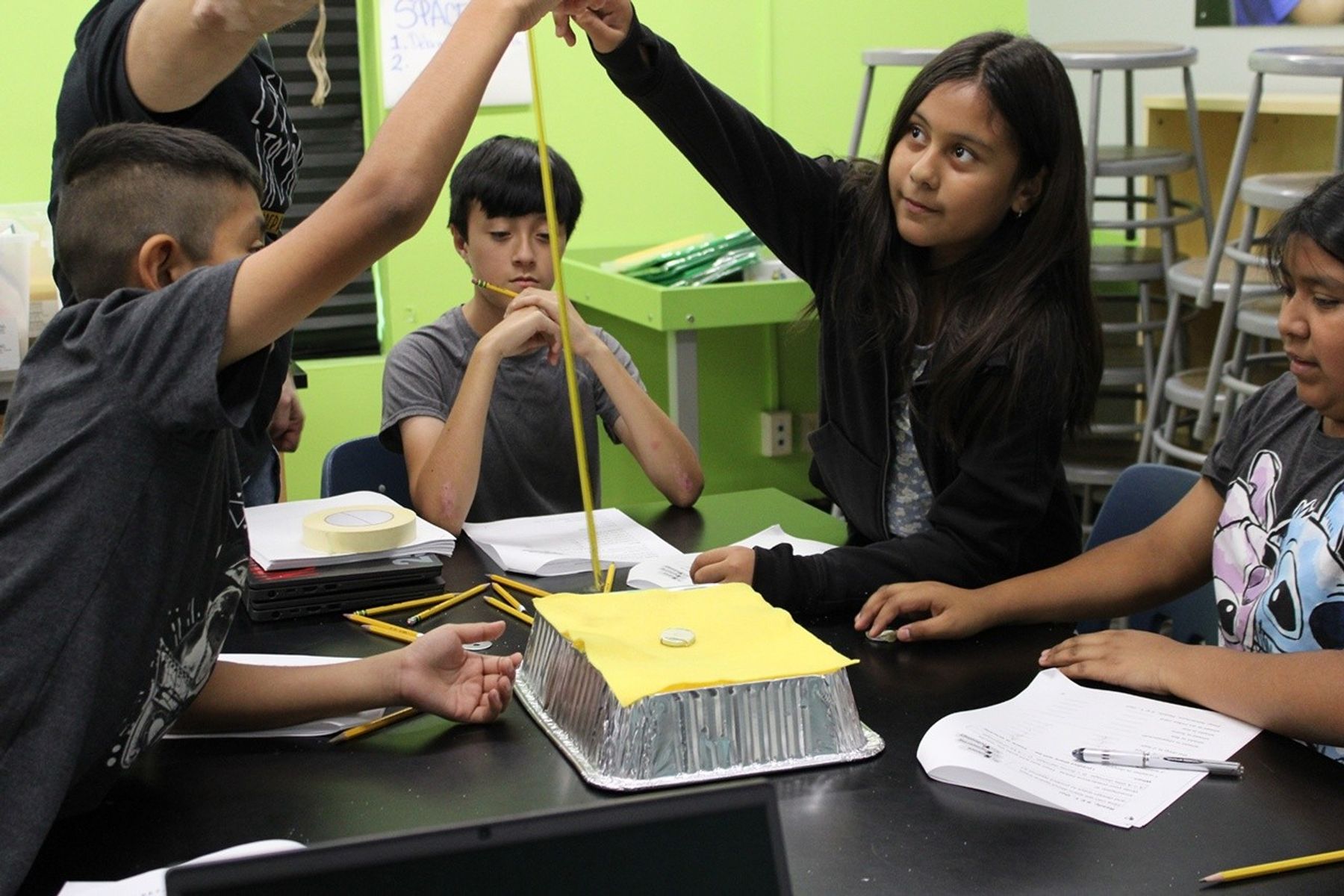
An out of school time educator holds a measuring tape as an elementary aged girl drops a weight to test the space craft shield her group created. Her group members, two boys and one girl, watch as she drops the weight.
Constructing a three dimensional topographic map from the Remote Sensing Science Pathway.

The NASA Science Activation program’s PLANETS (Planetary Learning that Advances the Nexus of Engineering, Technology, and Science) project, led by Northern Arizona University (NAU), is pleased to announce the official launch of three free out-of-school (OST) time units that give all learners in grades 3-5 and 6-8 the chance to do real planetary science and engineering. These units are supported by comprehensive educator guides, videos, and resources.

These three units – Space Hazards, Water in Extreme Environments, and Remote Sensing – have complementary engineering and science pathways that can be taught on their own or together. Subject matter experts in planetary science from the USGS Astrogeology Science Center were involved in every part of developing the activities, working with STEM (Science, Technology, Engineering, & Mathematics) education experts from Northern Arizona University Center for STEM Teaching & Learning, the Boston Museum of Science, and WestEd to ensure the activities are educational, engaging, and accurate.

PLANETS intentionally designed the units to benefit all learners. The curriculum reflects research-based pedagogical strategies, including those for multilingual learners, Indigenous learners, and learners with differing physical abilities. The units have been tested extensively in out-of-school time programs across the country and revised based on their feedback to ensure the needs of all learners are met. PLANETS provides a practical guide for out-of-school time educators with useful advice to effectively teach all students. All units also include educator background on the subject matter, as well as videos, and many useful tips and links to relevant NASA projects and resources.

“PLANETS is one of the most thoughtfully designed STEM resources I’ve used in an out-of-school setting. The hands-on activities are engaging, accessible, and grounded in real-world challenges that spark curiosity in every learner. What sets it apart is the intentional support for diverse learners and the clear, practical guidance for facilitators—making it truly turnkey for OST educators at any experience level. If you’re looking to build STEM identity, teamwork, and creative problem-solving in your program, PLANETS is a must.” ~ Kara Branch, CEO & Founder, Black Girls Do Engineer

In the Space Hazards unit, intended for learners in grades 3-5, students play a card game to learn about how to protect against the different hazards that people face on Earth and that astronauts and robotic probes face in space. The engineering pathway for this unit presents students with a challenge: design a space glove that will keep astronauts safe while still allowing them to do their work.

The Water in Extreme Environments unit is designed for grades 6-8. In the science pathway, students use planet “water cards” to learn where there is the most water in our solar system (hint: it’s not Earth!). The engineering pathway introduces learners to the scarcity of fresh water, both in extreme environments on Earth and for astronauts in space. Students design a filtration system to purify water for reuse.

The engineering pathway for the Remote sensing unit, also designed for grades 6-8, puts students into the shoes of NASA spacecraft engineers, designing remote sensing devices to learn about the surface of planets, like Mars. The science pathway then uses real NASA remote sensing data from Mars landing site candidates to choose the best place to land a rover on Mars.

All PLANETS materials are available at no cost on the website: planets-stem.org. Check them out and empower every learner to see themselves as scientists and engineers.

PLANETS is supported by NASA under cooperative agreement award number NNX16AC53 and is part of NASA’s Science Activation Portfolio. Learn more about how Science Activation connects NASA science experts, real content, and experiences with community leaders to do science in ways that activate minds and promote deeper understanding of our world and beyond: https://science.nasa.gov/learn/about-science-activation/.

Share

Details

Last Updated
Nov 26, 2025
Editor
NASA Science Editorial Team

NASA & GLOBE Connect People, Land, and Space

4 min read

NASA & GLOBE Connect People, Land, and Space

A screenshot of the GLOBE Land Cover satellite comparison table. The table includes information and photographs of the land, submitted by the volunteer, as well as a Moderate Resolution Imaging Spectroradiometer (MODIS) land cover classification image for that location and a Landsat and Sentinel-2 image closest in time to the GLOBE Observer observation.
The GLOBE Land Cover satellite comparison table is generated weekly for every GLOBE Land Cover observation. GLOBE volunteers receive an email with a link to the table. Information about the table may be found on the GLOBE Observer website.

A group of elementary-aged students gather outside of Oldham County Public Library in La Grange, Kentucky, United States to look at clouds in the sky. “If anyone asks what you are doing, tell them, ‘I am a citizen scientist and I am helping NASA,’” Children’s Programming Librarian, Cheri Grinnell, tells the kids. Grinnell supports an afterschool program called Leopard Spot where she engages K-5 students in collecting environmental data with the GLOBE (Global Learning & Observations to Benefit the Environment) Program.

“One little boy really got excited about that, and I heard him tell his mom he was working for NASA as they were leaving,” says Grinnell. That idea is reinforced when the program receives an email from NASA with satellite data that align with the cloud data the students submitted. “I forwarded the NASA satellite response to the after-school coordinator, and she read it to them. That really excited them because it was evidence this is the real deal.”

This experience is one the GLOBE Observer Team (part of the NASA Science Activation program’s NASA Earth Science Education Collaborative, NESEC) hears often: GLOBE volunteers of all ages love getting an email from NASA that compares satellite data with their cloud observations. “Feedback from NASA is huge. It’s the hook,” says Tina Rogerson, the programmer at NASA Langley Research Center who manages the satellite comparison emails. “It ties NASA science into what they saw when they did the observation.”

Now, volunteers will have more opportunities to receive a satellite comparison email from NASA. GLOBE recently announced that, in addition to sending emails about satellite data that align with the cloud observations made by learners, they will now also be sending emails that compare the GLOBE Observer Land Cover observations made by learners with satellite data. The new satellite comparison for land cover builds on the system used to create cloud comparisons at NASA Langley Research Center.

When a volunteer receives the email, they will see a link for each observation they have submitted. The link will open a website with a satellite comparison table. Their observation is at the top, followed by a satellite-based assessment of the land cover at that location. The last row of the table shows the most recent Landsat and Sentinel-2 satellite images of the observation site. Rogerson pulls GLOBE land cover data from the public GLOBE database to generate and send the comparison tables on a weekly basis. While users may opt out of receiving these emails, most participants will be excited to review their data from the space perspective.

These new collocated land cover observations are expected to raise greater awareness of how NASA and its interagency partners observe our changing home planet from space in order to inform societal needs. They will help every GLOBE volunteer see how their observations of the land fit in with the wider space-based view and how they are participating in the process of science. Based on the response to cloud satellite emails, seeing that bigger, impactful perspective via the satellite comparison email is motivating. The hope is to encourage volunteers to continue being NASA citizen scientists, collecting Earth system observations for GLOBE’s long-term environmental record.

“I’m excited that land cover is finally becoming part of the operational satellite comparison system,” says Rogerson. This means that GLOBE volunteers will routinely receive satellite data for both land cover and clouds. “We are bringing real science right into your world.”

NESEC, led by the Institute for Global Environmental Strategies (IGES) and supported by NASA under cooperative agreement award number NNX16AE28A, is part of NASA’s Science Activation Portfolio. Learn more about how Science Activation connects NASA science experts, real content, and experiences with community leaders to do science in ways that activate minds and promote deeper understanding of our world and beyond: https://science.nasa.gov/learn/about-science-activation/.

Share

Details

Last Updated
Nov 25, 2025
Editor
NASA Science Editorial Team

10 Years of Students Helping NASA Grow Space Food with Growing Beyond Earth

3 min read

10 Years of Students Helping NASA Grow Space Food with Growing Beyond Earth

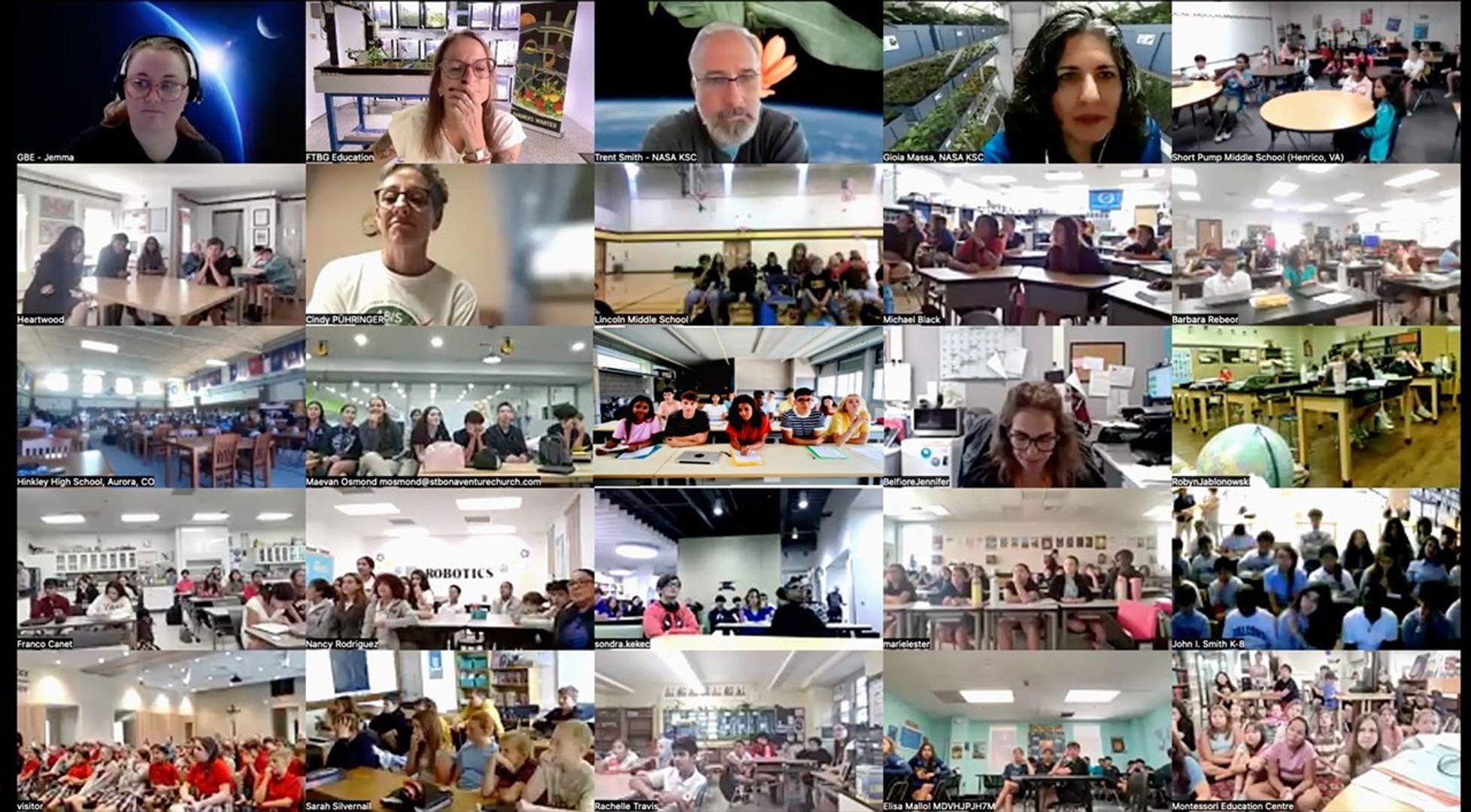
Student from 71 Classrooms engaged with NASA scientists to learn about how their Growing Beyond Earth research is contributing to feeding astronauts for long distance space travel.
Students from 71 Classrooms engaged with NASA scientists to learn about how their Growing Beyond Earth research is contributing to feeding astronauts for long distance space travel.

Nearly 1,250 middle and high school students from 71 schools around the world joined Fairchild Tropical Botanic Garden for the Growing Beyond Earth (GBE) Student Launch Chat with the Scientists, marking an inspiring milestone in the program’s 10th anniversary year.

The live session, held in collaboration with NASA, connected classrooms directly with Dr. Gioia Massa and Trent M. Smith, senior leaders of NASA Kennedy Space Center’s Space Crop Production team. Students heard firsthand how their classroom experiments are helping NASA identify and grow the best crops for future astronauts on long-duration missions to the Moon and Mars.

“Our students are contributing to real NASA science,” said one participating teacher. “It’s incredibly motivating for them to know their data could influence what astronauts eat in space someday.”

Connecting Classrooms with NASA Science

Growing Beyond Earth, led by Fairchild Tropical Botanic Garden in Miami, Florida, brings authentic NASA research into classrooms in a way that few science programs can. For more than a decade, the 83-acre botanic garden – renowned for its conservation, education, and research programs – has worked hand-in-hand with NASA to advance understanding of food production in space.

Students use specially designed plant growth chambers to test how different crops perform under conditions that mimic spacecraft environments. The data they collect are shared with NASA scientists, who use the findings to refine ongoing space crop production research.

Since the program’s inception, more than 120,000 students across 800+ classrooms have tested over 250 plant cultivars, with five student-tested crops already grown aboard the International Space Station.

Cultivating the Future STEM (Science, Technology, Engineering, & Mathematics) Workforce

The Growing Beyond Earth project exemplifies the mission of NASA’s Science Activation (SciAct) program, which connects NASA Science with people of all ages and backgrounds in ways that activate minds and promote a deeper understanding of our world and beyond, with the ultimate Vision: To increase learners’ active participation in the advancement of human knowledge. By engaging students as active participants in cutting-edge research, projects like GBE not only advance NASA’s goals but also cultivate curiosity, creativity, and confidence in the next generation of scientists and explorers. This year’s GBE Student Launch Chat celebrated that impact, showing how student research from classrooms around the globe contributes to the future of space exploration.

“When students see themselves as part of NASA’s mission, they realize science isn’t something distant, it’s something they can do,” said Dr. Massa. Teacher Espy Rodriguez from Hialeah Senior High School said, “It made their [her students] projects matter. I think it gave the kids a real sense of community. We are far, but we are one.” By growing plants, analyzing data, and sharing results with NASA, these students are helping humanity prepare for life beyond Earth, proving that the seeds of tomorrow’s discoveries are being planted in today’s classrooms.

GBE is supported by NASA under cooperative agreement award number 80NCCS2M0125 and is part of NASA’s Science Activation Portfolio. Learn more about how Science Activation connects NASA science experts, real content, and experiences with community leaders to do science in ways that activate minds and promote deeper understanding of our world and beyond: https://science.nasa.gov/learn/about-science-activation/.

www.fairchildgarden.org/gbe

NASA Fuels Discovery from Earth to Sky: One Crayon at a Time

6 min read

NASA Fuels Discovery from Earth to Sky: One Crayon at a Time

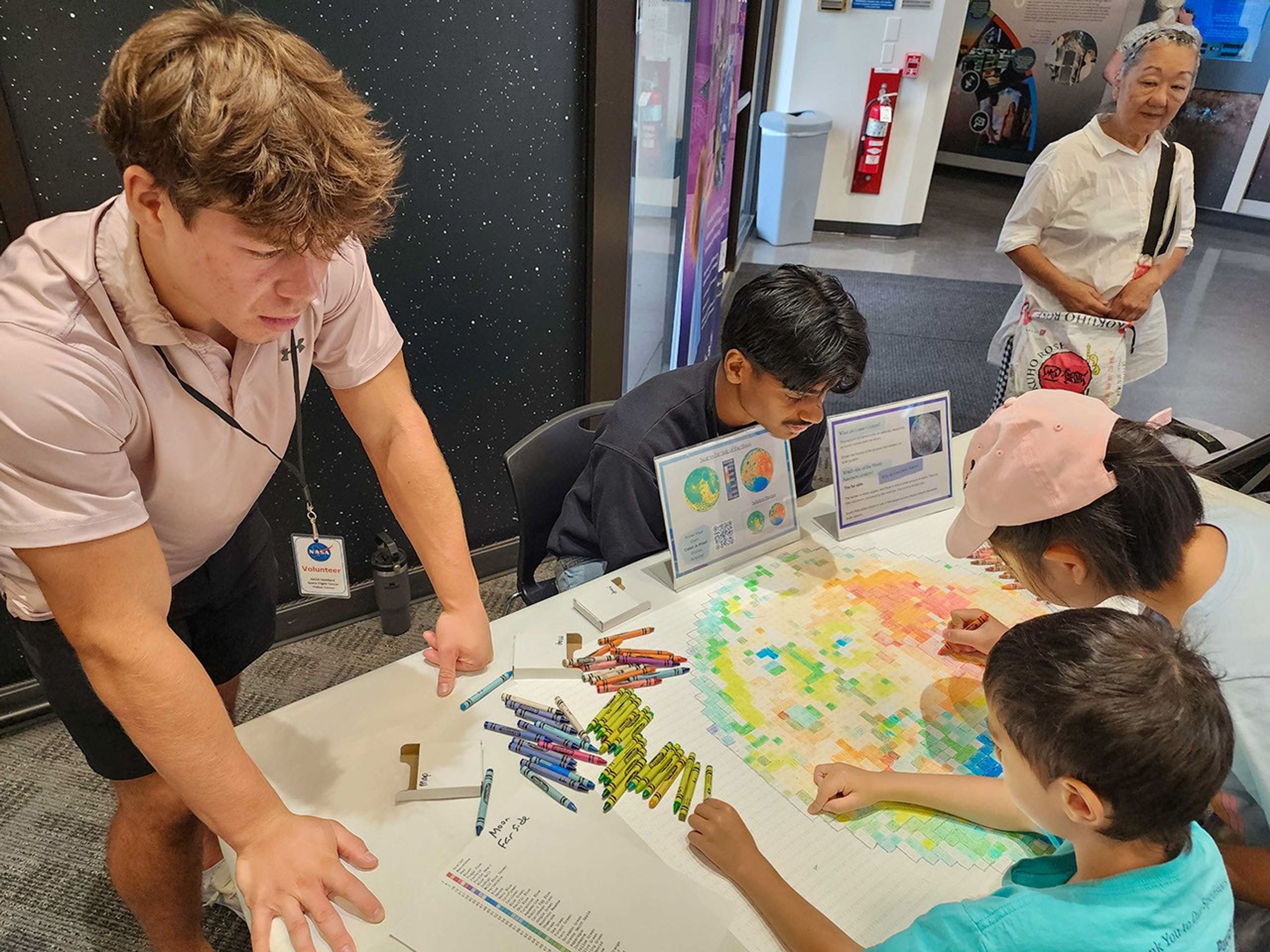
People gather around a pixelated poster of the Moon’s far side and color in the small boxes with a crayon color that corresponds to the elevation in that area.
Student interns help kids color in data to learn more about the far side of the Moon while visiting the Goddard Space Flight Center Visitor Center.
Photo Credit: NASA Earth to Sky

A collaboration between the NASA Earth Science Education Collaborative (NESEC) and Earth to Sky (ETS) – an exciting, growing partnership between NASA, the National Park Service, and other federal, state, and local organizations – is facilitating the implementation of a simple, yet incredibly effective activity that will help millions of national park visitors connect with NASA Earth and space science.

The Color-a-Pixel activity, developed by NESEC, transforms complex satellite imagery into accessible, collaborative art projects. Incorporating this simple technique into ETS science communication training programs demonstrates to park interpreters and outdoor educators how NASA’s view from space can enhance millions of visitor experiences at parks, refuges, and nature centers.

“This low-tech activity is powerful because of its simplicity,” explains ETS Space Science Coordinator Brandi Stewart, “All you have to do is pick up a crayon, follow the easy number guides, and discover the stories that NASA satellites are telling us about our world and beyond.”

The Color-a-Pixel activity begins with selecting satellite imagery from NASA missions like Landsat, the Mars Reconnaissance Orbiter (MRO), or the Lunar Reconnaissance Orbiter (LRO). Using technology developed by NESEC’s lead organization, the Institute for Global Environmental Strategies, these images are converted into a 3’ by 2’ poster of numbered squares, each corresponding to one of 120 standard Crayola crayon colors.

Earth to Sky demonstrates the magnetic appeal of this activity by setting it up for the rangers and educators during workshops. With a bit of explanation, participants immediately jump in, eager to reveal the imagery and data shown through the pixels.

“It becomes a group mission that, by the end of the training, the image will be fully colored in and complete. It’s been a great teambuilding and stress-relieving activity for our participants,” states Geneviève de Messières, Earth to Sky Program Lead.

When applied to public lands communication efforts, this activity becomes a tool for interpretive messaging. While visitors work on completing the image, park rangers can weave in scientific concepts, environmental change stories, and space exploration connections. This activity also drives home that satellite imagery is more than just a pretty picture – each pixel is also data that scientists use to better understand Earth and other worlds throughout our solar system.

Bringing Space Down to Earth

Some ways that Earth to Sky has implemented the activity at special events on public lands include:

  • Death Valley Dark Sky Festival, California: Visitors were invited to color Landsat imagery of Earth’s Badwater Basin and MRO imagery of Mars’ Belva Crater. As they colored, Earth to Sky outreach specialists made connections between finding signs of water on the dry landscapes in both locations.
  • Park After Dark, Minnesota: During this urban event hosted by Mississippi River & National Recreation Area in Minneapolis St. Paul, attendees worked together to color topographical maps of both the Moon’s familiar near side and its mysterious far side, using data from NASA’s Lunar Reconnaissance Orbiter. The striking differences that emerged through their coloring sparked questions about why the Moon’s two hemispheres appear so dramatically different, leading to rich discussions about lunar formation and geological change.
  • Patuxent Wildlife Refuge Open House, Maryland: Just miles from the urban centers of Baltimore and Washington DC, the Color-a-Pixel activity helped local community members visualize something they could feel but not easily see: the refuge’s role as a “cool island” in an urban heat landscape. Visitors colored Landsat imagery of the refuge and surrounding neighborhoods while examining heat maps showing temperature differences between developed areas and the protected green space. The activity helped residents understand the refuge’s importance beyond wildlife habitat.

All of these activities are available on the Institute for Global Environmental Strategies (IGES) website in a pre-generated format ready for printing.

A Colorful Collaboration

The collaboration between NESEC and Earth to Sky brings complex scientific concepts to diverse audiences in engaging and relevant ways. Earth to Sky’s community of practice –now including more than 2,000 interpreters and environmental educators – reaches millions of visitors annually across the country’s parks, refuges, and nature centers.

Theresa Schwerin, who leads NESEC, noted that Color-a-Pixel originally started as a simple idea for a tabletop activity to use at conferences and public events. “I wanted something hands-on that could draw people in and start conversations as simple as ‘these beautiful NASA images from space are data’ and talk about different NASA missions and how they are relevant to people’s lives. There’s also an opportunity to invite the public to contribute to NASA science by participating in citizen science projects … [some of which] can fill in the details of the pixels with information that complements NASA’s view from space.”

Andrew Clark, a data scientist and engineer at IGES, created the Color-a-Pixel poster generator, which has gone through several iterations to make it more effective. Schwerin noted, “I’ve used this at several public events. Kids will jump right in, with parents watching over their shoulders. Soon enough, the entire family is coloring together and asking questions about the image and NASA. I am thrilled about our collaboration with Earth to Sky that is taking this even further.”

As environmental challenges increasingly affect public lands, this collaboration helps visitors understand these issues through NASA’s unique perspective from above. The activity also introduces learners of all ages to the broader value of NASA’s Earth science missions alongside its more well-known space exploration endeavors.

Continuing to Color Outside the Lines

Looking ahead, the Earth to Sky partnership plans to continue using this activity in each new place they host a training. Most recently, Earth to Sky shared the activity with 417 visitors to the Goddard Space Flight Center Visitor Center, where local families colored in topographical Moon maps to prepare for International Observe the Moon Night. Additionally, a recording of a recent Color-a-Pixel webinar with NESEC’s Theresa Schwerin is available on the Earth to Sky website for interpreters and informal educators interested in implementing this place-based activity. Free registration is required to access this (and dozens of other) webinar recordings.

The success of this collaboration demonstrates how seemingly simple activities – enhanced with NASA science – can create meaningful learning experiences that resonate with visitors long after they leave a park or refuge.

For interpreters, educators, or NASA enthusiasts interested in bringing the Color-a-Pixel activity to their own sites or events, pre-generated activities are available in the gallery at: https://strategies.org/color-a-pixel-pregenerated.

NASA science is helping humanity discover new perspectives on both our home planet and the universe beyond, one crayon at a time. Learn more about how Science Activation connects NASA science experts, real content, and experiences with community leaders to do science in ways that activate minds and promote deeper understanding of our world and beyond: https://science.nasa.gov/learn/about-science-activation/.

Share

Details

Last Updated
Nov 20, 2025
Editor
NASA Science Editorial Team

Related Terms

Helio Highlights: October 2025

5 min read

Helio Highlights: October 2025

5 Min Read

Helio Highlights: October 2025

NASA Education Specialist Christine Milotte demonstrates heliophysics activities during a teacher professional development event hosted by the NASA Heliophysics Education Activation Team (HEAT) at the Dallas Arboretum, Saturday, April 6, 2024.
Credits:
NASA/Keegan Barber

The Sun and Our Lives

On a clear night, you might see thousands of stars in the sky. Most of these stars are dozens or hundreds of light years away from us. A light year is the distance a beam of light travels in a year: about 5.88 trillion miles (9.46 trillion kilometers). This means that for those stars we see at night, it takes their light, which travels at about 186,000 miles per second (or about 300 thousand kilometers per second), dozens or hundreds of years to reach us.

But in the daytime, we only see one star: the Sun. It dominates the daytime sky because it is so close – about 93 million miles (or 150 million kilometers) away. That distance is also called one astronomical unit, and its another unit of measurement astronomers use to record distance in space. But even if 1 astronomical unit seems like a long way, it’s still about 270 thousand times closer than Alpha Centauri, the next nearest star system.

The Sun isn’t just close – it’s also gigantic! The Sun is large enough to fit more than a million Earths inside it, and has more mass than 330 thousand Earths put together. Its light also provides the energy which allows life as we know it to flourish. For these reasons, the Sun is a powerful presence in our lives. We all have a relationship with the Sun, so knowing about it, and about the benefits and hazards of its presence, is essential.

Teaching About the Sun

Autumn is when most students in the United States return for a new school year after summer vacation. This back-to-school time offers a wonderful opportunity to reach students fresh off of a few months of fun in the Sun and capture their imaginations with new information about how our native star works and how it impacts their lives.

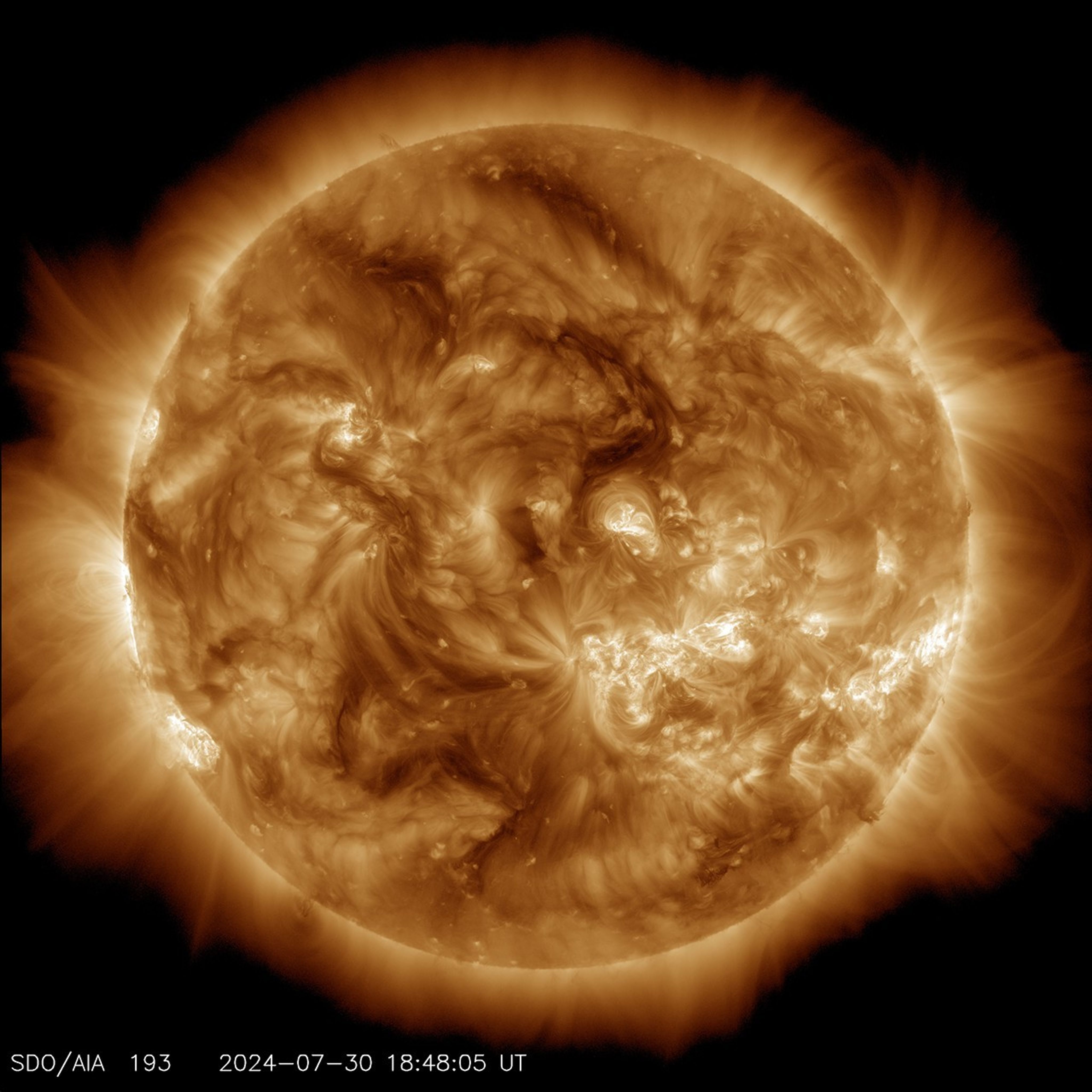
To that end, NASA conducts efforts to educate and inform students and educators about the Sun, its features, and the ways it impacts our lives. NASA’s Heliophysics Education Activation Team (HEAT) teaches people of all ages about the Sun, covering everything from how to safely view an eclipse to how to mitigate the effects of geomagnetic storms.

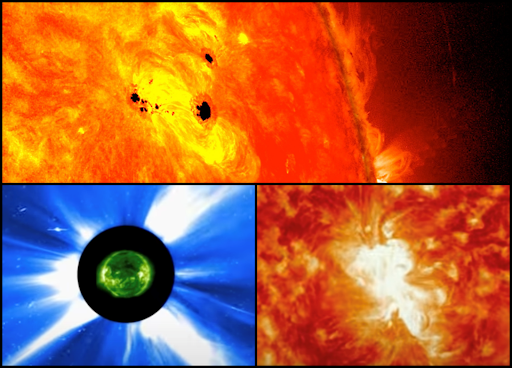
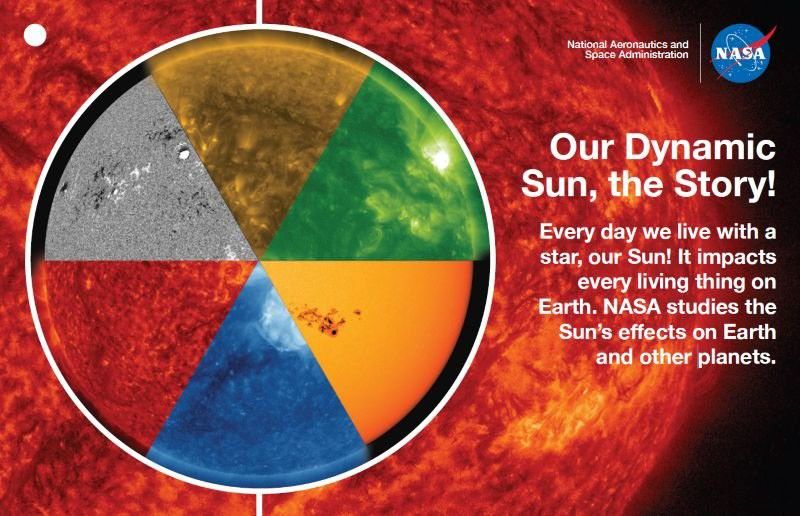
The central image is a multicolored circle divided into six overlapping sections, each showing a different way the Sun is observed: Blue (Extreme UV): Shows solar wind origins; Red (Hydrogen-alpha): Reveals features like filaments, prominences, and plages; Orange (Visible Light): Shows cooler sunspots; Gray (Magnetogram): Highlights magnetically active regions; Green (X-rays): Highlights solar flares and coronal mass ejections; Purple (UV): Shows material distribution above the surface.  Surrounding the Sun image are planets (not to scale): Neptune, Uranus, Saturn, Jupiter, Mars, and Earth—each shown with auroras caused by their magnetic fields interacting with solar particles.  A circle shows Earth's tiny relative size compared to the Sun. Text describes solar features like the inner corona seen during an eclipse and stresses safe solar viewing. Logos of NASA, Night Sky Network, Astronomical Society of the Pacific (ASP), NASA HEAT, and Solar Science Education appear at the bottom.
This “Our Dynamic Sun” banner is one of many educational outreach products offered by NASA HEAT. It uses imagery of the Sun at different wavelengths of light to demonstrate the features of our nearest star, and features information about how the Sun interacts with the rest of the Solar System.
NASA HEAT

This often means tailoring lesson plans for educators. By connecting NASA scientists who study Heliophysics with education specialists who align the material to K-12 content standards, HEAT gets Heliophysics out of the lab and into the classroom. Making Sun science accessible lets learners of all ages and backgrounds get involved in and excited about the discovery, and instills a lifelong thirst for knowledge that builds the next generation of scientists.

Since 2007, NASA’s Living With a Star (LWS) program and the University Corporation for Atmospheric Research’s Cooperative Programs for the Advancement of Earth System Science (CPAESS) have cooperated to offer the Heliophysics Summer School program for doctoral students and postdoctoral scholars. This program aims to foster heliophysics as an integrated science, teaching a new generation of researchers to engage in cross-disciplinary communication while they are still in the early days of their career.

One Way to Get Involved

As part of its efforts to increase awareness of the scientific and social importance of heliophysics, and to both inspire future scientists and spark breakthroughs in heliophysics as a discipline, the NASA Heliophysics Education Activation Team (NASA HEAT) is working on a slate of educational materials designed to get students involved with real-world mission data.

My NASA Data, in collaboration with NASA HEAT, has released a new set of resources for educators centered around space weather. My NASA Data supports the use of authentic NASA data as part of classroom learning materials. These materials include lesson plans, mini-lessons (shorter activities for quick engagement), student-facing web-based interactives, and a longer “story map,” which deepens the investigation of the phenomenon over multiple class periods.

These resources are designed to engage learners with data and observations collected during both past and ongoing missions, including the European Space Agency’s Solar Orbiter, NASA’s Parker Solar Probe and Solar Dynamics Observatory (SDO), and more.

One example of this is the educational material published to support outreach efforts focusing on the 2023 and 2024 American solar eclipses. These materials allowed learners to collect their own data on cloud and temperature observations during the eclipses with the GLOBE Observer Eclipse tool. This gave them the chance to participate in the scientific process by contributing meaningfully to our understanding of the Earth system and global environment.

New Ways to Engage

Groups like HEAT don’t just spark interest in science for the sake of inspiring the next generation of heliophysicists. Just like amateur astronomers can bring in a lot more data than their professional counterparts, citizen scientists can do a lot to support the same institutions that may have inspired them to take up the practice of citizen science. This can mean anything from helping to track sunspots to reporting on the effects of space weather events.

2023 Partial Solar Eclipse Viewing at Camino Real Marketplace with the View the Santa Barbara Astronomical Unit.
2023 Partial Solar Eclipse Viewing at Camino Real Marketplace with the View the Santa Barbara Astronomical Unit. Events like this, which can take place during major events such as eclipses or during impromptu circumstances, offer an excellent opportunity for the public to get involved in and excited about heliophysics.
Photo by Chuck McPartlin

These enthusiasts are also adept at sharing knowledge of heliophysics. Even just one person inspired to buy a telescope with the right solar filter (international standard ISO 12312-2), set it up in a park, and teach their neighbors about the Sun can do amazing work, and there are a lot more of them than there are professional scientists. That means these amateur heliophysicists can reach farther than even the best official outreach.

Whether they take place in the classroom, at conferences, or in online lectures, the efforts of science communicators are a vital part of the work done at NASA. Just as scientists make new discoveries, these writers, teachers, audio and video producers, and outreach specialists are passionate about making those discoveries accessible to the public.

All of this work helps to inspire the scientists of tomorrow, and to instill wonder in the citizen scientists of today. The Sun is a constant and magnificent presence in our lives, and it offers plenty of reasons to be inspired, both now and in the future.

Additional Resources

Lesson Plans & Educator Guides

Image of the Sun in different wavelengths.

Explore the
Sun Toolkit

The Explore the Sun Toolkit includes postcards, a banner, and slides ideal for informal educators and community events to bring the wonder of NASA Solar Science to your community.

Sun as a Star
Activities,
Grades 5-12

Educator guide consisting of eight roughly one-hour, hands-on activities adapted from a classroom environment for after-school audiences, and which will work for a variety of audiences.

Interactive Resources

My NASA Data

My NASA Data, a NASA Langley Research Center Science Directorate project, supports the use of authentic NASA Earth data for educators and learners in grades 3-12.

NASA Space
Place Sun Page

Videos, games, activities and more for engaging younger students in a variety of space science topics, including resources on the Sun which range from hands-on activities to detailed lessons.

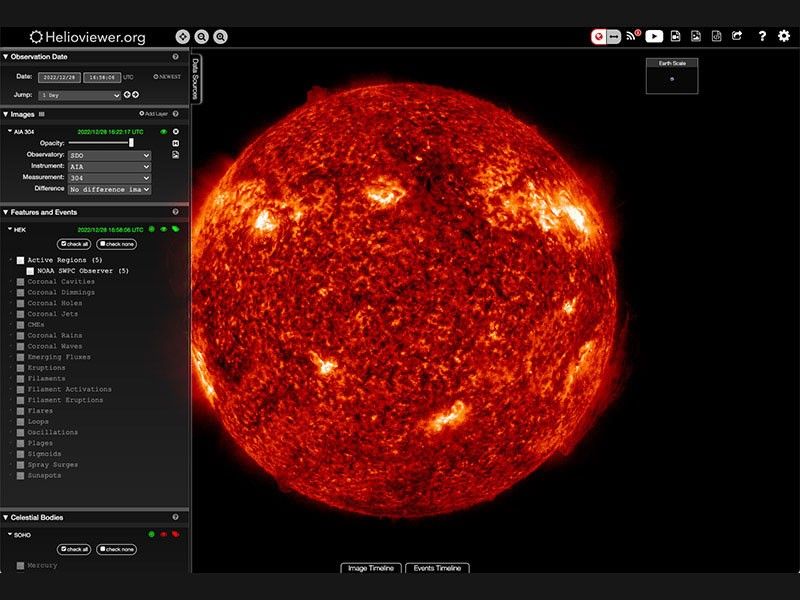
Student HelioViewer:
Solar Data Interactive

A user-friendly interactive where students can access NASA data collected by spacecraft about the Sun and its features, including solar flares, magnetic fields, sunspots, and CMEs.

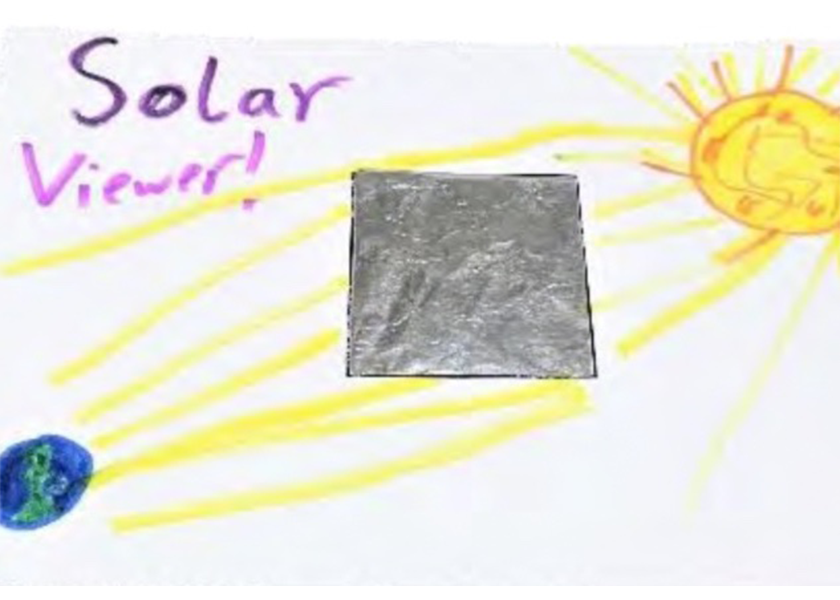
Make a Solar
Viewer Activity

Create a simple solar viewer, or pinhole viewer, which works by projecting the image of the Sun through a small hole, to safely observe the Sun with just some paper and aluminum foil.

Webinars & Slide Decks

Heliophysics Big Year logo, featuring artistic graphics showing the Sun and various planetary bodies in orbit around it.

HBY & Math #3:
The Sun Touches Everything

From agriculture to economics, the Sun touches all parts of our lives, especially with the sunlight that allows crops to grow. This webinar looks at sunlight through the year and how it changes.

deatiled image of the sun

The Solar Cycle As
Seen From Space

Roughly 2-minute video which uses views of the Sun taken by a variety of spacecraft to show how different features of the Sun vary between solar minimum and solar maximum.

From City Lights to Moonlight: NASA Training Shows How Urban Parks Can Connect Communities with Space Science

4 min read

From City Lights to Moonlight: NASA Training Shows How Urban Parks Can Connect Communities with Space Science

When you think about national park and public land astronomy programs, you might picture remote locations far from city lights. But a recent NASA Earth to Sky training, funded by NASA’s Science Activation Program, challenges that assumption, demonstrating how urban parks, wildlife refuges, museums, and green spaces can be incredible venues for connecting communities with space science. Programs facilitated in urban spaces can reach people where they already live, work, and recreate. This creates opportunities for ongoing engagement as urban astronomy program participants can discover that the skies above their neighborhoods hold the same wonders as remote locations.

During the first week of August in 2025, NASA Earth to Sky collaborated with the National Park Service and U.S. Fish and Wildlife Service to deliver an innovative astronomy training program called “Rivers of Stars and Stories: Interpreting the Northern Night Sky” at Minnesota Valley National Wildlife Refuge in Minneapolis-St. Paul. This three-day course brought together 28 park ranger interpreters, environmental educators, and outdoor communicators from across the Twin Cities area. Presentations and discussions centered around engaging urban audiences with the wonders of space science by leveraging the benefits of metropolitan spaces and the unique opportunities that city skies provide.

Throughout this immersive training, participants explored everything from lunar observations and aurora science to NASA’s Artemis Program and astrobiology. The training empowered participants by affirming that everyone is an effective stargazer and night sky storyteller, transforming beginners into confident astronomy communicators. One participant captured their experience by noting they went from “not knowing much of anything to having a much better grasp on basic concepts and most importantly, where to find more resources!” In addition to sharing resources, this training also launched a community of practice where communicators can continue to collaborate. Participants engaged in discussions on how to respectfully incorporate the local indigenous perspectives into astronomy programming and honor the traditional stewards of the land while avoiding appropriation or misrepresentation of indigenous science.

The course also created a lasting community connection to NASA through presentations by NASA experts and demonstrations of NASA activity toolkits. As one participant noted in the evaluation, “This is just the start of a long learning journey, but I know now where to look and how to find answers.” Toolkits and resources shared included GLOBE (Global Learning & Observation to Benefit the Environment) Observer’s NUBE (cloud) game, Our Dynamic Sun by the NASA Heliophysics Education Activation Team (HEAT) and the Night Sky Network, the Aurorasaurus Citizen Science project, and the local Solar System Ambassador Network.

Participants’ sense of belonging to the Earth to Sky community increased dramatically. These outcomes support NASA’s strategic goal of building sustained public engagement with Earth and space science. The overwhelmingly positive feedback, with 100% of participants expressing interest in taking more courses like this, demonstrates the tremendous value it is for Earth to Sky to collaborate with the National Park Service and US Fish and Wildlife Service, as all agencies’ public communication goals are addressed.

This kind of collaborative work is crucial because it builds a network of science communicators who can reach thousands of visitors across Minneapolis-St. Paul’s parks, nature centers, and outdoor spaces. By training local informal educators to confidently share NASA’s discoveries and missions, the program expands access to space science for urban audiences throughout the Twin Cities region.

The Earth to Sky team will continue fostering these valuable partnerships with the National Park Service and U.S. Fish and Wildlife Service, as well as other state and local agencies and nonprofit organizations. Learn more about Earth to Sky’s work with park interpreters and nonformal educators to share NASA space science by visiting: https://science.nasa.gov/sciact-team/earth-to-sky/

Learn more about how Science Activation connects NASA science experts, real content, and experiences with community leaders to do science in ways that activate minds and promote deeper understanding of our world and beyond: https://science.nasa.gov/learn/about-science-activation/.

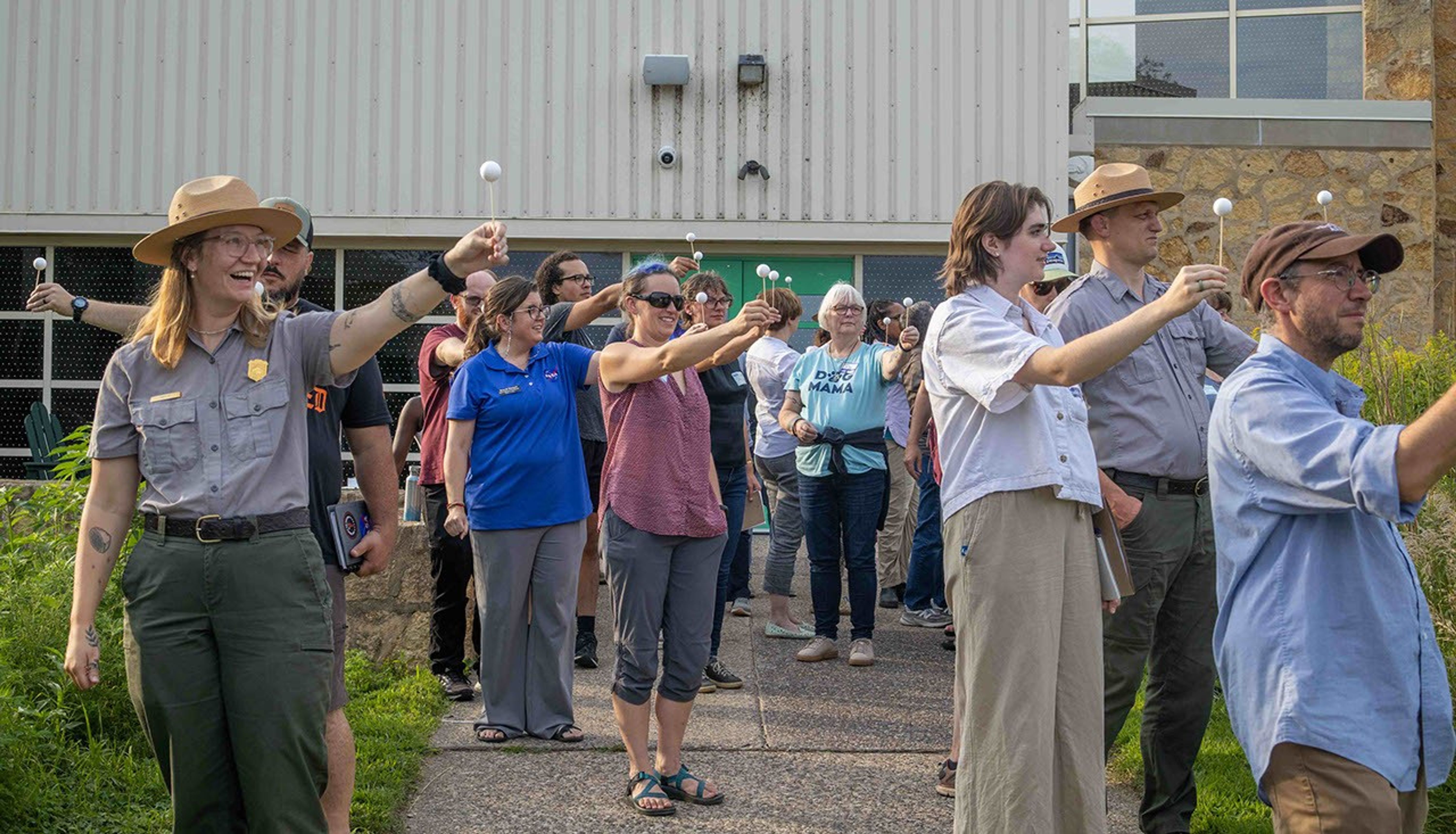
A group of people stand outside holding white Styrofoam balls on a stick with arms outstretched to model moon phases.
Participants of the “Rivers of Stars and Stories: Interpreting the Northern Night Sky” training model moon phases outside of the Minnesota Valley National Wildlife Refuge Education Center.
NASA Earth to Sky

Share

Details

Last Updated
Sep 26, 2025
Editor
NASA Science Editorial Team

NASA Helps Connect Astronomers and Community Colleges Across the Nation

3 min read

NASA Helps Connect Astronomers and Community Colleges Across the Nation

The NASA Community College Network (NCCN) and the American Astronomical Society (AAS) have teamed up to provide an exciting and impactful program that brings top astronomy researchers into the classrooms of community colleges around the United States.

The Harlow Shapley Visiting Lectureship Program, named for astronomer Harlow Shapley (1885-1972), has a history dating back to the 1950s, when it provided support for a scientist to give a series of astronomy-themed lectures at a college or university, coupled with a public talk to the local community. In 2024, AAS partnered with NCCN to broaden the impact of the Shapley lectureship program to community colleges, making use of NCCN’s existing network of 260 college instructors across 44 states and 120 participating Subject Matter Experts (SME) to “matchmake” community colleges with astronomers.

NCCN has supported the teaching of astronomy at community college since 2020. Community colleges serve a vital role in STEM education, with one-third of their students being first-generation college attendees and 64% being part-time students working jobs and raising families. Factor in that up to 40% of students taking introductory astronomy courses nationally each year do so at a community college, and the motivation behind NCCN and the initiatives of the AAS become clear.

In 2024, the pilot collaboration between NCCN and the AAS matched two community colleges — Chattanooga State Community College in Tennessee and Modesto Junior College in California — with SMEs from University of Virginia and Stanford University. In 2025, nine NCCN subject matter experts are engaging with 14 community colleges in six states. They are:

Joe Masiero (Caltech) at Grossmont Community College CA
Vivian U (Caltech) at Scottsdale & Chandler Gilbert Community Colleges AZ
Dave Leisawitz (NASA) & Michael Foley (Harvard) at Elgin Community College IL
Michael Rutkowski (MN State) at Dallas Area Colleges (five colleges) TX
Joe Masiero (Caltech) at Mt. San Jacinto College, Menifee Campus CA
Quyen Hart (STScI) at Casper College WY
Nathan McGregor (UCSC) at Yakima Valley College WA
Patrick Miller (Hardin-Simmons) at Evergreen Valley College CA
Kim Arcand (Harvard-Smithsonian) at Anne Arundel Community College MD
Natasha Batalha (NASA) at Modesto Junior College CA

Each visit of an AAS Shapley Lecturer is unique. The center of each event is the public Shapley Lecture, which is broadly advertised to the local community. Beyond the Shapley Lecture itself, host institutions organize a variety of local engagement activities – ranging from star parties and classroom visits to meeting with college deans and faculty – to make the most of their time with the Shapley Lecturer.

Astronomy instructor James Espinosa from Weatherford College said, “[The visiting Shapley Lecturer’s] visit made a permanent change in how my classes will be taught, in the sense that ‘honors’ projects will be available for ambitious students. I intend to keep in touch with him for several years to come, which is a big impact for our present and future students.”

Dr. Tom Rice, AAS Education Program Manager and AAS lead on the partnership with NCCN, stated, “The AAS’s Harlow Shapley Visiting Lectureship Program represents one of the most impactful ways that astronomers can share our scientific understanding with the widest possible audience, and I am very proud that we have partnered with the SETI Institute and NASA to bring astronomers to their network of community colleges.”

NCCN is supported by NASA under cooperative agreement award number 80NSSC21M0009 and is part of NASA’s Science Activation Portfolio. Learn more about how Science Activation connects NASA science experts, real content, and experiences with community leaders to do science in ways that activate minds and promote deeper understanding of our world and beyond: https://science.nasa.gov/learn/about-science-activation/.

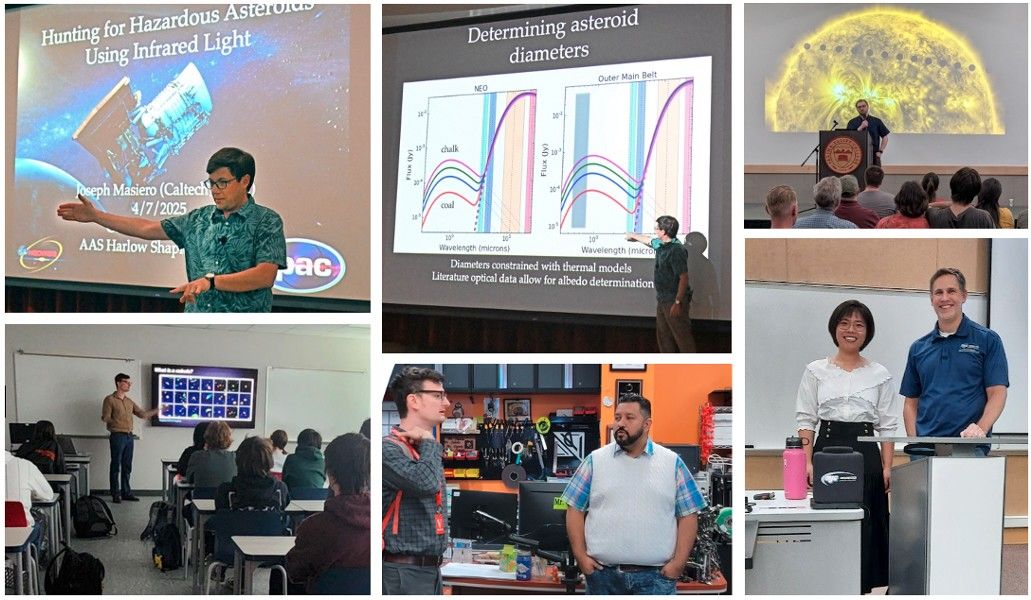
Montage of images of scientists during their visits as Shapley Lecturers. A scientist gives a presentation showing images of a spacecraft and the Sun. A scientist talks to a college instructor, and another scientist poses for a photo with an instructor.
Shapley Lecturers in action.

NASA & STEM Learning Ecosystems: Opportunities & Benefits for Everyone

2 min read

NASA & STEM Learning Ecosystems: Opportunities & Benefits for Everyone

STEM learning ecosystems are intentionally designed, community-wide partnerships that enable all Americans to actively participate in science, technology, engineering, and math (STEM) throughout their lifetimes. Lifelong STEM learning helps people build critical knowledge and skills, access economic opportunities, drive innovation, and make informed decisions in a changing world. STEM learning ecosystems draw on expertise and resources to provide access to these benefits for the entire community.

NASA’s Science Activation (SciAct) program, a competitively-selected network of collaborative projects that connect NASA science with people of all ages and backgrounds, includes new and growing STEM learning ecosystems in American communities from Alaska to Maine and creates free, high-quality resources that educators across the country can use to share the excitement of Earth and space science.

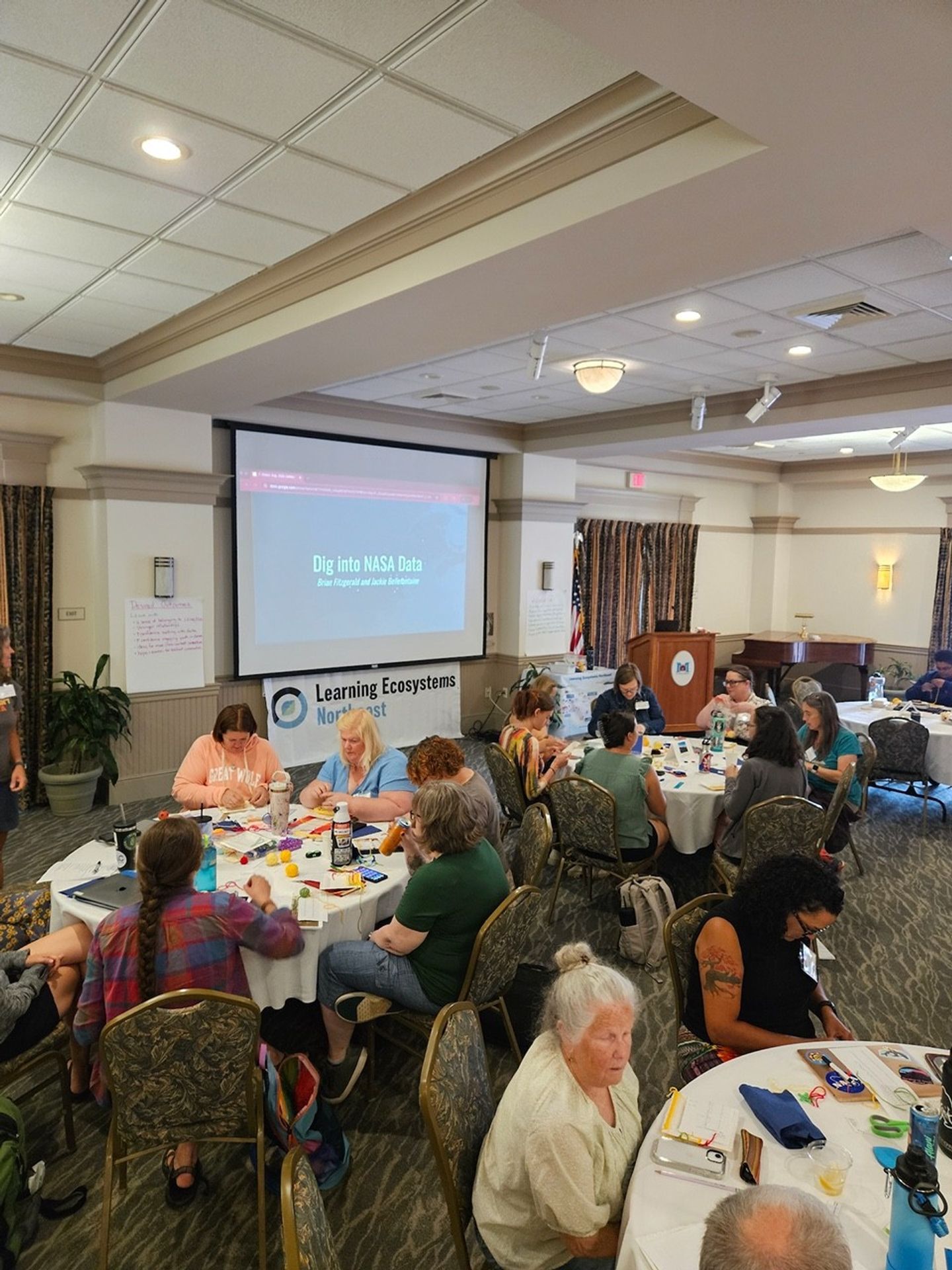
To further support connections among STEM learning ecosystems and NASA, the SciAct STEM Ecosystems project held a meeting in Saint Paul, Minnesota on August 4-6, 2025. Approximately 100 educators, evaluators, subject matter experts, and other STEM learning facilitators from around the nation participated to share approaches, learn about resources, and build relationships. The gathering offered an opportunity to connect NASA SciAct teams with each other and with external networks and learning ecosystems for mutual benefit.

Meeting goals included sharing ways to create effective partnerships and engage learners in Earth and space science, discovering NASA resources and assets to use in STEM education efforts, and strengthening connections among participants. To accomplish these goals, meeting activities included plenaries, breakout sessions, and networking opportunities.

Led by Arizona State University, the SciAct STEM Ecosystems project is a collaboration among several regional partnerships/SciAct project teams: Arctic and Earth SIGNs, Learning Ecosystems Northeast, Rural Activation and Innovation Network, and the Smoky Mountains STEM Collaborative. The project also partners with the National Informal STEM Education Network to create professional resources.

For those who were unable to attend in person, the STEM Ecosystems project makes a variety of resources available online: https://www.nisenet.org/stem-learning-ecosystems.

SciAct STEM Ecosystems is supported by NASA under cooperative agreement award number 80NSSC21M0007 and is part of NASA’s Science Activation Portfolio. Learn more about how Science Activation connects NASA science experts, real content, and experiences with community leaders to do science in ways that activate minds and promote deeper understanding of our world and beyond: https://science.nasa.gov/learn/about-science-activation/.

Several small groups of people talking.
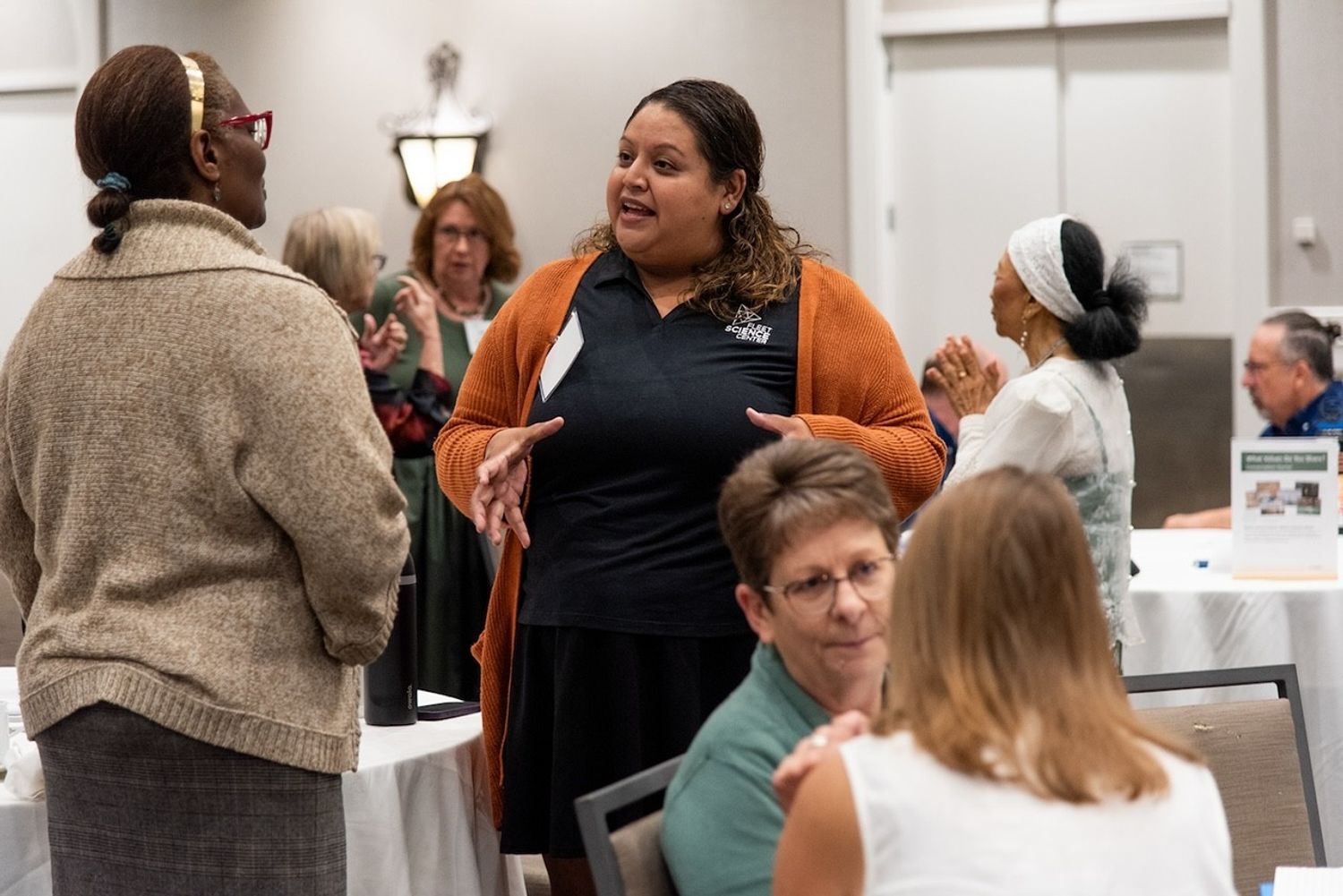
Meeting participants took advantage of opportunities to network and strengthen their relationships.
Emily Maletz/NISE Network

Share

Details

Last Updated
Sep 25, 2025
Editor
NASA Science Editorial Team
❌