
Reading view

There are new articles available, click to refresh the page.

House Republicans Officially Confirm “Operation Choke Point 2.0” Targeted Bitcoin And Crypto Firms

Bitcoin Magazine
House Republicans Officially Confirm “Operation Choke Point 2.0” Targeted Bitcoin And Crypto Firms

Republicans on the House Financial Services Committee have released a 50-page report detailing what they describe as a systematic debanking effort by Biden-era regulators, dubbed “Operation Chokepoint 2.0.” 

While many of the findings — such as the Fed, FDIC, and OCC pressuring banks away from crypto through informal guidance, and the SEC’s “enforce first, make rules never” approach — were previously known, the report now places them squarely in the Congressional record.

The report identifies at least 30 entities that were effectively “debanked” through informal regulatory guidance and supervisory pressure. These businesses, the Committee claims, were forced out of the U.S. banking system without formal enforcement actions.

Government coercion, biased enforcement, and private pressure — all while denying

According to the document, the Federal Reserve, the Federal Deposit Insurance Corporation (FDIC), and the Office of the Comptroller of the Currency (OCC) employed a range of tactics to influence bank behavior. 

These included “non-objection” letters, “pause” letters, and other forms of informal guidance designed to make banks hesitant to engage with crypto companies.

Meanwhile, the Securities and Exchange Commission (SEC) allegedly adopted a policy of “enforce first, make rules never,” using selective enforcement rather than clear regulatory frameworks to restrict digital-asset activity. 

The report highlights SAB 121, an SEC guidance that effectively blocked banks from offering custody services for crypto assets.

The report paints a picture of regulators publicly denying any bias against digital assets, while privately pressuring banks to sever ties with crypto firms. The report reads that while regulators consistently denied discouraging digital-asset activity, the evidence collected by the Committee shows a pattern of private pressure and informal coercion. 

Committee Republicans argue these actions represent a revival of Operation Choke Point, a controversial program from the early 2010s that used regulatory and reputational pressure to discourage banks from serving certain high-risk industries. 

The report asserts that the tactics used against crypto firms echo the same methods: informal guidance, opaque supervisory expectations, and reputational risk warnings.

“The lack of clear rules combined with aggressive enforcement has created a chilling effect on the digital-asset sector,” said a Committee spokesperson. “Legitimate American businesses were forced to move abroad or shut down, not because of wrongdoing, but because of regulatory overreach.”

Crypto firms struggled to keep bank accounts

The report includes anecdotal accounts of firms that struggled to maintain bank accounts despite following all applicable laws. One executive described repeated requests for documentation, sudden account closures, and vague warnings from compliance officers citing regulatory “uncertainty.” 

Another recounted being effectively cut off from the U.S. banking system after submitting a routine regulatory filing.

Republicans on the Committee argue that this environment has stifled innovation and driven financial activity offshore. They call on Congress and the Biden administration to reverse these policies, provide explicit guidance, and ensure that legitimate crypto firms can access banking services without fear of arbitrary pressure.

The Committee’s full report is available in full on the House Financial Services Committee website.

This post House Republicans Officially Confirm “Operation Choke Point 2.0” Targeted Bitcoin And Crypto Firms first appeared on Bitcoin Magazine and is written by Micah Zimmerman.
Strike CEO Jack Mallers Debanked by JPMorgan as Bank Faces Epstein Tensions

Bitcoin Magazine

Strike CEO Jack Mallers Debanked by JPMorgan as Bank Faces Epstein Tensions

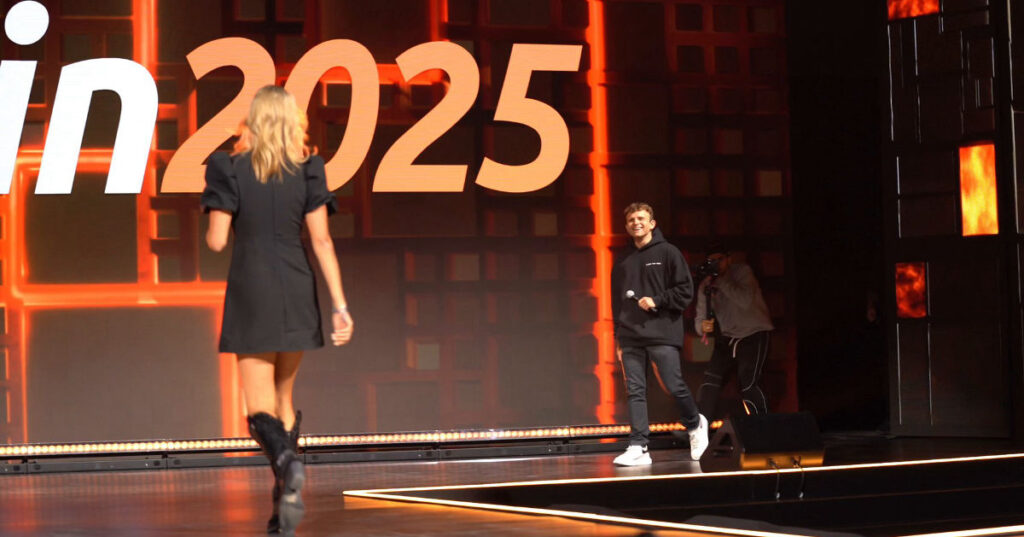
Strike CEO Jack Mallers said JPMorgan Chase abruptly closed his personal bank accounts last month without providing a clear explanation, sparking fresh debate over the banking industry’s treatment of crypto executives.

“Last month, J.P. Morgan Chase threw me out of the bank. It was bizarre. My dad has been a private client there for 30+ years,” Mallers wrote on social media platform X. When he pressed the bank for details, he said the only response was, “We aren’t allowed to tell you.”

Mallers shared a letter from JPMorgan Chase, which cited unspecified “concerning activity” on his accounts. The letter, which Mallers jokingly said he had framed, noted the bank’s obligations under the Bank Secrecy Act and warned that Chase “may not be able to open new accounts” for him in the future.

The revelation has reignited industry concerns over “Operation Chokepoint 2.0,” an alleged Biden-era initiative that sought to pressure banks into limiting services to crypto businesses and executives. The program’s existence has long been disputed, but critics say debanking remains a threat to the sector.

In August, President Donald Trump signed an executive order prohibiting financial institutions from closing accounts solely because of crypto-related activity. Trump’s Working Group on Digital Asset Markets said the administration had “ended Operation Choke Point 2.0 once and for all by working to end regulatory efforts that deny banking services to the digital assets industry.”

Despite this, industry figures quickly questioned whether debanking had truly stopped. Bo Hines, a former adviser on digital assets in the Trump administration and current strategic advisor to Tether, mocked Chase on X: “Hey Chase… you guys know Operation Choke Point is over, right? Just checking.”

Tether CEO Paolo Ardoino also commented on Mallers’ post, writing that the account closure might be “for the best.” In a separate post, Ardoino framed the situation as a testament to Bitcoin’s resilience: “Bitcoin will resist the test of time. Those organizations that try to undermine it will fail and become dust. Simply because they can’t stop people’s choice to be free.”

Senator Cynthia Lummis chimed in on the incident, “Operation Chokepoint 2.0 regrettably lives on. Policies like JP Morgan’s undermine confidence in traditional banks and send the digital asset industry overseas,” Lummis said on X. “It’s past time we put Operation Chokepoint 2.0 to rest to make America the digital asset capital of the world.”

JPMorgan and Jeffrey Epstein

Mallers, who has a history of publicly calling out JPMorgan’s CEO Jamie Dimon, used the moment to promote Bitcoin. He posted on X: “Seek truth. Stand with integrity. Fight for freedom. Protect Bitcoin at all costs.” Mallers also leads Twenty One, a public company backed by Tether and Bitfinex, which aims to rival Michael Saylor’s Strategy in acquiring bitcoin.

The incident has drawn further scrutiny amid ongoing controversy over JPMorgan’s past dealings. Mallers referenced a post by Senator Ron Wyden highlighting that JPMorgan executives were allegedly aware of $1 billion in suspicious transactions linked to Jeffrey Epstein.

While the bank has not elaborated on the “concerning activity” cited in Mallers’ case, the closure highlights the broader tension between crypto executives and traditional financial institutions. Industry observers say such actions continue to fuel fears of politically motivated or opaque “debanking,” even as regulators emphasize compliance and risk management obligations.

Senator Ron Wyden criticized JPMorgan Chase for evading accountability over its relationship with Jeffrey Epstein, rejecting the bank’s attempt to blame a single former employee. 

Wyden highlighted that multiple executives, including Mary Erdoes and Jes Staley, ignored internal warnings and delayed filing Suspicious Activity Reports (SARs) for six years after terminating Epstein in 2013, potentially violating federal law. 

The bank’s response lacked evidence countering reports that top leadership enabled Epstein’s crimes. Wyden issued a letter demanding extensive internal documents, communications, and transaction records to investigate who knew what, why Epstein remained a client, and the delay in regulatory reporting, signaling a call for federal scrutiny.

Last month, JPMorgan research suggested that Bitcoin may be undervalued relative to gold, with potential to reach $165,000 if the “debasement trade” continues gaining momentum. Analysts note that recent gold price gains make Bitcoin more attractive, especially as the Bitcoin-to-gold volatility ratio drops below 2.0. 

Based on volatility-adjusted comparisons, JPMorgan estimated Bitcoin’s $2.3 trillion market cap would need a roughly 42% increase to match gold’s $6 trillion in bars, coins, and ETFs.

Jack Mallers

This post Strike CEO Jack Mallers Debanked by JPMorgan as Bank Faces Epstein Tensions first appeared on Bitcoin Magazine and is written by Micah Zimmerman.

❌