❌

Reading view

There are new articles available, click to refresh the page.

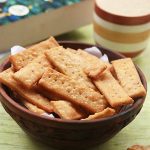
Namak Para | Namakpare

Namak Para is a quite simple and crispy snack made with wheat flour, maida, ghee and some spices. These small fried pieces are very crunchy and perfect to munch anytime. Namak Para is an Indian version of cookie perfect for tea time. It is a favorite tea time snack in many homes and liked by all age groups.
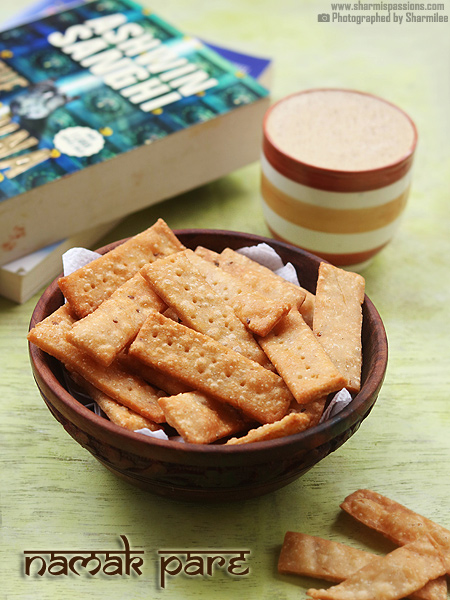
namak pare served with coffee

Namak Pare is made by making a flour dough then the dough is rolled, cut and fried till golden to get that perfect crunch. Namak Para has mild flavor of ajwain and ghee which makes it so aromatic. It tastes best with evening tea or can be packed for small trips and picnics. Once you make a batch, it stays crisp for many days if stored properly.

[feast_advanced_jump_to]

About Namak Para

Namak Para is quite common during festivals like Diwali or Holi. It is also called as Nimki or Namakpare in different parts of India. The snack is made by deep frying small dough pieces prepared using flour, ghee and few spices. The texture is crispy outside and little soft inside which makes it very nice to eat.

The recipe is quite simple and does not need any special ingredient. The mix of maida, wheat flour and sooji give right crunch and light texture. Ghee gives flaky texture and rich flavor which is main secret for perfect Namak Para. Ajwain gives a small punch of flavor and also helps in digestion.

You can see both sweet and salty versions of this snack. The salty one is called Namak Para and the sweet one is known as Shakkar Para. You can even flavor it with kasuri methi, black pepper or cumin seeds for some change. It can be made only with maida or wheat flour or even mix of both as per your choice.

I usually make Namak Para during weekends or festival time. I enjoy making a big batch, store in jar and serve with hot tea in the evening. The sound of that crisp bite is so satisfying. Once you start eating, it is hard to stop with few pieces only.
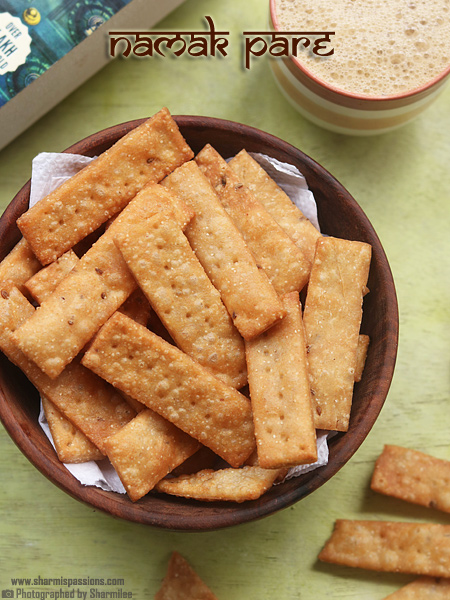
namak pare served with coffee

Namak Para Ingredients

  • Maida - I have used maida to get that light and crisp texture. You can make fully with wheat flour also but maida gives more crunch.
  • Wheat Flour - Added along with maida for light healthy touch. It makes the snack bit firm and gives good color after frying.
  • Fine Sooji - I have used fine sooji for crispness. It helps Namak Para to stay crunchy for a long time.
  • Ajwain Seeds - This adds mild flavor and helps in digestion too. You can replace with jeera or skip if you do not like the taste.
  • Ghee - I add this for richness and nice aroma. It gives that flaky texture in each bite. Oil can be used too but ghee gives better flavor.
  • Water - I used to knead the dough into soft and smooth texture. Add little by little to get correct consistency.
  • Oil - I used for deep frying. Use fresh oil and fry them in low medium flame for even color and crispness.

Similar Recipes

How to make Namak Pare Step by Step

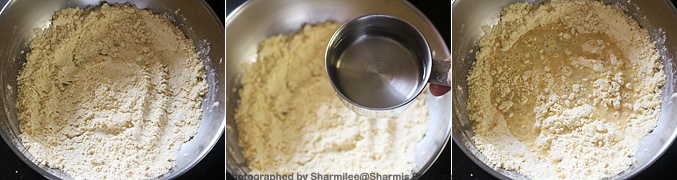
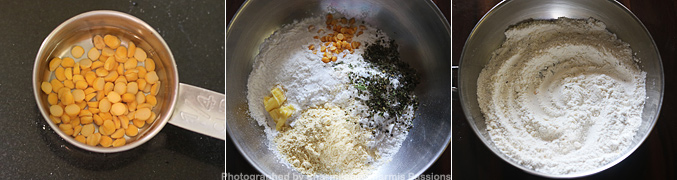
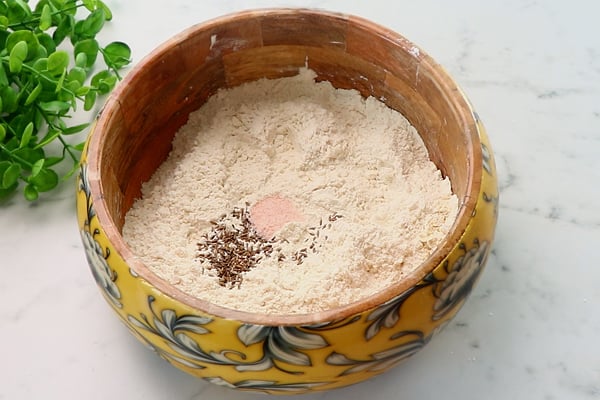
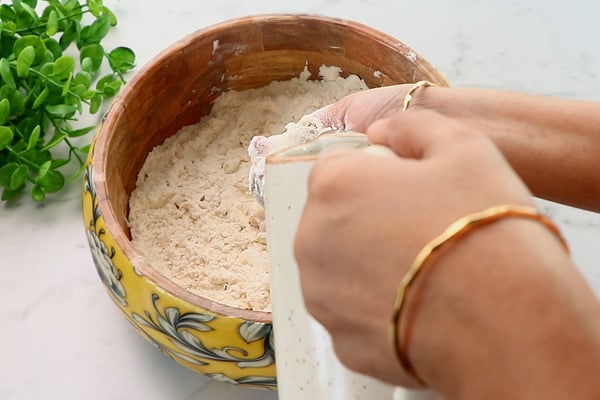
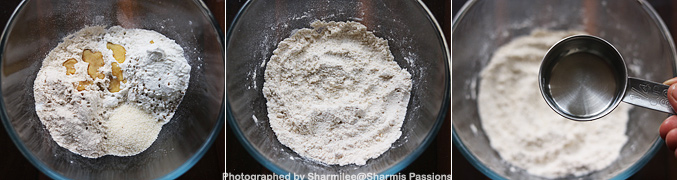
1.Take maida, wheat flour, sooji, ajwain, ghee and required salt. First mix it well, then add water little by little.
how to make namak pare step1

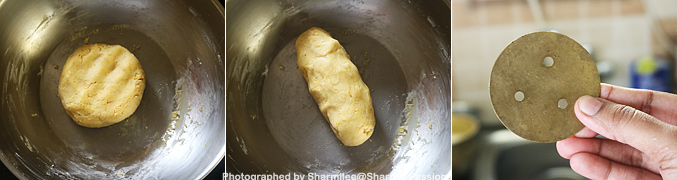
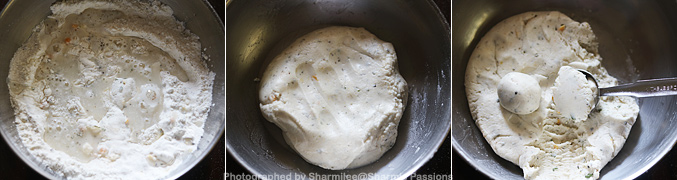
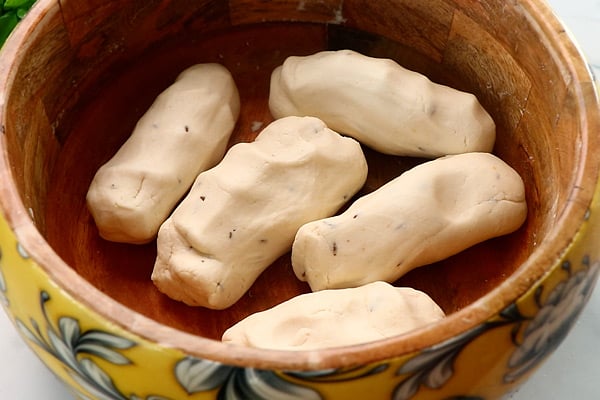
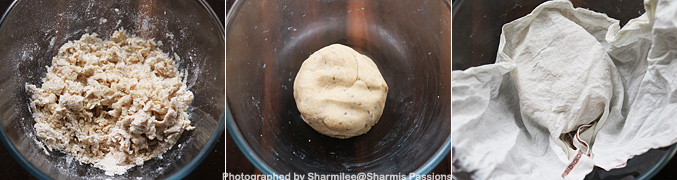
2.Keep kneading and adding water little by little to form a soft pliable dough like this. Keep covered for 15 minutes.
how to make namak pare step2

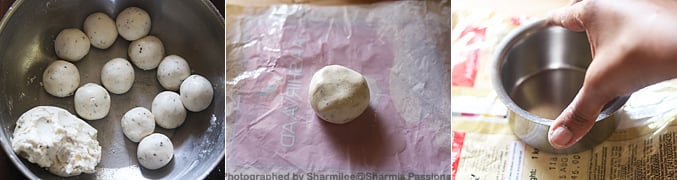
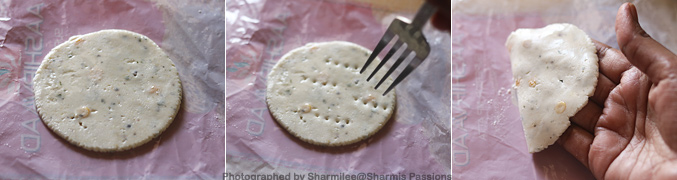
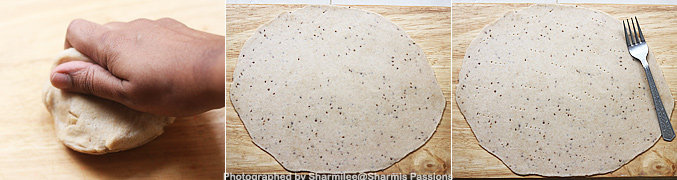
3.Then take it out and knead it once. Roll it using a chapathi roller to slightly thick, it should thick like salted crackers. Now prick with fork to avoid puffing.
how to make namak pare step3

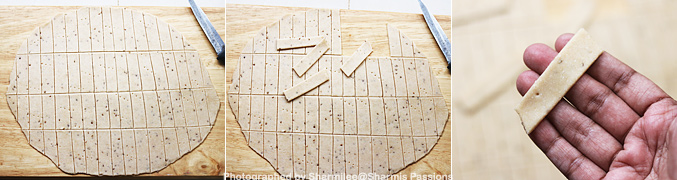
4.Using a knife cut like this.Each piece can be 1and Β½ inches long. Carefully separate them.
how to make namak pare step4

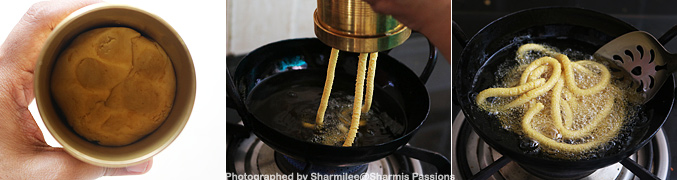
5.Now heat oil - add few pieces, do not overcrowd. It will slowly come up and change color. Do not keep the flame in high, low medium should be fine.
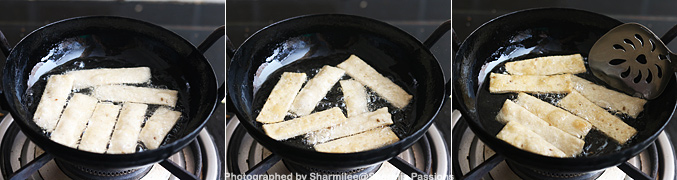
how to make namak pare step5

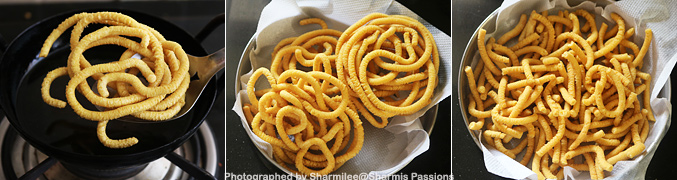
6.Deep fry till golden on both sides. Take it out and drain in tissue paper. Like wise fry the remaining.
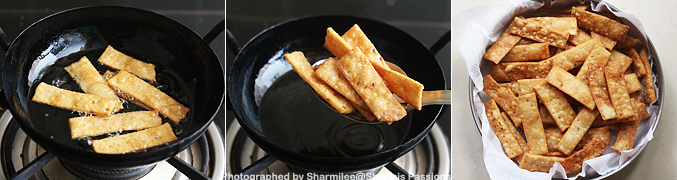
how to make namak pare step6

Cool down and store in airtight container.
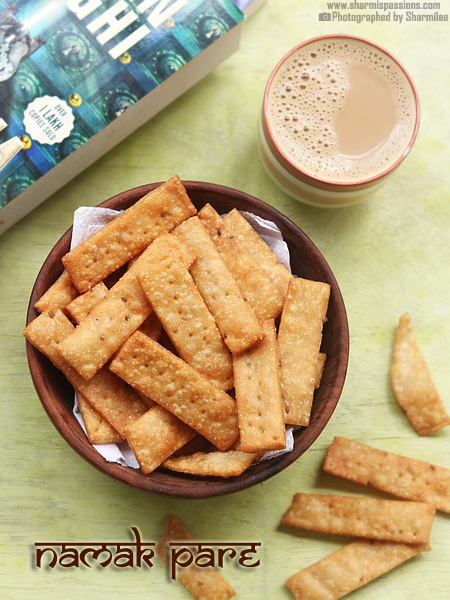
namak pare served with coffee

Expert Tips

  • Dough Texture - I usually knead the dough soft and smooth but not sticky. If dough is too tight, Namak Para will turn hard, so add water little by little while mixing.
  • Rolling - Roll the dough bit thick like how we roll crackers. If it is too thin, it will become extra crisp and break soon after frying.
  • Pricking - I always prick the rolled dough with fork before cutting. It helps to stop from puffing up while frying.
  • Frying - Keep the flame on low medium so Namak Para cook nice and even. If flame is high, outside turn brown fast but inside stay soft and uncooked.
  • Cooling - Let it cool down fully before putting in jar. This will help to keep it crisp and tasty for long time.

Serving and Storage

Serve Namak Para with hot cup of tea or coffee. It is nice snack to serve when guests come home also. Keep cooled Namak Para in airtight box and it stay good for around 10 to 15 days.

FAQS

1.Can I make this with wheat flour?

Yes you can make it fully with wheat flour, but texture will be little tight though still very nice in taste.

2.Can I bake this recipe?

Yes you can bake this in oven at 180Β°C till it turn golden and crisp. Baking makes it lighter and less oily, good for healthy option.

3.Why my Namak Para became soft after frying?

If oil is not hot enough or dough rolled too thick, it will turn soft. Fry in right heat and roll evenly.

4.Can I add other spices for flavor?

Yes you can add crushed pepper, jeera or kasuri methi for different taste. All versions come out nice.

5.How long can I store Namak Para?

If stored in airtight box, it stays good for around two weeks. Make sure it cools completely before storing.
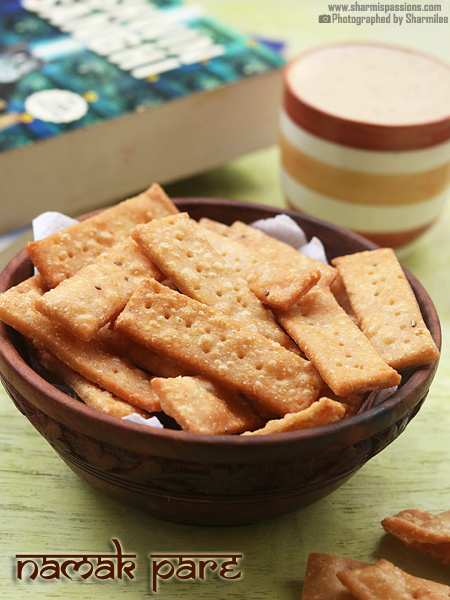
namak pare served with coffee

If you have any more questions about this Namak Para RecipeΒ do mail me at sharmispassions@gmail.com. In addition, follow me on Instagram,Β Facebook,Β PinterestΒ ,YoutubeΒ andΒ TwitterΒ .

Tried this Namak Para Recipe? Do let me know how you liked it. Also tag us on Instagram @sharmispassions and hash tag it on #sharmispassions.

πŸ“– Recipe Card

30316188321 2b14869ec5 o
Print

Namak Para Recipe | Namakpare Recipe

Namak Para is a quite simple and crispy snack made with wheat flour, maida, ghee and some spices. These small fried pieces are very crunchy and perfect to munch anytime. Namak Para is an Indian version of cookie perfect for tea time. It is a favorite tea time snack in many homes and liked by all age groups.
Course Snack
Cuisine Indian
Keyword 30 mins recipes, all purpose flour recipes, diwali dishes, diwali food, diwali recipes, diwali snacks, diwali snacks recipes, easy diwali recipes, easy diwali snacks, Festival, maida recipes, rava recipes, savoury recipes, snack recipes, virtual diwali party, wheat flour recipes
Prep Time 10 minutes
Cook Time 20 minutes
Total Time 30 minutes
Servings 25 namakpare
Calories 15kcal
Author Sharmilee J

Ingredients

  • ΒΌ cup maida
  • ΒΌ cup wheat flour
  • 1 tablespoon fine sooji
  • ΒΌ teaspoon ajwain seeds
  • 1 tablespoon ghee
  • oil to deep fry
  • salt to taste
  • less than ΒΌ cup water

Instructions

  • Take maida, wheat flour, sooji, ajwain, ghee and required salt. First mix it well, then add water little by little.
  • Keep kneading and adding water little by little to form a soft pliable dough like this. Keep covered for 15mins.
  • Then take it out and knead it once. Roll it using a chapathi roller to slightly thick, it should thick like salted crackers. Now prick with fork to avoid puffing.
  • Using a knife cut into into rectangular shapes . Each piece can be 1and Β½ inches long. Carefully separate them.
  • Now heat oil - add few pieces, do not overcrowd. It will slowly come up and change color. Do not keep the flame in high, low medium should be fine.
  • Deep fry till golden on both sides.
  • Take it out and drain in tissue paper. Likewise fry the remaining.
  • Cool down and store Namak Para in airtight container.
  • Enjoy Namakpare!

Notes

  • Dough Texture - I usually knead the dough soft and smooth but not sticky. If dough is too tight, Namak Para will turn hard, so add water little by little while mixing.
  • Rolling - Roll the dough bit thick like how we roll crackers. If it is too thin, it will become extra crisp and break soon after frying.
  • Pricking - I always prick the rolled dough with fork before cutting. It helps to stop from puffing up while frying.
  • Frying - Keep the flame on low medium so Namak Para cook nice and even. If flame is high, outside turn brown fast but inside stay soft and uncooked.
  • Cooling - Let it cool down fully before putting in jar. This will help to keep it crisp and tasty for long time.

Nutrition

Serving: 25g | Calories: 15kcal | Carbohydrates: 2g | Protein: 0.3g | Fat: 1g | Saturated Fat: 0.4g | Polyunsaturated Fat: 0.1g | Monounsaturated Fat: 0.2g | Cholesterol: 2mg | Sodium: 0.1mg | Potassium: 5mg | Fiber: 0.1g | Sugar: 0.01g | Vitamin A: 0.03IU | Calcium: 0.5mg | Iron: 0.1mg

The post Namak Para | Namakpare appeared first on Sharmis Passions.
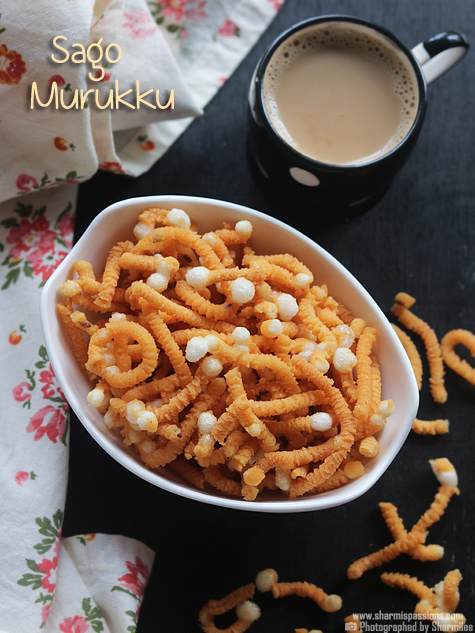
Sago Murukku | Javvarisi Murukku

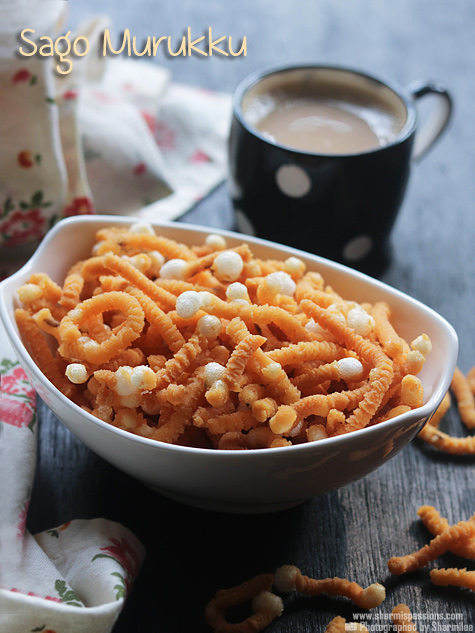
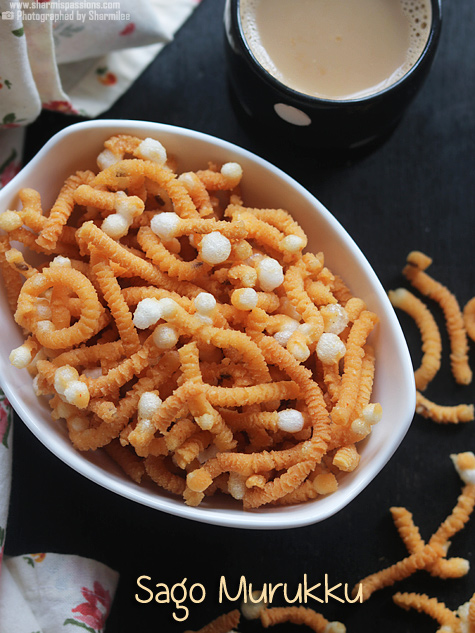
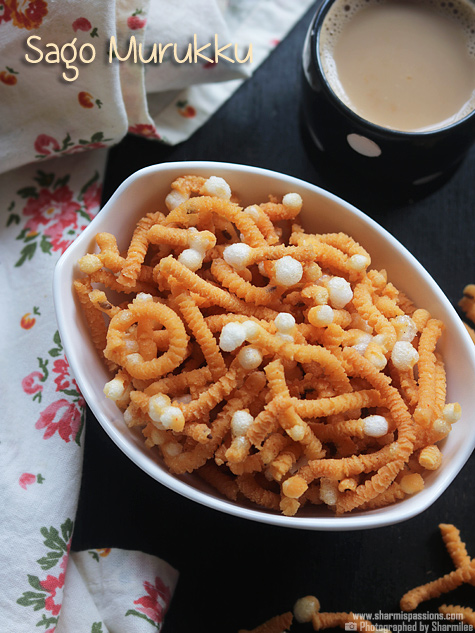
Sago Murukku is a crispy snack made with rice flour and sago pearls as main ingredients. It has that perfect crunch with mild spicy flavor which makes it a great tea time snack in the evening. The texture is bit different from regular murukku because of the soaked sago, it gives nice bubbly look and extra crisp feel when you bite.

sago murukku served with coffee

This murukku is very popular during festival time but also a nice choice for casual snacking anytime. The method is quite simple but the soaking of sago should be done properly else it may burst while frying. Once fried, the murukku turns golden and crunchy with that little taste of cumin and butter which make it so addictive.

[feast_advanced_jump_to]

About Sago Murukku

Sago Murukku, also called Javvarisi Murukku, is one interesting twist to the usual South Indian murukku recipe. Instead of using only rice flour, this version adds soaked sago pearls which give lovely crisp texture and airy bubbles on top when fried. The look itself is tempting and taste is even more.

The recipe mainly uses rice flour, sago, curd, and butter. The curd and soaked sago helps in binding the dough easily and adds slight tangy flavor too. Once deep-fried in medium hot oil, the murukku puffs up slightly, gets crunchy on the outside and remains light inside.

This version is perfect for those who are bored of making same old thenkuzhal or butter murukku every time. It is something new and flavorful with nice crispness. Even though soaking part takes little time, the actual mixing and frying are very simple and quick to do.

At my home, I usually make this in small batches during festive or when guests come. It stays good for many days and goes well with tea, coffee or even with rasam rice. Kids also love it because of its crunch and mild spicy taste.

sago murukku served with coffee

Sago Murukku Ingredients

  • Rice flour - I add homemade flour as it gives the best crisp texture. You can use store bought also, but make sure it is fine and smooth.
  • Sago (Javvarisi) - This is the main ingredient that gives the murukku its bubbly look and light crunchy feel. I always soak it well in curd, else it may pop while frying. The soaking part is really important.
  • Curd - I have used thick curd to soak the sago, it helps to soften it and gives mild tang taste too. If the curd is very thick, I add little water or sometimes use buttermilk instead.
  • Butter - I add a small piece of butter to give rich flavor and soft crispness. Too much butter will make dough break while pressing, so I always add carefully.
  • Red chilli powder - I used mild red chilli powder just for light spice and color. You can add more if you like little extra heat.
  • Cumin seeds - I like adding cumin seeds as it gives nice aroma and also helps for easy digestion. Sometimes I mix few sesame seeds also for change in flavor.
  • Hing (asafoetida) - I always add one small pinch of hing for flavor and also to avoid gas trouble after eating fried snacks. It adds nice subtle aroma.
  • Oil - I used refined oil for deep frying, it helps to makes the murukku more crispy and tasty. You can also use groundnut oil for better taste.

Similar Recipes

How to make Sago Murukku Step by Step

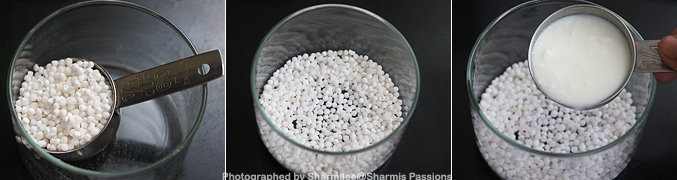
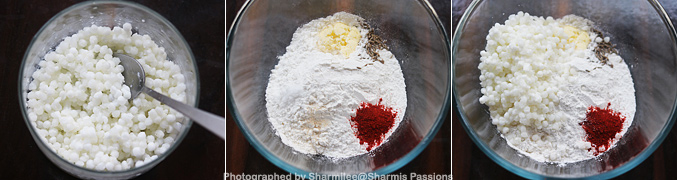
1.Measure and soak sago in curd at least for 6 hours. I soaked it overnight

how to make sago murukku step1

2.Morning when you see the sago pearls will be soft. Now in a mixing bowl - add rice flour, red chili powder, sago, jeera, butter, hing.

how to make sago murukku step2

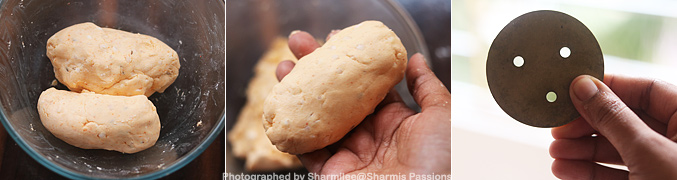
3.Mix it well with your hands, then add water little by little. Gather together to form a non sticky dough like this.

how to make sago murukku step3

4.Shape it into a log and keep it ready. Fix your thenkuzhal murukku mold.

how to make sago murukku step4

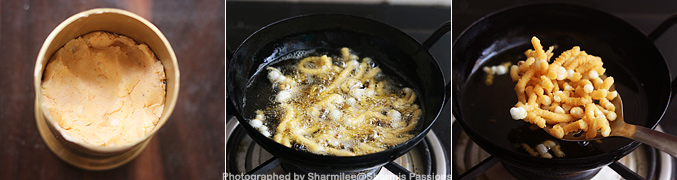
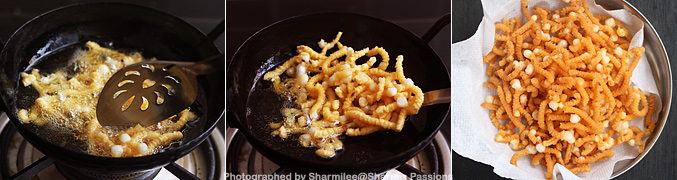
5.Now fill the murukku press with the dough, in parallel heat oil. When oil is hot, drop a pinch of batter to check it comes up immediately, then oil is at the correct temperature. Squeeze in a spread manner, do not crowd. Fry till golden and until shh sound ceases.

how to make sago murukku step5

6.t will stick together just break it while frying. You can break it after frying. Drain in tissue paper. Once it cools down, break it and set aside.

how to make sago murukku step6

Store in a dry jar.

sago murukku served with coffee

Expert Tips

  • Soaking sago- I always soak sago for minimum 6 hours or overnight. When I press it between fingers it should feel soft, else it may burst while frying.
  • Dough consistency - The dough should be smooth and soft. If it feels dry, I sprinkle few drops of water and knead again till it becomes even.
  • Oil temperature - I check the oil by dropping tiny piece of dough, it should come up slowly. If oil is too hot, murukku will turn brown fast and stay soft inside.
  • Shaping method - Because of the sago, the dough will not come perfectly in circles. So i just press directly into oil to make uthiri murukku, it comes more crunchy this way.
  • Storage - I always cool the murukku completely before storing. I keep it in airtight tin box and it stays crisp for about 10 days easily.

Serving and Storage

Serve this Sago Murukku along with evening tea or filter coffee as a light crunchy snack. It is also a nice addition to your festive snacks box to share with friends and family. Once cooled completely, transfer to clean airtight container or steel box. If kept away from moisture, it stays fresh and crispy up to 10-12 days easily.

FAQS

1.Can I skip curd and use only water?

Yes, but curd helps to soften the sago and gives slight flavor. Only water may make the murukku little hard in texture.

2.My sago is popping while frying, what to do?

That happens when sago is not soaked enough. Soak it for more hours till it turns soft when pressed.

3.Can I make in air fryer?

No, it will not give same texture as deep frying, it gives best crisp and taste for this murukku.

4.Can I use ghee?

You can use ghee also, but butter gives a lighter and flakier result with nice golden color.

5.Why my murukku is breaking while pressing?

It means the dough is too dry. Sprinkle little water, knead again till soft and then press gently.

sago murukku served with coffee

If you have any more questions about this Sago Murukku RecipeΒ do mail me at sharmispassions@gmail.com. In addition, follow me on Instagram,Β Facebook,Β PinterestΒ ,YoutubeΒ andΒ TwitterΒ .

Tried this Sago Murukku Recipe? Do let me know how you liked it. Also tag us on Instagram @sharmispassions and hash tag it on #sharmispassions.

πŸ“– Recipe Card

30284045920 218726727d o
Print

Sago Murukku | Javvarisi Murukku

Sago Murukku is a tasty, savoury snack made by frying a dough of powdered sago passed through murukku press. Sago Murukku is an alternate murukku to try for Diwali & other festivals. Sago Murukku translated as Javvarisi Murukku is a healthy snack compared to the packed foods.
Course Snack
Cuisine Indian
Keyword diwali dishes, diwali recipes, diwali snacks, diwali snacks recipes, easy diwali recipes, easy diwali snacks, Festival, fry, fry recipes, sago recipes, savoury recipes, snack recipes, virtual diwali party
Prep Time 15 minutes
Cook Time 30 minutes
Total Time 45 minutes
Servings 10 Murukku
Calories 87kcal
Author Sharmilee J

Ingredients

  • 1 cup rice flour
  • β…“ cup sago
  • ΒΌ cup curd
  • ΒΎ tablespoon butter
  • Β½ teaspoon red chilli powder
  • Β½ teaspoon cumin seeds
  • a tiny pinch hing
  • salt to taste
  • oil to deep fry

Instructions

  • Measure and soak sago in curd at least for 6 hrs. I soaked it overnight. Morning when you see the sago pearls will be soft.
  • Now in a mixing bowl - add rice flour, red chilli powder, sago, jeera, butter, hing.
  • Mix it well with your hands, then add water little by little. Gather together to form a non sticky dough.
  • Shape it into a log and keep it ready.
  • Fix your thenkuzhal murukku mould and fill the murukku press with the dough.
  • Now, in parallel heat oil. When oil is hot, drop a pinch of batter to check it comes up immediately, then oil is at the correct temperature. Squeeze in a spreaded manner, do not crowd.
  • Fry till golden and until shh sound ceases. It will stick together just break it while frying. You can break it after frying.
  • Drain in tissue paper. Once it cools down, break it and set aside.
  • Serve Sago Murukku with tea!

Notes

  • Do not overcook, it should golden.
  • As sago is more in this recipe, I recommend to make it as uthiri murukku as I don't think we can make circles with this recipe.
  • Soaking for more hours is required else sago may pop out so be at a safer distance while frying.
  • When you squeeze the dough will stick to each other, when it becomes crispy try to break with the ladle else after frying you can break it.
  • Regulate flame and cook, do not cook in high flame.
  • I used my thenkuzhal press to get this shape.
  • If you are making in larger quantity keep the dough closed to avoid from drying.
    If the dough is too dry sprinkle little water.

Nutrition

Serving: 25g | Calories: 87kcal | Carbohydrates: 17g | Protein: 1g | Fat: 1g | Saturated Fat: 1g | Polyunsaturated Fat: 0.1g | Monounsaturated Fat: 0.4g | Trans Fat: 0.03g | Cholesterol: 3mg | Sodium: 18mg | Potassium: 26mg | Fiber: 1g | Sugar: 0.3g | Vitamin A: 63IU | Vitamin C: 0.2mg | Calcium: 11mg | Iron: 0.1mg

The post Sago Murukku | Javvarisi Murukku appeared first on Sharmis Passions.

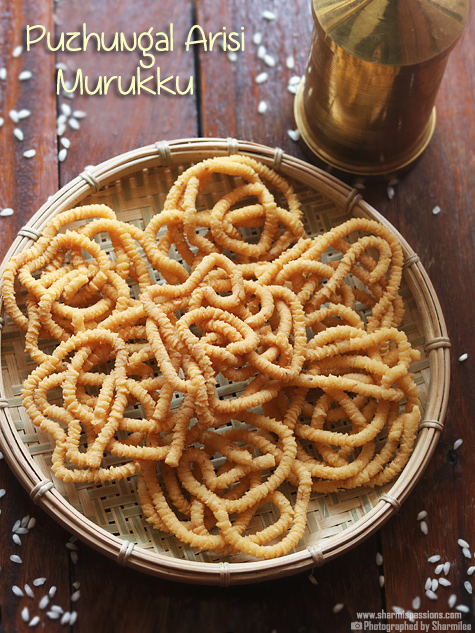
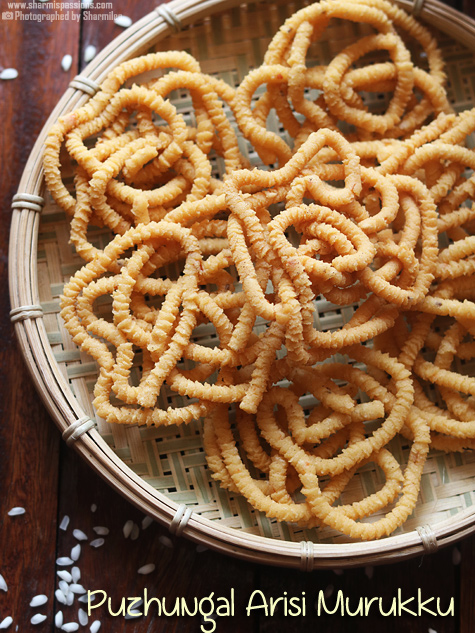
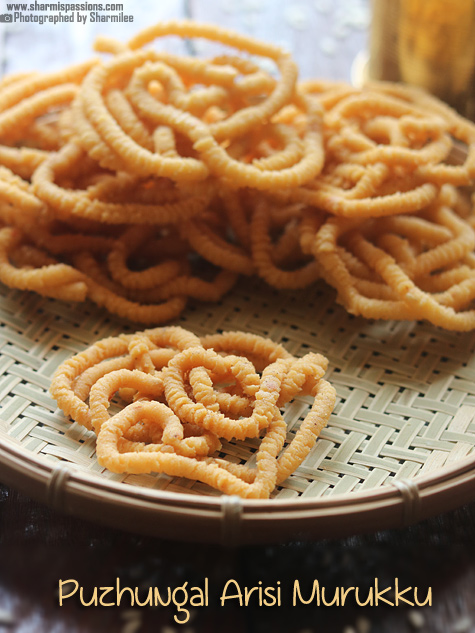
Arisi Murukku

Arisi Murukku is a crispy and light South Indian snack made using rice and few spices. It is little different from regular murukku as it is made using soaked and ground rice batter instead of ready made rice flour. The texture comes out light, crunchy with mild spice flavor that makes it perfect to have with evening tea or coffee.

arisi murukku served

This murukku is a very good choice when you do not have rice flour at home but still want to make something crunchy and tasty. Because it is made with ground rice batter, it tastes more fresh and has nice homemade feel. Arisi Murukku can be made for any festival time or even as small evening snack when you feel like eating something savory and crisp.

[feast_advanced_jump_to]

About Arisi Murukku

Arisi Murukku is a traditional South Indian snack where "Arisi" means rice. This version is made using parboiled rice, also called puzhungal arisi, which is soaked and ground like idli batter then mixed with few simple ingredients to make a smooth dough. The ground rice gives special flavor and make the murukku light, crispy and tasty after frying.

The main flavor in this murukku comes from red chili, cumin and ajwain. These spices give small burst of flavor in every bite while butter add that melt in the mouth crispness. Roasted gram dal powder add mild nutty taste and also help to bind the dough well.

The process may look long but it is very simple once you start step by step. The rice is soaked, ground thick and mixed with spices, butter and flour to make smooth dough. The aroma while frying these golden murukkus fills the house and brings that festive feel.

I usually make Arisi Murukku on weekends or whenever family feels like having something crunchy with tea. It feels nice to make snack fully from scratch without using any packed flour.

arisi murukku served

Arisi Murukku Ingredients

  • Parboiled Rice - I used puzhungal arisi soaked and ground into thick smooth batter. It gives soft inside and crisp outer after frying. You can use raw rice also, but texture will be little different.
  • Roasted Gram Dal - I ground it to fine powder which makes dough soft and gives light nutty flavor. If not available, you can replace with besan but taste change a bit.
  • Butter - I used soft butter at room temperature. It gives rich taste and nice crisp texture. You can replace half of it with oil if you want lighter version.
  • Red Chillies - I added it with rice to give mild spice and light color. You can add more or less as per taste.
  • Cumin Seeds - It gives nice aroma and helps for easy digestion. Can replace with carom seeds also if you like.
  • Ajwain - I used small amount for flavor and mild crunch. It gives very nice smell while frying.
  • Oil - I used for frying murukku till golden and crispy. Use any neutral oil, but keep flame medium for even color.

Similar Recipes

How to make Arisi Murukku Step by Step

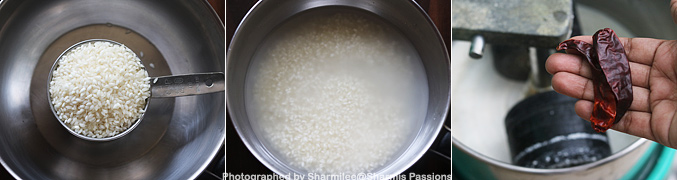
1.Measure 1 cup parboiled rice, rinse it well drain water, Then soak it in water till immersing level for at least 2 hours. Then grind it in wet grinder along with 2 red chilies.

how to make arisi murukku step1

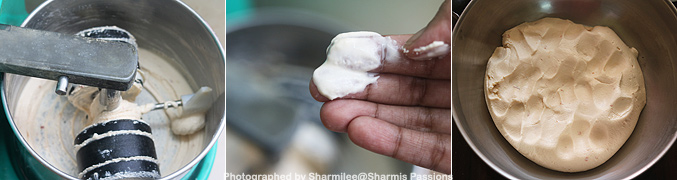
2.Add very little water as possible and grind at least for 30 minutes to get a smooth thick batter like this.

how to make arisi murukku step2

3.Take fried gram dal in a mixer jar and grind it to a fine powder. Sieve it in a fine sieve.

how to make arisi murukku step3

4.Discard the coarse particles. In a wide mixing bowl - add rice batter along with butter, salt, jeera, ajwain and fried gram dal powder.

how to make arisi murukku step4

5.Mix well to form a smooth non sticky dough, mine was too dry so sprinkled little water to get a smooth dough consistency.

how to make arisi murukku step5

6.Take a portion, Grease the murukku press and use the murukku press(I used the thenkuzhal mold). Fill the dough till ΒΎth of the murukku press.

how to make arisi murukku step6

7.Β Start pressing. I usually press in 2 ladles and flip it in oil. Heat oil , check by adding a pinch of dough if it raises immediately with a shh sound then the oil is ready.

how to make arisi murukku step7

8.Now carefully flip over the prepared murukkus and deep fry till golden. Fry in batches. Repeat the process until the entire dough finishes. Drain in tissue paper and store it.

how to make arisi murukku step8

Serve with tea.

arisi murukku served

Expert Tips

  • Soaking - Always soak the rice for at least 2 hours and grind it to a smooth thick batter. Do not pour too much water else the dough becomes sticky and little hard to press.
  • Butter Quantity - Adding more butter can make murukku break while pressing. If lines break, add little fried gram powder or rice flour and knead again.
  • Oil Temperature - Oil should be hot but not smoking. Drop small dough piece, if it comes up slowly then oil is ready for frying.
  • Keep Dough Covered - Always keep rest of dough covered with wet cloth while frying to prevent drying. If dough turn dry, sprinkle little water and knead again.
  • Pressing Shape - I usually use thenkuzhal mould for even thin lines. You can try star or other moulds too for different pattern.

Serving and Storage

Serve Arisi Murukku with a hot cup of tea or coffee for nice evening snack. It also makes lovely gift during Diwali or small family functions. Cool down the murukku completely and the keep it in airtight container so it stay crisp and fresh. It stay good for around 10 to 12 days at room temperature.

arisi murukku served

FAQS

1.Can I use raw rice instead?

Yes you can use, but murukku will turn bit hard. Parboiled rice give more light and crispy texture.

2.Why murukku dough is too dry?

Hard douh makes the murukku dry. Just sprinkle little water and knead again till smooth.

3.The murukku is breaking while pressing, why?

That happen if butter is more or dough too soft. Add small amount of rice flour or roasted gram powder to fix it.

4.Can I store the dough and fry later?

Yes you can, just keep it covered properly so it not dry out. But better to fry fresh for nice crispness.

5.Which mold is best for this recipe?

I use thenkuzhal mould as it give thin and even lines. But you can use any mold shape you like, all come out nice and tasty.

arisi murukku served

The post Arisi Murukku appeared first on Sharmis Passions.

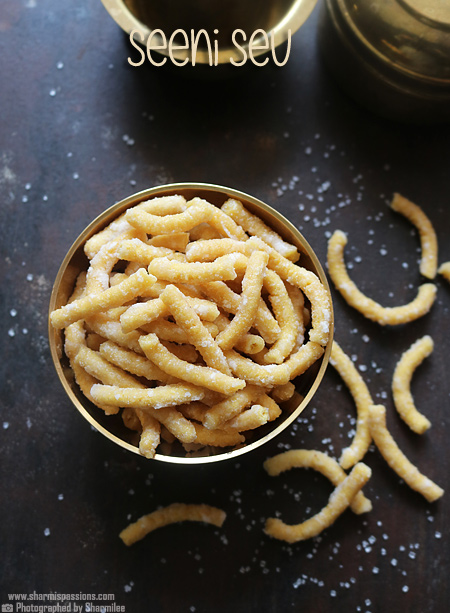
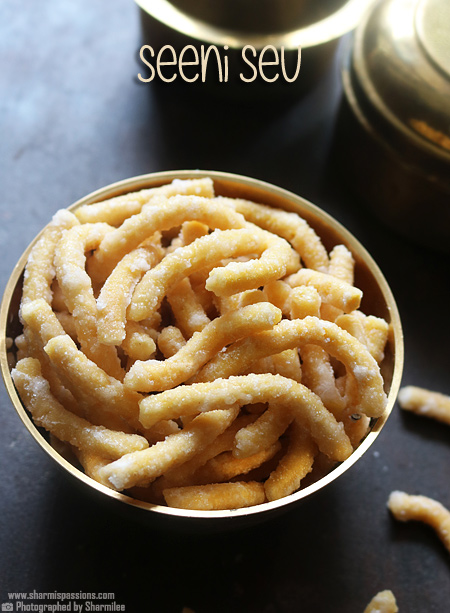
Sweet Sev | Seeni Sev

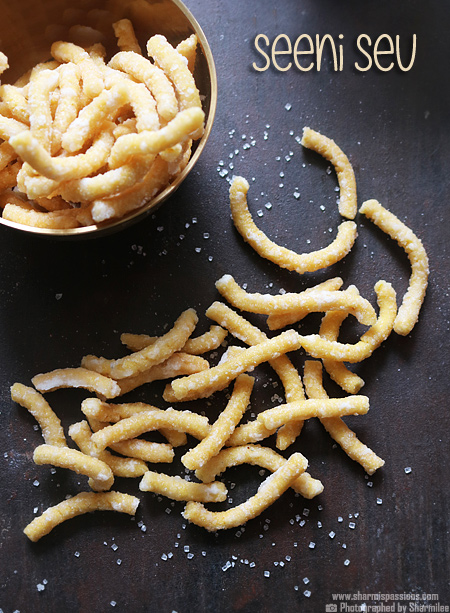
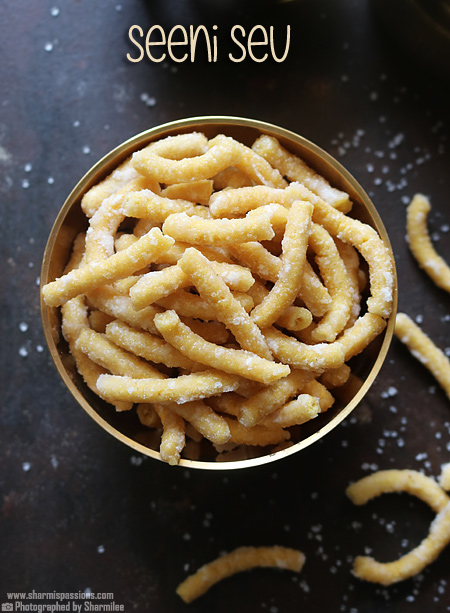
Sweet Sev, also known as Seeni Sev, is a light and crispy snack covered with thin sugar coating that makes it slightly crunchy and sweet in each bite. It is a simple and tasty sweet made using gram flour and rice flour, deep fried into thin golden strands and then mixed with sugar syrup. The whole process fills the kitchen with lovely aroma and gives that festive feel.

seeni sev served

This sweet sev is mostly made during festivals and special family occasions, and it is liked by both kids and elders equally. It has that melt in mouth texture with sugar coating holding on each strand, giving nice crunch and sweetness together. The cardamom and dry ginger flavor adds small warmth which makes it more comforting and homely.

[feast_advanced_jump_to]

About Sweet Sev

Sweet Sev or Seeni Sev is a simple South Indian sweet that mix the crunchy taste of fried sev with sugar coating. The sev is first made by mixing gram flour and rice flour with hot oil which makes it crispy. Then it is fried golden and later tossed in sugar syrup that coat the sev evenly.

The texture of Sweet Sev is light, crispy and little sticky when just made, but turns fully crisp after cooling. It stays crunchy for many days if stored properly in airtight box. The small hint of cardamom and dry ginger powder gives nice traditional flavor that balance the sweetness.

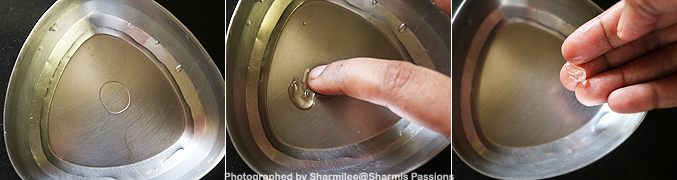
The main step here is the sugar syrup consistency. It should reach hard ball stage, that means when you drop syrup in water, it form a hard ball without dissolving. This stage gives perfect coating to the sev. If syrup go little more thick, it make sev stick together, so this part needs bit careful watching.

Seeni Sev is my favorite. I love all sweet recipes especially when sweet murukku. Kovilpatti and Sattur are famous for this cheeni sev / seeni sev apart from kadala mittai. I don't really remember when I tasted seeni sev first but I loved it like anything that I finished half of it myself.

I usually make Sweet Sev on weekends or when guests visit home. It is one of those sweets that stay well for long time and go perfect with evening tea or coffee. It also looks very pretty when packed for gifting during festive time.

seeni sev served

Sweet Sev Ingredients

  • Besan Flour - I used gram flour as main base for sev. It gives nice golden color and crispy texture when fried. Always use fresh flour for better taste.
  • Rice Flour - I added little rice flour to make sev more light and crunchy. You can use idiyappam flour also if you like same result.
  • Hot Oil - I used few spoons of hot oil while mixing the dough. It gives that perfect crispness and helps sev absorb less oil while frying.
  • Oil - I used refined oil for frying. Keep oil in medium heat to get even color and crisp texture. Too hot oil will brown sev fast but keep inside soft.
  • Sugar - I used white sugar for syrup as it gives best coating. You can also use light brown sugar but color will come little darker.
  • Cardamom Powder - It adds a nice smell and mild sweet flavor to the syrup. It add that perfect traditional touch to the sev.
  • Dry Ginger Powder - Small pinch adds warmth and helps to balance sweetness. You can skip it if not available but it really gives nice taste.

Why This Recipe Works

  • The sev stays crisp and light even after mixing with sugar syrup.
  • The sugar syrup coating form thin crystal layer that shine and give small crunch.
  • The combination of besan and rice flour gives perfect balance.
  • It can be made easily at home with basic ingredients from kitchen.
  • It store well for long time and perfect to make during festivals or holidays.

Similar Recipes

How to make Sweet Sev Step by Step

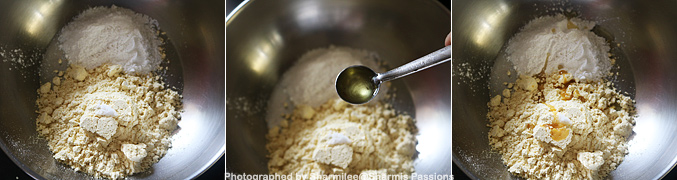
1.In a mixing bowl - measure and add besan flour, rice flour along with required salt. Add hot oil to it.

how to make seeni sev step1

2.Mix it well with your hands, then add water little by little

how to make seeni sev step2

3.Gather together to form a non sticky dough like this. Shape it into a log and keep it ready. Fix your thenkuzhal murukku mold.

how to make seeni sev step3

4.Now fill the murukku press with the dough, in parallel heat oil. When oil is hot, drop a pinch of batter to check it comes up immediately, then oil is at the correct temperature. Squeeze in circular motion, do not crowd, just 2 layers is enough.

how to make seeni sev step4

5.Fry till golden and until shh sound ceases. Drain in tissue paper. Once it cools down, break it and set aside.

how to make seeni sev step5

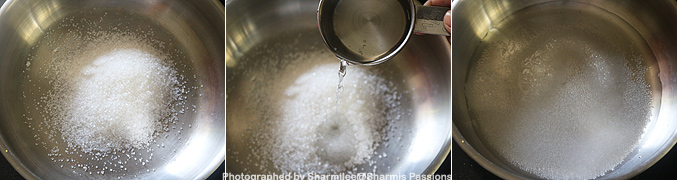
6.Take sugar in a pan,add water to it. Heat it up.

how to make seeni sev step7

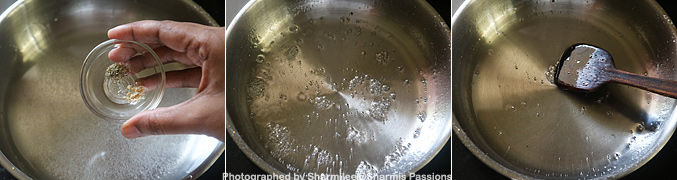
7.Add cardamom and dry grinder powder, keep cooking. Sugar will first dissolve then start to thicken up.

how to make seeni sev step7

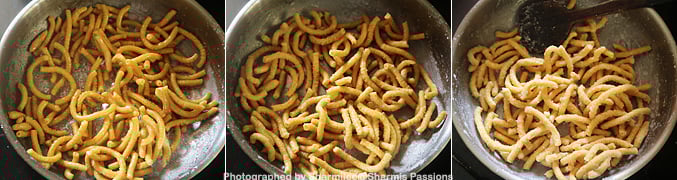
8.Keep a small plate of water and keep checking. When you add few drops to the plate first the syrup will get dissolved after sometime it will stand still in water without dissolving and try to gather and form a hard ball, this is the right consistency we want.

how to make seeni sev step8

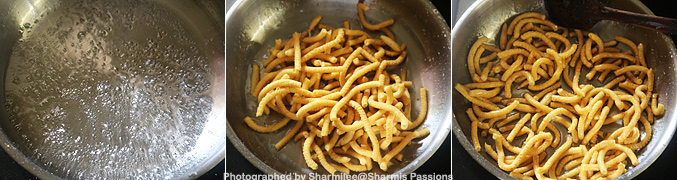
9.Switch off. Now add the broken sev and toss it well.

how to make seeni sev step9

10.Toss it for a minute and leave it un disturbed, in few minutes sugar will be coated so beautifully. Cool down then store in airtight container.

how to make seeni sev step10

Store in a dry jar.

seeni sev served

Expert Tips

  • Syrup Consistency - Always check syrup by dropping small bit in water. When it form hard ball and not dissolve, off the flame immediately. That gives perfect coating on sev.
  • Dough Texture - Make dough soft and smooth, not tight. If it is too stiff, sev will break when pressing. Add water little by little till right texture.
  • Oil Temperature - Keep oil medium hot always. Too hot oil will brown sev quick but make inside soft, too low heat will make it oily.
  • Breaking the Sev - After frying, let sev cool fully before breaking to small pieces. This keep it crisp and clean.
  • Mixing with Syrup - Once syrup reaches right stage, quickly add sev and toss nicely so it coat well. Do not stir too much later, just leave to set.

Serving and Storage

Serve Sweet Sev as light snack with evening tea or coffee, or enjoy anytime when craving sweet. It is also a nice sweet to gift during Diwali or festive days. Once sev cool completely, store in airtight box and keep in room temperature. It stays fresh and crispy for about one week or even more if handled properly.

FAQS

1.Can I use store bought sev for this recipe?

Yes you can, but homemade sev taste much better and has nice crisp texture that holds sugar perfectly.

2.Why my sev is not crispy?

Maybe oil was not hot enough or dough was tight. Always fry in medium hot oil to get right crispness.

3.How to fix sev that became too hard?

That happens when syrup becomes thick. Add one spoon water, heat again slightly and toss sev once more to make it soft again.

4.Can I use brown sugar?

Yes, you can use, but color will turn darker and taste will be more caramel like. Still it taste good.

5.How long does Sweet Sev stay fresh?

It stays good for around one week in airtight container. Keep it away from moisture else it may turn sticky.

seeni sev served

If you have any more questions about this Sweet Sev RecipeΒ do mail me at sharmispassions@gmail.com. In addition, follow me on Instagram,Β Facebook,Β PinterestΒ ,YoutubeΒ andΒ TwitterΒ .

Tried this Sweet Sev Recipe? Do let me know how you liked it. Also tag us on Instagram @sharmispassions and hash tag it on #sharmispassions.

πŸ“– Recipe Card

30532968705 2ea030e7cb o
Print

Sweet Sev Recipe | Seeni Sev Recipe

Sweet Sev, also known as Seeni Sev, is a light and crispy snack covered with thin sugar coating that makes it slightly crunchy and sweet in each bite. It is a simple and tasty sweet made using gram flour and rice flour, deep fried into thin golden strands and then mixed with sugar syrup. The whole process fills the kitchen with lovely aroma and gives that festive feel.
Course Snack
Cuisine Indian
Keyword cardamom powder recipe, diwali dishes, diwali food, diwali mithai, diwali recipes, diwali snacks, diwali snacks recipes, diwali sweets, diwali sweets recipes, easy diwali recipes, Festival, rice flour recipes, sev, sweet recipes
Prep Time 10 minutes
Cook Time 30 minutes
Total Time 40 minutes
Servings 2 cups
Calories 469kcal
Author Sharmilee J

Ingredients

  • Β½ cup besan flour
  • β…› cup rice flour / idiyappam flour
  • 2 tablespoon hot oil
  • oil to deep fry
  • salt to taste

To make sugar syrup

  • Β½ cup sugar
  • ΒΌ cup water
  • β…› teaspoon cardamom powder
  • 1 pinch dry ginger powder

Instructions

Making Sev:

  • In a mixing bowl - measure and add besan flour, rice flour along with required salt. Add hot oil to it.
  • Mix it well with your hands, then add water little by little.
  • Gather together to form a non sticky dough. Shape it into a log and keep it ready.
  • Fix your thenkuzhal murukku mold and fill the murukku press with the dough.
  • In parallel heat oil. When oil is hot, drop a pinch of batter to check it comes up immediately, then oil is at the correct temperature.
  • Squeeze the press in circular motion, do not crowd, just 2 layers is enough.
  • Fry till golden and until shh sound ceases. Drain in tissue paper. Once it cools down, break it and set aside.

Making Sugar Syrup:

  • Take sugar in a pan, add water to it. Heat it up.
  • Add cardamom and dry grinder powder, keep cooking. Sugar will first dissolve then start to thicken up.
  • Keep a small plate of water and keep checking. When you add few drops to the plate first the syrup will get dissolved after sometime it will stand still in water without dissolving and try to gather and form a ball, it will form a little loose ball, this is the right consistency we want.Switch off.

Making Sweet Sev:

  • Now add the broken sev and toss it well.
  • Toss it for a minute and leave it undisturbed, in few mins sugar will be coated so beautifully. Cool down then store in airtight container.
  • Offer Seeni Sev to God and enjoy!

Notes

  • Syrup Consistency - Always check syrup by dropping small bit in water. When it form hard ball and not dissolve, off the flame immediately. That gives perfect coating on sev.
  • Dough Texture - Make dough soft and smooth, not tight. If it is too stiff, sev will break when pressing. Add water little by little till right texture.
  • Oil Temperature - Keep oil medium hot always. Too hot oil will brown sev quick but make inside soft, too low heat will make it oily.
  • Breaking the Sev - After frying, let sev cool fully before breaking to small pieces. This keep it crisp and clean.
  • Mixing with Syrup - Once syrup reaches right stage, quickly add sev and toss nicely so it coat well. Do not stir too much later, just leave to set.

Nutrition

Serving: 125g | Calories: 469kcal | Carbohydrates: 75g | Protein: 7g | Fat: 16g | Saturated Fat: 1g | Polyunsaturated Fat: 5g | Monounsaturated Fat: 9g | Trans Fat: 0.1g | Sodium: 21mg | Potassium: 264mg | Fiber: 4g | Sugar: 53g | Vitamin A: 12IU | Vitamin C: 0.03mg | Calcium: 16mg | Iron: 2mg

The post Sweet Sev | Seeni Sev appeared first on Sharmis Passions.

Pepper Thattai | Milagu Thattai

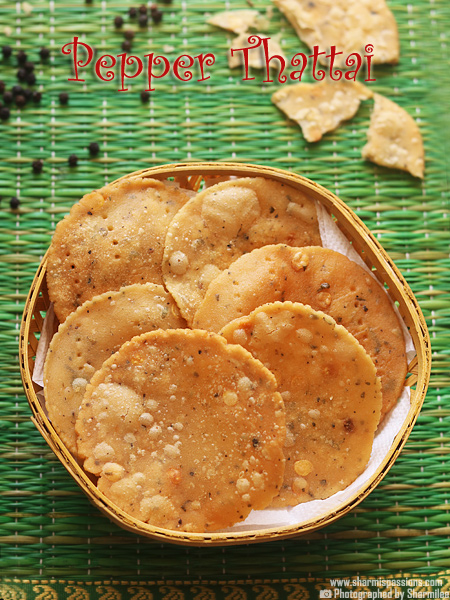
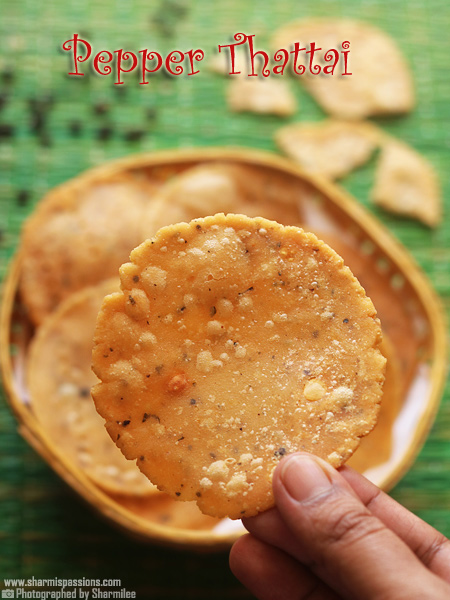
Pepper Thattai is a crispy, spicy snack made during festivals or for evening tea. These are thin rice flour discs which are flavored with pepper and fried till golden and crunchy. They are also called Milagu Thattai and they are simple to make but very satisfying. The pepper gives warm little kick and butter adds richness, it just melts in mouth.

pepper thattai served

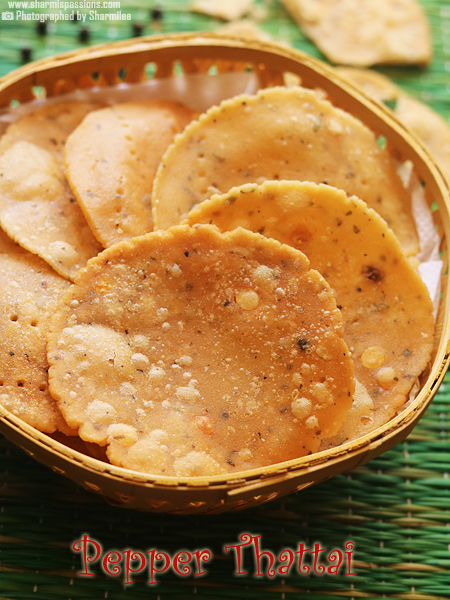
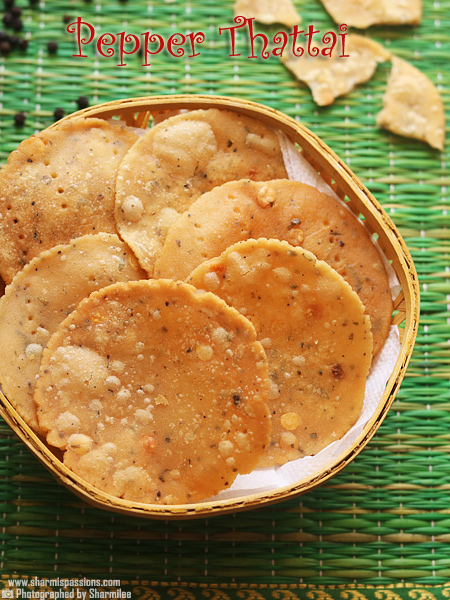
These thattais are crisp outside and little nutty inside. The aroma of pepper, hing and curry leaves while frying makes kitchen smell so nice. They can be eaten right after frying or stored for later. They taste much better than store bought ones and are a comforting snack anytime.

[feast_advanced_jump_to]

About Pepper Thattai

Pepper Thattai is a South Indian snack rich in crunch and taste. The dough is soft and easy to press thin which helps to get crispy thattais when fried. The pepper gives mild spicy flavor and chana dal gives small crunchy bites here and there. Butter makes the thattai have a soft crunch and adds nice flavor too.

The mixture of rice flour, fried gram dal powder and spices gives that authentic taste that reminds of festive snacks from childhood. The smell of curry leaves and hing while frying is so lovely and fills the kitchen with nice aroma.

This recipe is easily customizable, you can adjust pepper according how spicy you want. You can try a pinch of red chili powder for extra heat. You can add some sesame seeds for extra crunch. Every family has its own small twist to this recipe, and that what makes homemade thattai special.

I usually make this few days before festivals. Pressing each thattai thin and watching it puff little while frying is satisfying. Once cooled they turn perfectly crisp and stay like that for days.

pepper thattai served

Pepper Thattai Ingredients

  • Rice flour - I have used regular rice flour as the base. It makes the dough soft and gives crisp thattais after frying. You can even mix little idli rice flour if you like more texture.
  • Fried gram dal - I grind them to a fine powder and added it to the dough. This adds a nutty taste and makes thattais light and crunchy.
  • Pepper - I crushed whole pepper coarsely. This gives nice aroma and mild heat. You can increase or decrease as you prefer.
  • Butter - I added little at room temperature. It makes the dough smooth and adds rich flavor. You can use ghee.
  • Chana dal - I soaked them for few minutes before adding it. This gives small crunchy bites in every thattai. You can skip if not available but I like that texture.
  • Hing - I used a small pinch for aroma. It gives that authentic South Indian flavor.
  • Curry leaves - I added few along with pepper. This adds a nice aroma and flavor. You can use dry leaves too.
  • Oil - I used for deep frying. It gives that perfect crisp golden texture. You can either use groundnut or sunflower oil, both work fine.

Similar Recipes

How to make Pepper Thattai Step by Step

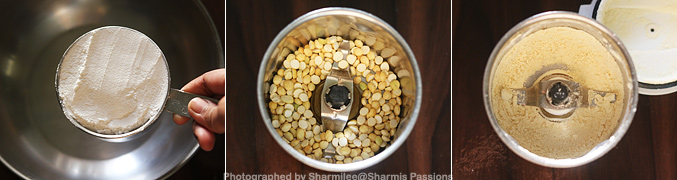
1.Take rice flour in the mixing bowl. Grind fried gram dal (pottukadalai) in a mixer to a fine powder.

how to make pepper thattai step1

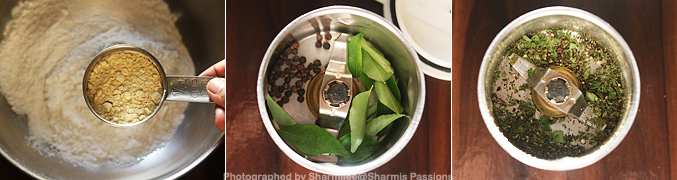
2.Add it to rice flour. Then add whole pepper and curry leaves in the mixer jar and grind it to a coarse mixture, Set aside.

how to make pepper thattai step2

3.Soak chana dal for 10 minutes. Now to the mixing bowl add chana dal and pepper mixture with salt and butter. Mix well.

how to make pepper thattai step3

4.Now add water little by little to form a smooth dough. The dough should not be too tight. Take a lemon sized ball, I used 1 tablespoon measure to get all the balls of even size.

how to make pepper thattai step4

5.Make few balls, then take a plastic sheet grease it with oil.Β Keep a ball, place another plastic sheet over it then press it with a flat surfaced bowl.

how to make pepper thattai step5

6.Prick with fork to avoid puffing up. Carefully remove it from the plastic sheet. Flatten as thin as possible only then you will get crisp thattais.

how to make pepper thattai step6

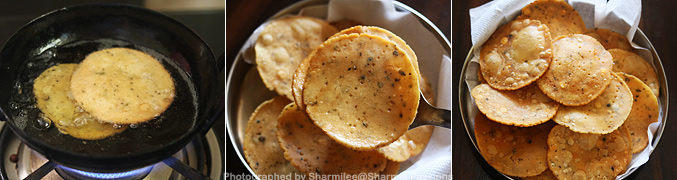
7.Heat oil, carefully add 2-3 thattais at a time, deep fry till golden brown. This will take time to cook at least 3 minutes for each batch so fry patiently in low medium flame. Then drain in tissue paper.

how to make pepper thattai step7

Cool down and Store in airtight container.

pepper thattai served

Expert Tips

  • Press thin - I always press dough as thin as possible between greased sheets. This helps to make thattais crisp. If thick, they turn chewy.
  • Prick before frying - I prick each thattai with fork so that it does not puff up while frying. This makes them cook evenly.
  • Frying - I fry them in low medium flame. If flame is high, outside turns brown fast but inside stays soft.
  • Dough - Make sure the dough is soft and not tight. This helps to press it easily and prevents cracks.
  • Cool before storing - I always cool the thattais completely before keeping them in the jar. This keeps them crisp for long.
  • Butter quantity - Do not skip butter. I have tried without once, but thattais become hard. So little butter gives perfect crispness.

Serving and Storage

Serve Pepper Thattai as tea time snack or just as crunchy bite anytime. It also goes well with sweets during festivals. Store them in airtight container. It stays fresh and crisp for 2 to 3 weeks. I usually make small batch so I can enjoy.

FAQS

1.Can I skip curry leaves?

Yes you can skip, but I feel it adds very nice aroma and taste, so I always add.

2.Can I use regular dal instead of fried gram dal?

You can, but roasted fried gram dal gives better taste and lightness.

3.Can I make dough ahead?

Yes, you can prepare dough few hours earlier and keep in fridge covered.

4.Can I bake this recipe?

Frying gives best crisp texture. You can either bake or fry, bith can work but the flavor will be slightly different.

5.How thin should I press them?

I press them very thin, almost like papad thickness. The thinner you press, the crispier they turn out.

pepper thattai served

If you have any more questions about this Pepper Thattai RecipeΒ do mail me at sharmispassions@gmail.com. In addition, follow me on Instagram,Β Facebook,Β PinterestΒ ,YoutubeΒ andΒ TwitterΒ .

Tried this Pepper Thattai Recipe? Do let me know how you liked it. Also tag us on Instagram @sharmispassions and hash tag it on #sharmispassions.

πŸ“– Recipe Card

29117249941 ea293a16cb o
Print

Pepper Thattai Recipe (Milagu Thattai Recipe)

Pepper Thattai is a crispy, spicy snack made during festivals or for evening tea. These are thin rice flour discs which are flavored with pepper and fried till golden and crunchy. They are also called Milagu Thattai and they are simple to make but very satisfying. The pepper gives warm little kick and butter adds richness, it just melts in mouth.
Course Snack
Cuisine Indian
Keyword diwali dishes, diwali recipes, diwali snacks, diwali snacks recipes, easy diwali recipes, easy diwali snacks, fry, fry recipes, rice flour recipes, snack recipes
Prep Time 15 minutes
Cook Time 40 minutes
Total Time 55 minutes
Servings 15 Thattai
Calories 48kcal
Author Sharmilee J

Ingredients

  • 1 cup rice flour
  • 2 tablespoon fried gram dal
  • 1 teaspoon pepper
  • ΒΎ teaspoon butter at room temperature
  • 1 teaspoon chana dal
  • 1 tiny pinch hing
  • few curry leaves
  • salt to taste
  • oil to deep fry

Instructions

  • Take rice flour in the mixing bowl.
  • Grind fried gram dal in a mixer to a fine powder. Add it to rice flour.
  • Then add whole pepper and curry leaves in the mixer jar and grind it to a coarse mixture, set aside.
  • Soak chana dal for 10mins.
  • Now to the mixing bowl add chana dal and pepper mixture with salt and butter. Mix well.
  • Now add water little by little to form a smooth dough. The dough should not be too tight.
  • Take a lemon sized ball, I used 1 tablespoon measure to get all the balls of even size.
  • Make few balls, then take a plasic sheet grease it with oil.Β Keep a ball, place another plastic sheet over it then press it with a flat surfaced bowl.
  • Prick with fork to avoid puffing up. Carefully remove it from the plastic sheet. Flatten as thin as possible only then you will get crisp thattais.
  • Heat oil, carefully add 2-3 thattais at a time, deep fry till golden brown. This will take time to cook at least 3mins for each batch so fry patiently in low medium flame.
  • Then drain in tissue paper.
  • Cool down and store Pepper Thattai in an airtight container.

Notes

  • Press thin - I always press dough as thin as possible between greased sheets. This helps to make thattais crisp. If thick, they turn chewy.
  • Prick before frying - I prick each thattai with fork so that it does not puff up while frying. This makes them cook evenly.
  • Frying - I fry them in low medium flame. If flame is high, outside turns brown fast but inside stays soft.
  • Dough - Make sure the dough is soft and not tight. This helps to press it easily and prevents cracks.
  • Cool before storing - I always cool the thattais completely before keeping them in the jar. This keeps them crisp for long.
  • Butter quantity - Do not skip butter. I have tried without once, but thattais become hard. So little butter gives perfect crispness.

Nutrition

Serving: 25g | Calories: 48kcal | Carbohydrates: 10g | Protein: 1g | Fat: 0.4g | Saturated Fat: 0.2g | Polyunsaturated Fat: 0.1g | Monounsaturated Fat: 0.1g | Trans Fat: 0.01g | Cholesterol: 1mg | Sodium: 2mg | Potassium: 23mg | Fiber: 1g | Sugar: 0.1g | Vitamin A: 7IU | Vitamin C: 0.1mg | Calcium: 3mg | Iron: 0.2mg


The post Pepper Thattai | Milagu Thattai appeared first on Sharmis Passions.

Mixture Recipe | Madras Mixture

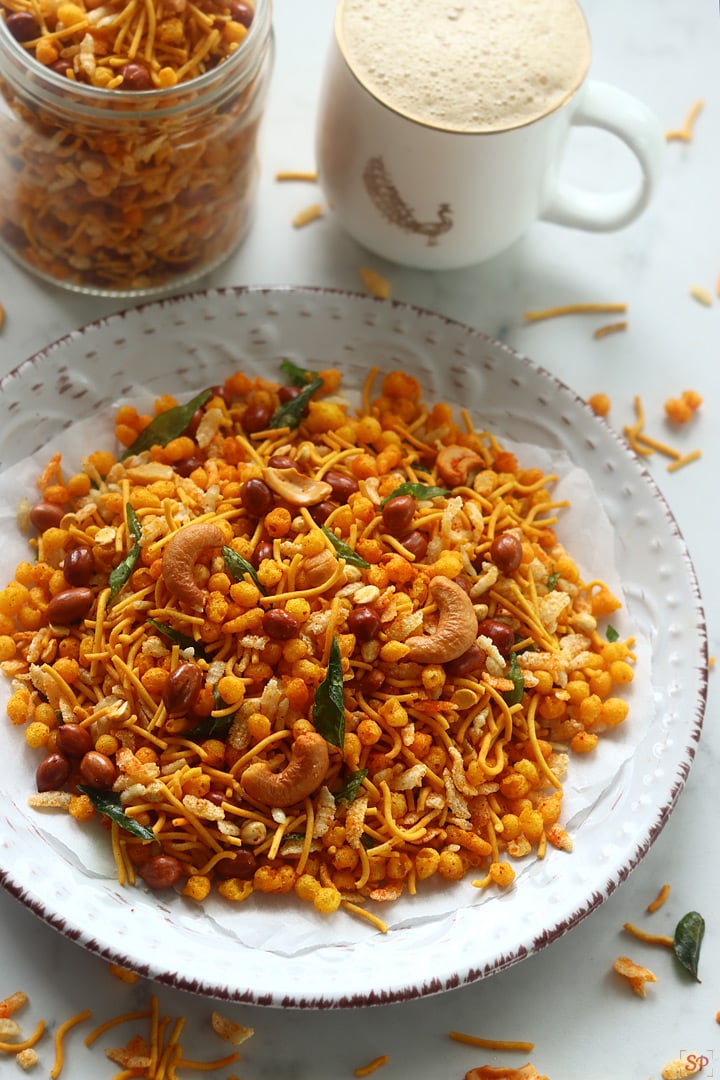
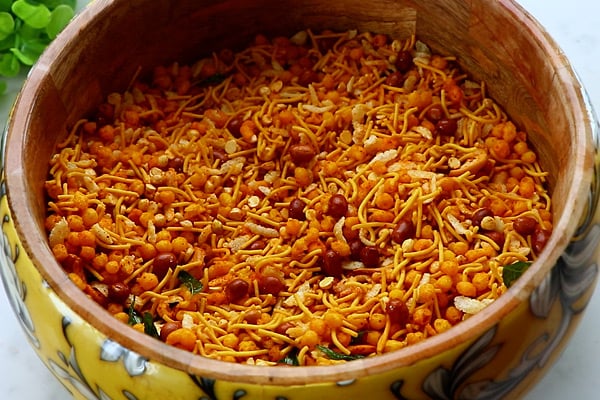
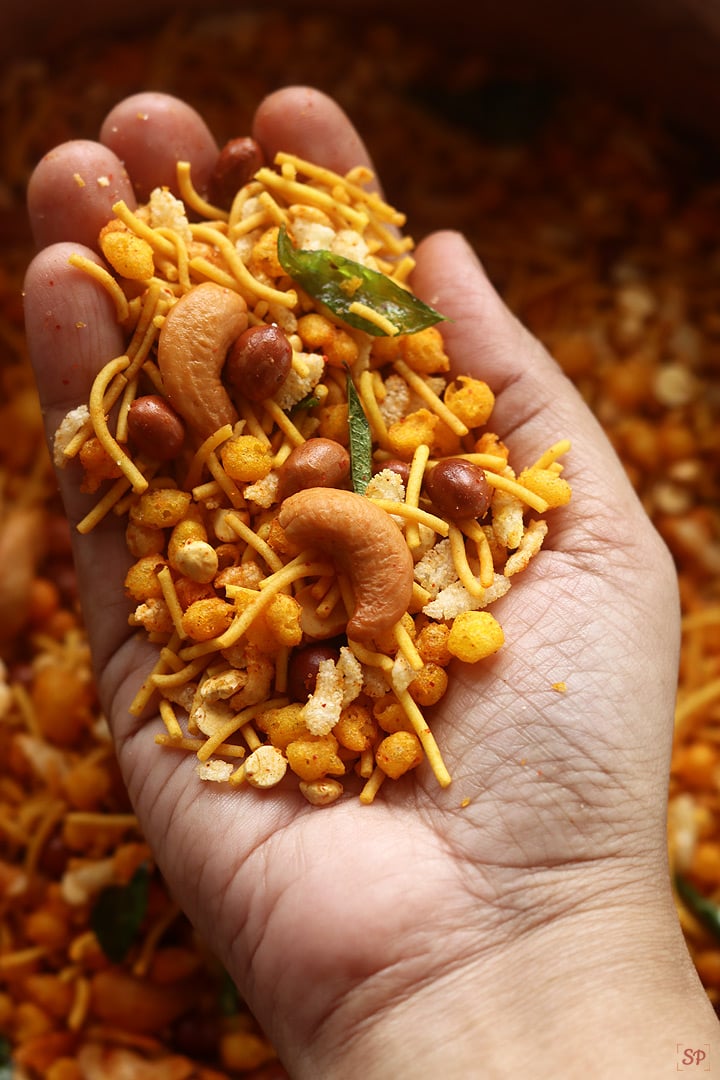
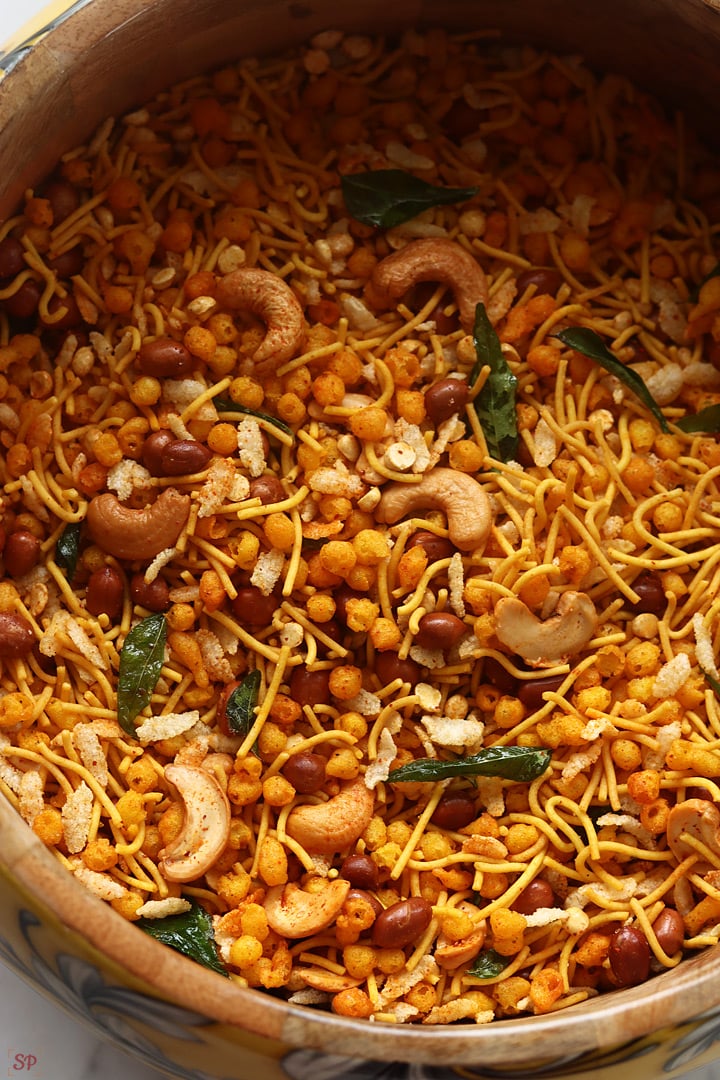
Mixture is a crunchy and flavorful snack that I always love making at home. It has that perfect mix of kara boondi, omapodi, peanuts, poha and few nuts all tossed together in a spice mix. Each bite gives that mix of spice, crunch and flavor which makes it really hard to stop eating. Mixture also known as Madras Mixture is the most commonly relished snack for tea time and made at home for Diwali and special occasions.

mixture served with coffee

This is such a simple snack that can be made easily when you have few fried items ready in hand. You can make it in small batches because it stays fresher and crisper that way. What I like most about this snack is, you can always change the ingredients as you like and make it in your own way. It is one of those snacks that always stays special in every home.

[feast_advanced_jump_to]

About Mixture Recipe

Mixture is a crunchy and tasty snack made by mixing few fried items like kara boondi, omapodi, fried gram dal and peanuts. Chivda as known in North India is called Mixture or Madras Mixture in South India. The flavor comes out so balanced and nice, not too spicy or strong. It is that kind of snack you can enjoy anytime, with tea or just like that.

Mixture is one of the popular South Indian snacks we can make easily at home. If you have omapodi and kara boondi ready then frying all others are just so easy. I usually make these a day before and fry all other ingredients and mix it.

There are many versions of this mixture depending on region and taste. Some people like to make it spicy with lot of nuts and boondi, while few prefer mild and light version with more omapodi. No matter how it is made, mixture always gives that crispy joy in every handful and it never fails to bring that happy munching mood.

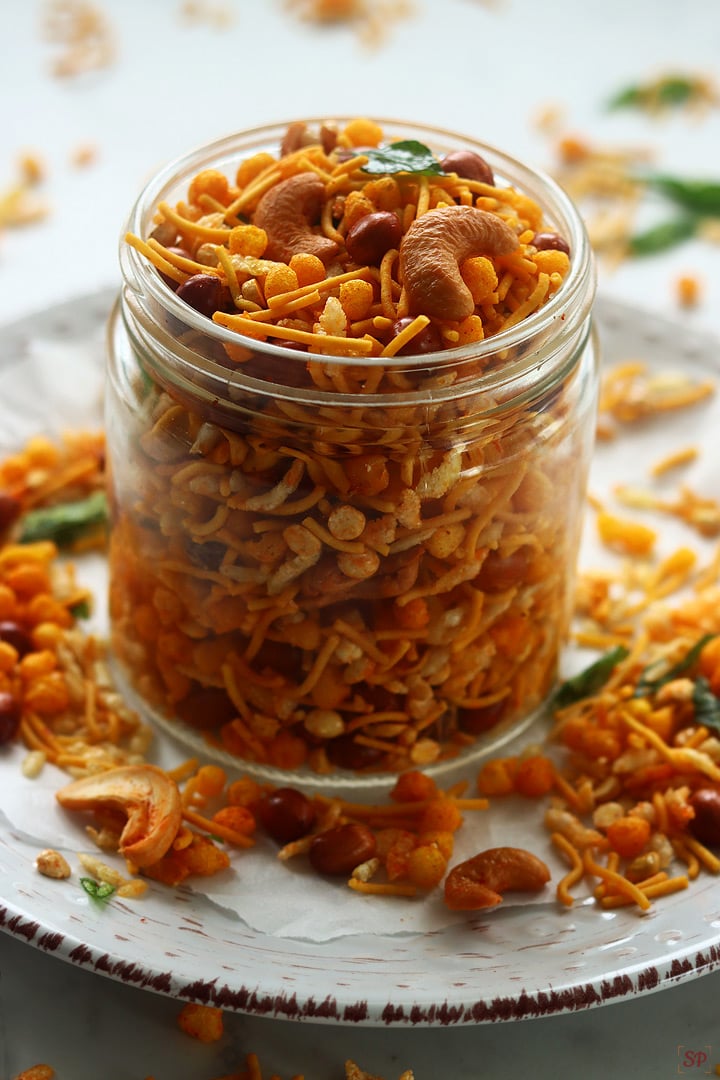
mixture in a glass jar

Mixture Video

The texture is the best part of this mixture, crisp boondi, airy poha, crunchy peanuts and that nice aroma from fried curry leaves. You get little bit of everything in each spoon. This recipe is light to eat but still gives that filling feel after few bites.

It is one of those snacks you can just keep munching anytime in the day and still not feel too heavy. I usually make omapodi and boondi one day before to save time. Next day I fry the rest of items and mix all together.

You can even add fried garlic for extra flavor, add raisins for that sweet crunch, add little sugar for balance in taste.

mixture served with coffee

South Indian Mixture Ingredients

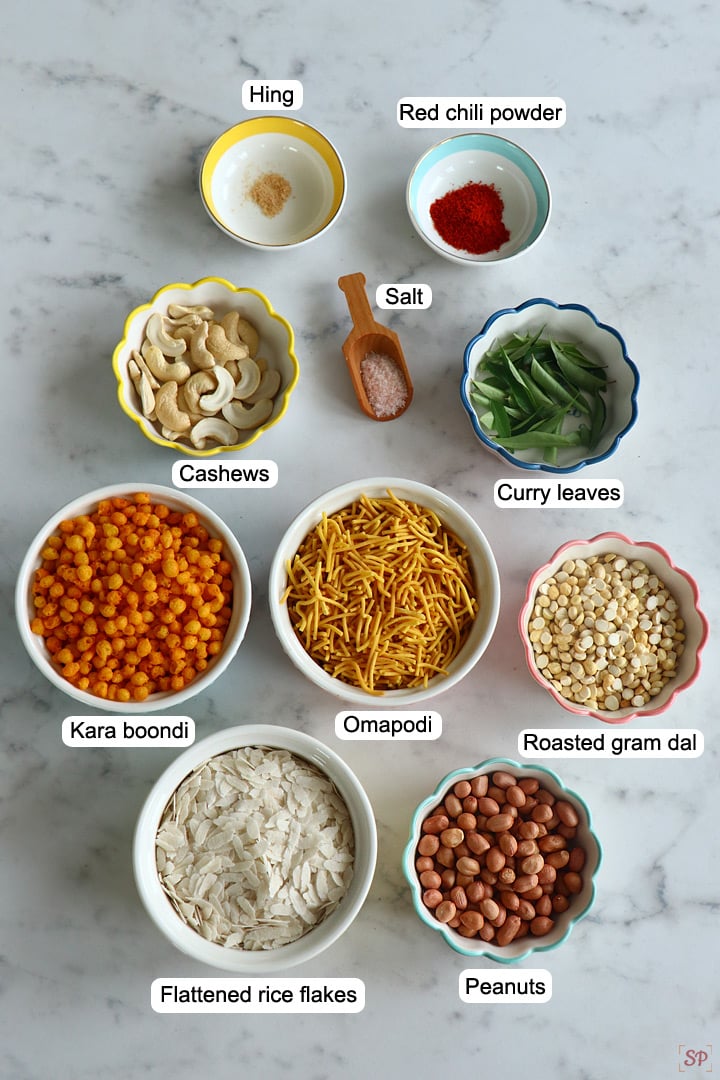
  • Kara boondi - I have used homemade kara boondi. It adds nice spice flavor and gives crisp texture. You can even use readymade if short of time.
  • Omapodi - I used slightly thick omapodi for this as while mixing it will not break easily.
  • Poha - Use thick poha, it puffs up well when fried and adds light texture to the mixture. You can skip if not available.
  • Fried gram dal - It adds crunchy bite and nutty flavor. You can use chana dal too.
  • Cashewnuts - I fried till light golden. It gives nice taste and a bit of sweetness.
  • Peanuts - I fried raw peanuts till golden brown and added.
  • Curry leaves - I fried them and added at the final stage after all the ingredients are mixed, it gives lovely aroma and adds flavor to mixture.
  • Red chili powder - I used for both color and spice. You can use pepper if you like that flavor .
  • Hing - I have added a small pinch, it gives good aroma and helps in digestion.
ingredients needed to make mixture

Why This Recipe Works

  • It is very simple to make when you have all fried items ready beforehand.
  • You can change or add ingredients as per your liking.
  • The mix of crunchy, spicy and nutty taste makes it so addictive.
  • It stays crisp for many days when stored properly in airtight jar.
  • This mixture is light to eat and goes well with tea or even plain coffee.

Similar Recipes

How to make Mixture Step by Step

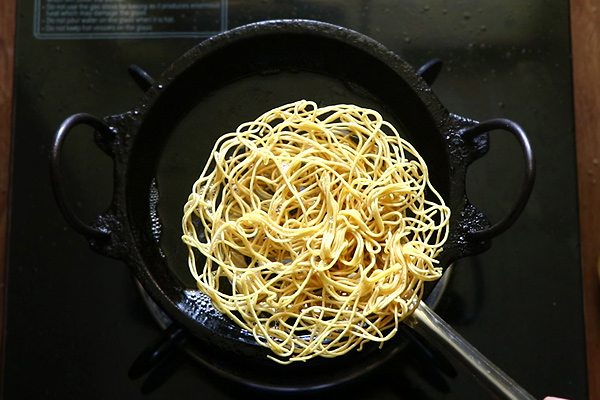
1.Make omapodi and keep it ready. You can check the recipe in ingredients list. You can use slightly big holed press for making mixture so that it does not break easily while mixing.

remove the omapodi

2.Break it slightly and set aside.

break it gently

3.Break it rough as anyways we are going to mix and it will break by itself. We need 2 cups omapodi.

omapodi or sev is ready

4.Prepare kara boondi. You can check the recipe in ingredients list.

boondi strained

5.Strain and keep in a bowl. We need 2 cups kara boondi.

add to a bowl

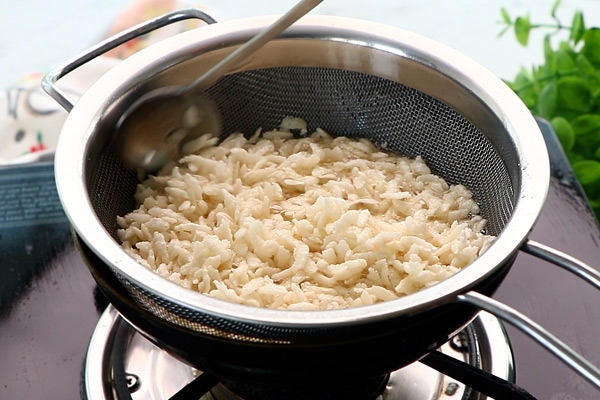
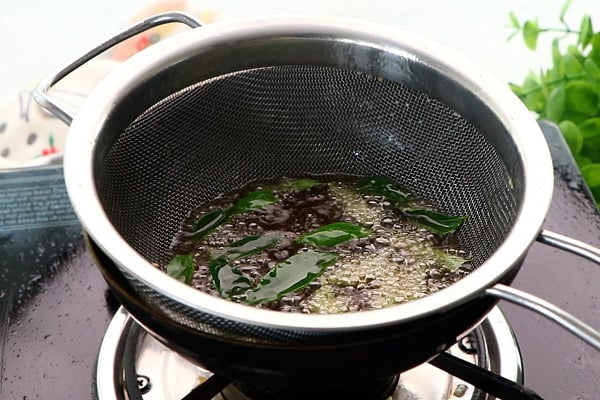
6.Heat oil in a kadai. Place a strainer inside, add 1 cup poha, add in batches and fry. Mix it well for even frying. Transfer and set aside.

fry poha

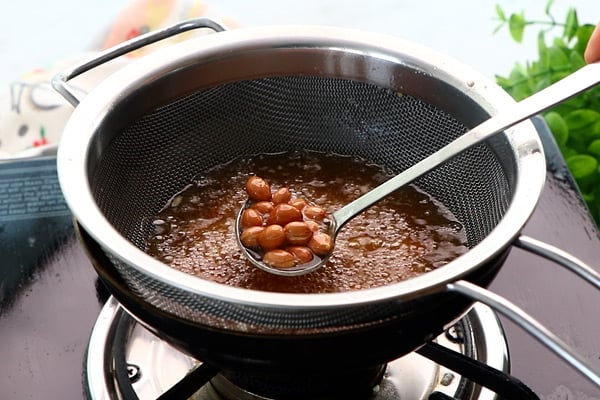
6.Again place the strainer inside oil and add Β½ cup raw peanuts and fry until crisp and golden brown. Strain, transfer and set aside.

fry peanuts

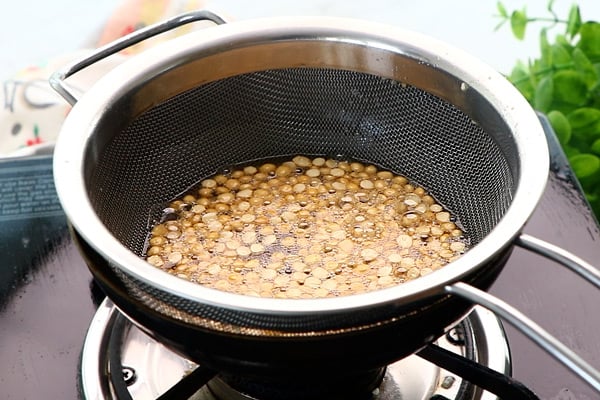
7.Add Β½ cup roasted gram dal and fry until golden. Strain, transfer and set aside.

fry roasted gram dal

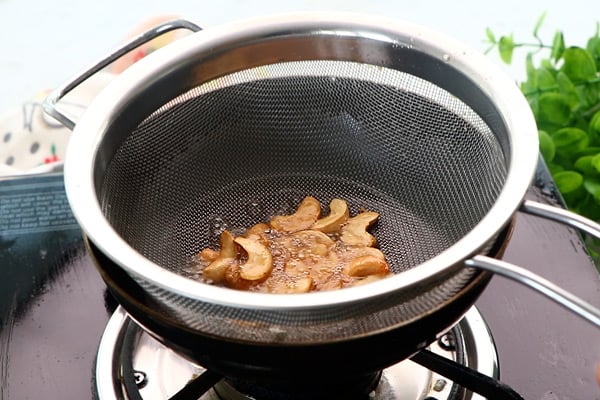
8.Next add Β½ cup cashews and fry until golden. Strain, transfer and set aside.

fry cashews

9.Add a handful of curry leaves and fry until it splutters. Strain, transfer and set aside.

fry curry leaves

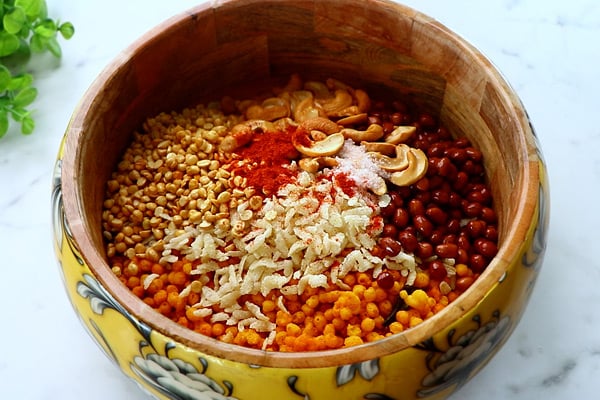
10.To a big mixing bowl add 2 cups omapodi, 2 cups kara boondi, 1 cup fried poha, Β½ cup peanuts, Β½ cup cashews, Β½ cup roasted gram dal along with 1 and Β½ teaspoon red chili powder, Β½ teaspoon hing, salt to taste.

add all ingredients except curry leaves

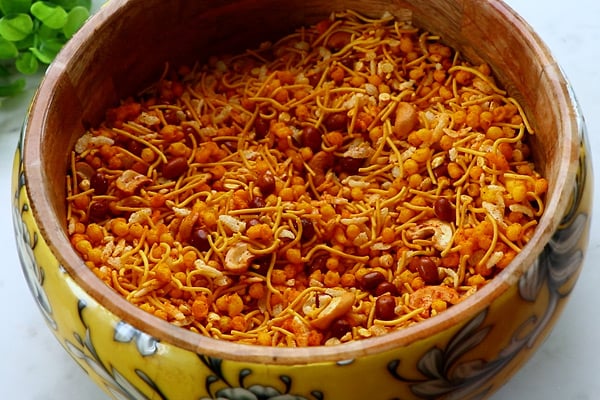
11.Mix it well.

mix it well

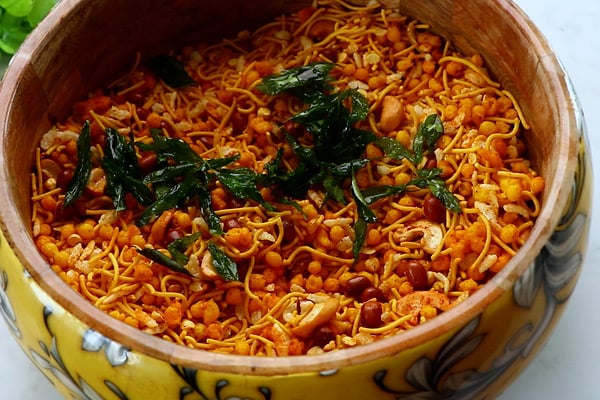
12.Add fried curry leaves.

add curry leaves

12.Give a quick mix.

mix it well

Mixture is ready.

mixture in hands

Expert Tips

  • Ratio - There is no particular ratio of ingredients for making mixture. Omapodi and kara boondi should be slightly more than all other ingredients. Other ingredients you cna plus and minus according to your preference.
  • Frying poha - I always use thick poha and fry in small batches only. If we add more, it gets brown very fast and loses that light crispness. I keep the oil medium hot, so poha becomes puffed and not oily.
  • Nuts and dal - I fry peanuts first, then gram dal and cashews one by one. This way all fry evenly and not burn. Each one takes different time so better to fry separately.
  • Mixing part - I spread all fried items on a large mixing bowl. Then I add salt, red chili powder and hing. I usually mix with a ladle or hands, gently tossing everything. This way masala spreads evenly and not break the poha or omapodi.
  • Spice - I have added just red chili powder, you can even add little pepper powder if you like the flavor. You can increase red chili powder to 2 teaspoon if you like your mixture to be more spicy.
  • Flavor - You can use pepper powder instead of chili powder if you like mild taste or crush 2-3 garlic cloves and fry them till golden, then add to mixture
  • Avoid moisture - If you are mixing later, make sure all fried items are fully cool. Even small moisture can make mixture soggy. I always keep everything ready and mix only when all are at room temperature.

Serving and Storage

Serve South Indian Mixture with a cup of hot tea or coffee. It makes a lovely crunchy evening snack or something to munch while watching TV. Store the mixture in airtight jar once fully cool. It stays crisp easily for about 2 weeks.

FAQS

1.Can I skip boondi?

Yes, you can skip boondi and add more omapodi or poha instead.

2.Can I add garlic flavor in mixture?

Yes, fry few crushed garlic in oil and add it. It gives good aroma and extra flavor.

3.Can I make this less spicy?

Yes you can, just reduce chili powder or use pepper powder instead.

4.How long can I store this mixture?

It stays fresh and crisp for around 2 weeks if you keep it in airtight box. I usually store in steel container, it keeps the crunch better.

5.Can I add cornflakes or other nuts?

Yes of course, you can add fried cornflakes, almonds or even small pieces of murukku. It gives more crunch and makes the mixture even more tasty.

mixture just made

If you have any more questions about this Mixture RecipeΒ do mail me at sharmispassions@gmail.com. In addition, follow me on Instagram,Β Facebook,Β PinterestΒ ,YoutubeΒ andΒ TwitterΒ .

Tried this Mixture Recipe? Do let me know how you liked it. Also tag us on Instagram @sharmispassions and hash tag it on #sharmispassions.

πŸ“– Recipe Card

Print

Mixture Recipe | Madras Mixture Recipe

Mixture is a crunchy and flavorful snack that I always love making at home. It has that perfect mix of kara boondi, omapodi, peanuts, poha and few nuts all tossed together in a spice mix. Each bite gives that mix of spice, crunch and flavor which makes it really hard to stop eating. Mixture also known as Madras Mixture is the most commonly relished snack for tea time and made at home for Diwali and special occasions.
Course Snack
Cuisine Indian
Keyword diwali dishes, diwali food, diwali recipes, diwali snacks, diwali snacks recipes, easy diwali snacks, savoury recipes, snack recipes, virtual diwali party
Prep Time 10 minutes
Cook Time 50 minutes
Total Time 1 hour
Servings 2
Calories 489kcal
Author Sharmilee J

Ingredients

  • 2 cups kara boondi
  • 2 cups omapodi
  • Β½ cup poha
  • Β½ cup fried gram dal
  • Β½ cup cashew nuts
  • Β½ cup peanuts
  • 1 handful curry leaves
  • 1 and Β½ teaspoon red chilli powder
  • Β½ teaspoon hing
  • salt to taste

Instructions

  • Make omapodi and keep it ready. You can check the recipe in ingredients list. You can use slightly big holed press for making mixture so that it does not break easily while mixing.
  • Break it slightly and set aside.
  • Break it rough as anyways we are going to mix and it will break by itself. We need 2 cups omapodi.
  • Prepare kara boondi. You can check the recipe in ingredients list.
  • Strain and keep in a bowl. We need 2 cups kara boondi.
  • Heat oil in a kadai. Place a strainer inside, add 1 cup poha, add in batches and fry. Mix it well for even frying. Transfer and set aside.
  • Again place the strainer inside oil and add Β½ cup raw peanuts and fry until crisp and golden brown. Strain, transfer and set aside.
  • Add Β½ cup roasted gram dal and fry until golden. Strain, transfer and set aside.
  • Next add Β½ cup cashews and fry until golden. Strain, transfer and set aside.
  • Add a handful of curry leaves and fry until it splutters. Strain, transfer and set aside.
  • To a big mixing bowl add 2 cups omapodi, 2 cups kara boondi, 1 cup fried poha, Β½ cup peanuts, Β½ cup cashews, Β½ cup roasted gram dal along with 1 and Β½ teaspoon red chili powder, Β½ teaspoon hing, salt to taste.
  • Mix it well.
  • Add fried curry leaves.
  • Give a quick mix.
  • Mixture is ready.

Video

Notes

  • Ratio - There is no particular ratio of ingredients for making mixture. Omapodi and kara boondi should be slightly more than all other ingredients. Other ingredients you cna plus and minus according to your preference.
  • Frying poha - I always use thick poha and fry in small batches only. If we add more, it gets brown very fast and loses that light crispness. I keep the oil medium hot, so poha becomes puffed and not oily.
  • Nuts and dal - I fry peanuts first, then gram dal and cashews one by one. This way all fry evenly and not burn. Each one takes different time so better to fry separately.
  • Mixing part - I spread all fried items on a large mixing bowl. Then I add salt, red chili powder and hing. I usually mix with a ladle or hands, gently tossing everything. This way masala spreads evenly and not break the poha or omapodi.
  • Spice - I have added just red chili powder, you can even add little pepper powder if you like the flavor. You can increase red chili powder to 2 teaspoon if you like your mixture to be more spicy.
  • Flavor - You can use pepper powder instead of chili powder if you like mild taste or crush 2-3 garlic cloves and fry them till golden, then add to mixture
  • Avoid moisture - If you are mixing later, make sure all fried items are fully cool. Even small moisture can make mixture soggy. I always keep everything ready and mix only when all are at room temperature.

Nutrition

Serving: 100g | Calories: 489kcal | Carbohydrates: 71g | Protein: 25g | Fat: 11g | Saturated Fat: 2g | Polyunsaturated Fat: 3g | Monounsaturated Fat: 5g | Cholesterol: 3mg | Sodium: 266mg | Potassium: 880mg | Fiber: 15g | Sugar: 8g | Vitamin A: 335IU | Vitamin C: 1mg | Calcium: 63mg | Iron: 7mg

The post Mixture Recipe | Madras Mixture appeared first on Sharmis Passions.
Poha Chivda Recipe (Aval Mixture)

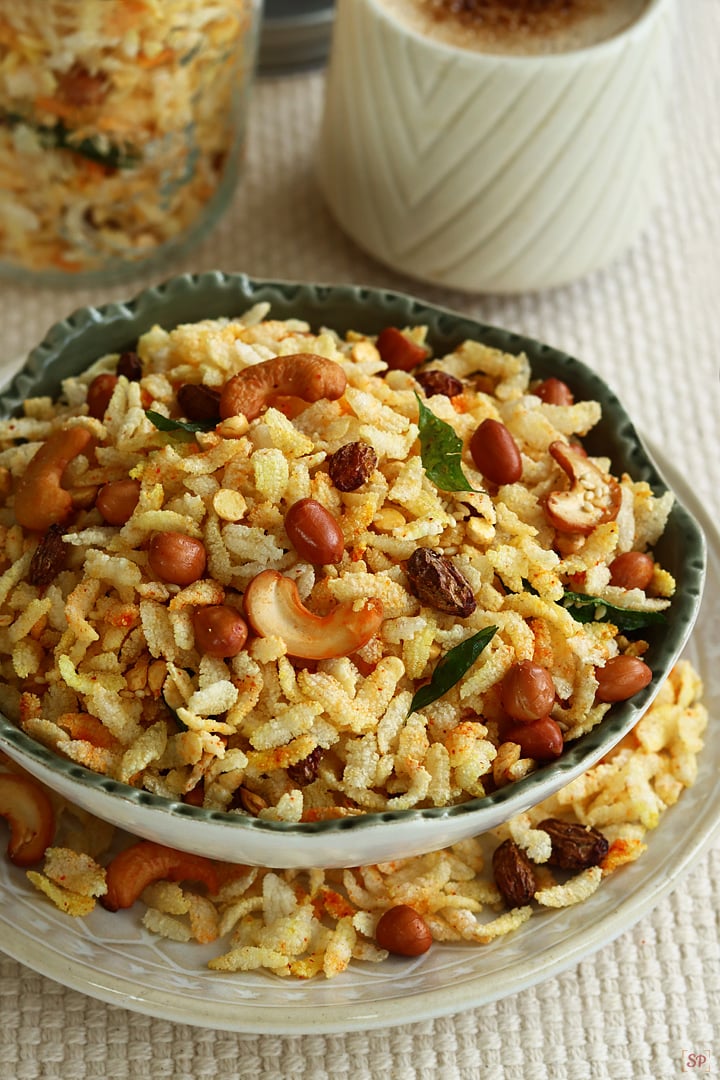
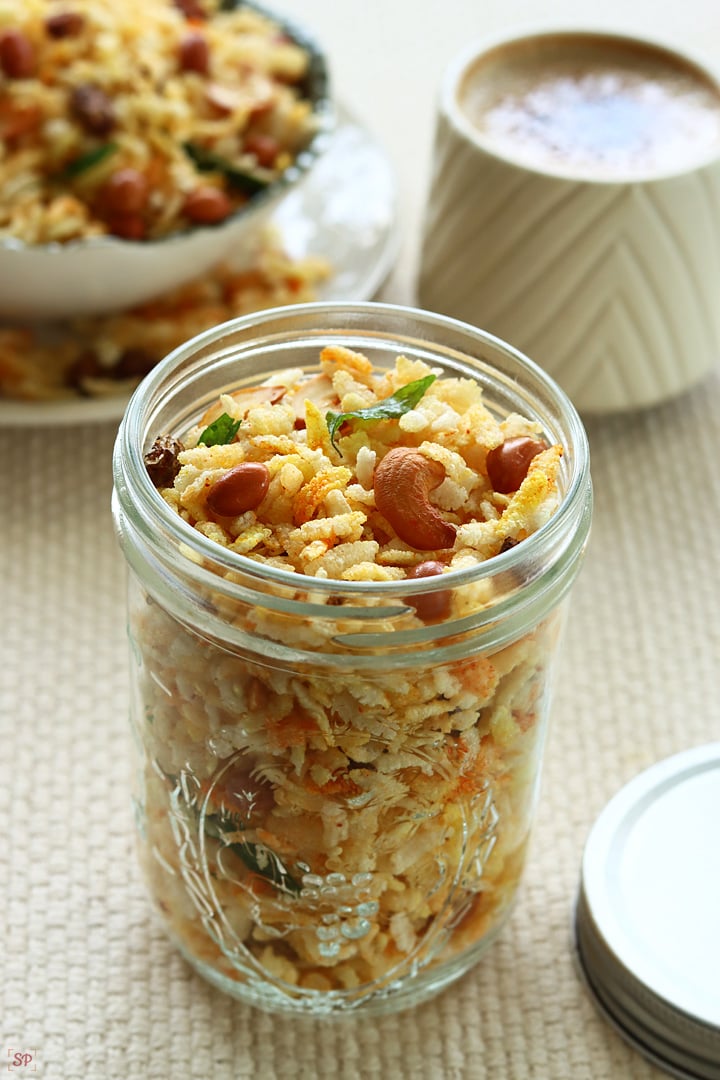
Poha Chivda also known as Aval Mixture, is a crunchy, savory snack made from poha (flattened rice), roasted nuts, dry fruits and spices. It is very easy to make and a popular choice during festive seasons like Diwali. It gives nice volume so perfect for distribution and a treat for gatherings. The combination of poha along with cashews, peanuts, fried gram dal, raisins, sesame seeds , curry leaves and spices is a great combination of textures and flavors.

poha chivda served with a cup of coffee

This is a quick and easy recipe to make.Β It is a light snack that doesn't feel heavy, making it ideal for munching anytime. It can be made in batches, this recipe is perfect when you want a homemade snack that stays fresh for days. With just a few simple ingredients and some patience while roasting, you get a snack that tastes much better than store-bought ones.

[feast_advanced_jump_to]

About Poha Chivda

Chivda is a crunchy snack mix also known as Namkeen. Namkeen in Hindi manes salted or savory snack. Poha Chivda is made by frying flattened rice (poha) along with a mix of crunchy nuts, dry fruits then mixed with spice powders. Poha and nuts when deep fried absorbs the spices well making it a great snack.

Poha Chivda is very easy to make and takes just 15 minutes from start to finish. It is not time consuming like the traditional mixture or other festive savory snacks hence very popular during festivals like Diwali. It is a classic savory and crunchy Diwali treat. We call it Aval Mixture in tamil.

You can easily customize it to your liking, you can add garlic, dried coconut and a mix of other spice powders like chat masala, roasted jeera powder etc. You can also adjust the spice levels according to your taste preference.Β 

Reduce the spice and make it suitable for kids. However you make it, this is one of those snacks that always brings back a sense of comfort and warmth with every bite.Β The combination of ingredients gives a burst of textures and flavor.

Poha Chivda is a easy snack that you can make in just few minutes, just get ready with all your ingredients and fry them one by one, toss it up with your favorite spices and all done. Your poha mixture is ready - that sounds cool right? Do try and make your batch soon as Diwali is fast approaching.

poha chivda served with a cup of coffee

Poha Chivda Video

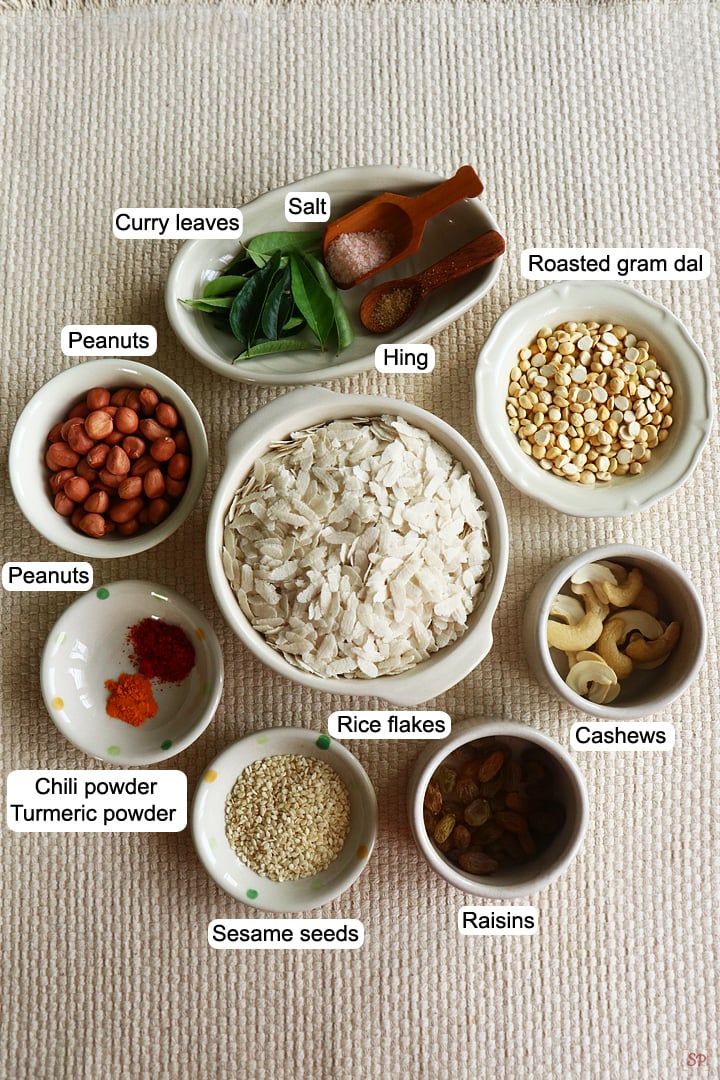
Poha Chivda Ingredients

  • Thick Poha (Flattened Rice)Β - This is the key ingredient. It forms the base of the mixture. Thick poha is best for deep frying so I suggest to use that.
  • Roasted Gram Dal (Chana Dal)Β - Adds a mild nutty flavor and crunch. Roasted gram dal complements well with crispy poha.
  • Curry LeavesΒ - Adds aromatic and fragrant flavor.
  • Peanuts, cashewsΒ - Add a crunchy texture to the mixture.Β 
  • RaisinsΒ - Adds sweetness and a chewy texture to balance the savory crunch. It also brings a nice contrast of taste.
  • Sesame SeedsΒ - These tiny seeds add a nutty, slightly toasted flavor and additional crunch to the mixture, giving it a lovely depth of texture.
  • Turmeric Powder, Red Chili PowderΒ - Turmeric not only adds color to the mix but also gives a mild flavor while chili powderΒ adds spice and bright color.
  • Hing - aids in digestion and adds flavor.
  • OilΒ - For frying the ingredients. Use a neutral oil like sunflower or vegetable oil for frying, or ghee for a richer taste.
ingredients needed to make poha chivda

Similar Recipes

Why This Recipe Works

  • This recipe is made with simple ingredients.
  • It is a quick and easy recipe to make in less than 20 minutes.
  • It has a balance of textures and flavors. It makes every bite enjoyable.
  • It's a great make-ahead snack recipe.
  • It's perfect for festive occasions, or as a go-to snack during the week.

How to make Poha Chivda Step by Step

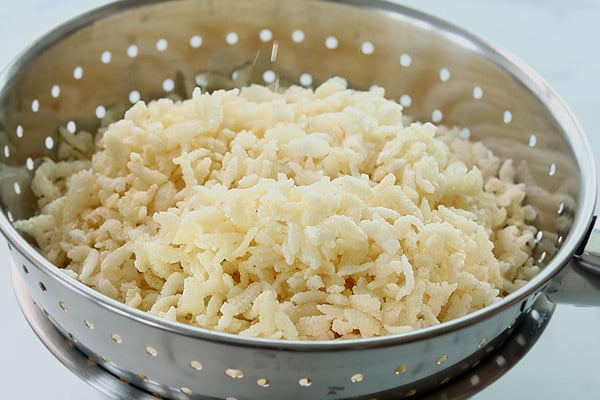
1.First heat oil in a kadai. Place a strainer inside, add 1 cup heaped poha - add it in batches and fry. Mix it well for even frying.

fry poha

2.Transfer to another big holed strainer to remove excess oil. Place a bowl underneath the strainer.

add to strainer

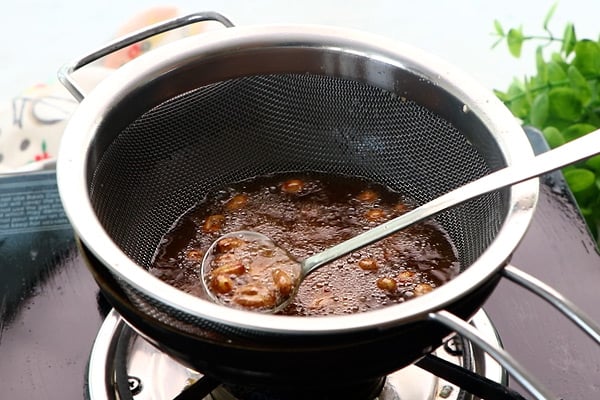
3.Again place the strainer inside oil and add ΒΌ cup peanuts and fry until crisp and golden brown. Transfer to the strainer and set aside.

fry peanuts

4.Add ΒΌ cup roasted gram dal and fry until golden. Remove and transfer to the strainer.

fry roasted gram dal

5.Next add around 20-25 cashews and fry until golden. Remove and transfer to the strainer.

fry cashews

6.Add 2 tablespoon raisins and fry until golden brown. Remove and transfer to the strainer.

fry raisins

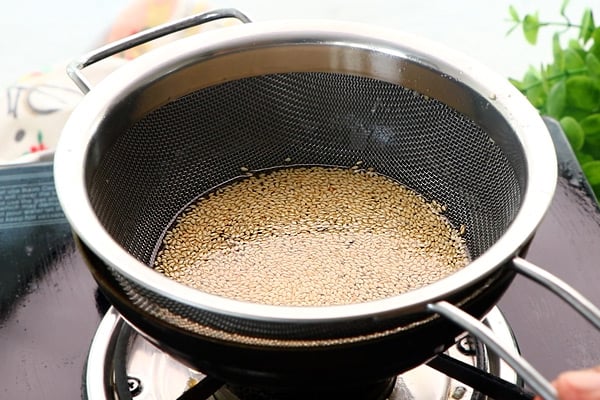
7.Add 2 tablespoon sesame seeds and fry until golden. Remove and transfer to the strainer.

fry sesame seeds

8.Add a handful of curry leaves and fry until it splutters. Remove and transfer to the strainer.

fry curry leaves

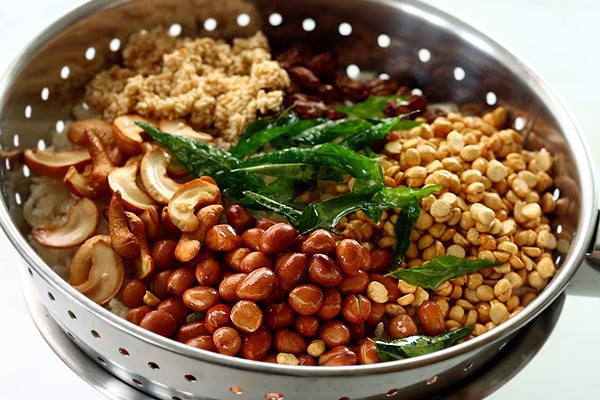
9.All fried and ready.

fried ingredients ina  strainer

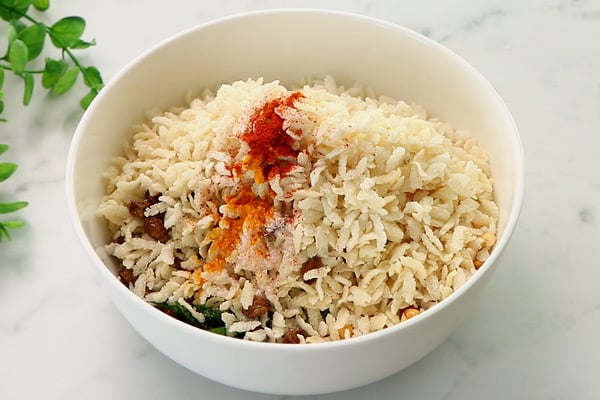
10.Transfer all fried ingredients to a mixing bowl. Add ΒΌ teaspoon turmeric powder, Β½ teaspoon red chili powder, salt to taste and a small pinch hing.

add spices powders, salt

11.Toss and mix it well.

toss well

12.Mix well until it is well coated.

mix well

Aval mixture or Poha Chivda is ready. Cool down and then store in an airtight container! Serve as a snack with hot coffee.

poha chivda served with a cup of coffee

Expert Tips

  • PohaΒ -Β Always use thick variety poha, as thin poha will turn oily and soggy very quickly when fried.
  • FryingΒ - Fry each ingredient separately to ensure they cook evenly and stay crispy to prevent sogginess.
  • Strainer - Use a fine holed strainer that will fit inside the kadai or pan.
  • OilΒ - Use just enough oil to fry the poha. This helps avoid it soaking up too much oil, keeping it light and crispy.
  • Frying temperatureΒ - Ensure the oil is hot enough but not smoking. This will make the ingredients crispy without burning them.
  • Customize spicesΒ - You can add roasted jeera powder and chat masala powder for extra kick.
  • CoolingΒ - Allow the mixture to cool completely before storing it. This helps it stay crisp for a longer time and prevents it from becoming soft.

Serving and Storage

Serve Aval Mixture as a snack with hot tea or coffee. It's perfect for tea-time or as a festive snack.Β 

Store it in an airtight container at room temperature for up to two weeks. Make sure it's fully cooled before sealing it to maintain its crisp texture.

FAQS

1.Why is my chivda not crisp?

If the poha isn't fried properly, it can remain soft. Make sure to fry it until it stops making the "shh" sound. It indicates it's fully crisp. Also if oil temperature is low then it might turn soggy.

2.Can I use red poha or brown poha?

Yes, you can. Use the thick variety. The taste and color will be slightly different, but will still taste delicious.

3.Can I add other spices to flavor the mixture?

Yes, you can add a pinch of chat masala, cumin powder, or pepper powder if you like extra flavor.

4.Can I skip raisins?

Raisins add a sweet crunch, but if you prefer, you can skip them or substitute them with other dried fruits.

5.Can I make Aval Mixture ahead of time?

Yes, Aval Mixture is perfect for making in advance. You can prepare the mixture and store it in an airtight container for up to 2 weeks. Just make sure to let it cool completely before storing it to maintain its crunchiness.

poha chivda just made

If you have any more questions about this Aval Mixture RecipeΒ do mail me at sharmispassions@gmail.com. In addition, follow me on Instagram,Β Facebook,Β PinterestΒ ,YoutubeΒ andΒ TwitterΒ .

Tried this Aval Mixture Recipe? Do let me know how you liked it. Also tag us on Instagram @sharmispassions and hash tag it on #sharmispassions.

πŸ“– Recipe Card

Print

Poha Chivda Recipe

Poha Chivda also known as Aval Mixture, is a crunchy, savory snack made from poha (flattened rice), roasted nuts, dry fruits and spices. It is very easy to make and a popular choice during festive seasons like Diwali. It gives nice volume so perfect for distribution and a treat for gatherings. The combination of poha along with cashews, peanuts, fried gram dal, raisins, sesame seeds, curry leaves and spices is a great combination of textures and flavors.
Course Snack
Cuisine Indian
Keyword diwali snacks, diwali snacks recipes, easy diwali snacks, poha recipes, savoury recipes, snack recipes, spicy indian mix
Prep Time 10 minutes
Cook Time 10 minutes
Total Time 20 minutes
Servings 3 people
Calories 330kcal
Author Sharmilee J

Ingredients

  • 1 heaped cup thick poha
  • ΒΌ cup roasted gram dal
  • ΒΌ cup peanuts
  • 2 tablespoon sesame seeds
  • 20 cashews
  • 2 tablespoon raisins
  • 1 handful curry leaves
  • ΒΌ teaspoon turmeric powder
  • Β½ teaspoon red chilli powder
  • 1 small pinch hing
  • salt to taste

Instructions

  • First heat oil in a kadai. Place a strainer inside, add 1 cup heaped poha - add it in batches and fry. Mix it well for even frying.
  • Transfer to another big holed strainer to remove excess oil. Place a bowl underneath the strainer.
  • Again place the strainer inside oil and add ΒΌ cup peanuts and fry until crisp and golden brown. Transfer to the strainer and set aside.
  • Add ΒΌ cup roasted gram dal and fry until golden. Remove and transfer to the strainer.
  • Next add around 20-25 cashews and fry until golden. Remove and transfer to the strainer.
  • Add 2 tablespoon raisins and fry until golden brown. Remove and transfer to the strainer.
  • Add 2 tablespoon sesame seeds and fry until golden. Remove and transfer to the strainer.
  • Add a handful of curry leaves and fry until it splutters. Remove and transfer to the strainer.
  • All fried and ready.
  • Transfer all fried ingredients to a mixing bowl. Add ΒΌ teaspoon turmeric powder, Β½ teaspoon red chili powder, salt to taste and a small pinch hing.
  • Toss and mix it well.
  • Mix well until it is well coated.

Video

Notes

  • PohaΒ -Β Always use thick variety poha, as thin poha will turn oily and soggy very quickly when fried.
  • FryingΒ - Fry each ingredient separately to ensure they cook evenly and stay crispy to prevent sogginess.
  • Strainer - Use a fine holed strainer that will fit inside the kadai or pan.
  • OilΒ - Use just enough oil to fry the poha. This helps avoid it soaking up too much oil, keeping it light and crispy.
  • Frying temperatureΒ - Ensure the oil is hot enough but not smoking. This will make the ingredients crispy without burning them.
  • Customize spicesΒ - You can add roasted jeera powder and chat masala powder for extra kick.
  • CoolingΒ - Allow the mixture to cool completely before storing it. This helps it stay crisp for a longer time and prevents it from becoming soft.

Nutrition

Serving: 100g | Calories: 330kcal | Carbohydrates: 61g | Protein: 8g | Fat: 6g | Saturated Fat: 1g | Polyunsaturated Fat: 2g | Monounsaturated Fat: 2g | Sodium: 17mg | Potassium: 200mg | Fiber: 4g | Sugar: 0.5g | Vitamin A: 576IU | Vitamin C: 200mg | Calcium: 90mg | Iron: 2mg

The post Poha Chivda Recipe (Aval Mixture) appeared first on Sharmis Passions.
Pottukadalai Murukku Recipe (Easy Murukku)

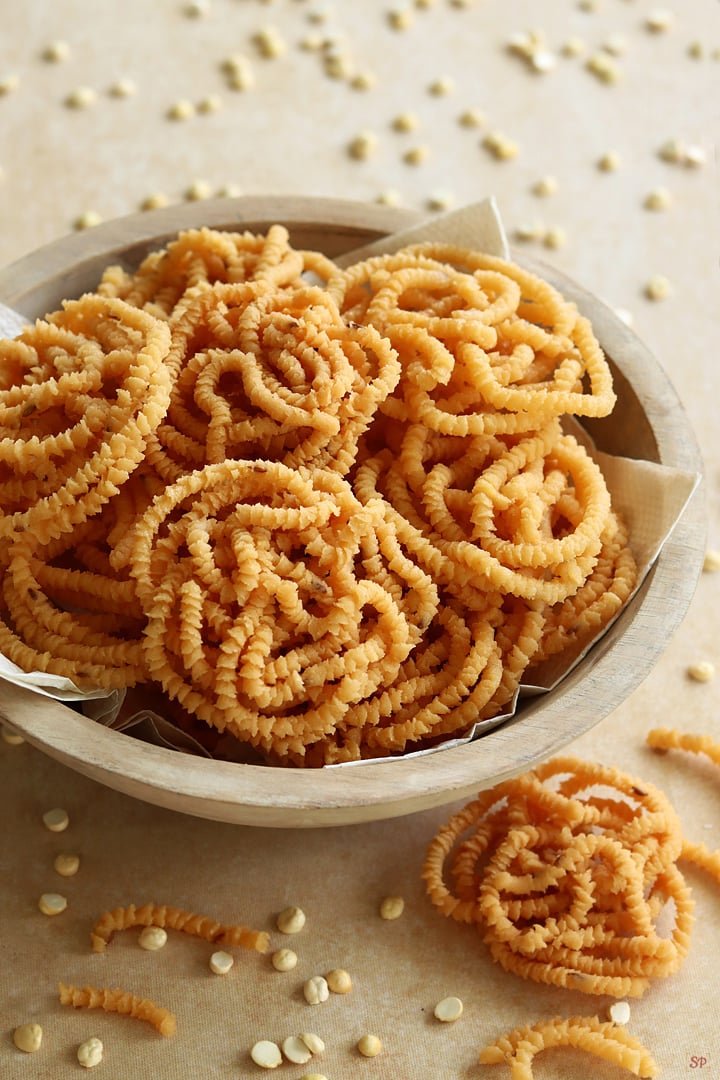
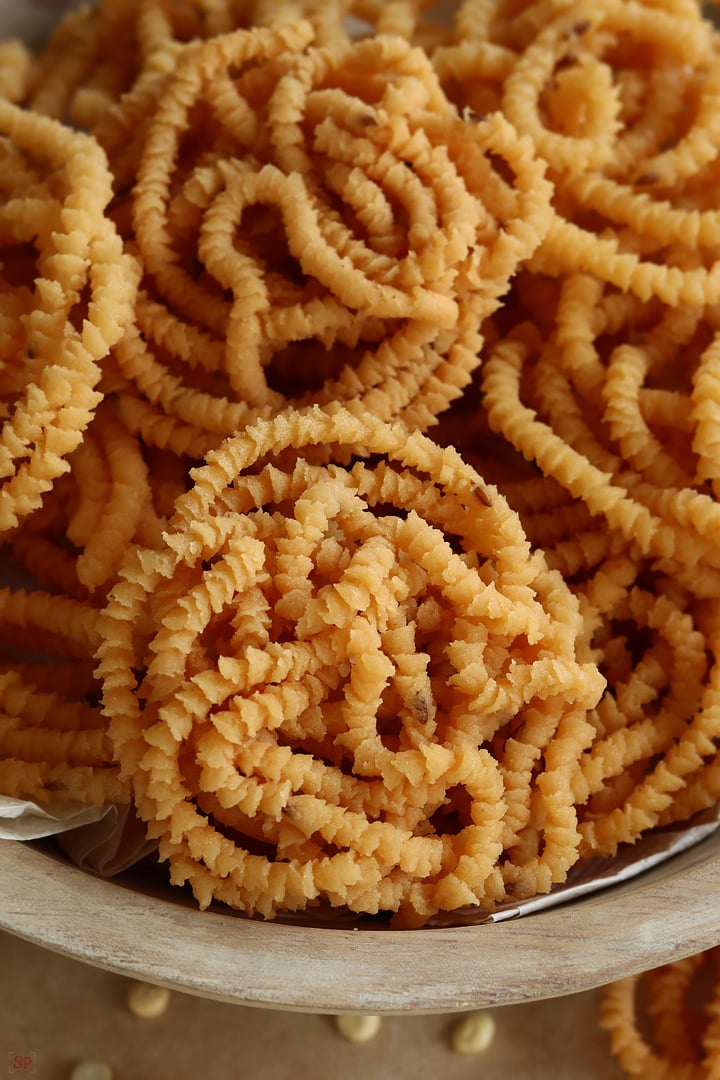
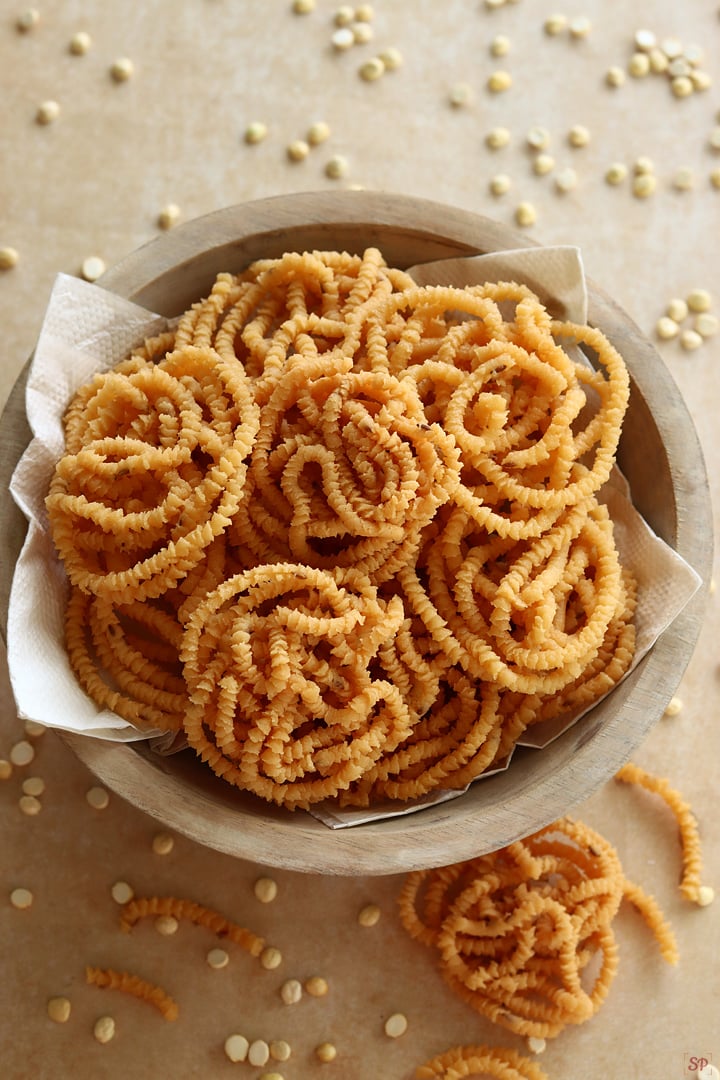
Pottukadalai Murukku is a simple snack made with rice flour, fried gram dal flour, butter and spices. It is one of the easiest murukku recipes that you can make in home without much effort. This murukku turn out very crunchy and tasty, full of flavor, perfect to enjoy with a cup of hot tea in the evening.

pottukadalai murukku in a wooden bowl

This murukku gets lovely golden color and breaks with a soft snap, so light and tasty every time you make. It gives that soft texture and mild nutty taste which makes it bit different from regular murukku. Once you try this version, you will surely want to make it again and again.

[feast_advanced_jump_to]

About Pottukadalai Murukku

Pottukadalai Murukku is South Indian snack. It is a must during festive season as it is easy, simple and quick to make. The fried gram dal gives nice flavor and makes the murukku melt slightly in mouth while still keeping it crunchy.

Rice flour, gram dal flour is mixed with butter, salt and spices then shaped using a murukku press and fried till golden. Pottukadalai Murukku is an easy instant murukku recipe that I make. It comes out so good, that this has become a snack that I make on and off as both mittu and gugu are fond of it.

This murukku is quite famous on special days but I feel it can be enjoyed anytime. It is very easy to prepare compared to other types of murukku because it uses basic ingredients available in every kitchen. You do not need urad dal flour like traditional version, yet taste comes very nice and light.

The texture of this is soft crunchy, not hard at all. When you bite it, it just breaks easily with clean snap and melts a little. The flavor of cumin or sesame seeds adds extra aroma, and butter gives smoothness to dough. Even beginners can make this easily if follow few tips carefully.

pottukadalai murukku in a wooden bowl

Pottukadalai Murukku Video

I usually make this murukku during festival times or when we feel like having some homemade snack to munch on. My family loves this murukku as evening snack with coffee or tea. Sometimes I pack few in snack boxes too, it stays fresh and crunchy till evening.

Similar Recipes

pottukadalai murukku in a wooden bowl

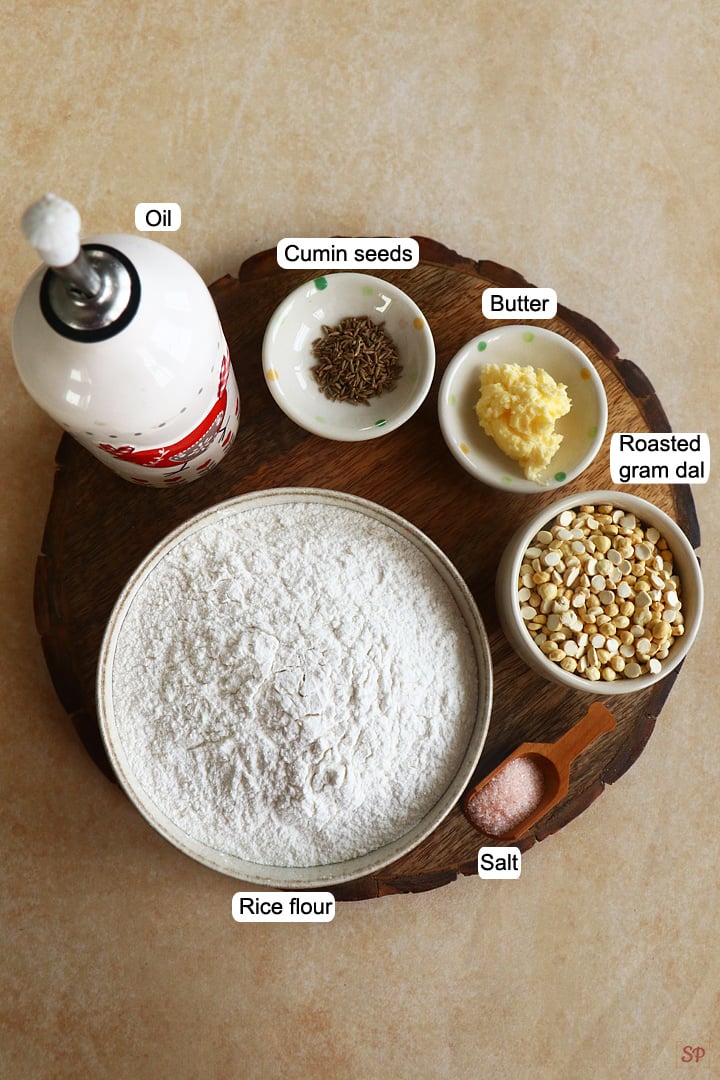
Pottukadalai Murukku Ingredients

  • Rice flour - I used homemade rice flour but you can use store bought idiyappam flour too. It gives crisp base texture to murukku.
  • Fried gram dal (Pottukadalai) - I grind fried gram dal fine then sieved and added. Sieving is must.
  • Butter - I used little butter to make dough soft and easy to press. Do not add too much, else it will break while pressing.
  • Cumin seeds - I used this for nice aroma and slight crunch. You can replace with sesame seeds if prefer that flavor.
  • Oil to deep fry - I used refined oil for frying. Make sure oil is hot enough before dropping murukku.
ingredients needed to make pottukadalai murukku

How to make Pottukadalai Murukku Step by Step

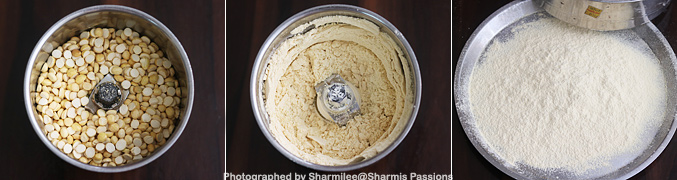
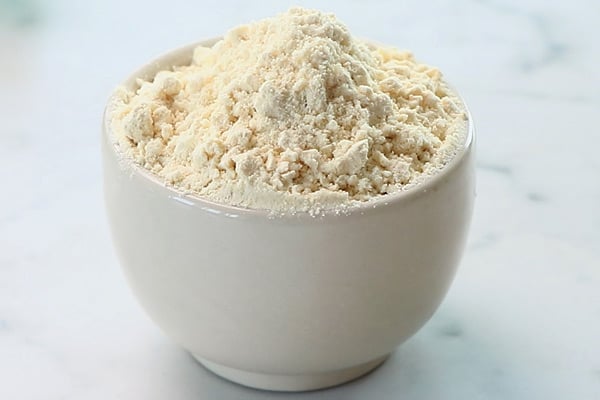
1.Take Β½ cup pottukadaai(roasted gram dal), add it to a mixer.

take pottukadalai

2.Grind it to a fine powder and set aside.

grind it fine

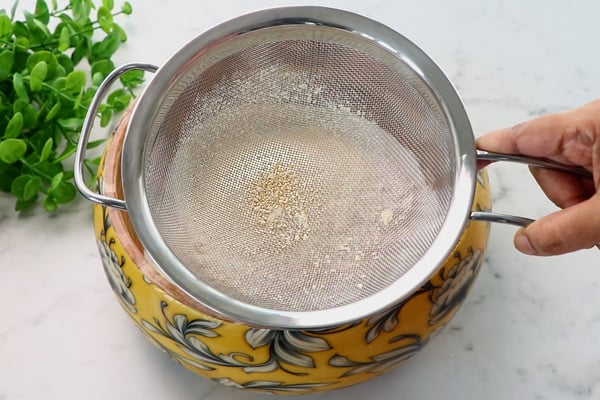
3.First add 2 cups rice flour to a mixing bowl. Place a sieve over the bowl - add powdered roasted gram dal flour.

add rice flour, fried gram dal flour

4.Sieve it and discard the remains.

sieve it

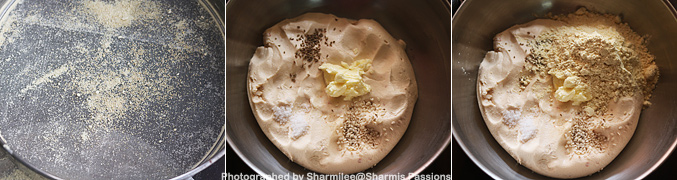
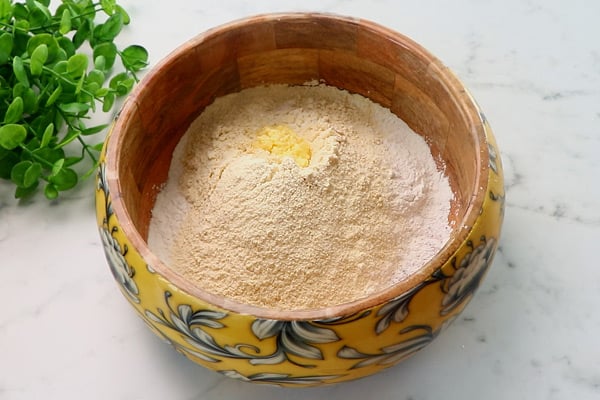
5.Now add 1 and Β½ tablespoon butter at room temperature.

add butter, salt

6.Mix this well for even distribution.

mix it well

7.Add 1 teaspoon cumin seeds along with salt. Give a quick mix. You can add ΒΌ teaspoon hing if you want.

add cumin seeds, salt

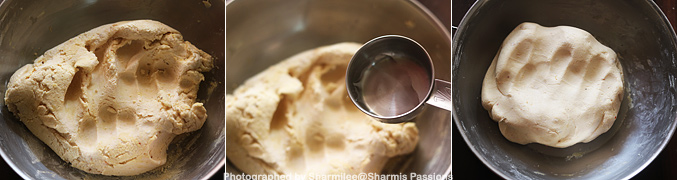
8.Add water little by little and keep mixing.

add water

9.Make a soft pliable dough like this.

make dough

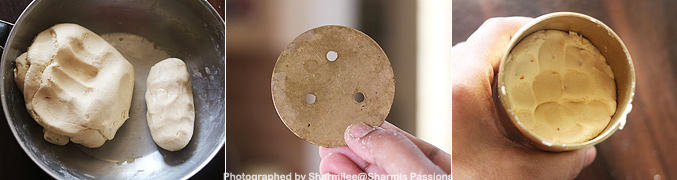
10.Pinch small portion of the dough and make cylindrical logs like this.

shape cylindrrical logs

11.Keep covered until use to avoid drying up of the dough.

keep covered

12.Grease the murukku press with oil and fix the disc.

grease murukku press

13.Fill it with the dough.

add dough

14.Screw and close it. Check and see.

close and check

15.Grease backside of 2-3 ladles with oil.

grease ladles with oil

16.Squeeze in concentric circles like this and tuck in the loose edges.

squeeze murukku

17.Heat oil and check by adding a pinch of the dough it it rises slowly then oil is ready. Add 3-4 prepared murukku at a time.

add in hot oil

18.Flip over and fry until golden on both the sides. The bubbles will reduce which shows murukku is done.

fry until golden

Pottukadalai murukku is ready!

pottukadalai murukku in a wooden bowl

Expert Tips

  • Roasted gram powder - Always grind fried gram fine and sieve once, else murukku will have grainy texture. I usually powder and keep extra for later use.
  • Butter quantity - Add butter only as mentioned. If butter is more then while pressing it will break.
  • Dough - The consistency should be soft, pliable and smooth. If its just hard to press, just sprinkle some water and knead it once again.
  • Oil temperature - Always check by dropping small piece of dough. If it rises immediately slowly with small bubbles, oil is ready. Too hot oil will make murukku brown fast outside and uncooked inside.
  • Shaping - I usually make small circles on ladle and then slide into oil. You can press directly in oil if comfortable.

Serving and Storage

Serve this as a tea time snack or during festival season along with sweets. It goes very well with coffee or even plain milk for kids. Cool down completely before storing. Keep in airtight box and it stays fresh for 2 weeks or more if handled cleanly. Do not store when warm else it becomes soft.

FAQS

1.Can I use store bought rice flour?

Yes, you can use store rice flour. Just make sure it is fine textured for best result.

2.Why my murukku breaks while pressing?

If butter is more or dough is too tight, murukku will break. Add little water and small spoon of rice flour to balance, mix well and try again.

3.Can I make spicy version?

Yes, you can add red chilli powder or grind few garlic with chilli for flavored murukku. It gives nice spicy twist.

4.How to know if oil is ready for frying?

Drop small pinch of dough, if it rises slowly and not burnt, oil is ready.

5.Can I use sesame seeds?

Yes, it give nutty taste and aroma. You can also mix both for different flavor.

pottukadalai murukku

If you have any more questions about this Pottukadalai Murukku RecipeΒ do mail me at sharmispassions@gmail.com. In addition, follow me on Instagram,Β Facebook,Β PinterestΒ ,YoutubeΒ andΒ TwitterΒ .

Tried this Pottukadalai Murukku Recipe? Do let me know how you liked it. Also tag us on Instagram @sharmispassions and hash tag it on #sharmispassions.

πŸ“– Recipe Card

Print

Pottukadalai Murukku Recipe

Pottukadalai Murukku is a simple snack made with rice flour, fried gram dal flour, butter and spices. It is one of the easiest murukku recipes that you can make in home without much effort. This murukku turn out very crunchy and tasty, full of flavor, perfect to enjoy with a cup of hot tea in the evening.
Course Snack
Cuisine Indian
Keyword diwali snacks, diwali snacks recipes, easy diwali snacks, fried rice recipes, fry, fry recipes, murukku, snack recipes
Prep Time 5 minutes
Cook Time 40 minutes
Total Time 45 minutes
Servings 15
Calories 60kcal
Author Sharmilee J

Ingredients

  • 2 cups rice flour
  • Β½ cup fried gram dal
  • 1 and Β½ tablespoon butter
  • 1 teaspoon cumin seeds
  • salt to taste
  • oil to deep fry
  • water as required

Instructions

  • Take Β½ cup pottukadalai(roasted gram dal), add it to a mixer.
  • Grind it to a fine powder and set aside.
  • First add 2 cups rice flour to a mixing bowl. Place a sieve over the bowl - add powdered roasted gram dal flour.
  • Sieve it and discard the remains.
  • Now add 1 and Β½ tablespoon butter at room temperature.
  • Mix this well for even distribution.
  • Add 1 teaspoon cumin seeds along with salt. Give a quick mix. You can add ΒΌ teaspoon hing if you want.
  • Add water little by little and keep mixing.
  • Make a soft pliable dough like this.
  • Pinch small portion of the dough and make cylindrical logs like this.
  • Keep covered until use to avoid drying up of the dough.
  • Grease the murukku press with oil and fix the disc.
  • Add the dough.
  • Screw and close it. Check and see.
  • Grease backside of 2-3 ladles with oil.
  • Squeeze in concentric circles like this and tuck in the loose edges.
  • Heat oil and check by adding a pinch of the dough it it rises slowly then oil is ready. Add 3-4 prepared murukku at a time.
  • Flip over and fry until golden on both the sides.
  • Pottukadalai murukku is ready!

Video

Notes

  • Roasted gram powder - Always grind fried gram fine and sieve once, else murukku will have grainy texture. I usually powder and keep extra for later use.
  • Butter quantity - Add butter only as mentioned. If butter is more then while pressing it will break.
  • Dough - The consistency should be soft, pliable and smooth. If its just hard to press, just sprinkle some water and knead it once again.
  • Oil temperature - Always check by dropping small piece of dough. If it rises immediately slowly with small bubbles, oil is ready. Too hot oil will make murukku brown fast outside and uncooked inside.
  • Shaping - I usually make small circles on ladle and then slide into oil. You can press directly in oil if comfortable.

Nutrition

Serving: 25g | Calories: 60kcal | Carbohydrates: 11g | Protein: 1g | Fat: 1g | Saturated Fat: 0.3g | Polyunsaturated Fat: 0.3g | Monounsaturated Fat: 1g | Trans Fat: 0.02g | Cholesterol: 1mg | Sodium: 262mg | Potassium: 41mg | Fiber: 1g | Sugar: 0.1g | Vitamin A: 15IU | Vitamin C: 0.2mg | Calcium: 4mg | Iron: 0.4mg

The post Pottukadalai Murukku Recipe (Easy Murukku) appeared first on Sharmis Passions.
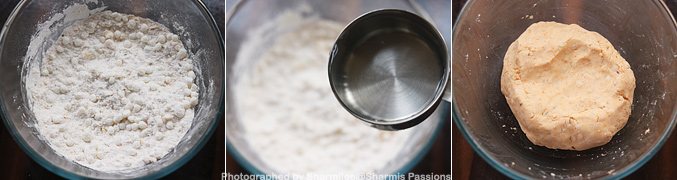
❌