❌

Reading view

There are new articles available, click to refresh the page.

I Am Artemis: Ethan Jacobs

By: Lee Mohon
3 Min Read

I Am Artemis: Ethan Jacobs

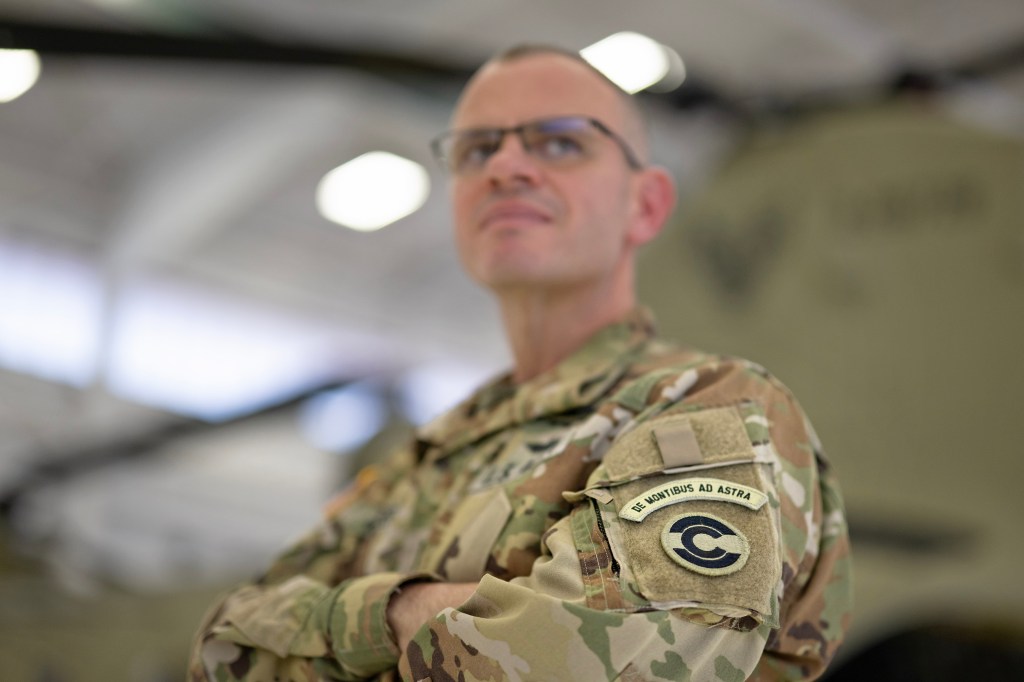
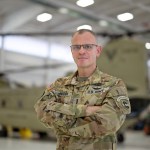
Colorado National Guard Chief Warrant Officer and military helicopter pilot Ethan Jacobs stands in the hangar bay at the High-Altitude Army National Guard Training Site near Gypsum, Colorado. NASA and the Colorado Army National Guard are partnering on a simulated lander flight training course for Artemis in the mountains of northern Colorado. Jacobs is the lead instructor and helped to develop the course.

Listen to this audio excerpt from Ethan Jacobs, a helicopter pilot and member of the Colorado Army National Guard developing a foundational flight training course for Artemis astronauts:

0:00 / 0:00

High above the Rocky Mountains, Ethan Jacobs is helping NASA preparing to land people on the Moon for the first time in more than 50 years. NASA will send astronauts to the lunar South Pole during the Artemis III mission and beyond. As part of their journeys, crew will travel in a human landing system that will safely transport them from lunar orbit to the lunar surface and back.

Jacobs, a chief warrant officer with the Colorado National Guard and helicopter pilot for 20 years, both privately, and with the U.S. Army active duty and National Guard, has been working with NASA to develop a foundational training course at the High-Altitude Army National Guard Aviation Training Site, near Gypsum, Colorado. The culmination of that work is a NASA-certified foundational training course for astronauts that exposes them to the challenges of vertical flight profiles and landing in extreme conditions.

The challenging conditions we fly in replicates – as much as possible here on Earth – some of the challenges astronauts will face when landing on the Moon.
Ethan Jacobs

Ethan Jacobs

Chief Warrant Officer, Colorado Army National Guard

Colorado’s challenging terrain, dusty and white-out conditions in certain places, and high desert landscape make it an ideal setting for replicating a lunar environment for flight. In addition, there can be flat light where there is little to no shadow, all of which can create visual illusions and challenge a crew’s sense of depth perception.

And a lot of the visual illusions the NASA astronauts training at the High-Altitude Army National Guard Aviation Training Site experience are eye-opening.

β€œI teach the astronauts how to distinguish slopes in degraded visual conditions because we normally judge slope by shadows and changes in vegetation color,” Jacobs said. β€œBut these conditions in the Colorado mountains can be monochromatic, like on the Moon.”

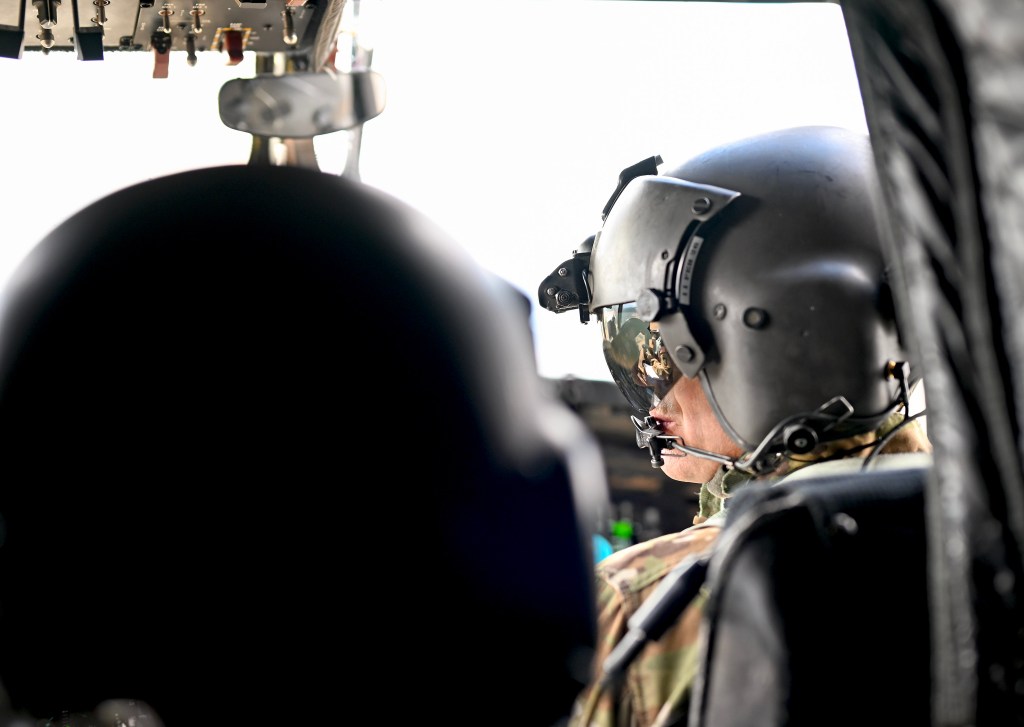
On a typical flight in a UH-72 Lakota helicopter, Jacobs sits in the front with one astronaut crew member and another astronaut sits in the back. Jacobs trains the astronaut team on how best to identify and overcome visual and cognitive illusions while evaluating techniques and team dynamics. Working with NASA, Jacobs and his team have studied maps of the lunar terrain, then located similar landing zones in the Colorado mountains.
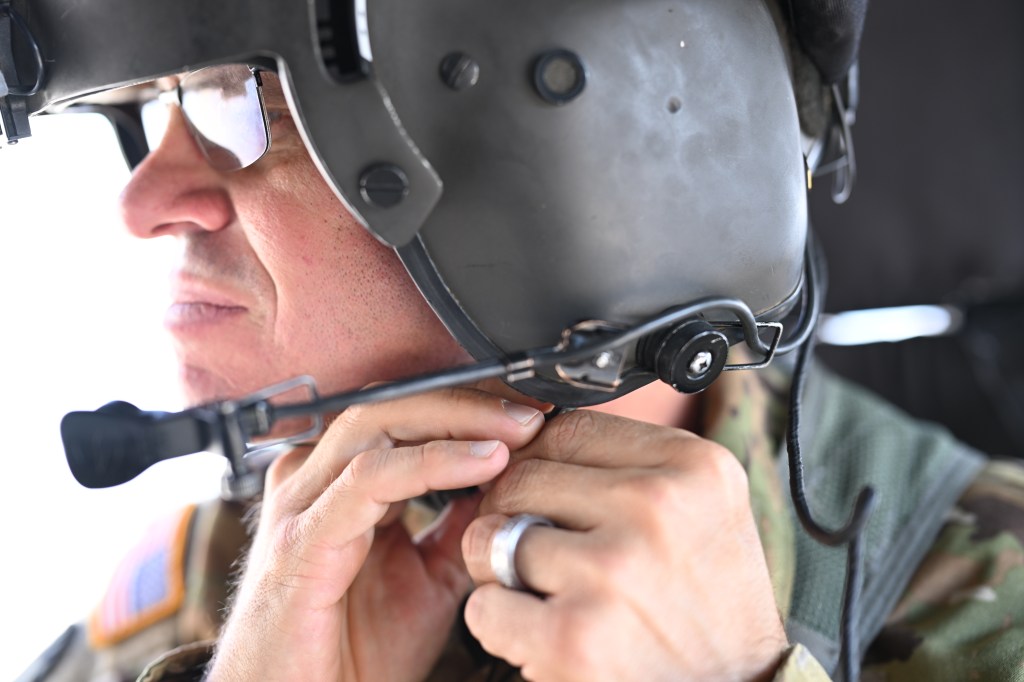
Colorado National Guard Chief Warrant Officer and military helicopter pilot Ethan Jacobs stands in the hangar bay at the High-Altitude Army National Guard Training Site near Gypsum, Colorado. NASA and the Colorado Army National Guard are partnering on a simulated lander flight training course for Artemis in the mountains of northern Colorado. Jacobs is the lead instructor and helped to develop the course.
NASA/Charles Beason
Colorado National Guard Chief Warrant Officer and military helicopter pilot Ethan Jacobs stands in the hangar bay at the High-Altitude Army National Guard Training Site near Gypsum, Colorado. NASA and the Colorado Army National Guard are partnering on a simulated lander flight training course for Artemis in the mountains of northern Colorado. Jacobs is the lead instructor and helped to develop the course.
NASA/Charles Beason
Colorado National Guard Chief Warrant Officer and military helicopter pilot Ethan Jacobs stands in the hangar bay at the High-Altitude Army National Guard Training Site near Gypsum, Colorado. NASA and the Colorado Army National Guard are partnering on a simulated lander flight training course for Artemis in the mountains of northern Colorado. Jacobs is the lead instructor and helped to develop the course.
NASA/Charles Beason

β€œThe two-person astronaut crew has to work together, communicate, and navigate with real-world consequences,” Jacobs said. β€œFuel is burning and they can’t press the pause button like in a simulator. I try to expose them to as many different conditions and various landing zones as possible.”

At the end of the day, adaptability is key to successfully landing in extreme conditions.

Ethan Jacobs

Ethan Jacobs

Chief Warrant Officer, Colorado Army National Guard

NASA recently certified the course, marking a milestone in preparing for the future Artemis III crew. Since 2021, astronauts with NASA and ESA (European Space Agency) have taken part in the high-altitude aviation course have proven to be receptive to the training and adaptable to expanding their piloting skills, Jacobs said.

Artemis astronauts will receive specialized training on the specific lander for their mission from NASA’s commercial providers, SpaceX and Blue Origin. The training course, along with simulators and specialized crew training, provides fundamental coursework that will allow Artemis astronauts to be best prepared to land on the lunar surface.

Through the Artemis campaign, NASA will send astronauts to explore the Moon for scientific discovery, economic benefits, and to build the foundation for the first crewed missions to Mars for the benefit of all.

For more information about Artemis visit:
https://www.nasa.gov/artemis

Share

Details

Last Updated
Nov 20, 2025
Editor
Lee Mohon
Contact
Corinne M. Beckinger

I Am Artemis: Diamond St. John

3 Min Read

I Am Artemis: Diamond St. John

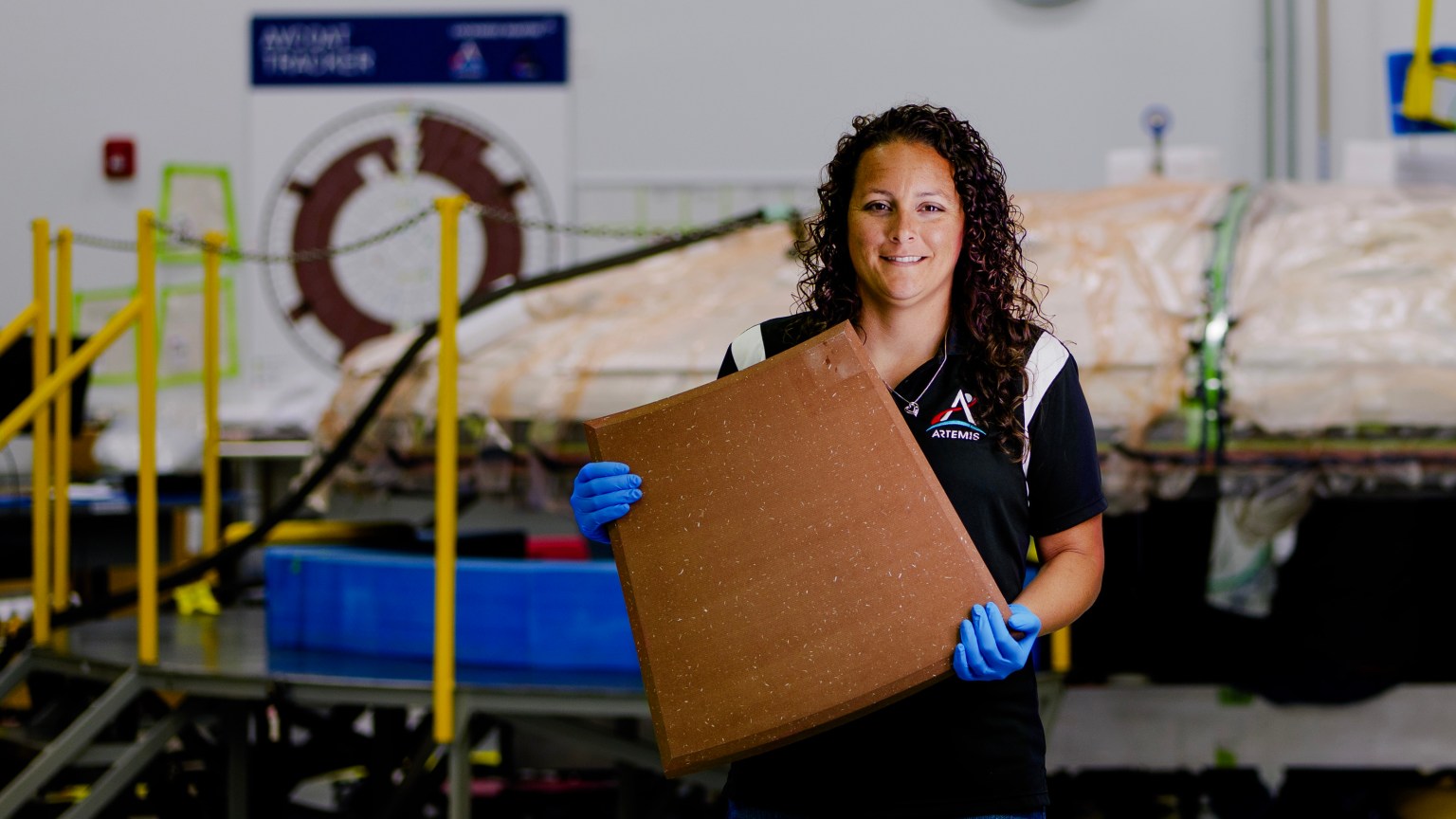
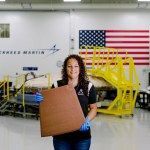
Diamond St. John, engineer on the Orion Program with Lockheed Martin, holds one of the heat shield tiles that will protect astronauts as they return to Earth after exploring the lunar surface on the Artemis III mission.
Credits: NASA/Rad Sinyak

Listen to this audio excerpt from Diamond St. John, engineer working on the Artemis III heat shield for the Orion Program at Lockheed Martin:

0:00 / 0:00

For four-generations, Diamond St. John’s family has been supporting human spaceflight at NASA’s Kennedy Space Center in Florida. Now, she’s continuing the family legacy that reaches back to Apollo β€”helping return humanity to the Moon with the agency’s Artemis campaign.

St. John is an engineer with Lockheed Martin supporting Orion, NASA’s spacecraft built to carry crew to the Moon and return them safely to Earth on Artemis missions. She specializes in the production of Orion’s heat shield at Lockheed’s Spacecraft, Test, Assembly and Resource Center, in Titusville, Florida. As one of the most important elements of the spacecraft, the heat shield is responsible for protecting the astronauts from the nearly 5,000 degrees Fahrenheit temperatures as they re-enter Earth’s atmosphere at the end of the mission.

From start to finish, St. John is responsible for establishing a production workflow for the Orion heat shield β€” the largest of its kind in the world β€” and ensures each step is executed in the correct order along the way.

Her team recognizes the criticality of their work and knows that their mission is to make sure astronauts come home safe. When it comes to quality of production, St. John embraces that mindset.

β€œWe always want to make sure that we're doing things right. We have to slow down and make sure that our product is quality β€” because the slightest thing can be a make or break. We definitely want to make sure that our crew is safe.”

Diamond St. John

Diamond St. John

Engineer on the Orion Program with Lockheed Martin

St. John and her team are working on the Orion heat shield for the Artemis III mission that will land astronauts on the lunar surface. The team is in the process of bonding 186 tiles made of a material called Avcoat to the heat shield’s underlying structure. β€œOnce we start bonding operations, we first sand the blocks, to make sure that we minimize any gaps between them. Then we get into bonding, and we fill the gaps, and we test. After that’s complete, we then paint and tape the heat shield.”

β€œSeeing a final product finished, it warms your heart. So, I’m looking forward to that finished heat shield and knowing that we put our heart and soul into it.”

Diamond St. John

Diamond St. John

Engineer on the Orion Program with Lockheed Martin

Though she is currently working on the heat shield for Artemis III, her journey with Orion began with the Artemis I spacecraft. St. John started on the clean room floor as a technician intern with subcontractor ASRC Federal. She then moved into a full-time role with the company for four years in quality inspection while earning her bachelor’s degree in engineering. After that, St. John joined Lockheed Martin as a manufacturing engineer.


β€œEverything has been Artemis from the beginning,” she said, in reflection of her career. β€œKnowing that my great grandparents worked on the Apollo missions β€” it’s cool to follow down that same path. I think they would be pretty proud.”


Β 

Diamond St. John, engineer on the Orion Program with Lockheed Martin, holds one of the heat shield tiles that will protect astronauts as they return to Earth after exploring the lunar surface on the Artemis III mission.
NASA/Rad Sinyak
Keep Exploring

Discover More Topics From NASA

❌