❌

Reading view

There are new articles available, click to refresh the page.

Poondu Kuzhambu | Garlic Kulambu

Poondu Kulambu is a spicy and flavorful curry made using garlic, tamarind, spice powders, herbs and spices. Poondu Kulambu is an excellent choice when we run out of vegetables and perfect to serve with rice, idli and dosa. Learn to make tasty Poondu Kuzhambu with step by step pictures and video.
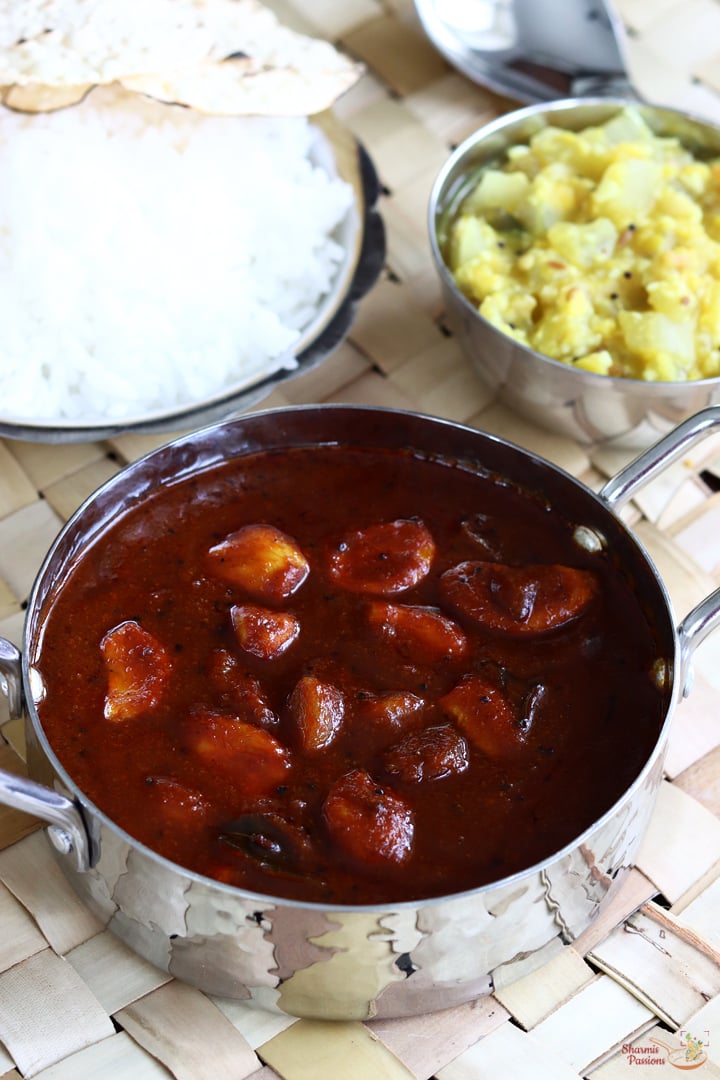
poondu kuzhambu served with rice, sutta appalam and chow chow kootu

I've tried many versions of puli kuzhambu, each one different in its own way. But finally settled down with this one which is my keeper as its our family favorite. This is a very easy and quick recipe that you can prepare in just 20 minutes if you have all the ingredients in hand. I served it with rice, sutta appalam and sundakkai kootu. Do try and enjoy this poondu kuzhambu!

[feast_advanced_jump_to]

About Poondu Kuzhambu

'Poondu' in tamil means Garlic and 'Kuzhambu' means Curry so Poondu Kuzhambu translates to Garlic Curry. This Poondu Kuzhambu is a tangy spiced South Indian curry perfect to pair up with idli, dosa, rice, chapati etc. It is one of the easy and quick side dish that you can prepare for lunch to pair up with rice and use left overs for dinner with idli, dosa.

This South Indian curry is packed with flavors and keeps well for 2 days. It tastes best the next day with idli or dosa, pairs well with hot steamed rice too. I love it even with curd rice so delicious.

I love garlic in any form, so this kuzhambu is obviously my favorite. The spicy and tangy taste with a dash of sweetness is perfect for rice, idli or even dosa. This keeps well for 3-4 days. You can add any other vegetable of your choice like ladies finger, brinjal etc.

Trust me gugu loves this so much that he fondly tells amma I can have this daily, yes he likes it so very much that he asked me to pack it for lunchbox even after having it for 2 meals straight the previous day. If you like tangy garlic flavored dishes then this is a must try for you!

poondu kuzhambu served with rice, sutta appalam and chow chow kootu

Garlic Kuzhambu Video

Garlic Kuzhambu Ingredients

  • Garlic - Garlic is the main ingredient here which flavors the curry. You can use small garlic variety or big ones according to your liking.
  • Small Onion - Small Onion adds flavor to the curry.
  • Tamarind - Tamarind forms the base for this curry along with the grind paste.
  • Tempering - A basic tempering is done with mustard seeds, cumin seeds, fenugreek seeds, hing and curry leaves.
  • Spice powders - Turmeric powder, red chili powder and coriander powder is added to this curry.
  • Jaggery - Powdered jaggery is added at the last stage to balance the taste.
ingredients needed to make garlic kuzhambu

Similar Recipes

How to make Garlic Kuzhambu Step by Step

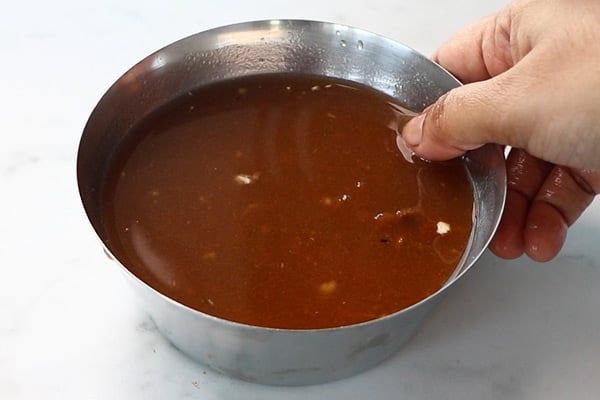
1.To a bowl add ΒΌ cup tamarind (tightly packed). Add around 1 and Β½ cups water to it.

soak tamarind

2.Crush it well and set aside.

crush well

3.To a kadai add 3 tablespoon gingelly oil. Gingelly oil is best to use however you can use any cooking oil too.
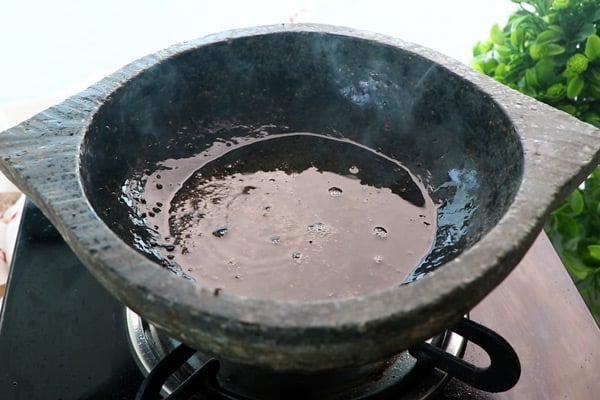
heat oil

4.Add 1 teaspoon mustard seeds let it splutter. Add Β½ teaspoon cumin seeds, ΒΌ teaspoon fenugreek seeds, few curry leaves and a pinch of hing. Let it crackle.

splutter the items

5.Add 10-15 small onion, 20-25 garlic cloves.

add onion, garlic

6.Fry until it turns slightly golden.

fry until it is golden

7.Add 1 and Β½ tablespoon red chili powder and 3 tablespoon coriander powder. Spice powders give thickness to this curry.

add spice powders

8.Saute well for few seconds.

saute well

9.Strain and add tamarind extract.

strain and tamarind extract

10.Add Β½ cup water.

add water

11.Cook covered for 15 minutes or until thick and oil separates. Stir in between to avoid sticking or burning at the bottom.

cook covered

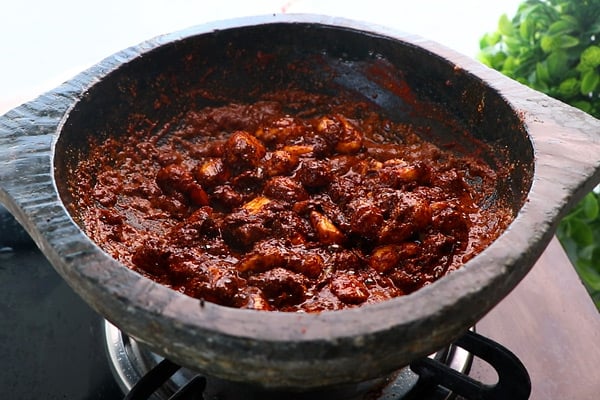
12.Oil separates and the curry becomes thick. Add 1 teaspoon jaggery powder to it and mix well.
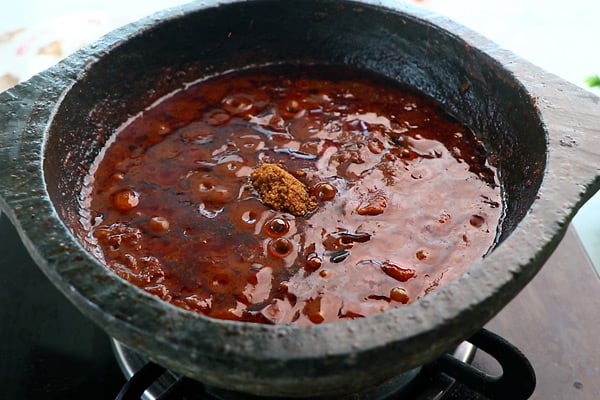
add jaggery powder

13.Switch off.

switch off

Serve it hot with rice and vegetable of your choice.

Expert Tips

  • Garlic - I have used the bigger variety as the small ones easily gets dissolves with the simmering for more time.
  • Tamarind - Soak tamarind in hot water then crush it which makes the task easier and yields more pulp.
  • Spice powders - The spice powders gives thickness to the curry so add as mentioned. Adjust spice level according to your preference.
  • Vegetables - You can also add vegetables like brinjal, ladies finger with garlic. Just sautΓ© the veggies like we do for garlic and onion and follow the same procedure.
  • Jaggery - You can omit jaggery if you don't like sweet taste in your curryΒ  but we love it as the tangy spicy taste compliments well with the sweetness.
  • Spice variation - This is medium spicy, if you like it more spicy add 2 tablespoon red chili powder and 4 tablespoon coriander powder.

Serving & Storage

Serve Poondu Kuzhambu with rice and any stir fried vegetables, tastes best when had fresh. Keeps well in room temperature for 5-6 hours, refrigerate it and it keeps well for 2 days in fridge.

FAQS

1.There is so much oil, Is it healthy?

We use gingelly oil for this curry and gingelly oil is a healthy addition to your diet. If you prefer to just have it for one meal then reduce oil and consume it soon. Adding more oil increases shelf life and taste too.

2.Can I replace gingelly oil?

Yes you can replace gingelly oil or sesame oil with regular cooking oil. But the taste varies as gingelly oil is best for this curry.

3.Can I add coconut?

Yes you can grind 3 tablespoon coconut to a fine paste and add it to get more volume.

4.Is jaggery mandatory?

No you can skip jaggery but I would recommend adding it for the perfect balance and to make this curry tangy.

5.Can we use small sized garlic?

Yes you can use but it may break or get dissolved easily. So I would recommend adding big or medium sized garlic.
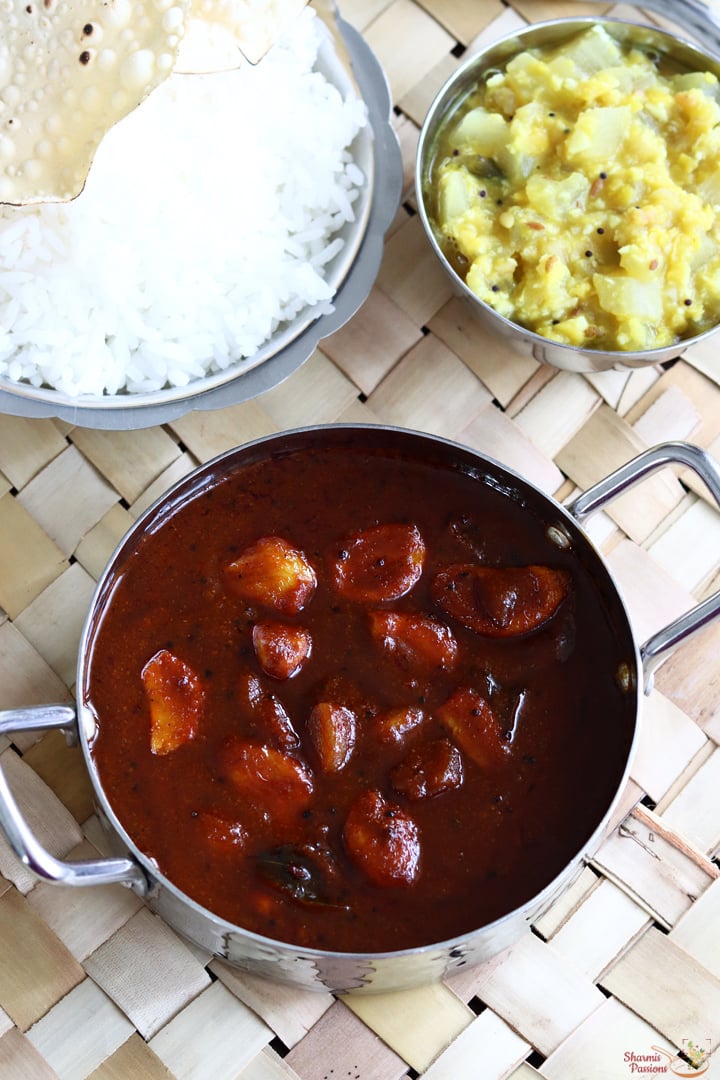
poondu kuzhambu served with rice, sutta appalam and chow chow kootu

If you have any more questions about this Poondu Kuzhambu Recipe do mail me at sharmispassions@gmail.com. In addition, follow me on Instagram,Β Facebook,Β PinterestΒ ,YoutubeΒ andΒ TwitterΒ .

Tried this Β Poondu Kulambu Recipe? Do let me know how you liked it. Also tag us on Instagram @sharmispassions and hash tag it on #sharmispassions.

πŸ“– Recipe Card

Print

Poondu Kulambu Recipe | Garlic Kuzhambu Recipe

Poondu Kulambu is a spicy and flavorful curry made using garlic, tamarind, spice powders, spices and herbs. Poondu Kulambu is an excellent choice when we run out of vegetables & perfect to have with rice, idli and dosa. Learn to make tasty Poondu Kuzhambu with step by step pictures and video.
Course Lunch, Side Dish
Cuisine Indian
Keyword curry, curry recipes, garlic recipes, healthy recipes, kuzhambu, kuzhambu recipes, lunch recipes, recipes, veg recipes
Prep Time 15 minutes
Cook Time 30 minutes
Total Time 45 minutes
Servings 2 people
Calories 286kcal
Author Sharmilee J

Ingredients

  • 10-15 small onion
  • 20-25 garlic
  • ΒΌ teaspoon turmeric powder
  • 1 and Β½ tablespoon ed chili powder
  • 3 tablespoon coriander powder
  • 1 teaspoon jaggery powder
  • salt to taste

To temper

  • 3 tablespoon gingelly
  • 1 teaspoon mustard seeds
  • Β½ teaspoon cumin seeds
  • ΒΌ teaspoon fenugreek seeds
  • a pinch hing
  • few curry leaves

For tamarind extract

  • ΒΌ cup tamarind
  • 1 and Β½ cups water

Instructions

  • To a bowl add ΒΌ cup tamarind (tightly packed). Add around 1 and Β½ cups water to it.
  • Crush it well and set aside.
  • To a kadai add 3 tablespoon gingelly oil.
  • Add 1 teaspoon mustard seeds let it splutter. Add Β½ teaspoon cumin seeds, ΒΌ teaspoon fenugreek seeds, few curry leaves and a pinch of hing. Let it crackle.
  • Add 10-15 small onion, 20-25 garlic.
  • Fry until it turns slightly golden.
  • Add 1 and Β½ tablespoon red chili powder and 3 tablespoon coriander powder.
  • Saute well for few seconds.
  • Strain and add tamarind extract.
  • Add Β½ cup water.
  • Cook covered for 15 minutes or until thick and oil separates. Stir in between to avoid sticking or burning at the bottom.
  • Oil separates and the curry becomes thick. Add 1 teaspoon jaggery powder to it and mix well.
  • Switch off.

Video

Notes

  • You can omit jaggery if you don't like sweet taste in your curryΒ  but we love it as the tangy spicy taste compliments well with the sweetness.
  • The spice powders gives thickness to the curry so add as mentioned. Adjust spice level according to your preference.
  • You can also add vegetables like brinjal, ladies finger with garlic. Just saute the veggies like we do for garlic and onion and follow the same procedure.
  • This is medium spicy, if you like it more spicy add 2 tablespoon red chili powder and 4 tablespoon coriander powder.

Nutrition

Serving: 75g | Calories: 286kcal | Carbohydrates: 42g | Protein: 6g | Fat: 12g | Saturated Fat: 1g | Polyunsaturated Fat: 3g | Monounsaturated Fat: 7g | Trans Fat: 0.04g | Sodium: 995mg | Potassium: 697mg | Fiber: 7g | Sugar: 18g | Vitamin A: 1419IU | Vitamin C: 289mg | Calcium: 167mg | Iron: 3mg

The post Poondu Kuzhambu | Garlic Kulambu appeared first on Sharmis Passions.
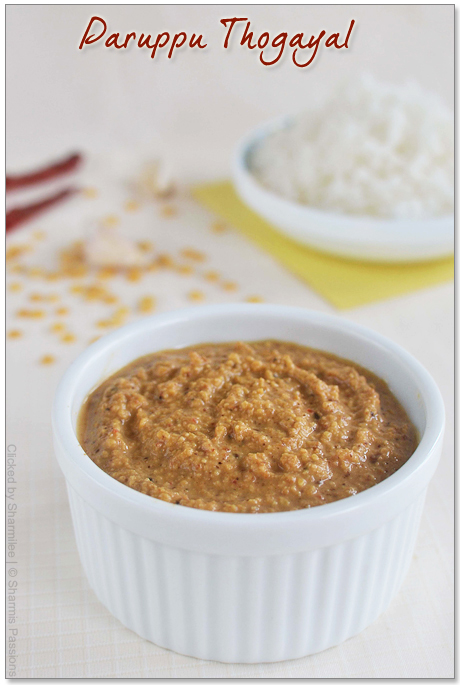
Paruppu Thogayal | Paruppu Thuvaiyal

Paruppu Thogayal is a simple and tasty South Indian style side dish made using toor dal, coconut, garlic and few spices. It is one of the easy and comforting dish to make when you want something quick but still filling. The flavor of roasted dal with coconut and garlic makes this thogayal very aromatic and full of taste.

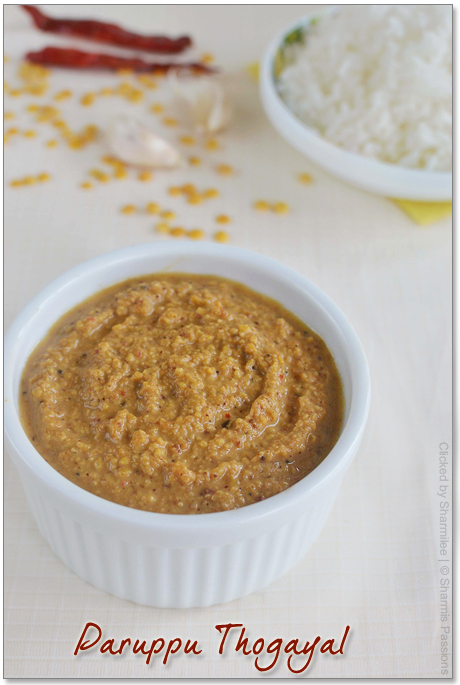
paruppu thogayal served

This thogayal goes well with hot steamed rice, rasam rice or even curd rice. It is quite healthy also as it has good amount of protein from dal and only little oil used for roasting. You can make this within few minutes, perfect for lazy day lunch or when there is not much vegetables at home.

[feast_advanced_jump_to]

About Paruppu Thogayal

Paruppu Thogayal is a traditional Tamil style thick chutney made mainly using toor dal. The word thogayal means a thick ground paste which is mixed with rice or served along with meal. This version with toor dal has nice nutty roasted flavor and mild spice from red chilies and pepper. When mixed with hot rice and one spoon ghee, it becomes such a comfort food.

The texture of this thogayal is a bit coarse, not smooth like regular chutney. The roasting of dal gives a light golden color and rich flavor. The mix of dal, coconut, garlic and hing give perfect balance of spice and flavor. It has small heat from red chilies and pepper which blends very well with creamy coconut taste.

This recipe is very easy and can be changed in many ways. You can use chana dal or moong dal instead of toor dal, skip garlic or add small piece tamarind for slight tangy taste. You can also adjust spice level by adding more or less chilies as you prefer. It is one simple recipe which can be twisted easily to match your taste.

I mostly make this on weekdays when I feel to eat something light and homely. It need very few ingredients and get ready in just around 15 minutes.

Paruppu Thuvaiyal is an easy side dish when you don't want to spend too much time at the kitchen. Serve it with hot steamed rice, its a tasty and a comforting combo. I first tasted it when I was sick, amma made this for me and it was such a comforting food. Since then I started making it often at home.

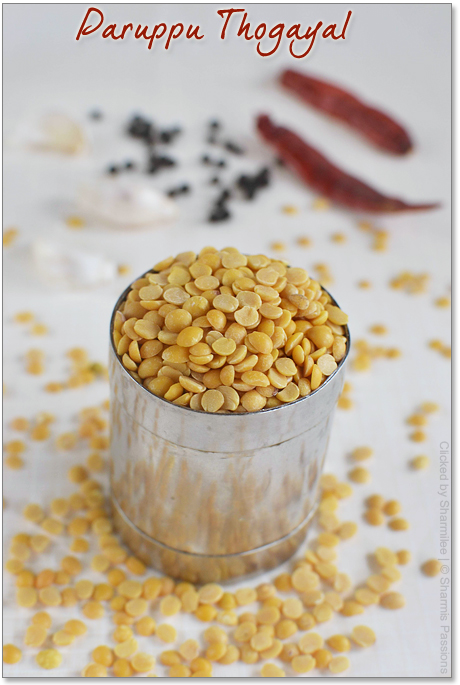
toor dal

Paruppu Thogayal Ingredients

  • Toor Dal - I used toor dal for making this thogayal. It give nice nutty flavor and thick texture after roasting and grinding.
  • Coconut - I just used freshly grated coconut which gives mild sweetness and body to the thogayal. You can use frozen coconut, it works fine.
  • Red Chillies - I used few red chillies to give spice and bright color.You can add more or less depending on how much spice you like.
  • Garlic - I have used few garlic pods for strong flavor and nice smell. If you not like garlic, you can skip it, still the taste will be good.
  • Pepper Corn - I have added few pepper corns to bring light heat and flavor. It balances the coconut taste very well.
  • Hing (Asafoetida) - I used a small pinch of hing which gives unique flavor and also helps in digestion.
  • Oil - I have used a teaspoon oil to roast dal and spices. It gives nice flavor and good color too.
  • Water - I added water little by little while grinding to make thick coarse paste. You can adjust the amount based on how thick you want.

Similar Recipes

How to make Paruppu Thogayal Step by Step

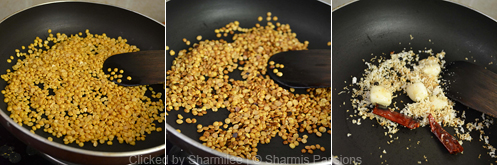
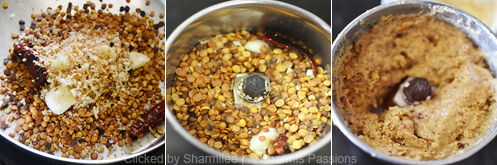
1.Heat oil in a pan, dry roast dal till golden brown, remove and set aside. In the same pan, add coconut, pepper corns, garlic, red chilies, salt and hing. Roast till coconut turns slightly brown and chilies are crisp.

how to make paruppu thogayal step1

2.Allow it to cool and grind it with little water to a semi coarse paste. Add water according to the consistency you want.

how to make paruppu thogayal step2

Expert Tips

  • Roast Dal Evenly - I always roast the dal on low flame till it turns golden. If roasted too much, it tastes bitter so keep stirring and watch carefully.
  • Fresh Coconut - I used fresh coconut as it gives best taste and texture. If you are using frozen one, thaw it before adding.
  • Adjust Water - I add it slowly while grinding, consistency should be thick and coarse, not watery like chutney.
  • Garlic - You can just skip garlic if you do not like the flavor. Still it will taste nice with dal and coconut alone.
  • Tamarind - I sometimes add small piece of tamarind for mild tangy flavor. It gives small twist and taste very nice.

Serving and Storage

Serve this with hot rice and spoon of ghee on top. It also goes well with rasam rice or curd rice. Store leftover thogayal in airtight box and keep in fridge for one day. When serving again, mix it with warm rice so it soften little. It tastes best when made fresh and had warm.

FAQS

1.Can I use moong dal?

Yes you can use moong dal, it cooks fast and give lighter taste. Flavor will be slightly different but very nice.

2.Can I skip coconut in this recipe?

Yes you can skip coconut, but it add smoothness and balance so better to add at least small amount.

3.Can I make this thogayal smooth like chutney?

Yes you can grind fine if you like. Traditionally it is made little coarse for better taste with rice.

4.Can I store this thogayal for long time?

It stay good in fridge for one day only. Since coconut is used, it may spoil if kept longer.

5.Can I add tamarind for sour taste?

Yes you can add small piece tamarind while roasting. It give mild tangy touch to thogayal and taste very good.

paruppu thogayal served

If you have any more questions about this Paruppu Thogayal Recipe do mail me at sharmispassions@gmail.com. In addition, follow me on Instagram,Β Facebook,Β PinterestΒ ,YoutubeΒ andΒ TwitterΒ .

Tried this Β Paruppu Thogayal Recipe? Do let me know how you liked it. Also tag us on Instagram @sharmispassions and hash tag it on #sharmispassions.

πŸ“– Recipe Card

7093314379 76d8eeccec o
Print

Paruppu Thogayal Recipe

Paruppu Thogayal is a simple and tasty South Indian style side dish made using toor dal, coconut, garlic and few spices. It is one of the easy and comforting dish to make when you want something quick but still filling. The flavor of roasted dal with coconut and garlic makes this thogayal very aromatic and full of taste.
Course Lunch, Side Dish
Cuisine Indian
Keyword 30 mins recipes, dal recipes, Kerala Meal Sidedish, recipes, Side Dish, thogayal recipes
Prep Time 5 minutes
Cook Time 15 minutes
Total Time 20 minutes
Servings 3
Calories 173kcal
Author Sharmilee J

Ingredients

  • Β½ cup toor dal
  • 1 to 2 tablespoon coconut
  • 2 red chillies
  • 2 garlic
  • Β½ teaspoon pepper corn
  • 1 pinch hing
  • 1 teaspoon oil
  • salt to taste
  • water as required

Instructions

  • Heat oil in a pan, dry roast dal till golden brown, remove and set aside. In the same pan, add coconut, pepper corns, garlic, red chilies, salt and hing. Roast till coconut turns slightly brown and chilies are crisp.
  • Allow it to cool and grind it with little water to a semi coarse paste. Add water according to the consistency you want.

Notes

  • Roast Dal Evenly - I always roast the dal on low flame till it turns golden. If roasted too much, it tastes bitter so keep stirring and watch carefully.
  • Fresh Coconut - I used fresh coconut as it gives best taste and texture. If you are using frozen one, thaw it before adding.
  • Adjust Water - I add it slowly while grinding, consistency should be thick and coarse, not watery like chutney.
  • Garlic - You can just skip garlic if you do not like the flavor. Still it will taste nice with dal and coconut alone.
  • Tamarind - I sometimes add small piece of tamarind for mild tangy flavor. It gives small twist and taste very nice.

Nutrition

Serving: 75g | Calories: 173kcal | Carbohydrates: 28g | Protein: 9g | Fat: 4g | Saturated Fat: 1g | Polyunsaturated Fat: 1g | Monounsaturated Fat: 1g | Trans Fat: 0.01g | Sodium: 1004mg | Potassium: 184mg | Fiber: 7g | Sugar: 4g | Vitamin A: 436IU | Vitamin C: 66mg | Calcium: 41mg | Iron: 2mg


The post Paruppu Thogayal | Paruppu Thuvaiyal appeared first on Sharmis Passions.
Pudina Chutney | Mint Chutney

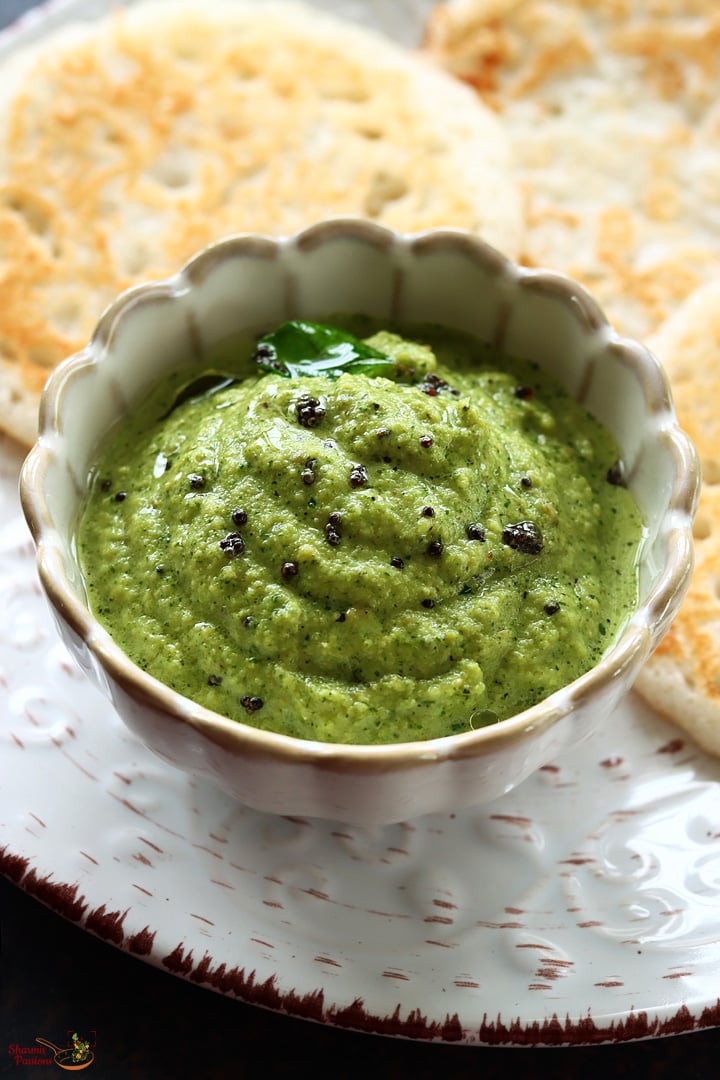
Pudina Chutney is a flavorful and aromatic chutney made with mint leaves, onion, garlic, green chilies, coconut and basic spices for tempering. Pudina Chutney is a great side dish with idli, dosa, uttapam etc. Mint Chutney or Pudina Chutney can be served along with snacks like bajji, bonda too.

mint chutney served with oothapam

Pudina Chutney shared here is the traditional version which serves as a great side dish for idli, dosa and all other South Indian tiffin items. I love all green based chutneys like coriander chutney, capsicum chutney, spinach chutney etc and this one is my most favorite too.

[feast_advanced_jump_to]

About Pudina Chutney

Pudina chutney, also known as mint chutney, is a refreshing and flavorful South Indian side dish that perfectly complements idli, dosa, vada, and upma. It combines the cooling freshness of mint leaves with the flavor and aroma of roasted dal, coconut, with a basic tempering using mustard seeds, curry leaves and hing.

Pudina chutney has a vibrant green color, a slightly spicy and tangy taste with the addition of tamarind. It has a smooth, creamy texture that pairs beautifully with soft idlis or crispy dosas or soft oothapams. It's not only delicious but also healthy, cooling and helps in digestion because of the properties of mint.

Pudina Chutney is often confused with mint chutney or green chutney that is served along with chats and tandoori platter. I love that chutney too but this version is more authentic and flavourful with the addition of small onion and garlic.

This Pudina Chutney is made with a handful of easily available ingredients in your pantry and is quick to make too. This Pudina Chutney Recipe is from amma but her version slightly varies, I adjusted the ingredients and this has been my go to chutney whenever I buy a bunch of mint leaves or pudina.

Mint Leaves Benefits

  • Mint is a flavourful herb which has many nutritional values and health benefits.
  • Mint Leaves helps in digesting heavy foods.
  • Mint Leaves can mask bad breath and odour.
  • Mint leaves are a good source of iron.
mint chutney served with oothapam

Pudina Chutney Video

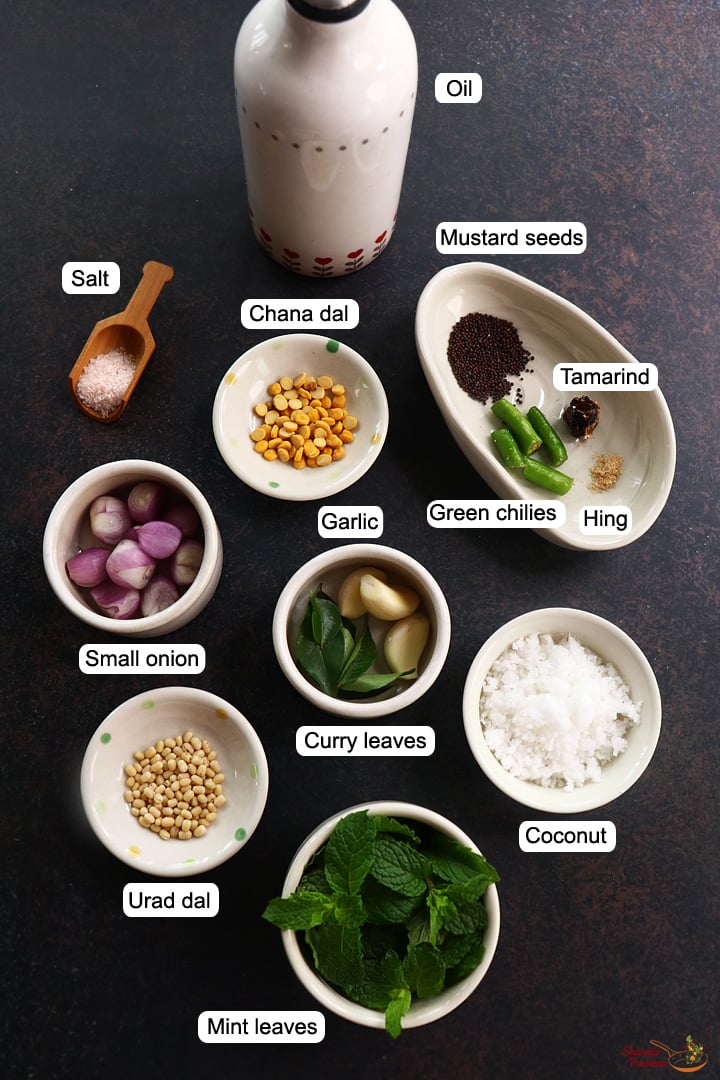
Pudina Chutney Ingredients

  • Mint Leaves - Use fresh mint leaves. You can clean mint leaves pluck the leaves from the stem and store in a clean dry box in the fridge. This way mint leaves stays fresh fro a longer time.
  • Coconut - This chutney can be made without coconut also but increasing the other ingredients measure but I strongly recommend to add coconut. The addition of coconut elevates the taste of this chutney.
  • Dal - Urad dal and chana dal are roasted and added to grind which gives a texture and taste to the chutney.
  • Onion, Garlic - Small onion and garlic are added for more flavour. Using small onion is best, but if you don't have you can use 1 medium sized big onion roughly chopped.
  • Green chilli, Tamarind - Green chili is added for heat and tamarind is added for tanginess which gives a balance to this chutney.
  • Tempering - A simple tempering is made using oil, mustard seeds, hing and curry leaves. This is the most satisfying part of any chutney.
ingredients needed to make mint chutney

Similar Recipes

How to make Pudina Chutney Step by Step

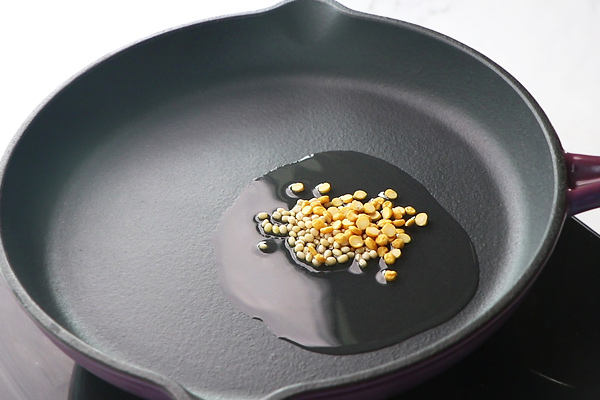
1.Heat 1 teaspoon oil - add 1 teaspoon urad dal, 1 teaspoon chana dal.

heat oil add dals

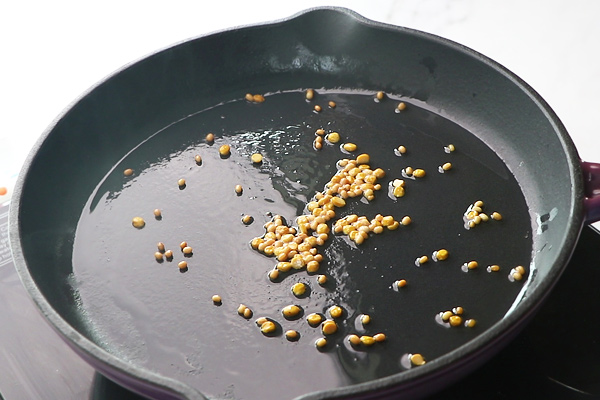
2.Saute until golden. Transfer to a plate and set aside.

roast dals until golden

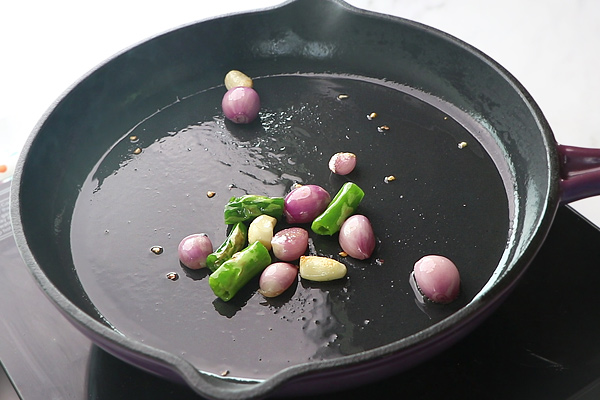
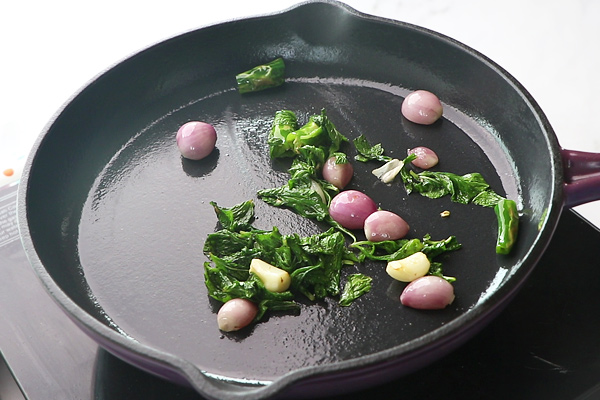
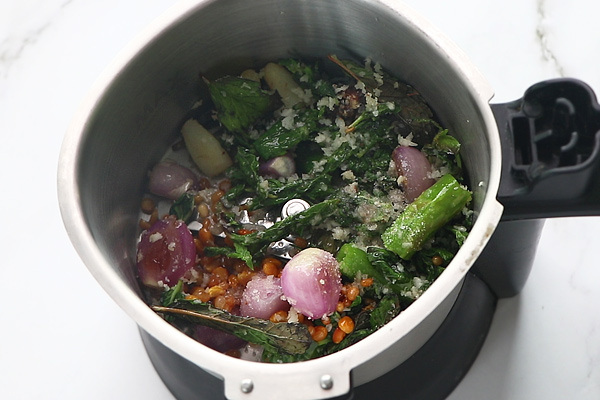
3.To the same pan add 8-10 small onion, 3 garlic and 2 green chilies.

add onion, garlic

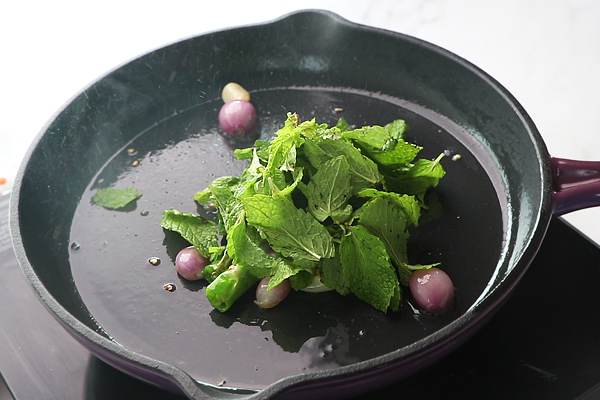
4.Add around 2 cups mint leaves(cleaned and rinsed).

add mint leaves

5.Saute until it shrinks just for few seconds.

saute until it shrinks

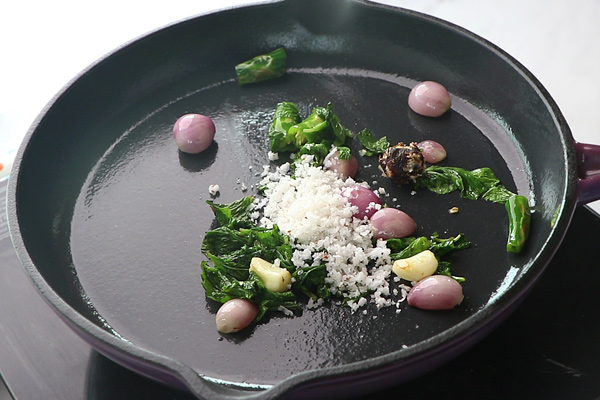
6.Now add 2 tablespoon coconut and Β½ teaspoon tamarind.

add coconut and tamarind

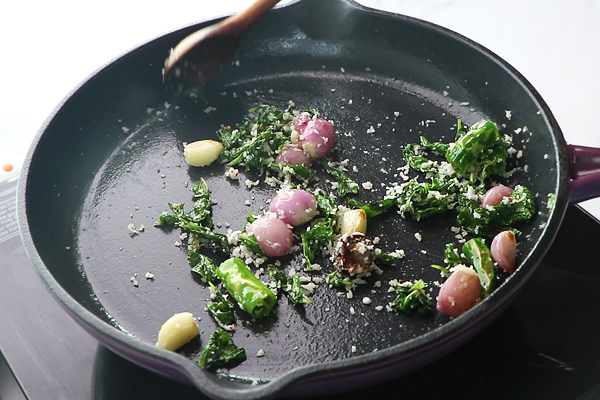
7.Give a quick saute and switch off.

saute for a minute

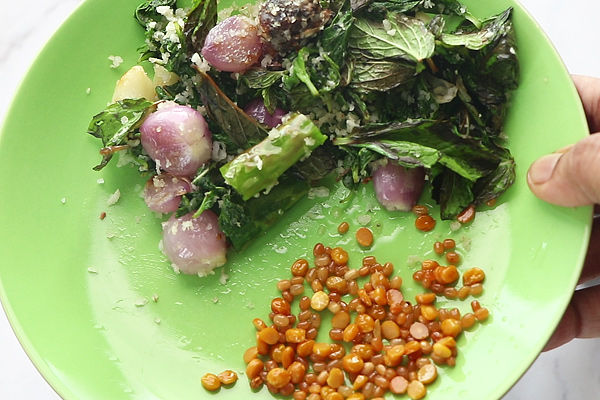
8.Transfer to a plate and set aside to cool down.

transfer to a plate

9.Now transfer this to a mixer jar along with required salt and water.

transfer to a mixer jar

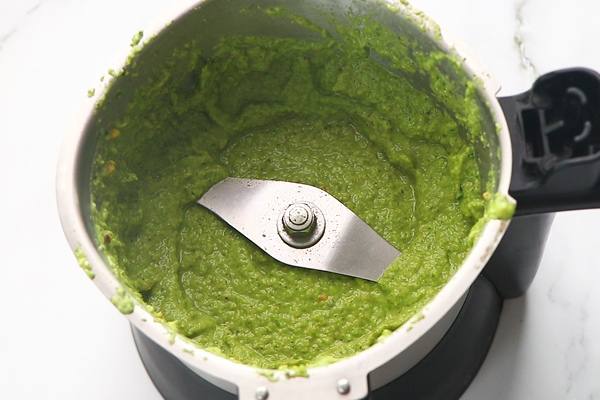
10.Grind it to a chutney consistency.

grind to a chutney consistency

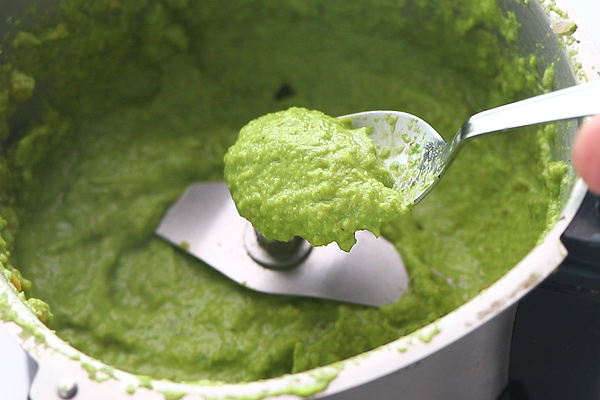
11.Add water little by little and grind so that it the chutney does not become watery.

grind to a chutney consistency

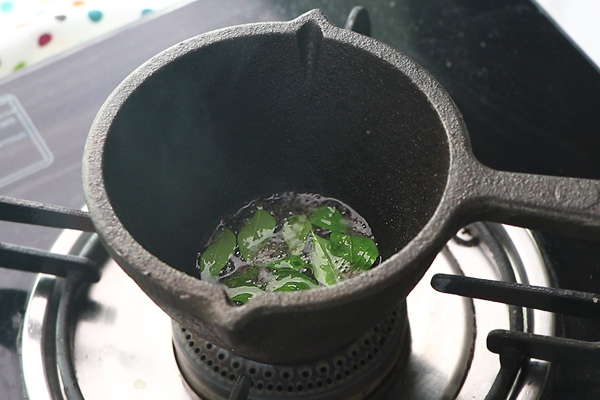
12.To prepare tadka : Heat 2 teaspoon oil add mustard seeds let it crackle then add curry leaves and switch off. Let it splutter then remove.

prepare tadka

13.Add the tempering to chutney.

add tadka to chutney

14.Mix well. Pudina Chutney is ready.

mix well chutney is ready

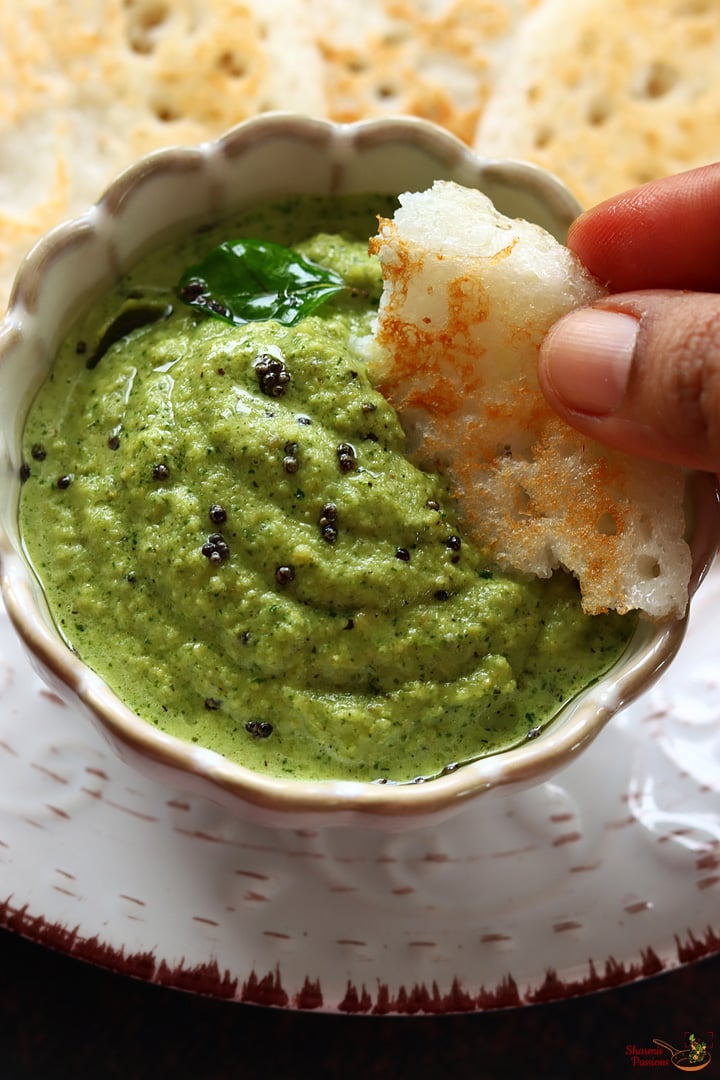
Serve Pudina Chutney with idli or dosa and enjoy.

mint chutney served with oothapam

Expert Tips

  • Mint leaves - Make sure to use tender, fresh mint leaves for a vibrant green color chutney. First pluck the leaves from the stem, rinse well then use it.
  • Storing mint leaves - While storing do not rinse and store, just pluck from the stem and store it to avoid spoiling. While using you can take the leaves rinse and use it.
  • Adjust spices - Adjust dal and spices according to your spice preference.
  • Tempering - I have used regular cooking oil for tempering but you can even use coconut oil for a flavor variation.
  • Cooking - After adding mint leaves do not cook for more time it may change the color and will give a dull looking chutney.
  • Balance in taste - Tamarind is added as a balance if you do not like then you can skip it.
  • Variation - You can make this chutney without coconut too : In that case add 1 tablespoon chana dal and urad dal each and add 1 medium sized tomato. Add finely chopped tomato along with onion tomato and saute well until raw smell leaves then proceed with other ingredients.

Serving and Storage

Mint or Pudina Chutney can be made ahead and stored but the color of the chutney changes after sometime dur to oxidation. As it has coconut I would recommend storing the left overs in fridge and use. This chutney keeps well in room temperature for a day only.

You can serve this chutney along with Idli, dosa, pongal, vada, oothapam etc.

FAQS

1.Why does my pudina chutney turn dark or dull in color?

This happens when the chutney heats up during grinding or overcooking mint leaves can lead to a dull color chutney. To prevent mixer heating you can use ice cold water and grind it intervals. Adding a pinch of turmeric powder also helps to give a bright green color.

2.Is Pudina Chutney healthy?

Mint leaves has a lot of health benefits so including it in our daily diet is essential for a healthy lifestyle.

3.What can we eat with Pudina Chutney?

Pudina Chutney can be served along with idli, dosa, upma, uttapam, pongal etc. Mint Chutney serves as a great sidedish with snacks like bonda, bajji too.

4.How to retain the green color in Pudina Chutney?

To retain the vibrant green color do not sautΓ© mint leaves for more time, this will retain the green color.

5.Should I add tempering to pudina chutney?

Tempering is optional but highly recommended. A simple tempering of mustard seeds, hing and curry leaves in hot oil adds a wonderful aroma and authentic South Indian flavor.

mint chutney served with oothapam

If you have any more questions about this Pudina Chutney Recipe do mail me at sharmispassions@gmail.com. In addition, follow me on Instagram, Facebook,Β  Pinterest, Youtube andΒ TwitterΒ .

Tried this Pudina Chutney Recipe ? Do let me know how you liked it. Also tag us on Instagram @sharmispassions and hash tag it on #sharmispassions.

πŸ“– Recipe Card

Print

Pudina Chutney Recipe | Mint Chutney Recipe

Pudina Chutney is a flavorful and aromatic chutney made with mint leaves, onion, garlic, green chilies, coconut and basic spices for tempering. Pudina Chutney is a great side dish with idli, dosa, uttapam etc. Mint Chutney or Pudina Chutney can be served along with snacks like bajji, bonda too.
Course how to, Side Dish
Cuisine Indian
Keyword 30 mins recipes, chutney recipes, dosa sidedish, idli side dish, Side Dish, tiffin recipes
Prep Time 10 minutes
Cook Time 10 minutes
Total Time 20 minutes
Servings 3 people
Calories 182kcal
Author Sharmilee J

Ingredients

  • 1 teaspoon oil
  • 1 teaspoon urad dal
  • 1 teaspoon chana dal
  • 8-10 small onion
  • 3 big garlic
  • 2 green chillies
  • 2 cups mint leaves (loosely packed)
  • Β½ teaspoon tamarind
  • 2 tablespoon coconut
  • salt to taste
  • water as needed

To temper:

  • 2 teaspoon oil
  • 1 teaspoon mustard seeds
  • few curry leaves
  • 1 tiny pinch hing

Instructions

  • Heat 1 teaspoon oil - add 1 teaspoon urad dal, 1 teaspoon chana dal.
  • Saute until golden. Transfer to a plate and set aside.
  • To the same pan add 8-10 nos small onion, 3 nos garlic and 2 nos green chillies.
  • Add around 2 cups mint leaves(cleaned and rinsed).
  • Saute until it shrinks just for few seconds.
  • Now add 2 tablespoon coconut and Β½ teaspoon tamarind
  • Give a quick saute and switch off.
  • Transfer to a plate and set aside to cool down.
  • Now transfer this to a mixer jar along with required salt and water.
  • Grind it to a chutney consistency.
  • Add water little by little and grind so that it the chutney does not become watery.
  • To prepare tadka : Heat 2 teaspoon oil add mustard seeds let it crackle then add curry leaves and switch off. Let it splutter then remove.
  • Add tadka to chutney
  • Mix well. Pudina Chutney ready.
  • Serve Pudina Chutney with idli or dosa and enjoy.

Video

Notes

  • Mint leaves - Make sure to use tender, fresh mint leaves for a vibrant green color chutney. First pluck the leaves from the stem, rinse well then use it.
  • Storing mint leaves - While storing do not rinse and store, just pluck from the stem and store it to avoid spoiling. While using you can take the leaves rinse and use it.
  • Adjust spices - Adjust dal and spices according to your spice preference.
  • Tempering - I have used regular cooking oil for tempering but you can even use coconut oil for a flavor variation.
  • Cooking - After adding mint leaves do not cook for more time it may change the color and will give a dull looking chutney.
  • Balance in taste - Tamarind is added as a balance if you do not like then you can skip it.
  • Variation - You can make this chutney without coconut too : In that case add 1 tablespoon chana dal and urad dal each and add 1 medium sized tomato. Add finely chopped tomato along with onion tomato and saute well until raw smell leaves then proceed with other ingredients.

Nutrition

Serving: 75g | Calories: 182kcal | Carbohydrates: 28g | Protein: 7g | Fat: 7g | Saturated Fat: 2g | Polyunsaturated Fat: 2g | Monounsaturated Fat: 3g | Trans Fat: 0.02g | Sodium: 1344mg | Potassium: 930mg | Fiber: 14g | Sugar: 1g | Vitamin A: 6953IU | Vitamin C: 184mg | Calcium: 422mg | Iron: 8mg

The post Pudina Chutney | Mint Chutney appeared first on Sharmis Passions.
❌