❌

Reading view

There are new articles available, click to refresh the page.

Rose milk ( no syrup used)

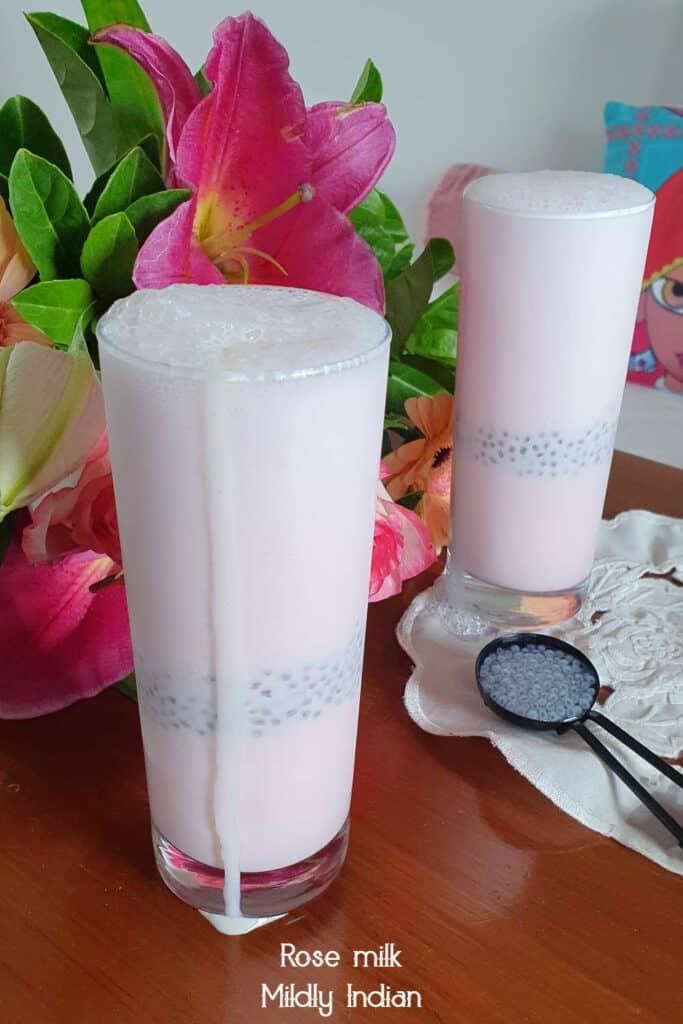
Rose milk

The recent India trip was fantastic. As much as we had fun, there are a couple of things that this India trip ruined for me. One was bread the other was rose milk. That was my simple pleasure which the milk booths used to keep in plenty. During this trip, I searched high a low for some but found none. As soon as we got back and the jet lag faded off,Β  I had to make some myself. Since it has become a kind of rarity, I guess it is best if it is on our blog too.

What is rose milk?

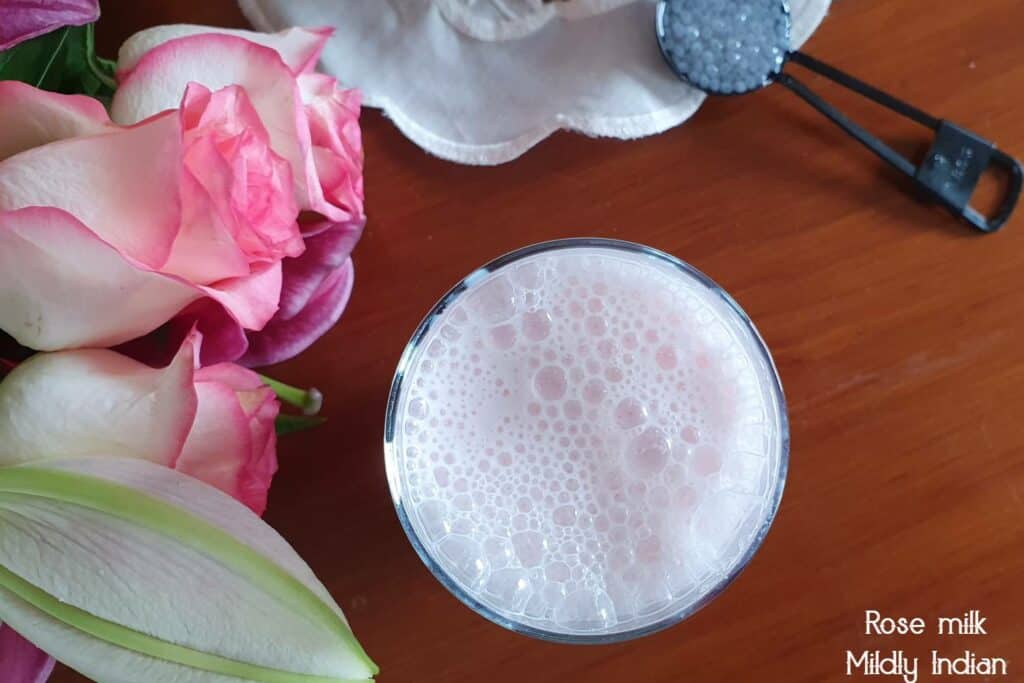
The gorgeous, pale pink, milk-based drink is a gentle lightly sweetened drink popular in summer. With the juicy crunchy basil seeds added, this summer drink is a popular one for the heat and humidity of the tropics. With flavours of extract of rose and the same as its fragrance, the cold, frothy milk drink is a relief from the heat. The drink Bandung in Malaysia and Thai Nom Yen are all versions of the same. However in this recipe today we have not used the rose syrup that gets utilized in most recipes, rather have gone in to create a natural alternate with fresh rose flower petals.Β 

Ingredients to make the rose milk

Milk : boiled and chilled milk is what we use traditionally for this recipe. However, over aΒ  period of time, I find Evaporated milk gives a full-bodied thick frothy milk moustache-making consistency. You can use half-and-half or low-fat milk too.
Rose petals: nothing beats that fresh rose petal that gets blended in. Use known sources of pesticides free fresh rose petals or edible grade dried ones. The actual variety that we look for with its fragrance is the panneer rose, the one from which rose water is extracted. Make sure your source is from the edible roses as there are plenty that is just ornamental.
Rose water: since the rose petals may not be fragrant enough, edible-grade rose water is required. If you have plenty of rose petals you can avoid using this.
Red food colour: the pink colour is characteristic of this drink. A small drop or two of natural red food colour will do the job. You can use natural dried beet powder in its place too.
Sweetener:Β  is totally optional. Use honey or sugar to flavour if needed. Since the milk in Australia is much sweeter, I have not used any here.
Sweet basil seeds: this is the exciting part of this drink. Basil seeds are small black seeds often sold in Indian spice aisles as Sabja. This when added to water swells into small jelly globes. They add a lovely touch to the drink and also promote gut health. These are not chia seeds, however, if you cannot get there you can use some chia here.

How to make this drink?

Soak the basil seeds in about 3 times water. Once you gather the ingredients it is as simple as blending them together all except the basil seeds. Once frothy pour into tall glasses and top with the bloomed basil seeds. Check the recipe card below for detailed instructions and exact measurements. YOu can pin the same from th recipe card on to your board if saving for later.
Rose milk recipe

Print

Natural Rose milk

With the juicy crunchy basil seeds added, this summer drink is a popular one for the heat and humidity of the tropics. With flavours of extract of rose and the same as its fragrance, the cold, frothy milk drink is a relief from the heat.
Course Dessert, Drinks
Cuisine Baby toddler food, gluten free, Indian, Kids choice, Medicinal, Summer
Keyword Lunch recipes, no cook recipes,, summer recipes
Prep Time 10 minutes
Servings 2 people

Equipment

  • blender
  • measuring cups and spoons
  • Glasses tll slender ones

Ingredients

  • 2 cups milk chilled
  • 10-15 Rose petals
  • 1 pinch Red food coulor or dried beet powder
  • 1 tsp Rose essence
  • sweetener optional

for the topping

  • 1 tbsp sweet basil seeds
  • 1/4 cup drinking water

Instructions

  • Soak the basil seeds to bloom.
  • Set this aside while you prepare for the rose shake.
  • Into the blender add all the other ingredients and sweetenerif required.
  • Blend smooth for 2 minutes till it is frothy.
  • Pour this into tall glasses.
  • Top with the bloomed sweet basil (sabja) seeds
    Rose milk

Notes

The basil seeds when added initially will sink to the bottom. Then they will slowly rise up to the top for a few hours.Β 

Can this be a vegan drink?

It is a milk-based drink, however, using soy or almond milk gives a delicious vegan pink milk without a huge change in flavour. In fact, I love to use soy milk as my choice for the vegan version. The rest of the ingredients are the same.

Make ahead and storage

The freshly blended rose milk is certainly frothy. However, it is an easy drink to make and store in the refrigerator. It stays good for upto 3 days with regular milk and about 7 days with Evaporated milk. Keep it in a sealed bottle or a small covered pitcher to have on hot days. You can mix in the basil seeds too. They stay at the bottom, so stir well before pouring out the drink for yourself.

Easy summer thirst quenchers on this blog

Apple celery green juice
Nectarine fizz
Fresh fig milkshake
Strawberry lassi
Cherry watermelon smoothie

Stay connected

If you have spent your childhood in the tropics, I am sure you would have also had a version of this. Pink milk as it is fondly called us now revived for me. Try out this caffeine-free, afternoon pick-up and rate us using the star system below. Share in the comments your childhood experiences with the easy thirst quencher. Subscribe to us for new recipes or visit us often.
Enjoy your glass while I get some more.Β 

Pink milk | rose milk

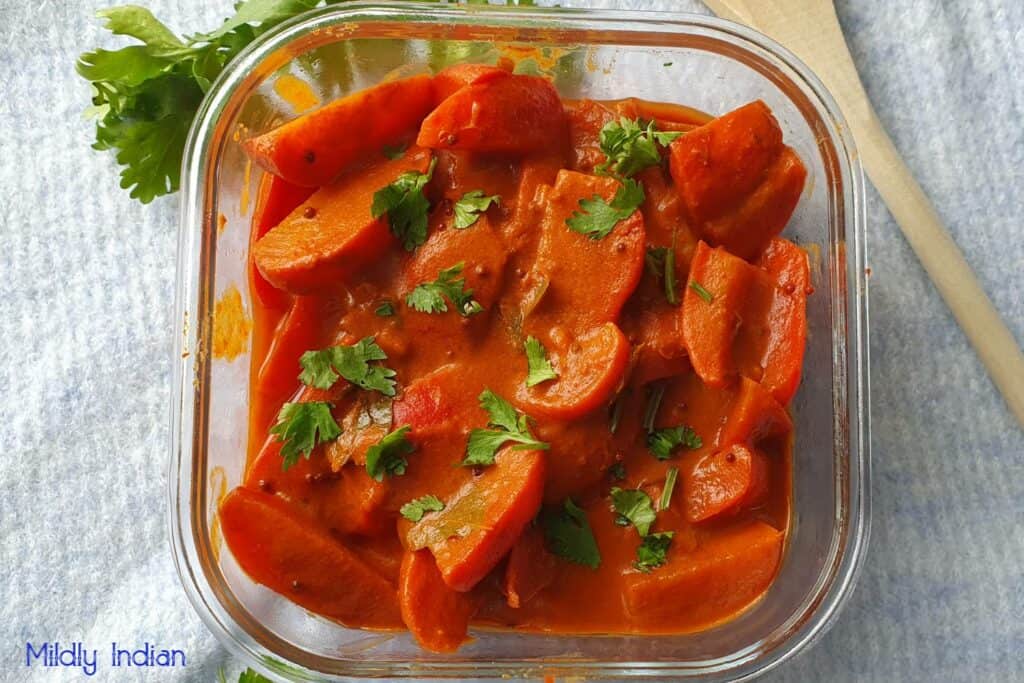
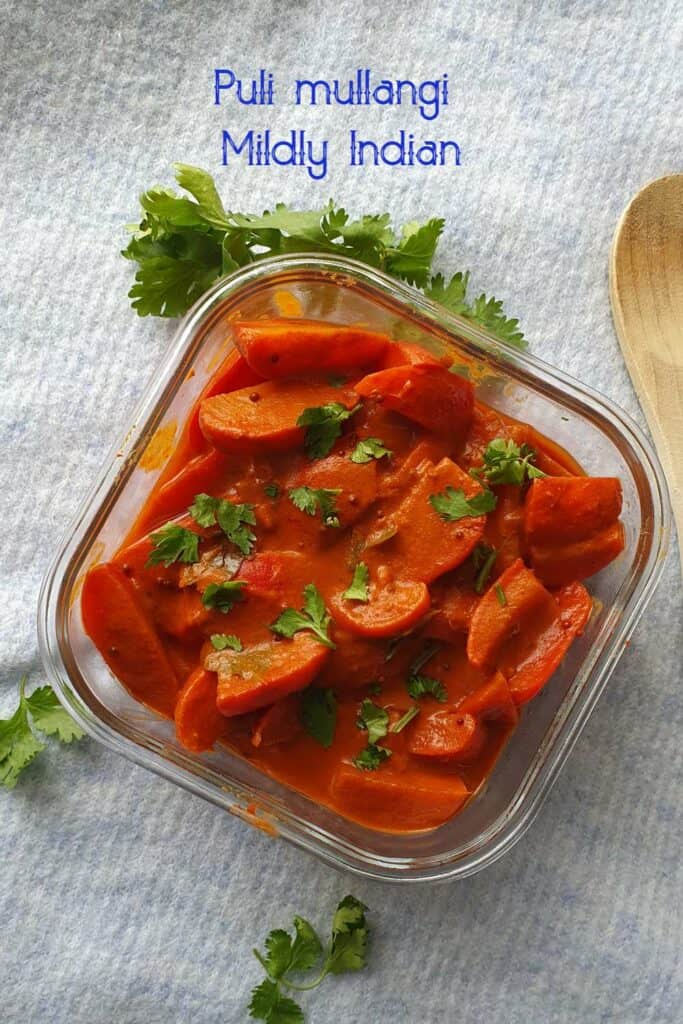
Puli mullangi | Radish in tamarind sauce

puli mullangi | radish in tamarind sauce

I was recently watching the Megan and Harry series on Netflix. There was one particular part I actually liked. The friends’ idea for the new year is to set a word. My instant reaction to that was wow,Β  that’s profound.Β  Rather than having a resolution that you drop off after a few days,Β  finding a word that is adding meaning to you in multiple ways sounded far better.
Guess what word I am choosing…after a bit of thought! Imperfect that is my word. As we evolve this year I will share with you how we are taking it forward. For now,Β  we are starting with imperfect produce. We have imperfect radishes that we are using to make this lesser-known South Indian style preparation.

Prepping the radishes

Radishes or Raphanus sativus, come in long cylinder ones or small round varieties. They have red or white skin. Inside they can be white, variegated or watermelon colour. I choose the small round red varieties to make this dish. The skin is red here and the flesh white. To prep, these, wash them thoroughly especially if they are not in perfect shape. I use a toothbrush to get rid of the mud in the folds. remove the leaves (don’t discard make mullangi keerai poriyal) and trim the root. Now slice the radishes into wedges. Save a few radishes to make our much-loved Radish pear salad with tahini dresssing.

Ingredients to make puli mullangi

Red radishes: prep the radishes as per the notes above. These radishes are crunchy and have a slightly stronger peppery flavour than daikon. Thus goes nicely with the spices added. If you are looking for a low food map option make it with daikon as this has been tested.

Sambhar powder: the archetypal curry powder for anything South Indian is the Sambhar podi. It works for this one too imparting the classic mix of heat from the chillies,Β  smokiness from the coriander seeds and complexity from the fenugreek.

Tamarind extract:Β  a thick extract of tamarind is the souring agent in this puli mullangi. This along with the salt and the sambhar podi forms that thick sauce that coats the red radish wedges.

Tempering: spices most South Indian dishes start or layer on with a spice-infused oil. This is created by crackling mustard seeds, fenugreek seeds, curry leaves and red chillies in sesame seed oil.
Seasoning: to balance the flavours salt is needed. My mum swears by crystalline salt in anything she wants to keep for a while. This is not the pink rock salt but clusters of sea salt that are not powdered. The flavour this imparts minutely changes depending on the other minerals in it. For acutely trained tastebuds like hers, these are important.

mullangi curry sauce.

Print

Puli mullangi

Puli mullangi is a lesser-known classic South Indian dish that pairs well with steamed rice meals.
Course Pickles, Side Dish
Cuisine gluten free, Indian, One pot, South indian
Keyword curry recipes, Indian vegetarian dinner, Pickle recipes
Prep Time 15 minutes
Cook Time 25 minutes
Servings 4 people
Author mildlyindian

Equipment

  • Kadai
  • Cutting board
  • Knife
  • measuring cups and spoons

Ingredients

  • 10 -15 medium radishes red salad variety
  • 1/2 cup tamarind extract
  • 2-3 tbsp Sambhar powder
  • salt to taste

For tempering

  • 2 tbsp Sesame oil
  • 1 tsp mustard seeds
  • 1/4 tsp fenugreek seeds
  • 1-2 dry red chillies
  • 10 curry leaves

Instructions

  • Wash and clean the radishes.
  • Slice them into wedges, Set them aside till needed.
  • Into the kadai or deep wok add the oil and mustard seeds.
  • Set on medium heat and as the mustard crackers add the fenugreek seeds.
  • When it turns aromatic add the red chillies ( break it in half for the heat) along with curry leaves and saute for a minute.
  • To this add the radishes and saute them for about 5-6 minutes.
  • Now add the thick tamarind extract, sambhar powder, salt and turmeric powder and mix it all well.
  • Cover and cook for 7-10 minutes, till the radishes release water and are fork tender.
  • Open the lid and mix to coat the gravy on the wedges.
  • Once the gravy thickens and coats the radishes well, the puli mullangi is ready.
  • Taste test and adjust salt.
  • Garnish with coriander leaves if using immediately.
    mullangi curry sauce.

Serving ideas for the radish in tamarind sauce

The puli mullangi is kind of a spicy side dish. You could pair it with a South Indian thali meal. For a simpler platter, I would choose keerai molagutal and puli mullangi with cooked millet.
Fill up a wrap with some cooked beans, stir-fried kalonji rice and pieces for puli mullangi spicy filling wrapped burrito lunch on the go.

Meal prep and saving for later.

The puli mullangi will stay well in the refrigerator for up to a week. In freezer-safe containers, they stay well for up to 3 months. The radishes do go a bit limp but taste fantastic even upon thawing. Save in smaller portions so you thaw only what is needed.

Stay connected

This new year share with us what you think you will be doing. Stay subscribed to see how we are going with our word. Connect with us (instagram or facebook) as we plan to travel a bit more and share new locations and experiences with you.

radish curry

Shalgham ke baaji | Turnip dry curry

Shalgam ke baaji |turnip dry curry

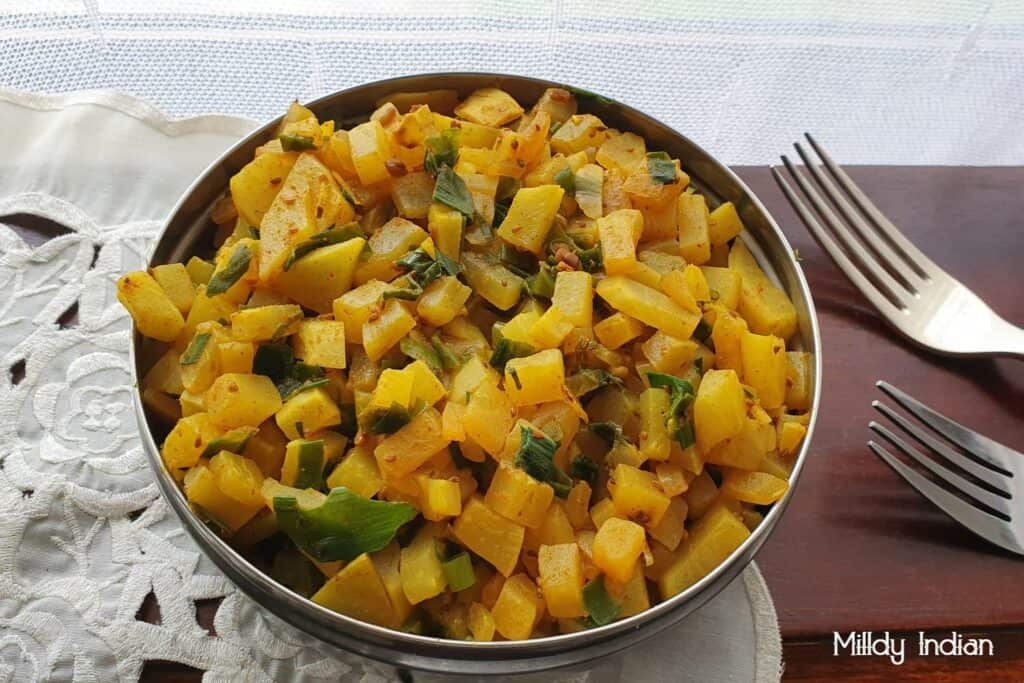
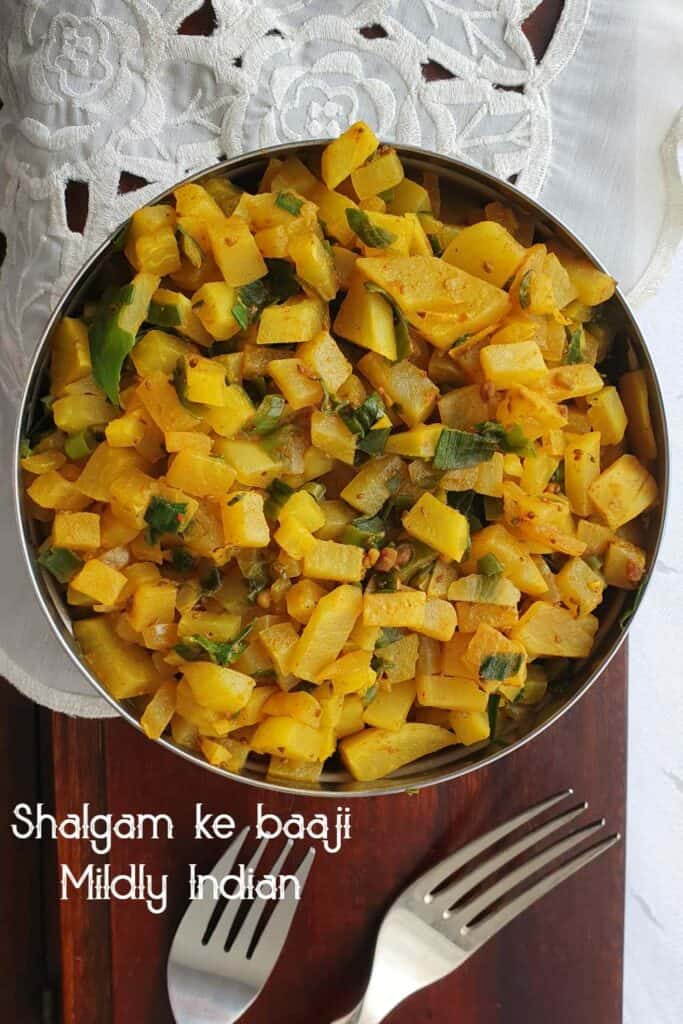
Once we had gotten through some soup recipes last week, the taste buds needed aΒ  gentle wake-up. Yet we are not up to the stage where stronger curries and foods can take over and run as a usual week. That will need a bit more time and getting back up to. Meanwhile, we have some veggies in the fridge that need to be used up. Here is a very easy shalgam ke baaji recipe made with fresh turnips. This dry turnip curry is vegan, gluten-free and free of nuts and coconut. Try out the shalgam ke baaji with fresh rotis and salad.

Turnips

Understanding Turnips

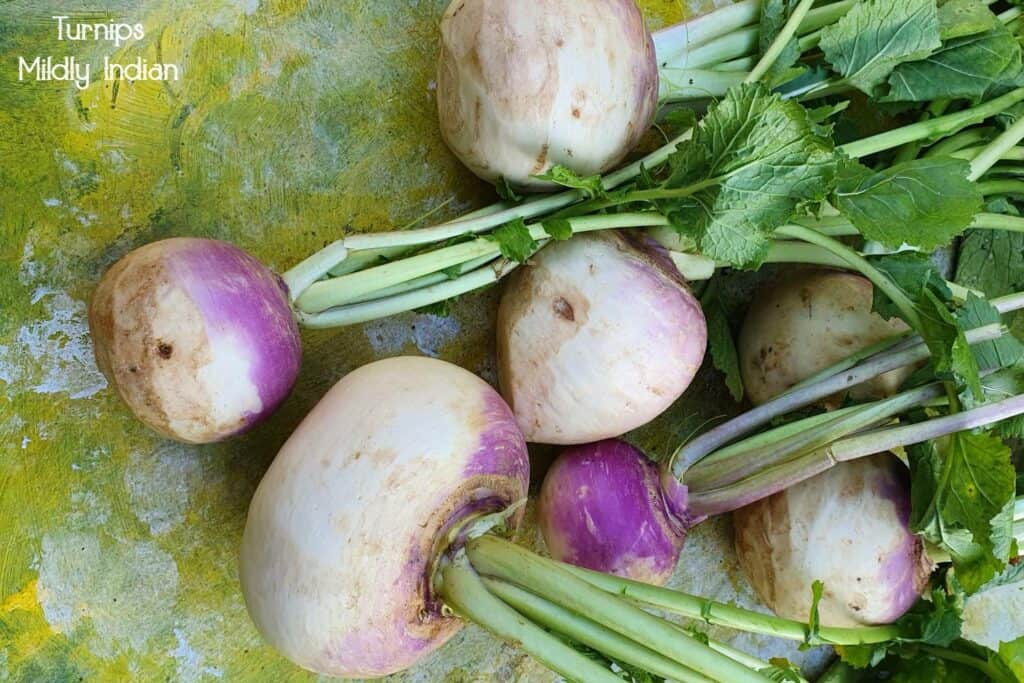
There were two turnips I picked up with my grocery list. Turnips or neep are tap root vegetables with pale white skin or a green /pink top. They resemble beetroot in shape. Both the leaves and the bulbous root are edible. A fresh batch of spring turnips is delicious as salads similar to radishes. However, as the season progresses, I prefer cooking them to bring out the sweet flavour. To use the root, peel them and separate them from the greens. Chop up into pieces or wedges and proceed with your recipe.

What do turnips taste like?

Though the turnips look a lot like white beetroot, they taste a lot closer to radishes. Raw turnips have a characteristic crunch and a mustard green-like flavour. This flavour vanishes upon cooking replacing it with a mellow sweet flavour.Β 

Turnips in Indian cooking

Turnips are not alien to Indian cuisine and are called shalgam. Typically this is grown in colder regions where you will find it more popular in cuisine than in the hot humid regions. Turnips in curry, stirfry or grated as a salad. Today’s recipe is a semi-dry preparation called shalgam ke baaji.

Masalas and ingredients for this baaji

Shalgam/ turnips- Fresh turnip roots that are peeled and diced are the ones that are needed to make this turnip dry curry. A peeler will work to get the peel off n then dice the flesh. You can use the turnip greens in this recipe. Wash and clean the leaves. Strip them off the stalk and chop them to add along with the diced root.

Onion- a small bit of onion sauteed adds so much flavour to this dish. I have used half a small white onion. If you have shallots, use that for extra flavour.

Spices – two levels of flavour are created in this simple recipe. One at first by tempering the fenugreek seeds and the carom seeds. For the second layer of flavour, salt, turmeric powder, roasted cumin powder and curry powder ( like Ken’s) is all you need. This curry powder can be sambhar powder, rasam powder, garam masala or Kitchen king masala.

Turnip curry

Β The recipe card below gives the step-by-step details to make this recipe. Pin it onto your board from here for later use.Β 

Print

Shalgam ke baaji

Course Side Dish
Cuisine Autumn, Fusion, gluten free, Indian, One pot, Vegan, Vegetarian, Winter
Keyword curry recipes, Indian vegetarian dinner
Prep Time 15 minutes
Cook Time 15 minutes
Servings 4 people

Equipment

  • frying pan
  • chopping board
  • Knife
  • ladle

Ingredients

for the vegetable

  • 1/2 small onion
  • 3 medium turnip

for tempering

  • 1/2 tsp carom seeds
  • 10-12 fenugreek seeds
  • 1 tsp cooking oil

spice powders

  • 1/4 tsp turmeric powder
  • 1/4 tsp roasted cumin powder
  • 1 tsp curry powder
  • 1/4 tsp red chilli powder

garnish

  • 1/2 cup spring onions chopped

Instructions

  • Wash and trim the turnip greens.
  • Peel the turnips and chip them into small pieces or strips.
  • Chop the spring onions and set aside till needed.
  • Chop the onion and set it aside till needed.
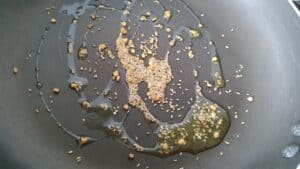
  • Into the frying pan, add the oil, carom seeds and fenugreek seeds.
    tempering for the baaji.
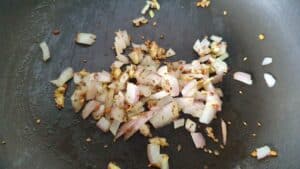
  • Once the seeds crackle add the chopped onions and saute well.
    saute onions
  • To this add the chopped turnips and saute well.
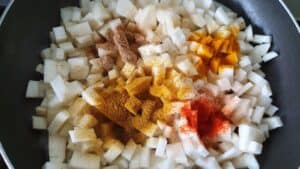
  • Add the red chilli powder, turmeric powder, roasted cumin seeds curry powder.
    shalgam ka baaji
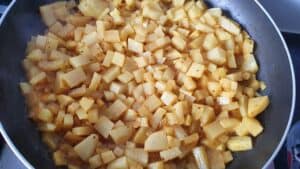
  • Mix well, sprinkle water and cover and cook.
    shalgam ka baaji.
  • Remove and check if fork tender.
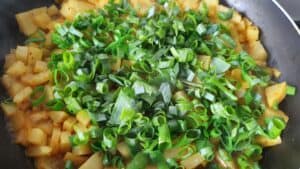
  • Add the spring onions mix well and cover and cook for another two minutes.
    turnip dry curry.
  • Once it is cooked mix well.
  • Remove into serving dish and the dish is ready to serve.
    Turnip curry

Putting together a meal

Shalgam ke baaji on a cooler night with a couple of phulkas sounds like home. Leftovers find themselves comfortably hidden in a curry bun or a sandwich for lunch the next day. These are the easiest ways I have tried with the turnip dry curry. As we were unwell, we had it withΒ payaru kanji.

Meal prep and saving the leftovers.

Usually, I prep and chop the turnips on the weekend to help my day at work. The prepared baaji will stay well for 3 to 4 days in the fridge. I have never frozen this shalgam ki baaji. If you have success with this please let us know in the comments.

Stay connected

Shalgham ki baaji is a very basic side dish recipe, best enjoyed warm. When you make this, write a comment with a rating. Share this recipe with friends and family who may also enjoy some turnips.

A-Z recipe challenge logo.

We have added this post to the A-Z recipe challenge,Β  ingredients in Hindi. Shalgam or turnips are one among the many ingredients which start with S.Β 

Stay connected by Instagram, Twitter or Facebook to know what new we have been cooking.
Stay safe and see you in the next post.

Curried turnip

Pesarattu Recipe – Andhra style Pesarattu | Green Gram Dosa

Pesarattu recipe

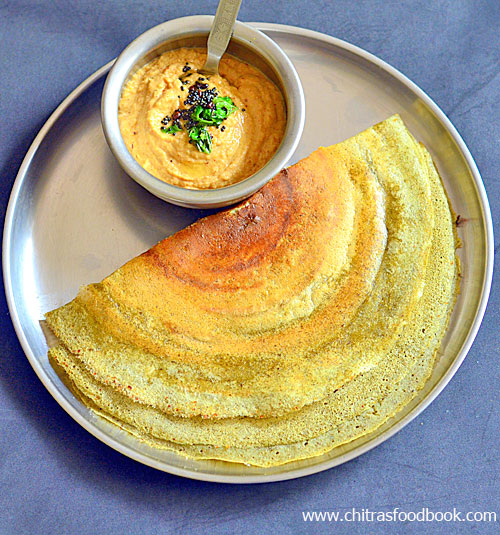
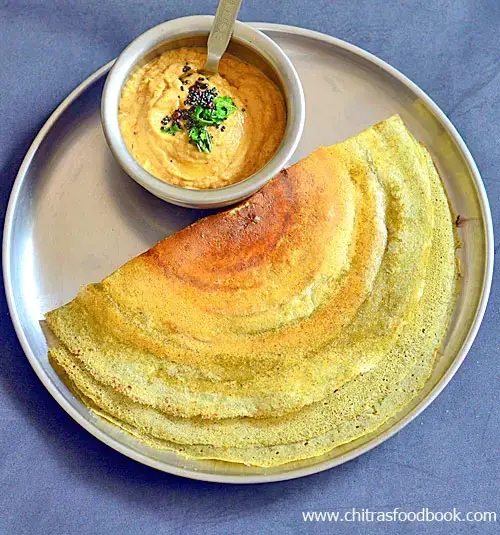
Andhra’s most popular and healthy breakfast recipe, Pesarattu along with Allam pachadi i.e Ginger chutney is one of my favourite recipes with Green gram/ Mung beans. I try to make it at least once in two weeks. In Tamil, we call it as Pacha payaru dosai. Though I make it regularly at home, I have never shared the recipe in my blog.

People fondly call this Pesarattu as MLA Pesarattu as it is popular in the MLA head quarters in Hyderabad. Usually this Pesarattu is stuffed with plain rava upma and served with spicy and tangy Ginger chutney. Some people also spread onion, carrot and green chilli mixture over the dosa instead of stuffing upma in it.

Today I have shared a very simple recipe without any stuffing or topping as we like it that way. We simply need a tangy Allam pachadi to go with it. Basically Green gram is high in fibre and low in calories. So this Pesarattu dosa recipe would be ideal for people looking for weight loss. It also makes less bloating and gas when compared with other legumes. So anyone can easily consume it without any worries.

Ok, lets see how to make this Andhra special Pesarattu recipe with step by step pictures.

Andhra pesarattu

Pesarattu recipe - Andhra style Pesarattu recipe with rice


Pesarattu recipe - Andhra style pesarattu recipe with rice

Pesarattu recipe - Andhra style pesarattu recipe with rice


Β 
Cuisine: Andhra
Category: Breakfast
Serves: 10
Prep time: 10 Minutes
Cook time: 20 Minutes
Total time: 30 Minutes
Β 


INGREDIENTS
1 cup = 250ml
  • Whole moong / Green gram - 1 cup
  • Raw rice - 2 tbsp
  • Green chilli - 2
  • Ginger - 1/2 inch
  • Cumin seeds - 1/2 tsp
  • Salt & water - as needed
  • Ghee or cooking oil - to drizzle over Pesarattu
  • Chopped onion, green chilli and carrot - for topping
HOW TO MAKE ANDHRA STYLE PESARATTU RECIPE
  1. Wash and soak green gram along with rice for 4 to 6 hours.
  2. Grind to a smooth or slightly coarse paste adding cumin seeds, green chilli and ginger.
  3. Transfer to a bowl. Add salt and mix well.
  4. Heat a dosa tawa. Spread the dosa thin or thick.
  5. Drizzle oil or ghee. Cook the dosa till its crispy and well cooked.
  6. No need to flip it. Flip the dosa and cook if you make it thick.
  7. Serve with Allam pachadi / Ginger chutney.
METHOD - STEP BY STEP PICTURES
  • Wash and soak green gram for 4 to 6 hours. Grind it adding green chilli, ginger and cumin seeds to a smooth paste.
  • Pesarattu
  • Transfer to a vessel. Add required salt and mix well. Check for batter consistency. Add water if needed.
  • Pesarattu
  • Heat dosa tawa. Spread a ladleful of batter. Make it thin or thick as you like. Cook the dosa in low to medium flame till its cooked well. Drizzle oil or ghee around the Pesarattu.
  • Pesarattu
  • Cook till the bottom turns light golden brown. No need to flip the other side if you want crispy dosa else you can flip and cook for few more minutes.

  • For variations, you can spread finely chopped onion and carrot all over the Pesarattu, flip and cook the other side.
  • Serve hot with Ginger chutney / Allam pachadi.

  • Enjoy !

Note

  • I grind the batter smooth. If you like, you can grind it slightly coarse.
  • Adjust the quantity of green chilli as per your taste.

Β Β 
Β  Make this healthy and tasty Green gram dosa / Pesarattu and enjoy with Allam pachadi / Ginger chutney !

Pesarattu recipe


❌