Reading view

There are new articles available, click to refresh the page.

DMND Pool Now Open To All Miners, With SOC 2 Compliance and Stratum V2 Support

By: Shinobi

Bitcoin Magazine

DMND Pool Now Open To All Miners, With SOC 2 Compliance and Stratum V2 Support

DMND, a new mining pool built around Stratum V2 which began taking applicants for a soft private launch earlier this year, is now open for all miners to create accounts. Miners can register here to begin onboarding. 

DMND’s full public launch comes after a successful SOC 2 Type 2 audit, proving compliance with security policies necessary for large scale miners. 

“With our SOC 2 Type 2 compliance and streamlined business verification practices, the DMND pool is built for operators who value security, transparency, and professional-grade standards,” said DMND Co-Founder & CEO, Alejandro De La Torre. “Combined with miner-controlled block construction, we’re enabling miners to reclaim meaningful control over the network.”

Stratum V2 support takes a significant step on the road to further decentralization of different functionality in the mining industry, namely block template construction, the process of selecting transactions to include in the block being mined. 

Stratum V2 provides a mechanism to defend Bitcoin’s censorship resistance, allowing individual miners to produce their own block templates while mining with supporting pools (as well as sourcing templates from any third party provider they choose who is operating Stratum V2). Additionally, Stratum V2’s end-to-end encryption protects miners from hashrate hijacking attacks which can silently siphon a miner’s revenue. 

DMND’s public launch provides miners with another step forward for Stratum V2 on the network, and for progress towards improving the mining ecosystem’s level of decentralization. 

This post DMND Pool Now Open To All Miners, With SOC 2 Compliance and Stratum V2 Support first appeared on Bitcoin Magazine and is written by Shinobi.

Brink Funds First Third Party Security Audit of Bitcoin Core By Quarkslab

By: Shinobi

Bitcoin Magazine

Brink Funds First Third Party Security Audit of Bitcoin Core By Quarkslab

Brink, the Bitcoin development organization, recently funded the first ever independent security audit of Bitcoin Core conducted by a third party (the full report is available here). The audit was conducted by Quarkslab, a software security firm, with the help of the Open Source Technology Improvement Fund (OSTIF) and collaboration with Bitcoin Core developers Niklas Gögge, from Brink, and Antoine Poinsot, from Chaincode Labs. 

This security audit marks a milestone in the development history of Bitcoin Core, the most widely adopted and reference client of the Bitcoin network and protocol. 

While Bitcoin Core security policies and practices have been steadily hardened and revised to be more thorough and comprehensive over the last few years, an external audit by a third party specialized in security review is a new bar to meet. It was met. 

The audit involved manual code review, static and dynamic analysis with automated tools, and advanced fuzz testing, which takes automatically generated input and runs it through different code paths attempting to reveal unexpected or detrimental behavior. 

No critical, high, or medium-severity bugs were discovered in the audit. Two low-severity issues were different, and thirteen other issues that are not classified as vulnerabilities under Bitcoin Core’s vulnerability classification criteria

The entire process also resulted in improvements in Bitcoin Core’s testing infrastructure, including new fuzz testing infrastructure for block connection and chain reorganization scenarios, a new area to be covered by testing, file system improvements speeding up and improving fuzz testing in general, new utilities for testing back sliding code performance, and suggestions for improving code readability for reviewers and new developers. 

Some of these improvements are already being worked on for eventual review and merging into the Bitcoin Core repository. 

The results of this independent security audit have reinforced that Bitcoin Core’s improvements over recent years in security policy, testing, and overall quality review have had a meaningful impact on the project. 

This post Brink Funds First Third Party Security Audit of Bitcoin Core By Quarkslab first appeared on Bitcoin Magazine and is written by Shinobi.

What Has Bitcoin Become 17 Years After Satoshi Nakamoto Published The Whitepaper?

By: Shinobi

Bitcoin Magazine

What Has Bitcoin Become 17 Years After Satoshi Nakamoto Published The Whitepaper?

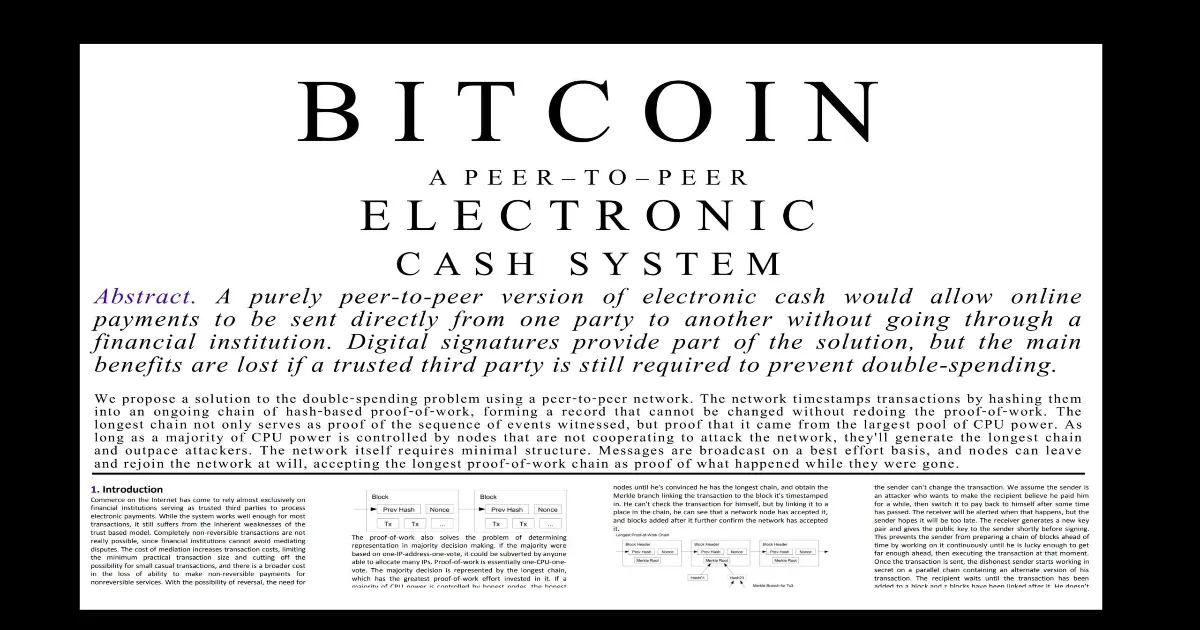
Today marks seventeen years since Satoshi Nakamoto’s publication of the Bitcoin Whitepaper on the cryptography mailing list in 2008. Back then Bitcoin was nothing more than a proposal for a new niche technology, the latest in a long lineage of niche technologies created by the cypherpunks of the 1990s. 

Bitcoin has gone through many massive transformations since that day 17 years ago. It went from a niche internet collectible, to a decentralized network powering illegal dark net markets, to a mainstream speculative investment for retail, to Wall Street and governments all over the world’s favorite new asset class. We have all had front row seats to the first explosive global technological revolution to the internet, and it’s been a wild ride. 

On this anniversary I think it’s important to touch on a concept that is very relevant, POSIWID, or the Purpose Of A System Is What It Does. The basic idea is that when you have a complex system, it is pointless to try to define it based on what you want it to do, what really matters is what the pieces of that complex system are actually doing. That is all that matters at the end of the day. 

We have once again found ourselves in a time period where people are calling back to the whitepaper as a placeholder for some kind of founding document, or definition, or blueprint. The whitepaper is none of those things. It is simply a high level abstract explanation of a Proof-of-Work blockchain being used to implement a digital currency. It is the idea of a cart with wheels, versus the actual blueprint of the cart (the source code). 

Bitcoiners seem to periodically fixate on the whitepaper in this manner, and inevitably use that as a justification for acting antagonistic towards some use case or idea of improving Bitcoin that they disagree with. Maybe we will eventually get past this, maybe we won’t, but it is an unhealthy attitude to have towards such a potentially impactful technology such as Bitcoin. 

People didn’t recite the writings and speeches of Alexander Graham Bell when digital modems were invented to allow the first tendrils of the early internet to reach out between devices and facilitate digital signals flowing between them. They embraced it as a valuable technological innovation, and in the world today that dynamic has completely inverted itself. Most telephonic signals are now actually conveyed by communication mediums specifically constructed for digital communications. 

Telephone networks were used to bootstrap the digital medium of the modern internet in a way that Alexander Graham Bell might have had only the barest inklings of, reshaping the entire world in ways that would have been impossible to conceive for people of his generation. 

Satoshi did not give us a founding document to be shackled and constrained by when he released the whitepaper, he gave us a high level description of the software that followed. 

That is the actual gift he gave us, the software. And he gave it to us completely freely, open-source, to do with what we decide to do. 

“BitDNS users might be completely liberal about adding any large data features since relatively few domain registrars are needed, while Bitcoin users might get increasingly tyrannical about limiting the size of the chain so it’s easy for lots of users and small devices.” -Satoshi Nakamoto, 2010

This quote is always brought up in the context of the blocksize limit, or Bitcoin enabling multiple functionalities, but the thing that has always stood out the most to me is “users might get.” In the end before his disappearance, Satoshi is clearly being explicitly deferential to the wishes of users, and in the context of a critical and foundational decision like the blocksize limit. 

Bitcoin isn’t Satoshi’s anymore, it’s ours, and collectively with how we actually use our bitcoin, we decide what the purpose of the system is. It’s important to remember that. 

This post What Has Bitcoin Become 17 Years After Satoshi Nakamoto Published The Whitepaper? first appeared on Bitcoin Magazine and is written by Shinobi.

Bitcoin Knots Has Been Nothing More Than A Denial-of-Service Attack On Bitcoin

By: Shinobi

Bitcoin Magazine

Bitcoin Knots Has Been Nothing More Than A Denial-of-Service Attack On Bitcoin

In computing, a denial-of-service attack (DoS attack; UK: /dɒs/ doss US: /dɑːs/ daas[1]) is a cyberattack in which the perpetrator seeks to make a machine or network resource unavailable to its intended users by temporarily or indefinitely disrupting services of a host connected to a network. -The Wikipedia definition of denial-of-service attack. 

This is a very basic concept. Someone makes use of their own resources to disrupt the functioning of other machines on a network. 

DoS attacks have been an issue for as long as the internet existed. One of the commonly argued “first Distributed Denial-of-service (DDoS) attacks” was against the Internet Service Provider (ISP) Panix in the mid-90s. There were of course many prior technical examples on older internet services, but this was one of, if not the, first major examples of such an attack on the modern World Wide Web. 

This attack had numerous computers start to initiate a Transmission Control Protocol (TCP) connection with the ISPs servers, but never finishing the handshake protocol that finalized the connection. This consumes the server’s resources for managing network connections and prevents honest users from accessing the internet through the ISP’s servers. 

Ever since this “initial” DDoS attack, they have been as common on the internet as storms are in nature, a regular occurrence that massive pieces of internet infrastructure have been built to defend against. 

The Blockchain

The blockchain is one of the core components of Bitcoin, and a required dependency for Bitcoin’s functionality as a distributed ledger. I am sure many people in this space would call so-called “spam” transactions a DoS attack on the Bitcoin blockchain. In order to call it that, you would have to define the “service” that the blockchain is offering as a system, and explain how spam transactions are denying that service to others in a way not intended by the design of the system. 

I’d wager a bet that most people who believe spam is a DoS attack would say something like “the service the blockchain offers is processing financial transactions, and spam takes space away from people trying to do that.” The problem is, that is not specifically the service the blockchain offers. 

The service it actually offers is the confirmation of any consensus valid transaction through a real-time auction that periodically settles whenever a miner finds a block. If your transaction is consensus valid, and you have bid a high enough fee for a miner to include your transaction in a block, you are using the service the blockchain provides exactly as designed. 

This was a conscious design decision made over years during the “Block Size Wars” and finalized in the activation of Segregated Witness and the rejection of the Segwit2x blocksize increase through a hard fork pushed by major companies at the time.  The blockchain would function by prioritizing the highest bidding fee transactions, and users would be free to compete in that auction. This is how blockspace would be allocated, with a global restriction to protect verifiability and a free market pricing mechanism. 

Nothing about a transaction some arbitrarily define as “spam” winning in this open auction is a DoS of the blockchain. It is a user making use of that resource in the way they are supposed to, participating in the auction with everyone else. 

The Relay Network

Many, if not most, Bitcoin nodes offer transaction relay as a service to the rest of the network. If you broadcast your transactions to your peers on the network, they will forward them on to their peers, and so on. Because the peering logic deciding which nodes to peer with maintains wide connectivity, this service allows transactions to propagate across the network very quickly, and specifically allows them to propagate to all mining nodes. 

Another service is block relay, propagating valid blocks as they are found in the same manner. This has been highly optimized over the years, to the point where most of the time an entire block is never actually relayed, just a shorthand “sketch” of the blockheader and the transactions included in it so you can reconstruct them from your own mempool. In other words, optimizations in block relay depend on a transaction relay functioning properly and propagating all valid and likely to be mined transactions. 

When nodes do not have transactions in a block already in their mempool, they must request them from neighboring nodes, taking more time to validate the block in the process. They also explicitly forward those transactions along with the block sketch to other peers in case they are missing them, wasting bandwidth. The more nodes filtering transactions they classify as spam, the longer it takes blocks including those filtered transactions to propagate across the network. 

Transaction filtering actively seeks to disrupt both of these services, in the case of transaction relay failing miserably to prevent them from propagating to miners, and in the case of block propagation having a marginal but noticeable performance degradation the more nodes on the network are filtering transactions. 

These node policies have the explicit purpose of degrading the network service of propagating transactions to miners and the rest of the network, and view the degradation of block propagation as a penalty to miners who choose to include valid transactions they are filtering. They seek to create a degradation of service as a goal, and view the degradation of another service resulting from that attempt as a positive. 

This actually is a DoS attack, in that it actually is degrading a network service contrary to the design of the system. 

Where From Here?

The entire saga of Knotz vs. Core, or “Spammers” vs. “Filterers”, has been nothing more than a miserably ineffective and failed DoS attack on the Bitcoin network. Filters do absolutely nothing to prevent filtered transactions from being included in blocks. The goal of disrupting transaction propagation to miners has had no success whatsoever, and the degradation of block relay has been marginal enough to not be a disincentive to miners. 

I see this as a huge demonstration of Bitcoin’s robustness and resilience against attempted censorship and disruption on the level of the Bitcoin Network itself. 

So now what?

A BIP by an anonymous author has been put forward to enact a temporary softfork that would expire after roughly a year making numerous ways to include “spam” in Bitcoin transactions consensus invalid through that time period. After realizing the DoS attack on the peer-to-peer network has been a total failure, filter supporters have moved to consensus changes, as many of them were told would be necessary over two years ago. 

Will this actually solve the problem? No, it won’t. It will simply force people who wish to submit “spam” to this forked network, if they actually follow through on implementing it, to use fake ScriptPubKeys to encode their data in unspendable outputs that will bloat the UTXO set. 

So even if this fork was met with resounding support, activated successfully, and did not result in a chainsplit, it would still not achieve the stated goal and leave “spammers” no option but to “spam” in the most damaging way to the network possible.

This post Bitcoin Knots Has Been Nothing More Than A Denial-of-Service Attack On Bitcoin first appeared on Bitcoin Magazine and is written by Shinobi.

Save Our Wallets: Bitcoiners Must Act To Defend Their Right To Transact

By: Shinobi

Bitcoin Magazine

Save Our Wallets: Bitcoiners Must Act To Defend Their Right To Transact

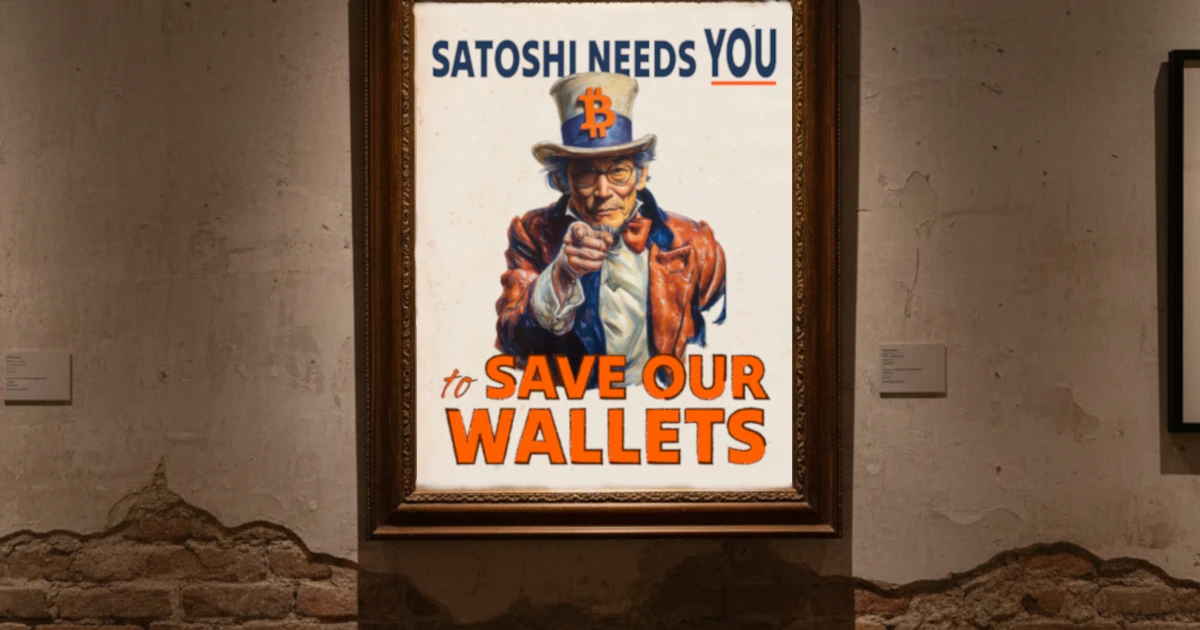
Recent threats against the rights of bitcoiners to transact in the manner they deem fit led to the creation of Save Our Wallets. Done in collaboration with the Bitcoin Policy Institute, CoinCenter, the Bitcoin Design Foundation, and many regional Bitcoin hubs around the United States, the organization recently launched the “Satoshi Needs You!” campaign.

Satoshi needs all of you to rally together to ensure that the Blockchain Regulatory Certainty Act (BRCA) provisions are included in the coming version of the CLARITY Act, to ensure that self-custodial software tools in the Bitcoin ecosystem remain a protected thing, unencumbered by financial regulations designed to restrict businesses actually taking control of users’ funds.

The trials this summer prosecuted by the Department of Justice (DOJ) against the developers of Samourai Wallet and Tornado Cash have set dangerous precedents by prosecuting developers of open-source and self-custodial software, which at no time gave developers control over user funds in any way, and flies directly against standing guidance from both the DOJ as well as FinCEN, the regulator in charge of the application of the relevant regulations from both cases.

The “Satoshi Needs You!” campaign aims to raise awareness of the current threats to bitcoiners’ rights and rally people to get involved in the push to cement these rights in explicit regulation.

“This is a moment of both great danger and great opportunity for the bitcoin network” said Kyle Olney, co-founder of SaveOurWallets.org. “We can’t take anything for granted until our fundamental rights to economic liberty in the digital realm have been codified into law. We need EVERY bitcoiner to get involved, contact their representatives in Washington DC, and ensure this congress continues to execute on pro-Bitcoin policy. We have a responsibility to fight for our freedoms like the right to transact, and to pass those rights on for future generations.”

Visit SaveOurWallets.org to learn more about the CLARITY Act and how you can get involved in the fight to include the BRCA provisions.

Go to SaveOurWallets.org now!

This post Save Our Wallets: Bitcoiners Must Act To Defend Their Right To Transact first appeared on Bitcoin Magazine and is written by Shinobi.

Wall Street Is Bitcoin’s Biggest Threat, Not Arbitrary Data

By: Shinobi

Bitcoin Magazine

Wall Street Is Bitcoin’s Biggest Threat, Not Arbitrary Data

Wall Street has unequivocally arrived. The long awaited phase shift is here. We have discussed for years what this time period and shift will be like, many cheering it on in anticipation of the economic implications and shockwave it would cause in terms of liquidity and price movement. 

In the last few years it has undeniably come to dominate the narrative, shaping dialogue and focus across the entire ecosystem. Where before large communities of people would spring up around technological innovations, or philosophical schools of thought on how Bitcoin can positively shape the direction of the world in a time of tumultuous change and metaphorical ground shifting out from under us, now the cultural zeitgeist is driven by the phenomenon of treasury companies. 

There is an entire wave of recent entrants into the space who have never held their own keys, never directly interacted with the protocol themselves at all, they have simply acquired proxies such as treasury company equity or ETFs. This is a massive cultural, and philosophical/logistical shift, for the entire ecosystem. It is not going to wind itself back. This is a new presence and a new attitude that we are going to have to confront. It’s here to stay. 

So what are the implications of that? Bitcoin is a peer-to-peer system, its very essence and nature is defined by the people who choose to participate directly in that system itself. By those who do interface with the protocol directly, who do not resort to TradFi wrappers such as ETF products and equity in holding companies. 

It is one giant inter-subjective hallucination manifested through and verified with software. So what does it mean that a massive section of the population who chooses to interact with it financially avoid ever participating in that hallucination themselves? What does that mean for its nature, its functioning? 

That is very much an existential question, and one that we are all going to have to grapple with over the coming years. Bitcoin is for anyone, and there is nothing we can do to stop people from using it in whatever fashion they so choose, no matter what the wider implications of those people’s choices might be. 

Economic Consensus And Wall Street

The nature of Bitcoin, i.e. the consensus rules that nodes (and therefore its users) enforce, is defined by those who actually engage in economic activity on the network. In its most abstract sense Bitcoin is just a system composed of people “just doing things,” and the only reason that it is a singular coherent system, rather than a random collection of individuals doing very different and incompatible things, is because of the economic incentive to do the same thing. 

Think of it in some ways as similar to a black hole. That black hole forms in the first place after reaching a point of “critical mass”, after which it literally implodes on itself and the resulting gravitational force begins pulling in everything around it, increasing its mass, and expanding the radius in which things are sucked into its dark maw. 

The incentive to voluntarily choose to participate in one particular “set of rules” over another is the “black hole” of Bitcoin, and its gravitational pull is directly proportional to the economic mass of the system as it exists today. Unlike a black hole though, it is not truly a “singular” thing. Rather it is a number of different things (or entities), all holding themselves together to emulate being a singular thing. Unlike a blackhole, these entities can choose to defy the incentives to remain together, or follow counter-incentives against doing so, and enforce or follow different rules. 

The reason this does not frequently happen at scale (such as the fork of Bitcoin Cash in 2017), is the complexity of coordinating all of those individual entities switching to the same thing at the same time, so as to maintain the same collective “gravitational force” as they had under the previous rules. 

So what happens when the number of those entities starts shrinking? What happens when they condense and combine, and you wind up with fewer and fewer larger ones?

That complexity of coordination starts getting less complex. 

Centralization Is Efficient, But It is Poison to Bitcoin

Bitcoin’s entire promise is to be an apolitical and neutral platform for economic activity. It is to be an unshifting and solid foundation for you to stand surely on, devoid of concerns that it could shift out from under your feet and throw you into economic chaos. ‘

That entire promise of stability is purely a result of Bitcoin being sufficiently distributed, i.e. being composed of independent actors performing their own self-validation of the system in large enough numbers that their ability of coordinating amongst themselves to change fundamental properties of the system is either exceedingly difficult, or literally impossible. 

When the set of economic actors participating in self-validation collapses in size, when it turns into fewer and fewer entities operating on behalf of other stakeholders, that promise of stability and neutrality collapses in lockstep with it. Bitcoin must maintain some minimum degree of distribution of self-validating actors, that make up a substantial portion of economic activity, or else the core promise of stability and neutrality evaporate.

Wall Street isn’t going away, so this is something that we are going to have to confront. There is no shaming them away, or chasing them off. That is simply not possible in a system like Bitcoin, that at least for now, is robust in its distribution and decentralization. This is a war of incentives and counter-incentives. 

We must create positive incentives to encourage more direct self-validating use of Bitcoin rather than legacy financial wrappers like ETFs and treasury companies, or Bitcoin will be confronted with a fundamental crisis as to whether its core promise was ever really possible.

This post Wall Street Is Bitcoin’s Biggest Threat, Not Arbitrary Data first appeared on Bitcoin Magazine and is written by Shinobi.

❌