
❌

Reading view

There are new articles available, click to refresh the page.

LoRa Repeater Lasts 5 Years on PVC Pipe and D Cells
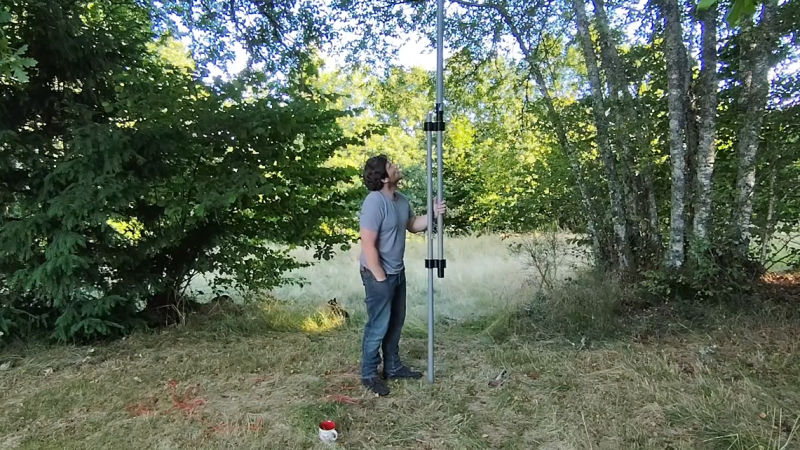
Sometimes it makes sense to go with plain old batteries and off-the-shelf PVC pipe. That’s the thinking behind [Bertrand Selva]’s clever LoRaTube project.
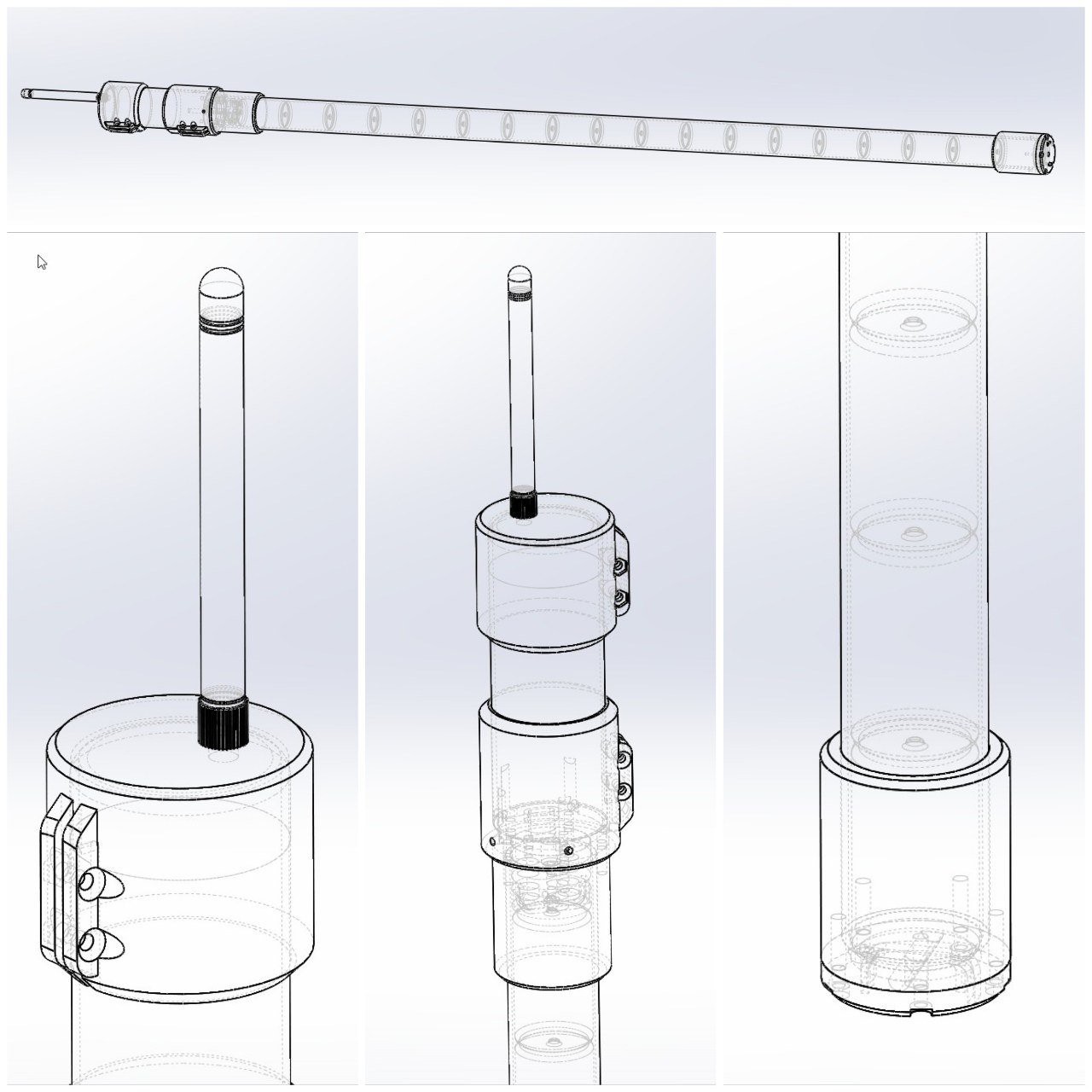
PVC pipe houses a self-contained LoRa repeater, complete with a big stack of D-size alkaline cells.

LoRa is a fantastic solution for long-range and low-power wireless communication (and popular, judging by the number of projects built around it) and LoRaTube provides an autonomous repeater, contained entirely in a length of PVC pipe. Out the top comes the antenna and inside is all the necessary hardware, along with a stack of good old D-sized alkaline cells feeding a supercap-buffered power supply of his own design. It’s weatherproof, inexpensive, self-contained, and thanks to extremely low standby current should last a good five years by [Bertrand]’s reckoning.

One can make a quick LoRa repeater in about an hour but while the core hardware can be inexpensive, supporting electronics and components (not to mention enclosure) for off-grid deployment can quickly add significant cost. Solar panels, charge controllers, and a rechargeable power supply also add potential points of failure. Sometimes it makes more sense to go cheap, simple, and rugged. Eighteen D-sized alkaline cells stacked in a PVC tube is as rugged as it is affordable, especially if one gets several years’ worth of operation out of it.

You can watch [Bertrand] raise a LoRaTube repeater and do a range test in the video (French), embedded below. Source code and CAD files are on the project page. Black outdoor helper cat not included.
Building a Low-Cost Satellite Tracker

Looking up at the sky just after sunset or just before sunrise will reveal a fairly staggering amount of satellites orbiting overhead, from tiny cubesats to the International Space Station. Of course these satellites are always around, and even though you’ll need specific conditions to view them with the naked eye, with the right radio antenna and only a few dollars in electronics you can see exactly which ones are flying by at any time.

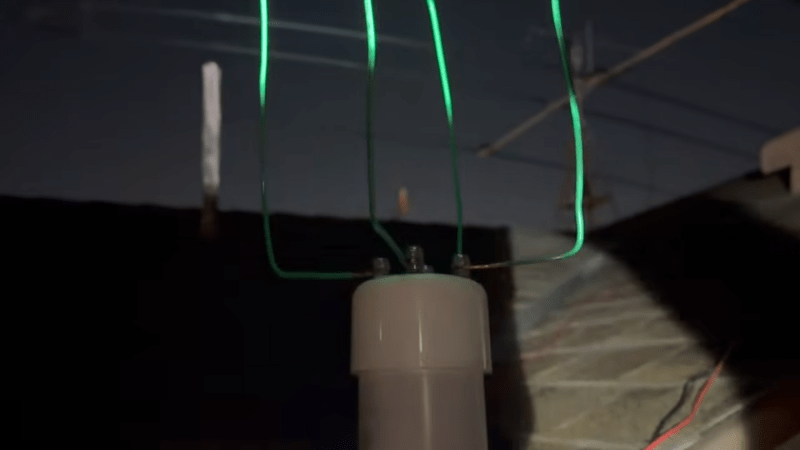
[Josh] aka [Ham Radio Crash Course] is demonstrating this build on his channel and showing every step needed to get something like this working. The first part is finding the correct LoRa module, which will be the bulk of the cost of this project. Unlike those used for most Meshtastic nodes, this one needs to be built for the 433 MHz band. The software running on this module is from TinyGS, which we have featured here before, and which allows a quick and easy setup to listen in to these types of satellites. This build goes much further into detail on building the antenna, though, and also covers some other ancillary tasks like mounting it somewhere outdoors.

With all of that out of the way, though, the setup is able to track hundreds of satellites on very little hardware, as well as display information about each of them. We’d always favor a build that lets us gather data like this directly over using something like a satellite tracking app, although those do have their place. And of course, with slightly more compute and a more directed antenna there is all kinds of other data beaming down that we can listen in on as well, although that’s not always the intent.

Physalis – Perennial Plant, How to grow

From the Greek physa, a bladder, an allusion to the inflated calyx (Solanaceae). A genus of 100 or more species of which the two most well-known are P. alkekengi, the Bladder Cherry or Chinese Lantern Plant, with its brilliant, flame-coloured, air-filled calyces, and P. peruviana, the Cape Gooseberry, which is a greenhouse species. They are annual and perennial herbaceous plants, […]

The post Physalis – Perennial Plant, How to grow appeared first on Backyard Gardener.

Herb Gardening – Harvest, Design, Storing Herbs

The form and size of a herb garden is determined by the interest these plants hold for the individual. It can be a tiny border of commonly used culinary herbs such as mint, parsley, sage and thyme or an elaborate garden designed to house a wide collection of herbs. Many plants could legitimately be included in one of these large […]

The post Herb Gardening – Harvest, Design, Storing Herbs appeared first on Backyard Gardener.

❌