Reading view

There are new articles available, click to refresh the page.

DIY Light Panels Work With Home Assistant

By: Lewin Day

There are a few major companies out there building colorful LED panels you can stick on your wall for aesthetic purposes. Most commercial options are pretty expensive, and come with certain limitations in how they can be controlled. [Smart Solutions For Home] has whipped up a flexible DIY design for decorating your walls with light that is altogether more customizable.

In this case, the DIY light panels ape the hexagonal design made popular by brands like Nanoleaf. In this case, each hexagon panel runs an ESP32 microcontroller, which controls a series of WS2812 addressable LEDs. This allows each panel to glow whatever color you like, and they’re arranged in an XY grid to enable you to light individual panels with a range of different geometric effects. The benefit of having a full microcontroller on each panel is that they can act quite independently—each one able to be used as a smart light, an notification display, or even as a physical button, all integrated with Home Assistant.

If you’re a fan of DIY smart home products, these might be right up your alley. They’re supremely flexible and customizable, and can do a lot of things that commercial versions can’t easily replicate. Just don’t ignore the fact that they require a considerable amount of assembly, what with the custom PCBs, 3D printed enclosures, and front diffusers to deal with. That’s just the way the LED wall crumbles.

We’ve seen other similar builds before, too. Why? The simple fact is that a lot of people want cool glowy panels on their wall without having to pay through the nose for them.

Stock up for sweater weather with up to 30% off from Zen Leaf

That chill in the air means that it’s time to get cozy and prepare for winter, and Zen Leaf is helping you stock up for all the sweater weather on the horizon. They’re offering up to 30% off storewide at their Ohio locations so you can bundle up with all your favorites for less. Zen […]

The post Stock up for sweater weather with up to 30% off from Zen Leaf appeared first on Leafly.

Do the season right with holiday deals from Rolling Releaf

The holidays are rolling in once again, and so are the deals at Rolling Releaf. They’re pulling out all the stops this year and offering big deals from best-selling brands from Green Wednesday to Cyber Monday (11/26-12/1). For a limited time, you can snag five pre-rolls for just $35 and enjoy bundle savings on both […]

The post Do the season right with holiday deals from Rolling Releaf appeared first on Leafly.

Restaurant-Style Dal Makhani

By: Richa

Dal Makhani is one of the most ordered Indian dish in restaurants. You can make authentic, buttery, rich dal makhani at home. It’s just as good as the restaurant version! Black gram and kidney beans are simmered in a creamy spiced sauce and is perfect for special occasions or a great dinner. With Instant Pot and Sauce pan instructions. (gluten-free, soy-free, nut-free, oil-free option).

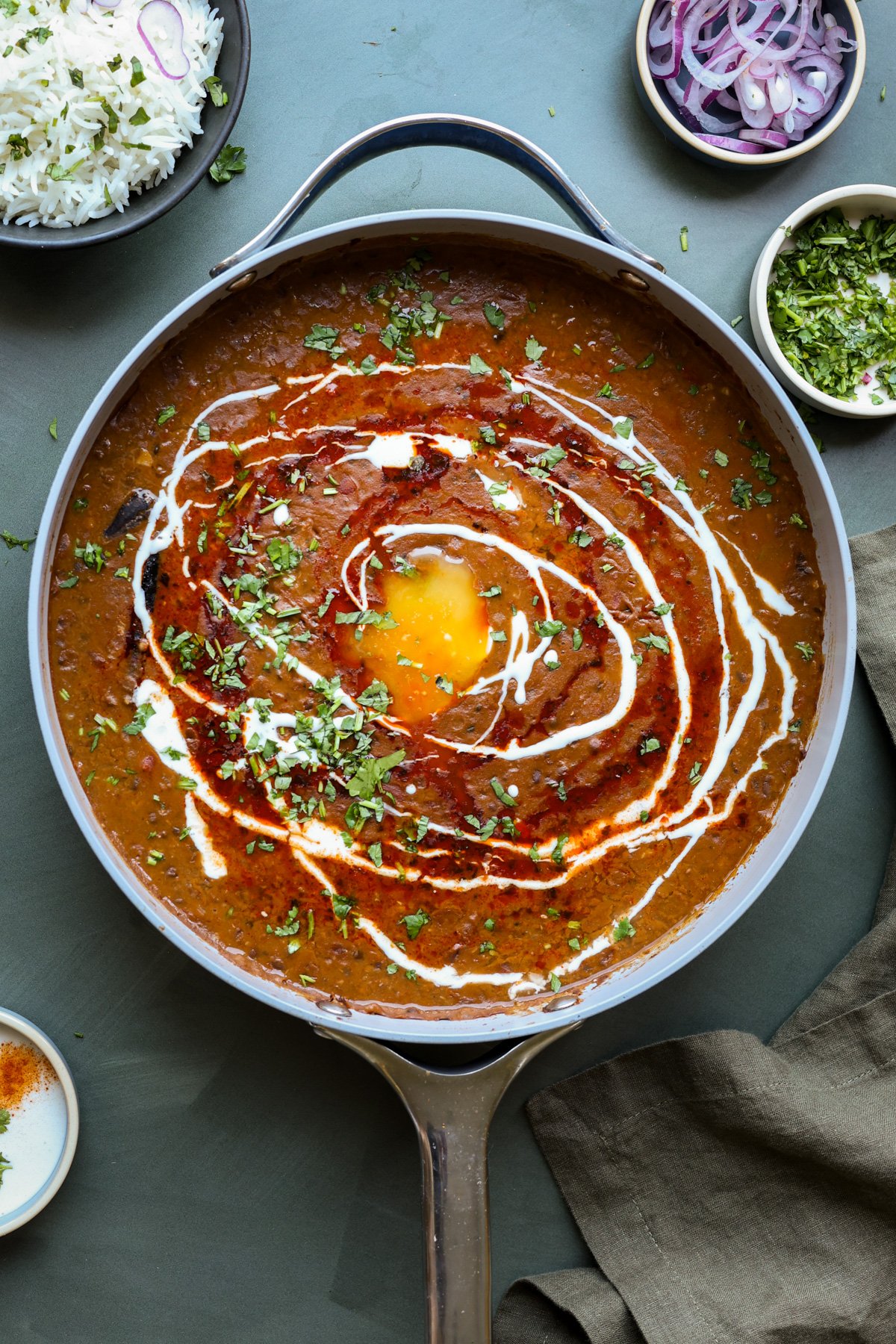
dal makhani in the pan with tadka and toppings

Love ordering Dal Makhani at restaurants? You’ll love this homemade version even more! This is adapted from my home-style dal makhani that’s on the blog and in my books. The difference is that this version has more spices, including some whole spices, which create more layers of flavor. 

This version of dal makhani is a little bit more involved than my home-style version. It has both a base sauce and a spiced oil. This levels up the flavor and adds a smoky, creamy flavor, like restaurants usually serve.  There’s also a lot more Kashmiri chili powder in this version compared to the home-style one. 

The home-style recipe is quicker and still delicious, but this one takes it up another couple of notches, simmering the beans in a deeply-flavored sauce.

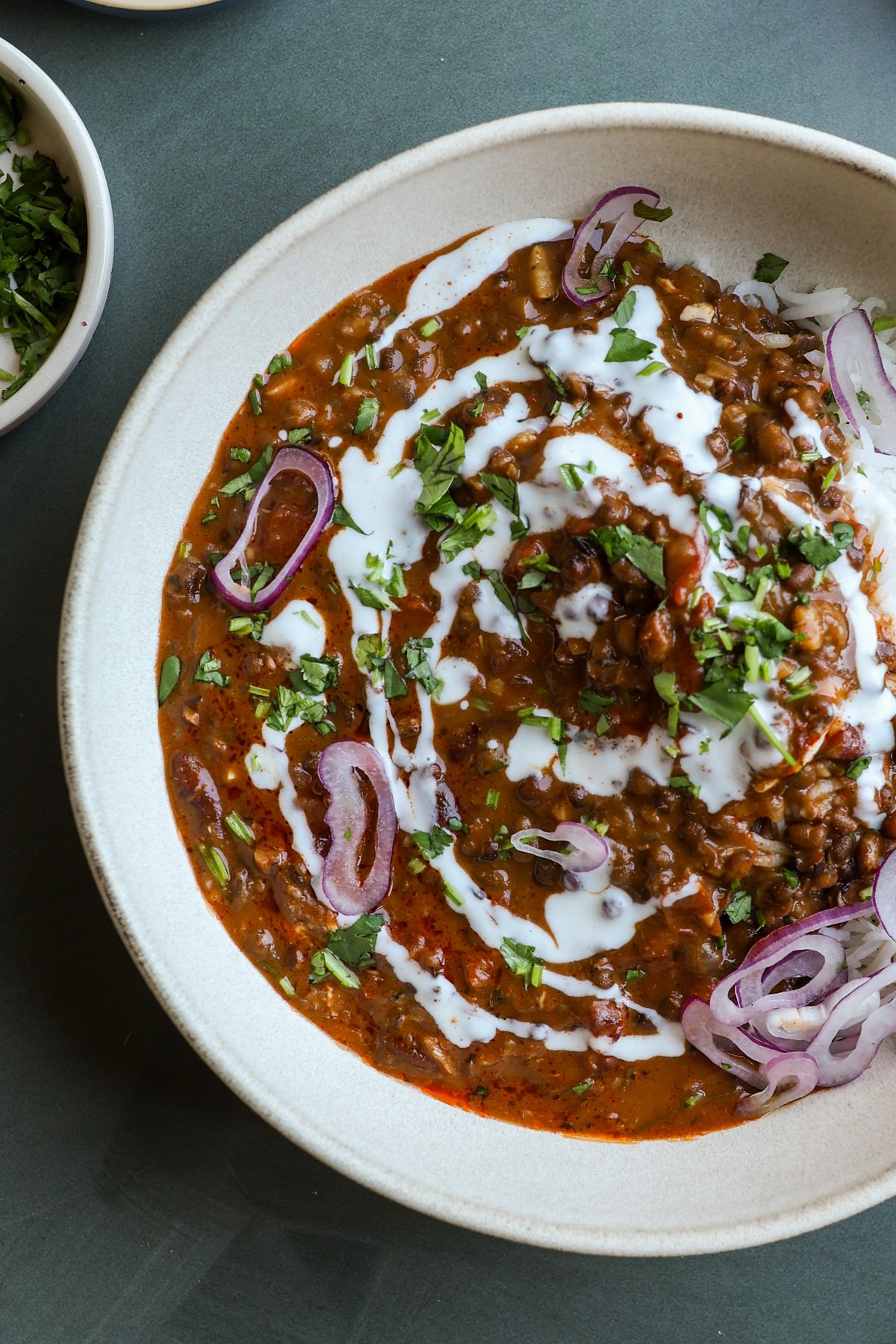
dal makhani in a bowl

Makhani means both “butter” and “like butter,” and the dish is called dal makhani, both because of the butter content and the creamy, buttery texture of the dal. The goal is to cook the beans long enough that they become soft and almost break down into the sauce, thickening it and creating a smooth consistency. For the right texture, I prefer to use a pressure cooker / instant pot, but you can also cook it in a saucepan. I included both methods in the recipe.

After cooking the beans, we make a delicious sauce with whole spices, aromatics, and ground spices, then add the cooked beans to it. Then, we prepare a spice oil with toasted fenugreek leaves, Kashmiri chili, smoked paprika, and a smoky burnt cinnamon stick. Burning the cinnamon stick for just half a second before adding it to give the dal its smoky restaurant-style flavor.

Traditionally, restaurants achieve this smoky flavor by using food-grade charcoal. They place a piece of hot charcoal in a bowl with oil, which immediately smokes. Then, they nestle the bowl inside the dal pot and cover the pan for 10 to 15 minutes. If you don’t want to use charcoal or burnt cinnamon, liquid smoke can also work.

spoon taking a bite of dal makhani

Why You’ll Love Dal Makhani

  • creamy, buttery dal with two kinds of beans
  • deep flavor from the sauce and the spice oil, no dairy needed!
  • flexible! Cook the beans in the Instant Pot or on the stovetop
  • naturally gluten-free, soy-free, and nut-free with an oil-free option

More Authentic Dal Recipes

Continue reading: Restaurant-Style Dal Makhani

The post Restaurant-Style Dal Makhani appeared first on Vegan Richa.

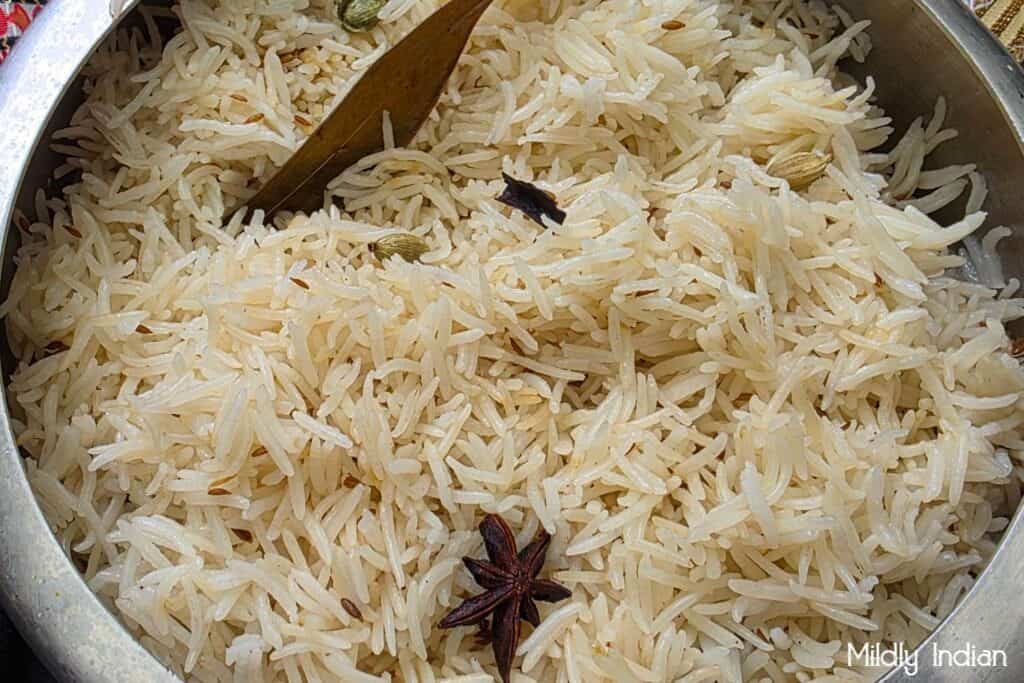
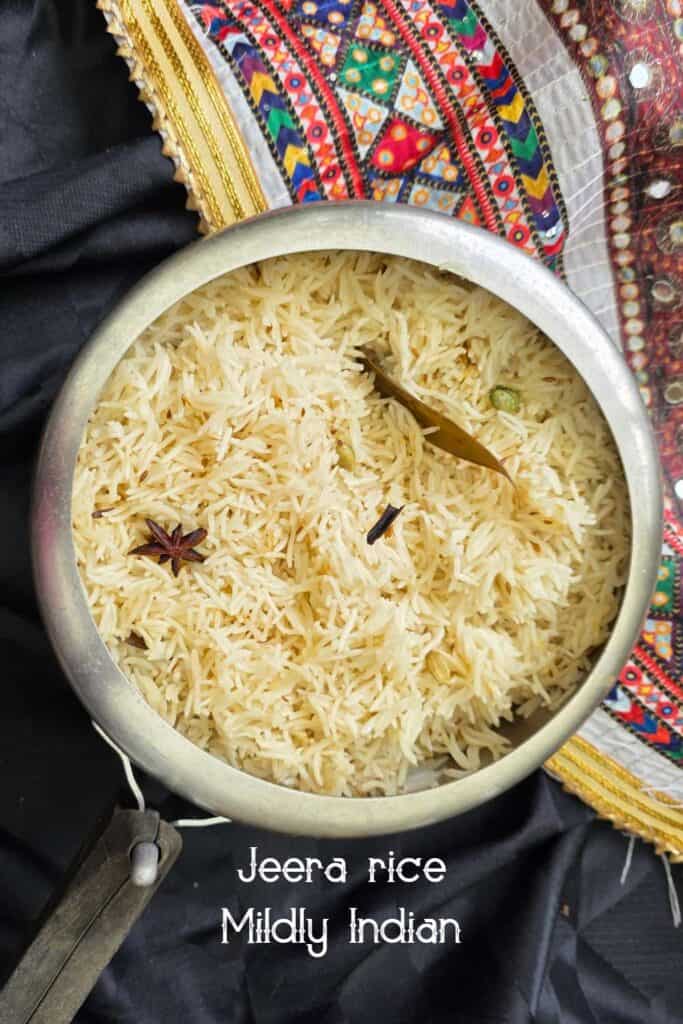
Jeera pulao | cumin rice

Jeera pulao recipe
The cumin flavoured, gluten free, delicate basmati rice preparation is one of the basic recipes from Indian kitchen. This jeera rice pairs well with most curries, and is quick and easy to prepare. 
The Indian pressure cooker that wakes up most of us is the biggest secret to fastest Indian cooking. May it be rice, beans, dals, curries or snacks,  we can proudly say we mastered the art of the pressure cooker. 
Cooking rice in the pressure cooker is one of the first tasks we learn in the kitchen. Among these jeera rice comes out perfectly each time. This is the beginning of confidence in the Indian kitchen. Hope you like this basic recipe. 

Ingredients for jeera rice

Basmathi rice: Long grain basmathi rice is the key to many north Indian staple recipes. For making jeera rice, aged basmathi is preffered as it keeps shape really well. The aging process strengthens the rice reducing the water content in it and strengthens the starch. I prefer to use the basmathi that is aged two years or more. 
Oils and fats: ghee is the fat that makes this recipe so fragrant. You can any brand you choose. You can also use an oil of choice to make this recipe, not much changes need. I have made this recipe with plant based butter too and they come out well. 
Spices and Seasoning: the main spice used to flavour the recipe is cumin seeds (jeera). This is the small seeds and should not be confused with caraway seeds (shahi jeera) or fennel seeds (saunf). Also, cumin powder is not a substitute. 
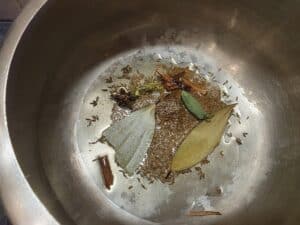
Other than this you will need a cinnamon stick a bayleaf, 4 to 5 green cardamom and a star anise to make tjis recipe. These are not the overpowering spices but the whole spices that add a lot of fragarnce to the recipe in the background. 
Salt: is another major ingredient you need for the seasoning. Not so specific, anytype of cooking salt will do. 
At times, I do pop in a whole Serrano chilli on top of the rice, this add a chilli fragrance without any heat to the recipe. 

Let’s make jeera rice

Jeera rice is that recipe many of us make effortlessly and over a period of time acquire the small tips that make it better. Though a basic recipe it is important to follow some steps to get the perfect non-sticky fluffy rice. 
  • Washing the rice and soaking: measure the rice and add to the bowl. it is so important to wash the rice multiple times till the water runs clear. Don’t pop it into a sieve and run it under water, it doesn’t help. Rather, rub the rice grain and drain the water each time. It takes about 3 to 4 washes to get the rice run clear. Drain well and set aside.
  • Now to soaking, measure the water 1:5 times of the rice. Add to the drained rice and let it sit for 15 minutes. After 15 minutes ( can go up to 30 minutes), drain the rice and save the soaking water. The cooking water is the cooking medium later as you have already measured it out. 
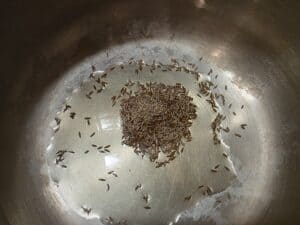
  • Saute the spices add ghee to the instantpot. Saute them on low heat till they are aromatic and slightly change in colour. The ghee is now flavored with the volatile oils of the spices. 
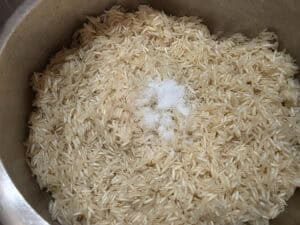
  • Frying the rice: Frying the rice on  low heat for a a few minutes coats the rice grains with the aromatic ghee. This process also ensures that the rice does not stick to each other when cooking. I prefer to add the salt at this stage so it is evenly distributed. 
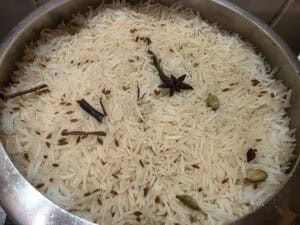
  • Cooking the rice: Pour the soaking water that we drained and set aside, back into the rice. This water is enough for the cooking process. Place the lid and pressure cook for 1 whistle ( the Indian pressure cooker measure). Remove from heat. Let the pressure hold and naturally release. This takes about 15 minutes off the heat. 
  • Fluff and garnish: When the pressure is naturally released, use a fork and fluff the rice gently. Be careful as the steam is still hot.  Once this is done, the jeera pulao is ready to be served.

Can I make this recipe in the instant pot or rice cooker? 

The jeera rice recipe works perfectly for the instant pot too. You can saute the whole spices initially and then cook on rice mode to get the perfect fluffiness. The key point is to ensure that you have an exact rice to water ratio of 1:1.5 
For the rice cooker sauce the spices first and then add the rice and water. You will get a very similar result to the pressure cooker, about the same time too. The rice to water ratio for the rice cooker is 1: 2

Should I soak the rice? 

It is good to soak your basmathi rice for 15 minutes before cooking to ensure you are getting fluffy rice. However, this is not essential for the jeera rice to be perfect. It is really important to know that the water that you measured and took is the same that you are using for soaking. 

Key points to remember.

  • Do not use excess water to soak the rice. The water as per the ratio is plenty.
  • Do not drain the soaking water and add fresh water afterwards to cook, this changes the ratio of water for cooking the rice to fluffy separate grains. 

jeera pulo

Can we make this recipe vegan?

The classic jeera rice is made with ghee. This takes away from being vegan. If you swap the ghee for oil (olive oil, ricebran or any you like) you will make this recipe vegan. The rest of the whole spices and basmathi rice used is vegan friendly. 

What pairs well with jeera rice?

Most Indian curries pair well with jeera rice. 
These are my top favourites to pair with this fluffy rice. 
If you are doing a wrap you can certainly add this rice for volume and flavour. We make a lunch wrap with the basic paneer khati roll idea and added jeera rice yo make it a fuller meal. 

Mealprep and storage

Jeera rice is one of the recipes I love in mealprep. The rice doesn’t dry easily and it stays good and fluffy in the refrigerator for up to a week. Packed in freezer safe boxes, it stays well for upto 3 months. To reheat, defrost and heat up in a microwave. 
Usually I pack jeera rice and dal half and half in the boxes. This when reheated is pretty much like my grab and go box. 
Print

Jeera pulao

The cumin flavoured, gluten free, delicate basmati rice preparation is one of the basic recipes from Indian kitchen. This jeera rice pairs well with most curries, and is quick and easy to prepare. 
Course Main Dish
Cuisine gluten free, Indian
Prep Time 10 minutes
Cook Time 10 minutes
soaking time for rice 15 minutes
Servings 4 people

Equipment

  • Pressure cooker

Ingredients

to soak the rice

  • 1 cup Basmathi rice
  • 1.5 cups drinking water

For tempering the ghee

  • 3 tbsp ghee or oil
  • 2 tsp cumin seeds
  • 1 star anise
  • 1 large bay leaf
  • 2 green cardamom

Seasoning

  • salt to taste

Instructions

  • Wash the basmathi rice till the water runs clear.
  • Soak the rice using the measured 1.5 cups of water for 15 minutes.
  • After 15 minutes, drain and save the soaking liquid.
  • On a low heat place the pressure cooker to warm.
  • Add the ghee, add all the spices and cumin seeds.
  • Saute till he spices are aromatic.
  • Add the drained rice, salt and saute for two minutes till the rice is coated with the spices.
  • Add the water that was drained and kept.
  • Mix well and pressure cook for one whistle.
  • Once the pressure release naturally, fluff the rice.
  • The Jeera pulao is ready to be served.

Stay connected 

It is so useful to have some basic recipes that you can pair back and forth with a million curries. We love sharing these ideas with you. Hope you like making them too. When you do make some, please share your comments on how much you loved the recipe or if the recipe needed tweaks. 
Stay subcribed and see you in the next post. 
jeera pulao

A Taste of Royalty: Exploring Mughlai Cuisine at Coriander Leaf Ahlone

Fine dining in Yangon includes a wide range of foreign dishes, but Mughlai food at Coriander Leaf Ahlone offers a genuinely royal experience. At this famous Indian restaurant, the food takes you on a culinary trip through the Mughal Empire, a time known for its wealth and sophistication. This delicious food comes from the royal cooks of the Mughals. It is a beautiful mix of Indian, Persian, Central Asian, and Turkish flavors. This joyful food is known for its fragrant spices, juicy meats cooked in rich gravies, and focus on fresh ingredients. At Coriander Leaf Ahlone, the chefs make these original dishes of Mughlai cuisine with great care, making sure that you have a memorable food experience.

It’s like walking into a world of luxury when you walk into the restaurant. The elevated atmosphere with plush fabrics and cozy lighting creates the perfect conditions for an incredibly engaging experience. The friendly staff, who know a lot about Mughlai food, offer personalized suggestions to help you choose from the menu.

Beginning your study of Mughlai food with a variety of appetizers will show you how versatile the cuisine is. Try seekh kebabs, which are tasty pieces of minced lamb flavored with fragrant spices. Savor the Dahi ke Kebab, which is marinated cheese patties fried until golden brown, or try the Shammi Kebab, which is a plate of flavorful lentil dumplings that are great for vegetarians.

Mughlai cuisine is centered around curries, so when you explore the menu further, get ready to be tempted by a wide variety of them. The Mughal culinary legacy is exemplified by the Rogan Josh, a masterful dish of slow-cooked lamb stewed in a thick, Kashmiri sauce. Taste the Prawn Malai Kofta, which consists of creamy cashew nut and coconut gravy encased in luscious prawns, for a hint of maritime influence. Savor the Navratan Korma, a harmonious blend of nine seasonal vegetables simmered in a yogurt sauce with a hint of spice, if you’re a vegetarian.

Filling and joyous, biryanis are rice dishes stacked with meat, veggies, and flavorful spices. Without them, no Mughlai feast would be complete. A variety of biryanis are available at Coriander Leaf Ahlone, each with a unique flavor profile. The Hyderabadi Biryani is a well-liked option. It is a fragrant blend of rice and chicken or mutton coated with saffron. Consider the tasty Malai Kofta Biryani, a vegetarian option that has melt-in-your-mouth dumplings surrounded by aromatic rice.

Explore the world of rich desserts as your wonderful Mughlai adventure comes to an end. A regal feast is perfectly capped off with the rich and creamy Phirni, a fragrant rice dessert scented with almonds and cardamom. Enjoy the Gulab Jamun, which are deep-fried dough balls dipped in syrup with a rose flavor, for a little indulgence.

Because of its commitment to authenticity, classy setting, and flawless service, Coriander Leaf Ahlone stands out among Yangon’s fine dining establishments. Enter an era of emperors and savor a royal taste while delving into the mouthwatering flavors of Mughlai cuisine.

The post A Taste of Royalty: Exploring Mughlai Cuisine at Coriander Leaf Ahlone appeared first on The Corriander Leaf.

Ayr Wellness to Exit Arizona, Expand to Ohio

By: Staff

Ayr Wellness Inc. (CSE: AYR.A) (OTCQX: AYRWF) is exiting Arizona and turning its attention to Ohio.

The multistate cannabis operator signed a definitive agreement to sell its Arizona assets, Blue Camo LLC, to AZ Goat LLC, a group consisting primarily of the former owners of Blue Camo, who sold the business to Ayr in 2021.

The sale includes three Oasis-branded dispensaries in the greater Phoenix area, a 10,000 sq. ft. cultivation and processing facility in Chandler, an 80,000 sq. ft. cultivation facility in Phoenix, and Willcox OC LLC, a joint venture developing an outdoor cultivation facility.

Ayr will receive $20 million in cash, with additional cash proceeds from net working capital to be received within six months of closing the transaction. In addition, AZ Goat will assume lease obligations from Ayr that will result in the elimination of $15 million in long-term lease liabilities for Ayr.

Ayr will also be reducing its long-term debt obligations related to the original Blue Camo acquisition.

“Ayr’s proposed sale of Arizona assets represents the latest in a series of optimizations focused on simplifying our business and prioritizing existing and future markets where we can build depth,” said David Goubert, president at Ayr. “Today’s action allows Ayr to focus on key markets for growth and profitability, adds cash to our balance sheet, and reduces outstanding debt.”

Ayr also entered into option agreements related to two entities provisionally licensed to operate medical marijuana dispensaries in Ohio. The arrangement includes Daily Releaf’s dispensary in Riverside, Ohio, and Heaven Wellness’ in Clermont County. Neither location is operational at this time.

“Ayr is excited to invest further into the Ohio market and looks forward to establishing a fully vertical presence once permissible under Ohio regulations,” Goubert said.

In addition to the option agreements, the company entered into a support services agreement and a working capital loan agreement with Daily Releaf and Heaven Wellness.

The post Ayr Wellness to Exit Arizona, Expand to Ohio appeared first on Green Market Report.

Gold Leaf Strain

By: press

I’ve harvested about 8 ounces of the Gold Leaf Strain from an indoor test grow of 3 plants and I must say; I really really like the gold leaf strain developed by Robert Bergman.

First of all it’s great weed. So great I have 4 more plants with 35 days left in the flowering cycle plus a couple of clones ready to be planted in my garden outside and I’ll be using 30 gal grow bags for those.
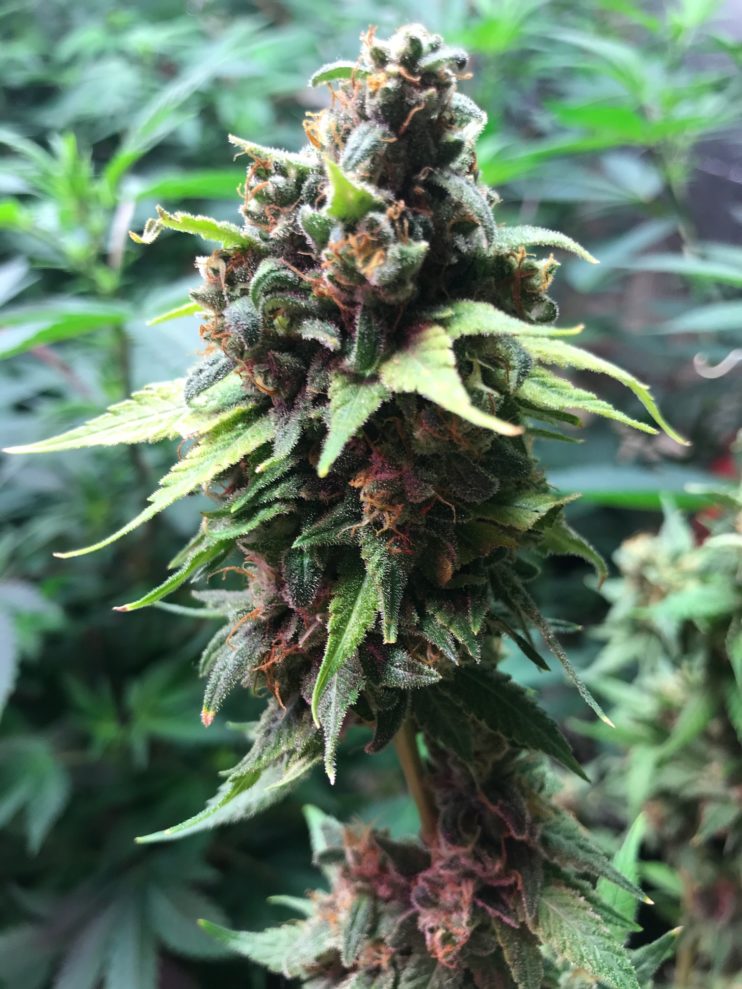
 

Gold leaf strain

The first time I actually smoked it was in April. I bought some feminized Girl Scout Cookie Extreme and Gold Leaf seeds from the Bergman website and germinated them on Christmas day.

I use Bergman because I’ve never had a bad experience buying seeds on his website and the plants are always great.

I grew them in the veg cycle until the 2nd week of February then switched to the flowering cycle until April 15. They dried pretty fast and were ready to smoke by the end of the month.

The veg cycle is always shorter for me because I’m a stealth, indoor grower with ceiling height restrictions; I can’t let my plants get too tall or they’ll grow into my lights.

Anyone growing in a basement, spare room or grow tent must consider the height of the plant when deciding when to start the flowering cycle.

Note: there are methods, training etc. that I don’t do if you need/want smaller plants. Search that on Google for more info.


I personally grow all three of these strains because they are FANTASTIC !!!

I’VE GROWN ALL OF THESE STRAINS.

GET YOURS SEEDS RIGHT NOW BEFORE YOU FORGET-CLICK THE IMAGE BELOW NOW

 

Gold Leaf Seeds on sale


Because my basement has a 7 foot ceiling with actual tree trunks as ceiling joists  I need to keep my plants around 48 inches tall or less. If a ratchet type hanger and hook  is used along with modern LED lights they’ll hang down about 12 inches.

This is not a rule and it’s very strain dependent but if you want to keep the top of your plants about 20 inches from the lights they need to be kept at a height of less than 52 inches tall.

I have switched to using the new style LED lights that are white and really bright. You MUST be careful how close you allow your plants to get to them. I have seen light stress at 18 inches on three different strains; AK 47, OG Kush and Gold Leaf which has been a problem for me (note to self: LED driver has dimming adjustment-figure out how to dim the lights already).

In order to keep my plants 48 inches tall or shorter, I top them when they are about 8” tall. Then I’ll wait about 2 weeks or until the new shoots start then top them again.

The Gold Leaf Strain is perfect for me because they respond to the topping very well and give me a lush, bushy, 42- 48 inch tall plant with about 6 sticky tops that after 30 days in the flowering cycle, I have to wear gloves when I’m trimming them, removing leaves etc. because they are so gooey already. I get almost 3 ounces from each plant.

The buds are a nice size and compact and when I say compact, I mean they are really tight. They are perfect for using a one hitter. A nice push/scrape and it fills perfectly every time.
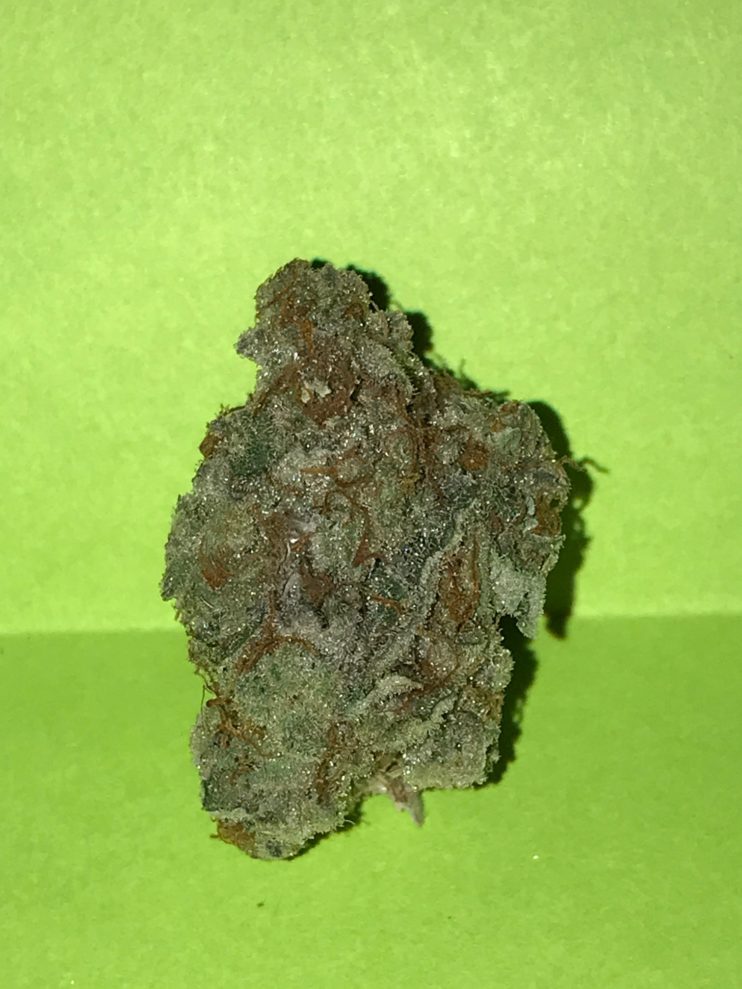
Gold Leaf Strain

Be careful if using a grinder. The buds are so tight they can get ground too much and I suggest giving them just one turn and use your fingers to break them down further for joint rolling.

As far as growing the plant; they are hearty, can handle nutes and need very little care. The seeds germinated in three days using 4 inch peat rings in a covered plastic tray on a heating pad.

Without the heat I would guess they would germinate in 5-7 days if not longer.

I stopped using paper towels to germinate seeds 10 years ago LOL and I don’t soak the seeds in water unless they don’t pop in the peat rings which doesn’t happen very often.

I use the peat rings because it makes moving around a delicate seedling, for lack of a better word(s), easy peasy.

Why anyone would want to use tweezers or their fingers to pick up a fragile sprouted seed is beyond me.

All you have to do is place a dry seed in the moistened peat ring and you’ll never touch it again.

Keep your seedlings from stretching too much by having light directly over them while keeping the air moving.

You don’t want to knock them down but I have noticed they stretch less when the little seedlings are kept moving.


This is my soil mix formula; it’s great, easy to put together and if you use it along with Dyna-Gro nutrients you’ll have perfect plants. I will be adding a fish fertilizer as a test for my next grow. I’ll see if I get any improvement in my plants.

Read this article about pot size to help you decide which size is best for you.

Do be careful how close you allow your Gold Leaf plants to the lights. I burned the tops of one plant when it got about 16 inches away from a Mars Hydro TS 1000. For the price it’s hard to beat the Mar’s light.

Moving them to about 24 inches away solved that problem and until further notice I’m using that distance. I do have to figure out how to dim the lights. The LED driver has an adjustment screw that I haven’t tried yet.

As I mentioned earlier I also start flowering my plants a little earlier because for most strains, they have a growth spurt after the flowering cycle commences so I’ll start to flower after only about 6 weeks in the veg cycle; this along with topping early helps keep the plants at the perfect height for me.


Note: I have recently switched to the Veg light schedule of 20 hours on and 4 hours off and my plants have responded well to this change. Because my veg cycle is shortened I wanted to boost the growing a little and it has worked well.


During the veg cycle I use Dyna-Gro’s Foliage Pro, Pro TeKt and PH down during every watering; roughly about once per week. Gold Leaf has no problem with this.

I also use a new product from Dyna-Gro called Dyna-ZYME which is supposed to keep the roots clean for faster absorption etc. I use that every other time I water. I’m still testing the Dyna-ZYME and will publish something about that in the future.

I have well water that is a 7 PH out of the faucet and when I add the nutrients to the water, the PH stays the same. For me, weed grows best at my house with a PH range of 6.0 – 6.5 so I treat it with PH-Down every watering.

Finding a decent priced PH meter is tough. Forget the $10 ones; they are a waste of money. I finally settled on a meter from Luster Leaf for about $25 on Amazon. It took me a while to get the hang of it but now I can get the PH fast. Note: it only works in soil.

About two weeks before I start the flowering cycle I’ll switch from Foliage Pro to Dyna-Gro’s BLOOM, continue to use the Pro-TeKt, PH-Down and Dyna-ZYME plus add Mag-Pro every other watering.

Mag-Pro is a supplement high in phosphorus, magnesium and sulfur which is great for the flowering cycle.


I flower the Gold Leaf for 65 days. When I harvest, I’ll pull off the large leaves while the plant is still in the pot. Then I’ll trim a little closer saving all the trimmed leaves for later use as I’m going to make hash or something out of them for the first time. Just think, I’ve been tossing the trim away for 30+ years!!

I’ll hang the whole plant in a dark fairly cool room and use a fan 24/7 to keep the air moving. I also try and keep the branches from touching each other. This is a critical time and you most watch for mold.

The Gold Leaf plants dried in around 10 days. IMO, the buds are ready to be picked and placed into a glass jar with a lid when the branches snap when you bend them.

Every day I open the jars for 10 minutes to allow the moisture rich air to escape. This is an important step so do not forget.

The bud can be smoked at any time after it’s ready for the jars but will not crumble very well or be easy to handle. Easiest way to smoke a really fresh bud is just grab a chunk of a bud and use a pipe.

If you want to dry those fresh buds a little more so you can roll a joint use an oil filled space heater; the kind that looks like an old fashioned heat register. Put it on high, place a sheet of white paper on the heater top. Place your buds on the paper and cover it with another sheet.

On top of that place a magazine or a weekly newspaper.  A 1500 watt heater will dry those buds in about 20 minutes but you must keep your eyes on them as they could get dryer than your mouth after a joint of OG Kush.

I think Gold Leaf is an awesome strain, it gives me a great high and it’s easy to grow. I will keep a mother on hand for the next year or so for cloning.

You can learn how I stealthy grow all types of marijuana strains indoors at my website: https://growingweedindoors.org/

All the information is free and I’m easy to get a hold of for any questions/help you may need by using any comment box you’ll see on many of the pages or using the contact form you’ll see in the top navigation bar.

Please support my website by using the links below to purchase items on Amazon, Thank You!


These are the products I use to grow the best weed



Vegan Matar Tofu

By: Richa

This Vegan Matar Tofu is a plant-based spin on Matar Paneer(Pea Paneer Curry). It uses crispy pan-fried or baked tofu instead of paneer cheese which is simmered in a flavorful Indian sauce! Serve with flatbread for the ultimate Indian comfort dinner. Soyfree substitute included

vegan matar tofu served in a small skillet with a side of flatbread

This quick vegan Tofu “paneer” and pea curry is my vegan version of paneer pea curry. Matar Paneer(curried pea paneer cheese)  used to be a popular weekend meal. It has its signature spices and flavors and can be made with thicker or thinner sauce.

vegan tofu matar curry sprinkled with chopped cilantro in a skillet

The sauce is flavored with toasted cumin seeds, some fresh julienne ginger, dried fenugreek leaves and thickened a bit with besan or flour.

In the traditional version fresh or toasted cubes of paneer are added to the sauce. I use baked tofu instead of the paneer cheese. The tofu gets flavored with spices and nutritional yeast to add a cheesy flavor. and along with the peas, it makes for an amazing vegan matar tofu paneer.

The sauce is onion tomato based and usually doesn’t include a creamy component. You can add in some non dairy cream or coconut milk per preference.

vegan matar tofu with peas served with a side of flatbread

More Vegan Tofu curries:

Malaysian Tofu Curry

Baked Tofu Curry (Easy Tofu Makhani)

Asparagus Curry with Spinach & Chickpea-Tofu

Madras Curry Tofu Casserole

Continue reading: Vegan Matar Tofu

The post Vegan Matar Tofu appeared first on Vegan Richa.

Vegan Irish Stew

By: Richa

This easy 1 Pot 30 minute Vegan Irish Stew comes together within minutes with simple ingredients and has the most comforting, round and earthy flavor. Leftovers keep for days and will taste even better the next day. Make it for dinner tonight!

a bowl of vegan irish stew in a soup bowl

There is nothing quite as comforting as a big bowl of stew. This recipe for vegan stew is super easy made with simple ingredients that bring a lot of flavor!

Traditional Irish stew is made with pork or beef and often stout or cider is added. And while we do skip the meat and use a satisfying mix of potatoes, mushrooms and carrots instead, we also add beer to give this stew its deep earthy flavor.

overhead shot of a pot of vegan Irish Stew

The stew is thickened with flour but you could add cornstarch instead. Also feel free to play around with the veggies. Sweet potatoes would be nice here and so would be peas or even asparagus.

Got some vegan protein left from a past dinner or some vegan sausage? Toss it right in.

a pot of vegan irish stew

More vegan soups and stews:

Vegan French Onion Soup

Vegan Hot and Sour Soup with Ramen

Vegan Lentil Mushroom Stew

Green Chili Enchilada Soup

Continue reading: Vegan Irish Stew

The post Vegan Irish Stew appeared first on Vegan Richa.

❌