 Login
LoginCloud Gaming Is Looking More Attractive Than Ever for All the Wrong Reasons

With prices for PC parts skyrocketing, maybe streaming your games isn't so bad... if you can stomach the subscription.




Zork, the classic text-based adventure game of incalculable influence, has been made available under the MIT License, along with the sequels Zork II and Zork III.
The move to take these Zork games open source comes as the result of the shared work of the Xbox and Activision teams along with Microsoft’s Open Source Programs Office (OSPO). Parent company Microsoft owns the intellectual property for the franchise.
Only the code itself has been made open source. Ancillary items like commercial packaging and marketing assets and materials remain proprietary, as do related trademarks and brands.
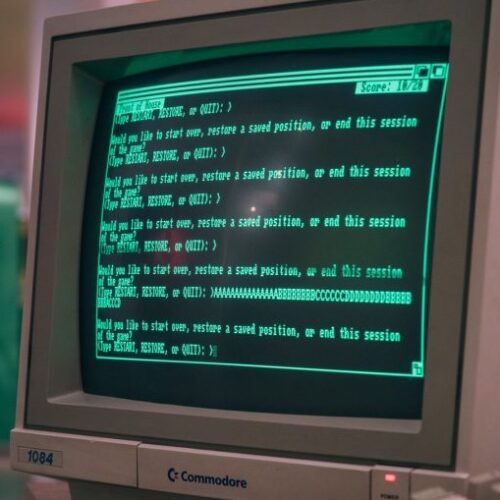
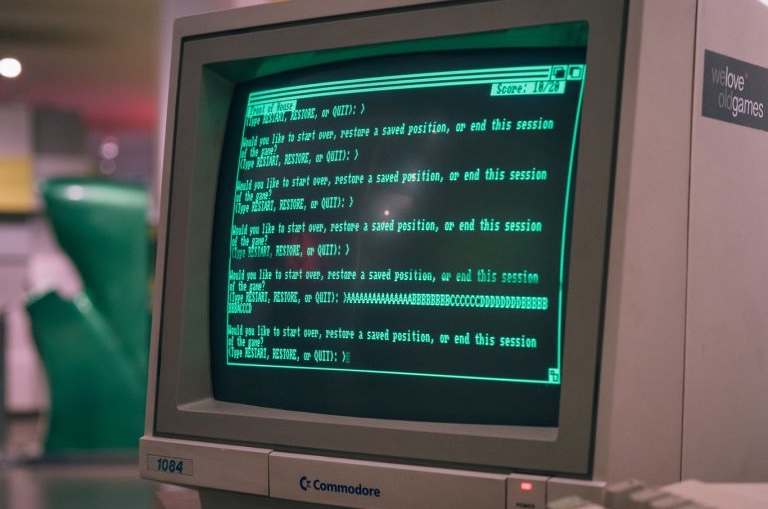
© Marcin Wichary (CC by 2.0 Deed)

In the wake of the success of the Steam Deck, a portable gaming PC aimed at a casual audience, it was inevitable that Valve Software would dip its hands back into the hardware market. It just wasn’t expected quite this soon, or that Valve would pick quite so many fights at once.
Valve, headquartered in Bellevue, Wash., announced Wednesday that it plans to expand its line of Steam Hardware gaming products. In addition to the Steam Deck, next year will see the release of a new Steam Machine, which is designed for living room play; a new Steam Controller, a high-durability game pad with a similar design to the Deck; and the Steam Frame, an all-in-one VR headset.
We currently know very little about the three new pieces of Steam Hardware aside from their existence and, broadly, their specs. Valve has said the new Machine is “six times as powerful” as the Deck, for example. Other details such as pricing are currently planned for release early next year.
The pricing is the biggest X-factor here. It’s not discussed as often as other factors, but one of the major reasons behind the Steam Deck’s overall success is arguably its price tag.
You can walk away with a functional Steam Deck for as little as $399, although the higher-end models are worth the extra money. By comparison, competitors’ models such as Microsoft’s Xbox ROG Ally start at $599.99, and several break the $1,000 mark.
Valve can certainly afford to pursue a razor-and-blades strategy with its hardware. Depending on who you choose to believe, anywhere from half to 75% of PC gaming worldwide goes through Steam. While Valve has its share of controversies and detractors, it’s also found a real-life infinite money cheat.
While the PC sector of the games industry is currently smaller than the console and mobile markets, it’s still a multi-billion-dollar industry. It’s also growing, with larger numbers of both younger players and the Asian market shifting to PCs for their gaming. Appealing to those audiences with an all-in-one desktop device is a smart overall move, especially if Valve opts to keep the price tag as low as it did for the Deck.
If Valve takes that affordability approach, then the new Steam Hardware is potentially disruptive to several different areas within the gaming industry. It could pose particular issues for Microsoft, which has recently begun talking about plans for its next-generation Xbox, and to Meta’s current prominence within the VR space.
The rumored plans for the next Xbox, at time of writing, are that it’s coming in 2027 and will essentially be a small, ultra-specialized PC. The Xbox ROG Ally’s unique operating system is seen as a sneak preview of what’s next for the living-room model, which will abandon Xbox’s unique identity in favor of a Windows-based “Xbox Experience.”
Valve’s Steam Machine would theoretically ship with a similar overall feel. It would also have no capacity for physical media whatsoever, running entirely off of digital downloads from users’ Steam libraries.
Most crucially, it isn’t a Windows product. One of Valve’s stated goals for over a decade has been to promote PC gaming on Linux, in order to present players with an option besides Windows. With the next Xbox all but confirmed to be running Windows 11 (and thus Copilot), I’ve heard from a lot of players who are looking for alternatives.
For most of those players up until now, that alternative would’ve been buying a system from PlayStation or Nintendo. Now Steam is once again trying to take over consumers’ living rooms. If the Steam Machine is affordably priced, that could make it an attractive option for consumers who’re looking for a way out of Microsoft’s ecosystems.
Since the Steam Machine features the same plug-and-play options as the Steam Deck, it’s also an easy way to pick up a reasonably powerful computer that runs Linux out of the box. Plug a monitor, keyboard, and mouse into the Steam Machine and it automatically transitions into a Plasma desktop environment.

In a similar vein, the Steam Frame could not be more deliberately positioned as a competitive product for the Meta Quest line of virtual reality hardware. While the VR sector is still more active than people seem to realize, with steady growth in the market year-over-year, Meta currently controls an outsized amount of the conversation in the space. This is by virtue of selling the highest-end and most affordable headsets on the market.
Meta’s dominance in VR has actually been kind of a problem for me, because Meta is annoying. Meta Horizon is an obnoxious overall setup whenever I pull out my Quest; it keeps trying to shake me down for more personal details for some reason; and it’s got that inescapable Zuckerberg stink on it. If Valve can present a comparable option for a standalone headset, it could make some real headway in the space.
That having been said, I genuinely doubt that anyone at Valve itself is thinking in these terms. The general thrust behind the Steam Deck, according to its architects when I spoke to them a couple of years ago, was that it was done largely for the hell of it. While Steam higher-ups like Gabe Newell have always been forthright about their disdain for Windows, I’d be shocked if Valve’s new hardware venture is any kind of deliberate attempt at disruption. At most, it’s a new option.
It’s more likely that this round of Steam Hardware, and anything that comes in the future, is simply Valve finally kicking a project out the door. At this point in the company’s life, with no shareholders to appease, it’s still consistently content to pursue its own weird goals.

For the last two years, Microsoft’s video game division has been working to meet financial targets that are well in excess of the typical industry standard, which has led to waves of layoffs, canceled projects, and a general perception that the company is scrambling.
These allegations come from a new report from Bloomberg journalists Jason Schreier and Dina Bass, who reported that Xbox has been told it’s expected to work toward a profit margin of 30% across the board.
As far as can be told from outside Microsoft, this is significantly above Xbox’s profit baseline. A typical quarterly report from Microsoft only discloses revenue, but as noted by TweakTown, Xbox head Phil Spencer testified in court in 2022 that “the Xbox business today runs at a single-digit profit margin.”
It’s worth noting that even the biggest game studios usually maintain a profit margin of roughly 20% under typical circumstances. As an example, Xbox subsidiary Activision Blizzard, which runs some of the most popular games-as-a-service in the world today, “only” had a profit margin of 22-to-25% two years ago before Microsoft’s acquisition completed.
Even Sony, Microsoft’s primary competitor in the console space and the makers of the PlayStation 5, reportedly only runs at a 9.5% profit margin. Through that lens, any video game company that’s honestly eyeing a consistent 30% is living in a dream world.
The new financial target reportedly came directly from Microsoft CFO Amy Hood in the fall of 2023, which marked the start of a series of big decisions and policy reversals at Xbox.
Since then, Microsoft has drawn fire for multiple waves of layoffs; reorganized several subsidiaries such as Halo Studios; raised the base MSRP of the Xbox Series X twice so far this year; made moves to phase out physical media; officially ported many of its hit first- and third-party games to PlayStation and Switch; and canceled multiple highly-anticipated game projects such as Rare’s Everwild, a reboot of Perfect Dark, and ZeniMax’s MMO code-named Project Blackbird.
Earlier this month, Microsoft hiked the price of its Xbox Game Pass subscription service, claiming it was part of a significant “upgrade package.” Less relevantly to consumers, it has also allegedly raised the price of Xbox development kits by $500, blaming unspecified “macroeconomic” factors.
Some of that, to be fair, is due to circumstances outside Xbox’s control such as the ongoing chaos over tariffs. This year has been a rough time to be a hardware manufacturer.
Xbox is also apparently locked into at least one more console generation, according to recent interviews with Microsoft’s Sarah Bond. The phrase that keeps coming up is “very premium, very high-end curated experience.” If the recently-released Xbox Ally is any indication, the next-gen Xbox will be something more like an expensive, user-friendly Windows PC than what we’d currently recognize as a game console.
For a while now, though, Xbox has come off like its left hand doesn’t know what the right is doing, which made little sense in the wake of reports that the division was both growing and pulling in increased revenue. If it’s being forced to contend with unrealistic expectations from higher up at Microsoft, however, that would explain the overall sense of disorganization.
This is one of the most infamous types of “creative accounting” in the video game industry: issue an inflated revenue forecast, then blame developers/titles when their games fail to reach those numbers. Square Enix notoriously came under fire for this in the 2010s with releases like the 2013 reboot of Tomb Raider. It was a solid success (3.4 million copies sold), but its publisher wanted a blockbuster, so it regarded the game as a failure. History repeats.
In theory, Xbox ought to be one of the leading voices in video games as a hobby and medium right now, but it’s being forced to burn much of its time and effort in an attempt to meet a profit goal that no company on Earth could expect to reach.
If you’re inclined to believe the rumor that’s been in circulation in Seattle this year, that Microsoft’s current leadership would like to shut down Xbox entirely so it can use those resources for more AI research, this is more data for your theory.
