Login
LoginCan a “Flamingo” Cruise Missile Help Ukraine Turn the Tide?
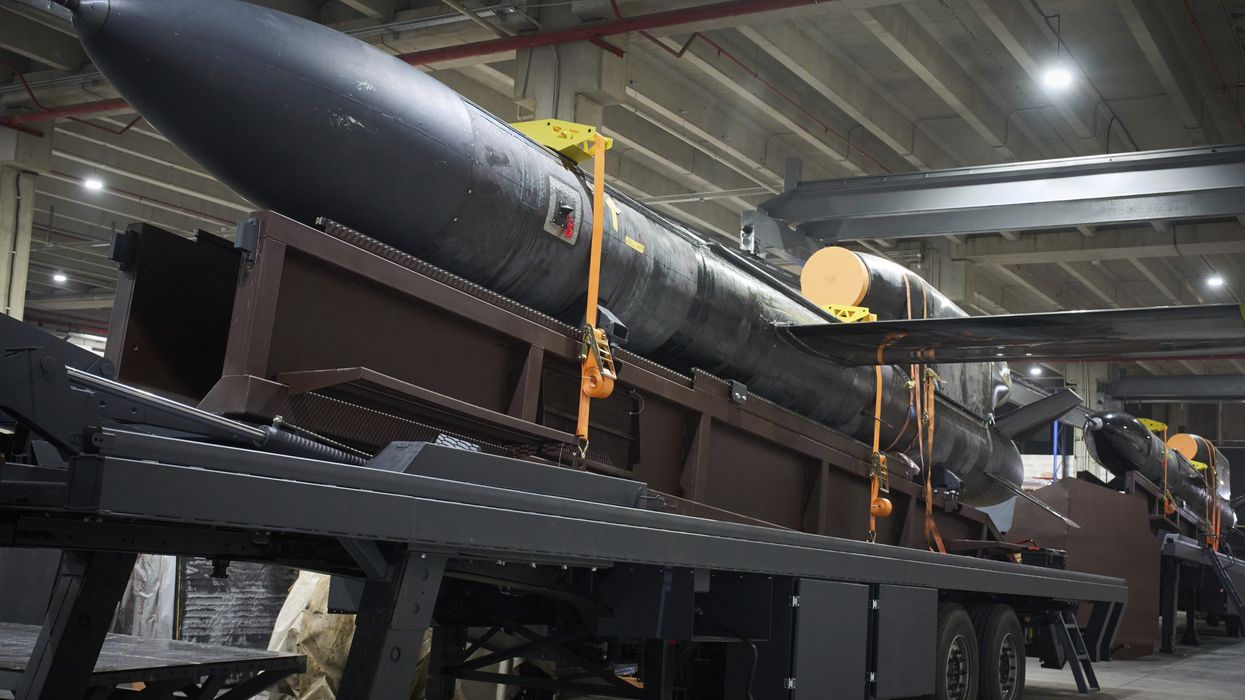
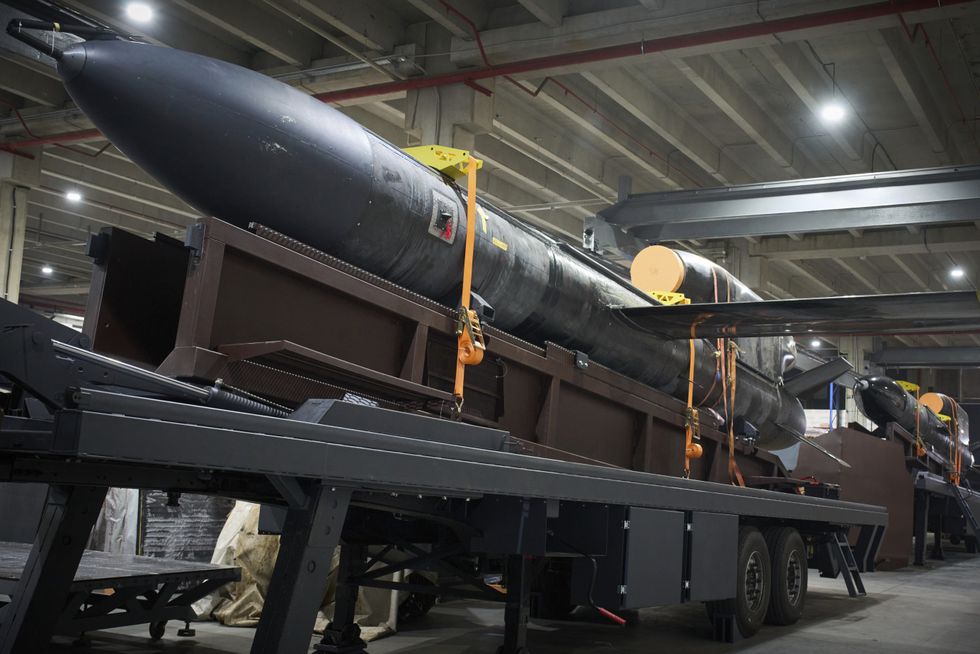
DEEP DIVE – Ukraine’s President Volodymyr Zelensky calls it “our most successful missile.” One expert says it’s "Ukraine’s strongest security guarantee.” And former CIA Director and Cipher Brief expert Gen. David Petraeus says it has the potential to be “a game changer” in the war against Russia.
They are talking about the FP-5 Flamingo, a ground-launched, subsonic, made-in-Ukraine cruise missile, built to hit targets deep in Russian territory.
Not since the first salvos of Russia’s 2022 invasion has Ukraine’s defense industry sounded so enthusiastic about a weapon manufactured on its soil. The successes of Ukrainian defense technology are well known; as The Cipher Brief reported last month, the country is now widely believed to have the world’s most innovative defense sector. Its drone technology in particular continues to earn rave reviews from experts and western defense companies alike.
But the Flamingo is something different – a missile with a reported range of 1800 miles and the ability to carry more than 2,000 pounds of munitions, meaning that in one strike it could cause greater damage than even a swarm of drones. Compared to the top-class American Tomahawk cruise missile, the Flamingo is believed to be less accurate but with a similar range and a much heavier payload. And because it is manufactured in Ukraine, the Flamingo can be launched against Russian targets without Western-imposed restrictions.
“The Flamingo may actually be a game changer,” Gen. Petraeus said at the Cipher Brief’s annual Threat Conference last month. “You add that capability to what Ukraine has already done,” he said, referring to the recent drone campaign against Russia’s oil sector, “and [the Flamingo] will extend this dramatically.”
Zelensky said last month that the Flamingos had carried out their first missions, including a three-missile attack on a Russian security base in northern Crimea. Last week, Ukraine’s General Staff said it had used Flamingos as part of a strike that targeted “several dozen” military and infrastructure sites inside Russia and in occupied Crimea.
The Flamingo’s manufacturer, the Ukrainian firm Fire Point, claims to be producing between 1-2 missiles per day, with plans to scale to 7 per day by year’s end, for a 2026 projected total of more than 2,500. "By December we’ll have many more of them,” Zelensky told reporters in August. “And by the end of December or in January–February, mass production should begin."
Experts say every one of those missiles will dwarf the power of a drone weapon.
“With the drone-strike campaign, you have the challenge that they mostly carry fairly small warheads,” John Hardie, Deputy Director of the Russia program at the Foundation for Defense of Democracies (FDD), told The Cipher Brief. “The damage is far less than you could do with a one-time warhead that’s carried by the Flamingo.”
All of which raises the question: Might the Flamingo change the course of the war?
How the Flamingo was born
Even by the lofty standards of Ukraine’s recent defense-tech achievements, the Flamingo’s origin story is an inspiring one. And it dates to the last days of the Cold War.
In the wake of the Soviet Union’s collapse in 1991, Ukraine agreed to give up not only its nuclear weapons but also its considerable arsenal of Kh-55 cruise missiles. And after Russia’s 2022 invasion of Ukraine, while Zelensky and other Ukrainian leaders pressed constantly – and with mixed success – for western weaponry and security guarantees, they also began turbocharging their domestic defense industry.
“Ukrainians were authors of the Soviet space program and rocket program,” Oleksiy Goncharenko, a member of Ukraine’s Parliament, told The Cipher Brief. “When you have a lot of experience and when your people are smart enough, then the result is obvious. You have technologies which other countries respect.”
For more than three years, however, Ukraine remained largely dependent on Western countries for high-end, long-range strike capabilities. That led to the creation of a made-in-Ukraine cruise missile program.
The result is the FP-5 Flamingo, developed by Fire Point, a former casting agency that spun itself into a defense firm in the summer of 2022. In 2023, Fire Point produced its first FP-1 attack drones, ultimately turning out 200 FP-1s that year; this year the figure is expected to hit 20,000. Its cruise missile project has moved at a similar warp speed: in August, less than a year after it began work on the cruise missile, the company was showing off the prototype; soon after that, the first Flamingos were flying.
“We came up with it pretty fast,” Iryna Terekh, the company's 33-year-old Chief Technical Officer, told Politico. “It took less than nine months to develop it from an idea to its first successful tests on the battlefield.”
Terekh and other Ukrainian defense entrepreneurs speak often about how the Russian invasion has motivated their work – what Goncharenko calls “the unfortunate inspiration of war.” Terekh fled a Russian-occupied village near Kyiv in the early days of the war, and says her car still has a hole from a Russian bullet. She joined FirePoint as a partner in June 2023.
Ralph Goff, a former Senior Intelligence Executive at the CIA, calls the Flamingo production story “combat Darwinism at its best.”
“If the West isn't going to give them the long-range weaponry that they want to carry out their strategic attacks, they'll develop them themselves,” Goff told the October Cipher Brief conference. The Flamingo, he said, “is a serious piece of offensive weaponry.”
As for the missile’s unusual name, that traces to an in-house story at Fire Point, about the day when someone painted a solid rocket booster prototype pink, in a nod to the women involved in the male-dominated world of weapons production. Later, when the missiles were ready for testing, the company needed a bright color to help locate post-launch debris. Pink paint was available – and that led to the Flamingo moniker. The Pink has gone – missiles used in actual strikes are colored less conspicuously – but “Flamingo” stuck.
“You don’t need a scary name for a missile that can fly 3,000 kilometers," Terekh said. "The main goal is for a missile to be effective.”
Need a daily dose of reality on national and global security issues? Subscriber to The Cipher Brief’s Nightcap newsletter, delivering expert insights on today’s events – right to your inbox. Sign up for free today.
Reality check
If Fire Point’s claims are borne out, the Flamingo will have a reach and power on par with western cruise missiles, and an arsenal to match any European nation’s other than Russia.
Experts warn that behind that “If” lie multiple concerns – most of them due to the fact that there has been minimal independent verification of the company’s claims.
“In the defense industry, it’s easier to make statements than to actually implement them,” Ukrainian lawmaker Roman Kostenko said of the Flamingo’s potential, speaking to Radio NV last month.
One issue involves accuracy, which experts say Fire Point had to sacrifice to a degree in its push for a low-cost, fast-to-market weapon. In the Crimea strike, one missile reportedly landed some 100 meters from its target.
“Because it's low-cost, you kind of skimp on some of the more high-end features you might see in a more exquisite missile, guidance and accuracy being one of them,” Hardie said. “It's a relatively inaccurate missile at least by modern standards.” But he added that if the pace of manufacturing ultimately yields the high numbers Fire Point has promised, then “that tradeoff [high volume for accuracy] makes sense.”
Balazs Jarabik, a former European Union diplomat and analyst for RPolitik, has studied the Flamingo project since its early days. He doubts that Fire Point can reach its production goals.
“The Flamingo is real, but the production capacity is overstated, at least so far,” Jarabik told The Cipher Brief. He noted that an earlier Ukrainian-made missile, the Neptune, has yet to reach its promised scale, and that for all its defense-sector successes, Ukraine must contend with wartime supply-chain issues that would bedevil any weapons manufacturers. He and Hardie said that scaling to hundreds of Flamingos per month will require consistent supplies of everything from engines to warheads to electronics for guidance systems.
“I'm a little skeptical, but it's possible the Ukrainians will get there,” Hardie said, and Gen. Petraeus said that the Ukrainians “really need to double down” on the pace of the Flamingo manufacturing. “They're trying to get that into full production.”
Fire Point must do so while Russia targets Ukraine’s young defense companies as well as the country’s energy infrastructure. The latter is critical, given the defense sector’s high demand for energy. For one piece of the Flamingo supply chain, the company has already found a workaround: in September, Fire Point announced that Denmark had agreed to produce fuel for the Flamingo, effectively removing a key production facility from the war zone. The announcement provoked a warning from the Kremlin, which called the Danish plans “hostile.”
That response raises the question of Russian retaliation – a concern that has accompanied the delivery of virtually every new weapons system to the Ukrainian side. Some experts fear that any successful, high-impact Flamingo strike against Russia, carried out with help from Western intelligence – the destruction of a weapons factory deep in Russian territory, for example – would risk a NATO-Russia fight that the West has been desperate to avoid. Others doubt that Vladimir Putin has any interest – at least not in the current moment – in any escalation that might lead to conflict with the West.
“The Russians have been consistently more bark than bite,” Hardie said. “They know that attacking a NATO country in an overt military way – not the sort of gray-zone, below-the-threshold-of-war stuff they've been doing, but an overt military missile strike – that's an act of war. And Putin doesn't want any part of a direct conventional fight with the United States and NATO allies.”
Are you Subscribed to The Cipher Brief’s Digital Channel on YouTube? There is no better place to get clear perspectives from deeply experienced national security experts.
What to watch for
Even analysts who are skeptical about the Flamingo’s future note that it would take only a few successful strikes to inflict severe damage, and that if Fire Point can get anywhere close to its 2500-missile-per-year pledge for 2026, the battlefield impact could be profound. Beyond the Russian oil refineries and other energy facilities the Ukrainians have attacked lately, the Flamingo will put more military targets in range as well. The holy grail might be the joint Russia-Iran manufacturing facility in Tatarstan that is turning out the deadly Shahed drones, at a scale that the Ukrainians must envy.
Experts say that with hundreds of Flamingos at the ready, Ukraine might achieve what Jarabik refers to as “mass saturation,” an ability to bring a heavy and varied drone-and-missile threat to military and energy targets across all of European Russia.
“If you're Ukraine,” Hardie said, “you'd like to be able to combine these missiles and drones into a complex strike package much as the Russians are currently doing, and keep the Russian air defense on its toes.”
“The Flamingo is heavy, and it’s also relatively easy to shoot down,” Jarabik said. “And so they will need mass saturation – a lot of these missiles, but with drones or other weapons too, to get through to the targets. They're going to have to produce enough that they can have a sustained impact, …and I don't think we're going to be there anytime soon.”
Then Jarabik added: “All that said, you have to acknowledge Ukraine’s innovation and skill. And I think [the Flamingo] is a big thing. Absolutely.”
As for the accuracy concerns, Ukrainian officials noted that while one of the Flamingos fired at Crimea did miss its mark, the two others leveled a barracks and brought a “massive destructive power,” with craters measuring 15 meters in diameter.
No one is touting the Flamingo as a replacement for the array of Western missiles that have been delivered to Kyiv. The Ukrainians will still covet the German Taurus, and the British-French Storm Shadow/Scalp cruise missiles, which are more accurate, though they come with conditions attached to their use. The diversity and volume of weapons systems, experts say, are what could make a real difference. And the Flamingo adds a powerful new element to the Ukrainian arsenal.
“No one system or weapon is going to be the decisive game changer,” Hardie said. “I don't think there's any such thing as a wonder weapon. That being said, for a supporter of Ukraine, it's really encouraging to see Ukraine being able to move out on its own more in terms of long-range strike capabilities. They are taking these steps forward and really taking it to the Russians right now with this campaign against energy infrastructure. That's been impressive to see and I think it kind of augurs more to come. So if I were the Russians, I would be worried about that.”
Read more expert-driven national security insights, perspective and analysis in The Cipher Brief because National Security is Everyone’s Business.