My Lightspeed Retail POS review covers pricing, inventory tools, ecommerce features, and where it outperforms competitors. Learn whether it fits your retail business.
My Lightspeed Retail POS review covers pricing, inventory tools, ecommerce features, and where it outperforms competitors. Learn whether it fits your retail business.
Read AI CEO David Shim discusses the state of the AI economy in a conversation with GeekWire co-founder John Cook during a recent Accenture dinner event for the “Agents of Transformation” series. (GeekWire Photo / Holly Grambihler)
[Editor’s Note: Agents of Transformation is an independent GeekWire series and 2026 event, underwritten by Accenture, exploring the people, companies, and ideas behind the rise of AI agents.]
What separates the dot-com bubble from today’s AI boom? For serial entrepreneur David Shim, it’s two things the early internet never had at scale: real business models and customers willing to pay.
People used the early internet because it was free and subsidized by incentives like gift certificates and free shipping. Today, he said, companies and consumers are paying real money and finding actual value in AI tools that are scaling to tens of millions in revenue within months.
But the Read AI co-founder and CEO, who has built and led companies through multiple tech cycles over the past 25 years, doesn’t dismiss the notion of an AI bubble entirely. Shim pointed to the speculative “edges” of the industry, where some companies are securing massive valuations despite having no product and no revenue — a phenomenon he described as “100% bubbly.”
He also cited AMD’s deal with OpenAI — in which the chipmaker offered stock incentives tied to a large chip purchase — as another example of froth at the margins. The arrangement had “a little bit” of a 2000-era feel of trading, bartering and unusual financial engineering that briefly boosted AMD’s stock.
But even that, in his view, is more of an outlier than a systemic warning sign.
“I think it’s a bubble, but I don’t think it’s going to burst anytime soon,” Shim said. “And so I think it’s going to be more of a slow release at the end of the day.”
Shim, who was named CEO of the Year at this year’s GeekWire Awards, previously led Foursquare and sold the startup Placed to Snap. He now leads Read AI, which has raised more than $80 million and landed major enterprise customers for its cross-platform AI meeting assistant and productivity tools.
He made the comments during a wide-ranging interview with GeekWire co-founder John Cook. They spoke about AI, productivity, and the future of work at a recent dinner event hosted in partnership with Accenture, in conjunction with GeekWire’s new “Agents of Transformation” editorial series.
We’re featuring the discussion on this episode of the GeekWire Podcast. Listen above, and subscribe to GeekWire in Apple Podcasts, Spotify, or wherever you listen. Continue reading for more takeaways.
Successful AI agents solve specific problems: The most effective AI implementations will be invisible infrastructure focused on particular tasks, not broad all-purpose assistants. The term “agents” itself will fade into the background as the technology matures and becomes more integrated.
Human psychology is shaping AI deployment: Internally, ReadAI is testing an AI assistant named “Ada” that schedules meetings by learning users’ communication patterns and priorities. It works so quickly, he said, that Read AI is building delays into its responses, after finding that quick replies “freak people out,” making them think their messages didn’t get a careful read.
Global adoption is happening without traditional localization: Read AI captured 1% of Colombia’s population without local staff or employees, demonstrating AI’s ability to scale internationally in ways previous technologies couldn’t.
“Multiplayer AI” will unlock more value: Shim says an AI’s value is limited when it only knows one person’s data. He believes one key is connecting AI across entire teams, to answer questions by pulling information from a colleague’s work, including meetings you didn’t attend and files you’ve never seen.
“Digital Twins” are the next, controversial frontier: Shim predicts a future in which a departed employee can be “resurrected” from their work data, allowing companies to query that person’s institutional knowledge. The idea sounds controversial and “a little bit scary,” he said, but it could be invaluable for answering questions that only the former employee would have known.
Square works well for smaller operations, but scaling businesses often need pricing flexibility, deeper industry tools, or more control over payments. These alternatives highlight where other platforms outperform Square as needs grow.
Square works well for smaller operations, but scaling businesses often need pricing flexibility, deeper industry tools, or more control over payments. These alternatives highlight where other platforms outperform Square as needs grow.
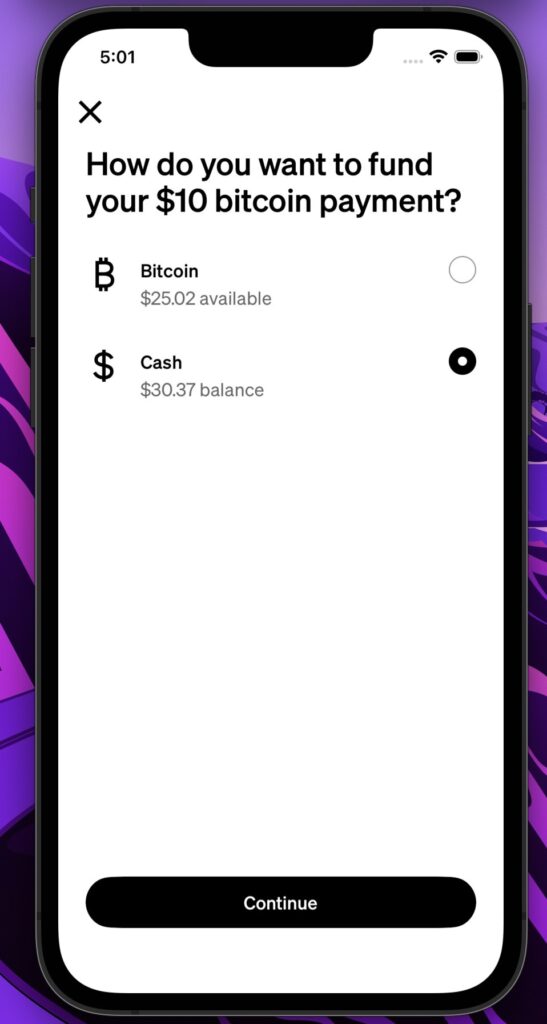
Cash App is making bitcoin more usable for everyday payments. Starting today, the app will let you pay with Bitcoin instantly — even if you don’t hold any — by automatically converting your USD balance on the app into bitcoin for the merchant.
In a series of app features announced today, the app will now spend bitcoin locally, pay in USD over the Lightning Network, and send or receive stablecoins. All these updates are part of Cash Releases, the platform’s first bundled launch of new features, the company shared with Bitcoin Magazine.
With the new ‘Bitcoin Payments with USD’ feature, users can make instant bitcoin payments even if they don’t hold BTC. Cash App will automatically convert USD from a user’s balance into bitcoin for the merchant.
In other words, this makes Bitcoin payments accessible to all 58 million monthly users of Cash App without taxable events or decreasing their Bitcoin holdings.
Square merchants benefit too, with no fees or chargebacks, and the network operates without middlemen. Users can choose any payment path — USD to USD, BTC to BTC, BTC to USD, or USD to BTC — all powered by the open Bitcoin network. It will encourage merchants to ask customers to pay in bitcoin to avoid card fees.
The system works wherever bitcoin is accepted, connecting millions more users to fast, low-cost, borderless payments.
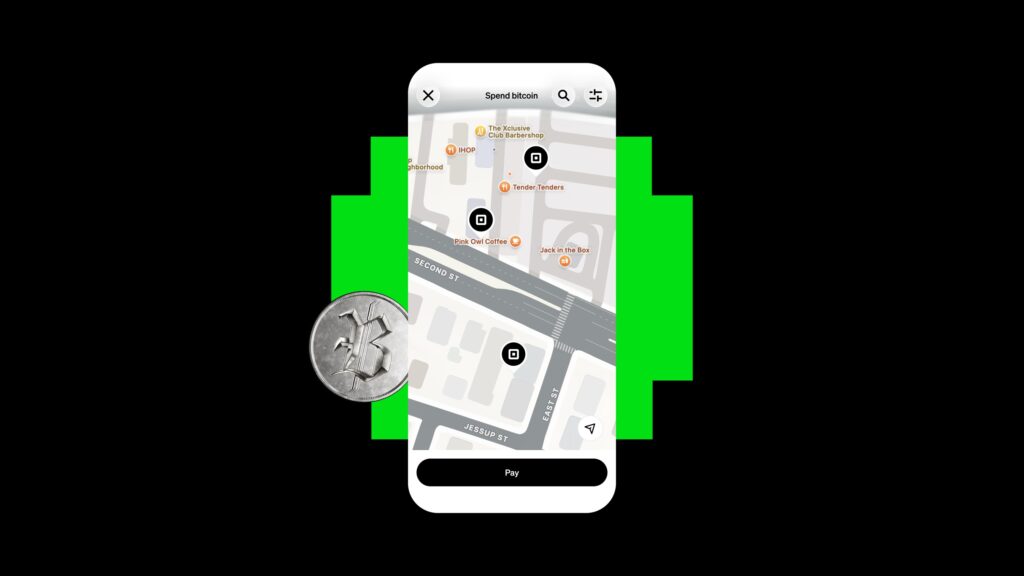
On top of this bitcoin payments feature, Cash App rolled out a Bitcoin Map. Following Square’s bitcoin payments launch, the map shows where local merchants accepting BTC are located, letting customers pay instantly via Lightning QR codes.
About 20% of Americans are open to using bitcoin for daily transactions, the company said, and Cash App wants to make that transition seamless for both consumers and businesses.
In addition to all this, Cash App is introducing stablecoin support. In the coming months, Customers can now send and receive digital dollars globally.
Stablecoins maintain a one-to-one value with the U.S. dollar while enabling near-instant transfers. Cash App will automatically convert received stablecoins into USD.
“Bitcoin was created to be peer-to-peer cash, and Cash App is building tools to make it work as intended — fast, open, and borderless,” said Miles Suter, Bitcoin Product Lead at Block.
When asked about stablecoins and whether they might compete with Bitcoin, Suter told Bitcoin Magazine that “legacy fiat systems are Money 1.0: slow, expensive, closed systems with banking hours and borders. Bitcoin is Money 2.0, the ultimate goal: truly decentralized, open, and permissionless. Stablecoins are Money 1.5, a pragmatic tool and a meaningful improvement from traditional financial rails, but we don’t see them as a competitor to bitcoin.”
Cash App will also enhance their Auto Invest feature, the company said. Scheduled bitcoin purchases now carry no fees or spreads, making it easier and more affordable for users to invest regularly.
“Standard one-time purchases have fees and spreads,” Suter said, “but we’ve built an entire ecosystem of ways to stack sats for free, like Auto Invest, Paid In Bitcoin, and Round Ups. The goal is giving customers multiple options to build their bitcoin position affordably.”
Since 2018, Cash App has helped over 24 million active users buy bitcoin, with features like Paid In Bitcoin enabling automated conversion of direct deposits into BTC.
Bitcoin payments via Square
Earlier this week, Square rolled out Bitcoin payments for U.S. sellers, allowing roughly 4 million merchants to accept BTC through their terminals with no processing fees until 2027.
The system enabled instant transactions via the Lightning Network, first piloted at Compass Coffee in Washington, D.C. Merchants could receive Bitcoin, convert it to USD, or automatically convert part of daily sales into BTC.
When asked about criticism that platforms like Square or Cash App might be centralizing Bitcoin, Suter said, “If you want access to the fiat banking system today, you need a centralized provider. The end goal is self-custody, which is why we built Bitkey. We’re building auto-sweeps to self-custody that will roll out later, and deep Bitkey integration with Square is coming in 2026 for self-custody of funds you receive as payments or convert from daily card sales.”
Through subsidiaries like Cash App, Bitkey, Proto, Spiral, and Tidal, Block is driving Bitcoin adoption across both consumer and developer ecosystems.
The company holds over 8,780 BTC and continues to deepen its integration with Bitcoin, aligning its business strategy with the network’s long-term growth.
According to Suter, the company envisions Bitcoin becoming everyday money and a universal financial infrastructure enabling truly global commerce.
This is a cross-post from Spiral’s blog, the original post can be found here.
Our thesis is pretty simple: we can only make the case that bitcoin is everyday money if people can spend it. Unfortunately, for most of bitcoin’s existence, there just haven’t been many places to spend it.
But then, something happened.
Planets aligned, seas parted, nerds hooted and hollered from rooftops, and Block added support for bitcoin payments to millions of Square sellers, making bitcoin both ubiquitous and easy to activate. Suddenly, almost everyone is seconds away from accepting bitcoin payments. Pretty cool, right? Right? Yeah, except how merchants should accept bitcoin payments isn’t the only problem. Why merchants should accept bitcoin payments. That’s the boogeyman we need to vanquish. It always has been.
How we do this is more apparent and pragmatic than bitcoin tropes about digital scarcity and immutability, neither of which will convert someone running an ice cream shop. What will motivate small business owners to accept bitcoin payments is their bottom line. They’re unlikely to be ideological; they’re far more likely to be practical. And what’s the most common problem in need of a practical solution faced by merchants that only bitcoin can solve in a digital-only world?
Credit card fees and the death of cash.
—
Back when cash ruled everything around everyone, 3% credit card fees on every purchase were just a distant but frightening hypothetical. It was a better time to run a small business, a time when everyone carried cash, businesses universally accepted it, and margins were chonk. This is, obviously, no longer the case.
And yet, this is where it gets interesting: credit card companies have been so successful at ridding the world of physical cash that they’ve created the perfect stage for the bitcoin-minded to make the case for digital cash, a designation that still captures bitcoin’s benefits better than any other. It seems obvious, yet it bears repeating: if a small business’s profit margins are around 6%, which they frequently are, that means credit card fees might eat more than half their profits. Ooph, right? That’s the reality for millions of merchants: ooph.
This is all window dressing, of course, context written in the past tense so you can understand where we’re coming from as we tell you where we’re going.
—
A universally true statement is that we trust the people we can relate to most. Small business owners, it naturally follows, will trust the experiences of other people running small businesses. This is why we’re spearheading a peer-to-peer community exclusively for them, one that is bitcoin service-agnostic, to promote the idea of bitcoin as everyday money.
It’s called the Bitcoin Merchant Community or BMC for short. They’ve got a website, but more importantly, they also have a Facebook Group. There, they’ll find a like-minded community of business owners, both around the corner and around the globe, who want to take back the 3% they lose to credit card fees. They don’t need to be on Square, either, because that won’t work for everyone.
However, getting the word out presents a problem: most small business owners are too busy and not yet invested enough to do the lifting necessary to jumpstart such a community. That’s understandable, so what this initiative needs is passionate people to spread the word, people who are already invested, people who could really stand to get away from their computers for an hour or two.
What it needs are bitcoiners. Yes, you, person reading this blog post.
—
Bitcoin advocacy has been, up to this point, very online. It makes sense: bitcoin is online, and online is where we all sort of live now. But for every level-headed and persuasive pro-bitcoin post that makes it into a non-bitcoiner’s feed, there are 999 posts above and below attempting to suffocate it. Everything gets diluted online. Occasionally, something will break through and register with someone, only to be forgotten about five minutes later.
Because of this, we realized that thoughtful, focused in-person advocacy must play a central role in promoting bitcoin and the Bitcoin Merchant Community, advocacy that we think should come in two forms: regular in-person and weird in-person.
Realistically, a customer showing up in person to talk about how bitcoin solves the problem of 3% fees? Memorable, definitely, though maybe a little ehhh. But a customer showing up in person with two impossible-to-ignore, straight-to-the-trash-resistant leave-behinds and a powerful, focused argument? Especially if that leave-behind is bright orange, cuddly, and just as grumpy about 3% credit card fees as merchants are? A leave-behind that can be used at the register by merchants to tell patrons that, “yes, we accept bitcoin”? Say what you will about the messenger, but they won’t be forgetting the message, especiallywhen they learn that thousands of others like them got the same one.
Free onboarding leave-behind kits are available starting today, directly from bitcoin hubs across the US. These include Presidio Bitcoin in SF, The Space in Denver, ATL BitLab in Atlanta, and Bitcoin Park in Nashville and Austin. We expect to be doing even more free kit giveaways in the near future, with more materials and creative assets for merchants that can be used to promote bitcoin acceptance.
But maybe you’re uncomfortable approaching strangers with a grumped out, eyebrow-laden, bright orange plushie under your arm? Not a problem. There’s an approach for you, too. Just download a merchant onboarding playbook + one-page leave-behind combo pack from the Bitcoin Merchant Community. You don’t even need to engage, you can just drop the latter off. It’s called a leave-behind for a reason.
Ultimately, trillions of bitcoin transactions don’t rest on the shoulders of the payer, but the payee. So grab a kit or print one out. Talk to a merchant. Help them with all the tech, if you want to. You’ve already made bitcoin what it is, now it’s up to all of us to make it what it could be: everyday money, cash in a digital age.
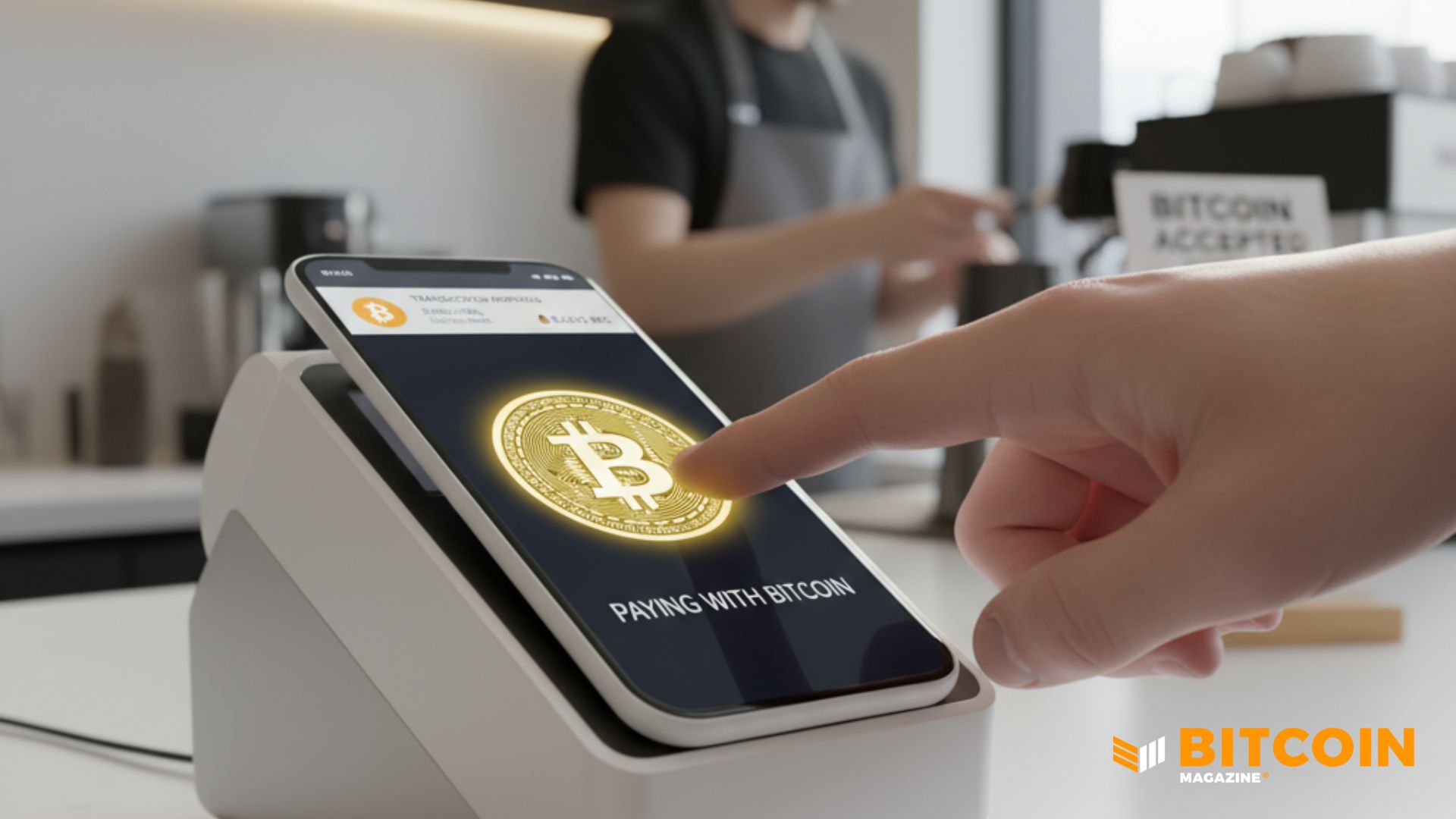
Bitcoin just took another major step toward mainstream adoption. Starting today, Square sellers across the United States can officially accept Bitcoin payments directly through their terminals — with no processing fees until 2027.
The launch marks one of the most significant integrations of Bitcoin into everyday commerce to date. Square, the popular payments processor and business platform owned by Block, says roughly 4 million vendors now have access to Bitcoin payments, automatic conversions, and built-in wallets — all inside the same dashboard they already use to manage their sales and banking.
“You can expand your customer base by accepting bitcoin payments and automatically receive them as BTC or USD,” the company said in its launch statement. “Plus, get zero processing fees until 2027, no chargebacks, and instant access.”
“Our sellers can now receive btc to btc, btc to fiat, fiat to btc, or fiat to fiat,” said Jack Dorsey, Chairman of Square.
The feature first debuted last month at Compass Coffee in Washington, D.C., where a customer purchased a latte with Bitcoin during DC Fintech Week.
That pilot — the first-ever Bitcoin payment processed on a Square terminal — demonstrated instant transactions using the Lightning Network. Square says the technology will now roll out nationwide, except in New York, where regulatory hurdles remain.
JUST IN: Over 4 million Square merchants can now accept #Bitcoin at checkout, starting today.
The new system is designed to be simple. Merchants can accept Bitcoin payments via QR code, hold the funds in Bitcoin, or instantly convert them to U.S. dollars. Businesses can also choose to automatically convert up to 50% of their daily sales into Bitcoin — a move Square says will help small businesses diversify savings and hedge against inflation.
According to an internal survey, about 29% of sellers are exploring Bitcoin conversions for business savings, and 89% of interested merchants plan to use Bitcoin as a long-term treasury asset.
“We’re making Bitcoin payments as seamless as card payments,” said Miles Suter, Head of Bitcoin at Block. “Through Square and Cash App, we’re helping Bitcoin become everyday money — not just a store of value.”
Merchants using Square’s free, Plus, or Premium plans can access Bitcoin features starting today. While Bitcoin conversions carry a small fee, payments themselves remain free for the first year.
For small businesses, Square Bitcoin could mean lower costs and faster settlement compared to card networks, which typically take several days and charge processing fees. For Bitcoin, it signals a powerful step toward becoming usable money — not just digital gold.
As the feature goes live, millions of small businesses — from barbershops to breweries — could soon be adding a new sign next to “Visa” and “Mastercard.”

 Login
Login