 Login
LoginNetflix to acquire Warner Bros. in a disruptive deal valued at $82.7B
In one of the most groundbreaking deals the streaming world has ever seen, Netflix acquires Warner Bros. for $82.7 billion.


The State Department’s diplomatic workforce is feeling overburdened, under-resourced and more likely to leave in the next few years, given sweeping changes happening under the Trump administration, according to a survey conducted by its union.
In a survey of more than 2,100 active-duty Foreign Service employees, the American Foreign Service Association found that 98% of respondents reported reduced morale this year.
About 86% of respondents said workplace changes since January have affected their ability to advance U.S. diplomatic priorities.
Before the Trump administration, about 17,000 active-duty Foreign Service officers worked for the State Department. AFSA estimates that nearly 25% of its workforce left this year — when counting layoffs, retirements and those who accepted deferred resignation offers.
Nearly a third of survey respondents said they have changed their career plans since the beginning of this year.
More than 80% of respondents said they entered the Service intending to serve 20 years or more — but now about 22% of them say they plan to leave the State Department within the next year or two.
AFSA President John Dinkelman said in a call Wednesday that survey results demonstrate a “workplace crisis” at the State Department that will take “years, if not decades, to repair.”
“When we undermine the Foreign Service, we undermine America’s ability to prevent conflict, support our allies, and protect our citizens abroad. In short, we weaken our global leadership,” Dinkelman said.
The State Department sent layoff notices to nearly 1,350 of its employees this summer. Those reductions in force will be finalized, once nearly 250 Foreign Service officers officially separate from the agency this Friday.
The department carried out a massive agency reorganization this year, consolidating and eliminating hundreds of offices.
After sending the mass layoff notices in July, the department began hiring new Foreign Service officers this fall.
Some candidates in the hiring pipeline had to retake a new version of the Foreign Service Officer Test that had been vetted by the Trump administration. The State Department has also made “fidelity” to the administration’s policy goals part of the new criteria to determine if Foreign Service officers are eligible for promotions.
Dinkelman said that the expertise of the Foreign Service “is not easily rebuilt,” and that the State Department will have less experienced diplomats filling its depleted ranks.
“While we certainly will be able to find individuals to enter the service and begin again, those individuals who come in in 2026, ‘27 and ‘28 will not have the expertise, that will have been lost in these previous years, for decades to come,” Dinkelman said.
State Department spokesman Tommy Pigott said in a statement that Secretary of State Marco Rubio “values candid insights from patriotic Americans who have chosen to serve their country.”
“In fact, this administration reorganized the entire State Department to ensure those on the front lines – the regional bureaus and the embassies – are in a position to impact policies,” Pigott said. “What we will not tolerate is people using their positions to actively undermine the duly elected president’s objectives.”
AFSA conducted the survey to gather feedback that its members have not been able to share with agency leadership.
Federal News Network first reported this summer that the Trump administration will not conduct the Federal Employee Viewpoint Survey this year, a governmentwide scorecard that tracks employee satisfaction.
“We knew that AFSA had a responsibility to step into this breach,” Dinkelman said. “This report offers the first independent snapshot of the Foreign Service during a period of sustained institutional stress.”
The 2024 Best Places to Work in the Federal Government scorecard, which parses FEVS data and is tracked by the Partnership for Public Service, shows the State Department received a 62.8 satisfaction score from employees — and ranked 16th for employee satisfaction among 18 large federal agencies.
About 78% of respondents said they are operating under reduced budgets this year, while 64% said key projects and initiatives are being delayed or suspended.
“I’ve served in hardship posts and multiple unaccompanied tours, but I never expected by my own government to openly disparage public service or the work of public servants,” an anonymous Foreign Service officer told AFSA.
Rohit Nepal, AFSA’s vice president for the State Department, said active-duty Foreign Service officers are being asked to take on more work from offices that have been eliminated, following the reorganization.
More than 60% of survey respondents agreed they are managing “significantly higher workloads due to staffing losses.”
“We’re talking about offices working on some of our highest priorities That could be the war in Gaza, Ukraine, our strategic competition with China. In other words, these folks are being asked to do more without the necessary resources to actually accomplish the job. It’s taking a toll on them,” Nepal said.
Nepal, who is an active-duty Foreign Service officer, said a hiring freeze this year led to key positions going unfilled during his last post in Amman, Jordan.
“We found ourselves unable to hire, even while we were dealing with an exchange of regular Iranian missile exchanges over Jordanian skies during the Israel-Iran war,” he said.
Nepal said Foreign Service officers are “reading the political tea leaves,” and avoiding certain types of jobs.
Nepal said a junior public diplomacy officer told him that they weren’t going to bid on jobs in public diplomacy, because “clearly we don’t care about PD anymore.”
Nepal said another Foreign Service officer with years of experience on refugee and human rights issues told him that “there’s no place for people like her in the department right now.”
“Let’s be clear: American diplomacy is weaker because of this politicization. Talented diplomats aren’t being selected for jobs or are not stepping forward because they believe they can’t get a fair shake in this environment,” Nepal said.
The report calls on Congress to intervene with sweeping changes happening to the agency, and that lawmakers “should make clear that career professionals cannot be punished, reassigned, or dismissed for political reasons.”
Sen. Chris Van Hollen (D-Md.), co-founder of the Senate Foreign Service Caucus, said in a statement that the report shows “a year of relentless attacks by the administration against these dedicated public servants has left our diplomatic corps in crisis — a vulnerability that our adversaries are all too happy to exploit.”
Linda Thomas-Greenfield, former Director General of the Foreign Service and U.S. ambassador to the United Nations, said in a statement that “AFSA’s data confirms we’re asking our diplomats to do more with less precisely when robust engagement is needed most.”
The post ‘A workplace crisis:’ Nearly all Foreign Service employees report lower morale in union-led survey first appeared on Federal News Network.

© Mandel Ngan, Pool via AP
The post OPM encourages agencies to consider reassigning SES members first appeared on Federal News Network.
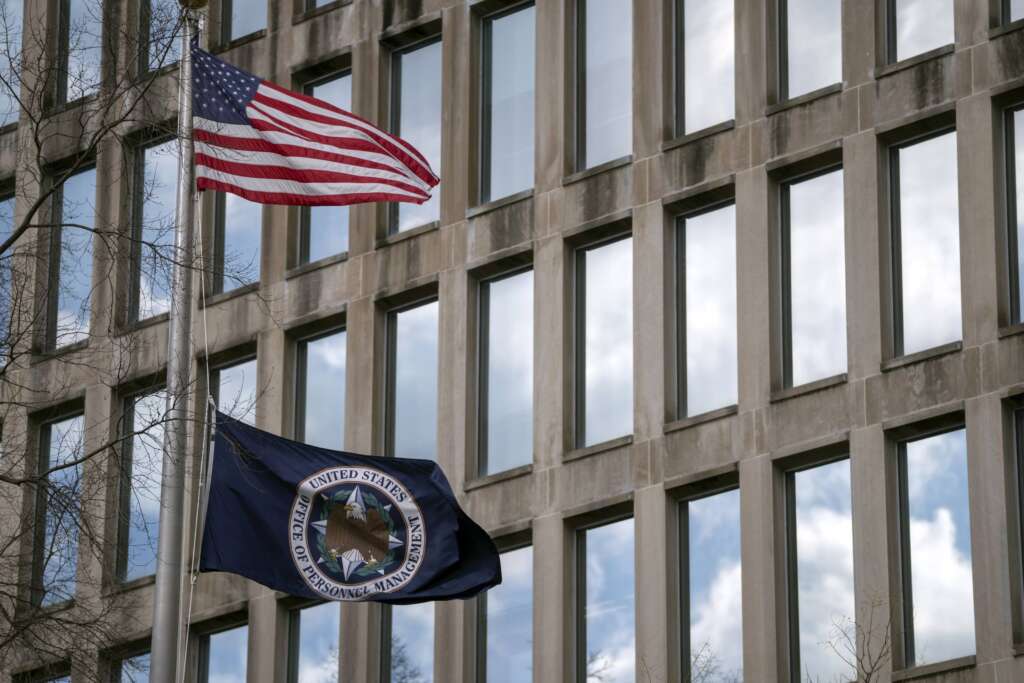
© AP Photo/Mark Schiefelbein
A bundle deal is apparently on the cards which could save you money as Netflix eyes Warner Bros Discovery acquisition.
The post In a surprise twist, Netflix and HBO Max prices could go down appeared first on Digital Trends.

The federal offices are back open and hundreds of thousands of federal workers have returned to work after the longest shutdown in history. But nothing is back to normal — federal workers say morale and trust in leadership are at an all-time low, tensions are high between furloughed staff and those who worked through the shutdown, schedules are slipping and projects are being pushed back, and more people are accelerating their retirement plans or leaving federal service altogether.
The recent shutdown, however, has just exacerbated the existing problems and added to what federal workers described as an already extremely trying year for the federal workforce.
“As if morale wasn’t already non-existent, it sure is now. I expect a surge of people to (quiet) quit and I expect the remaining players to be bombarded with work with no support or guidance from leadership,” one employee told Federal News Network.
“The mission is dead. Operations are barely running. Morale is toast,” another federal worker said.
“Everything about being a federal employee in 2025 has destroyed workforce morale — from constant [reduction-in-force] threats, to losing colleagues to early/forced retirements and firings, to the loss of any telework to facilitate work/life balance for working parents or senior caregivers, this is the worst professional year I have experienced in nearly 20 years of service to my country. Nothing about the current [Office of Management and Budget] approach to leadership has moved our country forward,” another employee said.
A Federal News Network survey, conducted online between Nov. 17-30, asked federal workers what it has been like going back to work after the 43-day government shutdown. Survey respondents were self-selected, and they self-reported information to verify their status as current federal employees.
Federal workers described the experience as disorienting — returning to thousands of unanswered emails and scrambling to catch up with partners who kept work moving during the shutdown. There was little to no guidance from top management; they reported overwhelming backlogs and project schedules going completely awry.
Many said overloaded or outdated IT systems, lapsed system access and computer issues made even basic tasks difficult.
“IT issues as devices are set to expire and become inactive after 30 days of non-use, supervisory chain is still not back to work and others are catching up on leave. There are large gaps within the higher chain of command, tremendous amount of confusion, no clear description of how to verify back pay and related deductions are accurate, statutory deadlines did not stop during the shutdown, so crushing workload to return to,” one employee said on Nov. 24.
“It is not so simple as flipping a switch. We are still waiting on funds to arrive and are unable to work on things until those funds arrive,” another federal worker said on Nov. 18.
“I engage in very technical work. A 1.5-month shutdown has thoroughly derailed my train of thought. It will take a long time to refamiliarize myself with what issues were being sorted out, what solutions I had been pursuing, even how any of my own code works,” another employee said.
Several federal workers said their agencies could face budget cuts due to not hitting mandatory spending benchmarks — goals that are “impossible to achieve” after a 40-plus day lapse in appropriations.
In addition, many employees now have to use their “use-or-lose” annual leave before the end of the year, which will further delay progress and extend timelines.
Nearly 1,500 people responded to the survey. Out of 739 federal workers who responded to this question, nearly 47% of respondents said it would take them more than two weeks to catch up on all the work missed during the shutdown.
“My program was halted immediately, but will take two months to ramp back up,” one worker said.
“Can you really ever catch up? Some work will just be lost — deprioritized in the chaos,” another federal employee said.
And the threat of another shutdown is looming — the bill President Donald Trump signed into law keeps the government open only through Jan. 30. The uncertainty, workers say, is making people reluctant to fully dive back into work.
“With holidays coming, this will set projects back months,” one employee said.
Federal employees who worked during the shutdown also expressed “apathy and annoyance” toward furloughed employees who did not work during the shutdown, saying the resentment has led to conflicts and made collaboration difficult.
“Expect operations to be negatively affected as the furlough has driven a wedge between those furloughed employees and those who remained on the job,” one federal employee said.
Most of the federal workers worked without pay during the shutdown, missing more than four weeks of pay.
When the government reopened on Nov. 13, the Office of Personnel Management said it would take several business days for workers to get their back pay.
Out of 728 individuals, 200 federal workers — about 27.5% — said they received their back pay within one-to-three days after returning to work. Another 200 said they were paid within four-to-seven days. For the remaining 323 individuals, it took more than a week to receive their back pay.

Many employees told Federal News Network that there was a lot of confusion about how to process timesheets and guidance changed a few times the first two days, which had contributed to the delay in issuing our pay.
“Smithsonian still has not managed to get us paid. They are wasting time making sure everyone has the correct time codes rather than getting people paid. It’s more important to them that they take a couple weeks to record we were furloughed. Can’t pay the mortgage, but at least they’ll have the correct time code,” one employee said on Nov. 22.
One Interior Department employee told Federal News Network on Dec. 1 the agency had only paid them for 72 hours worked during the shutdown and had promised the remainder by Nov. 25 — they are still waiting on that payment. They added that none of the 69 civilian employees at the U.S. Park Police have been fully paid. Sworn officers, however, received a flat 80 hours per pay period, and while overtime and night-differential corrections were made, it’s not clear if that pay had been issued.
“We have not heard anything about when we will be paid beyond the deadline that passed a week ago, no reason has been provided to explain the delay,” the employee said. “I will be retiring early. While not the only reason, the recent hijinks played a role in my decision.”
One employee at INTERPOL Washington told Federal News Network on Dec. 1 that personnel there have received only partial back pay and some employees have only received pay for one pay period. The issue stems from the Justice Department’s decision to dismantle INTERPOL Washington and fold its remaining functions into the U.S. Marshals Service during the shutdown — while making changes in the pay system while payroll processing was underway.
The workers were initially told they would receive all of their back pay on Nov. 21, but instead received partial pay on Nov. 24. DOJ then promised the rest by Nov. 28, but only a handful of people were paid over that weekend. The agency now says it has finally identified the problem and that employees should be paid by Dec. 3.
“Every time that the DOJ claims to find a solution and puts another date out for when we should get paid, there is just another disappointment,” the INTERPOL Washington employee said.
Another Air Force civilian at Lackland Air Force Base, who was told they would be paid last week, is still waiting for their back pay now nearly three weeks after the shutdown ended. On Monday, they were told that “the comptroller squadron is working diligently to manually process over 3,000 timecards with an estimated completion date of Nov. 29.”
For many of those who received back pay, determining whether the amount was correct was nearly impossible.
Dozens of respondents said they were unsure if their payments were accurate because agencies did not issue accompanying paystubs for the affected pay periods. Several employees said since payroll providers such as the Defense Finance and Accounting Service do not provide leave and earnings statements for retroactive pay, meaning they will have to wait for the next pay period to verify whether the amount is correct.
“It seems to be off by a few hundred dollars, but I can’t determine where the discrepancy is,” one federal worker said on Nov. 26.
“We don’t know since it was a partial payment with no documentation,” another respondent said on Nov. 24.
“Many people at work say that their paychecks were less due to taxes on lump sum payouts,” another respondent said on Nov. 25.
Federal workers were already overwhelmed, stretched thin and struggling with high levels of anxiety following the Trump administration’s push to reduce the size of the federal workforce. Now, the shutdown is pushing even more people out the door.
Out of 758 federal workers, 329 respondents — about 43.4% — said that the shutdown made them reconsider staying in federal service.

Many said they are actively looking for an out, while for others the shutdown reinforced their decision to retire
“It is so untenable that I plan to quit in the next month or so. The situation has gotten even worse since returning,” one employee said.
“The shutdown did solidify that I will retire the first date I can,” a federal worker said.
“I have dedicated 20 years to serving my country, including service in the U.S. Army. It’s pretty thankless to be a federal civilian employee now. I used to encourage my children to pursue a similar career but now I am encouraging them to stay away from federal service,” another employee said.
More than half of federal employees — 58% of respondents — reported experiencing financial challenges during the shutdown, and nearly a third said they struggled to pay bills. Over 51% of federal workers said they had to rely on credit cards, loans or emergency savings to pay their bills, while 14% reported missing rent, mortgage or other payments. About 10% of federal workers said they needed outside assistance, such as food banks and relief programs. But notably, nearly 62% said the shutdown impacted their mental health.

Several respondents said they dipped into retirement accounts or cleared out emergency savings to stay afloat, while others reported delaying Christmas shopping, postponing home repairs or borrowing from family members to cover basic needs. Younger workers and those in single-income households were hit especially hard.
And while some said they were fortunate enough to have savings or a second household income, many still described the experience as deeply destabilizing.
“Fortunately, we are a two-income, no-child household and good savers. But I did give a monetary gift to a colleague who is in a much more tenuous situation,” a federal worker said.
“I requested a skip loan payment on my car since I could without fees. I have paid for things out of savings and since I’m a bit older I can do that, but I’m depleting savings still as I continue to not be paid,” one employee said.
“Outsiders calling it a ‘free vacation’ don’t understand the effects the shutdown has on furloughed staff,” another employee said.
Workers described experiencing “constant dread and worry,” “incredible stress and anxiety” and “the feeling of absolutely no protections.”
“It was very stressful. I had to take a part-time job,” one employee said.
Ultimately, one worker said, the impacts were “cruel and petty and proved to be irrelevant to either side achieving their stated goals.”
If you would like to contact this reporter about recent changes in the federal government, please email anastasia.obis@federalnewsnetwork.com or reach out on Signal at (301) 830-2747.
The post ‘The mission is dead’: Federal workers say the shutdown made an ‘extremely trying year’ worse first appeared on Federal News Network.

© The Associated Press
Interview transcript:
Terry Gerton As we look back, the shutdown’s over now, but it lasted over a month and it really froze critical functions across every federal agency. From your vantage point, what were the most immediate and severe impacts on lenders and small businesses?
Dave Bohrman Well, Terry, I think that’s obviously a big question because there’s some latency in what those impacts will be. So some of that will come out in the days and weeks and months ahead. But looking at it very specifically, you also have to kind of consider what was the situation going into the government shutdown, and that kind of governs what actually those impacts will were or are going to be. So you have a highly volatile economy from a lot of uncertainty, whether that be from the tariffs or whether that be from tax policy, or whether that be from any of the agencies’ policies internally with respect to workforce. All of that kind of created a perfect storm with the political situation of the landscape in Washington; really made a real recipe for the government shutdown to happen. My question always was, once a government shutdown happens, how do we get out of it? And that what we witnessed. So as far as the impact, any small businesses that were looking to do any government-guaranteed lending, 7(a), 504 program within the SBA, that was frozen if their loan wasn’t already into some kind of post approval process. IRS, if you work for the IRS, you obviously know the story. The IRS is a completely different scenario. They went from 100,000 employees to 25% haircut to 75,000 employees and to about half of that were still in operation during the government shutdown this time. I’ve been around long enough, the first shutdown I was part of was 2013. That was pretty small, 13 days. But the last one was the historic one, 35 days. And at that point in time, the IRS was completely shut down. If you were doing anything with any kind of, you know, and “tax” is very broad … so whether you were a tax preparer or you were trying to get tax data or you were dealing with information reporting, there was zero access. This time you had a hybrid of access. So I would say the impact of anybody trying to get information or deal with the IRS, it was marginalized and confusing at best, but there was something happening. If you were looking for anything with the SBA, you were pretty much put on standstill, whether you were a lender or a small business trying to get a loan.
Terry Gerton Well let’s go back to the IRS for a minute, because you say there were folks working and there was some access but it was confusing and perhaps fragmented. Why is IRS data so critical to the lending process, and what impact did it have with a reduction in access to that data?
Dave Bohrman Well, that’s somewhat part of what we do as a business, is get taxpayer data over to commercial lenders or financial institutions that are using it to make a business decision. When it comes to the SBA, because it’s government-guaranteed and there is a taxpayer component to it, the government has very strict guidelines on how to underwrite a 7(a) or 504 loan, it’s governed by their SOP, their standard operating procedures. In that it actually requires tax data, one from the borrower, the borrower has to provide a tax return, and two — directly from, at an arm’s length — from the IRS in a tax return transcript to reconcile that information. And the reason that has to be reconciled is because it can sniff out fraud. If somebody misreports their income, we go to the IRS and we say, your income doesn’t match. Or it can shine a very big light on cash flow. A small business that’s making payroll tax deposits on average twice a week — that payment behavior is very indicative of their financial help. So being able to sniff out whether a business is paying their taxes on time or not is really a key data point for lenders to make a credit decision, whether it be yes or no. The SBA requires it, commercial lenders, some have it part of their credit policy, some do not. But it’s a real problem that we’re trying to solve or at least help lenders make better credit decisions.
Terry Gerton I’m speaking with Dave Bohrman. He’s the co-founder and vice president of marketing at Tax Guard. Let’s follow the thread then. The SBA was basically closed. So for 40-plus days, no one was getting an application submitted, no one was getting a loan approved. And you also mentioned the latency impact of that. Talk us through that. What’s going to happen now that SBA’s doors are back open?
Dave Bohrman Well, there’s the business side. Because it is a public-private partnership, the private end of it is basically most banks in America have an SBA lending program. That is the upstream pipeline of applications. So when we talk to commercial lenders, they were continuing to accept applications, process them internally and get them ready and packaged for SBA delivery. So what you expect to happen, what we’re seeing happen, is the SBA just said, “we’re open.” So now they have this backlog that they’re processing. So in the next couple of days to weeks, it’ll be interesting to see how that goes through the system so that the small businesses that are looking to be funded get funded as soon as they can.
Terry Gerton As you think about this funding lapse, would you say that it exposed any sort of systematic weaknesses both, for banks and borrowers? Was there anything because of the duration here that maybe needs to be specifically addressed?
Dave Bohrman Well, that’s an interesting question because you because history will tell you something. In the past 25 years, since 2000, there’s really been three meaningful government shutdowns. So from a systemic planning process on the agency side and the federal government side, it’s probably a little bit out of bounds to kind of truly build anything into the system to account for a government shutdown. Similarly, on a business side, it’s hard to build a business process around something that happens so infrequently. So if you kind of look at the X and Y axes, it’s very damaging when it happens, but it happens very infrequently. So to answer the question, what systemic things will be changed, I can’t imagine much.
Terry Gerton As you look forward as the government gets back up to speed in these areas, are there ripple effects that you think lenders and small businesses should be looking out for? Do you expect any change in credit standards or compliance risks?
Dave Bohrman Absolutely. Kind of going back to the point of the hyper-dynamic nature and the hyper-volatile nature of the economy as it stands today, everything in the simplest form would be there’s the demand side, so small businesses that are looking for loans, and the supply side, which is the lenders that are giving the loans. So what we’ve seen since the beginning of this current administration, especially, because of the uncertainty and planning, the desire to take capital has been diminished. So the demand side has come down. And some of that — what are the interest rates going to be? Should I wait for a better interest rate? Some of that is, there’s tariffs that are impacting my business, I don’t know where that’s going to land. There are supply chain issues, I’m not sure what to do with those. So we’ve seen the demand side go down. And I think that … if you take the theme of certainty versus uncertainty and certainty driving small-business decisions, we’re still in an uncertain environment. The ripple effects of a government shutdown on top of all of those things add more uncertainty to the equation. I think we have some more, should we say, pain to work through before we get to a place of stability where we would see the credit markets kind of operate in some kind of normal fashion. But it is kind of hard to say what is normal. And on the credit side, creditors — their credit boxes have been getting tighter. The SBA underwriting requirements have increased since the Biden administration. So on the supply side, lenders are getting a little bit more frugal by which who they give money to. And on the demand side, small businesses are looking for credit less, which is impacting the overall economy.
Terry Gerton With the uncertain availability of government data, whether it’s tax data or economic data, do you see a trend for lenders especially to be looking for alternative sources of data as they consider what they’re going to do?
Dave Bohrman Absolutely. And we’ve been doing this since 2007, 2008. The general premise of tax data really isn’t about taxes. It’s really just about a database of small business or business or taxpayer information that is very rich. So when you think about the consumer, you or I, Terry, when we go get a car or we get a credit card, there’s a rich database, whether that’s the credit bureaus or all these kinds of reporting structures, that tells a lot of information about you or I as individuals. Businesses are under a completely different data regime and reporting regime, and they are governed by more usury laws, and that’s kind of based on the premise that small businesses or business in general — they should be left alone. So what that means is there are very little data requirements in the credit-data world for small businesses. So tax data, as we call it, or what we’re talking about payroll data or income data, all the things that live in an IRS database are very rich. It’s a very rich data pool by which lenders can look through. So we’re not the only ones doing this, there are people doing this. So to the point of tax data on any small business or even an individual can be very helpful in understanding who to give money to or who the good bets are, or maybe somebody that didn’t have enough data on them. Tax data tells the story that this is a compliant business and you should be able to give them funding. On the economic data, that that’s a little bit more broad. I know that during the shutdown, there was not a lot of data released. So that will be interesting to see how that plays out. And let’s just say we have a bad job report or gross domestic product, all the economic indicator reports that are going to come out over the coming weeks, that will be interesting to see how that rattles or ripples the credit markets.
The post The shutdown may be over, but its ripple effects on lending and tax compliance are just beginning first appeared on Federal News Network.

© Getty Images/iStockphoto/Urupong
The State Department is telling some employees targeted by mass layoffs this summer that their official separation date is imminent — and is not affected by a shutdown-ending spending deal that forced some agencies to rescind layoff notices.
The department’s human resources office, in a notice sent Monday evening, said Foreign Service employees who received reduction-in-force notices on July 11 will be officially separated from the agency this Friday, Dec. 5.
According to the Bureau of Global Talent Management, State Department attorneys determined that a recent stopgap spending bill passed by Congress, which ended the longest government shutdown, does not require the agency to rescind any RIF notices that were sent before the shutdown.
“Following formal written guidance from both the Office of Management and Budget and Department of Justice Office of Legal Counsel, the Department of State’s Office of the Legal Adviser has determined that completing the reductions in force (RIFs) noticed prior to the lapse in appropriations does not violate the Antideficiency Act (ADA) or any other restriction within HR 5371,” the memo obtained by Federal News Network states. “Given this determination, the Department will finalize your separation or involuntary retirement on Friday, December 5.”
The department, as part of this update, has modified the official separation date for impacted employees.
Foreign Service employees were originally told they would be separated from the agency on Nov. 10, when the agency was still affected by the government shutdown. Those employees will now be separated from the State Department on Dec. 5
In a separate notice, Global Talent Management said the State Department is extending administrative leave for all Foreign Service employees who were scheduled for separation as part of the RIF.
“We are reviewing the administrative errors in all SF-50s issued on Friday, November 7, to ensure that all information is accurate,” the notice states, referring to a federal employee’s official employment record.
It’s not clear what administrative errors the department intends to correct. An employee’s SF-50 form shared with Federal News Network shows that Lew Olowski, the department’s top HR official, approved the RIFs to go into effect on Nov. 10.
A State Department spokesperson told Federal News Network that, “since the State Department’s lawful reduction in force (RIF) process was commenced and initiated well before the lapse in appropriations, the eliminated positions are not impacted by the language in the recent continuing resolution.”
“Legal opinions published by both OMB and DOJ confirm that outcome,” the spokesperson said. “The State Department will proceed with executing the RIF process as planned.”
A Foreign Service officer who received a RIF notice told Federal News Network that the State Department “can’t just extend admin leave” to set a new separation date.
The Foreign Service officer, who requested anonymity because they were not cleared to speak to the media, said moving the original Nov. 10 separation date amounts to a “de facto reinstatement,” and that the department would need to issue entirely new RIF notices and provide at least a 60-day notice for that new separation date.
“This entire action just seems patently unlawful, and I do not understand how the department plans to get away with it,” the Foreign Service officer said.
By law, each federal employee subject to a RIF “is entitled to a specific written notice at least 60 full days before the effective date of release.”
According to the SF-50 notice, employees eligible for severance will receive a lump-sum payment on Jan. 1, 2026.
The State Department laid off more than 1,300 employees on July 11. It sent RIF notices to more than 1,100 civil service employees and nearly 250 Foreign Service employees who were based in the United States at the time.
Senior department officials later told Congress that the RIF was the largest and most complex workforce reduction of its kind, and that they carried out the layoffs in consultation with the Office of Personnel Management.
Questions about the possibility of reinstatement primarily focused on laid-off Foreign Service officers, who had been on administrative leave for a longer period than their civil service counterparts.
Foreign Service employees who received RIF notices were scheduled to be officially 120 days out from their RIF notices. But civil service employees who received RIF notices had only 60 days before their official separation. They left the department in early September.
The State Department and several other agencies have rejected calls from laid-off employees, unions and Democratic lawmakers who say more federal employees are eligible for reinstatement than what the Trump administration has allowed.
The American Foreign Service Association said last month that its interpretation of the continuing resolution passed by Congress on Nov. 12 blocks the State Department from moving forward with its layoff notices.
The continuing resolution Congress passed on Nov. 12 states that “any reduction in force proposed, noticed, initiated, executed, implemented, or otherwise taken by an Executive Agency between October 1, 2025, and the date of enactment, shall have no force or effect.”
“We understand that Congress intended for this language to apply to as many federal employees as possible, including those who received layoff notices from the State Department on July 11,” AFSA wrote.
On Tuesday, AFSA said it is working closely with the American Federation of Government Employees and will be pursuing legal action.
“This action flies in the face of the current funding law, which clearly prohibits using any federal resources to carry out layoffs during this period,” AFSA said in a statement. “That includes sending notices, processing paperwork, or taking any step to advance these separations.”
Democratic lawmakers say agencies aren’t reinstating as many federal employees as they should be under the spending deal.
Sen. Tim Kaine (D-Va.) is leading the push for more RIF rescissions, along with several of his Democratic colleagues.
Kaine was one of eight Democratic senators who broke ranks to pass the stopgap spending bill, only after Republicans agreed to include language that would protect federal employees from layoffs at least through Jan. 30, 2026. Kaine and his colleagues backed standalone legislation during the shutdown that would have also barred the Trump administration from moving ahead with its most recent wave of mass layoffs.
Kaine, along with Sens. Ed Markey (D-Mass.), Jack Reed (D-R.I.), and Patty Murray (D-Wash.), said the continuing resolution — particularly Section 120 of the stopgap bill — placed a moratorium on RIFs involving federal employees, and that the “moratorium is broad, clear and unequivocal.”
Agencies, however, have followed a narrower interpretation, and have only reinstated federal employees who received RIF notices between Oct 1 and Nov. 12. Agencies told a federal court that they rescinded shutdown-era RIF notices for more than 3,600 employees.
Federal News Network first reported that the Small Business Administration told 77 recently laid-off employees this week that they could get their jobs back, but rescinded that offer a day later.
An SBA spokesperson said in a statement that the agency “has determined that the most recent continuing resolution signed into law does not apply to any RIFs executed by the SBA.”
The Democratic senators told SBA Administrator Kelly Loeffler that the agency is “unlawfully pursuing reductions in force,” and that dozens of recently laid-off employees the agency hasn’t reinstated “have a right to continue their employment.”
A group of 35 former General Services Administration employees also called on the agency to rescind their RIF notices, on the grounds that Congress intended to reinstate them.
GSA’s Associate General Counsel Daniel Hall told their attorneys in a Nov. 24 letter that the RIF notices “were issued before and separate from the lapse in appropriations occurring on October 1, 2025, and are outside of the intended scope of the Act and its provisions on RIFs.”
The post State Dept finalizes mass layoffs, says employees won’t be reinstated under shutdown-ending deal first appeared on Federal News Network.

© Federal News Network
Amazon’s new Amazon Now service delivers essentials in 30 minutes using small, local fulfillment hubs.
The post Amazon plans to deliver orders faster than you can fix a sandwich appeared first on Digital Trends.

The House Oversight and Government Reform Committee is convening Tuesday morning to mark up a slew of bills, many of which would impact the federal workforce in one way or another.
Tuesday’s meeting will be the first legislative markup session the committee has held in nearly two months, with the last being prior to the 43-day government shutdown. Any bills that the committee approves during the markup will advance to the full House for further consideration.
Lawmakers are expected to consider bills covering everything from whistleblower protections and skills-based hiring for federal contractors, to relocation incentives for federal employees.
Several other legislative changes may be on the horizon as well. Here are three key bills up for the committee’s consideration that may bring significant changes for the federal workforce:
One Republican-led bill, introduced by Rep. Brandon Gill (R-Texas) in October, aims to cement many of the changes the Trump administration has made to the government’s rules for the probationary period in the federal workforce.
If enacted, the so-called EQUALS Act would require most new federal employees to serve a two-year probationary period — a time in which employees have limited appeal rights and are easier to remove, before their employment in the federal workforce can be solidified.
Part of the bill would compel agencies to evaluate their employees regularly throughout the federal probationary period. And in the last 30 days of that two-year period, agencies would have to certify — and get the Office of Personnel Management to approve — that the probationary employee “advances the public interest,” before the employee can become tenured.
Any probationary employees who are not actively certified by their agency would be terminated, according to the GOP-led legislation.
The bill also states that when making a decision on whether to keep a probationary employee, agencies can additionally consider performance and conduct; the “needs and interests” of the agency; and whether the employee would advance “organizational goals” or “efficiency.”
The EQUALS Act aligns with efforts from the Trump administration earlier this year to overhaul the rules for the government’s probationary period. In April, President Donald Trump called for the creation of “Civil Service Rule XI,” which similarly required agencies to review and actively sign off on probationary workers’ continued employment before they can be moved out of a probationary period.
Trump’s executive order also expanded the reasons that probationary period employees can be fired. In June, OPM further clarified that probationary employees can be terminated based on broader reasons than the previous limitations set only to performance or conduct.
The House bill also comes after the Trump administration fired tens of thousands of probationary employees earlier this year, stating that the removals were due to “poor performance.” But in September, a federal judge found that OPM unlawfully directed the mass probationary firings. The judge ordered agencies to update employees’ personnel files to reflect that their firings were not due to performance or misconduct.
A separate bill teed up by Republicans would compel agencies to provide much more detail on federal union representatives’ use of official time to both Congress and the public on an annual basis.
The Official Time Reporting Act from Rep. Virginia Foxx (R-N.C.) would require all agencies to submit reports on how much official time is used in each fiscal year, and justify any potential increases in official time that may occur.
The legislation would then require OPM and the Office of Management and Budget to create and send a joint report to Congress, and make publicly available online, the details of official time governmentwide. Those reports would have to cover how much official time each federal employee used, as well as provide data on official time hours calculated against the total number of bargaining unit employees for an “official time rate.”
Under the GOP-led legislation, those annual reports would additionally have to detail the specific purpose of all official time, the amount of money withheld for union dues, the cost of pay and benefits for all employees while they are on official time, and the office space and resources union representatives use while on official time.
Generally, official time refers to on-the-clock hours that go toward work such as negotiating union contracts, meeting with management, filing complaints or grievances against an agency, or representing employees who are dealing with disciplinary actions or other management disputes. Federal unions are allotted, by law, specific and limited amounts of agency time and resources to conduct activities on official time.
Official time by union representatives has been a major target of the Trump administration this year. Some agencies have either reduced or fully removed official time options, in response to executive orders from Trump calling for the termination of collective bargaining at the majority of executive branch agencies.
The administration’s actions have received major pushback from federal unions such as the American Federation of Government Employees, which said OPM’s characterization of official time as “taxpayer-funded union time” is false and stigmatizing.
During Tuesday’s markup, Oversight committee lawmakers also plan to consider legislation that would require a mandatory training program all managers and supervisors across the federal workforce would have to take.
Under the Federal Supervisor Education Act, which Rep. William Timmons (R-S.C.) introduced in October, agencies would have to work with OPM to create training programs for agency managers, with at least some modules focused on goals like performance management, employee engagement and productivity.
The bill would also require the training programs to cover how supervisors should manage employees who have “unacceptable performance,” as well as how to make use of the probationary period. The bill also mandates that managers and supervisors receive training on how to address reports of harassment, prohibited personnel practices, employee rights, and more.
The legislation emphasizes that agencies should use “instructor-based” training as much as practicable. If enacted, supervisors would have to complete the training within one year of being appointed to a supervisory role, and would have to retake the trainings at least once every three years following that.
The Republican-led effort comes after OPM launched two federal workforce training programs for senior executives in November, incorporating common themes from the Trump administration on “accountability,” performance management and adherence to the president’s priorities.
Although both new programs are optional, OPM still told agencies to “set the expectation” that all career Senior Executive Service members should at least complete training modules on “returning to founding principles” and “implementing administration priorities” within the next year.
In the Oversight committee meeting Tuesday, all three federal workforce bills, along with many others, will be up for consideration and potential advancement in the House.
The post 3 federal workforce bills to watch in House Oversight Committee markup first appeared on Federal News Network.

© Getty Images/bpperry
The post IG reports that USPS is slow to identify underutilized spaces first appeared on Federal News Network.

© AP Photo/Charlie Riedel



Surgery is hard, there is a reason why school is so long for the profession. Making the job easier and smoother for both patients and surgeons is valuable for all parties, which is why [Mayo Clinic] is now working on including 3D printing into its more regular medicine pipeline.
Prepping for surgery often requires examining CT scans of patients to figure out, well, what they’re even going to be doing. Every body is different, and complex surgical procedures require checking to see where certain organs or features are located. This can be made much easier with a physical model of where the bones, organs, or nerves are specifically located in a patient. While this isn’t true in every case of treatment, there are even cancerous cases where custom equipment can be used to decrease side effects, such as mini-beam collimator adapters.
What if you could use the same pipeline to print what was lost from certain procedures? In a mastectomy, the breast tissue is removed, which can cause negative attention from curious gazes. So why not 3D print a custom breast? Cases like these are generally considered poor commercial investments from industry, but are relatively easy for an existing medical facility to add to treatment.
[Mayo Clinic] is far from the first to consider 3D printing in the medical setting, but seeing the technology see actual applied use rather than future seeking is exciting. Medical hacking is always exciting, and if you want to see more examples, keep sure to check out this commercially available simulator (with some free models).
Nearly two weeks after the record-long government shutdown ended, some Defense Department civilian employees say they have yet to receive the back pay they are owed.
The federal government reopened on Nov. 13 after President Donald Trump signed a bill to fund the government through Jan. 30, ending the 43-day shutdown and allowing tens of thousands of DoD civilians to return to work.
At the time, the Office of Personnel Management said that checks for DoD civilians were slated to go out on Nov. 16. DoD civilians, however, were told to expect payment sometime between Nov. 17 and Nov. 20.
But with Thanksgiving week now underway, many workers say they are still waiting for as much as four weeks of back pay.
One civilian employee at Laughlin Air Force Base in Texas, who was furloughed during the shutdown, told Federal News Network that more than 150 people in their unit of more than 400 civilians have not been paid.
“When everybody got back to work, we were told that the next week — or mid-week — we would get paid. And a lot of people did get paid, but a lot of us have not. They keep saying, ‘It’s going to take a few days,’” he said Wednesday.
The Air Force employee said there has been no official guidance or clear communication, but their supervisor told them Wednesday to expect back pay on Nov. 29.
“There’s nothing in writing,” the employee said. “It’s all the leadership just walking around telling us, ‘Expect to get paid.’ There’s no email traffic — it’s just their own interpretation of when they think we’re going to get paid. But there’s been nothing official sent out.”
A DoD spokesperson told Federal News Network that all civilians whose updated time and attendance have been received have been paid.
“It is essential that civilian employees review their time and attendance reports, and their Leave and Earnings Statements (LES) for accuracy. Civilians with questions or civilian pay issues should contact their local Agency Customer Service Representative (CSR) or immediate supervisor. [The Defense Finance and Accounting Service] will continue to work with the military components to resolve any remaining payment issues,” the spokesperson said.
Another Air Force civilian in San Antonio, who worked through the shutdown, said many civilians in their unit of police officers are still waiting for back pay.
“Nobody in leadership has put out any message other than when I inquired with my person who handles the payroll. She just said we should be getting paid on the 23rd or 24th, but that didn’t happen. Now, we are going into past Thanksgiving, who knows when it’s going to be,” the Air Force civilian told Federal News Network on Wednesday.
He said he has been trying for weeks to get answers for himself and the employees he supervises. When he asked his own supervisor for help, he was told to consider filing a congressional complaint.
“That’s just laughable to me because we have a GS-13, we have a commander and active-duty commander. There’s a whole bunch of people between me and my congressman that could probably provide answers. But going to your supervisor hasn’t worked,” the Air Force employee said.
“I don’t understand why they can’t just put out a simple explanation, because communication really helps, whether it’s good or bad, but at least they could explain why or what the problem is, but they haven’t. It’s frustrating,” he added.
The bill that Congress passed to reopen the government reaffirmed that both furloughed and excepted federal employees would receive back pay. The Office of Personnel Management official guidance stated the agency “is committed to ensuring that retroactive pay is provided as soon as possible,” and that the retroactive pay for excepted employees “must be provided at the earliest date possible after the lapse ends.”
A defense official told Federal News Network last week that “DFAS is running continuous pay cycles to expeditiously pay civilians a one-time retroactive lump sum payment for pay periods missed during the government shutdown. Civilians and service members who have questions regarding their pay may contact their local finance office or chain of command.”
The Department of the Air Force did not respond to questions about how many Air Force civilian employees are impacted, the cause of the delay or when civilians should expect back pay.
With pay stalled for weeks, many federal workers were forced to dip into savings, rely on credit cards, seek out no-interest loans or take on part-time work to make ends meet. Military families have been turning up at food banks in greater numbers — the Armed Services YMCA, for example, reported a 30% to 75% spike in demand at its food pantries near military installations since the shutdown began.
“I’ve joked with my family and my kids that if I don’t get back pay, we might have to push Christmas til maybe January, but the impending loom of another shutdown at the end of January, it can’t get worse,” the Air Force employee from Laughlin Air Force Base said.
Defense Department civilians aren’t the only ones still waiting for their back pay.
“Smithsonian still has not managed to get us paid. They are wasting time making sure everyone has the correct time codes rather than getting people paid. It’s more important to them that they take a couple weeks to record we were furloughed. Can’t pay the mortgage, but at least they’ll have the correct time code,” a federal employee told Federal News Network on Nov. 22.
At the Federal Aviation Administration, one air traffic control employee reported receiving only partial back pay through the end of November.
Meanwhile, federal workers who have received back pay told Federal News Network they cannot verify whether the pay was accurate as they have not received an accompanying Leave and Earnings Statement.
“Not sure if it is accurate, as no LES are being created for the back pay,” one federal employee said.
“Without a LES, I have no idea. I just hope it’s right. It feels like it might be right, but I don’t know,” another employee told Federal News Network.
Others reported major errors — an employee who received their back pay said it was “taxed so incorrectly that my first paycheck after returning was missing about $500 and only one of two missed health insurance payments were taken out.”
If you would like to contact this reporter about recent changes in the federal government, please email anastasia.obis@federalnewsnetwork.com or reach out on Signal at (301) 830-2747.
The post Some DoD civilians are still waiting for back pay weeks after shutdown’s end first appeared on Federal News Network.

© AP Photo/Charles Dharapak
Following the federal workforce reductions that have occurred this year, the Trump administration is now telling agencies to rethink how many senior executives they will need on staff as a result of those cuts.
A Nov. 24 memo from OPM encouraged agencies to consider reducing their staffing allocations for senior-level positions within their workforces.
No later than Dec. 19, OPM said agencies should submit a workforce assessment, detailing their current staffing allocations for various senior-level positions, and by how much they plan to reduce those allocations going forward — if at all. The memo includes a template that OPM expects agencies to fill out with more details on their projected allocations.
Agencies’ staffing assessments should reconsider allocations for Senior Executive Service (SES) members, as well as Senior Level (SL) and Scientific/Professional (ST) positions, OPM said.
“This review is especially important in light of headcount reductions and workforce restructuring, which may lead to a corresponding reduction in the need for SES, SL and ST allocations,” OPM wrote in its memo, addressed to agency chief human capital officers.
OPM said the senior-level staffing assessments should also take into account how agencies are reaching “optimal implementation of presidential priorities.”
“These assessments should also inform whether SES, SL and ST positions are appropriately classified and designated,” the memo reads.
OPM’s memo comes in response to an Oct. 15 executive order from President Donald Trump, which maintains limits for agencies on their recruitment efforts. Agencies have spent most of the year under a governmentwide hiring freeze, with a few exceptions carved out for positions in immigration enforcement, national security and public safety.
Trump’s executive order from October mandated that each agency create a “strategic hiring committee,” composed of senior officials and political appointees who will have to ensure that any hiring that does take place going forward is focused on “agency needs, the national interest and administration priorities.”
Already, the Trump administration has surpassed its goal of reducing the federal workforce by more than 300,000 employees during 2025. After reporting that approximately 317,000 federal employees have so far left the government this year, OPM is now pushing agencies toward their next steps for staffing plans.
At the same time that it’s encouraging a reduction of senior-level staffing, the administration has taken steps to give agencies more leeway in hiring politically appointed senior leaders instead. Over the summer, the White House created a new “Schedule G” employment classification, focused in particular on hiring non-career feds for roles in policy-making or policy-advocating work.
OPM’s new memo on senior executive allocations also comes after those in higher-level positions across government have seen a number of other changes from the Trump administration this year.
Most recently, OPM launched two new training series, in part focused on teaching senior leaders more in-depth about how they can best implement Trump’s workforce priorities, and to ensure they are adhering to “President Trump’s executive orders and other executive branch priorities.”
The Trump administration earlier this year also overhauled performance standards for senior executives, making adherence to the president’s priorities the “most critical element” of their reviews. Agencies are now being directed to set stricter limits on how many executives can be considered top performers.
The post OPM advises agencies to consider reducing senior executive staffing first appeared on Federal News Network.

© Getty Images/iStockphoto/ArtemisDiana
The Trump administration’s plans to shutter four small agencies are indefinitely on hold, following a court’s recent ruling.
A federal judge in Rhode Island issued a permanent injunction on Nov. 21, blocking the administration from taking any further action to eliminate the Institute of Museum and Library Services, the Minority Business and Development Agency, the Federal Mediation and Conciliation Service, and the Interagency Council on Homelessness.
President Donald Trump signed an executive order in March, eliminating these agencies — and three others — “to the maximum extent consistent with applicable law.” But attorneys general in 21 states sued the administration, arguing that these agency closures would have downstream effects on state-level operations.
The permanent injunction ordered by U.S. District Court Judge John J. McConnell, Jr. prevents the four agencies from “taking any future action to implement, give effect to, comply with, or carry out the directives contained in the Reduction EO.”
McConnell determined that the Trump administration’s decision to conduct widespread layoffs, terminate grants and eliminate programs at these agencies “undermined their ability to perform functions mandated by statute.”
“By now, the question presented in this case is a familiar one: may the executive branch undertake such actions in circumvention of the will of the legislative branch? In recent months, this court — along with other courts across the country — has concluded that it may not. That answer remains the same here,” he wrote.
The agencies targeted for elimination are responsible for funding museums and libraries, mediating labor disputes, supporting minority-owned businesses, and preventing and ending homelessness.
Over the course of several months, the Trump administration fired, placed on administrative leave, or reassigned nearly all employees in these four agencies. The administration cancelled a wide range of grants to the agencies, and cancelled public programs and services that the agencies provided.
McConnell said these decisions left the agencies unable to carry out their statutorily mandated functions, and unable to spend their congressionally appropriated funds.
The court issued a preliminary injunction in May. The Trump administration appealed the district court’s preliminary injunction, but dropped its appeal on Nov. 21, following the judge’s permanent injunction. Federal News Network has reached out to the White House and the Justice Department for comment.
The Supreme Court and federal appeals courts have mostly allowed the Trump administration to proceed with plans to shutter agencies and conduct mass layoffs across the federal workforce.
The Trump administration argued that a preliminary injunction in this case prevented agencies from implementing the president’s priorities. McConnell, however, said he ruled in favor of the states, given a “plethora of injuries” that would arise, if the court did not intervene.
States told the court that closing IMLS would force the closure of public libraries, force them to implement hiring freezes and stop providing services that support literacy and learning. State universities said they would be forced to lay off employees, eliminate student programming and default on contracts without continued funding for MBDA.
In other cases, states said some of their agencies and programs are at risk of work stoppages and negotiation impasses, without FMCS around to resolve labor disputes. States also told the court they would lose expert assistance on how to reduce homelessness without the Interagency Council on Homelessness.
“All this to say: the injuries alleged are to the States themselves and are far more than merely economic or speculative,” McConnell wrote.
New York State Attorney General Letitia James called the ruling a “major victory in our ongoing work to defend important services.”
“The federal government’s illegal attack on these agencies threatened vital resources for workers, small businesses, and the most vulnerable in our communities,” James said.
The American Library Association said the court’s decision “restores everything that the executive order tried to take away.”
“Convincing a federal judge that shuttering a supposedly obscure agency would have an immediate and devastating impact on millions of Americans is no small feat,” ALA President Sam Helmick said. “Libraries also strengthen local economies by supporting jobseekers, small businesses and community learning. Protecting these resources matters.”
The post Federal court blocks Trump administration’s plan to scrap 4 small agencies first appeared on Federal News Network.

© AP Photo/Jacquelyn Martin

Tokenization in blockchain turns real or digital assets into digital tokens that can be created, managed, and traded on a blockchain network. For businesses, this opens new ways to raise capital, improve liquidity, and streamline ownership management across various asset classes such as real estate, equity, intellectual property, or in‑app assets.
In simple terms, tokenization is the process of converting rights to an asset into a digital token that lives on a blockchain. Each token represents a specific claim, such as a share of ownership, access to a product or service, or a unit of value in your ecosystem.
Unlike a traditional database entry, a token is recorded on a distributed ledger, which makes transactions transparent and harder to tamper with. This helps support trust between parties and simplifies interactions, especially when you are dealing with multiple stakeholders or cross‑border transactions.
When companies talk about Token development Services, they usually mean end‑to‑end support for designing, building, testing, and deploying custom tokens on blockchain networks such as Ethereum, BNB Chain, or Polygon. These services often include smart contract development, tokenomics design, compliance review, and technical integration with existing systems like wallets, exchanges, or internal platforms.
A professional token development partner helps you choose the right token standard (for example, ERC‑20 for fungible tokens or ERC‑721/ERC‑1155 for NFTs) and defines how your token will behave within your product or business model. This guidance is especially important for non‑technical teams that want to use blockchain without building everything from scratch.
Tokens come in several categories, and understanding them helps you decide what fits your business.
Tokenization follows a structured path from idea to live token.
2. Legal and compliance review
3. Token model and tokenomics
5. Security review and audits
6. Deployment and integration
7. Launch, distribution, and ongoing management
Tokenization offers several practical advantages for businesses beyond basic crypto speculation.
Different industries use tokenization in ways that match their specific needs.
While tokenization is attractive, businesses should also understand the risks.
Before launching a token project, it helps to evaluate strategic fit and readiness.
For many organizations, partnering with a specialist firm is the most practical way to execute a tokenization strategy.
If you are considering tokenization, you can follow a clear sequence to move from idea to implementation.
2. Choose asset type and token model
3. Assemble your team and partners
4. Design tokenomics and governance
5. Build, test, and launch
If your business is exploring tokenization and you want a practical, end‑to‑end approach, partnering with an experienced token development team makes a real difference. Codezeros helps businesses define clear token strategies, build secure smart contracts, and launch tokens that fit real‑world use cases across DeFi, NFTs, enterprise applications, and more.
Whether you are planning a utility token for your platform, tokenizing a real‑world asset, or designing a full token economy from the ground up, the Codezeros team can guide you through every step — from discovery and architecture to audits, deployment, and long‑term support. Reach out to Codezeros today to discuss your token development requirements and turn your tokenization vision into a live, production‑ready solution for your business.
What is Tokenization: Everything You’ve Ever Wanted to Know was originally published in Coinmonks on Medium, where people are continuing the conversation by highlighting and responding to this story.

