❌

Reading view

There are new articles available, click to refresh the page.

NASA Glenn Teams Win 2025 R&D 100 AwardsΒ 

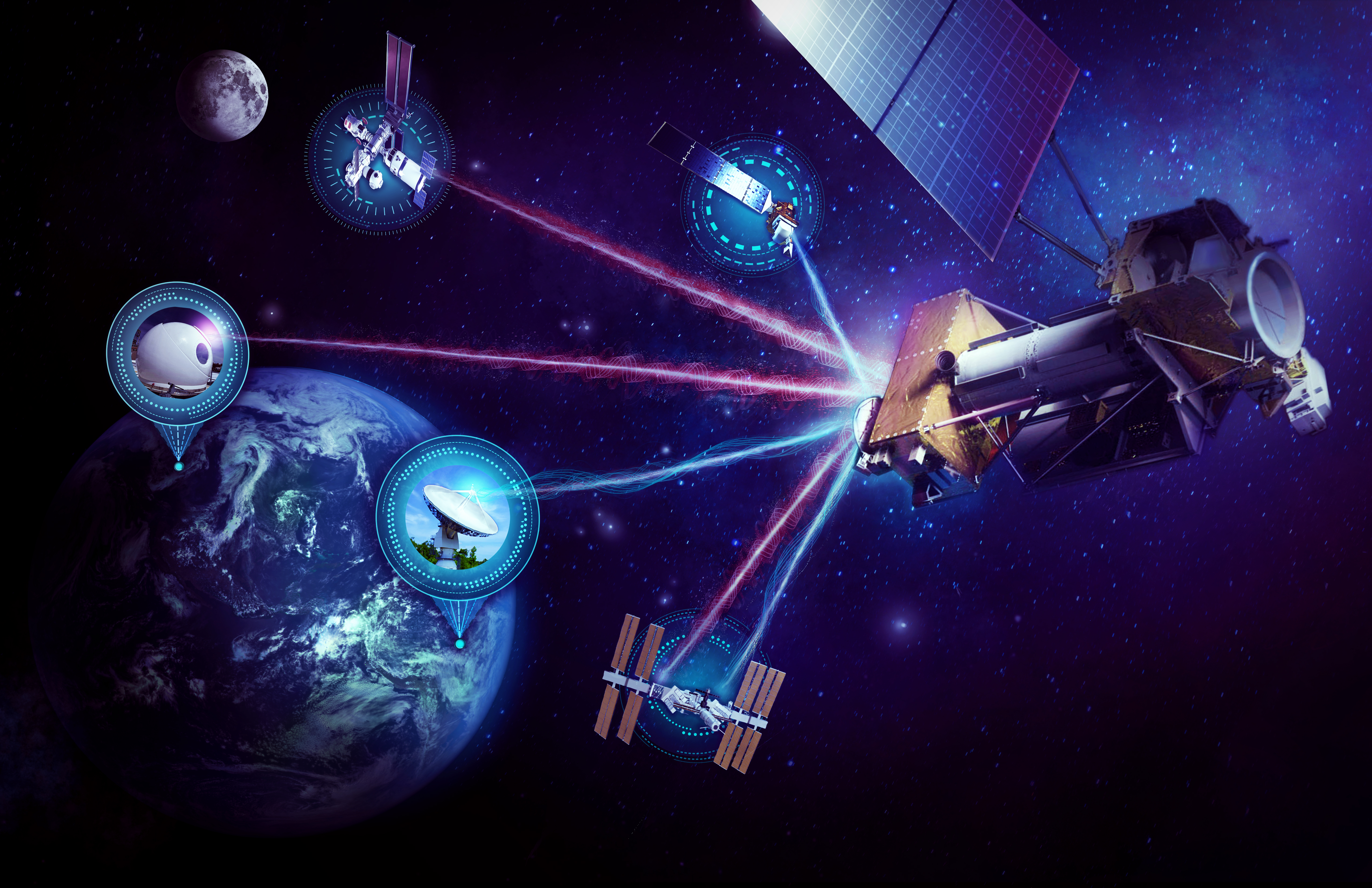
Graphic drawing showing the Earth and the Moon with satellites in space linked by lasers to circles showing planetary habitats, satellite dishes, and the space station.
Artistic rendering of the High-Rate Delay Tolerant Networking protocol being used on the Laser Communications Relay Demonstration to transfer radio and optical communications between Earth and space.
Credit: NASAΒ 

NASA’s Glenn Research Center in Cleveland has earned 2025 R&D 100 Awards for developing a system that delivers high-speed internet for space and co-inventing technology for a new class of soft magnetic nanocrystalline materials designed to operate at extreme temperatures. This brings NASA Glenn’s total to 130 R&D 100 Awards.Β 

High-Rate Delay Tolerant NetworkingΒ Β 

NASA Glenn’s Daniel Raible and Rachel Dudukovich led their team of engineers to create High-Rate Delay Tolerant NetworkingΒ  (HDTN), a cutting-edge software solution designed to revolutionize data streaming and communication in space. HDTN enables reliable, high-speed transmission of data between space and Earth β€” even under the extreme conditions of space β€” minimizing loss and system delay.Β 

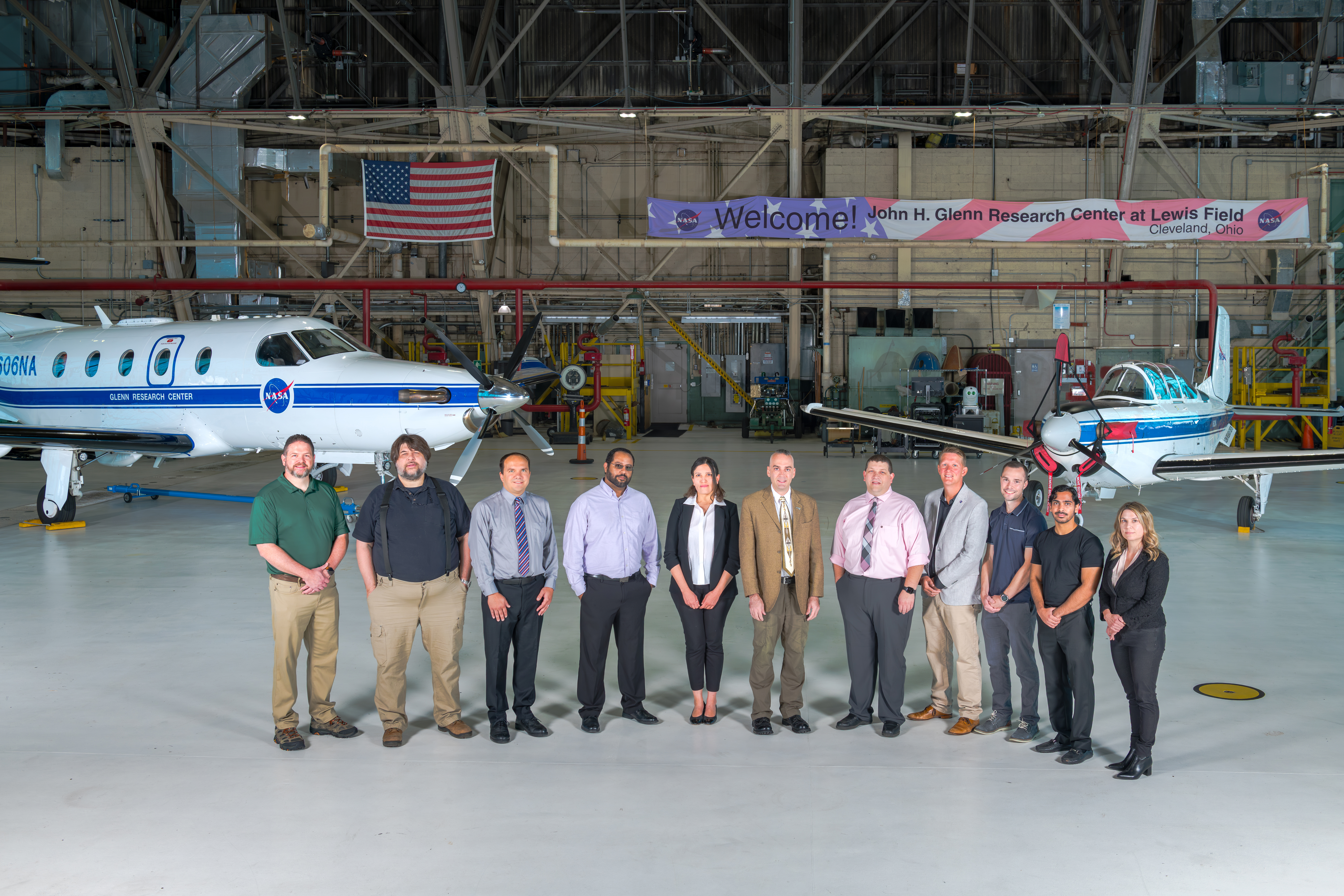
Eleven people stand next to one another inside an airplane hangar. Two small planes sit behind them. An American flag and a banner reading β€œWelcome! John H. Glenn Research Center at Lewis Field, Cleveland, Ohio” are visible behind the group.
High-Rate Delay Tolerant Networking team photo, left to right: Tad Kollar, Eric Brace, Brian Tomko, JosΓ© Lombay-GonzΓ‘lez, Nadia Kortas, Daniel Raible, John Nowakowski, Shaun McKeehan, Ethan Schweinsberg, Prash Choksi, and Rachel Dudukovich.
Credit: NASA/Jef JanisΒ 

β€œThe HDTN software protocol allows faster, automated, and seamless data transfer between spacecraft, even across communication systems operating on different link speeds,” Raible said. β€œIt’s up to 10 times faster than current delay-tolerant networking (DTN).” 

This advanced technology has far-reaching implications beyond NASA. With its open-source code, HDTN paves the way for collaboration, innovation, and adoption across the rapidly expanding commercial space industry, offering near real-time communication capabilities.Β 

Looking ahead, HDTN could form the foundation of a solar system-wide internet, supporting data exchange between Earth, spacecraft, and even future missions involving human travel to the Moon and Mars.Β 

VulcanAlloyΒ 

In a project led by the University of Pittsburgh, researchers at NASA Glenn, including Nick Bruno, Grant Feichter, Vladimir Keylin, Alex Leary, and Ron Noebe, partnered with CorePower Magnetics to develop VulcanAlloy β€” a breakthrough soft magnetic nanocrystalline material.Β 

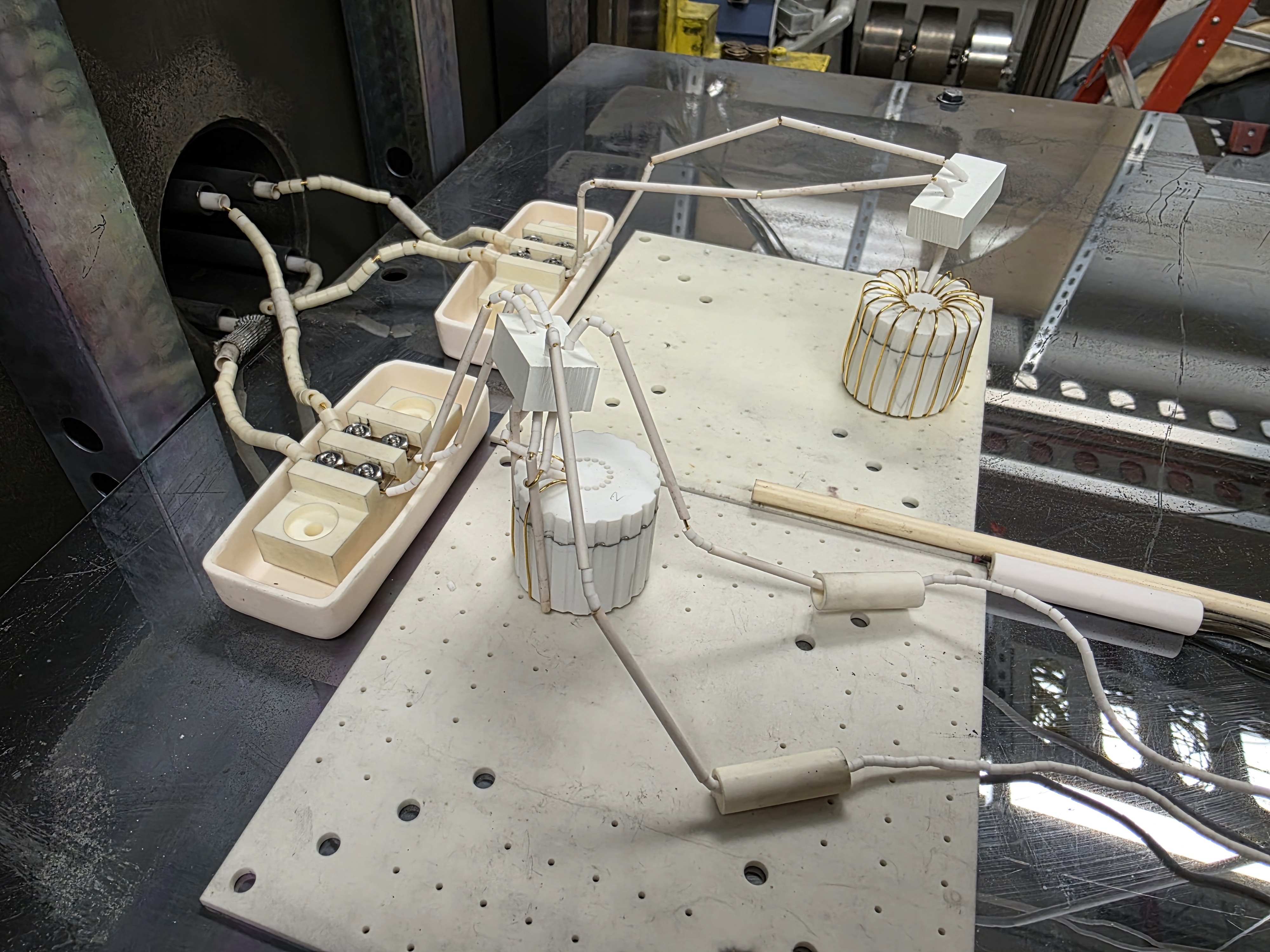
Two packaged inductors with electrical windings sit on a large plate with wiring attached to the inductors and to the Glenn Extreme Environments Rig.
NASA’s Glenn Research Center in Cleveland tested high-temperature inductors using VulcanAlloy technology in the NASA Glenn Extreme Environments Rig, which simulates the conditions on Venus’ surface, on May 13, 2025.
Credit: NASAΒ 

VulcanAlloy, developed under NASA’s High Operating Temperature Technology Program using processing capability established by the Advanced Air Transport Technology project, operates above 500Β°C, far beyond the limits of conventional soft magnetic materials. Its nano-engineered structure maintains efficiency at high temperatures and frequencies.Β 

With adjustable magnetic properties, it can replace multiple materials in components like inductors, transformers, motors, and sensors while reducing the need for bulky cooling systems β€” ideal for extreme environments.Β 

Raytheon has tested VulcanAlloy cores, highlighting their potential in electrified aircraft, defense, and aerospace systems.Β 

This innovation also promises major impact in electric vehicles, data centers, microgrids, and energy systems, where smaller, lighter, and more efficient components are key to advancing next-generation power electronics.Β 

The R&D 100 Awards, a worldwide science and innovation competition, received entries from organizations around the world. Now in its 63rd year, this year’s judging panel included industry professionals from across the globe who evaluated breakthrough innovations in technology and science.Β 

NASA Names Glenn’s Steven Sinacore to Lead Fission Surface PowerΒ 

Portrait of Steven Sinacore posing in front of the american flag.
Steven Sinacore
Credit: NASAΒ 

NASA leadership has named NASA Glenn Research Center’s Steven A. Sinacore as the agency’s program executive for Fission Surface Power with Lindsay Kaldon as deputy program executive.Β 

Sinacore will lead a team within the Exploration Systems Development Mission Directorate dedicated to advancing fission surface power technology in support of lunar exploration, providing high power energy generation on Mars, and strengthening national security. β€―Β 

Portrait of Lindsay Kaldon with American and NASA flags behind her.
Lindsay Kaldon
Credit: NASAΒ 

Sinacore has more than 20 years of leadership and project management experience. Most recently, he served as director of Aeronautics at NASA Glenn in Cleveland.β€―Prior to that, he was deputy project manager of the Gateway Power and Propulsion Element. After joining NASA Glenn in 2005, Sinacore held numerous systems engineering, project management, and mission operations positions, and he has been instrumental in developing and executing intergovernmental partnerships.β€―Β 

His strong background leading cross-agency teams, combined with NASA Glenn’s longstanding expertise in space power technology development, will equip the agency to further advance U.S. competition and lunar surface leadership under the Artemis campaign.Β 

Last month, NASA declared itsβ€―intentβ€―to put a system that would provide at least 100 kilowatts of electrical power on the Moon by fiscal year 2030. NASA then surveyed industry for their interest and feedback on an announcement for partnership proposals.Β 

This new effort builds on previous Glenn-led work to advance fission surface power technology development and concept designs.Β Β 

❌