Reading view

There are new articles available, click to refresh the page.

Solana Vs. XRP: Clear Winner Emerges With ETF Net Flow Numbers

With the crypto market showing signs of recovery, both the XRP and Solana Exchange Traded Funds (ETFs) have attracted significant investor interest. The rivalry among major crypto ETFs has intensified, with XRP taking the spotlight amid its consistent surge in daily inflows and the Solana ETF recording significant outflows.

Solana ETFs See Largest Outflow Yet

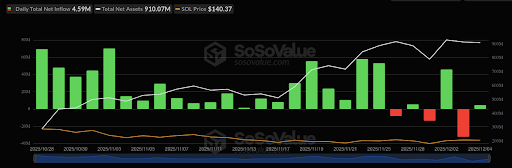
Solana has entered a surprising phase of turbulence as its recently launched US Spot ETF struggles to maintain momentum after weeks of inflows. The latest data from Sosovalue reveal a sizable setback with a fresh withdrawal of $32.19 million, marking the third and largest outflow recorded since the investment product debuted in late October 2025. 

The outflow, registered on December 3, came as a major surprise, especially given that the broader crypto market had been enjoying a slight reprieve from the bearishness weighing it down. Notably, Sosovalue’s data shows that the entire Solana ETF outflow originated from the 21Shares TSOL offering, which shed $41.79 million in a single session. Minor inflows into the remaining six Solana ETFs had softened the blow, reducing total outflow to $32.19. 
Solana XRP 1

Since the launch of Solana ETFs, TSOL has been responsible for all negative flows posted, including the $13.55 million pullback on December 1 and the $8.10 million decline in late November. Across all sessions, 21Shares Solana ETF has now seen total outflows reach $101.51 million. 

The weakness in TSOL stands in sharp contrast to Bitwise’s Solana ETF, BSOL. BSOL continues to outpace other investment products, with impressive cumulative inflows of $580.72 million, making it the most successful Solana ETF. Grayscale’s GSOL follows at a distant $89.01 million. Overall, the net cumulative inflows for the Solana ETF have reached $623.21 million. While this is impressive, it is still significantly behind the XRP ETF. 

XRP Overtakes Solana ETF As It Nears $1 Billion Inflows

The latest on-chain numbers show the XRP ETF pulling ahead of the Solana ETF with surprising speed and volume. Analyst Neil Tolbert highlighted the rise in XRP ETF inflow this week, noting that growing institutional interest indicates the trend is only getting started. With more XRP ETFs expected to debut soon, Tolbert anticipates a significant rise in demand and inflows as traditional finance finally wakes up. 

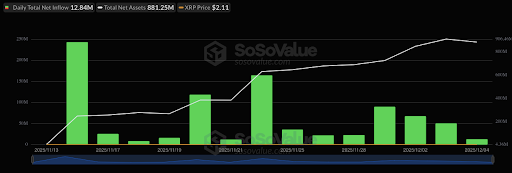
Five Spot XRP ETFs collectively hold more than $984 million in assets, with less than $16 million to reach the $1 billion inflow milestone. Canary Capital’s XRPC leads with $358.88 million, followed by Grayscale’s GXRP, Bitwise’s ETF, Franklin Templeton’s XRPZ, and finally REX-Osprey’s XRPR.  
Solana XRP 2

According to SosoValue, the total XRP ETFs, excluding that of REX-Osprey, have attracted approximately $887.12 million in net cumulative inflows. Since its launch in November, the XRP ETF has recorded 15 days of positive inflows, in stark contrast to Solana ETFs, which have seen multiple outflows. 

Despite Solana launching seven ETFs as early as October 2025 and XRP only introducing four last month, XRP ETFs have already surpassed Solana ETFs in total inflows by almost 30%. With fewer products and a later debut, XRP has emerged as the clear winner amongst the newest ETF entrants in 2025. 
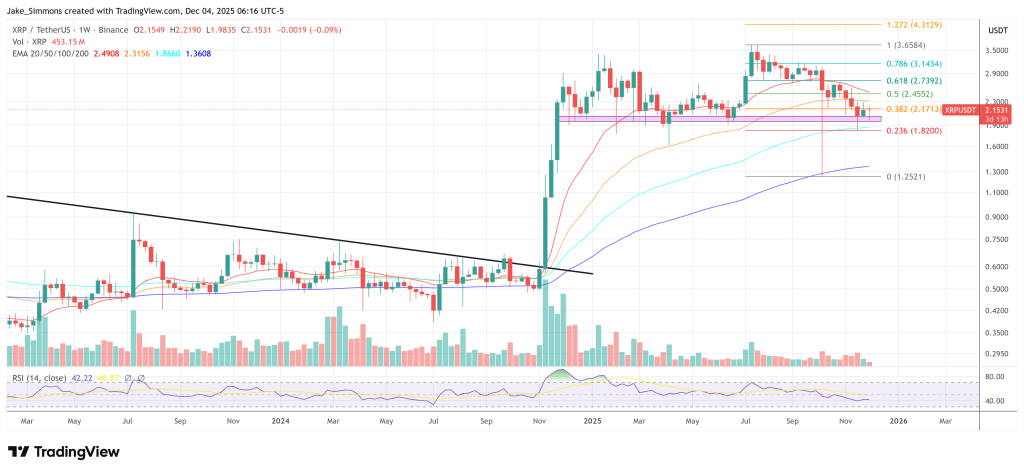
XRP price chart from Tradingview.com

Ripple CEO Predicts 2026 Will Be A Breakout Year For Crypto

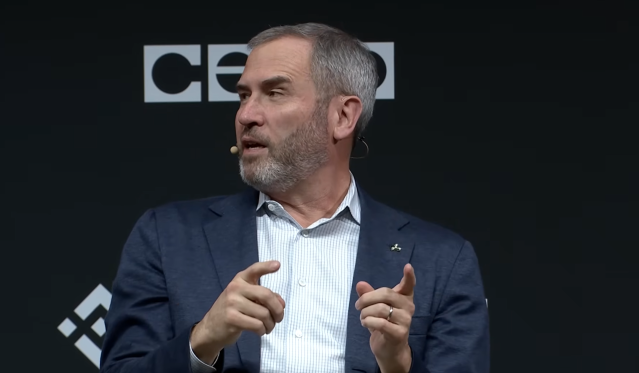
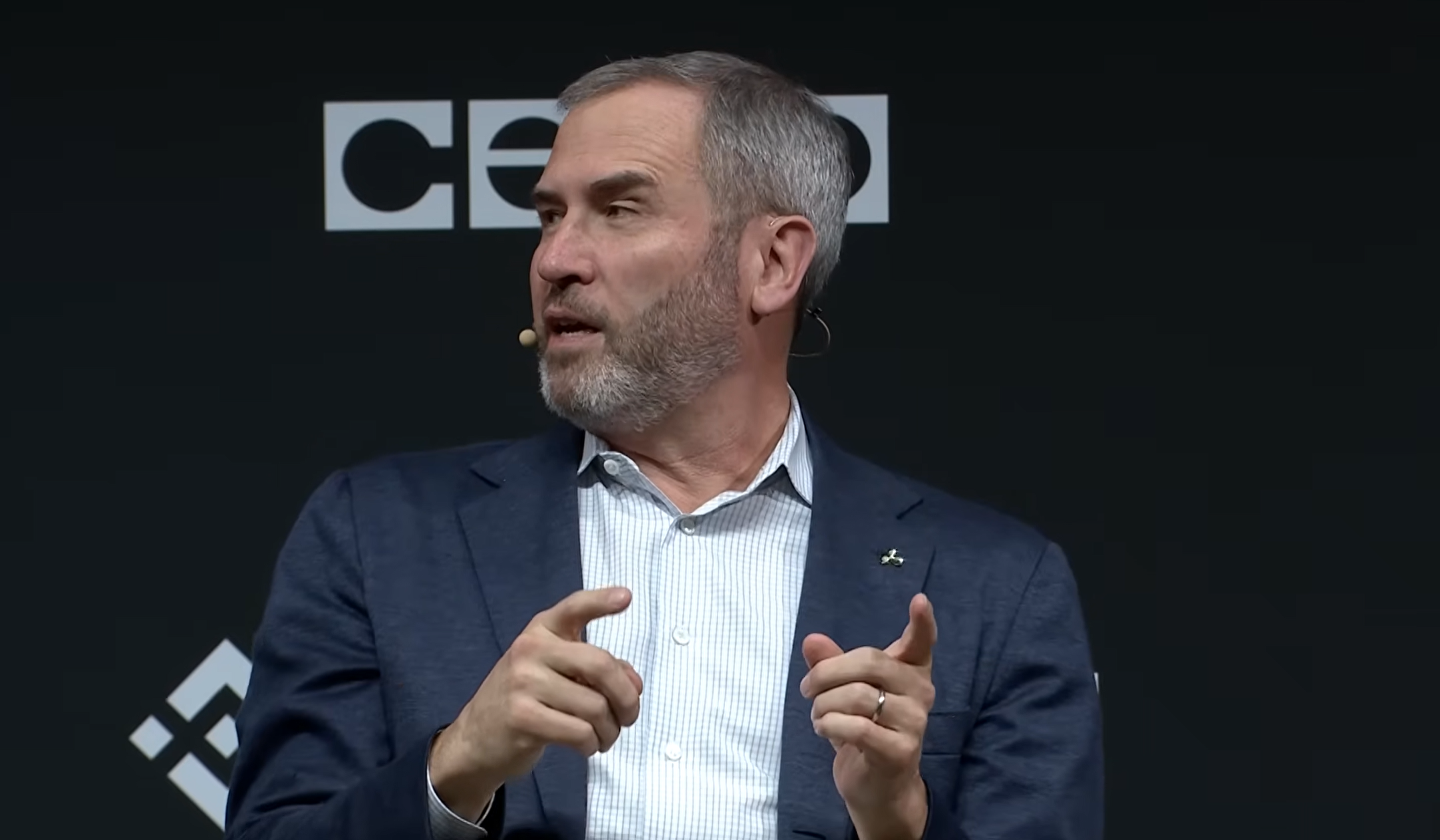
At Binance Blockchain Week on December 3, Ripple Labs CEO Brad Garlinghouse argued that a rare alignment of regulatory change, institutional demand and real-world utility is setting up crypto for what he called powerful “macro tailwinds” heading into 2026.

“I personally will echo some of the things Richard said: there are so many macro factors that are continuing to provide tailwinds for this industry that I think as we go into 2026 I don’t remember being this optimistic in the last handful of years,” the Ripple CEO told CNBC’s Dan Murphy, speaking alongside Binance CEO Richard Teng and Solana Foundation President Lily Liu.

Ripple CEO Is Optimistic For 2026: Here’s Why

He framed the latest drawdown not as the start of a structural bear market but as a risk-off interlude against a fundamentally improved backdrop. “Crypto has gone through cycles and when you have risk-on people are excited […] now you have kind of a risk-off moment, there’s uncertainty,” he said. The difference this time, he argued, is that the United States—the largest single economy and roughly “22% of global GDP”—is finally moving away from what he described as years of open hostility toward the sector.

“This is a market that has been really openly hostile to crypto for four or five years or maybe longer, and now you have that that has changed significantly, pretty quickly,” he said. Institutions, in his view, are only beginning to adjust. He pointed to the visible presence of traditional asset managers at the event: “You saw Franklin Templeton on stage here, you saw BlackRock on stage just this week. I think Vanguard has now opened up […] Vanguard historically has said ‘we won’t touch crypto’ and now they’ve had a massive sea change.”

On crypto ETFs, the Ripple CEO rejected the idea that the trade was over-hyped. “Definitely no,” he said when asked whether the ETF “floor” narrative had been exaggerated. He stressed how new these vehicles still are in the United States and highlighted early demand for XRP products. “In the last two or three weeks over $700 million have flowed into XRP ETFs, which is just pent-up demand from institutional investors, from investors who want access because they don’t want to custody themselves,” he said.

He argued that the key metric is crypto’s still-small slice of the overall ETF universe. “The total ETF market—only one or two percent of the total ETF market is crypto. I will bet anybody here that a year from now that will be more than one or two percent,” he said. Short-term outflows from Bitcoin products, he suggested, should be viewed in context: “Over 2026 do we really think crypto ETFs are only going to be one or two percent of the total ETF market? No chance.”

Garlinghouse said Ripple’s own prime brokerage business is already seeing that shift in behavior. Institutions that had remained “on the sidelines” due to regulatory uncertainty or risk aversion are now “getting involved and they’re starting small, and they’re going to walk, then they’re going to crawl—or crawl then walk then run.” Asked directly whether recent volatility had deterred institutional capital, he replied: “Definitely not.”

Stablecoins Will Be A Key Pillar

Stablecoins were another pillar of his 2026 thesis. He agreed that in the latest risk-off phase, capital largely rotated into stablecoins rather than exiting on-chain rails, which he said reflects both utility and trust. “People are recognizing stablecoins can be stable and easier to manage,” he said.

Garlinghouse highlighted that Ripple’s own stablecoin, launched “just over a year ago,” has “just passed about a billion market cap,” is “approved and whitelisted in Abu Dhabi,” and is being used as “good collateral on various platforms from a lending point of view.” For him, stablecoins are an entry ramp to broader adoption, alongside other applications that will be built across Solana, Binance and Ripple ecosystems.

On US policy, he said the trajectory has clearly improved, especially for payment tokens. He cited the GENIUS Act as “regulatory clarity for stablecoins” and linked it to growing corporate interest in on-chain payments. After Ripple’s acquisition of GTreasury, which has visibility into “over 10 trillion dollars of payments,” he said “the number of those customers that are already approaching us interested in leveraging stablecoins […] because of that clarity, people are leaning in.”

The Ripple CEO noted that XRP has already received a form of clarity from US federal courts but said broader legislation is still needed. He referenced the “Clarity Act” for crypto, saying there is “still forward momentum” and predicting that “sometime in the first half of next year we’ll see passage of legislation, which will continue to unlock and create more tailwinds for the whole industry.”

He closed with an explicit price target for the next cycle, acknowledging he was “going out on a limb”: “I’ll say Bitcoin $180,000 December 23rd—or December 31st—2026.”

At press time, XRP traded at $2.15.

XRP price

💾

*What does the future of crypto look like in 2026?* In this landmark panel from Binance Blockchain Week, three of the industry’s most influential leaders — B...

The MicroStrategy Of Asia: Japanese Company Announces Plan For Bitcoin And XRP Treasury

Bitcoin and XRP have become central to a bold corporate shift in Japan, with AltPlus announcing that both digital assets will be formally incorporated into its long-term treasury strategy. The publicly listed company disclosed the move in its recent shareholder filing, outlining a multi-layered plan that positions cryptocurrencies as foundational components of its future financial and operational framework.

Bitcoin And XRP Lead Treasury

According to a post by “BankXRP” on X (formerly Twitter), AltPlus is expected to purchase and hold Bitcoin and XRP through a newly established cryptocurrency purchase and management division. The company frames this step as part of a long-horizon capital strategy supported by blockchain transparency, expanding global regulatory clarity, and the growing institutional acceptance of digital assets. In the filing, Bitcoin and XRP are highlighted for their scarcity, decentralization, predictability, and fast, low-cost transactional capabilities—attributes AltPlus expects will contribute to long-term value growth and broader financial-market utility.

Moreover, the treasury initiative is designed to strengthen the company’s financial base, diversify revenue streams, and establish a stable earnings engine through staking-based income. AltPlus presents the move as a structured method to enhance capital efficiency and reinforce corporate value over time. The company notes that holding both Bitcoin and XRP aligns its balance-sheet strategy with emerging global trends in digital-asset management and institutional-grade treasury practices.

AltPlus also outlines its risk-management system to address crypto-market volatility, liquidity risks, cybersecurity threats, regulatory changes, and speculative trading patterns. The company plans to implement investment-scale limits, a controlled holding-ratio strategy, and a proprietary internal asset-management system to govern acquisition, custody, tracking, and treasury integration. These measures are designed to maintain governance discipline, ensure compliance, and safeguard digital-asset operations as part of the broader corporate structure.

AltPlus’ Web3 And Digital-Asset Expansion

Beyond treasury allocation, AltPlus frames Bitcoin and XRP as key elements in a broader transition into digital-asset operations and Web3-enabled business development. The filing situates this shift within a global context, noting that major financial institutions and listed companies worldwide are increasingly incorporating crypto assets into holding, settlement, and capital-management functions.

Building on this trend, AltPlus plans to integrate blockchain infrastructure into its Entertainment and Solutions business. This includes exploring Web3 functionality, token-based engagement models, and digital-asset utilities across its gaming and IP ecosystem. These initiatives are intended to unlock new business models, enhance operational flexibility, and develop internal expertise for a digital-native market environment.

The company’s decision to include XRP directly in its treasury strategy is one of the standout elements of the announcement. AltPlus positions XRP as a long-term corporate asset alongside Bitcoin, marking a notable step forward for institutional crypto adoption in Japan. Through treasury transformation, staking-driven income generation, and Web3 ecosystem expansion, AltPlus is creating a strategic framework similar to the high-conviction treasury approach seen at MicroStrategy. At the same time, it is establishing a distinctly Japanese model focused on utility, diversification, and forward-looking corporate innovation.

Bitcoin price chart from Tradingview.com (XRP)

Expert Says An XRP Supply Shock Will Only Happen In These Conditions

A leading market expert argues that most investors misunderstand what would need to happen for an XRP supply shock to unfold. The analyst stressed that a true supply shock is driven by measurable XRP absorption, with early signs showing how quickly tokens are removed from circulation relative to how quickly they return. 

How A Real XRP Supply Shock Forms

Crypto analyst Pumpius took to X this Wednesday to outline the conditions he believes must align before XRP can experience an actual supply shock. The expert noted that many in the community often talk about an explosive squeeze that could drive XRP’s price higher, yet few understand the mechanics behind such a shock.

Pumpius argued that a real supply shock is not driven by speculation or hype, but by a measurable reduction in the amount of XRP available on the open market. In his view, such an event only occurs when tokens are absorbed faster than they can be replenished, creating an imbalance between circulating supply and future buyers. 

The analyst explained that the first big trigger for a supply shock would be the launch of Exchange-Traded Funds (ETFs). Once all ETFs go live, their issuers will need to buy real XRP rather than derivatives or IOUs, which could gradually drain the amount of available tokens on crypto exchanges. 

Pumpius added that institutional participation would amplify the supply impact of ETFs, since banks and large asset managers typically custody assets rather than actively trade them. He explained that XRP set aside for settlement purposes, treasury management, or long-term liquidity planning would be removed from day-to-day circulation, further contributing to a potential supply shock.   

Another point Pumpius mentioned in his post was that companies could start holding XRP in their corporate treasuries to support international payments and XRP Ledger (XRPL) based settlement corridors. If this occurs, the analyst suggests that these operational XRP balances would remain in working capital accounts rather than flowing back to exchanges.  

He added that Ripple’s management of its escrow further limits XRP’s supply. Currently, Ripple has little to no incentive to oversupply the market, and unused escrow releases are often returned, keeping the amount of net new XRP entering circulation tightly controlled.

On-Chain Utility And ZK Identity Drive Supply Crunch

In his post on X, Pumpius highlighted two other factors needed for XRP to experience a real supply shock. He stated that growing on-chain utility will further reduce the supply of XRP, ultimately contributing to a supply crunch. These include tokenized funds built on the XRPL, such as RLUSD, liquidity pools, identity layers, and payment rails—all of which rely on XRP as a core asset.

A Zero Knowledge identity infrastructure on the XRP Ledger could also lock away more tokens. Pumpius emphasized that these systems link XRP to identity-verified flows and validation processes, which naturally tighten supply. 

Together, these forces create the ideal conditions for a real XRP supply shock. Pumpius notes that as exchange balances drop and OTC desks hold less inventory, overall liquidity becomes thinner. Buyers are then forced to compete for the shrinking supply of tokens, potentially driving prices higher as demand outweighs supply.

XRP price chart from Tradingview.com

XRP Price Is Performing As Expected; Analyst Reveals What Comes Next

The XRP price has staged a strong rebound in recent days, rising from early-December weakness and climbing back above $2. The recovery comes just after crypto analyst CasiTrades published a detailed technical outlook on the social media platform X, where she outlined a scenario that anticipated both the initial decline and the current bounce.  Now that XRP has begun moving upward towards $2.2, the focus is on what the next phase of this pattern could bring next.

Subwave 3 Targets Hit As Structure Plays Out

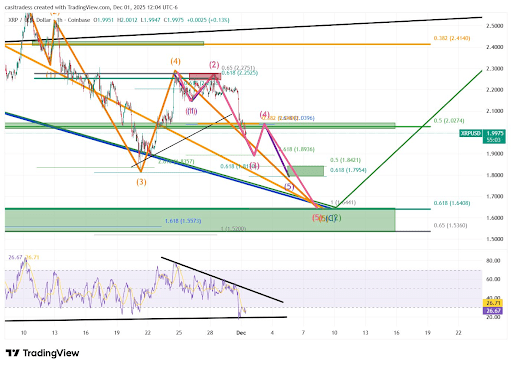
CasiTrades explained that XRP’s early-December drop was part of a subwave 2 setup that had been discussed during her previous livestream. When XRP fell to $2.03 in early December, it confirmed the transition into a subwave 3 extension, and the next projected target sat near $1.90. That level was important not only as a Fibonacci extension but also because it corresponded with Bitcoin reaching its macro 0.382 level around the $79,000 region.

The chart attached to her analysis illustrated this path clearly. A sequence of orange, pink, and black wave structures converged toward the same support region, all pointing toward $1.90 as the initial landing zone. As shown in the chart image below, there’s another green accumulation block between $1.80 and $1.64 as the deeper support level that could still come into play. 

XRP Price

XRP Chart Analysis. Source: @CasiTrades On X

At the time of her analysis, selling pressure was already slowing down, and momentum indicators like the RSI were building a bullish divergence. Since then, XRP’s price action has turned bullish, and this supports the idea that a reaction was always likely to occur in the $1.90 zone.

CasiTrades noted that once the price reached this level, she expected a bounce back toward $2.04 to retest resistance for a new Wave 4 formation. Over the past few days, XRP has done exactly that, rising from its lows and reclaiming momentum as buyers returned.

Two Final Scenarios Still In Play For XRP

According to CasiTrades, there are two possible outcomes for the XRP price against the backdrop of retesting $2.04. The first outcome is a double bottom forming around the $1.80 to $1.88 region, depending on the exchange. The chart she shared includes a mid-range support box that captures this possibility, with wave markings showing how price could rotate downward before a larger breakout.

The second potential outcome is a deeper sweep to $1.64, which is based on the macro 0.618 support. This zone forms the lower boundary of the green accumulation block on her chart, representing the final area where a full Wave 2 or Wave C completion could occur before XRP attempts a larger impulsive breakout.

XRP price chart from Tradingview.com

XRP Open Interest Reset Could Put Bulls Back In Control As Price Targets $3

The last two months have seen a major reset in the XRP open interest, coinciding with the widespread sell-offs that have rocked the market. Looking at past performances, historical data suggests that this open interest reset could be a major break for the altcoin. As prices begin to see some recovery, the reset could present the perfect opportunity for bulls to reclaim complete control of the XRP price and drive it toward higher levels.

How Far Has The XRP Open Interest Crashed?

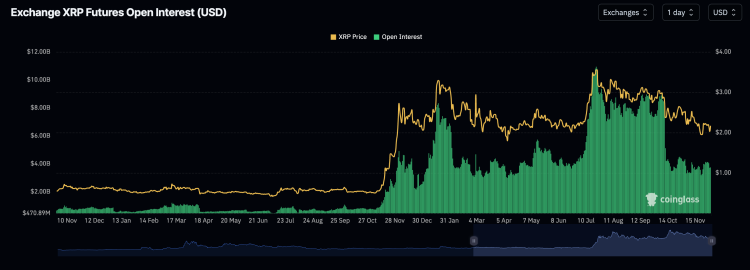
To know the scale of this reset, it is important to look at the XRP open interest numbers over the last few months. Data from Coinglass shows that back in July, the XRP open interest hit a new all-time high of $10.9 billion as market participation surged to levels not seen before.

Coincidentally, this rise to new all-time highs coincided with the XRP open interest coming out of another period of reset, eventually leading the XRP price to reach new seven-year peaks. However, it wasn’t long until the bears came knocking once again, and the open interest tumbled as the price fell.

For perspective, the open interest is the total of all XRP futures or option contracts. Effectively, this is a reflection of participation and the number of bets that traders are making on the cryptocurrency. Thus, the higher the open interest, the higher the amount of money invested in XRP derivatives, and vice versa.

XRP open interest

Presently, the open interest is sitting at a low $3.75 billion, representing an over 65% crash from its $10.94 billion peak. But this crash could be the reset that the altcoin needs for another recovery, especially as liquidity begins to flow back into the market on account of the US Federal Reserve putting an end to quantitative tightening.

Can The Price Surge To New All-Time Highs?

Earlier in the year, when the XRP open interest had crashed from its January all-time highs, the reset ended up resulting in higher prices. Although the XRP price didn’t break its 2018 record, it came close in July. However, going by this trend, the altcoin could have a while longer to go before there is a surge.

Following the crash in January, the XRP open interest had remained low for the next five months, with the price showing muted performance alongside it. With only two months since its last peak, the XRP open interest could trend low for a while longer before breaking out. However, if the trend holds, then the resulting rally would push the price above $3 once again.


XRP could surge to $2.5 amid renewed bullish optimism

Key takeaways

  • XRP is up 6% in the last 24 hours and is trading around $2.2.
  • The cryptocurrency could surge higher amid a renewed bullish potential. 

XRP tops $2.2 as altcoins edge higher

XRP, the native coin of the Ripple ecosystem, is trading around $2.2 after adding more than 2% to its value in the last 24 hours. The positive performance comes as the broader crypto market recovers from the Monday dip.

Bitcoin, the leading cryptocurrency by market cap, is trading around $93k after retesting the $83k support level earlier this week. Meanwhile, Ether, the second-largest cryptocurrency by market cap, is trading above $3k and could rally higher in the near term. 

The market is pumping due to renewed optimism regarding a potential Federal Reserve interest rate cut next week. The rate cut could boost Bitcoin and XRP’s price in the near term, potentially reversing the recent losses.

XRP eyes the $2.5 psychological level

The XRP/USD 4-hour chart remains bearish and inefficient despite XRP adding 6% to its value since Tuesday. At press time, XRP is trading at $2.18, which is below key moving averages, including the 50-day EMA at $2.32, the 100-day EMA at $2.47, and the 200-day EMA at $2.50.

XRP/USD 4H Chart

The technical indicators remain bearish but could switch bullish once XRP overcomes the major resistance level above $2.2. The MACD histogram has turned positive and is expanding on the daily chart, with the blue line above the red signal, suggesting improving upside momentum. 

Furthermore, the RSI on the 4-hour chart reads 43, suggesting a declining bearish momentum. If the recovery continues, XRP could rally towards the next major resistance level at $2.63 in the near term, with the $2.5 region a key one for the cryptocurrency. 

However, if the momentum stalls, the bears will regain control, and XRP could retest the $1.9 support level once again.

The post XRP could surge to $2.5 amid renewed bullish optimism appeared first on CoinJournal.

Here’s What To Expect If The XRP Price Holds $2

The XRP price has spent the past several days in a fragile position after falling from $2.20 and retesting $2, which has now become the most closely watched level on its price chart. The weekly candle has managed to close slightly green for the first time in more than a month, yet the rebound has not erased the weakness created by the recent sell-off. 

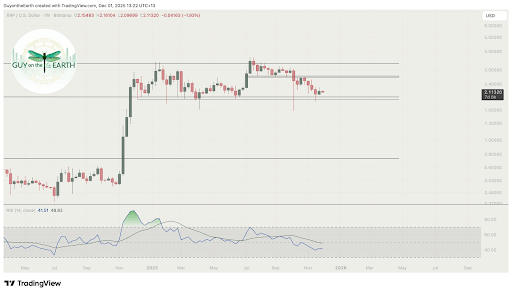
The latest technical analysis from Guy on the Earth focuses on this exact moment, noting that XRP’s entire structure now depends on whether this $2 zone can keep functioning as the pivot that stops further downside.

Holding $2 As The Important Bull Support

Guy on the Earth describes the $2 price level as the line separating resilience from a potentially long period of stagnation. His analysis shows XRP holding this level despite several weeks of bearish candles, a sign that sellers have not managed to gain full control even after the broader market’s pullback. 

The weekly chart he shared displays a cluster of past support zones roughly aligned between $2 and $1.95, making this area the foundation of the current trend. According to the analyst, losing the $2 price level could leave XRP drifting for months or even years with little upside movement, aside from isolated opportunities when temporary lows form. For now, the fact that XRP ended the past week in the green, even slightly, keeps the structure intact.

XRP’s reaction around $2 cannot be understood without watching Bitcoin. In his view, the best scenario for XRP is for Bitcoin to bounce back above $100,000, and a subsequent fall in BTC dominance. The chart’s declining RSI on the XRP weekly timeframe also hints at momentum changing, but its path will ultimately follow whatever direction Bitcoin chooses next.

XRP Price

XRP Price Chart. Source: @guyontheearth On X

Two Diverging Paths From Here

Guy on the Earth outlines two possible outcomes as the market enters a critical phase. The first is a recovery from current levels that allows altcoins to outperform again, opening the door for XRP to revisit the mid-range zone around $2.60 before making any attempt at its previous highs. 

The second is a deeper market drop that drags XRP below the $2 price level. This move would flip its most important support into resistance and set up a prolonged stretch of declining price action. Nothing inspiring will happen below there except well-timed buys when the lows appear to be in.

Both scenarios are realistic, and $2 is the dividing point that will determine which one unfolds. The analyst’s bias leans toward a move higher, but he warns that traders must be aware of the risks if Bitcoin does not stabilize soon.

At the time of writing, XRP is trading at $2.02 after a 1.2% fall in the past 24 hours and is at risk of losing this $2 support level.

XRP price chart from Tradingview.com

Ripple’s Climb To A $7 Trillion Valuation: What Would The XRP Price Be?

Crypto pundit Rob Cunningham has outlined a scenario where Ripple could achieve a $7 trillion valuation based on the XRP price. The crypto firm is notably the largest XRP holder, which is why a significant surge in the altcoin’s price could increase the company’s valuation. 

Ripple Could Hit A $7 Trillion Valuation With An XRP Price Of $250

In an X post, Cunningham predicted that Ripple could hit a $7 trillion valuation if the XRP price were to rally to $250.  Specifically, the pundit outlined a scenario where the company’s XRP position could account for $4.25 trillion of its valuation. He claimed that Ripple owned 17 billion XRP, which would amount to $4.25 trillion at $250 per XRP, the projected price. 

Cunningham noted that this trillion-dollar valuation for Ripple, based on an XRP price surge to $250, would make the company 6.6x times more valuable than Visa and 8.6x times more valuable than Mastercard. $4.25 trillion also represents 3.6% of the world’s GDP, which stands at $117 trillion. 

Based on an XRP price of $250, the pundit noted that the total XRP market value would be $15 trillion. Ripple’s 17 billion XRP holdings represent 28% of the circulating supply. Meanwhile, Cunningham listed other factors that could drive the firm to a $7 trillion valuation, including the passage of the CLARITY Act

Other Factors That Would Contribute To A $7 Trillion Valuation

In addition to the XRP price surge to $250 and the CLARITY Act, Cunningham listed the Treasury’s approval of Ripple’s business as another factor. The pundit explained that the Treasury approval would mean that XRP and XRP Ledger (XRPL) would get global regulatory clarity as a core infrastructure layer for the new monetary system. 

He also outlined a scenario where RLUSD and XRP become the default U.S. dollar rails globally, which would also contribute to Ripple’s projected $7 trillion valuation. The pundit noted that RLUSD already has a $1 billion market cap with $95 billion in payment volume and is growing. Cunningham also indicated that the XRP price could easily rally to $250, as this scenario positions XRP for a global settlement role rather than just another crypto asset. 

The pundit also gave a “conservative” equity value of $1.3 trillion to $2.7 trillion for the payment firm. He noted that markets could apply a 60% to 80% discount to the $4.25 valuation, given an XRP price surge to $250 due to the high concentration in a single asset. 

Cunningham also alluded to the political risk, as if Ripple’s payment system becomes the default settlement rail, governments may want a say in their operations. He also outlined possible capital controls, windfall taxes, or forced restructurings as other factors that could reduce Ripple’s projected $7 trillion valuation.

Ripple

Ripple Marks Another Milestone In Bid To Dominate Global Payments With XRP

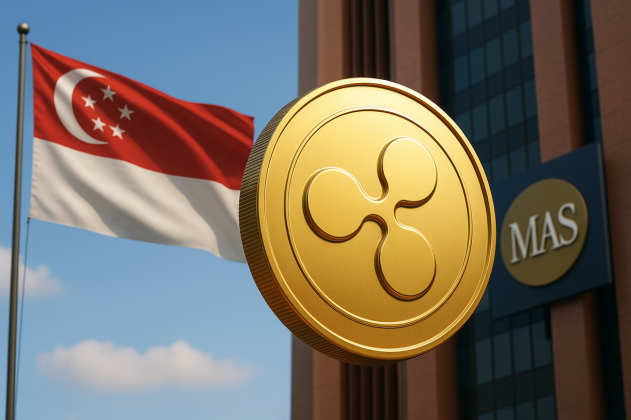
On December 1, 2025, Ripple announced a major regulatory upgrade in Singapore, reinforcing its ambition to make XRP a central instrument for global payments. The expanded license allows the company to streamline cross-border money transfers, expand its payments infrastructure, and provide faster, more transparent settlements to financial institutions worldwide.

Ripple Intensifies Its Global Payments Playbook

The Singapore regulatory upgrade extends the scope of Ripple’s Major Payment Institution (MPI) license, giving its subsidiary, Ripple Markets APAC Pte. Ltd., authority to operate a fully regulated, end-to-end payments platform. The license enables Ripple to handle fund collection, secure custody, token conversion, and final payouts within a single operational framework. XRP and Ripple’s stablecoin RLUSD are embedded into the system, consolidating complex cross-border processes into a fast, compliant, and transparent environment.

This upgrade positions Ripple as a turnkey solution for banks, corporates, and fintechs. By managing both regulatory compliance and the technology infrastructure, Ripple removes the fragmentation that slows legacy systems. These institutions now have a single point of contact, reducing complexity and making operations more efficient.

Ripple is also expanding its geographic reach through strategic partnerships. Its collaboration with Bahrain Fintech Bay allows the company to run pilot programs, real-world payment trials, and early deployment of token-driven services in the Gulf region. These initiatives help Ripple establish liquidity corridors, embed its infrastructure into local financial ecosystems, and build familiarity with regional regulators.

Financially, Ripple strengthened its position with a $500 million funding round in November 2025, which valued the company at roughly $40 billion. The capital is being directed toward scaling payment infrastructure, enhancing enterprise tools, and expanding its stablecoin program. With these resources, Ripple can roll out its technology faster, integrate with new partners more efficiently, and advance its dominance in the institutional payments market.

XRP’s Expanding Utility In Ripple’s Global Framework

XRP remains the settlement engine of Ripple’s infrastructure, providing instant liquidity, rapid transaction settlement, and multi-currency interoperability. This functionality allows Ripple to address high-friction payment corridors, such as those in Africa, where it works with regional providers to replace slow correspondent banking chains with XRP-enabled settlements. In the Asia-Pacific region, growing on-chain activity and rising institutional demand create favorable conditions for token-based cross-border payments. The Singapore MPI upgrade now offers a regulated launchpad to deliver XRP-powered rails across these high-growth regions.

Building on this foundation, Ripple is creating a vertically integrated ecosystem where fiat, stablecoins, and digital assets operate through a unified platform. Within this framework, XRP bridges currencies, provides deep liquidity, and executes transactions faster than traditional systems. Each regulatory approval, partnership, and infrastructure deployment further embeds XRP into the backbone of global financial infrastructure.

Together, these milestones illustrate Ripple’s multi-market strategy: expanding regulatory clarity, deploying robust infrastructure, and demonstrating real-world XRP utility. The Singapore upgrade is a decisive step in this progression, reinforcing Ripple’s steady movement toward making XRP a central tool for cross-border payment systems.

XRP price chart from Tradingview.com (Ripple)

Ripple, leading VCs invest in OpenEden to support the real-world asset tokenisation firm’s expansion

  • The company will focus on scaling TBILL and the yield-bearing stablecoin USDO.
  • cUSDO was approved this year as off-exchange collateral at Binance.
  • BNY Mellon now manages and safeguards Treasurys underlying TBILL.

Real-world asset tokenisation is becoming one of crypto’s most active areas in 2025, and OpenEden is positioning itself at the centre of this shift with a new round of investment supported by major industry players.

The company confirmed on Tuesday that leading trading firms, venture capital groups, blockchain networks and institutional infrastructure providers have backed its latest raise to expand access to tokenised US Treasurys.

The round, which follows OpenEden’s 2024 raise with YZi Labs, comes at a time when short-dated government debt has emerged as one of the fastest-growing niches in digital assets as institutions look for familiar, regulated yields on-chain.

Tokenisation demand drives new investment push

OpenEden said the fresh capital will help it scale its tokenisation-as-a-service platform as more institutions look to move traditional assets onto public blockchains.

The firm is leaning into rising demand for regulated products tied to government debt, with short-term Treasurys becoming a preferred entry point for investors seeking on-chain yield that mirrors conventional markets.

The company did not disclose the size of the round, but it confirmed participation from Ripple, Lightspeed Faction, Gate Ventures, FalconX, Anchorage Digital Ventures, Flowdesk, P2 Ventures, Selini Capital, Kaia Foundation, and Sigma Capital.

Expansion of TBILL and USDO across markets

A significant portion of upcoming development will centre on OpenEden’s two main offerings: TBILL, its tokenised US Treasury fund, and USDO, a stablecoin backed by those same Treasurys.

USDO and its wrapped version, cUSDO, have already been integrated across decentralised exchanges and lending markets.

Earlier this year, Binance authorised cUSDO as off-exchange collateral.

OpenEden said the new investment will support broader distribution of these products and allow the company to introduce additional market structures tied to real-world financial assets.

Broader product pipeline builds institutional focus

Beyond Treasurys, OpenEden is preparing several new instruments designed to deepen institutional engagement with tokenised markets.

These include upcoming tokenised bond exposure, a multi-strategy yield token and a range of structured products aimed at investors familiar with traditional income-generating instruments.

In August, the company appointed BNY Mellon as custodian and investment manager for the Treasurys underlying TBILL.

The product has also received investment-grade ratings from S&P Global and Moody’s, marking a notable step in bridging conventional market requirements with decentralised finance infrastructure.

The post Ripple, leading VCs invest in OpenEden to support the real-world asset tokenisation firm’s expansion appeared first on CoinJournal.

Ripple Exec Sounds Warning: XRP Must Learn This From Solana Or Risk Damage

XRP and Solana share the opening line of a direct industry alert from a senior Ripple executive who argues that technical maturity alone will not guarantee XRP’s relevance in the next competitive cycle. He points to Solana’s execution style as a benchmark that XRP must study and internalize to stay competitive, drive innovation, and avoid strategic setbacks.

Solana’s Edge And The Core Lessons For Ripple

Luke Judges draws on his experience in the Solana ecosystem to highlight operational lessons for XRP. Before joining Ripple, he built two startups on Solana and ran a validator managing over $30 million in staked tokens. He personally navigated the network’s full market swings from its peak near $200 to a collapse below $10 and its eventual recovery—gaining insights into infrastructure demands, validator economics, and developer dynamics that go beyond theory.

According to Judges, Solana’s growth reflects a combination of speed, practical engineering decisions, and developer-friendly onboarding. He acknowledges Solana’s weaknesses, including a falling validator count that could raise decentralization concerns, but emphasizes that these do not negate the network’s operational strengths. High transaction throughput and pragmatic design choices, he notes, continue to attract builders and support adoption, demonstrating that efficiency and practical execution can drive results even when a system is imperfect.

Judges link these observations directly to XRP’s path forward. He suggests that overlooking the strengths of competing networks creates blind spots that hinder ecosystem development. Studying Solana’s approach can help the network refine its operations, accelerate development cycles, improve tooling for builders, and align technical decisions with real-world usage patterns. These, he indicates, are essential steps for XRP to maintain competitiveness in a fast-evolving layer-1 landscape.

XRP’s Strategic And Competitive Focus

Ripple’s internal roadmap already includes critical enhancements—smart contracts, native staking primitives, and the AlphaNet rollout for XRP Ledger Smart Contracts. However, Judges’ comments signal that technical capability without a sharpened go-to-market strategy is insufficient. He points to the Ethereum Foundation’s recent tightening of its GTM approach after losing market share to Solana as an example of the stakes involved.

To address these challenges, XRP’s competitive focus comes down to three main areas. First, the ecosystem must augment its programmability track with clearly packaged developer value propositions that demonstrate tangible differentiation. Second, validator economics require forward-looking structuring to avoid the attrition dynamics now visible in Solana’s network. Third, go-to-market alignment must accelerate, converting technology milestones into momentum-building enterprise and retail narratives.

Judges’ message ultimately operates as both caution and catalyst. He frames Solana’s strengths not as threats but as operational lessons, while its weaknesses provide a blueprint for pitfalls XRP should avoid. His message is clear: the blockchain space is shifting, and Ripple’s executive team signals that the window to capture the next market cycle demands adaptation, not insulation. The underlying mandate is to learn fast, move faster, and ensure XRP remains structurally relevant in the next phase of blockchain adoption.

XRP price chart from Tradingview.com

Singapore’s MAS grants Ripple wider payment permissions as APAC demand surges

  • MAS expands Ripple’s payment permissions for XRP and RLUSD services.
  • The approval boosts Ripple’s role in fast, regulated APAC cross-border payments.
  • Regional digital asset activity rises as Ripple deepens Singapore investment.

The Monetary Authority of Singapore (MAS) has approved an expanded range of payment activities for Ripple Markets APAC, the company’s local subsidiary.

This approval allows Ripple to grow its regulated payment services for banks, fintechs, and corporates in one of the world’s most tightly supervised financial markets.

Ripple can now offer a wider suite of digital payment token services linked to XRP and RLUSD.

It also gives the firm more room to deliver cross-border payment solutions that rely on digital assets to settle transactions faster and at a lower cost.

Ripple’s leaders say this development reflects the value of Singapore’s clear regulatory stance.

President Monica Long described MAS as a global benchmark for transparency and stable rules.

She said the decision strengthens Ripple’s plan to deepen its investment in the market and build infrastructure that supports faster global money movement.

MAS’s frameworks under the Payment Services Act give digital asset firms defined rules covering token issuance, custody, and payments.

Expansion aligned with rising APAC demand

The approval marks a surge in digital asset activity in the Asia-Pacific region, with a year-over-year increase of about 70%.

Ripple says Singapore sits at the centre of this growth thanks to its advanced policies and its early embrace of regulated digital token services.

Fiona Murray, Ripple’s Vice President and Managing Director for the region, said the expanded license equips the company to serve the institutions driving that growth.

She noted that regulated payment rails remain essential as cross-border activity accelerates across regional markets.

Ripple first established its Asia-Pacific headquarters in Singapore in 2017.

The company later secured a full MPI license, placing it among a select group of blockchain-focused firms approved to provide digital token services in the country.

Broader capabilities for institutional clients

With the updated permissions, Ripple can now support end-to-end payment flows through a single integration.

This includes collection, holding, token swaps, and payouts.

The system enables clients to avoid multiple infrastructure partners and reduces their reliance on additional banking relationships.

Ripple Payments, the company’s global solution, merges digital tokens with a payout network that handles conversion, compliance, and settlement operations.

By absorbing the technical and blockchain complexity, Ripple enables institutions to offer digital payment services more efficiently.

The company’s stablecoin, RLUSD, sits at the core of several of these services.

The stablecoin recently received recognition in Abu Dhabi as an Accepted Fiat-Referenced Token, allowing licensed firms in the Abu Dhabi Global Market to use it for regulated financial activities.

This adds momentum to Ripple’s broader expansion across the UAE and Asia.

The post Singapore’s MAS grants Ripple wider payment permissions as APAC demand surges appeared first on CoinJournal.

Ripple Scores Major Win As MAS Supercharges Its Singapore License

Ripple has secured a significant regulatory boost in Asia Pacific, after the Monetary Authority of Singapore (MAS) approved an expanded scope of payment activities for the Major Payment Institution (MPI) license held by its local subsidiary, Ripple Markets APAC Pte. Ltd.

Announced on December 1, the decision allows the company to broaden the range of regulated payment services it can provide from Singapore, positioning the city-state even more clearly as the company’s core operational hub in the region. Ripple described the move as enabling “end-to-end, fully licensed payment services” for customers rather than a narrow set of functions, underscoring the strategic weight of the upgrade.

MAS Hands Ripple A Major Boost

The company framed the approval as validation of its long-running “regulation-first” posture. President Monica Long directly credited Singapore’s approach to digital asset oversight as a differentiator, saying: “MAS has set a leading standard for regulatory clarity in digital assets, and we deeply value Singapore’s forward-thinking approach. Ripple has always taken a regulation-first approach and Singapore is proof that innovation thrives when rules are clear. This expanded license strengthens our ability to continue investing in Singapore and to build the infrastructure financial institutions need to move money efficiently, quickly, and safely.”

Under the new scope, Ripple can deploy a wider suite of services via Ripple Payments, its enterprise payments platform that uses digital payment tokens and a global payout network to support cross-border transfers and fiat on/off ramps. The product is pitched squarely at banks, crypto firms and fintechs that want access to token-based settlement without having to build their own infrastructure stack or manage the operational complexity of blockchain in-house.

Ripple Payments uses digital payment tokens (DPTs), “such as RLUSD and XRP,” to settle transactions within minutes, while the company itself handles collection, holding, swapping and payout through a single integration. The company emphasizes that clients can choose whether or not to hold DPTs directly, with Ripple’s infrastructure designed to eliminate the need for separate banking relationships, specialized infrastructure or direct digital asset management.

With MAS’ expanded approval, those capabilities can now be delivered from Singapore as fully regulated payment services, rather than as a patchwork of individual components. That gives institutional clients a clearer compliance profile when using token-based settlement rails, with both the digital asset and fiat legs sitting inside a single supervisory framework.

Fiona Murray, Ripple’s vice president and managing director for Asia Pacific, anchored the announcement in regional fundamentals, citing robust on-chain growth as the main demand driver.

“The Asia Pacific region leads the world in real digital asset usage, with on-chain activity up roughly 70% year-over-year. Singapore sits at the center of that growth,” she said. “With this expanded scope of payment activities, we can better support the institutions driving that growth by offering a broad suite of regulated payment services, bringing faster, more efficient payments to our customers.”

Singapore has been central to Ripple’s strategy since it established its APAC headquarters there in 2017. The company is now highlighting its status as one of the relatively few “blockchain-enabled institutions” globally to operate with an MPI license, using that status as a signal of both regulatory maturity and institutional readiness.

Beyond Ripple Payments, the firm continues to position itself as a broader crypto infrastructure provider. It offers custody for digital asset storage and management, and Ripple Prime as a multi-asset prime brokerage for institutional clients, with its stablecoin RLUSD and the XRP cryptocurrency integrated across these services to make “traditional finance more efficient and enable new ways to utilize digital assets.”

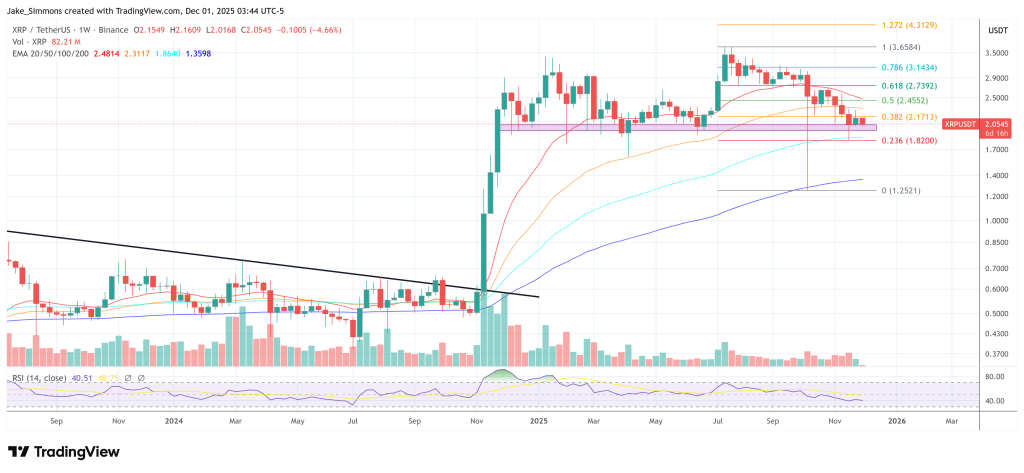
At press time, XRP traded at $2.05.

XRP price

XRP Price Flashes Similarities To 2024 That Led To 600% Surge

The latest XRP price analysis shows a market posture remarkably similar to the technical setup that preceded its explosive 600% rally in late 2024. The analysis, released on November 27, highlights a repeatable pattern framework—historically signaling the transition from quiet consolidation to aggressive price expansion. With multiple indicators aligning, XRP is once again approaching a potential breakout window that traders remember well.

XRP Price Structure Echoes The 2024 Breakout Setup

The analysis shared by “guyonearth” on X argues that XRP is rebuilding the same technical foundation that preceded its major 2024 breakout. In that earlier cycle, the asset spent months tightening within a defined structure before unleashing a vertical rally. The analyst notes that the current configuration follows the same blueprint, with the cryptocurrency once again entering a compressed phase that often precedes high-momentum expansion.

The latest chart shows XRP trading inside a descending channel and recently rebounding from the lower boundary—an early signal that momentum may be shifting. The next critical objective is the channel’s upper boundary near $2.40, identified as the confirmation level for renewed upside. A move into this zone would indicate strengthening buyer control and open the door for broader trend acceleration.

Central to this setup is the $1.90–$2.00 support corridor, which continues to operate as XRP’s structural floor. The asset has repeatedly reversed from this band, reinforcing it as the market’s preferred pivot. Maintaining this range is essential for preserving the bullish setup, as losing it would disrupt the pattern and undermine continuation prospects.

Momentum indicators align with the broader narrative. The RSI is forming higher lows beneath a descending resistance line, suggesting that accumulation is quietly rebuilding. Viewed together, these elements form a unified narrative: XRP is recreating the combination of support integrity, structural tightening, and momentum rebuilding that historically led to a dramatic upward move. The analyst’s standpoint is that, if these components continue to hold, the altcoin may once again be positioning itself for a breakout that mirrors its 2024 trajectory.

Bitcoin Dominance Unlocks A Favorable Window

Broader market conditions add a supportive backdrop for XRP’s projected rally. The analyst notes that Bitcoin Dominance remains high and stable, as long as it stays above 57.5%. A drop below that level typically triggers stronger capital rotation into altcoins.

He expects dominance to eventually fall toward 43%, a shift that would mark a major redistribution of market share. That projected decline forms the window in which the altcoin could gain momentum, provided it continues to hold the $1.90–$2.00 support zone.

If Bitcoin dominance rolls over while XRP maintains structural strength, liquidity could tilt sharply toward altcoins. With a clear technical pattern and a short-term target near $2.40, the analyst positions XRP as well-placed to benefit from that rotation.

XRP price chart from Tradingview.com

Ripple stablecoin gains Abu Dhabi approval as UAE tightens crypto rules

  • RLUSD has been recognised as an Accepted Fiat-Referenced Token in the Abu Dhabi Global Market.
  • Ripple secured full regulatory approval to operate in the Dubai International Financial Centre in March.
  • The DFSA allowed RLUSD to be used inside the DIFC in June.

Ripple’s dollar-pegged stablecoin has gained new regulatory acceptance in the Middle East, adding another link between traditional finance and digital assets as the UAE moves to tighten oversight of decentralised finance and Web3.

The approval allows institutions operating in Abu Dhabi’s financial free zone to use RLUSD for regulated activity, reinforcing the country’s strategy of pairing innovation with clearer rulemaking.

As the UAE reshapes how payments, lending, and custody services operate across digital systems, Ripple’s position in the region is expanding through multiple regulated hubs that already host global financial firms.

ADGM adds RLUSD to regulated activities

Ripple announced on Thursday that RLUSD is now recognised as an Accepted Fiat-Referenced Token within the Abu Dhabi Global Market.

The financial centre sits on Al Maryah and Al Reem Islands and functions as an international free zone with its own regulatory framework.

The approval was issued by the Financial Services Regulatory Authority, which supervises activities conducted within the zone.

The decision means firms licensed by the regulator can use RLUSD for services that fall under permitted activities, provided they meet requirements set for fiat-referenced tokens.

These include rules linked to reserve management, transparency, and disclosures.

Ripple said RLUSD currently holds a market capitalisation above one billion dollars and is being adopted for uses such as collateral and payments.

RLUSD was launched in late 2024. It is pegged 1:1 to the US dollar and backed entirely by cash and equivalents.

The stablecoin is issued under a limited-purpose trust charter from the New York Department of Financial Services, which sets the conditions for custody and reserve safeguards.

Ripple widens presence across UAE financial hubs

The recognition in Abu Dhabi adds to Ripple’s regulatory progress across the UAE’s digital-asset ecosystem.

In October 2024, the company confirmed it was pursuing a licence from the Dubai Financial Services Authority to expand its services in the country.

It secured in-principle approval later that month as part of its plan to operate inside Dubai’s major financial zone.

By March, Ripple had received full regulatory approval to provide cross-border crypto payment services within the Dubai International Financial Centre.

The DIFC runs under its own rulebook and is widely used by global firms looking to serve markets across the Middle East, Africa, and South Asia.

In June, the DFSA permitted RLUSD to be used for regulated activities within the DIFC.

This allowed companies operating inside the zone to integrate the stablecoin into services involving payments and treasury functions.

Ripple also brought in Zand Bank and the fintech app Mamo as early adopters of Ripple Payments, its blockchain-powered system designed for institutional transfers.

UAE expands its national approach to crypto supervision

The UAE is now combining approvals inside its financial zones with a nationwide framework that brings more of the digital-asset market under central oversight.

Earlier this week, authorities introduced a new central bank law that formally places decentralised finance and a wide portion of Web3 activity within a regulated structure.

Federal Decree Law No. 6 of 2025 has been in force since September 2025.

It requires platforms, infrastructure providers, and protocols involved in lending, custody, exchanges, payments, or investment services to obtain licences from the Central Bank of the UAE by September 2026.

The move sets a unified expectation for businesses operating across digital finance.

Stablecoin use grows as rules become clearer

The combination of ADGM recognition, DIFC approval, and a nationwide regulatory framework positions RLUSD to play a larger role in institutional financial services across the UAE.

With regulated firms in multiple zones now able to use the stablecoin for defined activities, Ripple’s expansion reflects the broader shift in the country’s approach to digital assets.

The new law signals that the UAE is looking to support innovation while ensuring that digital-asset operations follow the standards applied to other financial services.

RLUSD’s clearance inside Abu Dhabi arrives at a moment when regulated stablecoins are increasingly used for settlement, payments, and collateral across international markets.

The post Ripple stablecoin gains Abu Dhabi approval as UAE tightens crypto rules appeared first on CoinJournal.

Ripple price forecast: Will XRP reclaim $2.5 soon?

Key takeaways

  • XRP is down 11% in the last seven days and risks dropping below $2.0 soon.
  • The bearish performance comes despite the recent launch of the spot XRP ETF.

XRP continues to underperform

XRP, the native coin of the Ripple ecosystem, faced intense selling pressure at key support levels in recent days, as the broader crypto market continues to underperform. 

The coin has lost 11% of its value over the last seven days. The decline comes amid a backdrop of mixed institutional signals and heightened macro uncertainty. The crypto market remains trapped in a medium-term downtrend, with sentiment currently in the fear zone amid growing volatility for Bitcoin and others. 

XRP’s price failed to react despite Canary Capital’s newly launched U.S. spot XRP ETF (XRPC) registering $58.6 million in first-day volume, surpassing the $17 million analysts had predicted.

Despite the strong start by the ETF, derivatives markets flashed stress signals, with XRP losing the $2.5 key support level. The bearish performance resulted in $28 million worth of XRP long positions being liquidated in the market over the last 48 hours. 

XRP could dip below $2.0 if the current support level fails

The XRP/USD daily chart is bullish and efficient despite XRP’s poor performance in recent weeks. The coin’s price faced rejection from the 50-day EMA at $2.49 last week and has lost 11% of its value since then. It is now trading above $2.27 per coin. 

XRP/USD Daily Chart

If the recovery efforts intensify, XRP could rally towards the next major resistance level and 50-day EMA at $2.55. The RSI on the daily chart is 42, near its neutral level of 50, suggesting fading bearish momentum. The RSI will need to move above the neutral 50 for XRP to record a sustainable recovery. The MACD lines also remain within the bearish region, indicating that the sellers have not given up control of the market. 

However, if XRP continues its bearish correction, it could drop below the $2.0 psychological level and retest the next daily support at $1.96.

The post Ripple price forecast: Will XRP reclaim $2.5 soon? appeared first on CoinJournal.

❌