George Foote, who served as the outside general counsel to the US Institute of Peace, said at WIRED’s Big Interview event that DOGE operatives arrived like a “strike team.”
At WIRED’s Big Interview event, the activist and organizer said he doesn’t “think the Chuck Schumers of the world understand” what’s coming for the party.
Big Tech has lost its way. At WIRED’s Big Interview event, Techdirt editor Mike Masnick and Common Tools CEO Alex Komoroske announced a manifesto designed to help the industry get back on track.
The cofounder and CEO of Circle says “money as an app platform” is the next step in a digital-based global economic system that’s right around the corner.
Sahil Lavingia, previously a DOGE operative at the Department of Veterans Affairs, is now a career employee at the IRS. He said at WIRED’s Big Interview event that he expects to work there 10 years.
Lisa Su leads Nvidia’s biggest rival in the AI chip market. When asked at WIRED’s Big Interview event if AI is a bubble, the company’s CEO said, “Emphatically, from my perspective, no.”
North Korean hackers escalated the "Contagious Interview" attack, flooding the npm registry with over 200 malicious packages to install OtterCookie malware. This attack targets blockchain and Web3 developers through fake job interviews and coding tests.
On this week’s episode of The Big Interview podcast, the philanthropist offers her insights on billionaire donors, kids on phones, and the importance of women’s health care.
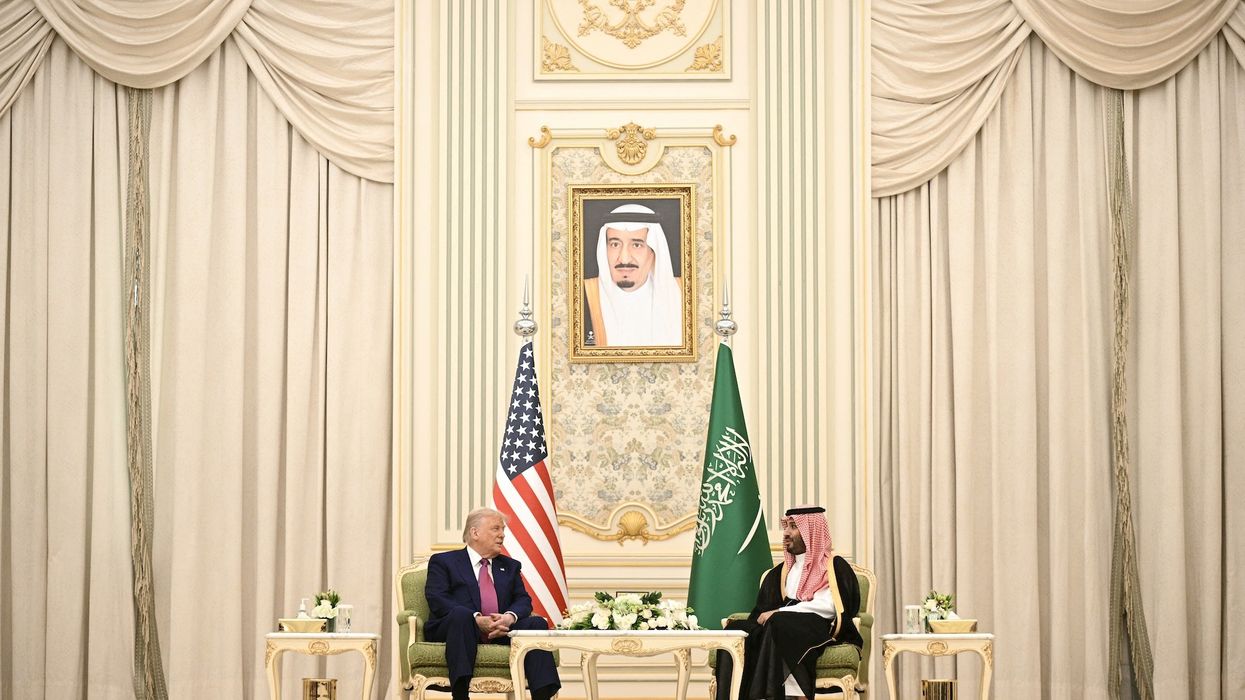
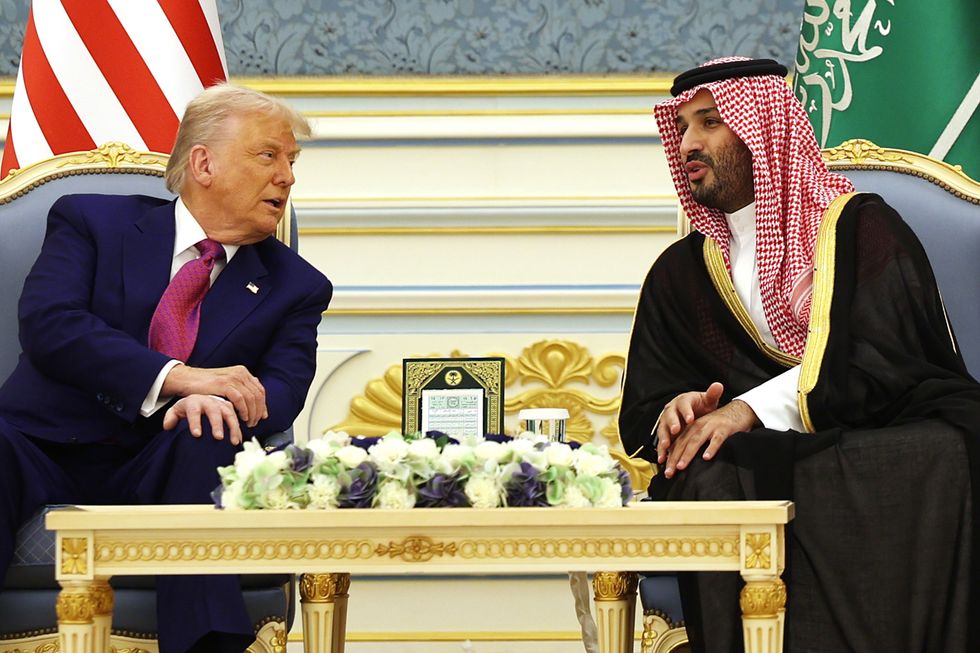
EXPERT INTERVIEW — President Trump is welcoming Saudi Crown Prince Mohammed bin Salman to the White House today with an announcement that he plans to approve the sale of F-35 fighter jets to the Kingdom, signaling a policy shift by the U.S. Administration.
The visit to Washington marks one of the most consequential moments in decades for the U.S.–Saudi relationship. Both governments see the meeting as a chance to cement the expansion of the U.S.-Saudi partnership from one focused on energy and security to include advanced technology, AI, critical minerals and defense cooperation.
The trip follows President Donald Trump’s high-profile visit to Saudi Arabia in May, when both countries announced a multibillion-dollar deal that could potentially give Riyadh access to advanced U.S. AI technology. While sources tell The Cipher Brief that many of the details of those deals remain in various stages of negotiation, the Crown Prince’s Washington visit aims to build off of that momentum.
More widely, the visit comes at the end of a year of rapid geopolitical and technological change for the Middle East. Through these shifts, Saudi Arabia and other Gulf leaders like the United Arab Emirates are positioning themselves as centers for AI infrastructure, diversified cheap energy, and global supply chains.
To help unpack the stakes and expectations behind the Crown Prince’s Washington visit, The Cipher Brief spoke with Norm Roule, who spent more than 34 years in the Intelligence Community and has been following regional developments for 43 years - including his time as a business consultant. Roule is in frequent contact with Gulf leaders on energy, security, finance and technology issues and travels frequently to the region. Cipher Brief CEO & Publisher Suzanne Kelly began by asking Roule to summarize the expectations going into this visit. Our conversation has been lightly edited for clarity and length.
THE INTERVIEW
Roule: The visit of Crown Prince Mohammed bin Salman to Washington will likely represent a transformational moment in Saudi-American relations that will stand out among the most important events in the 80-year relationship between the two countries. Each side will likely seek to use this visit to change the traditional relationship from one of oil and security to one that is more of a blend of advanced technology, mining, and energy, which includes nuclear, and defense.
Each side now sees the other as an indispensable partner and views this visit as a way of establishing an architecture that will ensure that periodic political difficulties don't destabilize a critical relationship that needs to last decades. The Saudis seek this more predictable relationship and assets that will allow them to accelerate their evolution toward becoming a global power center.
Washington seeks to revitalize and cement ties with a rising middle power that will certainly have considerably more influence in the Middle East and the Global South and will become an important link in the global energy and supply chain. Regional issues will be discussed during the visit, but I don't think it's likely we're going to see significant shifts outside of the ongoing trends.
Kelly: This visit, of course, does follow the visit by President Trump to Saudi Arabia in May of this year where some signficant deals were announced with regard to technology sharing and investment opportunities.
Roule: That is correct. In essence, what you're looking at is the other side of the coin from those visits. President Trump and a team of unprecedented stature of American cabinet members and highly consequential American business leaders traveled to the Kingdom and concluded a vast array of business deals over the months since that time. American diplomats and business leaders have met to finalize and further expand upon those deals. And now we're looking at a meeting that will, in essence, conclude those agreements or take them to the next stage of developing memorandums of understanding. These are very complicated agreements that in and of themselves will take months, if not years, to play out. But they are indeed transformational for the economies of each of the two partners.
This is exclusive Subscriber+Member content
Saudi Arabia and its neighbor, the United Arab Emirates are drawing on an unprecedented and historic combination of very focused policy decisions, massive domestic and global investment flows that they are developing with themselves and partners, and domestic social engineering that's been something that is unique in the world based upon AI and multiculturalism to redefine themselves from hitherto reliable energy suppliers into world-class members of the global supply chain - architects of the next generation of AI manufacturing and new nodes of political influence in a non-polar Middle East.
Each of these two countries is positioning themselves as models of rule of law, stable governance, and an oasis of multicultural life, open for business, open for boldness. And these two countries have a strategy that relies upon a tight weave of Liquified Natural Gas (LNG), chemicals, energy infrastructure, data centers, and finance. But each country also requires a deep, unprecedented and sustained access to the most advanced US AI technology.
So for this to happen, we're watching the Saudi Crown Prince come to Washington to build this new relationship with the United States. They know that this relationship brings tremendous benefits to the United States as well. It not only helps us build out our infrastructure, our employment at a time when we're having our own challenges, but in a way, it also sends a powerful message. They believe in us. They believe in the American future. They know that we will win, and often in ways that we sometimes don't express in ourselves.
Lastly, they're doing all of this in a way that means that they're not having to cut their commercial ties with China or offend Russia. In return for what they will give, they will receive technology that makes them global AI powers. And with the cheap energy that they are able to attach to that AI, they will be incredibly successful.
Kelly: Clearly, we're going through a dramatic shift in the Middle East right now. How important is this relationship to the United States?
Roule: It's critical. The Middle East remains vital to America's interest. The Middle East, as they say, it's in the middle. You look at any map and the Middle East is in the center of global trade, global transportation, multiple shipping routes move through the region, 80% of the data between Europe and Asia transit the region. You have global energy centered in the region. You have several of the world's major religions in the region. You have crossroads of multiple U.S. national interests.
At the same time, you're now looking at the development of an artificial intelligence infrastructure that is starting to blossom. And our ability to partner with that and to ensure that that technology does not threaten America's interests, and indeed sustains America's interest as that region partners with the Global South. It just protects our interest and expands our influence at a time when China would very much like to replace us.
Kelly: You talked about some of the ambitions of the Kingdom and the UAE, both in investment and AI. We've talked a lot in the past about their efforts and trying to lead when it comes to green energy. What do you think is driving their strategy?
Roule: Their strategy is driven by changes in the world that are just inevitable. If we were to go back one year and I were to tell you that knowledge is power, you would agree completely with me. But today, the adage is now, power is knowledge. The artificial intelligence system is inherently an energy system in and of itself. And artificial intelligence requires access to inexpensive, reliable 24-hour energy. And in the Middle East, Saudi Arabia and the Emirates and the other Gulf Cooperation Council states have access to tremendously inexpensive energy, and the prospect of additional inexpensive energy through their expansion of solar power and nuclear energy, which they're seeking. Those with access to such tremendous cheap energy and artificial intelligence have access to the benefits of artificial intelligence, which will bring them enormous economic advantage in the future.
Now, look at the other end of that stick. In Sub-Saharan Africa, at least 600 million Africans lack access to a reliable source of electricity. Imagine the social and economic disadvantage of those various societies. But let's go forward, just thinking about where the world is moving. By 2040, data center energy needs will rise fourfold. 1.5 billion people are estimated to move to cities. That means 2 billion new air conditioners will come online. And when you're in Saudi Arabia, a large portion of their oil needs, their oil production, is actually used for air conditioners in the summer. And you see their oil production move up in the summer for air conditioners. Global fleets of aircraft are expected to double from 25,000 to 50,000 aircraft by 2040. Jet fuel demand will be up by 30%. Six million kilometers of electrical transmission lines are needed by 2040. Imagine what that means in terms of copper.
So if you're looking at something like this, we're now looking at $4 trillion of investment needed annually for this energy architecture. We can't do this without partners with capital - like Saudi Arabia or the United Arab Emirates - and the many partners they bring together into their ecosystem.
So now let's look at energy. In recent years, you've had this great contest between the people who correctly talk about the need for us to battle climate change, and those who have talked about the need for more energy. Both issues must be dealt with. Well, now we realize oil demand is not going to drop. In fact, oil demand is expected to remain above 100 million barrels a day through 2040. This demand is going to be needed for materials and petrochemicals. LNG demand is expected to grow by 50%. Renewables will double. In essence, the world needs more energy, not replacement for these other energy sources.
Saudi Arabia and the Emirates and Qatar and Kuwait see themselves as becoming islands of cheap energy working with the United States. They see themselves at this moment in history - where, if they can capture a certain amount of extraordinary technology and a strategic relationship with the United States, and this ecosystem of multicultural partnership with the world - they can become a very different society. It's a fascinating dynamic. It's a very exciting time in history.
Kelly: Do you think falling oil prices are going to impact this strategy?
Roule: Well, we're watching that play out. So in essence, what we've seen is very prudent decision making. They have slowed some of the execution of major projects, but they have not stopped the projects themselves. They have extended timelines. They have delayed the rollout of certain large programs. If it has to do with their visions of Vision 2030 or Vision 2040, they have different visions in the Gulf, the projects remain on track. And it's because those projects are critical to where they need to go. If you look, for example, at the city of Neom that is often talked about, well, the port of Oxagon, which is critical to the infrastructure of trade in the Northwest Arabian Peninsula, that’s still functioning, it’s still out there. They're just going to slow the build out of that city because it's reasonable to say to slow the build out to the city. It's just not reasonable to think that you can slow the build out of trade and infrastructure in the Arabian Peninsula. That's going to happen on a different timeline.
Now, we've also seen reports that the Saudis have withdrawn some of their capital from not less productive, but maybe investments in the United States that aren't as relevant to the core vision of equities as in the past. That I think you may see a little more of, but I don't see a massive withdrawal of those investments unless we saw oil prices drop into say the low $50s or $40s. So what we're watching is prudent focus. We're watching attention to timelines. We're watching attention to anti-corruption. I'm impressed. I've not seen anybody waste money or do anything that is injudicious. And I've not seen anybody make allegations that such things have been noted by others.
Kelly: What will make this a successful visit to Washington, both on behalf of the Saudis and on behalf of the U.S.?
Roule: Architecture. And what you're looking for is something that lasts beyond one month, one deal. You're looking for something that binds us together over time. I think what you're going to hear will be announcements of MOUs. You will hear announcements of deals. And as important as it is to focus on the numbers associated with the deals, and there will certainly be focus on that and questions regarding that, it's really more important to focus on the industries, the sectors associated with those deals, and then the depth that each of those MOUs brings to the various societies.
For example, let's say that we see an aviation deal that might bring employment to the United States but will set up a manufacturing node in Saudi Arabia. If something like that were to happen, that would make Saudi Arabia part of a global supply chain. So 20 years from now, we would have a more reliable source of parts or an alternative source of parts. If mining is developed within the kingdom, well, it takes years to develop a mine, but we will have an alternative source of minerals, and Saudi Arabia is a rich source of multiple minerals that are important to the United States. Or if the Saudis invest in minerals in the U.S., it may take years for those to play out. So the architecture associated with those deals will mean employment but it's the depth and the timelines with those deals that will determine the depth of that relationship.
In terms of defense deals, I don't want to downplay that, but America has always stood with Saudi Arabia. People have often asked, 'If there's a single attack did we respond in as well or to the extent that we should have?' That's open to question. But there is no doubt in my mind, nor in the minds of regional leaders, that if there were a serious attack on Saudi Arabia by Iran or another country, we are absolutely going to be there. And do we need a defense deal to say that? I'll leave that to others, but not in my mind. But in any case, we will see some sort of defense architecture develop.
Should the Saudis have nuclear energy? Why not? Every other country does. They're looking for additional technology and there's no reason we can't provide that to them to assist them. But again, it's that architecture and the relationship over years that you seek, vice one delivery, one deal, and the announcements that go with it.
Kelly: Where do you see the region going in 2026? What will be the big headlines and the big drivers next year in the Middle East?
Roule: There's a lot of good news in the Middle East. The U.S. remains the dominant great power. Americans are not and likely will not be the target of a major military confrontation in the region. But the region itself continues to lack a strong cohesive narrative that pulls it together.
The biggest point in the region is that it remains a non-polar region. There's no reason to believe that this administration will cease its vigorous focus on the region. And we must applaud this administration for, in its first 11 months, having multiple emissaries and making visits and sending many cabinet ministers to the region. If you look at the recent conferences that have taken place in Manama, Qatar, Abu Dhabi and Riyadh, we've had cabinet level representation at all of those events to include during a government shutdown, which is no small thing, with representatives from multiple government departments. America is back and Russia and China are not.
Gaza is going to sputter along, and the U.S. commitment remains and CENTCOM is performing marvelously as a key force bringing things together. I think we're going to see that continuing. Neither side, Israel or the Palestinians, have a reason to return to war, but violence will continue. The largest or most significant political shifts in the region likely would come from a change in the Israeli government.
Iran is fragile. Iran nuclear talks are unlikely to begin until the administration sees evidence that the talks will not be a waste of time. Right now, the Iranians seek talks, but that doesn't mean they want to do anything other than have talks, because if they have talks, the rial will be strengthened and the Iranians don't have to bring anything up. The Quds Force will remain active. They will continue to deliver weapons to the Yemenis. But it's unlikely they're interested in looking for a conflict. We can't rule out a sudden collapse of Iran in case of an environmental disaster such as an earthquake, but the regime appears fragile at present.
Syria continues to make progress and I think we're going to see the progress continue in its current trend. Arab infrastructure investment continues to progress. I would watch for telecommunications and port investment work. And the reason that's important is that you're watching the Biden administration IMEC plan in essence or IMEC cooperation be realized as Gulf states put their lines up through Europe and through Syria.
Lebanon will likely remain a greater challenge. I think we're watching a lot of Saudi quiet diplomacy with Yemen and that will continue. GCC infrastructure will continue to develop. I would be surprised if we didn't see more Saudi work with Bahrain and Saudi work between the GCC and the West.
Oil will remain stable likely and soft in coming months. I think you're going to see a lot more natural gas come online. OPEC will continue to do everything it can to prevent oil from falling into the 50s while maintaining a relatively soft position so they can recapture market share from India and other places lost to Russia.
Read more expert-driven national security insights, perspective and analysis inThe Cipher Brief because National Security is Everyone’s Business.
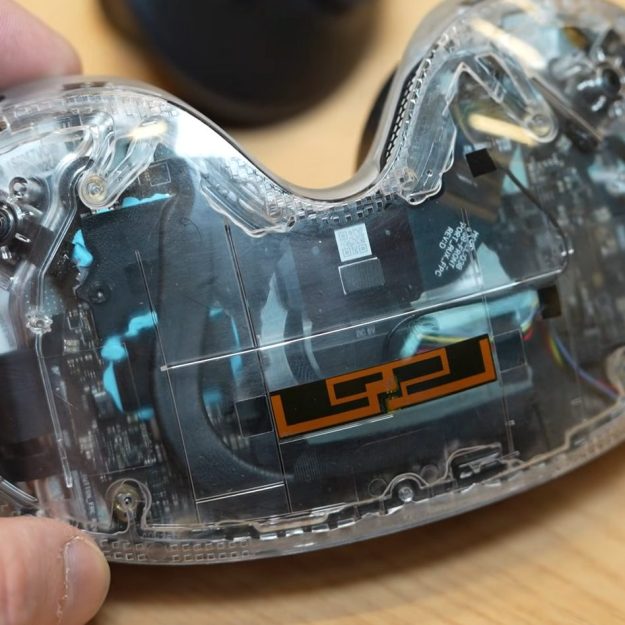
Valve’s new Steam Frame is what all the well-connected YouTubers are talking about, but most of them are talking about what it’s like to game on it. That’s great content if you’re into it, but not exactly fodder for Hackaday — with one exception. [Gamers Nexus] gives us a half hour of relatively-unedited footage of them just chatting with the engineers behind the hardware.
It’s great stuff right from the get-go: they start with how thermal management drove the PCB design, and put the SoC on the “back” of the chip, sandwiched betwixt heat pipes. We don’t usually think of taking heat through the PCB when building a board, so it’s a neat detail to learn about before these things get into the hands of the usual suspects who will doubtless give us teardown videos in a few months.
From there wanders to power delivery — getting the voltage regulators packaged properly was a challenge, since impedance requirements meant a very tight layout. Anyone who has worked on this kind of SBC might be familiar with that issue, but for those looking in from the outside, it’s a fascinating glimpse at electrical sausage being made. That’s just the first half.
The heat-regulation conversation is partially repeated the next conversation (which seems to have happened first) where they get into the cooling requirements of the LCD screens. This requires less than you might think, as they like to run warm for fast refresh. It’s really more about keeping your face cool. They also they discuss acoustic vibration — you don’t want your integrated audio shaking your IMUs apart — and why the prototype was being blasted with freakin’ laser beams to monitor it.
If you haven’t seen or read any other coverage on the Steam Frame, you’re going to miss some context here, but if you’ve not hid under a rock for that announcement, this is amazing detail to have. We’re hugely impressed that Valve let their engineers out of their cubicle-cave to talk to media.
Sure, it’s not an open-source VR headset, but compared to the deafening silence coming from the likes of Meta, this level of information is still awesome to have.
EXPERT INTERVIEW – The United Nations has reimposed sweeping economic and military sanctions on Iran, ten years after lifting them under the 2015 nuclear deal.
Britain, France, and Germany triggered the “snapback” mechanism, accusing Tehran of nuclear escalation and blocking inspections. Iran had already halted oversight after U.S. and Israeli strikes in June damaged several nuclear sites and military facilities.
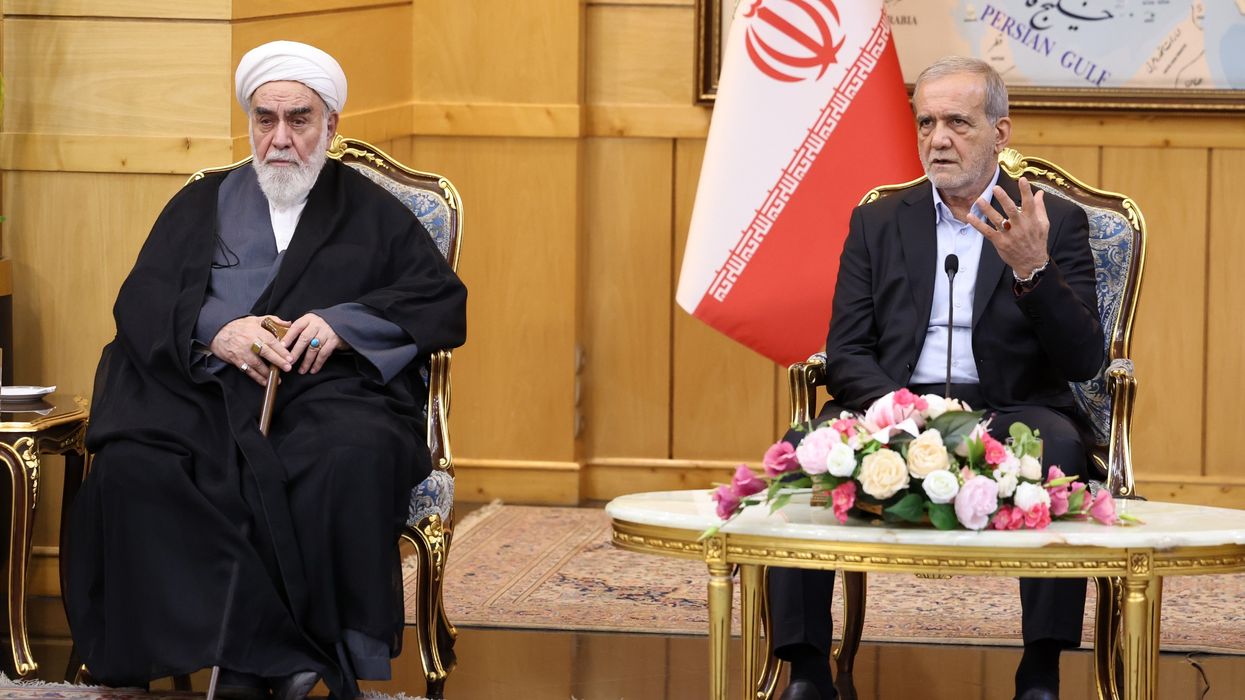
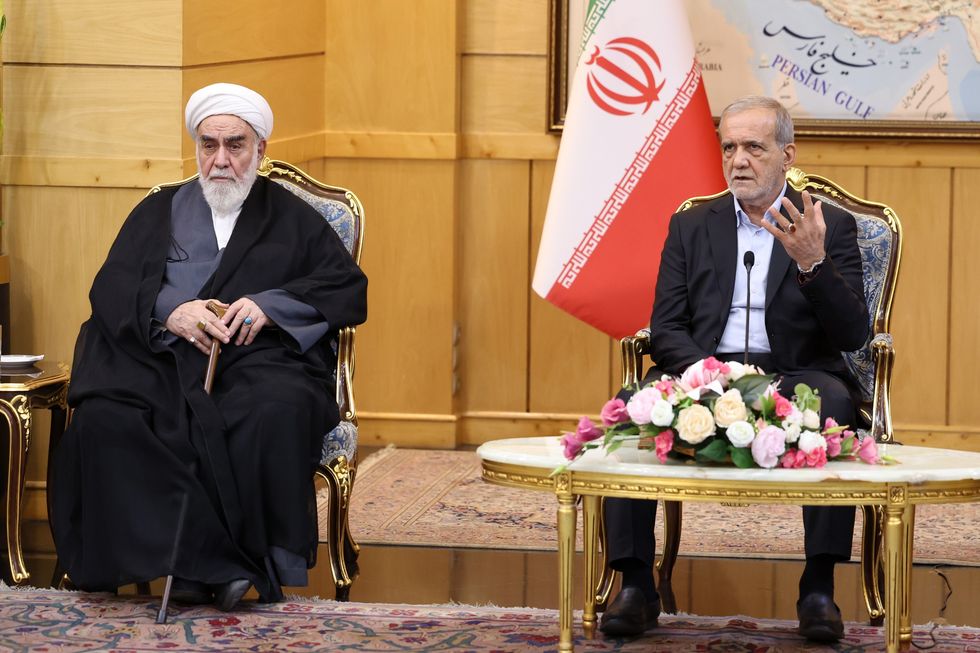
President Masoud Pezeshkian insists Iran has no intention of building nuclear weapons, calling the sanctions “unfair and illegal.” But the move marks another blow to the Joint Comprehensive Plan of Action (JCPOA), the deal meant to cap Iran’s enrichment and research while allowing civilian nuclear energy.
Iran accelerated banned nuclear activity after Trump pulled the U.S. out of the deal in 2018, repeatedly dismissing the accord as flawed.
The latest sanctions cut Iran off from global banks, reimpose arms and missile restrictions, and revive asset freezes and travel bans on key officials. Analysts say the measures hit Iran at a fragile moment with its economy shrinking, inflation surging, and the rial collapsing to record lows. Oil sales, foreign investment, shipping, and manufacturing are all expected to take a hit.
The Cipher Brief spoke with longtime Middle East and Energy Analyst Norm Roule, who formerly served as National Intelligence Manager for Iran at ODNI. Roule continues to travel regularly to the region for meetings with high-level officials throughout the Middle East.
Norman Roule is a geopolitical and energy consultant who served for 34 years in the Central Intelligence Agency, managing numerous programs relating to Iran and the Middle East. He also served as the National Intelligence Manager for Iran (NIM-I)\n at ODNI, where he was responsible for all aspects of national intelligence policy related to Iran.
The Cipher Brief: Why are snapback sanctions different from other sanctions already imposed on Iran?
Roule: First, we should touch on what this means for the regime. The sanctions hit Iran at one of its most fragile moments since the late 1980s. The government remains unpopular to an unprecedented degree. Virtually every economic indicator in Iran is poor. Its national security architecture of militias, foreign proxies, Russia, China, and the Revolutionary Guard failed during the recent conflict with Israel and the U.S. The main driver of the regime is to maintain stability as it completes transitions to the post-revolutionary generation of leadership. Despite the absence of large-scale protests, destabilizing national unrest could occur at any time.
Over the past few months, Iran’s diplomats have used the prospect of a nuclear deal and the possibility of sanctions relief as a source of hope for the Iranian people. The return of UN sanctions strips Tehran of one of its few remaining political assets.
The primary difference between the latest sanctions and U.S. sanctions is that these measures are binding on all 193 member states of the United Nations. Iran will, of course, do everything it can to evade sanctions. Russia, China, North Korea, Venezuela, and other Iranian partners who already have a history of violating Iran sanctions are unlikely to enforce these sanctions with enthusiasm.
However, unlike U.S. sanctions, which they have argued could be ignored because they were imposed only by Washington, these sanctions are imposed by the United Nations. This will make it harder for these countries to involve other countries in their own violations. Likewise, it makes it much easier for the U.S. government to seek compliance worldwide due to the legal and reputational risks associated with countries and businesses that we might approach on this issue.
The Cipher Brief: Can you discuss the specific sanctions and your assessment of their likelihood of success?
Roule: First, and most damaging for Iran, these sanctions isolate Iranian banks from a large part of the global financial system and require that UN members prevent the use of their banking systems on sanctioned trade. Hence, Iran has lost the ability to manage its oil revenues through international banks. Instead, it will need to engage in oil bartering or use intermediaries, which is a slower and more expensive process. It will likely reduce its oil sales at a time when Saudi Arabia is trying to reclaim some of the market share lost to Iran in recent years.
Banks understand that Iran will seek to defy sanctions. They also know that there are expensive legal consequences if they fail to undertake due diligence operations to examine transactions and shipments, thereby demonstrating that they have fulfilled their sanctions obligations.
Next, there is the restoration of the conventional arms embargo: This bans traditional arms transfers to or from Iran. This should make it harder for Iran to acquire advanced weapons from Russia and China, but also to sell its weapons systems to Russia, Sudan, and other countries. I will admit that I am not sanguine on the last point.
Third, we have nuclear and missile restrictions: This includes a prohibition on uranium enrichment, reprocessing, heavy-water activities, and ballistic missile technology transfers or tests capable of delivering nuclear weapons (beyond 300 km range). Iran is likely to ignore most of these restrictions and will test the international community as it does so. But I think it will also try to do so in a way that avoids sparking a regime-destabilizing war with Israel or the U.S.
Snapback also restores restrictions on dual-use goods, materials, and technologies that could aid nuclear or missile programs. These sections require increased inspections of Iranian ships and aircraft to prevent the transfer of prohibited materials or goods. For governments and businesses, this requirement will be among the more intrusive and time-consuming, and thus expensive. At the same time, Tehran will game the system by introducing complicated, multi-country layers of shell companies to obtain critical materials. This is where international legal and intelligence partnerships will play an essential role in identifying and neutralizing these networks.
Next, snapback returns asset freezes and travel bans on designated Iranian individuals. This is a rather long list and includes Islamic Revolutionary Guard Corps officials, nuclear scientists, and officials related to their programs, as well as their assets worldwide. Travel bans should be successful. Asset bans are less so, primarily due to the small number of such assets located abroad. These restrictions, however, serve as a powerful reminder to businesses of the reputational impact of doing business with Iran.
What does all of this mean? Join The Cipher Brief Threat Conference - happening October 19-22 in Sea Island, GA. to engage with the world’s leading national security experts to help answer those questions. Apply for your seat at the table today.
The Cipher Brief: Let’s go deeper. Can you break this down by sector? Is there any part of Iran’s economy that will be hurt more than another? Oil seems most likely.
Roule: We should keep in mind that, following the negative impact of the initial sanctions announcement, the effect of sanctions should be understood as corrosive. Further impact is shaped by how seriously and loudly we enforce sanctions, as well as how vigorously and successfully Tehran develops countermeasures.
To begin, Iran started the year in challenging economic conditions. The IMF’s projection for Iran’s GDP was dismal, 0.5%, so negative growth in the coming months would be far from surprising. Indeed, one wonders how it will be avoided.
The snapback announcement caused the Iranian rial to plummet to a new record low of 1.12 million to the dollar. Tehran will have little choice but to inject precious hard currency into the market to sustain its failing currency. I also expect more enthusiasm for the effort to cut some of the zeros from the Iranian currency. Iran’s leaders likely worry that the coming months will see a further weakening of the rial and a spike in inflation, which currently hovers around 43%.
Foreign investment, such as it is, will also take a hit. In 2024, Iran claimed – and probably overstated – that it attracted around $5.5 billion in foreign investment. That minuscule figure will shrink even further.
Let’s talk about sectoral impacts.
Shipping costs for Iran are likely to increase substantially. A significant portion of Iran’s seaborne trade will face new cargo inspections, bans on dual-use goods shipments, insurance difficulties, and possibly even port servicing complications.
Manufacturing and mining will be impacted in terms of both imports and exports as they face new pressures on supply chains and financing. This impact will affect trade with Europe, but it will also dampen Iran’s efforts to establish trade with Africa and complicate its trade relations with Iraq.
Although Iran’s defense industry may not be participating in trade shows, one suspects that its existing trade in drones and light arms will continue. Its current clients – Russia, Sudan, and other African countries, and reportedly Venezuela and Bolivia – may choose to ignore sanctions given their lack of alternative suppliers and animosity with the West.
The impact of sanctions on Iranian oil sales to China will be the most significant, if difficult to assess, in the coming months. Beijing and Tehran have deliberately obscured the payment relationship, and the former has imposed tough terms on Iran. China will view this new phase as an opportunity to offload more goods, machinery, and technology onto the Iranian market, and possibly to negotiate a larger price discount for the oil it acquires.
The use of intermediaries, smaller banks that are outside the scope of international monitoring, and shell firms will also increase costs for Tehran. Last, it isn’t unreasonable to think that Chinese oil sales could contract. Beijing – likely seeing the writing on the wall on this issue – has been building its reserves, and the Saudis and Emirates can fill the missing production, although they won’t discount their oil to match Iran’s prices.
The Cipher Brief: What are Iran’s likely next moves? Is diplomacy dead? What do you say to those who believe military action is expected?
Roule: Iran’s playbook is unlikely to be a surprise. Tehran’s leaders used Western media to issue their side of the story, projecting a blend of confidence, defiance, and dismissal of the impact of sanctions. Once home, Iran’s leaders will show that they won’t stop their nuclear work.
It is likely that even within Iran, the program's future remains under debate, with several options being considered. Tehran’s efforts to maintain close relations with Moscow and Beijing make it likely that it will seek to involve these capitals in its programs. One could imagine Iran dangling IAEA access at some point to gain international acceptance. Three possible programs could emerge in the coming months.
The most likely option is that Iran will seek to rebuild a modernized version of the enrichment and even the conversion facilities destroyed in the Twelve-Day War. This process would be expensive, and, depending on the number and location of facilities, could take years to complete. This option would be consistent with Iranian policy rhetoric but would risk a military attack and an extension of sanctions. The problem with lengthy construction is that this also delays benefits to Iran’s economy.
Tehran could reduce the likelihood of an attack by allowing the IAEA access to the sites or involving Russia or China in the operation and construction of the sites. Such an option, if involving advanced centrifuges, would allow Iran to retain the capability to produce highly enriched uranium, including weaponization levels, in the future should it wish to do so.
A far less likely option is to select a foreign fuel source for domestic reactors to provide power. Since this would mean abandoning a domestic enrichment program, this option is thus improbable in the foreseeable future.
Least likely for now would be weaponization. Such a decision would require Iran’s leadership to believe it could undertake and execute such an activity without discovery by Israeli or Western intelligence and, if discovered, would not face devastating military action similar to the June 2025 war.
In any case, activity at the recently reported Mount Kolang Gaz La facility in Esfahan Province is sufficient to be observable to the West, and as we have recently seen, to draw the attention of Western media, thereby sending a message. I expect construction at the site won’t be very fast until Tehran sees how Israel and the U.S. respond to this announcement and until Iran comes to a conclusion as to what direction it wishes to go in its nuclear program.
Diplomacy on Iran’s nuclear program is far from over, with low-level conversations perhaps taking place in Vienna and European capitals. The international community will remain – and should remain- insistent that the International Atomic Energy Agency (IAEA) gain access to Iran’s nuclear enterprise as soon as possible. Such a return cannot be achieved without engagement and diplomacy. However, it will take time for the politics to cool and a new paradigm of proposals to emerge.
Washington, Europe, and the Gulf will entertain serious proposals from Iran that it will accept a nuclear program that allows the IAEA access it requires. More broadly, Washington is looking for a deal that means Iran won’t have the capacity to build nuclear weapons, or accept constraints on its missile program, and end the regional operations of the Quds Force.
Iran’s current leadership is unlikely to make such a decision until sanctions begin to erode the economy. The death of the Supreme Leader could pave the way for a new generation of leadership, which – while no less assertive and potentially even hostile – might be more willing to be more accommodating on these issues to ensure the survival of the Islamic Republic.
Extreme caution should be exercised when discussing the possibility of military hostilities. The U.S. certainly doesn’t seek to start a war in the region. Israel may conduct military operations in Iran over Quds Force actions. Still, it is hard to see why Israel would argue it needs to undertake a costly military operation simply because Tehran is denying the IAEA access to rubble at Natanz. However, the Twelve Day War has changed the rules. An Israeli or US military attack on Iran is no longer unthinkable. If Iran were to undertake weaponization activity or attempt to conceal weaponization-related equipment or material, some in Tehran probably won’t be surprised if another surgical attack takes place.
Moving to Tehran, it is hard to see what benefits military action brings to Tehran. Iran is operating under some harsh realities. The Twelve Day War made it clear that Israel’s intelligence capabilities within Iran are extraordinary, and there is no reason to believe the capabilities aren’t still in place. If so, any plan would likely be discovered and perhaps neutralized before it could take off. Further, Iran’s air defenses continue to be no match for Israel or U.S. air and missile systems.
Iran’s missiles and drones not only had no strategic impact on the course of the Israeli attack but were significantly reduced in number by Israeli attacks. Iran fought alone in June: neither Russia nor China showed the slightest interest or capability in helping Iran during the June war. A conflict that spread to the region risks costing Iran its détente with the GCC and potentially jeopardizing its support from China. Iran’s population remains disillusioned, and testing their willingness to endure a conflict would be quite the risk. Much depends on specific events and drivers, but current conditions don’t seem to lean towards a regional conflict.
Are you Subscribed to The Cipher Brief’s Digital Channel on YouTube? There is no better place to get clear perspectives from deeply experienced national security experts.
Read more expert-driven national security insights, perspective and analysis in The Cipher Brief because National Security is Everyone’s Business.
EXPERT INTERVIEW – More Western leaders and national security experts are now saying thatRussia’s recent drone incursion into Polandwas not a mission gone wrong as Moscow suggested but was more likely an intended probe to determine how quickly the NATO alliance – created to safeguard security - might rally in the face of an expanded Russian attack.
In this expert weekend interview, The Cipher Brief spoke with General David Petraus (Ret.) who was on the ground in Kyiv this week, talking with senior leaders - not only about the seriousness of Russia’s incursion into NATO territory - but also about how technology continues to dramatically alter the battlespace in Ukraine and how Moscow is now using its troops on the ground.
THE CONTEXT
19 Russian drones entered Polish airspace on September 9 forcing the temporary closure of several airports.
Polish F-16s and Dutch F-35s downed some of the drones, with NATO aerial refueling and AWACs C2 support.
Russia said the drones were enroute to Ukraine and were not pursuing targets inside of Poland.
Poland invoked Article 4 of the NATO Treaty to trigger allied consultation on response. The North Atlantic Council met on September 10 to discuss the situation and denounced Russia. Europe broadly condemned the incursion.
NATO Secretary General Mark Rutte called the incursion “reckless and unacceptable” and warned that the alliance will “defend every inch of NATO territory.” Allied Commander Europe General Alexus Grynkewoch said the alliance will “learn lessons” and improve readiness in response.
EU foreign policy chief Kaja Kallas said “indications suggest [the incursion] was intentional, not accidental.” German Defense Minister Boris Pistorius said the drones “were quite obviously deliberately directed on this course.”
After President Donald Trump suggested the incursion may have been a mistake, Polish Prime Minister Donald Tusk said on Friday in a post on X that, “We would also wish that the drone attack on Poland was a mistake. But it wasn't. And we know it.”
NATO announced Eastern Sentry, a new mission to boost defenses on its eastern flank. The mission is modeled after Baltic Sentry, NATO’s maritime and aerial operation to monitor the Baltic Sea.
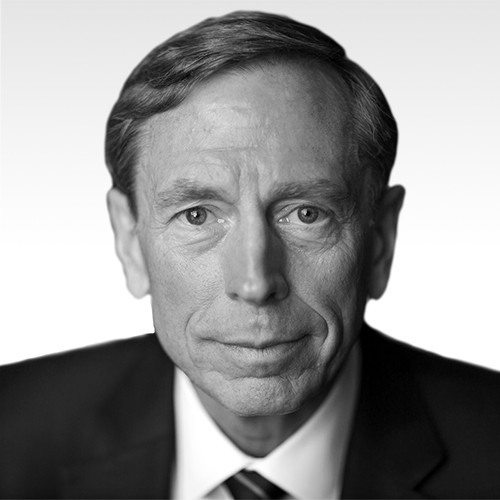
General David Petraeus served more than 37 years in the U.S. military with six consecutive commands, five of which were combat, including command of the Multi-National Force-Iraq during the Surge, U.S. Central Command, and Coalition and U.S. Forces in Afghanistan. He is a partner in the KKR global investment firm and chairs the firm’s global institute.
Our conversation has been lightly edited for length and clarity.
The Cipher Brief: Let’s talk about this week’s Russian drone incursion into Poland, whether you believe it was an accident on Moscow’s behalf or a calculated probe, how significant of an event was this?
General Petraeus: It was a very significant episode. Again, 19 drones entered Polish airspace.The bottom line is that this could not have been a mistake. These aren't on autopilot. They may have way points from which they're flying to and from, but there were pilots behind this significant incursion. Just recently, I saw a report that five of the drones were actually headed for a major base, which is one of the hubs from which a lot of the NATO equipment is transported into Ukraine. It's one of the big areas for trans-shipment.
The NATO response was impressive, in my view. Keep in mind, you had Dutch F-35s, Polish F-16s in the air very rapidly. They clearly must have seen this coming. They've rehearsed this in the past. There was an AWACS up there to help them also with the command and control and early warning, and aerial refueling tankers were flying so they could refuel as required. At least several of the drones were shot down. So, again, an impressive response.
And then as a result of that, Poland called for an Article Four gathering. Keep in mind, Article Five is a call to arms, Article Four is a call to meet. They did that at the North Atlantic Council, of course, in Brussels at NATO headquarters. And out of that, came a very comprehensive set of actions that NATO will take, which apparently includes the U.S. as some part of the air component, but it's going to beef up all of the different capabilities that would be needed, including anti-air and anti-ballistic missile defenses for those countries on the eastern front and a number of other capabilities as well. This is now Operation Eastern Sentry.
This wasn't a wake-up call because clearly, they were already awake to the threat, but it was a significant incursion that has generated a significant response. I think the tactical response was quite impressive. The operational response - not quite strategic - perhaps you could describe it as that by NATO, was very significant, as well and quick, too.
I'm hoping that there are even bigger strategic responses though, and that this might be the catalyst in Washington for Congress to work with the White House on the sanctions package that Senator Lindsey Graham and others have been working for a number of months, which would add substantial U.S. sanctions to those already imposed by the EU and European countries [on Russia].
And then on the European side, for this to galvanize support for what is now termed the von der Leyen plan or concept, which is of course Ursula von der Leyen, the President of the European Commission, who, by the way, gave a stirring State of the Union address written before the incursion, but delivered after it.
Her concept is to use those frozen hundreds of billions of dollars, of euros really, of frozen Russian reserves in European banks as collateral to give money to Ukraine now to help them. And as you know, the Ukrainians could build even more drones than the 3.5 million that they're going to build this year, if they had more money. And additional fundingwould be a huge help for them also in terms of their fiscal situation.
And then the frozen funds go back to Russia once Russia pays reparations to Ukraine for all the damage and destruction they have wrought in the country here. That's quite an artful approach because it avoids the actual seizure of these assets, which again, a number of European countries, I think rightly have concern about, that it might undermine the euro attractiveness for this kind of reserve.
I'd love to see those two actions on top of the very quick response and the very quick decisions by the North Atlantic Council to carry out the military actions announced. These would be very, very complimentery to the military actions and show Russia just how serious this was.
The Cipher Brief Threat Conference is happening October 19-22 in Sea Island, GA. The world's leading minds on national security from both the public and private sectors will be there. Will you? Apply for a seat at the table today.
I think in this case, Russia has vastly overplayed its hand, just as I think it has, frankly, in terms of the huge numbers of drones and missiles that have been launched into Ukraine in recent nights that we've seen in the Institute for the Study War statistics and so forth that show the highest ever numbers. In the sense that this shows very clearly if there were any remaining possibility of whether Vladimir Putin was willing to negotiate a ceasefire and agree to some kind of sustained and just peace, as President Trump sought to achieve, that clearly is not in the cards.
The Cipher Brief: General Oleksandr Syrskyi, commander in chief of the Armed Forces of Ukraine, said recently that the direct technological race is accelerating in the battlespace. The technology that is being put into battlefield drones, is being adapted very quickly by Russia. The Cipher Brief visited the Nemesis Regiment with you earlier this year – the separate battalion of the Unmanned Systems Forces that specializes in the use of bomber drones -what has changed on that front over the past few months?
General Petraeus: The Nemesis Regiment, now, having expanded from a battalion, is well known here in Ukraine because it (and all of the military units] is trying to compete for talent, and they have billboards that say, "Sign up for the Nemesis Regiment." They're now able to recruit directly. They now are able to do basic military training themselves as well.The workarounds that they have developed to get talent into uniform as rapidly as possible to make a difference, is really quite impressive. Only a country that is fighting for its very independence, it’s very survival, would be able to do all of this.
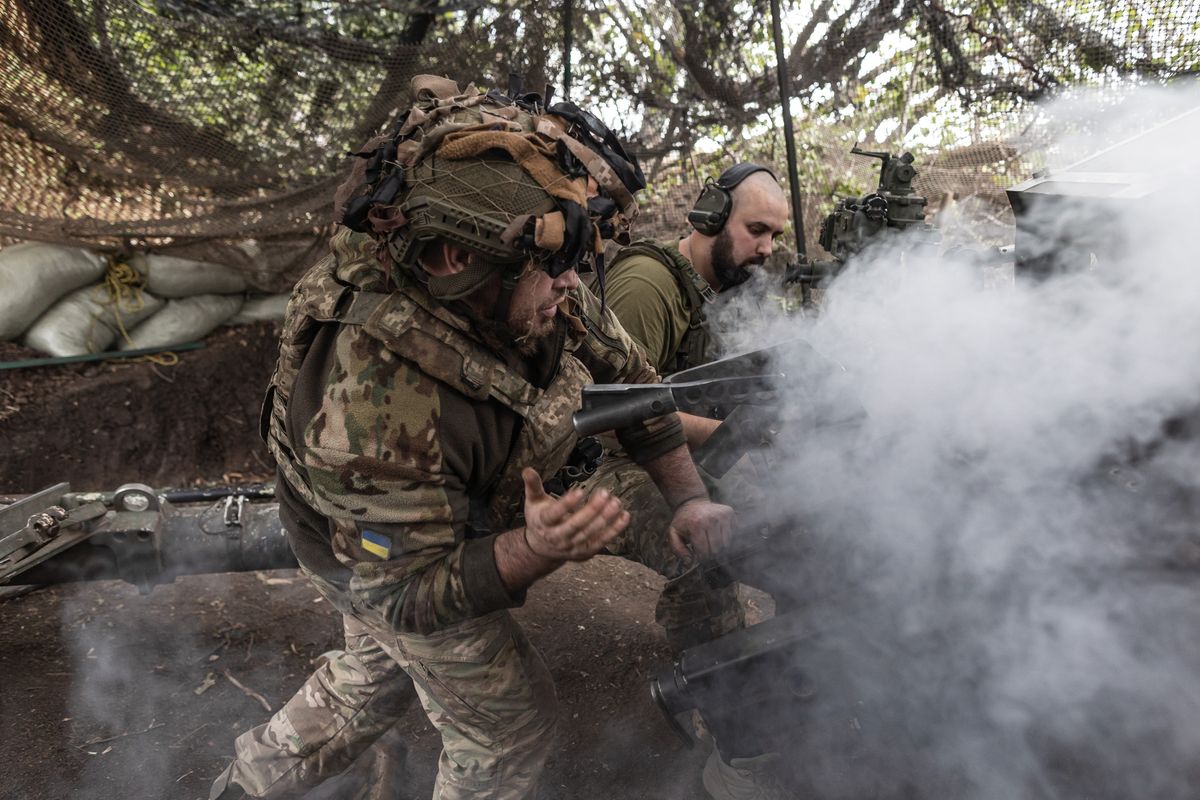
You'll recall that when I was last here and I talked to General Syrskyi and asked just roughly, "How many drones did you use yesterday of all types?" Because of course, they have air and ground and maritime drones (indeed, the maritime drones have been so effective that they have sunk one third of the Black Sea Fleet). His answer was, “Nearly 7,000.” And many of those flew multiple missions.
By the way, one of the briefings we had informed us that the entire remaining Black Sea Fleet is all completely in one Russian harbor as far as you can get away from Ukraine, in the eastern part of the Black Sea, with lots of defenses around it. So, the Ukrainians have basically forced it to bottle itself up just to survive, because the Ukrainians are still out there picking off occasional Russian patrol boats or carrying out other kinds of action at sea whenever they find Russian ships at sea.
The Ukrainians also have land drones of all types, remotely driven vehicles that do a lot of the back and forth from the rear to the front lines with logistics and taking casualties and so forth. And also, increasingly, remotely operated machine guns, grenade launchers, and other weapons systems, often on remotely driven vehicles.
And, of course, Ukraine has tons of all different types of aerial drones, including some now that very publicly are out there that reportedly can fly thousands of kilometers into the Russian Federation.
And long-range missiles are also now in production in Ukraine , and the numbers of these being produced are beginning to ramp up very substantially, in addition to the 3.5 million drones that will be produced this year.
I also met with the individuals that have developed the command, control, communications, intelligence and battle management intelligence - and knitting all of this together into a common operational picture/battle management system that is truly extraordinary. And the 7,000 drones doesn't quite capture all of this. They said, "In a 12-hour shift there are 40,000 flights." And again, all of this is being tracked. There are crews that are sending these out very quickly. Some come back, some does not. But just to give you a sense of the magnitude of the technology race. We learned last time that we were here, that to combat the Russian electronic warfare and jamming, as many as a quarter of the drones that go out from the Ukrainian side have tiny fiber optic cable that spools out behind them so that they can maintain the critical command and control links to fly these right into the enemy, regardless of the EW and jamming. A lot of these are first-person view suicide drones, as they're termed.
There are also other advances. The Russians, for example, now are putting jet engines on some of their Shahed drones. And because the way that you knock down drones encompasses all types of different systems - everything from a quite skillful use of heavy machine guns, laser designators, acoustic sensors, all kinds of radars, everything working together - but if they fly faster and higher, it's harder to counter. There are now also Ukrainian drones that run into the Russian drones, and again, hundreds of these are out there every night.
The skill involved in all of this is extraordinary, but the increased speed makes that much more difficult. So, what you have is a constant back and forth, where one side develops something new and innovative, the other side sees it, reverse engineers it, and adapts it. And while, of course, on the Russian side, it's much more top down than bottom up (as on the Ukrainian side), when they go top down, they can produce huge quantities very quickly. On the Ukrainian side, it's a lot more like a ‘let 1,000 flowers bloom’ initiative. There is tremendous innovation, but then you've got to figure out how to scale it. And Ukraine is doing that now, too.
Each side is very much going about this in a whole variety of different ways. The sensor component of this is particularly interesting, and then the fusion of all of the different reports. You might get a human intelligence report derived from a number of different methods. How do you then get that into the system, immediately alert those who have the means to actually deal with it, who then delivers this to those who can actually take action against it, kinetic action in many cases?
And what they're doing through their battle management system is shrinking the time from the so-called sensor to shooter, the ‘kill chain’, as Chris Brose wrote a book with that title. These are just breathtaking kinds of advances. And as you know – because you’ve been here with us - every four or five months or so, you see breathtaking new advances.
The very first time we spent time with Nemesis, and you and Brad were with us, it was a Battalion. Now it's the regiment, and it's going to be a brigade. And of course, it was founded by and still commanded by a former prime minister, the first one under President Zelensky - so everybody's in this fight. But the first time we were here, I think the drones they had were using had one antenna. Last time, I think there were three or four. Now, it's up to six. And of course, you also have the Starlink big board on top of it to communicate with what Elon Musk has put up in the constellation.
Need a daily dose of reality on national and global security issues? Subscriber to The Cipher Brief’s Nightcap newsletter, delivering expert insights on today’s events – right to your inbox. Sign up for free today.
So, Ukraine is where the most advanced innovation in the world can be found.
I also spent time with all of the defense security assistance folks in the U.S. embassy, which included more than just Americans, by the way. So, many allied countries were there as well. And while they are doing great work, we should also be doing much more, the U.S., NATO countries, and other allies and partners around the world that might be threatened by aggression, can learn huge lessons from here. But of course, the lessons aren’t really learned until they are institutionalized in some way in the military services in the form of doctrine, organizational changes, training, leader development courses, and the rest of that. And we're not doing that at all as assiduously and aggressively as we should be.
I know the US military service chiefs recognize the imperative of much more rapid innovation, but when you think that nearly 7,000 individual drones are used every day, many of which are on multiple missions, and you hear the scale of what it is they're doing, we're not remotely doing what we should be.
In terms of their organizations, the Ukrainians now have a drone platoon in every infantry company, a drone company in every infantry battalion, a drone battalion in every brigade. The new corps have their own drone units. And then there are the independent drone organizations like the Nemesis Regiment, which are active in all kinds of different ways and are apportioned according to the priorities on the battlefield, the most significant threats, the most lucrative targets and so forth.
And as you recall, drone units get points for the different targets that they strike. The strikes are all validated because you have drones watching drones. And those points can be redeemed for equipment and components that you need via an Amazon-like system that was established by Brave One (a Ukrainian government-funded organization that supports innovation) as an adjunct to the DELTA system, which is the overall software platform that is used by all of the elements of their Ministry of Defense and all their services. Noting that Ukraine don't just have an army, navy, air force and marine corps, they also now have an unmanned systems force, and the commander of that is incredibly aggressive and innovative.
The Cipher Brief: Given all of the focus on the technology, I think it's difficult for some people to understand what the front line still looks like today. Russia is still recruiting an incredible number of people with a very tight turnaround time between recruitment and when they're actually deploy. Can you just give us a picture of what that looks like today?
General Petraeus: Well, in fact, several of our other fellow travelers, as you know, Ralph Goff, Glenn Corn, and Joey Gagnard have been out to the front lines. They were down in the south. The commander down there said there are Russian soldiers who have gone from recruitment to deployment in considerably less than 20 days. In other words, recruits aren’t even getting 30 days of basic training before being integrated into a unit. No time to build cohesion and all the rest of that stuff. This is extraordinary, stunning, actually. Moscow is literally taking these individuals off the street, luring them in with huge enlistment bonuses, often from rural areas where the job opportunities are not all that great. And in many cases, the families actually celebrate that they're doing this because it leads to a massive financial windfall.
The recruits go in very quickly, are issued weapons, uniform, et cetera, and then shoved into the front lines and right into an offensive - keeping in mind that the offensives now are not combined arms as we have known them in the past. They're not tanks and armor personnel carriers supported by engineers, infantry, air defense, electronic warfare, artillery, and all the rest. They're infantrymen on foot, essentially running across a street or a field and trying to establish a foothold in the next block of buildings or treeline. It's literally proceeding at infantry pace, because the drones are so ubiquitous, the surveillance is so constant. At the minute that they're spotted, or if they get tanks moving, immediately the suicide drones will come out and take them out. So, you have almost blanket coverage except for really extreme weather when drones can't stay up or they can't see. The rest of the time, it's impossible for the kind of combined arms attacks that launched this invasion by Russia in the beginning. As you'll recall then, there were huge columns of tanks and other vehicles, and frankly, even into the second summer of the counteroffensive that was mounted by the Ukrainians. And now, you actually don't even have as clearly defined front lines as you had then with trench lines and almost World War I-like fortifications. Now you have outposts, and they'll actually allow the enemy to flow around them a bit because the drones will eventually police them up.
But this is hugely costly to the Russians. And for those Ukrainian units that are using the different command and control and intelligence and battle management systems, tools that are fusing the intelligence and enabling them to be even more effective with the drones than they otherwise would be, the exchange ratio is 10 to 1. And that's what it needs to be given how much the Russians outman and outgun the Ukrainian forces.
The Cipher Brief: What the sense of urgency now among European leaders you’ve talked to?
General Petraeus: I suspect that the events of the past number of months have probably been pretty sobering. There was some hope. President Trump made a valiant effort to try to bring this war to an end by engaging Putin, engaging the Europeans and President Zelensky. But it was for nought, it appears. And now on the NATO side, inn a lot of ways, there is renewed confidence because of the improvement in the relationship between President Trump and President Zelensky and the interation between President Trump and key European leaders.
European leaders are, of course, trying to come up with a security guarantee – which I think is quite elusive, frankly, as unless you put your forces in the front lines, you might as well just give all your stuff to the Ukrainians and arm them to the teeth. They're the security guarantee, I think, for Ukraine’s defense.
So, I think there's increasingly a more sober analysis of the prospects for some kind of ceasefire. Washington has actually gotten the Europeans – in a huge success for the White House, frankly - to increase their defense spending to 3.5% of GDP rather than the 2% that was the old standard. And even 5% when you take into account other investments in infrastructure to push the forces further out to the east and that kind of activity. And to see, again, the continued American commitment in eastern Poland and elsewhere, and the air commitment to what is going on in response to the Russian drone incursion, is very encouraging.
So, I think there's a degree of confidence that the Europeans are picking up their share of this load. The Germans, in particular, are doubling defense spending in the next 10 years or so, and that is between 700 billion and a trillion euros more than they would've spent otherwise. Other European countries are also stepping up impressively – and with swift diplomatic action, as well as much additional security assistance to Ukraine and in spending on national defense.
Washington has tried and done everything they could. President Trump engaged personally, repeatedly, and it should be clear to all now that Putin is just not really serious about negotiating an end to this war. He still has his maximalist objectives of replacing President Zelensky with a pro-Russian figure, essentially demilitarizing Ukraine to the extent that would be possible, and seeking additional land that they haven't even been able to seize. They haven't even yet gotten to the so-called fortified cities in the southeastern part of the country, in Donetsk Province in particular. And agreeing to any of those is not acceptable to Ukraine or to its leader. In fact, the Constitution of Ukraine does not allow a leader to give away territory or redraw borders.
The Cipher Brief: What else is top of mind for you as you’re on the ground there in Kyiv?
General Petraeus: I'm keen to hear from European and NATO leaders about how much this drone incursion has galvanized additional action. How much European Commission President Ursula von der Leyen's stirring European Union address has reinforced that new determination, and to get a sense of where that is headed. Because there's a seriousness of purpose right now that is even greater than it was just days ago. And to put a finger on the pulse of that, I think will be very important and could produce a number of insights. Needless to say, that is very heartening to the Ukrainians who are seeing the prospect of this substantial additional European commitment. They are also heartened by recognition that Washington has done everything it can to try to be the catalyst to bring about a ceasefire. That's not going to happen, it doesn't appear. And now, I think there's a seriousness of purpose in Washington, reinforced, I hope, by this incursion to get that sanctions package through Congress to the White House and into law.
Cipher Brief Writer and Editor Ethan Masucol contributed research for this report.
Are you Subscribed to The Cipher Brief’s Digital Channel on YouTube? There is no better place to get clear perspectives from deeply experienced national security experts.
Read more expert-driven national security insights, perspective and analysis in The Cipher Brief because National Security is Everyone’s Business.
EXCLUSIVE EXPERT INTERVIEW -- Saudi Crown Prince Mohammed bin Salman is expected to visit Washington this November according to sources cited by Bloomberg, as the two countries work to finalize details around the hundreds of millions of dollars in business deals that were signed during the U.S. president’s visit to Riyadh in May.
Though the White House hasn’t publicly confirmed the meeting, it would mark the Crown Prince’s first visit to the U.S. since the murder of Saudi journalist Jamal Khashoggi in 2018, and is expected to focus primarily on commitments to invest in artificial intelligence, defense and energy as well as regional stability concerns.
Beyond the business though, analysts say the meetings need to further deepen trust between Saudi Arabia and Washington at a time when alliances are having a significant impact in every region of the world.
“The time may well be coming when the U.S. and China will face off and we will need to ask our Gulf partners to stand with us in that tough moment,” former National Intelligence Manager for Iran at ODNI Norm Roule. “To do this, we need closer and more regular visits by the Saudi Crown Prince, as well as the Emirati President of the United Arab Emirates Mohammed bin Zayed.”
In a Cipher Brief exclusive expert interview, we asked Roule, who now works as an energy analyst and routinely travels to the Middle East for high-level talks with officials, about framing realistic expectations for a possible November visit.
Norman Roule is a geopolitical and energy consultant who served for 34 years in the Central Intelligence Agency, managing numerous programs relating to Iran and the Middle East. He also served as the National Intelligence Manager for Iran (NIM-I) at ODNI, where he was responsible for all aspects of national intelligence policy related to Iran.
The Cipher Brief:What do you expect will be the key issues on the table during this meeting in November at the White House, if it does indeed happen?
Roule: The purpose of the trip is to complete the multiple commercial, economic, defense, and energy agreements developed during the unprecedented meetings by President Trump, U.S. cabinet ministers, and several dozen senior U.S. business leaders in the Kingdom in May 2025. These deals are viewed as socially and economically transformational agreements by the Kingdom. For the U.S., these deals will bring decades of valuable commercial engagement, worth somewhere between USD 600 billion and USD 1.5 trillion in trade to the U.S. The Crown Prince will travel to the U.S. as Prime Minister and a guest of the White House which requires a different protocol than in 2018. The schedule will likely be more formal. I would expect his visit, therefore, to be focused on the White House, Congress, and the Department of Commerce.
The Cipher Brief: We saw a number of agreements signed during President Trump’s visit to Riyadh in May, as you mentioned. How would you expect those agreements to be furthered during this trip? In other words, what would success look like in November?
Roule: For the U.S., it will be easy to look to the financial size of each deal, the number of jobs each brings, and where, and so on. Indeed, that’s important and I expect policymakers will cite these achievements. But we should also think about this architecturally. What will these investments mean to the associated industries of each country in the long term? The real benefits lay in the answer to that question because here we see how the success will transform the societies of each country.
Beyond business, the trip needs to deepen the relationship to allow us to turn to each other on other issues in the future. Events – good or bad – are all sitting on the horizon. They are best managed with partners we trust who are seen as stabilizing actors. The best way to build trust is to increase the frequency of contact between our various leaders.
The existing process of semiannual strategic dialogues is useful, but more of this is needed to build the trust and confidence needed to respond to the challenges our countries now confront. The time may well be coming when the U.S. and China will face off and we will need to ask our Gulf partners to stand with us in that tough moment. To do this, we need closer and more regular visits by the Saudi Crown Prince, as well as the Emirati President of the United Arab Emirates Mohammed bin Zayed.
Over the last decade, Gulf leaders have become routine players on the world stage. For example, over the last three years, around fifty world leaders have visited Riyadh, including those of the U.S., China, Russia, and India. Riyadh has hosted summits of leaders from Africa, Central Asia, the Caribbean, the GCC, the Arab League, and Islamic countries. The Crown Prince himself has visited around ten countries in Europe, Asia, and the Middle East. And it was no coincidence that Ukrainian President Volodymyr Zelenskiy called the Saudi Crown Prince in the build-up to the meeting between Presidents Trump and Putin in Alaska.
The bottom line is that the issues we each confront, the investments we are making in each other, and the scale of our respective security commitments requires the sort of communication and relationship that can best be achieved by frequent personal interaction between Saudi leaders and our own public and private sector officials here in the U.S.
The Cipher Brief: Let’s go back to the May 2025 deals for a moment. How have follow-up discussions proceeded since those deals were announced? And beyond high-tech and energy, what other sectors of trade do you consider essential to the U.S. and Saudi Arabia?
Roule: We should look at this in two parts. First, Gulf and U.S. private sector partners have continued to meet. At least a half dozen major agreements have been concluded since May. In terms of the official management of the commercial and technical agreements, my understanding is that the Trump administration remains fully committed to doing whatever it can to fulfill the promises made by the President. In fairness, these deals are complicated, and the Department of Commerce has had quite a bit to do over the summer with tariff deals, but I expect the major issues will be sorted by November.
In terms of other sectors, it may not be the first thing that comes to mind, but we and the Saudis have significant shared interests in mining and critical minerals. Cooperation between Washington and Riyadh in the mining sector has grown significantly in recent years. It is a subject that touches national security, economic, energy, industrial development, China, Africa, private/public sector partnerships, state capital deployment, and other strategic issues that cut across government departments.
Mining license issuance has more than doubled in the Kingdom in the first half of this year alone as the Kingdom seeks local and foreign sources of lithium, copper, nickel, and other minerals needed to build renewable energy systems. This issue hasn’t been lost on the Trump administration, which signed an MOU on mining and mineral cooperation during the President’s visit for joint exploration, processing, and the integration of critical mineral supply chains essential for our manufacturing, defense technologies, and renewable energy sectors. The hope is that by aligning Saudi Arabia’s largely untapped mineral wealth with U.S. technology and training, the Kingdom will achieve its Vision 2030 goals while diversifying its supply chain by reducing China’s hold on critical minerals.
The Cipher Brief Threat Conference is happening October 19-22 in Sea Island, GA. The world's leading minds on national security from both the public and private sectors will be there. Can you afford to miss out? Apply for your seat at the table today.
I don’t expect many surprises from the meeting in November, but I do think we should expect the Trump administration to be forward leaning in terms of engagement. We may see an expansion in the sale of significant military technology. If the U.S. believes the region needs to play a greater role in this area, sooner or later, we will need to sell them a military deterrent against Iran. If we can sell advanced military technology to Israel to deter Iran, many will reasonably argue that there is no reason why we shouldn’t be selling the same technology to Riyadh and Abu Dhabi.
The Cipher Brief: On the foreign policy front, with the ongoing Israeli operation in Gaza, how might the current Saudi role in Palestinian, Syrian, and Lebanese issues play out during the November trip?
Roule: The world can change many times between now and November, but at present, the visit is not expected to have any connection to Israel or the Palestinian issue. In terms of Saudi foreign policy in that area, it has been robust. The Saudis have maintained their posture as the leading diplomatic actor in the region, a difficult challenge given the intensity of the Gaza humanitarian issue, the complexity of Syrian and Lebanese politics, and the many different viewpoints within the Arab League and Gulf Cooperation Council. But I think we can point to several examples of successful Saudi foreign policy that are consistent with long-standing U.S. foreign policy goals.”
First, on Palestine, the Saudis played a leading role in a recent Arab League statement calling on Hamas to disarm and transfer control of Gaza to the Palestinian Authority in a two-state solution with Israel that also calls for a freeze on Israeli settlement expansion. Riyadh recently signed several agreements with the Palestinian Authority in which it will assist with human resources development, education curriculum development, and the establishment of an electronic system by which Palestinians can access their payments from and administrative engagement with the Palestinian Authority. Seemingly mundane, this will allow reforms in areas that many have claimed have promoted the worst form of extremism and even terrorism within the Palestinian territories. The Kingdom has also committed $300 million to infrastructure assistance for Gaza and the West Bank.
On Syria and Lebanon, Riyadh has engaged both politically and economically with Beirut and Damascus for months and in close cooperation with Washington. It is no secret that the Saudis have sought to reduce Iran’s influence in these countries and see the revival of the Lebanese and Syrian economies and establishment of stable governments in these countries as the keys to doing so. Riyadh encouraged the Trump administration to lift sanctions on Syria and sent its investment minister, along with a number of business professionals to Damascus, accompanied by an offer of commitment of more than $6 billion in investment to spur Syrian employment. Riyadh and Doha also paid off Syria’s outstanding World Bank loans, enabling more funding to Damascus from that institution. This consistent attention to stability in the Levant has huge potential for the entire region and deserves our strongest support.
The Cipher Brief: We always close with a question on the Saudi economy and oil. Give us a quick run through on the status of the economy, its strengths, weaknesses, and near-term outlook.
Roule: Despite the downturn in oil prices and intense regional competition for foreign investment, the Kingdom’s economy is doing relatively well. The loss of revenue will delay some projects, but the Kingdom’s overall modernization strategy and the main projects seen as crucial to achieving that strategy remain unchanged. This unwavering focus and the level of planning behind each project – and some recent cost cutting – has been the secret of their overall success.
In terms of economic details, let me run through some numbers. Inflation is approximately 2.3 percent, unemployment about 2.8 percent, and women make up more than 36 percent of the workforce. Perhaps the best news in the recent IMF report was that youth and female unemployment have been cut in half over the past four years.
Non-oil is now more than half of the economy, in line with Saudi targets. Entertainment has been a particularly strong support. Liberalizing mortgages helped the local construction industry. And this month will see another E-sports world cup in the Kingdom. It remains ironic that the Kingdom has found success in a tourist event that is held during the hottest month of the year by recognizing that this event can only be held indoors. On sports, Riyadh continues to be keen on increasing its role in golf and tennis. I think we will hear more about this in the future as the associated leagues seem to be coming to terms with the Kingdom’s involvement. But Saudi economists won’t be able to take much for granted. Fortunately, Riyadh boasts some impressive economists and technical planners, so I don’t think this will be a significant problem.
Looking forward, oil will continue to account for a significant share of government revenue. This will gradually decline over time, but I suspect not as fast as Riyadh would like. Competition for foreign investment will continue to intensify in the region but such competition is good for everyone.
The challenge is that if revenue is maintained at a respectable level, spending won’t let up. Vision 2030 and Vision 2040 revenue demands probably seem insatiable to ministers. I don’t expect that to change. Deficits are likely to remain a new normal throughout this decade. And Riyadh will keep looking more to the private sector for local investment and liberalizing foreign ownership to encourage foreign investors. Careful borrowing is also expected to become the new normal.
In terms, of specific projects, ministers will work hard to expand local manufacturing in the automotive and semiconductor sectors to meet ambitious Vision 2030 goals. The Kingdom will also need to keep a close eye on giga projects to ensure they don’t drain capital and resources from the broader infrastructure development ecosystem.
All of this will be tough work. But my conversations with the Kingdom’s leaders tell me they are aware of these issues and believe they’re up to the task.
Are you Subscribed to The Cipher Brief’s Digital Channel on YouTube? There is no better place to get clear perspectives from deeply experienced national security experts.
Read more expert-driven national security insights, perspective and analysis in The Cipher Brief because National Security is Everyone’s Business.
 Login
Login