Researchers from MIT, Northeastern University, and Meta recently released a paper suggesting that large language models (LLMs) similar to those that power ChatGPT may sometimes prioritize sentence structure over meaning when answering questions. The findings reveal a weakness in how these models process instructions that may shed light on why some prompt injection or jailbreaking approaches work, though the researchers caution their analysis of some production models remains speculative since training data details of prominent commercial AI models are not publicly available.
The team, led by Chantal Shaib and Vinith M. Suriyakumar, tested this by asking models questions with preserved grammatical patterns but nonsensical words. For example, when prompted with “Quickly sit Paris clouded?” (mimicking the structure of “Where is Paris located?”), models still answered “France.”
This suggests models absorb both meaning and syntactic patterns, but can overrely on structural shortcuts when they strongly correlate with specific domains in training data, which sometimes allows patterns to override semantic understanding in edge cases. The team plans to present these findings at NeurIPS later this month.
A Ukrainian-designed unmanned ground vehicle has drawn attention during Spain’s Fuerza Futura 2035 military exercises in Almeria, where it was evaluated alongside Spanish and NATO units in one of Europe’s most extensive demonstrations of next-generation unmanned systems. According to information shared by the company, the TerMIT UGV participated in a dedicated unmanned-systems segment that involved […]
The Statsraad Lehmkuhl, a 111-year-old Norwegian tall ship that is traveling the globe to raise awareness of ocean health and science as part of the One Ocean Expedition. (GeekWire Photo / Lisa Stiffler)
Hundreds of global leaders gathered in the Pacific Northwest this week for the inaugural One Ocean Week Seattle, a maritime conference with dozens of events that brought together company executives, government officials and advocates charting paths toward cleaner shipping, sustainable fishing and ocean conservation.
The conference, organized by Washington Maritime Blue, was anchored by Wednesday’s One Ocean Summit, where leaders from global companies with Seattle ties discussed their climate progress and the challenges of deploying sustainable technologies.
Seattle-based SSA Marine, a global marine terminal operator, has 200 locations worldwide, moving cargo from ships to terminals and onto trains and trucks. The company has carbon emissions targets and is working to shift from gas and diesel to electrical power for the machines moving moving the cargo, but the move requires juggling sometimes competing factors.
“If you have a piece of electrical equipment, you have to think about charging time that’s required in between shifts, and when can you actually fit it in there?” said Meghan Weinman, SSA Marine’s vice president of sustainability. “One of those big pieces of innovation that we really have to think about is the overlay of technology, labor planning, and can it do the job that we need it to do.”
Corvus Energy is a Norwegian clean shipping company with Seattle offices and a manufacturing facility in Bellingham, Wash. The business is helping vessels go electric with its maritime battery technologies, serving ferries, cruise ships, tugs, cranes and fishing boats.
It’s an evolving sector and the company spends up to 15% of its annual revenue on research and development to fine-tune its technology to meet demanding oceanic conditions.
One Ocean Summit panelists, from left: Fredrik Witte, CEO of Corvus Energy; Meghan Weinman, VP of sustainability for SSA Marine; and Paul Doremus, VP of policy and sustainability for Trident Seafoods. (Seaport Photography / Elizabeth Becker)
“It is totally different to operate a battery in an EV versus a maritime setting,” said Corvus CEO Fredrik Witte. “For an EV, you’re traveling three, four hours a day, maybe. But in a maritime setting, you’re potentially operating 24/7.”
Seattle’s Trident Seafoods operates fishing boats and onshore production facilities, including the largest seafood processing plant in North America in Akutan, Alaska. While seafood typically has a much lower carbon footprint than beef, pork or dairy, the company wants to reduce the climate impacts associated with its operations.
But Paul Doremus, Trident Seafoods’ vice president of policy and sustainability, pointed to a hard reality: the company competes directly with Russian and Chinese seafood companies that are doing business under less stringent environmental regulations.
He said the seafood sector — “which has been kind of famously fragmented, small, fairly scrappy” — needs to come together to collectively make improvements.
Doremus applauded events like One Ocean Week Seattle for gathering maritime interests to draw attention and capital toward “sustainable use of the ocean for the benefit of local communities, regional and national.”
“I think that’s the next wave,” he said.
Collaboration and innovation
Washington Lt. Gov. Denny Heck speaking at the One Ocean Summit. (Seaport Photography / Elizabeth Becker)
The call for collaboration echoed throughout the One Ocean Summit, which also featured former NOAA Administrator Jane Lubchenco, United Nations officials, and Norway’s ambassador to the U.S.
Washington Lt. Gov. Denny Heck gave a welcome address, highlighting the state’s maritime economy while calling out threats from plastic pollution, undersea noise, and environmental degradation.
“To face these challenges, we will need to develop new technologies and strengthen our institutions,” Heck said. “It will require sustainable fuel storage, habitat restoration, quiet propulsion and so many other inventions and innovations. But more importantly, it will require the dedication and teamwork of thousands of people.”
The message was reinforced by Haakon Vatle, leader of the One Ocean Expedition, which is sailing a 111-year-old Norwegian tall ship across the globe. The ship, named the Statsraad Lehmkuhl, was moored just outside Bell Harbor International Conference Center during the event.
“The role of our ship is to create attention and share knowledge of the crucial role of the ocean for a sustainable future,” Vatle said. “We’re going to use a ship to reduce the gap between science and the public — get the people we need for the ocean we want. We cannot save the ocean alone.”
Editor’s note: GeekWire reporter Lisa Stiffler was the volunteer emcee of the One Ocean Summit.
Lāth Carlson, CEO of the National Nordic Museum, addresses the attendees of the Nordic Innovation Summit in Seattle on Tuesday. (Nick Klein Photography)
Seattle and the Nordic nations have strong ties — from Norway’s first astronaut launching on a SpaceX mission to Scandinavian companies supporting the efforts to electrify the region’s ferries. And those connections stretch back more than a century when John Nordstrom, a Swedish immigrant, co-founded an eponymously named shoe store in Seattle’s downtown.
“As we look towards the future, we build on our history and also our heritage. But today, we reach for much more. We are partners in innovation, from high tech in the AI revolution to building more security projects,” said Anniken Huitfeldt, Norway’s ambassador to the United States.
On Tuesday evening, Huitfeldt helped kick off the annual Nordic Innovation Summit, held in Seattle’s Ballard neighborhood at the National Nordic Museum.
The event continues through Wednesday and features speakers and panelists discussing clean energy topics such as data center operations, microgrids and recycling; cyber security initiatives; innovation in biotech; and sustainable transportation.
Anniken Huitfeldt, Norway’s ambassador to the United States, speaking at the Nordic Innovation Summit. (Nick Klein Photography)
“We’ve seen innovations come out of the summit,” said Seattle City Councilmember Dan Strauss, speaking Tuesday. “The ability to integrate technology into new business practices is something that has happened here before, and I’m excited to see it occur here again.”
Other speakers at the opening session included University of Washington Nobel Laureate David Baker, who shared new research published since he received his award from the Swedish institution one year ago. Baker is leading efforts that harness AI to create proteins that can be used in health care, environmental cleanup and other challenges.
Norwegian Astronaut Jannicke Mikkelsen livestreamed a presentation from Oslo to share the story of her journey to space, which began at age 10 when she had a devastating horse riding accident. During a five-year recovery, Mikkelsen became obsessed with NASA — even calling the agency’s Johnson Space Center seeking employment as a 12-year-old.
“It cost us a fortune,” she said. “My dad can’t afford to drive his car to work for a week because we can’t afford gas because I called the U.S. and I applied for a job.”
Norwegian Astronaut Jannicke Mikkelsen livestreaming from Oslo. (GeekWire Photo / Lisa Stiffler)
Mikkelsen ultimately pursued a career in 3D photography and 3D filmmaking, residing in Svalbard, a frozen tundra that ranks as one of the world’s northernmost inhabited areas.
“This is a place that equipped me the best to become an astronaut, because it’s sort of fear-based learning,” she said. “As soon as you leave town, any mistake you make could potentially kill you. It’s exceptionally cold. There is no communication to the outside world as you leave town.”
In March of this year, SpaceX — which has significant manufacturing operations in the Seattle region — launched Mikkelsen and three other non-governmental astronauts on the first crewed orbit over the Earth’s polar regions. The Fram2 mission spanned 3½ days. The astronauts performed scientific research, including data collection on the Northern Lights, which are beautiful but poorly understood and can destroy satellites.
Mikkelsen highlighted the importance of the collaboration between nations.
“We have four non-American astronauts on board an American spaceship. This, to me, just shows great trust that the U.S. showed in us,” she said. “But it’s also American technology that flew the first Norwegian astronaut into space.”
Speakers participating in the summit on Wednesday include Mathias Sundin, founder of the Warp Institute Foundation; Douglas Kieper, director of the Paul G. Allen Research Center; Nick Huzar, co-founder of OfferUp; Sunil Gottumukkala, CEO of Averlon; Petri Hautakangas, CEO of Tupl; Maiken Møller-Hansen, director of energy and sustainability for Amazon Devices; and other corporate, government and academic leaders.
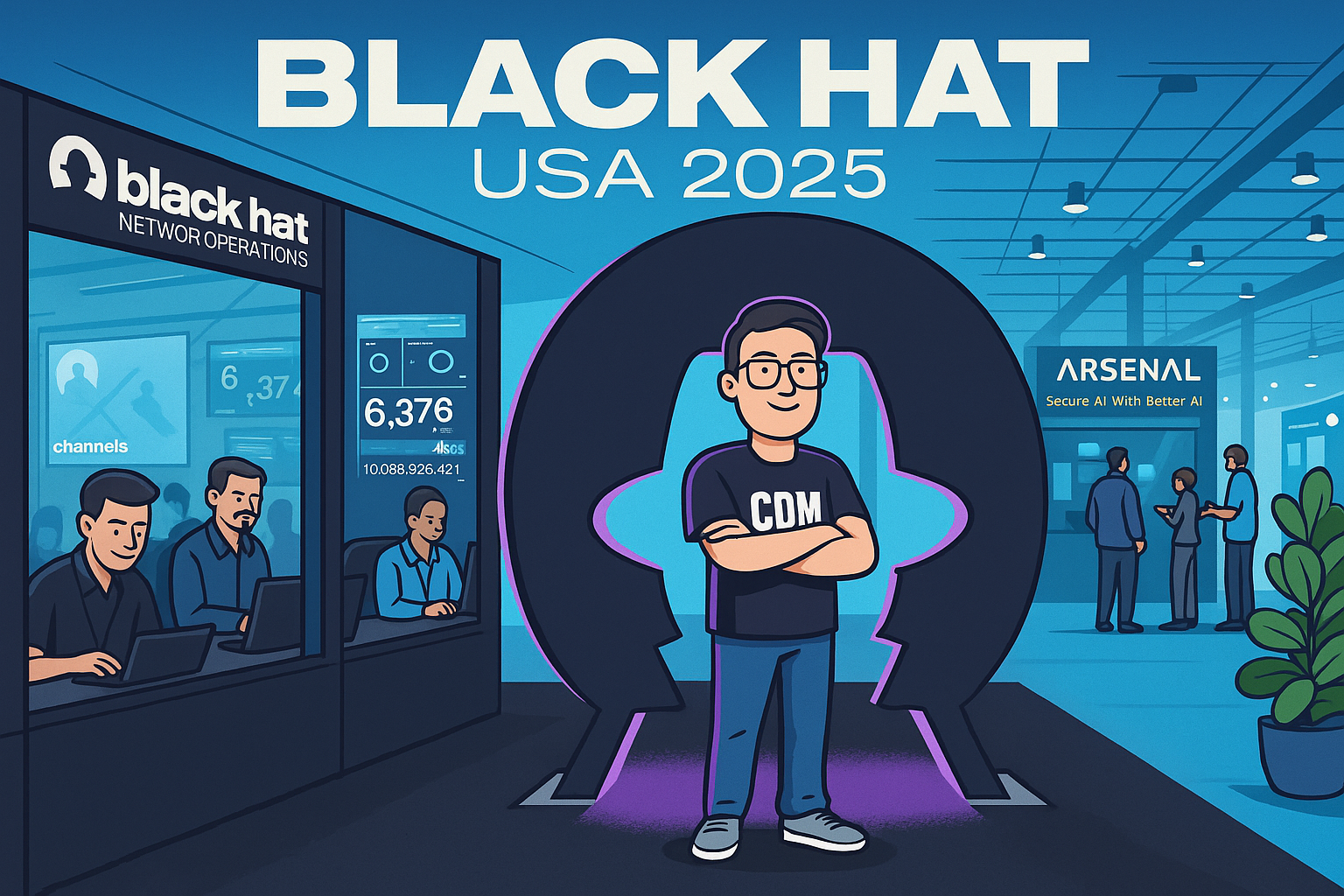
By Gary Miliefsky, Publisher of Cyber Defense Magazine Black Hat, the cybersecurity industry’s most established and in-depth security event series, has once again proven why it remains the go-to gathering...
When it comes to treating cancer, groups of synergistic drugs are often more effective than standalone drugs. But coordinating the delivery of multiple drugs is easier said than done. Drugs’ molecular properties tend to differ, making it difficult to ensure that pharmaceuticals make it to their destinations without losing effectiveness along the way. An all-new multidrug nanoparticle might be the solution. A team of researchers at MIT has created a “molecular bottlebrush” capable of delivering any number of drugs at the same time.
Drug-loaded nanoparticles—or ultrafine particles ranging from one to 100 nanometers in diameter—prevent treatments from being released prematurely, which ensures that the drug reaches its destination before beginning to do its job. This means nanoparticles carrying cancer treatments can collect at the tumor site, facilitating the most effective treatment possible. There is, of course, one caveat: Only a few cancer-treating nanoparticles have been approved by the FDA, and only one of those is capable of carrying more than one drug.
MIT’s molecular bottlebrush, detailed Thursday in the journal Nature Nanotechnology, challenges that. Chemists start by inactivating drug molecules by binding and mixing them with polymers. The result is a central “backbone” with several spokes. All it takes to activate the inactivated drugs sitting along the backbone is a break in one of those spokes. This unique design is what enables the new nanoparticle to carry (and thus deliver) multiple drugs at a time.
(Image: Detappe et al/Nature Nanotechnology/MIT)
The team tested the molecular bottlebrush in mice with multiple myeloma, a type of cancer that targets the body’s plasma cells. They loaded the nanoparticle with just one drug: bortezomib. On its own, bortezomib usually gets stuck in the body’s red blood cells; by hitching a ride on the bottlebrush, however, bortezomib accumulated in the targeted plasma cells.
The researchers then experimented with multidrug combinations. They tested three-drug bottlebrush arrangements on two mouse models of multiple myeloma and found that the combinations slowed or stopped tumor growth far more effectively than the same drugs delivered sans bottlebrush. The team even found that solo bortezomib, which is currently approved only for blood cancers and not solid tumors, was highly effective at inhibiting tumor growth in high doses.
Through their startup Window Therapeutics, the researchers hope to develop their nanoparticle to the point that it can be tested through clinical trials.

 Login
Login

 A Ukrainian-designed unmanned ground vehicle has drawn attention during Spain’s Fuerza Futura 2035 military exercises in Almeria, where it was evaluated alongside Spanish and NATO units in one of Europe’s most extensive demonstrations of next-generation unmanned systems. According to information shared by the company, the TerMIT UGV participated in a dedicated unmanned-systems segment that involved […]