
Reading view

There are new articles available, click to refresh the page.

NASA Astronaut Chris Williams, Crewmates Arrive at Space Station
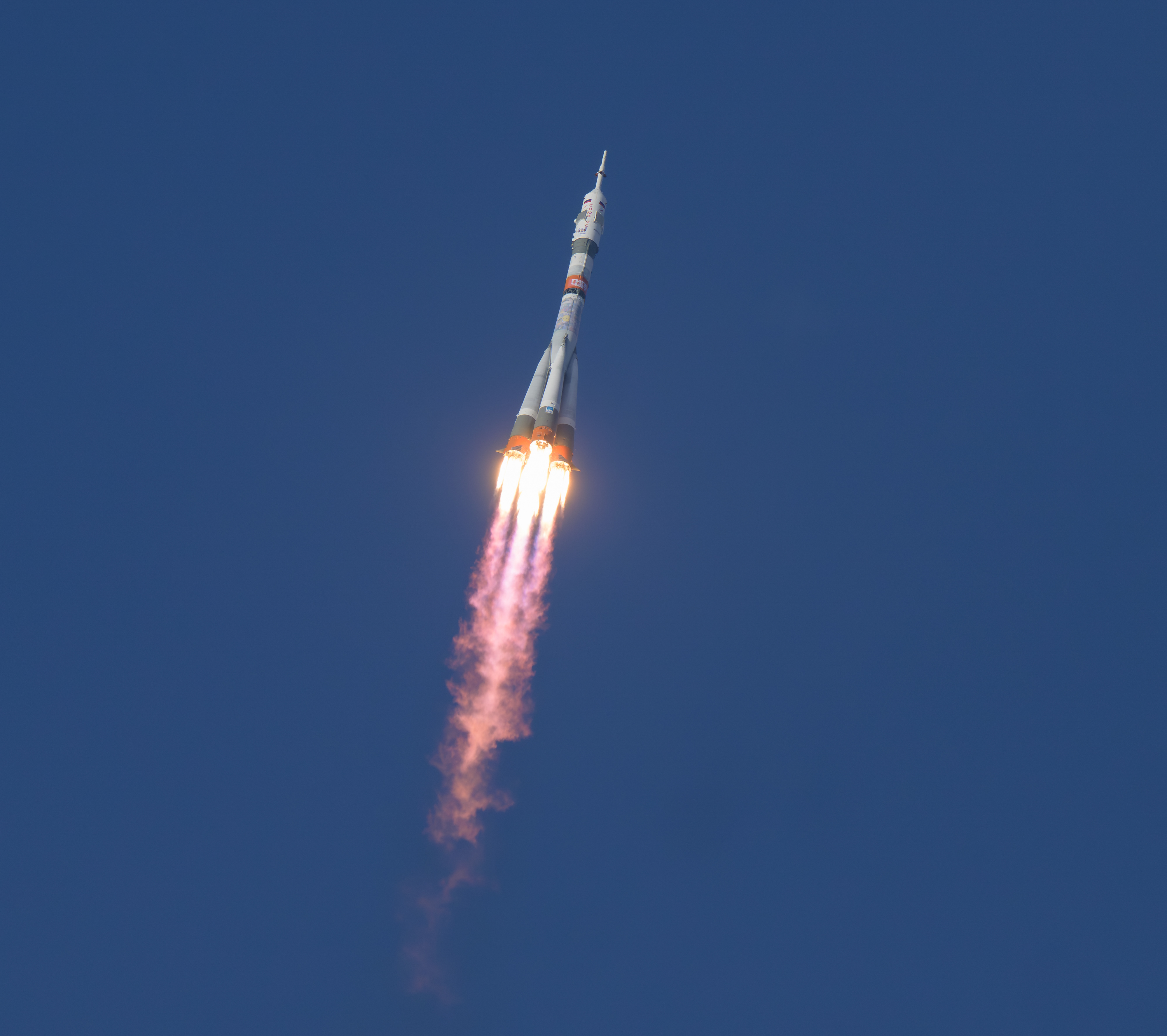
The Soyuz rocket launches to the International Space Station with Expedition 74 crew members: NASA astronaut Chris Williams, and Roscosmos cosmonauts Sergey Kud-Sverchkov and Sergei Mikaev, on Thursday, Nov. 27, 2025, at the Baikonur Cosmodrome in Kazakhstan.
NASA/Bill Ingalls

NASA astronaut Chris Williams, accompanied by Roscosmos cosmonauts Sergey Kud-Sverchkov and Sergei Mikaev, safely arrived at the International Space Station on Thursday, expanding the orbiting laboratory’s crew to 10 for the next two weeks.

The trio launched aboard the Soyuz MS-28 spacecraft at 4:27 a.m. EST (2:27 p.m. Baikonur time) from the Baikonur Cosmodrome in Kazakhstan. After a three-hour, two-orbit journey, the spacecraft docked at 7:34 a.m. to the space station’s Rassvet module.

Following hatch opening, expected about 10:10 a.m., the new arrivals will be welcomed by the Expedition 73 crew, including NASA astronauts Mike Fincke, Zena Cardman, and Jonny Kim; JAXA (Japan Aerospace Exploration Agency) astronaut Kimiya Yui; and Roscosmos cosmonauts Sergey Ryzhikov, Alexey Zubritsky, and Oleg Platonov.

NASA’s live coverage of hatch opening begins at 9:50 a.m. on NASA+, Amazon Prime, and YouTube. Learn how to watch NASA content through a variety of platforms, including social media.

During his stay aboard the space station, Williams will conduct scientific research and technology demonstrations aimed at advancing human space exploration and benefiting life on Earth. He will help install and test a new modular workout system for long-duration missions, support experiments to improve cryogenic fuel efficiency and grow semiconductor crystals in space, as well as assist NASA in designing new re-entry safety protocols to protect crews during future missions.

Expedition 74 is scheduled to begin on Monday, Dec. 8, following the departure of Kim, Ryzhikov, and Zubritsky, as they conclude an eight-month science mission aboard the orbital outpost.

Watch the change of command ceremony at 10:25 a.m. on Sunday, Dec. 7, as station leadership transfers from Ryzhikov to Fincke, live on NASA+.

Learn more about International Space Station, crews, research, and operations at:

https://www.nasa.gov/station

-end-

Jimi Russell
Headquarters, Washington
202-358-1100
james.j.russell@nasa.gov

Sandra Jones / Joseph Zakrzewski
Johnson Space Center, Houston
281-483-5111
sandra.p.jones@nasa.gov / joseph.a.zakrzewski@nasa.gov
Share

Details

Last Updated
Nov 27, 2025

NASA Sets Coverage for Crew Launch to Join Station Expedition

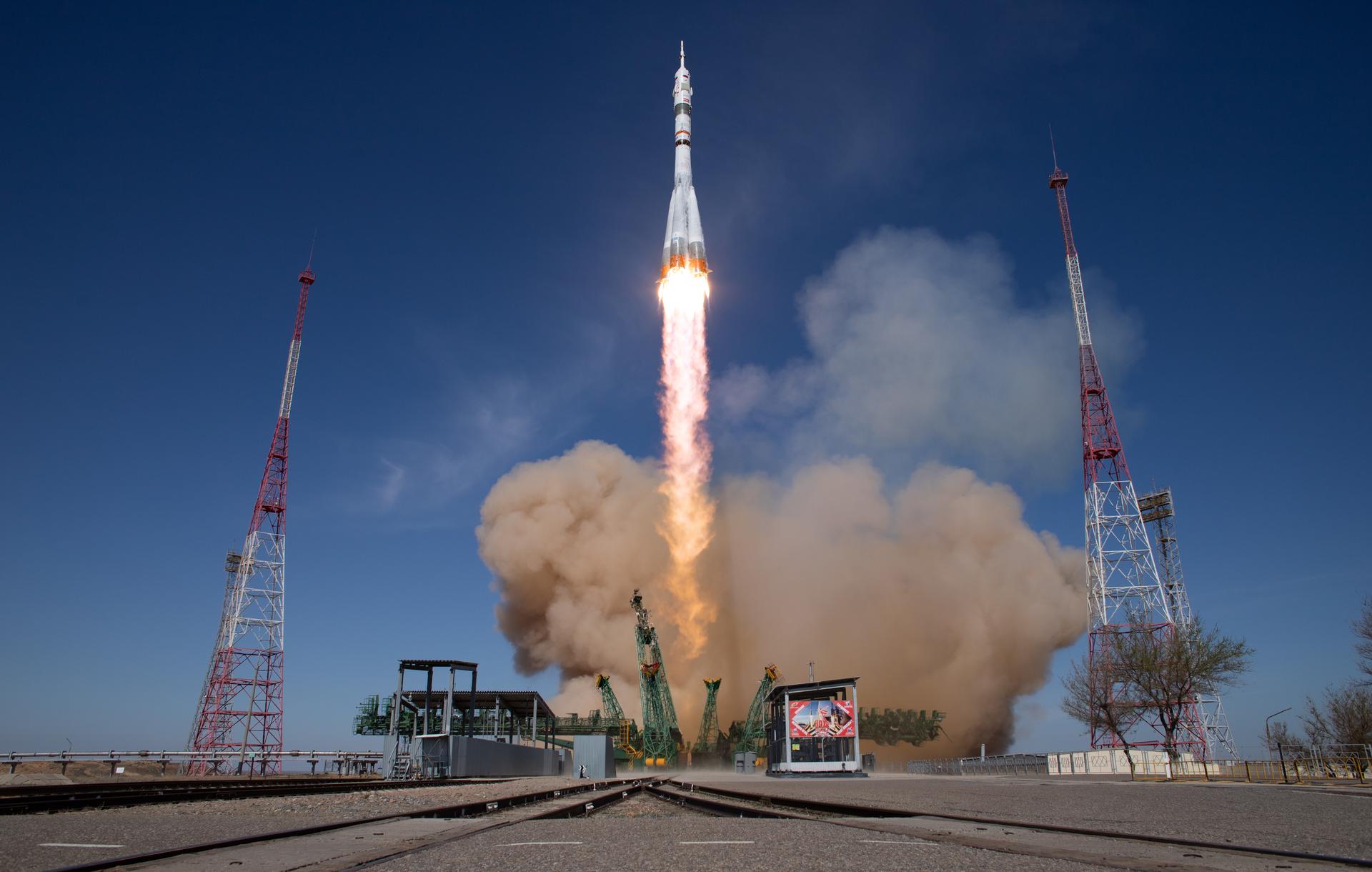
A Soyuz rocket launches to the International Space Station with Expedition 73 crew members aboard, Tuesday, April 8, 2025, at the Baikonur Cosmodrome in Kazakhstan.
NASA/Joel Kowsky

NASA astronaut Chris Williams will launch aboard the Roscosmos Soyuz MS-28 spacecraft to the International Space Station on Thursday, Nov. 27, accompanied by cosmonauts Sergey Kud-Sverchkov and Sergei Mikaev, where they will join the Expedition 73 crew advancing scientific research.

Williams, Kud-Sverchkov, and Mikaev will lift off at 4:27 a.m. EST (2:27 p.m. Baikonur time) from the Baikonur Cosmodrome in Kazakhstan. Live launch and docking coverage will be available on NASA+, Amazon Prime, and the agency’s YouTube channel. Learn how to watch NASA content through a variety of platforms, including social media.

After a two-orbit, three-hour trip to the orbital complex, the spacecraft will automatically dock to the station’s Rassvet module at approximately 7:38 a.m. Shortly after, hatches will open between Soyuz and the space station.

Once aboard, the trio will join NASA astronauts Mike Fincke, Zena Cardman, and Jonny Kim, JAXA (Japan Aerospace Exploration Agency) astronaut Kimiya Yui, and Roscosmos cosmonauts Sergei Ryzhikov, Alexey Zubritsky, and Oleg Platonov.

NASA’s coverage is as follows (all times Eastern and subject to change based on real-time operations):

Thursday, Nov. 27

3:30 a.m. – Launch coverage begins on NASA+, Amazon Prime, and YouTube.

4:27 a.m. – Launch

6:45 a.m. – Rendezvous and docking coverage begins on NASA+, Amazon Prime, and YouTube.

7:38 a.m. – Docking to the space station

9:50 a.m. – Hatch opening and welcome remarks coverage begins on NASA+, Amazon Prime, and YouTube.

10:10 a.m. – Hatch opening

Williams, Kud-Sverchkov, and Mikaev will spend approximately eight months aboard the space station as Expedition 73/74 crew members, before returning to Earth in summer 2026. This will be the first spaceflight for Williams and Mikaev, and the second for Kud-Sverchkov.

During his stay aboard station, Williams will conduct scientific research and technology demonstrations aimed at advancing human space exploration and benefiting life on Earth. He will help install and test a new modular workout system for long-duration missions, support experiments to improve cryogenic fuel efficiency and grow semiconductor crystals in space, and assist NASA in designing new re-entry safety protocols to protect crews during future missions.

For more than 25 years, people have lived and worked continuously aboard the International Space Station, advancing scientific knowledge and making research breakthroughs that are not possible on Earth. The station is a critical testbed for NASA to understand and overcome the challenges of long-duration spaceflight and to expand commercial opportunities in low Earth orbit. As commercial companies concentrate on providing human space transportation services and destinations as part of a robust low Earth orbit economy, NASA is focusing its resources on deep space missions to the Moon as part of the Artemis campaign in preparation for future human missions to Mars.

Learn more about International Space Station research and operations at:

https://www.nasa.gov/station

-end-

Joshua Finch / Jimi Russell
Headquarters, Washington
202-358-1100
joshua.a.finch@nasa.gov / james.j.russell@nasa.gov

Sandra Jones / Joseph Zakrzewski 
Johnson Space Center, Houston 
281-483-5111 
sandra.p.jones@nasa.gov / joseph.a.zakrzewski@nasa.gov 

Share

Details

Last Updated
Nov 20, 2025

NASA, Blue Origin Invite Media to Attend Mars Mission Launch

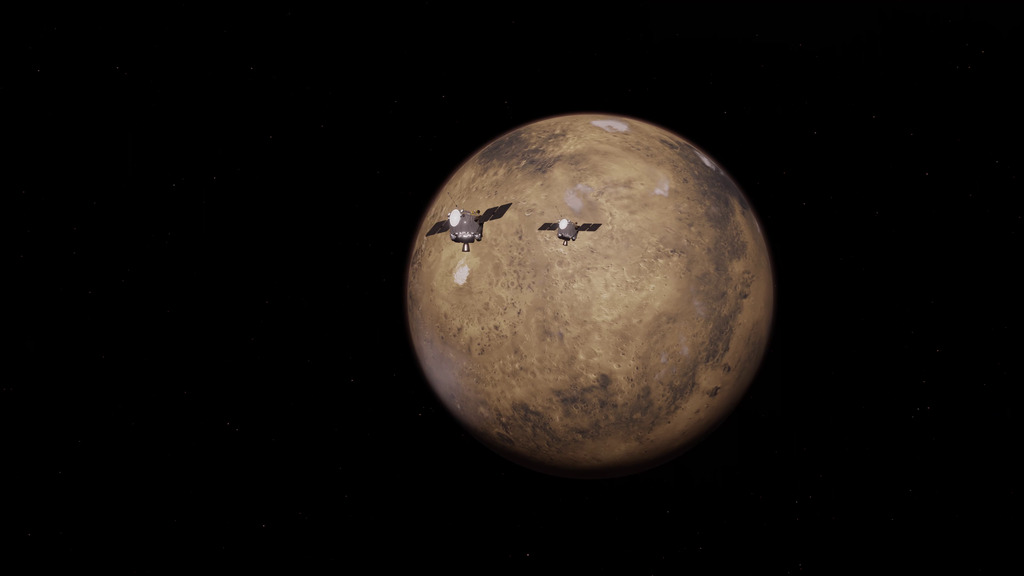
A stylized illustration shows the twin ESCAPADE spacecraft entering Mars’ orbit.
Credits: James Rattray/Rocket Lab USA

NASA and Blue Origin are reopening media accreditation for the launch of the agency’s ESCAPADE (Escape and Plasma Acceleration and Dynamics Explorers) mission. The twin ESCAPADE spacecraft will study the solar wind’s interaction with Mars, providing insight into the planet’s real-time response to space weather and how solar activity drives atmospheric escape. This will be the second launch of Blue Origin’s New Glenn rocket.

Media interested in covering ESCAPADE launch activities must apply for media credentials. Media who previously applied for media credentials for the ESCAPADE launch do not need to reapply.

U.S. media and U.S. citizens representing international media must apply by 11:59 p.m. EDT on Monday, Oct. 13. Media accreditation requests should be submitted online to: https://media.ksc.nasa.gov.

A copy of NASA’s media accreditation policy is available online. For questions about accreditation, please email: ksc-media-accreditat@mail.nasa.gov. For other mission questions, please contact NASA Kennedy’s newsroom: 321-867-2468.

Blue Origin is targeting later this fall for the launch of New Glenn’s second mission (NG-2) from Space Launch Complex 36 at Cape Canaveral Space Force Station in Florida. Accredited media will have the opportunity to participate in prelaunch media activities and cover the launch. Once a specific launch date is targeted, NASA and Blue Origin will communicate additional details regarding the media event schedule.

NASA will post updates on launch preparations for the twin Martian orbiters on the ESCAPADE blog.

The ESCAPADE mission is part of the NASA Small Innovative Missions for Planetary Exploration program and is funded by the agency’s Heliophysics Division. The mission is led by the University of California, Berkeley Space Sciences Laboratory, and Rocket Lab designed the spacecraft. The agency’s Launch Services Program, based at NASA’s Kennedy Space Center in Florida, secured launch services under the VADR (Venture-class Acquisition of Dedicated and Rideshare) contract.

To learn more about ESCAPADE, visit:

https://science.nasa.gov/mission/escapade

-end-

Abbey Interrante
Headquarters, Washington
301-201-0124
abbey.a.interrante@nasa.gov

Leejay Lockhart
Kennedy Space Center, Florida
321-747-8310
leejay.lockhart@nasa.gov

NASA, International Partners Deepen Commitment to Artemis Accords

Representatives of the Artemis Accords signatories, including acting NASA Administrator Sean Duffy and NASA Associate Administrator Amit Kshatriya, met Sept. 29, 2025, for a principals meeting during the 76th International Astronautical Congress in Sydney.
Credit: NASA/Max van Otterdyk

NASA, along with leaders from global space agencies and government representatives worldwide, convened on Monday to further the implementation of the Artemis Accords — practical principles designed to guide the responsible exploration of the Moon, Mars, and beyond.

The meeting was held during the 76th International Astronautical Congress (IAC) taking place in Sydney. In opening remarks, acting NASA Administrator Sean Duffy highlighted the five-year anniversary of the Artemis Accords next month.

“When President Trump launched the Artemis Accords in his first term, he made sure American values would lead the way – bringing together a coalition of nations to set the rules of the road in space and ensure exploration remains peaceful. After five years, the coalition is stronger than ever. This is critical as we seek to beat China to the Moon, not just to leave footprints, but this time to stay,” said Duffy.

The United States, led by NASA and the U.S. Department of State, signed the accords on Oct. 13, 2020, with seven other founding nations. The accords were created in response to the growing global interest in lunar activities by governments and private companies. They now comprise 56 country signatories — nearly 30% of the world’s countries.

The event was co-chaired by NASA, the Australian Space Agency, and the UAE Space Agency. Dozens of nations were represented, creating the foundation for future space exploration for the Golden Age of exploration and innovation.

“Australia is a proud founding signatory of the Artemis Accords and is focused on supporting new signatories in the Indo-Pacific region,” said Head of Australian Space Agency Enrico Palermo. “The purpose of the accords is as important — if not more important — as it was when first established. This annual gathering of principals at IAC 2025 is a key opportunity to reaffirm our collective commitment to exploring the Moon, Mars and beyond in a peaceful, safe, and sustainable way.”

During the meeting, leaders discussed recommendations for non-interference in each other’s space activities including transparency on expected launch dates, general nature of activities, and landing locations. They also discussed orbital debris mitigation and disposal management, interoperability of systems for safer and more efficient operations, and the release of scientific data.

In May 2025, the United Arab Emirates hosted an Artemis Accords workshop focused on topics, such as non-interference and space object registration and reporting beyond Earth orbit.

“Through our active participation in the Artemis Accords and by organizing specialised workshops, we aim to reinforce the principles of transparency, sustainability, and innovation in space activities. We are committed to strengthening international partnerships and facilitating the exchange of expertise, thereby contributing to the development of a robust global framework for safe and responsible space exploration, while opening new frontiers for scientific research,” said UAE Minister of Sports and Chairman of UAE Space Agency Ahmad Belhoul Al Falasi. “This reflects the UAE’s unwavering commitment to enhancing international cooperation in space exploration and promoting the peaceful use of space.”

More countries are expected to sign the Artemis Accords in the months and years ahead, as NASA continues its work to establish a safe, peaceful, and prosperous future in space.

Learn more about the Artemis Accords at:

https://www.nasa.gov/artemis-accords

-end-

Bethany Stevens / Elizabeth Shaw
Headquarters, Washington
202-358-1600
bethany.c.stevens@nasa.gov / elizabeth.a.shaw@nasa.gov

NASA signs US-Australia Agreement on Aeronautics, Space Cooperation

Acting NASA Administrator Sean Duffy and Australian Space Agency Head Enrico Palermo signed an agreement Sept. 30, 2025, in Sydney that strengthens collaboration in aeronautics and space exploration between the two nations.
Credit: NASA/Max van Otterdyk

At the International Astronautical Congress (IAC) taking place in Sydney this week, representatives from the United States and Australia gathered to sign a framework agreement that strengthens collaboration in aeronautics and space exploration between the two nations.

Acting NASA Administrator Sean Duffy and Australian Space Agency Head Enrico Palermo signed the agreement Tuesday on behalf of their countries, respectively.

“Australia is an important and longtime space partner, from Apollo to Artemis, and this agreement depends on that partnership,” said Duffy. “International agreements like this one work to leverage our resources and increase our capacities and scientific returns for all, proving critical to NASA’s plans from low Earth orbit to the Moon, Mars, and beyond.”

Australian Minister for Industry and Innovation and Minister for Science Tim Ayres said the signing builds on more than half a century of collaboration between the two nations.

“Strengthening Australia’s partnership with the U.S. and NASA creates new opportunities for Australian ideas and technologies, improving Australia’s industrial capability, boosting productivity, and building economic resilience,” Ayres said.

Known as the “Framework Agreement between the Government of the United States of America and the Government of Australia on Cooperation in Aeronautics and the Exploration and Use of Airspace and Outer Space for Peaceful Purposes,” it recognizes cooperation that’s mutually beneficial for the U.S. and Australia and establishes the legal framework under which the countries will work together.

Potential areas for cooperation include space exploration, space science, Earth science including geodesy, space medicine and life sciences, aeronautics research, and technology.

NASA has collaborated with Australia on civil space activities since 1960, when the two countries signed their first cooperative space agreement. The Canberra Deep Space Communication Complex played a vital role in supporting NASA’s Apollo Program, most notably during the Apollo 13 mission. Today, the complex is one of three global stations in NASA’s Deep Space Network, supporting both robotic and human spaceflight missions.

One of the original signatories to the Artemis Accords, Australia joined the United States under President Donald Trump and six other nations in October 2020, in supporting a basic set of principles for the safe and responsible use of space. Global space leaders from many of the 56 signatory countries met at IAC in Sydney this week to further their implementation.

As part of an existing partnership with the Australian Space Agency, Australia is developing a semi-autonomous lunar rover, which will carry a NASA analysis instrument intended to demonstrate technology for scientific and exploration purposes. The rover is scheduled to launch by the end of this decade through NASA’s CLPS (Commercial Lunar Payload Services) initiative.

NASA’s international partnerships reflect the agency’s commitment to peaceful, collaborative space exploration. Building on a legacy of cooperation, from the space shuttle to the International Space Station and now Artemis, international partnerships support NASA’s plans for lunar exploration under the Artemis campaign and future human exploration of Mars.

To learn more about NASA’s international partnerships, visit:

https://www.nasa.gov/oiir/

❌