NASA Selects 2 Instruments for Artemis IV Lunar Surface Science
NASA has selected two science instruments designed for astronauts to deploy on the surface of the Moon during the Artemis IV mission to the lunar south polar region. The instruments will improve our knowledge of the lunar environment to support NASA’s further exploration of the Moon and beyond to Mars.
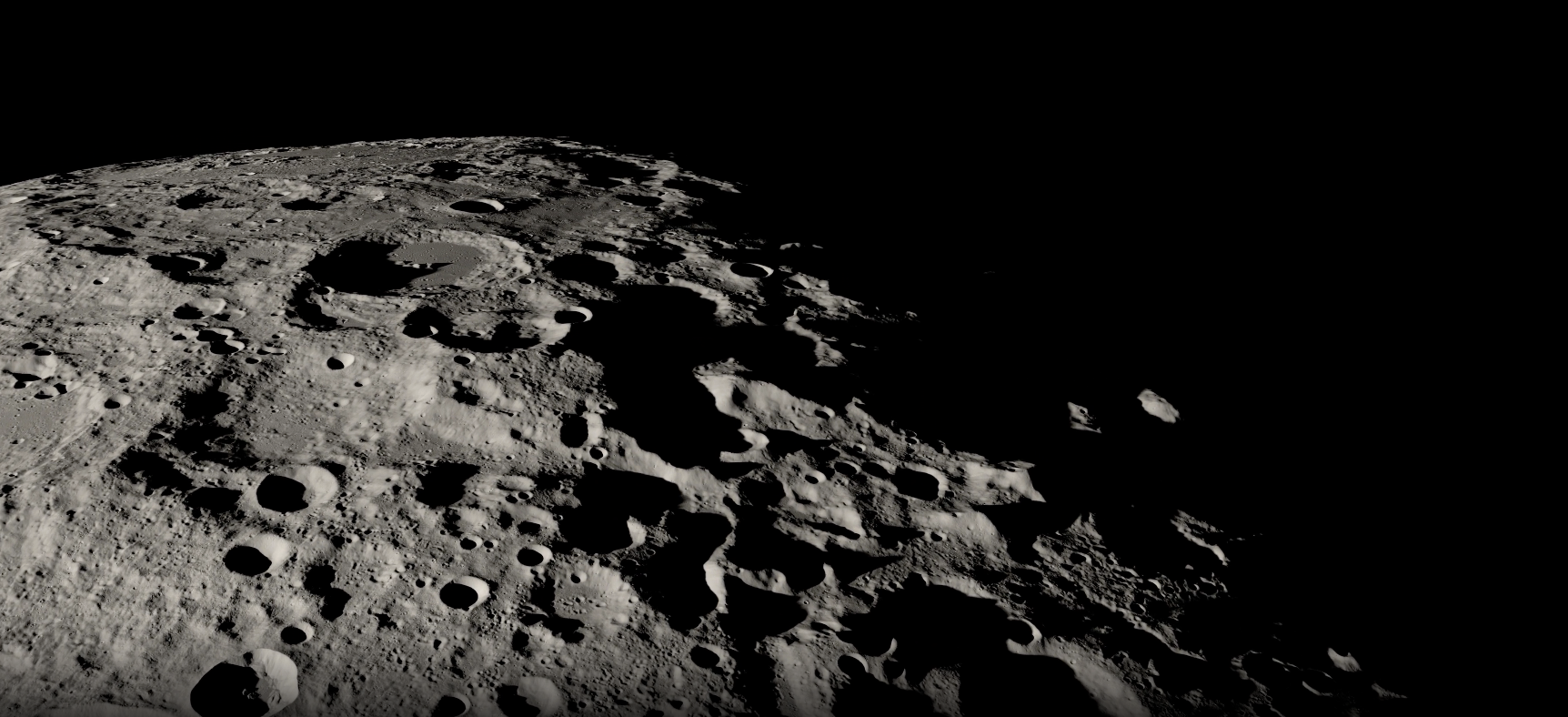
A visualization of the Moon’s South Pole region created with data from NASA’s Lunar Reconnaissance Orbiter, which has been surveying the Moon with seven instruments since 2009.
“The Apollo Era taught us that the further humanity is from Earth, the more dependent we are on science to protect and sustain human life on other planets,” said Nicky Fox, associate administrator, Science Mission Directorate at NASA Headquarters in Washington. “By deploying these two science instruments on the lunar surface, our proving ground, NASA is leading the world in the creation of humanity’s interplanetary survival guide to ensure the health and safety of our spacecraft and human explorers as we begin our epic journey back to the Moon and onward to Mars.”
After his voyage to the Moon’s surface during Apollo 17, astronaut Gene Cernan acknowledged the challenge that lunar dust presents to long-term lunar exploration. Moon dust sticks to everything it touches and is very abrasive. The knowledge gained from the DUSTER (DUst and plaSma environmenT survEyoR) investigation will help mitigate hazards to human health and exploration. Consisting of a set of instruments mounted on a small autonomous rover, DUSTER will characterize dust and plasma around the landing site. These measurements will advance understanding of the Moon’s natural dust and plasma environment and how that environment responds to the human presence, including any disturbance during crew exploration activities and lander liftoff. The DUSTER instrument suite is led by Xu Wang of the University of Colorado Boulder. The contract is for $24.8 million over a period of three years.
A model of the DUSTER instrument suite consisting of the Electrostatic Dust Analyzer (EDA)—which will measure the charge, velocity, size, and flux of dust particles lofted from the lunar surface—and Relaxation SOunder and differentiaL VoltagE (RESOLVE)—which will characterize the average electron density above the lunar surface using plasma sounding. Both instruments will be housed on a Mobile Autonomous Prospecting Platform (MAPP) rover, which will be supplied by Lunar Outpost, a company based in Golden, Colorado, that develops and operates robotic systems for space exploration.
LASP/CU Boulder/Lunar Outpost
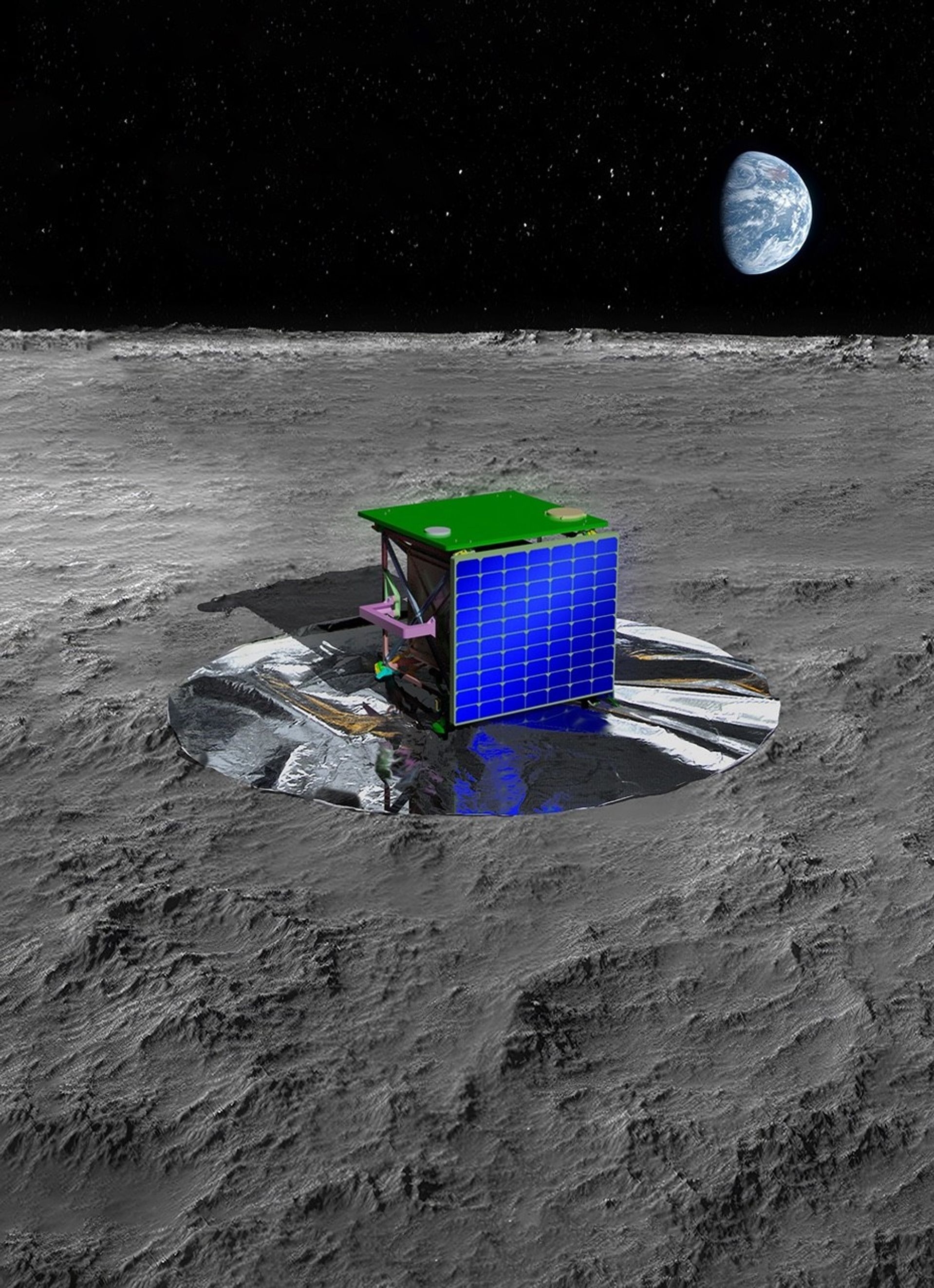
Data from the SPSS (South Pole Seismic Station) will enable scientists to characterize the lunar interior structure to better understand the geologic processes that affect planetary bodies. The seismometer will help determine the current rate at which the Moon is struck by meteorite impacts, monitor the real-time seismic environment and how it can affect operations for astronauts, and determine properties of the Moon’s deep interior. The crew will additionally perform an active-source experiment using a “thumper” that creates seismic energy to survey the shallow structure around the landing site. The SPSS instrument is led by Mark Panning of NASA’s Jet Propulsion Laboratory in Southern California. The award is for $25 million over a period of three years.
An artist’s concept of SPSS (South Pole Seismic Station) to be deployed by astronauts on the lunar surface.
NASA/JPL-Caltech
“These two scientific investigations will be emplaced by human explorers on the Moon to achieve science goals that have been identified as strategically important by both NASA and the larger scientific community”, said Joel Kearns, deputy associate administrator for exploration, Science Mission Directorate at NASA Headquarters. “We are excited to integrate these instrument teams into the Artemis IV Science Team.”
The two payloads were selected for further development to fly on Artemis IV; however, final manifesting decisions about the mission will be determined at a later date.
Through Artemis, NASA will address high priority science questions, focusing on those that are best accomplished by on-site human explorers on and around the Moon and by using the unique attributes of the lunar environment, aided by robotic surface and orbiting systems. The Artemis missions will send astronauts to explore the Moon for scientific discovery, economic benefits, and build the foundation for the first crewed missions to Mars.
In recent months, it has begun dawning on US lawmakers that, absent significant intervention, China will land humans on the Moon before the United States can return there with the Artemis Program.
So far, legislators have yet to take meaningful action on this—a $10 billion infusion into NASA’s budget this summer essentially provided zero funding for efforts needed to land humans on the Moon this decade. But now a subcommittee of the House Committee on Space, Science, and Technology has begun reviewing the space agency’s policy, expressing concerns about Chinese competition in civil spaceflight.
During a hearing on Thursday in Washington, DC, the subcommittee members asked a panel of experts how NASA could maintain its global leadership in space over China in general, and more specifically, how to improve the Artemis Program to reach the Moon more quickly.
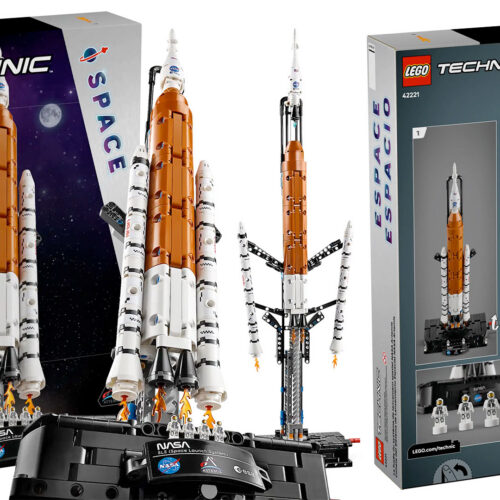
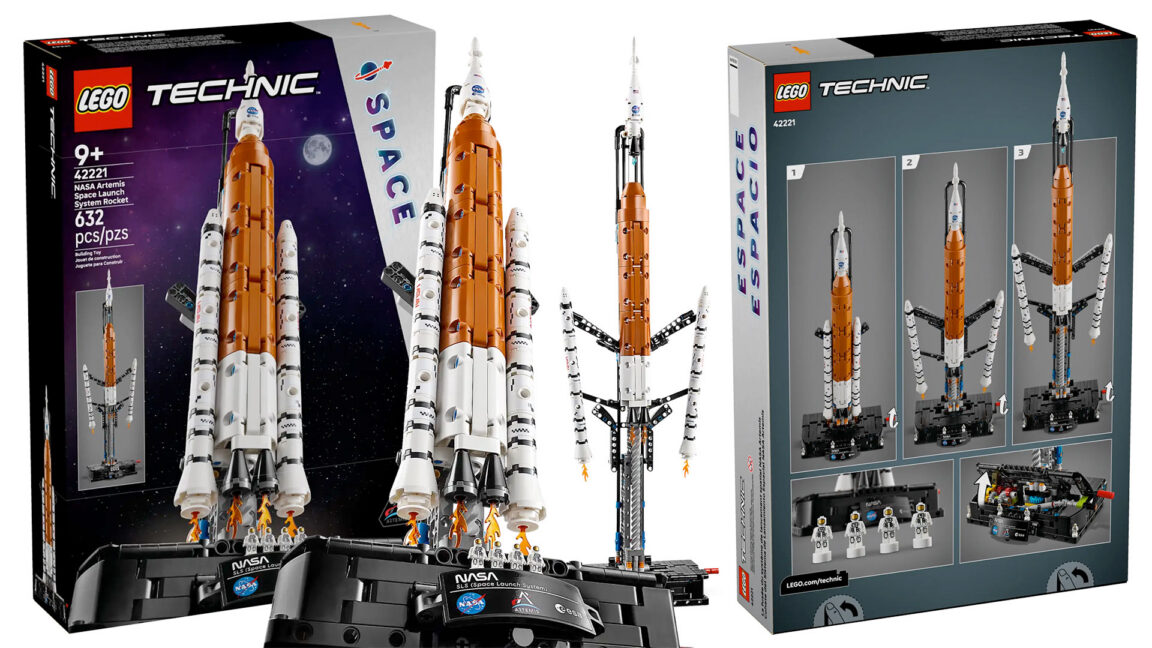
How do you top a highly detailed scale model of NASA’s new moon-bound rocket and its support tower? If you’re Lego, you make it so it can actually lift off.
Lego’s NASA Artemis Space Launch System Rocket, part of its Technic line of advanced building sets, will land on store shelves for $60 on January 1, 2026, and then “blast off” from kitchen tables, office desks and living room floors. The 632-piece set climbs skyward, separating from its expendable stages along the way, until the Orion crew spacecraft and its European Service Module top out the motion on their way to the moon—or wherever your imagination carries it.
“The educational LEGO Technic set shows the moment a rocket launches, in three distinct stages,” reads the product description on Lego’s website. “Turn the crank to see the solid rocket boosters separate from the core stage, which then also detaches. Continue turning to watch the upper stage with its engine module, Orion spacecraft and launch abort system separate.”
NASA has selected the University of Alabama at Birmingham to provide the necessary systems required to return temperature sensitive science payloads to Earth from the Moon.
The Lunar Freezer System contract is an indefinite-delivery/indefinite-quantity award with cost-plus-fixed-fee delivery orders. The contract begins Thursday, Dec. 4, with a 66-month base period along with two optional periods that could extend the award through June 3, 2033. The contract has a total estimated value of $37 million.
Under the contract, the awardee will be responsible for providing safe, reliable, and cost-effective hardware and software systems NASA needs to maintain temperature-critical science materials, including lunar geological samples, human research samples, and biological experimentation samples, as they travel aboard Artemis spacecraft to Earth from the lunar surface. The awarded contractor was selected after a thorough evaluation by NASA engineers of the proposals submitted. NASA’s source selection authority made the selection after reviewing the evaluation material based on the evaluation criteria contained in the request for proposals.
For information about NASA and other agency programs, visit:
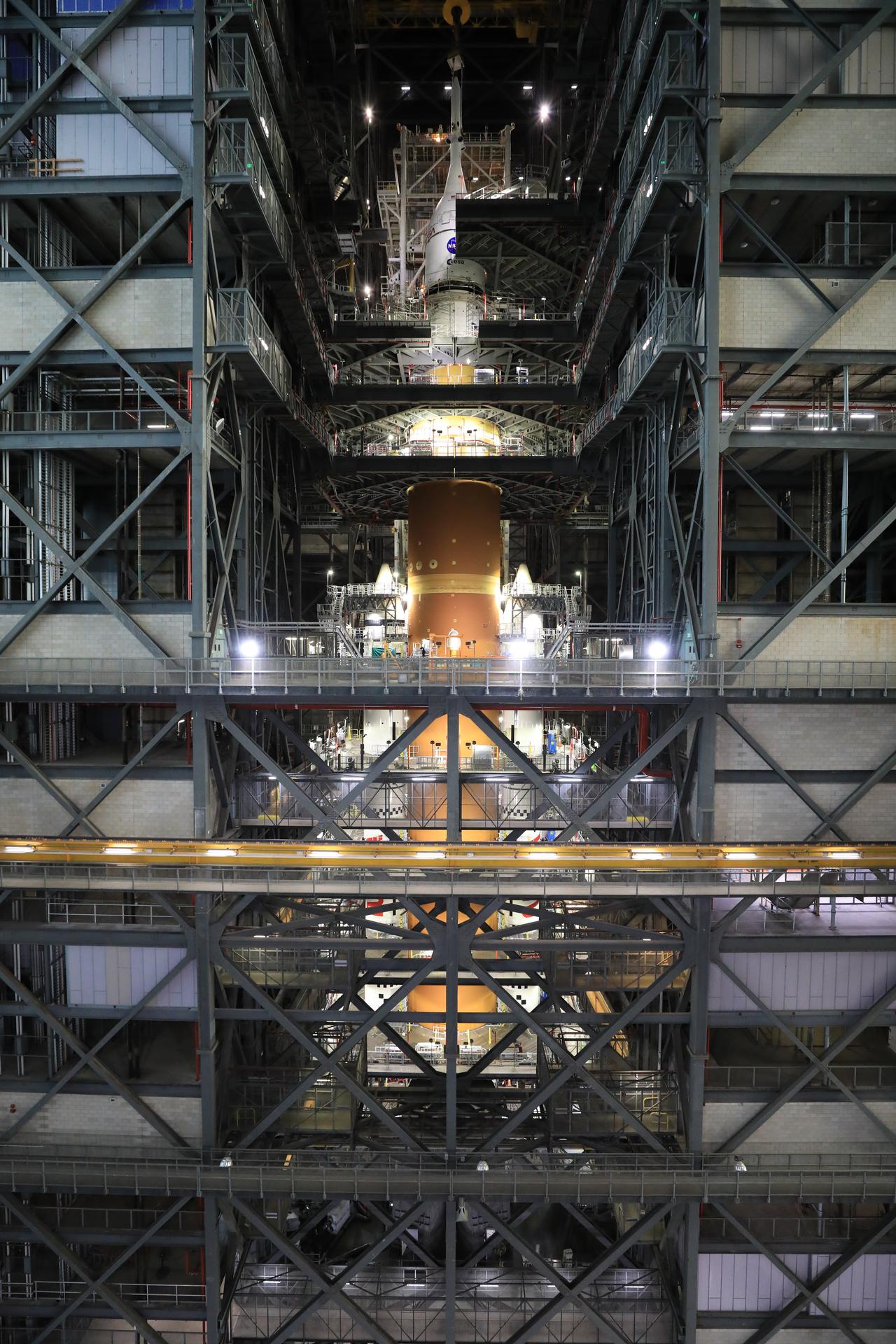
Technicians with NASA’s Exploration Ground Systems team use a crane to lift and secure NASA’s Orion spacecraft on top of the SLS (Space Launch System) rocket in High Bay 3 of the Vehicle Assembly Building at NASA’s Kennedy Space Center in Florida on Saturday, Oct. 18, 2025, for the agency’s Artemis II mission. Set to launch in 2026, the spacecraft will carry NASA astronauts Reid Wiseman, Victor Glover, Christina Koch, and CSA (Canadian Space Agency) astronaut Jeremy Hansen on a 10-day mission around the Moon and back. Once stacked, teams will begin conducting a series of verification tests ahead of rolling out to Launch Complex 39B for the wet dress rehearsal at NASA Kennedy.
NASA/Kim Shiflett
As 2026 nears, NASA continues moving forward to launching and flying Artemis II, the first crewed mission under the Artemis campaign, no later than April next year.
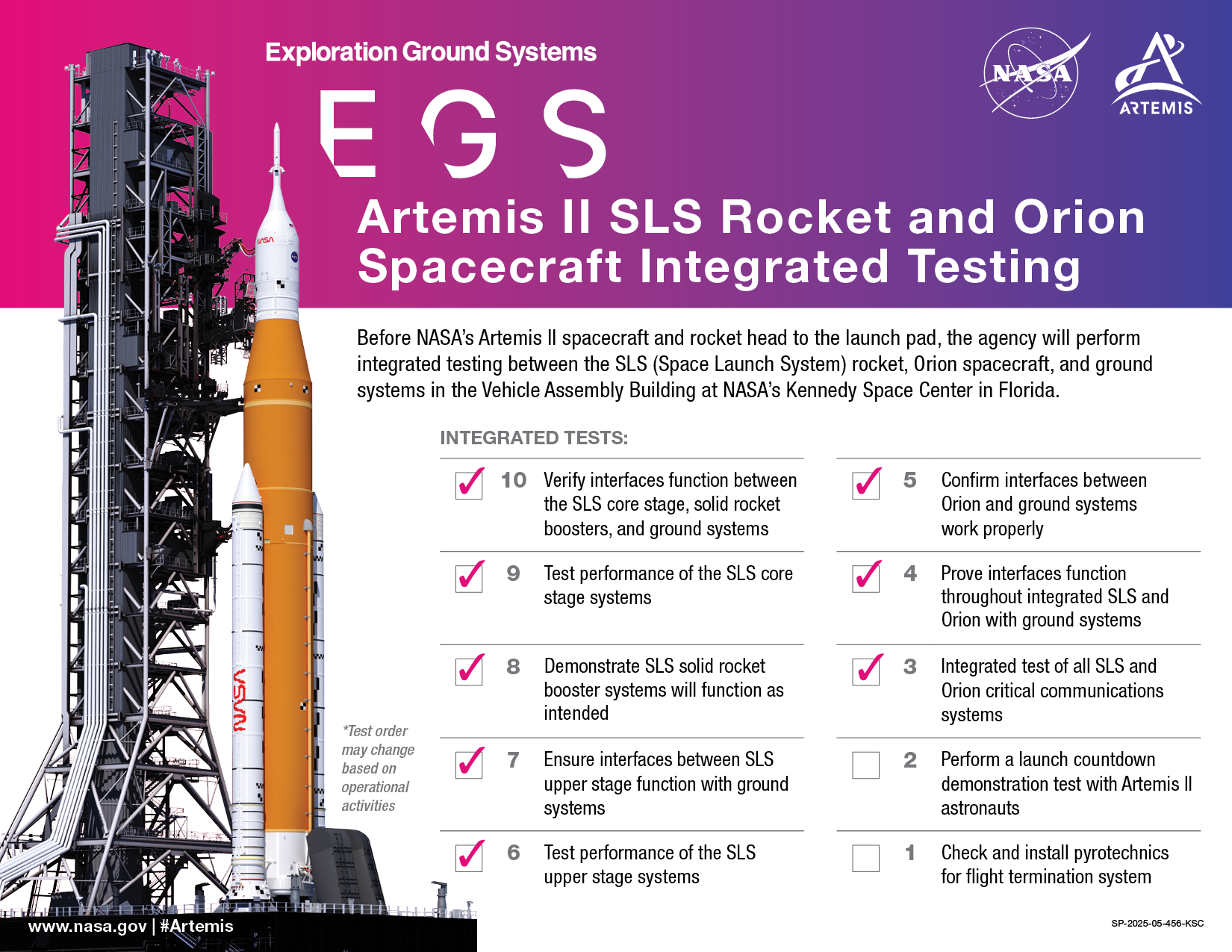
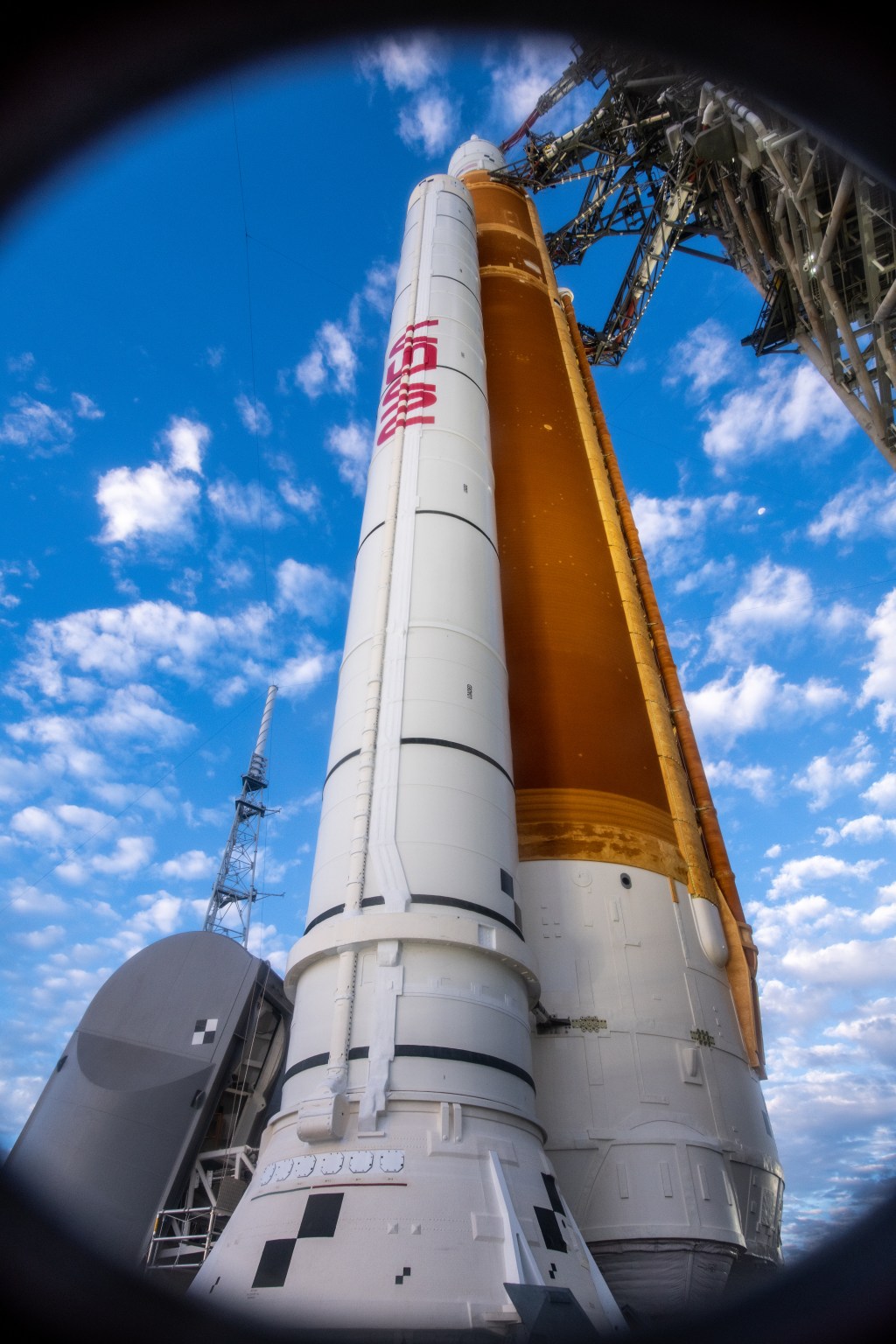
NASA’s Orion spacecraft, complete with its launch abort system escape tower, is now integrated with the SLS (Space Launch System) rocket in the Vehicle Assembly Building (VAB) at the agency’s Kennedy Space Center in Florida. Following Orion stacking, teams completed testing critical communications systems between SLS and Orion, and confirmed the interfaces function properly between the rocket, Orion, and the ground systems, including end-to-end testing with the Near Space Network and Deep Space Network, which aid in communications and navigation.
“NASA remains focused on getting ready to safely fly four astronauts around the Moon and back,” said acting NASA Administrator Sean Duffy. “Our mission will lay the groundwork for future missions to the lunar surface and to Mars.”
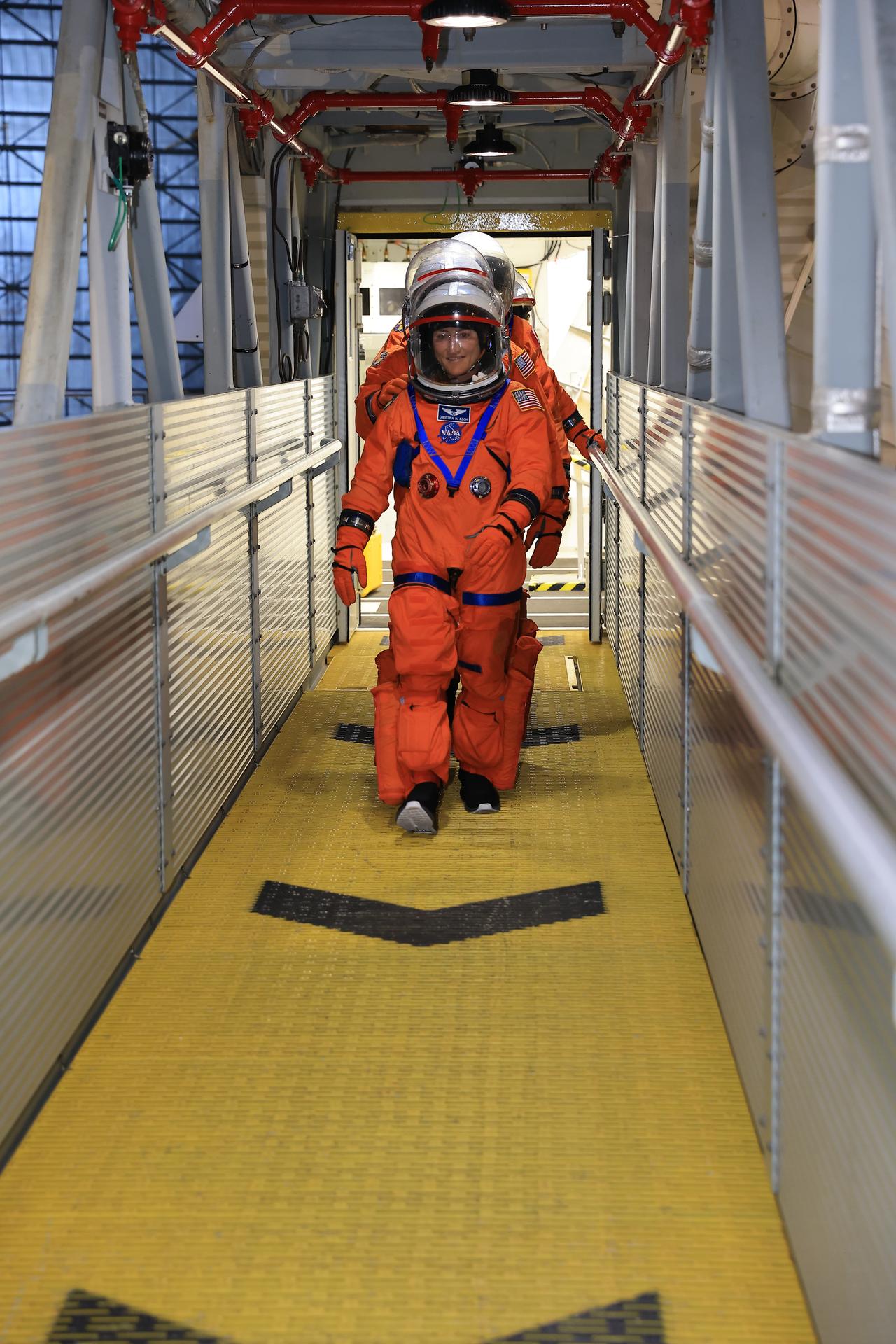
In the coming weeks, engineers and the Artemis II crew will conduct the first part of a Countdown Demonstration Test at Kennedy, a dress rehearsal for launch day. The crew will don their Orion crew survival system spacesuits and venture to their rocket before being secured inside Orion, which the crew recently named Integrity, simulating the final moments of the countdown. Because the rocket and spacecraft are not yet at the launch pad, the crew will board Orion inside the VAB. The test will serve as a final verification of the timeline for the crew and supporting teams on the ground. A second part of the test, preparing for an emergency at the launch pad, will occur after the rocket and spacecraft roll out to Launch Pad 39B.
NASA astronaut Christina Koch, Artemis II mission specialist, and the remaining Artemis II crew members walk on the crew access arm of the mobile launcher in the Vehicle Assembly Building at NASA’s Kennedy Space Center in Florida on Tuesday, Aug. 12, 2025.
NASA/Kim Shiflett
The Artemis II crew and ground personnel responsible for launching and flying the mission are preparing to conduct additional integrated simulations across teams and facilities to prepare for any scenario that could arise as the crew of four launches from Florida and flies their approximately 10-day mission.
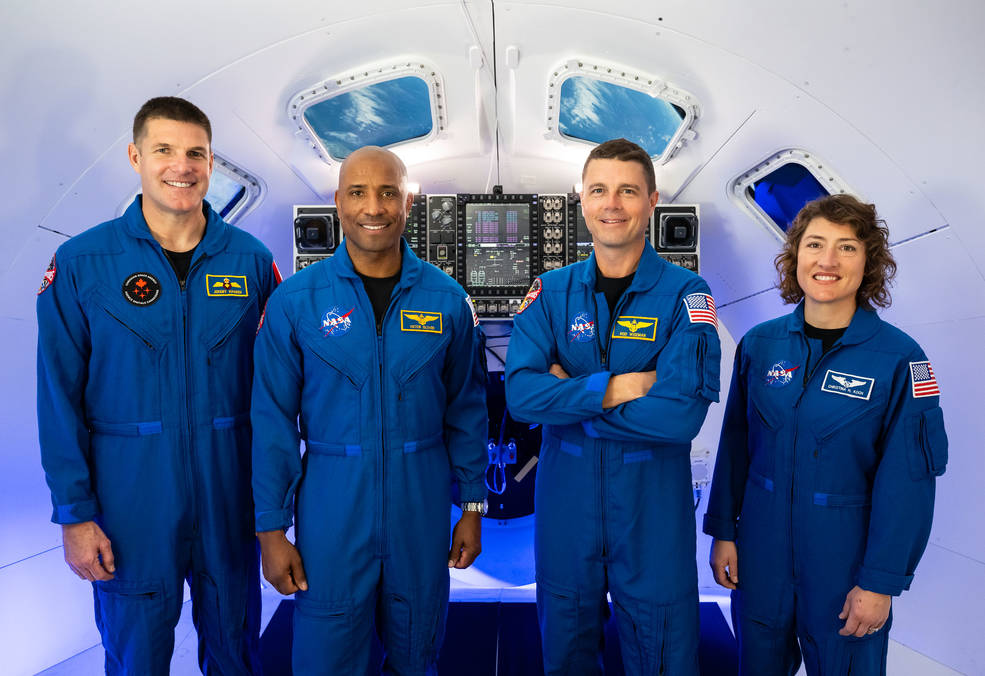
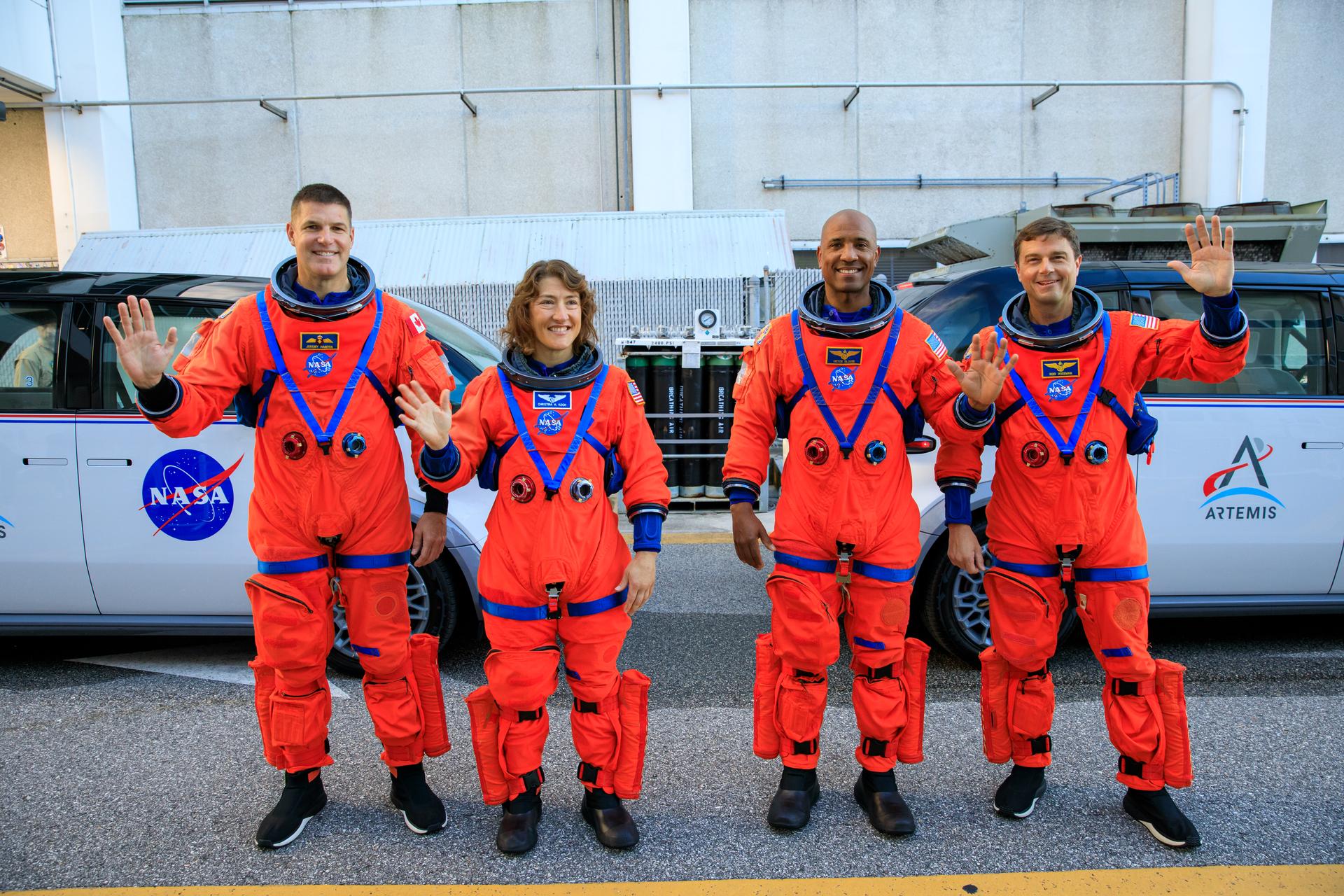
NASA astronauts Reid Wiseman, Victor Glover, and Christina Koch, and CSA (Canadian Space Agency) astronaut Jeremy Hansen, have a busy schedule over the next several months reviewing procedures for all phases of flight until their preparations are second nature, practicing for different mission scenarios, and maintaining their familiarity with every element of their spacecraft.
Through Artemis, NASA will send astronauts to explore the Moon for scientific discovery, economic benefits, and build the foundation for the first crewed missions to Mars.
Listen to this audio excerpt from Ethan Jacobs, a helicopter pilot and member of the Colorado Army National Guard developing a foundational flight training course for Artemis astronauts:
0:00 / 0:00
High above the Rocky Mountains, Ethan Jacobs is helping NASA preparing to land people on the Moon for the first time in more than 50 years. NASA will send astronauts to the lunar South Pole during the Artemis III mission and beyond. As part of their journeys, crew will travel in a human landing system that will safely transport them from lunar orbit to the lunar surface and back.
Jacobs, a chief warrant officer with the Colorado National Guard and helicopter pilot for 20 years, both privately, and with the U.S. Army active duty and National Guard, has been working with NASA to develop a foundational training course at the High-Altitude Army National Guard Aviation Training Site, near Gypsum, Colorado. The culmination of that work is a NASA-certified foundational training course for astronauts that exposes them to the challenges of vertical flight profiles and landing in extreme conditions.
The challenging conditions we fly in replicates – as much as possible here on Earth – some of the challenges astronauts will face when landing on the Moon.
Ethan Jacobs
Chief Warrant Officer, Colorado Army National Guard
Colorado’s challenging terrain, dusty and white-out conditions in certain places, and high desert landscape make it an ideal setting for replicating a lunar environment for flight. In addition, there can be flat light where there is little to no shadow, all of which can create visual illusions and challenge a crew’s sense of depth perception.
And a lot of the visual illusions the NASA astronauts training at the High-Altitude Army National Guard Aviation Training Site experience are eye-opening.
“I teach the astronauts how to distinguish slopes in degraded visual conditions because we normally judge slope by shadows and changes in vegetation color,” Jacobs said. “But these conditions in the Colorado mountains can be monochromatic, like on the Moon.”
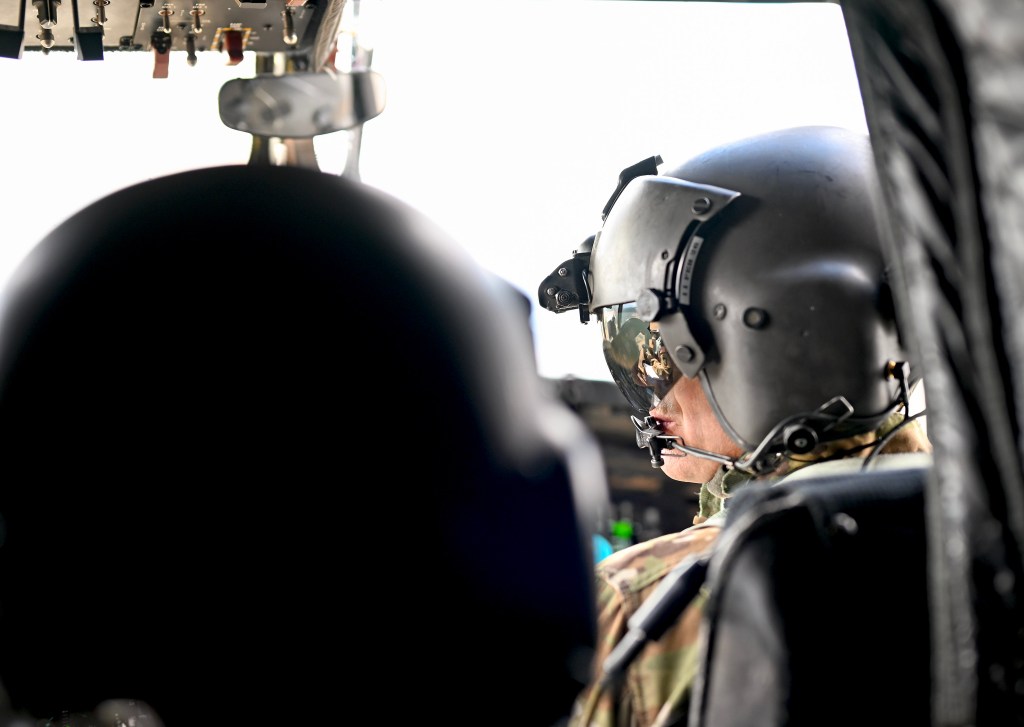
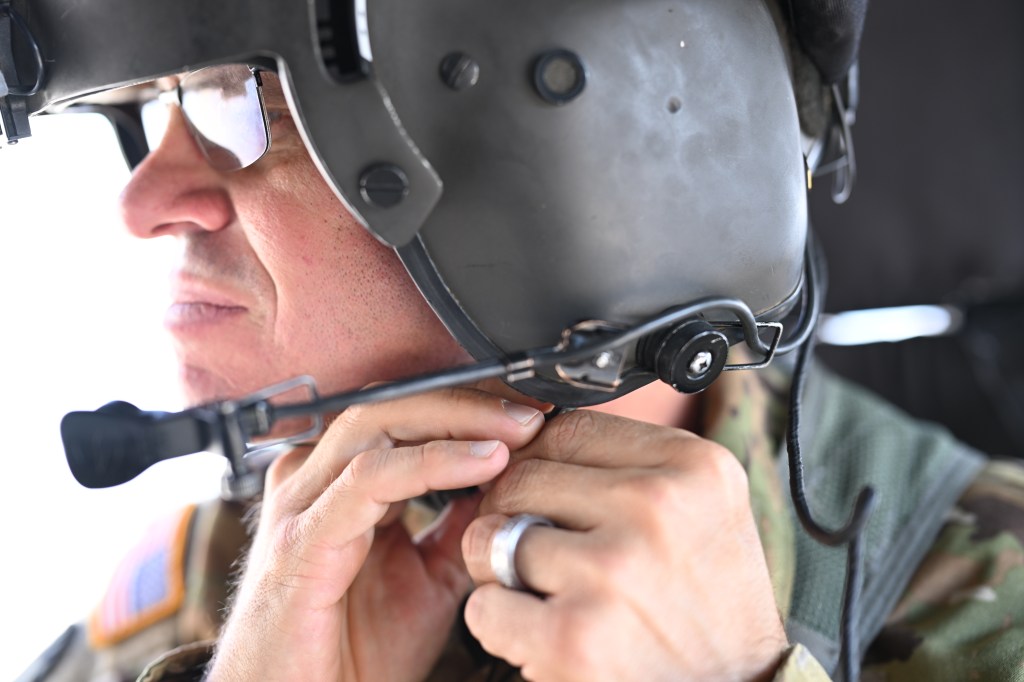
On a typical flight in a UH-72 Lakota helicopter, Jacobs sits in the front with one astronaut crew member and another astronaut sits in the back. Jacobs trains the astronaut team on how best to identify and overcome visual and cognitive illusions while evaluating techniques and team dynamics. Working with NASA, Jacobs and his team have studied maps of the lunar terrain, then located similar landing zones in the Colorado mountains.
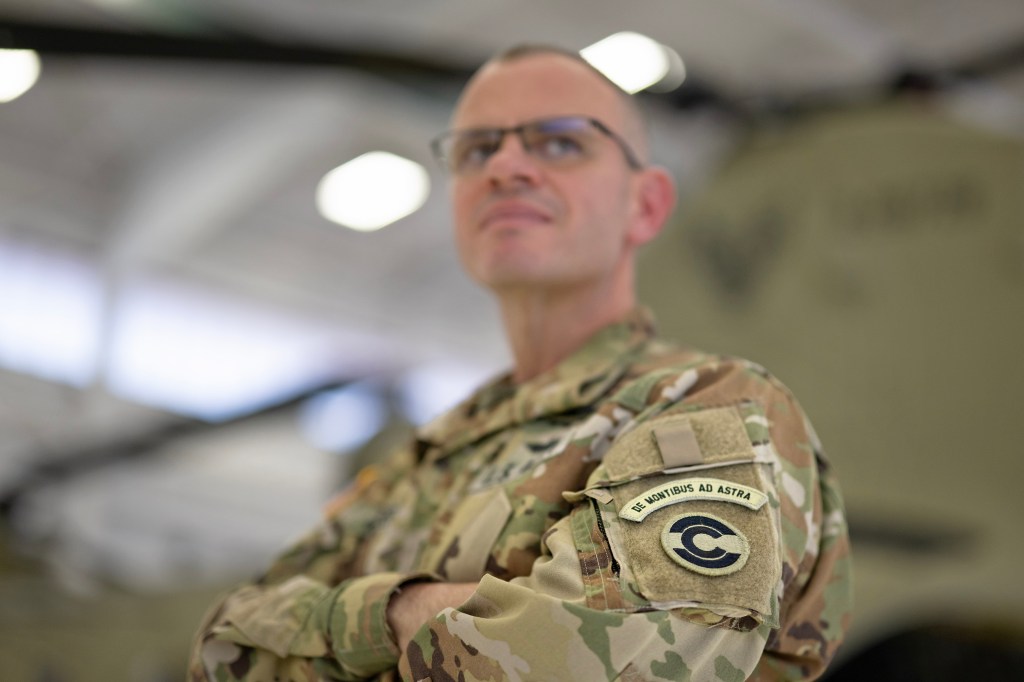
Colorado National Guard Chief Warrant Officer and military helicopter pilot Ethan Jacobs stands in the hangar bay at the High-Altitude Army National Guard Training Site near Gypsum, Colorado. NASA and the Colorado Army National Guard are partnering on a simulated lander flight training course for Artemis in the mountains of northern Colorado. Jacobs is the lead instructor and helped to develop the course.
NASA/Charles Beason
Colorado National Guard Chief Warrant Officer and military helicopter pilot Ethan Jacobs stands in the hangar bay at the High-Altitude Army National Guard Training Site near Gypsum, Colorado. NASA and the Colorado Army National Guard are partnering on a simulated lander flight training course for Artemis in the mountains of northern Colorado. Jacobs is the lead instructor and helped to develop the course.
NASA/Charles Beason
Colorado National Guard Chief Warrant Officer and military helicopter pilot Ethan Jacobs stands in the hangar bay at the High-Altitude Army National Guard Training Site near Gypsum, Colorado. NASA and the Colorado Army National Guard are partnering on a simulated lander flight training course for Artemis in the mountains of northern Colorado. Jacobs is the lead instructor and helped to develop the course.
NASA/Charles Beason
“The two-person astronaut crew has to work together, communicate, and navigate with real-world consequences,” Jacobs said. “Fuel is burning and they can’t press the pause button like in a simulator. I try to expose them to as many different conditions and various landing zones as possible.”
At the end of the day, adaptability is key to successfully landing in extreme conditions.
Ethan Jacobs
Chief Warrant Officer, Colorado Army National Guard
NASA recently certified the course, marking a milestone in preparing for the future Artemis III crew. Since 2021, astronauts with NASA and ESA (European Space Agency) have taken part in the high-altitude aviation course have proven to be receptive to the training and adaptable to expanding their piloting skills, Jacobs said.
Artemis astronauts will receive specialized training on the specific lander for their mission from NASA’s commercial providers, SpaceX and Blue Origin. The training course, along with simulators and specialized crew training, provides fundamental coursework that will allow Artemis astronauts to be best prepared to land on the lunar surface.
Through the Artemis campaign, NASA will send astronauts to explore the Moon for scientific discovery, economic benefits, and to build the foundation for the first crewed missions to Mars for the benefit of all.
Brian Alpert’s path was always destined for the aerospace industry, but his journey turned toward NASA’s Johnson Space Center during his sophomore year in college. That was when Tricia Mack, who works in NASA’s Transportation Integration Office within the International Space Station Program, spoke to his aerospace seminar about planning spacewalks, training crews, and supporting operations from the Mission Control Center in Houston.
Alpert was inspired to join the agency and later earned a spot as an engineering co-op student at Johnson. “My first stop after new employee orientation was Tricia’s office,” he said.
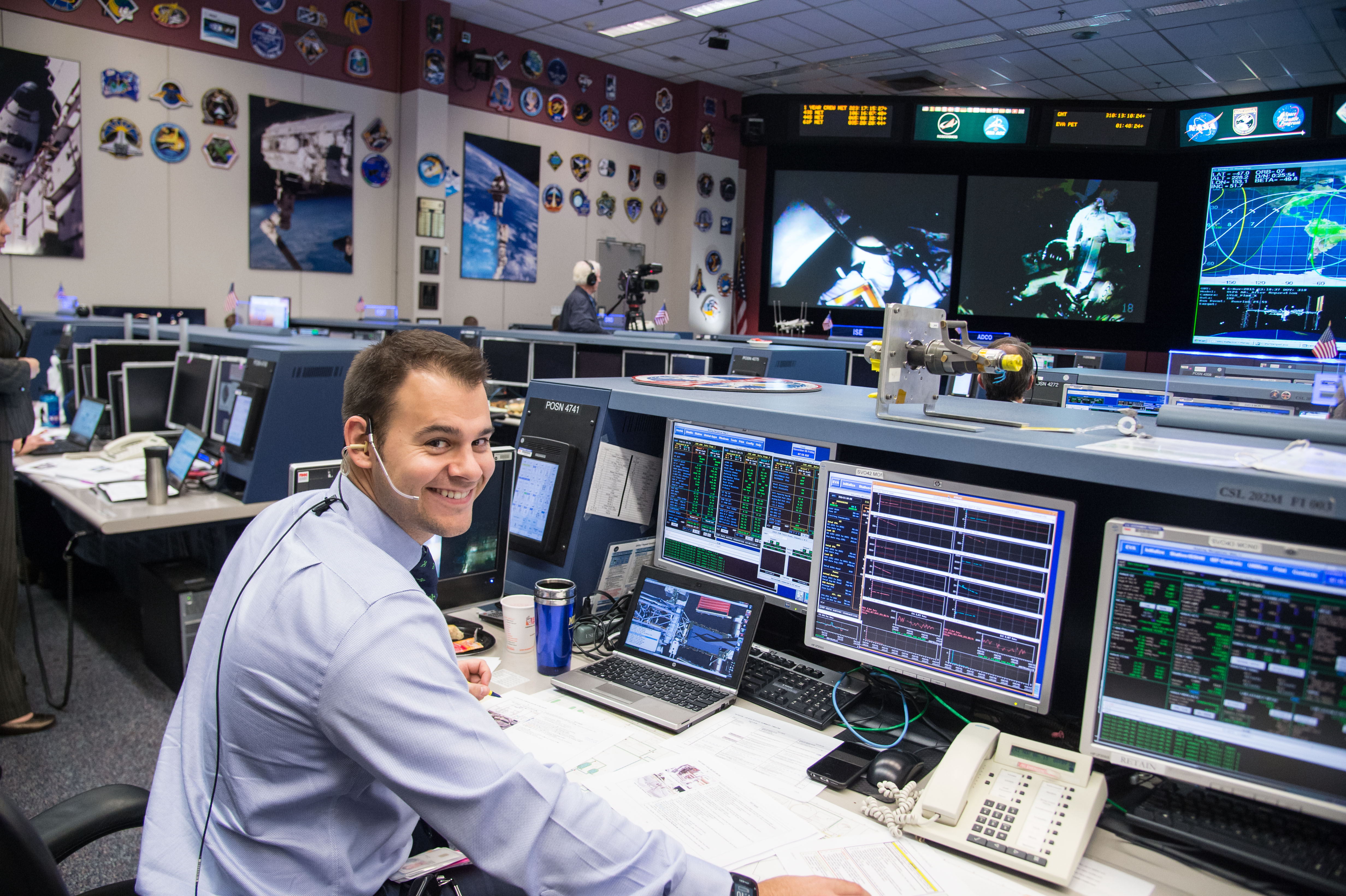
Brian Alpert supports a spacewalk outside of the International Space Station from the Mission Control Center at Johnson Space Center in 2015.
NASA/Bill Stafford
Eighteen years later, Alpert is the cross-program integration deputy for NASA’s human landing system (HLS) – the mode of transportation that will take astronauts to the lunar surface as part of the Artemis campaign. In his role, Alpert is responsible for coordinating with other Artemis programs, like the Orion Program, on issue resolution, joint agreements, data exchanges, hardware integration, and reviews. He also co-leads the Exploration Atmospheres Issue Resolution Team, assessing risks to and impacts on space vehicle atmosphere, spacesuit pressure, and operational timelines for Artemis missions.
Alpert has enjoyed the opportunity to participate in several proposal reviews for Artemis program contracts as well. “NASA’s model of embracing public-private partnerships to achieve its strategic goals and objectives is exciting and will continue to expand opportunities in space,” he said.
He applies lessons learned and skills gained from his previous roles as a spacewalk crew instructor, flight controller, and systems engineer to his current work on HLS. “I hope to pass on to the next generation that skills and lessons you learn as a student or a young employee can and will help you in your future work,” he said.
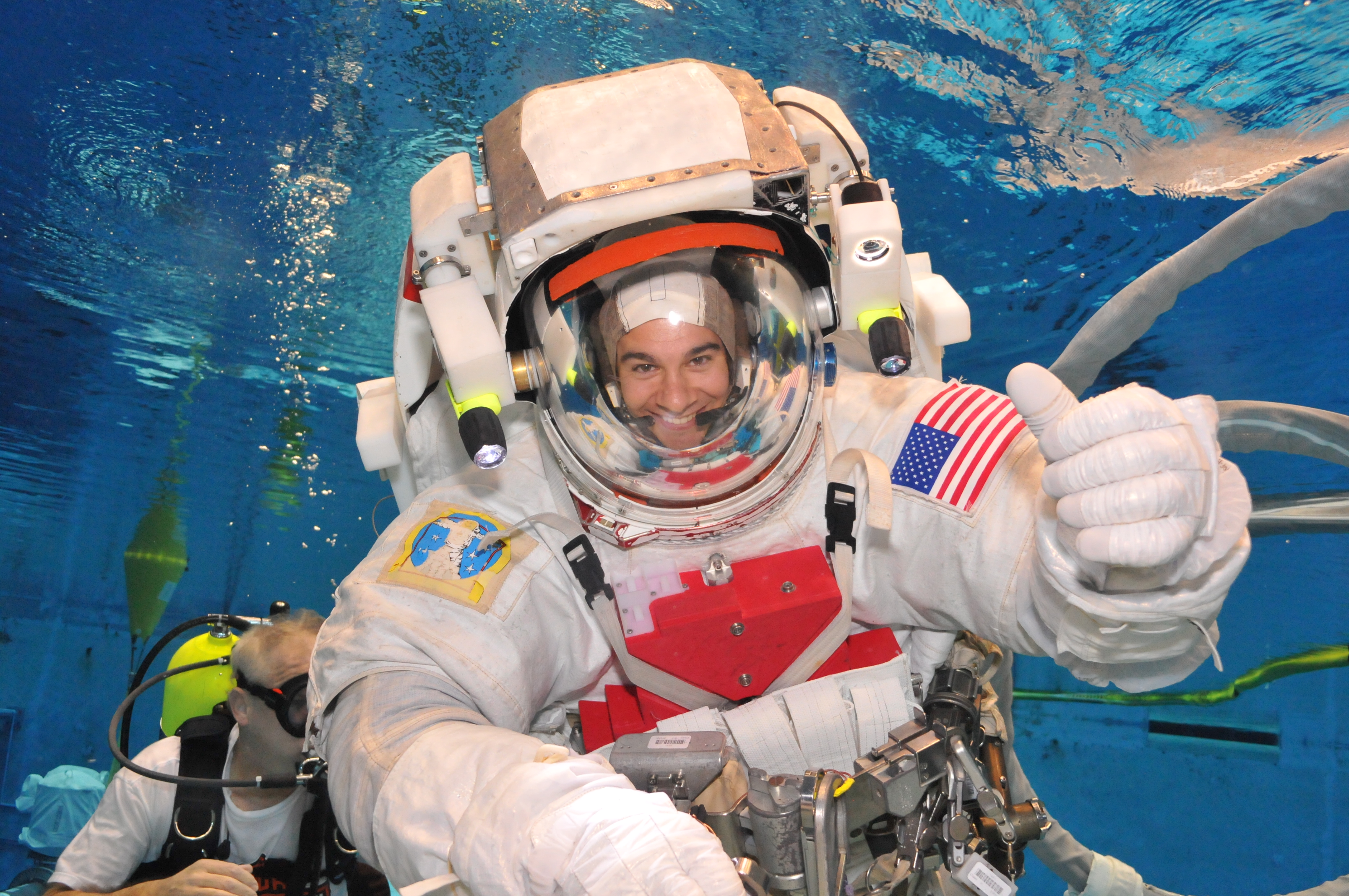
Brian Alpert routes cables in the Johnson Space Center’s Neutral Buoyancy Laboratory in preparation for a crew training run in 2011.
Image courtesy of Brian Alpert
Alpert’s prior NASA roles involved memorable experiences like working to address spacesuit and vehicle failures that occurred during a spacewalk on International Space Station Expedition 32. He was serving as the lead spacewalk systems flight controller in the Mission Control Center at the time and played a key role in getting NASA astronaut Suni Williams and JAXA (Japan Aerospace Exploration Agency) astronaut Aki Hoshide safely back aboard the space station. Since Williams and Hoshide did not complete the spacewalk’s primary objective – replacing a Main Bus Switching Unit – a backup spacewalk was scheduled several days later. Alpert was on console for that spacewalk, too.
“One important lesson that I have learned through my career to date is how exceptionally talented, passionate, and hard-working everyone is here at NASA,” he said. “Whenever work gets stressful or problems get hard, there are teams of people that have your back, are willing to problem-solve with you, and can bring another perspective to finding a solution that you may not have considered.” He added that his colleagues are the best part of his job. “As much as I love what we do at NASA, what really gets me excited to come to work is all the outstanding people I get to work with every day.”
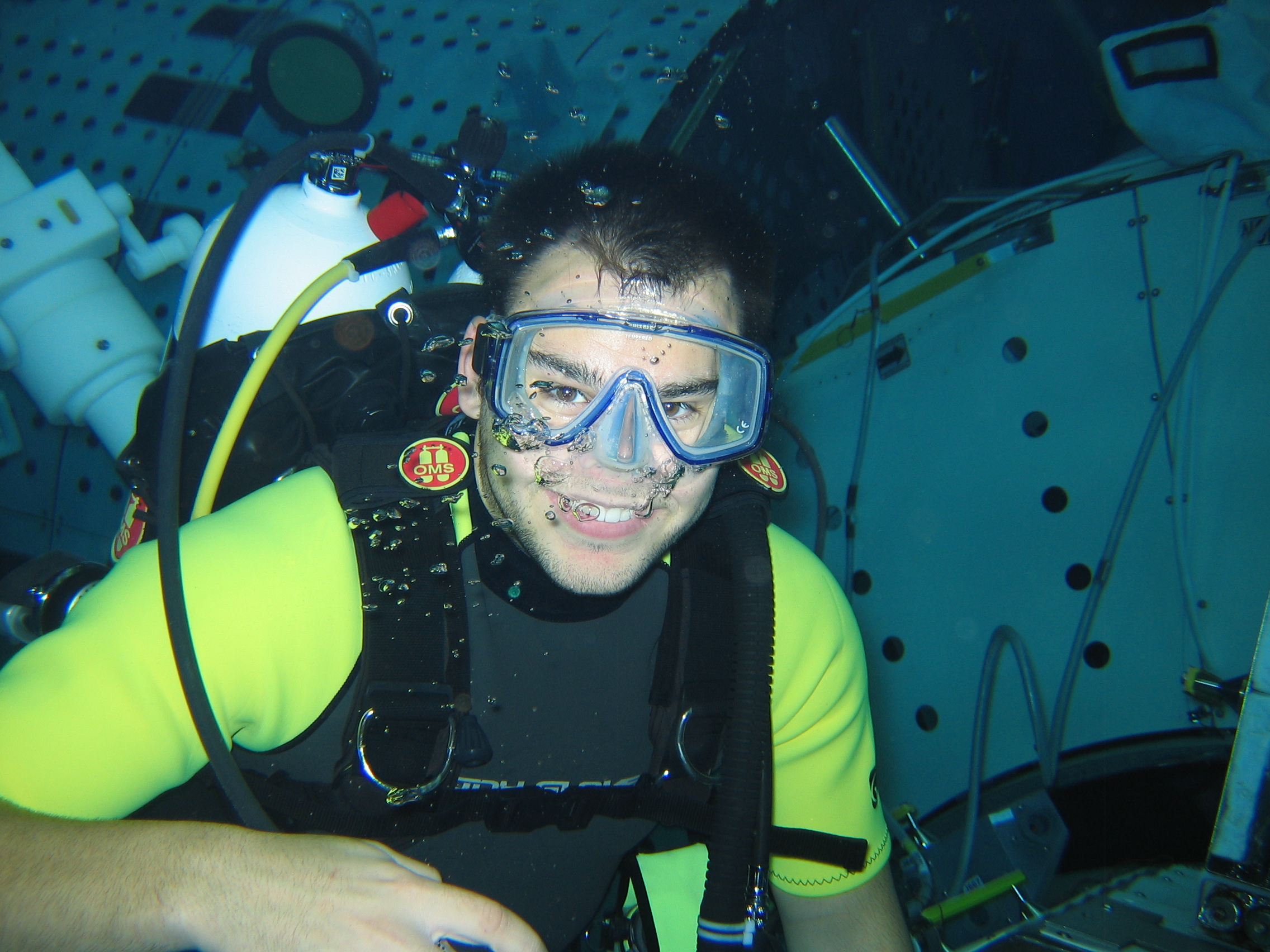
Brian Alpert completes a dive in NASA Johnson Space Center’s Neutral Buoyancy Laboratory for a spacesuit familiarization exercise in 2009.
Image courtesy of Brian Alpert
Learning how to navigate change has been an important lesson for Alpert, as well. “NASA has been through a lot of change since I became a full-time employee in 2009,” he said. “Making sure that I have clear goals for myself, my work, and my team helps us all stay focused on the mission and the work at hand and helps us prioritize projects and tasks as questions or challenges inevitably arise.”
One challenge Alpert especially enjoys? Johnson’s annual Chili Cookoff. He has participated in many cookoffs as part of the Cosmic Chili team, noting that he often dons a Wolverine costume as part of the festive fun. He also welcomes a space trivia challenge – and a chance to add to his collection of trivia trophies.
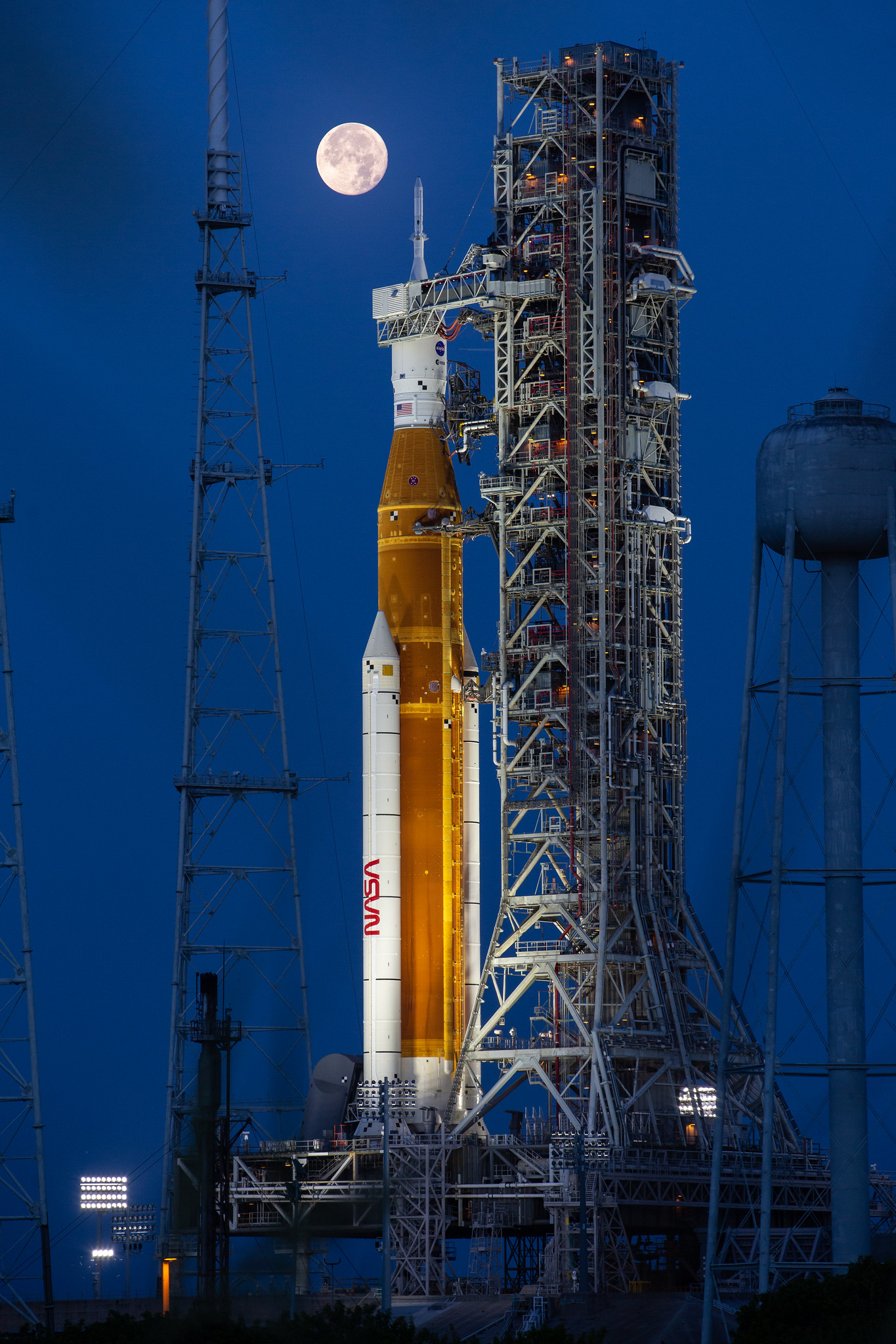
El cohete SLS (Sistema de Lanzamiento Espacial) y la nave espacial Orion de la misión Artemis I, en la plataforma móvil de lanzamiento en el Centro Espacial Kennedy de la NASA en Florida, con la luna llena al fondo. Imagen tomada el 14 de junio de 2022.
Ya está abierto el plazo de acreditación de medios de comunicación para el lanzamiento de la primera misión lunar tripulada de la campaña Artemis de la NASA.
Con un lanzamiento previsto para principios de 2026, el vuelo de prueba Artemis II enviará a los astronautas de la NASA Reid Wiseman, Victor Glover y Christina Koch y al astronauta de la CSA (Agencia Espacial Canadiense) Jeremy Hansen en un viaje de aproximadamente 10 días alrededor de la Luna y de regreso.
La tripulación despegará desde el Centro Espacial Kennedy de la agencia en Florida, a bordo de la nave espacial Orion de la NASA, transportada por el poderoso cohete Sistema de Lanzamiento Espacial (SLS, por sus siglas en inglés) de la agencia, con el fin de ayudar a validar los sistemas y el hardware necesarios para la exploración humana del espacio profundo.
Los miembros de los medios que no dispongan de ciudadanía estadounidense deben solicitar el acceso para ver el lanzamiento antes del domingo 30 de noviembre. Los miembros de medios con ciudadanía estadounidense deben solicitarlo antes del lunes 8 de diciembre. Los periodistas que ya dispongan de acreditaciones anuales para el centro Kennedy de la NASA también deben solicitar acceso para este lanzamiento. Aquellos que estén acreditados para asistir al despegue de Artemis II recibirán también acreditación para asistir a eventos previos al lanzamiento, incluyendo la presentación del cohete y la nave espacial integrados, un evento que se dará varias semanas antes del despegue. Más adelante proporcionaremos detalles adicionales sobre las fechas del lanzamiento.
Los medios de comunicación pueden enviar sus solicitudes de acreditación en línea, en:
Debido al gran interés suscitado, la disponibilidad de plazas para asistir a las actividades del lanzamiento es limitada. Los medios acreditados recibirán un correo electrónico de confirmación tras la aprobación, junto con información adicional sobre las actividades previas al lanzamiento y actividades del lanzamiento. La política de acreditación de medios de la NASA está disponible en línea (en inglés). Si tiene alguna pregunta sobre la acreditación, envíe un correo electrónico en inglés a: ksc-media-accreditat@mail.nasa.gov. Para otras preguntas, póngase en contacto con la sala de prensa del centro Kennedy de la NASA a través del número: +1 321-867-2468.
Como parte de una edad dorada de innovación y exploración, Artemis allanará el camino para nuevas misiones tripuladas estadounidenses en la superficie lunar, en preparación para la primera misión tripulada a Marte.
Para obtener más información (en inglés) sobre la misión Artemis II, visite:
The Artemis I SLS (Space Launch System) rocket and Orion spacecraft atop the mobile launcher at NASA’s Kennedy Space Center in Florida with a full Moon in the background on June 14, 2022.
Media accreditation is open for the launch of the first crewed Moon mission under NASA’s Artemis campaign.
Targeted to launch in early 2026, the Artemis II test flight will send NASA astronauts Reid Wiseman, Victor Glover, Christina Koch, and CSA (Canadian Space Agency) astronaut Jeremy Hansen on an approximately 10-day journey around the Moon and back.
The crew will lift off from the agency’s Kennedy Space Center in Florida inside NASA’s Orion spacecraft on the agency’s powerful (SLS) Space Launch System rocket to help confirm the systems and hardware needed for human deep space exploration.
International media without U.S. citizenship must apply to view the launch by Sunday, Nov. 30. U.S. media must apply by Monday, Dec. 8. Journalists who already have annual badges to NASA Kennedy also must apply. Those who are accredited to attend the Artemis II launch also will be accredited to attend pre-launch events, including rollout of the integrated rocket and spacecraft several weeks before launch. Additional details about launch dates will be provided later.
Media may submit accreditation requests online at:
Due to high interest, space is limited to attend launch activities. Credentialed media will receive a confirmation email upon approval, along with additional information about pre-launch and launch activities. NASA’s media accreditation policy is available online. For questions about accreditation, please email: ksc-media-accreditat@mail.nasa.gov. For other questions, please contact the NASA Kennedy newsroom at: 321-867-2468.
As part of a Golden Age of innovation and exploration, Artemis will pave the way for new U.S.-crewed missions on the lunar surface in preparation toward the first crewed mission to Mars.
To learn more about the Artemis II mission, visit:
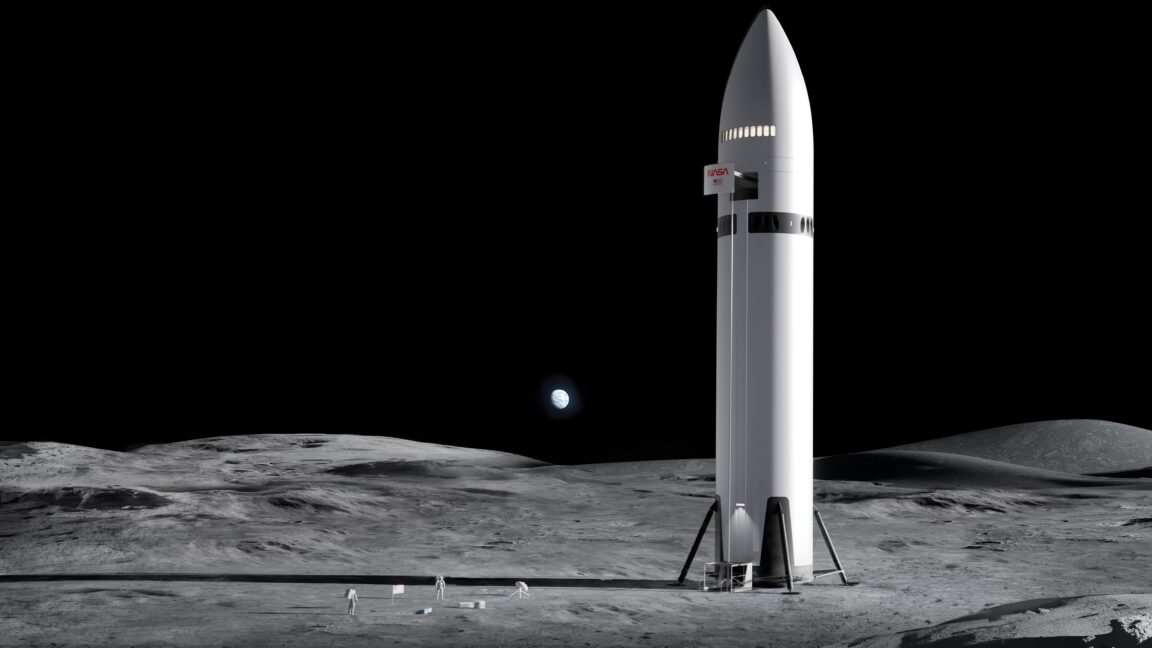
In what will likely be his most consequential act as NASA’s interim leader, Sean Duffy said last month that the space agency was “opening up” its competition to develop a lunar lander that will put humans on the surface of the Moon.
As part of this move, Duffy asked NASA’s current lunar lander contractors, SpaceX and Blue Origin, for more nimble plans. Neither has specified those plans publicly, but a recent update from SpaceX referenced a “simplified” version of the Starship system it’s building to help NASA return humans to the Moon.
“Since the contract was awarded, we have been consistently responsive to NASA as requirements for Artemis III have changed and have shared ideas on how to simplify the mission to align with national priorities,” the company said. “In response to the latest calls, we’ve shared and are formally assessing a simplified mission architecture and concept of operations that we believe will result in a faster return to the Moon while simultaneously improving crew safety.”
Representatives of the Artemis Accords signatories, including acting NASA Administrator Sean Duffy and NASA Associate Administrator Amit Kshatriya, met Sept. 29, 2025, for a principals meeting during the 76th International Astronautical Congress in Sydney.
Credit: NASA/Max van Otterdyk
NASA, along with leaders from global space agencies and government representatives worldwide, convened on Monday to further the implementation of the Artemis Accords — practical principles designed to guide the responsible exploration of the Moon, Mars, and beyond.
The meeting was held during the 76th International Astronautical Congress (IAC) taking place in Sydney. In opening remarks, acting NASA Administrator Sean Duffy highlighted the five-year anniversary of the Artemis Accords next month.
“When President Trump launched the Artemis Accords in his first term, he made sure American values would lead the way – bringing together a coalition of nations to set the rules of the road in space and ensure exploration remains peaceful. After five years, the coalition is stronger than ever. This is critical as we seek to beat China to the Moon, not just to leave footprints, but this time to stay,” said Duffy.
The United States, led by NASA and the U.S. Department of State, signed the accords on Oct. 13, 2020, with seven other founding nations. The accords were created in response to the growing global interest in lunar activities by governments and private companies. They now comprise 56 country signatories — nearly 30% of the world’s countries.
The event was co-chaired by NASA, the Australian Space Agency, and the UAE Space Agency. Dozens of nations were represented, creating the foundation for future space exploration for the Golden Age of exploration and innovation.
“Australia is a proud founding signatory of the Artemis Accords and is focused on supporting new signatories in the Indo-Pacific region,” said Head of Australian Space Agency Enrico Palermo. “The purpose of the accords is as important — if not more important — as it was when first established. This annual gathering of principals at IAC 2025 is a key opportunity to reaffirm our collective commitment to exploring the Moon, Mars and beyond in a peaceful, safe, and sustainable way.”
During the meeting, leaders discussed recommendations for non-interference in each other’s space activities including transparency on expected launch dates, general nature of activities, and landing locations. They also discussed orbital debris mitigation and disposal management, interoperability of systems for safer and more efficient operations, and the release of scientific data.
In May 2025, the United Arab Emirates hosted an Artemis Accords workshop focused on topics, such as non-interference and space object registration and reporting beyond Earth orbit.
“Through our active participation in the Artemis Accords and by organizing specialised workshops, we aim to reinforce the principles of transparency, sustainability, and innovation in space activities. We are committed to strengthening international partnerships and facilitating the exchange of expertise, thereby contributing to the development of a robust global framework for safe and responsible space exploration, while opening new frontiers for scientific research,” said UAE Minister of Sports and Chairman of UAE Space Agency Ahmad Belhoul Al Falasi. “This reflects the UAE’s unwavering commitment to enhancing international cooperation in space exploration and promoting the peaceful use of space.”
More countries are expected to sign the Artemis Accords in the months and years ahead, as NASA continues its work to establish a safe, peaceful, and prosperous future in space.
Acting NASA Administrator Sean Duffy and Australian Space Agency Head Enrico Palermo signed an agreement Sept. 30, 2025, in Sydney that strengthens collaboration in aeronautics and space exploration between the two nations.
Credit: NASA/Max van Otterdyk
At the International Astronautical Congress (IAC) taking place in Sydney this week, representatives from the United States and Australia gathered to sign a framework agreement that strengthens collaboration in aeronautics and space exploration between the two nations.
Acting NASA Administrator Sean Duffy and Australian Space Agency Head Enrico Palermo signed the agreement Tuesday on behalf of their countries, respectively.
“Australia is an important and longtime space partner, from Apollo to Artemis, and this agreement depends on that partnership,” said Duffy. “International agreements like this one work to leverage our resources and increase our capacities and scientific returns for all, proving critical to NASA’s plans from low Earth orbit to the Moon, Mars, and beyond.”
Australian Minister for Industry and Innovation and Minister for Science Tim Ayres said the signing builds on more than half a century of collaboration between the two nations.
“Strengthening Australia’s partnership with the U.S. and NASA creates new opportunities for Australian ideas and technologies, improving Australia’s industrial capability, boosting productivity, and building economic resilience,” Ayres said.
Known as the “Framework Agreement between the Government of the United States of America and the Government of Australia on Cooperation in Aeronautics and the Exploration and Use of Airspace and Outer Space for Peaceful Purposes,” it recognizes cooperation that’s mutually beneficial for the U.S. and Australia and establishes the legal framework under which the countries will work together.
Potential areas for cooperation include space exploration, space science, Earth science including geodesy, space medicine and life sciences, aeronautics research, and technology.
NASA has collaborated with Australia on civil space activities since 1960, when the two countries signed their first cooperative space agreement. The Canberra Deep Space Communication Complex played a vital role in supporting NASA’s Apollo Program, most notably during the Apollo 13 mission. Today, the complex is one of three global stations in NASA’s Deep Space Network, supporting both robotic and human spaceflight missions.
One of the original signatories to the Artemis Accords, Australia joined the United States under President Donald Trump and six other nations in October 2020, in supporting a basic set of principles for the safe and responsible use of space. Global space leaders from many of the 56 signatory countries met at IAC in Sydney this week to further their implementation.
As part of an existing partnership with the Australian Space Agency, Australia is developing a semi-autonomous lunar rover, which will carry a NASA analysis instrument intended to demonstrate technology for scientific and exploration purposes. The rover is scheduled to launch by the end of this decade through NASA’s CLPS (Commercial Lunar Payload Services) initiative.
NASA’s international partnerships reflect the agency’s commitment to peaceful, collaborative space exploration. Building on a legacy of cooperation, from the space shuttle to the International Space Station and now Artemis, international partnerships support NASA’s plans for lunar exploration under the Artemis campaign and future human exploration of Mars.
To learn more about NASA’s international partnerships, visit:
International Space Station: Launching NASA and Humanity into Deep Space
Curiosity and the desire to explore are traits deeply rooted in human nature. Space exploration is no exception; it reflects humanity’s timeless drive to seek new horizons, challenge our limits, and understand our universe.
The advancements of modern civilization—from the electricity that powers our homes to basic hygienic breakthroughs that ensure our health— happened thanks to humanity’s dedication to expanding our knowledge and transforming our world. Similarly, before we can venture into deep space, we must expand our knowledge to understand life beyond Earth. The International Space Station provides the platform for sharpening the skills, technology, and understanding that has springboarded humanity forward, leading us back to the Moon, Mars, and beyond.
In November 2025, NASA and its international partners will surpass 25 years of continuous human presence aboard the International Space Station. As NASA prepares for Artemis missions to the Moon and sets sights on Mars, the space station continues to enable groundbreaking research not possible on Earth, making significant strides in our journey farther into the final frontier.
Step 1: Mastering a New Environment
NASA astronauts Raja Chari, Tom Marshburn, and Kayla Barron demonstrate the unique physical environment aboard the space station.
NASA
Space presents an entirely new physical environment with a unique set of challenges. Without Earth’s gravity, researchers first needed to master techniques for basic tasks like drinking water, sleeping, exercising, and handling various materials. Fundamental research in the early days of the space station helped us address these basic challenges and move forward to more advanced physics, building multiple space-based research facilities, developing life support systems, and even improving consumer products for life on Earth.
The human body experiences challenges in space like adapting to different gravitational fields and living for long periods in a closed environment. For example, fluid shifts in the body due to microgravity can cause changes with the eyes, brain, bones, muscles, and cardiovascular system. Being able to see, breathe, and function optimally are critical to living and working in space. Research aboard the space station is producing solutions to these challenges and equipping humans for deep space exploration though research like simulating moon landings to clarify how gravitational transitions affect piloting capabilities and decision-making.
Step 2: Creating Self Sufficiency in Space
In 2021, astronauts aboard the International Space Station harvested chile peppers for the first time, and taste-tested the fruits of their labor.
NASA
As missions venture farther from Earth, reliable technologies and self-sustaining ecosystems become essential. The space station provides a testbed to refine these systems before human’s travel to distant destinations.
Food, water, and air are among the basic needs for human survival. Thanks to testing aboard the space station, we have developed state-of-the-art life support systems that could be used on future commercial space stations and the Artemis missions. The space station also has enabled testing of evolving technologies to recycle air, water, and waste. In the U.S. segment of space station, NASA achieved 98% water recovery, the ideal level needed for missions beyond low Earth orbit.
Deep space missions could last several years, and astronauts will need enough food to sustain them the entire time. Packaged food can degrade and lose nutrients and vitamins over time, and a deficiency in vitamins can cause health issues. Growing and producing fresh foods and nutrients will be vital during these missions. Over 50 species of plants have been grown aboard the space station, including a variety of vegetables, leafy greens, grains, and legumes. Scientists are testing different systems for scalable crop growth, including aeroponic and hydroponic systems. Research is also being conducted to produce vital nutrients in orbit using microbes.
Researchers have also advanced 3D printing in space, enabling astronauts to make tools and parts on-demand. This ability is especially important in planning for missions to the Moon and Mars because additional supplies cannot quickly be sent from Earth and cargo capacity is limited. Experiments on the space station have made it possible to 3D print plastic parts and tools, and test ways to reuse waste like plastic bags and packing foam as material for 3D printers. In 2024, ESA (European Space Agency) successfully 3D printed the first metal part aboard space station, a step towards more diverse manufacturing during future missions.
Step 3: Preparing for Lunar and Martian Exploration
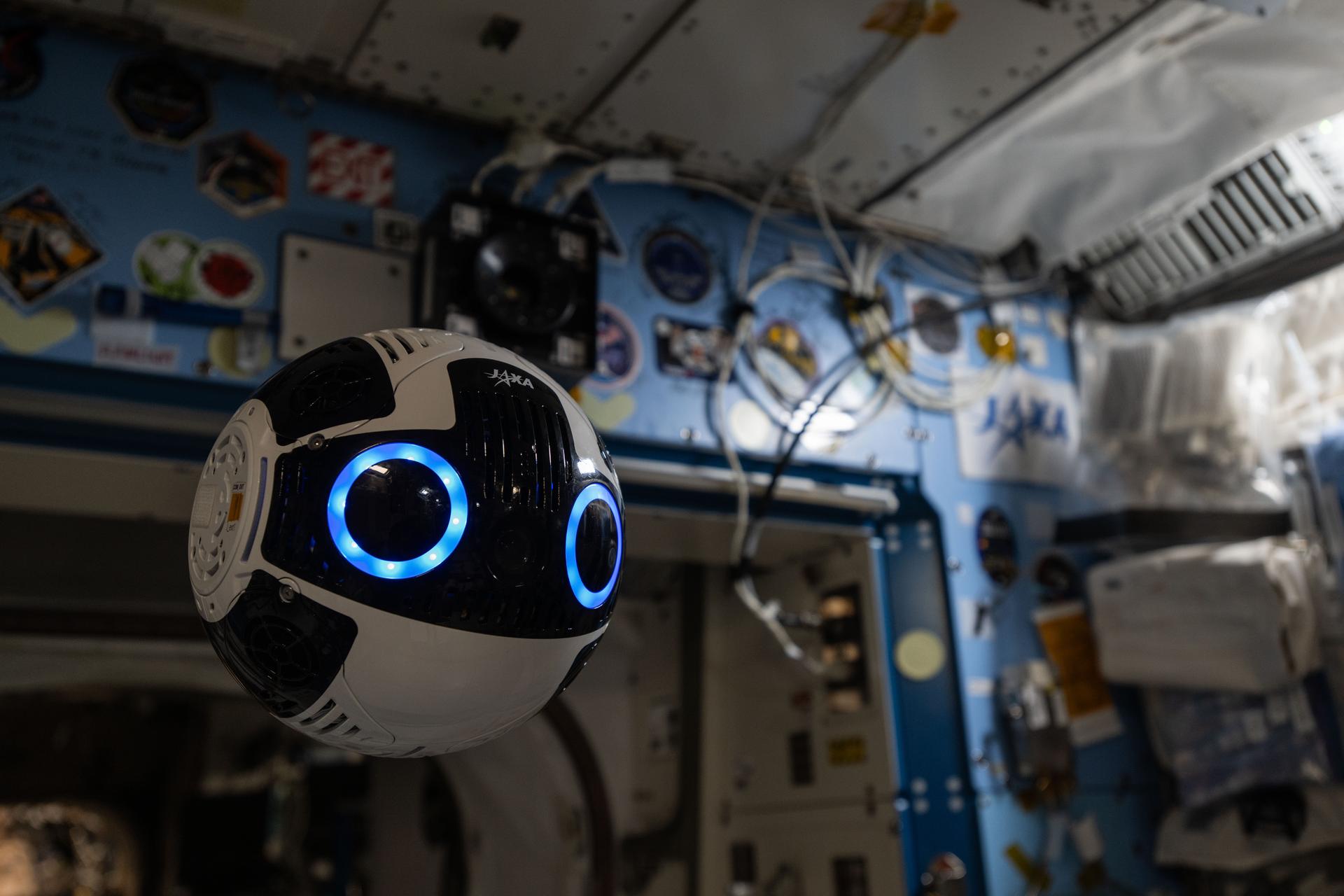
The Internal Ball Camera 2 tests automatically capturing imagery of crew activities aboard the International Space Station.
JAXA/Takuya Onishi
Before astronauts explore new terrains, we first must collect data and imagery to better characterize the surface of these cosmic destinations. Astronauts aboard the space station have collected photographs to document Earth’s surface through Crew Earth Observations. Now, those same techniques are being adapted for Artemis II , where astronauts will use handheld cameras to capture images of the Moon’s surface—including the largely unexplored far side. These observations will increase our understanding of the lunar environment and help prepare for exploration missions.
When they land, astronauts will need shelter from radiation, debris, and contaminants. Technology demonstrations aboard the space station tested the packing techniques, protection capabilities, and venting systems of lightweight inflatable habitats. For more permanent structures, space station experiments have studied how concrete hardens in reduced gravity and tested 3D printing nozzles designed to use regolith – the dust present on the Moon and Mars- as material for constructing habitats on-site.
Robotic experiments aboard the space station are demonstrating tasks like moving objects, early detection of equipment issues, 3D sensing, and mapping. Robots could support astronauts during deep space missions by performing routine tasks, responding to hazards, and reducing the need for risky spacewalks.
Analyzing samples though DNA sequencing has historically been expensive and time intensive, limiting its use in space. Advancements have led to DNA processing aboard the space station and refined sequencing techniques. Not only can this ability potentially identify DNA-based life off Earth, but it is necessary for microbial monitoring to keep crews safe and healthy.
Communications is another important component of space exploration. NASA used the space station to demonstrate laser communications capabilities, enabling transmission of more data at faster rates. This communication could serve as a critical two-way link to keep astronauts connected to Earth as they explore deep space.
Step 4: Testing Beyond Low Earth Orbit
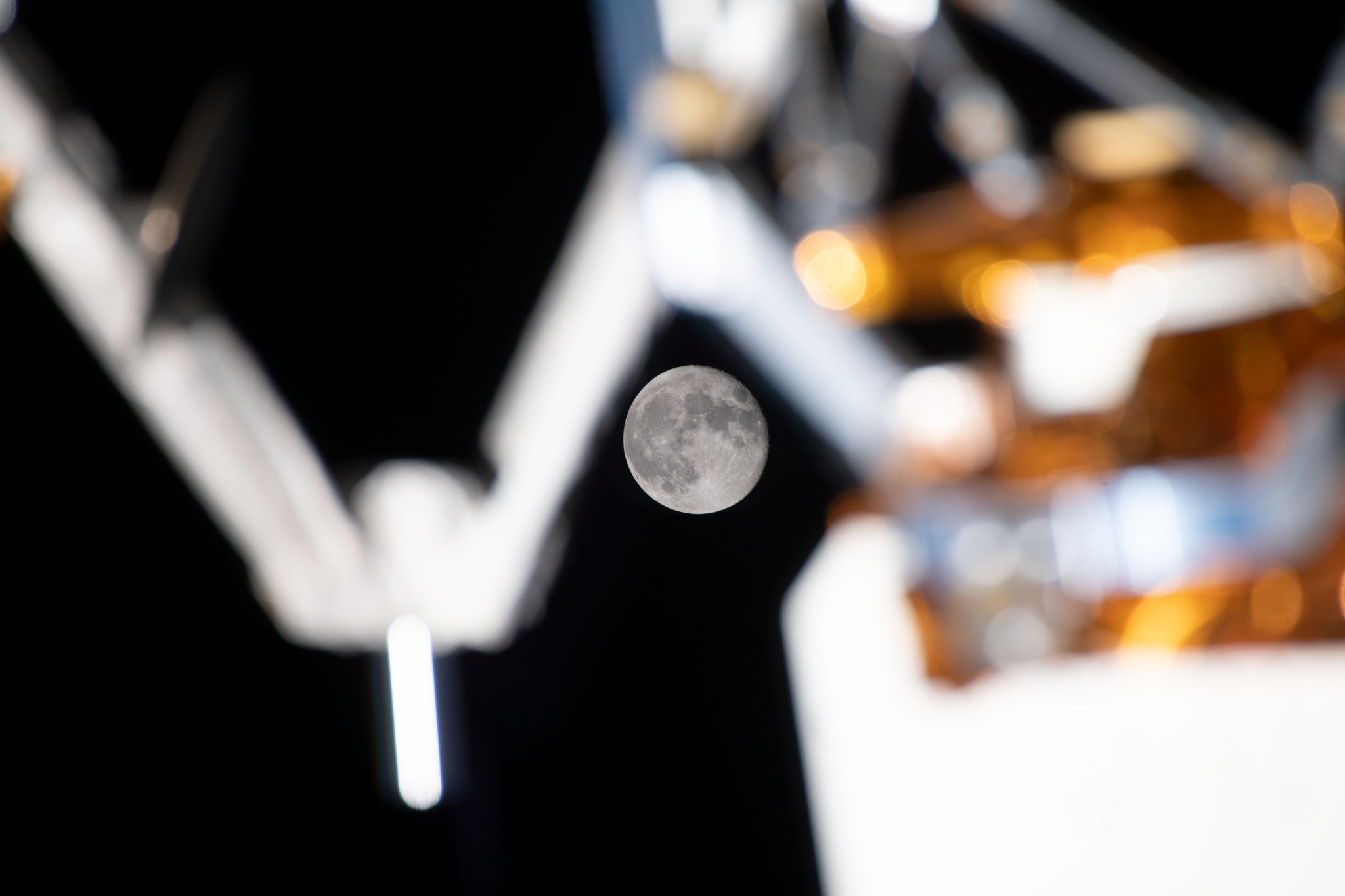
September’s full Moon, the Harvest Moon, is photographed from the International Space Station, perfectly placed in between exterior station hardware.
NASA
Experiments and technologies first tested aboard the space station made their way around the Moon in an uncrewed Orion vehicle during the Artemis I mission. Radiation technology verified on station confirmed that the Orion spacecraft’s design protects against harmful exposure. An identical BioSentinel experiment on both space station and Artemis I studied how yeast cells respond to different levels of space radiation.
Additionally, Moon Imagery research calibrated cameras for Orion’s navigation systems using photos of the Moon taken from space station, ensuring accurate guidance even if communication with Earth is lost.
Three experiments that landed on the Moon during Firefly Aerospace’s Blue Ghost Mission-1 were made possible by earlier research on the space station. These studies help improve space weather monitoring, tested computer recovery from radiation damage, and advanced lunar navigation systems.
Methods used to conduct research on the space station are making their way aboard Artemis II, a mission to place four astronauts in orbit around the Moon. Adapted from human health measurements conducted during space station missions, measurements taken on Artemis II crew will expand a repository of human health data to provide a snapshot of how spaceflight affects the human body beyond low Earth orbit. NASA researchers hope to use this data repository to develop protocols aimed at keeping astronauts healthy on missions to the Moon, Mars, and beyond. Small devices called tissue or organ chips, used for several experiments aboard space station, will continue their scientific journey in the lunar environment. Organ-chip research could improve crew prevention measures and create personalized medical treatments for humans, on Earth and in space.
The International Space Station remains a vital scientific platform, providing the foundation needed to survive and thrive as humanity ventures into the unexplored territories of our universe.
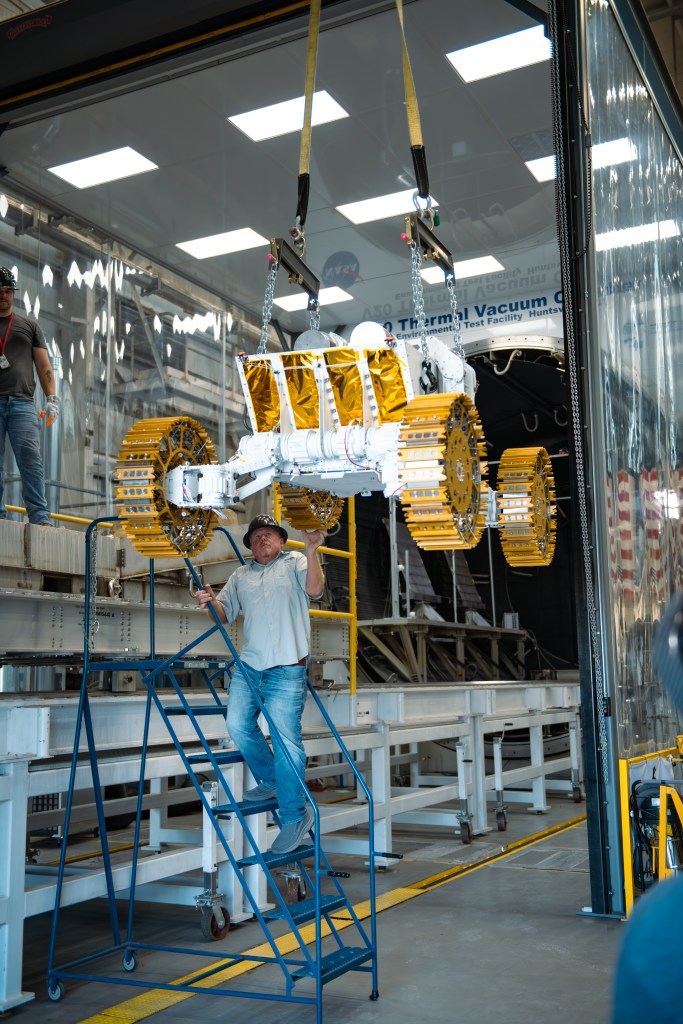
One year after winning second place in NASA’s Break the Ice Lunar Challenge, members of the small business Starpath visited NASA’s Marshall Space Flight Center in Huntsville, Alabama, as part of their prize opportunity to test their upgraded lunar regolith excavation and transportation rover in the center’s 20-foot thermal vacuum chamber.
The technology startup headquartered in Hawthorne, California, won second place overall at the Break the Ice Lunar Challenge’s live demonstration and finale in June 2024. This competition, one of NASA’s Centennial Challenges, tasked competitors to design, build, and demonstrate robotic technologies that could excavate and transport the icy, rocky dirt – otherwise known as regolith – found on the Moon.
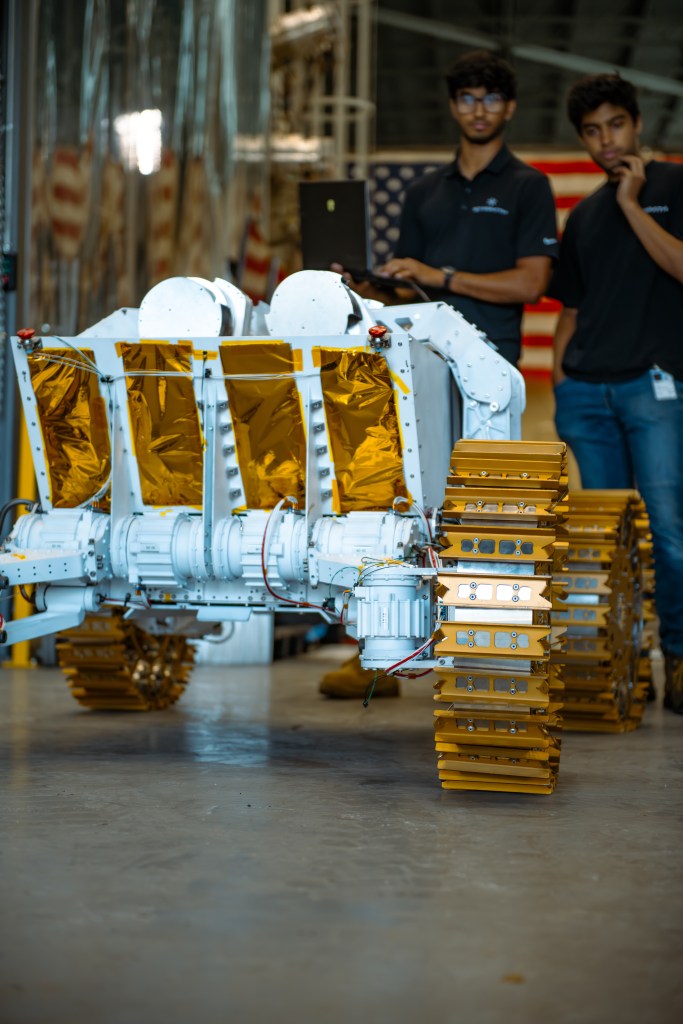
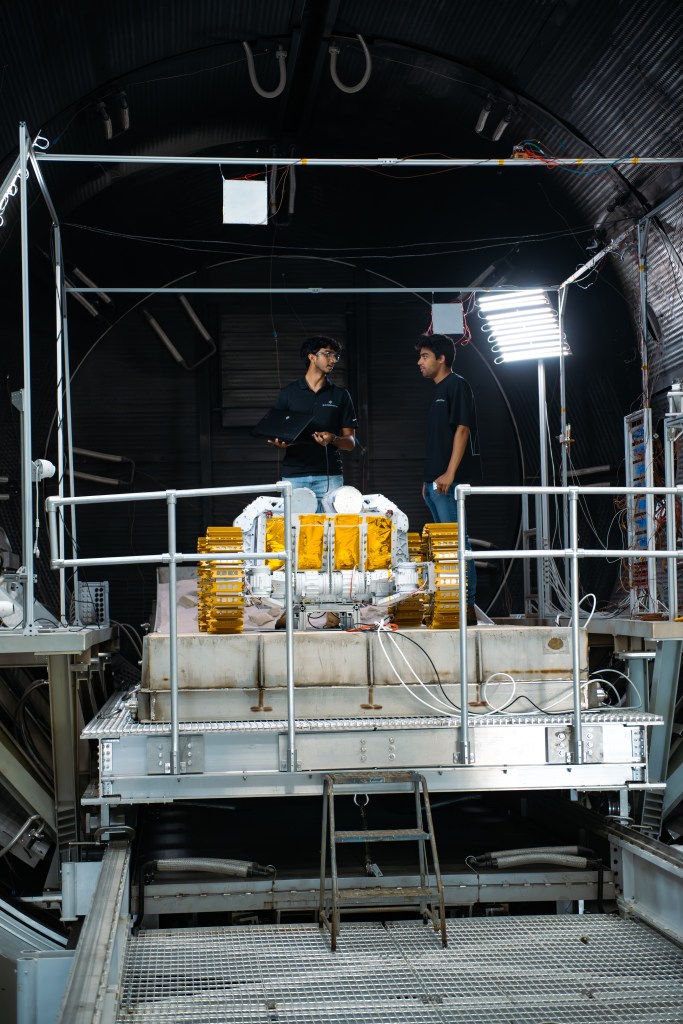
Starpath team members (foreground: Josh Kavilaveettil, mechanical engineer; background: Aakash Ramachandran, lead rover engineer) put their upgraded lunar regolith rover to the test inside NASA Marshall’s 20-foot thermal vacuum chamber – a prize opportunity marking one year since their 2nd place win in the Break the Ice Lunar Challenge.
NASA/Joe Kuner
“NASA’s Centennial Challenges are a great way to discover new, innovative technologies, including those for future use on the Moon and even Mars,” said Naveen Vetcha, Break the Ice Lunar Challenge manager at NASA Marshall. “Working with winners after the challenge concludes is a perfect example of how we can use NASA facilities to continue advancing these technologies to generate valuable solutions for the agency and industry.”
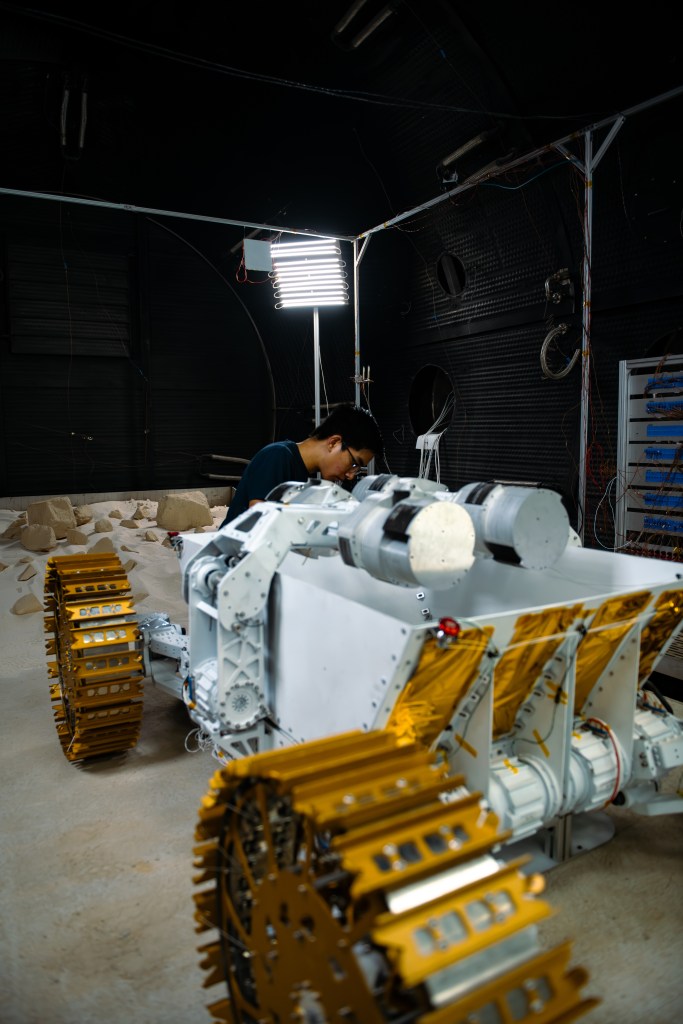
Starpath built a four-wheeled rover capable of excavating, collecting, and hauling material under extremely harsh environmental conditions that simulate the lunar South Pole. On the rover, a dual drum barrel can extend from the body of the robot – mimicking a movement similar to a crab’s claws – and scrape into rough, hard regolith to excavate material quickly without compromising finite battery life.
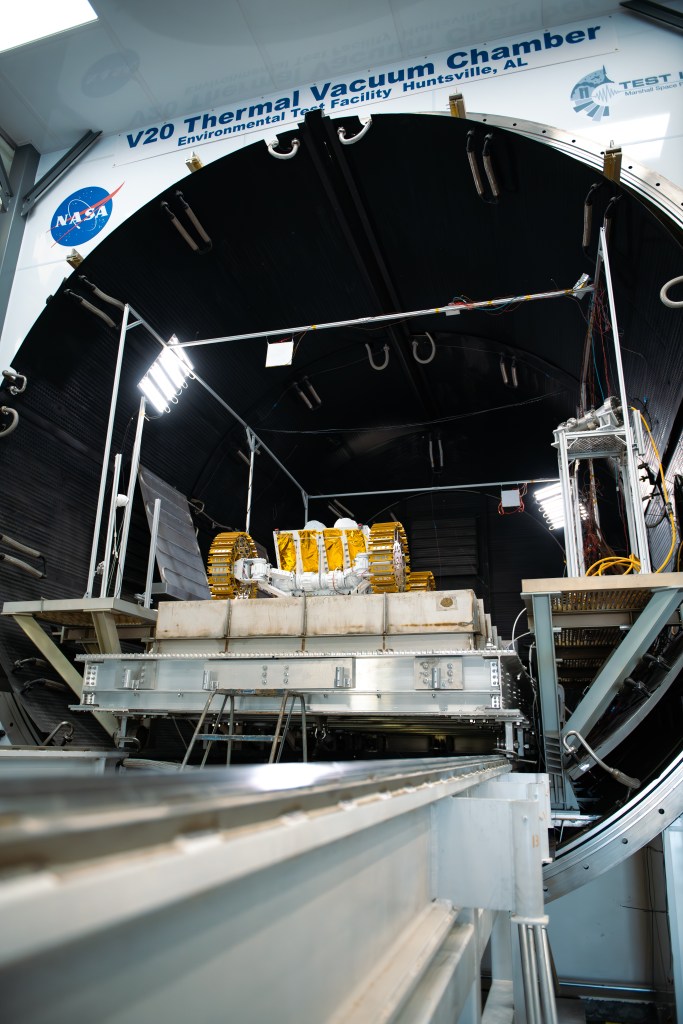
Before Starpath made the 2,000-mile drive from California to Alabama this summer, NASA Marshall’s Engineering Test Facility staff prepared a concrete slab outfitted with rocky terrain to act as a testbed for the robot to interact inside the chamber. The V-20 Thermal Vacuum Chamber, located at Marshall’s Environmental Test Facility, can simulate harsh environments by manipulating the chamber’s vacuum, temperature, humidity, and pressure effects. Starpath staff spent about three days at NASA Marshall in August, testing their robot with excavation and mobility trials while collecting data on its performance.
The Starpath team is honing the development of its technology for missions located at the permanently shadowed regions of the lunar South Pole. As a future landing site for NASA’s Artemis missions, which will send astronauts to the Moon and prepare to send the first Americans to Mars, the South Pole region of the Moon is known to contain ice within its regolith. This was the leading inspiration behind the development of the Break the Ice Lunar Challenge, as NASA will require robust technologies that can excavate and transport lunar ice for extraction, purification, and use as drinking water or rocket fuel.
Starpath, one of three winning teams in NASA’s Break the Ice Lunar Challenge, was invited by NASA Centennial Challenges to test their lunar excavation and traversal rover at the agency’s thermal vacuum chamber facility at NASA’s Marshall Space Flight Center in Huntsville, Alabama. The invitation was an added perk to the team’s successful participation in Break the Ice, which took place from 2020 to 2024. A space hardware startup from Hawthorne, California, Starpath won a cumulative $838,461 across three levels of Phase 2 before winning second place overall at the challenge’s live demonstration and finale in June 2024.
In this image, two members of the Starpath team remotely operate the rover and run data in preparation for its entrance to the V20 Thermal Vacuum Chamber.
NASA/Joe Kuner
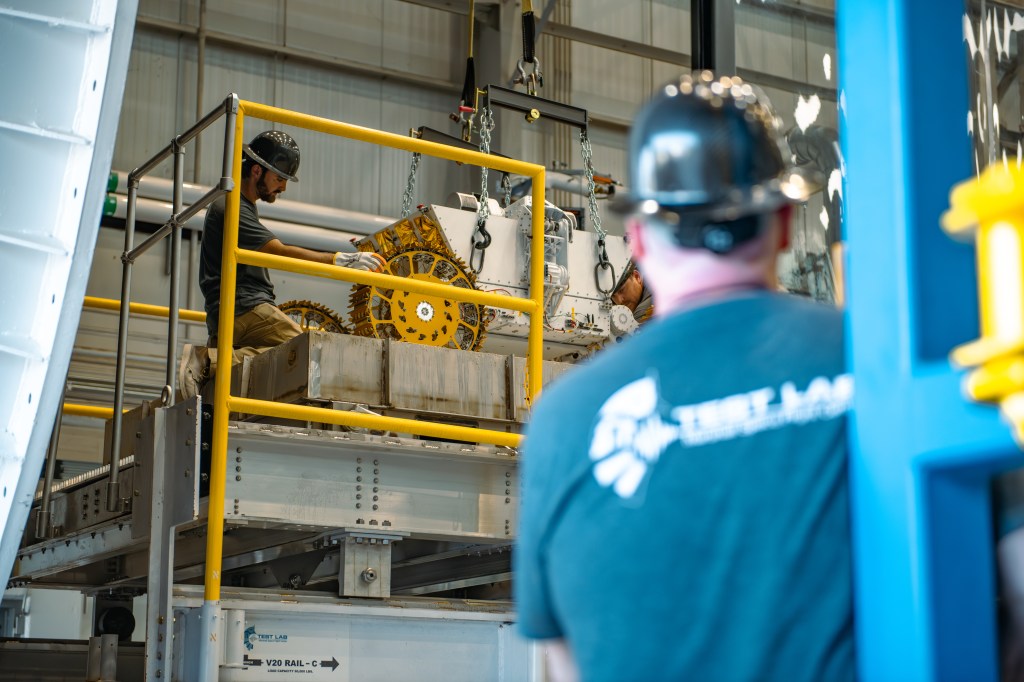
Starpath, one of three winning teams in NASA’s Break the Ice Lunar Challenge, was invited by NASA Centennial Challenges to test their lunar excavation and traversal rover at the agency’s thermal vacuum chamber facility at NASA’s Marshall Space Flight Center in Huntsville, Alabama. The invitation was an added perk to the team’s successful participation in Break the Ice, which took place from 2020 to 2024. A space hardware startup from Hawthorne, California, Starpath won a cumulative $838,461 across three levels of Phase 2 before winning second place overall at the challenge’s live demonstration and finale in June 2024.
In this image, employees from NASA Marshall’s Environmental Test Facility work with the Starpath team to carefully maneuver the rover onto a platform that will slide the rover into the chamber.
NASA/Joe Kuner
Starpath, one of three winning teams in NASA’s Break the Ice Lunar Challenge, was invited by NASA Centennial Challenges to test their lunar excavation and traversal rover at the agency’s thermal vacuum chamber facility at NASA’s Marshall Space Flight Center in Huntsville, Alabama. The invitation was an added perk to the team’s successful participation in Break the Ice, which took place from 2020 to 2024. A space hardware startup from Hawthorne, California, Starpath won a cumulative $838,461 across three levels of Phase 2 before winning second place overall at the challenge’s live demonstration and finale in June 2024.
In this image, employees from NASA Marshall’s Environmental Test Facility situate the rover over the concrete slab that it will operate on before removing the suspension straps that lifted it onto the platform.
NASA/Joe Kuner
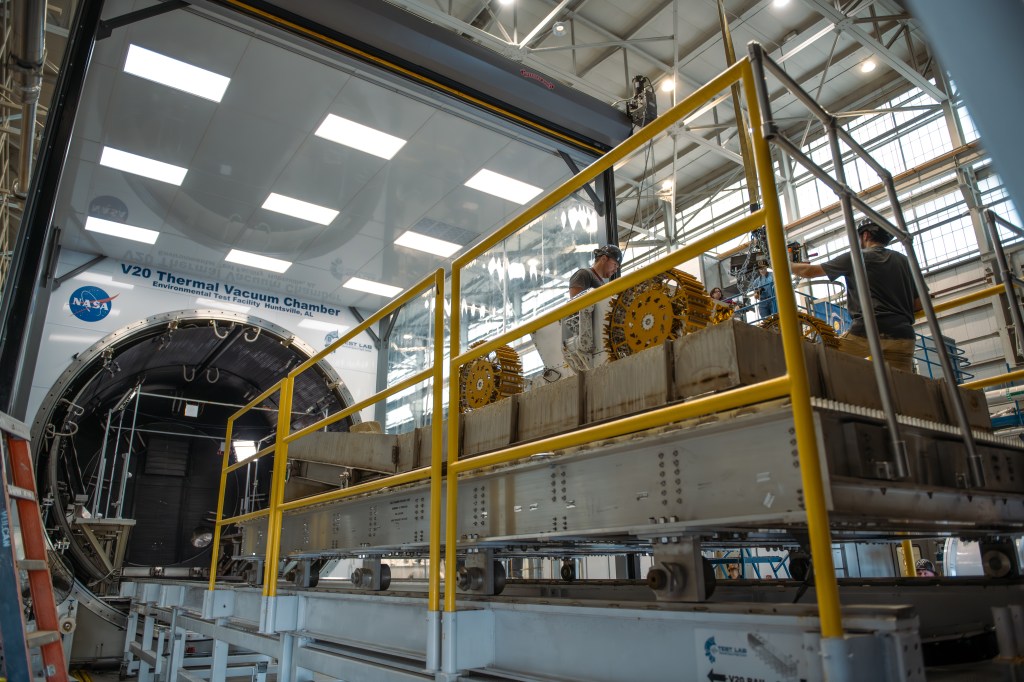
Starpath, one of three winning teams in NASA’s Break the Ice Lunar Challenge, was invited by NASA Centennial Challenges to test their lunar excavation and traversal rover at the agency’s thermal vacuum chamber facility at NASA’s Marshall Space Flight Center in Huntsville, Alabama. The invitation was an added perk to the team’s successful participation in Break the Ice, which took place from 2020 to 2024. A space hardware startup from Hawthorne, California, Starpath won a cumulative $838,461 across three levels of Phase 2 before winning second place overall at the challenge’s live demonstration and finale in June 2024.
In this image, the rover finally freely rests on its concrete slab at the end of the platform. The large metal structure will slide into the chamber, bringing the rover and concrete slab with it.
NASA/Joe Kuner
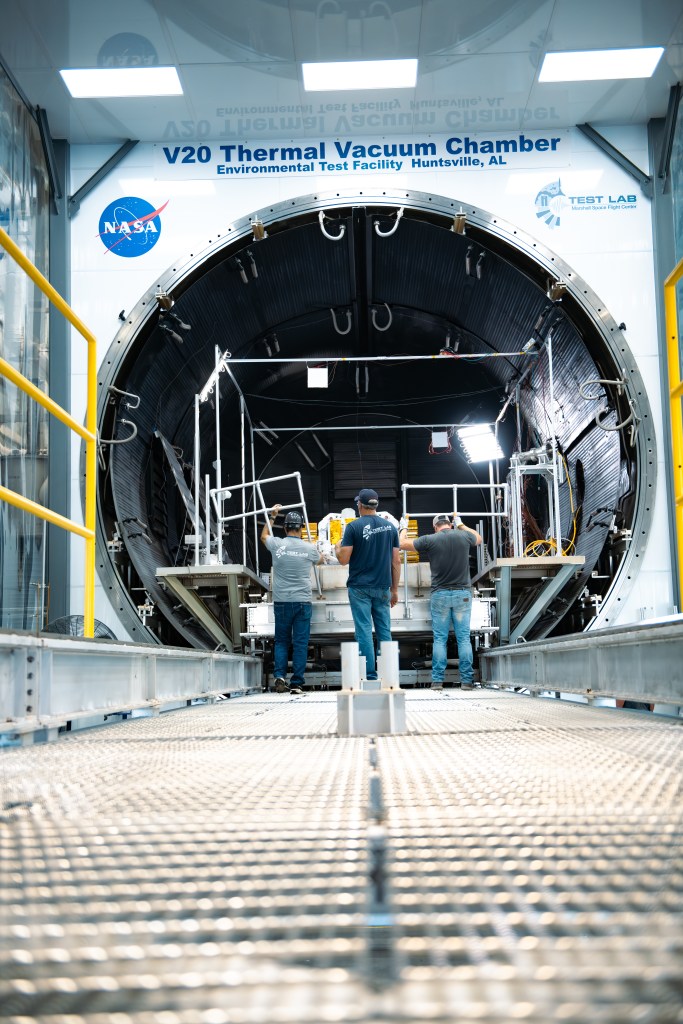
Starpath, one of three winning teams in NASA’s Break the Ice Lunar Challenge, was invited by NASA Centennial Challenges to test their lunar excavation and traversal rover at the agency’s thermal vacuum chamber facility at NASA’s Marshall Space Flight Center in Huntsville, Alabama. The invitation was an added perk to the team’s successful participation in Break the Ice, which took place from 2020 to 2024. A space hardware startup from Hawthorne, California, Starpath won a cumulative $838,461 across three levels of Phase 2 before winning second place overall at the challenge’s live demonstration and finale in June 2024.
In this image, NASA Environmental Test Facility employees work with members from the Starpath team to push the sliding platform into the thermal vacuum chamber, with the heavy rover and concrete slab in tow.
NASA/Joe Kuner
Starpath, one of three winning teams in NASA’s Break the Ice Lunar Challenge, was invited by NASA Centennial Challenges to test their lunar excavation and traversal rover at the agency’s thermal vacuum chamber facility at NASA’s Marshall Space Flight Center in Huntsville, Alabama. The invitation was an added perk to the team’s successful participation in Break the Ice, which took place from 2020 to 2024. A space hardware startup from Hawthorne, California, Starpath won a cumulative $838,461 across three levels of Phase 2 before winning second place overall at the challenge’s live demonstration and finale in June 2024.
In this image, the large concrete platform is fully slid into the vacuum chamber, and members from the Starpath team discuss what final preparations need to be made before the chamber is closed.
NASA/Joe Kuner
Starpath, one of three winning teams in NASA’s Break the Ice Lunar Challenge, was invited by NASA Centennial Challenges to test their lunar excavation and traversal rover at the agency’s thermal vacuum chamber facility at NASA’s Marshall Space Flight Center in Huntsville, Alabama. The invitation was an added perk to the team’s successful participation in Break the Ice, which took place from 2020 to 2024. A space hardware startup from Hawthorne, California, Starpath won a cumulative $838,461 across three levels of Phase 2 before winning second place overall at the challenge’s live demonstration and finale in June 2024.
In this image, the rover sits on a concrete slab that will be used to mimic the rugged lunar surface. The slab features a sandy, rocky terrain, and lamps within the chamber will turn on and off to simulate sunlight.
NASA/Joe Kuner
Starpath, one of three winning teams in NASA’s Break the Ice Lunar Challenge, was invited by NASA Centennial Challenges to test their lunar excavation and traversal rover at the agency’s thermal vacuum chamber facility at NASA’s Marshall Space Flight Center in Huntsville, Alabama. The invitation was an added perk to the team’s successful participation in Break the Ice, which took place from 2020 to 2024. A space hardware startup from Hawthorne, California, Starpath won a cumulative $838,461 across three levels of Phase 2 before winning second place overall at the challenge’s live demonstration and finale in June 2024.
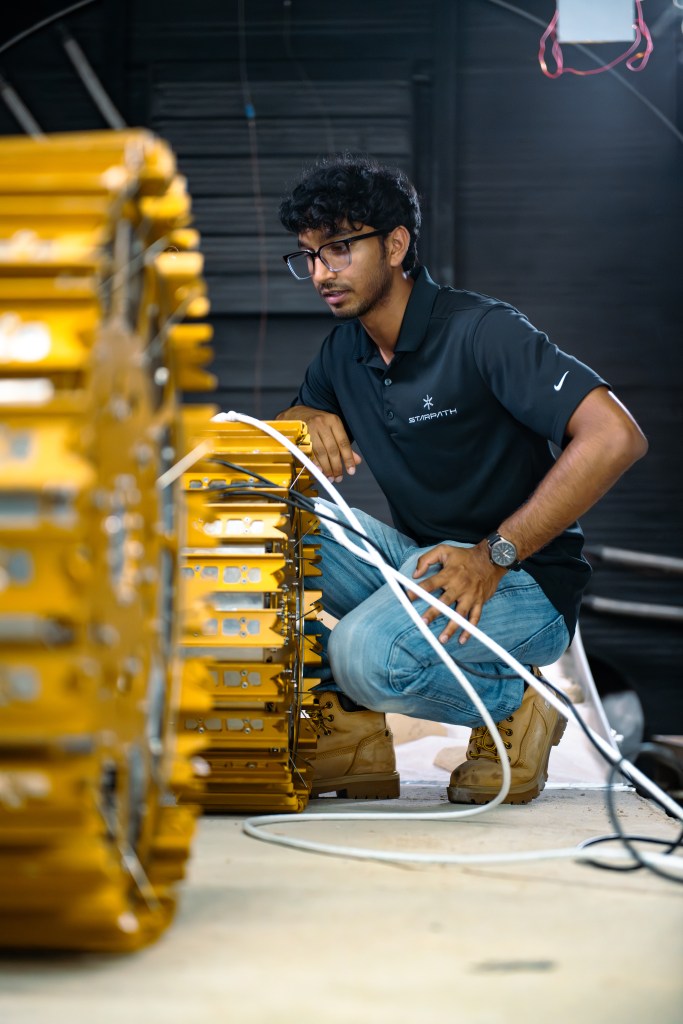
In this image, Starpath mechanical engineer Josh Kavilaveettil monitors a component of the rover, attached to wires, in preparation for testing.
NASA/Joe Kuner
Starpath, one of three winning teams in NASA’s Break the Ice Lunar Challenge, was invited by NASA Centennial Challenges to test their lunar excavation and traversal rover at the agency’s thermal vacuum chamber facility at NASA’s Marshall Space Flight Center in Huntsville, Alabama. The invitation was an added perk to the team’s successful participation in Break the Ice, which took place from 2020 to 2024. A space hardware startup from Hawthorne, California, Starpath won a cumulative $838,461 across three levels of Phase 2 before winning second place overall at the challenge’s live demonstration and finale in June 2024.
In this image, the rover sits atop its concrete slab at the mouth of the thermal vacuum chamber, ready to be closed in and commence testing.
One year after winning second place in NASA’s Break the Ice Lunar Challenge, members of the small business Starpath visited NASA’s Marshall Space Flight Cent...
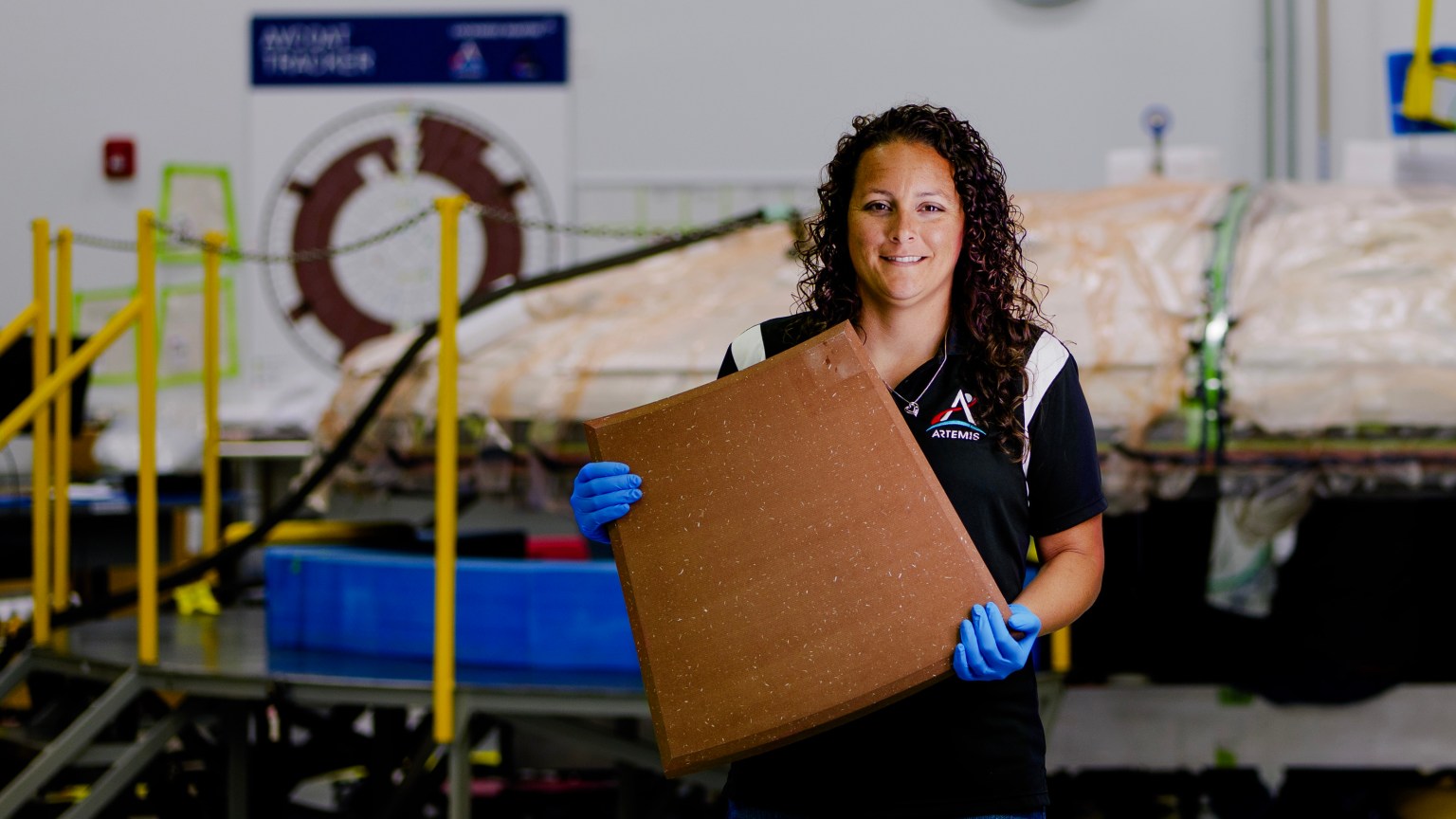
Diamond St. John, engineer on the Orion Program with Lockheed Martin, holds one of the heat shield tiles that will protect astronauts as they return to Earth after exploring the lunar surface on the Artemis III mission.
Credits: NASA/Rad Sinyak
Listen to this audio excerpt from Diamond St. John, engineer working on the Artemis III heat shield for the Orion Program at Lockheed Martin:
0:00 / 0:00
For four-generations, Diamond St. John’s family has been supporting human spaceflight at NASA’s Kennedy Space Center in Florida. Now, she’s continuing the family legacy that reaches back to Apollo —helping return humanity to the Moon with the agency’s Artemis campaign.
St. John is an engineer with Lockheed Martin supporting Orion, NASA’s spacecraft built to carry crew to the Moon and return them safely to Earth on Artemis missions. She specializes in the production of Orion’s heat shield at Lockheed’s Spacecraft, Test, Assembly and Resource Center, in Titusville, Florida. As one of the most important elements of the spacecraft, the heat shield is responsible for protecting the astronauts from the nearly 5,000 degrees Fahrenheit temperatures as they re-enter Earth’s atmosphere at the end of the mission.
From start to finish, St. John is responsible for establishing a production workflow for the Orion heat shield — the largest of its kind in the world — and ensures each step is executed in the correct order along the way.
Her team recognizes the criticality of their work and knows that their mission is to make sure astronauts come home safe. When it comes to quality of production, St. John embraces that mindset.
“We always want to make sure that we're doing things right. We have to slow down and make sure that our product is quality — because the slightest thing can be a make or break. We definitely want to make sure that our crew is safe.”
Diamond St. John
Engineer on the Orion Program with Lockheed Martin
St. John and her team are working on the Orion heat shield for the Artemis III mission that will land astronauts on the lunar surface. The team is in the process of bonding 186 tiles made of a material called Avcoat to the heat shield’s underlying structure. “Once we start bonding operations, we first sand the blocks, to make sure that we minimize any gaps between them. Then we get into bonding, and we fill the gaps, and we test. After that’s complete, we then paint and tape the heat shield.”
“Seeing a final product finished, it warms your heart. So, I’m looking forward to that finished heat shield and knowing that we put our heart and soul into it.”
Diamond St. John
Engineer on the Orion Program with Lockheed Martin
Though she is currently working on the heat shield for Artemis III, her journey with Orion began with the Artemis I spacecraft. St. John started on the clean room floor as a technician intern with subcontractor ASRC Federal. She then moved into a full-time role with the company for four years in quality inspection while earning her bachelor’s degree in engineering. After that, St. John joined Lockheed Martin as a manufacturing engineer.
“Everything has been Artemis from the beginning,” she said, in reflection of her career. “Knowing that my great grandparents worked on the Apollo missions — it’s cool to follow down that same path. I think they would be pretty proud.”
Diamond St. John, engineer on the Orion Program with Lockheed Martin, holds one of the heat shield tiles that will protect astronauts as they return to Earth after exploring the lunar surface on the Artemis III mission.
NASA Opens 2026 Human Lander Challenge for Life Support Systems, More
NASA’s 2026 Human Lander Challenge is seeking ideas from college and university students to help evolve and transform technologies for life support and environmental control systems. These systems are critical for sustainable, long-duration human spaceflight missions to the Moon, Mars, and beyond.
The Human Lander Challenge supports NASA’s efforts to foster innovative solutions to a variety of areas for NASA’s long-duration human spaceflight plans at the Moon under the Artemis campaign. The Human Lander Challenge is sponsored by the Human Landing System Program within the Exploration Systems Development Mission Directorate.
The 2026 competition invites undergraduate and graduate-level teams based in the U.S., along with their faculty advisors, to develop innovative, systems-level solutions to improve aspects for a lander’s ECLSS (Environmental Control and Life Support System) performance. These air, water, and waste systems provide vital life support so future Artemis astronauts can live and work safely and effectively on the Moon during crewed missions.
Each proposed solution should focus on one of the following long-duration ECLSS subtopics:
Noise suppression and control
Sensor reduction in hardware health monitoring systems
Potable water dispenser
Fluid transfer between surface assets on the Moon and Mars
“A robust ECLSS transforms a spacecraft like a lander from just hardware into a livable environment, providing breathable air, clean water, and safe conditions for astronauts as they explore the Moon,” said Kevin Gutierrez, acting office manager for the Human Landing Systems Missions Systems Management Office at NASA Marshall. “Without ECLSS we can’t sustain human presence on the Moon or take the next steps toward Mars. The subtopics in the 2026 Human Lander Challenge reflect opportunities for students to support the future of human spaceflight.”
2026 Competition
Teams should submit a non-binding notice of intent by Monday, Oct. 20, if they intend to participate. Proposal packages are due March 4, 2026.
Based on proposal package evaluations in Phase 1, up to 12 finalist teams will be selected to receive a $9,000 stipend and advance to Phase 2 of the competition, which includes a final design review near NASA’s Marshall Space Flight Center in Huntsville, Alabama, June 23-25, 2026. The top three placing teams from Phase 2 will share a total prize of $18,000.
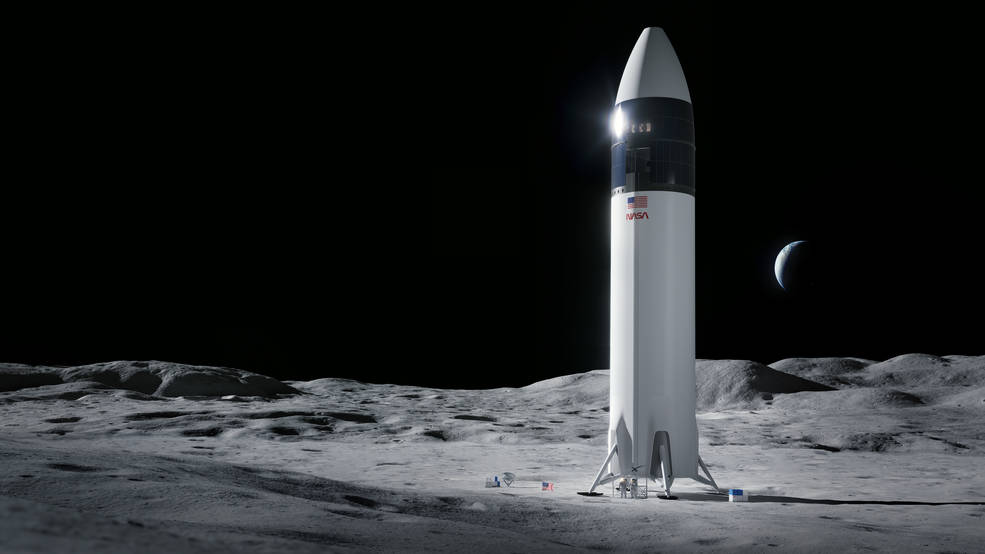
Landers are in development by SpaceX and Blue Origin as transportation systems that will safely ferry astronauts from lunar orbit to the Moon’s surface and back for the agency’s Artemis campaign. NASA Marshall manages the Human Landing System Program.
The challenge is administered by the National Institute of Aerospace on behalf of the agency.
Through the agency’s Artemis campaign, NASA will send astronauts to explore the Moon for scientific discovery, economic benefits, and to build the foundation for the first crewed missions to Mars – for the benefit of all.
For more information on NASA’s Human Lander Challenge and how to participate, visit:
This artist’s concept shows Blue Origin’s Blue Moon Mark 1 lander and NASA’s VIPER (Volatiles Investigating Polar Exploration Rover) on the lunar surface.
Credit: Blue Origin
As part of the agency’s Artemis campaign, NASA has awarded Blue Origin of Kent, Washington, a CLPS (Commercial Lunar Payload Services) task order with an option to deliver a rover to the Moon’s South Pole region. NASA’s VIPER (Volatiles Investigating Polar Exploration Rover) will search for volatile resources, such as ice, on the lunar surface and collect science data to support future exploration at the Moon and Mars.
“NASA is leading the world in exploring more of the Moon than ever before, and this delivery is just one of many ways we’re leveraging U.S. industry to support a long-term American presence on the lunar surface,” said acting NASA Administrator Sean Duffy. “Our rover will explore the extreme environment of the lunar South Pole, traveling to small, permanently shadowed regions to help inform future landing sites for our astronauts and better understand the Moon’s environment – important insights for sustaining humans over longer missions, as America leads our future in space.”
The CLPS task order has a total potential value of $190 million. This is the second CLPS lunar delivery awarded to Blue Origin. Their first delivery – using their Blue Moon Mark 1 (MK1) robotic lander – is targeted for launch later this year to deliver NASA’s Stereo Cameras for Lunar-Plume Surface Studies and Laser Retroreflective Array payloads to the Moon’s South Pole region.
With this new award, Blue Origin will deliver VIPER to the lunar surface in late 2027, using a second Blue Moon MK1 lander, which is in production. NASA previously canceled the VIPER project and has since explored alternative approaches to achieve the agency’s goals of mapping potential off-planet resources, like water.
“NASA is committed to studying and exploring the Moon, including learning more about water on the lunar surface, to help determine how we can harness local resources for future human exploration,” said Nicky Fox, associate administrator, Science Mission Directorate, NASA Headquarters in Washington. “We’ve been looking for creative, cost-effective approaches to accomplish these exploration goals. This private sector-developed landing capability enables this delivery and focuses our investments accordingly – supporting American leadership in space and ensuring our long-term exploration is robust and affordable.”
The task order, called CS-7, has an award base to design the payload-specific accommodations and to demonstrate how Blue Origin’s flight design will off-load the rover to the lunar surface. There is an option on the contract to deliver and safely deploy the rover to the Moon’s surface. NASA will make the decision to exercise that option after the execution and review of the base task and of Blue Origin’s first flight of the Blue Moon MK1 lander. This unique approach will reduce the agency’s cost and technical risk. The rover has a targeted science window for its 100-day mission that requires a landing by late 2027.
Blue Origin is responsible for the complete landing mission architecture and will conduct design, analysis, and testing of a large lunar lander capable of safely delivering the lunar volatiles science rover to the Moon. Blue Origin also will handle end-to-end payload integration, planning and support, and post-landing payload deployment activities. NASA will conduct rover operations and science planning.
“The search for lunar volatiles plays a key role in NASA’s exploration of the Moon, with important implications for both science and human missions under Artemis,” said Joel Kearns, deputy associate administrator for exploration, Science Mission Directorate, NASA Headquarters. “This delivery could show us where ice is most likely to be found and easiest to access, as a future resource for humans. And by studying these sources of lunar water, we also gain valuable insight into the distribution and origin of volatiles across the solar system, helping us better understand the processes that have shaped our space environment and how our inner solar system has evolved.”
Through CLPS, American companies continue to demonstrate leadership in commercial space advancing capabilities and accomplishing NASA’s goal for a commercial lunar economy. NASA’s Ames Research Center in California’s Silicon Valley led the VIPER rover development and will lead its science investigations, and NASA’s Johnson Space Center in Houston provided rover engineering development for Ames.
From Supercomputers to Wind Tunnels: NASA’s Road to Artemis II
By Jill Dunbar
Of the many roads leading to successful Artemis missions, one is paved with high-tech computing chips called superchips. Along the way, a partnership between NASA wind tunnel engineers, data visualization scientists, and software developers verified a quick, cost-effective solution to improve NASA’s SLS (Space Launch System) rocket for the upcoming Artemis II mission. This will be the first crewed flight of the SLS rocket and Orion spacecraft, on an approximately 10-day journey around the Moon.
A high-speed network connection between high-end computing resources at the NASA Advanced Supercomputing facility and the Unitary Plan Wind Tunnel, both located at NASA’s Ames Research Center in California’s Silicon Valley, is enabling a collaboration to improve the rocket for the Artemis II mission. During the Artemis I test flight, the SLS rocket experienced higher-than-expected vibrations near the solid rocket booster attach points, caused by unsteady airflow between the gap.
One solution proposed for Artemis II was adding four strakes. A strake is a thin, fin-like structure commonly used on aircraft to improve unsteady airflow and stability. Adding them to the core stage minimizes the vibration of components.
The strake solution comes from previous tests in the Unitary Plan Wind Tunnel, where NASA engineers applied an Unsteady Pressure Sensitive Paint (uPSP) technique to SLS models. The paint measures changes over time in aerodynamic pressures on air and spacecraft.
This supercomputer simulation peers down at a close-up of the SLS rocket during ascent. The force of friction is represented in greens, yellows, and blues. A six-foot-long strake flanking each booster’s forward connection point on the SLS intertank smooths vibrations induced by airflow, represented by purples, yellows, and reds. The white streams represent a contour plot of density magnitude, highlighting the change of density in the air. Credit: NASA/NAS/Gerrit-Daniel Stich, Michael Barad, Timothy Sandstrom, Derek Dalle
It is sprayed onto test models, and high-speed cameras capture video of the fluctuating brightness of the paint, which corresponds to the local pressure fluctuations on the model. Capturing rapid changes in pressure across large areas of the SLS model helps engineers understand the fast-changing environment. The data is streamed to the NASA Advanced Supercomputing facility via a high-speed network connection.
“This technique lets us see wind tunnel data in much finer detail than ever before. With that extra clarity, engineers can create more accurate models of how rockets and spacecraft respond to stress, helping design stronger, safer, and more efficient structures,” said Thomas Steva, lead engineer, SLS sub-division in the Aerodynamics Branch at NASA’s Marshall Space Flight Center in Huntsville, Alabama.
For the SLS configuration with the strakes, the wind tunnel team applied the paint to a scale model of the rocket. Once the camera data streamed to the supercomputing facility, a team of visualization and data analysis experts displayed the results on the hyperwall visualization system, giving the SLS team an unprecedented look at the effect of the strakes on the vehicle’s performance. Teams were able to interact with and analyze the paint data.
NASA’s high-end computing capability and facilities, paired with unique facilities at Ames, give us the ability to increase productivity by shortening timelines, reducing costs, and strengthening designs in ways that directly support safe human spaceflight.
Kevin Murphy
NASA's Chief Science Data Officer
“NASA’s high-end computing capability and facilities, paired with unique facilities at Ames, give us the ability to increase productivity by shortening timelines, reducing costs, and strengthening designs in ways that directly support safe human spaceflight,” said Kevin Murphy, NASA’s chief science data officer and lead for the agency’s High-End Computing Capability portfolio at NASA Headquarters in Washington. “We’re actively using this capability to help ensure Artemis II is ready for launch.”
Leveraging the high-speed connection between the Unitary Plan Wind Tunnel and NASA Advanced Supercomputing facility reduces the typical data processing time from weeks to just hours.
For years, the NASA Advancing Supercomputing Division’s in-house Launch, Ascent, and Vehicle Aerodynamics software has helped play a role in designing and certifying the various SLS vehicle configurations.
“Being able to work with the hyperwall and the visualization team allows for in-person, rapid engagement with data, and we can make near-real-time tweaks to the processing,” said Lara Lash, an aerospace engineering researcher in the Experimental Aero-Physics Branch at NASA Ames who leads the uPSP work.
This video shows two simulations of the SLS (Space Launch System) rocket using NASA’s Launch Ascent and Vehicle Aerodynamics solver. For the Artemis II test flight, a pair of six-foot-long strakes will be added to the core stage of SLS that will smooth vibrations induced by airflow during ascent. The top simulation is without strakes while the bottom shows the airflow with strakes. The green and yellow colors on the rocket’s surface show how the airflow scrapes against the rocket’s skin. The white and gray areas show changes in air density between the boosters and core stage, with the brightest regions marking shock waves. The strakes reduce vibrations and improves the safety of the integrated vehicle.
NASA/NAS/Gerrit-Daniel Stich, Michael Barad, Timothy Sandstrom, Derek Dalle
This time, NASA Advanced Supercomputing researchers used the Cabeus supercomputer, which is the agency’s largest GPU-based computing cluster containing 350 NVIDIA superchip nodes. The supercomputer produced a series of complex computational fluid dynamic simulations that helped explain the underlying physics of the strake addition and filled in gaps between areas where the wind tunnel cameras and sensors couldn’t reach.
This truly was a joint effort across multiple teams.
“The beauty of the strake solution is that we were able to add strakes to improve unsteady aerodynamics, and associated vibration levels of components in the intertank,” said Kristin Morgan, who manages the strake implementation effort for the SLS at Marshall.
A team from Boeing is currently installing the strakes on the rocket at NASA’s Kennedy Space Center in Florida and are targeting October 2025 to complete installation.
Through Artemis, NASA will send astronauts to explore the Moon for scientific discovery, economic benefits, and build the foundation for the first crewed missions to Mars.
Building a Lunar Network: Johnson Tests Wireless Technologies for the Moon
From left, Johnson Exploration Wireless Laboratory (JEWL) Software Lead William Dell; Lunar 3GPP Principal Investigator Raymond Wagner; JEWL intern Harlan Phillips; and JEWL Lab Manager Chatwin Lansdowne.
Credits: Nevada Space Proving Grounds (NSPG)
NASA engineers are strapping on backpacks loaded with radios, cameras, and antennas to test technology that might someday keep explorers connected on the lunar surface. Their mission: test how astronauts on the Moon will stay connected during Artemis spacewalks using 3GPP (LTE/4G and 5G) and Wi-Fi technologies.
It’s exciting to bring lunar spacewalks into the 21st century with the immersive, high-definition experience that will make people feel like they’re right there with the astronauts.
Raymond Wagner
NASA’s Lunar 3GPP Project Principal Investigator
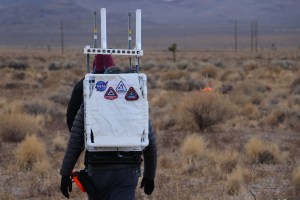
A NASA engineer tests a backpack-mounted wireless communications system in the Nevada desert, simulating how astronauts will stay connected during Artemis lunar spacewalks.
NSPG
With Artemis, NASA will establish a long-term presence at the Moon, opening more of the lunar surface to exploration than ever before. This growth of lunar activity will require astronauts to communicate seamlessly with each other and with science teams back on Earth.
“We’re working out what the software that uses these networks needs to look like,” said Raymond Wagner, principal investigator in NASA’s Lunar 3GPP project and member of Johnson Space Center’s Exploration Wireless Laboratory (JEWL) in Houston. “We’re prototyping it with commercial off-the-shelf hardware and open-source software to show what pieces are needed and how they interact.”
Carrying a prototype wireless network pack, a NASA engineer helps test wireless 4G and 5G technologies that could one day keep Artemis astronauts connected on the Moon.
NSPG
The next big step comes with Artemis III, which will land a crew on the Moon and carry a 4G/LTE demonstration to stream video and audio from the astronauts on the lunar surface.
The vision goes further. “Right now the lander or rover will host the network,” Wagner said. “But if we go to the Moon to stay, we may eventually want actual cell towers. The spacesuit itself is already becoming the astronaut’s cell phone, and rovers could act as mobile hotspots. Altogether, these will be the building blocks of communication on the Moon.”
Team members from NASA’s Avionics Systems Laboratory at Johnson Space Center in Houston.
NASA/Sumer Loggins
Back at Johnson, teams are simulating lunar spacewalks, streaming video, audio, and telemetry over a private 5G network to a mock mission control. The work helps engineers refine how future systems will perform in challenging environments. Craters, lunar regolith, and other terrain features all affect how radio signals travel — lessons that will also carry over to Mars.
For Wagner, the project is about shaping how humanity experiences the next era of exploration. “We’re aiming for true HD on the Moon,” he said. “It’s going to be pretty mind-blowing.”

 Login
Login