❌

Reading view

There are new articles available, click to refresh the page.

NASA Lab Builds New Aircraft to Support Complex Flight Research

2 min read

Preparations for Next Moonwalk Simulations Underway (and Underwater)
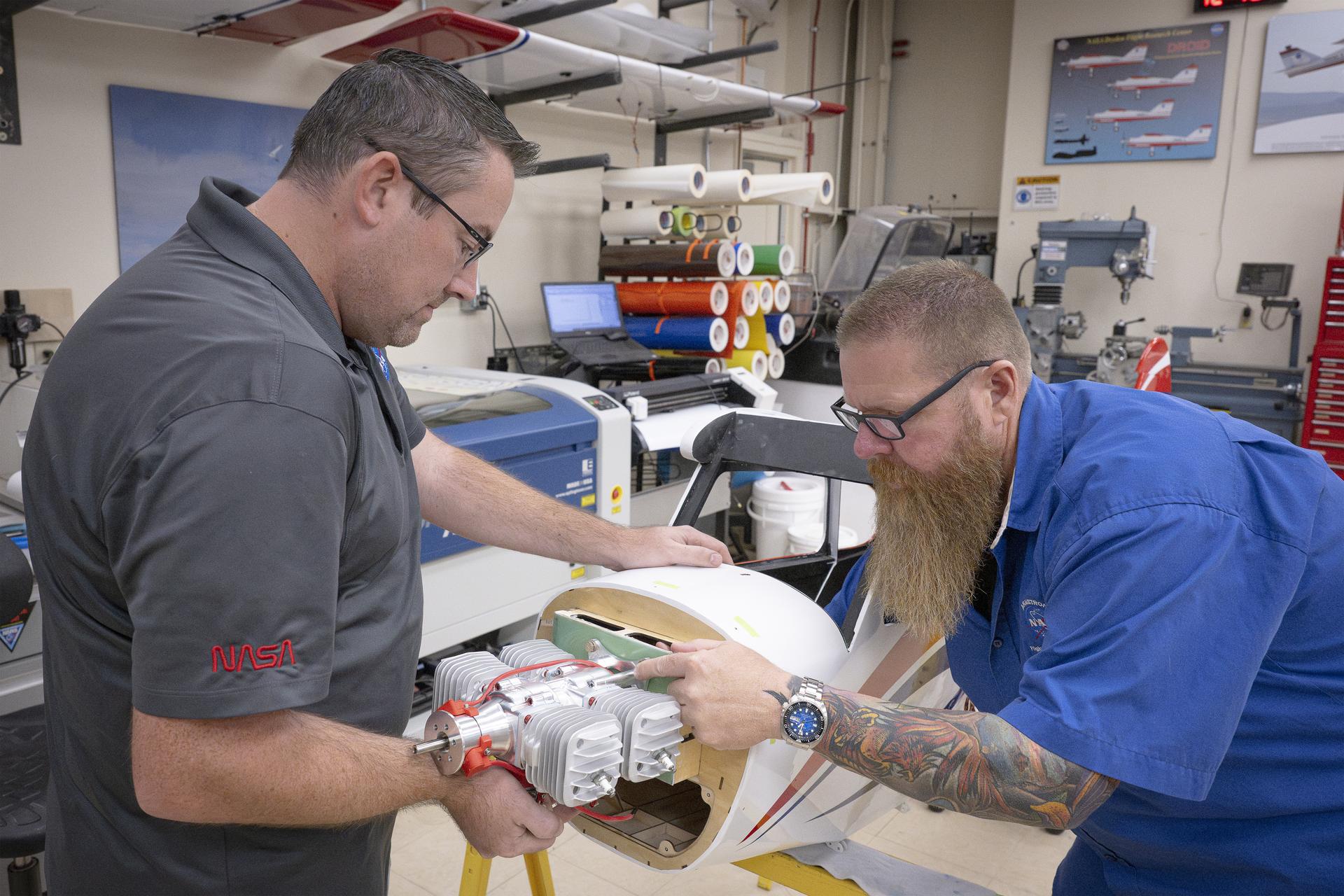
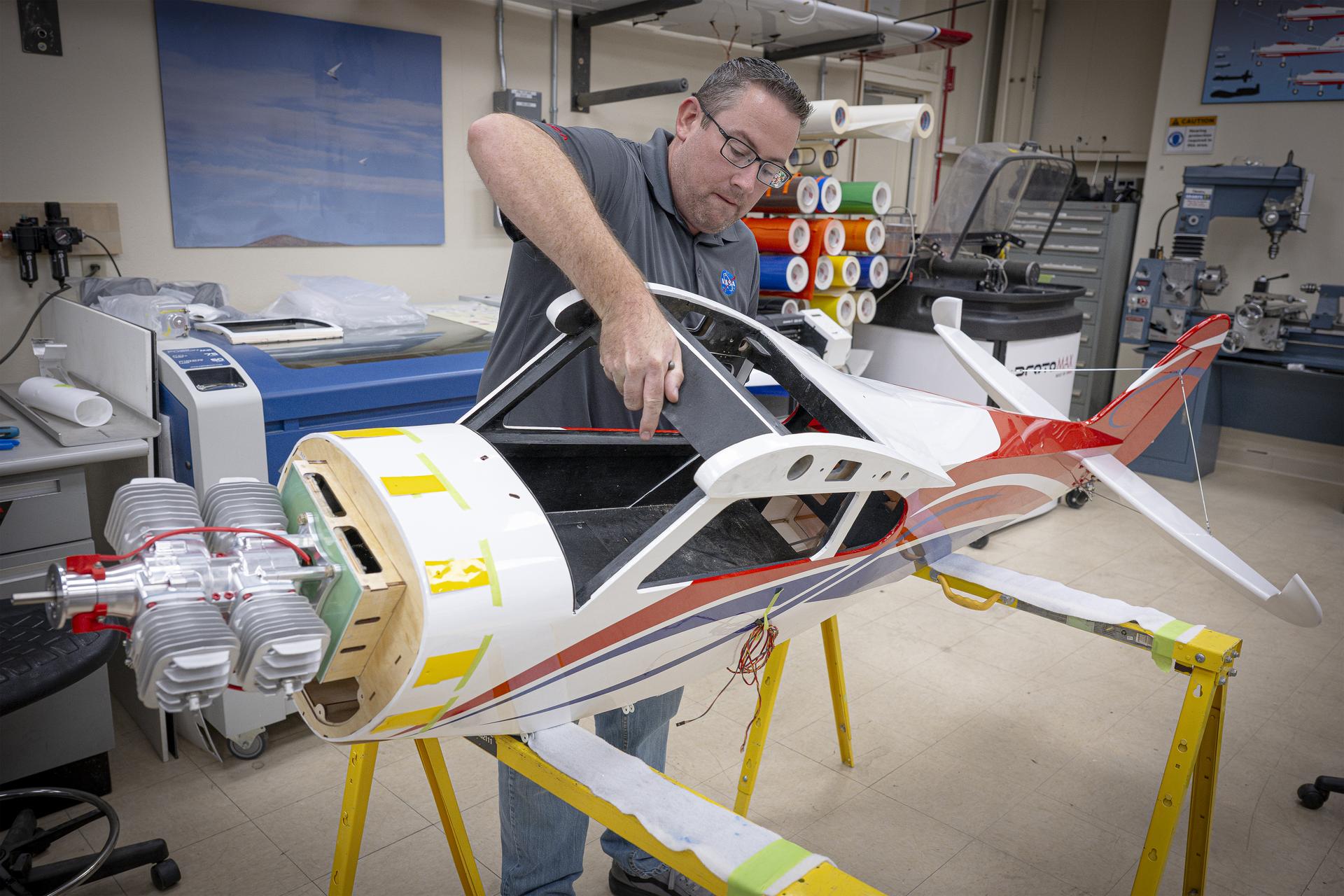
Two men attach an engine onto a subscale aircraft.
Justin Link, left, and Justin Hall attach an engine onto a subscale aircraft on Wednesday, Sept. 3, 2025, at NASA’s Armstong Flight Research Center in Edwards, California. Link is a pilot for small uncrewed aircraft systems at the center’s Dale Reed Subscale Flight Research Laboratory and Hall is the lab’s chief pilot.
NASA/Christopher LC Clark
A man rotates a subscale aircraft onto its side in preparation for aligning the engine cowl. He will apply yellow tape to guide the cowl’s proper placement during installation.
Justin Link turns a subscale aircraft on its side to continue work to mark where the engine cowl will go and where to line it up for attachment on Wednesday, Sept. 3, 2025, at NASA’s Armstong Flight Research Center in Edwards, California. Link is a pilot for small uncrewed aircraft systems at the center’s Dale Reed Subscale Flight Research Laboratory.
NASA/Christopher LC Clark
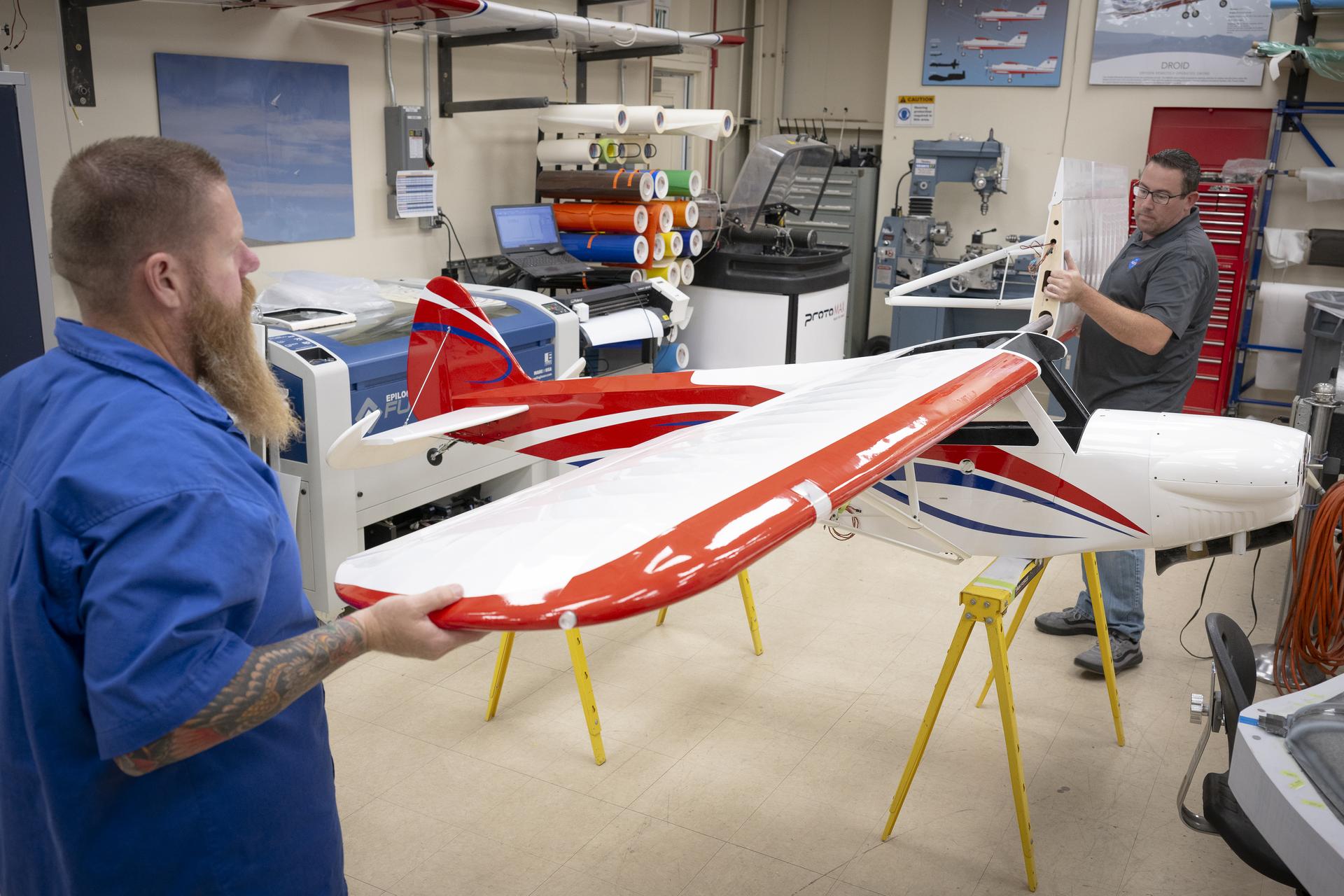
Two men attach an engine onto a subscale aircraft.
Justin Hall, left, and Justin Link attach the wings onto a subscale aircraft on Wednesday, Sept. 3, 2025, at NASA’s Armstong Flight Research Center in Edwards, California. Hall is chief pilot at the center’s Dale Reed Subscale Flight Research Laboratory and Link is a pilot for small uncrewed aircraft systems.
NASA/Christopher LC Clark
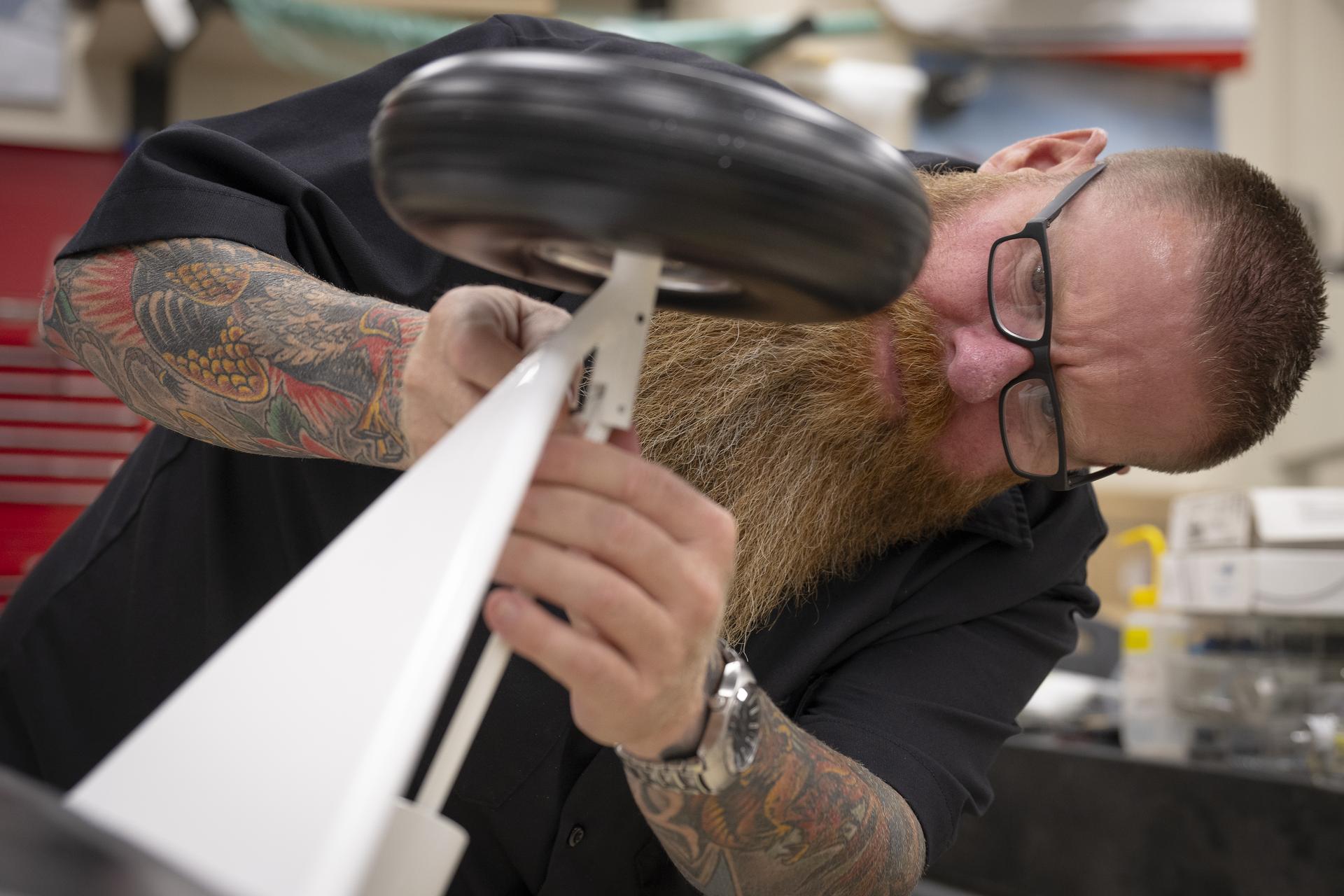
A man attaches a wheel and a section of landing gear to a subscale aircraft during assembly.
Justin Hall attaches part of the landing gear of a subscale aircraft on Friday, Sept. 12, 2025, at NASA’s Armstong Flight Research Center in Edwards, California. Hall is the chief pilot at the center’s Dale Reed Subscale Flight Research Laboratory.
NASA/Christopher LC Clark
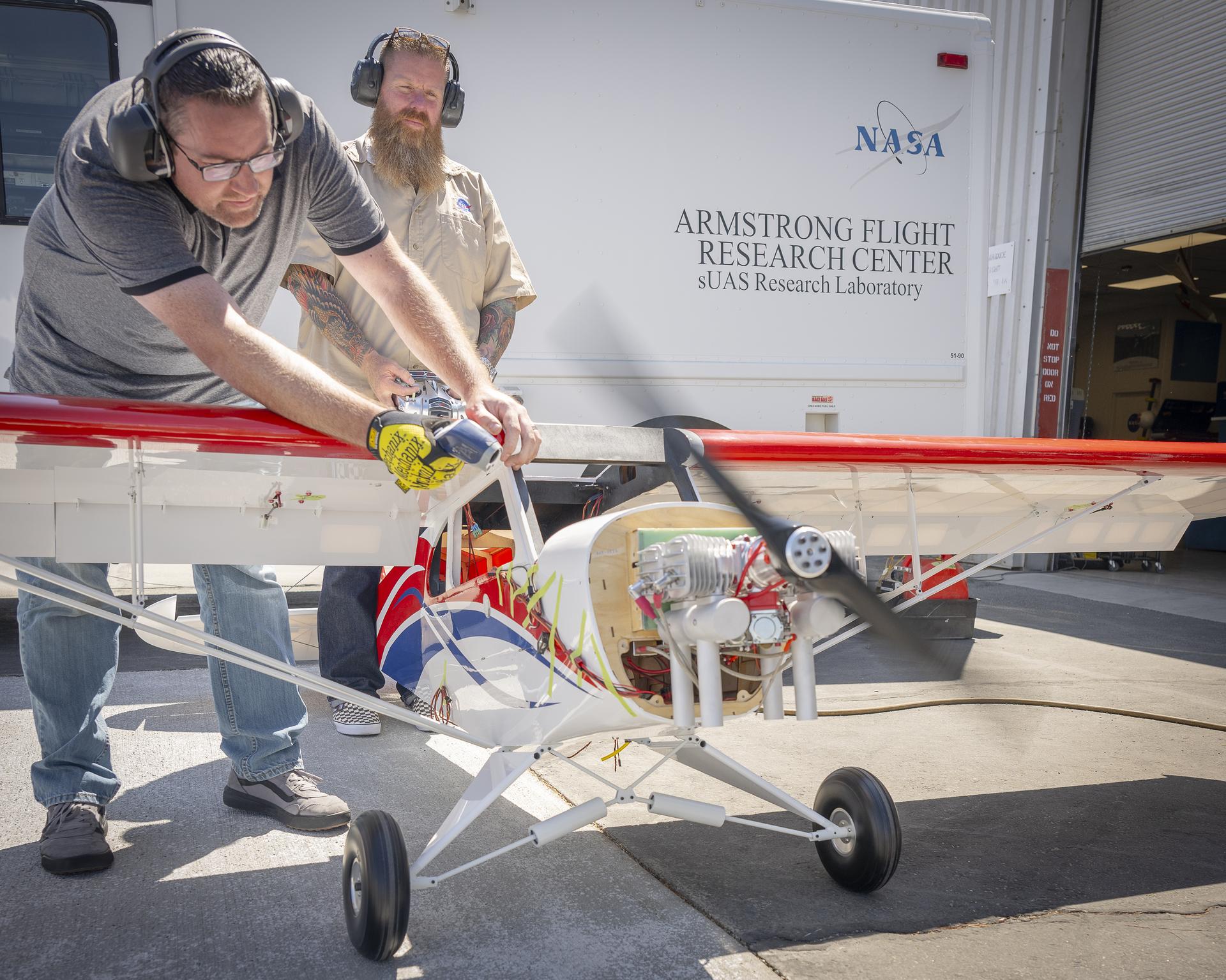
One man manages engine speed with a hand-held controller, while another firmly holds the subscale aircraft in place.
Justin Link, left, holds the subscale aircraft in place, while Justin Hall manages engine speed during preliminary engine tests on Friday, Sept. 12, 2025, at NASA’s Armstong Flight Research Center in Edwards, California. Link is a pilot for small uncrewed aircraft systems at the center’s Dale Reed Subscale Flight Research Laboratory andΒ Hall is the chief pilot.
NASA/Christopher LC Clark

NASA’s Armstrong Flight Research Center in Edwards, California, is building a new subscale aircraft to support increasingly complex flight research, offering a more flexible and cost-effective alternative to crewed missions.

The aircraft is being built by Justin Hall, chief pilot at NASA Armstrong’s Dale Reed Subscale Flight Research Laboratory, and Justin Link, a small uncrewed aircraft pilot. The duo is replacing the center’s aging MicroCub subscale aircraft with a more capable platform that will save time and reduce costs. The new aircraft spans about 14 feet from wingtip to wingtip, measures nine-and-a-half feet long, and weighs about 60 pounds.

The subscale laboratory accelerates innovation by using small, remotely piloted aircraft to test and evaluate new aerodynamic concepts, technologies, and flight control systems. Named after aerospace pioneer Dale Reed, the lab enables rapid prototyping and risk reduction before transitioning to full-scale or crewed flight testing. Its work plays a key role in increasing technology readiness to support NASA’s missions on Earth and beyond.

Hall and Link are modifying an existing subscale aircraft kit by adding a more powerful engine, an autopilot system, instrumentation, and a reinforced structure. The aircraft will offer greater flexibility for flight experiments, enabling more frequent and affordable testing compared to crewed aircraft.

One example of its potential is the Robust Autonomous Aerial Recapture project, which uses sensors and video with advanced programming to learn and adapt for mid-air capture. The system relies on a magnetic connection mechanism integrated onto the two aircraft.

This capability could support future science missions in which a mothership deploys drones to collect samples, recharge, and redeploy for additional missions, saving fuel, reducing cost, and increasing efficiency. Aerial recapture work is funded by the NASA Armstrong Center Innovation Fund and the Space Technology Mission Directorate.

Share

Details

Last Updated
Sep 24, 2025
Editor
Dede Dinius
Contact
❌