One year after winning second place in NASA’s Break the Ice Lunar Challenge, members of the small business Starpath visited NASA’s Marshall Space Flight Center in Huntsville, Alabama, as part of their prize opportunity to test their upgraded lunar regolith excavation and transportation rover in the center’s 20-foot thermal vacuum chamber.
The technology startup headquartered in Hawthorne, California, won second place overall at the Break the Ice Lunar Challenge’s live demonstration and finale in June 2024. This competition, one of NASA’s Centennial Challenges, tasked competitors to design, build, and demonstrate robotic technologies that could excavate and transport the icy, rocky dirt – otherwise known as regolith – found on the Moon.
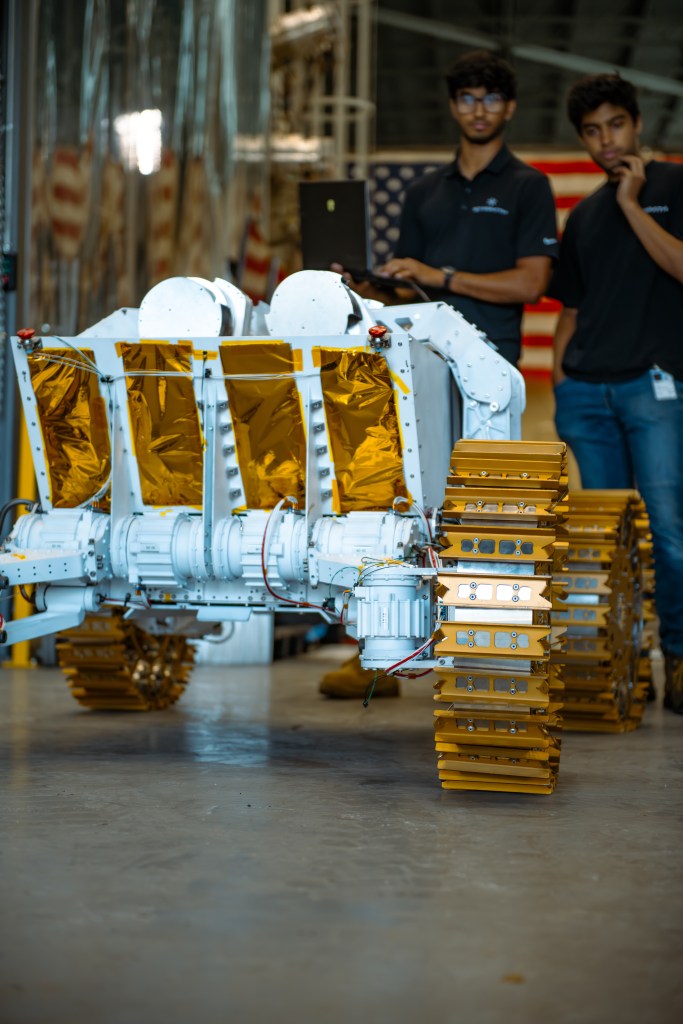
Starpath team members (foreground: Josh Kavilaveettil, mechanical engineer; background: Aakash Ramachandran, lead rover engineer) put their upgraded lunar regolith rover to the test inside NASA Marshall’s 20-foot thermal vacuum chamber – a prize opportunity marking one year since their 2nd place win in the Break the Ice Lunar Challenge.
NASA/Joe Kuner
“NASA’s Centennial Challenges are a great way to discover new, innovative technologies, including those for future use on the Moon and even Mars,” said Naveen Vetcha, Break the Ice Lunar Challenge manager at NASA Marshall. “Working with winners after the challenge concludes is a perfect example of how we can use NASA facilities to continue advancing these technologies to generate valuable solutions for the agency and industry.”
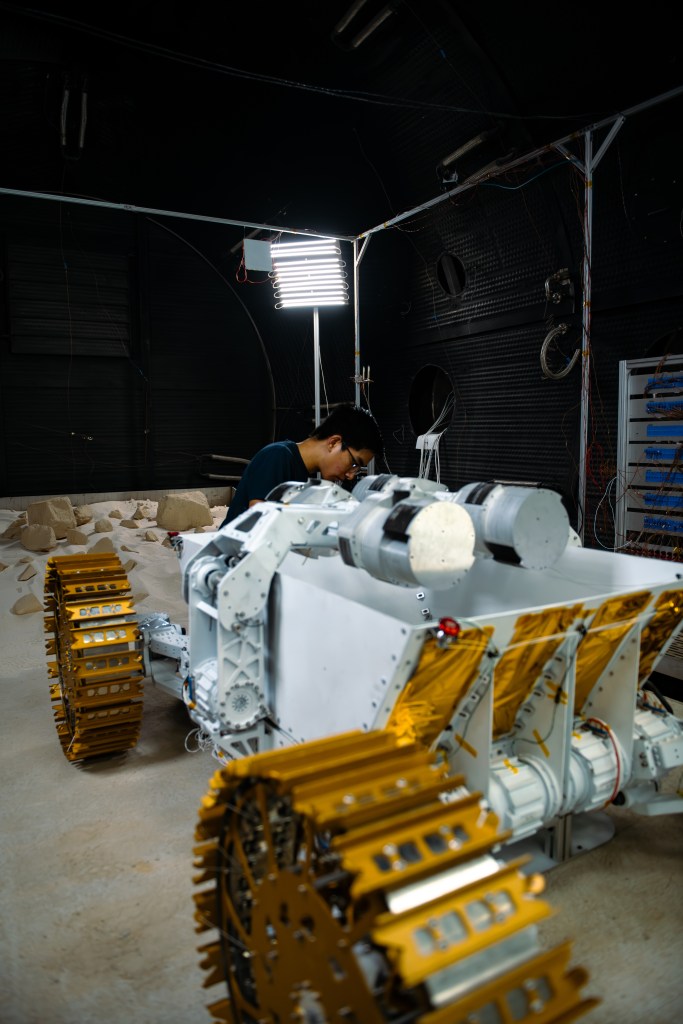
Starpath built a four-wheeled rover capable of excavating, collecting, and hauling material under extremely harsh environmental conditions that simulate the lunar South Pole. On the rover, a dual drum barrel can extend from the body of the robot – mimicking a movement similar to a crab’s claws – and scrape into rough, hard regolith to excavate material quickly without compromising finite battery life.
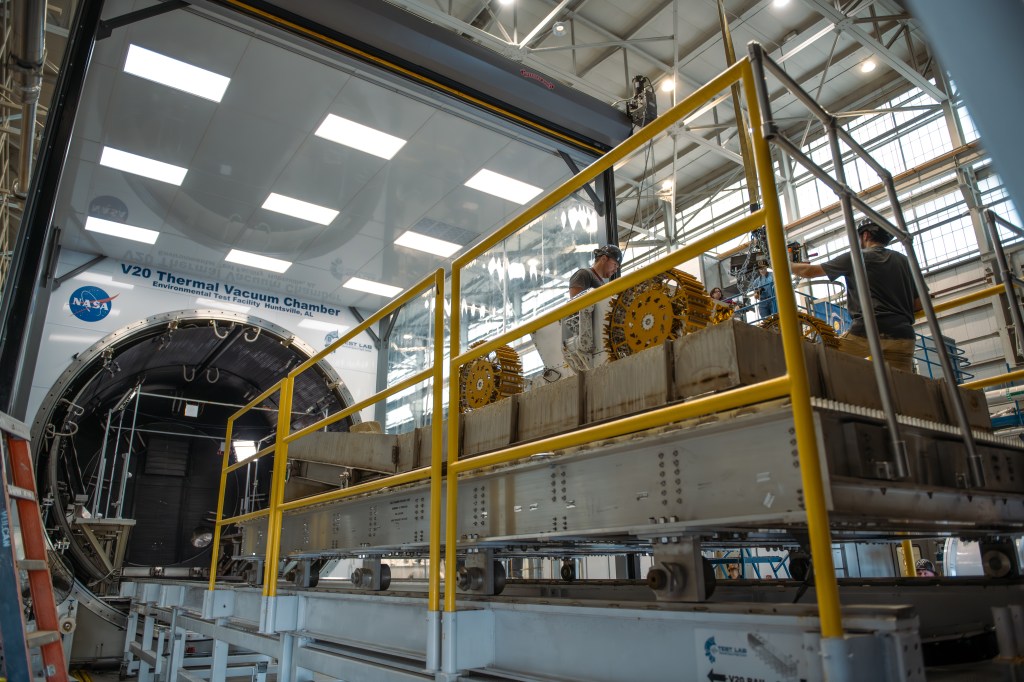
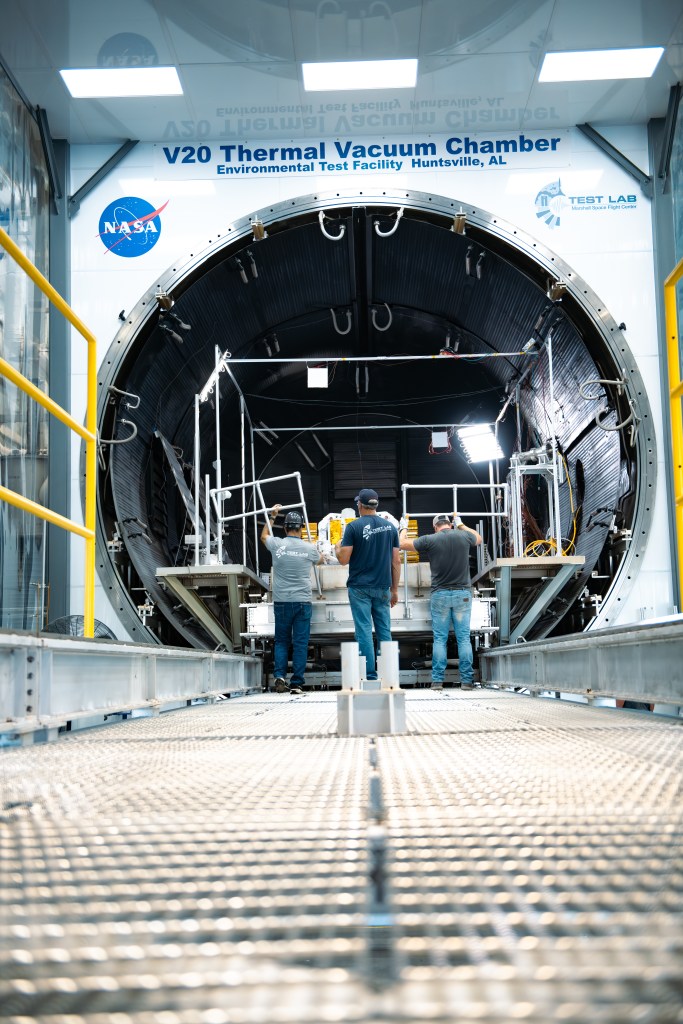
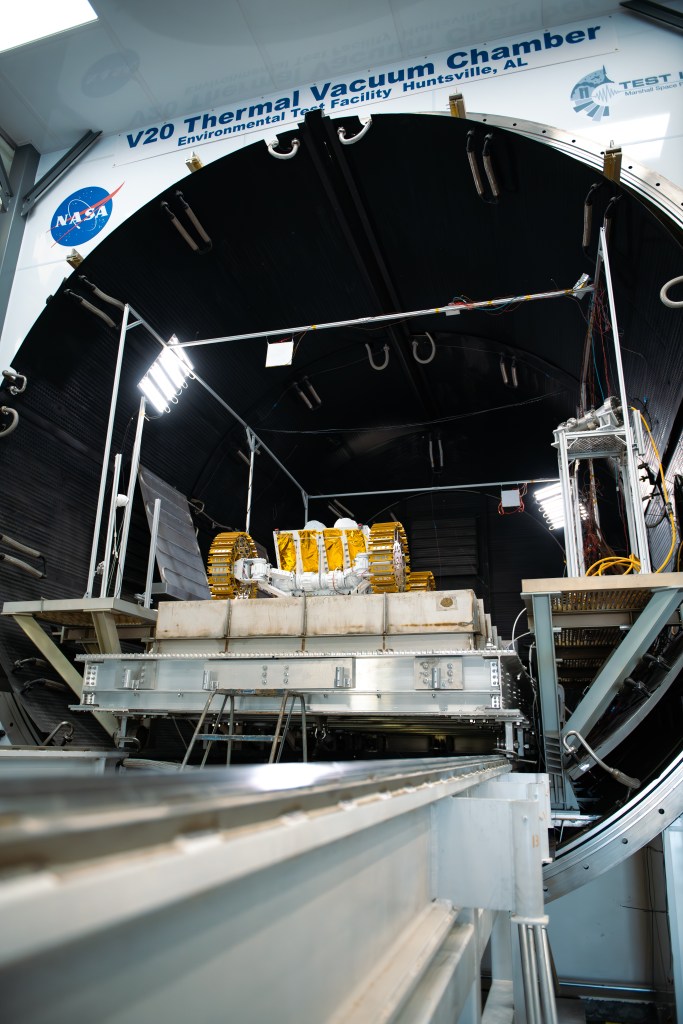
Before Starpath made the 2,000-mile drive from California to Alabama this summer, NASA Marshall’s Engineering Test Facility staff prepared a concrete slab outfitted with rocky terrain to act as a testbed for the robot to interact inside the chamber. The V-20 Thermal Vacuum Chamber, located at Marshall’s Environmental Test Facility, can simulate harsh environments by manipulating the chamber’s vacuum, temperature, humidity, and pressure effects. Starpath staff spent about three days at NASA Marshall in August, testing their robot with excavation and mobility trials while collecting data on its performance.
The Starpath team is honing the development of its technology for missions located at the permanently shadowed regions of the lunar South Pole. As a future landing site for NASA’s Artemis missions, which will send astronauts to the Moon and prepare to send the first Americans to Mars, the South Pole region of the Moon is known to contain ice within its regolith. This was the leading inspiration behind the development of the Break the Ice Lunar Challenge, as NASA will require robust technologies that can excavate and transport lunar ice for extraction, purification, and use as drinking water or rocket fuel.
Starpath, one of three winning teams in NASA’s Break the Ice Lunar Challenge, was invited by NASA Centennial Challenges to test their lunar excavation and traversal rover at the agency’s thermal vacuum chamber facility at NASA’s Marshall Space Flight Center in Huntsville, Alabama. The invitation was an added perk to the team’s successful participation in Break the Ice, which took place from 2020 to 2024. A space hardware startup from Hawthorne, California, Starpath won a cumulative $838,461 across three levels of Phase 2 before winning second place overall at the challenge’s live demonstration and finale in June 2024.
In this image, two members of the Starpath team remotely operate the rover and run data in preparation for its entrance to the V20 Thermal Vacuum Chamber.
NASA/Joe Kuner
Starpath, one of three winning teams in NASA’s Break the Ice Lunar Challenge, was invited by NASA Centennial Challenges to test their lunar excavation and traversal rover at the agency’s thermal vacuum chamber facility at NASA’s Marshall Space Flight Center in Huntsville, Alabama. The invitation was an added perk to the team’s successful participation in Break the Ice, which took place from 2020 to 2024. A space hardware startup from Hawthorne, California, Starpath won a cumulative $838,461 across three levels of Phase 2 before winning second place overall at the challenge’s live demonstration and finale in June 2024.
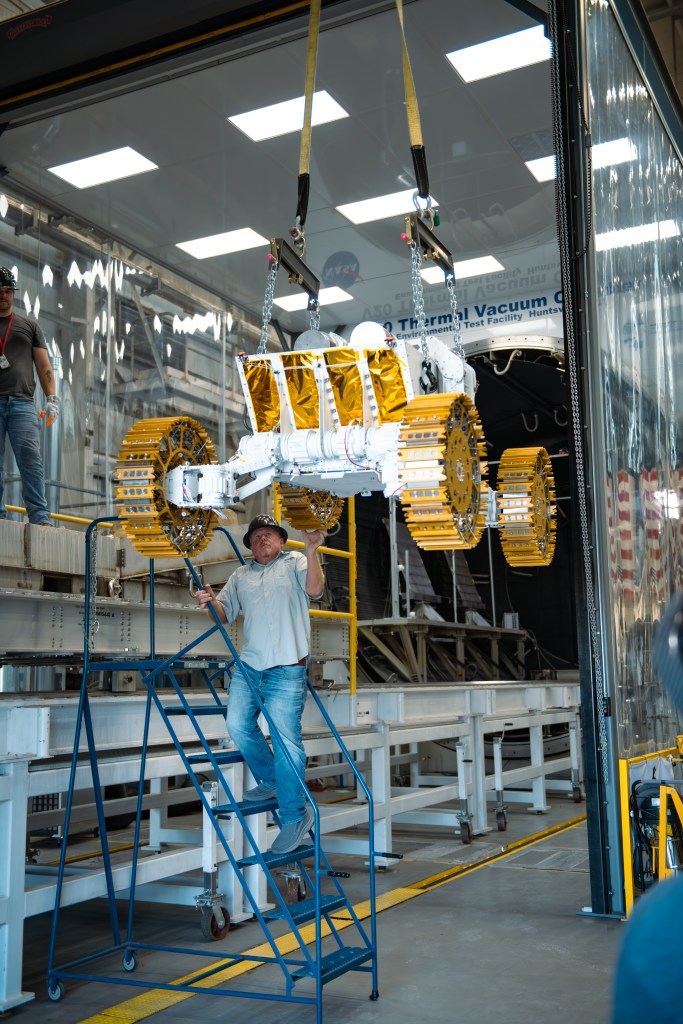
In this image, employees from NASA Marshall’s Environmental Test Facility work with the Starpath team to carefully maneuver the rover onto a platform that will slide the rover into the chamber.
NASA/Joe Kuner
Starpath, one of three winning teams in NASA’s Break the Ice Lunar Challenge, was invited by NASA Centennial Challenges to test their lunar excavation and traversal rover at the agency’s thermal vacuum chamber facility at NASA’s Marshall Space Flight Center in Huntsville, Alabama. The invitation was an added perk to the team’s successful participation in Break the Ice, which took place from 2020 to 2024. A space hardware startup from Hawthorne, California, Starpath won a cumulative $838,461 across three levels of Phase 2 before winning second place overall at the challenge’s live demonstration and finale in June 2024.
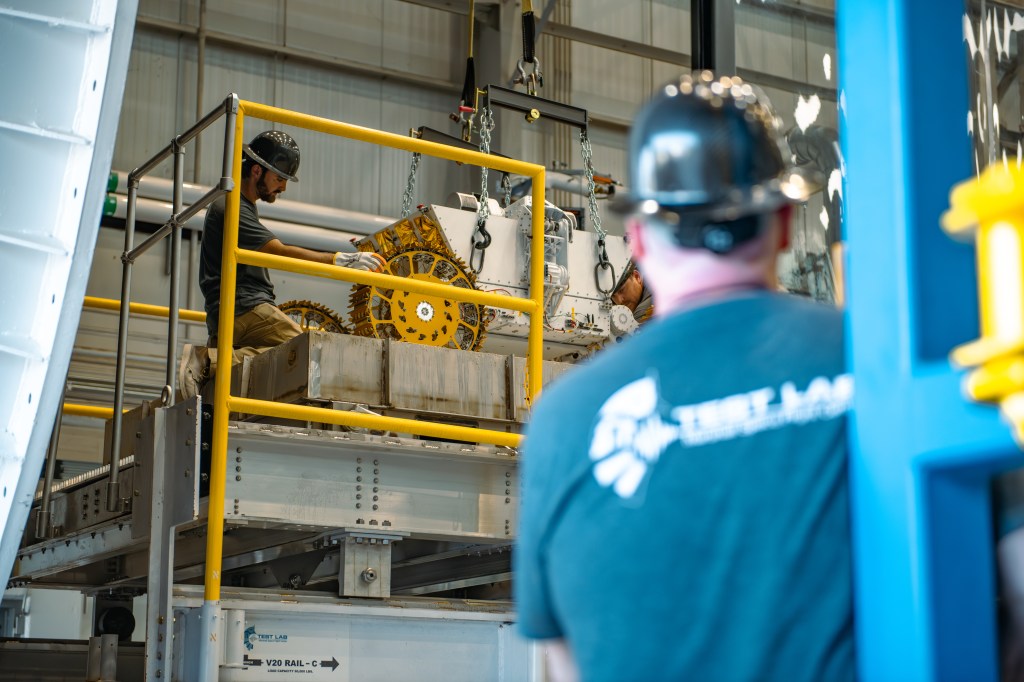
In this image, employees from NASA Marshall’s Environmental Test Facility situate the rover over the concrete slab that it will operate on before removing the suspension straps that lifted it onto the platform.
NASA/Joe Kuner
Starpath, one of three winning teams in NASA’s Break the Ice Lunar Challenge, was invited by NASA Centennial Challenges to test their lunar excavation and traversal rover at the agency’s thermal vacuum chamber facility at NASA’s Marshall Space Flight Center in Huntsville, Alabama. The invitation was an added perk to the team’s successful participation in Break the Ice, which took place from 2020 to 2024. A space hardware startup from Hawthorne, California, Starpath won a cumulative $838,461 across three levels of Phase 2 before winning second place overall at the challenge’s live demonstration and finale in June 2024.
In this image, the rover finally freely rests on its concrete slab at the end of the platform. The large metal structure will slide into the chamber, bringing the rover and concrete slab with it.
NASA/Joe Kuner
Starpath, one of three winning teams in NASA’s Break the Ice Lunar Challenge, was invited by NASA Centennial Challenges to test their lunar excavation and traversal rover at the agency’s thermal vacuum chamber facility at NASA’s Marshall Space Flight Center in Huntsville, Alabama. The invitation was an added perk to the team’s successful participation in Break the Ice, which took place from 2020 to 2024. A space hardware startup from Hawthorne, California, Starpath won a cumulative $838,461 across three levels of Phase 2 before winning second place overall at the challenge’s live demonstration and finale in June 2024.
In this image, NASA Environmental Test Facility employees work with members from the Starpath team to push the sliding platform into the thermal vacuum chamber, with the heavy rover and concrete slab in tow.
NASA/Joe Kuner
Starpath, one of three winning teams in NASA’s Break the Ice Lunar Challenge, was invited by NASA Centennial Challenges to test their lunar excavation and traversal rover at the agency’s thermal vacuum chamber facility at NASA’s Marshall Space Flight Center in Huntsville, Alabama. The invitation was an added perk to the team’s successful participation in Break the Ice, which took place from 2020 to 2024. A space hardware startup from Hawthorne, California, Starpath won a cumulative $838,461 across three levels of Phase 2 before winning second place overall at the challenge’s live demonstration and finale in June 2024.
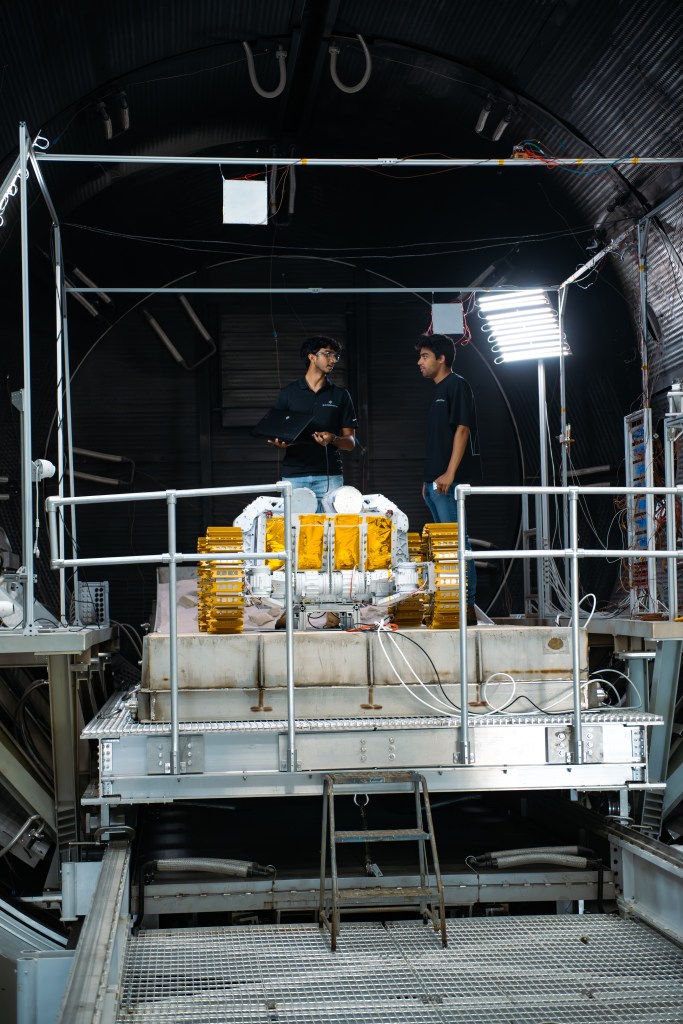
In this image, the large concrete platform is fully slid into the vacuum chamber, and members from the Starpath team discuss what final preparations need to be made before the chamber is closed.
NASA/Joe Kuner
Starpath, one of three winning teams in NASA’s Break the Ice Lunar Challenge, was invited by NASA Centennial Challenges to test their lunar excavation and traversal rover at the agency’s thermal vacuum chamber facility at NASA’s Marshall Space Flight Center in Huntsville, Alabama. The invitation was an added perk to the team’s successful participation in Break the Ice, which took place from 2020 to 2024. A space hardware startup from Hawthorne, California, Starpath won a cumulative $838,461 across three levels of Phase 2 before winning second place overall at the challenge’s live demonstration and finale in June 2024.
In this image, the rover sits on a concrete slab that will be used to mimic the rugged lunar surface. The slab features a sandy, rocky terrain, and lamps within the chamber will turn on and off to simulate sunlight.
NASA/Joe Kuner
Starpath, one of three winning teams in NASA’s Break the Ice Lunar Challenge, was invited by NASA Centennial Challenges to test their lunar excavation and traversal rover at the agency’s thermal vacuum chamber facility at NASA’s Marshall Space Flight Center in Huntsville, Alabama. The invitation was an added perk to the team’s successful participation in Break the Ice, which took place from 2020 to 2024. A space hardware startup from Hawthorne, California, Starpath won a cumulative $838,461 across three levels of Phase 2 before winning second place overall at the challenge’s live demonstration and finale in June 2024.
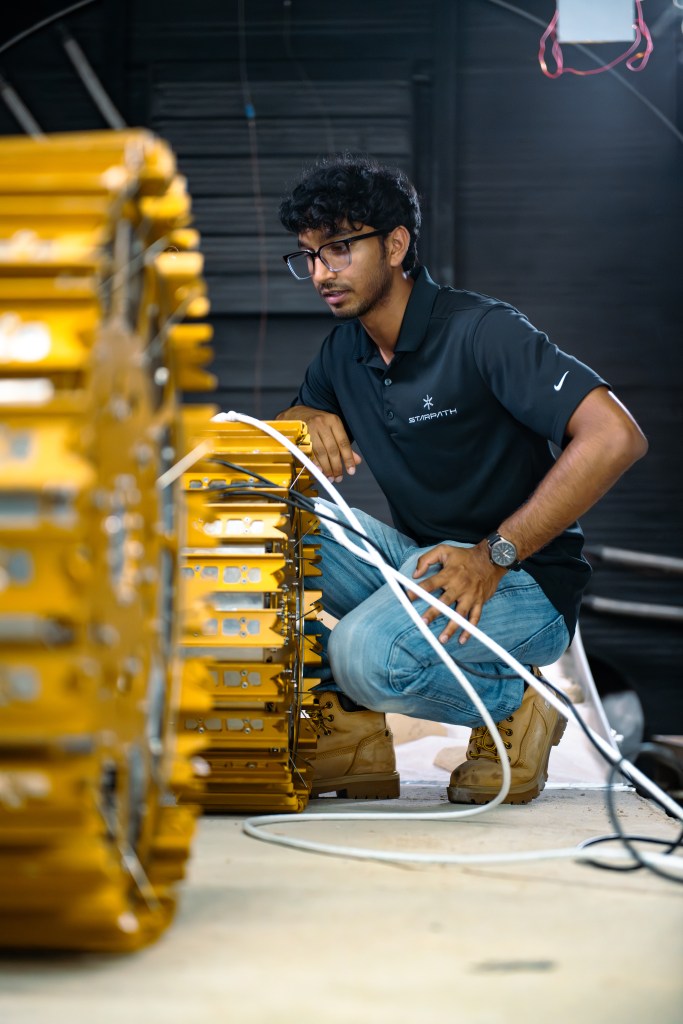
In this image, Starpath mechanical engineer Josh Kavilaveettil monitors a component of the rover, attached to wires, in preparation for testing.
NASA/Joe Kuner
Starpath, one of three winning teams in NASA’s Break the Ice Lunar Challenge, was invited by NASA Centennial Challenges to test their lunar excavation and traversal rover at the agency’s thermal vacuum chamber facility at NASA’s Marshall Space Flight Center in Huntsville, Alabama. The invitation was an added perk to the team’s successful participation in Break the Ice, which took place from 2020 to 2024. A space hardware startup from Hawthorne, California, Starpath won a cumulative $838,461 across three levels of Phase 2 before winning second place overall at the challenge’s live demonstration and finale in June 2024.
In this image, the rover sits atop its concrete slab at the mouth of the thermal vacuum chamber, ready to be closed in and commence testing.
One year after winning second place in NASA’s Break the Ice Lunar Challenge, members of the small business Starpath visited NASA’s Marshall Space Flight Cent...

 Login
Login