It’s only been a day since Netflix announced an $82.7 billion deal to acquire Warner Bros., and the acquisition has already been described as sending Hollywood into “full-blown panic mode,” “possibly a death blow to theatrical filmmaking,” and maybe even “the end of Hollywood” itself.
Colleen Aubrey, AWS senior vice president of Applied AI Solutions, speaks during the AWS re:Invent keynote about the company’s push toward AI “teammates” and agentic development. (Amazon Photo)
LAS VEGAS — Speaking this week on the Amazon Web Services re:Invent stage, AWS executive Colleen Aubrey delivered a prediction that doubled as a wake-up call for companies still thinking of AI as just another tool.
“I believe that over the next few years, agentic teammates can be essential to every team — as essential as the people sitting right next to you,” Aubrey said during the Wednesday keynote. “They will fundamentally transform how companies build and deliver for their customers.”
But what does that look like in practice? On her own team, for example, she challenged groups that once had 50 people taking nine months to deliver a new product to do the same with 10 people working for three months.
Meanwhile, non-engineers such as finance analysts are building working prototypes using AI tools, contributing code in Amazon’s Kiro agentic development tool alongside engineers and feeding those prototypes into Amazon’s famous PR/FAQ planning process on weekly cycles.
Those are some of the details that Aubrey shared when we sat down with her after the keynote at the GeekWire Studios booth in the re:Invent expo hall to dig into the themes from her talk. Aubrey is senior vice president of Applied AI Solutions at AWS, overseeing the company’s push into business applications for call centers, supply chains, and other sectors.
Continue reading for takeaways from the conversation, watch the video below, and listen to the conversation starting in the second segment of this week’s GeekWire Podcast.
The ‘teammate’ mental model changes everything. Aubrey draws a clear line between single-purpose AI tools that do one thing well and the agentic teammates she sees emerging — systems that take responsibility for whole objectives, and require a different kind of management.
“I think people will increasingly be managers of AI,” she said. “The days of having to do the individual keystrokes ourselves, I think, are fast fading. And in fact, everyone is going to be a manager now. You have to think about prioritization, delegation, and auditing. What’s the quality of our feedback, providing coaching. What are the guardrails?”
Amazon Connect crosses $1 billion. AWS’s call center platform reached $1 billion in annual revenue on a run rate basis, with Aubrey noting it has accelerated year-over-year growth for two consecutive years.
This week at re:Invent, the team announced 29 new capabilities across four areas: Nova Sonic voice interaction that Aubrey says is “very close to being indistinguishable” from human conversation; agents that complete tasks on behalf of customers; clickstream intelligence for product recommendations; and observability tools for inspecting AI reasoning.
One interesting detail: Aubrey said she’s often surprised by Nova Sonic’s sophistication and empathy in complex conversations — and equally surprised when it fails at basic tasks like spelling an address correctly.
“There’s still work to do to really polish that,” she said.
The ROI question gets a “yes and no.” Asked whether companies are seeing the business value to justify AI agent investments, Aubrey offered a nuanced response. “I observe companies to struggle to realize the business impact,” she said. But she said the value often shows up as eliminating bottlenecks — clearing backlogs, erasing technical debt, accelerating security patching — rather than immediate revenue gains.
“I’m not going to see the impact on my P&L today,” she said, “but if I fast forward a year, I’m going to have a product in market where real customers are using and getting real value, and we’re learning and iterating where I might not have even been halfway there in the past.”
Her advice for companies still hesitating: “If you don’t start today, that’s a one way door decision… I think you have to start the journey today. I would suggest people get focused, they get moving, because if you don’t, I think that becomes existential.”
Trust requires observability. Aubrey says companies won’t get full value from AI teammates if they can’t see how they’re reasoning.
“If you don’t trust an AI teammate, then you’re never going to realize the full benefit,” she said. “You’re not going to give them the hard tasks, you’re not going to invest in their development.”
The solution is treating AI inspection the same way you’d manage a human colleague: understand why it took an action, audit the quality, and iterate.
“You can refine your knowledge bases. You can refine your workflows. You can refine your guardrails, and then confidently keep iterating… the same way we do with each other. We keep iterating, we keep learning, and we keep getting better,” she said.
Product updates: Beyond Connect, Aubrey offered updates on other parts of her portfolio of Amazon’s applied AI solutions.
Just Walk Out, Amazon’s cashierless checkout technology, deployed more than 150 new stores in 2025 and should accelerate next year.
AWS Supply Chain, meanwhile, is getting a reset. “I’m going to declare that a pivot,” she said, with a Q1 announcement coming around agentic decision-making for supply and demand planning.
Also coming in Q1: a life sciences product focused on antibody discovery, currently in beta.
She teased “a few other new investment areas” expected to come in early 2026.
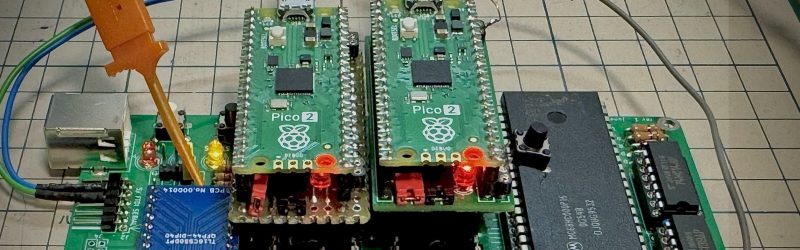
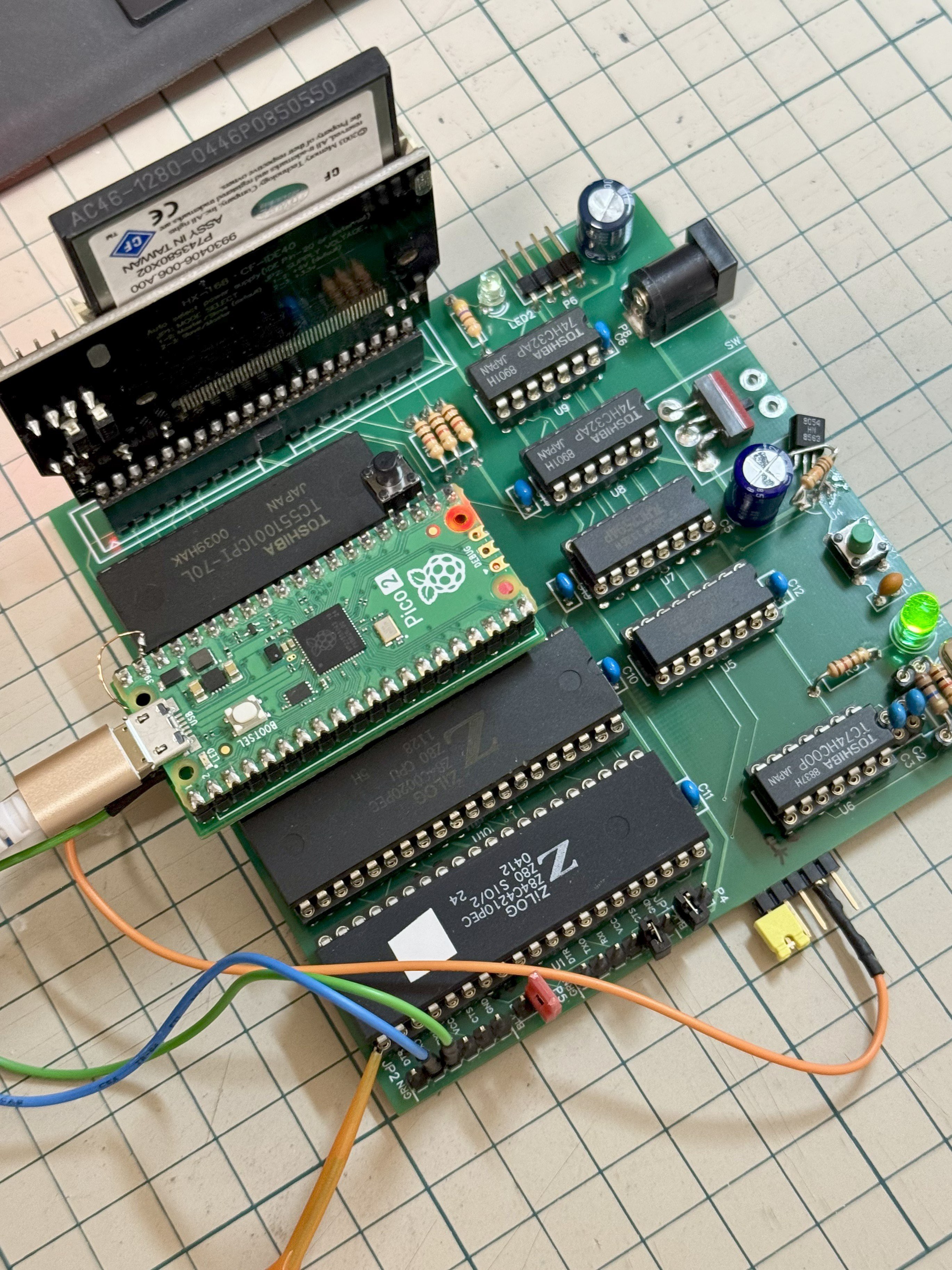
Nothing lasts forever, and that includes the ROMs required to make a retrocomputer run. Even worse, what if you’re rolling your own firmware? Period-appropriate EPROMs and their programmers aren’t always cheap or easy to get a hold of these days. [Kyo-ta04] had that problem, and thanks to them, we now all have a solution: Pico2ROMEmu, a ROM emulator based on, you guessed it, the Raspberry Pi Pico2.
The Pico2ROMEmu in its natural habitat on a Z80 SBC.
The ROM emulator has been tested at 10MHz with a Z80 processor and 12MHz with an MC68000. An interesting detail here is that rather than use the RP2350’s RISC-V or ARM cores, [kyo-ta04] is doing all the work using the chip’s powerful PIO. PIO means “programmable I/O,” and if you need a primer, check this out. Using PIO means the main core of the microcontroller needn’t be involved — and in this context, a faster ROM emulator.
We’ve seen ROM emulators before, of course — the OneROM comes to mind, which can also use the RP2350 and its PIOs. That project hasn’t been chasing these sorts of speeds as it is focused on older, slower machines. That may change in the newest revision. It’s great to see another contender in this space, though, especially one to serve slightly higher-performance retrocomputers. Code and Gerbers for the Pico2RomeEMU are available on GitHub under an MIT license.
As cloud-native adoption soars, companies are turning to managed SRE services to navigate infrastructure complexity Kubernetes has won. According to VMware’s research, over 60% of enterprises now run containerized workloads on the platform, and that number continues to climb. But victory has come with an unexpected cost: operational complexity that even experienced engineering teams struggle […]
I used to see the double dash (--) in Excel spreadsheets and wonder what it did. It's an essential shortcut to force Excel to treat TRUE and FALSE as the numbers 1 and 0, meaning you can easily sum or count the results of a logical test across a range. Now I know, and I want to share this powerful trick with you.
Smartphones used to have a stronger sense of personality. In the early days, it wasn't just the hardware that left an impression—the default wallpaper was a defining feature you'd see at the launch event and every ad that followed. Here are some of the most iconic smartphone wallpapers of all time, in no particular order.
On balance, USB-C has been pretty great. I would be the last person to suggest that we should go back to the bad old days of USB-A (insofar as we've actually left it) or, even worse, micro-USB.
No one wants to be spied on. A VPN is one piece of the cyber security puzzle to help protect your personal information—and you should install it on all of your devices.
Western Union is building a stablecoin-backed prepaid card targeting countries with high inflation rates. The money transfer giant plans to offer the product in markets where local currency depreciation erodes purchasing power, CFO Matthew Cagwin told the UBS Global Technology…
Dogecoin has been bleeding lower in recent days, grinding back toward the mid-$0.13 band. Sellers have been in control of most candles in the past 24 hours, and each attempt at a rebound has faded quickly, leaving Dogecoin stuck near the bottom of a range.
One crypto analyst on X has focused attention on an important technical level on the 2-day chart. Even though price action looks weak, Dogecoin is now sitting right on a long-term support zone inside a descending triangle pattern, and this area could become the launchpad for a strong upside move if buyers react from here. The chart shared with the analysis highlights exactly where Dogecoin is resting and why this region matters.
Dogecoin Sitting On Major Descending Triangle
Technical analysis of Dogecoin’s price action on the 2-day candlestick timeframe chart shows the meme coin has been trading in a clear descending triangle since December 2024. A downward-sloping trendline has capped every rally this year, leading to the creation of a series of lower highs that reflect persistent selling pressure throughout the year. At the same time, a horizontal support zone underneath in the mid-$0.135 to $0.14 region has caught multiple drops and prevented a deeper breakdown.
Right now, Dogecoin is pressing that lower border again. The candles on the 2-day chart cluster just above the dashed support band, and the analyst, who goes by Butterfly on X, circled this cluster in green to show how closely the price is hugging the level.
Each prior visit to this zone has produced at least a temporary bounce, which is why the current test is notable. The price action is tightening, and there is less room left for sideways movement before a decisive break happens.
Dogecoin Is “Ready To Fly”
In the post on X, the analyst notes that this support has been “respected multiple times” and that bulls are “getting ready to step in.” The most important thing is for the lower support to hold again, and the descending triangle may flip from a slow grind lower into a springboard for a strong reaction.
A firm defense of this zone would mean that sellers are running out of momentum at these prices. From there, even a modest wave of buying could drive Dogecoin back toward the descending resistance line that cuts across the chart from the $0.25 to $0.26 area. A break and close above that trendline would mark the first clean higher high in months and would confirm that the triangle has resolved to the upside.
The analyst’s green arrow on the chart sketches out this potential path. The path shows Dogecoin lifting from the current support band, breaking above resistance, and reaching as high as $0.4 in one swift move.
Bitcoin’s price action has been grossly dramatic throughout the year. After reaching its current all-time-high price of $126,000 in early October, the world’s leading cryptocurrency saw a rapid flip to the downside. Since reaching its October high, Bitcoin spiraled to as low as $80,500, a more than 15% negative deviation in reviewing year on year growth.
As the market sentiment thus ostensibly leans bearish, an on-chain analysis has recently been published, proffering reasons to believe that the negative sentiment among investors could be growing stronger.
$91,000 Max Pain Point Breached After Friday Options Expiry
In a QuickTake post on CryptoQuant, crypto pundit GugaOnChain brings to light the expiry of about $3.4 billion in Bitcoin options. This expiration event, which took place on Friday, 5th December, is one that typically triggers a “gravitational force” which attracts price to itself. By extension, price tends to move towards a specific price level referred to as the Maximum Pain Point, where option buyers incur the greatest losses, and sellers realize the most profits.
In this scenario, the Maximum Pain Point stood at approximately $91,000. As such, the Bitcoin price saw a rapid decline towards this mark. However, by the end of the session, Bitcoin had already slipped beneath its “gravitational force,” reaching as low as $89,500, and entering a range that amplified its buyers’ losses, while also maximizing its sellers’ (market makers) gains.
Negative Funding Rate Further Strengthens Bearish Narrative
GugaOnChain also references readings from the Bitcoin: Funding Rates metric, which tracks the average funding rate across all major perpetual futures exchanges. As the analyst explains, this metric is useful in reading the prevalent market sentiment. For example, negative Funding Rates, such as the current reading of -0.001206, typically indicate the willingness of short traders to pay the longs for their positions. As such, it is evident that the market sentiment is more bearish than bullish.
There appears to be an alignment between the negative funding rates and the sell pressure supplied by the $3.4 billion expired options and breach of the $91,000 Maximum Pain Point. GugaOnChain explains that such a correlation further strengthens the narrative that the Bitcoin market could see an additional significant drop in its price.
While the long-term market direction may be well-defined, its short-term sentiment, however, reflects a more modest stance of utmost caution. As of press time, Bitcoin is valued at about $89,250. Over the past 24 hours, the premier cryptocurrency has lost approximately 3.38% of its value, per CoinMarketCap data.
Featured image from Shutterstock, chart from Tradingview
Black Friday has come and gone, and with it, most of the wallet-saving deals have retreated into the ether. That is almost all of those deals, but one: Ninja has its Black Friday deal on the Ninja Crispi air fryer. The Ninja Crispi is $40 off this weekend, for who knows how much longer. This air fryer features two glass bottoms in 4-quart and 6-cup capacities. This portable cooking system is an air fryer, in addition to baking, reheating, and something Ninja refers to as "Max Crisp," which is likely closely related to broiling.
The two different sizes offer unique capabilities for cooking different quantities of food at various speeds. For example, the 6-cup glass-bottom bowl can reheat some fries or veggies (who says potatoes aren't vegetables) in as little as 7 minutes, while the 4-quart glass-bottom bowl can bake a whole chicken and vegetables.
If the combination of a glass bottom and extreme heat gives you pause, don't worry, Ninja is already way ahead of you. The borosilicate glass (which the famously heat-resistant Pyrex brand's glass is made of) is thermal shock-resistant, and both glass bottoms come with heat-protected feet that allow the device to sit atop any material countertop you want (except plastic). The glass bottoms are also dishwasher safe.
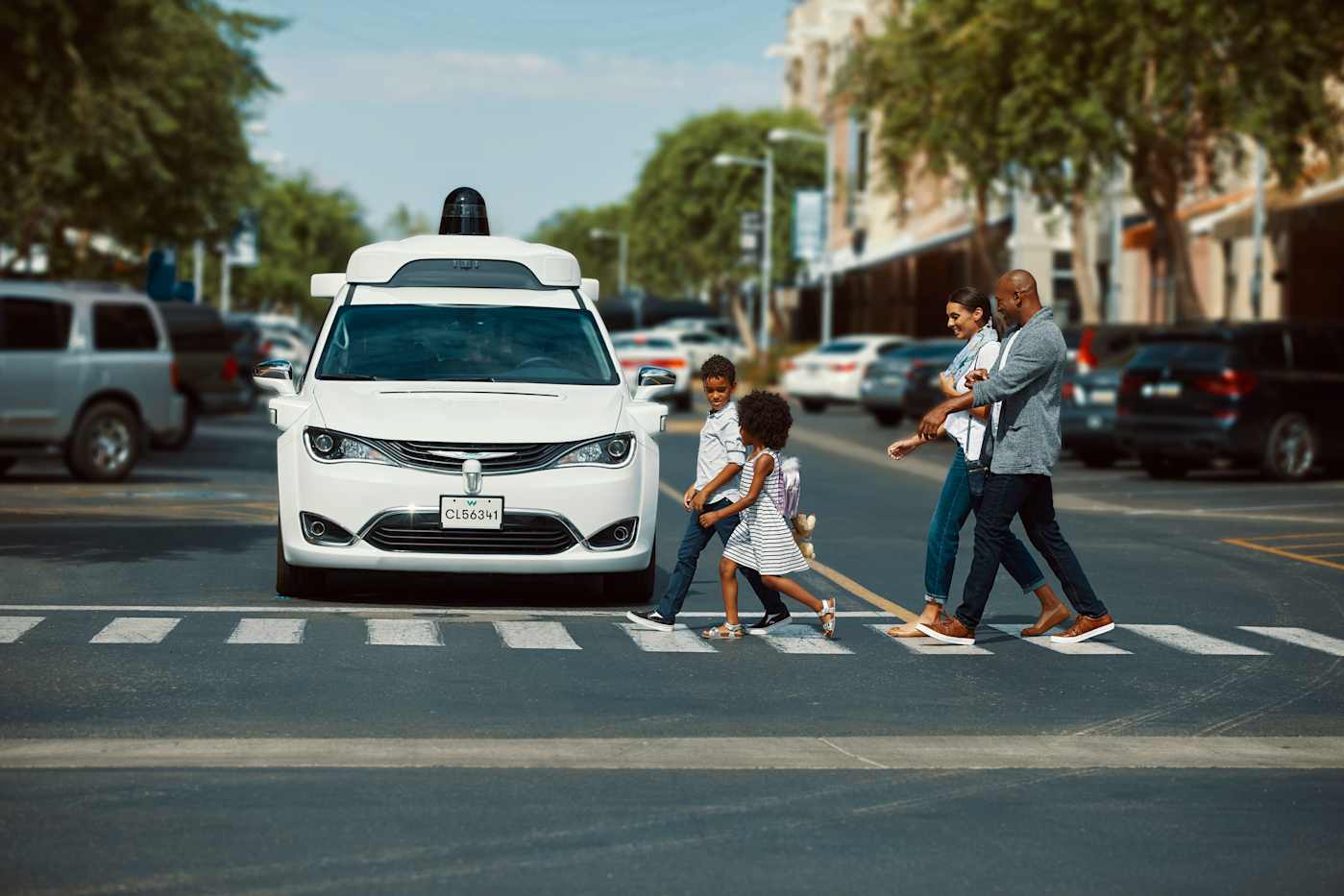
To prevent its robotaxi fleet from passing stopped school buses, Waymo is issuing another software recall in 2025. While it's not a traditional recall that pulls vehicles from the road, Waymo is voluntarily updating software for its autonomous fleet in response to an investigation from the National Highway Traffic Safety Administration. According to Waymo, the recall will be filed with the federal agency early next week.
Mauricio Peña, Waymo's chief safety officer, said in a statement that Waymo sees far fewer crashes involving pedestrians than human drivers, but that the company knows when "our behavior should be better."
"As a result, we have made the decision to file a voluntary software recall with NHTSA related to appropriately slowing and stopping in these scenarios," Peña said in a statement to multiple news outlets. "We will continue analyzing our vehicles’ performance and making necessary fixes as part of our commitment to continuous improvement."
According to the NHTSA investigation, some Waymo autonomous vehicles were seen failing to stop for school buses that had their stop signs and flashing lights deployed. The federal agency said in the report that there were instances of Waymo cars driving past stopped school buses in Atlanta and Austin, Texas.
Earlier this year, Waymo issued another software recall after some of its robotaxi fleet were seen hitting gates, chains, and similar objects. Last year, Waymo also filed two other software recalls, one of which addressed a fleet vehicle crashing into a telephone pole and another correcting how two separate robotaxis hit the same exact pickup truck that was being towed.
This article originally appeared on Engadget at https://www.engadget.com/transportation/waymos-robotaxi-fleet-is-being-recalled-again-this-time-for-failing-to-stop-for-school-buses-190222243.html?src=rss
To build three-wheeled, solar electric vehicles, Aptera has now launched its "validation" vehicle assembly line, reports the San Diego Business Journal.
"The validation line will set a technical foundation for the company's eventual low-volume assembly line, ensuring that manufacturing processes are optimized and refined, particularly for the company's composite body structure."
To date, Aptera has produced three validation vehicles, two of which are in use driving around the San Diego region, with plans to build another 10 in the coming weeks as progress continues on the validation manufacturing line. "You learn things when you start to put miles on vehicles, putting 10s of thousands of miles on these validation vehicles and learning a lot from the durometer of the suspension, ride quality, spring rates and braking pressure," Aptera co-founder and co-CEO Chris Anthony said. "We've been able to incorporate a lot of the usability stuff back, but also, just as we've gone through the process of building these, a lot of order-of-operation stuff that's educated us on what's going to make for the best initial assembly lines," he added....
Aptera made its public debut on October 16, with the company's executive team participating in the Nasdaq closing bell ceremony that evening. Shares of SEV have hovered between $6.50 and $8.50 for much of the company's first month on the exchange. The company's equity line of credit also took effect in mid-November... expected to aid in Aptera generating at least a portion of the $65 million the company has said it will need to complete validation manufacturing and begin low-volume production for customers. Aptera previously raised some $135 million from more than 17,000 investors in what the company touts as the most successful crowdfunding effort of all time, but Anthony argued Aptera will soon need to invest larger sums of capital to scale its production needs.
"Publicly listing the company gives us a lot more funding mechanisms to get into production," he said. "So just having access to the public markets, public liquidity and the kind of instruments and tools that banks offer to public companies, it just seemed like now is the right time." Alongside the IPO, Aptera made its formal transition to a Public Benefit Corporation, giving the company a legal obligation to consider its effect on employees, communities and customers in addition to the profit motives of its shareholders.
California's state government also awarded Aptera $21 million "to support its push toward scaled manufacturing," the article points out.
It also notes that Aptera's vehicles "are technically classified as motorcycles rather than standard passenger cars, presenting a potentially cheaper alternative for consumers on the hunt for an electric vehicle."
What happened when a school in Los Angeles gave a sixth grader an iPad for use throughout the school day? "He used the iPad during school to watch YouTube and participate in Fortnite video game battles," reports NBC News.
His mother has now launched a coalition of parents called Schools Beyond Screens "organizing in WhatsApp groups, petition drives and actions at school board meetings and demanding meetings with district administrators, pressuring them to pull back on the school-mandated screen time."
Los Angeles Unified is the first district of its size
to face an organized — and growing — campaign by parents
demanding that schools pull back on mandatory screen time. The
discontent in Los Angeles Unified, the second-largest school district
in the country, reflects a growing unease nationally about the amount of time children spend
learning through screens in classrooms. While a majority
of states prohibit children from using cellphones in class, 88%
of schools provide students with personal devices, according to the
National
Center for Education Statistics, often Chromebook laptops or iPads. The parents hope getting a district
that has over 409,000 students across nearly 800 schools to change
how it approaches screen time would send a signal across public
school districts to pull back from a yearslong effort to digitize
classrooms....
[In the Los Angeles school district] Students in grade levels as low as
kindergarten are provided iPads, and some schools require them to
take the tablets home. Some teachers have allowed students to opt
out of the iPad-based assignments, but other parents say they've
been told that they can't. Parents can also opt their children out
of having
access to YouTube and several
other Google products... The billion-dollar 2014 initiative to
give tablet computers to everyone became
a scandal after the bidding process appeared to heavily favor
Apple, and it faced criticism once it became clear that students
could bypass security protocols and that few
teachers used the tablets. Currently, the district leaves it up
to individual schools to decide whether they want students to take
home iPads or Chromebooks every day and how much time they spend on
them in class...
Around 300 parents attended listening sessions the district held
last month about technology in the classroom. Nearly all who spoke
criticized how much screen time schools gave their children in class,
pointing to ways their behavior and grades suffered as students
watched YouTube and played Minecraft... Several also asked district
officials to explain why children as young as kindergartners were
asked to sign
a form to use devices in which they promised they would honor
intellectual property law and refrain from meeting people in person
whom they met online. "Is it possible for children to meet people
over the internet on school-issued devices?" one father asked. The
district officials declined to answer, saying it was meant to be a
listening session.
In 2022, Los Angeles Unified started requiring students to complete benchmark assessments on educaitonal software i-Ready, the article points out, which generates unique questions for each students. "But parents and teachers are unable to see what children are asked, in part because the company that makes the program considers them proprietary information..."
One teacher says his school's administartors are requiring him to use i-Ready even though it doesn't have any material for the science class he's actually teaching. He's also noticed some students will use answers from AI chatbots, bypassing the school's monitoring software by creating alternate user profiles. But the monitoring software company suggests the school misconfigured their software's settings, adding "More commonly, when students attempt to bypass filtering or monitoring, they do so by using proxies."
Thanks to long-time Slashdot reader schwit1 for sharing the article.
Negotiations on a lasting ceasefire deal for Gaza are at a "critical moment", the prime minister of Qatar, which has played a key role in brokering the deal, has said.

 Login
Login