ShadyPanda spent seven years uploading trusted Chrome and Edge extensions, later weaponizing them for tracking, hijacking, and remote code execution. Learn how the campaign unfolded.
During World War II, as the Allies planned the invasion of Normandy, there was one major hurdle to overcome—logistics. In particular, planners needed to guarantee a solid supply of fuel to keep the mechanized army functional. Tanks, trucks, jeeps, and aircraft all drink petroleum at a prodigious rate. The challenge, then, was to figure out how to get fuel over to France in as great a quantity as possible.
War planners took a diverse approach. A bulk supply of fuel in jerry cans was produced to supply the initial invasion effort, while plans were made to capture port facilities that could handle deliveries from ocean-going tankers. Both had their limitations, so a third method was sought to back them up. Thus was born Operation Pluto—an innovative plan to simply lay fuel pipelines right across the English channel.
Back in the 1940s, undersea pipelines were rather underexplored technology. However, they promised certain benefits over other methods of shipping fuel to the continent. They would be far more difficult to destroy by aerial attack compared to surface ships or floating pipelines. An undersea pipeline would also be less likely to be damaged by rough sea conditions that were typical in the English Channel.
The idea was granted the codename PLUTO—for Pipe-Line Under The Ocean. Development began as soon as 1942, and the engineering challenges ahead were formidable. The Channel stood a good twenty miles wide at its narrowest point, with strong currents, variable depths, and the ever-present threat of German interference. Any pipeline would need to withstand high pressure from the fuel flowing inside, resist corrosion in seawater, and be flexible enough to handle the uneven seabed. It also needed to be laid quickly and surreptitiously, to ensure that German forces weren’t able to identify and strike the pipelines supplying Allied forces.
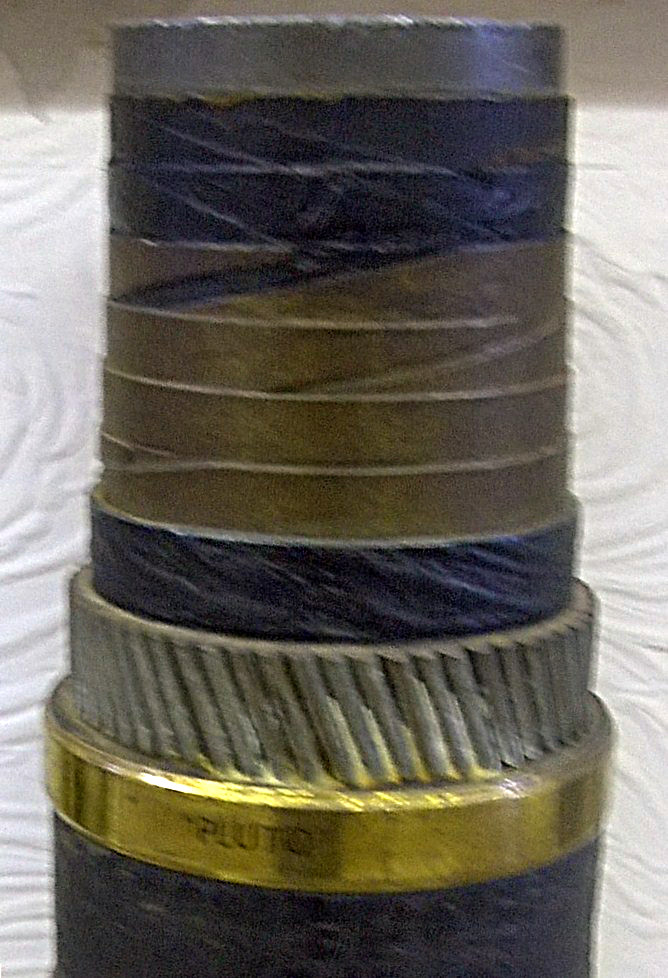
A sectioned piece of HAIS pipeline. Note the similarities to then-contemporary undersea cable construction. Credit: Geni, CC BY-SA 3.0
The first pipe developed as part of the scheme was HAIS. It was developed by Siemens Brothers and was in part the brainchild of Clifford Hartley, then Chief Engineer of Anglo-Iranian Oil and an experienced hand at delivering fuel pipelines in tough conditions. Thus the name—which stood for Hartly-Anglo-Iranian-Siemens. It used a 2-inch diameter pipe of extruded pipe to carry the fuel, surrounded by asphalt and paper doused in a vinyl-based resin. It was then wound with a layer of steel tape for strength, and then further layered with jute fiber and more asphalt and paper. The final layers were an armored sheath of galvanized steel wires and a canvas outer cover. The techniques used were inspired by those that had proved successful in the construction of undersea telegraph cables. As designed, the two-inch diameter pipe was intended to flow up to 3,500 imperial gallons of fuel a day when running at 500 psi.
HAIS pipe was produced across several firms in the UK and the US. Initial testing took place with pipe laid across the River Medway. Early efforts proved unsuccessful, with leaks caused by lead from the central core pushing out through the steel tape layer. The steel tape wraps were increased, however, and subsequent testing over the Firth of Clyde was more successful. Trials pushed the pipe up to 1,500 psi, showing that up to 250,000 liters of fuel could be delivered per day. The pipeline also proved robust, surviving a chance attack by a German bomb landing nearby. The positive results from testing led to the development of a larger 3-inch verison of the HAIS pipe to support even greater flow.
By this point in the war, however, supplies were becoming constrained on all sides. In particular, lead was becoming scarce, which spurred a desire for a cheaper pipe design to support Operation PLUTO. Thus was born HAMEL, named after engineers Bernard J. Ellis and H.A. Hammick, who worked on the project.
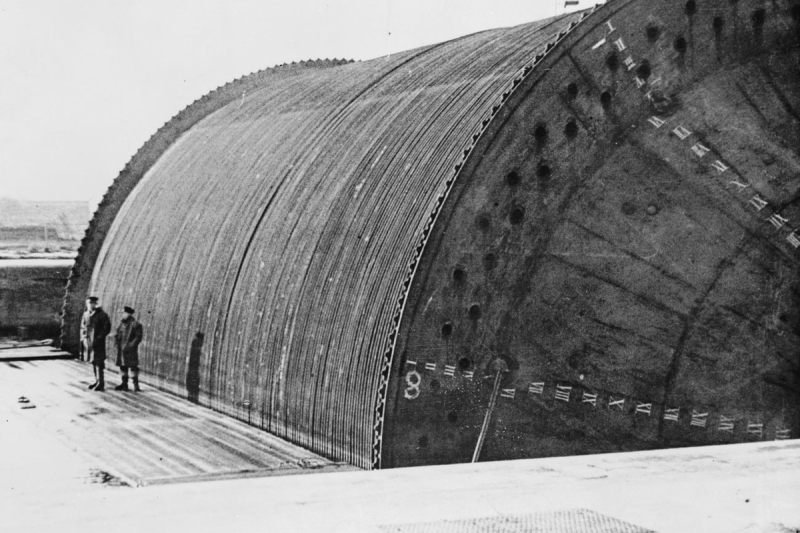
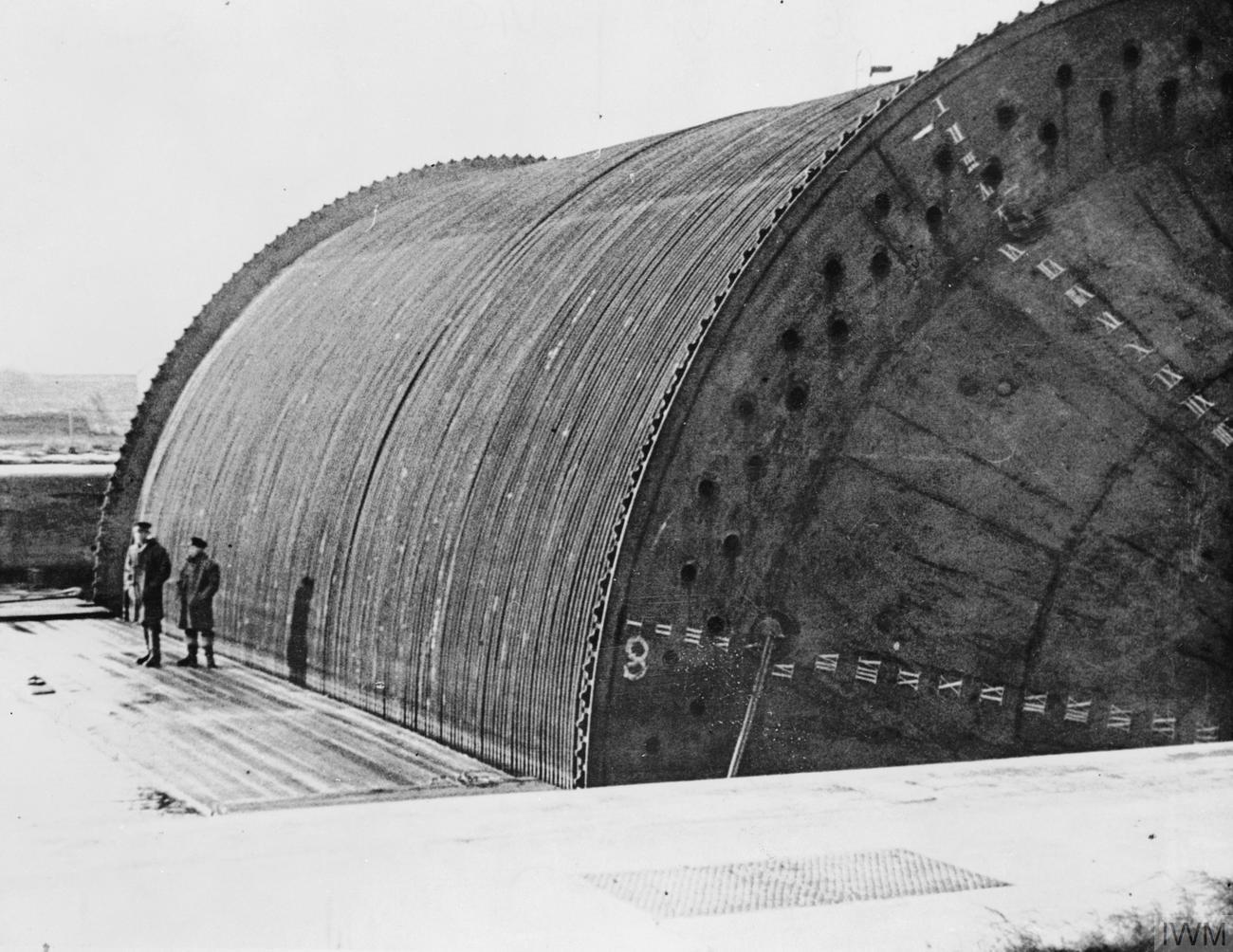
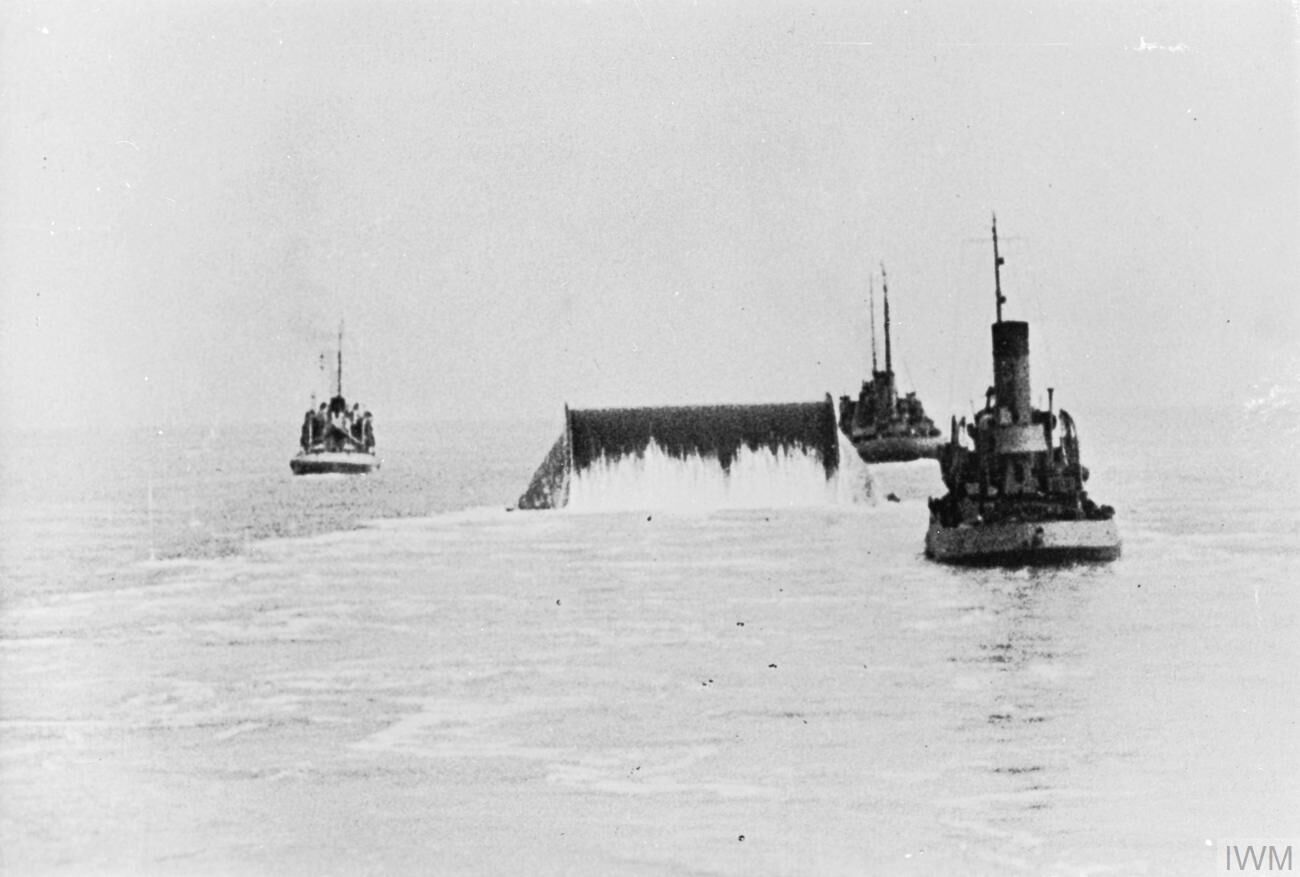
The HAMEL design concerned a flexible pipe constructed out of mild steel, at 3-½ inches in diameter. Lengths of the pipe were produced in 40-foot segments which would then be resistance welded together to create a longer flexible pipeline that could be laid on the seafloor. The steel-based pipe was stiffer than the cable-like HAIS, which caused an issue—it couldn’t readily be coiled up in a ship’s hold. Instead, giant floating drums were constructed at some 40 feet in diameter, nicknamed “Conundrums.” These were to be towed by tugs or hauled by barges to lay the pipeline across the Channel. Testing took place by laying pipelines to the Isle of Wight, which proved the concept was viable for deployment.
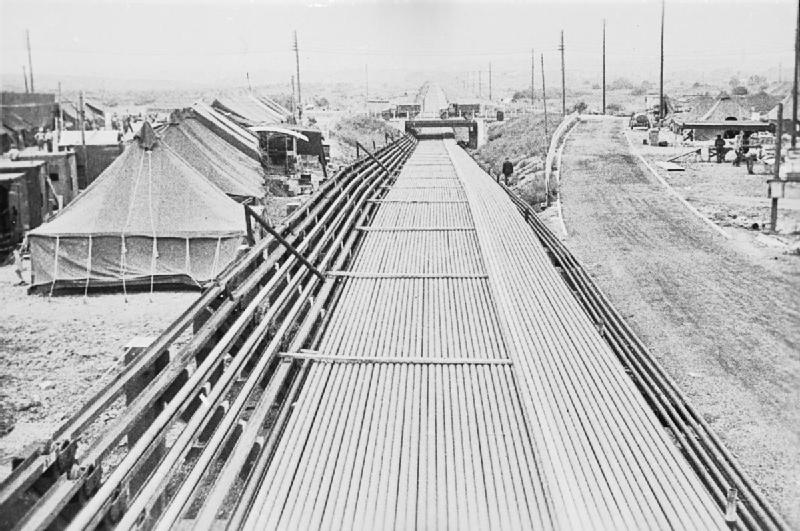
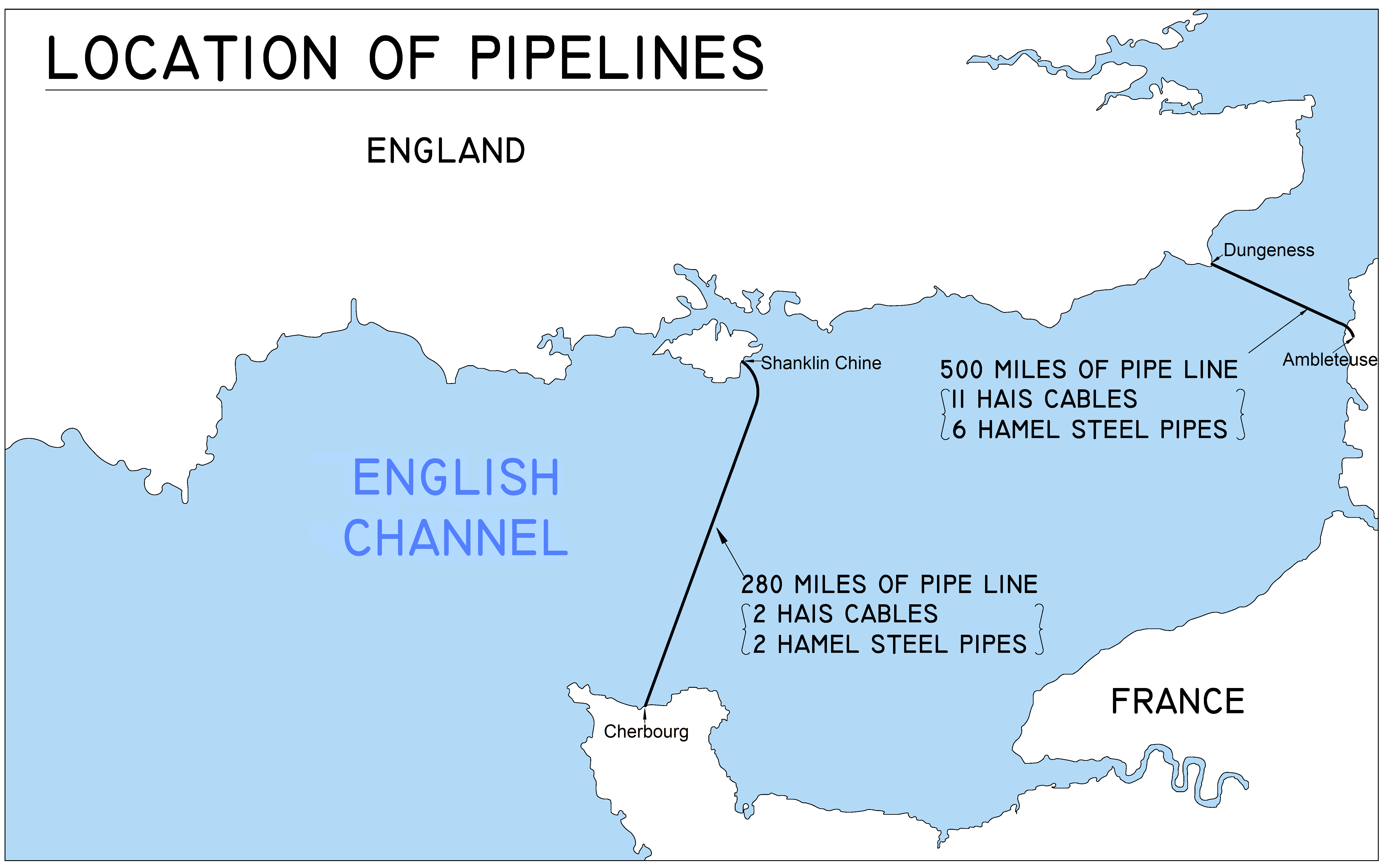
Beyond the two types of pipeline, a great deal of work went into the supporting infrastructure for the project. War planners had to build pumping stations to feed the pipelines, as well as ensure that they could in turn be fed fresh fuel from the UK’s network of fuel storage facilities and refineries. All this had to be done with a certain level of camouflage, lest German aircraft destroy the coastal pumping stations prior to the British invasion of the continent. Two main stations at Sandown and Dungeness were selected, and were intended to be connected via undersea pipe to the French ports of Cherbourg and Ambleteuse, respectively. The Sandown-Cherbourg link was to be named Bambi, while the Dungeness-Ambleteuse link would be named Dumbo, referencing further Disney properties since the overall project was called Pluto.
The Big Dance
On D-Day, the initial landings and immediate securing of the beachhead would run on pre-packaged fuel supplies in jerry cans and drums. The pipelines were intended to come later, ensuring that the Allied forces had the fuel supplies to push deep into Europe as they forced back the German lines. It would take some time to lay the pipelines, and the work could only realistically begin once the initial ports were secure.
A map indicating the Bambi and Dumbo pipelines between England and France. Notably, the Dumbo pipelines were run to Boulogne instead of the original plan of Ambleteuse. Credit: public domain
Bambi was intended to go into operation just 75 days after D-Day, assuming that Allied forces had managed to capture the port of Cherbourg within eight days of the landings. This process instead took 21 days due to the vagaries of war. Efforts to lay a HAIS pipeline began as soon as 12 August 1944, just 67 days after D-Day, only to fail due to an anchor strike by an escort destroyer. The second effort days later was scuppered when the piping was wound up in the propeller of a supporting craft. A HAMEL pipelaying effort on 27 August would also fail thanks to barnacles jamming the massive Conundrum from rotating, and while cleaning efforts freed it up, the pipeline eventually broke after just 29 nautical miles of the 65 nautical mile journey.
It wasn’t until 22 September that a HAIS cable was successfully installed across the Channel, and began delivering 56,000 imperial gallons a day. A HAMEL pipe was then completed on the 29 September. However, both pipes would fail just days later on October 3 as pressure was increased to up the rate of fuel delivery, and the Bambi effort was cancelled. Despite the great efforts of all involved, the pipelines had delivered just 935,000 imperial gallons, or 3,300 long tons of fuel—a drop in the ocean relative to what the war effort required.
A Conundrum pictured as it was towed to Cherbourg to lay a HAMEL pipeline as part of Operation Bambi. Credit: public domain
Dumbo would prove more successful, perhaps with little surprise that the distances involved were shorter. The first HAIS pipeline was completed and operational by 26 October. The pipeline was redirected from Dungeness to Boulogne instead of the original plan to go to Ambleteuse thanks to heavy mining by the Germans, and covered a distance of 23 nautical miles. More HAIS and HAMEL pipelines followed, and the pipeline would later be extended to Calais to use its rail links for delivery further inland.
A total of 17 pipelines were eventually laid between the two coasts by the end of 1944. They could deliver up to 1,300 long tons of fuel per day—soon eclipsing the Bambi efforts many times over. The HAMEL pipelines proved somewhat unreliable, but the HAIS cable-like pipes held up well and none broke during their use until the end of the war in Europe. The pipelines stuck to supplying petrol, while initial plans to deliver other fuels such as high-octane aviation spirit were discarded.
Once a key piece of war infrastructure, now a small part of a thrilling minigolf course. Credit: Paul Coueslant, CC BY-SA 2.0
Overall, Operation Pluto would deliver 370,000 long tons of fuel to support Allied forces, or about 8 percent of the total. The rest was largely delivered by oceangoing tankers, with some additional highly-expensive aerial delivery operations used when logistical lines were stretched to their very limits. Bulk fuel delivery by undersea pipeline had been proven possible, but perhaps not decisively important when it came to wartime logistics.
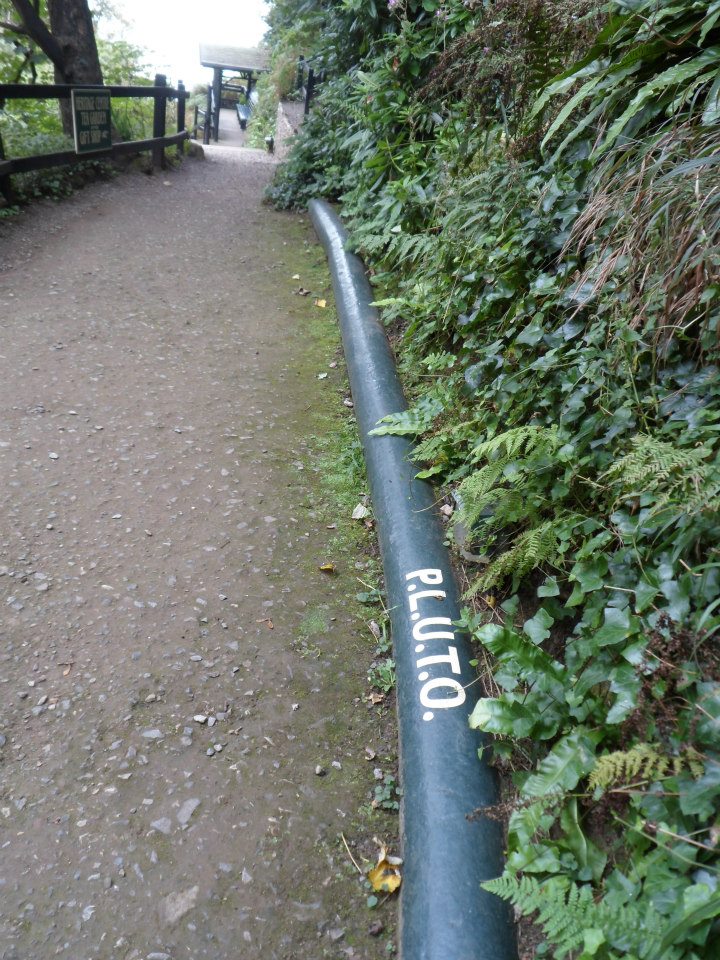
A small section of pipeline left over from Operation Pluto at Shanklin Chine on the Isle of Wight. Credit: Crookesmoor, CC BY SA 3.0
Arguments as to the value of the project abound in war history circles. On the one hand, Operation Pluto was yet another impressive engineering feat achieved in the effort to bring the war to an end. On the other hand, it was a great deal of fuss and ultimately only delivered a moderate portion of the fuel needed to support forces in theatre. In any case, there are still lingering reminders of Operation Pluto today—like a former pumping station that has been converted into a minigolf course, or remnants of the pipelines on the Isle of Wight.
Since World War II, we’ve seen precious few conflicts where infrastructure plays such a grand role in the results of combat. Nevertheless, the old saying always rings true—when it comes to war, amateurs discuss tactics, while professionals study logistics.
This morning, SentinelOne entered an agreement to acquire Observo AI—a deal that we believe will prove to be a major accelerator for our strategy and a key step forward in realizing our vision.
Data pipelines are key to any enterprise IT transformation. Data pipelines, On-premise, and cloud-native are the modern-day router for how all information technology runs. This is especially pronounced today with the need to make accessible highly sanitized, critically contextualized data into LLM-based systems, to truly unlock an agentic AI future. At the same time, enterprises need to critically move data from legacy systems, and into scaleable, ideally real-time-enabling technologies. A robust data pipeline that can move data from any source to any destination is a critical need to successfully modernize any IT environment, and on all clouds, including Microsoft Azure, AWS, and GCP, and even move data between them. All in a completely secure way. Modern data pipelines don’t stop at just routing data, they filter it, transform it and enrich it, inline, and in real time—an imperative for data efficiency and cost optimization.
Simply put, moving data freely between systems is a huge technological advantage for any enterprise, especially right now.
This is why we acquired Observo.AI, the market leader in real-time data pipelines. It’s a deal that we believe will have huge benefits for customers and partners alike.
We want to make it clear that we pledge to continue offering Observo’s data pipeline to all enterprises, whether they’re SentinelOne Singularity customers or not. We support complete freedom and control to help all customers to be able to own, secure, and route their data anywhere they want.
For security data specifically, data pipelines are the heart that pumps the blood. Unifying enterprise security data from all possible sources, end products and controls, security event aggregators, data lakes, and any custom source on premise or cloud based. As I mentioned above, the data pipeline juncture is a critical one for the migration of data.
The best security comes from the most visibility.Observo.AI will give SentinelOne the ability to bring data instantly into our real time data lake—allowing for unprecedented outcomes for customers, and marking a huge leap forward towards, unified, real time, AI-driven security, and one step closer to supervised autonomous security operations.
Data pipelines and the state of security operations
Today’s security operations teams don’t suffer from a lack of data. They suffer from a lack of usable data, latency, and relevant content.
The major culprit? Legacy data pipelines that weren’t built for modern, AI-enabled SOCs and today’s ever expanding attack surface. The result is increased cost, complexity, and delay—forcing compromises that reduce visibility, limit protection and slow response.
Enter Observo AI—a modern, AI-native data pipeline platform that gives enterprises full control over their data flows in real time.
With the acquisition of Observo AI, SentinelOne will address customers’ most critical security data challenges head-on.
Observo AI delivers a real-time data pipeline that ingests, enriches, summarizes, and routes data across the enterprise—before it ever reaches a SIEM or data lake. This empowers customers to dramatically reduce costs, improve detection, and act faster across any environment. As a result, we can create significant new customer and partner value by allowing for fast and seamless data routing into our AI SIEM, or any other destination.
It’s an acquisition and decision many months in the making—the result of an exhaustive technical evaluation, deep customer engagement, and a clear conviction grounded in the same disciplined approach we apply to all of our M&A activities. When you are thorough and do the hard work to identify the best possible technology, you can shorten the time to market and improve customer outcomes. And, in this case, the conclusion was clear: Observo AI is the best real time data pipeline platform on the market, by far.
Growing data, growing complexity and growing attack surface
As data volumes grow across endpoints, identity, cloud, GenAI apps, intelligent agents, and infrastructure, the core challenge is no longer about collection. It’s about control. Security teams need to act faster—across an ever expanding attack surface—with greater context and lower overhead. But today’s data pipelines are bottlenecks—built for batch processing, limited in visibility, static, and too rigid for modern environments.
To move security toward real autonomy, we need more than detection and response. We need a streaming data layer that can ingest, optimize, enrich, correlate and route data intelligently and at scale.
By joining forces with Observo AI, SentinelOne can deliver a modern, AI-native data platform that gives enterprises full control over their data flows in real time—allowing for fast and seamless data routing into our SIEM, or any other destination.
It also strengthens the value we’re already delivering with Singularity and introduces a new model for reducing data costs and improving threat detection, across any SIEM or data lake—helping customers lower data overhead, improve signal quality, and extract more value from the data they already have, no matter where it lives.
Legacy data pipelines give way to the next generation
Yesterday’s security data pipelines weren’t designed for autonomous systems and operations. They were built for manual triage, static rules, and post-ingestion filtering. As organizations move toward AI-enabled SOCs, that model breaks down.
Data today is:
Duplicated and noisy
Delayed in enrichment and normalization
Inconsistent across environments
Expensive to ingest and store
Dynamic in nature while solutions are rigid
The result is that too many security operations teams are forced to compromise— compromise for cost, for speed, for complexity, for innovation, and worse of all—compromise on the right visibility at the right time.
Observo AI is defining the next generation of data pipelines that change that by acting as an AI-driven streaming control plane for data. It operates upstream of SIEMs, data lakes, and AI engines—applying real-time enrichment, filtering, routing, summarizing, and masking before the data reaches storage or analysis. All this is achieved utilizing powerful AI models that continuously learn from the data.
It doesn’t just process more data. It delivers better data, faster, and with lower operational overhead.
The result is that teams can now harness the full benefit of all data in the SOC without compromise.
Observo AI’s real-time data pipeline advantage
Observo AI ingests data from any source—on-prem, edge, or cloud—and routes data to any destination, including SIEMs, object stores, analytics engines, and AI systems like Purple AI.
Key capabilities include:
Open integration – Supports industry standards and formats like OCSF, OpenTelemetry, JSON, and Parquet—ensuring compatibility across diverse ecosystems.
ML-based summarization and reduction – Uses machine learning to reduce data volume by up to 80%, without losing critical signal.
Streaming anomaly detection – Detects outliers and abnormal data in flight, not after the fact.
Contextual enrichment – Adds GeoIP, threat intelligence, asset metadata, and scoring in real time.
Field-level optimization – Dynamically identifies and drops redundant or unused fields based on usage patterns.
Automated PII redaction – Detects and masks sensitive data across structured and semi-structured formats while streaming.
Policy-based routing – Supports conditional logic to forward specific subsets of data—such as failures, high-risk activity, or enriched logs—to targeted destinations.
Agentic pipeline interface – Enables teams to generate and modify pipelines through natural language, not just static configuration files.
What We Learned from Evaluation and Customers
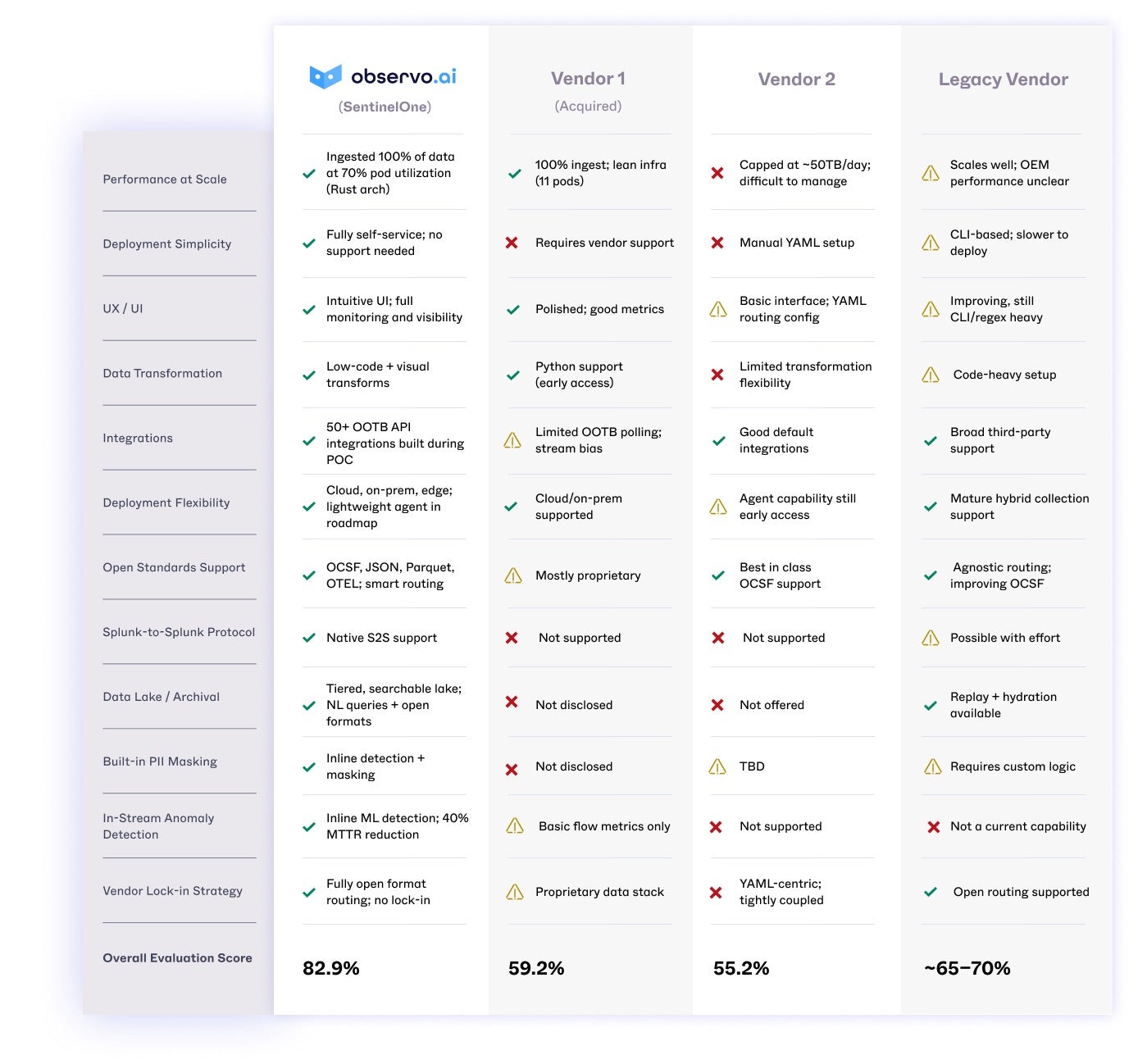
Prior to today’s announcement, we conducted a hands-on technical evaluation of the broader data pipeline landscape. We started with nine vendors and down-selected to four based on architecture, maturity, and extensibility.
To evaluate potential technology OEM partners, we conducted a structured scoring process across 11 technical dimensions, each representing a critical capability for scalable, secure, and high-performance data ingestion and transformation.
The evaluation criteria included:
Scalable data ingestion
On-prem and cloud collection support
Monitoring and UX
Speed of integrationBreadth of pre-built security integrations
OCSF mapping and normalization
Data transformations and enrichment capabilities
Filtering and streaming support
Sensitive data detection (PII)
Anomaly detection
Vendor lock-in mitigation (e.g., open formats, agnostic routing)
Meets Expectations – functionally sufficient, may require optimization or future roadmap improvements
Does Not Meet Expectations – unsupported or significantly limited
Final vendor scores were calculated by normalizing across all 11 categories, enabling a comparative ranking based on technical depth, deployment readiness, and extensibility. Based on this methodology, Observo emerged as the clear front-runner, outperforming all other solutions in performance, UX, protocol support, and time-to-value.
Observo AI emerged as the clear leader—scoring highest across nearly every category. It wasn’t close.
We also conducted dozens of SentinelOne customer interviews across industries—ranging from high-scale technology firms to Fortune 500 enterprises. These organizations often operate at ingest volumes in the tens of terabytes per day, with clear plans to scale past 100+ TB/day.
Across those conversations, one theme was consistent: Observo AI was the best—the only next-generation, highly scalable data pipeline solution that was in serious consideration.
Other solutions were seen as either too rigid, too complex to manage, or lacking in automation and scale. Some were viewed as solid first-generation attempts—good for basic log shipping, but not built for real-time, AI-enabled operations.
Observo AI stood out for its ease of deployment, intuitive interface, rapid time to ROI, and overall maturity across cost optimization, AI support, and customer experience. As Lucas Moody, CISO of Alteryx, put it: “Observo AI solves our data sprawl issue so we can focus our time, attention, energy, and love on things that are going to matter downstream.”
In summary
Legacy data pipelines built for another era are forcing compromises that reduce visibility, limit protection and slow response for security operations teams managing today’s SOC
Observo AI is the defining AI-native, real-time data pipeline that ingests, enriches, summarizes, and routes data across the enterprise—before it ever reaches a SIEM or data lake
With Observo AI we will help customers dramatically reduce costs, improve detection, and act faster across any environment
This will be an accelerant to our AI SIEM strategy and our data solutions—creating significant new customer and partner value and bringing the autonomous SOC one step closer to reality
We’re excited to welcome the Observo AI team to SentinelOne, and even more excited about what this unlocks for our customers—a data pipeline built for the age of AI and autonomous security operations.
For any customer looking to route, ingest or optimize any type of enterprise data, with its vast integration ecosystem, and ML driven pipelines, Observo.AI is the best technology in the market, and the fastest to deploy, to start seeing real outcomes—now.
Ransomware attacks, fueled by COVID-19 pandemic turbulence, have become a major money earner for cybercriminals, with the number of attacks rising in 2020. These file-encrypting attacks have continued largely unabated this year, too. In the last few months alone we’ve witnessed the attack on Colonial Pipeline that forced the company to shut down its systems […]

 Login
Login


 Exceeds Expectations – mature, production-grade capability
 Meets Expectations – functionally sufficient, may require optimization or future roadmap improvements
 Does Not Meet Expectations – unsupported or significantly limited