Some like it flat, and there’s nothing wrong with that. What you are looking at is the first prototype of Atlas by [AsicResistor], which is still a work in progress. [AsicResistor] found the Totem to be a bit cramped, so naturally, it was time to design a keyboard from the ground up.
Image by [AsicResistor] via redditThe case is wood, if that’s not immediately obvious. This fact is easily detectable in the lovely render, but I didn’t want to show you that here.
This travel-friendly keyboard has 34 keys and dual trackpoints, one on each half. If the nubbin isn’t your thing, there’s an optional, oversized trackball, which I would totally opt for. But I would need an 8-ball instead, simply because that’s my number.
A build video is coming at some point, so watch the GitHub, I suppose, or haunt r/ergomechkeyboards.
Flat as it may be, I would totally at least give this keyboard a fair chance. There’s just something about those keycaps, for starters. (Isn’t it always the keycaps with me?) For another, I dig the pinky stagger. I’m not sure that two on each side is nearly enough thumb keys for me, however.
The Foot Roller Scroller Is Not a Crock
Sitting at a keyboard all day isn’t great for anyone, but adding in some leg and/or foot movement throughout the day is a good step in the right direction. Don’t want to just ride a bike all day under your desk? Add something useful like foot pedals.
Brain-wise, it has a wireless macro keyboard and an encoder from Ali, but [a__b] plans to upgrade it to a nice!nano in order to integrate it with a Glove80.
Although shown with a NautiCroc, [a__b] says the wheel works well with socks on, or bare feet. (Take it from me, the footfeel of pedals is much more accurate with no shoes on.) Interestingly, much of the inspiration was taken from sewing machines.
As of this writing, [a__b] has mapped all keys using BetterTouchTool for app-specific action, and is out there happily scrolling through pages, controlling the volume, and navigating YouTube videos. Links to CAD and STLs are coming soon.
The Centerfold: LEGO My Ergo
Image by [Flat-Razzmatazz-672] via redditThis here is a Silakka 54 split keyboard with a custom LEGO case available on Thingiverse. [Flat-Razzmatazz-672] says that it isn’t perfect (could have fooled me!), but it did take a hell of a lot of work to get everything to fit right.
As you might imagine and [Flat-Razzmatazz-672] can attest, 3D printing LEGO is weird. These studs are evidently >= 5% bigger than standard studs, because if you print it as is, the LEGO won’t fit right.
Do you rock a sweet set of peripherals on a screamin’ desk pad? Send me a picture along with your handle and all the gory details, and you could be featured here!
Historical Clackers: the North’s was a Striking Down-striker
Although lovely to gaze upon, the North’s typewriter was a doomed attempt at creating a visible typewriter. That is, one where a person could actually see what they were typing as they typed it.
North’s achieved this feat through the use of vertical typebars arranged in a semi-circle that would strike down onto the platen from behind, making it a rear down-striker.
In order for this arrangement to work, the paper had to be loaded, coiled into one basket, and it was fed into another, hidden basket while typing. This actually allowed the typist to view two lines at a time, although the unfortunate ribbon placement obstructed the immediate character.
The story of North’s typewriter is a fairly interesting one. For starters, it was named after Colonel John Thomas North, who wasn’t really a colonel at all. In fact, North had very little to do with the typewriter beyond bankrolling it and providing a name.
North started the company by purchasing the failed English Typewriter Company, which brought along with it a couple of inventors, who would bring the North’s to fruition. The machine was made from 1892 to 1905. In 1896, North died suddenly while eating raw oysters, though the cause of death was likely heart failure. As he was a wealthy, unpopular capitalist, conspiracy theories abounded surrounding his departure.
Finally, MoErgo Released a New Travel Keyboard, the Go60
It’s true, the MoErgo Glove80 is great for travel. And admittedly, it’s kind of big, both in and out of its (very nice) custom zipper case. But you asked, and MoErgo listened. And soon enough, there will be a new option for even sleeker travel, the Go60. Check out the full spec sheet.
You may have noticed that it’s much flatter than the Glove80, which mimics the key wells of a Kinesis Advantage quite nicely.
Don’t worry, there are removable palm rests that are a lot like the Glove80 rests. And it doesn’t have to be flat –there is 6-step magnetic tenting (6.2° – 17°), which snaps on or off in seconds. The palm rests have 7-step tenting (6°-21.5°), and they come right off, too.
Let’s talk about those trackpads. They are Cirque 40 mm Glidepoints. They aren’t multi-touch, but they are fully integrated into ZMK and thus are fully programmable, so do what you will.
Are you as concerned about battery life as I am? It’s okay — the Go60 goes fully wired with a TRRS cable between the halves, and a USB connection from the left half to the host. Although ZMK did not support this feature, MoErgo sponsored the founder, [Pete], to develop it, and now it’s just a feature of ZMK. You’re welcome.
Interested? The Go60 will be on Kickstarter first, and then it’ll be available on the MoErgo site. Pricing hasn’t quite been worked out yet, so stay tuned on that front.
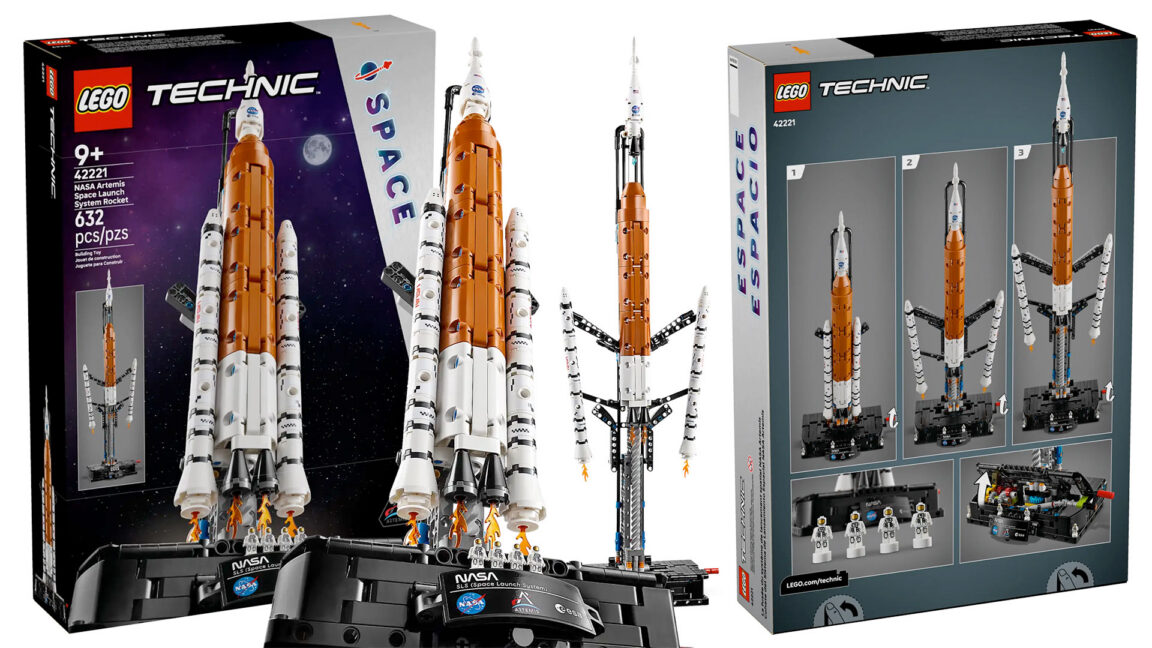
How do you top a highly detailed scale model of NASA’s new moon-bound rocket and its support tower? If you’re Lego, you make it so it can actually lift off.
Lego’s NASA Artemis Space Launch System Rocket, part of its Technic line of advanced building sets, will land on store shelves for $60 on January 1, 2026, and then “blast off” from kitchen tables, office desks and living room floors. The 632-piece set climbs skyward, separating from its expendable stages along the way, until the Orion crew spacecraft and its European Service Module top out the motion on their way to the moon—or wherever your imagination carries it.
“The educational LEGO Technic set shows the moment a rocket launches, in three distinct stages,” reads the product description on Lego’s website. “Turn the crank to see the solid rocket boosters separate from the core stage, which then also detaches. Continue turning to watch the upper stage with its engine module, Orion spacecraft and launch abort system separate.”
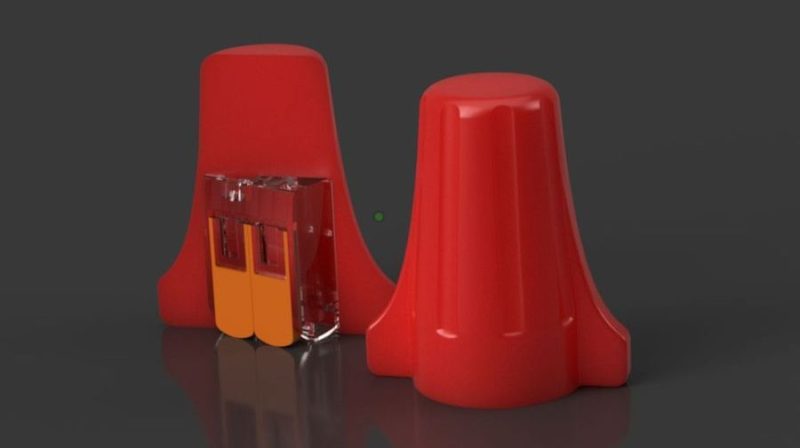
The idea behind the site is simple—it’s a place to discover and share unique little tools and accessories for use with Wago’s line of electrical connectors. Most are 3D printed accessories that make working with Wago connectors easier. There are some fun and innovative ideas up there, like an ESP8266 development kit that has a Wago connector for all the important pins, as well as a tool for easily opening the lever locks. Perhaps most amusing, though, is the project entitled “Hide Your Wago From Americans”—which consists of a 3D-printed wire nut lookalike designed to slide over the connectors to keep them out of view. There’s also a cheerful attempt at Wago art, that doesn’t really look like anything recognizable at all. Oh well, they can’t all be winners.
It’s great to see Wago so openly encouraging creativity among those that use its products. The sharing of ideas has been a big part of the 3D printing movement, and Wago isn’t the first company to jump on the bandwagon in this regard. If you’ve got some neat Wago hacks of your own, you can always let us know on the tipsline!
Reports have surfaced revealing an unusual spike in transaction activity on the XRP Ledger (XRPL) that appears to have come out of nowhere. These movements have been identified as AccountSet transactions, typically used to configure wallets on a large scale. The sudden emergence of these transactions on the blockchain has sparked speculation about the entity behind them.
XRP Ledger Records Bizarre Transaction Spike
The XRP Ledger has recently experienced an unprecedented surge in activity, with over 40,000 AccountSet transactions materializing out of the blue. Reports reveal that these transactions have nothing to do with payments or trading. Instead, it indicates that someone is preparing infrastructure on the ledger at an institutional scale.
According to analysts, these AccountSet transactions do not reflect regular user activity. They suggested that these activities are often employed to prepare infrastructure for segregated accounts, new custodial vault structures, rotate cryptographic keys, and establish compliance and metadata for wallets.
Analysts also note that multiple new wallets have been seen coming online in waves, each being configured with advanced security measures. The pattern is reminiscent of custodial and institutional wallet setups, where funds are segregated, controlled by several signatures, and prepared for high-level operational use.
Analysts have said that the timing of this sudden spike in AccountSet transactions is also notable, indicating that a new entity is establishing a significant presence on the Ledger. Experts have also observed corresponding and unusual movements across the ecosystem, including large withdrawals from Binance totaling tens of millions of XRP and increased inflows to Korean exchanges.
The recent activity spike across the ledger also indicates a planned initiative rather than spontaneous user transactions. While the entity responsible for these phantom XRPL transactions remains unknown, the sheer scale and abnormality of the AccountSet transactions have caught the attention of the broader crypto community, possibly indicating significant developments for the XRP ecosystem.
Analyst Breaks Down AccountSet Activity
A crypto commentator identified as D.T. on X has explained the significance of AccountSet transactions, describing them as a way to configure wallets on the blockchain rather than move funds. He says these transactions can include multisig security, adjusting account flags, updating access keys, and linking domain information. While normal users rarely engage with these features, the appearance of hundreds or even thousands of such transactions in a short period suggests institutional involvement.
D.T. highlights that custodians, exchanges, or other large players are usually behind such coordinated activities. The crypto commentator also mentioned BitGo, noting that the digital asset trust company has carried out similar transactions in the past. However, the recent 40,000 AccountSet transaction suggests that this time, BitGo may not be responsible. He has revealed that a completely different player may be behind it, likely orchestrating a large-scale operation on the XRP Ledger.
Crypto analysts Nik and Doctor Profit have provided insights into why the Bitcoin price is crashing today. The flagship crypto has again dropped below the psychological $90,000 level, sparking bearish sentiments among market participants.
Why The Bitcoin Price Is Crashing Today
In an X post, Nik remarked that the Bitcoin price didn’t dump because of bad news but because the “clock flipped.” He noted that a large number of algos sold off at the same time with the daily close, and also considering that it is a new week and a new month. The analyst added that it is not traders making decisions but portfolios rebalancing in real time.
Nik explained that with this Bitcoin price crash, inventories have adjusted, hedges have reset, and risk has been flushed from the market. He noted that the candles may look emotional, but that the behavior is mechanical. The analyst also indicated that retail investors may have also dumped their coins out of panic.
Nik stated that time-based algos usually ignite the sell-off, and then everyone is forced to react to their flow. He added that the effect was strong enough today to shake the Bitcoin price, with the crash dragging the broader crypto market along. BTC dropped below $90,000 today, after recovering to $92,000 last week.
Meanwhile, Nik stated that most people usually miss the signs of a potential Bitcoin price crash because they focus on patterns drawn by humans rather than flows controlled by machines. He added that the market doesn’t only react to price but also to time.
Not Yet Enough Liquidity For A Major Crash
In an X post, crypto analyst Doctor Profit said that there isn’t enough downside liquidity yet to trigger a major Bitcoin price crash. This is why he expects a sideways range between the current price and the EMA50, around $100,000, in the coming days or weeks. The analyst noted that the two largest liquidity clusters in the short term are at the $97,000 and $107,000 regions.
However, Doctor Profit remains bearish in the long term. He declared that a major move down is planned, but that the script must be followed and that the required liquidity is not yet in place. The analyst told market participants to expect a boring sideways phase with confirmed targets of between $70,000 and $75,000 by the start of 2026.
Doctor Profit reiterated that such moves to the downside for the Bitcoin price take time. He explained that the crash could unfold as a strong drop, followed by a long sideways consolidation, then a fake relief rally, and then the continuation of lower lows.
At the time of writing, the Bitcoin price is trading at around $85,800, down over 5% in the last 24 hours, according to data from CoinMarketCap.
Security failures have shaped the crypto industry for more than a decade, making reliable custody solutions essential for businesses managing large digital asset holdings.
On Monday, veteran game developer Rebecca Ann Heineman died in Rockwall, Texas, at age 62 after a battle with adenocarcinoma. Apogee founder Scott Miller first shared the news publicly on social media, and her son William confirmed her death with Ars Technica. Heineman’s GoFundMe page, which displayed a final message she had posted about entering palliative care, will now help her family with funeral costs.
Rebecca “Burger Becky” Heineman was born in October 1963 and grew up in Whittier, California. She first gained national recognition in 1980 when she won the national Atari 2600 Space Invaders championship in New York at age 16, becoming the first formally recognized US video game champion. That victory launched a career spanning more than four decades and 67 credited games, according to MobyGames.
Among many achievements in her life, Heineman was perhaps best known for co-founding Interplay Productions with Brian Fargo, Jay Patel, and Troy Worrell in 1983. The company created franchises like Wasteland, Fallout, and Baldur’s Gate. At Interplay, Heineman designed The Bard’s Tale III: Thief of Fate and Dragon Wars while also programming ports of classics like Wolfenstein 3D and Battle Chess.
Satellite imagery captured by the European Space Agency’s Sentinel-2 satellite has revealed the current position of U.S. Navy warships conducting joint operations with Trinidad and Tobago’s military forces in the southern Caribbean. The images, dated November 18, confirm the presence of the Iwo Jima Amphibious Ready Group (ARG) in waters north of Venezuela as part […]
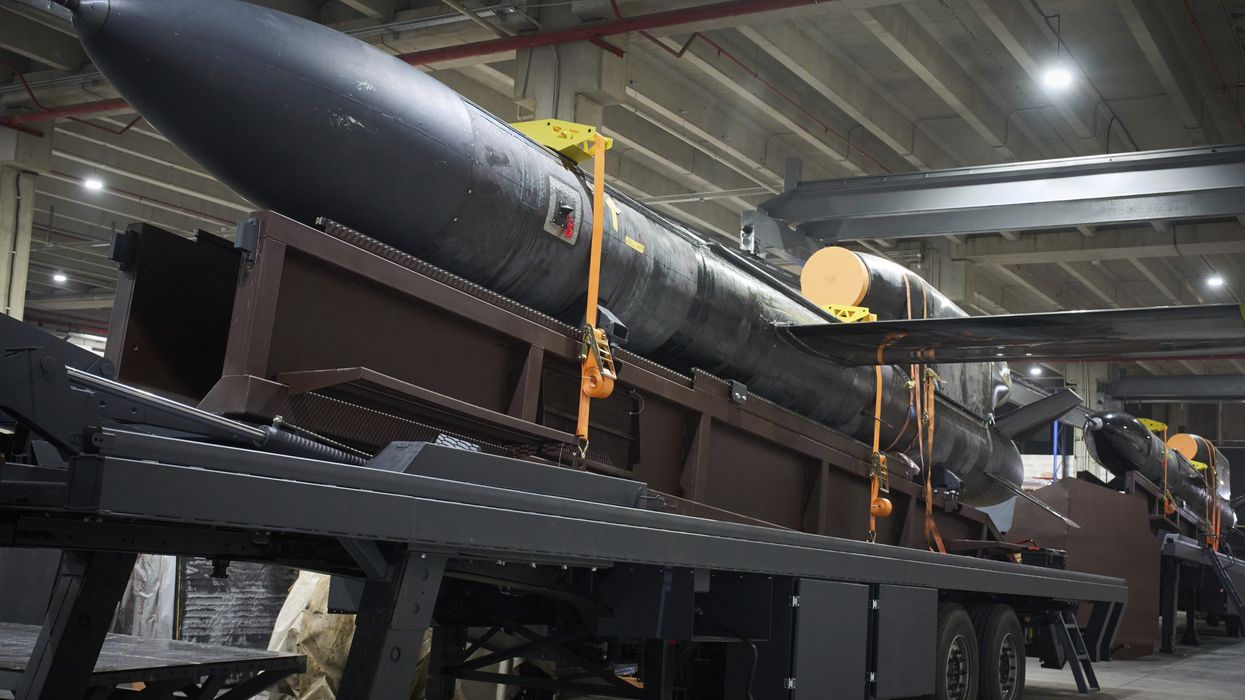
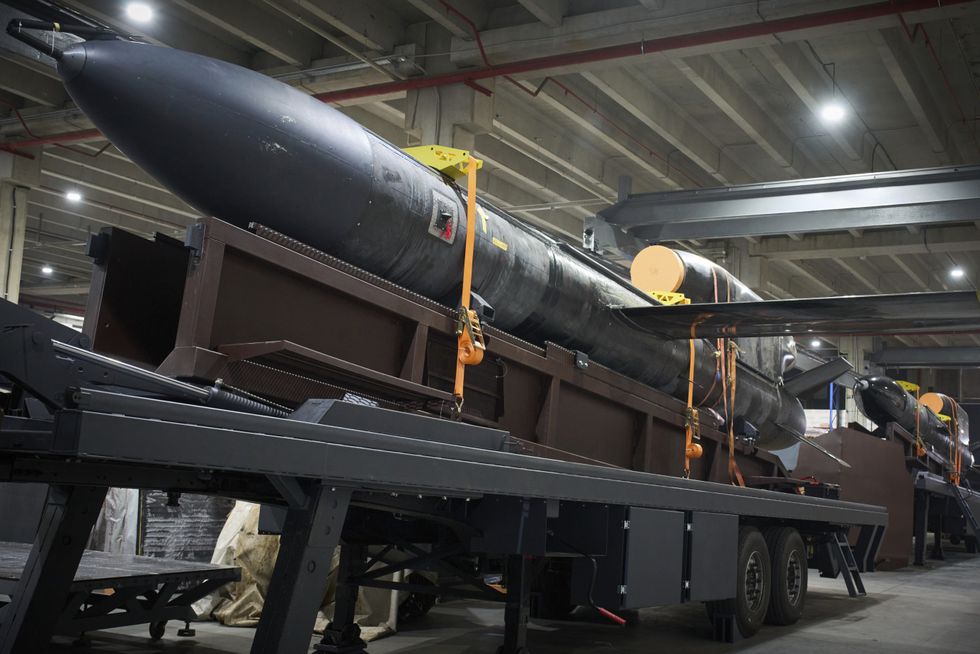
DEEP DIVE – Ukraine’s President Volodymyr Zelensky calls it “our most successful missile.” One expert says it’s "Ukraine’s strongest security guarantee.” And former CIA Director and Cipher Brief expert Gen. David Petraeus says it has the potential to be “a game changer” in the war against Russia.
They are talking about the FP-5 Flamingo, a ground-launched, subsonic, made-in-Ukraine cruise missile, built to hit targets deep in Russian territory.
Not since the first salvos of Russia’s 2022 invasion has Ukraine’s defense industry sounded so enthusiastic about a weapon manufactured on its soil. The successes of Ukrainian defense technology are well known; as The Cipher Briefreported last month, the country is now widely believed to have the world’s most innovative defense sector. Its drone technology in particular continues to earn rave reviews from experts and western defense companies alike.
But the Flamingo is something different – a missile with a reported range of 1800 miles and the ability to carry more than 2,000 pounds of munitions, meaning that in one strike it could cause greater damage than even a swarm of drones. Compared to the top-class American Tomahawk cruise missile, the Flamingo is believed to be less accurate but with a similar range and a much heavier payload. And because it is manufactured in Ukraine, the Flamingo can be launched against Russian targets without Western-imposed restrictions.
“The Flamingo may actually be a game changer,” Gen. Petraeus said at the Cipher Brief’s annual Threat Conference last month. “You add that capability to what Ukraine has already done,” he said, referring to the recent drone campaign against Russia’s oil sector, “and [the Flamingo] will extend this dramatically.”
Zelensky said last month that the Flamingos had carried out their first missions, including a three-missile attack on a Russian security base in northern Crimea. Last week, Ukraine’s General Staff said it had used Flamingos as part of a strike that targeted “several dozen” military and infrastructure sites inside Russia and in occupied Crimea.
The Flamingo’s manufacturer, the Ukrainian firm Fire Point, claims to be producing between 1-2 missiles per day, with plans to scale to 7 per day by year’s end, for a 2026 projected total of more than 2,500. "By December we’ll have many more of them,” Zelensky told reporters in August. “And by the end of December or in January–February, mass production should begin."
Experts say every one of those missiles will dwarf the power of a drone weapon.
“With the drone-strike campaign, you have the challenge that they mostly carry fairly small warheads,” John Hardie,Deputy Director of the Russia program at the Foundation for Defense of Democracies (FDD), told The Cipher Brief. “The damage is far less than you could do with a one-time warhead that’s carried by the Flamingo.”
All of which raises the question: Might the Flamingo change the course of the war?
How the Flamingo was born
Even by the lofty standards of Ukraine’s recent defense-tech achievements, the Flamingo’s origin story is an inspiring one. And it dates to the last days of the Cold War.
In the wake of the Soviet Union’s collapse in 1991, Ukraine agreed to give up not only its nuclear weapons but also its considerable arsenal of Kh-55 cruise missiles. And after Russia’s 2022 invasion of Ukraine, while Zelensky and other Ukrainian leaders pressed constantly – and with mixed success – for western weaponry and security guarantees, they also began turbocharging their domestic defense industry.
“Ukrainians were authors of the Soviet space program and rocket program,” Oleksiy Goncharenko, a member of Ukraine’s Parliament, told The Cipher Brief. “When you have a lot of experience and when your people are smart enough, then the result is obvious. You have technologies which other countries respect.”
For more than three years, however, Ukraine remained largely dependent on Western countries for high-end, long-range strike capabilities. That led to the creation of a made-in-Ukraine cruise missile program.
The result is the FP-5 Flamingo, developed by Fire Point, a former casting agency that spun itself into a defense firm in the summer of 2022. In 2023, Fire Point produced its first FP-1 attack drones, ultimately turning out 200 FP-1s that year; this year the figure is expected to hit 20,000. Its cruise missile project has moved at a similar warp speed: in August, less than a year after it began work on the cruise missile, the company was showing off the prototype; soon after that, the first Flamingos were flying.
“We came up with it pretty fast,” Iryna Terekh, the company's 33-year-old Chief Technical Officer, told Politico. “It took less than nine months to develop it from an idea to its first successful tests on the battlefield.”
Terekh and other Ukrainian defense entrepreneurs speak often about how the Russian invasion has motivated their work – what Goncharenko calls “the unfortunate inspiration of war.”Terekh fled a Russian-occupied village near Kyiv in the early days of the war, and says her car still has a hole from a Russian bullet. She joined FirePoint as a partner in June 2023.
Ralph Goff, a former Senior Intelligence Executive at the CIA, calls the Flamingo production story “combat Darwinism at its best.”
“If the West isn't going to give them the long-range weaponry that they want to carry out their strategic attacks, they'll develop them themselves,” Goff told the October Cipher Brief conference. The Flamingo, he said, “is a serious piece of offensive weaponry.”
As for the missile’s unusual name, that traces to an in-house story at Fire Point, about the day when someone painted a solid rocket booster prototype pink, in a nod to the women involved in the male-dominated world of weapons production. Later, when the missiles were ready for testing, the company needed a bright color to help locate post-launch debris. Pink paint was available – and that led to the Flamingo moniker. The Pink has gone – missiles used in actual strikes are colored less conspicuously – but “Flamingo” stuck.
“You don’t need a scary name for a missile that can fly 3,000 kilometers," Terekh said. "The main goal is for a missile to be effective.”
Need a daily dose of reality on national and global security issues? Subscriber to The Cipher Brief’s Nightcap newsletter, delivering expert insights on today’s events – right to your inbox. Sign up for free today.
Reality check
If Fire Point’s claims are borne out, the Flamingo will have a reach and power on par with western cruise missiles, and an arsenal to match any European nation’s other than Russia.
Experts warn that behind that “If” lie multiple concerns – most of them due to the fact that there has been minimal independent verification of the company’s claims.
“In the defense industry, it’s easier to make statements than to actually implement them,” Ukrainian lawmaker Roman Kostenko said of the Flamingo’s potential, speaking to Radio NV last month.
One issue involves accuracy, which experts say Fire Point had to sacrifice to a degree in its push for a low-cost, fast-to-market weapon. In the Crimea strike, one missile reportedly landed some 100 meters from its target.
“Because it's low-cost, you kind of skimp on some of the more high-end features you might see in a more exquisite missile, guidance and accuracy being one of them,” Hardie said. “It's a relatively inaccurate missile at least by modern standards.” But he added that if the pace of manufacturing ultimately yields the high numbers Fire Point has promised, then “that tradeoff [high volume for accuracy] makes sense.”
Balazs Jarabik, a former European Union diplomat and analyst for RPolitik, has studied the Flamingo project since its early days. He doubts that Fire Point can reach its production goals.
“The Flamingo is real, but the production capacity is overstated, at least so far,” Jarabik told The Cipher Brief. He noted that an earlier Ukrainian-made missile, the Neptune, has yet to reach its promised scale, and that for all its defense-sector successes, Ukraine must contend with wartime supply-chain issues that would bedevil any weapons manufacturers. He and Hardie said that scaling to hundreds of Flamingos per month will require consistent supplies of everything from engines to warheads to electronics for guidance systems.
“I'm a little skeptical, but it's possible the Ukrainians will get there,” Hardie said, and Gen. Petraeus said that the Ukrainians “really need to double down” on the pace of the Flamingo manufacturing. “They're trying to get that into full production.”
Fire Point must do so while Russia targets Ukraine’s young defense companies as well as the country’s energy infrastructure. The latter is critical, given the defense sector’s high demand for energy. For one piece of the Flamingo supply chain, the company has already found a workaround: in September, Fire Point announced that Denmark had agreed to produce fuel for the Flamingo, effectively removing a key production facility from the war zone. The announcement provoked a warning from the Kremlin, which called the Danish plans “hostile.”
That response raises the question of Russian retaliation – a concern that has accompanied the delivery of virtually every new weapons system to the Ukrainian side. Some experts fear that any successful, high-impact Flamingo strike against Russia, carried out with help from Western intelligence – the destruction of a weapons factory deep in Russian territory, for example – would risk a NATO-Russia fight that the West has been desperate to avoid. Others doubt that Vladimir Putin has any interest – at least not in the current moment – in any escalation that might lead to conflict with the West.
“The Russians have been consistently more bark than bite,” Hardie said. “They know that attacking a NATO country in an overt military way – not the sort of gray-zone, below-the-threshold-of-war stuff they've been doing, but an overt military missile strike – that's an act of war. And Putin doesn't want any part of a direct conventional fight with the United States and NATO allies.”
Are you Subscribed to The Cipher Brief’s Digital Channel on YouTube? There is no better place to get clear perspectives from deeply experienced national security experts.
What to watch for
Even analysts who are skeptical about the Flamingo’s future note that it would take only a few successful strikes to inflict severe damage, and that if Fire Point can get anywhere close to its 2500-missile-per-year pledge for 2026, the battlefield impact could be profound. Beyond the Russian oil refineries and other energy facilities the Ukrainians have attacked lately, the Flamingo will put more military targets in range as well. The holy grail might be the joint Russia-Iran manufacturing facility in Tatarstan that is turning out the deadly Shahed drones, at a scale that the Ukrainians must envy.
Experts say that with hundreds of Flamingos at the ready, Ukraine might achieve what Jarabik refers to as “mass saturation,” an ability to bring a heavy and varied drone-and-missile threat to military and energy targets across all of European Russia.
“If you're Ukraine,” Hardie said, “you'd like to be able to combine these missiles and drones into a complex strike package much as the Russians are currently doing, and keep the Russian air defense on its toes.”
“The Flamingo is heavy, and it’s also relatively easy to shoot down,” Jarabik said. “And so they will need mass saturation – a lot of these missiles, but with drones or other weapons too, to get through to the targets. They're going to have to produce enough that they can have a sustained impact, …and I don't think we're going to be there anytime soon.”
Then Jarabik added: “All that said, you have to acknowledge Ukraine’s innovation and skill. And I think [the Flamingo] is a big thing. Absolutely.”
As for the accuracy concerns, Ukrainian officials noted that while one of the Flamingos fired at Crimea did miss its mark, the two others leveled a barracks and brought a “massive destructive power,” with craters measuring 15 meters in diameter.
No one is touting the Flamingo as a replacement for the array of Western missiles that have been delivered to Kyiv. The Ukrainians will still covet the German Taurus, and the British-French Storm Shadow/Scalp cruise missiles, which are more accurate, though they come with conditions attached to their use. The diversity and volume of weapons systems, experts say, are what could make a real difference. And the Flamingo adds a powerful new element to the Ukrainian arsenal.
“No one system or weapon is going to be the decisive game changer,” Hardie said. “I don't think there's any such thing as a wonder weapon. That being said, for a supporter of Ukraine, it's really encouraging to see Ukraine being able to move out on its own more in terms of long-range strike capabilities. They are taking these steps forward and really taking it to the Russians right now with this campaign against energy infrastructure. That's been impressive to see and I think it kind of augurs more to come. So if I were the Russians, I would be worried about that.”
Read more expert-driven national security insights, perspective and analysis in The Cipher Brief because National Security is Everyone’s Business.
You know what’s not fun? Sorting LEGO. You know what is fun? Making a machine to sort LEGO! That’s what [LegoSpencer] did, and you can watch the machine do its thing in the video below.
[Spencer] runs us through the process: first, quit your day job so you can get a job playing with LEGO; then research what previous work has been done in this area (plenty, it turns out); and then commit to making your own version both reproducible and extensible.
A sorting machine needs three main features: a feeder to dispense one piece at a time, a classifier to decide the type of piece, and a distributor to route the piece to a bin. Of course, the devil is in the details.
If you want to build your own, you might want to track the new Sorter V2 that is under development. If you are building V1, you can find what you need on GitHub.
The 8845 LEGO Technic Dune Buggy original. (Credit: Matt Denton)
It’s part of the great circle of life that toys and scale models that provide a reflection of macro-sized objects like vehicles and buildings will eventually be scaled up again to life-sized proportions. Case in point the LEGO Technic dune buggy that [Matt Denton] recently printed at effectively human scale, while also making it actually drivable.
The basis for this project is the 8845 Dune Buggy which was released in 1981. Unlike the modern 42101 version, it’s more straightforward and also seems more amenable to actually sitting in despite featuring more pieces for a total of 174 pieces. Naturally, [Matt] didn’t simply go for a naïve build of the 8845 buggy, but made a few changes. First is the scale that’s 10.42 times larger than the LEGO original, based around the use of 50 mm bearings. The model was also modified to be a single-seater, with the steering wheel placed in the center.
With some structural and ergonomic tweaks in place, the resulting CAD model was printed out mostly in PLA with a 1 mm nozzle and 10% infill using a belt FDM printer to help with the sheer size of the parts. After that it was mostly a LEGO kit assembly on a ludicrous scale that resembles a cross between building a LEGO kit and assembling Ikea flatpack furniture.
At merely the cost of most of his sanity, [Matt] finally got the whole kit together, still leaving a few suspension issues to resolve, as it turns out that so much plastic actually weighs a lot, at 102 kg. With that and other issues resolved, the final touch was to add an electric motor to the whole kit using a belt-driven system on the rear axle and bringing every LEGO minifig’s dreams to life.
After a few test drives, some issues did pop up, including durability concerns and not a lot of performance, but overall it performs much better than you’d expect from a kid’s toy.
November TIOBE Index: Python stays No.1, C cements second; C++ and Java dip as C# surges. Perl returns to the top 10, Delphi rises, SQL holds, Go drops out.
Nov 2025 TIOBE: Python leads. C holds #2; C++ and Java dip as C# nears Java. Lower ranks shuffle — Perl returns, SQL at #10, and Go drops from the top 10.
Nov 2025 TIOBE: Python leads. C holds #2; C++ and Java dip as C# nears Java. Lower ranks shuffle — Perl returns, SQL at #10, and Go drops from the top 10.
DEEP DIVE – By any traditional definition, the city of Ryazan doesn’t belong on a list of battlegrounds in the Ukraine war. There are no Ukrainian soldiers or tanks deployed there, and it’s in western Russia, roughly 600 miles from the active front lines of Pokrovsk or Kupiansk.
But residents and officials in Ryazan – population 550,000 – wouldn’t be surprised to find their city on such a list. Ukraine has attacked Ryazan at least a half dozen times, as part of an escalating drone-and-missile campaign against Russia’s oil sector. Most recently, an oil refinery in Ryazan – Russia’s fourth-largest – was forced to shut down after an Oct. 23 attack by Ukrainian drones.
Ryazan is hardly alone.
Lt. Gen. Vasyl Maliuk, head of the Ukrainian Security Service, said last week that Ukraine has carried out more than 160 successful attacks on Russian refineries and other energy targets this year; an Open Source Centre investigation identified more than 90 strikes between Aug. 2 and Oct. 14. In the last week alone, Ukraine has struck an oil terminal and tanker in Russia’s Black Sea port of Tuapse; energy facilities in Russia's Oryol, Vladimir, and Yaroslavl regions; and the Koltsevoy, or “ring,” pipeline, which links refineries in Moscow, Ryazan, and Nizhny Novgorod, and supplies fuel to the Russian military. Earlier strikes damaged one of Russia's biggest oil refineries near St. Petersburg, and perhaps most impressive – from the Ukrainian point of view – the campaign has reached as far as the Siberian city of Tyumen, some 1200 miles east of Moscow.
Stretching the conventional notion of front lines is clearly part of the Ukrainian strategy; the strikes have forced the Kremlin to worry about drone and missile attacks across a broad swath of Russian territory. But the main aim is to hurt the Russian oil sector – the country’s richest revenue source, and a key reason why the Kremlin has been able to maintain the funding of its war machine.
“Ukraine’s theory of victory now includes destroying Russia’s energy sector,” Lt. Gen. Ben Hodges, a former commander of U.S. Army Forces in Europe, told The Cipher Brief. “They’ve developed capabilities that can reach great distances with precision, exposing Russia’s vulnerability – its inability to protect critical infrastructure across its vast landscape.”
Last week Ukrainian President Volodymyr Zelensky vowed to intensify the pace and scope of the campaign. “We must work every day to weaken the Russians. Their money for the war comes from oil refining,” Zelensky said in an Oct. 27 address to the nation. “The most effective sanctions - the ones that work the fastest - are the fires at Russia’s oil refineries, its terminals, oil depots.”
Zelensky also noted that 90 percent of the strikes have been carried out by Ukrainian-made drones and missiles – a not-so-subtle message to Europe and the U.S.: get us more of your long-range weapons, and we can help bring Russian President Vladimir Putin to the negotiating table.
“It’s very impressive,” said Balazs Jarabik, a former European Union diplomat and analyst for RPolitik, said of Ukraine’s campaign against the Russian energy sector. In an interview with The Cipher Brief, Jarabik said the attacks have“had an impact in terms of getting headlines, making the Russian war effort more expensive, and creating shortages so the Russian people feel the pain of the war.”
That’s also the aim of the recent U.S. sanctions against energy giants Rosneft and Lukoil, the first American economic penalties imposed on Russia since Donald Trump returned to office. The Treasury Department said the sanctions would “increase pressure on Russia’s energy sector and degrade the Kremlin’s ability to raise revenue for its war machine.”
While Ukrainian officials have welcomed the sanctions, they have also said that their drone and missile attacks pack a more powerful punch.
“Our strikes have already had more impact than sanctions,” Kyrylo Budanov, Ukraine’s head of Military Intelligence, said on Telegram following last week’s spate of attacks.
For their part, Putin and other Russian officials have downplayed the impact of the strikes while at the same time warning that they are dangerously escalatory. The Kremlin has also said that neither the attacks nor the sanctions will move them to change course in the war.
Experts say both sides may be right – that in the short term, the Kremlin can probably ride out the impact of the Ukrainian campaign, but that Russia may feel significant pain if the sanctions are enforced and the oil sector strikes continue.
“Russia’s oil refineries are a bit like a man who is being repeatedly punched,” Sergey Vakulenko, Senior Fellow, Carnegie Russia Eurasia Center, wrote in a recent assessment for Carnegie Politika. “He will not die from one punch, or even half a dozen punches. But it becomes harder and harder for him to recover after each subsequent blow. Although no single punch is fatal, he could end up being beaten to death.”
Need a daily dose of reality on national and global security issues? Subscriber to The Cipher Brief’s Nightcap newsletter, delivering expert insights on today’s events – right to your inbox. Sign up for free today.
Assessing the damage
To date, the Ukrainian strikes have hit 21 of Russia's 38 large oil refineries, according to the BBC, and several have been struck more than once. Roughly 20% of the nation’s refining capacity has been damaged or destroyed, and last month the International Energy Agency (IEA) reported that Russia's revenues from crude oil and refined products had fallen to their lowest level in a decade – excluding the period immediately following the COVID-19 outbreak.
"Persistent attacks on Russian energy infrastructure have cut Russian crude processing by an estimated 500,000 barrels per day, resulting in domestic fuel shortages and lower product exports," the IEA said. In an accompanying forecast, the agency said that if the sanctions remain in place and the attacks continue – even without Zelensky’s promised scaling-up of their cadence – the impact to Russia’s refining would stretch to at least mid-2026.
Beyond the macroeconomic impact, the Ukrainian campaign has also been felt by Russian citizens, in the form of higher fuel prices and – in some regions – shortages and long lines for gas.
“The economic impact of strikes against Russian energy infrastructure is beginning to be felt outside of Moscow, as Russia diverts available energy from the regions to keep Moscow supplied,” Rob Dannenberg, a former chief of the CIA’s Central Eurasia Division, wrote last week in The Cipher Brief. “There are shortages and energy price hikes that the Kremlin can no longer conceal.”
And in a broader reflection of Russia’s economic woes, this week the central bank downgraded the country’s growth forecast. Experts say the sanctions and Ukrainian strikes are a big part of the problem for Moscow.
“Ukraine’s attacks on Russian energy infrastructure are strategically meaningful and increasingly so,” Jacek Siewiera, a former head of Poland’s National Security Bureau, told The Cipher Brief. He said the strikes are serving three strategic functions: forcing Russia to divert efforts to rear-area defense; raising the overall cost of war by creating new logistical costs inside Russia; and a less tangible, more symbolic impact.
“These attacks send a message to Moscow and its economy that Ukraine – and its backers – can reach deep,” Siewiera said. “That has symbolic as well as material value.”
What comes next
Might the Ukrainian campaign alter the course of the war? Experts are divided on the question.
On the one hand, dozens of Russian oil sector targets are now within reach of Ukrainian missiles and drones – and it’s clear that Zelensky’s vow to expand and intensify the campaign is underway. An already-bruised industry in Russia is surely girding for more punishment.
But several experts said that in order to sustain the tempo and volume of the attacks, Ukraine will need help from the West or a significant boost to its own capabilities.
“Ukraine has made impressive inroads but it’s not yet clear whether the strikes will fundamentally degrade Russia’s war-fighting capacity,” Siewiera said. He and others echoed Zelensky’s point – that the West should support Ukraine’s deep-strike capabilities to boost the impact of the current attacks, and improve the odds that they will effect change in Moscow. Until then, Siewiera said, it’s unlikely that the campaign can deliver “a knockout blow.”
Jarabik agreed, noting that Ukrainian drones typically carry payloads of only 50-60 kilograms (roughly 110-130 pounds); long-range missile systems can inflict far greater damage. He and others said that much will depend on the success of the Ukrainian-made Flamingo missile – which has been touted as a homegrown alternative to western long-range weapons. Officials say the Flamingo is now operational, and that it can carry more than 1,000 kilos (2000+ pounds), with a range of roughly 1800 miles.
“I think we are going to see the Ukrainian strikes increasing,” Jarabik said. “The big question here is whether Ukrainians are going to have the missile capabilities to scale the attack.” At the current rate, he said, Ukraine cannot compel the Kremlin to alter its approach. “So far, neither the sanctions nor this (campaign of strikes) is actually enough to bring the end of the war. Russia has the means to continue.”
All those interviewed for this piece agreed that the success of the Ukrainian campaign will depend on whether Ukraine can hit more targets, more frequently, and with heavier payloads.
“As Ukraine continues to improve its long-range precision strike capability – and if the West adds its own weapons to Ukraine’s arsenal – the impact is going to increase significantly,” Lt. Gen. Hodges said. And that, he said, “could lead to a successful outcome for Ukraine.”
Read more expert-driven national security insights, perspective and analysis in The Cipher Brief because National Security is Everyone’s Business.
November TIOBE Index: Python stays No.1, C cements second; C++ and Java dip as C# surges. Perl returns to the top 10, Delphi rises, SQL holds, Go drops out.

 Login
Login









 Satellite imagery captured by the European Space Agency’s Sentinel-2 satellite has revealed the current position of U.S. Navy warships conducting joint operations with Trinidad and Tobago’s military forces in the southern Caribbean. The images, dated November 18, confirm the presence of the Iwo Jima Amphibious Ready Group (ARG) in waters north of Venezuela as part […]