
Reading view

There are new articles available, click to refresh the page.

What keeps recreational boaters safe, and what happens if the funding dries up?


Interview transcript:


Terry Gerton The nation’s waterways may have some more reckless driving on them. Among the Trump administration’s cuts to government spending, the Coast Guard planned to cut funding for boating safety grants to states and nonprofits. To find out what this could mean for the maritime community, and to get a little more insight into how they work, Federal News Network’s Eric White spoke with David Kennedy, government affairs manager for the boat insurance company BoatUS.

Eric White Mr. Kennedy, thanks for joining us.

David Kennedy Thanks, Eric, for having me.

Eric White So how does this Coast Guard recreational boating safety grant work, or how do these grants work? You know, how much are we talking about here and where does the money necessarily go to?

David Kennedy What we’re initially talking about here are the Coast Guard Nonprofit Recreational Boat Grants, which I am happy to report have been renewed for 2025, which was one of the things that was in question, but we have those going forward. And these go out to several different groups, and I’ll say including the BoatUS Foundation for Clean Water and Safe Boating. But it’s used for a variety of issues. One of the groups is the National Association of Boating Law Administrators, and these are the state-level folks who really deal with recreational boats in their states and their safety programs. It trains law enforcement, local law enforcement and the operation of boats, helps coordinate, gives us uniform laws. Another group supported by it is the American Boat and Yacht Council, which is really the standard-setting body for the design of recreational boats, making sure we have safe recreational boats. So overall, this program is supported through the something called the Sport Fish Restoration and Boating Trust Fund. This is a program that takes the taxes paid by boaters through motor fuel tax, tax on fishing equipment, about six different sources of funds, that then goes back out to boating safety and boating access and environmental programs. So it’s a long-standing program that we have a lot of support for. The nonprofit grants are about $6.5 million a year. The overall trust fund is in the neighborhood of $650 million to $700 million dollars per fiscal year.

Eric White Okay. And so from that fund, there is also some federal funding that comes into play here. Those go to fund boating safety programs and the like. Do I have that correctly, or what is the government participation in this?

David Kennedy Sure. So like I said, it’s talking about the Sport Fish Restoration and Boating Trust Fund that takes in boaters’ taxes, and anglers — I should say recreational anglers. So every time you buy a fishing pole, there’s a tax on that. And those funds come into the come into the federal government and they’re then dispersed back out to programs that benefit the end users. So we call it a “user-pay, user-benefit” program. The nonprofit grants are one example. It also funds Coast Guard’s program to the states for their boating safety programs. So you go to Virginia or Maryland, they have their state DNR, or every state does it a little bit differently, that provides a level of their funding as well. And that also is matched by boat registration fees and other fishing licenses, so that it’s a real compounding effect. We call it a cycle of success that really supports the overall system that then our members go out and enjoy.

Eric White We’re speaking with David Kennedy, the manager of government affairs at BoatUS. All right, so then the idea came about, hey, let’s stop all that. Let’s cut that bit of funding out, reallocate resources, whatever they had planned for. What was the controversy at stake?

David Kennedy I think the question was folks not really understanding what the program was and what it did. And so that’s where roles for association like BoatUS come in. And we were able to have a dialog with the administration, with the folks in Congress who support us. We have great support from the House Transportation Committee Chairman Graves and Ranking Member Larsen, from Sen. Cruz and Sen. Cantwell, and just to bring them up to speed on what this program means and how it is able to go out and support and, as I said, we’re able to happily report that it has in fact been funded for 2025. Now, you know, it’s certainly incumbent on us to continue to make sure folks understand why this is important and how it goes back into the programs that the boaters and the anglers all support.

Eric White Not to have you have to rehash old turf, but what was in your pitch in those conversations with the government officials on the effect that these grants have on boating safety and any other restoration efforts?

David Kennedy I think for a number of the nonprofits that get this group, this is a decent part of their funding. And they were going to have to make some hard choices about which you know which programs they were able to support, which they could do going forward. So I think it was helping them to understand what these programs did. And I’ll go back to the example of the National Association of State Boating Law Administrators, where they really provide a link between Coast Guard and the states, and the state on water law enforcement. So I think that was that was a piece of it. Understanding the standard-setting piece of it and how that really makes the whole process of getting safety design updates out there into the system. And at this point, the you know, the U.S. standards are the world standards. You know, everybody looks to the United States and to ABYC for how they’re going to safely design a boat. And we wanted to make sure folks understood that keeping that piece running was important. So those were some of the things we touched on. And then we do things like, we have a life jacket loaner program. So, you know, you’re going to take the grandkids out and you don’t have a child-sized life jacket. Well, you can come to BoatUS and borrow one. So there’s programs like that as well that are just real simple, good safety and make it so people can go out and have fun and be safe on the water.

Eric White Can you give us a snapshot of the effect that programs like this have on boating safety and where we stand as a country when it comes to boating safety? Growing up here in Maryland, I still see that the waterways are as crowded as ever. But as we know, more participation means more potential situations for trouble. Where do things currently stand?

David Kennedy That’s the good news. It’s a very safe activity. And like anything, you have to be cautious and think about the risks. But overall, in 2024, we had the lowest number of fatalities that we’ve had since they started keeping records. In 1971, they passed the [Federal Boat Safety Act]. The estimate is that we’ve prevented over 100,000 deaths since that passed. So I think all of these programs are going to improve boating safety, but we’ve got to continue that work. And that was one of the things that we emphasized when we were discussing this program and continue to do. I mean you speak about Maryland — Maryland was actually the first state that put in a requirement for on-water education, or for boater education, I should say. And since then, that that concept has really spread across the nation. And in fact, BoatUS’s own foundation, we’re the largest provider of free online boating education. So people can come to boatus.org and they can get their boater education certification … and again, that’s how we’re keeping boating safe and trying to improve that. So those are the kinds of things that this all supports.

Eric White On that theme of continuance, you had mentioned that you know, you’re all set for 2025, after having to do a little bit of lobbying on your part. What do things look like going forward? Do you think that you’ll be able to maintain that level of communication with the powers that be, you know, whether or not any different personnel may be involved?

David Kennedy I mean, I believe so, but that’s my job to believe such things. And again, we’ve got a great working relationship with the Coast Guard and with the Department of Homeland Security. I always will point out to folks when people are 18 years old and deciding to go to the Coast Guard Academy for their career, they did it because they wanted to help people. And so that’s why it’s such a great agency to work with. The trust fund is up for reauthorization in the coming year. It’s done about every five years. The legislation has been introduced, it’s bipartisan. This is one of these issues that is supported by everyone out there. They understand how it works, and there’s a really good community of interest groups like ourselves that work with and make sure that folks understand that this works. So I remain optimistic. It really is a system that that feeds itself. I think you get to boaters and anglers, they understand that we’ve got the most interest in protecting the resource and we’ve got to contribute to it. So I feel like we’ll be okay. But we have to continue to tell the story and let folks know why it’s important.

The post What keeps recreational boaters safe, and what happens if the funding dries up? first appeared on Federal News Network.

© The Associated Press
FILE - In this July 23, 2018, file photo, the duck boat that sank in Table Rock Lake in Branson, Mo., is raised. Federal officials are reviewing cellphones, a camera and a recording device found with the duck boat that sank in a storm last month in southern Missouri, as part of investigations into the disaster that killed 17 people. The National Transportation Safety Board provided few new details in a preliminary report issued Tuesday, Aug. 7. (Nathan Papes/The Springfield News-Leader via AP, File)

As shutdown ends, dubious CDC panel gets back to dismantling vaccine schedule

By: Beth Mole

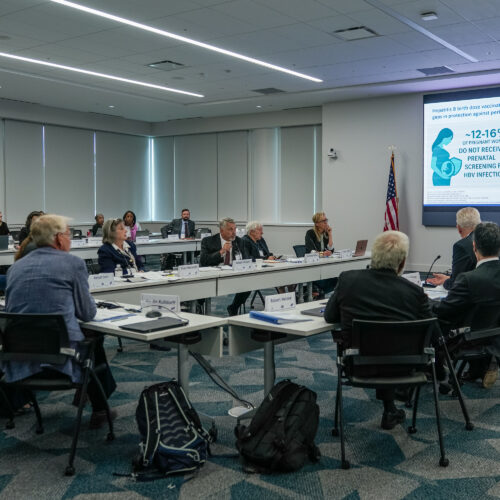
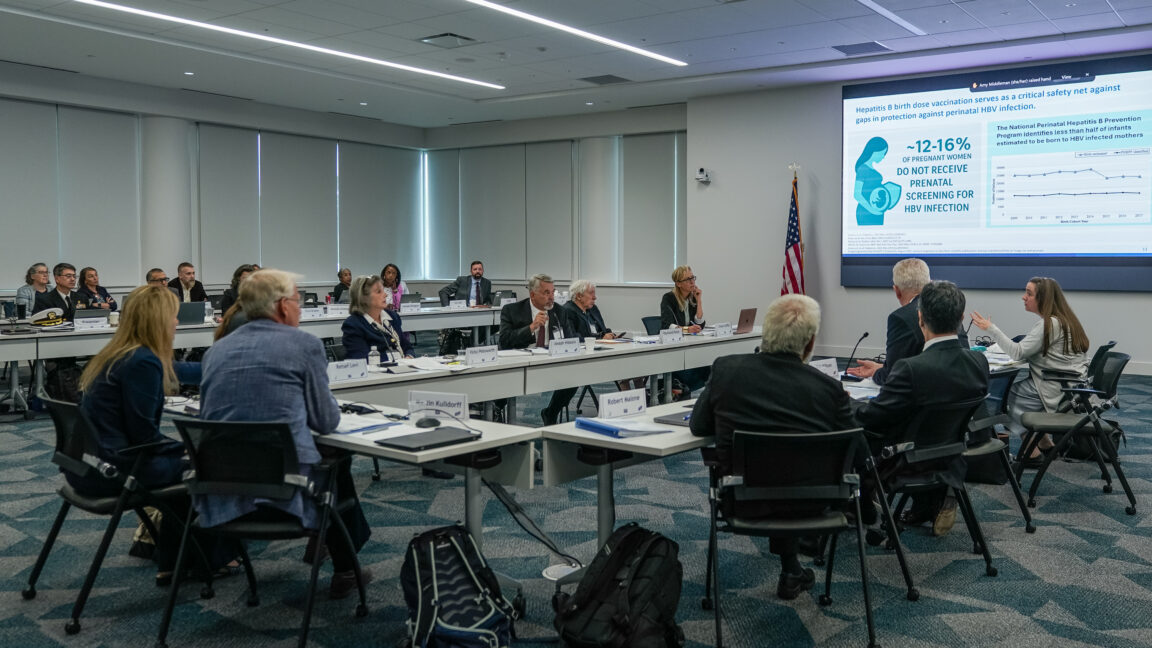
With the government reopening, the dubious panel of vaccine advisors selected by anti-vaccine Health Secretary Robert F. Kennedy is wasting no time getting back to dismantling the federal childhood vaccine schedule.

A meeting that was scheduled for October but put on hold during the shutdown has already been rescheduled for December 4 and 5. A Federal Register notice Thursday said that the meeting will “include discussions on vaccine safety, the childhood and adolescent immunization schedule, and hepatitis B vaccines.” The announcement was light on information beyond that but indicated that there would be a vote on hepatitis B vaccines.

The panel—the Advisory Committee on Immunization Practices (ACIP) for the Centers for Disease Control and Prevention—is typically composed of preeminent, extensively vetted vaccine experts. But, in June, Kennedy summarily fired all 17 experts on the panel and installed 12 new members, almost all of whom are questionably qualified and espouse anti-vaccine views.

Read full article

Comments

© Getty | Elijah Nouvelage

2026 Open Season Exchange: OPM’s Shane Stevens on big-picture plans for FEHB, PSHB


Participants in both the Federal Employees Health Benefits and Postal Service Health Benefits programs may have more incentive than usual to take advantage of Open Season, as premium costs continue to surge in yet another year of double-digit percentage increases.

For 2026, FEHB premiums are rising by an average of 12.3% for enrollees, while those in PSHB will see their premium costs rise by an average of 11.3%. It comes after premiums increased by about 13.5% and 11.1% for FEHB and PSHB respectively in 2025.

Shane Stevens, associate director of healthcare and insurance at the Office of Personnel Management, acknowledged what he said was a “frustrating environment” for insurance enrollees who are facing continually rising premium costs.

“Health care costs have become somewhat unsustainable,” Stevens said during Federal News Network’s 2026 Open Season Exchange. “I’ve watched employees have to get second jobs to get insurance and cover it. I’ve watched where they’ve reduced the amount of coverage in order to afford it. In some cases, they’ve gone completely without insurance.”

Combating federal health insurance premium cost increases

To try to combat rising premiums costs, Stevens said OPM’s strategy will revolve around reducing “fraud, waste and abuse” in the government’s insurance programs.

“We have a fiduciary responsibility to the taxpayers, to our plan participants, the retirees, the current federal workers. Yet we have very little insight into what we’re actually spending this coming year,” he said. “We’re working very hard to try and get all of this information, all of this data, to be able to make good decisions, which will help us to detect fraud, waste, abuse and overpayments.”

OPM is also on a one-year deadline to implement recently added requirements from the One Big, Beautiful Bill Act. One provision of the reconciliation bill, called the FEHB Protection Act, requires OPM to create a system for verifying the eligibility of FEHB enrollees. The bill also directs OPM to include eligibility audits in any fraud risk assessments of the program.

The push in Congress came after the Government Accountability Office in 2022 found that OPM may be spending up to $1 billion annually on ineligible FEHB enrollees. Removing ineligible members, however, would reduce costs to the government but not necessarily lower premiums for beneficiaries directly.

“If we get the data and the information we need, I’m convinced that we could save approximately 7% to 8% per year,” Stevens estimated.

Addressing staff needs, other challenges within OPM

OPM’s insurance programs are facing other major challenges as well. The platform for the PSHB program in particular is at risk of an operational failure, according to OPM’s inspector general office. An OIG report over the summer found that staffing shortages at OPM this year, coupled with funding issues, may negatively impact enrollees’ experience or ability to change enrollments during Open Season.

On top of that, GAO recently reported that the staffing shortages at OPM are hindering the agency’s ability to address risks of fraud in the FEHB program.

When asked how OPM has responded to the watchdog’s concerns, “We do believe our staff can work effectively through everything,” Stevens said, adding, “In the short run, we’ve improved our systems and our processes to where we’re not concerned about delays or challenges.”

Stevens added that he plans to roll out more artificial intelligence tools for participants to use in the enrollment process for future years of Open Season.

Emulating the ‘Make America Healthy Again’ agenda

In addition to addressing fraud and saving costs, Stevens also described his goal of shifting the government’s insurance programs toward what he described as a “well care model,” as opposed to what he describes currently as a “sick care model.”

“We want to move more toward a holistic approach and something to where we’re not doing a pharmaceutical-first type of intervention, or where we have faith-based behavioral health care to where they can give true solutions,” he said.

“If we get healthier and we start making better health decisions, then we’re going to be able to reduce the costs, the premiums,” Stevens added.

It’s not yet entirely clear what OPM may change in the FEHB or PSHB programs based on the big-picture priorities Stevens outlined during the interview.

But for 2026, OPM already made one distinct change: Carriers were required to end coverage of all gender-affirming care, in line with an executive order from President Donald Trump earlier this year.

Enrollees who are mid-treatment for gender-affirming care can still continue receiving coverage, according to OPM’s new requirements, but the definition of “mid-treatment” is determined individually by each health carrier. Federal health plan experts have recommended that those impacted by OPM’s change check their carrier’s plan brochure for more details.

Going forward though, Stevens also expressed interest in reconsidering coverage of GLP-1 medications, a class of drugs that are prescribed to treat diabetes and obesity.

“We want to look at utilizing these as a tool for weight loss or for treatment of diabetes,” Stevens said. “However, we don’t want it to be viewed as the end-all be-all of, ‘this is going to save me.’”

Currently, OPM requires all carriers to cover at least one type of GLP-1 for enrollees, prescribed for weight loss. It’s a requirement that health care experts have said is a positive development and ahead of the curve compared with the private sector.

But Stevens said he wants to encourage physical exercise and nutrition over GLP-1s, through the government’s insurance programs. That type of change, he said, may also lead to some cost savings.

“I want to try and move away from that, move more to incentivizing providers to have good health outcomes for their patients versus prescribed medications,” he said.

Stevens’ approach for what he sees for the future of FEHB and PSHB mirrors goals of the Trump administration’s larger push toward the “Make America Healthy Again” agenda.

Stevens, for instance, discussed what he views as a “broken” health care system that focuses on prescriptions first — emulating a sentiment that Health and Human Services Secretary Robert F. Kennedy Jr. has expressed and that has influenced some of the Trump administration’s major health initiatives.

RFK’s MAHA report from May outlined contentious views on vaccines, the nation’s food supply, pesticides and prescription drugs. The HHS report, parts of which have received strong criticism, additionally includes increased scrutiny of childhood vaccines and “fear-based” views on farming chemicals, while also blaming ultra-processed foods for unhealthy Americans.

“We truly have a secretary of health that’s fighting for the real overall well-being of health. We have a president that truly cares about it, and then we have a lot of appointees that are trying to make a big difference,” Stevens said. “It’s a massive shift in the paradigm of how we look at health care — really looking at outcomes versus prescriptions and a lot of the things that have made us an unhealthy population.”

Encouraging Open Season action

In the immediate term, Stevens encouraged participants in FEHB and PSHB over the next several weeks to take advantage of Open Season. Participants have until the enrollment window closes on Dec. 10 to spend time looking at plan brochures and comparing various insurance options that are available to them.

The push to take action during Open Season comes as relatively few insurance enrollees end up selecting a different plan each year.

“Change is tough, change is scary, and a lot of times I think people would just rather stick with their current plan and do the same, regardless of how much it could cost them more,” Stevens said. “It will surprise a lot of people in seeing that if they were to shift over to a different type of plan that they could save a substantial amount of money.”

For measuring this year’s Open Season success, Stevens said he will be looking for any potential shifts in the statistic that just 5% of enrollees change their plans each year.

“We encourage everybody to take the time — I’m talking maybe an hour of your time — to jump in and look at the different tools that we’ve created and make sure that you’re picking the plan that’s best for you,” he said. “We’ll take all of that in and see what we can do to improve our systems and processes to make it even better next year.”

Discover more articles and videos now on our 2026 Open Season Exchange event page.

The post 2026 Open Season Exchange: OPM’s Shane Stevens on big-picture plans for FEHB, PSHB first appeared on Federal News Network.

© Federal News Network

2026 Open Season Exchange (5)
❌