❌

Reading view

There are new articles available, click to refresh the page.

Kimchi Omelette

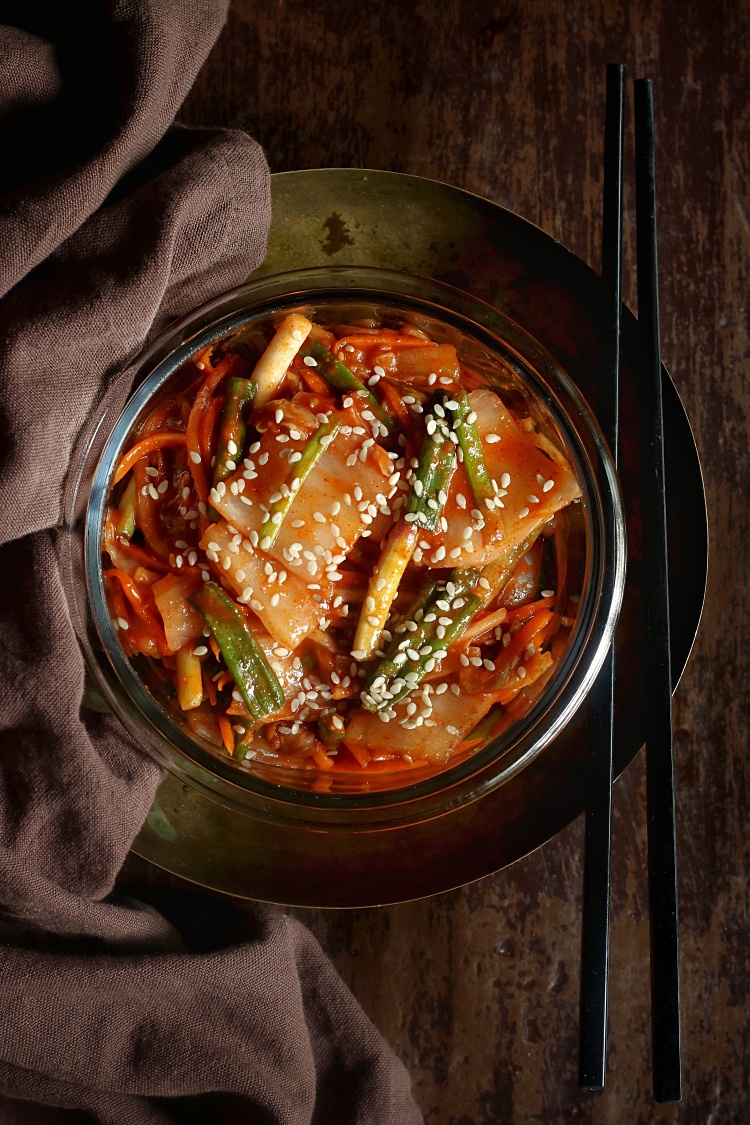
A Kimchi Omelette is an Omelette made with Kimchi. If you’re new to it, Kimchi is a fermented salty, mildly sweet, sour and spicy Korean condiment. The most common kind of Kimchi is made with salted Chinese cabbage, white radish, carrot, spring onion greens and a variety of seasonings. This condiment can be made with other vegetables too. Kimchi tends to have non-vegetarian ingredients usually, but I have a vegetarian version that I make all the time.

That last sentence would tell you that I like Kimchi, at least my version of it. I must add I’m the only one in my home so there’s usually Kimchi to spare in my fridge. Now the nice thing about Kimchi, if you like it, is that it is so versatile. Kimchi is better known across the word as a popular Korean banchan or side dish. However, Kimchi can be used to cook up other easy-to-cook recipes. Think Kimchi fried rice, Kimchi pancakes, sandwiches, noodles, dumplings, stew, and the list goes on.

One of the easiest Kimchi recipes I know is a Kimchi Omelette. It’s great for a quick meal that’s also low on carbs, if that’s a consideration for you. You can have it for breakfast, lunch or dinner.

Do you need a recipe to make an omelette? All you really need are eggs, some kimchi, fat to fry the omelette, and salt and pepper if absolutely necessary. Kimchi tends be well salted and spicy in itself. I see recipes calling for other stuff to the omelette like grated zucchini, broccoli, tomatoes, herbs of choice, grated cheese or feta, mirin, more scallions or spring onion greens, etc.

I like to keep things simple while cooking, most of the time. So my Kimchi Omelette is just mostly eggs and Kimchi. There are a couple of things to keep in mind while using Kimchi in an omelette, though. It’s a good idea to squeeze out most of the liquid in the Kimchi to prevent runny omelette mixture. Season with salt and pepper or chilli flakes with a little caution. Kimchi is quite generously salted and can be spicy.

I tend to add a bit of cornstarch dissolved in water (or milk) to eggs for omelettes with vegetables. This ensures the omelettes don’t fall apart while cooking and handling in the frying pan. If you have killer omelette making skills you can leave this out. I like my eggs well cooked, so I cook my omelettes on both sides. You can cook ours on one side only if that’s your preference.

Print

Kimchi Omelette

Easy and quick breakfast, lunch or dinner dish of Korean style omelette made with Spicy, tangy and salty Kimchi.
Course Breakfast, brunch, Lunch
Cuisine Korean
Prep Time 15 minutes
Cook Time 10 minutes
Servings 2 servings

Ingredients

  • 2 large eggs
  • 2 tbsp water
  • 1 tbsp cornstarch
  • 1 tbsp oil
  • 1/2 cup coarsely chopped kimchi
  • Salt and pepper to taste
  • 1 to 2 tsp sesame seeds
  • Spring onion greens and fresh coriander to garnish optional

Instructions

  • Break the eggs into a bowl. Dissolve the cornstarch and water and add to the eggs. Season with salt as required. Lightly beat everything together.
  • Heat the oil in a small frying pan, preferably cast iron, over medium heat. Pour in the eggs. As the edges start setting, spread the kimchi evenly all over the still uncooked eggs, pressing down lightly with a spatula. Also, sprinkle the sesame seeds, spring onion greens and chopped fresh coriander. Season with pepper if using.
  • Let the omelette cook till set. Carefully turn it over to cook the other side as well, if you like it that way. Slide the omelette onto a plate, and serve warm. Sauces like ketchup, sweet chilli sauce, Ketchup-mayo or Sriracha (if you want more heat) are good with this.

The post Kimchi Omelette appeared first on My Diverse Kitchen - A Vegetarian Blog.

Easy Almond Croissants

cerenIt is no secret in my home that I love most things Croissant. What’s not to love about layers of buttery, flaky and light rolls? So it’s no surprise that I like Croissants aux Amandes or Almond Croissants too. Some more butter on top of butter laden plain Croissants can seem over the top. Perhaps they are, but to me, they’re worth eating as an occasional treat. They’re easily made at home with this Easy Almond Croissant recipe. As a plus, these are egg free.

If you’re new to these Croissants, they’re nothing but plain butter Croissants with a soft almond frangipane filling, crunchy almonds on top and dusting of powdered sugar.These come together and are ready to eat in under an hour. Since we’re making Easy Almond Croissants, we start with readymade day old plain Croissants.

Almond Croissants or Croissants Aux Amandes can be found in most French boulangeries, and also in non-French bakeries that make them.Β  Croissants don’t stay fresh beyond the day they’re made. In fact, they’re not the best even by the evening of the morning they’re baked. So French boulangeries came up with Croissants Aux Amandes to use up day old stale Croissants.

I don’t make Croissants at home very often. When I do, I rarely have left over Croissants. These days with just two of us at home, I buy them whenever I find really good Croissants locally. When the craving for these almond ones hit, I just but a few extra and make them. Given how loaded they’re with butter and calories, they’re a rare treat.

Some recipes call for brushing the halved croissants with a flavoured sugar syrup. I find this makes the Almond Croissants too sweet for my taste. My preference is mildly sweet Almond Croissants. I would suggest buying smaller Croissants, if you can find them, so these don’t become a guilt heavy treat! Butter Croissants are also always the best, in terms of taste. Don’t forget to use day old Croissants. You can even refrigerate fresh Croissants for a couple of days to make these.

For the almond filling, I use regular almonds which I blend into an almost fine powder, skin and all. I find its too much work for this recipe. You can blanch and remove the skin of you prefer. You could also use either almond flour or almond meal, if you choose. They all work. Using almond extract is optional because not everyone has it at home. Use it if you have it.

You can dust your baked Easy Almond Croissants with powdered sugar, if you like. I generally don’t because I don’t like these Croissants too sweet. If you want to get a little more adventurous and want to make a different kind of Almond Croissant, take a look at these, some of which might tempt you.

Print

Easy Almond Croissants

Easy bakery style egg free Croissants aux Amandes or Almond Croissants made from day old butter croissants.
Course breads
Cuisine French
Prep Time 20 minutes
Cook Time 15 minutes
Servings 4 Almond Croissants

Ingredients

  • 4 croissants
  • 75 gm unsalted butter soft and spreadable at room temperature
  • 1 cup powdered almonds
  • 1/4 cup finely powdered sugar
  • 1/2 tsp vanilla extract
  • 1/4 tsp almond extract optional
  • 1/2 cup flaked almonds

Instructions

  • Start by making the almond- butter spreading mixture. Using hand held beaters or even a fork, mix together the soft butter, powdered sugar, powdered almonds, vanilla and almond extracts till smooth.
  • Cut each croissant into half lengthways. Spread approximately one tablespoon of the almond-butter mixture in each. Close the sandwich. Spread 1/4 the remaining almond-butter mixture along the length of each closed croissant. Sprinkle the flaked almonds equally on the four croissants, pressing them down gently so they stick.
  • Place on a parchment lined baking tray and bake at 180C (350F) for 10 to 12 minutes, until the tops are golden brown in colour. Let them cool on a wire rack. Dust lightly with powdered sugar, if preferred, before serving.

The post Easy Almond Croissants appeared first on My Diverse Kitchen - A Vegetarian Blog.

Easy Kimchi

Kimchi is a fermented salty, mildly sweet, sour and spicy Korean condiment. The most common kind of Kimchi is made with salted Chinese cabbage, white radish, carrot, spring onion greens and a variety of seasonings. This condiment can be made with other vegetables too. While Kimchi tends to have non-vegetarian ingredients traditionally, it can be made vegetarian too. Today I’m sharing my recipe for a vegetarian/ vegan Easy Kimchi. Since it is fermented, it is a gut healthy food.

Kimchi is believed to have originated in Korea over 3000 years ago as a way to preserve summer produce for the extremely cold winters. Originally Kimchi was made only with radish. Increased trade with other countries during the Goryeo period meant other vegetables were grown and used in Kimchi. There also very many different ways of making and seasoning Kimchi. I believe Koreans make about 200 different kinds of Kimchi!

I discovered Kimchi thanks to Korean dramas! Sometime towards the end of the pandemic, I discovered the world of Korean drama thanks to my daughter. It showed me a people and culture I found interesting. While television drama isn’t the best source of authentic information, it can be an introduction to many things. So I learnt that Koreans seem to love alcohol (beer and soju especially), pork any which way, Korean beef, takeaway food, tteokbokki, rameyon, kimbap, kimchi, and rice among other things.

Korean meals typically are centred on cooked rice or rice porridge, and a broth/ soup or stew or both. You may also find noodles and/ or dumplings. These come with a variety of β€œbanchan” or side dishes, one of which Kimchi is generally a given. These vegetable, seafood and meat side dishes will vary in number and help balance out the meal nutritionally.

My Easy Kimchi is not made the traditional way, so it isn’t authentic in that sense. I have made adjustments based on ingredient availability and personal taste preferences. Let’s start with the ingredients for Kimchi. While Kimchi is not really difficult to make, it does involve a number of ingredients.

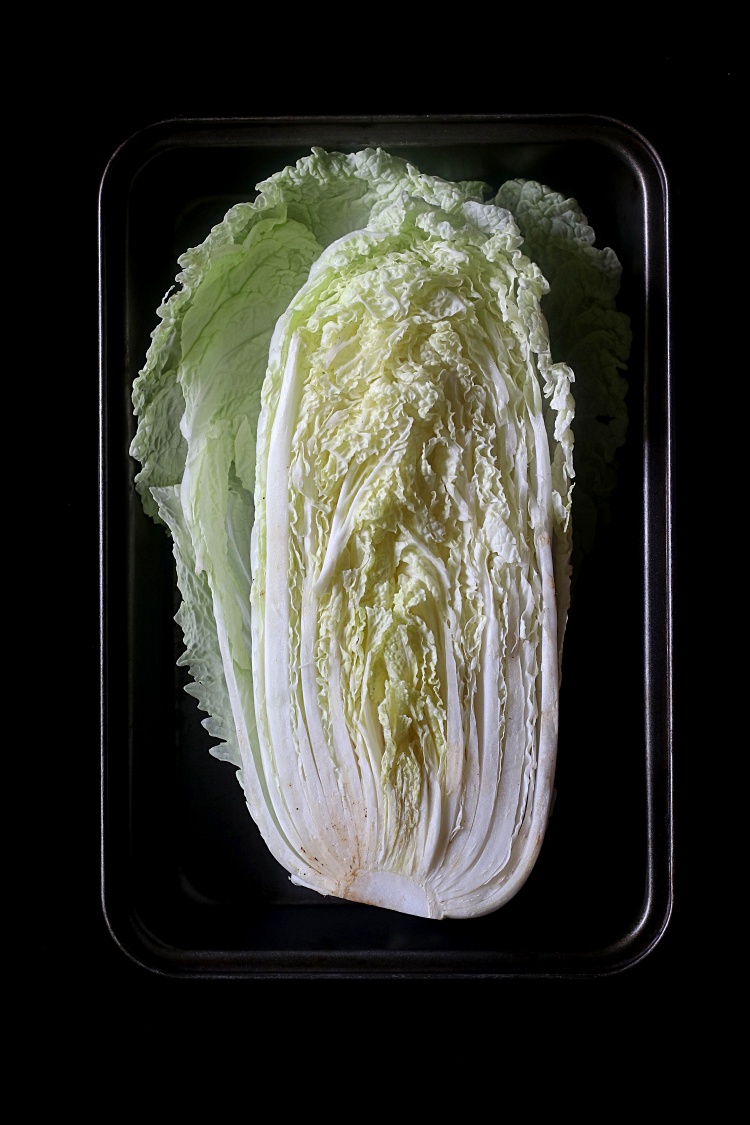
Chinese cabbage, Napa or Savoy cabbage is the best cabbage to use for Kimchi. The Koreans use a different variety of radish in Kimchi, but regular white (Indian mooli) or Daikon radish works well. You can make Kimchi without it too. Other vegetables in Kimchi include carrot, spring onion greens and chives. These have to be cut wuite thin and long about the length of matchsticks. The spiralizing blade on my peeler does a perfect job of this.

The first step to making this dish is to clean and salt the Chinese cabbage. In my shorter Kimchi recipe, the salted cabbage is allowed to sit for a couple of hours. The slat draws out the water in cabbage. The cabbage is then rinsed well with water before proceeding further. Cabbage is not cut but brined and salted leaf by leaf for traditional Kimchi. My easy version calls for cutting the cabbage into chunks and tossing in salt.

The next important step is make the cooked Kimchi paste. For this a little bit of rice flour is cooked into a slurry with stock or water. I prefer to use brown rice flour and water. Vegetable stock will give a more umami flavor. This slurry is blended into a smooth paste with ginger, garlic, onion, sugar (I prefer jaggery), soy sauce, and soaked red chillies/ red chilli powder or Gochu-jang paste. Gochu-jang is a Korean fermented spicy red chilli paste. You can buy it or make your own using one of the many recipes on the net.

Koreans generally love spicy food. The fire and deep red colour in this Korean condiment comes from Gochu-garu (Korean red chilli flakes/ powder) or Gochu-jang (red chilli paste). I used ready made Gochu-jang. Dried red Byadgi chillis work well too. Soak them in a little water and add while grinding the Kimchi paste.

Sugar is added to sweeten the cooked paste that makes this condiment, but I have come to prefer powdered jaggery. That’s not traditional at all but I like it like that. The sour taste or tang in Kimchi comes from fermentation. I like a slight tang in my Kimchi, but do not like it very fermented. I have worked around this by adding a little tamarind pulp to the Kimchi paste. This gives this condiment a slight tang without the fermentation normally needed to produce it. You can leave it out if you prefer.

What can you do with Kimchi? Eat it as a side dish with rice, noodles, dumplings, rice porridge/ kanji or even with bread. It’s a really good ingredient to use in a sandwich.Β So here is my version of Kimchi. Please feel free to adjust quantities of the ingredients to suit your taste.

Print

Easy Kimchi

An easy vegetarian Kimchi, a Korean fermented spicy side dish and condiment made of Chinese cabbage, white radish, carrots and spices.
Course condiments
Cuisine Korean
Prep Time 2 hours 45 minutes
Cook Time 15 minutes
Total Time 3 hours
Servings 2 medium jars

Ingredients

  • 1/2 kg Chinese cabbage
  • 2 tbsp salt
  • 1 1/2 tbsp brown or white rice flour
  • 3/4 cup water
  • 1 tbsp tamarind extract
  • 2 tbsp powdered jaggery or sugar
  • 1 tsp minced garlic or garlic paste
  • 1 1/2 tsp minced ginger or ginger paste
  • 1 tsp dark soy sauce
  • 1 medium onion chopped
  • 1/4 cup Gochujang or Korean red chilli paste
  • 1/2 cup thinly slivered white radish
  • 3/4 cup diagonally sliced spring onion greens
  • 2/3 cup thinly slivered carrot
  • 2 to 3 tbsp toasted sesame seeds optional

Instructions

Salt the Cabbage:

  • Chop off the bottom of the cabbage and discard. Wash the cabbage well, then halve the cabbage lengthwise and then chop into about 1 1/2 –inch bite sized pieces. Transfer to a large bowl and add the salt. Toss to mix well with the salt. Cover and let it stand for about an hour to an hour and a half. Toss the cabbage pieces every half hour.

Make the Kimchi Paste:

  • Combine the Mix together the rice flour and water in a small saucepan and cook over medium heat, stirring constantly. Once the mixture starts bubbling and thickening, stir in the powdered jaggery/ sugar and the tamarind pulp. Remove from the heat and let cool thoroughly.
  • Blend the cooled rice flour paste, garlic, ginger, soy sauce and onion to a smooth paste. If using soaked red chillies, add them as well while blending. Add a little salt as well. Be careful while doing this as the cabbage will be salty too. Taste and adjust according to preference. This paste should be slightly salty and sweet, tangy and spicy if adding red chillies. Keep aside.

Make the Kimchi:

  • Now rinse the salted cabbage with water 3 times, discarding the water each time. After the final rinse, squeeze out remaining moisture from the cabbage and put it in a large bowl.
  • Add the radish, carrots and spring onion greens to the cabbage. Add the blended paste and the Gochujang if using this instead of red chillies. Mix well with gloved hands or using a spoon, till well mixed.
  • Transfer the Kimchi to airtight glass containers or jars. Press down the on the kimchi so it’s well packed, then put the lid on. This is important so very little air can get inside.
  • If you like freshly made Kimchi, sprinkle with toasted sesame seeds and serve right away. Leave it at room temperature for a couple of days and then refrigerate it for about a week or two for fermentation, depending on how sour you like it.
  • I like my Kimchi less fermented and not too sour. I love freshly made Kimchi with hot rice. I typically leave it at room temperature on my kitchen counter for a day, then refrigerate it. I tend to make smaller batches that will last me a couple of months.

The post Easy Kimchi appeared first on My Diverse Kitchen - A Vegetarian Blog.

Saffron Pistachio Modak

Once again, it’s that time of the year when we celebrate Ganesh Chathurthi. This means that a variety of Modaks will be made. This year I’m sharing a recipe for easy to make Saffron Pistachio Modak.

Ganesh Chathurthi, also known as Vinayaka or Pillayar Chathurthi celebrates the birth of Lord Ganesha. Lord Ganesha, the elephant headed Hindu God is worshipped and his blessings are always invoked for auspicious beginnings. He is also very well known for his love of good food especially sweets. Depictions of him always show him carrying a Modak (sweet) in one palm.

Modak or Modakam/ Kozhukattai as refer to them, are made and offered during Ganesh Chathurthi celebrations. They’re round in shape o the bottom with a pointy top where the dumpling wrapper is gathered and sealed. This festival and offerings are different across India though the Modak is a constant. Β We offer Modakam or Kozhukattai that are steam cooked rice dumplings with sweet or savoury fillings.

Deep fried Modaks made with wheat flour wrappers are made in other parts of the country. These have a longer shelf life, whereas the steamed kind must be eaten the same day they’re made. In the Northern parts of India Modak also refers to milk sweets which are shaped the same way and offered during Ganesh Chathurthi. Today’s Saffron Pistachio Modak is this type of milk based sweet.

This is an easy recipe to make provided you have two things on hand – mawa/ khoya and the mould for shaping Modak. Mawa/ khoya are thick unsweetened milk solids. It is made by slow cooking and reducing full fat milk till it all the water in milk evaporates. Mawa/ khoya can be bought from local diaries or shops in most parts of India. If you choose to make it, do it ahead, as it is a lengthy process.

The moulds are available in stores or online. They’re available in plastic, metal or wood, if you’re lucky to find them. Use the smaller moulds to make them, as these Modak are rich and should be bite-sized. If you don’t have the moulds, you can still make these. Just shape them in peds or flattish discs.

Otherwise, all you need beyond mawa/ khoya and the moulds are sugar, cardamom, saffron, a little milk to dissolve it in and pistachios. Everything goes into a thick walled pan and is cooked till it comes together as a thick dough like paste. You can adjust the consistency of the mixture with a little milk (if very crumbly) or a little bit of full fat milk powder (if not thick enough) as you cook it. This paste is then shaped while warm using the moulds. Allow them to sit, covered, overnight at room temperature to set and they’re done.

Print

Saffron Pistachio Modak

Saffron Pistachio Modak - Easy recipe for Indian sweet made for Ganesh Chathurthi from mawa/ khoya, sugar, cardamom, saffron and pistachios.
Course Dessert, Festive Fare
Cuisine Indian
Prep Time 15 minutes
Cook Time 20 minutes
Shaping/ Moulding Time 20 minutes
Total Time 55 minutes
Servings 25 small modak

Ingredients

  • 1 tbsp warm milk
  • 1 large pinch saffron strands
  • 250 gm mawa/ khoya crumbled
  • 1/2 cup sugar
  • 1 tbsp ghee
  • 3 to 4 pods cardamom crushed fine
  • 2 tbsp finely chopped pistachios

Instructions

  • For the saffron infusion, in a small mortar, crush the saffron into the warm milk. Alternatively, let the saffron sit in the warm milk for about 15 minutes.
  • Put the well crumbled mawa/ khoya in a thick walled pan or wok with the sugar. Cook over medium heat, stirring frequently, till it becomes a thick paste. Stir in the saffron-milk mixture and keep cooking and stirring until it becomes thick like a dough.
  • The mixture will begin to leave the sides of the pan/ wok. This should take about 5 to 10 minutes at the most. Mix in the ghee, cardamom and pistachios at this point. Take it off the heat and turn the mixture out onto a plate. Otherwise it will continue to cook in the pan/ wok and could start browning.
  • Let it cool a bit until you can handle the heat comfortably. Grease your Modak mould with a little ghee. Close the mould and tightly pack a little bit of the cooked mixture into the moulds. Gently open the mould and unmould the Modak to a plate. Working quickly repeat with remaining mixture.
  • Cover and let it sit at room temperature overnight to set. The next day the Modak should be firm to touch but soft to eat. This will keep at room temperature for a couple of days. This recipe makes a small batch of about 20 to 25 small Modak.

The post Saffron Pistachio Modak appeared first on My Diverse Kitchen - A Vegetarian Blog.

Blender Cake & Tecnora Revvolution LSP 750

Before I get to the connection between a Blender Cake & Tecnora Revvolution LSP 750, let me ask you something. Can you think of a South Indian kitchen without a mixer-grinder? Think Idli, Dosa, Vada, Kozhukottai, Chutneys, Chutney Powders, Sambhar, Kootu, Avial, Olan, and even coconut milk Payasam. The list of South Indian dishes requiring wet or dry grinding are endless.

All this grinding is where the Tecnora bit comes in. Tecnora recently approached me to review their 750w mixer-grinder. Having previously used their 550w mixer-grinder and Espresso/ Coffee Maker, I knew this was worth taking on. I have been using a 750W mixer-grinder for over 4 years now. The powerful motor makes short work of all my kitchen grinding jobs. I use it to make my spice pastes and powders, chutneys, blending soups, sauces and shakes, crushing ice, batter, making my own peanut butter, etc.

The Tecnora Revvolution LSP 750 was a pleasant surprise at first sight. The shape and the red and white colour of the base/ motor housing of the mixer-grinder was some what familiar. It brought back childhood memories of my mother’s Sumeet mixer-grinder. We were living in Africa in those days and that β€œmixie” was close to heart. So much so that she insisted on bringing back the 18-year old appliance when we moved back to India. As it turns out, this model is Tecnora’s tribute to the legendary S. P. Mathur, the founder of Sumeet. Hence the abbreviation LSP in the model name.


A lot of people swear by wet grinders for making Idli/ Dosa batter and they have a point. I had a wet grinder myself but it proved too big for a family of two. That’s when I switched to a 750W mixer-grinder that is perfect for the smaller quantities of batter I now need.

So what’s special about the Tecnora Revvolution LSP 750? For one thing, I was quite happy with how it performed on all the tasks I put it through. The Tecnora Revvolution LSP 750, as the name suggests, has a 750 Watt (1 H.P) Dyna-Torque Motor. The mixer-grinder comes with 3 jars, and has unique patented safety mechanisms in all jars. There’s a double lock system, one that locks the jar to the base and the other locking the lid to the jar. So if the dome lid is not locked on properly, and the jar isn’t locked in place on the base, the motor will not run. The clip-on lids ensure hands free operation of the mixer-grinder. The machine is also child safe.

The jars are made of smooth tube stainless steel so have no screws inside the jars. There are no brass parts in the jar assembly that come in direct contact food making them completely food safe. All the blades can be removed after use making it easier to thoroughly clean the jars. Something that is really worth mentioning is that the polycarbonate lids on the Grinder Jar and Chutney Jar come with stirrers. This ensures that you can mix whatever you’re grinding without opening the lids. The stirrers also help wipe down food that splashes on the lid while grinding, back into the jar.

This may sound technical but the chutney jar comes with full sized bearings. Practically, this means that the chutney jar is competent to handle heavy duty grinding required for Indian spice pastes and powders. This mixer-grinder also comes with an all-purpose removable blade, interchangeable whipping blade, a spatula and 2 year warranty. The jars and the lids (minus the gaskets) are also dishwasher friendly. On top of all this, the Tecnora Revvolution LSP 750 is quieter to operate and takes up minimal space on the counter.

The batter for Idlis and the Coconut Chutney Powder were made with the Tecnora Avatar 750FP.

Tecnora Revvolution LSP 750 – Specifications at a glance :

Wattage

750W
Number of Jars 3
Removable Blades + Spatula Yes
Knobs/ Buttons for Operating Rotary Knob
Operating Speed 3 speed + pulsing/ whipping
Locking/ Safety Mechanism Yes
Overload Cut Off Yes
Space Taken on Counter Minimal
Colour Red & White
Warranty 2 years

Kariveppilai or Spicy Curry Leaves Chutney Powder

This table gives you an approximate idea of some grinding jobs and time the Tecnora Revvolution LSP 750 takes to do them. (Source: the Tecnora website):

Operation Product Weight Time
Dry Grinding Dry Chana Dal 150gms 2 minutes
Wet Grinding Soaked Urad Dal 150gms 1 minute
Ice Crushing Ice Cubes 2 trays 15 seconds

Home-made Crunchy Peanut Butter

As I mentioned earlier, the Tecnora Revvolution LSP 750 did an excellent job. I made Idi & Dosa batter, Coconut Chutney, spice pastes for my daily cooking, Kariveppilai Podi (Curry Leaf powder), Peanut Butter, blended Soup, Mango milkshake, and batter for a Blender Cake. If you’re looking for a reasonably priced 750W mixer-grinder, I would definitely recommend taking a look at the new Tecnora Revvolution LSP 750.

The Masala Doasa batter, Spice paste for Sambhar and Coconut Chutney were made with the Tecnora Avatar 750FP.

Today, I’ll share the recipe for my easy Blender Cake with Mocha Frosting. A Blender Cake is one where the batter is mixed in the blender. So this recipe requires no creaming of butter and sugar, adding flour and liquids in multiple increments, etc. Just drop the ingredients in the jar, run a couple of times and you’re good to go. You must take care to not over blend though, as the batter does not require aeration. So pulsing the batter a few times at lowest speed is all it needs. Baking a cake couldn’t get easier than this. It’s easier than a One Bowl Cake!

Easy Vanilla Blender Cake with Mocha Frosting

This recipe makes a blender batter for a Vanilla Coffee Cake with Mocha Frosting. You can experiment by changing flavours with this basic cake recipe. For example, add lime/ lemon juice for a Lime/ Lemon Cake. Unsweetened cocoa powder will make a Chocolate Cake. Just remember to adjust for the liquid and dry ingredients depending on the changes you make.

Print

Blender Cake

A quick blender cake made by mixing all the ingredients in the blender to make a soft vanilla bundt cake with mocha frosting.
Course Dessert
Cuisine global vegetarian
Prep Time 15 minutes
Cook Time 45 minutes
Servings 1 Bundt Cake

Ingredients

For the Blender Cake :

  • 2 1/2 cups all purpose flour
  • 1 tsp baking powder
  • 1/2 tsp baking soda
  • 1/2 tsp salt
  • 1 1/2 tsps vanilla essence
  • 1 cup water hot not boiling
  • 1 1/4 cups sugar granulated
  • 100 gm butter melted
  • 2 eggs

For the Mocha Frosting :

  • 45 gram unsalted butter soft at room temperature
  • 3/4 to 1 cup icing sugar30 gram dark semi-sweet chocolate chopped coarsely
  • 1 tsp instant coffee granules
  • 1 tsp hot water

Instructions

For the Blender Cake :

  • Gently whisk together all the dry ingredients and set aside. Add all the wet ingredients except the eggs to the blender and blend on slow speed, till smooth. Now blend in the eggs.
  • Add the dry ingredients to the blender and blend on slow speed again, preferably pulsing the mixture a few times till just smooth. You might need to scrape down any flour that sticks to the sides of the blender jar. Do not over blend! The cake batter does not need aeration.
  • Pour the batter into a well greased and floured 8" bundt or tube cake pan. Bake at 190C (375F) for about 40 minutes or till done and a skewer comes out clean. Cool completely on a wire rack before frosting it.
  • and serve, or decorate if you wish.

Make the Mocha Frosting:

  • Melt chocolate in medium heatproof bowl in the microwave or over medium saucepan of simmering water (don't let water touch base of bowl). Cool the chocolate for about 10 minutes. Beat butter in small bowl with a hand held electric mixer until pale and creamy. Gradually beat in sifted icing sugar, chocolate and combined coffee and water.

The post Blender Cake & Tecnora Revvolution LSP 750 appeared first on My Diverse Kitchen - A Vegetarian Blog.

❌