Reading view

There are new articles available, click to refresh the page.

Stablecoin Adoption and Tokenized Settlement Take Center Stage at Binance Blockchain Week

During a panel session moderated by CryptoNews during Binance Blockchain Week, panelists examined the accelerating evolution of stablecoins, from retail adoption and cross-border payments to tokenized settlement and institutional frameworks. Speakers included Sam Elfarra (Tron DAO), Marcelo Sacomori (Braza Bank), and Daniel Lee (Banking Circle).

A clear exploration of how stablecoins are evolving into a global financial utility and the infrastructure required to keep them secure, liquid, and accessible.

Moderated by @Tanzeel_Akhtar

Speakers:
🔸Sam Elfarra | Community Spokesperson | Tron DAO
🔸Daniel Lee | Head of Web3… pic.twitter.com/rhdqs3wr4D

— Binance (@binance) December 4, 2025

Stablecoins: The Fastest-Growing Segment of Digital Assets

Opening the discussion, the moderator positioned stablecoins as the fastest-growing category in digital assets, citing issuance and wallet counts rising by around 50% and daily trading volumes now surpassing Visa. The conversation focused on usability, reliability during volatility, the emergence of bank-issued tokens, and the infrastructure required to support tokenized settlement.

Brazil’s Regulatory Trust Advantage

Marcelo Sacomori, representing Brazil’s largest stablecoin dealer, detailed Braza Bank’s issuance of BRL- and USD-linked tokens driven by FX demand and corporate payments. He stressed transparent reserves, independent verification, and liquidity as pillars of trust. Brazil’s regulatory clarity, he said, has accelerated institutional uptake and consumer confidence.

“Once you use stablecoins for payments, you’ll never want to go back to traditional ways. I think, in two years, stablecoins will no longer be a niche product,” said Sacomori.

Tokenized Settlement and the Institutional Shift

Banking Circle’s Daniel Lee explained that tokenized real-world assets cannot scale without a tokenized settlement capable of atomic, near-instant transfer. He outlined the distinction between tokenized deposits and bearer stablecoins, adding that EU e-money token frameworks create regulated, bankruptcy-remote structures suitable for institutions.

Emerging Markets Driving Volume and Use Cases

Speaking for Tron DAO, Sam Elfarra described strong momentum across LATAM, Africa, Southeast Asia, and the Middle East, where users seek affordability, reliability, and dollar stability. Tron’s uptime and operational resilience, he noted, have supported high transaction throughput even during periods of market volatility.

Closing the session, it was concluded that stablecoins are no longer a niche experiment but are rapidly becoming the backbone of global value exchange—reshaping how money moves, is stored, and, in the near future, how tokenized assets will settle.

The post Stablecoin Adoption and Tokenized Settlement Take Center Stage at Binance Blockchain Week appeared first on Cryptonews.
CZ and Peter Schiff Face Off at Binance Blockchain Week 2025: Bitcoin or Tokenized Gold?

Binance Blockchain Week 2025 delivered one of its most anticipated moments when Changpeng Zhao (CZ), founder of Binance and Giggle Academy, took the stage opposite Peter Schiff, senior economist and founder of Euro Pacific Asset Management and Schiff Gold.

We are LIVE now from the #BinanceBlockchainWeek Main Stage!

The much-anticipated big debate is kicking off, don’t miss a moment!

Watch it live 👉 https://t.co/4ED3HwmOj9 pic.twitter.com/BaC6S7QN58

— Binance (@binance) December 4, 2025

The debate tackled a defining question for the global financial environment: Is the future of sound money rooted in Bitcoin or will tokenized gold ultimately prevail? The atmosphere was charged with investors, developers, policymakers, and institutional delegates filling the main hall for what quickly became a clash of ideology, economics, and technology.

Schiff: Tokenized Gold Enhances What Already Works

Peter Schiff framed tokenized gold not as competition to Bitcoin but as the modernization of a centuries-tested store of value. “Tokenized gold improves all the monetary properties of gold while it remains a store of value. The token is simply the evidence that you own the gold in the vault.”

He argued that technology solves the core logistical weakness of gold—portability—without undermining its intrinsic qualities. “For money purposes, tokenized gold is better than physical gold. Ownership can change hands while the gold never leaves the vault.”

Schiff reminded the audience that gold’s value is anchored in utility, rarity, and historical trust. “What gives gold value is not that you can touch it, but that it has real utility as a metal. There are industries that need gold and things only gold can do.”

For Schiff, tokenization is evolutionary, not revolutionary—retaining the asset while removing friction.

CZ: Digital Value Needs No Physical Form

CZ countered with the argument that Bitcoin is native to the internet economy and benefits from being purely digital. “If I give you Bitcoin right now, we can verify it in several ways that you received it. It settles instantly and transparently on-chain.”

He positioned Bitcoin as more than a currency—it’s a global decentralized ecosystem. “Bitcoin is more than a transaction network. It is an entire industry with many use cases and a very large, global community behind it.”

CZ dismissed the notion that money requires physical backing to be credible, comparing Bitcoin’s value to that of tech platforms. “The internet is virtual. There is nothing physical about Google or X, but they clearly have value. Many virtual things have value; that value is not tied to physical properties.”

Two Philosophies, One Converging Future

The debate pointed out a broader shift: traditional assets are being digitized, while native digital assets continue to mature. Tokenized gold caters to those who value tangible backing and historical stability; Bitcoin speaks to a generation aligned with decentralization and borderless liquidity.

If Binance Blockchain Week made one thing clear, it’s that the future of money may not be defined by one asset—but by how well traditional and digital systems coexist, compete, and inevitably converge.

The post CZ and Peter Schiff Face Off at Binance Blockchain Week 2025: Bitcoin or Tokenized Gold? appeared first on Cryptonews.

Ripple, Solana and Binance Execs Break Down Market Shifts at Binance Blockchain Week 2025

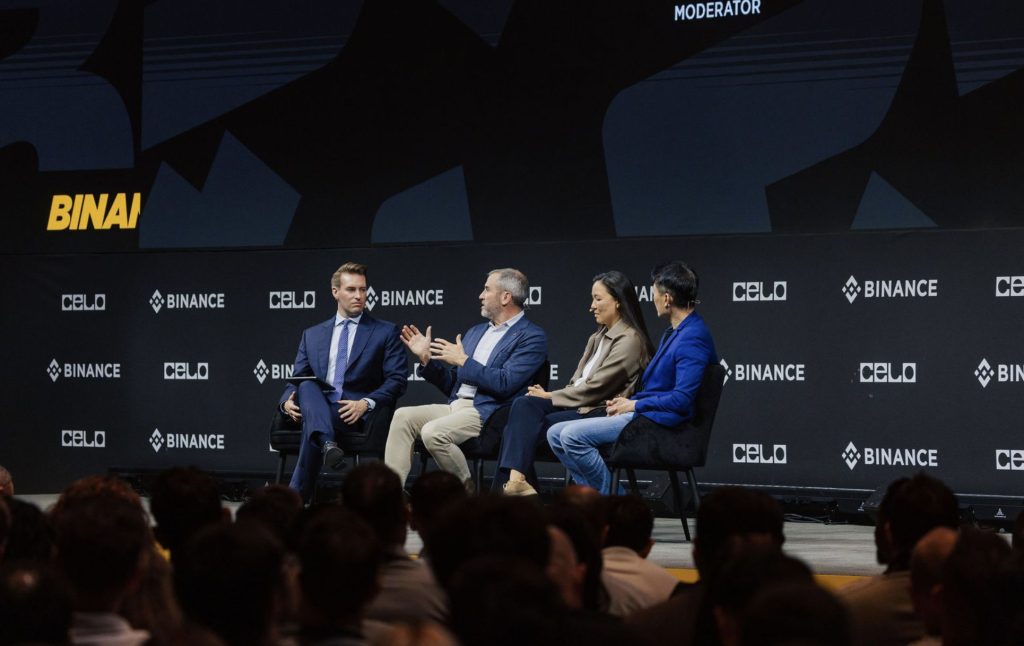
A high-profile panel at Binance Blockchain Week in Dubai brought together Brad Garlinghouse of Ripple, Lily Liu of the Solana Foundation, and Binance’s Richard Teng to dissect the latest trends shaping digital asset markets.

Moderated by CNBC’s Dan Murphy, the conversation spanned Bitcoin’s recent volatility, the rapid rise of stablecoins, and institutional adoption driven by regulatory clarity.

Bitcoin’s Rebound and the Leverage Flush-Out

Murphy opened the session by recapping Bitcoin’s turbulent performance. The asset has climbed 8% over the past week to reclaim nearly $90,000, despite still sitting roughly 30% below its October peak.

The surge comes on the heels of a dramatic market reset that saw $20 billion in leverage positions wiped out across exchanges, alongside negative funding rates in Bitcoin perpetuals.

While some view this as a sign of cooling sentiment, the panel stressed that liquidity stress and rapid corrections remain natural features of the crypto cycle.

Lily Liu noted that the selloff was amplified by an “irrational liquidity window,” adding that volatility should be embraced rather than feared. “When I reread the original Bitcoin forums, I’m struck by how much clarity there was—speed, cost, programmability, and liquidity have been the themes since 2015,” she said. These fundamentals, she argued, remain the north star for long-term development.

ETFs, Institutions, and the Stablecoin Economy

Despite short-term turbulence, institutional appetite remains strong. Murphy pointed out continued inflows into Bitcoin and Solana ETFs, which have helped offset the leverage wipeout. The panel agreed that the broader macro narrative is now being shaped by regulation and corporate adoption, not retail speculation.

📉 Solana ETFs hit an $8.1M outflow after 21 days of inflows, and investors are speculating whether this marks a shift or a temporary reset.#SOL #ETFhttps://t.co/02BVtx6yIx

— Cryptonews.com (@cryptonews) November 27, 2025

Richard Teng stresses the surge in stablecoin usage as one of the year’s defining trends. He noted that stablecoin market capitalization has risen 50%, with wallet numbers climbing by the same margin.

“I think stablecoins massively improve capital efficiency—they’re cheaper, faster, and I expect a lot of institutions to rely on them,” Teng said.

Brad Garlinghouse also pointed to regulatory clarity in the U.S.—particularly around the Gensler Act—as a turning point for institutional engagement.

“People are starting to recognize that stablecoins really are stable and much easier to manage and move, especially in this region,” he said. Ripple’s recent acquisition of G Treasury, he added, has sparked “remarkable interest from corporate customers” exploring stablecoin-based payment rails.

Solana’s Long-Term Vision and Market Infrastructure

Liu expanded on Solana’s ambition to build what she described as the “TCP/IP for money,” a unified financial layer supporting global, instantaneous capital flows. She emphasized that the next wave of adoption will depend on speed, cost efficiency, liquidity, and utility—not speculation.

Daily inflows into the Solana ETF, she said, demonstrate growing institutional validation. Liu also noted Solana’s goal of expanding financial inclusion across emerging markets, arguing that crypto’s role in digitizing global capital markets is only beginning to unfold.

Regulation, Market Maturation, and Industry Outlook

Regulatory clarity was a recurring theme throughout the discussion. Teng pointed to developments in Abu Dhabi and Dubai, where policymakers have approved regulated stablecoins, as evidence that governments now see digital assets as part of national financial strategy.

Garlinghouse was cautiously optimistic about progress in Washington. The Clarity Act, he said, is gaining momentum and could mark a decisive shift in the U.S. regulatory environment. Collaboration between regulators and industry leaders, he argued, is essential “to unlock the next chapter of institutional adoption.”

The post Ripple, Solana and Binance Execs Break Down Market Shifts at Binance Blockchain Week 2025 appeared first on Cryptonews.

RedotPay Integrates Ripple Payments to Expand Stablecoin Transfers

RedotPay has announced a new partnership with Ripple to improve its stablecoin payout infrastructure and broaden access to lower-cost cross-border transactions.

@RedotPay is proud to partner with @Ripple and integrate Ripple Payments to launch “Send Crypto, Receive NGN,” enabling users to send XRP or #stablecoins and receive NGN in minutes, not days. pic.twitter.com/Ndtj9TPQVE

— RedotPay Official (@RedotPay) December 2, 2025

The fintech is launching its “Send Crypto, Receive NGN” feature, which allows users to convert digital assets into Nigerian naira (NGN) through Ripple Payments, Ripple’s licensed cross-border payment solution.

Crypto-to-NGN Transfers

The new NGN payout feature allows verified users with local bank accounts to convert supported digital assets directly into NGN, with settlement typically taking place within minutes.

According to RedotPay, the integration is intended to simplify the user experience and provide a more cost-effective alternative to traditional remittance channels.

Michael Gao, CEO and Co-Founder of RedotPay, said near-instant NGN payouts mark milestone for the platform. He notes that the company’s goal is to make stablecoin-based payments “as easy to use as local currency,” allowing users to send XRP or other supported assets and receive NGN securely and quickly.

Gao adds that the partnership with Ripple will extend RedotPay’s global reach while improving the reliability and accessibility of its services.

Targeting Long-Standing Remittance Inefficiencies

Global remittances continue to face structural challenges. Traditional transfers often involve high fees—averaging 6.49% globally—and settlement times ranging from one to five business days.

These inefficiencies have helped accelerate adoption of digital alternatives, with Chainalysis identifying Asia Pacific as the fastest-growing region for on-chain stablecoin usage, particularly for trading and remittances.

RedotPay said it aims to address these issues by leveraging Ripple Payments’ underlying blockchain infrastructure to deliver transparent pricing and accelerated settlement.

The NGN payout feature currently supports a wide range of cryptocurrencies including USDC, USDT, BTC, ETH, SOL, TON, S, TRX, XRP, and BNB, with Ripple’s RLUSD slated for future integration. Once a user sends a supported asset through RedotPay, the designated bank account receives NGN directly.

Jack Cullinane, Head of Commercial for Asia Pacific at Ripple, said the partnership highlights the real-world utility of Ripple Payments in reducing friction in cross-border transactions and improving accessibility for both consumers and businesses.

“Send Crypto, Receive NGN” expands on RedotPay’s existing multi-market offerings, which include BRL and MXN payouts. The service targets globally mobile users such as digital nomads, freelancers, and entrepreneurs, as well as individuals working abroad who require efficient ways to send funds back home. By extending its stablecoin-powered payout channels, RedotPay aims to broaden access to emerging markets where traditional remittance services remain slow and expensive.

Stablecoins for Wider Global Use

RedotPay said with the Ripple partnership strengthening its settlement infrastructure, the company plans to further scale its regional offerings and bring faster, more affordable crypto-enabled remittances to underserved markets.

The post RedotPay Integrates Ripple Payments to Expand Stablecoin Transfers appeared first on Cryptonews.

Fusaka Upgrade Could Reshape How Ethereum Captures Layer-2 Value, Says Nansen

Ethereum’s upcoming Fusaka upgrade is emerging as a major development that could reshape how value flows from Layer-2 networks back to ETH.

The Fusaka upgrade is almost here.

PeerDAS (EIP-7594) is one of the key features helping Ethereum securely scale.

It unlocks up to 8x data throughput. For rollups, this means cheaper blob fees and more space to grow. pic.twitter.com/0AUv3e7QP5

— Ethereum (@ethereum) December 2, 2025

Today, the majority of economic activity generated by rollups—including MEV extraction, sequencing revenue, and transaction ordering—remains siloed at the L2 level, accruing to independent operators rather than to Ethereum itself. New analysis from on-chain intelligence firm Nansen suggests that Fusaka may shift this balance.

A New Foundation for Based Rollups

Fusaka introduces the technical infrastructure required for “based rollups,” a model where Ethereum validators take over the responsibility of sequencing transactions for L2s. Instead of relying on external or proprietary sequencers, L2s could integrate directly with Ethereum’s validator set, aligning their incentives more tightly with the base layer.

“Fusaka itself does not guarantee value accrual to ETH, but it enables it,” said Nicolai Søndergaard, Research Analyst at Nansen. “The upgrade introduces the base infrastructure for based rollups, where Ethereum validators take over L2 sequencing.”

Søndergaard explained that if rollups adopt this structure, L2 MEV would begin flowing to ETH stakers, fee burn would increase due to higher blob demand, validator rewards would rise through pre-confirmation revenue, and Ethereum would start capturing a greater share of the economic activity that currently accumulates at the L2 level.

He explains, however, that none of this is automatic. The long-term impact depends entirely on whether L2 teams choose to abandon their existing sequencing models.

Capital Markets Anticipate Structural Improvements

The potential benefits of Fusaka extend beyond validator economics. According to Edwin Mata, CEO and co-founder of enterprise tokenization platform Brickken, the upgrade represents a material improvement to Ethereum’s settlement architecture.

With reduced data loads for rollups and validators, the network becomes more predictable in both performance and cost, a key requirement for regulated institutions assessing whether a public blockchain can support issuance and post-trade processes at scale.

Mata notes that this predictability is essential for capital-market participants who need reliable settlement environments. By strengthening Ethereum’s consistency, Fusaka enhances its appeal as a venue for institutional-grade financial activity.

A More Efficient Environment for Tokenized Assets

For the growing real-world asset sector, Fusaka could streamline key operational mechanics. Lower fees and increased throughput on L2s create a more efficient sector for the lifecycle of tokenized instruments, allowing for smoother transfers, faster reconciliations, and greater dependability during distribution events.

Mata also pointed out the upgrade’s impact on network resilience. Fusaka lowers the operational threshold for node participation, which broadens the validator base and reduces concentration risk. For financial markets that depend on systems with no single point of failure, greater decentralization is a fundamental advantage.

As the Ethereum ecosystem prepares for Fusaka, analysts and industry leaders will be watching whether L2s embrace the base-rollup model. If they do, the upgrade could mark a turning point in how Ethereum captures value from the ecosystem it anchors.

The post Fusaka Upgrade Could Reshape How Ethereum Captures Layer-2 Value, Says Nansen appeared first on Cryptonews.

Michael Saylor’s Strategy Forms $1.44B USD Reserve and Updates FY2025 Bitcoin-Linked Guidance

Strategy has created a U.S. dollar reserve totaling $1.44 billion, marking an expansion of its balance sheet strategy as it positions itself as the world’s largest “Bitcoin Treasury Company.”

Strategy announces $1.44B USD Reserve and now hodls 650,000 $BTC. pic.twitter.com/FNFivMNQgh

— Strategy (@Strategy) December 1, 2025

The reserve will be used to support dividend payments on preferred stock and meet interest obligations, providing enhanced liquidity cushions amid volatile digital-asset markets.

The fund was financed through proceeds from ongoing at-the-market stock sales. Strategy said its goal is to maintain coverage for at least 12 months of dividend obligations, ultimately extending that to 24 months or more. The reserve will remain at the company’s discretion and may be adjusted based on market conditions and capital requirements.

Founder and Executive Chairman Michael Saylor described the USD Reserve as the next step in the company’s evolution, complementing its Bitcoin reserve.

“We believe it will better position us to navigate short-term market volatility while delivering on our vision of being the world’s leading issuer of Digital Credit,” he said.

CEO Phong Le added that Strategy now holds 650,000 Bitcoin, representing roughly 3.1% of total eventual supply. The firm’s USD Reserve currently covers 21 months of dividends, he noted.

Strategy has acquired 130 BTC for ~$11.7 million at ~$89,960 per bitcoin. As of 11/30/2025, we hodl 650,000 $BTC acquired for ~$48.38 billion at ~$74,436 per bitcoin. $MSTR $STRC $STRK $STRF $STRD $STRE https://t.co/1oVrm9kxVn

— Strategy (@Strategy) December 1, 2025

Revised 2025 Outlook Reflects Bitcoin Price Volatility

Strategy has also updated the assumptions behind its FY2025 earnings guidance following recent declines in Bitcoin’s trading price.

If Bitcoin ends 2025 within the range of $85,000 to $110,000, Strategy said it expects operating income to fall anywhere between a loss of $7.0 billion and a profit of $9.5 billion, while net income could range from a loss of $5.5 billion to a gain of $6.3 billion.

Diluted earnings per share are projected to come in between a loss of $17.0 per share and earnings of $19.0 per share. These projections rely on the successful completion of planned capital raises that would allow Strategy to achieve its 2025 Bitcoin Yield Target and deploy the resulting proceeds into additional Bitcoin purchases.

Updated Bitcoin KPI Targets for 2025

Under the same Bitcoin price assumptions and incorporating anticipated common stock issuance to maintain the USD Reserve, Strategy said it now expects its Bitcoin yield for the year to fall between 22.0% and 26.0%. The company also forecasts Bitcoin dollar gains of between $8.4 billion and $12.8 billion.

Strategy said it expects to reach these targets through a combination of preferred stock offerings, disciplined equity issuance, and continued accumulation of bitcoin.

Market Reaction and Peter Schiff’s Criticism

The announcement drew swift and vocal commentary from market observers, including well-known Bitcoin critic Peter Schiff, who posted on X that Strategy’s establishment of a USD Reserve indicates “the beginning of the end of $MSTR.”

Today is the beginning of the end of $MSTR. Saylor was forced to sell stock not to buy Bitcoin, but to buy U.S. dollars merely to fund MSTR's interest and dividend obligations. The stock is broken. The business model is a fraud, and @Saylor is the biggest con man on Wall Street.

— Peter Schiff (@PeterSchiff) December 1, 2025

Schiff argued that Strategy was “forced to sell stock not to buy Bitcoin, but to buy U.S. dollars” in order to cover interest and dividend obligations, calling the business model “broken” and alleging that the company was relying on equity sales to sustain its financial commitments.

The post Michael Saylor’s Strategy Forms $1.44B USD Reserve and Updates FY2025 Bitcoin-Linked Guidance appeared first on Cryptonews.

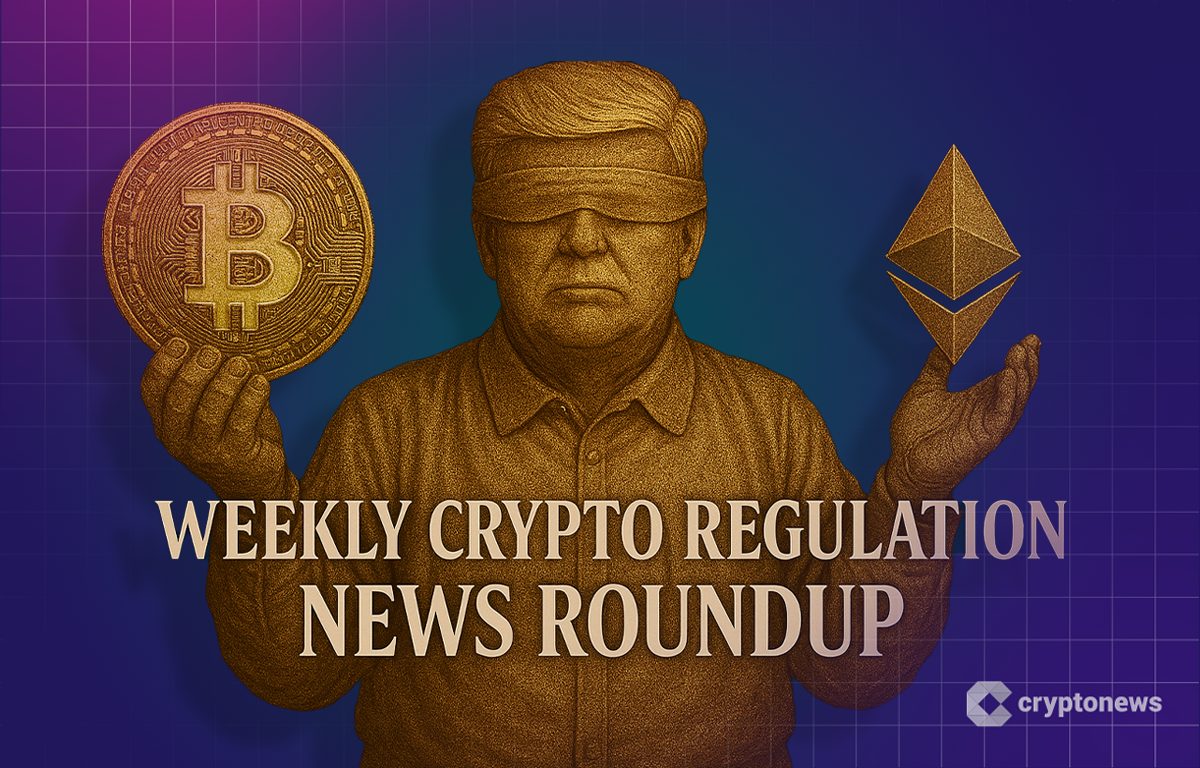
Weekly Crypto Regulation Roundup: SEC Clears Solana’s Fuse Token and Trump Eyes Crypto-Friendly Fed Chair

It’s been another consequential week in Washington and beyond, with U.S. regulators sending mixed but meaningful signs across crypto, AI, and financial policy. From the SEC greenlighting a Solana-based token to the prospect of a crypto-friendly Federal Reserve chair, the regulatory climate is shifting fast—particularly as policymakers grapple with emerging technologies that are outpacing existing frameworks.

SEC Grants Fuse a Rare No-Action Letter

The big headline came from the U.S. Securities and Exchange Commission, which issued a no-action letter to Solana-based DePIN project Fuse—an unusual step for a blockchain project looking for clarity around token sales.

👨🏻‍⚖️ The SEC granted @fuseenergy a no-action letter, confirming it will not recommend enforcement if the FUSE token is sold as described.#SEC #Cryptohttps://t.co/crv9LwdICN

— Cryptonews.com (@cryptonews) November 25, 2025

Fuse asked the SEC’s Division of Corporation Finance on Nov. 19 to confirm it would not recommend enforcement action over the offer and sale of its FUSE token. The project emphasized that FUSE isn’t pitched as a speculative asset: it’s strictly a network participation token, distributed as a reward to users who maintain the protocol’s decentralized infrastructure. The SEC agreed.

In a letter signed by deputy chief counsel Jonathan Ingram, the regulator stated it would not pursue enforcement “based on the facts presented” if Fuse adheres to the guardrails it outlined.

Additionally, the token can only be redeemed through third-party venues at market rates, showing the SEC’s focus on removing any investment-like characteristics.

This marks the second DePIN-related no-action letter in recent months. While not precedent-setting, the decision is a useful datapoint: when tokens are tightly scoped to utility and distribution is controlled, the SEC appears more open to relief. For projects building real-world infrastructure on-chain, it’s one of the clearest regulatory signs we’ve seen in months.

Trump’s Top Fed Pick Has Deep Crypto Ties

Crypto markets may soon have a sympathetic voice at the very top of U.S. monetary policy. Kevin Hassett—director of the White House National Economic Council and longtime Trump ally—has emerged as the leading candidate to replace Jerome Powell as Federal Reserve chair.

🏛 Kevin Hassett, director of the National Economic Council, has emerged as Trump’s top Fed chair contender, putting a crypto-linked ally within reach of leading the central bank.#KevinHassett #FedChair https://t.co/Oa59lRry11

— Cryptonews.com (@cryptonews) November 26, 2025

What’s striking is Hassett’s history with digital assets. He has publicly engaged with the crypto sector, consulted with policy groups connected to the space, and indicated openness to digital-asset innovation.

Trump’s advisers describe him as someone whom the president trusts deeply on interest-rate policy—particularly on the question of cutting more aggressively than Powell. Hassett has also reportedly indicated he would accept the role if selected.

If appointed, this would be the most crypto-friendly Fed chair in U.S. history. While the Fed is not a crypto regulator, its stance on dollar liquidity, stablecoins, and payment systems has enormous downstream effects. A pro-innovation chair could spur greater openness across other agencies—or at the very least, reduce friction.

Bipartisan Bill Targets Rising AI-Powered Fraud

AI-generated scams are surging, and Congress is taking notice. This week, lawmakers introduced the AI Fraud Deterrence Act, a bipartisan proposal from Rep. Ted Lieu (D-CA) and Rep. Neal Dunn (R-FL). The bill seeks to impose tougher penalties on crimes committed using artificial intelligence—particularly impersonation schemes, deepfakes, automated theft, and coordinated fraud rings.

🚨 U.S. lawmakers propose the AI Fraud Deterrence Act against rising AI‑powered fraud and deepfake scams.#AIFraud #CyberSecurityhttps://t.co/ciWFO9LUcf
— Cryptonews.com (@cryptonews) November 26, 2025

The legislation is also explicitly tied to financial markets and crypto, where AI-powered fraud is growing at an alarming rate. High-profile cases involving deepfake video scams, impersonation bots, and automated phishing rings have intensified pressure on lawmakers to intervene.

The bill’s broader message is clear: manipulation, impersonation, and automated fraud using AI tools will face harsher federal consequences. Expect this framework to evolve quickly, given the sharp rise in AI-driven schemes across exchanges and Web3 platforms.

CFTC Pushes for New Prediction Markets Framework

Finally, at the CFTC, Commissioner Caroline Pham is making moves to bring prediction markets into sharper regulatory focus.

Pham announced that the agency is seeking nominations for its new CEO Innovation Council, a body designed to advise on emerging markets and frontier financial technologies. One of the council’s early priorities will be the rapidly evolving prediction markets sector—a space that has grown too large and too influential for federal regulators to ignore.

🏛 CFTC Commissioner Caroline Pham is looking for nominations to join the agency's new CEO Innovation Council.#CFTC #CarolinePhamhttps://t.co/1CDTrZtFyU

— Cryptonews.com (@cryptonews) November 26, 2025

Through a Nov. 25 press release, Pham invited public nominations and encouraged industry stakeholders to propose topics the council should prioritize. With prediction markets increasingly touching politics, finance, sports, and crypto, the CFTC is clearly preparing a more structured approach.

This comes as platforms like Polymarket continue to expand and attract mainstream attention, forcing regulators to reconsider how forecasting markets fit within existing derivatives law.

The Big Picture

From the SEC’s cautious openness to utility-focused tokens, to Congress tightening the screws on AI-based crime, to the CFTC’s attempt to modernize its oversight, the regulatory ecosystem is shifting in real time.

But the most consequential development may be Trump’s apparent interest in appointing a Fed chair aligned with crypto innovation. That appointment would reverberate through every corner of financial policy—from stablecoins to global dollar rails to payments innovation.

The post Weekly Crypto Regulation Roundup: SEC Clears Solana’s Fuse Token and Trump Eyes Crypto-Friendly Fed Chair appeared first on Cryptonews.

KuCoin EU Gains MiCAR Approval to Roll Out Digital Asset Services in Europe

KuCoin has secured a major regulatory victory in Europe with its announcement that KuCoin EU Exchange GmbH (KuCoin EU) has obtained a Markets in Crypto-Assets Regulation (MiCAR) license in Austria.

Big news for Europe, bigger news for the world! 🌍 KuCoin EU is now officially MiCAR-compliant and approved by the Austrian FMA! Secure, regulated crypto access is coming to the EU very soon.

The future of crypto is global and compliant. Let’s go! 🚀#KuCoin #MiCARpic.twitter.com/UgeQGRFJpf

— KuCoin (@kucoincom) November 28, 2025

The approval allows KuCoin EU to provide fully compliant digital asset services across 29 countries in the European Economic Area (EEA), excluding Malta.

MiCAR is recognized for its rigorous standards and harmonized rules, designed to enhance investor protection, platform transparency, and market stability. By achieving full authorization through its Austrian entity, KuCoin demonstrates its commitment to operating responsibly within trusted regulatory regimes.

The MiCAR license follows a series of recent compliance milestones, including KuCoin’s securing of AUSTRAC Digital Currency Exchange Registration in Australia in November, alongside ongoing upgrades to its global compliance infrastructure across multiple jurisdictions.

With this new approval, KuCoin EU said it is positioned to roll out secure, transparent, and compliant digital asset services to millions of European users under a unified regulatory framework—an offering that many exchanges have yet to achieve.

Leaders Point Out MiCAR as a Defining Moment for KuCoin

BC Wong, CEO of KuCoin, called the approval a major achievement for the company’s long-term Trust and Compliance strategy. “Securing the MiCAR license with our local entity in Austria is a defining milestone,” Wong said. “Europe’s MiCAR framework represents one of the highest regulatory standards worldwide, and we are proud to meet this benchmark.”

As part of our $2B Trust Project, KuCoin will continue building transparent, credible, and security-driven Web3 infrastructure that strengthens user trust and supports responsible industry growth.”

KuCoin stated that its regulatory progress is supported by a robust trust architecture, including SOC 2 Type II, ISO 27001:2022, ISO 27701, and CCSS certifications, as well as independent Proof-of-Reserves audits—all of which reinforce its “Trust First. Trade Next.” philosophy.

New EU Platform Coming Soon as Users Transition

With MiCAR authorization secured, KuCoin EU is preparing to launch a fully compliant European platform. Users across the EEA, except for Malta, will soon receive early-access updates and onboarding information. Moving forward, new user registrations will no longer be supported through KuCoin Global.

The MiCAR license marks not just a new chapter for KuCoin in Europe, but also a broader shift toward a safer, more transparent, and more regulated digital asset ecosystem worldwide.

Bybit Secures Austria’s MiCA License

Earlier this year, Bybit, the world’s second-largest crypto exchange by trading volume, officially planted its flag in Europe. The company has also received a MiCAR license from Austria’s Financial Market Authority, as stated in a May 29 news release.

The post KuCoin EU Gains MiCAR Approval to Roll Out Digital Asset Services in Europe appeared first on Cryptonews.

❌