Login
LoginHere’s why there’s a solar canopy in a sprawling parking lot at the University of Washington

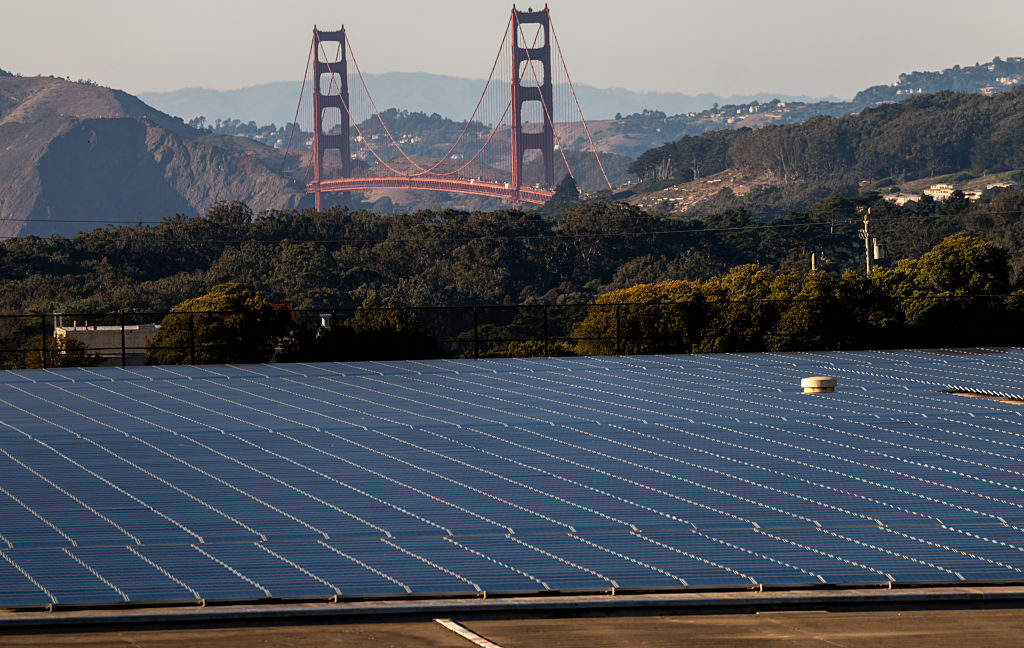
The University of Washington is powering up its vision for a brighter, more sustainable future with a newly completed solar canopy installed in a sprawling parking lot north of Husky Stadium.
The 84-kilowatt solar array is paired with Level 2 EV charging that can accommodate 20 vehicles simultaneously. The $3.7 million project includes electrical infrastructure to support the future installation of panels capable of nearly 30 times more power generation — up to 2.5 megawatts. That’s enough capacity to power roughly 2,000 homes.
The solar canopy is a pilot project supporting the UW’s goals to cut its carbon footprint, said Mark Huppert, interim director of UW Transportation Services.
“Located on the site of the former Montlake landfill, the pilot demonstrates how the land can be put to work to achieve more sustainable outcomes,” Huppert said via email.
Project partners include Sea Con as the general contractor and Prime Electric as the electrical contractor. The canopy system was fabricated by Trinity Structures, which has since rebranded as Trinity Energy.
The installation is connected to electrical grids powering the City of Seattle and the UW’s campus. The ability to generate energy onsite can curb the university’s reliance on the utility grid while reducing the impacts of power outages and fluctuating electricity costs.
“Generating solar power from a parking lot may sound modest, but the strategic value is enormous,” said Darin Leonard, president of Trinity Energy, in a statement.
The idea for the project grew out of a collaboration between the student organization UW Solar; Anne Eskridge, the retired director of UW Transportation Services; and Jan Whittington, director of the UW’s Urban Infrastructure Lab.
The university is currently drafting its 2050 Sustainability Action Plan, which includes the long-term expansion of the parking lot solar canopies.
The UW Solar students “will continue to support the efforts to achieve the vision of a complete build-out,” Huppert said.
The project was funded by UW Transportation Services, Seattle City Light and Washington state’s Climate Commitment Act, administered through the Washington State Department of Commerce’s electric vehicle charging program.
Editor’s note: Story updated to provide additional information on project partners.