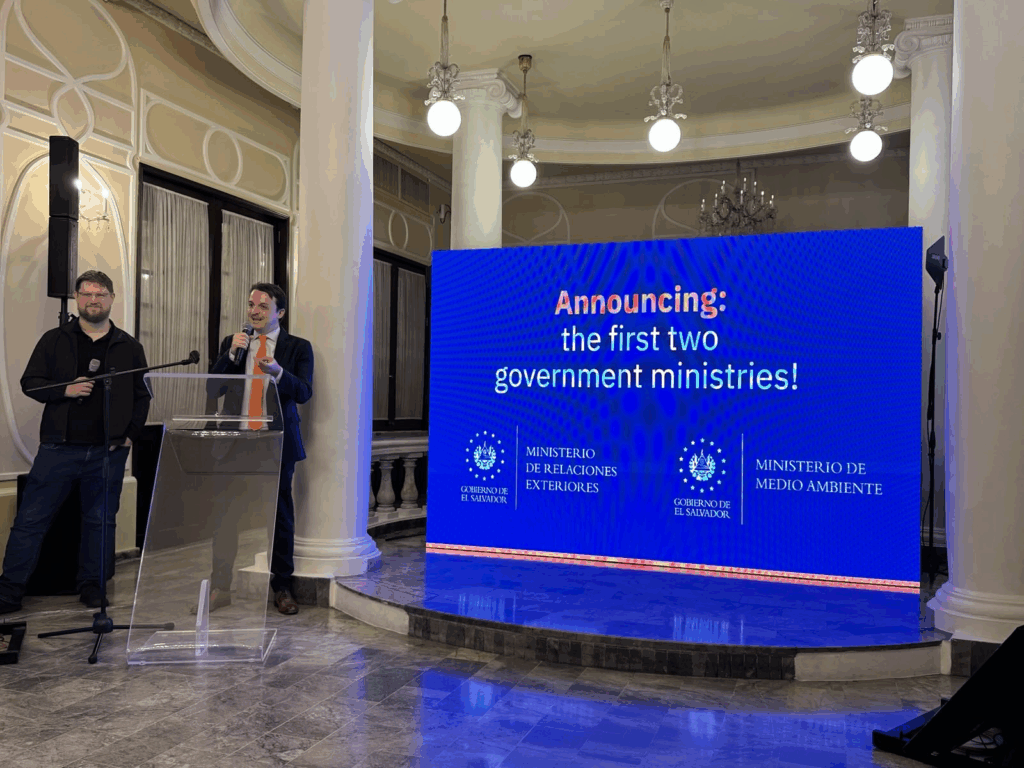
Simple Proof, the bitcoin-based document timestamping company, recently announced official partnerships with El Salvador’s Ministry of Foreign Affairs and Ministry of Environment to protect
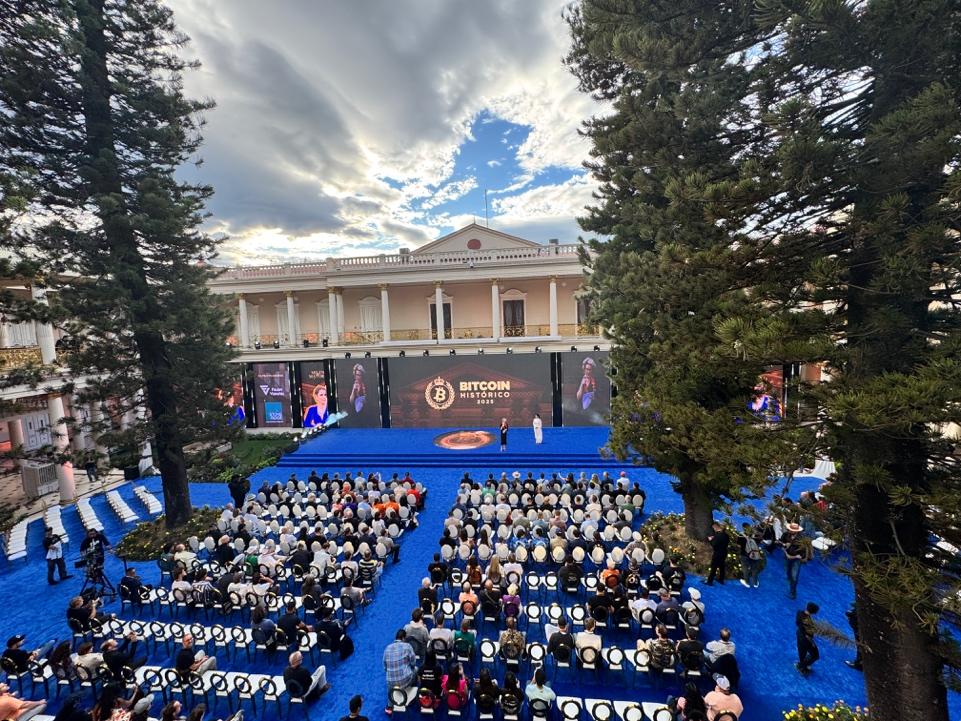
government records using the Bitcoin blockchain technology. The announcement was made during the Bitcoin Histórico conference at the National Theatre in San Salvador, where CEO Carlos Toriello presented alongside OpenTimestamps creator and Bitcoin Core Contributor Peter Todd.
The collaboration marks El Salvador’s continued leadership in applying Bitcoin technology beyond financial applications. Both ministries have begun registering official documents on the Bitcoin blockchain, with verified records now publicly accessible through dedicated government portals.
“Bitcoin is not just digital money — it’s also a clock that no one controls. This allows us to certify with precision the exact moment a document was created, guaranteeing its authenticity and protecting the country’s history forever… We’re helping ensure that the country’s history is preserved intact and can be verified directly on Bitcoin, without intermediaries,” said Carlos Toriello, CEO of Simple Proof, in a press release shared with Bitcoin Magazine.
The company has had multiple successful pilot programs in the past, including one in Screven County, Georgia, in the United States and another in Guatemala, where it had a direct influence on the 2023 elections.
This deployment builds on Simple Proof’s previous work in El Salvador, where CUBO+ program graduation certificates became the first public documents in the country registered via the Bitcoin blockchain.
The Ministry of Environment’s timestamped documents, including national reports and public files, are available at blockchain.ambiente.gob.sv. The Ministry of Foreign Affairs offers verification of institutional reports and records at rree.gob.sv/logros-y-memorias.
Peter Todd, creator of OpenTimestamps, the platform and protocol used in part to time-stamp critical data on the Bitcoin blockchain, said in the press release that, “With a single transaction, we can protect millions of documents without congesting the network or altering its monetary function,” noting that the system stores only cryptographic hashes rather than actual documents on Bitcoin.
The project positions El Salvador as a global reference for using blockchain technology in government
information management, strengthening the transparency and public trust of democratic institutions and processes, by eliminating the possibility of document tampering.
I spent the past week in El Salvador for the third time in one year, and it’s clear the country is undergoing a real transformation. Not theoretical, not surface-level — a shift in how people live, think, build, and imagine their future. And the moment that crystallized this transformation came at the end of the week, during a private dinner with President Nayib Bukele, which I was privileged to take part in.
I’ve followed his work for a few years. I’ve interviewed nine Salvadorans and expats living in the country on my podcast — as well as merchants, builders, grassroots organizers, and everyday citizens. A year ago, I tweeted that my dream was to meet him one day.
Dreams do come true!
1 year ago I made a wish (see below): meeting President Bukele. I’ve learnt a lot about El Salvador’s path from my 3 visits, multiple interviews with locals and lots of research. Last night my dream came true. I met a visionary, kind, grounded & based… https://t.co/4dShr8jSuEpic.twitter.com/98nGGqCCQy
I didn’t expect that when I approached him at the end of the dinner to take a photo and said, “Hi, I’m Efrat,” he would answer immediately, before I could explain who I am: “I know you, I’ve seen your podcast.”
It was one of those moments you don’t forget, because it made the entire week feel connected to something larger unfolding in this country.
The Three Layers of a Nation in Motion
Three events took place during the week — Reclaiming Health, Adopting Bitcoin, and Bitcoin Histórico — each revealing a different layer of El Salvador’s trajectory.
“Reclaiming Health Symposium” led by Salvadoran Dr. Kenneth Fernández-Taylor, explored the intersection of sound health and sound money. Some of the conversations centered on how unsound money and high-time preference shape stress, uncertainty, and long-term health. In a country that has reclaimed public safety and is now reclaiming economic freedom, the connection between health and money didn’t feel abstract, it was intuitive. Four years ago, when the world was gradually going insane during an “end of the world pandemic”, a health symposium with truth-seeking, freedom-loving doctors, healers, and experts felt like a distant dream. But in El Salvador, dreams are coming true.
GM 5 Bitcoiners orange pilling a whole conference room, bare feet. We talked about reclaiming health through sound money and drew the parallels & links between having agency & power over your assets, and over your health. Thanks champions – @bitcoin_hotel… pic.twitter.com/waajaBAfll
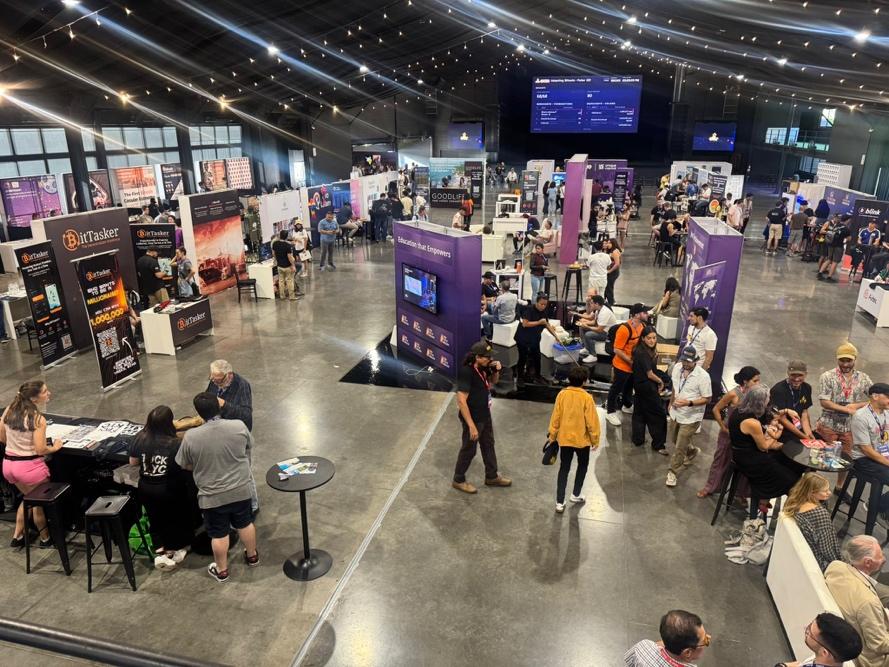
At “Adopting Bitcoin”, I saw the grassroots engine of this transformation. Circular economies like Bitcoin Beach (El Zonte) Berlin in El Salvador, and MurphLife, are real-life demonstrations of what happens when people earn, spend and save in sats. Communities like “Bitcoin Babies”, “Les Femmes Orange” or the Argentinian “La Crypta” emphesize that bitcoin is for everyone. Merchants accept Bitcoin naturally. Kids are growing up around it. “My First Bitcoin” announced its next chapter: supporting 70+ projects across 40 countries with materials, frameworks, and guidance for community-led Bitcoin education. The startup floor was filled with founders who have opened offices here and are building from El Salvador. The common theme I kept hearing was simple: you can do things here.
Photo: Michael Hollomon Jr. | https://x.com/unkle_skunkle/status/1989823319093240030/photo/1
Historic Moment For Bitcoin & El Salvador
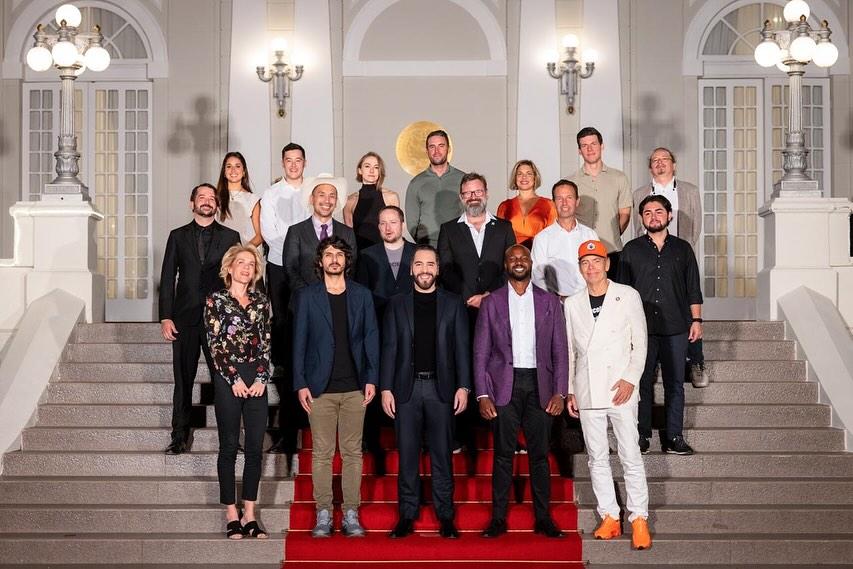
But the highlight of the week, the moment that framed everything else, was “Bitcoin Histórico”. It was the first government-led Bitcoin conference in the world, organized by the government’s Bitcoin Office, a world-first led by Stacy Herbert and team, and held inside the National Palace and the National Theater. These are two very symbolic landmarks, and the decision to host a Bitcoin conference in such royal setting said more than any speech could. The halls were filled with ministers, entreperneurs, and international speakers; voices from the U.S., Europe, Latin America, and Africa. Guests received booklets titled “El Salvador is Bitcoin Country” with Bukele’s photo on the cover, and it is clear that Bitcoin is not a side project here, it is a national direction.
Photo: Efrat Fenigson
Outside, in Plaza Gerardo Barrios, the conference spilled into public space; the sessions were screened with Spanish translation to the locals: families, students, elders. Shops and stalls accepted sats. Bitcoin was in its natural habitat, part of everyday life in the city, and the public was part of the conference.
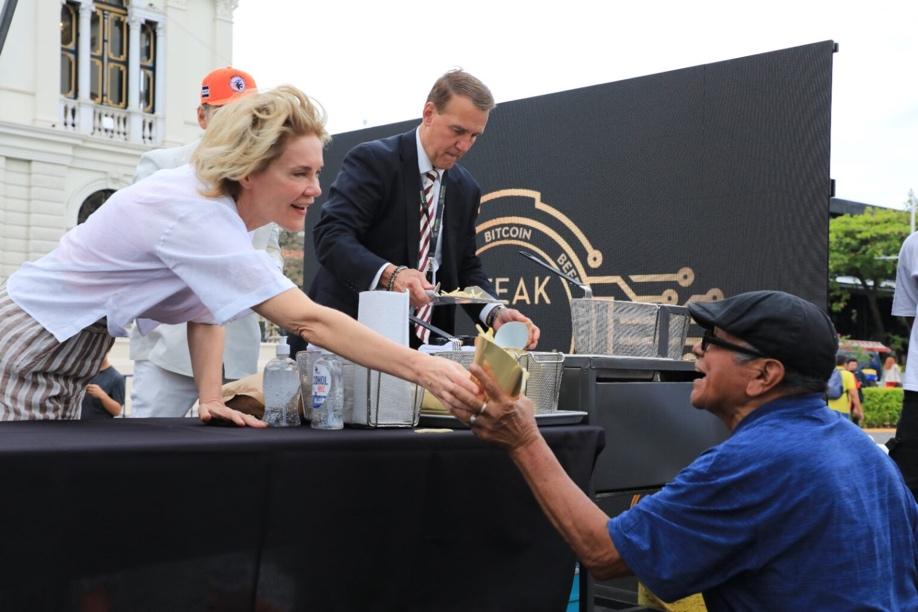
Several announcements underscored the country’s trajectory: The Ministry of Agriculture signed a cooperation agreement with The Beef Initiative to strengthen local cattle production. Steak ’n Shake announced its targeting El Salvador as first Latin American location, accepting Bitcoin from day one.
Photo: Translating El Salvador | https://x.com/TranslatingES/status/1989744516228673658/photo/4
The government unveiled the purchase of Nvidia B300 chips, compute powerful enough to train and run advanced AI models locally, with the support of Hydra Host. It’s a step toward sovereign compute infrastructure that reduces reliance on Big Tech data centers and positions El Salvador to build its own AI capabilities inside the country. Mempool announced it is incorporating in El Salvador, following a recent $17m investment. And with support from Lina Seiche and the Bitcoin Office, 500 classrooms will be renovated for Bitcoin and financial education as part of the country’s wider “Two Schools a Day” initiative to modernize and expand educational infrastructure at scale. Together, these moves form a consistent pattern: a country building its future across multiple layers at once.
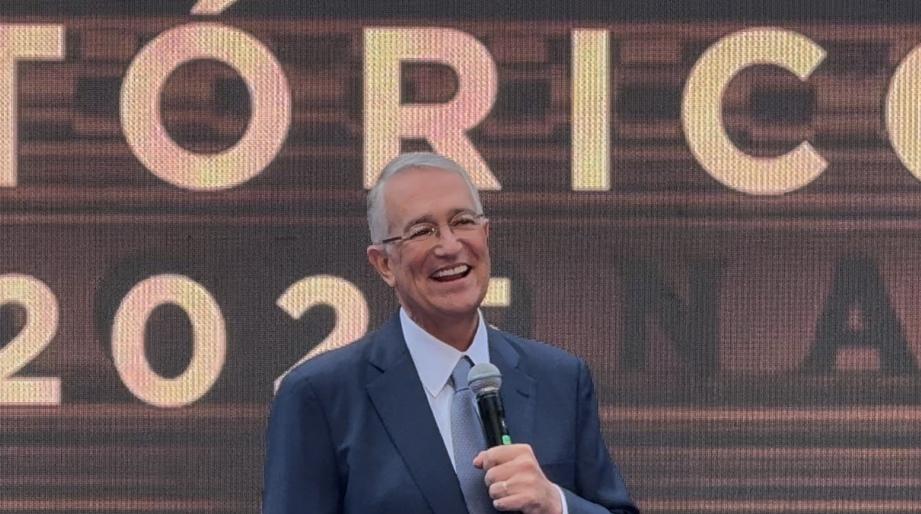
Ricardo Salinas’ presence at Histórico added weight to the moment. In his remarks, he said “El Salvador is on the right side of history,” and pointed to the dramatic improvement in public safety: “You have better security than in Japan. I wish my country could be like this.” Coming from one of Latin America’s most influential entrepreneurs, his words echoed what many visitors felt this week.
Photo: Efrat Fenigson
The Presidential Dinner
But the clearest window into that future came at the dinner.
Photo: The Bitcoin Office El Salvador
Bukele is nothing like his international caricature. He’s sharp, fast, funny, and completely fluent in the culture of Bitcoin. As he sat down to the dinner table, he joked, “Guys, it’s over, Bitcoin’s done,” because the price had dipped under $100k that day. He’s not a politician trying to sound relatable or quote scripted talking points; he actually understands the room and gets bitcoin.
When the conversation turned to Bitcoin’s long-term trajectory, he said something that stayed with me: “Bitcoin should be a currency.”
Not an investment, not an asset class, a currency. He sees the end state clearly. And he sees the steps that lead there. He talked about circular economies – El Zonte, Berlin – as a practical mechanism for adoption. Communities that use Bitcoin daily are the ones that will carry it from an idea into a functioning monetary system.
His wit revealed just as much as his analysis. Giacomo Zucco, Director of Plan B Network, was introduced as an anarcho-capitalist, and Bukele immediately replied, “It’s fine, I’m also friends with Milei,” then called him “the anarchist” throughout dinner. After Wiz gifted him a katana (a Japanese sword) and Giacomo gifted him a bottle of rum named “Dictador” (a light jab at the media narrative) someone noted that Bukele doesn’t drink. He answered instantly: “It’s fine, I don’t often fight with swords either.”
As the evening ended, Giacomo thanked him, and Bukele smiled and said something that summed up his entire approach to governance: “I’m sorry if I run a government. But it’s a very small one.”
I kid you not, @nayibbukele is not only Bitcoin-smart, but has one of the quickest wits I've ever witnessed!
When @stacyherbert explained to him about my politics, he commented "it's fine, I'm friend with Milei!", and proceeded to call me "the anarchist" thorough the dinner.… pic.twitter.com/dMFBU4NQJd
— Giacomo Distributed-Authoritarian Plebslop Zucco (@giacomozucco) November 14, 2025
Happy People Whistle
I’ve spent time in many countries that are drifting toward a darker trajectory; more surveillance, more centralization, more control, more violence. What’s happening in El Salvador feels like the opposite: safety without oppression, structure without suffocation, freedom with responsibility. After decades of oppression by violent gangs, Salvadorans feel liberated. You can see it in their faces, they’re kind, relaxed and grateful. On a previous trip, I saw a 75-year-old man cycling through El Zonte at sunrise, whistling. “When do people whistle?” I asked myself. “Happy people whistle. People whistle when they feel safe”. That simple moment became my quiet metaphor for this place.
Yes, the country still interfaces with global institutions such as the IMF. The recent repeal of bitcoin as a legal tender was unfortunate, but after peeking under the hood, it feels like one step back, four steps forward. Indeed progress is uneven. But the direction is unmistakable: a push toward monetary sovereignty, digital sovereignty, educational sovereignty, and civic sovereignty, all moving in the same direction.
This week gifted me with a glimpse into a nation rebuilding itself.
While most other nations struggle with their economy, security, frail social fabric under the influence of global agendas, El Salvador is transforming its reality, moving into a new timeline. And meeting Bukele didn’t feel like meeting a president.
It felt like meeting the architect of a country determined to liberate itself and lead the way.
This is a guest post by Efrat Fenigson. Opinions expressed are entirely their own and do not necessarily reflect those of BTC Inc or Bitcoin Magazine.
Some sell Bitcoin on the dips while others aggressively buy more — and so far, it’s the accumulators who’ve come out ahead, though only time will decide which strategy ultimately wins.
El Salvador is pressing ahead with its aggressive Bitcoin accumulation strategy despite one of the steepest market drawdowns of the year. The Central American nation purchased 1,091 BTC on Tuesday — nearly $100 million worth — according to data from the country’s Bitcoin Office.
President Nayib Bukele later posted a screenshot on X confirming that the government accumulated 1,098.19 BTC over the past seven days, pushing total holdings to 7,474.37 BTC valued at roughly $688 million.
JUST IN: El Salvador buys $101 million worth of #Bitcoin for its strategic reserve.
The country continues to buy 1 BTC per day, a policy Bukele introduced in November 2022 and has maintained through every market cycle. The strategy has become a signature part of El Salvador’s approach to digital asset reserves, even as the IMF and other global institutions discourage further public-sector accumulation.
Government disclosures show that the one-BTC-per-day program has steadily expanded reserves, and officials insist there are no plans to halt the buys.
Stacy Herbert, director of El Salvador’s Bitcoin Office, called Bitcoin “freedom, transparency, and individual empowerment,” saying the policy reflects a desire to distribute economic power rather than centralize it. Financial analysts note that El Salvador is now one of the few sovereign actors openly buying into market weakness.
The latest purchase also arrives as the Bukele administration deepens coordination with U.S. officials on digital-asset oversight. The president met with White House crypto adviser Bo Hines in June, part of ongoing discussions around regulations affecting cross-border Bitcoin activity.
El Salvador’s conviction comes during a brutal week for the broader market. Bitcoin plunged below $90,000 in Asian trading on Tuesday, dropping as much as 4.9% over 24 hours. At the time of writing, BTC trades near $91,768 currently, according to Bitcoin Magazine data.
Short-term holders—wallets that have held coins for under 90 days—panic-sold roughly 148,000 BTC at a loss, the largest capitulation since April. Analysts say this selling mirrors behavior seen at previous market tops and may not be finished.
The sell-off accelerated after $19 billion in leveraged long positions were wiped out, triggering cascading liquidations. Bitcoin is now down more than 26% from its October all-time high near $126,000.
If Bitcoin stabilizes in the $80,000–$90,000 zone, many believe El Salvador’s nine-figure buy could ultimately prove one of the sharpest macro calls of the year.
El Salvador’s Bitcoin background
El Salvador’s Bitcoin experiment has entered its fourth year, marking one of the most closely watched financial policy shifts in the world.
The country made history in September 2021 when it became the first nation to adopt Bitcoin as legal tender, a move championed by President Bukele as a strategy to boost financial inclusion, attract investment, and modernize the economy.
The rollout, supported by a state-run wallet called Chivo and various incentives, drew global attention as well as criticism from the IMF and traditional financial institutions concerned about volatility and fiscal risk.
As mentioned earlier, despite early technical challenges and a sharp market downturn in 2022, Bukele’s administration doubled down on its Bitcoin strategy, implementing daily BTC purchases, launching a “Bitcoin Office,” and pushing forward plans for Bitcoin-backed bonds and the proposed “Bitcoin City.”
The government also committed to transparent reporting of its treasury address, allowing the public to track the nation’s on-chain holdings.
While the global debate over the policy remains unresolved, El Salvador’s Bitcoin-first approach has undeniably reshaped the nation’s economic narrative.
Bukele views El Salvador’s adoption of Bitcoin as a strategic move to boost the country’s global image, attract tourism, and spur investment, despite low domestic usage. He emphasizes that the goal was less about immediate adoption and more about repositioning El Salvador as a forward-looking, digitally innovative nation.
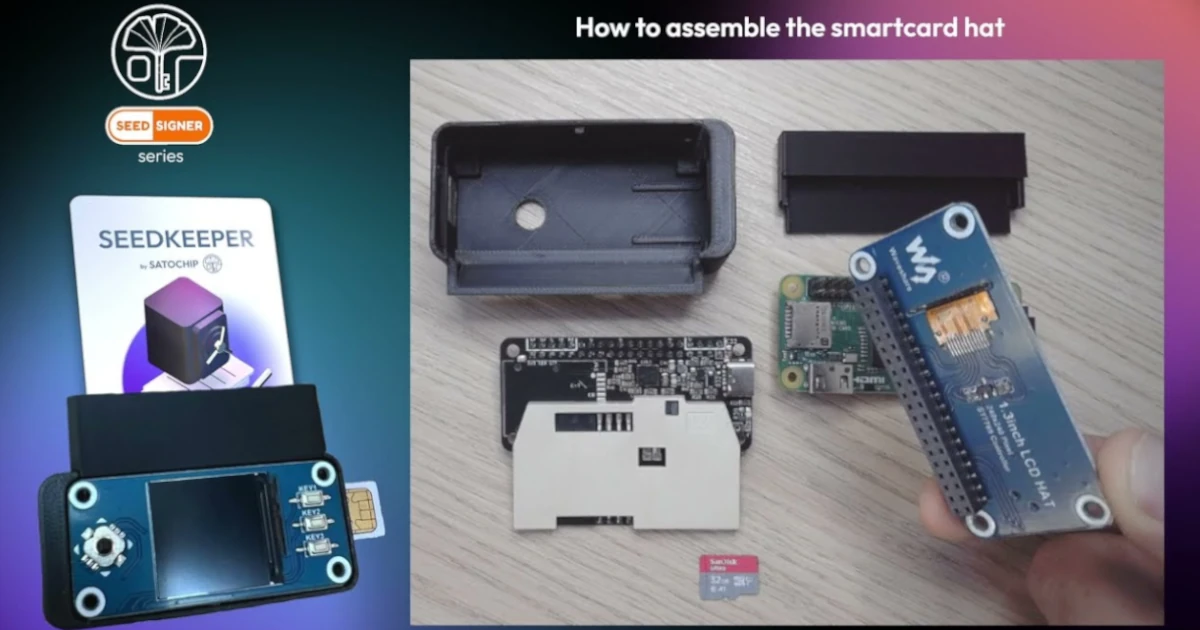
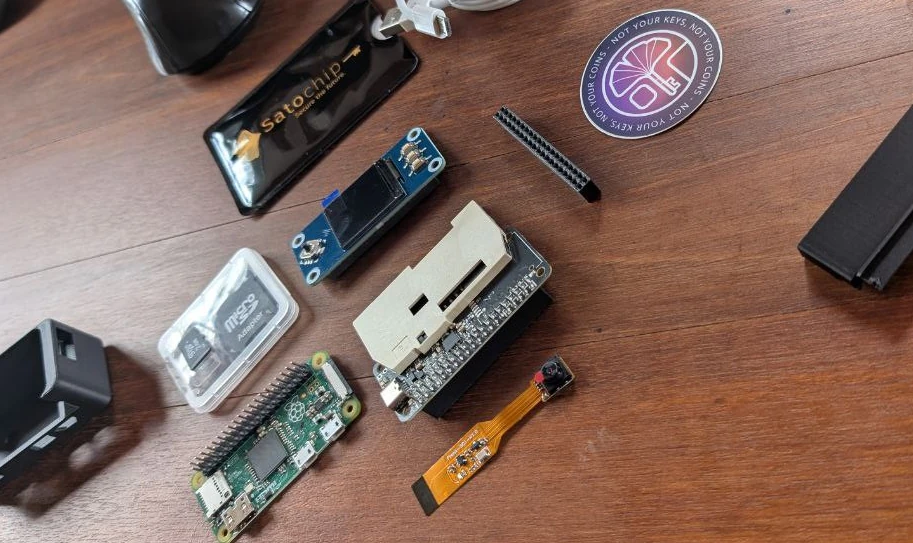
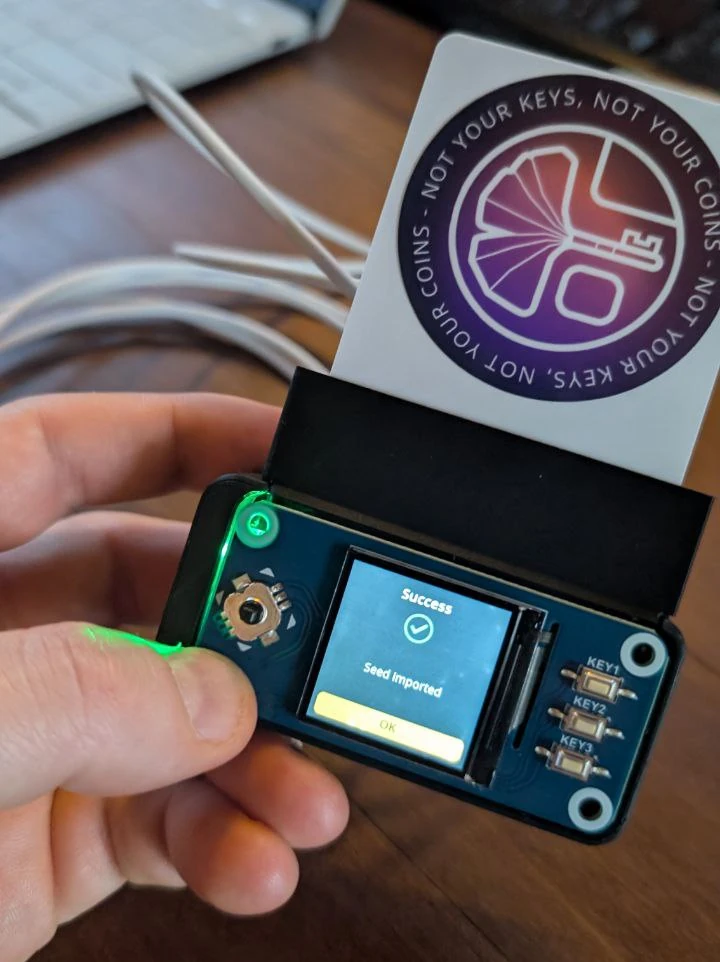
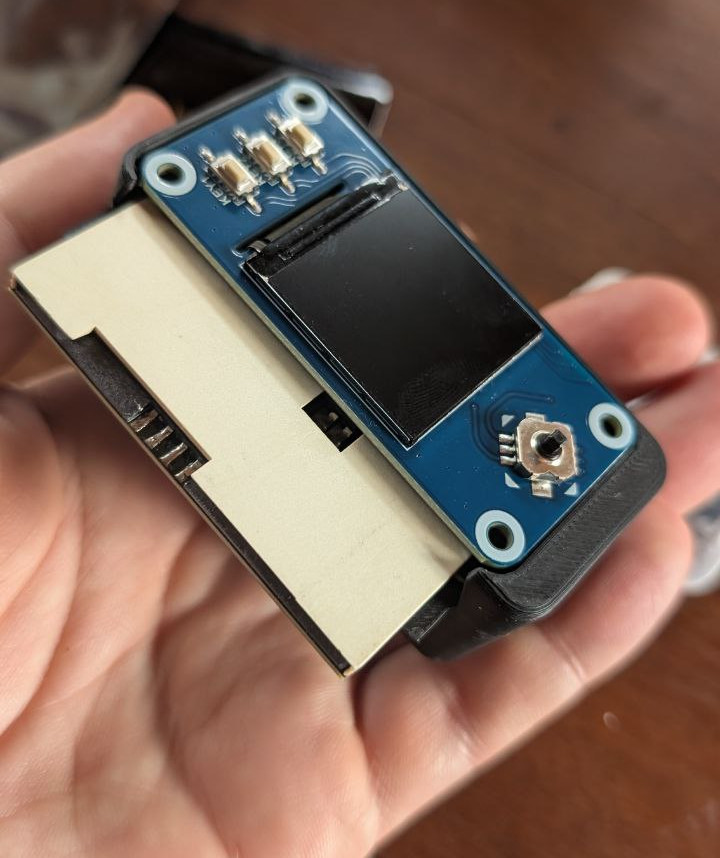
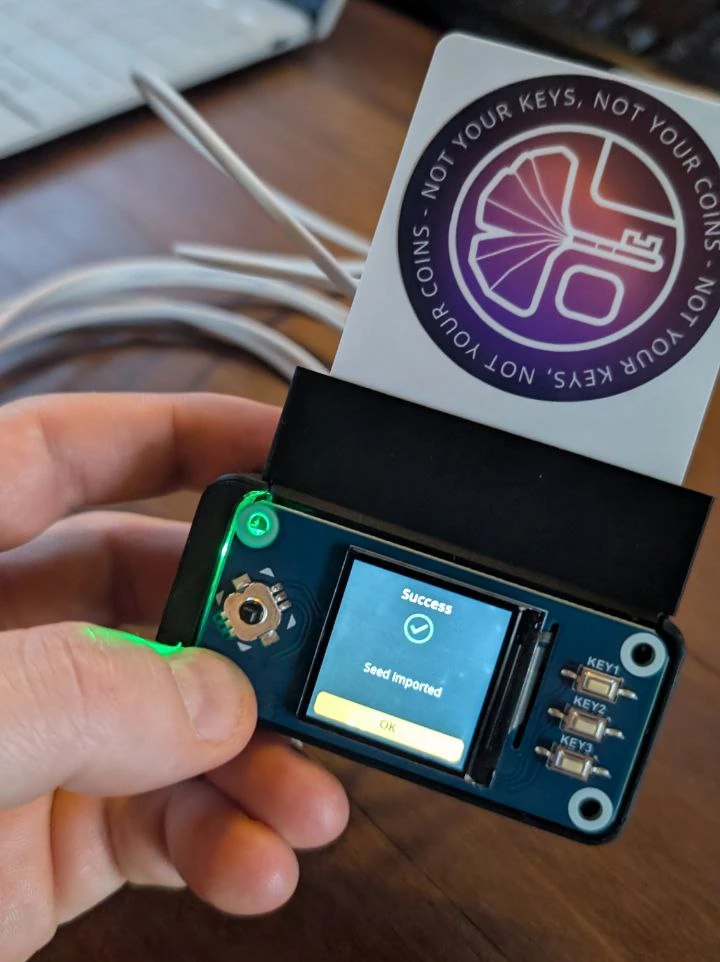
Did you know you can build your own hardware wallet? I recently attended a workshop with Dani @bitcoineando, a Bitcoin evangelist and software engineer who will be hosting a workshop on just this topic next week in Adopting Bitcoin, El Salvador. The whole process took less than an hour and took me from having never assembled a small hardware device of this sort, to a fully configured and self-assembled Bitcoin Seedsigner and smart card backup combo via the Satochip suite.
For those attending the now historic Adopting Bitcoin conference coming up this month in El Salvador, the free workshop will take place on Friday, November 14th at 3:50-4:50 pm, in the English Workshop room and will be delivered in both English and Spanish. Attendees who bring a laptop and go through the full workshop will get a free Seedsigner + Satochip combo to take home, plus the knowledge of how to build the whole thing themselves. Sign up here to lock in a limited spot now.
What’s amazing about the combination of these two great open source projects is that they are made of very common hardware that can be purchased almost anywhere in the world. No specialized hardware from artisan manufacturers, this is a pure DIY project that can be a viable option for users in developing nations with tight import controls, under oppressive financial regimes, under a tight budget, or just those paranoid enough to want to build everything themselves.
SeedSigner
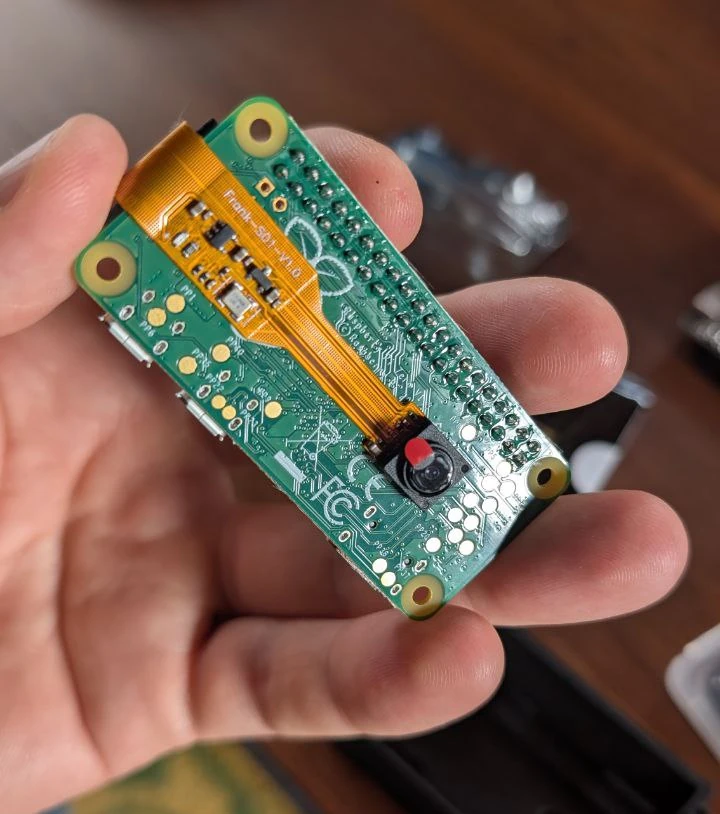
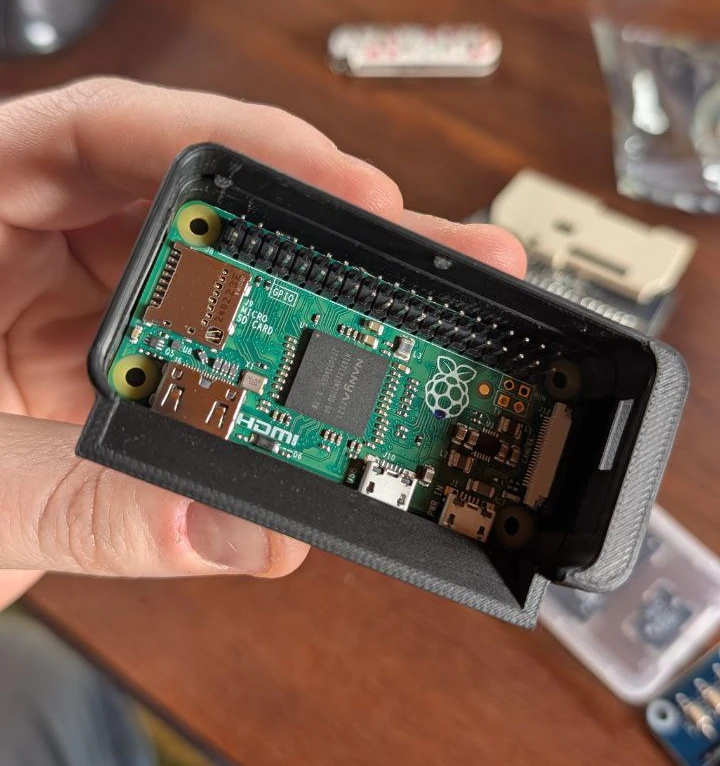
The SeedSigner project launched in December 2020 and empowers users to build their own affordable, air-gapped Bitcoin transaction signing device for more or less $50 using off-the-shelf components like the Raspberry Pi Zero v1.3, a camera module to scan QR codes, and a small LCD display to verify transactions and navigate the menu with a small joystick and three buttons.
Created by a pseudonymous founder known simply as “SeedSigner,” today supported by a growing community of contributors and led by Kieth Mukai, the project emphasizes trustless private key generation and supports a wide range of toolin,g such as BIP39 seed phrase creation via dice rolls, seamless integration with multisig wallets like Sparrow, Specter, BlueWallet, and Nunchuk, among others.
SeedSigner is fully Free and Open Source Software (FOSS) released under an MIT license for the core code. All hardware specs, software, and enclosure designs are publicly auditable on GitHub, allowing anyone to verify, modify, or build from source for maximum transparency and community-driven improvements.
While Raspberry Pi Zero’s CPU/GPU firmware and bootloader are proprietary and closed source software from Broadcom provided by the Raspberry Pi foundation, the design of the Seedsigner optimizes around managing those risks, such as letting the user provide their own entropy, and opting for no wireless communication modules like Bluetooth. Seedsigners are also “stateless”, designed to have no memory storage, instead booting fresh every time and requiring the user to input the seed that is used in the same session to sign transactions.
These security measures make the SeedSigner a popular hardware device for enthusiasts and advanced users; however, it presents some unique user experience challenges. Critics and competitors of the SeedSigner argue that manually inputting 12-word seeds into the device via key input or by scanning QR codes of private key backups puts user funds at risk, as it exposes the key material to cameras, which are ubiquitous in today’s digital age. The process can also be tedious and presents a user experience friction that stateful hardware wallets do not have, which is what makes SeedSigner’s collaboration with Satochip smartcards so special.
Satochip
Satochip, a Belgian startup founded in 2014 by Baudouin Collard and Bastien Taquet, focuses on affordable, open-source smartcard-centric hardware wallets. Their flagship products — Satochip (NFC hardware wallet), Satodime (bearer card), and Seedkeeper (a kind of password manager) — work with wallets like Sparrow and Electrum. Their Java Cards project is an open-source (AGPLv3) applet that turns cheap smartcards (e.g., YubiKey, SIMs) into secure, DIY BIP39 hardware wallets with EAL6+ security.
Taking a different approach to crypto key security, smartcards are stateful and store key material in encrypted formats, using some of the most advanced security chips in the market, often better than the technology used by credit cards and bank debit cards. The smartcards are NFC-enabled, leveraging the same near field communication technology that much of the world is used to today. An antenna that, while ranged, is considered so limited in its distance that advanced hardware wallet manufacturers like CoinKite have also integrated it into their highest-grade hardware wallet, the Coldcard Q.
The main downside of the smartcard approach to crypto security is the lack of a screen, which is needed for users to verify what they are signing. Satochip thus integrates with various mobile and desktop apps, as well as its own apps available on Android and iOS.
SeedSigner, through a community member fork of the firmware, is also now deeply integrated with Satochip, allowing users to flash the new smartcards directly from the SeedSigner, improving the experience of setting up the wallet, while also supporting a smartcard reader hardware expansion. The Satochip integrated SeedSigner firmware was created by YTCryptoGuide and can be found on his GitHub. The fork is not an official SeedSigner release.
The combination of these two open source projects seems like a match made in heaven, as users can now leverage the open source, consumer hardware nature of the SeedSigner, with the seed backup and ease of use nature of the smartcards, arguably improving the security and user experience of both projects.
One of the very valuable skills of the workshop, its corresponding website, and how-to guide teaches how to verify the authenticity of software installed on the hardware. Both the Seedsigner and Satochip applets are signed by the developers with their PGP keys. A hash or unique cryptographic ID of the software is created using an algorithm like SHA-256 (used also in Bitcoin mining) resulting in a string of digits, this string is unique to the exact software used to generate it — if one letter in the software is changed, the hash changes completely.
That hash is then signed by the developers with their PGP keys, which produces another unique and deterministic blob of data. The result is a chain of software signatures that ultimately let users know a known and reputable developer is acknowledging a specific software release as legitimate and authentic.
Knowing how to do this kind of verification can seem daunting at first, but it is actually quite easy and stands as the root of cypherpunk values and sovereignty in the digital age.

 Login
Login

 Dreams do come true!